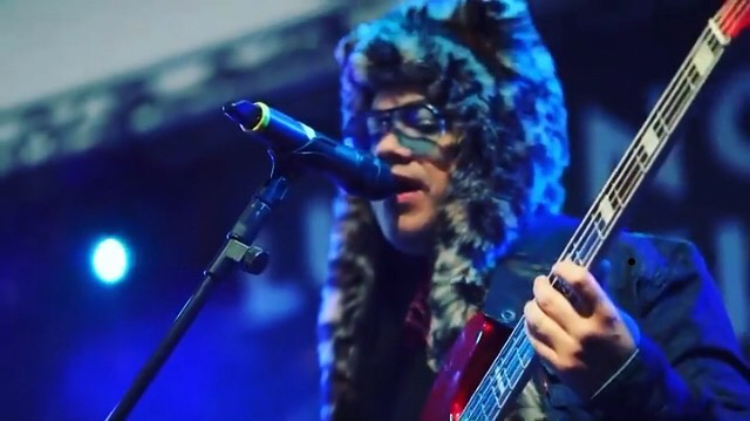
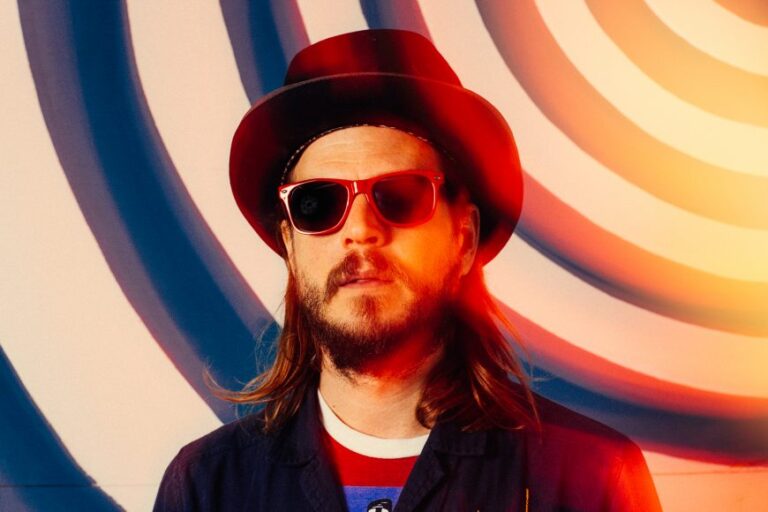
Greywolf, aka Jay Grey, bassist for rising powerhouse band Escaper, has released “Exit Key,” the first single off his upcoming debut album Operation Wolf.
“Exit Key” is a sample of what the multi-instrumentalist is able to do on his own. Haunting and beautiful, the lyrics evoke themes of love, loss, and wanting to make a change. The track opens with a droning synth, before dropping into love story lyrics. Prescient themes for these times are found, with change needed to be made after reaching a breaking point and wanting to make change.
Greywolf recorded and played all the instruments on this record in his home studio, including piano, synth, keys, guitar, bass and beat programming. The record as a whole addresses change, longing and one’s personal connection with nature and the universe. You’ll find an autobiographical feel and personal touch to the music and the album.
While Jay Grey is best known for his work with Escaper, he has branched off to deliver a sound all his own. Keep your eyes and ears open for more brilliance from this emerging artist.
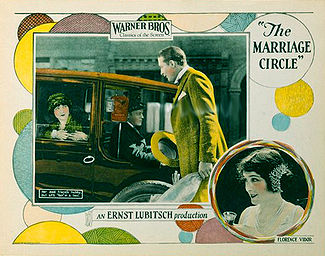
On Thursday, September 10, Glens Falls’ Park Theater is hosting a virtual fundraiser with the streaming of silent film The Marriage Circle. Silent film accompanist Ben Model will supplement the film with an original live score. The show begins at 7:00 p.m. with a presentation from the Chapman Museum about Glens Falls’ 1920s theater scene following the 1928 Spanish Flu pandemic.
Ben Model plays piano and organ, and his scores have been used by adult orchestras and high school ensembles alike. In addition to The Marriage Circle, he’s produced scores for the films of Charlie Chaplin and Buster Keaton. Over the past 30 years, Model has composed scores for hundreds of silent films both long and short.
The Marriage Circle, a 1924 comedy, was directed and produced by German-born director Ernst Lubitsch. The film’s writer, Paul Bern, was inspired by Lothar Schmidt’s 1909 play “Nur ein Traum (Only a Dream).” One of The Marriage Circle’s actresses, Esther Ralston, lived in the Glens Falls area in the 1970s. Ralston has a star on the Hollywood Walk of Fame.
LA Times.
Tickets for The Marriage Circle livestream are $15. Attendees will receive a link to join 30 minutes before the stream begins. For more information on the event, visit the Glens Falls Park Theater website.
Groovy, Connecticut based jam-band, Goose, is excited to announce two socially distant concerts at South Farms in Morris, CT on Sept 16 and 17.
Cover art poster for Goose concerts at South Farms.
Unlike many shows being held during the pandemic, these shows will not be drive-in, rather have designated grids for the audience.
The group started their winter of 2020 tour at Bowery Ballroom in Manhattan and then at the Williamsburg Hall of Fame, selling out both shows. They, unfortunately, could not play their spring concerts due to COVID.
Goose hails from Norwalk, CT. In the band is, Rick Mitarotonda (vocals, guitar), Peter Anspach (vocals, keyboards/guitar), Trevor Bass (bass), and Ben Atkind (drums). Their eclectic tunes come from growing up together and sharing their love of music and story telling.
Tickets are on presale now. General tickets go up Sept. 4 at 10 a.m.
In the most recent installment of his Karma mixtape series, Harlem rapper Dave East makes his latest attempt at solidifying himself as one of New York’s head honchos. The 15-track, 53-minute project features notable guest appearances. Trey Songz, French Montana, Benny the Butcher, A Boogie wit da Hoodie, dancehall artist Popcaan, along with R&B legend Mary J. Blige, all lend-a-hand, in what felt like East’s best attempt at a commercially successful project.
The mixtape opens up with arguable its best record. “Handsome” is a thumping and fast paced track where East confesses his life’s agendum, which are “to not break the code,” “try not to die,” and “praying that he gets old.” It is an ode to the lifestyle that many from the inner-city can have an appreciation for. In 2:53, East captures the hopes and dreams of a generation of men, which is wealth and health, while staying loyal to their compatriots. What makes the record even better is that, while it has a radio feel to it, the authenticity remains. And with it being just shy of 3 minutes, the replay value is high. He follows it up with a record that feels straight of a Caribbean crime film. Backed by loud and distinctive horns, “Unruly,” features Popcaan and serves as an antithesis to its predecessor. While “Handsome” described the perfect outcome from a life in the streets, “Unruly” sees East chronicle the dangers that come with operating on the other side of the law.
The third track is where the album takes a turn, in the Trey Songz assisted “The City,” East tries recreating one of Jay Z’s better records “Heart of the City.” While a noble attempt, he lacks the soulfulness to pull it off. Not to mention, at the time of the original recording, Jay-Z was arguably the biggest rapper in the game and thus metaphorically was the “Heart of the City.” We do not think of Dave East in the same vain (or any current New York rapper for that matter). The same issue follows him on the fourth track, “Get the Money.” It’s a solid enough song, as he details his chase for financial prosperity. A god-awful French Montana chorus — along with a bridge that sees Dave East try his hand at harmonizing – completely derail it. He completes a hat-trick of melodically challenged songs with “Thank God.” Featuring A Boogie wit da Hoodie, East tries his hand at a club record, but the song never takes off, as the duo lack chemistry and it ultimately ends up feeling forced.
This ebb-and-flow continues throughout, as the best records see East stay in own pocket, solid beats, along with well put together verses, while his attempts at diversifying himself see him fall short. “Said What I Said,” “Broke or Not,” “Mission,” “Menace” and the Three 6 Mafia inspired “F**ck Dat,” are all good songs. While “Stone Killer,” — featuring Benny the Butcher — is absolutely explosive. The Mary J. Blige assisted “Know How I feel,” was a nice surprise as East meshed well with the r&b icon. Yet, for some reason, it did not serve as the outro. That was reserved for the self-reflective “Believe It or Not,” and while it is a good enough record, it left the project a bit anti-climactic.
All in all, this is a solid body of work, yet it feels as though the pressure for commercial success inspired a few of the songs. The problem is, Dave East isn’t and will probably never be a top-selling (or charting) artist and that’s okay. While he hasn’t led New York back to dominance as some predicted, his abilities as a rapper is still a rare and valuable commodity in this current era of New York hip hop.
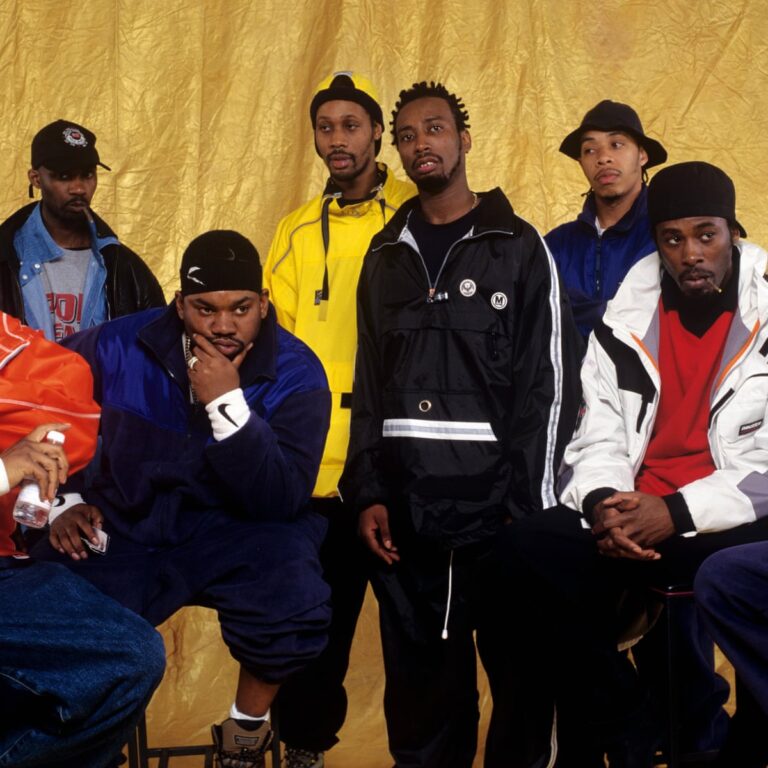
“Bring da Ruckus,” from the Wu Tang Clan‘s debut 36 Chambers LP stands as one of the rawest songs in rap history. As the lead single, and intro track on the album, “Ruckus” set the tone and established the Wu as a crew to be reckoned with. Not a particular long record (4:12, with plenty of filler), each member of the Clan was tasked with establishing themselves as individuals in short yet, impactful verses. With that, came the birth of an organic (gutter) sound that has yet to be replicated.
cousin’ terror, quick damage ya whole era
The record was formatted to sound like a hip-hop cypher but, with a hook from RZA. Four verses and a bridge and everyone on the record went off with aggressive verses and flows. The song has three major samples, interpolating the drums from Melvin Bliss’s 1973 track “Synthetic Submission” and “CB#2” by Ralph Vargas and Carlos Bess. The song begins with a sample of the English version to the film, Shaolin Shadow Boxing.
In a 2015 interview with London-based music technology company Roli, RZA explains how he came up with the sound for Wu-Tang and how he came up with the beat for “Bring Da Ruckus.” He explained that he wanted to use sounds that represented New York City in his beats and sound effects to bring more color to their songs. “When we were making a song called ‘Bring Da Ruckus,’ we took the snare and put it in an elevator sound and recorded it.” He went on to reveal that the reason he used martial arts soundbites was to edit out curse words, thus making songs playable for radio, which he believes is what had kids gravitating to them. RZA loved manipulating sounds to make beats, to him, any kind of sound effect had a musical connotation to them that could be used for any beat.
Beginning with the skit from Shaolin Shadow Boxing, you get a raw and dingy sounding intro, RZA’s hook is then heard but, in a supporting role to the beat, as he shouts “bring da mother f**king ruckus” about four or five times before we get the first verse from Ghostface Killah.
“Ghostface catch the blast of a hype verse
My Glock burst, leave in a hearse, I did worse
I come rough, tough like an elephant tusk
Your head rush, fly like Egyptian musk
Aww sh*t, Wu-Tang Clan spark the wicks, an’
However, I master the trick just like Nixon
Causin’ terror, quick damage your whole era”
Ghostface is aggressive, setting the tone and stage for the others to follow. His verse embodied what RZA envisioned for the record, as he hoped for a pull no punches attitude from whoever rapped on the beat. The verse was quick but to the point, as Ghostface established himself as a someone to be reckoned with, bringing an attitude full of terror and dominance. Raekwon followed up, without a break from the chorus.
Given’ bystanders heart attacks
“No doubt, and you watch a corny n***a fold
Yeah, they fake and all that, carryin’ gats
But yo, my Clan rollin’ like forty macks
Now you act convinced, I guess it makes sense
Wu-Tang, yo, soooo represent!
I wait for one to act up, now I got him backed up
Gun to his neck now, react what?
And that’s one in the chamber, Wu-Tang banger
36 styles of danger”
Rae followed Ghost with a great verse painting a picture like he loves to do in his rhymes and directly putting you in the scenario that he paints. His tone and his delivery made you imagine him actually putting a gun to some one’s neck waiting on him to “act up.” Finishing up with a reminder that the clan was made up of different members, who each brought something to the table, or as he said, “36 styles of danger.”
36 Styles of Danger
Rapping third, Inspectah Deck might have had the best verse of the entire song, using wild terms, metaphors and rhyme schemes that kept the listener captivated. Like he said in his verse he verbally assaulted this track leaving listeners stunned like literal stun guns.
“I rip it, hardcore like porno-flick b***hes
I roll with groups of ghetto bastards with biscuits
Check it, my method on the microphone’s bangin’
Wu-Tang slang’ll leave your headpiece hangin’
Bust this, I’m kickin’ like Seagal: Out for Justice
The roughness, yes, the rudeness, ruckus
Redrum, I verbally assault with the tongue
Murder One, my style shocks your knot like a stun gun”
GZA (aka da Genius) was tasked with finishing off the record and he didn’t disappoint.
“Givin’ bystanders heart attacks
N***as try to flip, tell me, who is him?
I blow up his f***in’ prism, make it a vicious act of terrorism
You wanna bring it, so fuck it, come on and bring the ruckus!
And I provoke n***as to kick buckets
I’m wettin’ cream, I ain’t wettin’ fame
Who sellin’ ‘caine? I’m givin’ out a deadly game
It’s not the Russian, it’s the Wu-Tang crushin’ roulette
Slip up and get fucked like Suzette”
He ends the songs perfectly, adding to the theme of the record and showcasing his now famous lyricism.
“Bring Da Ruckus” is one of the more impactful intro songs in hip hop history. It highlighted four of the major members of the group, establishing their style and unique sound and slang, while also previewing a new era of hip hop, one that celebrated being from the streets not only in lyrics but in how the records were produced and mixed.
Holly Bowling is taking her talents to the great outdoors. Ahead of her upcoming Grateful Dead album Seeking All That’s Still Unsung, the San Francisco pianist will stream weekly performances from Yosemite, the Badlands, and more. “The Wilderness Sessions” will run for six Thursday shows from September 3 to October 8.
Bowling’s “Wilderness Sessions” arrives after her last series of livestream concerts, “Alone Together: The Living Room Sessions.” In the eight-volume series, she performed Nine Inch Nails’ “Hurt,” famously covered by Johnny Cash, as well as Radiohead’s “Idioteque.” While piano covers of songs with full bands have potential to sound bare, Bowling’s arrangements are rich and fully realized. On changing the scenery from her living room to some of America’s most iconic landscapes, Bowling says:
As grateful as I was (and still am) for that opportunity, after a few months it was starting to feel like too much staring at the same walls in the same empty room. I decided if the only option right now is to play to empty spaces, then I wanted to do that in a giant canyon or on a mountaintop in the middle of nowhere. It’s one of those things that would never have worked in normal times. But I realized there’s two ways to look at this time – you can look at all of the things we can’t do, everything we’re missing out on, everything we’ve lost… or you can find the things that you can only do now that you wouldn’t be able to do otherwise, and seek those things out and make them happen.
Leg One dates for “The Wilderness Sessions” include:
September 3, Lake Tahoe, California
September 10, Yosemite, California
September 17, Salt Flats, Utah
September 24, Bruneau Canyon, Idaho
October 1, Beartooth Mountains, Wyoming
October 8, Badlands, South Dakota
Bowling first came to prominence in 2013, when she began performing solo piano arrangements of jam band music. One performance, “The Tahoe Tweezer,” based on Phish’s lengthy “Tweezer” led to two albums: 2014’s Distillation of a Dream: The Music of Phish Reimagined For Solo Piano, and 2016’s Better Left Unsung, a collection of Grateful Dead piano covers. Bowling soon attracted the attention of several Grateful Dead members including Bob Weir, Phil Lesh, and Warren Haynes, and was invited to perform at Terrapin Crossroads and Haynes’ Christmas Jam.
While “The Wilderness Sessions” will be free to view on Facebook and YouTube, Bowling has created a virtual tip jar. Visit Holly Bowling’s website for more information.
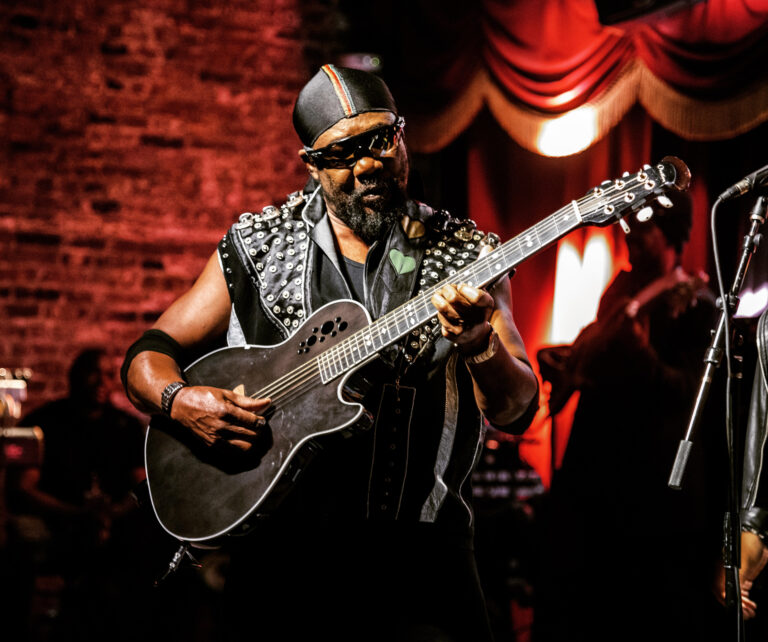
Reggae legend Toots Hibbert has been placed into a medically induced coma. The Jamaica Star reports the 77 year old is being cared for at University Hospital of the West Indies (UHWI).
“Toots is fighting for his life and his family is asking for prayers,” publicist Claude Mills said.
On Monday news broke that the singer was awaiting results of a COVID-19 test after having shown symptoms. While awaiting test results, Mills noted that Hibbert was showing signs of the virus, and the musician’s inner circle have self-quarantined while awaiting their test results. Hibbert had recently released his latest album Got To Be Tough.
Original story follows below:
Toots and the Maytals singer Toots Hibbert has been hospitalized in Kingston, Jamaica. He is currently in the intensive care unit at the private facility. According to a statement released by his family Hibbert has been tested for COVID-19 and is awaiting his test results.
Toots Hibbert. Photo by Robert Tellerman.
According to his family, Hibbert is in good spirits and is getting better day by day and receiving the best treatment possible. The family thanks everyone for their prayers and in particular the minister of culture Olivia ‘Babsy’ Grange and the minister of health Christopher Tufton for their assistants in getting Hibbert tested. They also thank the medical professionals taking care of Hibbert around the clock.
Statement made by Hibbert’s family.
Toots and the Maytals are a Jamaican musical group that were formed in the early 1960’s under their original name The Maytals. They are widely known for their ska and reggae sound. Some of their most widely known songs “Pressure Drop,” “Funky Kingston,” and “Bam Bam.” They recently released their first album in over ten years titled, Got to be Tough. The album features many originals as well as a Bob Marley cover of “Three Little Birds” featuring Ziggy Marley. It also features a track with Ringo Starr on percussion and Ringo’s son and longtime Who drummer Zak Starkey on guitar. Hibbert is notably famous for coining the genre name “reggae.”
American pianist, song-writer, multi-instrumentalist, record producer Marco Benevento.
Benevento has been a well known pianist in the New York experimental jazz scene since 1999. His career lead him to collaborate with other musicians such as, Matt Chamberlain and John McEntire. He was nominated for the Jazz Album of the Year at the Independent Music Awards in 2008. His most recent en devour was creating his own record label called, “The Royal Potato Family,” along with manager Kevin Calabro. His latest studio album was created using his label, Let it Slide.
MASS MoCa is museum & performing arts center that highlights the work of contemporary artists in particular and has been open since 1999. It resides in an old factory in North Adams, MA and is considered one of the leading contemporary art museums. They host visual arts, performances, and educational programs year round.
Although he normally plays with band mates, Karina Rykman and Dave Butler, this performance is a solo act. The show goes on at 7:30 p.m. until 9:30 p.m. Tickets are on sale now.
For more information on Marco Benevento and his upcoming performance at MASS MoCa visit their website.
One of the true gems of southwestern New York on Chautauqua Lake is the Chautauqua Institution. There you can find a blend of arts programming, educational and religious opportunities and recreational activities are available to those who visit the grounds during the year. And every few years, the music event Jazz at Chautauqua is part of the annual programming.
The Institution, originally the Chautauqua Lake Sunday School Assembly, was founded in 1874 as an educational experiment in out-of-school, vacation learning. It was successful and broadened almost immediately beyond courses for Sunday school teachers to include academic subjects, music, art and physical education.
Thanks to Jazz Lives, who consider Jazz at Chautauqua 2013 “another unforgettable interlude of music and friendship,” we bring you a selection of ballads from the September 22, 2013 Jazz at Chautauqua performances. A medley of ballads began and ended the music-filled weekend, including “Easy Living,” “Daydream,” “Can’t Help Lovin’ That Man” and “I Know Why (And So Do You).” Featured players include Marty Grosz (guitar), Harry Allen (tenor sax), Dan Block (clarinet), Bob Havens (trombone) and Duke Heitger (trumpet).
Later, ballads including “My Funny Valentine,” “Please,” “Laura,” “If We Ever Meet Again” (Horace Gerlach) and “Sophisticated Lady” seem to tell the full range of relationship through their titles. Selections are peformed by Randy Reiinhart (cornet/trumpet), Andy Schumm (cornet/trumpet), Andy Stein (saxophone), Marty Grosz (guitar), and Rossano Sportiello (piano).
From 2009, enjoy “Chinatown,” performed by Pete Siers (drums), Frank Tate (string bass), Ehud Asherie (piano), Bob Havens (trombone), Dan Block (clarinet), and Duke Heitger (trumpet).
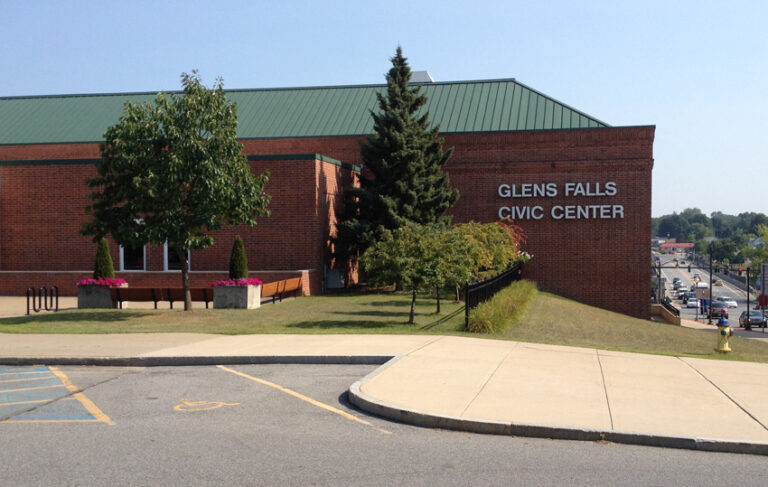
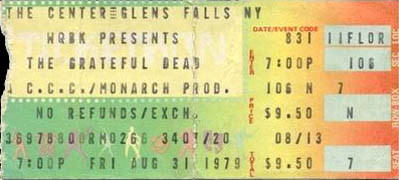
Today’s Dead-trospective takes us to a Glens Falls Grateful Dead show at the Civic Center played 41 years ago. August of 1979 was interesting time for the Grateful Dead. New keyboardist Brent Mydland was still getting himself acclimated, having joined the band in April. This is only his 19th show, but his second time performing in New York with the Dead after they played Broome County Arena in Binghamton in May.
1979 featured a lot of short tours spread out over the course of the year. This would be the opener of one of them, a six-show tour in the Northeast with the last three at Madison Square Garden. This is the first time the Dead played the Civic Center. They would come back and play a single show the next three years as well.
The show begins with “Promised Land,” a Chuck Berry cover and “Dire Wolf.” It’s a fairly pedestrian 1-2 opening punch with plenty of post-song tuning. Bob Weir’s “Cassidy” follows, now in its new form with Mydland on backing vocals.
After some more tuning and indecision, things begin to take off with “Loser,” the Garcia-sung card playing saga. Jerry has a little fun with the lyrics on this one as the “Ace of Diamonds” comes up once instead of the usual Queen. The recording gets a little bass-heavy in the brief jam that follows but is well worth it. A typically poignant Garcia solo on top of everything else seems to genuinely excite the Civic Center crown.
A brief patch of the AUD recording doesn’t deter from a “Peggy-O” that hits all the right spots with Garcia’s vocals in top form. The first set also has a spot for newcomer Brent Mydland’s “Easy to Love You,” only the second one ever played. Afterwards, Bob Weir gives a little “love” to the locals in “New Minglewood Blues” with a change of lyrics to “New York women.”
This being another transitional period for the Dead, new songs and playing styles would continue to emerge. “Lost Sailor” had only been played four times prior to this, debuting earlier in the month. But this show in Glens Falls would feature the first ever “Saint of Circumstance” as it blended in immediately afterwards, making it sound almost like one song, which it would continue to do for years. This is really the last multi-song composition purposely crafted by the band.
A slow to start “Shakedown Street” begins the second set but it soon turns into a boisterous one with plenty of Garcia-fueled funk. The next song would be the return of a forgotten hero with only the second “Greatest Story Ever Told” since it was shelved towards the end of 1974. Garcia seems to tease “Black Peter” afterwards, a sign of things to come, before the “Ship of Fools” that follows.
The recording slips back to the AUD source towards the end of the stretched out “Estimated Prophet” that follows. But this give a great insight to the feel of the room. Swaths of people can be heard clapping along to the “Eyes of the World” that Garcia transitions to frenetically. This one is uptempo and bouncy from the get go with Mydland dazzling on the electric keyboard.
The highlight of the show comes later in the second set with a remarkable transition from the “Drums” section to “Not Fade Away.” The whole band is locked in atop an infectious rhythm as Garcia continues to pull all sorts of tones out from his bag of tricks. It’s a powerful segue, and executed perfectly, as the jam continues right through “Not Fade Away.”
Fittingly, the show is bookended with “Around and Around,” another Chuck Berry cover. Perhaps curfew was an issue as there does not appear to be any record of an encore for this show. But these two sets would pack enough of a punch on their own with new material and some exquisite second set jamming.
The Grateful Dead would travel to Rochester after this show, for a show at Holleder Stadium. But it’s clear they found a nice new place to play in Glens Falls, the music proves it. Upstate New York fans wouldn’t have to wait too long for a reunion though. The band would return in May next year for another masterclass in psychedelic rock.
Grateful Dead 8/31/79 Glens Falls Civic Center – Glens Falls, NY
Set 1: The Promised Land, Dire Wolf , Cassidy, Loser, El Paso, Peggy-O, Easy To Love You, New Minglewood Blues, Althea, Lost Sailor > Saint Of Circumstance > Deal
Set 2: Shakedown Street, Greatest Story Ever Told, Ship Of Fools, Estimated Prophet > Eyes Of The World > Drums > Not Fade Away > Black Peter > Around And Around
Recording starts with brief AUD patch before switching to SBD source. Patches also heard in “Peggy-O,” “Minglewood,” “Estimated Prophet” and “Eyes of the World.”