Category: Blues/Jazz

  • Speaking Truth to Power through Music: A conversation with Donald Sturge Anthony McKenzie II

    Throughout the summer, protests surrounding the shootings of unarmed Black Americans led to calls for police reform, with success that can already be seen across the country and world. Black Lives Matter has changed the national dialogue on race and brought it out of the shadows. There is one musician who has been using his improvisation skills to bring to light those who have been killed or injured at the hands of the police – Donald Sturge Anthony McKenzie II.

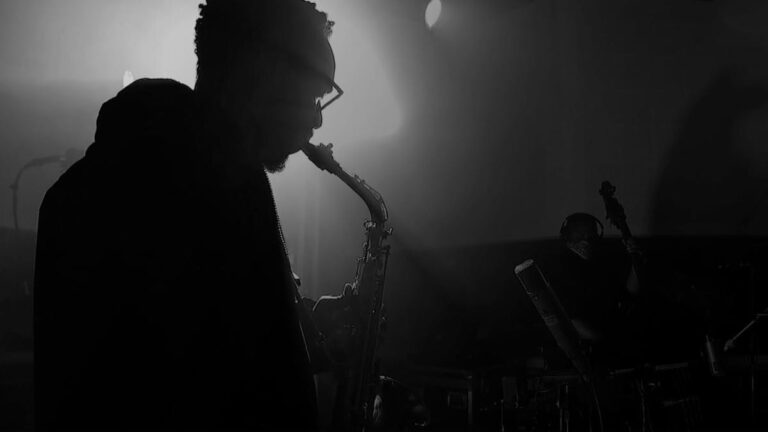
    McKenzie is a prolific improvisational drummer with a fierce discipline and connections to the late ’80s hip hop scene in Brooklyn. Learning from Everett Collins (Isley Brothers) and world-renowned drumming teacher, Dom Famularo, McKenzie has developed a firm basis in theory and has evolved thanks to his discipline behind the kit. Having traveled the world performing, McKenzie has toured and recorded with instrumentalist Elliott Sharp, guitarist Marc Ribot, and Grammy nominated jazz composer Roswell Rudd, among others, and backed hip hop and R&B artists including Pharoahe Monch, P.Diddy, Grave Diggaz, New Kingdom, to name a few. McKenzie also serves as musical director for Kat DeLuna, and teaches master classes at the Brooklyn Music School.
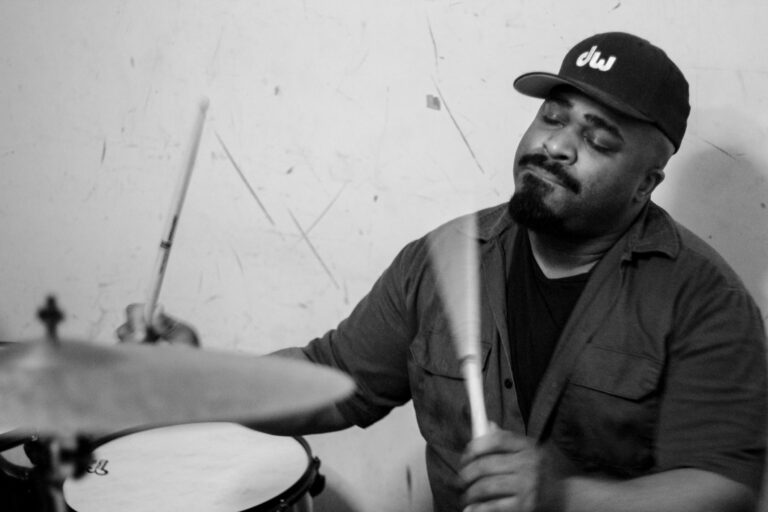
    Donald Sturge Anthony McKenzie
    photo via 577 Records

    Best known for Silenced and Silenced II, two extremely powerful albums with tracks named after a POC who lost their lives due to police brutality, McKenzie is wrapping up Silenced III, a double album to be released in late 2020.

    McKenzie spoke with NYS Music about Black Lives Matter and his Silenced albums, playing with Nels Cline, how Vernon Reid has helped him along in his career, and the next chapter for the compelling improvisational drummer.

    Upon first glance at Silenced, the track names stand out, each being a Black American who were victims of police violence, many lesser known names. The tracks themselves are entirely (99.5% as estimated by McKenzie) first takes and unedited version. While smaller parts may need to be cleaned up, the goal was to have it completely unedited and completely improvisational. McKenzie shared his insight into these two unique factors:

    If one person can be drawn to my music, my art, for music’s sake, the musicality of my work, and they see a song title – if one person goes to Google and researches their name, I think I’ve done a service to the world. A lot of people are not as aware of the injustices and the every day trauma of living in America in Black skin.

    It’s a way to move a person closer to acknowledgement of certain people’s humanity. Not 100% of name titles are people that have been killed by police, some are people who were killed in tragic circumstances.

    McKenzie wants people to research these individuals – he does not seek to tell people to do this, or to be shamed or browbeaten into researching someone. Giving these names to song titles allows, in this words, for “the art to travel while he sleeps.”

    If it leads to someone saying “Who is Malissa Williams?,” then it is a service to the world and the people as well. Let’s say my album is being played in Ukraine – everybody has their own strife and troubles and drama – they could be listening to this and wondering, ‘Who are these people?’ I wanted people’s names to resonate on a global scale, as far as my art can take it.

    https://www.youtube.com/watch?v=gCeAOg2iyYI

    Linking up with Wilco’s Nels Cline would lead to the high-powered “Sandra Bland,” the first track off Silenced. The pair did not discuss what they would play, nor did they run down or plan it out – the track is fully improvised, purely organic and in the moment. You can hear the first to the last note they played together on “Sandra Bland.” And they’ve played together since, with Sean Lennon and Captain Kirk (The Roots), but the first notes from McKenzie and Cline are on Silenced.

    The first time I met Nels Cline I was on a trio gig with Elliot Sharp and Melvin Gibbs, and Nels was on the same bill and I just loved his sound and his playing. While I was recording these albums, I wondered if I could get him on this. I was walking by the music store Main Drag, in Williamsburg, Brooklyn, and just by chance he just happened to be walking out and I was like, ‘Nels, what’s up?’ and we made arrangements to play and he was the first one that recorded on this album.”

    Once he cut “Sandra Bland” with Cline, McKenzie sent an unmixed version to Living Colour guitarist Vernon Reid, who, according to McKenzie, “went crazy,” and expressed interest in being on a track, which would later be titled “Eric Garner.” It turns out McKenzie and Reid have a long history going back to Living Colour’s rise to prominence in 1988 with the release of “Cult of Personality,” and the two would link up to perform in Reid’s Masque.

    I think that improvisation (with Cline) set a high bar, and while some musicians might have been scared off from the studio concept, and some are competitive (especially guitar players) Reid loved the challenge and having played together since 1995, we have a great musical relationship. It was superb.

    I met Vernon around 1988-90 when I was 17. Living Colour had a special place in young Black musicians’ hearts, esp those who were playing instruments. Most people were pure hip-hop heads, into the drum machine, and that’s great too, but as a drummer and those who were guitar players (Eddie Reyes – Taking Back Sunday) – we’d all go in the house and play Living Colour covers, Slayer and Metallica covers, all in my parents garage. Vernon was an idol of mine. The video for “Cult of Personality” changed a lot of people’s trajectory in life; that was a big deal for me.

    I was playing (drums) in the rap group New Kingdom and I was at the record label, on top of Tower Records at 4th and Broadway. In that building was Island Records and I used to hang out the label, drink the water, absorb the whole thing of being in the music business. There was a release party for a Gravediggaz album that I was on and Vernon came to pick up his invite. He gave me a copy of his first solo CD with Masque. I was so impressed I went home and practiced it; I was just so impressed that he would semi-remember me from stalking him as a teenager.

    Long story short, something happened with his (Masque) drummer, a friend of mine, Curtis Watts, and Vernon asked me to step in and I showed up at rehearsal, I was over-rehearsed – I knew every song, every inflection.

    From connecting in 1995, to recording with Masque, Reid would use McKenzie in many of his projects, with the Yohimbe Brothers and DJ Logic, the third Masque album, live performances, improv, and soundtrack work. McKenzie notes the depth of the connection: “Vernon is just my guy, Vernon is like a musical father to me.”

    McKenzie’s collaborations started when he was 16 and recorded a demo for TBT records with the band Three Feet Deep. And while the band was not signed, listening back recently, McKenzie notes, “It’s still happening.” The next group he performed with, Gravediggaz, would lead to broader connections.

    I used to be at the recording studio hanging out with Wu Tang Clan – this was Firehouse Recording Studios – and I went to the same high school as De La Soul in Amityville – they knew I was eager and into my music, so they always wanted me around, so that was a big deal.

    This connection at age 16 would allow McKenzie to hang out with rising artist A Tribe Called Quest, who he has memories of going to a Hampton’s homecoming game with on the bus, alongside De La Soul, Tribe, Hieroglyphics, and road manager Chris Lighty (Violator).

    I started out playing more straight material – less improvisational music – but as I’ve developed and gone on in my career and life, I’ve realized that more of a Cecil Taylor improvisational path is better for me, as opposed to recording in sections. I love playing in the moment, and in an improvisational setting. That’s where I’ve seen my individuality and creativity coming to life. That’s where my head is right now and I want to just move forward and push forward with that.
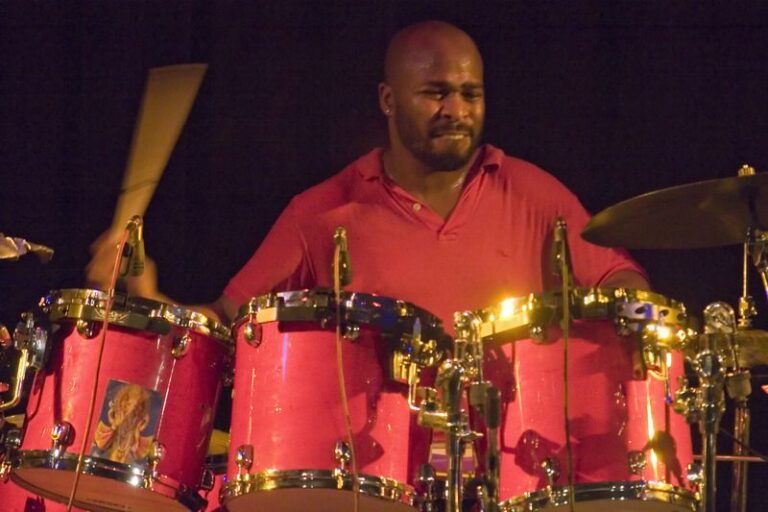
    Donald Sturge Anthony McKenzie

    Two years since Silenced II, a new project is in the works – a double album – inspired in part by the Black Lives Matter movement and protests this summer.

    I’m working on a double album right now. I don’t want to be the guy to milk this cow. I made a statement, and the statement is relevant today. I think that capitalism under this American imperialism and colonialism, it will still say relevant. We seem to try to disconnect ourselves from the violence and oppression overseas and the violence of the military and violence of the police; it’s just different GPS points. I made a statement and it’s relevant, but it would be suppressive and anti-creative to keep doing the same thing.

    When I made that statement with Silenced and Silenced II, I had no idea that the situation in America would come closer and bring people closer to what I was saying years ago. But that’s what’s happened. It’s been three years since I got in the studio and played these tunes. I have more work than play but I don’t want to tip my hat, a good way to maybe give you an inkling, yes it will be a majority improvisational, which is I think a really strong way to express myself at this point in my life, and it will be a double album and really like an audio Jackson Pollak.

    With two young children, McKenzie has been focusing on parenting during the pandemic, doing his best to mitigate the damage of sudden isolation from school and peers.

    I’ve been able to use the studio and just be here for days on end and just practice and practice and listen to music and a lot of great drummers. I get inspiration from visual things so I look at different artists and get different sounds from different art. Someone said they hadn’t ever heard birds chirping in Brooklyn, because there were no cars, and no one was out, and that has been a source of inspiration.

    Overall, McKenzie has been spending time with his children who have been the focus of his attention as he moves forward in a positive way for everyone’s benefit.

    He’s also been in the studio, using French band Gojira‘s studio space since they are out of town and admire what he does. “Stuff like that would never happen if the lock down didnt happen, the studio would be full up,” said McKenzie. They love what McKenzie is doing and offered up the studio for him. His next studio offering drops this fall.
  • JazzFest White Plains Announced Virtual Festival Dates

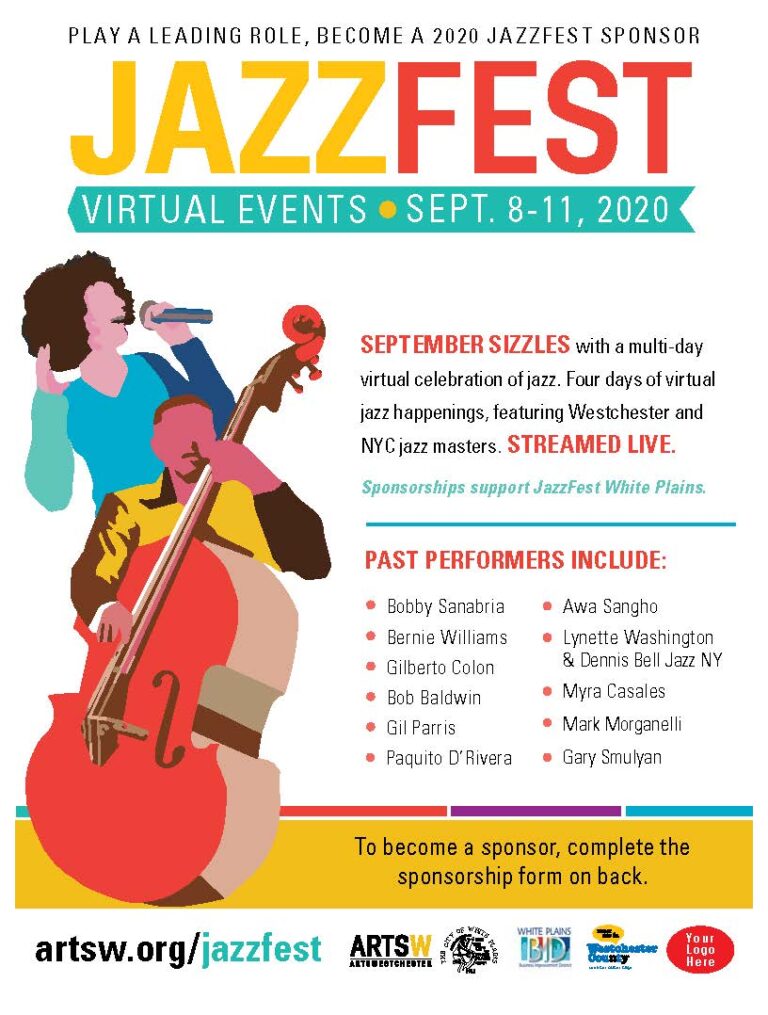
    JazzFest White Plains announced virtual festival dates. The virtual festival will take place September 8-11 and will host a variety of artists. The 9th annual JazzFest White Plains will be streamed on Zoom and on Facebook. 

     The four days of Jazz will include not only performances but conversations as well. It will feature a mixture of artists at the forefront of jazz and rising stars. From Westchester jazz talent to jazz masters the festival will be something spectacular for Jazz enthusiasts. JazzFest White Plains are teaming up with the spirit of Arts Westchester’s annual ArtsBash. 

    The festivities will start at 4:30 – 5:30PM on September 8 with the  “ArtsBash Virtual Mixology” event making Jägermeister cocktails and live jazz music by The Rico Jones Trio. Then at 6PM there will be a “presenting Jazz in the time of COVID-19” conversation. At 8PM the night will wrap up with “Westchester Jazz: Then and Now” featuring Art Bennett on sax, Kathryn Farmer on piano and vocals, Kenny Lee on trumpet, and Rocky Middleton on bass.

    The second day will start at noon on September 9 with a performance form “Isabella Mendes & Flavio Lira Duo.” At 6PM there will be “Jazz Education in Westchester” conversation. Wrapping up at 8PM the “Jazz, From One Generation to the Next” event will happen featuring conversations and performances by Alexis Cole and Lucy Wijnands, Bobby Sanabria and Gabrielle Garo, and Ulysses Owens Jr. and Aaron Jennings.

    On the third day September 10 the fun will start bright and early at 8AM with “Jazz at the Intersections” performances featuring Amir ElSaffar with an Arabic music and jazz combination, Jomion & the Uklos with a West African/Carribean music and jazz combination, and Pablo Mayor with a Columbian music and jazz combination. 

    On the last day September 11 the festival will wrap up at 8PM with “Jazz’s Rising Stars” featuring performances of Connie Han on piano, Matthew Whitaker on piano, Veronica Swift on vocals, and Alicia Olatuja on vocals. There will also be a moderated discussion about what it’s like to be a young rising star in jazz today which will be moderated by Keanna Faircloth, WBGO.

    The festival is free to the public but is accepting donations online here. People wanting to register for certain events to get the zoom link can do so on JazzFest White Plains’ website. The events will also all be live streamed on Arts Westchester’s Facebook Page

    For more information visit JazzFest White Plains’ website.

  • Watch Live Jazz from NYC’s Cafe Bohemia

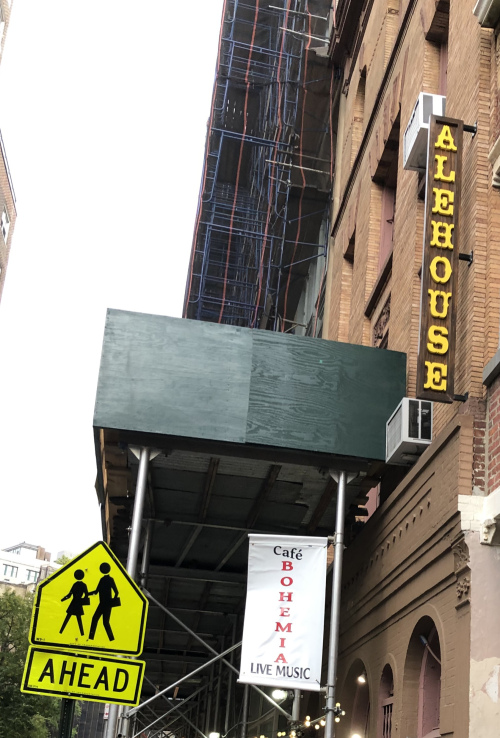
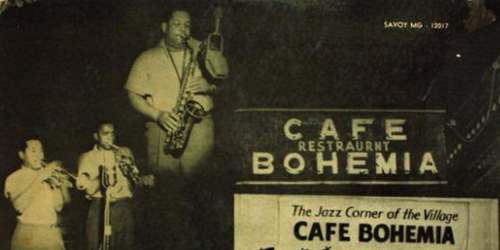
    Located in Manhattan’s West Village on Barrow Street, Cafe Bohemia originally opened in 1955 and is an historic landmark and jazz club. Frequented by music legends the likes of Miles Davis, Charles Mingus, Canonball Adderley and many others, the venue closed in 1960, and was revived at its original location in October 2019.

    One notable story about Cafe Bohemia comes from June 19, 1955, when Julian and Nat Adderley arrived in New York on a trip as Julian was to work on his Master’s Degree at New York University. That first night in the city the brothers went to the Café Bohemia to hear the Oscar Pettiford band, the house band at the time. The night would prove to be a turning point in Nat’s career.

    cafe bohemia

    Jerome Richardson, the group’s regular saxophonist was unavailable that evening due to a recording session. Pettiford asked Charlie Rouse – who was in the audience – if he would sit in, but Rouse did not have his saxophone with him. Pettiford then noticed another audience member, Adderley, who had a saxophone case with him and told Rouse to ask this unknown man if he could borrow his horn.

    Instead, Rouse asked “Cannonball” Adderley if he would like to sit in with the group. Reluctantly, the leader complied and allowed Adderley to play. Overnight Adderley rose to prominence on the New York jazz scene, and on June 21 he played his first official show at Cafe Bohemia. By October 1957, he was a member of the Miles Davis Sextet.

    cafe bohemia

    More recently, the late Eddy Davis (banjo), Conal Fowkes (bass, vocals), Jon-Erik Kellso (trumpet) and Evan Arntzen (tenor saxophone) performed “My Monday Date?,” by Earl Hines, on December 26, 2019. Video performances below are available thanks to Michael Steinman for his blog JAZZ LIVES.

    Watch Eddy Davis and friends – Jon-Erik Kellso (trumpet), Evan Arntzen (clarinet) and Conal Fowkes (string bass) – pay tribute to the great Jelly Roll Morton with “Good Old New York.”

    The Intimacy of the Blues,” is a haunting piece composed by Billy Strayhorn and an album of the same name for Duke Ellington. Performing at Cafe Bohemia on November 14, 2019, JAZZ LIVES shares video of this pre-Thanksgiving performance in Greenwich Village by Jon-Erik Kellso (trumpet), Evan Arntzen (clarinet), Neal Miner (string bass,) and Chris Flory (guitar). 

    On February 6, 2020, Mara Kaye was joined by friends and musical family Tim McNalley (guitar), Jon-Erik Kellso (trumpet) and Brian Nalepka (string bass). 

    Mara Kaye is joined this time for “Me and MY Chauffeur” by Tim McNalley, (guitar), Albanie Falletta (resonator guitar), Jon-Erik Kellso (trumpet) and Brian Nalepka (string bass). 

    From January 16, 2020, “A Shanty in Old Shanty Town” features Tal Ronen (string bass), Matt Munisteri (guitar), John Allred (trombone), and Jon-Erik Kellso (trumpet). “In a Shanty in Old Shanty Town,” written by Ira Schuster and Jack Little with lyrics by Joe Young, was published in 1932. Ted Lewis and His Band performed it in the film The Crooner in 1932. His version was later released as a single and it went to #1, where it remained for 10 weeks.

  • ‘Racism on Trial,’ featuring Denzel Curry and Kamasi Washington, meshes Rap, Jazz and BLM

    Jammcard — a social marketplace for music professionals — along with Black Lives Matter co-founder Patrisse Cullors, partnered up earlier this summer to present the Black Power Live virtual music festival. Musicians including Terrence Martin, Kamasi Washington and Denzel Curry took part in the event, which gathered 1.7 million viewers via live stream on Twitch. Now they are releasing the powerful three-movement “Racism on Trial.”

    Black Power Live was centered around the current social-political climate, with police brutality, systematic oppression and black empowerment being focus points. Each part of “Racism on Trial” begins with a slam poetry type of setting where Florida rapper Denzel Curry recites his work, accompanied by a jazz ensemble. 

    RACISM ON TRIAL

    “Racism on Trial” follows Martin’s recent album Gray Area – Live at the JammJam, featuring the song “For Free?,” which Terrance wrote with Kendrick Lamar. The album was released on Jammcard Music in partnership with Sounds of Crenshaw and Empire Distribution. Recorded at Studio A of United Recording, packed with 300 Jammcard members surrounding the performers, the album is filled with some of the most exciting and powerful jazz music created in years. The performance features Ronald Bruner Jr., Kamasi Washington, Maurice “Mobetta” Brown, Ben Wendel, Paul Cornish, and Joshua Crumbly. 

    All proceeds from “Racism on Trial” will go to Crenshaw Dairy Mart, Trap Heals, Transgender Law Center, Sankofa.org, and Black Men Build. 

    The first movement, titled “The Voice of King Nipsey,” begins as Curry walks up to the mic and performs his verse in silence. He starts by articulating all variety of horrid things that happen in the United States. After he is finished, a Terrence Martin saxophone solo follows with Kamasi Washington and the rest of the band later joining in. 

    For the second movement, “Any Day Could be Your Last,” we again see Denzel opening up with a poem without the aid of background music, as he descriptively lists things he wants out of life. He ends his poem with the title of the feature, with the band once again following up, only this time, on a more somber note, with added vocals from Los Angeles singer, Alex Isley. Her vocals meshing with the jazz music, as well as added visuals of scenes from the civil rights movement.

    The third movement, “Pig Feet,” being the last installment once again begins with Denzel Curry but without a poem, just an intro. The band immediately starts playing and more visuals of police brutality through the years get run throughout the concert. Denzel Curry does end up rapping with the band as his background beats and he is joined by battle rappers Daylyte and G Perico. 

    Written by the trio of Terrence Martin, Kamasi Washington and Denzel Curry, Racism on Trialwas directed by Devin DeHaven, mixed by Manny Marroquin and engineered by Ethan Mates. Denzel Curry, Daylyte, G Perico and Alex Isley served as vocalists, while Kamasi Washington played saxophone, Marlon Williams the guitar. Terrence Martin, Robert Glasper, Paul Cornish played the keys, Trevor Lawrence Jr. and Jonathan Pinson were on the drums, Allakoi Peete on percussion, Dominique Sanders on upper brass, Paul Cartwright and Yvette Devereaux played the violin, Molly Rogers on the viola and Peter Jacobson on the cello.

    All proceeds from the sale of “Racism on Trial” will go to Crenshaw Dairy Mart, Trap Heals, Transgender Law Center, Sankofa.org, and Black Men Build.

  • Brooklyn’s Soapbox Gallery presents Electronic Looping Sounds of The Sonic Vision Looping Festival

    Soapbox Gallery, the intimate Prospect Heights performance space that grew out of the studio of sculptor Jimmy Greenfield, will present three nights of live streaming performances, from August 26-28 at 8 PM. Each performance will be dedicated to adventurous electronic looping sounds paired with video narratives.

    Electronic Looping Sounds

    Globe- and genre-trotting percussionist Will Calhoun will headline and close out the festival.  The lineup will also feature the acclaimed sound painting jazz saxophonist and film composer Hayes Greenfield and Guitars A Go Go, the ambient guitar duo of Sal Cataldi (aka Spaghetti Eastern Music) and Rick Warren, who are supporting the release of their buzzed about record, Travel Advisory

    According to founder Jimmy Greenfield, the festival grew out of the success of the Immersive Surround Sound Experiences performed by his musician brother, Hayes Greenfield, since the beginning of the COVID quarantine.   Here are the details on the festival’s lineup:

    August 26 – Guitars A Go Go – This is the edge-pushing improvisational partnership of two very “switched-on” Hudson Valley-based guitarists, Sal Cataldi (aka Spaghetti Eastern Music) and Rick Warren. Armed with a plethora of effects pedals and a quest for meditative and melodic adventures that span a galaxy of musical influences and attitudes, the duo has swung for the fences with the June 2020 release of their debut album, Travel Advisory

    August 27 – Hayes Greenfield with Ikuo Nakamura – With electronically tweaked sax, flute, kalimba, and voice, Hayes Greenfield creates lush lines and emotionally charged melodies layered into compositions that are both healing and liberating.  Accompanying images of sometimes collaborator 3-D filmmaker, Ikuo Nakamura, Greenfield enhances the visual thematic explorations of the human connection to nature by creating sound waves that stop time, and inspire fields of memory and a collective awareness, unlocking a sense of the natural world at once from above, below, inside, and out.  

    https://vimeo.com/224740378/d75ac01151

    August 28 – Will Calhoun – With an array of indigenous and electronic percussion instruments, flutes (some sacred) and his drum kit, Calhoun weaves together ever more densely packed rhythms, ones that conjure an alternate reality no less transcendent than the multi-layered sounds of nature, people, thoughts, and relationships. Performed along to images he’s taken on his journeys to places as far flung as Mali, the Australian outback, and the heart of Brooklyn, Calhoun’s compositions unify the pulse of the ancient and modern worlds, revealing the hidden and underlying connections between the sacred and the everyday. electronic looping sounds

  • Watch: Jazz at Chautauqua featuring Wynton Marsalis, Becky Kilgore and more

    Jazz at Chautauqua is held periodically and in 2016 hosted Wynton Marsalis and Jazz at Lincoln Center during one week of the nine-week long program.

    Located in southwestern New York, near the Pennsylvania border, Chautauqua Lake is home to the Chautauqua Institution. There, a blend of arts programming, educational and religious opportunities and recreational activities are available to those who visit the grounds during the year.

    The Institution, originally the Chautauqua Lake Sunday School Assembly, was founded in 1874 as an educational experiment in out-of-school, vacation learning. It was successful and broadened almost immediately beyond courses for Sunday school teachers to include academic subjects, music, art and physical education.

    On September 21, 2012, a late-night set with Duke Heitger’s Swing Band at Jazz at Chautauqua featured the amazing voice of singer Rebecca Kilgore. Performing worldwide at jazz festivals, jazz parties, and on jazz cruises, Kilgore has been a frequent guest on National Public Radio’s ‘Fresh Air’ with Terry Gross, has appeared on ‘A Prairie Home Companion,’ and with Michael Feinstein at Carnegie Hall.

    Here is Rebecca Kilgore with Dan Block (tenor saxophone), Rossano Sportiello (piano), Frank Tate (string bass) and Pete Siers (drums) performing “I’m Thru with Love” at Jazz at Chautauqua weekend in 2011

    The Rebecca Kilgore Quartet (formerly known as BED) was a popular favorite on the jazz festival circuit: with Eddie Erickson (guitar/banjo/voice), Dan Barrett (trombone), and Joel Forbes (bass). Writer Bucky Pizzarelli says of Kilgore, “If Benny Goodman were alive today, he’d hire Becky to sing in his band.”

    The next night, September 22, Becky performed “It’s Always You” with Keith Ingham. The 1941 Jimmy Van Heusen/Johnny Burke song from The Road to Zanzibar, was originally sung by Bing Crosby and Dorothy Lamour. Other members of Kilgore’s band include Dan Barrett (trombone), Dan Block (alto saxophone), Scott Robinson (tenor saxophone), Mike Greensill (piano), Howard Alden (guitar), Kerry Lewis (string bass) and Bill Ransom (drums).

    And from September 2009, here are Duke Heitger, Andy Schumm, Dan Barrett, Scott Robinson, Bob Reitmeier, Ehud Asherie, Marty Grosz, Frank Tate, and Pete Siers swinging around on “Linger Awhile.”

    From Jazz at Chautauqua in September 2009, featuring the late Tom Pletcher (cornet), Dan Barrett (trombone), Bob Reitmeier (clarinet), the late Jim Dapogny (piano), Frank Tate (string bass) and Pete Siers (drums). 

    From 2014 Jazz at Chautauqau, Kurt Weill performs a gorgeous “September Song” with a trio of Dan Levinson (tenor saxophone), Bob Havens (trombone), and Keith Ingham (piano).

    h/t Jazz Lives

  • Flashback: Watch performances from Day 1 of Woodstock 1969

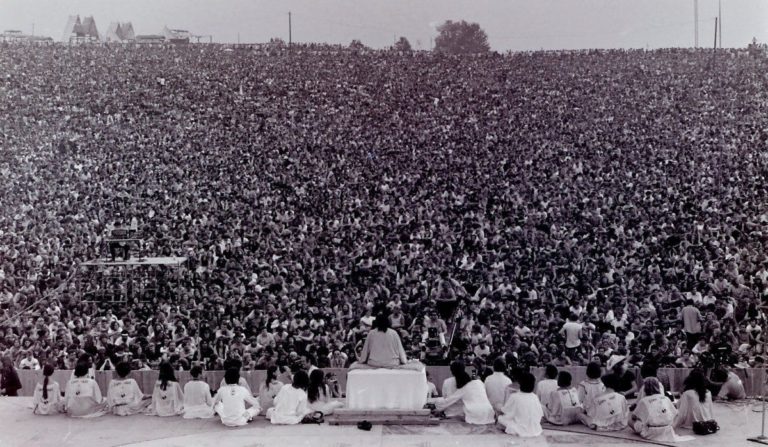
    The historic Woodstock Music and Art Festival took place 51 years ago this weekend in Bethel, NY in 1969. Billed as “an Aquarian Exposition: 3 Days of Peace & Music,” promoters Michael Lang and Artie Kornfeld brought together an all-time classic lineup of artists that spanned genres and put an exclamation point on a decade of change.

    Much has been written on the festival, and the (pre-COVID) thriving music festival scene in America owes a debt to the original Woodstock, adding a festival (and city name) to our collective lexicon and providing a template by which to measure all future music festivals.

    Woodstock 1969

    With today marking the anniversary of the first day of Woodstock, revisit performances from the eight artists who took the stage, including Richie Havens, who hurriedly took to the stage when Sweetwater was held up arriving to the site by helicopter.

    When asked by Lang to perform earlier than planned, Havens was initially resistant, thinking that he couldn’t get ready in time. With encouragement from John Morris, and learning that Tim Hardin was “scared shitless” to open the festival, Havens laughed and said,

    What can I say? OK, give me a couple minutes to get ready and to round up the rest of the group. I’ll do it.

    Richie Havens

    The stage crew was alerted and at 5:01pm, and once sound was set, Morris strode to the stage and announced,

    Well, it’s time for the music to begin. Let’s welcome, Mr. Richie Havens”

    John Morris

    And with that, the greatest music festival ever was off and running into the history books. Watch a performance from each of the eight artists who performed at Woodstock on August 15, 1969

    Richie Havens

    Sweetwater

    Bert Sommer

    https://www.youtube.com/watch?v=CA-NPCq_Jd8

    Tim Hardin

    Ravi Shankar

    Melanie

    https://www.youtube.com/watch?v=Qr2l9inAryQ

    Arlo Guthrie

    Joan Baez

    Watch performances from every Woodstock artist with our full playlist

  • Jazz at Lincoln Center asks ‘Everybody Wear They Mask’ in latest single

    The message that Jazz at Lincoln Center Orchestra with Wynton Marsalis’ is sending in their new single doesn’t mince words. “Everybody Wear They Mask” was composed by Marsalis and recorded at orchestra members’ homes in New York, New Jersey, Illinois, Georgia, Texas, and Iowa during quarantine.

    The song is the band’s call for everyone to do their civic duty and use face coverings in public to prevent the spread of COVID-19. And for those who don’t want to wear a mask, the song has a slightly more pointed message: “Why you gotta be like that?”

    Please, wear a mask.

    Some of jazz legend Mynton Marsalis’ best work of the last four decades has been influenced by socio-cultural and political issues. In 1985, his Black Codes (From the Underground) won a Grammy, in 1996, Blood on the Fields became the first jazz piece ever to win a Pultzier Prize, All Rise was performed by Symphonic Orchestras all across the world in 2002, and in 2007, From the Plantation to the Penitentiary was said to “[reveal] some important truth about this country with a lot of anger and heart.” It seems only fitting that now, during this historical time of national protest, Wynton Marsalis release a new work that reflects on these human rights issues.

    The Ever Fonky Lowdown” directly addresses the racism, deception, and greed that clouds the country’s chances of human rights for all and pushes us further away from democracy. It was written in 2018 to combat human suffering and exploitation on the universal scale, but is now, in 2020, more topical than ever. The album’s narrator, “Mr. Game,” says it himself: “We are here tonight, but this is an international hustle. It has played out many times across time and space and is not specific to any language or race. It takes on different flavors according to people’s taste, but always ends up in the same old place.” These issues have been happening to countless all throughout history, and it is time to strip away the distractions to attack the injustice’s sources directly.

  • Sunday Jazz: The EarRegulars “Sessions at The Ear Inn”

    Manhattan’s historic The Ear Inn has played a pivotal role in the music scene and beyond. In fact it is the oldest bar in New York City that has continuously served alcohol since 1817.

    The Ear Inn has a very unique history after being open for two centuries. It dates back to a time where there was African aide to George Washington and The Ear served as residence for John Adams and Aaron Burr, among others. The Ear Inn was nicknamed by patrons as an untitled bar (“The Green Door”) for obvious reasons. As a result, the bar is listed on the National Registrar of Historic Buildings.

    ear inn

    Recently unearthed recordings courtest of Jazz Lives feature performances from a bevy of jazz musicians in NYC. Every Sunday night at The Ear Inn was typical – those who knew, knew what to expect – but “typical” was also remarkable. 

    Ear Inn
    The Ear Inn c. 1940 – photo by kathy barbieri

    We start back in October 2008, with a video featuring Howard Alden, alongside Jon-Erik Kellso, Danny Tobias, Harvey Tibbs, Evan Christopher, Dan Block, Sebastien Giradot, and Chuck Redd.

    “Moonglow,” featuring Tamar Korn (vocals), Dan Block (clarinet), and Harvey Tibbs (trombone).

    On June 7, 2009, the EarRegulars included Jon-Erik Kellso and Duke Heitger (trumpet), Matt Munisteri (guitar) and Neal Miner (string bass).

    June 7, 2009 features Duke Heitger (trumpet), Harvey Tibbs (trombone), Dan Block (clarinet), Matt Munisteri (guitar) and Neal Miner (string bass), who summon Louis Armonstrong with “Some of These Days.”

    Two weeks later, on June 21, 2009, featured Jon-Erik Kellso (trumpet) Harvey Tibbs (trombone), Matt Munisteri (guitar), Danny Tobias (cornet) and Jon Burr (string bass).

    On September 6, 2009, enjoy the sounds of Danny Tobias (cornet), Michael Hashim (alto saxophone), James Chirillo (guitar), and Frank Tate (string bass).

    The lineup of EarRegulars on November 8, 2009, featured Jon-Erik Kellso (trumpet), Matt Munisteri (guitar), Harry Allen (tenor saxophone), and Neal Miner (string bass).

    From the EarRegulars’ session on November 22, 2009, the groups includes Jon-Erik Kellso (trumpet), Scott Robinson (reeds), Matt Munisteri (guitar), and Pat O’Leary (string bass).

    From December 6, 2009, enjoy the sounds of Jon-Erik Kellso (trumpet), Harvey Tibbs (trombone), Matt Munisteri (guitar), and Nicki Parrott (string bass) performing “Blues My Naughty Sweety Gives to Me” and “Blues in My Heart.”

    From January 30, 2010, the EarRegulars were Jon-Erik Kellso (trumpet), Dan Block (reeds), Matt Munisteri (guitar), and Pat O’Leary (string bass, cello).  Here’s Billie Holiday’s “I Gotta Right to Sing the Blues.”

    From March 14, 2010, an Ear Inn session featuring Pete Martinez (clarinet), Harvey Tibbs (trombone), Matt Munisteri (guitar), Neal Miner (string bass), performing “I Cover the Waterfront,” appropriate given the rainy night and The Ear Inn’s location near the Hudson River, plus “Deed I Do” by Ruth Etting and “Jazz me Blues” by Tom Delaney.

    From March 21, 2010, the EarRegulars are Jon-Erik Kellso (trumpet), Matt Munisteri (guitar), Scott Robinson (bass sax), Pete Martinez (clarinet) and guest Julian Lage (guitar).

    On Easter Sunday, April 4, 2010, the lineup included Matt Munisteri (guitar), Pete Martinez (clarinet), Charlie Caranicas (trumpet), Pat O’Leary (string bass), and Andy Farber (tenor saxophone), who joins in for the closing number. 

    Later in April 2010, we are joined at The Ear Inn by Jon-Erik Kellso (trumpet), Matt Munisteri (guitar), Harvey Tibbs (trombone) and Jon Burr (string bass).

    Later on, a version of “Crazy Rhythm” by Roger Wolfe Kahn & his Orchestra (1928) featuring Matt Munisteri (guitar), Harry Allen (tenor saxophone), (John Allred (trombone) and Pat O’Leary (string bass).

    From April 18, 2010, enjoy Benny Goodman’s “Avalon” featuring Jon-Erik Kellso (trumpet), Matt Munisteri (electric guitar), Julian Lage (acoustic guitar), Harvey Tibbs (trombone) and Jon Burr (bass).

    Cornetist Marc Caparone joins the band for Ruby Braff’s “One Hour.”

    And finally, Caparone leads the EarRegulars on “Whispering” with Harvey Tibbs, Dan Block (clarinet), Matt Munisteri, Jon Burr, and Julian Lage.

    From April 25, 2010, the EarRegulars were Jon-Erik Kellso (trumpet), Harry Allen (tenor saxophone), Matt Munisteri (guitar) and Neal Miner (string bass). The opening song from a splendid session was a Chicago jazz classic with roots in Oliver and Bix, performed as a Basie stroll.

    You’ll also find Ben Webster’s line on “In a Mellotone,” “Did you call her Today?,” “I Got Rhythm” and “The Jeep is Jumpin’”

    From May 2, 2010, watch Jon-Erik Kellso (trumpet), Andy Farber (tenor saxophone), Matt Munisteri (guitar), and Danton Boller (string bass) played “The Man I Love” (sans Kellso), “Somebody Stole My Gal,” and “Beer Street Blues.”

    From May 9, 2010, aka “Mother’s Night,” where the core quartet is Matt Munisteri (guitar), Jon-Erik Kellso (trumpet), Pat O’Leary (string bass) and Jim Masters (trombone), enjoy “I Found a New Baby,” “It’s the Talk of the Town,” “Please Don’t Talk About me when I’m Gone,” and a closing “Lazy River.”

    Going back to May 16, 2010, the EarRegulars were Jon-Erik Kellso (trumpet), Pete Martinez (clarinet), Matt Munisteri (guitar), and Greg Cohen (string bass). Watch them perform “I Believe in Miracles,” I’m a Ding Dong Daddy from Dumas: Willie the Weeper,” “Mahogany Hall Stomp” and “I’m Confessin’”

    Skip ahead on week to May 23, 2010, and the weekly session included Jon-Erik Kellso (trumpet), Matt Munisteri (guitar), Neal Miner (bass), Scott Robinson (tenor sax and cornet), and guest Julian Lage (guitar). This collection of musician perform “Oh Sister, Ain’t That Hot?,” “On the Sunny Side of the Street,” “Wabash Blues,” and “Struttin’ With Some Barbecue.”

    From May 30, 2010, here are a few combos featuring Danny Tobias (cornet), Chuck Wilson (alto sax), James Chirillo (guitar), Murray Wall (bass) Dan Block (clarinet), Pat O’Leary (cello/bass), and Tony Steele (bass). Various incarnations of these gentlemen feature “Beale Street Blues,” “Ain’t Misbehavin’,” “Love Me or Leave Me,” and “China Boy.”

  • Lake George Jazz Fest to Stream in September

    For years, the Lake George Jazz Festival has hosted some of the world’s most prominent jazz talent in a fun-filled weekend. Unfortunately, because of COVID-19, the weekend of in-person jazz has been cancelled. Luckily, fans can watch live streams of jazz every Thursday night in September. 

    Lake George Jazz
    Poster design by the Gruskin Group

    While the live concert will definitely be missed, the Jazz Weekend Virtual Series allows for even more to be showcased as music will be streamed every week. The Lake George Arts Project has planned a series of 4 impressive shows that will combine live performances as well as time for audience questions and discussions Each concert will be curated and hosted by LGAP’s Jazz Curator, Daniel Kelly. The renowned jazz musicians will not disappoint fans who miss the in-person festival. The shows will stream on Facebook, YouTube, and the Lake George Arts Project’s streaming page

    Even while the LGAP has great virtual events planned, they are still suffering financially from COVID-19. The organization is a non-profit and makes their revenue through ticket sales. While all concerts are on hold, the LGAP has lost $40,000 which might nearly double to $70,000. The Lake George Arts Project is asking for donations to help with their current struggle.

    To encourage more to donate, so-called LGAP’s “angels” Susan and Kenneth Gruskin will match each donation up to $2,500. The LGAP insists that “anything and everything makes a difference whether it is $5 or $500!” 

    The Jazz Weekend Virtual Series will stream on September 3, 10, 17, and 24 at 7pm.