The Empire State Youth Orchestra (ESYO) musicians will perform in the virtual Tutti! Festival over two weekends in December. It will feature twelve ensembles in eight live recorded concerts. All concerts will be streamed online to virtual audiences through ESYO’s Virtual Concert Hall.
The festival begins on December 3 with Beethoven’s First Symphony performed by the ESYO Symphony Classical Orchestra. The advanced Symphony Orchestra will perform works by Mozart including the Marriage of Figaro and The Magic Flute. ESYO Symphony Orchestra will also rediscover Dance in the Old Style by Hollywood composer Erich Korngold, The Serenade for Strings by Irish-American composer, Victor Herbert and Brazilian composer Heitor Villa-Lobos’ homage to Mozart Sinfonietta No. 1. On Saturday, December 12, members of the ESYO Jazz Orchestra will take the stage with Milestones by jazz legend Miles Davis and a jazzy take on the holiday favorite “Have Yourself a Merry Little Christmas.”
A full list of concerts and repertoire is available online on their website.
The organization is excited to be able to provide incredible musical opportunities to ESYO students who are from throughout the Capital Region and beyond. This past fall, leaders at the organization developed creative and innovative ways the student musicians could come together, in person, to practice music, all while adhering to strict COVID-19 safe regulations. They have been practicing in small groups throughout the season.
“The pandemic forced us to use many tools that we didn’t realize we had and forced us to think out of the box in the way we design our programs, orchestras, rehearsals and concerts. For example, the chance to break up our big orchestra into chamber orchestras allows for a lot of repertoire opportunities that we would not have before. The fact that we are challenged by the schedule having to rehearse half of the orchestra in one room and the other half in another room forced us to engage with assistant conductors and instrument coaches that tremendously increased the personalized educational attention that our musicians would not receive otherwise,” said ESYO Music Director, Carlos Ágreda.
Georgia Burtt, a violinist in Symphony Orchestra who is homeschooled in Berne, also believes ESYO has shined during this time. “I think that the music instruction is great. When we were first quarantined back in March, ESYO continued online. We had some speakers talk to us about college, performance, and what life is like working as a professional musician. I thought that those were incredible. Now, with the in-person rehearsals, we can directly work with our conductors and sectional coaches. We are also live-streaming the rehearsals so those who are quarantined are able to still learn and participate in the rehearsals. Overall, I think ESYO has done an incredible job modifying in accordance with these new restrictions while still giving us students opportunities to learn and improve.”
ESYO has also kept its free, afterschool program called CHIME going strong, in the virtual world. CHIME musicians are engaging in a private lesson, a group practice and a music appreciation class each week. The cuts in NY State arts education funding have presented a significant challenge, but ESYO remains committed to providing enriched musical experiences for its youth. They are so grateful to all who have made generous contributions this fall, and are hoping that the community will continue to step up to help ensure that the CHIME students are able to keep making music through the winter.
Virtual Concert Schedule:
December 3 at 7:00pm: Symphony Classical
December 4 at 7:00pm: Repertory Romantic and String Orchestra
December 5 at 7:00pm: Repertory Strings and Youth Percussion
December 6 at 3:00pm: ESYO Wind Orchestra & Concertino Strings
December 10 at 7:00pm: ESYO Repertory Classical and String Orchestra
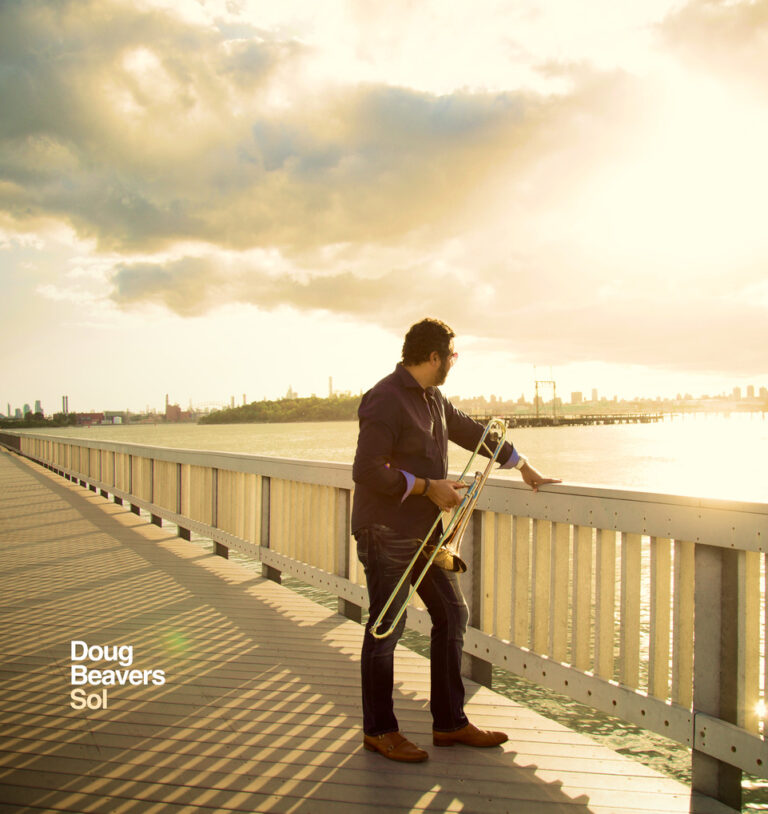
Grammy Award-winning Doug Beavers is of the stature of NYC’s top jazz aficionados who fearlessly push the boundaries of the genre itself. Beavers was an ace trombonist for Eddie Palmieri’s “La Perfecta” band and the current lead trombonist for the Spanish Harlem Orchestra. On his forthcoming new full-length studio album, Sol, Beavers steps into the spotlight like never before.
Sol showcases a dozen original compositions featuring special guests Joe Locke (Kenny Barron, Eddie Henderson) on vibraphone, vocalist Ada Dyer (Chaka Khan, Roberta Flack), Latin jazz vocal sensation Jeremy Bosch (Spanish Harlem Orchestra), and Robby Ameen (Ruben Blades, Dizzy Gillespie) on drums.
Recorded in New York City during the COVID-19 pandemic, Doug Beavers sought to produce an empowering album to help rekindle connections and return to values centered around kindness and compassion. At the heart of Sol, he revisits the sounds of the 1970s when addictive bass riffs, sophisticated horn arrangements, and African rhythms dominated the charts. It wouldn’t be a Beavers recording though if it didn’t have a powerful punch of Latin jazz and the best salsa players/singers NYC has to offer performing on the tracks. Hence, Sol dives deep into an organic alchemy of salsa, jazz, and R&B.
“It was the vibe of the sun telling me everything is going to be OK. I just took my score paper and the music immediately started pouring out,” Doug Beavers recalls. “You know, we’ve all been through a lot in 2020, and I wanted to record a New York album that uplifts people and puts smiles on their faces. I know that sunshine has that natural effect on me, thus I named the album, Sol.”
Sol is set for international release on Friday, December 4, on Circle 9, a brand new subscriber-supported independent record label, recently launched by Doug Beavers.
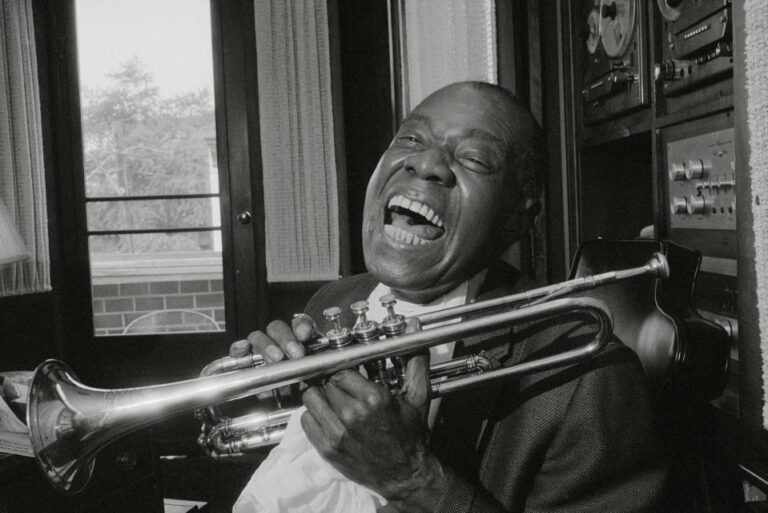
On August 4, 1901, Louis Armstrong was born in New Orleans. Until the age of five, Armstrong’s grandmother was his caregiver. At the age of six, he attended the Fisk School for Boys, an all black school in New Orleans. While performing odd jobs for the Karnoffsky family, Armstrong heard the early sounds of jazz from King Oliver.
Armstrong and the Karnoffskys bonded over their discrimination. Armstrong faced the obvious racial discrimination, but the Karnoffskys, a Jewish houselhold, also faced discrimination by “other white folks.”
In his early career, Armstrong performed on riverboats along the Mississippi River. This gave him more musical experience, particularly regarding reading music. He improved him trumpet playing, creating his own style and personality.
Chicago
In 1922, he moved to Chicago by invitation of King Oliver. Although race relations were poor, the city was flourishing and Armstrong was bale to find a job. The band, headed by Oliver, soon became one of the most influential bands in Chicago. Armstrong was able to live luxuriously in Chicago. Armstrong made his first recordings with Oliver for Gennett Records.
Louis Armstrong’s second wife, Lil Hardin Armstrong, wanted him to develop his own style apart from Oliver. Her influence eventually undermined Armstrong’s relationship with his mentor, especially concerning his salary and additional money that Oliver held back from Armstrong and other band members.
New York
Armstrong and Oliver parted ways in 1924. Soon after, Armstrong received an invitation to travel to New York and join the Fletcher Henderson Orchestra, the best African-American band at the time. Armstrong adapted to the tightly controlled style of Henderson, playing trumpet and experimenting with the trombone. The other members were affected by Armstrong’s emotional style. His act included singing and telling tales of New Orleans characters, especially preachers.
During this period, Armstrong made numerous recordings with Clarence Williams, Ma Rainey, Bessie Smith, and Alberta Hunter. Additionally, Duke Ellington‘s orchestra went to the Roseland Ballroom to catch Armstrong’s performances.
Return to Chicago
In 1925, Armstrong returned to Chicago. He joined his wife’s band, the Lil Hardin Armstrong Band, but also created the Hot Five. This group included Kid Ory, Johnny Dodds, Johnny St. Cyr, Armstrong, and Lil Armstrong. Over the next year, the group recorded twenty four records. Armstrong’s recordings of “Weather Bird” and “West End Blues” remain today as some of the most famous and influential improvisations.
He began to scat sing (improvised vocal jazz using nonsensical words) and was among the first to record it, on the Hot Five recording “Heebie Jeebies” in 1926. The recording was so popular that the group became the most famous jazz band in the United States, even though they had not performed live to any great extent. Young musicians across the country, black or white, were turned on by Armstrong’s new type of jazz.
After separating from Lil, Armstrong started to play at the Sunset Café for Al Capone’s associate Joe Glaser in the Carroll Dickerson Orchestra, with Earl Hineson piano, which was renamed Louis Armstrong and his Stompers, though Hines was the music director and Glaser managed the orchestra. Hines and Armstrong became fast friends and successful collaborators. It was at the Sunset Café that Armstrong accompanied singer Adelaide Hall. It was during Hall’s tenure at the venue that she experimented, developed and expanded her use and art of Scat singing with Armstrong’s guidance and encouragement
Back to New York
Armstrong returned to New York in 1929, playing in the pit orchestra for a musical with Fats Waller. He also made a cameo appearance as a vocalist, regularly stealing the show with his rendition of “Ain’t Misbehavin’”. His version of the song became his biggest selling record to date.
He soon began working at Connie’s Inn in Harlem, the rival to the Cotton Club. He also continued recording, performing many of Hoagy Carmichael‘s music with “Stardust” becoming the most successful. As with his trumpet playing, Armstrong’s vocal innovations served as a foundation stone for the art of jazz vocal interpretation. His resonant, velvety lower-register tone and bubbling cadences on sides such as “Lazy River” exerted a huge influence on younger white singers such as Bing Crosby.
Throughout the 1920’s, Louis Armstrong played a major impact on the Harlem Renaissance. His impact on the Renaissance influenced other major figures such as Langston Hughes. Within Hughes’ writings, he created many books which held the central idea of jazz and recognition to Armstrong as one of the most important person to be part of the new found love of their culture.
Jazz Revival
After spending many years on the road, Armstrong settled permanently in Queens, New York in 1943 in contentment with his fourth wife, Lucille. After spending many years on the road, Armstrong settled permanently in Queens, New York in 1943 in contentment with his fourth wife, Lucille.
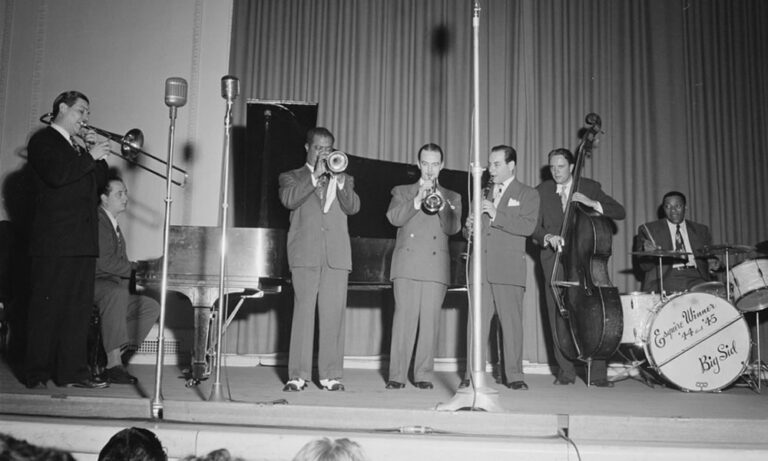
During the 1940s, Armstrong performed at the famed second Cavalcade of Jazz concert held at Wrigley Field in Los Angeles with Lionel Hampton’s band. Following a highly successful small-group jazz concert at New York Town Hall, Armstrong’s manager established a six-piece traditional jazz group featuring Armstrong with Jack Teagarden, Earl Hines and other top swing and Dixieland musicians. Armstrong’s manager named the group Louis Armstrong and His All Stars.
Around the World
By the 1950s, Armstrong became a widely beloved American icon and cultural ambassador. Around the world, he had a fervent following. However, there was an obvious generational gap between Armstrong and younger jazz artists like Miles Davis and Sonny Rollins. The younger generation viewed Armstrong and his act as outdated.
In 1948, Armstrong heard Suzy Delair sing “C’est is bon” at the Nice Jazz Festival. He loved the song and recorded his own in 1950. This became a worldwide success. In the 1960’s, he toured Ghana and Nigeria.
After leaving Decca Records, Armstrong became a freelance artist, but continued touring. This was an intense schedule, but Armstrong had to rest in 1959 when he suffered a heart attack in Italy.
In 1964, after over two years without setting foot in a studio, he recorded his biggest-selling record, “Hello, Dolly!”, originally sung by Carol Channing. Armstrong’s version remained on the Hot 100 for 22 weeks, longer than any other record produced that year, and went to No. 1 making him, at 62 years, 9 months and 5 days, the oldest person ever to accomplish that feat. In the process, he dislodged the Beatles from the No. 1 position they had occupied for 14 consecutive weeks with three different songs.
In March of 1971, Armstrong went against his doctor and played a two week engagement at the Waldorf-Astoria’s Empire room that ended in a heart attack. He was released from the hospital in May, and quickly resumed practicing his trumpet playing. Still hoping to get back on the road, Armstrong died of a heart attack in his sleep on July 6, 1971, a month before his 70th birthday. His honorary pallbearers included Bing Crosby, Ella Fitzgerald, Dizzy Gillespie, Count Basie, Frank Sinatra, Ed Sullivan, and Johnny Carson.
New Orleans’ main airport was renamed Louis Armstrong New Orleans International Airport. In 2002, Armstrong had recordings preserved in the United States National Recording Registry. The U.S. Open’s former main stadium was named the Louis Armstrong Stadium since he lived nearby.
Though Armstrong is widely recognized as a pioneer of scat singing, Ethel Waters precedes his scatting. Billie Holiday said that she always wanted Bessie Smith‘s ‘big’ sound and Armstrong’s feeling in her singing. Other major jazz musicians like Duke Ellington have praised Armstrong through strong testimonials.
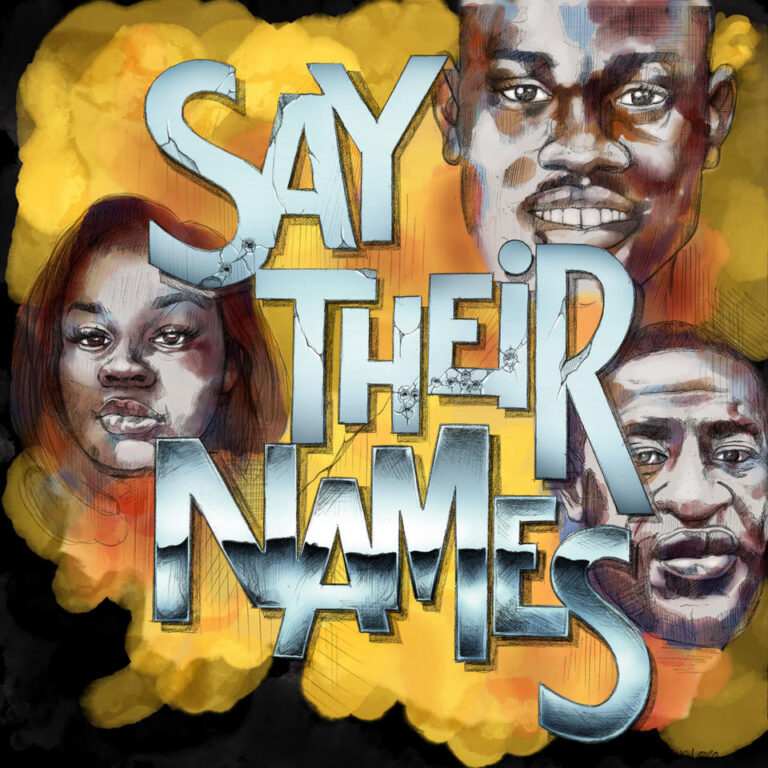
MyGood has teamed up with a roster of roots creators and contemporary jazz artists to produce “Say Their Names.” Set to release online December 11, the four-movement composition urgently calls for social justice.
Featured on the track is Rastafarian vocalist Cedric Myton (singer of Jamaica’s legendary roots reggae band The Congos), jazz scat vocal improvisations from Maiya Sykes, pianist Ruslan Sirota, saxophonist Katisse Buckingham, bassist Benjamin Shepherd, and Latin GRAMMY-winning percussionist Diego Álvarez Muñoz. Los Angeles producer Ethan Sultry composed and arranged “Say Their Names.”
Cover artwork for “Say Their Names” is a concept by Toons One Colored by Allen Passalaqua of DC comics.
The track is an open protest against the senseless police killings of George Floyd, Breonna Taylor, Ahmaud Arbery, and countless other black men and women. Sounds emulating the Black Lives Matter marches in Los Angeles make the bones of the song. The moving chant “Something’s not right I fear, people gone who should be here, I don’t feel okay today, so I’ll march and say their names,” echos the feelings of anger and despair that have been felt by too many.
I knew the composition needed a spiritual guide who held ancient truths, one who has experienced real artistic rebellion. While visiting Papa Michigan at Mixing Lab Studio in Jamaica, I heard the unforgettable falsetto of Cedric Myton. He blew me away. During the LA protests, I marched downtown. Macy Gray and I had previously begun to talk about collaborating on something and so immediately I reached out to her. I was hoping she’d sing the song, but our schedules didn’t align so we ultimately connected to raise awareness for her new non-profit MyGood. Subsequently, Cedric came to mind, and he recorded his takes out of Tuff Gong Studio. ‘Say Their Names’ really took off from there.
Ethan Sultry, Los Angeles Producer
Macy Gray found MyGood in July 2020. The non-profit’s mission is to bring relief to those that lost loved ones due to police violence. Recognizing the traumatic effects the event has on the families left behind MyGood offers financial, mental health and advocacy support regardless of circumstances behind the incidents.
“Say Their Names” can be downloaded on all major online music retailers and will be available for free on sirsultrymusic.com. Donations can be made to mygood.org.
Macy Gray speaks on “making the world a better place.”
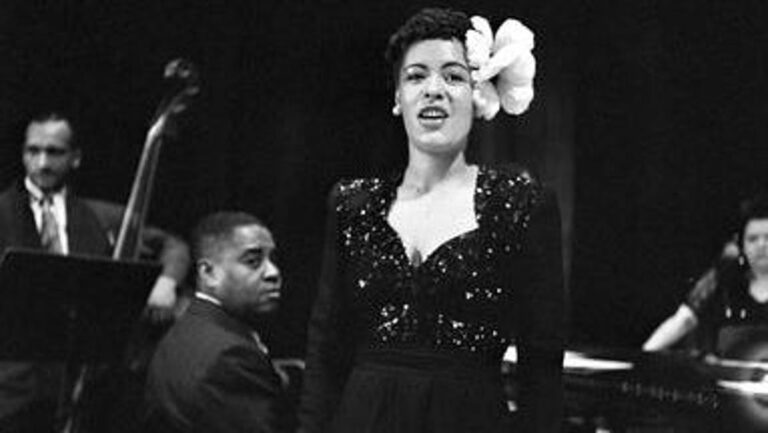
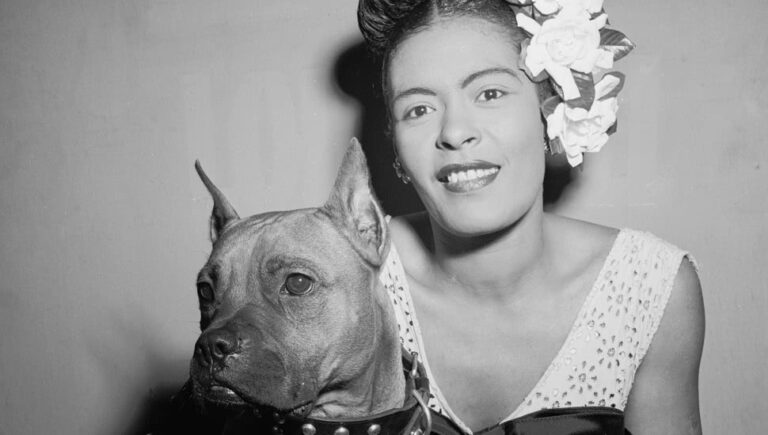
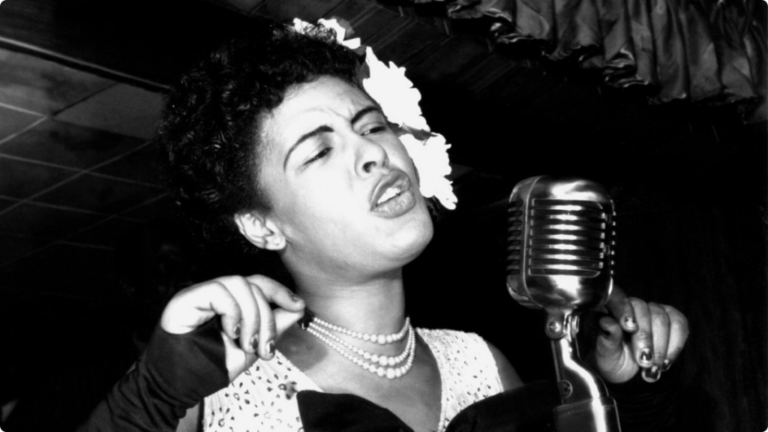
Eleanora Fagan was born on April 7, 1915 in Philadelphia. As a child, she started going by Billie Holiday, Billie from Billie Dove and Holiday from her dad. She began listening to records by Louis Armstrong and Bessie Smith. Her mother Sadie cleaned houses, but could not make a living, so moved to New York City.
As a teenager, Holiday began singing in nightclubs. She teamed up with saxophonist Kenneth Hollan, performing at numerous clubs in Harlem. In 1932, Holiday replaced Monette Moore at a club where John Hammond, a producer, heard her and signed her to a record. At the age of 18, she made her first recording with Benny Goodman.
The Depression Era
In 1935, Holiday recorded pop tunes with Teddy Wilson. Holiday was allowed to improvise; her improvisation of the melodies to fit the emotion was revolutionary. Their first collaboration, “What a Little Moonlight Can Do” became Holiday’s ‘claim to fame’.
Holiday soon achieved the title of big-band vocalist with Count Basie. She was able to choose her own songs, often opting to portray herself as a woman unlucky in love. “Summertime” a hit from Gershwin‘s Porgy and Bess became a hit for Holiday. Basie soon accepted Holiday’w involvement in the band, saying “When she rehearsed with the band, it was really just a matter of getting her tunes like she wanted them, because she knew how she wanted to sound and you couldn’t tell her what to do.”
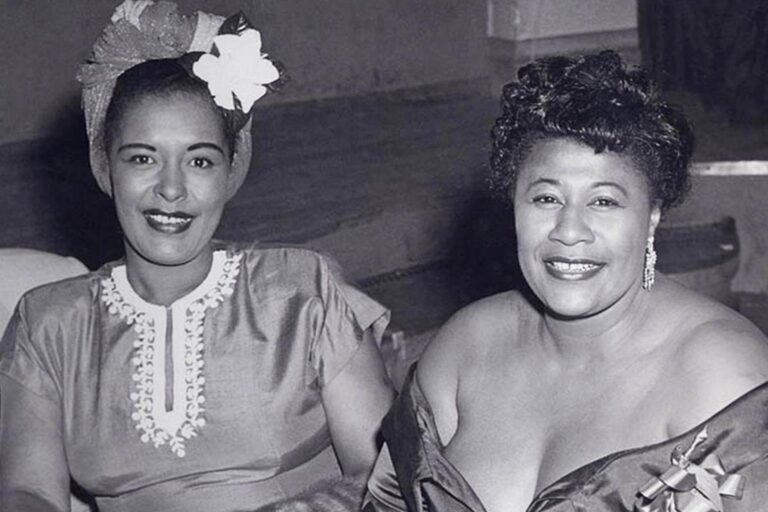
Soon, Holiday found herself in competition with Ella Fitzgerald, the singer for the Chick Webb Band, the direct competitor of Count Basie’s. On January 16, 1938, Basie and Webb’s bands had a battle at the Savoy Ballroom. Metronome magazine declared Webb the winner while DownBeat magazine pronounced Basie the winner.
Holiday left Basie in 1938 and was picked up by Artie Shaw. This put her in a unique situation in that she was a black woman singing in a white orchestra in the segregated South. With Shaw, Holiday achieved notoriety, but could not sing as often as with Basie. Additionally, Shaw was pressured to hire a white singer with whom Holiday had to share time. In November 1938, Holiday was asked to take a service elevator at the Lincoln Hotel which may have caused her to leave the group soon after.
Columbia and Commodore
Holiday was recording for Columbia Records and when she was introduced to “Strange Fruit,” a poem about lynching. She performed it in 1939 with trepidation, later saying the song reminded her of her father’s death. He was denied medical treatment due to racial prejudice.
Holiday got into an argument with her mother Sadie that ended in the daughter storming out, shouting, “God bless the child that’s got his own.” She then wrote “God Bless the Child,” her most popular and most covered record.
In 1942, Holiday recorded “Trav’lin Light” with Paul Whitman for Capitol Records, reaching number 23 on pop charts and number 1 on R&B charts. Holiday signed with Decca Records in 1944, recording “Lover Man”, another hit. In September 1946, Holiday began her only major film, New Orleans, in which she starred opposite Louis Armstrong and Woody Herman. Plagued by racism and McCarthyism, producer Jules Levey and script writer Herbert Biberman were pressed to lessen Holiday’s and Armstrong’s roles to avoid the impression that black people created jazz.
Legal Trouble and Drug Use
On May 16, 1947, Holiday was arrested for possession of narcotics. During the trial, she heard that her lawyer would not come to the trial to represent her. Dehydrated and unable to hold down food, she pleaded guilty and asked to be sent to the hospital. She was sentenced to Alderson Federal Prison Camp in West Virginia. The drug possession conviction caused her to lose her New York City Cabaret Card, preventing her working anywhere that sold alcohol’ so she performed in concert venues and theaters.
After her release in 1948, her manager, Ed Fishman, thought she should sing a comeback concert at Carnegie Hall. On March 27, Holiday played Carnegie Hall to a sold out crowd. A record number of tickets were sold in advance, a feat made more impressive since she did not have a current hit record. Holiday was again arrested on January 22, 1949 in San Francisco. That October, she recorded “Crazy He Calls Me”.
https://www.youtube.com/watch?v=Z_1LfT1MvzI
The loss of her Cabaret Card hurt Holiday financially. This problem worsened when Holiday’s records went out of print in the 1950s. She seldom received royalties in her later years. In 1958, she received a royalty of only $11.
By the 1950s, Holiday’s drug abuse, drinking, and relationships with abusive men caused her health to deteriorate. She appeared on the ABCreality seriesThe Comeback Story to discuss attempts to overcome her misfortunes. Her later recordings showed the effects of declining health on her voice, as it grew coarse and no longer projected its former vibrancy.
In early 1959, Holiday was diagnosed with cirrhosis. She stopped drinking on doctor’s orders, but soon relapsed. She quickly lost 20 pounds. On May 31, 1959, Holiday was taken to Metropolitan Hospital in New York for liver disease and heart disease. The Federal Bureau of Narcotics had been targeting Holiday for the last twenty years. As she lay dying, they raided her hospital room, placing Holiday under police guard. Holiday died on July 15, 1959 at 3:10 a.m. due to heart failure caused by cirrhosis of the liver.
Legacy, Awards, and Accomplishments
Holiday’s improvisation made up for a lack of training and was quoted saying that she wanted her voice to sound like an instrument. Frank Sinatra called her “the greatest single musical influence on me.”
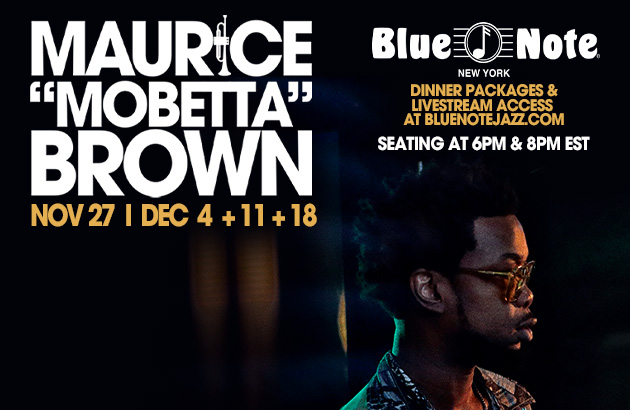
The popular Blue Note Jazz Club and Restaurant is finally re-opening their doors to jazz lovers and music enthusiasts alike, with a set capacity limit of 25 percent.
Promotion for Blue Note’s first night of re-opening.
I am very happy to announce that the Blue Note will reopen for dining this holiday season. The safety of our guests is our highest priority and our staff is working around the clock to ensure our guests have a comfortable dining experience.
Steven Bensusan, President of Blue Note Entertainent Group
Blue Note originally had to close because of the Covid-19 shutdown. Although they kept active by streaming live shows online, there’s nothing like an in-person jazz experience.
Starting Nov. 27, the club will provide dinner services for selected evenings from 6 p.m. to 8 p.m., along with brunch on selected weekends from 11 a.m. to 1 p.m. Dining packages will also be available to guests who want to experience the “magic of the holidays,” at Blue Note. The diners will be able to experience a list of respectable musicians while eating their meals.
The Greenwich Village club has been around for almost four decades. Opening in 1981, Blue Note became a center for culture and music in New York City. They are known as one of the premier jazz clubs in the world, where they strive to preserve the history of jazz. In the past, they featured renowned artists like, Chick Corea, Joe Lovano, John Scofield, and Chris Botti. The club also frequently promotes up-and-coming jazz, hip-hop, R&B and soul musicians.
Dining packages start at $45 per person, while livestream access is $10. Regardless of whether you would like to enjoy a meal in the presence of a jazz show or do the same thing from home, all the information and payments can be made at Blue Note’s website.
Incidental Music Calendar:
Maurice “Mobetta” Brown Residency – Nov 24, Dec 4, Dec 11, Dec 18
Eddie Palmieri Residency – Nov 28, Dec 5, Dec 12, Dec 19, Dec 26
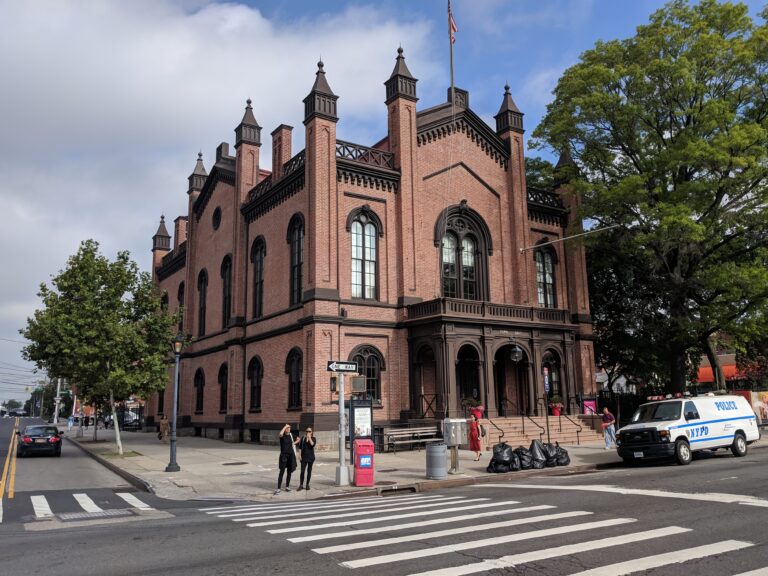
Flushing Town Hall announced a jazz lineup which started back on November 11 and will run through December 20. The program currently includes five different performances throughout both months. A sixth event will ‘spill over the bar-line’ into 2021. The first two programs have come and gone, but the jazzy fun is far from over.
The Town Hall is a Smithsonian affiliate and is located in Queens in New York City that presents multi-disciplinary global arts to engage and educate global communities. They are a member of the New York City’s Cultural Institutions Group (CIG). They have restored and managed the historic 1862 landmark on behalf of the City of New York. Specifically they try to embrace the history of Queens as the home of jazz, by presenting the finest in jazz performance. Although the historic venue’s doors have been temporarily closed due to COVID-19, Flushing Town Hall continues to pursue its mission of bringing people together by providing global arts for a global community through its online series,FTH at Home! Which will be presenting the November and December programming.
On Thursday, November 19, 7:30 p.m. EDT Flushing Town Hall will present “Lioness: Women in Jazz Concert Series Featuring Lauren Sevian’s LSQ” The series featured Lauren Sevian’s LSQ with Lauren Sevian (baritone saxophone), Helen Sung (piano), Christian McBride (bass) and E.J. Strickland (drums). Tune in to YouTube for a free pre-recorded streaming performance, taped just for this event, followed by a LIVE Q&A with the musicians.
On Wednesday, December 9 at 7 p.m. EDT the Virtual Jazz Jam “Holiday Party” will be taking the stage. This is the Flushing Town Hall’s free Virtual Jazz Jam: Celebrating the Legacy of Louis Armstrong. Open to amateur and professional musicians, including high school students, jammers are invited to perform their favorite holiday song, and recall any memory around their tune. Participants can also show-off their family’s traditional holiday treats and drinks, and toast the season.
The programming will wrap up on Sunday, December 20 at 5:30 PM EDT with “New Music Horizons – Collaborative Artists in Concert.” This will be part 2 of the Bruce Arnold & The Mark Wade Trio New Music Horizons Part II presents two more dynamic jazz composers Bruce Arnold and Mark Wade. Bruce Arnold will present a set of solo acoustic guitar featuring his style of lyrical melodies and raw dissonances. The Mark Wade Trio will follow with their brand of group interplay and expressive improvisation that has brought them an international following.
To participate, musicians should email education@flushingtownhall.org and identify a three- to four-minute tune they intend to play (live or pre-recorded). Only 15 musicians will be selected on a first-come, first-served basis. Anyone is invited to tune in to the LIVE VIRTUAL jam and listen on Facebook or Zoom.
The Lioness: Women in Jazz Concert Series Featuring the Lioness Ensemble was scheduled for Sunday, December 13 at 2:30 p.m. EDT but has been postponed until 2021. This women in Jazz Concert Series will feature the Lioness Ensemble with Alexa Tarantino (alto saxophone), Jenny Hill (tenor saxophone, flute), Lauren Sevian (baritone saxophone), Amanda Monaco (guitar), Akiko Tsuruga (organ) and Sylvia Cuenca (drums). Tune in to YouTube for a free pre-recorded streaming performance, taped just for this event, followed by a LIVE Q&A with the musicians.
Catch Up on Past Events:
On November 11, the Jazz Jam celebrated “November Gratitude.” This event celebrated the Legacy of Louis Armstrong invited musicians and jazz aficionados to participate or simply listen during its monthly jam session. In November, musicians will choose songs that fit into the theme “November Gratitude.”
The “New Music Horizons – Collaborative Artists in Concert” took place on Saturday, November 14, 7:00 p.m. EDT. It featured part-I of the David Shenton & The Mark Wade Trio who are two dynamic jazz composers. David Shenton is a classical composer and Mark Wade is a jazz composer.
To attend the programming or get more information on it visit Flushing Town Hall’s website.
Brooklyn based musical fusion, Shubh Saran, is Becoming a musical world map for genres. In a cell-phone driven society, you would open your GPS to navigate outward. Saran, 29, becomes a medium, channeling a multitude of genres inward and back out through his compositions. The Indian native fuses traditional music, with punk, blues, rock and his head-on studies in Jazz.
The Delhi high school student made Berklee dream come true, honed his passion amongst a “best-of-the-best” melting pot at the college. He has resided in multiple countries, grabbing musical influence at every turn, and it shows. Now calling New York home, Saran’s latest creation, Becoming, is a must explore.
The title track and lead single off the album was originally released Nov. 12, 2019.
The 5-track EP is an navigation to new color palettes that will re-texture the ears of the most seasoned listener. The goal is not a means to an end; It is an exposition of clashing sounds that provoke a journey of unforeseen turns.
Take The title track “Becoming” as example. Saran cresendos into a collapsing overture, filled with dual-drum-sets, arching strings and key pads. Everything peaks at once until Saran reels you back in with his ethereal guitar passage. It draws you into the basement of Berklee’s practice rooms and jam-sessions; the moment where you are sucked in reverse to the doorway, as an unknown musical fusion burst from its seams.
Pairs of drums, Saxophones and strings create a flam-like density. An illusion of the same track being overlapped in slight delay should sound abrasive yet this creates an ever-expanding feeling. The 5:09 track feels like one deep inhale. Its healing breath ends abruptly.
‘Becoming’ definitely wasn’t written as the single off the album, nor was the EP supposed to be named after the song, or vice versa. As I started writing it, though, I began to realize that this is the anthemic song that really sums up the whole message of the EP.”
Shubh Saran Becoming – Released February 10, 2020
Saran’s musical quests become physical as he travels across the globe with his work. Strength, musical and cultural growth bloom in the cyclical nature of Suran’s playing. Most recently he took this EP on tour to with performances and workshops across New Delhi, Goa, Gurgaon and Mumbai. “I compose in a modern jazz sort of idiom, but I decided to revisit the music I grew up with as a teenager… it was Blink-182, punk rock, Green Day, the kind of music you don”t associate with ”serious music”,” Saran told Outlook India. Saran is giving back, filling the music void he had as a high school student. He excites the musical realm and young artists alike.
“I’ve always liked artists who have long music careers, where their first album is really different from their last album, and you can see the evolution and influences over time. I’m just celebrating that by being who I am as a musician.”
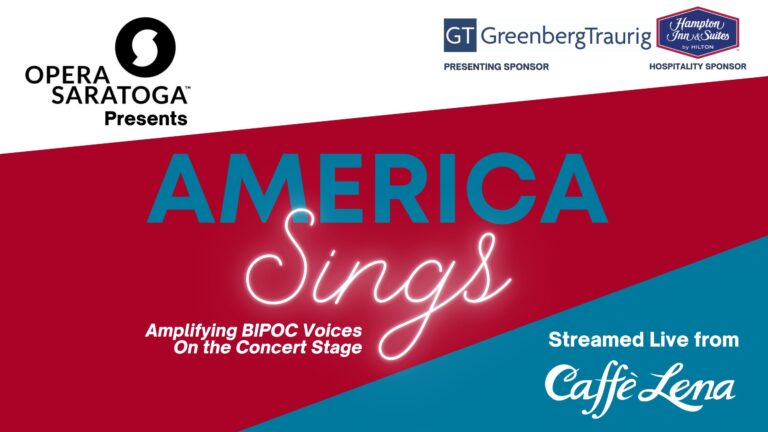
Opera Saratoga has announced the first performance events as the start to the company’s 60th Anniversary Season. On Thursday, November 19, in partner with Caffe Lena, Opera Saratoga will launch AMERICA SINGS, a monthly concert series featuring diverse, internationally acclaimed artists.
The series looks to amplify the voices of artists from racial groups historically underrepresented on the concert stage and features a wide array of classical, jazz, and popular music. “Our focus on BIPOC artists in this series is one of our first steps in a multi-pronged plan to address diversity and equity not only in our programming at Opera Saratoga, but in the organization as a whole,” explained Lawrence Edelson, Opera Saratoga’s Artist and General Director.
All AMERICA SINGS concerts in this series will be live streamed to the public for free, but viewers are encouraged to contributee through a virtual tip jar. All tips received will be split equally between Opera Saratoga and the artists, providing much-needed support to the artists impacted by the shutdown.
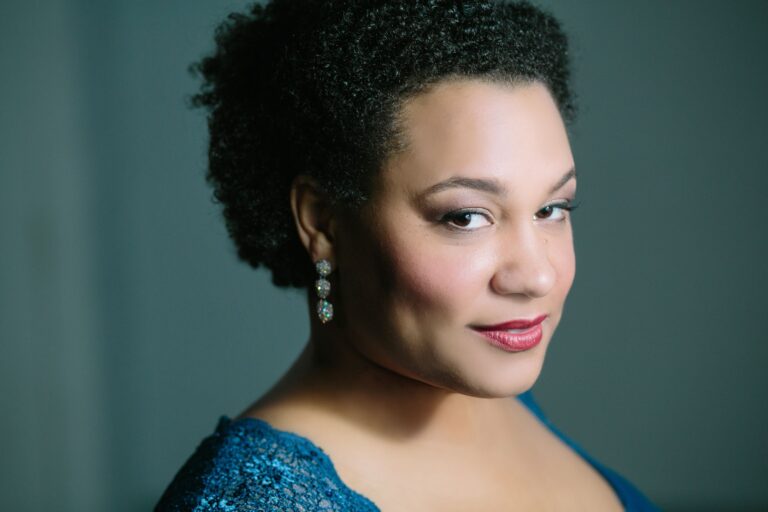
Mezzo soprano Deborah Nansteel, who was featured in Opera Saratoga’s 2018 production of The Consul, will open the series on Thursday, November 19th at 7pm with pianist Giovanni Reggioli. This first concert will feature music by George Gershwin, Billy Strayhorn, Richard Rogers, Erroll Garner, Richard Wagner, and William Bolcom, along with a selection of traditional spirituals.
Deborah Nansteel
The December concert will take place on Wednesday, December 30th at 7pm, and will feature soprano Brandie Sutton with pianist and composer Damien Sneed, both debuting with the company at the turn of the new year. The series will continue through the 2021, with additional concerts to be announced early next year
“The onset of the coronavirus pandemic, the racial awakening that has been taking place across the country, and the polarizing political climate leading up to the election has energized artists. While many singers have not been able to perform for live audiences due to the pandemic, they are engaged and craving the opportunity to share the transformative power of song and the intersection between music and what is happening in our country with audiences. I have not programmed this series, other than to invite an incredible group of artists to join us in Saratoga Springs. Rather, I have asked each artist to curate their own concert – to share music with us that speaks to how they are feeling about America today. I cannot wait to hear what each artist brings to us as they share their personal experience and perspective through the power of their incredible voices.”
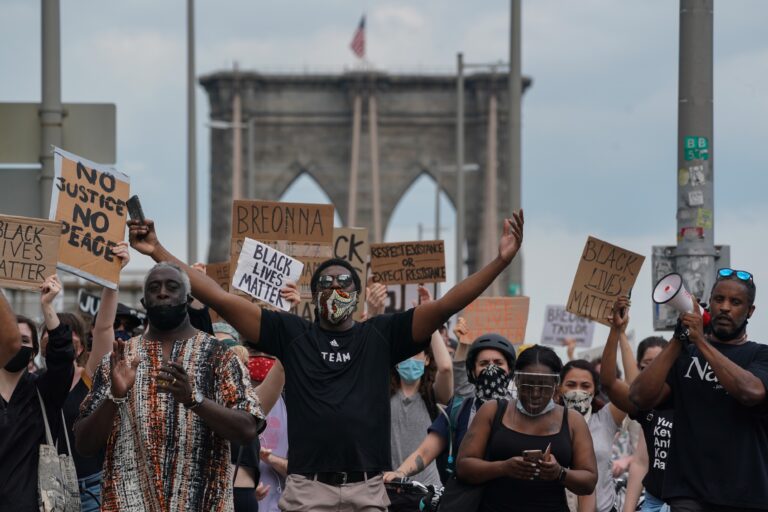
The election may be over, but the people and causes that pushed for change are still making their voices heard. “The Ultimate Litmus” was written by Carlos Henriquez and Jenny Hersch, in response to the protests sparked by the May 25 death of George Floyd. The pair have produced an accompanying music video for the song, featuring Jazz at Lincoln Center Managing and Artistic Director Wynton Marsalis on both vocals and trumpet.
https://www.youtube.com/watch?v=H5N6FCNN8X4
Hersch says of the song,
I wrote a verse of poetry on June 2. It just poured out. On June 9, I wrote verses two and three. I have poetic thoughts but I don’t often write them down. Carlos Henriquez (bassist and arranger, Jazz at Lincoln Center Orchestra) and I have worked on several projects together over the past few years involving music for kids. I sent him the lyrics and asked him to write a brass band arrangement.
Jenny Hersch
Using a New Orleans street sound seemed to be the best choice given the circumstances behind the lyrics, with emotion and energy being simultaneously expressed.
I gave the vocals a try in a rhythmic spoken-word style over Carlos’s MIDI file and immediately called Bryan R. Smith, a photographer friend in NYC to ask for the use of the protest pictures he took in New York, Washington D.C. and Minnesota. Carlos then called Dwight Adams (trumpet), Jeffrey Miller (trombone), Ibanda Ruhumbika (tuba) and Ali Jackson (percussion) to record their parts from home.
Jenny Hersch
With the track laid down, Carlos played a rough audio mix of “The Ultimate Litmus” for Wynton Marsalis in early September. Marsalis was moved by the project and offered to recorded the vocal track and a trumpet solo, which he did in early October.
Protesters walk across the Brooklyn Bridge into Manhattan during a demonstration over the death of George Floyd by a Minneapolis police officer on June 6, 2020 in New York. Photo by Bryan Smith
The video was assembled by a team of recent Berklee College graduate Alex Leiva (sound) and Shannon Magnaldi (video), a recent Massachusetts College of Art grad. “The Ultimate Litmus” features Dwight Adams and Wynton Marsalis on trumpet, Jeffery Miller (trombone), Ibanda Ruhumbika (tuba), and Ali Jackson (percussion).
Lyrics for The Ultimate Litmus, by Jenny Hersch
A bottomless pit of pandemonium A breaking point? A tipping point? No quick fix outcome
A state of being? A state of mind? Is it an absence of mind? Where is the presence of mind?
Confusion …. Delusion No illusions No stop gap brawl In it for the long haul
A faction reaction No abstraction Identity …. Integrity Conformity …. Community
Relationships based on tolerance not trust? Is it them or is it US?
Protest No contest 24 7 With no rest
Pros and cons A long list at best Overwhelmed by stress In need of a life vest
Constitution …. Restitution Persecution …. Absolution Abusers …. Accusers For the foreseeable future
Civic values Civic virtue Reeling …. kneeling Rail against the curfew
Fleet of feet Running from a browbeat Bias Is a one way street
Who will bear witness The ultimate litmus A test of wills What values instilled
No justice No peace May wonders NEVER cease
ACTION Is gaining traction Words are not enough Need satisfaction
Lines of questioning Is what we’re expecting Fear of the unknown Will compassion be shown
What is the hold up We’re all thunderstruck No sit down strike Throngs are running amok
Painted into a corner No clear path forward Blurred on the periphery The slope is very slippery
Tears are to be expected We’re so disconnected Celebrate our differences While honoring our preferences
Human rights Are bona fide Like clockwork Like predicting the tides
400 years Of victimization We need a DO-OVER In this nation