Category: Reviews

  • Karma 3: Dave East still searching for his own Direction on New Album

    In the most recent installment of his Karma mixtape series, Harlem rapper Dave East makes his latest attempt at solidifying himself as one of New York’s head honchos. The 15-track, 53-minute project features notable guest appearances. Trey Songz, French Montana, Benny the Butcher, A Boogie wit da Hoodie, dancehall artist Popcaan, along with R&B legend Mary J. Blige, all lend-a-hand, in what felt like East’s best attempt at a commercially successful project. 

    The mixtape opens up with arguable its best record. “Handsome” is a thumping and fast paced track where East confesses his life’s agendum, which are “to not break the code,” “try not to die,” and “praying that he gets old.” It is an ode to the lifestyle that many from the inner-city can have an appreciation for. In 2:53, East captures the hopes and dreams of a generation of men, which is wealth and health, while staying loyal to their compatriots. What makes the record even better is that, while it has a radio feel to it, the authenticity remains. And with it being just shy of 3 minutes, the replay value is high. He follows it up with a record that feels straight of a Caribbean crime film. Backed by loud and distinctive horns, “Unruly,” features Popcaan and serves as an antithesis to its predecessor. While “Handsome” described the perfect outcome from a life in the streets, “Unruly” sees East chronicle the dangers that come with operating on the other side of the law. 

    The third track is where the album takes a turn, in the Trey Songz assisted “The City,” East tries recreating one of Jay Z’s better records “Heart of the City.” While a noble attempt, he lacks the soulfulness to pull it off. Not to mention, at the time of the original recording, Jay-Z was arguably the biggest rapper in the game and thus metaphorically was the “Heart of the City.” We do not think of Dave East in the same vain (or any current New York rapper for that matter). The same issue follows him on the fourth track, “Get the Money.” It’s a solid enough song, as he details his chase for financial prosperity. A god-awful French Montana chorus — along with a bridge that sees Dave East try his hand at harmonizing – completely derail it. He completes a hat-trick of melodically challenged songs with “Thank God.” Featuring A Boogie wit da Hoodie, East tries his hand at a club record, but the song never takes off, as the duo lack chemistry and it ultimately ends up feeling forced. 

    This ebb-and-flow continues throughout, as the best records see East stay in own pocket, solid beats, along with well put together verses, while his attempts at diversifying himself see him fall short. “Said What I Said,” “Broke or Not,” “Mission,” “Menace” and the Three 6 Mafia inspired “F**ck Dat,” are all good songs. While “Stone Killer,” — featuring Benny the Butcher — is absolutely explosive. The Mary J. Blige assisted “Know How I feel,” was a nice surprise as East meshed well with the r&b icon. Yet, for some reason, it did not serve as the outro. That was reserved for the self-reflective “Believe It or Not,” and while it is a good enough record, it left the project a bit anti-climactic. 

    All in all, this is a solid body of work, yet it feels as though the pressure for commercial success inspired a few of the songs. The problem is, Dave East isn’t and will probably never be a top-selling (or charting) artist and that’s okay. While he hasn’t led New York back to dominance as some predicted, his abilities as a rapper is still a rare and valuable commodity in this current era of New York hip hop. 

  • Hearing Aide: Analog Players Society “TILTED” and “Soundtrack for a Nonexistent Film”

    File this one under so nice the Analog Players Society had to release it twice. The first disc, TILTED, is a percolating live acoustic jazz session featuring four of the genre’s finest players. The second, Soundtrack for a Nonexistent Film, is a loop based reimaging of the sounds waxed during the former, a fractal audio swirl that gives props to the sample-heavy production of hip-hop’s Golden Age and a new kind of noir cinema sound.
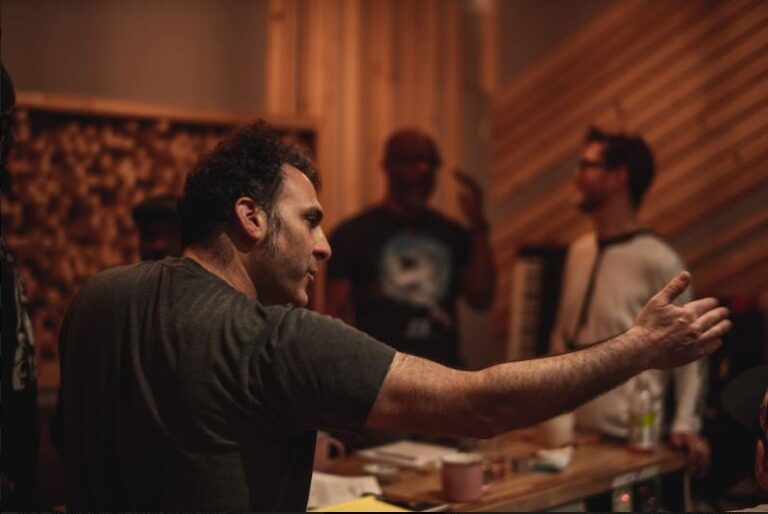
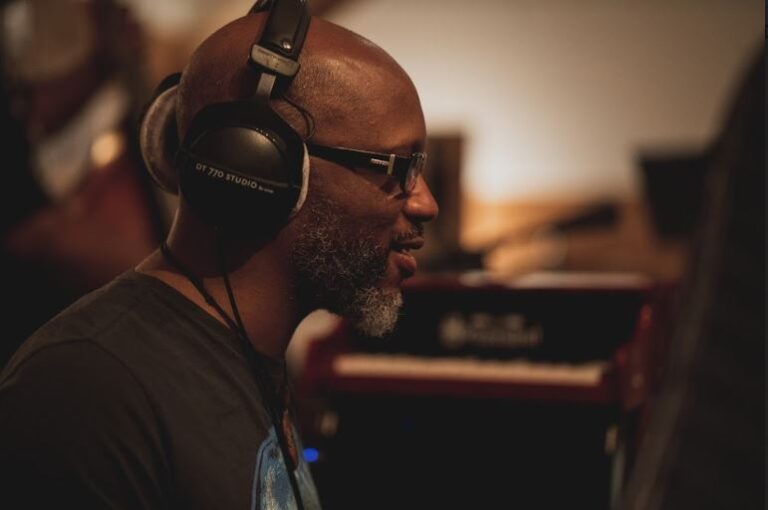
    The culprits behind this very forward-thinking project are the Analog Players Society, the brainchild of producer/engineer Amon Drum (aka Amon aka J. Amon). This heavy collective originated at Amon’s first studio, The Hook, which recently moved and expanded to be reborn as The Bridge Studio, a new Williamsburg, Brooklyn-based favorite of NYC’s most cutting-edge players.

    analog players society
    Photo by Jude Goergen.

    The APS collective features a rotating ensemble cast of some of the Big Apple best soundmakers. APS’ various projects, which are all decidedly eclectic by nature, carry serious strains of the Jazz, Dub, Funk, Afrobeat and Soul within. Analog Players Society’s 2012 debut album, Hurricane Season In Brooklyn, impressively debuted in the top 15 of the Billboard Contemporary Jazz Chart, and earned press accolades from NPR’s Fresh AirWired, and All About Jazz to name a few.

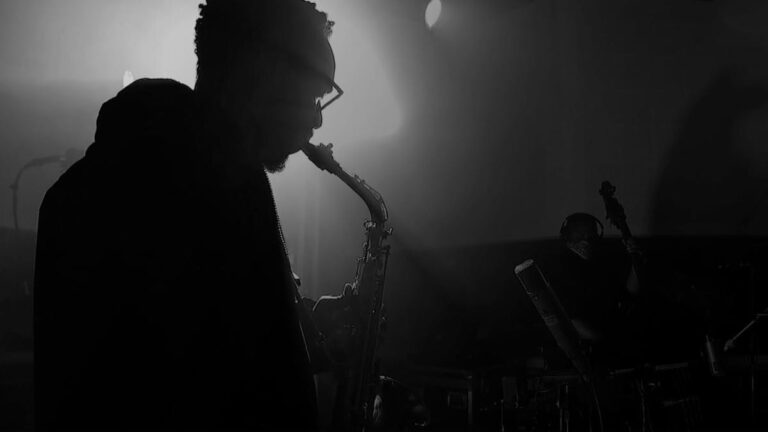
    Fast forward to April 2019 and the Analog Players Society is reborn during a live jazz session produced by Ben Rubin (aka Benny Cha Cha) and Amonat at The Bridge Studio. Rubin gathered four of the best jazz musicians in New York City for the occasion: tenor saxophonist Donny McCaslin (David Bowie’s last bandleader on Blackstar), pianist Orrin Evans (the Bad Plus), and the in-demand rhythm section of bassist Dezron Douglas and drummer Eric McPherson.

    The fruits of this meeting are featured on TILTED, which comes out today on Ropeadope Records. It boasts three lengthy explorations, all full of quirky creative turns and high-wire harmonic interplay.

    Nothing like the tinkle of a toy piano to set the mood for this most unique cover of Monk’s angular and playful Epistrophy.  McCaslin is the focal point for most of this 10-plus minute journey.  He deconstructs lines and floats across Evan’s alternatively chopped single note support lines and lush, complex chord painting.  McPherson’s unique drumming, evident on all the tracks, is at its most impactful here.  He’s a man more inclined towards orchestral stomps, punky thunks and unexpected breakdown fills than cliched, cymbal-ridin’ chinga chinga cocktail lounge swing. To my ears, his style owes more to someone like Captain Beefheart’s John “Drumbo” French and the delightfully jerky time of Prime Time-era Denardo Coleman than traditional post bopper.  And making this even more oddly Monk, Evan’s goes two hands for his solo here, one on the piano grand, and one on his toy ivories!

    analog players society
    Photo by Jude Goergen.

    On the other cover here, One Note Samba, the quartet wrestles a tasty dose of avant garde out of Antonio Carlos Jobim’s mellow bossa nova classic, with McCaslin tossing about the memorable melody, bringing a bit of sinister mood with the subtle delay and harmonizer laden on his horn.  With the sole original, Freedom is but a Fraction of Humanity, what starts as a lovely, yearning ballad turns into a high-speed chase, with especially fierce soloing from Evans.   All of these tracks are produced and engineered to perfection by Rubin and Amon, imparting a crisp acoustic experience, notable on Douglas’ deep soulful bass, and with tasteful use of electronic effects that give it just the right among of left field fun.

    When it comes to left field fun, it will be hard to beat the second release birthed from these sessions, Soundtrack for a Nonexistent Film, to be released on October 30. 

    Running a little over 30 minutes in all, Soundtrack is comprised of 12 miniatures composed entirely lifted from short samples from TILTED’s tracks, seven by Amon on the A side; five by Rubin on the B side.  These tiny gems are looped and mutated electronically to create a new kind of moody, one that is part street, and part cinematic cool.  

    The opener, Chase, features a driving 70s Miles Davis beat (think Al Foster on Agartha) on which Amon hangs an edgy bit of melodic sax, only to break the drive periodically with the ringing of solo piano chords and time changes.  He gets extra points from me on this one with the injection of the fartiest sawtooth wave bass synth lines, vintage Krautrock or early ELP.  My favorite Amon remix is Act Cool.  It features a Hip-Hop beat under a warm, melodic acoustic bass, lush pads and McCaslin’s sax at its breathiest, a kind of Ben Webster Goes to Mars experience. 

    Photo by Jude Goergen.

    Rubin’s five pieces demonstrate his devotion to in-the-pocket rhythms and dub mixing, most evident on the ska-infused Brooklyn Blackout and the jazzy blues of Starry Night. What’s a delight about all the tracks here is how the duo recycles and dramatically changes these little phrases, whipping them into a wide range of compositions, ones that always seems to milk something evocative out of these humble two-bar nuggets.

    Key Tracks:  Epistrophy, Freedom is but a Fraction of Humanity, Act Cool, Brooklyn Blackout

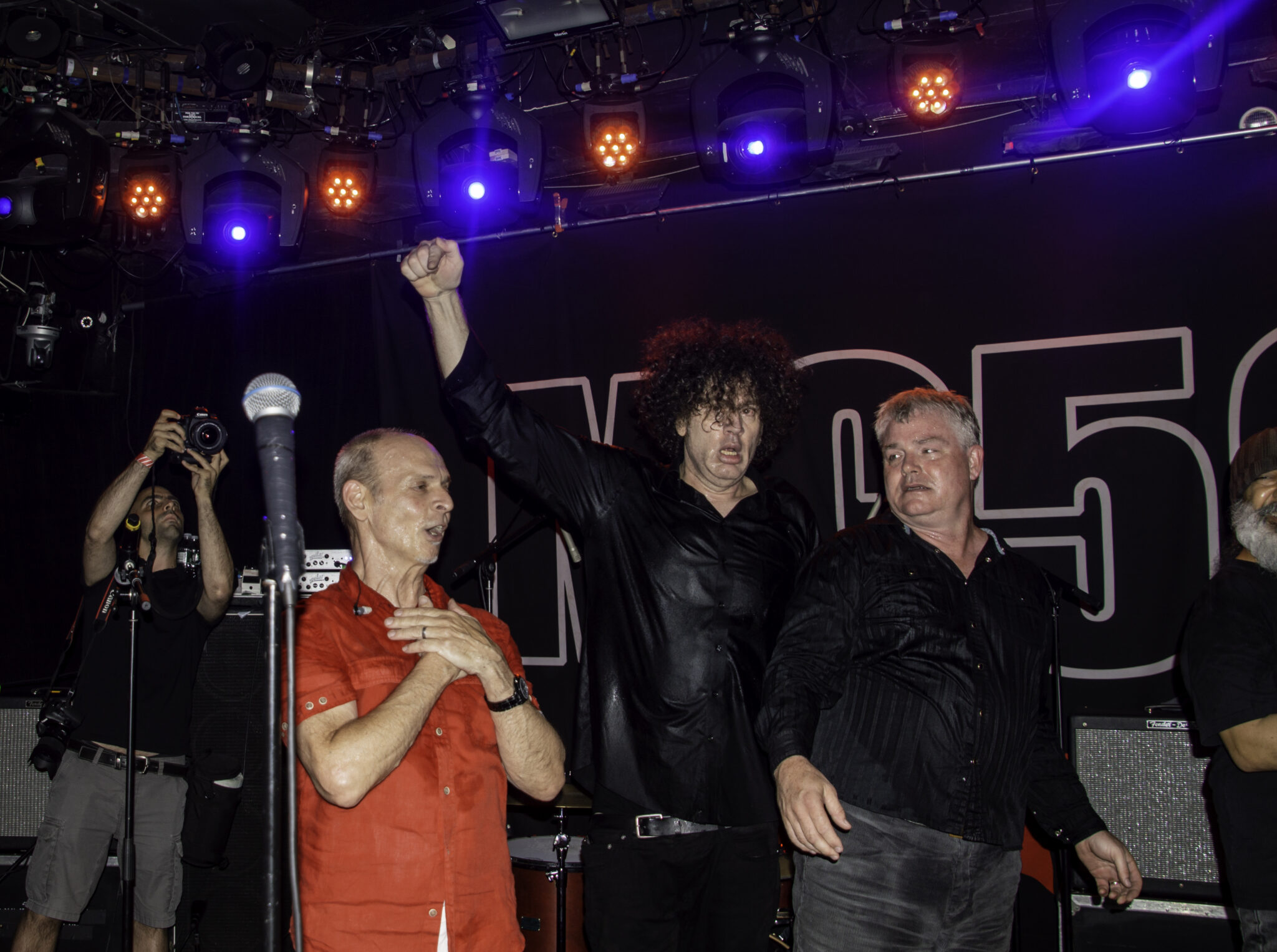
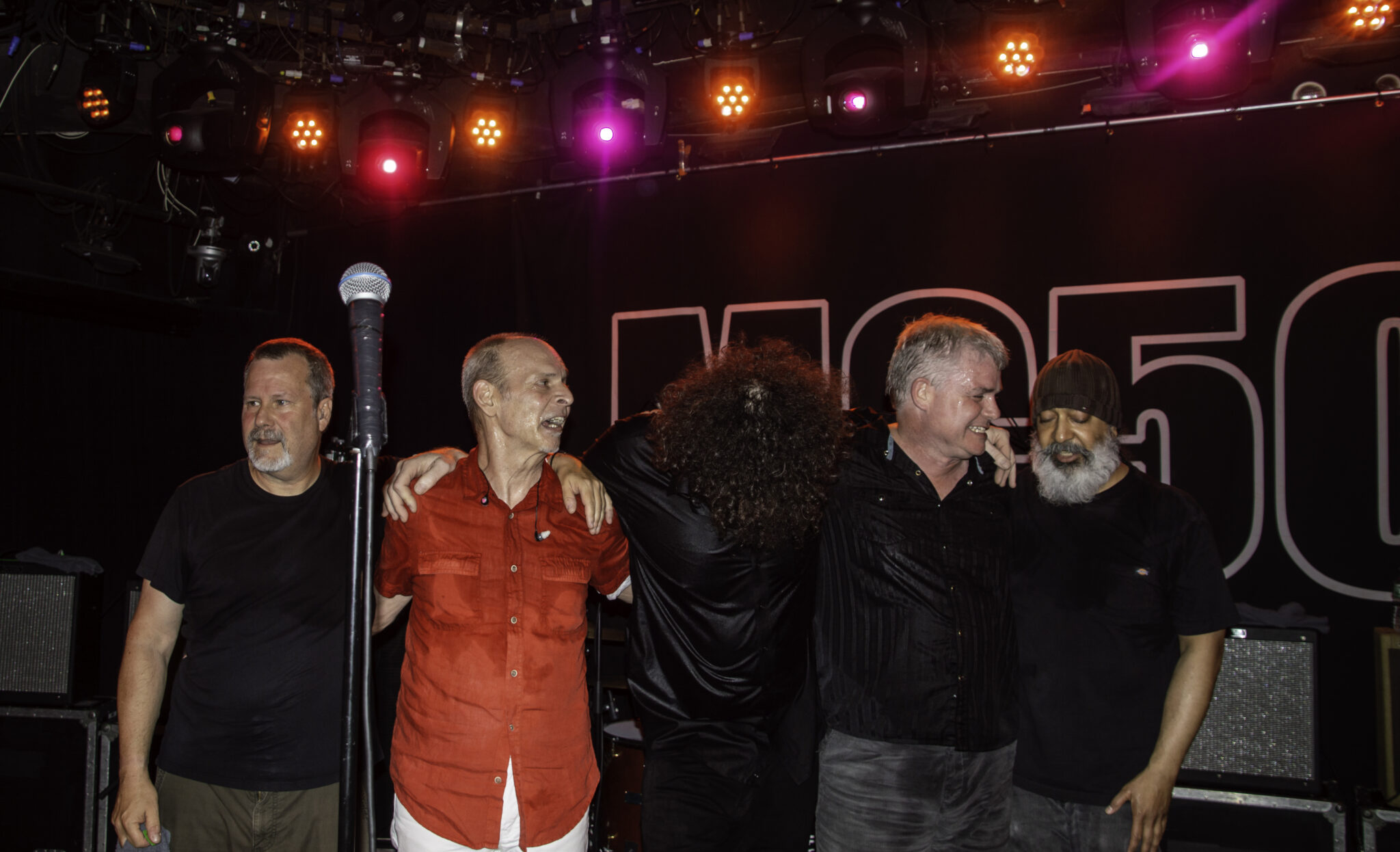
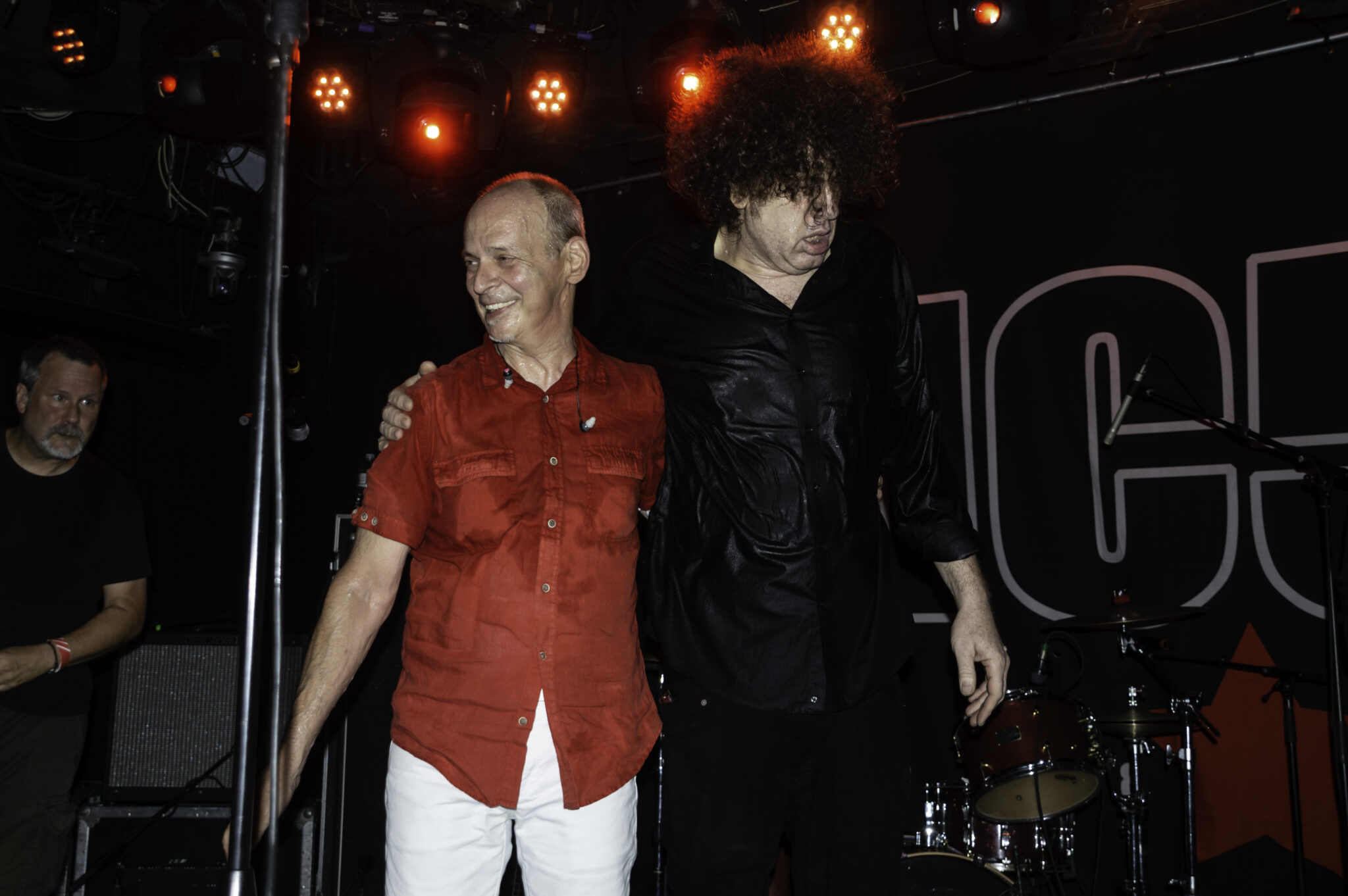
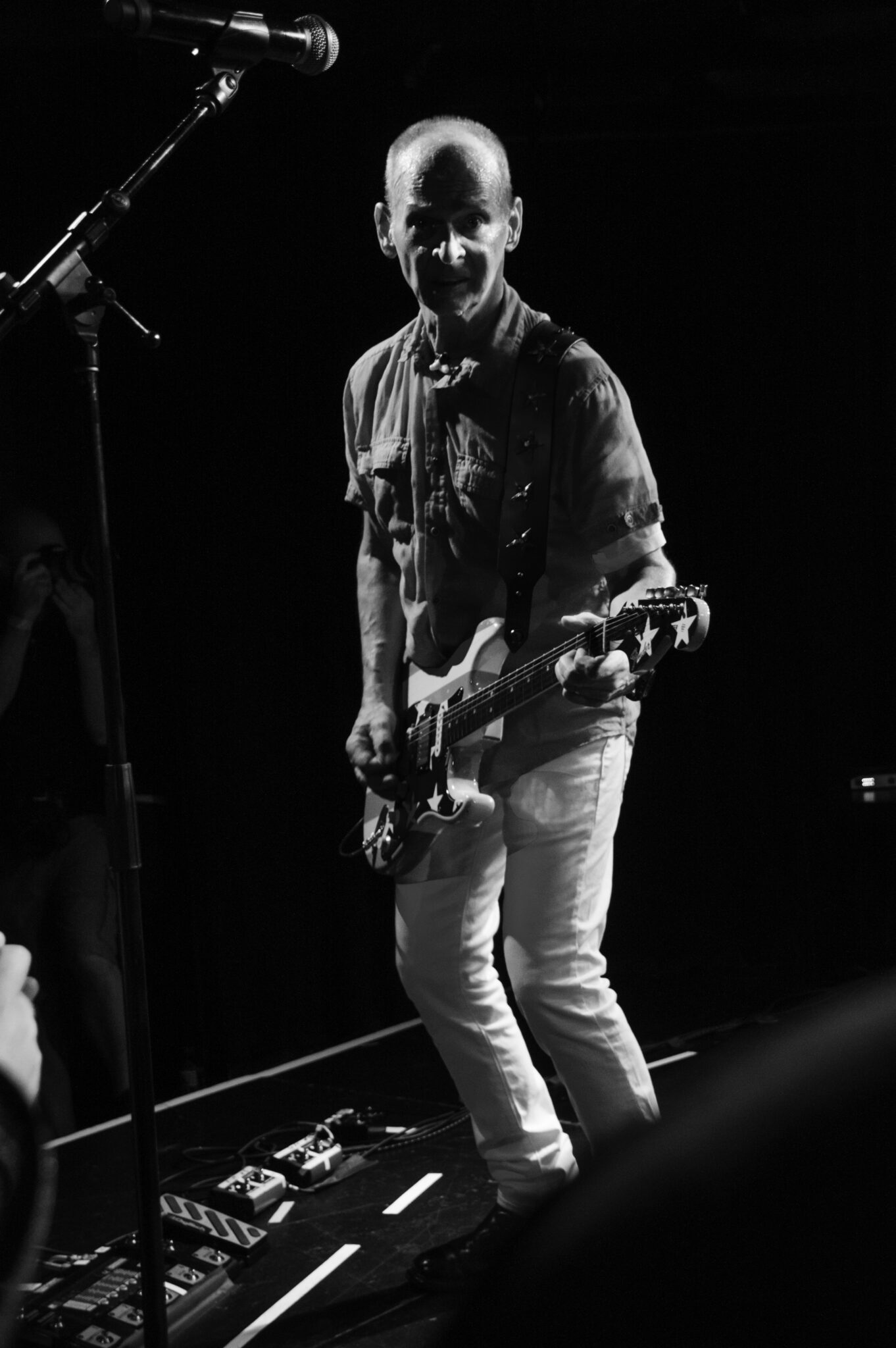
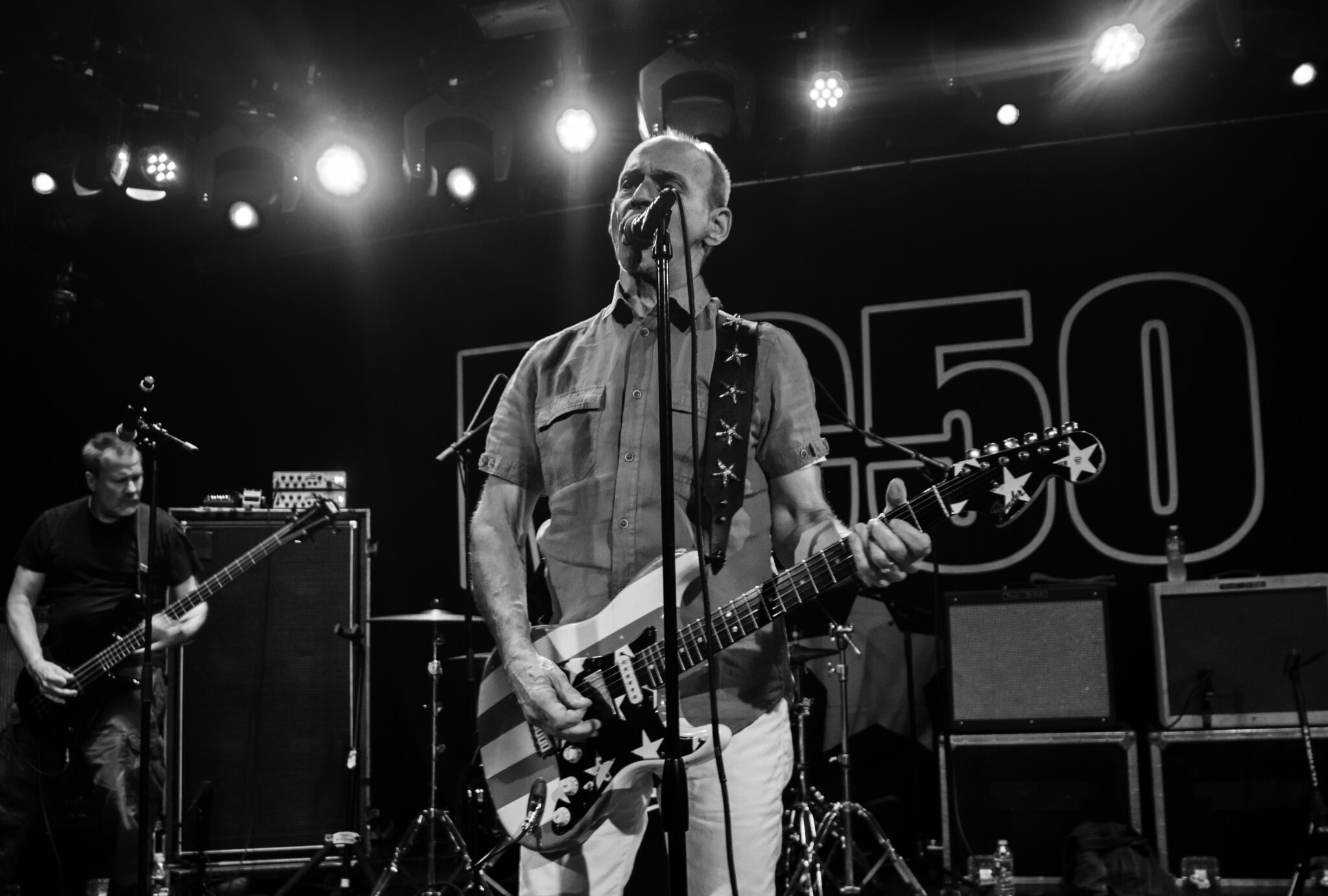
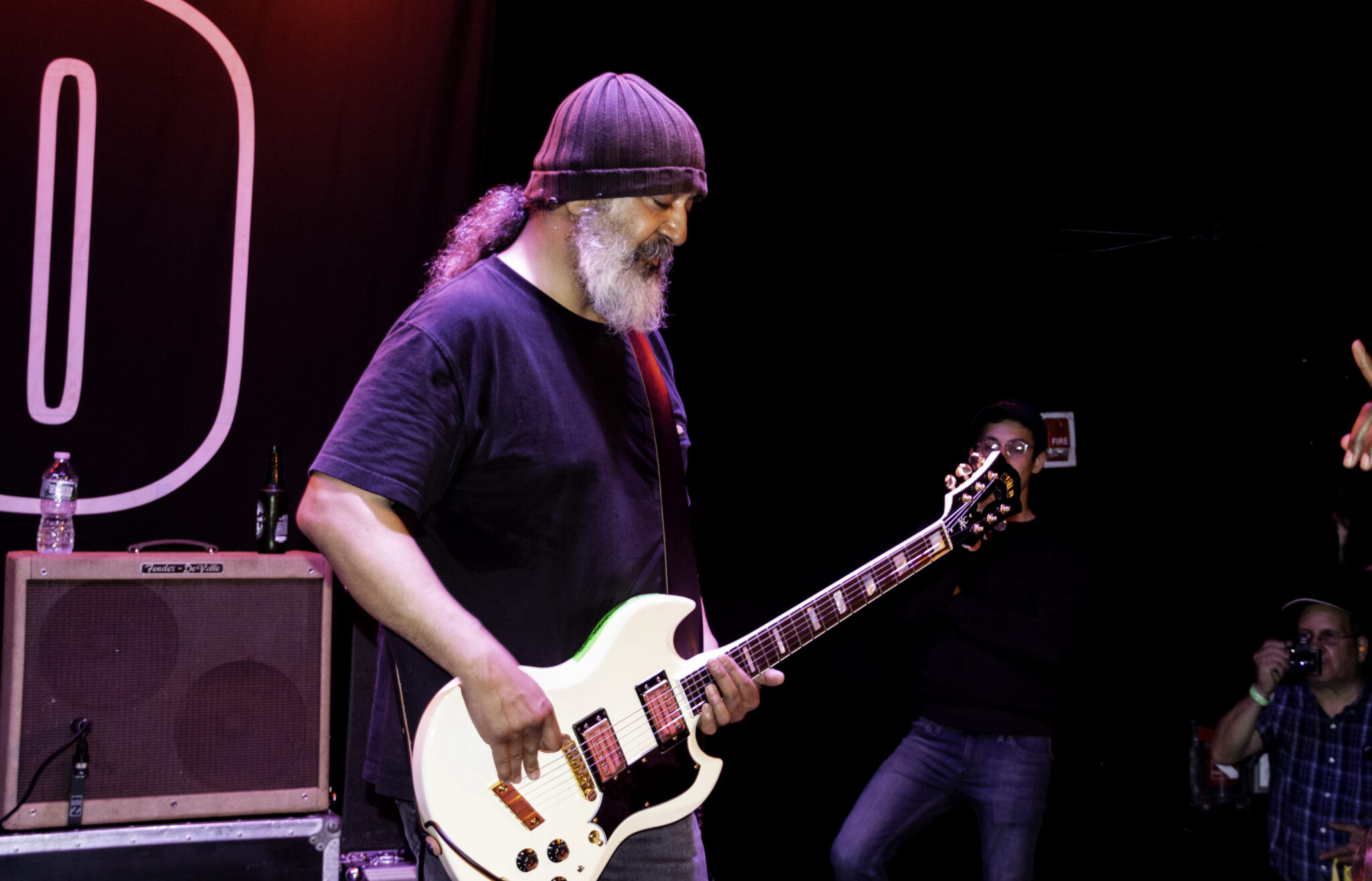
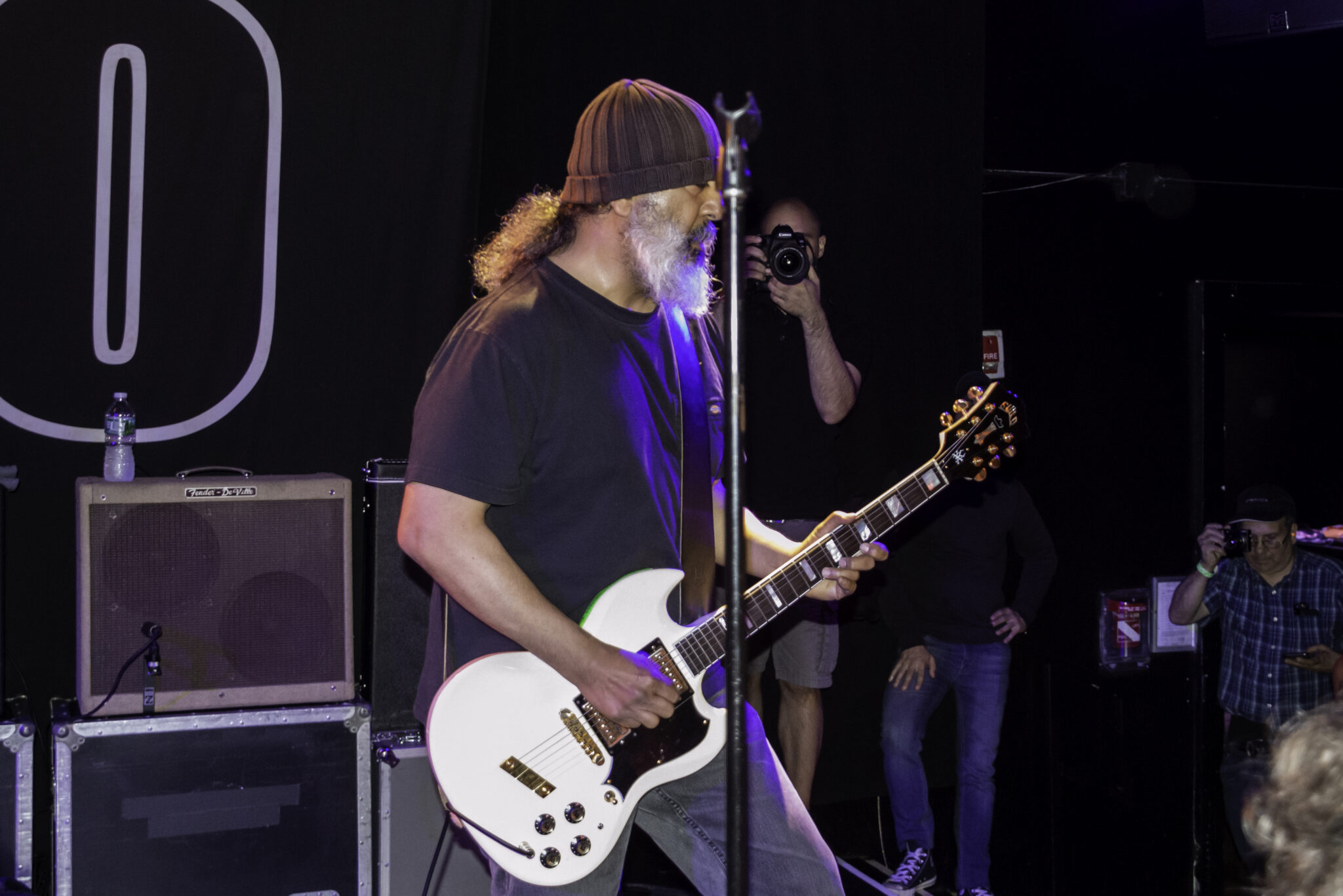
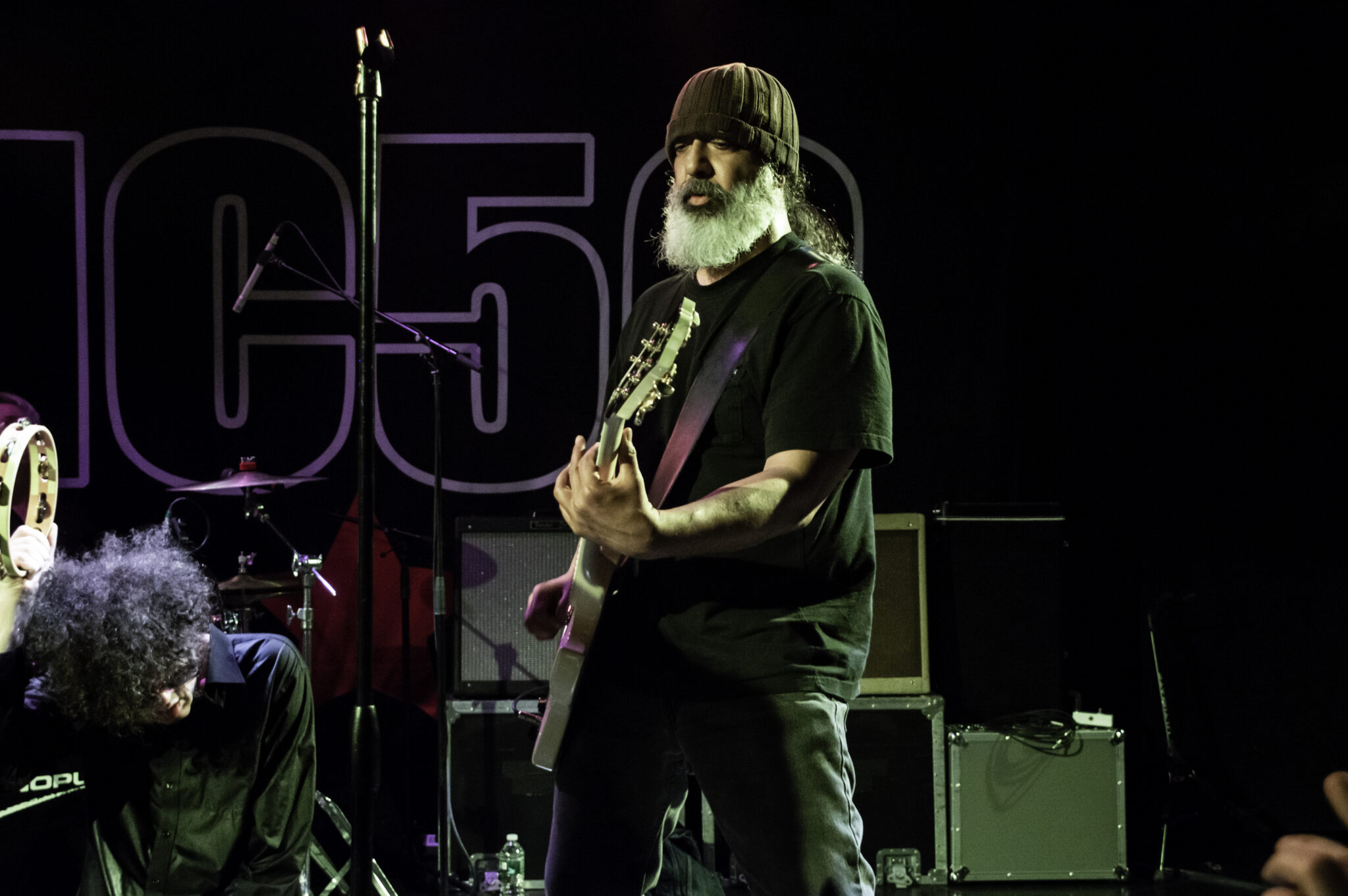
  • Flashback: MC5 celebrate 50 years of punk rock greatness at Le Poisson Rouge

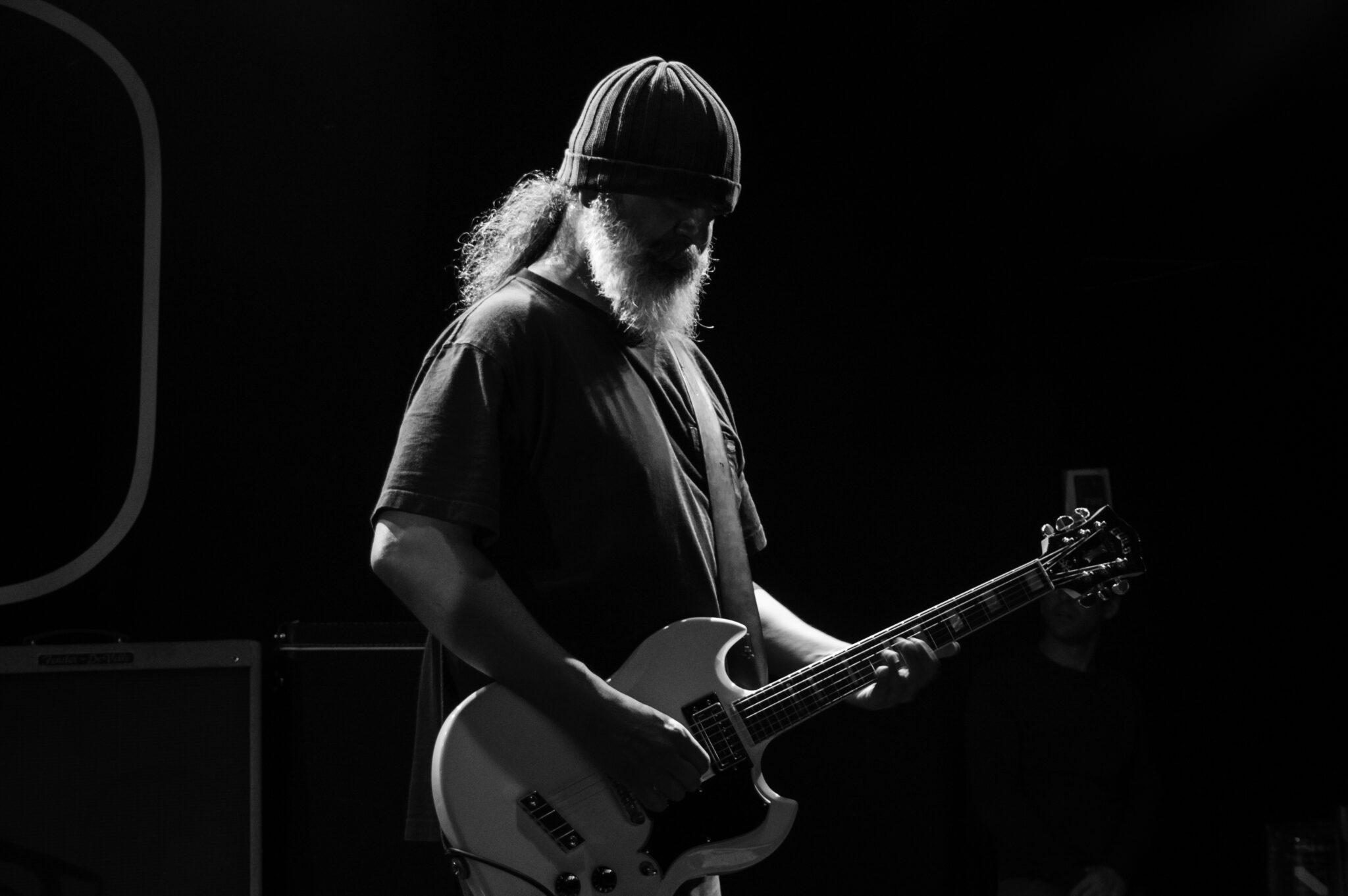
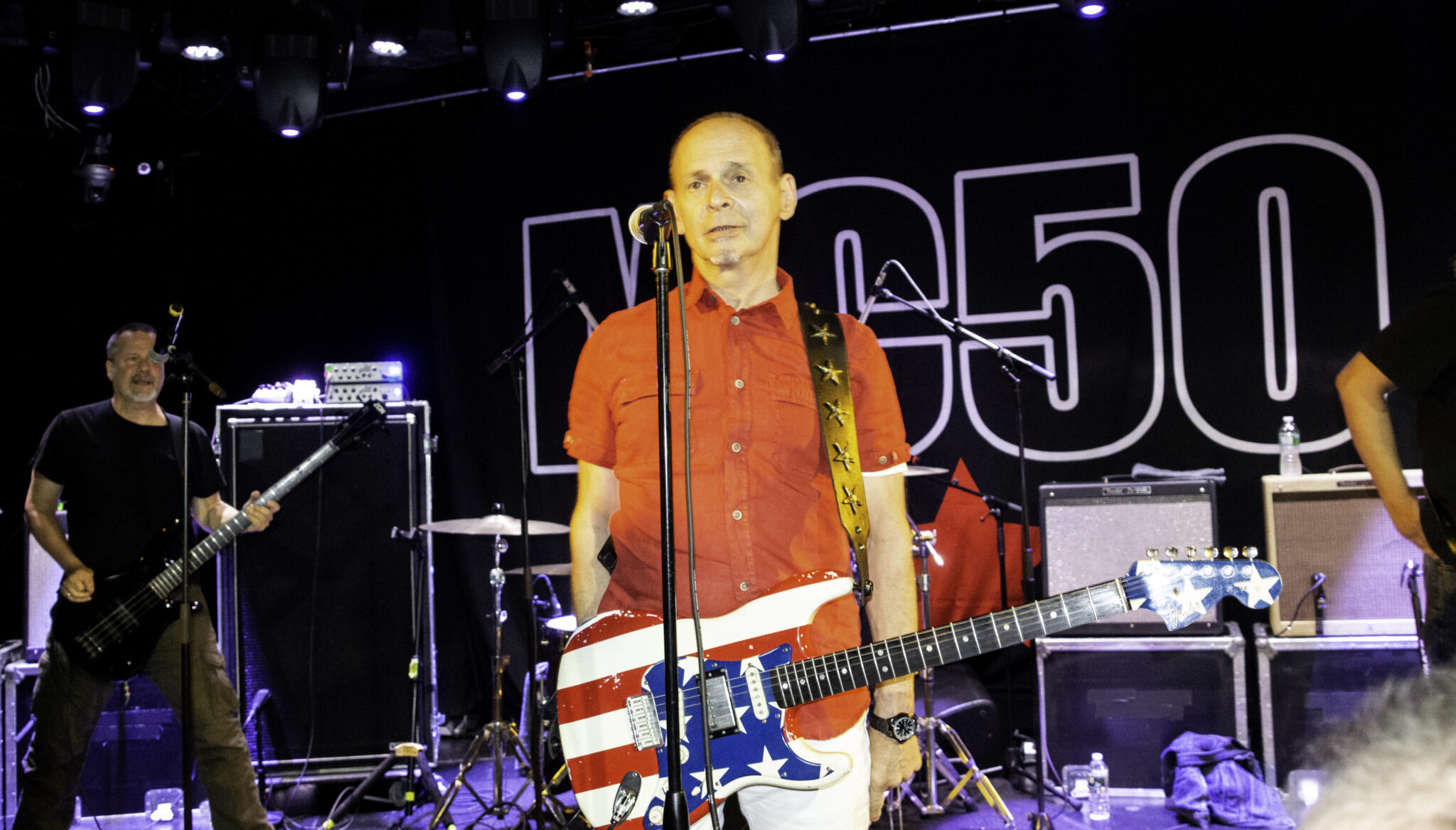
    On August 29, 2019, MC5 founding guitarist Wayne Kramer brought his supergroup MC50 to Le Poisson Rouge in New York City to celebrate 50 years of punk rock greatness. The group consisted of guitarist Kim Thayil (Soundgarden), drummer Brendan Canty (Fugazi), bassist Billy Gould (Faith No More) and singer Marcus Durant (Zen Gorilla).

    MC5 is considered one of the most important American hard rock groups of their era. The band performed as part of the protests of the Vietnam War at the 1968 Democratic National Convention in Chicago that were broken up by a police riot. According to Kramer in an interview featured in the documentary “Get up, Stand Up,” the band played for over eight hours straight when the other bands scheduled to perform didn’t show because of the chaos.

    “Kick Out the Jams” was released as a single in March 1969 by Elektra Records. It has been covered by numerous bands including Bad Brains and Rage Against the Machine. The band’s debut album of the same name was released a month earlier and was recorded at Detroit’s Grande Ballroom over two nights, Devil’s Night and Halloween, 1968.

    The band played the entire “Kick Out the Jams” debut album. They also played songs from MC5’s other two albums including “Tonight,” “Everything” and “Let Me Try.” They sounded great as they ripped through their 80 minute set at the very intimate but temporarily closed Greenwich Village venue LPR. The show was one of the only three shows the band played in the United States in 2019 before going to the United Kingdom to open for Alice Cooper for another seven shows.

  • Hearing Aide: Wavy Cunningham’s ‘Club Wavy’

    Wavy Cunningham, an Albany-area rapper who has shown much potential in the past, comes through with his first full length project, Club Wavy. The album is a product of the collective efforts of Wavy along with producers N-Pro, DJ Mercy, and Frank Finesse.

    The album itself plays as if Cunningham and the production crew have a thorough understanding of old school and underground hip-hop simultaneously performed through a 2010 lens. Throughout the album, it becomes evident that Wavy is eager to make a name for himself in the current hip hop landscape; Club Wavy may very well be that stepping stone.

    The album starts off with the swirling synth beat featured on “I’m Good.” Wavy immediately follows in finding himself riding the beat like a surfboarder, spitting bar after bar about his come up in the past few years. The track progresses into a familiar “Eenie Meenie Miney Mo” rhyme pattern which is both appealing as well as gratifying to hear those anticipated rhyme schemes fulfilled. Wavy continues to flex his pen game which remains impressive from track to track. As the album progresses, the production leans towards a jazz rap fusion with Wavy’s prominent voice hitting as hard as a hammer over synth jazz chords.

    Wavy’s vocal performances throughout this project are as smooth as ever, whether delivered in a triplet flow pattern reminiscent of 21-Savage on “I’m Good” or in smooth R&B fashion such as on “The V.I.P” with soulful, crooning vocals that hit like Kids See Ghosts era Kid Kudi. “The V.I.P.” serves as an interlude for the album but still, even as a transitional track, “The V.I.P” carries an almost tangible emotion that brings the audience into the next half of the album. The remainder continues on with Wavy performing in his pocket over beats with a jazzy guitar chords along with classic trap instrumentals which allow Wavy’s voice to take center stage.

    The album culminates with “All We need is Love,” an emotionally heavy track that honors the lives of those who have become victims of police brutality. “All We Need is Love” is ripe with emotion and showcases Wavy’s ability to rap while simultaneously narrating a coherent story about a young black college man who was subject to unlawful search and seizure along with a wrongful arrest.

    Wavy closes the album out by remembering the lives of recent victims of ongoing police brutality and racial discrimination in the United States, humbly singing and asking a closing question to the audience,

    All we need is love, when it’s all said and done what we do effects the future of our daughters and our sons. Tell me what’s really going on.

    Key Tracks: Whattup?, The V.I.P. (interlude), All We Need is Love

  • Camp Bisco 4: A Farewell to Sammy and a Festival Trance-Formation

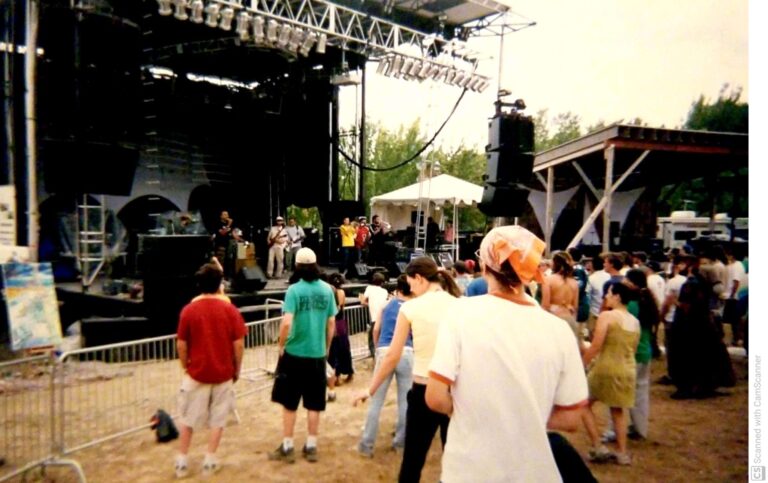
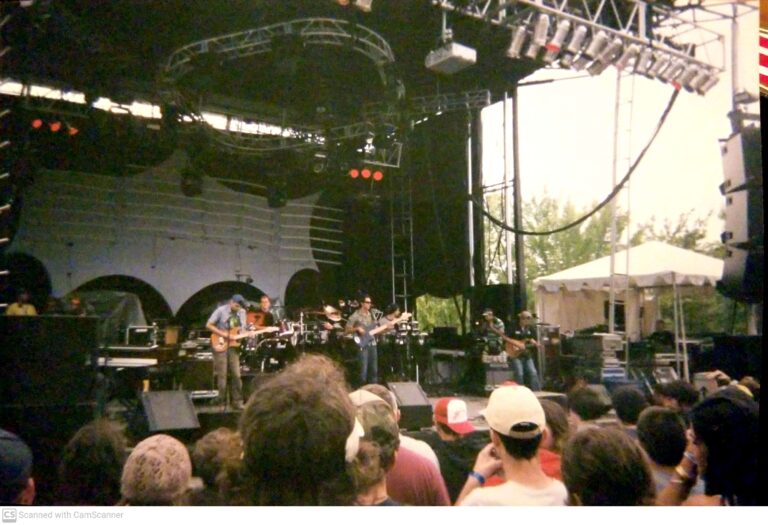
    From August 26-27, 2005, Camp Bisco 4 was held in Van Etten, NY at the Skyetop Festival Grounds, marking the first time the festival was not held in Pennsylvania. The festival grew this year, and would return even stronger in 2007 at Hunter Mountain before firmly establishing their presence in Mariaville, NY from 2008-2013.

    Camp Bisco 4
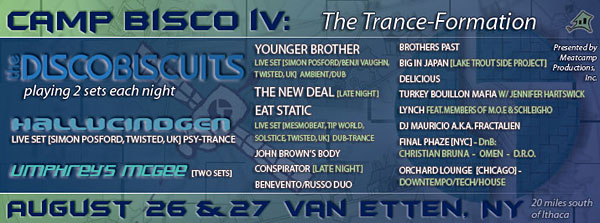
    Camp Bisco IV lineup

    This weekend in particular held additional significance for the Philadelphia-based hosts of Camp Bisco, the Disco Biscuits. Original drummer Sam Altman would be leaving the band after this weekend to pursue a medical degree. With the fate of the band, and festival in question, Camp Bisco IV: The Trance-Formation was held to send Sammy out on a high note. The band would later welcome current drummer Allen Aucoin behind the kit at shows starting that fall.

    camp bisco 4
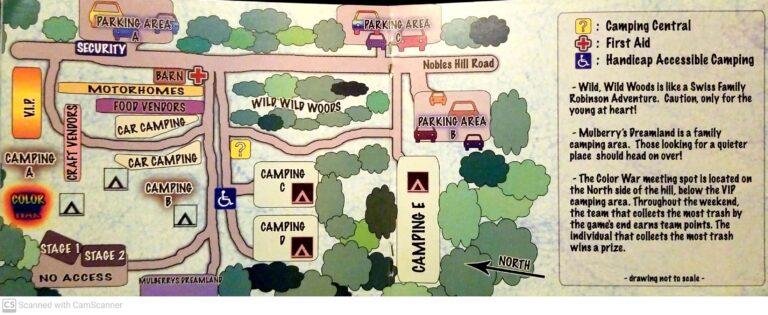
    Map of the festival grounds

    Ahead of Camp Bisco IV, Meat Camp Productions (now MCP Presents) took over management of Camp Bisco and, being fans, the band felt the festival would be in good hands. MCP sought to make Camp Bisco a larger event by moving to Van Etten, and drew a reported 4,400 attendees, the largest Camp Bisco at that time.

    Camp Bisco IV offered two sets of the Disco Biscuits each night, as well as 2005 up-and-coming bands Umphrey’s McGee, The New Deal, Conspirator, John Brown’s Body, The Benevento Russo Duo, Brothers Past, Big in Japan, and DJ’s Christian Bruna, Omen and D.R.O. (Final Phaze NYC), DJ Mauricio a.k.a. Fractalien (Portland), and Orchard Lounge (Chicago). Many acts can be seen on the Camp Bisco IV official DVD, which is incredibly still in stock.

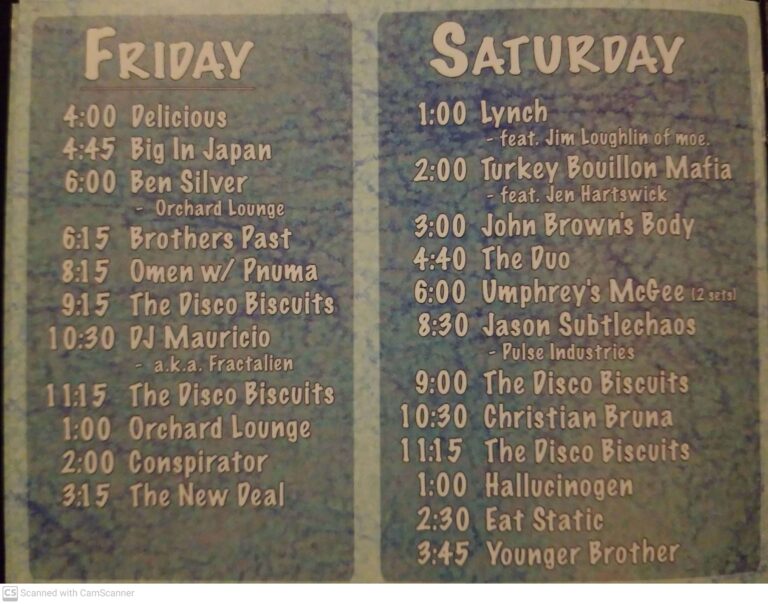
    Camp Bisco 4 schedule

    Friday night would feature regular Camp Bisco acts including Brothers Past, Orchard Lounge and The New Deal. The Disco Biscuits would kick things off with “Astronaut” -> “Shem-Rah Boo” -> “Astronaut,” the start of over 100 minutes of non-stop playing in their first set of the weekend.

    Day 2 of Camp Bisco IV featured even more music, as well as overcast skies that would lead to rain later that night. Lynch, featuring Jim Loughlin of moe., John Brown’s Body from nearby Ithaca, the Benevento Russo Duo, two sets of Chicago firebrand Umphrey’s McGee, and following two sets of Disco Biscuits, the trance-heavy sounds of Simon Posford projects Hallucinogen and Younger Brother.

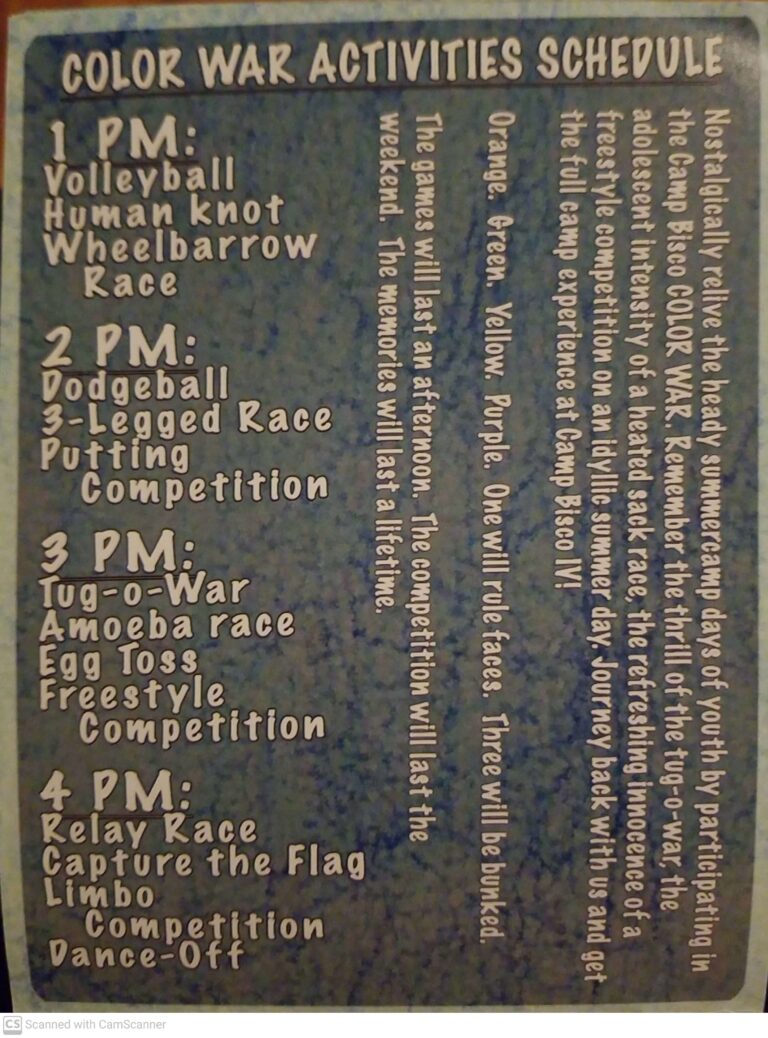
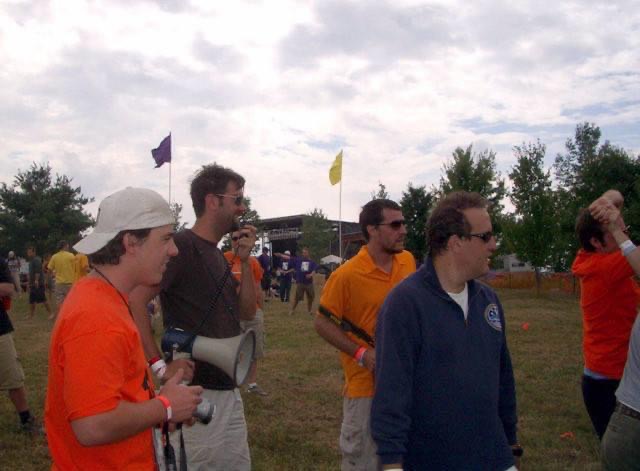
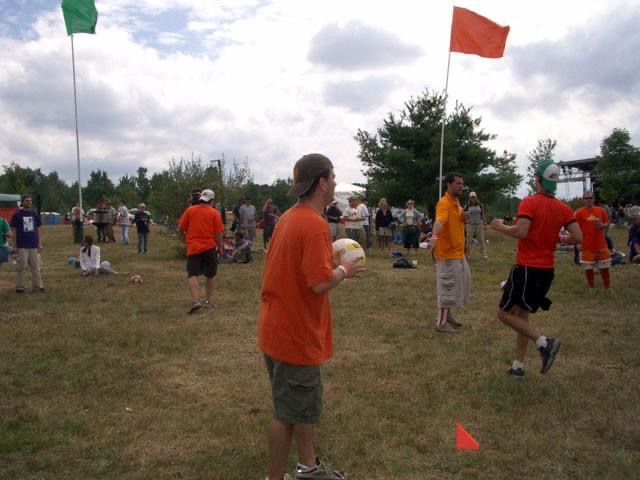
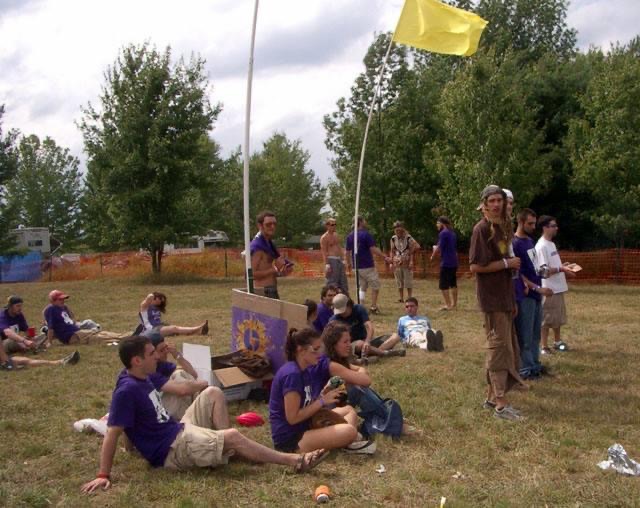
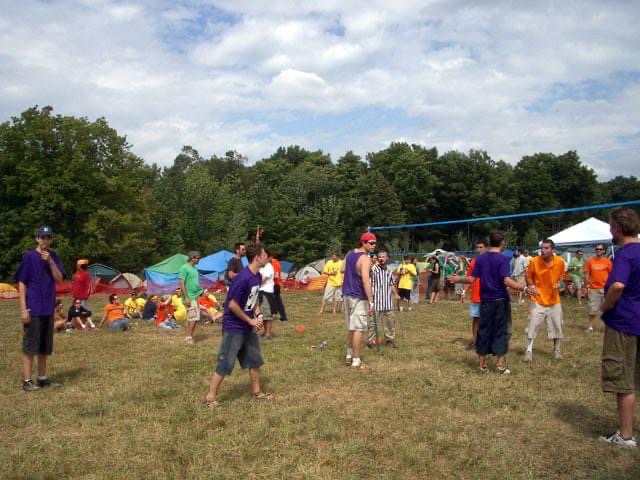
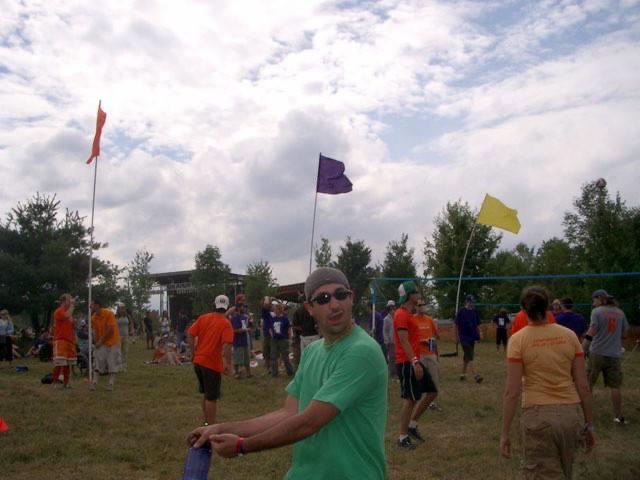
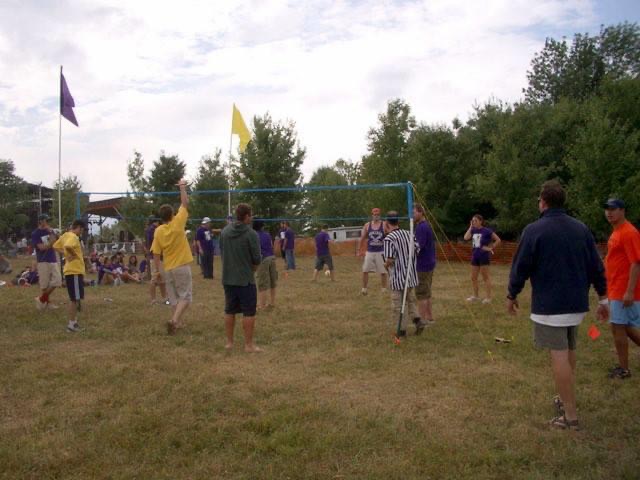
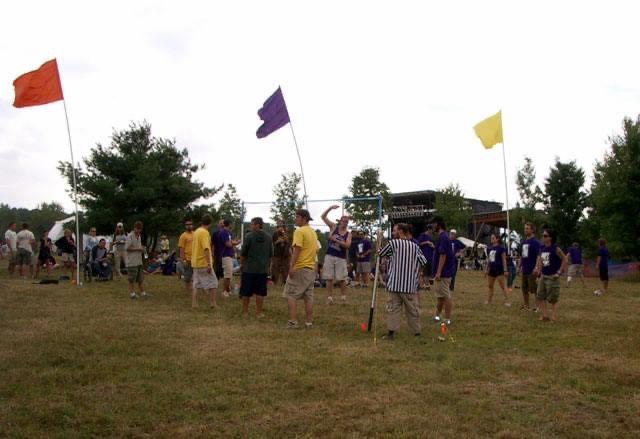
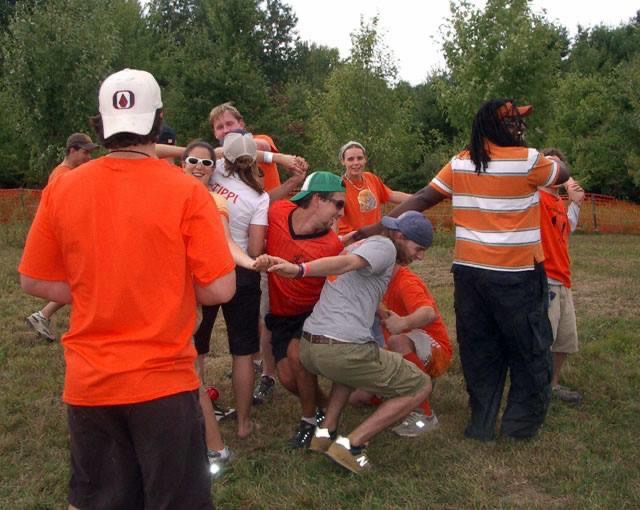
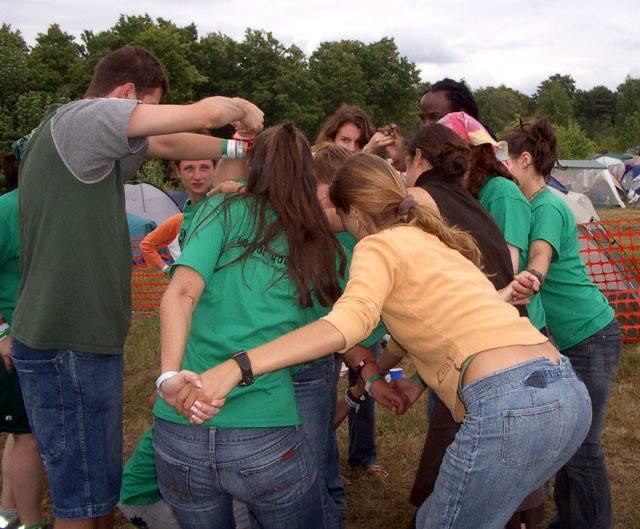
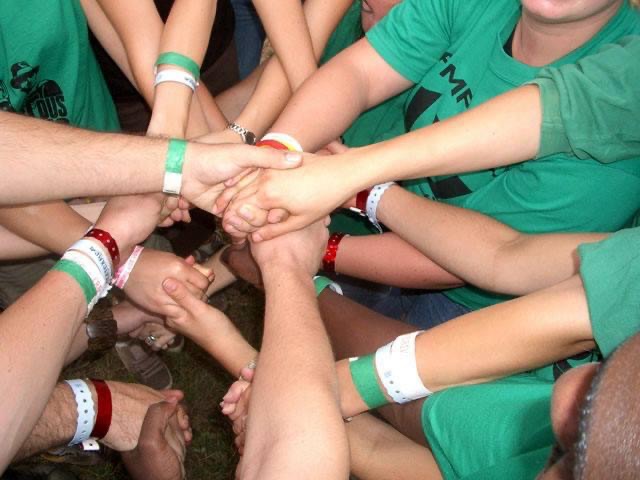
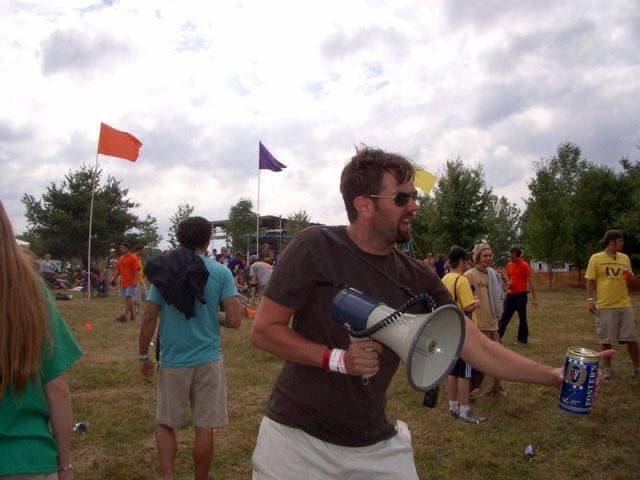
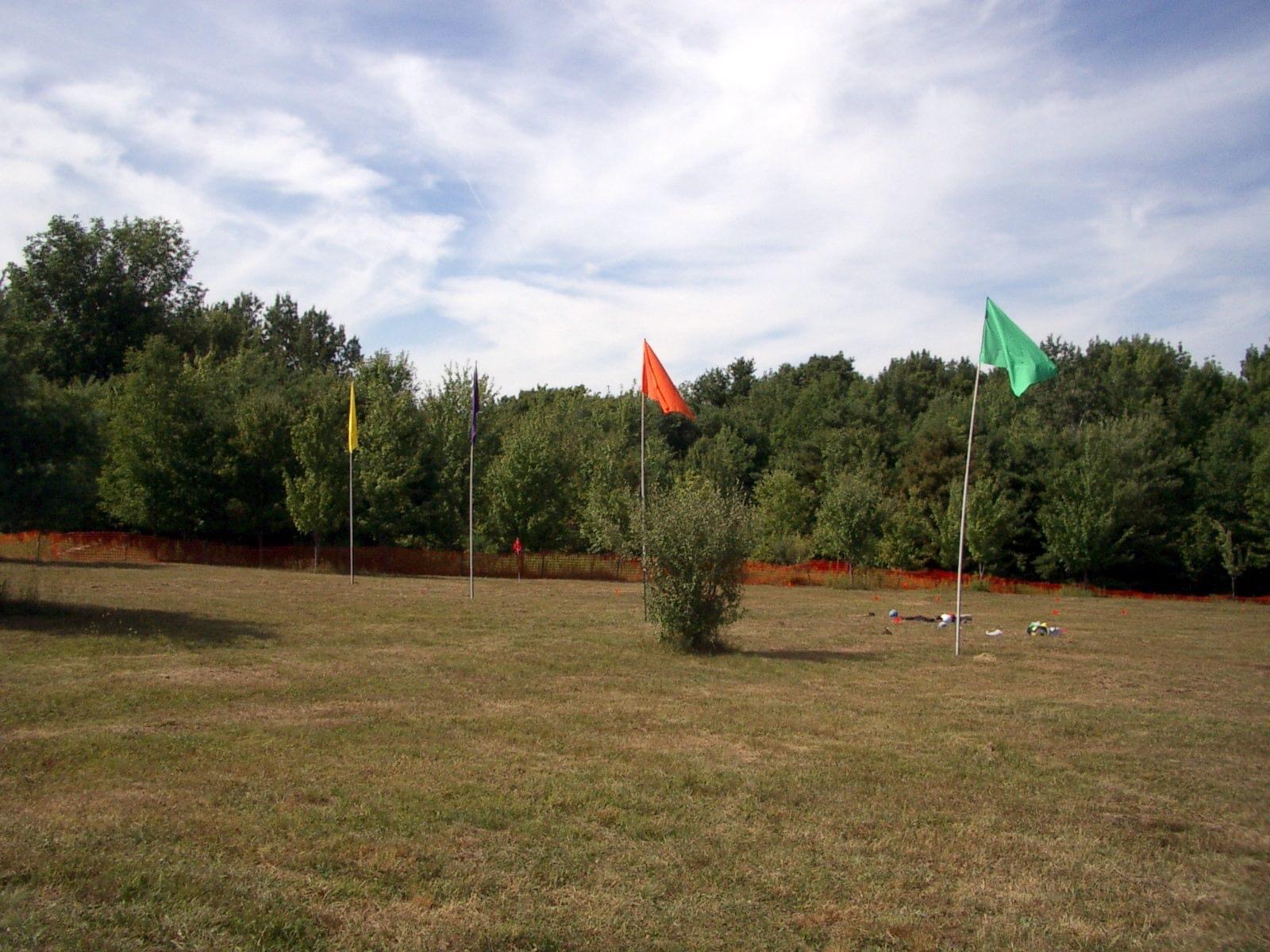
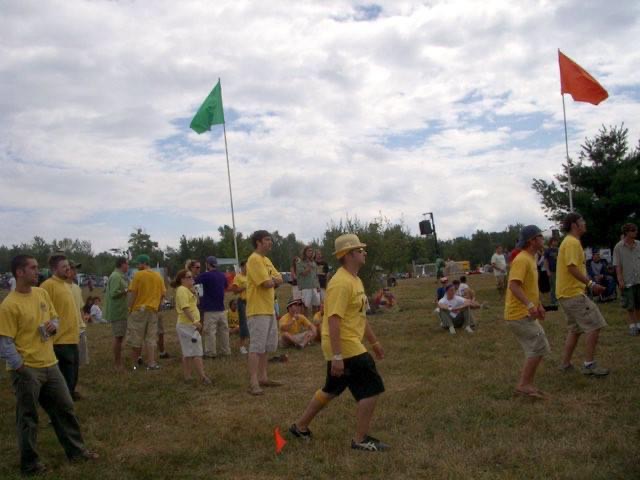
    Camp Bisco IV boasted not only a family-friendly environment, with a family camping area and child play-park (Mulberry’s Dreamland) as well as the first time Color War was a featured activity during the day. The event pitted four teams of festival attendees (Orange, Green, Yellow, Purple) in friendly competition, reminiscent of summer camp ‘color wars’ of the past. Activities included volleyball, dodgeball, capture the flag, a freestyle competition and much more. The Orange team was victorious in the first event, now a staple of Camp Bisco, held at Montage Mountain in Scranton, PA since 2015.

    color war
    Color War schedule of events, as created by Yancy Davis

    The emotional build up of the weekend would take place late in the Disco Biscuits’ second set on Saturday, following “Floes.” Jon “The Barber” Gutwillig noted to the audience that there were some in attendance that night who were at the first Disco Biscuits show, saying, “So we feel like we have a lot of the old, a lot of the new, and everybody came together up here in the mountains for a very, very special night. The Professor, his last gig on the drums. Let’s hear it for Sammy.”

    With that, the crowd roared with appreciation as the band played “A Song for Sammy,” referencing songs he wrote, inviting him back to perform whenever he wanted, tying an emotional bow on the weekend.

    Appropriately, the band returned to the stage to perform “Spectacle,” with lyrics that spoke to the closing of one chapter of Disco Biscuits and Camp Bisco lore:

    Asleep in the day, awake in the night, only so many roads to take your life.

    The problem you see, you can’t mess with time, and take a different road you’d try.

    “Spectacle”

    Special thanks to Camp Bisco Color War HQ for photos of the first year’s events.

  • A Bronx Tale: The Grateful Dead at Gaelic Park

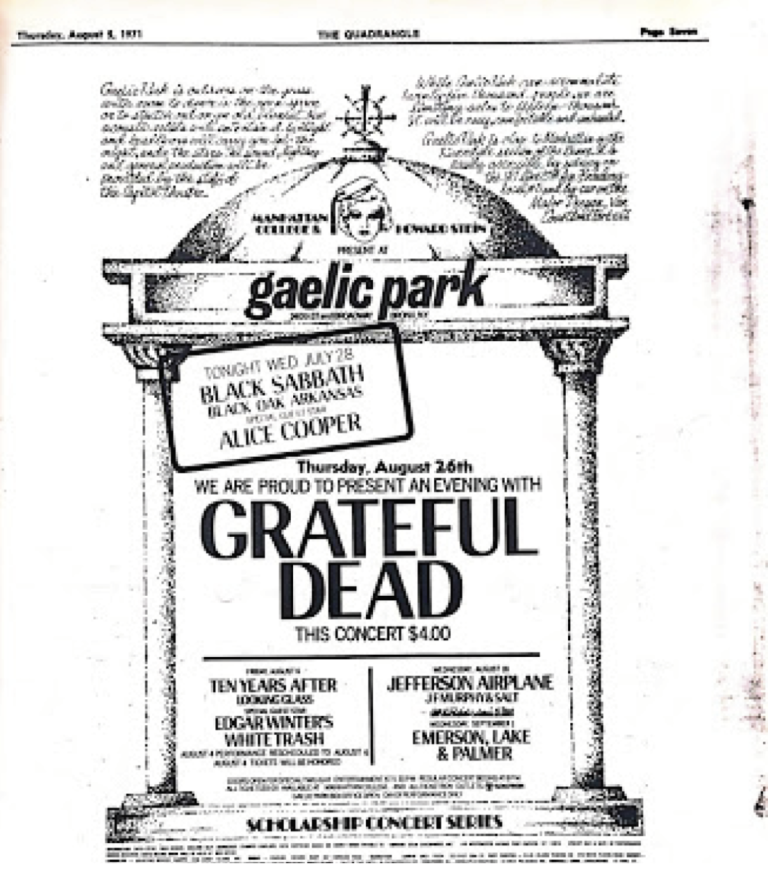
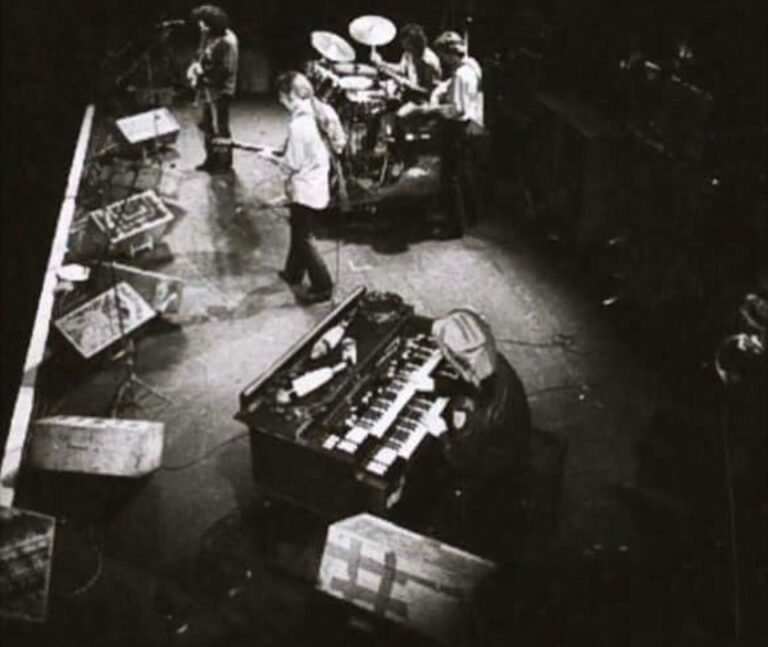
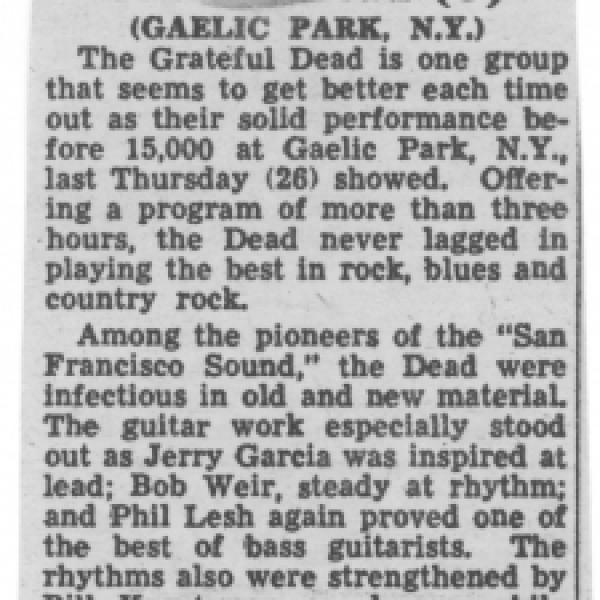
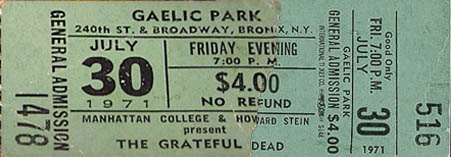
    Although the Grateful Dead‘s track record with New York State is vast and varied, there’s one borough in particular that doesn’t get much love. And that’s The Bronx. Mainly because there’s only one show that was truly ever played there – Gaelic Park on August, 26 1971.

    grateful dead bronx
    stub courtesy of Wayne Eichen

    The performance is billed as a two-set show that really plays as three. A noticeably extended first set showcases some of the band’s newer original songs at time blended with a flurry of classic cover selections. Included in all this is a song the Dead would only play twice ever. And as for historical significance, this would be the last show featuring only the five founding members of the band. Seemingly aware of this, they collectively deliver a show for the ages that more than aptly serves as a figurative “passing of the torch” from one era to another.

    grateful Dead Gaelic Park

    This show opens with a crisp yet standard version of “Bertha,” a Dead original still in its nascent stages at the time. The early wave of originals would continue with a “Playin’ In The Band” that had just made its debut earlier this year at The Captiol Theatre in nearby Port Chester. Even though this would be a regular selection at Grateful Dead shows for years to come, seeing it so early in the first set like this is a verifiable treat.

    Pigpen gets his first chance to shine on vocals with a first set “Mr. Charlie,” another new song that debuted just last month. Even though he was beginning to take on a lesser role in the band by this point in time, Pig’s vocals are effusive and strong throughout this recording. This would be the last show before Keith Godchaux joined the band and assumed keyboard duties. So, fittingly, they give Pigpen plenty of the spotlight at this show and he takes it and runs with it.

    grateful Dead Gaelic Park

    The run on cover songs then begins with “El Paso,” a country-western ballad by Marty Robbins, sung smoothly by rhythm guitarist Bob Weir. “Big Boss Man” follows, a longtime Dead cover that was originally recorded by Jimmy Reed in 1960 and later popularized by Elvis in 1967. This gives Pigpen the chance to lead again and his blues-infused vocals ring loud and true throughout this one.

    This first set also features a typically stirring “Hard to Handle,” the Otis Redding tune that was one of staples of the Pigpen songbook and, perhaps, his signature song. Aside from a mild snafu with the recording, this version is terrific and sees the band fully locked in during an escalating funk-like jam before Pigpen’s wailing vocals reenter. Sung with all of the soul and swagger he would always bring to this song, sadly, this would be the last one ever played with him on stage.

    The set could have ended right there and few would take issue, but instead the band continues to motor on with “Beat It On Down The Line,” yet another cover. Jerry Garcia then takes the reigns courtesy of “Loser” and his customary hauntingly beautiful guitar solo that goes with it.

    Courtesy of Bronx Music Heritage Center

    Soon after is one of the true gems of this show – the second and final performance ever of “Empty Pages,” a song written and sang by Ronald “Pigpen” McKernan himself. It pairs his traditional crooning style with a slow blues jam that’s nicely peppered with fiery guitar licks from Garcia. It’s a true rarity and a shame that the band wouldn’t be able to further develop this one.

    The other first set highlight immediately follows with a smoking cover of The Rascals’ “Good Lovin’.” Pigpen remains strong on lead vocals as both he and the band get into some heavy improvisation on this one. Only the Dead can take a three-minute pop song like this and stretch it out to an almost ten-minute psychedelic journey.

    They had such a fun time playing the first set that the second one begins with a rare “Me and My Uncle” placement, as if to keep the opening vibes going strong. Immediately afterwards, reality sets in with a joyous “China Cat Sunflower” that soon effortlessly blends into to its traditional running partner, “I Know You Rider.” Bassist Phil Lesh, turned up particularly high in this mix, gets his turn to show off as he steers the band through the seamless transition.

    There would be no extended “Drums” section this evening. Instead, the band collectively rips into the opening of “The Other One,” fueled predominately by drummer Bill Kreutzmann. After a rip-roaring opening sequence, the jam composition quickly devolves into a meeting of the minds between Garcia and the rhythm section. Seemingly out of the blue, Weir interjects with his vocals right on point and the song is off and running.

    For a quality listen to the transition into the opening of “The Other One,” alongside some backstage photos, check out this great video courtesy of Sam Cutler, one of the band’s early tour managers:

    The powerhouse second set continues with a tidy version of “Uncle John’s Band” and one of the last performances of “Saint Stephen” before it would be shelved for nearly five years and rearranged. The jam progresses into something that almost resembles “The Eleven” before immediately settling back down into the ending of “Saint Stephen.”

    And then, right on cue, the rhythm section is back in action with the opening drumbeat of “Not Fade Away,” a Buddy Holly cover that the band had completely appropriated at this point in time. The Dead take one last swing and develop a passionate collective effort that once again flows right into “Goin’ Down The Road Feeling’ Bad” without batting an eye.

    This closing sequence serves as the cap to a phenomenal show that’s rich in both quality and legacy significance. It can be argued that the end of the Pigpen Era happened here. Amazingly, the only time the Grateful Dead would ever grace the “Boogie Down” Bronx. But talk about making the most of a single opportunity.

    Set 1: Bertha, Playing In The Band, Mr. Charlie, Sugaree, El Paso, Big Boss Man, Big Railroad Blues, Hard To Handle, Beat It On Down The Line, Loser, Sugar Magnolia, Empty Pages, Good Lovin’, Casey Jones

    Set 2: Me And My Uncle, China Cat Sunflower -> I Know You Rider, Deal, Cumberland Blues, Truckin’ -> Drums -> The Other One, Next Time You See Me, Me And Bobby McGee, Uncle John’s Band, Saint Stephen -> Not Fade Away -> Goin’ Down The Road Feeling Bad -> Not Fade Away

    Encore: Johnny B. Goode

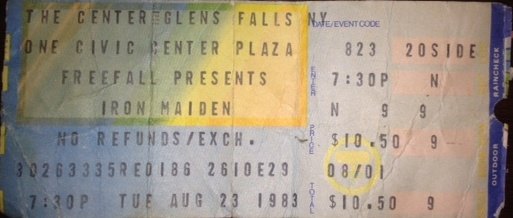
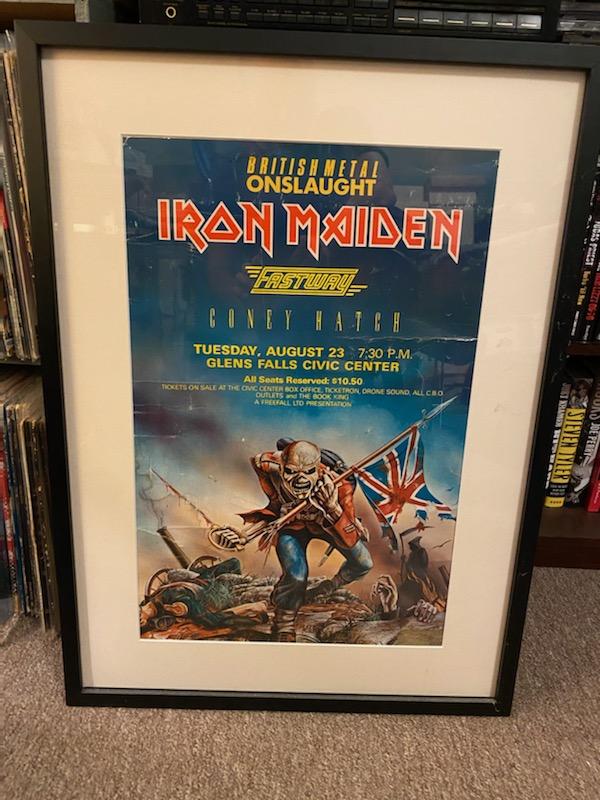
  • Flashback: August 23, 1983 – Iron Maiden, Fastway and Coney Hatch perform at Glens Falls Civic Center

    For headliners Iron Maiden, this was the ‘World Piece’ tour, supporting fourth album Piece of Mind.  Posters for this gig at Glens Falls Civic Center on August 23, 1983, labeled the show as “The British Metal Onslaught,” which made more sense in weeks preceding the show, when the bill had been Brits Iron Maiden and Saxon, with Fastway opening.  By the time of this show, Saxon had left the tour, and while Iron Maiden are the quintessential British metal band, Fastway were half-British, half-Irish, and Coney Hatch were from Canada.

    iron maiden world piece

    Opening band Coney Hatch were cool – they got a good reaction from the crowd, but outside of their native Canada they were not well-known, and this may have been their only visit to New York State.

    iron maiden world piece

    Fastway were great – the song “Say What You Will” was all over the radio at this time. Their then-current first album rocked and of course the band featured guitarist Fast Eddie Clarke from Motorhead, drummer Jerry Shirley from Humble Pie, bassist Charlie McKracken from Rory Gallagher’s Irish trio TASTE, and then-teenaged Irish singer Dave King, who would go on years later (and still currently does) front Irish punk powerhouse Flogging Molly.

    Fastway were excellent but Maiden were the kings that night. How can you argue with “Where Eagles Dare,” “Sanctuary” and “Wrathchild” as the first 3 songs? They were at their peak, playing like heroes and were greeted as such by the sold-out Glens Falls crowd. 

    Highlights included when a giant lobotomized version of Maiden mascot Eddie invaded the stage during “Iron Maiden,” and when Bruce Dickinson made a long speech dissing author Frank Herbert before “To Tame A Land.” The band had asked permission to title the song “Dune,” after Herbert’s sci-fi novel, but the author had said no, and Bruce, as reward, got the entire crowd to chant “Fuck Frank Herbert.”  The band played a many Piece of Mind songs – an album which has aged pretty well, lo these almost 40 years since. The encore was then-hit “Run To The Hills,” and this was the last tour they played ‘Killers’-era classic “Drifter” (and the “eyo, eyo, eyo” sing-along), which ended the show.

    Setlist: Intro/Where Eagles Dare, Sanctuary, Wrathchild, The Trooper, Revelations, Flight of Icarus, Die With Your Boots On, 22 Acacia Avenue, The Number of the Beast, To Tame a Land/solos, Phantom of the Opera, Hallowed Be Thy Name, Iron Maiden

    Encore: Run to the Hills, Drifter

  • ‘Racism on Trial,’ featuring Denzel Curry and Kamasi Washington, meshes Rap, Jazz and BLM

    Jammcard — a social marketplace for music professionals — along with Black Lives Matter co-founder Patrisse Cullors, partnered up earlier this summer to present the Black Power Live virtual music festival. Musicians including Terrence Martin, Kamasi Washington and Denzel Curry took part in the event, which gathered 1.7 million viewers via live stream on Twitch. Now they are releasing the powerful three-movement “Racism on Trial.”

    Black Power Live was centered around the current social-political climate, with police brutality, systematic oppression and black empowerment being focus points. Each part of “Racism on Trial” begins with a slam poetry type of setting where Florida rapper Denzel Curry recites his work, accompanied by a jazz ensemble. 

    RACISM ON TRIAL

    “Racism on Trial” follows Martin’s recent album Gray Area – Live at the JammJam, featuring the song “For Free?,” which Terrance wrote with Kendrick Lamar. The album was released on Jammcard Music in partnership with Sounds of Crenshaw and Empire Distribution. Recorded at Studio A of United Recording, packed with 300 Jammcard members surrounding the performers, the album is filled with some of the most exciting and powerful jazz music created in years. The performance features Ronald Bruner Jr., Kamasi Washington, Maurice “Mobetta” Brown, Ben Wendel, Paul Cornish, and Joshua Crumbly. 

    All proceeds from “Racism on Trial” will go to Crenshaw Dairy Mart, Trap Heals, Transgender Law Center, Sankofa.org, and Black Men Build. 

    The first movement, titled “The Voice of King Nipsey,” begins as Curry walks up to the mic and performs his verse in silence. He starts by articulating all variety of horrid things that happen in the United States. After he is finished, a Terrence Martin saxophone solo follows with Kamasi Washington and the rest of the band later joining in. 

    For the second movement, “Any Day Could be Your Last,” we again see Denzel opening up with a poem without the aid of background music, as he descriptively lists things he wants out of life. He ends his poem with the title of the feature, with the band once again following up, only this time, on a more somber note, with added vocals from Los Angeles singer, Alex Isley. Her vocals meshing with the jazz music, as well as added visuals of scenes from the civil rights movement.

    The third movement, “Pig Feet,” being the last installment once again begins with Denzel Curry but without a poem, just an intro. The band immediately starts playing and more visuals of police brutality through the years get run throughout the concert. Denzel Curry does end up rapping with the band as his background beats and he is joined by battle rappers Daylyte and G Perico. 

    Written by the trio of Terrence Martin, Kamasi Washington and Denzel Curry, Racism on Trialwas directed by Devin DeHaven, mixed by Manny Marroquin and engineered by Ethan Mates. Denzel Curry, Daylyte, G Perico and Alex Isley served as vocalists, while Kamasi Washington played saxophone, Marlon Williams the guitar. Terrence Martin, Robert Glasper, Paul Cornish played the keys, Trevor Lawrence Jr. and Jonathan Pinson were on the drums, Allakoi Peete on percussion, Dominique Sanders on upper brass, Paul Cartwright and Yvette Devereaux played the violin, Molly Rogers on the viola and Peter Jacobson on the cello.

    All proceeds from the sale of “Racism on Trial” will go to Crenshaw Dairy Mart, Trap Heals, Transgender Law Center, Sankofa.org, and Black Men Build.

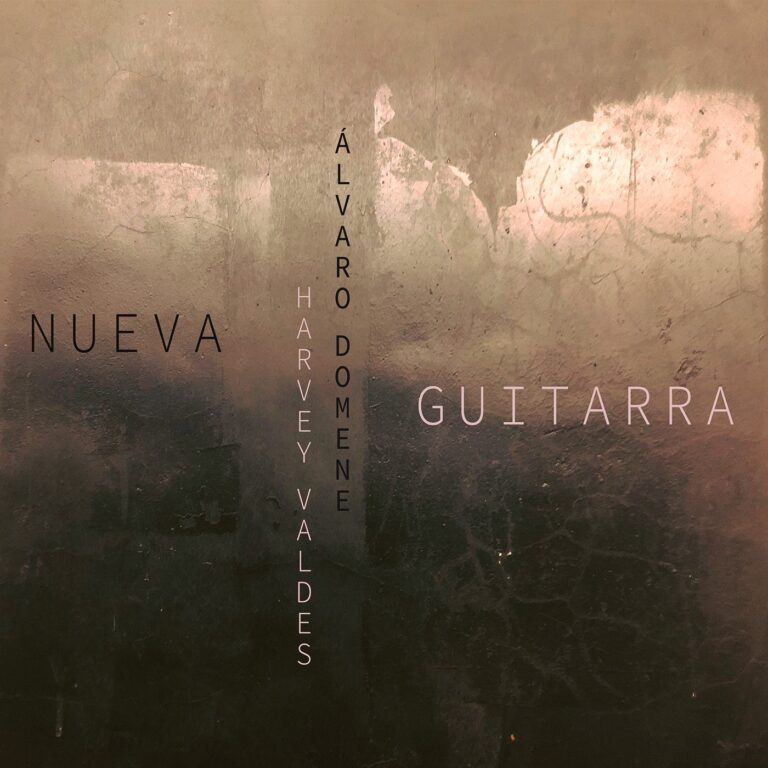
  • Hearing Aide: “Nueva Guitarra” by Harvey Valdes and Álvaro Domene

    And now for something completely different. Two New York-based guitarists, Harvey Valdes and Álvaro Domene, come together for an ear-opening album of nine deliciously deviant duets. It’s an ever-evolving, sonic tornado that is part free jazz, ambient somatic, mournful acousticity, industrial noise and the most searing, dark brand of heavy metal thunder – Nueva Guitarra.

    Álvaro Domene

    Madrid-born, Kingston-based Álvaro Domene is not only a most formidable and original guitarist; he’s a tireless advocate for the creative music scene in the Hudson Valley and beyond.  His Singularity Concert Series has brought many renowned musicians like guitarists Ben Monder and Elliot Sharp for intimate performances at his Kingston loft.  Since 2013, his co-owned Iluso Records has released over two dozen discs featuring some of the most fearlessly composed and improvised music you’d even want to spin.  As with this album, Domene continues his habit of keeping some heavy company, recording and performing regularly with the likes of Joe McPhee, Karl Berger, Henry Kaiser, Ches Smith, Michael Bisio, Billy Martin and many more. 

    Like Domene, Brooklyn-based Harvey Valdes is another guitarist (and oud master too!) for whom genre boundaries have little meaning.  His three solo albums have encompassed the radical reshaping of jazz standards (“Roundabout”), Mahavishnu-esque jazz fusion fury meets math rock  (“PointCounterPoint”) and the 18 concise solo guitar compositions of his latest, “Solitude Intones Its Echo,” mixed and mastered by sonic guitar innovator David Torn (David Bowie). 

    “Nueva Guitarra” is not designed for the faint of heart and that’s a very good thing. 

    The duo make their uncompromising and delightfully madcap intentions known in the album opener, “A Crooked Odyssey.”  It’s a sonic assault of tapping, looping, glissandos, drones, whammy dives and frizzled corrupted guitar signalry, a mad ride to the mountain top that only let’s up with a soothing ambient cloud appearing in the last 45 seconds of the six-minute outing.

    The best place to start your listening might be with the two solo pieces, which showcase the players’ varied approaches and signature sounds. 

    Valdes’ “Zealous Reflections” is a chord and melody exploration, with close voiced dissonances alternating with pleasant resolutions that he lets ring out. “Biomimicry” is Álvaro Domene swinging for the fences. It’s all quicksilver, speeded up melodies over noisy pads, loops and thumps, over under upside down signals, otherworldly whammy bar and harmonizer torture.  A noise jazz industrial racket of the highest order, from the bastard son of Buckethead and Albert Ayler. 

    My personal favorites, and maybe the easiest for the noise jazz newbie to dip into, are “Lady Dog Night Terror” and the album closer, “The Sophist Pundit.” 

    “Lady Dog Night Terror” emerges quietly from the darkness.  Its deep warm volume swells from Domene’s rise to surround and complement Valdes’ clean chording and single note lines.  Slowly, the dissonance in the melody and backdrop increases.  It gets symphonic and fuzz laden, then slowly slips away just after the four minute mark. 

    https://youtu.be/p0idBsB0z6Q

    With “The Sophist Pundit,” the duo saved the best for last. This is a summary statement of all the ideas set before, spread over nearly nine and a half minutes of guitar hellacious. 

    The track begins with stutter stop phrases looped to create a variable pulse, over which the duo improvise jagged lines.  It just gets more intense as it goes on, with the duo creating a wall of feedback looped upon feedback, punctured by siren calls and squeals designed to melt your preconceived notions of what guitars can do.

    All musicians have been hit by COVID-19, but not many have as hard as Domene.  He battled the ailment all through the spring, but still managed to ready this and other collections for release. 

    If you want to do a good deed for music kind, and vastly widen your own appreciation of music and the creative possibilities still left in the guitar, download this uncompromising disc.

    Key Tracks: Lady Dog Night Terror, The Sophist Pundit, Biomimicry

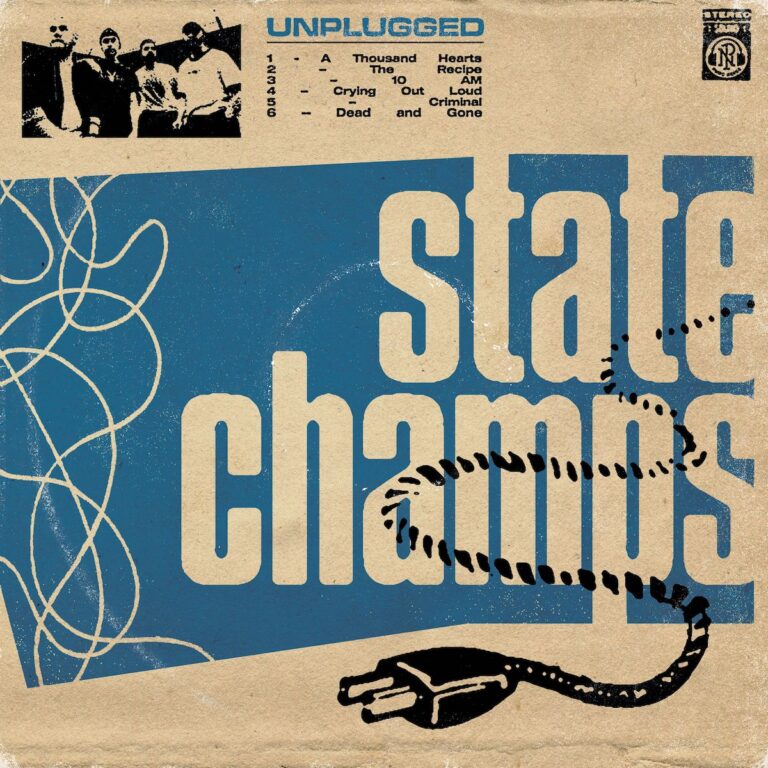
  • Hearing Aide: State Champs ‘Unplugged’

    COVID got you down? Having some relationship troubles? Or maybe there’s a hankering for some good ol’ 2010 nostalgia? Take a listen to State Champs new album Unplugged and let it all out, in a true pop punk fashion. This collection was released to celebrate 10 years since the bands’ start in Albany. In their press release, they declare their change of pace as a “healthy growth spurt,” that will “set the table for the next ten years of their career.” They definitely have grown since their start a decade ago, but it’s arguable that they may have just aged out their genre, rather than growing into a new one.

    state champs

    This six-track album, with four original songs in their newfound acoustic sound, also features two covers of their highest rated songs, transposed into their new style. What’s fascinating is they’re able to keep that drive going in such a ‘low lit’ environment. This is their saving grace because, on its face, this album might not sound so appealing. How can you have a chill version of pop punk music about how your hometown sucks and you hate your ex-girlfriend? Well this is one way to do it. This feels highly multi-layered throughout. It’s not just a softer version of the songs you like, some are reimagined in creative ways. 

    “A Thousand Hearts” really sets the scene as to how laid back they’ve become. It has decent drive and motivation, but it’s not at all parallel to their original work, with one of the only similarities being Derek DiScanio’s voice and lyrical theme. That’s fine and all, being that the band wants to move in a new direction. It might be a bit of a shock to long time listeners, as will the smooth as butter saxophone solos. “The Recipe” falls into the similarly romantic space, but presents a better sense of direction and drive, as well as more relatable lyrics about how relationships don’t need to follow a ‘recipe.’ 

    “10 am” has a very unique, self proclaimed EDM sound, mixed with well produced, natural sounds. It’s got a catchy hook to it, but again, not the most revolutionary word-smithing going on in this one. Musically though, this is very well executed. Fun fact: the song was birthed by Evan Ambrosio, who was messing around with an automated drum loop, and ran with the idea, creating a song with a synthetic drum loop that has a natural sound to them. Most of the song sounds completely acoustic and man-made, but fades out with the drum beat, which slowly morphs into a more computerized, 8-bit sound – a fun nod to the muse of the song. 

    “Crying Out Loud” is the best original on the album. The hook is super catchy, the energy created both lyrically and musically is moving and it should resonate well among Champ fans. This could easily be transposed into their original style perfectly, but again, that’s not their vision.

    “Criminal” is the first acoustic version of an original song and it feels more natural compared to the first four tracks on the album. They’ve thrown in a very poppy, bluegrass feel to it, which takes some getting used to but it’s still a fun song if you’re a fan of the original. 

    “Dead and Gone” is the perfect song to cover. The lyrics are edgy enough to give it the drive it needs and the music follows to help propel it even further. It’s not too busy, or trying to be something other than what it is. The most extreme change is a twangy guitar that pops in and out of the song. The double time effect that we hear during the verses, (that feeling of the music getting faster) comes through perfectly in this too – a cornerstone of pop punk music. 

    Pop punk is a culmination of a lot of music, so the logic should be sound – why not just add another genre in there, and we should sound different. But pop punk is already so many things: Emotional, energetic, silly, dramatic, loud. There aren’t many genres that can say they have all of those things and still be palatable to the masses. It’s also quite the challenge to change a group’s entire attitude, let alone pulling from another genre of music. This is a definitely a sensible direction to go for State Champs, as the pop punk area of music may start to trail off soon, if it already hasn’t. But if State Champs find that golden ratio, as they did in their “Dead and Gone” cover and “Crying Out Loud,” then they themselves will be golden and “set the table for the next ten years of their career.”

    Key Tracks: 10 AM, Crying Out Loud, Dead & Gone

Built in Breakdance