Each Sunday evening from 7-9pm you’ll find EQXposure on WEQX, featuring two hours of local music from up and coming artists. Tune into WEQX.com this Sunday night to hear music from Front Biz, Waitress, In the Valley,and many more!
WEQX has long been the preeminent independent station in the Capital Region of New York, broadcasting from Southern VT to an ever-expanding listening audience. NYS Music brings you a preview of artists to discover each week, just a taste of the talent waiting to be discovered by fans like you.
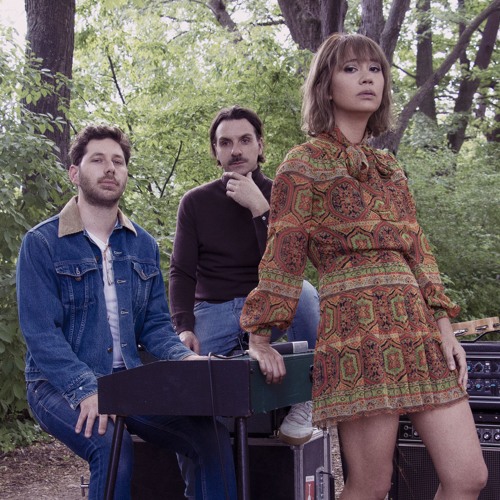
Starting out in the bygone days of 2018, James and Katie Johnson have been playing folk-pop covers, but this year 2020, the married singer-songwriters announced an original music duo under the name In The Valley. Catch “Rest” this Sunday evening on EQXPosure during the second hour, and be sure to check out their performance on WHMT/PBS, “A House for Arts” this month. In The Valley’s music is a blend of folk indie, with lo-fi alternative pop grooves, with soaring voices and well told stories.
Ending the first block of tunes on Sunday evening’s EQXPosure is a tune called “Lonely” by Waitress. The band just lost a key member but their music is deeply enriching. A unique folk and electronic mix with Indie pop, Waitress utilizes ambient synths, and elaborated guitar lines, paired with electronic production provides a new twist on pop sound that is both relaxing and dance-y. Waitress’s beach-like ambience gives listeners a chill and relaxed musical environment, while at the same time inspiring them to move to the beat. More music from this dynamic outfit will be available in the coming few months.
Front Biz is a shell company for an intergalactic real estate firm primarily focused on laundering money through an Earth-based rock band. Their latest album, Lunch Money, was recorded over three days in an Upstate NY cabin in March of 2018. The album was tracked live with virtually everything piped through a vintage Roland Space Echo for that timeless UFO hover. Victoria Rutledge and Anna Lazarou were ‘abducted’ for vocal support. Deep in the delay chain, the band made first contact with a disincarnate intelligence, entrapping them in a cosmic Ponzi scheme. Lunch Money is the group’s attempt to pay off their debt, and maybe get a bite to eat. Either way, the portal is open.
Westside Gunn isn’t new to the music industry, with his first EP dating back to 2005. In that time, he has individually and collaboratively released over 20 projects. Yet, his latest LP — Who Made the Sunshine — (his first under Shady Records, a subsidiary of Interscope records) and what he claims will be his last ever, feels different and Westside Gunn is treating it differently.
From celebrating his Entertainment Weekly feature, to posting nostalgic pictures and videos of his journey, Westside Gunn displays a mixture of hubris and humility that comes with a certain level of ascendency.
https://www.instagram.com/p/CFzs63wFpa3/
Over the past few years, we’ve seen the extravagant emcee and his Griselda cohorts slowly rise to mainstream stardom and it feels like the one they call “Fly God” is finally taking time out to revel in the fruits of his labor.
Only 3 more months left and I’m still at peace with my decision but this will be a dope 3 months I promise u that 🤲🏽🤲🏽 #FLYGOD
In the streaming era, lengthy waits between projects are no more, as this is his third project of the year. The first was the critically-acclaimed, Pray for Paris, which gained album of the year considerations. The second, was the more unassuming — but solid — Flygod Is an Awesome God 2. The last, an 11-track, 40-minute album that contains elements that are unique only to Westside Gunn.
The wrestling-themed song titles, unique and eye-catching covers, as well as the customary features. There are the usual suspects on Who Made the Sunshine, including Benny the Butcher and Conway the Machine (who have a long-standing family history of appearing on each other’s projects), Detroit emcee and Griselda signee Boldy James and the self-titled “first lady” of Griselda, Armani Caesar.
https://www.instagram.com/p/CF2MejdFLF0/
Aside from his Griselda associates, Westside Gunn features hip hop legends the likes of: Black Thought, Jadakiss, Busta Rhymes and most surprising of all, Slick Rick. Recognized for his unique presentation, nothing is off the table for the Griselda head honcho and it’ll be interesting to see if he sticks to his retirement as a rapper once this much-anticipated album has been digested.
“Southern Winds” the new standalone single from NYC indie rocker Arsun, showcases a mature songwriting approach with nostalgic vintage aesthetics and an original style. Glide Magazine praised “Southern Winds” for effectively incorporating the sound of previous decades. Indie88 acknowledged the catchy instrumental that highlights Arsun’s gritty vocals.
Photo Cred: Tasmin Meyer Erashin
Arsun’s musical influence for “Southern Winds” comes from a combination of Phil Spector, Nancy Sinatra’s “You Only Live Twice” and The Beach Boys. Arsun also used inspiration from Homer’s epic “The Odyssey” and popular music from the 1950s and 1960s. The influences help to highlight Arsun’s mature approach to songwriting at 21. Click here to listen to Southern Winds.
The main melody kind of just came out of the blue when I was messing around with some chords one day. I really liked them and thought they had kind of a special surreal sound. I made the lyrics try to kind of reflect that vibe.
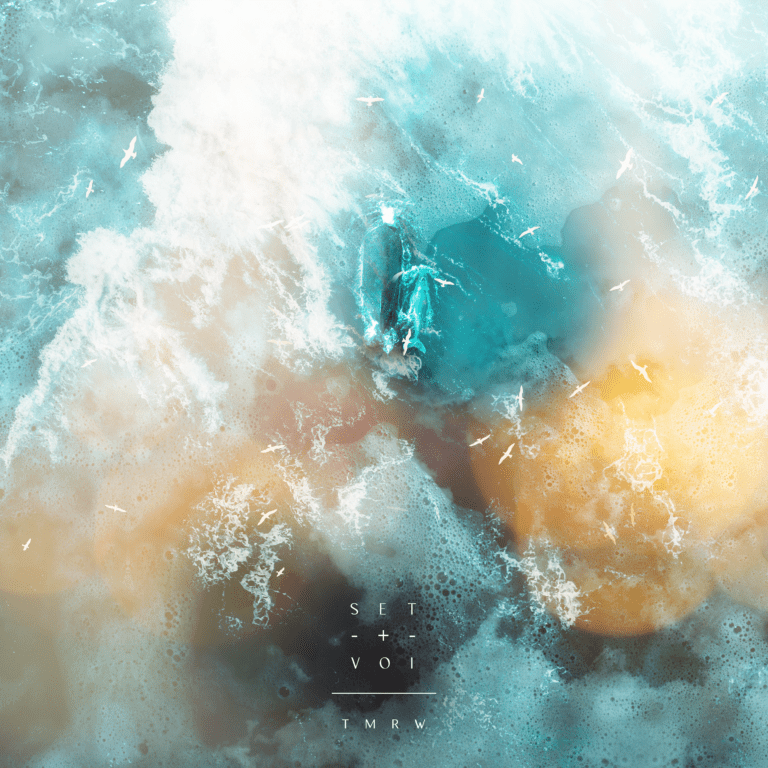
Set + Voi, an Asian Electro-Pop Supergroup, debuts their first single “TMRW” on October 2, 2020. Set + Voi hopes that the song will help people to view Asian Americans in a different light than they are portrayed by in the media.
The supergroup is made up of Tony Nguyen of Wind Meets West, Mason Wong of VYZTA, and Ashley Chong of saenabi. The three piece band hails from Brooklyn and has worked completely remotely from each other, creating this song without having ever met each other in person. The supergroup formed during COVID- 19 through the Asian Creative Network, a community to connect and empower Asian creatives. Nguyen initiated the group’s formation by inviting Chong and Wong for a writing session.
The song “TMRW” became their first single after writing sections together where it was formed. Nguyen uses their producing and songwriting skills, Chong uses their lyrics and songwriting, led by poetry and personal narrative, and Wong’s expertise in EDM production make for music that combines emotional honesty and high-toned theatrical flair. Their different musical upbringings create a compelling mix that makes their music unique.
Nguyen spoke on the creation of “TMRW” saying, “I wrote this song about how immigrant parents sometimes can’t conceive a life outside ‘stability=happiness’, that a 9-5 is the only way to find your place in life. This song is for everyone on a nonstandard path in life, those who want to break out and live a different way than they were taught growing up.”
The name Set + Voi, means “set whale,” voi being Vietnamese for ‘whale.’ This name came into being after an inside joke between the band members referring to the whale-like sound that reverberates through their first single ‘TMRW.’
For more information on Set + Voi, visit their Instagram here and stay tuned for more from this supergroup.
Frank Zappa. For New Yorkers of a certain vintage, he is as much associated with Halloween as Jack-O-Lanterns and candy corn-induced cavities. From the mid-1970s to the mid-1980s, Zappa brought each new aggregation of his mighty Mothers to New York City for an ever-expanding run of now legendary Halloween concerts, many of which we can now enjoy in album form and on video.
For his loyal fans, many who attended annually like myself, Zappa’s Halloween spectaculars were more like Christmas morning, with a mountain of new surprises to unpack. They bore a bounty of surprising setlists of new tunes and many reworked old favorites. There was also virtuoso playing from Frank and the newbie rock stars to be he introduced at these shows, like guitar gods Adrian Belew and Steve Vai. And, of course, the delightfully demented hijinks/performance art he orchestrated, with his band and audience members, and special guests like NBC/SNL’s legendary announcer Don Pardo.
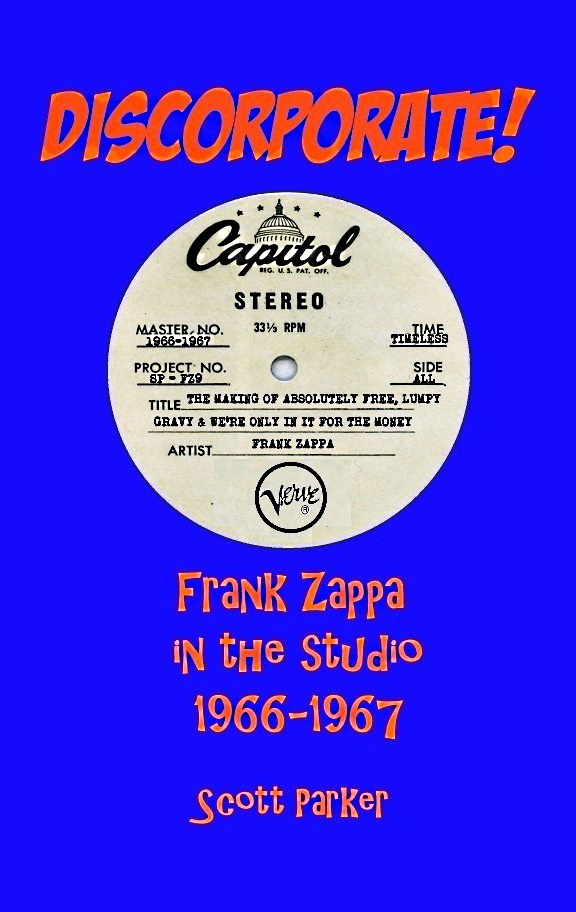
In honor of Halloween, we are delving into the history of these shows, and the recorded documents you can enjoy, with one of the world’s leading Zappaologists, Scott Parker. Parker is the author of nine fantastic books about the music of Frank Zappa and, since 2011, the ZappaCast, now the officially sanctioned podcast of the Zappa Family Trust. In each episode, Parker digs deep into specific subjects, especially new releases, like the incredible The Hot Rats Sessions, with Frank’s former band mates and authorities like Joe Travers, the keeper of Frank’s precious and seemingly limitless vault of recordings.
Sal Cataldi: Zappa’s Halloween shows in New York are legendary, but they weren’t really his first extended play in NYC. Can you tell us about when he lived here during his legendary stint at the Garrick Theater, and what albums he recorded here during that stay?
Scott Parker: Frank always had a soft spot for New York City, partly because his composer idol, Edgard Varése, lived in Greenwich Village until his death in 1965. In late 1966, Frank came to New York City for the first time, to play a series of shows at the Balloon Farm, a sort of proto-psychedelic ballroom at 19-25 St. Marks Place (which, by the way, was the former home of the Dom, where Andy Warhol held his most celebrated run of Exploding Plastic Inevitable events featuring the Velvet Underground as the house band).
During that time, Frank stayed at the Hotel Van Rensselaer on 11th Street, but eventually he and his soon-to-be-wife Gail moved into an apartment at 180 Thompson Street, a block away from Edgard Varése’s former home. He relocated his band, the Mothers of Invention, to New York, where they worked through the summer of 1967 at the Garrick Theater, which was a small theater located above the famed Café au Go Go, at 152 Bleecker Street. The beautifully anarchic shows that Zappa and the Mothers performed at the Garrick were some of the most legendary and celebrated of his entire career, and ensured that Zappa would have a loyal fan base in New York City for the remainder of his career. While in New York, he also recorded extensively, producing four albums, We’re Only In It for the Money, Uncle Meat, Lumpy Gravy and Cruising with Ruben and the Jets.
SC: Frank’s decade long run of Halloween shows in NYC proper began in 1974 and ended in 1984. Can you tell us a little about the various venues that presented them and how they grew, from one to multiple night stints? And why he decided to end them?
SP: Frank eventually settled on what became a tradition of playing Halloween shows in New York City, and these began in 1974, with two shows on Halloween itself at the Felt Forum, the small theater located at Madison Square Garden. These performances were held at the height of Frank’s commercial popularity, and were riotous, celebratory events.
In 1975, Frank returned to New York City for another two shows on Halloween night at the Felt Forum, and that venue hosted the 1976 Halloween shows, which has now grown into a run of three shows over two days.
By 1977, Frank had discovered the Palladium, a comfortable older venue located on E. 13th Street that he had used to stage a series of Christmas season concerts in December 1976. In that year, the Halloween run of shows had expanded to six, spread out over four nights between the 28th and the 31st. This set the pattern for subsequent shows at the Palladium, which Frank would play every year (apart from 1979, when he did not tour in the United States) until 1981. By this time, the run of shows, which always sold out and were recognized as THE big event for the Zappa fan faithful, had grown to multi-night extravaganzas, reaching their peak with a 1978 run of five shows.
By the end of his 1982 European tour, Zappa announced that he was quitting the road. But he did return with a new band in 1984, and in that year, the Halloween tradition was revived with two shows at the Felt Forum. By this time, difficulties with the local Union had made it difficult for Frank to play shows in New York, And while he did return one last time for a run of three shows at the Beacon Theater in February 1988, he wound up dismissing his 1988 band lineup long before that year’s Halloween could come around. The 1988 band would turn out to be his final touring band.
Unfortunately, I only became a Zappa fan in the mid 1980s, and didn’t get to see him until 1988, so I missed out on all of the fun of the New York Halloween shows. Fortunately, we have the music!
SC: These shows provided material for several albums released during Frank’s lifetime, and now some great box sets recently released. How many in total, by your estimate, are culled from these performances through the years? What are some of your personal favorites?
SP: With the Halloween shows having turned into some thing of a national holiday for Zappa fans, Frank decided to document them on film in 1977. The resultant movie, Baby Snakes, is truly celebratory, and focuses as much on Frank’s New York area fans (which he fondly referred to in the credits as “New York’s finest crazy people”). In 2017 to mark the 40th anniversary of these legendary shows, the entire run was issued as a box set, appropriately titled Halloween 77. This will probably always be my personal favorite of the various New York Halloween box sets, simply because I have a soft spot for it — the Baby Snakes movie was one of my main gateways into Zappa’s Universe, and the shows, as with most of Frank’s Halloween New York shows, are simply incredible!
While parts of Zappa‘s 1978 run of shows at the Palladium have been made available on various releases, a full release of the run has not yet been made commercially available. But three concerts from the run of shows from 1981, also at the Palladium, will be released in October 2020 in the Halloween 81 box set (more about that in a bit!).
SC: The album Zappa in New York was recorded during his legendary 1976 shows, when he also appeared as a musical guest on Saturday Night Live. He expanded the band with the Brecker Brothers, SNL band members and even announcer Don Pardo. What are some of the highlights of these concerts, tunes and performances?
SP: The 1976 Christmas shows, which were Zappa‘s first shows at the Palladium, we are very unique events in his live performance history, not least because the Brecker Brothers and the Saturday Night Live horns gave a unique texture to the performances. Unfortunately, the band suffered from a less-than-ideal amount of rehearsal time, though Frank was able to salvage some of it for the 1978 Zappa in New York LP release. A sizable chunk of these performances was released in 2019, marking the 40th anniversary of the release of that album.
Those shows saw Frank taking chances with his setlists, in some cases playing material that went back to the 1967 Garrick Theater shows. While there were some rough patches during that run due to the lack of rehearsal, the shows were still very, very interesting and, of course, the New York crowd was behind Zappa all the way!
SC: Then in 1978, Zappa returned to SNL was guest host during Halloween week, and was supposedly incredibly unpopular with the cast! What was the issue there? These concerts were featured on an earlier release, produced by his son Dweezil, correct? Any plans for more expanded releases from these shows?
SP: Frank was indeed a fan of SNL, but in terms of being a host, his cynical nature got the better of him at times, and he could appear standoffish to the cast. In addition, the druggy vibe of the cast would not have sat well with the teetotaler Zappa. Although Frank is often said to have been “banned“ from SNL after his host turn, I do believe that that was not necessarily a formal ban. But it is true that he never returned to the show.
The album you mention, Frank Zappa Plays The Music of Frank Zappa – A Memorial Tribute, does not actually include any material from the 1978 Halloween shows, but you can hear excerpts from those shows on such releases as the You Can’t Do That On Stage Anymore CD series, or the 2003 DVD-Audio release, Halloween. With any luck, we will see a full release of the 1978 shows as part of the Halloween series of box set releases!
https://www.youtube.com/watch?v=gLtZi7kAK8s
SC: In 2017, the Zappa Trust put together one of its most ambitious boxes, Halloween 77: The Palladium, NYC. The concerts were notable for many reasons; the shows were filmed and released in the 1979 concert doc, Baby Snakes. Tell us about the shows and what’s unique about the ZFT’s approach to this box set.
SP: The Halloween 77 box set was revolutionary, in that it marked the first time that an entire series of Zappa performances were issued. Frank put a lot of care into the recording and preservation of these shows, because they were being documented for Baby Snakes. The Vaultmeister for the Zappa Trust, Joe Travers, did an absolutely bang-up job ensuring that every note from the shows was included in the set. As it turned out, this was an incredible joy to listen to, especially for fans of the film and that particular Zappa band lineup, which features guitarist Adrian Belew and drummer Terry Bozzio.
In terms of musicianship, the band heard on this box would be one of Frank’s greatest touring ensembles ever, and the shows were tight and punchy while still containing a large amount of spontaneity. And since Baby Snakes was really my formal introduction to Frank Zappa’s live performance art, this will always be a very special release for me.
SC: This month, fans can get another great new Halloween box, the six-CD Halloween 81, from a four-night run of shows again at the Palladium. What are some of the highlights of this set?
SP: Frank’s 1981/1982 live band was, simply put, a razor-sharp musical machine. These shows were filmed for video release (the Halloween late show itself was broadcast live by MTV), so professionalism is the name of the game here. For me, this is a particularly enjoyable tour in terms of repertoire, as Frank was out on the road promoting his brilliant 1981 album, You Are What You Is. Once again, he had an incredible band, featuring the legendary guitarist Steve Vai, and the brilliantly soulful vocals of longtime band member Ray White.
Although there is less pure insanity to be found in the shows compared to other Zappa Halloween shows, the actual playing is, perhaps, the best of all of Zappa’s Halloween in New York performances, with his own guitar soloing standing as some of his finest ever.
SC: This new box also provides you with a Frank Halloween costume! Is it something you plan to wear this year?
SP: Indeed! The other releases that have come out from Frank’s Halloween performances, Halloween 77 and Halloween 73 (the latter not recorded in New York), come packaged in the style of the box Halloween costumes familiar to me as a kid. So I have to admit, I do appreciate the throwback humor in the design, and I do wear the costumes – – when I can fit into them! 😉
SC: Theatricality and audience participation were always a part of Frank’s shows, but maybe never so much as on Halloween. What were some of the big theatrical moments and surprises that transpired during some of these shows over the years?
SP: Anything could happen at Frank’s New York Halloween shows, and frequently did! Back in 1967 during the Garrick Theater run, the shows could be considered anarchic in a number of respects. Zappa saw the Garrick as a laboratory of sorts, one in which he could shape and define his singular performance art. This approach was carried through to the New York City Halloween shows, and particularly the shows held at the Palladium. Before some of the most rabid Zappa fans in the world. There was frequently audience participation, special guests and general madness that could break out at any time. Because the shows could be highly experimental, there is absolutely no doubt in my mind that Frank absolutely relished performing his Halloween shows every year, and they frequently brought out the best in his bands and himself.
SC: Any Zappa concert was really an opportunity to showcase his chops as a guitarist. In 1977 and 1981, Adrian Belew and Steve Vai spurred him on respectively, in their big-time music/touring debuts. What are some of the tracks that guitarists should check out from these shows?
SP: For me personally the 1977 shows are special because they feature some of the last straight rhythm guitar playing that Zappa would ever play on stage, a very underrated skill for a man known as one of rock’s finest guitar soloists. When he did crank the guitar up for a solo turn, such as on the song “Punky’s Whips,” the results were absolutely blistering! Adrian Belew is one of the greatest guitar technicians the world will ever know, and he knew how to get Frank to elevate his game, without a doubt.
Steve Vai was and is quite simply one of the greatest and most legendary guitar players of all time, and Frank brought him into his band when Steve was still a teenager. By 1981, the two of them could be heard burning it up in a guitar duet/duel on “Stevie’s Spanking,” a tune written specifically by Zappa for Vai.
There were lots of soloing opportunities for Frank by 1981, and for me, his playing was at its most lyrical in this period, probably spurred on by Steve Vai’s massive technical chops. It’s worth noting that some older video releases of material from the 1981 Halloween shows contain post-production phasing and other effects applied to Frank’s guitar, which tended to drown some of the detail. Fortunately, these effects do not appear in the new box set!
https://www.youtube.com/watch?v=GPb-X_UIW3s
SP: Back in 1973, the Halloween shows (Frank and the Mothers had been playing them since 1971) had yet to acquire that extra bit of “special” that they would get when Frank would stage them in New York. But the band heard on the Halloween 73 box set is one of the very special Zappa/Mothers lineups which, as you mentioned, would go on to record the bulk of Roxy & Elsewhere, one of Frank’s greatest albums. They were a remarkably strong lineup, and with Frank’s guitar playing on fire throughout (he was the only guitar player in the band at this time), you are guaranteed amazing music, and you sure do get it in this set!
SC: I know you are very tight with Joe Travers, the famed “Vaultmeister” who knows everything that exists in Frank’s famed tape library. Are they any more Halloween releases in the offing?
SP: Joe is pretty much constantly working on new projects, and there will definitely be more Halloween releases I’m sure. It is important to remember that the series of Halloween releases is likely to be limited by its nature, and also by the fact that some years, such as 1984, were not recorded by Frank (likely owing to Union issues), while others, such as 1980, were recorded by Frank but sadly erased, due to his dissatisfaction with the performances (he was fighting a bad cold during that run of shows). But there are years that hopefully will be mined in the near future (notably the brilliant 1978 run).
SC: You’ve written nine books on the music of Frank Zappa. Can you tell us a little about how and when you got into him, and about some of your past and recent books?
SP: Absolutely! My Zappa journey really began in 1985, so I pretty much missed out on seeing him on tour apart from one show in 1988. I was introduced to his music by a record storeowner named Walt Quadrato, who had been a Zappa fan and collector since 1966, when he purchased the first Mothers album Freak Out! not knowing that the sounds within would change his life forever. He steered me in the direction of that very same album, which I purchased, brought home, played, and yes — my life, too was changed forever! I became what you might call an upside down Zappa fan, collecting every scrap of everything – – paper, audio, video and photographs – – that I could get my hands on. That obsession remains to this day!
In 1987, purely as a way of helping to organize my own collection, I wrote my first book about Frank’s live work, Hungry Freaks Daddy. This was the first of a series of books covering his entire live performance history, and that series is still ongoing (a new volume will be released next year). Most recently, I have written books that are a deep dive into the recording sessions for Frank’s first three albums, and hope to do more work chronicling his recording sessions in the near future (I have BIG plans!).
SC: One great Halloween release not recorded in New York City is 2019’s Halloween 73. This was recorded in Chicago and is the debut of the much-beloved line-up that would be featured on Roxy & Elsewhere and its recent expanded box. How do these differ from those shows?
SC: I’ve been a huge fan of your ZappaCast podcast, which now is supported by and has the blessing of the Zappa Trust. Tell us a little about how it’s grown, the approach you take to creating episodes, and some of your favorites.
SP: The ZappaCast actually began life in 2011, and so it’s almost 10 years old now! The idea was to bring some stories forward that our listeners may not have been familiar with. Over the years, we’ve had roundtables, lots of discussions with Zappa alumni, and eventually we did get officially incorporated into Zappa’s Universe when we were made the official Zappa Podcast in 2018. It’s a real honor to work with Ahmet Zappa and Joe Travers (Zappa Vaultmeister) and Melanie Starks (manager of Zappa Records) and everyone over at the Zappa Trust. Recently, we acquired our very own producer, so that helps to up the production values considerably. The basic idea is to make a show that is as entertaining as Frank would have liked it to be. And I think we’ve done OK!
New York State Supreme Court Justice Frank Sedita has ruled unconstitutional the State Liquor Authority to ban on advertising live music at venues and bars, and from promoting live ticketed events, after a Buffalo business challenged the new guidelines.
Sportsmens Tavern live music venue, pre-COVID.
Sportsmens Tavern, a music venue and bar in Buffalo’s Black Rock neighborhood, filed the lawsuit after Gov. Andrew Cuomo, along with the SLA, announced that advertising any live show is to be prohibited.
“I was surprised when the judge announced the ban as unconstitutional because we filed the lawsuit five weeks ago,” said Jason Hall, the owners of Sportsmens’ son.
According to Hall, the SLA informed them it was okay to continue advertising and promoting even though the new guidelines said the exact opposite.
In this case, they filed an ’emergency hearing,’ because the ban immediately affected their business. Attorney Paul Cambria, a well-known western New York attorney, advised them to stay off of social media and continue their business as usual while they awaited the ruling.
This does not mean every venue in New York State should be relieved. While it was a NYS Supreme Court judge that decided to throw away the rules, his district in in Erie County, meaning the SLA can make an appeal at any time. They indicated that they are considering it.
“Only incidental music is permissible at this time. This means that advertised and/or ticketed shows are not permissible. Music should be incidental to the dining experience and not the draw itself. All other forms of live entertainment, such as exotic dancing, comedy shows, karaoke etc., are not permissible currently regardless of phase.”
SLA website previously stated.
In the meantime, live music at Sportsmens Tavern is thriving with a whole lineup featuring local artists this month.
The Buffalo News reports that the lawyer for Sportsmens Tavern asked the court, “What’s the difference on how you fill your place, whether a blue plate special or that the Nerds Gone Wild are going to play there? You still have to follow the safety regulations.
Justice Frank Sedita III agreed, saying the regulations seemed “not only excessive but also irrational” given the Covid-19 safety precautions that Sportsmen’s Tavern and other establishments must follow.
“Whether a Sportsmen’s patron is principally motivated by listening to ‘Cheeseburger in Paradise’ or eating a cheeseburger in Black Rock is a distinction without a difference if the (establishment) is enforcing occupancy limits, cleaning, disinfecting, mask wearing and social distancing,” Sedita said at Wednesday’s court hearing.
Joel Terragnoli, counsel for the State Liquor Authority, contended Sportsmen’s Tavern could advertise that it remains open to serve its customers food and beverages, and even that it generally offers live or recorded music as entertainment for its patrons.
But since Sportsmen’s Tavern “is not free to hold special musical events, it should not be free to advertise and sell tickets to do the same, and operate a live show/entertainment venue under the guise of running a bar and restaurant, particularly when all other such show and entertainment venues across the state remain closed for public health reasons,” Terragnoli said.
And even if able to offer live music at its establishment while enforcing social distancing measures, he said, Sportsmen’s Tavern “cannot make an end run around the current prohibition on the operation of show and other entertainment venues by operating its bar and restaurant as a concert hall.”
“This case is not so much about ensuring public safety as it is about the permissible limits of state power to regulate the speech and the conduct of its citizens,” Sedita said.
Experimental funk/jam legends Lettuce have issued an eye-catching official video for the instrumental “Silence Is Golden” off latest album, Resonate.
The colorful, animated storybook visual was created by the Los Angeles-based team at Black Balloon Media. The video is directed by Brad Strickman, produced by Shane Strickman and illustrated by Carolyn Arcabascio.
Images from the video will be transformed into coloring book pages for fans to enjoy, with the first available to download here.
With this video, we want to take you on a visually stunning, colorful journey into a fantastic storybook-like world that invokes peace and inspires creativity. We want to make the connection resonate between ourselves, nature, and the spirit that binds us all together. Lett us present, ‘Silence is Golden.’
Lettuce Guitarist Adam “Shmeeans” Smirnoff.
Black Balloon Media previously worked on a video for Neil Young’s “Powderfinger,” which is what attracted Lettuce to work with the company, seeing a similar style and approach for “Silence is Golden”
Smirnoff connected with the Black Balloon Media team and advised them on the song’s themes of music and nature intertwining and connecting all of us. This also led to discussing having the band members animated in the video and playing their instruments within nature, creating a wide variety of scenes – not just one setting, but instead, in all of nature.
From there, as we do with all projects, we put together some boards and a treatment. There was a little back and forth on the style, colors, and look of the band members. We brought on Carolyn Arcabascio to do a lot of the illustrations. We love her watercolor, painterly style and it fit the direction very well. We had worked with her previously on an animated video for Palisades “Erase the Pain.”
Brad Strickman, Creative Director
With the team together and boards and treatment approved, the team started building shots and assembling an edit. Since “Silence is Golden” appropriately has no lyrics, the video was approached a little differently.
We didn’t have to worry about sync as much as you would with a song with wall to wall singing. We still wanted them to be playing correctly and in time, but we had some leeway. In fact, we built a lot of the scenes without them playing at first, and then as the edit got finalized, we animated them to be more in sync with the locked timing. This gave us more flexibility. As it came together we would send them updated versions. They were loving it, so minor adjustments along the way, handling any notes they had and polished it as we went.
Brad Strickman, Creative Director
“Working on the art, it was amazing to me how Lettuce’s music already felt so visual,” adds the video’s illustrator Carolyn Arcabascio. “You can just imagine the colors as the song goes from dreamy and trance-like to energetic and explosive. A total dream project for an illustrator.”
Brad Strickman, director, also shares, “We really enjoyed bringing this video to life for Lettuce and their management team. The song has such a great vibe and, right from the beginning, we loved their concept of nature and music connecting us all.”
The connection of nature to music is essential to understand. The sound of the leaves swaying in the soft breeze along with the crickets and birds singing, can be very inspiring. This song represents a quiet place that resides in all of our minds that can bring peace to our souls. Lettuce meditate to the golden silence.
Lettuce drummer Adam Deitch
Black Balloon Media, in addition to Lettuce and Neil Young, has worked with Linkin Park, Disturbed, Bebe Rexha, Prince, Neffex, Palisades, Bad Bunny and Stone Temple Pilots, among many others.
Resonate, Lettuce’s seventh studio album, is a sonic continuation of the acclaimed sextet’s 2019 GRAMMY Award-nominated album Elevate, which earned Lettuce their first collective nomination in the category of Best Contemporary Instrumental Album.
On Resonate, Lettuce continue to be celebrated boundary-pushing innovators nearly three decades into their lauded career, blurring the lines and smashing it up with jazz chords, psychedelic passages, big horns, strains of soul and go-go, hip-hop elements and a joyful, uplifting improvisational sound all their own. They also found inspiration from many of their idols, such as James Brown and Earth, Wind & Fire, for the new music. Resonate was helmed by esteemed producer and engineer Russ Elevado [D’Angelo, The Roots, Erykah Badu] and written and recorded during the same Colorado Sound Studio sessions for Elevate.
The Mid-Hudson Civic Center is not a particularly huge arena by normal standards, but the fact that it was less than half-full on this night made it seem that much bigger. This was a solid triple-bill of 1987 real metal – dubbed the ‘Hell on Wheels’ tour – featuring Helloween and Armored Saint, but headliners from the U.K., heavies Grim Reaper, had one hit single to their credit (“See You In Hell”), and that single success had not translated to arena-filling status for the Brits.
So the hall was not packed (a fact not helped by the fact that the much bigger British hard rockers Def Leppard was playing a gig a few hours north at the Glens Falls Civic Center that night), and frankly the audience that was there seemed to be present more for German newcomers/openers Helloween, there on their first US tour, and L.A. metal gods Armored Saint, who played the middle slot. This was a show that could have – and perhaps should have – been booked into The Chance around the corner.
photo by Marc Kurtzner
Helloween had a big buzz at the time with their ‘Keeper of the Seven Keys Pt. I’ album, were already pulling big crowds in the UK and Europe, and years later are considered to be trailblazers for the epic, Power Metal sound which still packs halls in Europe. This night they were a new young metal band with something to prove, and hit the stage fast and heavy, and got the less-than-capacity crowd going immediately, despite the fact that the house lights didn’t go down until halfway through the second song.
photo by Marc Kurtzner
The band played a set full of songs from the then-current Keeper album, including “Future World” and the 13-minute epic “Helloween”, and were given a third-on-the-bill encore by the enthusiastic crowd, and played older song “How Many Tears” to wrap things up. The band seemed primed for much bigger things in 1987, and returned a year or two later to play packed halls with Anthrax in ’89, but mass success did not ensue, in the U.S. anyway.
photo by Marc Kurtzner
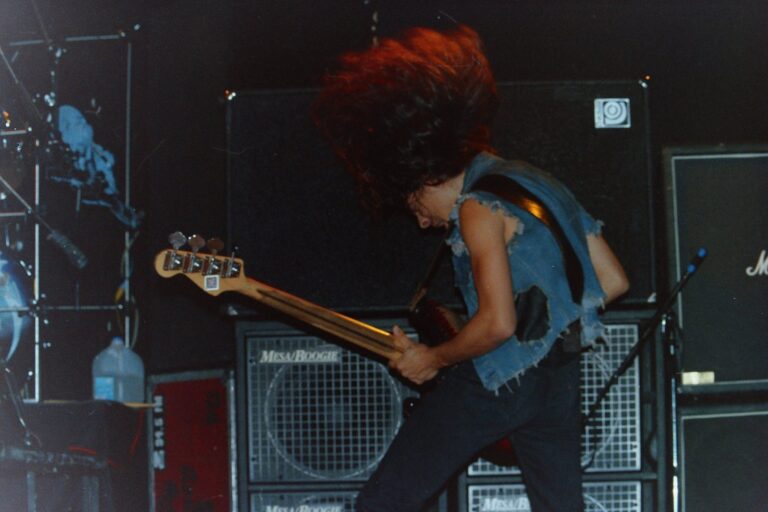
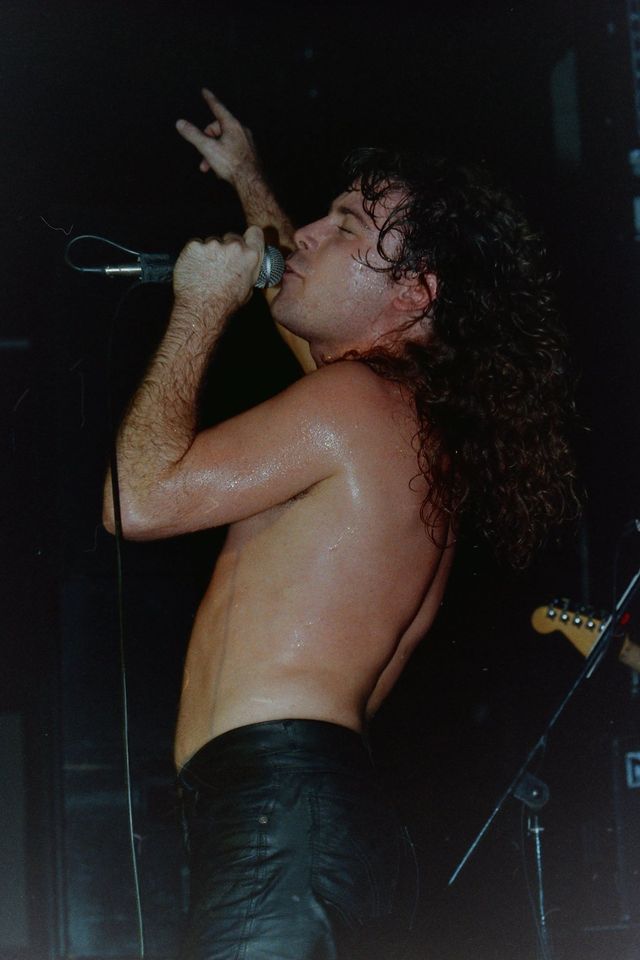
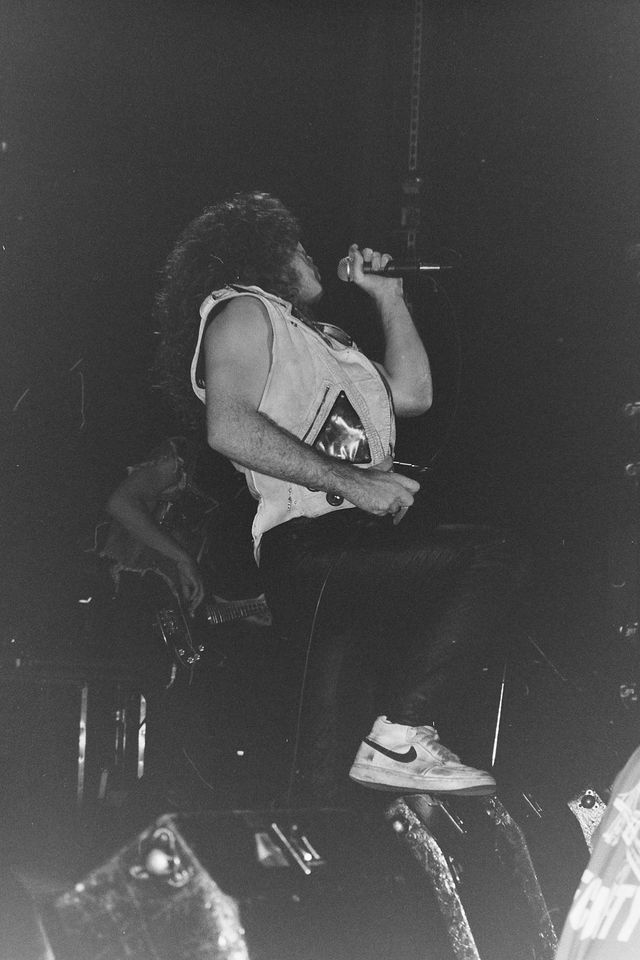
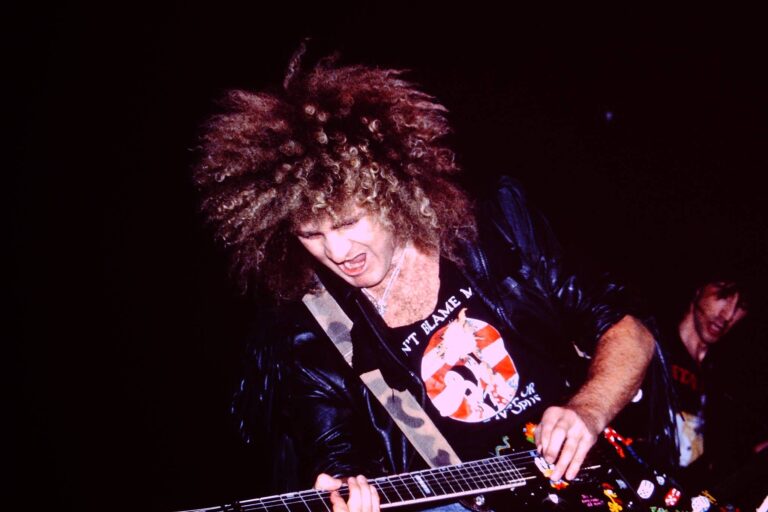
As tight and entertaining as Helloween were, this writer was there for band #2, west coast heavies Armored Saint. “March of the Saint” kicked their set off, and from there the Saint (singer John Bush, bassist Joey Vera, drummer Gonzo Sandoval and the late, great guitarist Dave Prichard) attacked the stage with enough energy to melt icebergs.
photo by Marc Kurtzner
At the time AS were promoting their third Chrysalis Records LP, ‘Raising Fear’, and played several tracks from that release, like “Human Vulture”, “Book of Blood”, and the killer “Chemical Euphoria”, but didn’t ignore older songs like “Long Before I Die” and “Can U Deliver”, all served up with sweaty, infectious energy.
photo by Marc Kurtzner
The set finished with the then-new record’s high-velocity, headbanging title track, “Raising Fear”, before the band were summoned for an encore, the even faster, heavier “Madhouse” from their debut record.
photo by Marc Kurtzner
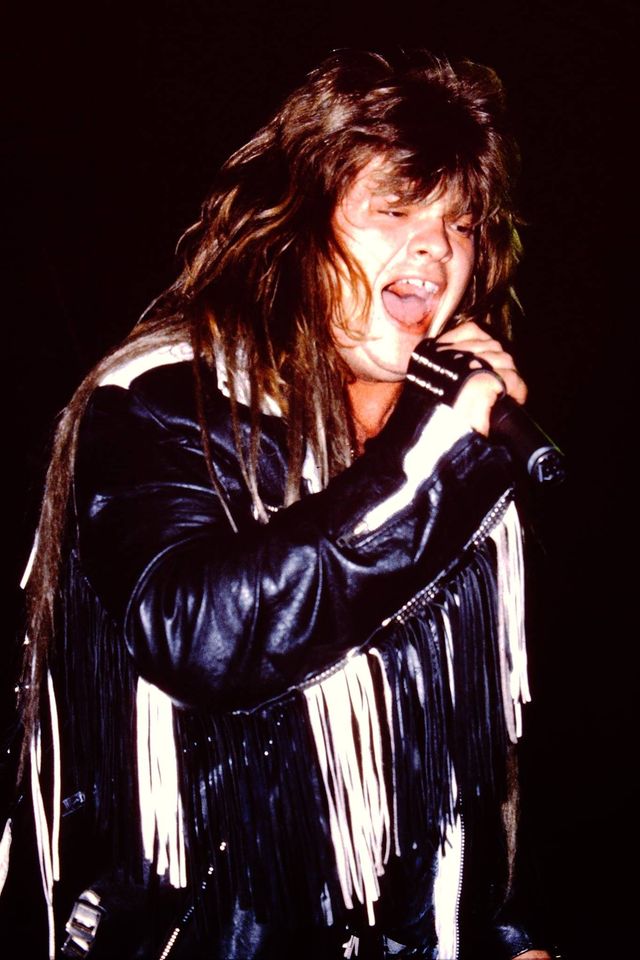
Headliners Grim Reaper finished the night, and seemed to get less front-of-the-stage energy from the crowd than the first two bands had. GR were solid metal, singer Steve Grimmett had (and has) a mighty howl, and guitarist Nick Bowcott is no slouch, but the band seemed superlative after the more exciting first two bands, and they played an hour of shrieking metal, culminating in the inevitable “See You In Hell” before a dwindling crowd. That said, a fine night of pure metal, perhaps in a hall bigger than was warranted by the headline act.
Le Couleur, an alternative pop group from Montreal comprised of vocalist, Laurence Giroux-Do, bassist Patrick Gosselin, and drummer Steeven Choudinard, has released their latest album Concorde. Despite COVID-19 cancelling numerous live performance schedules and release dates, that has not stopped Le Couleur from expressing fine work; Concorde is a well-tuned, melodic, and soothing album.
When performing live, Philippe Beaudin joins on percussion and Francis Do Monte plays guitar and keyboards. For their new show, they recently changed and showcased their new formation, consisting of six musicians in total. The French-Canadian group had put out EPs in 2013 and 2015, before finally releasing their critically acclaimed debut album P.O.P. in 2016. Le Couleur’s synth-pop sound is filled with intricate melodies, tight basslines, and the album is a very enjoyable listen for indie pop listeners and recent live performances at home are just as nice to listen to. Amid the pandemic, they have recorded home performances in place of in-person events. Interested readers can find these in-home performances on YouTube.
Concorde is named after an outdated airliner model that had a notable incident in 2000 when a fuel tank explosion on an Air France flight killed all onboard. The airliner would go out of service in 2003. Prior to the disastrous effect of the Concorde flight, it was positively perceived for its sleek design, and allowed faster flights in comparison to other airline models. The group was inspired by the ups and downs of the Concorde timeline along with the airliner’s symbolism. The Concorde’s sleek design represents that sexy, idealistic image of the carrier. The crash and its eventual retirement mark the “macabre” side that Le Couleur.
Key Tracks: Concorde, Comme une fin du Monde, Train de Minuit,
On Friday, September 25, NYC pop artist Nicolas McCoppin released his debut studio EP Loverboy. The eight-track EP includes four new tracks, as well as previous singles “Stuck,” “Ur Love,” “Remember That Night,” and “For Years.” New dance-pop song “Heaven” was released shortly before the EP:
Continuing the lovestruck nature of its singles, Loverboy is positively infatuated. Besides the whimsical and even naive lyrics, McCoppin channels a disco-fied Cupid on the album cover. But in addition to his proclamations of romantic love, the album is equally a love letter to his city.
New York City played a really huge role in the project. It’s where I wrote and recorded all the tracks. In my eyes, the project is not only about falling in love with a boy, but it also doubles as a love note to New York […] I touch on growing up in a small town in Upstate New York and then escaping to the city to find love.
Nicolas McCoppin
In addition to “Heaven” and “Remember That Night” shouting out Brooklyn and the Bronx, there are two whole tracks just about New York: “Subway Sunsets” and “City of Love.” The brief electric guitar bridge in “Subway Sunsets” is one of the album’s most creative moments, and “City of Love” feels like an East Coast “Teenage Dream.” Loverboy’s sound and lyrical content also borrow heavily from Carly Rae Jepsen’s Emotion and Dedicated albums, specifically her song “Now That I Found You,” but the added city homages help McCoppin make the 80s-inspired dance-pop sound his own.
While this type of pure pop is rarely found on the Billboard Hot 100 these days, it still has a steady cult fanbase kept afloat by Jepsen, Kim Petras, and Charli XCX (at least when the latter leans into a more accessible sound). McCoppin fits right in with those artists on Loverboy, and their fans will definitely gravitate towards him.