Category: Audio

  • Remembering Julian Bream

    Anyone who can spell the word “guitar” likely knows of the formidable Spaniard of the gut string, Andrés Segovia.  But too few know enough about the Brit who cast just a smidge less of a shadow in the world of classical guitar and lute, and maybe a far more progressive one at that. Julian Bream passed away this week at the age of 87.

    Bream was regarded as one of the instrument’s most formidable, influential and soulful players, a flawless technician with incomparable tone and technique on guitar and, later, the lute.  Unlike the traditionalist Segovia who was his inspiration, Bream worked to push classical guitar beyond its Spanish roots by commissioning dozens of works from major composers like Malcolm Arnold and Benjamin Britten, whose “Nocturnal” (1963) is one of the most popular pieces in the modern guitar repertoire.  On the traditionalist front, he was the first to revive major works of Spain’s Fernando Sor and Mauro Giuliani of Italy, two important 19th century guitarist-composers, and to serve as the prime interpreter of the lute works of the legendary John Dowland. His painstaking transcriptions, which are a key parcel of the classical teaching lexicon today, included Bach suites and Scarlatti sonatas, as well as works by Purcell, Cimarosa, Diabelli and Schubert.

    Julian Bream: Benjamin Britten’s Noctural

    https://www.youtube.com/watch?v=Bk8VfE-Gzoo

    Bream’s initial interest in guitar came about not through the classics but the gypsy jazz of Django Reinhardt.  After receiving his first gut string guitar from his father on his 11th birthday, Bream quickly became a child prodigy. He won a guitar competition the following year which enabled him to study at the Royal College of Music (piano not guitar), before making his debut guitar recital one year later in 1947. 

    By the mid-1950s, Bream’s career was in full swing, with many tours in Europe, Asia, Australia and North America, as well as a busy slate of recordings.  Bream has a massive discography on the RCA Victor and EMI Classics labels, recordings which earned him four Grammys among other honors.

    What cannot be underestimated is Bream’s impact of reviving interest in that hard to handle, many stringed medieval cousin of the guitar, the lute. Bream took up the Renaissance lute in 1950 in order to play 16 century works by Thomas Morley, John Dowland and other Elizabethan composers.  In 1959, he formed the Julian Bream Consort, a string, wind and lute ensemble, to perform and record Elizabethan ensemble music, which he also did in a popular duo partnership with singer Peter Pears.  Bream’s success as a lutenist inspired a generation of young musicians, including Paul O’Dette, Stephen Stubbs and Hopkinson Smith, to set aside the modern guitar and concentrate on the lute and other early stringed instruments.

    Julian Bream Plays Dowland

    Bream’s influence as a musician went far beyond the world of classical music and into the world of rock and jazz, where appreciation of his skill and soul transcended the genre.

    One of his most fervent admirers is the astounding Dutch guitarist Jan Akkerman. Voted Best Guitarist in the World in 1973 over Eric Clapton, Jimmy Page, and others by that British bible of rock, Melody Maker, Jan is a man with a wide stylistic discography. He’s perhaps best known for the pioneering shred and yodel classic, “Hocus Pocus,” by his former band Focus.

    “I was recording with Focus in Chipping Norton in Oxfordshire and got fed up with the whole scene so I jumped in my car to escape it all,” begins Akkerman.  “I wound up in The Tews, in a little village near the Rollright Stones, a beautiful spot in a valley full of 12th Century houses, real Robin Hood style.”

    “When I switched on the radio, what I heard was The Julian Bream Consort on BBC1, playing lovely Elizabethan lute music, which really ran my bell,” he continues.  “You look at ten Dutch paintings and seven of them will have a lute in them.  It really struck a chord with me, emotionally and musically, and I became slavishly devoted to locating old sheet music and practicing the instrument, so much of it the music that Bream performed.”

    “At that time, Focus was touring like crazy, so I would bring the lute along with me and woodshed on flights, in limos, like a madman.  I used some of Julian’s concepts on my album Tabernakel, but with my own rock-style twist.”

    Jan Akkerman – Tabernakel “Brittania” John Dowland

    https://www.youtube.com/watch?v=WAUVbzDNYnY

    “What made Julian a great player for me is he played the lute in a classical guitaristic way, with a much cleaner sound which I happen to love,” continues Akkerman. “I saw him in concert once in the Netherlands and what occurred to me was he possessed an ungodly fluidity and lyricism and a sort of sense of humor from the guitar faces he threw too as he played, which I like to do.  I would say, along with Django, he is my all-time favorite.  If you want to hear what classical guitar is all about, just listen to his album, Julian Bream: 20th Century Guitar.

    Julian Bream Documentary “My Life in Music”
    https://www.youtube.com/watch?v=MUdunh_wMCI
  • Songs of Summer Spotify Playlist from Artists across New York State

    We’re moving quickly through the ‘Summer of Home‘ and while live music is slowly making a comeback, we’re a ways off from having it back to what we remember as normal.

    NYS Music looked back at the past decade and came up with a Spotify playlist of ‘Songs of Summer’ from bands across the Empire State. Looking for funk, jam, soul, rock, reggae or Americana? We’ve got an incredible sampling below. Give a spin and listen to born and bred New York artists.

  • Discover Local Music With EQXposure Featured Artists including Fab the Duo and more

    Each Sunday evening from 7-9pm on 102.7 FM, you’ll find EQXposure on WEQX, featuring two hours of local music from up and coming artists. Tune into WEQX.com this Sunday night to hear music from Fab the Duo, CANVAS and many more!

    EQXposure

    WEQX has long been the preeminent independent station in the Capital Region of New York, broadcasting from Southern VT to a ever-expanding listening audience. NYS Music brings you a preview of artists to discover each week, just a taste of the talent waiting to be discovered by fans like you.

    Fab The Duo – “Our Love Is Resistance

    Boyfriends Greg Driscoll and Brendan Eprile bring a unique blend of energy and open-mindedness to pop-rock. Add some blues and elements of Broadway and you’re in for a sound that is both fun and meaningful. The duo come from New York City and are building quite the following in the surrounding areas having even played a planned parenthood benefit in my hometown of Bennington, VT. Having pumped up audiences with their powerful and well-crafted tunes, they continue to challenge the status quo of today’s cultural scene.  

    CANVAS – “Like It or Not

    Here is a band that likes to explore new territory, drawing influences from bluegrass, folk, punk, metal, and hip-hop. That said, experimentation is their mission and they don’t associate themselves with any particular sound or genre. They go boldly into uncharted territory and take a new approach with every song. Triumphant anthems, soulful ballads, and edgy fusions of alt pop, rock, and funk… it’s all there. Just dare them not to try it. Double. Dog. Dare them. CANVAS believes nothing is certain and all you have to do is take a listen to their ever-evolving hybrid sound to see what they mean.  

  • Zach Koeing Talks Gawn’s Debut Album “Thee Essence Ov Everything”

    On August 14, Brooklyn-based band Gawn will release their debut album, Thee Essence Ov Everything. The band’s newest single, “Pushed Aside,” is available to stream now. 

    Gawn
    Photo from @g_a_w_n on Instagram

    Thee Essence Ov Everything is the perfect mix of soft, indie, and electric rock. Each song is individually interesting but maintains in harmony with the rest of the record. I had the opportunity to talk to Zach Koeing about Gawn, the band’s soul, about the new track and album. 

    Marilyn Feerick: How did you first get into music?

    Zach Koeing: I started playing music probably when I was 10 years old. I grew up in a house with musicians. My dad was a guitar player and songwriter and he taught me to play guitar. 

    MF: What does “Pushed Aside” mean to you?

    ZK: The meaning of the song and the lyrics is kinda just moving on from old friendships that have faded away, maybe because they’re toxic or people change.

    MF: I read that it was hard to get one solid group to consistently do shows, so you play with different people almost every night. 

    ZK: When the project first started, it was more of just a recording project. It was different friends coming to the studio, handing out, laying down some tracks, writing some songs together, and when it kinda came down to shows, it seemed like a lot of people’s schedules were clashing with each other and stuff like that. So, it just seemed to be a lot less stress ad a lot easier to get a group of guys together on the flay than try to rely on just one group of people. 

    MF: Is having a rotating band more confusing, or does it help you keep everything more fresh?

    ZK: I think it sounds like it would be more confusing, but it does feel like it is fresh because every single time that I sit down with a new group of people, it feels like I’m able to come up with something new and something original. With the same group of guys, it would seem like it would be harder to come up with new stuff. There’s definitely different feels. People play differently, and ideas some of the guys will bring to the table will just be kind of on a whim and it’s just like ‘that was it, let’s keep it,’ and if that guy wasn’t there that night, it wouldn’t have happened.

    MF: How has COVID-19 and the quarantine affected you creatively? Are you writing anything new?

    ZK: Before COVID, we were talking to our publicist about doing PR and all the promotions and everything for [the album], and out of nowhere, the country was shut down and we were kinda just like ‘oh no what are we gonna do? Are we gonna tour, should the record come out, should we go with it?’ And especially during the black lives matter protests, we didn’t want to be shining any light on us when there’s something more important going on. So we decided to basically just put it on the back burner until we started to find out what was going on in the world. During that time I had a little four track recorder at my house that I sat next to, like, every morning and every night just writing new ideas, because we weren’t working or anything so we were just kinda adjusting…to being home all the time. And I had my own little recording setup. So, I recorded about 30 new ideas on a four track during quarantine. 

    MF: And lastly, do you have any plans for projects once quarantine is over?

    ZK: Me and the guys recorded two new songs probably like a month ago, so we plan on releasing probably a seven inch after we do the record and then hopefully next year we’ll be able to tour.

    Stream “Pushed Aside” and other singles by Gawn in the meantime before Thee Essence Ov Everything comes out on August 14.

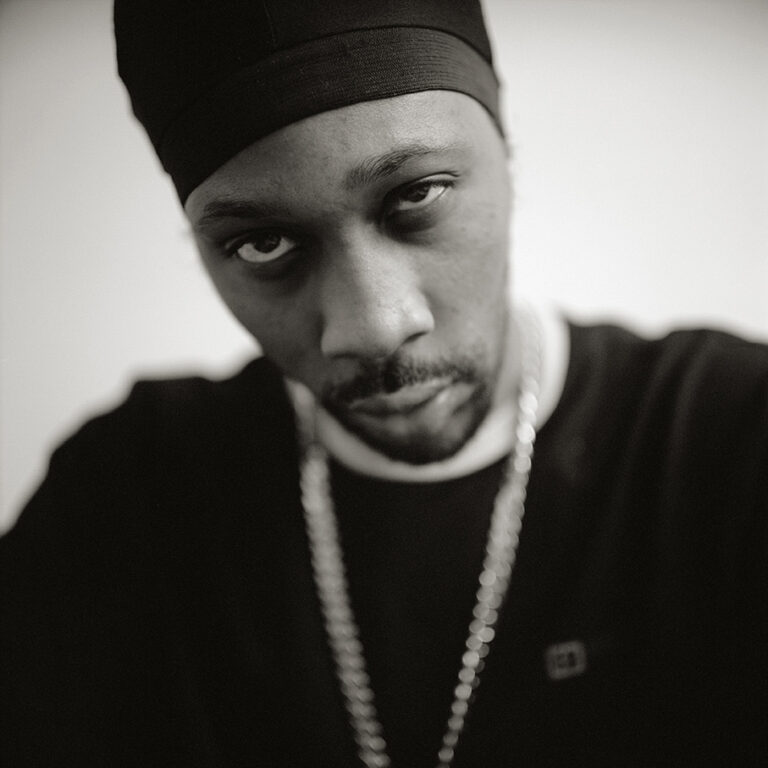
  • Wu Tang Wednesday: Cash Rules Everything Around Me

    With one of the more iconic hooks in hip-hop history, “C.R.E.A.M” (Cash Rules Everything Around Me) is by far Wu-Tang Clan’s most popular record, making them household names. The single was on their debut LP Enter the Wu-Tang (36 Chambers) and is considered a magnum opus of hip hop music. When you combine Method Man’s unique — yet silky-smooth flow — along with Raekwon and Inspectah Deck’s cutting-edge lyricism, you have the makings of a classic record. 

    “C.R.E.A.M” was recorded by the group in July of 1993, but was officially released November 9, 1993 as the eighth track from the 36 Chambers LP. RZA — the group’s defacto leader and beat maker — produced the song by sampling the opening piano riff from Charmel’s 1967 record “As Long as I Got You,” with a perfectly placed set of looping drum kicks added on.

    Despite all the praise the record received within the hip-hop community and its current status as a classic record, “C.R.E.A.M” was not a chart-topp. Debuting at number 96 on the U.S. Billboard Hot 100, it eventually peaked at number 60 later that week, also peaking at number 8 on the hottest hip-hop/R&B songs. It became certified gold officially in 2009, 15 years after its release.

    Cash Rules Everything Around Me
    “The Rza is just razor sharp, he always on point with the beats with the rhymes”

    In an interview for 247HH (hip-hop), Raekwon revealed the meaning behind the song’s tittle, revealing that “cream” was a slang term for money kids around the neighborhood would use. Saying that it came from cartoons like, Tom & Jerry, where the titular cat — Jerry — would slap Tom (the mouse) with whipped cream as they would fight over food. As a result, “cream” became something that they said when they were fighting over money or. in general, want of a better financial situation.

    He also revealed that the acronym “cash rules everything around me” came from group mate Method Man’s associate, Raid. Detailing that back then, people would write graffiti and would break words down to give them meaning so, Raid broke down “cream” to mean “cash rules everything around me.”

    Cash Rules Everything Around Me

    RZA shed light on how the record came about, in an interview with SiriusXM. Divulging that the name of the original track was “The Lifestyle of the Mega Rich” and it had about 8 minutes of material from Raekwon and Inspacteh Deck. He wanted them to condense their lyrics into more concise verses and thought it needed a great hook. That’s where Method Man came in to play. The most culturally transcendent of the group, RZA even acknowledged that it was Method Man’s melodic flow on the hook that took Wu-Tang from gold to Platinum.   

    In a more recent interview with DJ Vlad, Inspectah Deck revealed that it was the success of “C.R.E.A.M” that made him realize how big of a group they were. Recalling a memory from a show the clan in Webster Hall, noticing that many of his heroes were there to see the Clan perform. From Big Daddy Kane, to Tracy Lee and Q-Tip. 

    The songs music video paid homage to where each member of the group was from, as a form of imagery that added even more depth to the record. The music video begins in the projects of Staten Island and then sees the Clan make their way to a more lavish lifestyle, driving Mercedes and sipping champagne.     

    Raekwon And Inspectah Deck were the only members of the group to have verses on the record. With both relating to the harsh realities of being from the inner cities. Telling their life stories’ in each verse. Rae gives a timeline of his life from his move from to Staten Island and his time spent in New York City. His first two lines perfectly captures the environment he hails from.

    “I grew up on the crime side the New York times side

    Where staying alive was no jive.”

    Continuing with more personal tales of being separated from his father with his mother leaving and moving the family to Staten Island.

    “Second hands moms bounced on old man, then we moved to shaolin land”

    He chronicled his entire life on this verse and gave descriptive accounts of his times in the inner-city. The story being told is raw, real and vivid, something the man known as “the chef” is known for. Finishing his verse with: 

    “Figured out I went the wrong route, so I got with sick a** clique and went all out

    Catching kings from cross seas hauling MVP’s every week we make 40 g’s 

    N***a respect mine or here goes the tech nine ch-ch pow move from the gate now”

    Inspectah Deck took a similar approach to Raekwon, with similar accounts, while his verse detailed his own attempts at preventing the youth from following a similar path.  

    “Spent 22 long hard years we still struggling

    Survival got me bugging but I’m alive on arrival

    I peep at the shape of the streets 

    And stay awake to the ways of the world cause sh*t is deep”

    With Raekwon’s story-telling abilities an entire story was told in one perfectly executed verse. From this verse alone, we learn, that at 15 he had plans of making “cream” but, was sent to jail for selling drugs. Yet, he only sold drugs because he never had much and only wanted a piece of the finer things in life – a sentiment many incarcerated Black men can share in. In the end, his life was taken away for trying to get his version of the American dream. 

    “Life as a shorty shouldn’t be so rough.

    Though I don’t know why I chose to smoke sess

    I guess that the time when I’m not depressed

    But I’m still depressed, and I ask; what’s it worth 

    Ready to give up so I seek the old Earth” 

    “C.R.E.A.M” has left behind a significant legacy in hip-hop. The song’s popularity helped shift the balance of power from the West coast to the East, even going on to transcend any tension between the differing coasts. 

    The record has been sampled or interpolated by Drake on “Pound Cake/Paris Morton Music 2,” Notorious B.I.G on his hit record “Notorious Thugs,” featuring Bone-Thugs-N-Harmony. Other artists include Joey Bada$$ on his song “Paper Trail$” as well as, Mos Def on “Mathematics.”

    With contributions from Maxwell Amankwah

  • Spotify CEO Daniel Ek Thinks Artists Aren’t Working Hard Enough, to Musician’s Dismay

    Spotify CEO Daniel Ek thinks that it’s the artist’s own fault they aren’t making enough money because they aren’t putting out enough music. It’s been widely known that the popularity of streaming services instead of buying music from the artists or their labels has hurt the artists revenue but Daniel Ek is taking it to the next level by putting the blame on the artist for their measly payouts.

    Spotify CEO Daniel Ek, photo via Bloomberg.

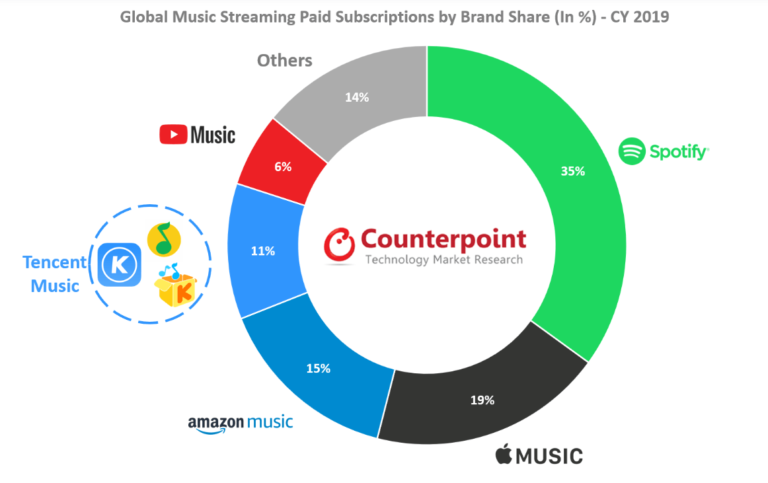
    Spotify has a market value of about $21 billion in 2019 and Daniel Ek himself has an estimated net worth of nearly $2 billion. According to Business of Apps article they say,“Estimates vary on how much a Spotify stream is worth to artist: from $0.006-0.0084 to as low as $0.00318/stream”  at a pay rate of $0.006-0.0084 a stream it would take a million streams for an artist to make $7,000. In comparison the article states that, “Amazon Music tops the list in terms of average payment per stream on $0.01196/stream. YouTube Premium delivers $0.00803, Apple offers $0.00563, and Google Play $0.00551. Pandora’s rate, on the other hand, is even lower than Spotify, at $0.00151.” In the first quarter of 2020 Spotify’s revenue brought in $1.85 billion from Premium subscribers, while ad-supported users generated $161 million for the company.

    Spotify
    Graph curtsey of Counterpoint’s article.

    Daniel Ek stated in an interview with Music Ally that, “There is a narrative fallacy here, combined with the fact that, obviously, some artists that used to do well in the past may not do well in this future landscape, where you can’t record music once every three to four years and think that’s going to be enough,” essentially putting the lack of revenue the artists own fault. Daniel Ek explained that, “ What tends to be reported are the people that are unhappy, but we very rarely see anyone who’s talking about… In the entire existence [of Spotify] I don’t think I’ve ever seen a single artist saying, ‘I’m happy with all the money I’m getting from streaming.” Which begs the question, are artists not working hard enough or are they just not being properly compensated for their work by streaming services? 

    Musicians are not happy about this mindset in the music industry that Daniel Ek has been promotin. Ben Albert of  Rochester Groovecast thinks Daniel Ek’s remarks are, “Disrespectful” saying that, “Music is not a fast food chain.” The fact that Spotify’s CEO believes that artists aren’t working hard enough and should just turn out more music is disheartening to the music community particularly those who are on the road a lot and believe in creating more complex and artistically driven music. Gabriel Marin from Consider the Source spoke on this matter saying, “People like [Daniel]  Ek seem to only look at pop and commercial music as how all music is made. Yes those forms of music are easy to make happen and often a whole career of someone in that field will be 3-4 years. Music that has more weight takes longer; bands that make a living and artistically thrive in a live setting can’t put albums out at a predictable pace like that.”

    In times like these where COVID-19 is hitting the music industry harder than many industries it’s hard to understand how someone running one of the biggest music platforms can so easily criticize artists instead of supporting them. Justin Henricks of Wurliday and Beau Sasser’s Escape Plan chimed in on the matter saying that, “Spotify is in a very unique position of ability to offer some real aid and relief to an industry that is in dire need of it at the moment. Take a page from Bandcamp who offered to relinquish their revenue share and give 100% of their proceeds on specific days to the artists/labels. I find it appalling that not only has Spotify chosen to ignore their ability and responsibility to help in any way but have actually double downed to say Artists should work harder, churn more music into their billion dollar money making machine, and leave us all out to dry. Shame on them.” 

    Dopapod‘s Rob Compa shared a similar sentiment, saying “I don’t think Daniel Eck understands that touring was how bands like mine and many friends of ours was how we raised any money to record albums, let alone make a meager living. Now, with COVID, we can’t even do that. So if he expects us to produce album after album, where does he expect us to get the money to make them? To me, he’s a little like some general who’s never even been in a fight, telling all of us to get out of the trench and run into no man’s land.”

    For more on this story and Ek’s point of view, read Music Ally’s original interview here.

  • Philly Pop-Punk Outfit Goalkeeper Release Heated New Single “Happy”

    Philadelphia band Goalkeeper have come through with “Happy,” an upbeat pop punk banger of a track just in time for the dog days of summer.

    Goalkeeper

    Full of crunchy power chords, and catchy melodies, “Happy” is the bands first release off of their upcoming EP Life in Slow Motion which will be released this upcoming September 25th on the Lost Music Collective independent label. “Happy” encapsulates everything Goalkeeper have been about thus far; writing nostalgic-flavored pop punk songs from the early 2000s coupled with roaring vocals and hefty breakdowns.

    Goalkeeper have proven themselves to be a group who is constantly seeking out new sounds in an effort to push the genre they operate in to the next level. Opening for bands such as State Champs and Real Friends, Goalkeeper are determined to leave their mark on the east coast pop punk scene.

    Pre-save the Life in Slow Motion EP here and visit the band’s webpage to learn more!

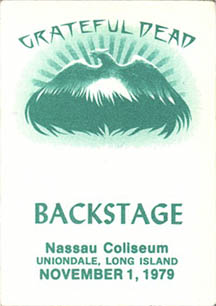
  • Fire on Ice: Grateful Dead light up Nassau Coliseum

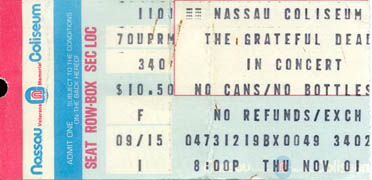
    We head back to the Island for this week’s Jerry Sundays installment with a Grateful Dead show at the legendary Nassau Coliseum from 1979. The band played two shows here earlier that year in January, more than five years after their first appearance in Uniondale in 1973.

    Now, in the middle of hockey season, and at the peak of the NY Islanders hockey dynasty no less, the Dead played three shows at the famous arena that surrounded Halloween. This was still the dawn of a new era of Dead as the band was still breaking in keyboard player Brent Mydland, new to the band as of April that year.

    The tone for this evening is immediately set through a ferocious “Jack Straw” that starts the show off in grand fashion. Weir’s vocals are matched in intensity only by the lead guitar fills supplied by Jerry Garcia. “They Love Each Other” ends with a flippant comment from guitarist Bob Weir afterwards about Russia “bombing Staten Island” that evening. The Cold War Era was truly a different time. A robust and particularly uptempo “Mama Tried” that follows seems to take the place of the usual early show “El Paso” due to the “Mexicali Blues” that starts up immediately afterwards.

    Another gem from this first set is a crisp version of “Peggy-O,” with delicate vocals and guitar play both handled wonderfully by Garcia. The swaying emotions that the cover of this traditional ballad brings with it would be a staple of Dead and Jerry Garcia Band shows for years to come. This one has a smooth delivery thanks to an in-sync rhythm section that motors along behind Garcia effortlessly.

    The first set “Candyman” features even more howling guitar play from Garcia and the “Looks Like Rain” that follows is filled with even more emotional guitar fills that accompany nicely with Weir’s vocals that steadily build in ferocity as the song develops. And the newcomer gets a first set contribution as well as the Mydland-penned ballad “Easy To Love You” makes one of its earlier appearances.

    But the true “meat and potatoes” of this show is the opening sequence of the second set. Some consider this longest “Scarlet Begonias” > “Fire On The Mountain” combination that the band has ever played. And they would have a legitimate argument as this one effortlessly stretches out past thirty minutes in all. Garcia and Mydland start hooking up as the “Scarlet” jam progresses and this carries all the way into and through a “Fire” that more than lives up to its name.

    The rest of the second set is certainly no slouch, but the extended break and rabid fan reaction after these first two songs marked the end of something special. The “Terrapin Station” that follows later in the set features more of the same relaxed tone in some of its transitional sections that stretch out a little longer than usual. This eventually gives way to a “Playin’ In The Band” that races through its composition and serves up another psychedelic offering with more heavy Garcia-Mydland interplay steering the collective ship.

    grateful dead nassau coliseum

    A late second set “Black Peter” gives Garcia’s guitar the spotlight and a chance to blissfully wail away again. And the “U.S. Blues” encore hits all the right notes, courtesy of more passionate playing from Mydland. But the legendary “Scarlet” > “Fire” pairing that opens the second set is what makes this show so special – one of the greatest versions of one of the band’s greatest pairings. In other words, just another typical New York Grateful Dead show.

    Grateful Dead 11/1/79 Nassau Veterans Memorial Coliseum Uniondale, NY

    Set 1: Jack Straw, They Love Each Other, Mama Tried-> Mexicali Blues, Peggy-O, Minglewood Blues, Candyman, Looks Like Rain, Don’t Ease Me In, Easy To Love You, Promised Land

    Set 2: Scarlet Begonias-> Fire On The Mountain, Samson & Delilah, Terrapin Station-> Playin’ In The Band-> Drums->Space->Black Peter-> Good Lovin’

    Encore: U.S. Blues

  • Discover Local Music With EQXposure Featured Artists Of The Week

    WEQX has long been the preeminent independent station in the Capital Region of New York, broadcasting from Southern VT to a ever-expanding listening audience. Each Sunday evening from 7-9pm on 102.7 FM, you’ll find EQXposure on WEQX, featuring two hours of local music from up and coming artists. NYS Music will bring you a preview of artists to discover each week, just a taste of the talent waiting to be discovered by fans like you.

    WEQX dryer


    Dryer – “Occupation Suicide” and “Stupid for You”  

    These two songs make up the first new release since 2016 from this Saratoga Springs band. On Prodgnerd Dryer brings back the lo-fi sound of some of the bands that influence them like The Breeders, Pavement, and Guided By Voices. So if you’re into them and other cool 90’s alt rock stuff like Superchunk, Green Day, Weezer, or Varuca Salt, take 8 minutes out of your day and please listen to these new songs. Don’t you have 8 minutes? Actually it won’t even take you that long. And if you have more minutes, you can hear a decade’s worth of goodies by checking out Strut and Fret: A Collection of Songs from 1993-2003 You Missed the First Time AroundBut if you only have 8 minutes at least listen to this.   

    Annie Scherer – “Andy Warhol”  

    This Voorheesville native has been playing piano since she was 6 years old and cites The Beatles and The Rolling Stones as early influences. Annie wrote her first song in second grade and taught herself guitar by the age of 12 when she began writing more seriously and even playing gigs. Fast forward to 2018 and Annie was rewarded with a trip to L.A. after being honored with the Producer’s Choice Award for the ‘Celebration of Music’ PBS special in Troy, NY. In L.A. she was taped performing this song and that recording will air internationally sometime this year.  

    Next Station – “Introspection”  

    Next Station formed in Niskayuna in 2009 and split up for a while due to different career paths. And though distance has kept them apart physically (one went to NYC and another to Dallas, TX) they managed to record their first new song in 4 years and are set to release their first new album since 2012. The songs were workshopped via e-mail and conference call after singer/songwriter Will Pedicone began writing new material in an effort to revive the band. And revive it he has! There is even talk of a tour when the world opens back up.   

    Carling and Will – “Lillie’s Lullaby”  

    These two Southern Vermont multi-instrumentalists specialize in, well, instrumentals. Take the rich drone of the electric guitar and add some warm open-back banjo and you get a sound that is both intriguing and soothing. But that’s not all they are capable of. Their new album Soon Comes the Night has much more to offer. It’s both melancholy and high-spirited as it weaves tender music and upbeat fiddle tunes together throughout. Hear more of their work and check out some videos of the duo on their website.

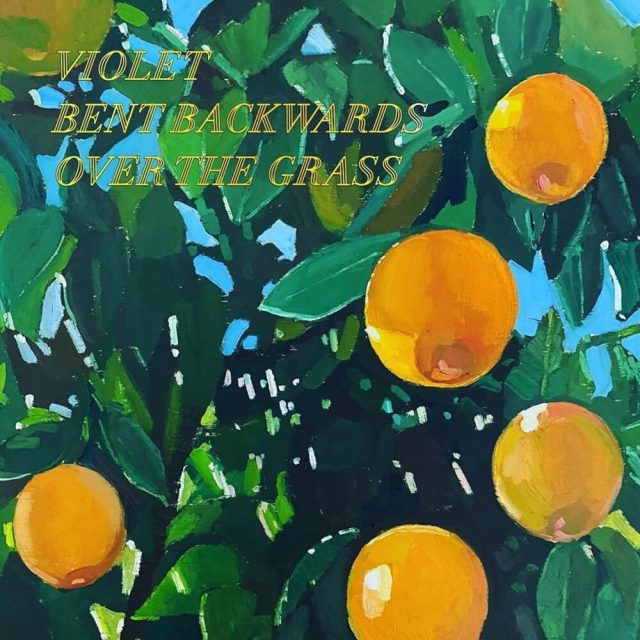
  • Lana Del Rey Ventures into Poetry with “Violet Bent Backwards Over the Grass”

    On Tuesday, July 28, Lake Placid native Lana Del Rey released the audiobook for her upcoming poetry collection. Titled Violet Bent Backwards Over the Grass, it contains 14 of the more than 30 poems to be included in the hardcover version, out September 29.

    Violet comes at an especially busy time in Lana’s career: she released Norman Fucking Rockwell last summer, she has another album coming soon, and she recently made headlines with a controversial Instagram post slamming female artists of color.

    lana del rey

    Del Rey’s lyrics have long drawn comparisons to Sylvia Plath, so her foray into poetry is no surprise. Besides Plath, she’s cited Allen Ginsburg, Walt Whitman, and Jack Keruoac as literary inspirations. The audiobook version of the collection, also a spoken word album, includes accompanying music from Bleachers’ Jack Antonoff. Antonoff co-wrote and produced 11 of Norman Fucking Rockwell’s 14 tracks, and recently worked on The Chicks’ comeback album Gaslighter. Lana Del Rey isn’t the first alternative songstress to release a poetry book: Florence Welch of Florence + the Machine published Useless Magic in 2018.

    Originally from Lake Placid, Del Rey started her music career while attending Fordham University. She made her mainstream debut with the song “Video Games” in 2011, and followed it up with the album Born To Die in 2012. While garnering mixed reviews at first, she quickly acquired a loyal cult following and achieved better reception with subsequent records. Her upcoming album, peculiarly titled Chemtrails Over the Country Club, is scheduled for release on Saturday, September 5.

    Violet Bent Backwards Over the Grass is now available on Audible, as well as in CD and vinyl formats on October 2. Proceeds will benefit the Navajo Water Project, an organization that provides clean running water for Navajo families. The first poem, “LA Who Am I To Love You,” is now on Spotify, YouTube, and Apple Music: