Each Sunday evening from 7-9pm you’ll find EQXposure on WEQX, featuring two hours of local music from up and coming artists. Tune into WEQX.com this Sunday night to hear the latest EP from Albany’s Stellar Young!
WEQX has long been the preeminent independent station in the Capital Region of New York, broadcasting from Southern VT to an ever-expanding listening audience. NYS Music brings you a preview of artists to discover each week, just a taste of the talent waiting to be discovered by fans like you.
EQXposure host Pearson came across Stellar Young’s song “Old Roots” and was struck by how the character in the voice, the feel of a waltz, and the urgency in the performance gave the song a desperate and anthemic quality. This track pulled Pearson in and when he learned their EP And Turned to Ash was part of a trilogy, he wanted to dig in further.
On Sunday, November 1, Pearson will play the entire And Turned to Ash EP, and over the next few weeks he will feature the other two EPs. Playing a full artists release on a radio station in this climate is a departure from the norm, but Pearson couldn’t think of a better time to start doing this.
Stellar Young’s And Turned to Ash is an awesome record to share because it weaves through a narrative of the PAST. That nostalgic, raw emotional pondering is evident in the treatment of the songs and the how the band orchestrates the presentation with bass, drums, layers of human harmony, guitars, and lingering tone beds – it’s rather well made album too. So put on some headphones and let’s go on a journey together. From the radio to your soul.
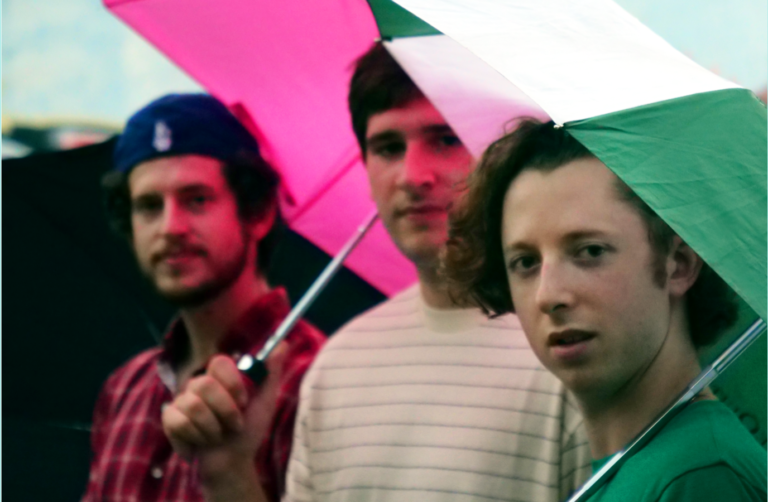
A captivating blend of atmospheric indie-rock and upbeat post-punk, Stellar Young features John Glenn (vocals/keys), Erik Flora (guitar/vocals), Kyle Hatch (guitar), Dave Parker (producer), and Tim Brosnan (drums). Together the members work to create the most accurate portrayal of key moments in life that everyone understands, but often can’t explain.
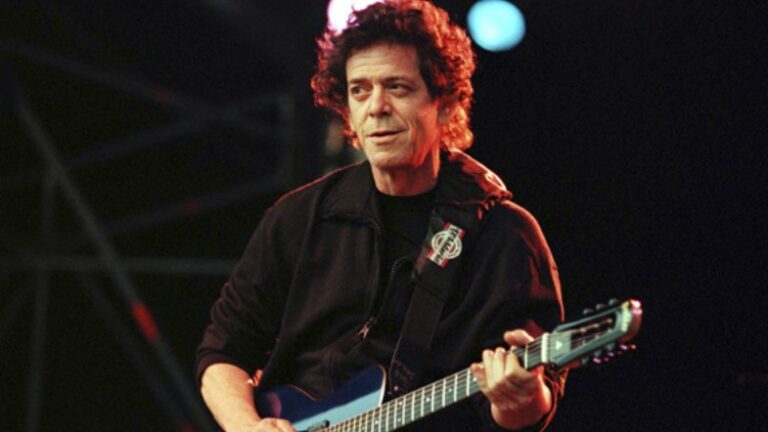
Today we celebrate the memory of one of New York’s true musical icons, Lou Reed. Seven years ago today, Reed died from liver disease, leaving behind an incredible library of music that’s been so influential to so many artists. His work with the Velvet Underground as well as his solo efforts continue to enthrall people even today, showing just how timeless his music can be.
Lewis Allan Reed was born on March 2, 1942 in Brooklyn in what is now known as Brookdale Hospital. He spent his youth and formative years growing up in Freeport Long Island in a Jewish household. Lou attended Freeport Junior High School, where his musical career truly began. His doo-wop band The Jades, where he played guitar and contributed backup vocals, was offered studio time for a recording in response to a talent show performance in 1958. This single, “So Blue,” didn’t quite make the charts but it would be Reed’s first ever radio airplay.
Lou would stay in state to further his education at Syracuse University, studying journalism, creating writing and film directing. However, during his first year there, he was brought back home after allegedly having a mental breakdown of sorts. According to his sister, he was “depressed, anxious, and socially unresponsive” for a while. This ultimately led to his parents consenting to electroconvulsive therapy (ECT) as a treatment option after doctors’ recommendations.
After treatment and recovery, Reed resumed his studies at Syracuse University, even hosting a radio show on WAER called Excursions on a Wobbly Rail. At Syracuse, he would study under the poet Delmore Schwartz, who would be an early mentor for Reed. It was also here that he would meet Velvet Underground guitarist Sterling Morrison for the first time. Morrison was visiting the older brother of eventual Underground drummer Maureen “Moe” Tucker.
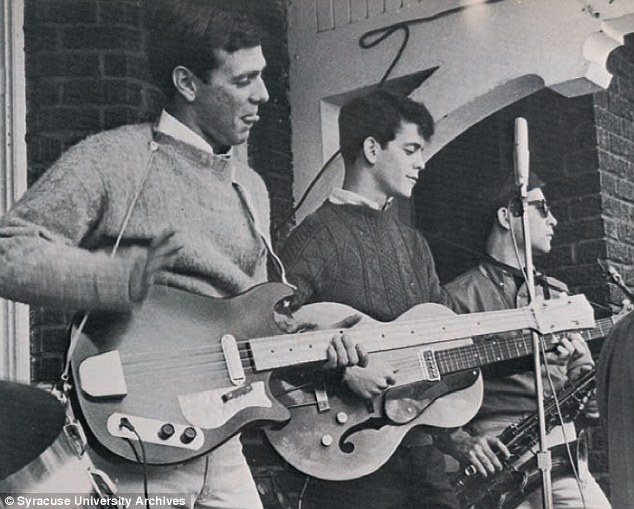
Lou Reed plays with his band LA and the Eldorados in front of the Sigma Alpha Mu fraternity house at Syracuse University
After graduating with a B.A. cum laude in English in 1964, Reed moved to New York City where his career would blossom. As an in-house songwriter for Pickwick Records, it was here that he would meet fellow musician John Cale and form a lifelong partnership of sorts. The two lived together on the Lower East Side and would eventually recruit Reed’s college acquaintance Morrison and Cale’s neighbor Angus MacLise who played drums to form the first iteration of The Velvet Underground. MacLise wound up quitting the band right before their first paid gig and was replaced by Tucker.
Although they never reached commercial stardom or widespread fame at the time, the Velvet Underground would go on to become one of the world’s most influential bands, providing a public image for the bustling New York City underground and alternative rock scene. They would eventually catch the attention of Andy Warhol who would serve as their early manager and quickly instituted them as the house band for his Explosive Plastic Inevitable multimedia events held at his Manhattan studio that was known as the “Factory.”
It was Warhol who would urge the band to hire the German former model and singer Nico. Their debut release, The Velvet Underground & Nico, would only peak at No. 171 on the US Billboard 200. However, Rolling Stone would much later dub it the “most prophetic rock album ever made.” The overall sound was propelled by Reed and Nico’s deadpan vocals, Cale’s droning viola, bass and keyboards, Reed’s experimental avant-garde guitar, Morrison’s often R&B– or country-influenced guitar, and Tucker’s simple but steady and tribal-sounding beat with sparse use of cymbals.
Nico and Warhol soon parted ways with the band with the former quitting and the latter fired by Reed, both against Cale’s wishes. The two co-founders were beginning to butt heads musically as well. Cale favored a more experimental, avant-garde style while Reed was trying to steer the band towards a more pop-driven style. It would result in Reed firing Cale from the Velvet Underground and replacing him with Doug Yule who played keyboards and bass guitar. This new version of the band would only record two more albums: The Velvet Underground in 1969 and Loaded in 1970. Shortly before Loaded‘s release, Reed would quit the band and by the end of 1971, the Velvet Underground was a thing of the past.
The Velvet Underground
Reed then set out on his solo career, signing a recording contract with RCA Records. His first release, Lou Reed, contained some unreleased material that never made it onto Loaded and didn’t receive much attention. This didn’t come until 1972’s incredibly successful Transformer release that was co-produced by David Bowie and Mick Ronson. The album’s hit single “Walk on the Wild Side” introduced Reed to a much larger audience and worldwide acclaim. It would peak at No. 16 on the Billboard Hot 100 singles chart, by far his most commercially successful record. Transformer also features other Lou Reed classics like “Perfect Day” and “Satellite of Love.”
Berlin, his next solo release in 1973, is described as a concept album about two junkies in love in the city. Perhaps uncoincidentally, he also married his first wife Bettye Kronstad this year. Although it appears to be mislabeled as Velvet Underground, check out Lou singing “Berlin” below to a spellbound audience.
Some of his later solo projects would go in a completely different direction. 1975’s Metal Machine Music is an hour’s worth of modulated feedback and electric guitar effects. It was widely panned by critics and seen, by some, as an effort to get out of his contract with RCA. He would later sign on with Arista Records and his first release for them, Rock and Roll Heart in 1976, features “A Sheltered Life,” a song with roots going back to 1967 and the Velvet Underground era.
A live album recorded at The Bottom Line in Greenwich Village titled Live: Take No Prisoners also came out this year with Rolling Stone describing it as “one of the funniest live albums ever recorded,” comparing Reed’s monologues with those of Lenny Bruce. Lou was certainly never afraid to speak his mind and reveal his true feelings, a true New Yorker in that sense.
Throughout the 1980s, Reed would continue to pump out new music and maintain a public persona. He collaborated with guitarists Chuck Hammer and Robert Quine on Growing Up Public (1980) and The Blue Mask (1982), respectively. 1984’s New Sensations even saw Reed back on the charts for the first time in six years. He even played a solo set at the first Farm Aid concert held in Champaign, IL in 1985. The decade would end with another one of his more successful solo efforts, appropriately titled New York, released in 1989. It not only netted him a GRAMMY nomination for best male rock vocal performance, but also served as his public commentary on contemporary issues like AIDS, crime and civil rights.
The 1990s would feature even more solo releases from Reed as well as a brief Velvet Underground reunion. Andy Warhol’s funeral in 1987 would bring John Cale and Reed together for the first time in decades. It would ignite a new collaboration between the two, 1990’s Song For Drella, a song cycle about Warhol. This eventually led to a brief Velvet Underground with one benefit show in France that year and a brief tour of Europe in 1993 that featured a performance at the Glastonbury Festival. Sadly, plans for a North American tour were scrapped after another disagreement between Cale and Reed.
In 1996, the Velvet Underground finally entered the Rock and Roll Hall of Fame, with an induction speech given by another musical icon of New York City, Patti Smith. Unfortunately, original guitarist Sterling Morrison passed away the night before the ceremony. Reed, Cale and Smith would later sing “Last Night I Said Goodbye To My Friend” in tribute.
For the rest of his life, Lou Reed continued to find new ways to express himself and grow as an artist. In 2000, he collaborated with Robert Wilson on POEtry. This would lead to a CD release under the same name years later that featured songs written by Reed and spoken-word performances of reworked and rewritten texts of Edgar Allan Poe by actors, set to electronic music composed by Reed. In October of 2001, the New York Times even published a poem of Lou’s titled “Laurie Sadly Listening” that was written in response to the recent 9/11 attacks. He would also go on to release three books of photographs, the second one released in 2006 was titled Lou Reed’s New York.
Reed would also go on to revive his Berlin and Metal Machine Music projects in live settings. He also wound up collaborating with modern day acts like Metallica, Gorillaz and Metric. Unfortunately, health issues caught up to him in 2013 and after a transplant in May, he succumbed to liver disease on October 27. Almost instantly, the outpouring of respect from other musicians began. Bands like Pearl Jam, The Killers, My Morning Jacket and Phish all dedicated either original or cover songs played that evening to the late guitarist’s memory.
Although he may be gone, Lou Reed’s legacy lives on and then some. He was posthumously inducted into the Rock and Roll Hall of Fame, this time as a solo artist, with another speech from Patti Smith. Lou Reed: A Life, a biography by Anthony DeCurtis was published in 2017. And an archive of his letters and other personal effects was donated to and can be viewed at The New York Public Library for the Performing Arts. More importantly, Lou Reed and his extensive musical catalog and stylings continue to influence and inspire new listeners and will continue to do so for the rest of time. Not too shabby for a kid from the city.
Each Sunday evening from 7-9pm you’ll find EQXposure on WEQX, featuring two hours of local music from up and coming artists. Tune into WEQX.com this Sunday night to hear music from The Parlor, Haley Moley, and many more!
WEQX has long been the preeminent independent station in the Capital Region of New York, broadcasting from Southern VT to an ever-expanding listening audience. NYS Music brings you a preview of artists to discover each week, just a taste of the talent waiting to be discovered by fans like you.
This week’s EQXposure is a bit moody and is about exploring wide sonic spaces.
Named after a room in the 19th century farmhouse where they live, farm, and create, The Parlor is a project by husband and wife team Eric Krans and Jen O’Connor. The multi-instrumentalist, producer-composers create intimate art-pop intended to reflect some of the most powerful aspects of the human experience.
The Parlor’s music is the sonic corollary to what the couple is bringing to their land, an artisanal re-imagining of an antique dream. Jen O’Connor + Eric Krans make their home in Upstate New York. Their farmhouse is filled with jars of feathers + herbs, piles of broken guitars, trays of wings + claws, upright basses, a sampling synth, braided onions, polyester pants, Casio + Zenith, antique mirrors. Ghosts. They write and record music in a room called the parlor.
In early 2015, house music DJ and dance music producer Jennifer Maher Coleman (DJ Jennifer Haley) and indie rocker Paul Coleman (Mount Mole, Sinkcharmer, Beaked Whale, The Operators) combined their aliases and their musical sensibilities to form Haley Moley.
Moody synth and guitar rock over electronic beats ultimately blossomed into a full-on five-piece with the welcome addition of Andrea Kosek (aka DJ Goldeedust, keyboards) Pat Thorpe (of DJ duo Partyhorn, bass guitar) and Mike Broomhead (also of Partyhorn, drums.)
With a high concentration of electronic, funk, and disco dj’s on board as well as decades of rock experience steeped in atmospheric, dirty guitars, Haley Moley delivers a complex amalgam echoing these disparate roots and emerges refreshingly uncategorizable.
Each Sunday evening from 7-9pm you’ll find EQXposure on WEQX, featuring two hours of local music from up and coming artists. Tune into WEQX.com this Sunday night to hear music from El Modernist, E.R.I.E.and many more!
WEQX has long been the preeminent independent station in the Capital Region of New York, broadcasting from Southern VT to an ever-expanding listening audience. NYS Music brings you a preview of artists to discover each week, just a taste of the talent waiting to be discovered by fans like you.
El Modernist delivers a new take on the world of indie rock. With pulsating hooks and lush melodic waves of psychedelia, the band combines upbeat, catchy garage-rock with a modern alternative hip-hop sound.
“Evolution” is an anthem for queer artists who have been contributing and pushing the boundaries of art since the beginning of time, while more often than not having to hide their true selves while doing so. Artists like Freddie Mercury and Elton John were often thought of as eccentric rather than LGTBQ+ (occasionally thought of as womanizers), but laid the groundwork for today’s LGBTQ+ artists and pioneers. “Evolution” is a fight song. A fight for equality. A fight against hatred. The future is gay as hell.
When asked by WEQX’s Pearson on what they are currently working on and how they are coping during this time, they shared:
What we’re working on/how we’re coping… Well, now that the bustle of the record release and the release party is over, we suspect performance opportunities will unfortunately be few and far between as the weather gets colder. We have a nice collection of songs just waiting to be properly demoed for what will eventually be LP2. So, the plan will be to hunker down and focus on that, which will be the first time the four of us write together. We’re definitely looking forward to letting some pent up creativity bounce off the walls, albeit mostly from separate houses/studios. The pandemic has certainly taken a toll on us all, personally speaking. The opportunities we get to play together in a room have been incredibly therapeutic, and we’re certainly grateful we can still do that responsibly. But ahead of the pandemic, we were all gearing up to play out a lot – it’s something all four of us really needed in our lives for a variety of reasons – so the fact that it all came screeching to a halt is tough to cope with, especially with no real end in sight. Like everyone else, I think we’re just pivoting the best we can and diving into the next record maybe a little sooner than we otherwise would have. I write a lot of songs, so I’m always ready and willing to jump behind the board and make some magic happen.
All BandCamp proceeds for the track will be donated to The Trevor Project.
Hailing from New York’s vibrant Capital Region, rock outfit E.R.I.E. debuted on Mint 400 Records with Don’t Wanna Live, Don’t Wanna Die in September. Combining addictive progressions with alternative undertones, the record boasts an anthemic pop-rock aesthetic, with the integrity of an early 2000’s basement or VFW hall.
E.R.I.E. has brought me back to my roots, in a way. Growing up, I played in scrappy punk bands and as I got through college and beyond, my interests and writing style began broadening. I started taking myself more seriously, arguably to a fault. While creating this record, my main goal was to have a positive and fun studio experience. I paid a lot more attention to content rather than mechanics. Ultimately, creating Don’t Wanna Live, Don’t Wanna Die was a natural process, without most of the stresses recording can bring.
TJ Foster, E.R.I.E.
Upon listening, it’s not hard to hear that sense of lightness and clarity songwriter TJ Foster was striving for. The record exudes a sense of urgency that has drawn comparisons to the likes of Frank Turner and The Gaslight Anthem, while also embodying an intimacy one would expect from Death Cab For Cutie or Frightened Rabbit.
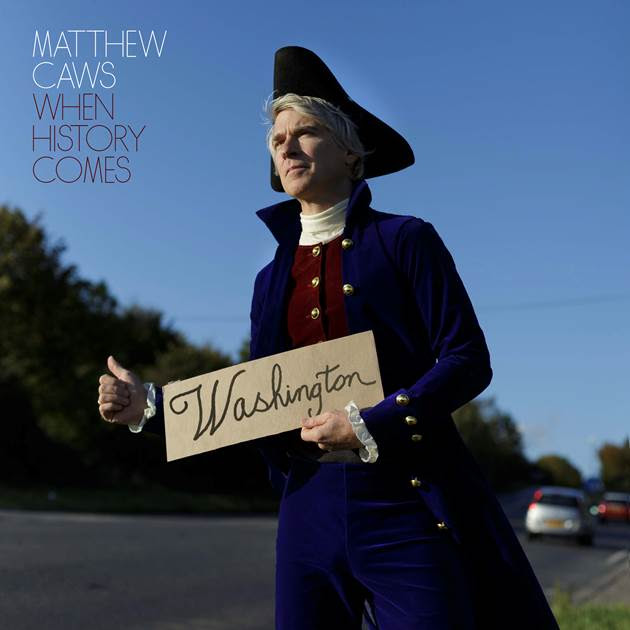
Nada Surf‘s Matthew Caws has released a new political song, “When History Comes,” via Barsuk Records. Recorded and produced by Caws himself at his home studio, the song was created for the Rough Trade Publishing compilation Talk – Action = Zero, Vol. 2, which enlisted artists to write songs relevant to the current state of the world, with profits from the single benefitting the ACLU.
Formed in New York City in 1992 by Matthew Caws and Daniel Lorca, the Nada Surf gutiarist and bassist met at the Lycée Français de New York, with both having spent some of their childhoods in France and Belgium. A chance run in with Ric Ocasek would lead to The Cars frontman producing the band’s first album, High/Low. The band would be best known for their hugely successful 1996 single, “Popular,” although the groups catalog goes far deeper, now well into their third decade together.
Regarding the song, Matthew Caws wrote the following statement about the lyrics and timing of the release:
I was asked to contribute a song to a compilation organized by Rough Trade Publishing called Talk – Action = Zero Vol. 2, benefitting Spread The Vote, an organization helping people register and get their votes in. The prompt given was to write a song “relevant to the state of the world right now.” I chose to write about the election because I think it’s such a crucial moment in our lives.
I want to make a quick disclaimer (and pre-emptive apology) that I know that all of what i’m about to say will seem obvious to a lot of people, but I think it needs to be repeated. We’re always in danger of becoming numb. There’s such a circus of chaos coming from the top right now that it’s easy to get distracted from how far (and how quickly) the country is sliding in a dangerous direction..
The title of the song comes from a line in the chorus, “When history comes and sticks out its thumb / asking you for a ride / I hope that you see how fast it can be / it goes by in the blink of an eye.” In this analogy, by voting, you’re giving history a ride, helping it get where it wants to go.
Despite its difficult history and present, the United States is a precious and miraculous entity, an ambitious experiment in equality that has been functioning for 244 years, and we need to cherish and preserve it, and keep our essential norms from eroding. We need to understand how fragile our democracy is, faced with someone who is ready to call an election illegitimate before it takes place and won’t commit to a peaceful transfer of power.
In writing a song about an election your main choices are to try to energize and rally the potential voters on your side or try to speak to and influence the minds of people who are on the other side or undecided. I tried as much as I could to do both. I’ve been told that there is no point trying to change the mind of a Trump voter, that all our energy should go towards energizing the democratic base. That is probably true, but I can’t help believing that there’s a crack in that wall.
Over the past few years, I’ve found myself debating a few Trump supporters on social media, and invariably the conversations start a little hot. I’ve found that by keeping a measured tone and by looking for and respecting the cause of someone’s opinion, if not the opinion itself, it was always possible to bring down the temperature a little. One misconception that kept coming up was that all Democrats wanted Trump to fail. In the song I say “I didn’t want him to fail / I wanted him to do great / he didn’t / but I wanted him to.”
One of the great privileges of being a touring musician is getting to see people night after night being somewhere they chose to be,happy, open, ready to experience something. While it’s certain that among all the faces I’ve looked at from the stage there have been people with opposing political views, and probably some with wildly different views about equalities of all kinds, I always felt a human connection. I think almost all people have more in common than not.
I think it’s important to refrain when possible from calling out or dismissing any whole group. Even though at this point, I don’t understand how one could support this very problematic administration, I wanted to say “I don’t hate republicans” because… I don’t. Despite my commitment to humanism and constructive positivity feeling totally innate, I’m conscious of the fact that if I’d been born into a different environment and community and hadn’t been exposed to certain ideas, I might be a Trump supporter too.
My wife often points out that the world would be a much better place if every government decision taken took into account how it would affect the poorest and most vulnerable parts of the population. I agree. This calls for a lot of empathy, a quality in us that needs to be cultivated, checked in on and renewed. We drift in our comfort, we drift in our bubbles. It is always a good time to look around, try to see, try to understand, and re-evaluate our priorities. The common good should always be the ultimate goal. That is the basis for a great country, and despite our growing pains, that has always been the basis for ours.
Brooklyn alternative quintet, Gooseberry, evolves with their third 2020 single “When I’m Gone.” Their inception began last fall. It takes form of an elusive fruit – a ploy to keep listenes guessing, or, a disregard of boarders in their infinite musical exploration.
The band collides at an unpredicted crossroads of endless influence. Blues, jazz, soul, rock and R&B genres meet. Yet they create and audibly different constant. Each flavor is interjected, shapeshifting the whole.
“When I’m Gone” sounds familiar, like a sitcom intro with an alternative edge. The intro sweeps you up with an airy keyboard melody from Sam Rappaport. Asa ‘Baked Goods’ Daniels on guitar hints at a more explosive end. The band caries on.
Drummer Colin Ashen and Bassist Will Hammond keep a solid backbone for the bands energetic bursts and ever-blooming hook. There’s something ear-catching at ever bar, including a clever placement of vibraslap.
Each chorus grows into a more indie sound. The band flourishes as they stew on the title lyric. Ashen’s drums sweep into an open ride crescendo and Gooseberry takes on in an explosive indie-jam band fashion. Something they’ve only hinted at throughout each verse. Daniels amps-up, showing of his ear-grabbing guitar work.
The song highlights the band’s eclectic range of influences, showing resonances of classic rock, 70’s soul, and the piano-forward pop of artists like Randy Newman and Carole King. When I’m Gone is a lamentation over the certainty of loss and an ode to those we leave behind in the search for higher ground.
Gooseberry, on “When I’m Gone”
The album art is elusive and colorful, paring well with Gooseberry’s musical intent. Each part melts together. It shape-shifts the whole. The door is wide open to explore.
“Berkshires” goes back to major influences like D’Angelo, Donny Hathaway, and Stevie Wonder, while their newest, “The Protagonist,” showcases a more alternative/indie sound in the styles of the Foo Fighters, Courtney Barnett, Arctic Monkeys, and Spoon. Before the pandemic, Gooseberry had a biweekly residency at Harefield Road in Brooklyn, where they were steadily growing a devoted audience around their live shows. They had been gigging fairly regularly in and around New York City, running the full gamut of venues from The Cobra Club to DROM to house shows across the boroughs.
The Grateful Dead‘s 1983 fall tour saw the band playing a slew of shows in the Northeast in October. After two shows at Madison Square Garden the week before, and two more at the Hartford Civic Center, the Dead made their way Upstate and paid a visit to Lake Placid and the Olympic Center.
Only a few years ago, this venue housed one of the greatest upsets in sports history thanks to the “Miracle On Ice” in the 1980 Winter Olympics. Now it was the Dead’s turn to leave their mark on the place. This would be the only show in Lake Placid the band would ever play. Fans dubbed the tour stop as the ‘Special Olympics for Jerry’s Kids at Lake Acid,’ and where the opportunity presented itself, covered up the ‘PL’ in ‘Placid’ at every sign to the journey to the Olympic Town for added effect.
Most Grateful Dead shows are known for fun first sets that set the mood before things “take off” in the second one. This may be one of the few shows that goes against that notion thanks to such a powerful opening set. Some early warm up tones of “Sugaree” can be heard before the band launches into the real things. Garcia leads the way with some blistering guitar licks with the rest of the band just trying to keep up. It results in a near 17-minute version that’s arguably one of the best jams of the night – rare for an opener.
This opening burst of energy reemerges in the “Little Red Rooster” that picks up soon afterwards. With sublime bluesy licks provided by Garcia on guitar, Bob Weir’s customary growling vocals and beautiful organ fills from Brent Mydland, this one is a true group effort. A steadily building jam that slowly grows in intensity makes this a memorable “Rooster” that stretches past the nine-minute mark.
Things then slow down a tad with the “Friend of the Devil” that comes next, played in its slower tempo. Afterwards, Weir reassumes vocal duties and leads the band through a standard run through of “My Brother Esau.”
But that frenetic energy displayed in the opening 1-2 punch doesn’t seem to reemerge until the jam that arises from “Bird Song.” With more intricate guitar work laid down by Garcia, this one takes after its namesake and soars. An appreciative crowd make their feelings well known at the end of this one.
There’s no let up in the rest of the set. Weir belts out the lyrics to a quick but powerful “Hell In A Bucket” that includes a brief “Mustang Sally” quote towards the end. At its conclusion, Garcia immediately drops the opening guitar lick to “Deal” and the band is off and running again. The high octane, extended jam that results from this one stretches this “Deal” well past the ten-minute make and serves as an appropriate closer to an absolutely fiery opening set.
While the second set may not offer up as much firepower as its predecessor, there are some memorable moments to be sure. “Touch of Grey,” a newer song at the time that would later propel the Dead to a new level of stardom, begins the set. Despite some brief feedback issues, it gets a nice hand from the crowd when all is said and done.
“Samson and Delilah” produces more high energy interplay between band members, with bassist Phil Lesh making his presence clearly felt on this one. Then comes a bust out of sorts in “To Lay Me Down,” the first one played in 82 shows. Though it shows little signs of rust as more poignant guitar work and delicate vocals from Garcia pepper this one throughout.
Despite some early fumbling of the lyrics in the “Terrapin Station” that comes later, the band makes up for it with a beautifully patient and well executed version. The heavily percussive outro jam then bleeds right into the beginning of the traditional “Drums” segment, like it has so many times.
After some heavy noodling from Garcia in “Space,” showcasing all sorts of guitar effects, “The Wheel” slowly emerges. The revved up Lake Placid crowd is audibly charged up for this one. Allegedly, crowd members in both the concourse and lower bowl linked arms and danced arm in arm around the arena during this one. What a sight that must have been.
The second set comes to a close with a couple of longtime covers that the Dead have perfected by now. “Goin’ Down The Road Feelin’ Bad” sees the crowd getting into it once more, vigorously clapping along in time. This is followed up by The Rascals’ “Good Lovin’,” giving Garcia one last chance to lay down some impressive guitar solos. And Bob Weir’s Pigepn-esque “rap” at the end sends the crowd into a frenzy.
One more cover choice ends this one. Perhaps in a nod to John Lennon’s birthday which is October 9th, the Dead trot out The Beatles’ “Revolution” for the encore. It almost sounds like a slower version of “Deal” at first. And with that, the band’s lone performance in Lake Placid was complete. This was no “Miracle” though, just another Grateful Dead show.
Grateful Dead Olympic Center – Lake Placid, NY 10/17/83
Set 1: Sugaree> Little Red Rooster, Friend Of The Devil, My Brother Esau, Bird Song, Hell In A Bucket> Deal Set 2: Touch Of Grey> Samson & Delilah, To Lay Me Down, Women Are Smarter, Terrapin Station> Drums> Space> The Wheel> I Need A Miracle> Goin’ Down The Road> Good Lovin’ Encore: Revolution
Each Sunday evening from 7-9pm you’ll find EQXposure on WEQX, featuring two hours of local music from up and coming artists. Tune into WEQX.com this Sunday night to hear music from Ciarra Fragale and many more!
WEQX has long been the preeminent independent station in the Capital Region of New York, broadcasting from Southern VT to an ever-expanding listening audience. NYS Music brings you a preview of artists to discover each week, just a taste of the talent waiting to be discovered by fans like you.
Ciarra Fragale – “Miss That” and “Too Good For You Baby”
Ciarra Fragale is an indie pop act born and raised in New York’s Hudson Valley. By blending the nostalgic traditions of songwriting with unique new-wave sensibilities, she creates a sound all her own. Ciarra spent years playing solo, until early last year when she joined forces with Kingston drummer Eli Marzano. Since then they have brought their dynamic set all across the Northeast, opening for renowned acts like Sammy Rae & the Friends. Ciarra relocated to North Adams, MA at the end of last year and just last weekend sold out two shows at Mass MoCA, her first shows since March.
After the release of my second LP, Call It What You Will, I found myself already collecting a bunch of new material. Last fall, I visited a friend of mine’s studio (Sleeper Cave Records) while I was passing through for a show and really fell in love with the space. I had been familiar with [Andy’s] engineering work, as a lot of my friends had recorded with him. After a few conversations, we went in to record “Too Good (For You, Baby)” and quickly realized that we weren’t just recording a single—we were making a record. We’ve been plugging away on it ever since. It feels really good to push the envelope. I just know so much more now than I did when I was making the previous records, both as an artist and as a producer. I’m really excited to share these new songs, most of which no one has never really heard. The climate is different now…usually you write a new song and you try it out at a few shows to gauge interest. Since that is not really an option right now, we’re just going for it on this record and it feels quite liberating. The collection of songs on this album feel like my most honest, which is why I decided to make the record self-titled. This new album is not necessarily a “quarantine record,” even though a lot of the songs were written during this tumultuous time. They are just a snapshot of where I am, right now.
EQXPosure will open the show 7pm Ciarra’s “Miss That” and later play “Too Good For You Baby” later in the 7 o’clock hour.
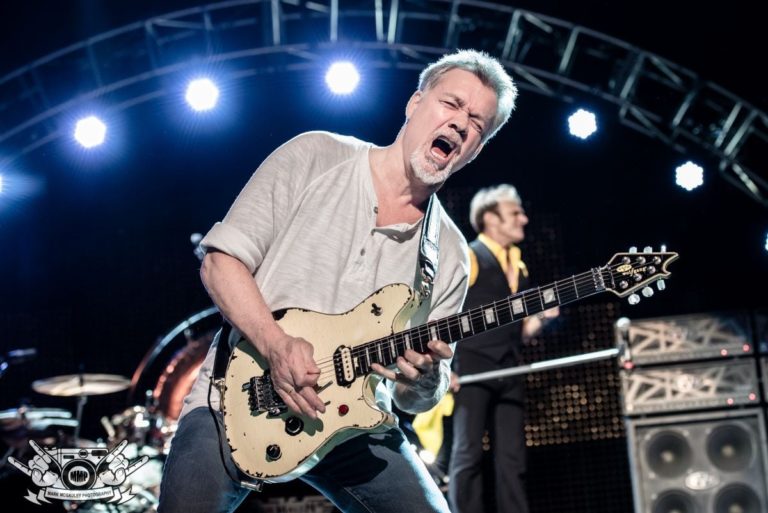
Esteemed guitar icon and rock legend Eddie Van Halen passed away yesterday at the age of 65 after an extended bout with cancer. Best known as the shaggy haired lead guitarist of the eponymous band that he co-founded along with his brother, Van Halen‘s passing is a loss sure to be felt throughout the music industry. And it marks the end of an era for an American band that reached a level of popularity few others have.
Eddie Van Halen – photo by Mark McGauley
Edward Lodewijk Van Halen was born in Nijmegen, Netherlands, on January 26th, 1955, a year and a half after his older brother Alex, to a Dutch father and an Indonesian mother. His father, also a musician, joined the Dutch Air Force band as a way to make money. When Eddie was eight years old, the family immigrated to Pasadena, CA where they set roots down and later established one of the most successful American bands of all time.
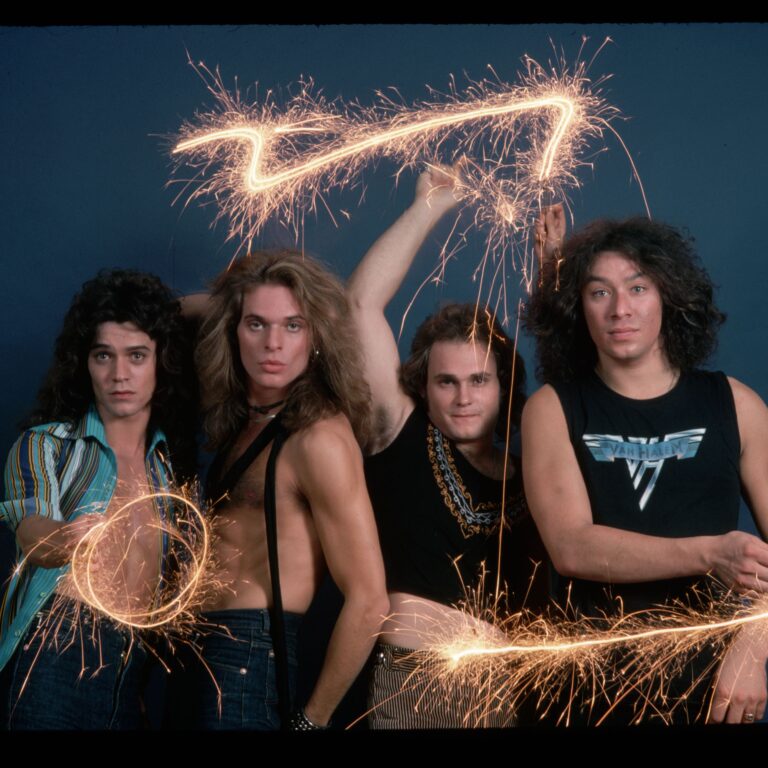
(l-r) Eddie Van Halen, David Lee Roth, Mark Anthony, Alex Van Halen
Originally, Eddie was a drummer and his brother would play guitar. Frustrated that he couldn’t handle the drum solo on The Safaris’ “Wipe Out,” the brothers decided to make one of the most impactful instrument switches of all time. The Van Halen brothers would go on to join several local short lived bands in the Pasadena area. In 1972, they formed a band called Genesis featuring Eddie as lead vocalist/guitarist, Alex on drums, and Mark Stone on bass. They initially rented a sound system from David Lee Roth but decided to save money by letting him join as lead vocalist even though his previous audition(s) had been unsuccessful.
Roth was the only guy who had a PA. We were renting his PA every weekend for $35 and getting $50 for the gigs. So it was cheaper to get him in the band.
Eddie Van Halen
The band later changed its name to Mammoth, after learning Genesis was already in use. In 1974, the band replaced Stone on bass with Mark Anthony from local band Snake and again re-named itself, this time for good, to Van Halen. Like most bands, they started out playing parks and backyard parties in the Pasadena area. This soon gave way to gigs at small bars and strip clubs in the Hollywood area.
What helped Van Halen significantly in its early years was their ability to self-promote. They would hand out flyers before shows at local high schools and also after Aerosmith and Black Sabbath concerts when they be in the area. After catching a show at a Sunset Boulevard club, Gene Simmons even helped produce a demo recording for them and took it to KISS management who would later inform him this fledgling band “had no chance of making it.”
That would seem to change in 1977 when the band was offered a recording contract by Warner Bros. Records shortly after a show at the Starwood in Hollywood. By the end of the year, the group had recorded their debut album Van Halen at Sunset Sound Recorders.
By now, the band had a solid collection of original songs like “Runnin’ With The Devil” and “Ain’t Talkin’ ‘Bout Love” to go along with their rotation of cover songs that were prevalent early in their career. The debut effort peaked at #19 on the Billboard charts and sold more than 10 million copies in the United States, receiving Diamond certification.
This helped Van Halen land a tour opening for Black Sabbath, a band whose parking lot they were flyer-ing only years ago. The group’s chemistry owed much to Eddie Van Halen’s technical guitar wizardry and David Lee Roth’s flamboyant antics and stage persona, strong points which later made them rivals.
Van Halen II was released the next year and produced the band’s first commercial hit, “Dance The Night Away.” The 1980s would then see them maintain a rigorous pattern of album releases and supporting tours that would cement the band as global icons. They even earned an entry into the Guinness Book of World Records for the highest-paid single appearance for a band: a $1.5 million payout for a 90-minute set at the 1983 US Festival.
While it was soaring commercially, the very fabric of the band was beginning to fray behind the scenes. Tensions between Eddie Van Halen and Roth were rising over the direction of the music. Roth preferred more dance-pop numbers while Van Halen was becoming interested in exploring new musical avenues and veering away from cover songs.
I was getting sick of their ideas of what was commercial. That’s how we ended up doing all those covers on [1982’s] Diver Down. I never wanted to be a cover band.
Eddie Van Halen
When it came time to record a follow-up to Diver Down, Eddie insisted they record “Jump” and incorporate synthesizers into other tracks. The result was the smash 1984 that turned them into MTV superstars as videos for “Jump,” “Panama,” and “Hot for Teacher” went into heavy rotation and the album began selling by the millions, reaching Number 2 on the Billboard 200.
1984 would be, by far, Van Halen’s biggest commercial success, with the album going five-times platinum only a year after its release. It peaked at #2 on the Billboard charts that year, behind only Michael Jackson’s legendary Thriller. But this would also mark the end of an era, as Roth would quit the band later that year, embarking on a solo career.
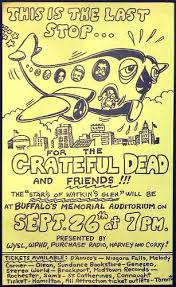
During an incredibly busy year for the band, the Grateful Dead did carve out a little time for Buffalo and Upstate New York in the fall of 1981. After a thorough summer run at mainly Midwest and West Coast Venues, there were a handful of East Coast shows scheduled in the end of September. Immediately afterwards, they would be off to Europe again, their second jaunt over there this year.
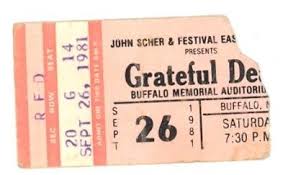
These few shows would serve as more than adequate tune-ups. On September 26, the Dead would play Buffalo Auditorium for the fifth and final time, serving as an end to an era of sorts. For the remainder of their shows in the Queen City, cavernous Rich Stadium and its 80,000 seats would serve as host.
A somewhat sluggish “Shakedown Street” starts the show and seems to rely on the certainly palpable crowd energy for momentum. If anything, this recording paints a vivid picture of the effusive Upstate fervor that’s present early. The crowd almost seems to get even louder each time they’re told to “Tell me this town ain’t got no heart.” Before you know it, they easily stretch it past the ten-minute mark with a typically funky groove in tow.
After a brief lull, the first set energy seems to pick back up with a thunderous version of “Cassidy” that’s spearheaded by the harmonies of Bob Weir and Brent Mydland. This carries right over to a raucous “Jack-a-Roe” with some splendid fills from Mydland on electric keys.
The “Ramble On Rose” that later follows gets furious at points with a clearly vibrant Garcia manning the lead vocals effortlessly. Mydland again makes his presence very much felt with some more intimate keyboard fills. There’s a fairly quick transition to “Looks Like Rain” that has now firmly established the first set pattern of Garcia and Weir going back and forth on lead vocals. Seems to be Jerry – Bob switching back and forth throughout the first set with lead vocals. The crowd once again audibly gets back into it with some rhythmic clapping prior to the apex of “Rain.”
The vibrant first set vibe fueled by the rather “percussive” audience this evening continues right on into and through the “Brown Eyed Women” that follows. Garcia, once again, rises through the crowd of sound and delivers an ebullient guitar solo early on that fuels the remainder of the tune.
Weir once again takes the vocal baton from Garcia as the band continues to burst full steam ahead with a somewhat aggressive “Let It Grow” that fits in perfectly in this late early set position. The rhythms equally supplied by the dual guitars and vocals on this one are a true first set highlight.
Weir holds onto and keeps running with the baton as the second set begins with an exuberant “Playing In The Band” that seems to literally piggyback on the end of the first set’s emotions. An early excitable jam leads into some blissful Garcia-supplied guitar licks before it explodes into a full group effort. Some pure, joyous tones lead right up to the beginnings of “Bertha,” somehow marking the last one of only four East Coast performances n 1981 for this live Dead staple.
Upon its finish, the band wastes no time in launching into an epic “Estimated Prophet” with all the Bob Weir-led vocal bells and whistles. The Buffalo audience sounds enraptured as the band eases through one of their classic second set standards.
However, instead of easing into an ambient or “Space”-type section immediately afterwards, the familiar rhythmic guitar into of “Goin’ Down The Road Feeling Bad” picks up and the room is off and running again. Normally placed later in a second set, this slots in perfectly earlier in this set as the Dead’s version of an American folk classic maintains the high standards of this show.
After typical “Drums” and “Space ” segments, the slow, rhythmic start of “Not Fade Away” starts up, signaling the beginning of the final hurrah for this final indoor Buffalo show. This one doesn’t get a chance to stretch too far as it quickly peters out and dissolves into the beginning of a poignant “Morning Dew” that gets the crowd back on its collective feet.
Afterwards, the band collectively toys around with the “Playin’ In The Band” theme before settling into a brief reprise. Normally, this would be more than enough to end the set but “One More Saturday Night” takes care of that as Weir leads the group through one last rockin’ number to end the set.
stubs via Bob Migden
This being Chuck Berry’s birthday, a quick dedication from Weir precedes the fitting “Johnny B. Goode” encore. And with that, the Dead’s last indoor show in Buffalo comes to a close. The next time they would come through town, five years later in 1986, Rich Stadium would take over hosting duties.
For a full listen to all Buffalo and The Grateful Dead had to offer this evening: click here.
Grateful Dead Buffalo Auditorium – Buffalo, NY 9/26/81
Set 1: Shakedown Street, CC Rider, They Love Each Other, Cassidy, Jack-A-Roe, On The Road Again, Ramble On Rose-> Looks Like Rain, Brown Eyed Women-> Let It Grow-> Don’t Ease Me In
Set 2: Playin’ In The Band->Bertha->Estimated Prophet->Goin’ Down The Road Feeling Bad->Drums->Space->Not Fade Away->Morning Dew->Playin’ In The Band (reprise)->One More Saturday Night