Author: Tim O’Shea

  • The Dead Peak at the Beacon For The Last Time: June 15, 1976

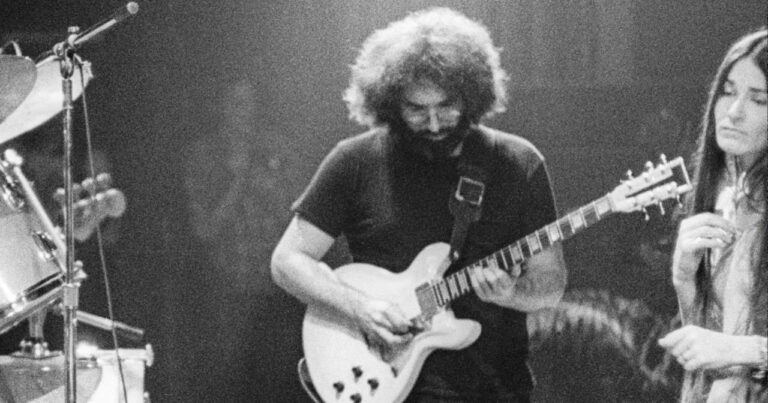
    Shortly before the country would celebrate its Bicentennial in 1976, the Grateful Dead would play a show at the Beacon Theatre. This is the second and last time the band would play this New York City venue before upgrading to the larger confines of Madison Square Garden a few years later. They had recently ditched their fabled massive Wall of Sound PA system for a more stripped down and intimate stage setup, opting to let the music speak for itself rather than overpowering the audience. A string of East Coast shows in June of this year would see the band in pristine form as they dusted off some of their classic songs and began to introduce new ones, ushering in a new era of The Grateful Dead.

    The first set starts off in electric fashion thanks a crisp vocal section led by guitarist Bob Weir that helps fuel a cover of “Promised Land” that would make Chuck Berry glow. A slow, drippy “Sugaree” follows that allows fellow guitarist Jerry Garcia a chance to stretch out his vocal chords a bit before a rip roaring “Cassidy” sets the tone for the first set, thanks to accompanying vocal support from Bob Weir and Donna Jean Godchaux.

    Dead Beacon

    An audible first set highlight, based on the crowd reaction alone, is a sultry “Candyman” that places the lyrical craftsmanship of Robert Hunter and the complimentary guitar play from Garcia front and center. Soon after, the ravenous New York City crowd gets a little taste of Grateful Dead shows of old show thanks to a stirring rendition of “It Must Have Been the Roses,” a song the band played extensively in 1974 and a staple of Jerry Garcia Band shows for years to come.

    The first set of this show ends with an impressive sequence of a “Let It Grow” that stretches out all the way to a “Drums”-esque type jam before settling into a set closing “Might As Well.” Even though this tune was also played the night before, it still marked only the sixth time this Dead tune was played live, one they would continue to showcase for another eighteen years,
    Dead Beacon
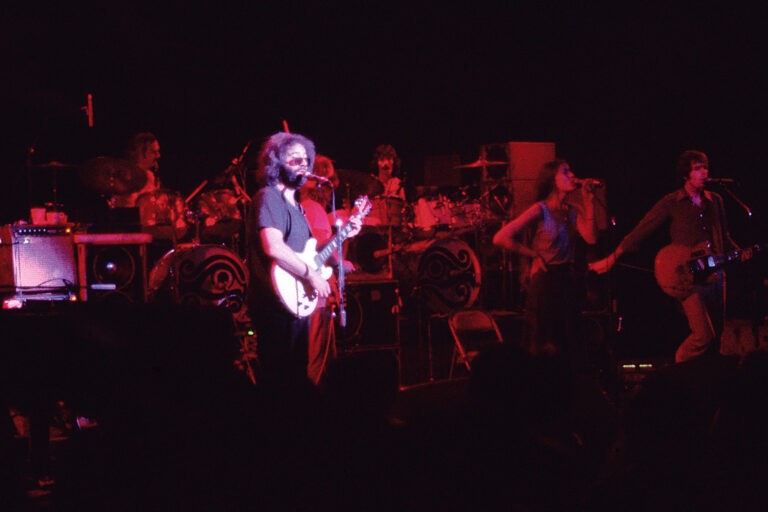
    Grateful Dead, June 1976

    The band wastes no time in opening the second set with a “Saint Stephen” that immediately explores the given space and stretches into a formidable jam. However, instead of a “William Tell Bridge,” the rhythmic partners of Bill Kreutzmann and Mickey Hart begin the percussive intro of “Not Fade Away,” a Buddy Holly cover that, by now, The Grateful Dead seem to have appropriated as their own.

    Contrary to most Dead shows, the ensuing Beacon “Drums” section gets ripcorded almost instantly in favor of an incredibly emotional “Stella Blue” that’s spearheaded by poignant Garcia-sung lyrics. This particular version is marked by a beautifully patient progression from all parties and is definitely one of the show’s highlights. Garcia’s hauntingly slow delivery of the vocals, matched perfectly by the rest of the band, gives this version a rather emotional feel to it. Take a listen to the entire segment from “Saint Stephen” to “Stella Blue” below – worth the price of admission alone.

    “Samson and Delilah,” a song that made its live debut only weeks earlier in the beginning of the tour, shows off its future potential nicely with a shortlived jam that picks the energy back up before a leisurely “Friend of the Devil” brings things to a crawl again. A manic “Dancin’ in the Streets” then follows as the band seems to delight in varying up the tempo of this second set. The telepathic interplay between Garcia and bassist Phil Lesh is on prime display here.

    Perhaps what makes this show so special is the superb sound quality, thanks to soundboard recordings captured by the band’s longtime live recording engineer Betty Cantor-Jackson. For years, this and the other June ’76 shows were some of the most revered recordings in the tape trading community. Picking up on that, these recordings have since been further polished and remastered and are now available for purchase as part of a 15-disc box set that highlights this special era of Grateful Dead music. It features this and four of the other shows surrounding this one. With production limited to only 12,000 individually numbered copies and a slew of crisp recordings from this seminal era of the band’s history, it’s sure to be a “sound” investment for any fan.

    Grateful Dead Beacon Theatre – New York City, NY

    Set 1: Promised Land, Sugaree, Cassidy, Candyman, The Music Never Stopped, It Must Have Been The Roses, Looks Like Rain, Tennessee Jed, Let It Grow -> Might As Well

    Set 2: Saint Stephen->Not Fade Away->Drums->Stella Blue, Samson & Delilah, Friend Of The Devil, Dancin’ In The Streets->The Wheel->Sugar Magnolia->Scarlet Begonias->Sunshine Daydream

    E: Johnny B. Goode
    Dead Beacon
  • September 28, 1976: The Grateful Dead Paint the War Memorial Orange

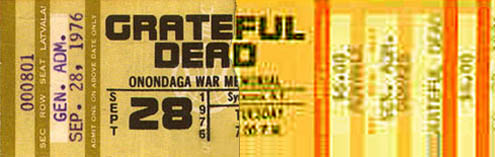
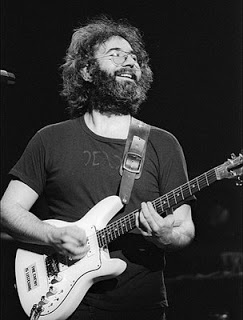
    Our look back at the Grateful Dead’s tour history in New York makes a stop in the heart of Central New York, with a trip back to September 28, 1976 and a show so good it deserved placement on a Dick’s Pick release. The latter half of Volume 20 of this particular series of live shows showcases the band at the top of its game as it rolled into Syracuse in late September, after a show at Rochester’s War Memorial the night before.

    Grateful dead war memorial

    New York has always served as fertile ground for memorable Grateful Dead shows and this particular one at the Onondaga County War Memorial falls right in line, with the band continuing to break new ground as they explode through this transformative mid ’70s era.

    View this show and more Grateful Dead shows from across the years in New York State with our interactive map below!

    The proceedings start with an upbeat and inspirational “Cold Rain and Snow” that seems to warm the collective hearts assembled in Central New York this evening and gives the band a chance to warm up their harmonies early.

    A “Cassidy” that later follows takes the set’s early momentum and runs with it, courtesy of its typically brief yet intense ending progression section. The band then stretches their collective legs a little with a version of “Tennessee Jed” that has a delightful, rambling jam attached to it and a stout version of “Candyman” soon follows. But the real highlight of the opening stanza is an an enthusiastic “Let It Grow” that fosters a jam which meanders effortlessly through the highs and lows provided by a rhythm section in lock step with the vocals of Bob Weir and Donna Jean Godcheaux before it dissolves into psychedelic bliss. This more than helps provide the kindling for a set closing “Goin’ Down The Road Feeling Bad” that easily catches fire, ending the first set in a pristine blaze of glory.

    Grateful dead war memorial

    A direct and authoritative “Playing In the Band” opens the second set with Jerry Garcia on lead guitar laying down ferocious melodies atop a bed of intense rhythms fueled drummers Bill Kreutzmann and Mickey Hart and bassist Phil Lesh. The near 11-minute opening salvo is the band at their finest as they collectively finesse through a psychedelic jaunt that eventually makes way for “The Wheel.”

    A joyous “Samson and Delilah” follows, which wastes no time after its completion before seguing into another blissful, guitar-driven improvisational jam with Garcia still leading and the rest of the band in hot pursuit.

    Much like the first set, the bulk of this show’s punch comes towards the end, in the form of a tidy “Drums” section that gives way to an absolutely blistering “Eyes of the World” that sees the full band in complete cohesion and harmony, in a somewhat speedy version that was not atypical for this era of Dead.

    This rapid rendition of “Eyes” then gives way to a loose, ragged collective jam that’s since been dubbed the “Orange Tango Jam,” the only one of its kind and seemingly a nod to the local Syracuse confines. This off-the-cuff jam has flashes of inspiration but eventually peters out and gives way to a rousing “Dancing In The Streets” before the set concludes with a bookending “Playing In The Band.”

    Make no mistake. Even through this show might be the second half of Volume 20 of the esteemed Dick’s Picks archival releases, it takes a back seat to very few others from this era. It shows the band playing relaxed and cohesive as a whole, with the ability to shift into unstructured territory at a moment’s notice – a sign of things to come with the band soon entering perhaps the most explosive year of its existence.

    Grateful dead war memorial

    Grateful Dead – Onondaga War Memorial Aud., Syracuse, NY – September 28, 1976

    Set 1: Cold Rain and Snow, Big River, Bertha, Cassidy, Tennessee Jed, New Minglewood Blues, Candyman, It’s All Over Now, Friend of the Devil, Let it Grow, Goin’ Down the Road Feelin’ Bad

    Set 2: Playin’ in the Band > The Wheel >Samson and Delilah > Comes a Time > Drums > Eyes of the World > Dancin’ in the Streets, Playin’ in the Band

    Encore: Johnny B. Goode

  • Jerry Sundays: The Grateful Dead and Bob Dylan Team Up to Play Giants Stadium

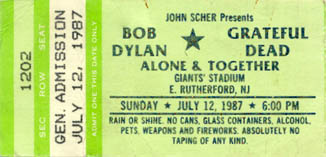
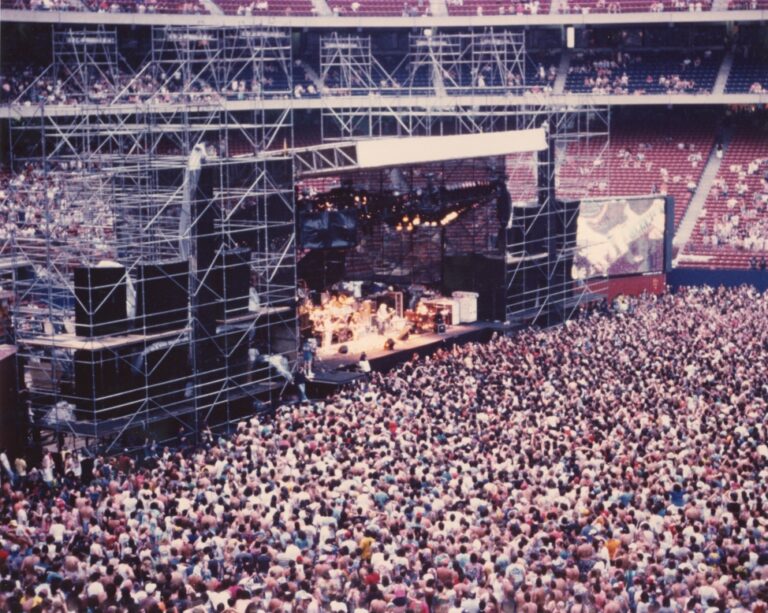
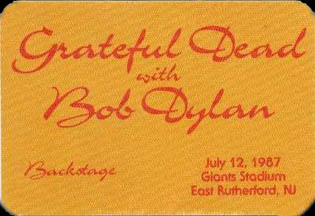
    On a steaming hot midsummer night in 1987, two legendary names in the music world combined forces to deliver three sets of music to a ravenous crowd in the swamps of New Jersey, locally known as the Meadowlands. The Grateful Dead’s 1987 Summer Tour included six shows that would see Bob Dylan accompany them for an extra set of music each night. Later immortalized through the live release Dylan & The Dead, these shows featured some Dylan-penned songs that would remain on the Grateful Dead’s live playlist for years to come.

    Dylan and The Dead

    Those who survived this unseasonably warm and muggy day were treated to three sets of music from some of the best in the business. The temperature and conditions were such a concern that concertgoers near the front of the stage were literally hosed down in an effort to cool off both before the show and during sets. So on a day where shade was at a premium, the festivities fittingly kicked off with “Hell in a Bucket,” and the show was off and running.

    The rest of the first set resembled a fairly common one for this era of the band. Classics like “Loser” and “Greatest Story Ever Told” mixed with contemporary tunes like the Brent Mydland-helmed “Tons of Steel,” which would only be played five more times after this. There’s an incredibly jazzy version of everyone’s favorite Dead crowd PSA, “Take a Step Back.” And an atypical placement of “Bertha” in the first set closer’s spot seemed to energize the whole stadium and created a palpable buzz between sets.

    Dylan and The Dead
    Giants Stadium 7/12/87

    The second set picks up right where its predecessor left off with another interesting placement thanks to an opening “Morning Dew” that was preceded by a little “Addam’s Family”-themed tuning. The rest of the set continued to serve as a traditionalist’s dream with an electric “Playin’ in the Band” and a thunderous “The Other One” before the crowd serenaded the band off the stage with the traditional lyrics from Buddy Holly’s “Not Fade Away.”

    But instead of an encore to follow, there was an entire third set to be had first and this one would see Bob Dylan play in front of, arguably, one of the greatest backing bands in rock. While it may not have evoked the same widespread energy levels of the earlier sets, this one would serve as foresight to some degree for the Dead and give a glimpse of what was to come.

    Dylan and The Dead

    While they had been debuted earlier in the tour, this collaborative set of music would only be the third time that the band would attempt live performances of “Stuck Inside of Mobile with the Memphis Blues Again” and “Queen Jane Approximately.” Both of these songs would continue to be played for the rest of the Dead’s touring career, with “Queen Jane” even making an appearance at the band’s last show in July of 1995.

    Fans were also treated to Jerry Garcia jumping on the pedal steel and showing off his chops on “Tomorrow Is A Long Time.” Songs were kept mostly straightforward in this set, absent of the long, psychedelic journeys which typically accentuate a Dead show. But it surely must have been a treat to see the band backup the legendary Dylan on numbers like “It’s All Over Now Baby Blue” (a song the Dead used to actually cover in the late ’60s) and “All Along the Watchtower.” The encore was a double bill as well as renditions of Touch of Grey, the Dead’s latest “hit” single, and “Knockin’ On Heaven’s Door” sent a packed Giants Stadium crowd back to reality and into the hot summer night.

    Watch the entire third set and encore with Dylan:

    The Grateful Dead with Bob Dylan 7/12/87 Giants Stadium – East Rutherford, NJ

    Set 1: Hell In A Bucket, West L.A. Fadeaway, Greatest Story Ever Told, Loser, Tons Of Steel, Ramble On Rose, When I Paint My Masterpiece, When Push Comes To Shove, Promised Land-> Bertha

    Set 2: Morning Dew, Playin’ In The Band-> Drums-> Jam-> The Other One-> Stella Blue-> Throwing Stones-> Not Fade Away

    Set 3: Slow Train, Stuck Inside Of Mobile With The Memphis Blues Again, Tomorrow Is A Long Time*, Highway 61 Revisited, It’s All Over Now Baby Blue, Ballad Of A Thin Man, John Brown, The Wicked Messenger, Queen Jane Approximately, Chimes Of Freedom, Joey, All Along The Watchtower, Times They Are A Changin’

    E: Touch Of Grey-> Knockin’ On Heaven’s Door

    *Jerry Garcia on pedal steel

  • The Golden Road (To Tompkins Square Park): The Grateful Dead’s First Show in New York

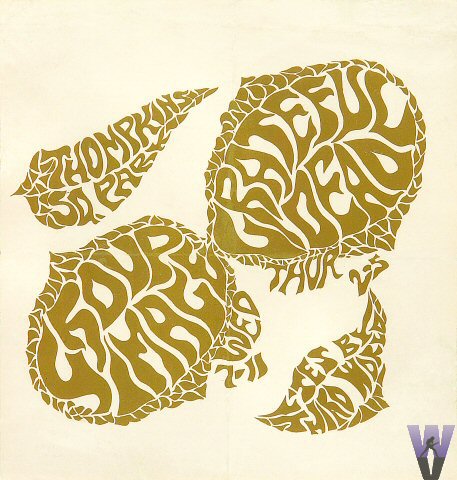
    Few bands have a relationship with the state of New York like the Grateful Dead. Performing over 300 shows throughout the Empire State in a span of 28 years, the Grateful Dead made their mark starting with their first New York performance in Tompkins Square Park on June 1, 1967

    In some ways, the Grateful Dead’s maiden trip to the East Coast via New York City mirrors the ongoing circumstances we see there and across the country today.  The year was 1967, right in the heart of the Civil Rights Era.  And, locally, tribal tensions were beginning to boil over as well, stirred by the wrestling of control over the communal jukebox that had become Tompkins Square Park, a public space in the Alphabet City section of the East Village.

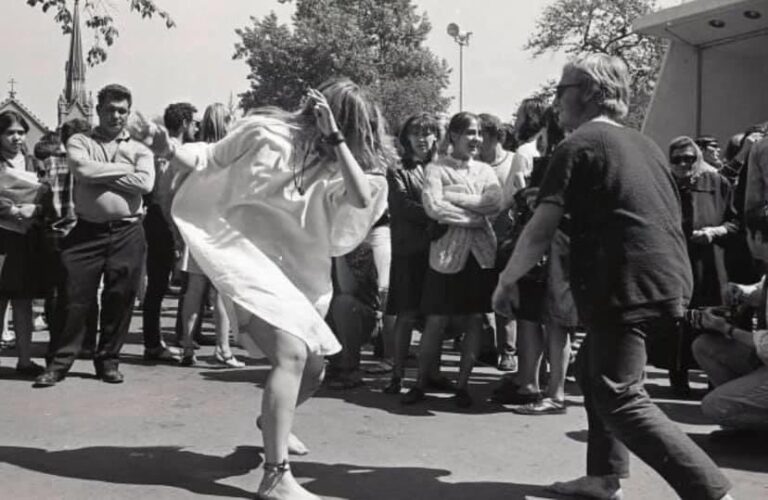
    Tompkins Square Park 6/1/67

    This being the “Summer of Love,” San Francisco was not the only place towards which hippies were flocking. Those that had descended upon Manhattan’s Lower East Side grew fond of playing their congas and bongos at the park.  Puerto Ricans, the neighborhood majority, wanted their music to be prevalent and the Black community also fought for control of the musical output. Over the last few weekends, fighting at the park had become rampant.

    Most recently, 38 people were arrested at Tompkins Square Park on Memorial Day after being confronted by police for sitting on the grass where they were playing music, both park violations. Per a Village Voice article from June 8, 1967, “A couple of cops went over to the park and told the hippies to shut up and get off the grass. The kids laughed, and kept singing. The cops ordered them to leave. ‘They laughed at us,’ patrolman John Rodd explained. ‘That’s when the trouble began.’” 

    Throw in all the other issues that the summer of 1967 undoubtedly brought and it becomes clear that local police were in danger of losing their city, as far as popular opinion went, and needed to rethink their tactics.  Maybe it was someone on the force who somehow had an early copy of the Grateful Dead’s eponymous first album, released just months earlier. Or maybe it was “Cream Puff War,” the album’s second single that was slowly beginning to garner some radio airplay, that had somehow made it to a patrolman’s ear. Whatever the root cause may have been, the Grateful Dead were about to be met with an interesting quid pro quo from the city in the effort of keeping the peace.

    Grateful Dead playing Golden Gate Park, just a few months prior to their first East Coast trip

    Although the band was still in its nascent stage, they were definitely on the local radar. This was made evident when they were greeted by two separate welcoming committees upon their arrival to the Big Apple, each with a distinct agenda.  According to Rock Scully, one of the band’s early managers, they had drama as soon as they arrived at their hotel. According to his book, Living with the Dead: Twenty Years on the Bus with Garcia and the Grateful Dead, Scully and the band were greeted upon their arrival with one of the oldest tricks in the book.

    “I put the briefcase down on the front desk right next to me  – it had all of our expense money in it – and the next thing I know somebody comes up and asks a question. I turn around and when I turn back, bang! the money’s gone. ” ~ Rock Scully

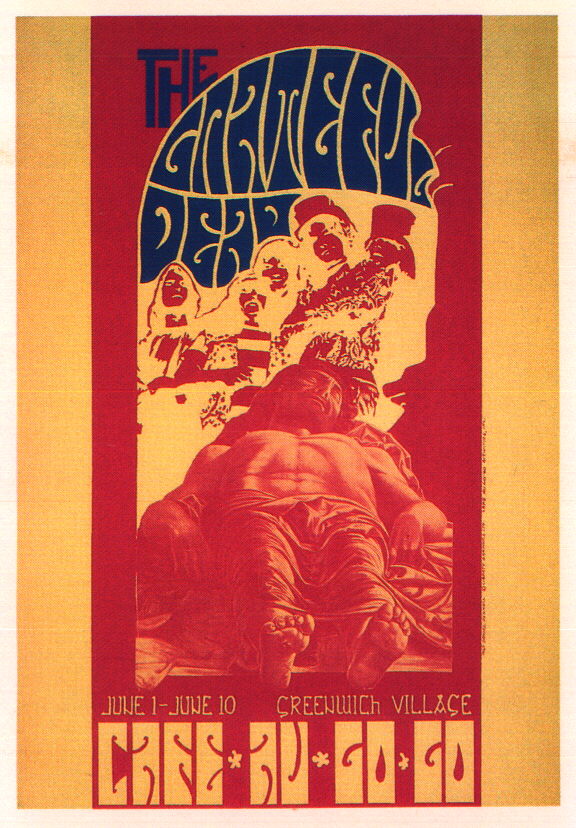
    After returning to the hotel later that day, the band is greeted by the NYPD and Thomas Hoving, head of the Parks Department. Unsurprisingly, this was not a follow up for details to the heist from earlier in the day but, rather, a business proposal that would seem to benefit both sides. The Dead is presented with an offer to do the city “an honor” by playing an additional show at the bandshell in Central Park. As it stood, their only planned shows were a series of gigs slated to go down at the Village’s Cafe Au Go Go.

    Who would say no to an extra show at such an esteemed locale in the most populated city in America?  Surely, there had to be a catch.  Well, there was.  Now that the band had been buttered up, so to speak, the police then politely asked if they could give them “a hand with this little problem we’ve been having in Tompkins Square Park.”

    The Grateful Dead may not have been a worldwide attraction yet, but they were known as a band that had no problems playing outdoors, and to great numbers at that. Word of the “Human Be-In,” a large outdoor show at San Francisco’s Golden Gate Park in January which the Dead were prominently involved in, had clearly reached New York City. A band with mass appeal that played outside and catered to hippies would be just what the doctor ordered. Although, understandably, the band had their concerns about jumping into the local fray. 

    “We can’t even hang on to our per diems and they want us to sort out a gang war in Alphabet City? They must be desperate.” 

    Rock Scully, Living with the Dead: Twenty Years on the Bus with Garcia and The Grateful Dead

    It became clear to the band that the caveat for being allowed to play Central Park was their assistance in this local matter. After some initial reluctance, they were nudged to accept after lead guitarist Jerry Garcia spoke up, seeing it as a chance for outsiders like them to bring another community together via music. In the name of harmony, the Dead encouraged all local bands and musicians to attend and share the stage with them.

    So on June 1, the day after the Memorial Day skirmish, the Grateful Dead went down to Greenwich Village where they were given the royal treatment, hailed as foreign troubadours here to deliver peace.  Per a Village Voice article from the following week, “A happy, scruffy parade of 80 marched down St. Mark’s Place, complete with police escort, to present the Dead with a white carnation key to the East Village, graciously accepted by Pigpen. And the Tompkins Square bandshell rocked with San Francisco glory until a noise complaint was lodged in the late afternoon.”

    But true to the band’s initial vision, they were only a part of the festivities that drew some 3,000 people to the park over the course of the day.  They played from 2 – 5 p.m. and delivered their signature sound of amplified rhythm and blues meshed with psychedelic rock that was being consumed by an East Coast audience for the very first time. A Newsday review claimed the music could be “heard for blocks in every direction.”

    Tompkins Square Park video footage from 6/1/67 (no audio first two minutes)

    Throughout the course of the day, music of all kinds filled the air in what had to be one of the largest, free musical gatherings in New York to date. The gathering, dubbed a “real-in,” was a successful mass protest of sorts, in response to the events from Memorial Day, signaling to the local authorities that the local community was capable of policing itself.

    It was certainly highlighted by the Dead’s first East Coast gig, but they willingly shared the stage with The Fugs, a much more well known local act, as well as local Puerto Rican and Black musicians who had also assembled – a true “pop-up” festival with some San Francisco flair.  The Grateful Dead’s collective mindset, especially Garcia’s, is perhaps best summed up by Scully and his take on the day’s proceedings. “ Then other musicians come up with their congas and marimbas and bongos and cowbells, and they see this isn’t a turf thing at all. Music is music as far as the Dead go. African music or Puerto Rican salsa, it don’t make no difference to Garcia.”

    And so, the band’s long, strange relationship with the State of New York had begun – dropped into the middle of civil unrest in return for an unexpected show at Central Park.  Both those shows and the following string of dates at Cafe Au Go Go went off without a hitch and the Dead had officially stamped New York City as its first East Coast mainstay. They would return many times and wind up playing shows in almost every region of the state – which we look forward to writing about and covering here in New York State Music’s “Golden Road” series.

    Setlist: June 1, 1967, Tompkins Square Park – Manhattan, NY (setlist is incomplete and approximate)

    The Golden Road (to Unlimited Devotion), Dancin’ in the Streets, In the Midnight Hour, Beat it on Down the Line, Good Morning Little Schoolgirl, Cold Rain and Snow, Morning Dew, Viola Lee Blues

    Bonus footage from the band’s performance at the “Human Be-In” in Golden Gate Park 1/14/67
  • Trey Anastasio announces additional Summer Symphony shows

    Trey Anastasio adds to an already busy summer of Oysterhead and Phish with three additional orchestra performances in June. In addition to the previously announced performance on June 20 at Tanglewood with the Boston Pops, Anastasio joins the National Symphony Orchestra on June 17 in Washington D.C., the Philadelphia Orchestra on June 23, and the North Carolina Symphony on June 26 in Raleigh.

    Tickets are now on sale at Trey.com

  • Landmark Theatre in Syracuse to close this summer for renovations

    With its 100th anniversary coming up later this decade, the iconic Landmark Theatre in downtown Syracuse will close this summer for renovations and upgrades. The marquee will be repaired and auditorium seating will be replaced, said executive director of the theater Mike Intaglietta. Events are still scheduled through mid-May, but for the following 15 weeks, the venue will be closed. 

    Landmark Theatre renovations

    The marquee as it is now is more than 30 years old and has been damaged in recent years. The new marquee will be a replica of the original with LED displays, era specific decor, and programmable lighting. The façade window will also be restored, including exterior lighting that will highlight the venue’s location on Salina Street.

    The original seats are still present from the 1928 opening of the Loew’s State Theater, and while they have been reupholstered over the years, the lack of legroom and accessibility for those with disabilities make the need for upgrades even more important. 

    “The new seats will feature contemporary, supportive materials, configured appropriately for our auditorium and with an ergonomic design to enhance patron comfort,” Intaglietta said.

    Intalgietta will continue fundraising for the theatre “to make all of these improvements as impactful and enduring as they can be” and encouraged supporters to become a member, dedicate one of the new seats, or donate.

    “Whether you’ve been a patron, a volunteer, a member, a donor, or all of the above, we would not be where we are without you,” he added. “Thank you for your support, and remember—it’s not just a Landmark, it’s your Landmark.”

  • Zachery Allan Starkey Shares “XXX” off upcoming FEAR CITY LP

    Zachery Allan Starkey has released “XXX,” the dark and melodic second single and video off of his forthcoming album FEAR CITY. Composed, performed, and produced by Starkey, “XXX ” is a symphonic techno odyssey that brings the listener deep into the pure hedonistic ecstasy of New York City nightlife.

    Using analogue synthesizers and intricate arrangements, Starkey creates a throbbing, pulsing arpeggiated Techno bass line, then adds soaring lead melodies and pounding drums and percussion (inspired by the sound of the New York subway system), creating a dynamic club track that brings to mind the best work of electronic pioneers Giorgio Moroder and Patrick Cowley, whilst pushing the track firmly into the future. 

    Starkey says of the latest track: “‘XXX’ is my musical synthesis of a journey I have made literally hundreds of times, finding escape and release from the struggles of daily life on the dance floor. It’s a song for both my journey and the journey I’ve seen many others make in the safety offered by nightlife spaces. ‘XXX’ is about celebrating sex, pleasure, and freedom. Musically, ‘XXX’ is my attempt to marry my love of both techno and symphonic music.” 

    The first FEAR CITY single, the acclaimed “No Security,” discusses the political and economic chaos and fear that is consuming the world in 2020. With “XXX,” Starkey shows marginalized, disadvantaged, depressed, overworked, and economically struggling people escaping the present dystopian nightmare to find freedom, expression, and pleasure on the dance floor. The “XXX” of the title is not only a reference to sex and recreational drugs, it is also signifying the excitement of the unknown. 

    As a whole, FEAR CITY takes the 1970’s nickname for New York City, with a focus on the decadent nightlife, drugs, sex, darkness, class inequality and the opiate epidemic found across the 5 boroughs. It uses hedonism to escape the current, widespread political/economic fears, uncertainties and anxiety caused by the rise of right wing politics around the world. While culling influences from New York’s deep well of dance music history, FEAR CITY is a product of the current times.

    “XXX” is accompanied by a music video created by director directed by William Murray and Zachery Allan Starkey, filmed in the seedy sex districts of Manhattan and late night Brooklyn, and features a cameo by revered Brooklyn House and Techno producer Lauren Flax, as well as Starkey’s live musicians, Laura Holden and Ruby Wang.

  • Spiritual Rez Summer Tour brings Reggae Funk group to NY in June

    Boston’s Spiritual Rez has announced nine summer tour dates for 2020. The band will embark on a run of shows that will take them from the Mid-Atlantic and into the Northeast, with three stops in New York, including the North Country River Jam in Champlain, The Colony in Woodstock and Knitting Factory in Brooklyn. They’ll also make stops in their hometown of Boston, and kick things off on June 4 at Mountain Music Festival in Minden, WV.

    Tour dates and more information can be found at spiritualrez.com

    Spiritual Rez 2020 Summer Tour

    June 04 Minden WV – Mountain Music Festival

    June 05 Harrisburg, PA – The Abbey Bar at Appalachian Brewing Co.

    June 06 Champlain, NY – North Country River Jam

    June 07 Woodstock, NY – The Colony

    June 10 Portsmouth, NH – The Press Room

    June 11 Brattleboro, NH – The Stone Church

    June 12 Cambridge, MA – The Sinclair

    June 13 Wakefield, RI – Ocean Mist

    June 14 Brooklyn, NY – Knitting Factory


  • The Decemberists announce 20th Anniversary tour

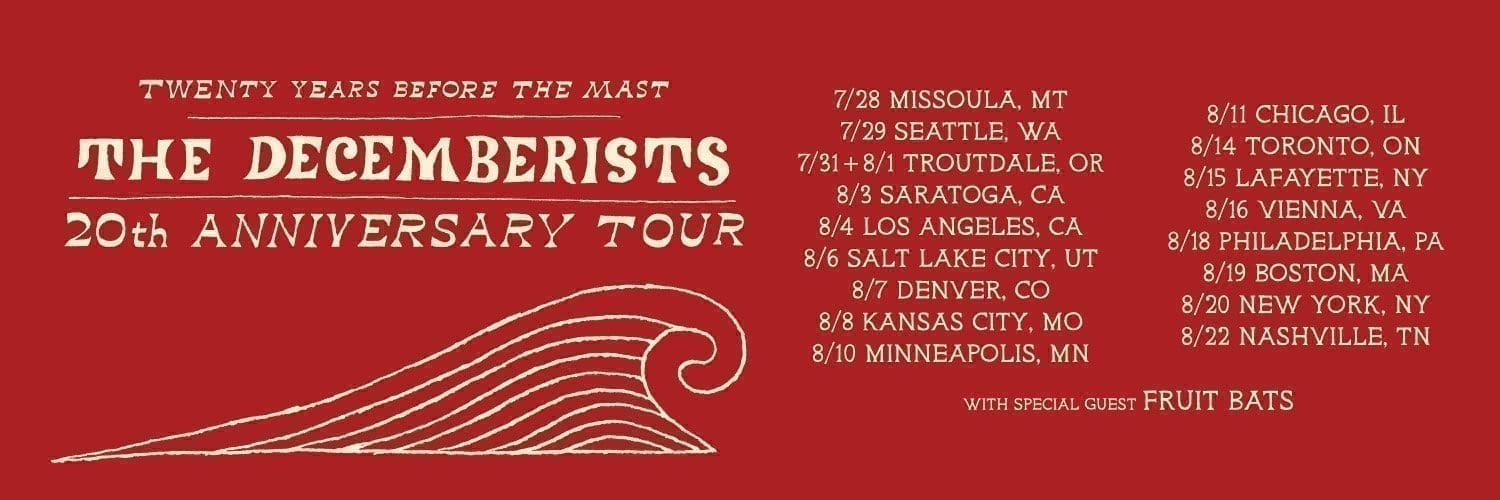
    The Decemberists have announced dates for their 20th anniversary summer tour, including a performance at Beak & Skiff Apple Orchards in Lafayette on August 15 and Central Park Summer Stage on August 20.

    The group, who first formed in 2000 in Portland, Oregon, will embark on a summer tour headed from the Pacific Northwest to the Northeast, with a final stop at the historic Ryman Auditorium in Nashville on August 22. 

    “Twenty years ago, in a basement practice space in Portland, Oregon, a bunch of musicians threw together under the name The December Brides, a name that lasted only a few hours before it was marginally improved to The Decemberists,” says the band’s frontman Colin Meloy. “On such occasions, it seems fitting to throw some kind of party. And so we’re heading out on the road, we Decemberists, to celebrate the work we’ve made over the last two decades.” For more information and tickets visit decemberists.com.

    The Decemberists 20th Anniversary National Tour Dates

    Jul. 28 – KettleHouse Amphitheater – Missoula, MT

    Jul. 29 – Paramount Theater – Seattle, WA

    Jul. 31 – Edgefield – Troutdale, OR

    Aug. 1 – Edgefield – Troutdale, OR

    Aug. 3 – The Mountain Winery – Saratoga, CA

    Aug. 4 – The Wiltern – Los Angeles, CA

    Aug. 6 – Gallivan Center -Twilight Concert Series – Salt Lake City, UT

    Aug. 7 – The Mission Ballroom – Denver, CO

    Aug. 8 – CrossroadsKC – Kansas City, MO

    Aug. 10 – Surly Brewing Co – Minneapolis, MN

    Aug. 11 – Auditorium Theatre – Chicago, IL

    Aug. 14 – Roy Thompson Hall – Toronto, ON

    Aug. 15 – Beak & Skiff Apple Orchards – La Fayette, NY

    Aug. 16 – Wolf Trap Center for the Performing Arts – Vienna, VA

    Aug. 18 – The Met Philadelphia – Philadelphia, PA

    Aug. 19 – The Boch Center-Shubert Theatre – Boston, MA

    Aug. 20 – Central Park SummerStage – New York, NY

    Aug. 22 – Ryman Auditorium – Nashville, TN

    *All shows are with Fruit Bats, except August 8

  • Mount Sharp share new single and video ‘Ordinary’, perform in Brooklyn Feb 22

    Mount Sharp is back with their first release in five years, That Shadow, due out on February 21 via Dadstache Records. They’ve just released the single and video for “Ordinary” ahead of the album’s release and their record release show at Gutter in Brooklyn on Saturday, February 22. 

    The first taste of the new record came with their first single, “Apostate.” Post-Trash, who premiered the video, said,”Our first taste of the band’s long-awaited new music comes in the form of ‘Apostate,’ a song that pulls from the band’s more serene end, a dreamy song to melt away to during this heat wave. Built on a resonant twang and a pulsating rhythm, the song breathes at a natural clip, drawing between a soft intimacy and a thick fuzzy build up by the bridge. There’s a syrupy quality to the vocals that stick with you after the song has ended, and while you may not instantly remember the lyrics, the melody is now part of consciousness, like a distant memory that repeats in your mind.”

    Mount Sharp began on a rooftop in Brooklyn, or on a boat in Maine, or perhaps somewhere in between. The band grew around the bittersweet, poetic songwriting of Swood (Sarah Wood) paired with Bryan Bruchman’s noisy, chaotic tendencies around 2012. On 2014’s WEIRD FEARS EP (with the rhythm section of Ryan Zumsen and Maia Macdonald), the band exhibited a blast of unbridled energy, excitement, and confusion –  a fitting soundtrack to a brief, blissful, carefree time before so much changed. The band – now with Sal Garro and Jonathan Pilkington Kahnt firmly holding down the drums and bass – has matured, and the songs are maybe a little more serious, maybe a little more reflective, but no less cutting and catchy. Taking inspiration from the cosmos, sci-fi TV, and the messed up state of the world, Mount Sharp puts all the feels into song.

    That Shadow follows, too. It’s full of sticky melodies, lyrics that cut, and surging waves of noise. It’s designed to get under the skin. Inspired by years of watching all the assholes they know win, figuring out how to be kinder to themselves, and all the beautiful and tragic machines in space, the band says the record is everything that pulls them to look behind themselves. They believe we should be looking up and dreaming.

    All tracks were produced by Brian Sendrowitz (Beat Radio) at Miracle Flag in Bellmore, NY, mastered by Sarah Register (Talk Normal, Protomartyr, Caroline Rose, Chastity Belt, Big Thief, Lower Dens, and Big Ups), and with artwork using images of textile artist Jenna Breiter’s work, including an original illustration for the LP cover.