What comes to mind when you think of the Allman Brothers Band? Likely it’s the fact that they were one of the finest live bands in rock history, the artists behind perhaps the genre’s most beloved live album.
What likely doesn’t come to mind is the indispensible role they played in getting Jimmy Carter, a brainiac peanut farmer/engineer from their home state of Georgia, elected 39th President of the United States.
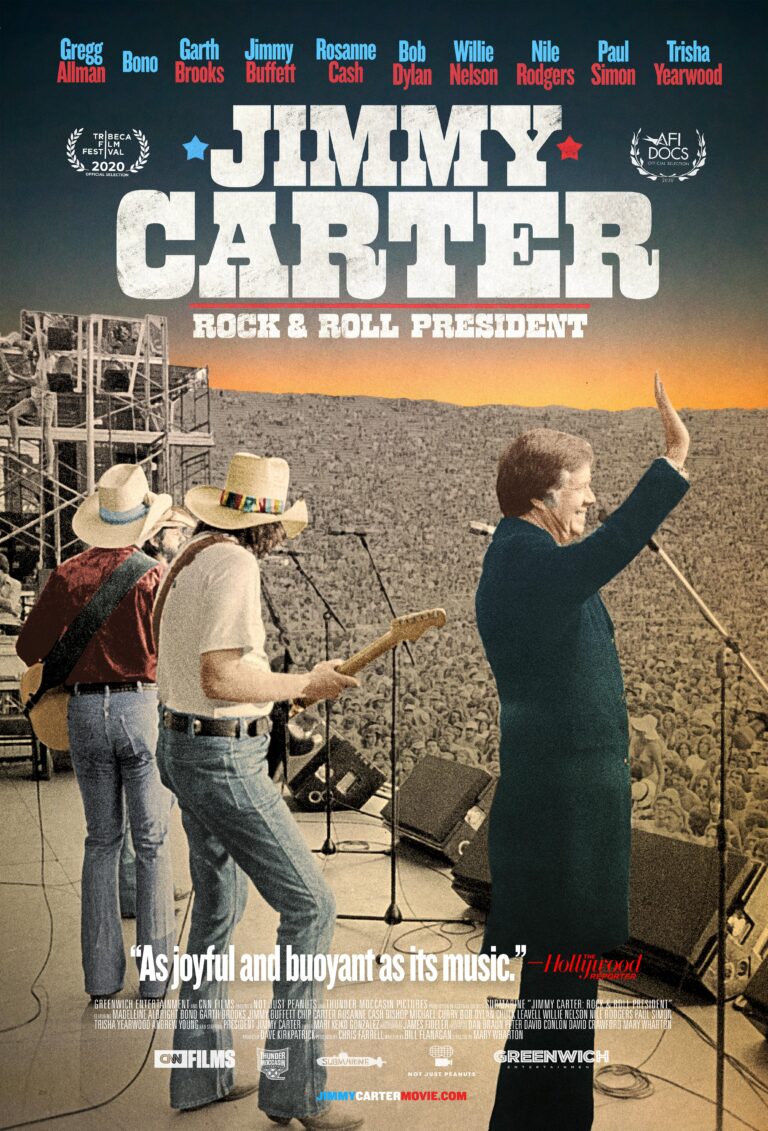
Jimmy Carter Rock & Roll President is the name of a fascinating new documentary that demonstrates how Carter’s lifelong passion for music gave him an unexpected edge as a candidate, and as a charity champion in his post-Presidential years. It was a deep love that enabled him to not only build relationships with musos that filled his campaign coffers, but to transcend racial and generational divides to score a monumental upset in the 1976 Presidential contest.
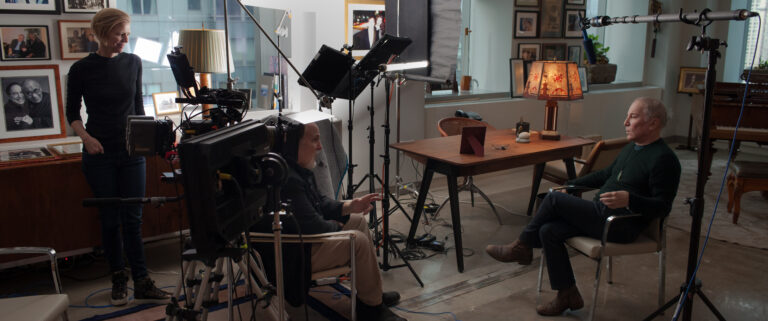
The film boasts extensive interviews with a host of stars with whom Carter has enjoyed close friendships for decades. These include, but are not limited to, Bob Dylan, Willie Nelson, Bono, Jimmy Buffett, Paul Simon, Rosanne Cash, Nile Rodgers, Garth Brooks and, of course, the late Gregg Allman.
In the film, Allman reminisces about his first meeting with Carter, when he attend a party Jimmy threw for one of his most loved musicians, Bob Dylan, at the gubernatorial mansion.
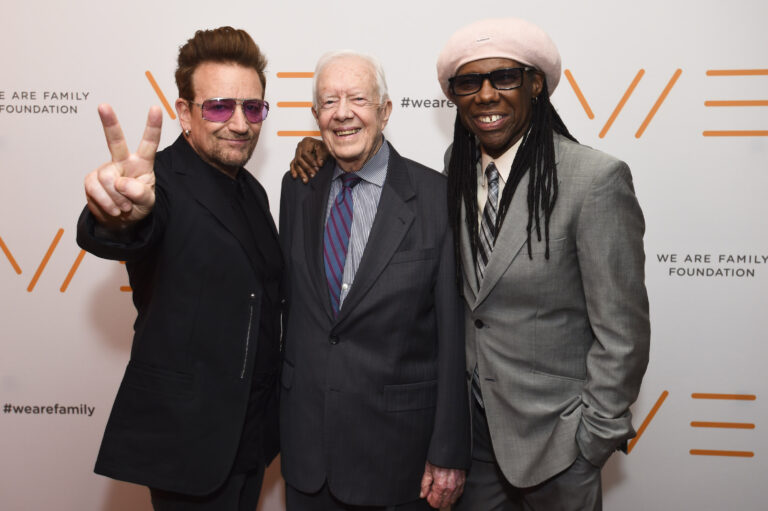
NEW YORK, NY – APRIL 29: Singer Bono of U2, former President Jimmy Carter and co-founder of WAFF Nile Rodgers attend We Are Family Foundation 2016 Celebration Gala on April 29, 2016 in New York, New York. (Photo by Shahar Azran/Getty Images)
When Allman happened upon the shoeless, jeans-wearing Carter, he thought he looked like “a bum.” Carter began their discourse by telling him he was going to be “the next President of the United States.” The Allmans, their manager Phil Walden and his Capricorn stable of acts like Charlie Daniels and the Marshall Tucker Band, would play a vital, early role in getting Carter’s 1976 campaign underway, by playing a host of benefits to raise funds for his run.
But it is Carter’s close friendship with the mercurial Bob Dylan, and his deep appreciation of his music, that may be the true highlight of this film.
Carter’s son Chip tells how his father would listen to Dylan’s music with him and his brothers, knowing all the many words to the songs on every one of his albums, and often quoting them. When Carter finally met Dylan, they had profound talk about Christianity, which Dylan was then exploring. That was the beginning of a still-close friendship with a man whom Dylan calls “a kindred spirit.” In a speech captured in the film, Carter speaks optimistically about the state of the nation, by paraphrasing Dylan’s “It’s Alright,Ma” – “We have an America that is busy being born, not busy dying.”
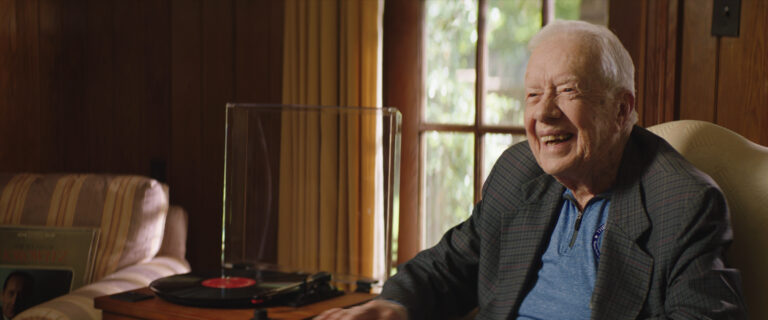
Carter’s love of music was also evident in his pre-political days, when as a child he gravitated to music played on a battery-powered radio in his electric-free home, and when he spent $600 on a stereo for his young family, even though money was very tight.
In the film, the former President also waxes extensive and poetic on the central role of music in America. “Our music, our love of it, is what holds America together,” says Carter. Growing up in a county that was 80% black, Carter talks of his love of gospel music and how it bound him to the African-American community, and how church music helped give birth to rock and roll. Also addressed is how the folk music of ‘50s and early ‘60s helped form his political views.
Another highlight of the documentary is the wonderful performance footage, much of it from events Carter held at the White House during his term.
His love of jazz is evident in a clip where Carter sits in with Dizzy Gillespie to perform the stop-time vocalizing on “Salt Peanuts,” and in footage featuring Dexter Gordon, Herbie Hancock and a wheelchair-bound Charles Mingus. Also featured are wonderful performance of Paul Simon playing his “American Tune” and Aretha Franklin ”singing God Bless America” at his inauguration, as well as Ray Charles (singing “Georgia on My Mind”), James Brown and many more.
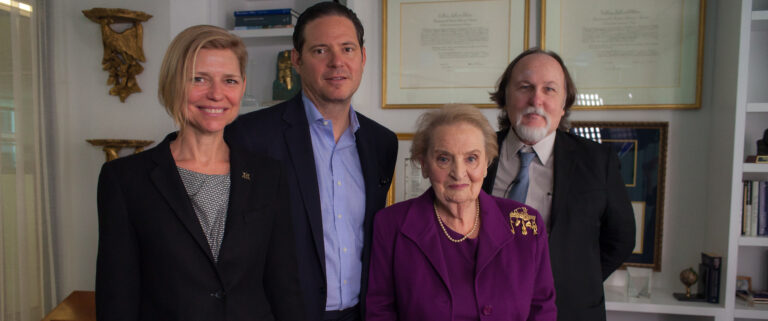
Former Secretary of State Madeline Albright discusses how Carter used music as “soft power,” to bring others to his way of thinking, be it the Republicans entertained at a South Lawn concert by his friend Willie Nelson, or by bringing the first Chinese Ambassador to the U.S. to Nashville grant his biggest wish – to meet country music’s royalty.
Rosanne Cash and David Crosby speak about the uniqueness of those times, how, in the post-Nixon years, it was the first time “the youth were in charge.” Crosby discusses how his band showed up unannounced at the White House and were ushered right in to meet the President, a reflection of these non-polarized and casual times.
At the ceremony where Carter was awarded the Nobel Peace Prize in 2002, Bono put it best, calling Carter “a rock star to the rock stars.” He was importantly “a man who knew all the words to the songs that were my generation’s telegraph” according to Bono.
Another profound thing the documentary shows is how much the world, and the man who occupies the Oval Office and his relationship with musicians today, have changed.
When it comes to the current President, the headlines are about how stars like Neil Young, John Fogerty, the Rolling Stones, Elton John, the estates of the late Tom Petty and Leonard Cohen, etc. etc., are sending “cease and desist” letters to stop the use of their music in Trump campaign stops.
What this film also brings to light is the inherent goodness and greatness of Carter, his true love of music and how it powers his seemingly inexhaustible passion for peace and charitable works.
Director Mary Wharton and music journalist/writer Bill Flanagan hit all the right notes in this documentary, making it a must-see for fans of music. The film is available now virtually at JimmyCarterMovie.com, and will see its home entertainment release on Friday, October 9 and debut via CNN on January 3.
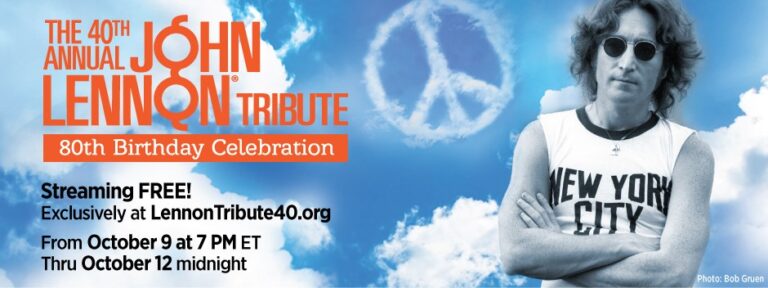
Theatre Within, the non-profit behind the Annual John Lennon Tribute charity concert since 1981, has announced that its milestone 40th Annual John Lennon Tribute will be streamed for free exclusively at LennonTribute.org, on what would have been John Lennon’s 80th birthday, October 9, at 7pm ET thru October 12 at midnight.
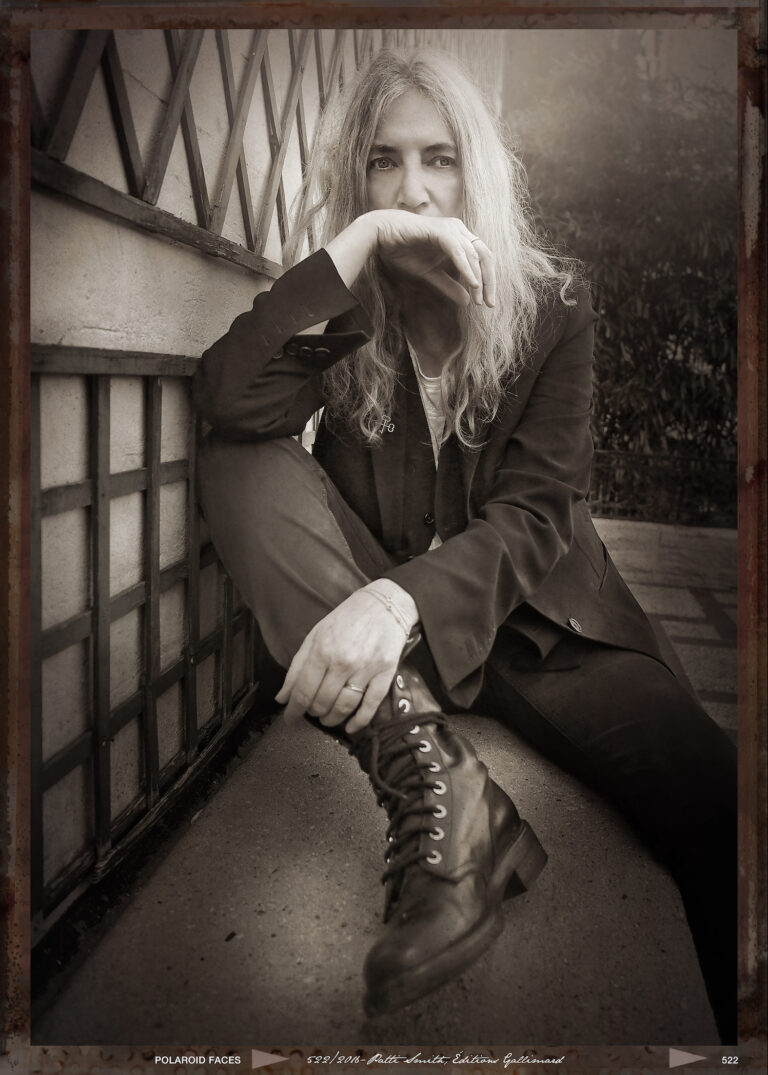
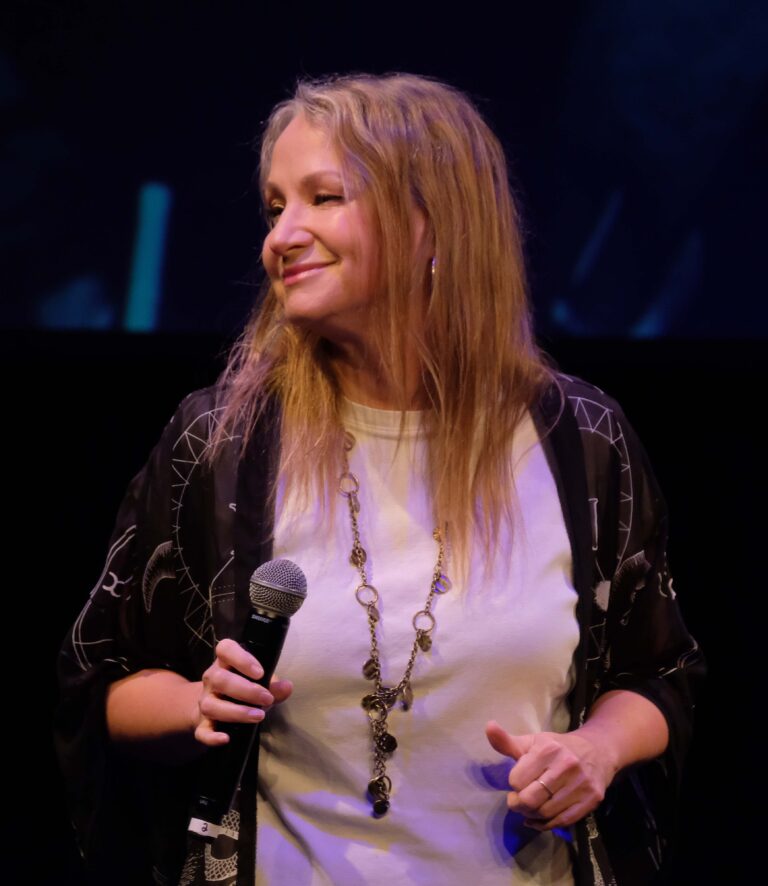
The program will feature unreleased performances from past tributes and new performances of John Lennon and Beatles classics by recent John Lennon Real Love Award Honorees, Patti Smith, Natalie Merchant and Rosanne Cash, plus Jorma Kaukonen, Jackson Browne, Taj Mahal, Martin Sexton, Joan Osborne, Bettye LaVette and more. In addition, The tribute will include reflections on John Lennon’s music and social impact by famed rock photographer Bob Gruen, Double Fantasy producer Jack Douglas, music critic Anthony DeCurtis, V (formerly Eve Ensler), and others.
In a statement, Yoko Ono said, “John has been a loving spirit now for nearly as long as he was with us on earth, 40 years. Through all that time, Theatre Within has joyfully celebrated his music and message with its beautiful annual tribute concert, which helps makes possible its many programs for those impacted by cancer, including the John Lennon Real Love Project songwriting workshop. This is such a wonderful way to honor John and the values he stood for.”
As a result of the pandemic, we’re taking the Tribute online and have the opportunity to share it with John Lennon fans around the world. We’re counting on their support to help keep our free programs for those impacted by cancer going and growing.
Longtime Tribute producer and Theatre Within Artistic Director, Joe Raiola
This year, in partnership with Gilda’s Club NYC and Gilda’s Club Westchester, Theatre Within is providing 135 free workshops, all available online – in songwriting, art, meditation and much more – for children and teens who have lost a parent to cancer and adult cancer patients and survivors.
Now more than ever, these workshops are vital to our community of cancer patients and their families who look forward to them as part of their lifeline to help them manage their cancer journey during this pandemic. Theatre Within has been such an important component of our program and we, and our members, are deeply grateful for their continued support of our cancer community.
Lily Safani, CEO of Gilda’s Club NYC
Theatre Within is inviting John Lennon fans to make a donation in any amount to the Real Love Fund by texting “TBIB40” to 41444. All proceeds will empower Theatre Within to continue its free programs for NY-metro cancer community through 2021. It is the only ongoing John Lennon tribute concert in the world sanctioned by Yoko Ono.
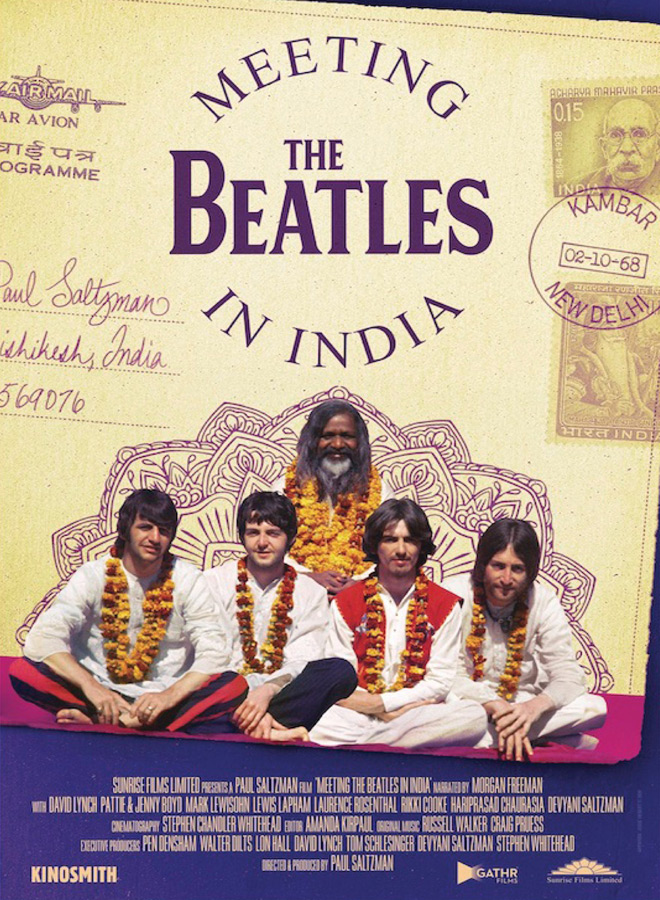
In February of 1968, The Beatles pulled the ultimate disappearing act. The world’s most culture-bending and publicized foursome went radio silent, forsaking the comforts of Swingin’ London for a humble ashram in remote Northern India to study transcendental meditation with Maharishi Mahesh Yogi.
For two months, the justifiably world-weary fabs were alone but very together, with just their romantic partners, trusted roadie Mal, and a few heavy friends like Beach Boy Mike Love, the singer Donovan, actress Mia Farrow and her soon-to-be immortalized sister, Prudence. And, oh yes, one very lucky 22-year-old Canadian, Paul Saltzman, who unknowingly stumbled into the world’s most exclusive mystical gathering, all in hopes of learning meditation as a way to mend his recently broken heart.
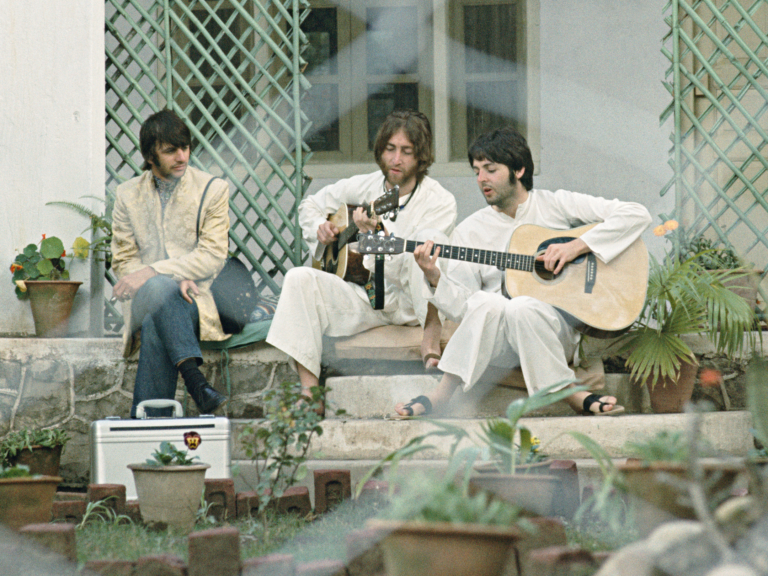
Now an Emmy Award-winning filmmaker with over 300 credits, Saltzman spent 10 days in close company with the Beatles at Rishikesh. The lush color photographs he casually snapped of them in blissful repose, often cradling their precious Martin guitars, would become vital artifacts of what is arguably their most creative period. It was one where they wrote up to 48 songs, classics like “Blackbird,” “Mother Nature’s Son,” “Goodnight,” “Julia,” “Mean Mr. Mustard,” “Revolution” and “Junk” that would appear not only on The White Album, but Abbey Road and their solo offerings.
Saltzman’s new documentary, Meeting the Beatles in India, is much more than gossip about what happened behind the ashram’s exclusive gates. It is a profound and personal study, through the prism of the Beatles, of how the enlightenment and peace produced by meditation can impact creativity, as well as our physical and emotional well-being.
Narrated by Morgan Freeman, Meeting the Beatles in India expertly weaves together a mountain of rarely seen archival film and some never-before-seen in film photos from Saltzman’s collection, along with interviews from a bevy of notables like Harrison’s ex-wife Pattie Boyd and her sister Jenny and long-time meditation champion and film director David Lynch. Together they captivatingly tell the story of the Beatles time in India, the impact it had on their creativity and the Western World’s lasting embrace of Maharishi’s TM. Beatles history buffs will, of course, delight in the new factoids unearthed. These include how the band’s falling out with the Maharishi came about (we’re looking at you, Magic Alex!). And, in a face-to-face meeting in Hawaii with the real-life Bungalow Bill, we hear how his hunting trip with his mom inspired the tune, and how the tune then inspired him to put down a gun and pick up a camera to capture wildlife more peaceably.
The film also takes Saltzman back to India, with legendary Beatles historian Mark Lewisohn in tow and suitably agog. Here, they visit the former site of EMI Studios in Bombay where George recorded The Inner Light, with master musicians like flautist Hariprasad Chaurasia who is interviewed in the documentary and, of course, to the ruins of the ashram and the bank of the holy Ganges River to trace the Beatles’ steps.
Saltzman’s chance meeting with the Beatles came about when he headed to the ashram to learn meditation in an effort to mend a heart crushed by a “Dear John” letter sent from his girlfriend in Canada. On arrival in Rishikesh, he was turned away, being told that the ashram was closed to host the Beatles, who he was unawares were even in India! A kindly staffer let him stay in a tent outside the gates, and after eight days, he was allowed to enter and take a one-on-one session to learn TM. It took less than five minutes, and his first 30-minute meditation was ‘a miracle’ that healed the agony of his heartbreak.
In a blissed-out state following the session, Saltzman was walking through the ashman and saw the Beatles and their party sitting at table. When he asked to join them, the always leader-like John warmly welcomed him with an, “Of course, mate!”
Over the course of the next week, Saltzman hung out with them often, and even had private discussions, such as the one where John, addressing the young man’s recent heartbreak, told him: “The really great thing about love is that you always get another chance.”
In the film, Saltzman revisits the spots where Paul and John first sang Dear Prudence to Prudence Farrow, the serious-minded sister of Mia Farrow, and the beginnings of the unfinished song that would become Ob-La-Di, Ob-La-Da, with the partial set of scribbled lyrics set beneath McCartney’s shoe. In the convivial atmosphere, Saltzman used his low-end Pentax camera to casually capture some of the most intimate and relaxed photographic portraits ever taken of John, Paul, George and Ringo. These include the famous “Class Photo” of the group, their friends and 40 or so others who are at the ashman learning to become TM instructors.
Meeting the Beatles in India also takes viewers to The Beatles Story Museum in Liverpool. Here, Saltzman reunites with George Harrison’s ex-wife Pattie Boyd and her sister Jenny, who were both in Rishikesh with the Beatles, as they revisit their memories at an exhibit of Saltzman’s photos. This great documentary broadens the focus in an interview with famed filmmaker David Lynch, who also served as an Executive Producer of the film. In it, he discusses the impact TM has had on his own life and creative output and his foundation’s work to expose children around the world to the mental, physical and creative benefits of meditation.
When young Saltzman returned to Canada, his experiences with meditation and the Beatles were chronicled in a single story in a leading magazine, with a select few of his images. The pictures were then put away and forgotten for 32 years until his daughter, Devyani, suggested he do something with them. Several gallery shows and books followed a few years ago, setting the stage for what Saltzman’s believes is the most far-reaching and meaningful document of the experience, this new film.
With COVID-19 decimating traditional distribution means for film, the producers of Meeting the Beatles in India are plying an exciting new avenue for its premiere.
Gathr Films will host a World Event Cinema Premiere on Wednesday, September 9 at 7 PM (local times all around in the world) on its Gathr At Home™ platform. The film will be followed by a live Q&A with the filmmaker.
For another in-depth look at Saltzman and his experiences with the Beatles, check out episode 223 of the original all-talk Beatles’ podcast, Fab4Free4All, hosted by three New Yorkers, Tony Traguardo, Mitch Axelrod and Rob Leonard. Also recommended is Jenny Boyd’s 2013 book, It’s Not Only Rock ‘n’ Roll – Iconic Musicians Reveal the Source of their Creativity. In it, Boyd, now a psychologist, studies the sources of creativity of famous musicians in her orbit including Eric Clapton, George Harrison, Ravi Shankar, Joni Mitchell, Keith Richards, her former husband, Mick Fleetwood, and dozens more.
File this one under so nice the Analog Players Society had to release it twice. The first disc, TILTED, is a percolating live acoustic jazz session featuring four of the genre’s finest players. The second, Soundtrack for a Nonexistent Film, is a loop based reimaging of the sounds waxed during the former, a fractal audio swirl that gives props to the sample-heavy production of hip-hop’s Golden Age and a new kind of noir cinema sound.
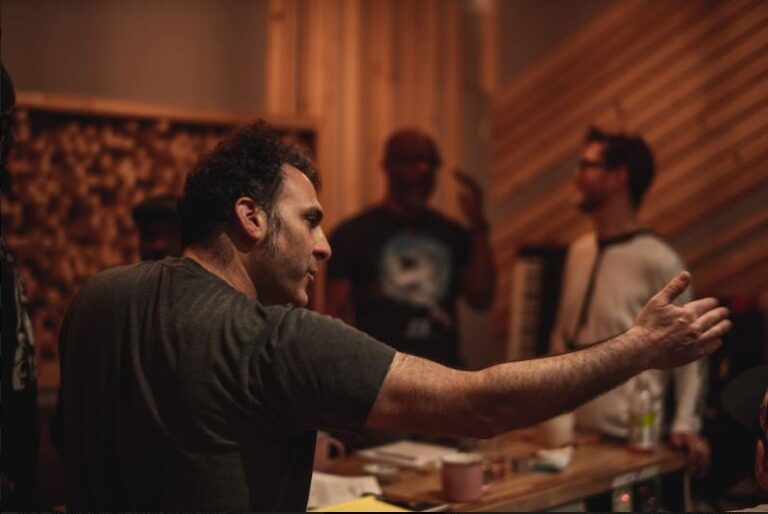
The culprits behind this very forward-thinking project are the Analog Players Society, the brainchild of producer/engineer Amon Drum (aka Amon aka J. Amon). This heavy collective originated at Amon’s first studio, The Hook, which recently moved and expanded to be reborn as The Bridge Studio, a new Williamsburg, Brooklyn-based favorite of NYC’s most cutting-edge players.
Photo by Jude Goergen.
The APS collective features a rotating ensemble cast of some of the Big Apple best soundmakers. APS’ various projects, which are all decidedly eclectic by nature, carry serious strains of the Jazz, Dub, Funk, Afrobeat and Soul within. Analog Players Society’s 2012 debut album, Hurricane Season In Brooklyn, impressively debuted in the top 15 of the Billboard Contemporary Jazz Chart, and earned press accolades from NPR’s Fresh Air, Wired, and All About Jazz to name a few.
Fast forward to April 2019 and the Analog Players Society is reborn during a live jazz session produced by Ben Rubin (aka Benny Cha Cha) and Amonat at The Bridge Studio. Rubin gathered four of the best jazz musicians in New York City for the occasion: tenor saxophonist Donny McCaslin (David Bowie’s last bandleader on Blackstar), pianist Orrin Evans (the Bad Plus), and the in-demand rhythm section of bassist Dezron Douglas and drummer Eric McPherson.
The fruits of this meeting are featured on TILTED, which comes out today on Ropeadope Records. It boasts three lengthy explorations, all full of quirky creative turns and high-wire harmonic interplay.
Nothing like the tinkle of a toy piano to set the mood for this most unique cover of Monk’s angular and playful Epistrophy. McCaslin is the focal point for most of this 10-plus minute journey. He deconstructs lines and floats across Evan’s alternatively chopped single note support lines and lush, complex chord painting. McPherson’s unique drumming, evident on all the tracks, is at its most impactful here. He’s a man more inclined towards orchestral stomps, punky thunks and unexpected breakdown fills than cliched, cymbal-ridin’ chinga chinga cocktail lounge swing. To my ears, his style owes more to someone like Captain Beefheart’s John “Drumbo” French and the delightfully jerky time of Prime Time-era Denardo Coleman than traditional post bopper. And making this even more oddly Monk, Evan’s goes two hands for his solo here, one on the piano grand, and one on his toy ivories!
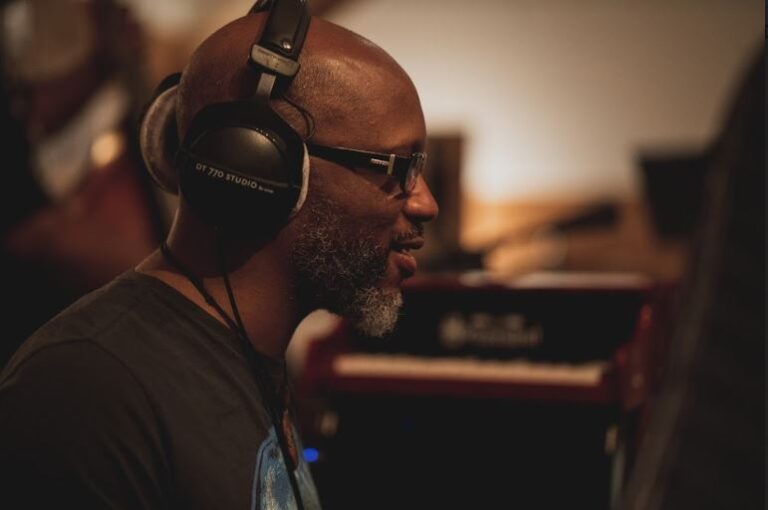
Photo by Jude Goergen.
On the other cover here, One Note Samba, the quartet wrestles a tasty dose of avant garde out of Antonio Carlos Jobim’s mellow bossa nova classic, with McCaslin tossing about the memorable melody, bringing a bit of sinister mood with the subtle delay and harmonizer laden on his horn. With the sole original, Freedom is but a Fraction of Humanity, what starts as a lovely, yearning ballad turns into a high-speed chase, with especially fierce soloing from Evans. All of these tracks are produced and engineered to perfection by Rubin and Amon, imparting a crisp acoustic experience, notable on Douglas’ deep soulful bass, and with tasteful use of electronic effects that give it just the right among of left field fun.
When it comes to left field fun, it will be hard to beat the second release birthed from these sessions, Soundtrack for a Nonexistent Film, to be released on October 30.
Running a little over 30 minutes in all, Soundtrack is comprised of 12 miniatures composed entirely lifted from short samples from TILTED’s tracks, seven by Amon on the A side; five by Rubin on the B side. These tiny gems are looped and mutated electronically to create a new kind of moody, one that is part street, and part cinematic cool.
The opener, Chase, features a driving 70s Miles Davis beat (think Al Foster on Agartha) on which Amon hangs an edgy bit of melodic sax, only to break the drive periodically with the ringing of solo piano chords and time changes. He gets extra points from me on this one with the injection of the fartiest sawtooth wave bass synth lines, vintage Krautrock or early ELP. My favorite Amon remix is Act Cool. It features a Hip-Hop beat under a warm, melodic acoustic bass, lush pads and McCaslin’s sax at its breathiest, a kind of Ben Webster Goes to Mars experience.
Photo by Jude Goergen.
Rubin’s five pieces demonstrate his devotion to in-the-pocket rhythms and dub mixing, most evident on the ska-infused Brooklyn Blackout and the jazzy blues of Starry Night. What’s a delight about all the tracks here is how the duo recycles and dramatically changes these little phrases, whipping them into a wide range of compositions, ones that always seems to milk something evocative out of these humble two-bar nuggets.
Key Tracks: Epistrophy, Freedom is but a Fraction of Humanity, Act Cool, Brooklyn Blackout
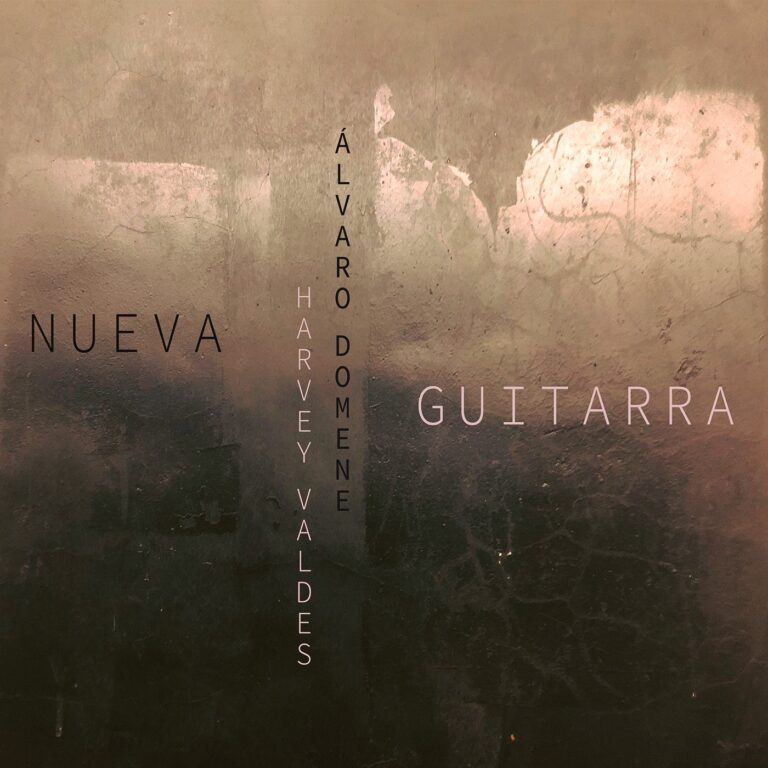
And now for something completely different. Two New York-based guitarists, Harvey Valdes and Álvaro Domene, come together for an ear-opening album of nine deliciously deviant duets. It’s an ever-evolving, sonic tornado that is part free jazz, ambient somatic, mournful acousticity, industrial noise and the most searing, dark brand of heavy metal thunder – Nueva Guitarra.
Madrid-born, Kingston-based Álvaro Domene is not only a most formidable and original guitarist; he’s a tireless advocate for the creative music scene in the Hudson Valley and beyond. His Singularity Concert Series has brought many renowned musicians like guitarists Ben Monder and Elliot Sharp for intimate performances at his Kingston loft. Since 2013, his co-owned Iluso Records has released over two dozen discs featuring some of the most fearlessly composed and improvised music you’d even want to spin. As with this album, Domene continues his habit of keeping some heavy company, recording and performing regularly with the likes of Joe McPhee, Karl Berger, Henry Kaiser, Ches Smith, Michael Bisio, Billy Martin and many more.
Like Domene, Brooklyn-based Harvey Valdes is another guitarist (and oud master too!) for whom genre boundaries have little meaning. His three solo albums have encompassed the radical reshaping of jazz standards (“Roundabout”), Mahavishnu-esque jazz fusion fury meets math rock (“PointCounterPoint”) and the 18 concise solo guitar compositions of his latest, “Solitude Intones Its Echo,” mixed and mastered by sonic guitar innovator David Torn (David Bowie).
“Nueva Guitarra” is not designed for the faint of heart and that’s a very good thing.
The duo make their uncompromising and delightfully madcap intentions known in the album opener, “A Crooked Odyssey.” It’s a sonic assault of tapping, looping, glissandos, drones, whammy dives and frizzled corrupted guitar signalry, a mad ride to the mountain top that only let’s up with a soothing ambient cloud appearing in the last 45 seconds of the six-minute outing.
The best place to start your listening might be with the two solo pieces, which showcase the players’ varied approaches and signature sounds.
Valdes’ “Zealous Reflections” is a chord and melody exploration, with close voiced dissonances alternating with pleasant resolutions that he lets ring out. “Biomimicry” is Álvaro Domene swinging for the fences. It’s all quicksilver, speeded up melodies over noisy pads, loops and thumps, over under upside down signals, otherworldly whammy bar and harmonizer torture. A noise jazz industrial racket of the highest order, from the bastard son of Buckethead and Albert Ayler.
My personal favorites, and maybe the easiest for the noise jazz newbie to dip into, are “Lady Dog Night Terror” and the album closer, “The Sophist Pundit.”
“Lady Dog Night Terror” emerges quietly from the darkness. Its deep warm volume swells from Domene’s rise to surround and complement Valdes’ clean chording and single note lines. Slowly, the dissonance in the melody and backdrop increases. It gets symphonic and fuzz laden, then slowly slips away just after the four minute mark.
https://youtu.be/p0idBsB0z6Q
With “The Sophist Pundit,” the duo saved the best for last. This is a summary statement of all the ideas set before, spread over nearly nine and a half minutes of guitar hellacious.
The track begins with stutter stop phrases looped to create a variable pulse, over which the duo improvise jagged lines. It just gets more intense as it goes on, with the duo creating a wall of feedback looped upon feedback, punctured by siren calls and squeals designed to melt your preconceived notions of what guitars can do.
All musicians have been hit by COVID-19, but not many have as hard as Domene. He battled the ailment all through the spring, but still managed to ready this and other collections for release.
If you want to do a good deed for music kind, and vastly widen your own appreciation of music and the creative possibilities still left in the guitar, download this uncompromising disc.
Key Tracks: Lady Dog Night Terror, The Sophist Pundit, Biomimicry
Anyone who can spell the word “guitar” likely knows of the formidable Spaniard of the gut string, Andrés Segovia. But too few know enough about the Brit who cast just a smidge less of a shadow in the world of classical guitar and lute, and maybe a far more progressive one at that. Julian Bream passed away this week at the age of 87.
Bream was regarded as one of the instrument’s most formidable, influential and soulful players, a flawless technician with incomparable tone and technique on guitar and, later, the lute. Unlike the traditionalist Segovia who was his inspiration, Bream worked to push classical guitar beyond its Spanish roots by commissioning dozens of works from major composers like Malcolm Arnold and Benjamin Britten, whose “Nocturnal” (1963) is one of the most popular pieces in the modern guitar repertoire. On the traditionalist front, he was the first to revive major works of Spain’s Fernando Sor and Mauro Giuliani of Italy, two important 19th century guitarist-composers, and to serve as the prime interpreter of the lute works of the legendary John Dowland. His painstaking transcriptions, which are a key parcel of the classical teaching lexicon today, included Bach suites and Scarlatti sonatas, as well as works by Purcell, Cimarosa, Diabelli and Schubert.
Julian Bream: Benjamin Britten’s Noctural
https://www.youtube.com/watch?v=Bk8VfE-Gzoo
Bream’s initial interest in guitar came about not through the classics but the gypsy jazz of Django Reinhardt. After receiving his first gut string guitar from his father on his 11th birthday, Bream quickly became a child prodigy. He won a guitar competition the following year which enabled him to study at the Royal College of Music (piano not guitar), before making his debut guitar recital one year later in 1947.
By the mid-1950s, Bream’s career was in full swing, with many tours in Europe, Asia, Australia and North America, as well as a busy slate of recordings. Bream has a massive discography on the RCA Victor and EMI Classics labels, recordings which earned him four Grammys among other honors.
What cannot be underestimated is Bream’s impact of reviving interest in that hard to handle, many stringed medieval cousin of the guitar, the lute. Bream took up the Renaissance lute in 1950 in order to play 16 century works by Thomas Morley, John Dowland and other Elizabethan composers. In 1959, he formed the Julian Bream Consort, a string, wind and lute ensemble, to perform and record Elizabethan ensemble music, which he also did in a popular duo partnership with singer Peter Pears. Bream’s success as a lutenist inspired a generation of young musicians, including Paul O’Dette, Stephen Stubbs and Hopkinson Smith, to set aside the modern guitar and concentrate on the lute and other early stringed instruments.
Julian Bream Plays Dowland
Bream’s influence as a musician went far beyond the world of classical music and into the world of rock and jazz, where appreciation of his skill and soul transcended the genre.
One of his most fervent admirers is the astounding Dutch guitarist Jan Akkerman. Voted Best Guitarist in the World in 1973 over Eric Clapton, Jimmy Page, and others by that British bible of rock, Melody Maker, Jan is a man with a wide stylistic discography. He’s perhaps best known for the pioneering shred and yodel classic, “Hocus Pocus,” by his former band Focus.
“I was recording with Focus in Chipping Norton in Oxfordshire and got fed up with the whole scene so I jumped in my car to escape it all,” begins Akkerman. “I wound up in The Tews, in a little village near the Rollright Stones, a beautiful spot in a valley full of 12th Century houses, real Robin Hood style.”
“When I switched on the radio, what I heard was The Julian Bream Consort on BBC1, playing lovely Elizabethan lute music, which really ran my bell,” he continues. “You look at ten Dutch paintings and seven of them will have a lute in them. It really struck a chord with me, emotionally and musically, and I became slavishly devoted to locating old sheet music and practicing the instrument, so much of it the music that Bream performed.”
“At that time, Focus was touring like crazy, so I would bring the lute along with me and woodshed on flights, in limos, like a madman. I used some of Julian’s concepts on my album Tabernakel, but with my own rock-style twist.”
Jan Akkerman – Tabernakel “Brittania” John Dowland
https://www.youtube.com/watch?v=WAUVbzDNYnY
“What made Julian a great player for me is he played the lute in a classical guitaristic way, with a much cleaner sound which I happen to love,” continues Akkerman. “I saw him in concert once in the Netherlands and what occurred to me was he possessed an ungodly fluidity and lyricism and a sort of sense of humor from the guitar faces he threw too as he played, which I like to do. I would say, along with Django, he is my all-time favorite. If you want to hear what classical guitar is all about, just listen to his album, Julian Bream: 20th Century Guitar.
When COVID-19 hit New York City in March, the music, as Jim Morrison crooned, was over. But one place it never stopped was at Soapbox Gallery, one of Brooklyn’s most unique and eclectic performance venues.
Soapbox Gallery is not the brainchild of a veteran promoter, profit-seeking barkeep or musician, but a music-loving sculptor with a true D.I.Y. spirit, Jimmy Greenfield.
A native of Poughkeepsie, Greenfield moved to NYC’s SoHo in the mid-1970s to pursue a career in art. While there, he drank in and was inspired by the loft jazz scene percolating at homey little venues like Sam Rivers’ Studio Rivbea. Like many visual artists, Greenfield became friendly and collaborated with the adventurous musos on that scene. And like many a SoHo artist, he was eventually priced out of the tony neighborhood and helped pioneer a new scene with a move to Brooklyn in the early 1980s.
Greenfield came to the street-level space at 636 Dean Street that would become Soapbox in 1996. He utilized it for years as his sculpture studio, with the street frontage being dedicated to installations by visual artists he loved.
“The gallery was inspired by the idea of a soapbox, the humble stage that one stands upon to deliver a message, a narrative story, that can start a movement that can perhaps change the world,” says Greenfield. “It functioned that way for our art shows and, since 2014, with our escalating program of musical events.”
Music became a part of Soapbox Gallery in 2014, when Greenfield made his venue the home to periodic shows by critically acclaimed Brooklyn Raga Massive, a collective of world class musicians dedicated to furthering the understanding of Indian classical and Raga forms. Within a couple of years, Greenfield decided to move his sculpture studio to another location and, over time, convert Soapbox into a full-time performance space.
“The idea was to create an intimate space, a sanctuary that was almost like a mini-concert hall,” adds Greenfield. “I wanted the best sound and atmosphere, so we completely renovated the space, with soundproofing, a dropped ceiling with acoustic tile, high-end sound mitigation and amplification. We wanted the room to be a draw, the perfect acoustic environment that would attract the very best musicians.”
It was serendipitous that Greenfield tapped his neighbor, filmmaker Dave Power, and his brother, the sound-painting saxophonist Hayes Greenfield, for advice on cameras and sound, and to execute all the physical labor.
“Our intention was to create not only a world-class performance space of intimate size, but a top-of-the-line production center as well,” adds Greenfield. “We designed where the camera drops would be, where the computers and controls would be, even a system to move the sound around the space and the stereo spectrum, all anticipating the era of streaming. So we were ready for what has, unfortunately, become the performance model of today.”
Another thing Jimmy did to attract a top-flight coterie of performers was purchase the world-class piano, the lightly used Yamaha C7 that is the physical centerpiece of the space.
“My friend Ludwig found that for us, a 1998 Yamaha Grand that was barely used,” continues Greenfield. “It was another stroke of good luck in the collective, all D.I.Y. effort to build this space and scene.”
The scene started to gain critical mass in 2019 with Soapbox Gallery’s weekly Piano Hangs, organized with David Berkman, noted pianist, author and director of the Jazz Department at Queens College.
“Every Saturday, we would invite four to five pianists to perform and discuss their work,” adds Greenfield. “The series attracted high-caliber talent from the worlds of jazz, classical and beyond, like Fred Hersh, Chano Dominguez and Bruce Barth.”
Into 2020, Soapbox Gallery continued to expand its palate of performances. Greenfield added small groups like jazz trios, classical quartets, a virtual fest with the New England Conservatory Jazz Lab, and solo performances by notables like electro-jazzer Adam Neely, looping violinist and vocalist Natie, singer/songwriter Tracey Yarad and many more.
One mainstay of the space has been Jimmy’s renowned musician-brother Hayes Greenfield and his Immersive Surround Sound Experience. Here, Hayes employs his saxophone, flute, kalimba, harmonica, voice and a plethora of delays, synths, effects pedals and loopers to create meditative sound environments reminiscent of Brian Eno’s ambient works. With the assistance of Hayes’ sponsor, Eventide, Soapbox Gallery has been outfitted with a system that produces true 3D sound that can be moved around the space and within the heads of stream listeners.
When COVID-19 closed down NYC’s live performance venues in mid-March, Jimmy and Hayes were quick to provide a sonic salve for the quarantined masses, in New York and wherever there was a broadband connection.
For weeks after the shutdown, Hayes performed his Sound Meditations nearly every day at 3 pm from the Soapbox Gallery, more than 30 total events and counting. As soon as WNYC’s Greene Space began streaming in early April, Soapbox Gallery began programming more events, from its space and the homes of some of its coterie of musicians.
Since May, Soapbox Gallery has been presenting live-stream performances six days a week from Greenfield’s former sculpture studio. Its state-of-the-art, three-camera system provides a great view of the action, and video overlays are increasingly a part of the performance equation, providing a unique multimedia experience.
One notable upcoming event that will make the most of the technology is Soapbox’s three-day Sonic-Vision Looping Festival, August 26– 28. The event will include adventurous performances by noted percussionist Will Calhoun (Living Colour, Pharoah Saunders), Hayes Greenfield and the ambient guitar duo, Guitars A Go Go, who will perform their hypnotic improvisations to fractal videos.
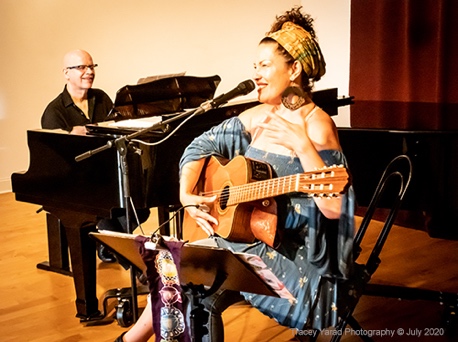
Also not to missed are the latest installments of its on-going “Couples in Harmony” series, curated and hosted by Tracey Yarad, which presents real-life couples in performance, often for their first artistic collaborations. On Sunday, August 16, Soapbox Gallery will feature jazz vocalist and bassist Teri Roiger and John Menegon; on August 23, singers/songwriters Lisa St. Lou and Tor Hyams.
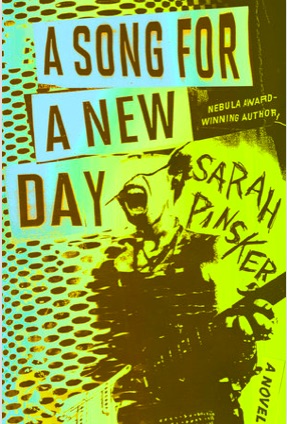
If anyone can lay claim to the title of “Rock and Roll Nostradamus,” it’s Sarah Pinsker. Born in New York City and a present-day driver of the fertile culture scene in hip Baltimore, Pinsker is a true multi-hyphenate. First off, she’s a singer/songwriter who has released a number of noteworthy albums with her band, Stalking Horses. More prominently, she can now lay claim to being the hottest rising star in the world of science fiction, whose eerily prescient debut novel, A Song for A New Day, just won the milieu’s highest honor, The Nebula Award, putting her in the company of legends like Isaac Asimov, Arthur C. Clarke, Ursula Le Guin, William Gibson and Neil Gaiman.
I stumbled across Pinsker’s book right as it came out in September 2019, drawn by the cool cover art, her background as a musician and its seemingly far-off but maybe too near premise, one steeped in the world of indie music making, technology and, one of my guilty pleasures, future dystopia!
In Pinsker’s novel, a deadly virus/pandemic unleashed by a terror attack that brings society to its knees. All public gatherings are prohibited for two decades, and everyone hunkers down quarantined in their homes, working and entertaining themselves via VR-equipped hoodies, and receiving most of their necessaries via drone from one mega corp. As gatherings are banned, so, too, are live musical performances. But, don’t worry, there are still shows, not in crowded bar and venues but streamed hologram performances of only the most visually appealing of acts coming from the HQ of mega promoter, StreamHoloLive, straight into your hoodie.
Starting to sound familiar yet?
Pinsker’s novel revolves around two women. First is Luce Cannon, an emerging indie artist on the cusp of a big mainstream breakthrough when the virus takes down the world (best character name for a rocker ever, right?). Then there is Rosemary Laws, a 20-something woman who doesn’t remember the time before the fictional quarantine who becomes a roving A&R person for StreamHoloLive. Her mission? To infiltrate the small underground network of clubs that still run live shows, illegally and until they are busted, to find new talent to holo-stream.
Musicians will love this book because it’s written by one of her own. Pinsker is someone who brings spot-on descriptions to the power of a kick drum, a power chord and the day-to-day lives of musicians, especially those who are scuffling to create and survive in both the old IRL and the new post-performance world.
How did Pinsker go from indie rocker to sci-fi darling? What commonalities does she see in her two creative lives? NYS Music gave Pinsker the chance to elaborate in the following Q&A.
Author and musician Sarah Pinsker
Sal Cataldi: I understand your debut novel, A Song for A New Day, is an elaboration of a novelette you wrote five years back. What, from what you have witnessed as a musician and as someone who reads the headlines, made you conjure such a premise?
Sarah Pinsker: My memory of the seed for the initial novelette was that I had passed the “Our Lady of the Highways” shrine on I-95 again, and I was thinking about all of my touring friends who had written songs based on that lovely title. I think I had “Our Lady of the Open Road” before I had a story, and then I started thinking about a band on the road long after everyone else had exited that life, and what would have put a stop to it. I worked backward from there, thinking about the things that might be societal roadblocks, and the technological advances that would reinforce the changes.
SC: How does it feel to be the woman who predicted our socially distanced, outlawed gathering present? How did it feel when you started to see this fantasy of yours beginning to come true in headlines?
SP: Most near fiction SF writers I know don’t set out to be predictive, so it’s a dubious celebration. I’d wanted to talk about things I *didn’t* want to see come true, and head them off at the pass. When people ask how I got so close in my “predictions,” it just feels like common sense to me. Humans are sadly predictable.
It’s been frustrating to see people say that my book is anti-social distancing. It doesn’t glorify flouting restrictions on gatherings during a pandemic; the problem in the book is that the country stays that way long after the threats are gone. I think there are opportunities right now to create a new and better normal, but we also have to do active work to make sure that we still have music and arts and venues when all of this is past.
SC: How much of you is in the Luce character?
SP: Hers is an easy voice for me to write, but she’s not me. She’s an amalgam of a whole bunch of musicians I adore. I guess the part of her that’s me is the way she feels on stage; I took that from my own experience. And I guess I tend to be skeptical of new technologies.
SC: Sounds like you’re a diehard DIY indie musician. What’s the worst part of the corporate music business that is in this book, and actually just out in the world as a musician. Seems like MTV on steroids, with the accent on looks.
SP: I think I’d spoil the book in saying what I think are the worst parts of the corporate music business I wrote. If you look at what’s happening right now, the corporate venues will get loans, the arenas will make it, but the small clubs are drowning. Big musicians are doing fine, but the indies who depend on touring are struggling, as are the musicians who play senior centers and restaurants and libraries, and the people who run sound, the roadies and techs, the indie venue owners and staff… Some of my friends are doing online shows with tip jars, which is actually an opportunity to reach their largest audiences ever, but I can still easily see that access getting throttled. There are already corporations looking to take advantage of this situation, even while musicians try to do their best to survive. In the best of times it’s difficult to make a living at music, and it doesn’t need to be that way, but the system is set up to elevate a very small percentage of the musicians out there and not necessarily to make access easier for all.
SC: Now that we are in the midst of a streaming music present, what do you think about it? Any artists that particularly inspire you in what they are doing in the medium? Like your character, do you lament the loss of live performance?
SP: Right at this moment, I am extremely grateful for the musicians who are streaming shows (and the theaters, and the museums, and the national park cams…) It’s not like in my book, in that we are still in the moment where this is necessary and appreciated. I like clicking into a show and seeing people I know are also there in the comments. I like sitting on my porch at sunset and listening to musicians I adore.
There’s a folk musician named Susan Werner who has been playing Sunday night shows online. Sometimes she invites friends, sometimes she has a theme, but she’s always been good at mixing a fun stage presence and quick wit with her songs. She often has a sponsor or a charity getting some of the money, and donations/tip jar are encouraged but not mandatory.
A lot of folk and acoustic musicians are doing similar things. Rufus Wainwright was doing a song a day in his bathrobe — I haven’t checked in a few weeks to see if he’s still going. LEA, thisislea on most sites, is a DC-area musician who always did cool community-oriented stuff. I played at an album release of hers a few years ago, where she invited people to play a song of theirs that was in conversation with a song of hers, and then she would play the connected song. She’s done some virtual choir stuff since this started. I’ve seen some Baltimore bands like Gingerwitch and Manners Manners and Santa Librada do triple bills online where each band does a set, and at the end gives you the address to find the next set. And I know a couple of venues here have offered to open for a band to record a show without an audience.
So yes, I think musicians are making the best of it, and while I lament the loss of live performance where I’m in the room where it happens, these shows are still special and appreciated. They feel intimate, and I love seeing some of these performers that I haven’t had a chance to see in a long time, either because schedules don’t align, or they haven’t been touring in my area.
SC: Which came first, your music or your writing career? Tell us a bit about both, and how they inform each other.
SP: Career-wise, music, though I had written and submitted short stories for publication before that. They’re both forms of storytelling to me, with their own advantages and disadvantages and tropes to explore. In my twenties my stories got shorter and shorter, and I found myself telling stories in song form. I loved the immediacy of playing, and the collaborative nature of performance; even when you’re on stage alone, you’re engaged in a conversation with your audience. I can’t say why I switched horses back to fiction at the moment I did. I struggle a little with doing both at the same time, so my music has suffered for my success in fiction. I have a fourth album completed that I really need to get out into the world, but that just feels like too much.
SC: Who are your three big inspirations in each of these areas?
SP: I hate answering those questions, because I always feel like for every name I mention, there are a hundred more. In fiction, I guess I’d say Ursula K. Le Guin, Octavia Butler, and Karen Joy Fowler, in terms of the way reading their fiction makes me want to up my game. In music? Argh. Um, I’ll just name one. My friend SONiA, from the band disappear fear, has been my model for what an ethical life in music looks like from the beginning. She’s a wonderful songwriter, a dynamic performer, and she’s comfortable with a band or solo and with adapting songs to both.
SC: You just received the Nebula Award for the book, which is the highest honor in science fiction. Did you at all expect it? What does it mean to your future as a writer? Are you the first musician/writer to win?
SP: I didn’t actually expect to win the Nebula. There were amazing books on the list, and I had assumed that one of those books was going to win. Getting onto finalist lists is always a tremendous honor in itself, and I don’t think it’s ever healthy to assume the top honor is yours, so I like to choose a book to root for that isn’t my own. That way, I’m happy if they win and surprised if I do. I think there have actually been other musicians who have won — Nicola Griffith and Catherine Asaro, among others, I believe.
SC: As an expert prognosticator and musician, what do you think the future holds for indie musicians and live music venues? Will this ever go back to what it was, or will there be a new normal based somewhat on what you created?
SP: I’m not an expert prognosticator, but I think what the future holds will very much depend on what we do right now. We should be helping venues pay their rent while they are closed, so they still exist when this is over. We should be giving basic income to everyone to encourage people who can stay home to stay home and allow those who can’t to do their jobs more safely. If we do those things now, we’ll have venues when this moment is over.
I do think there’s a lot we can learn from this, and there are things I’d like to see in a new normal.
There’s an accessibility in this moment: people who use wheelchairs and couldn’t get down the steps into basement venues get to see bands. Ditto people who couldn’t afford big ticket prices or didn’t have a way to get to a show, or didn’t have childcare, or whose health is too fragile even when we’re not in a pandemic to risk being in a crowd. We can definitely come back to a mix of both if we choose to.
We can encourage seeking out smaller bands, who may be playing to smaller crowds, rather than giant stadiums. We can normalize staying home when you’re sick, and we can normalize wearing a mask in a crowd if that’s what it takes to bring back live music. Music is about community, and we can continue to forefront that community-mindedness. But above all, we need to help musicians and techs and venues weather this with actual financial help, as they have in other countries. I’d rather wait longer in order to come back safely than rush it and risk the health of everyone involved, no matter how much I’d like to go to shows again.
Pat Metheny, Bill Frisell, Vernon Reid, Marc Ribot and Mary Halvorsen. One look at the list of progressive jazz guitar all-stars who have named Michael Gregory Jackson as an influence demonstrates the continued resonance and relevance of his four-decades of exceptionally creative music-making.
Jackson was barely out of his teens when he came to prominence in the adventurous New York City Loft Jazz scene of the 1970s, first with The Oliver Lake Quartet then his own edge-pushing solo albums like “Clarity” and “Gifts.” Over the years, he has crafted a continually evolving, uniquely genre-skipping discography, with a cliché-free musical architecture that is all his own. Jackson has explored everything from the furthest out in free jazz to the Stevie Wonder-inspired R&B popcraft of 80’s releases like the Nile Rodgers-produced “Situation X.” Then there’s the bare-bones singer-songwriter with guitar chops acousticity of his small label CDs of the 90s and early 00s like “The Way We Used to Do” and “Red,” two recent albums he played on and produced for acclaimed trumpeter Wadada Leo Smith and a recent slate of recordings with his Clarity Quartet, cut with his European band during his frequent forays in Denmark.
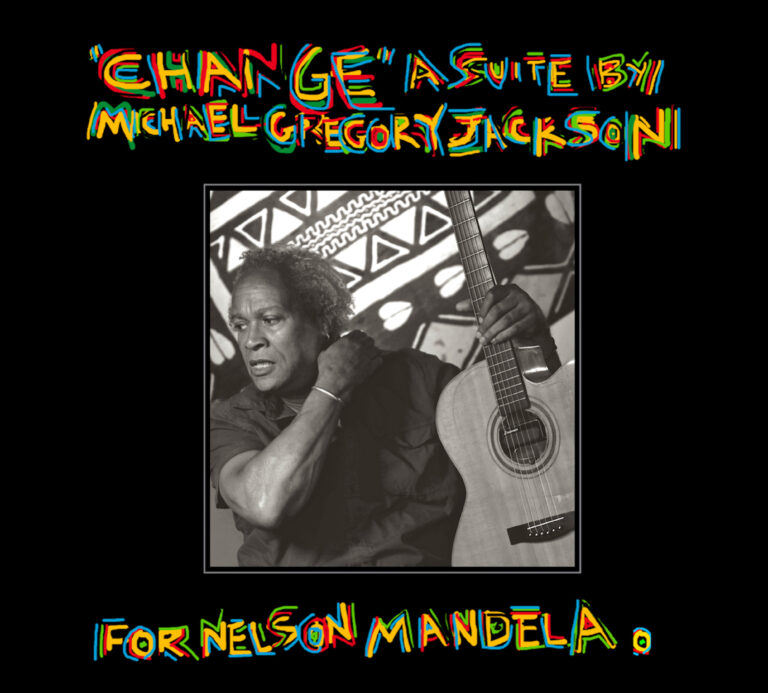
Jackson’s latest release is something splendid from his archives, a 1994 live recording by a nine-piece unit of an emotional original work, “Change: A Suite for Nelson Mandela.” It’s fuses knotty ensemble melodies and fiery soloing, with a sung poetry that celebrates the end of Apartheid and Mandela’s triumphant journey from political prisoner to President of South Africa.
The peace unfolds quietly, with mournful string chording of keyboardist John Livermore serving as the backdrop for a four-minute solo by trumpeter Stephen Haynes. Here, Haynes travels from quiet loneliness to screaming wails to musically illustrate Mandela’s long struggle. His dramatic and narrative playing, with its many slurs and stabs, brings to mind the late great Lester Bowie of Art Ensemble of Chicago fame.
The main body of the song is a driving, up-tempo swing, with Jackson vocalizing a call for unity, a celebrating of the changes in South Africa and the need for similar movement here in the U.S, aided by a trio of female singers, Tamsen Fynn, Eva Fierstein and Sara Lazare. It’s a heady mix of jazz, soul and sizzling rock reminiscent of some of the pieces from one of my favorite Jackson albums, 1979’s “Heart and Center.”
There’s more hard drive following in a long tenor sax solo by Chuck Langford, in a call and response with Jackson singing the tune’s main refrain “change will grace us all.” Things change up again in the fourth movement, where Jackson showcases his wonderfully avant/blues approach in a long expressionistic solo, over an almost offbeat reggae/funk pulse from drummer Joe Fitzpatrick and bassist Chris Murch. As the solo climaxes, the horns join with stabs and long chords that propel Jackson to more fiery chromatic soloing and chording, before a roar of ensemble screams as Jackson sings out “change.” The piece closes with a reprise of the intro synth chording and the applause of an appreciative audience that experienced this musical journey. It’s something that is sorely needed by all music lovers in these Quarantine times, a reminder of what we miss most – the live music experience.
This new release, and many of his remastered albums and other limited-edition singles and album outtakes (check out the bad-assed wah wah playing on “Miles OG”!) are available at his Bandcamp site and on Spotify.
Milton Glaser, the master artist who created many of the most popular images of our times, from logos for IBM, DC Comics, UPS, Brooklyn Brewery, and ABC, to the iconic “I ♥ NY,” has passed away at 91. For we devotees of music, and especially New York State music, Glaser also holds an interesting place, as the man who inadvertently helped bring Bob Dylan and many figures of Sixties music and beyond to Woodstock.
According to Barney Hoskyns must-read history of Woodstock and its music scene, Small Town Talk, it was Glaser who we may largely have to thank for Dylan’s relocation to Woodstock.
As told in Hoskyns’ book, Manhattanite Glaser and his wife Shirley owned a second home in Woodstock since the 1950s, where they often entertained city friends, including Dylan’s famed manager Albert Grossman. It was natural for Milton Glaser to be drawn to the town since it has a history in art going back to the founding of the still-going strong Byrdcliffe, America’s first art colony in 1903.
When a large property with 60 acres of land became available in 1962 in adjacent Bearsville, for the then princely sum of $50,000, Glaser immediately thought of Grossman. As quoted by Hoskyns’, “We didn’t know a single person with $50,000 except Albert,” said Glaser. The fact that Grossman resembled a bear may have also played a role in his choice of location, according to Glaser.
Though Dylan first came to Woodstock in 1961 to stay at a cabin owned by the family of Peter Yarrow of Peter Paul and Mary, another Grossman-managed act, it was the comfort and protection of Grossman and his wife Sally that finally made him settle, as a way to escape the crazed demands of his stardom. Dylan lived in several homes in the area and was followed up by his backing band, The Band, who took up residency and created a musical workshop at the famed but decidedly humble Big Pink in West Saugerties, from whence the famed Basement Tapes emerged.
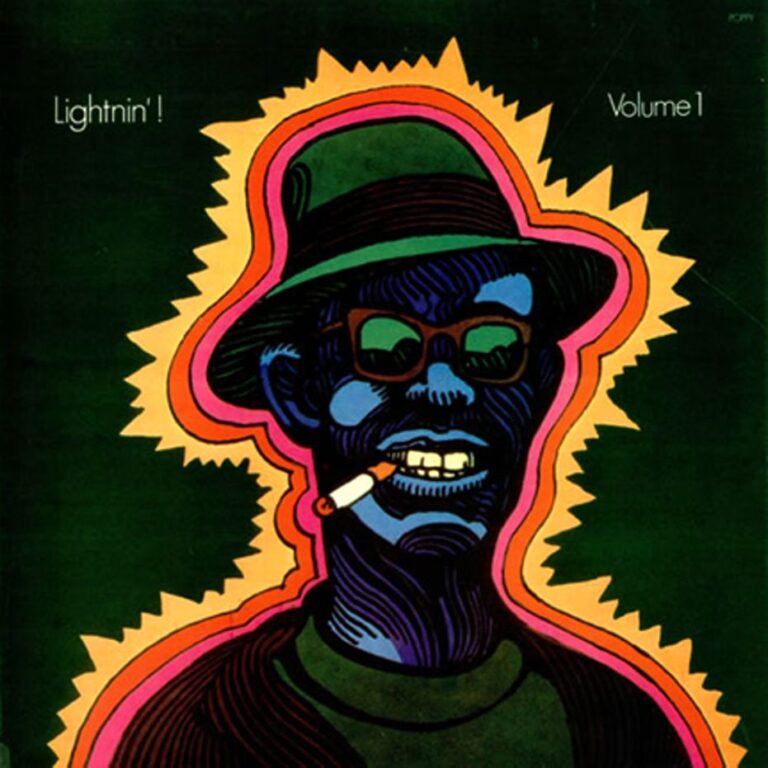
Lightnin Hopkins album cover by Milton Glaser
In time, many more would follow to become full and short-time residents including Van Morrison, Jimi Hendrix, Paul Butterfield and Janis Joplin, another Grossman-managed artist, and more recent names like David Bowie, B-52 Kate Pierson, King Crimson bassist Tony Levin, jazzers Jack DeJohnette and Pat Metheny, to name a few. Goldman went on to expand the musician attraction offerings in Woodstock by creating Bearsville Recording Studios and the soon-to-reopen Bearsville Theater.
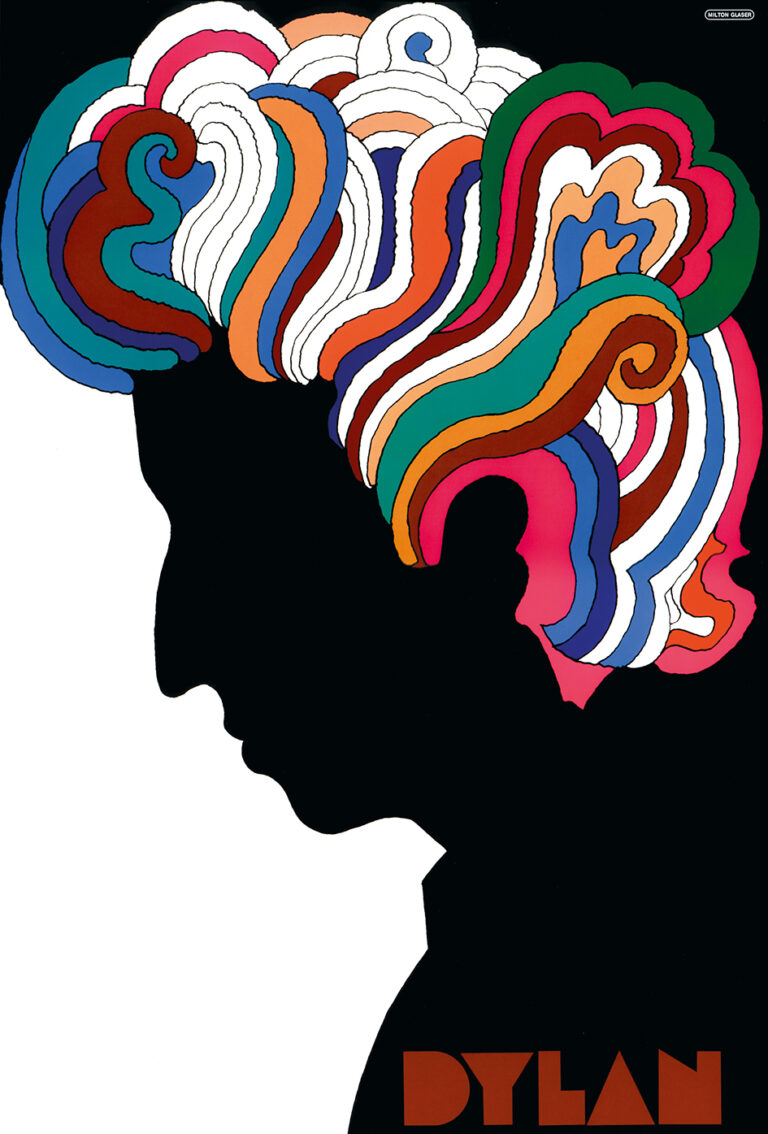
Glaser was also famed for his poster art, creating more than 400 at his Push Pin Studios. One of his most famous was one he created for the 1967 album, Bob Dylan’s Greatest Hits. Here, he drafted a simple outline of the singer’s head, based on a black-and-white self-portrait silhouette by Marcel Duchamp, and added thick, wavy bands of color for the hair, forms he imported from Islamic art. Nearly 6 million copies made their way into homes in America, making it one of the most popular wall hangings on the bedrooms of young people in the Sixties. Glaser also produced a slew of album covers for artists including Paul Simon, Peter, Paul and Mary, Doc Watson and Townes Van Zant.
For more on Woodstock music history, pick up Barney Hoskyns’ Small Town Talk, which features a handy map to many of the former homes of the music stars. For more on Glaser and his art career, read today’s obit in the New York Times.