Author: Joseph Dugan

  • Harlem Renaissance: Ethel Waters Breaking Barriers

    Ethel Waters was born on October 31, 1896 in Chester, Pennsylvania. She was raised in poverty by her grandmother as well as two aunts and an uncle. When asked about her childhood, Waters once said “I never was a child. I never was cuddled, or liked, or understood by my family.” On her 17th birthday, she attended a costume party and sang two songs. Her performance impressed the audience so much that someone immediately offered her a job in Baltimore.
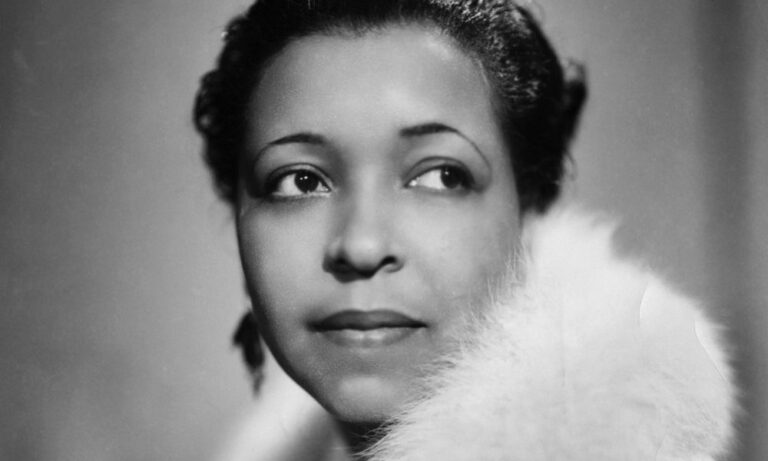
    Ethel Waters

    Baltimore

    When offered the job at the Lincoln Theatre in Baltimore, she received $10 per week, nearly double what she was making before. Even with her success, she fell on hard times and joined a carnival of freight cars going to Chicago. Soon after, she headed to Atlanta where she worked at the same club as Bessie Smith. Smith demanded that Waters not compete with blues songs, and Waters agreed to sing ballads and popular songs.

    Harlem

    Waters moved to Harlem in 1919, getting her first job at Edmond’s Cellar, a club that specialized in popular ballads. When she arrived in Harlem, female blues singers were becoming more and more powerful. She became the fifth black woman to make a record, originally joining Cardinal Records, but later switched to Black Swan.

    At Black Swan, she was accompanied by Fletcher Henderson. Over the next two years, Waters became the highest paid black recording artist at the time. In 1924, Paramount bought Black Swan and Waters stayed for the year.

    https://www.youtube.com/watch?v=tJBI2E_6lFA

    She switched to Columbia in 1925 and began working with Pearl Wright. She continued touring, joining with Earl Dancer in what was colloquially called “white time,” the Keith Vaudeville Circuit, performing for white audiences. In Chicago, they earned an unheard of $1,250. Later, in 1926, Waters recorded “I’m Coming Virginia” which was a hit partially due to her performing it on Broadway. In 1929, Waters and Wright arranged “Am I Blue?” which became a hit and later her signature song.

    Film, Theater, and Television

    In 1933, Waters appeared in a satirical all-Black film, “Rufus Jones for President”, featuring future star Sammy Davis Jr.. She went on to star at the Cotton Club. Later that year, she stared in the successful Broadway musical, “As Thousands Cheer”.

    Waters held three jobs: in “As Thousands Cheer”, as a singer for Jack Denny & His Orchestra on a national radio program, and in nightclubs. Due to these three jobs, she became the highest-paid performer on Broadway. Even with her success she still had difficulty finding work.
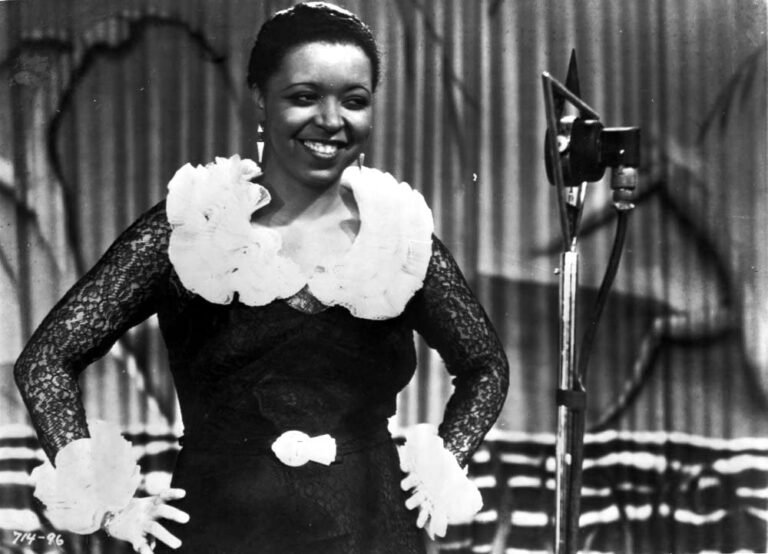
    Ethel Waters

    Waters moved to Los Angeles in 1942 to appear in “Cairo”. That same year, she starred in “Cabin in the Sky”. In the latter, Waters sang the Academy Award nominated “Happiness is Just a Thing Called Joe”.

    In 1939 Waters became the first African American to star in her own television show,  The Ethel Waters Show, a 15-minute variety special. She was nominated for an Academy Award for Best Supporting Actress for the film “Pinky”.

    In 1950, Waters won the New York Drama Critics Circle Award for her performance in “The Member of the Wedding”. Later that year, she became the first Black actress to star in a television series with “Beulah”.

    Awards and Accomplishments

    Her recording of “Stormy Weather” was listed in the National Recording Registry in 2003. She became a member of the Gospel Music Hall of Fame (1983). In 2004, she received a star on the Hollywood Walk of Fame. Additionally, three of her recordings have been inducted into the Grammy Hall of Fame: “Dinah” (1998), “Stormy Weather” (2003), and “Am I Blue?” (2007).
    https://www.youtube.com/watch?v=_QbeNSatFFo

  • The Eddies Music Awards go Virtual on December 6

    On December 6 at 7 p.m., KeyBank is presenting the second annual Capital Region Thomas Edison Music Awards. The show was originally scheduled for April 14 at Proctors in Schenectady, but was cancelled due to COVID-19. The new event will be broadcast live from Universal Preservation Hall in Saratoga Springs through Collaborative Studios’ Amazon Fire TV, Roku, and Apple TV apps.

    NYS Music is honored to be nominated for Art Publication of The Year, along with the numerous other creatives from the local music community, including two photographers who started out with NYS Music, Dave DeCrescente and Frankie Cavone.

    Eddies Music Awards

    The broadcast will be shot on a closed set with about 45 cast and crew members, but will also feature four performances. Additionally, four panels that will discuss the year in local music and how music making has shifted during the pandemic. The winners in 34 categories will be announced in between panel segments.

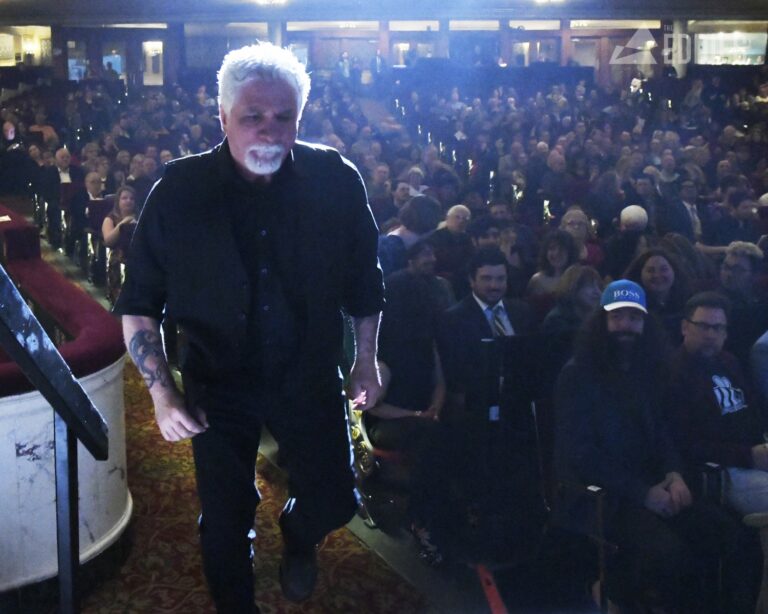
    The Capital Region Thomas Edison Hall of Fame Awards– an offshoot of The Eddies Music Awards – was held just days before civic authorities severely restricted public gatherings in March. The Accents, Blotto, The Fidelities, Hal Ketchum, Lena Spencer and John Sykes were inducted during a sold-out ceremony.

    Eddies Music Awards

    Nominations were announced in February in 34 categories. Roughly 100 representatives of the local music industry participated in judging. “We had a pretty intensive process last winter where we discussed artists, 2019 music and music video releases, as well as venues and other organizations involved in music creation and performance,” Jim Murphy, Eddies co-founder said. “Hundreds of individuals , groups, venues and companies were considered, as many as 35 or more in some categories.”

    “We’ll take considerable safety precautions,” said Sal Prizio, Eddies co-founder. “This will be a bit of a three-ring circus. Five cameras. Twenty-four panelists rotating in groups of six. And four musical performances on the stage. We’re packing a lot into a 100-minute, commercial free broadcast.”

    “We’re doing everything possible to make this broadcast a special evening,” Murphy said. “We encourage everyone to view this live, to celebrate in their living rooms, studios or wherever they prefer to gather safely. May we all get together in 2021!”

    Musical acts and other participants in the 2020 Eddies Music Awards Show will be announced closer to the broadcast.

  • El Modernist Set to Release ‘Evolution’

    On October 16, indie-rock band El Modernist released their newest single, ‘Evolution,’ proudly played as an LGBTQ+ Fight Song. All proceeds from the track will be donated directly to The Trevor Project, an organization dedicated to providing crisis intervention and counseling to America’s LGBTQ+ youth.

    El Modernist Evolution

    Both Elton John and Freddie Mercury were able to be successful, even with the stigma that came with being queer. They were able to lay a path for future queer artists. More recently, Lil Was X, Frank Ocean, Tyler the Creator, and many others have taken what Elton and Freddie gave them and ran. In today’s time of social upheaval, more and more queer artists are fighting for the rights they deserve.

    According to their lead singer, Will Freddette, “This is an anthem for the queer artists that have been contributing and pushing the boundaries of art since the beginning of time, while more often than not having to hide their true selves while doing so.”

    El Modernist deliver a new take on the world of indie-rock, notably with ‘Evolution.” The band combines upbeat, catchy garage-rock with a modern alternative hip-hop sound. They are a very high-energy group, and bring that to their performances, resonating with fans of all ages.

    El Modernist Evolution

    All members come from diverse musical backgrounds and find great joy in blending various influences. This allows them to create something entirely new and entirely their own. Featuring a concoction of acoustic and electronic drums with screaming guitar riffs, every El Modernist show is a party that you do not want to miss.

    El Modernist, founded in 2018, is based out of Albany and have played various venues in the Capital District. Additionally, they help to curate the “We Are Albany NY” Spotify playlist which features music from any and all Albany-based who wish to be a part of it.

    The single will be released on all streaming platforms on Friday, October 26.

  • The Next Great American Novelist Sean Cahill’s Exposé on New Album Careless Moon

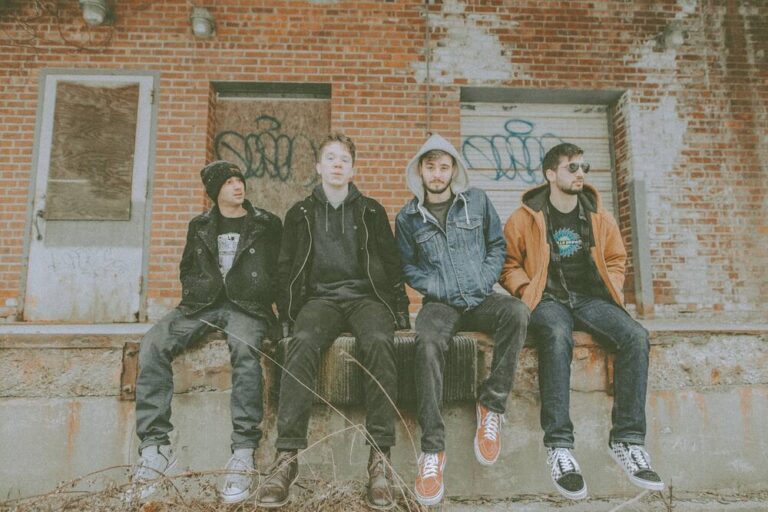
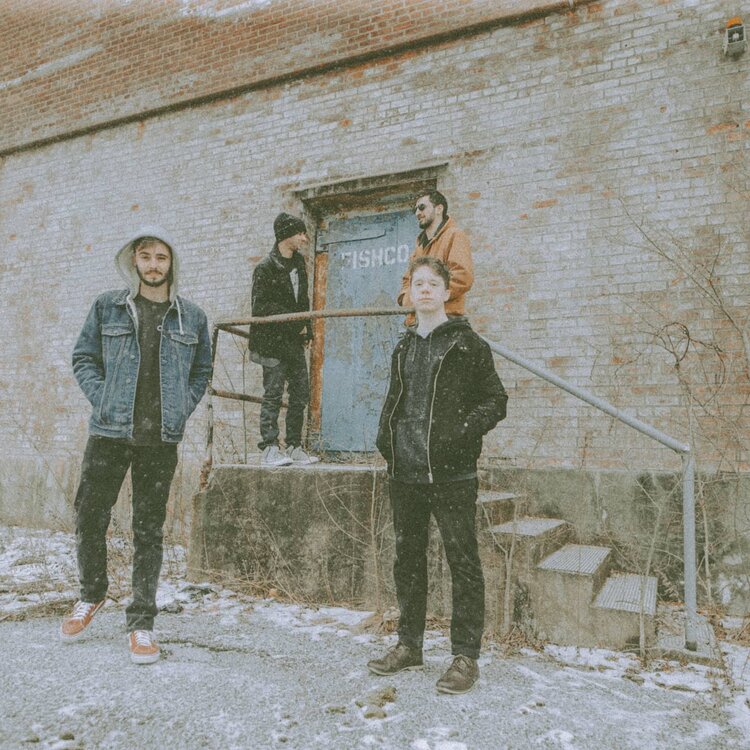
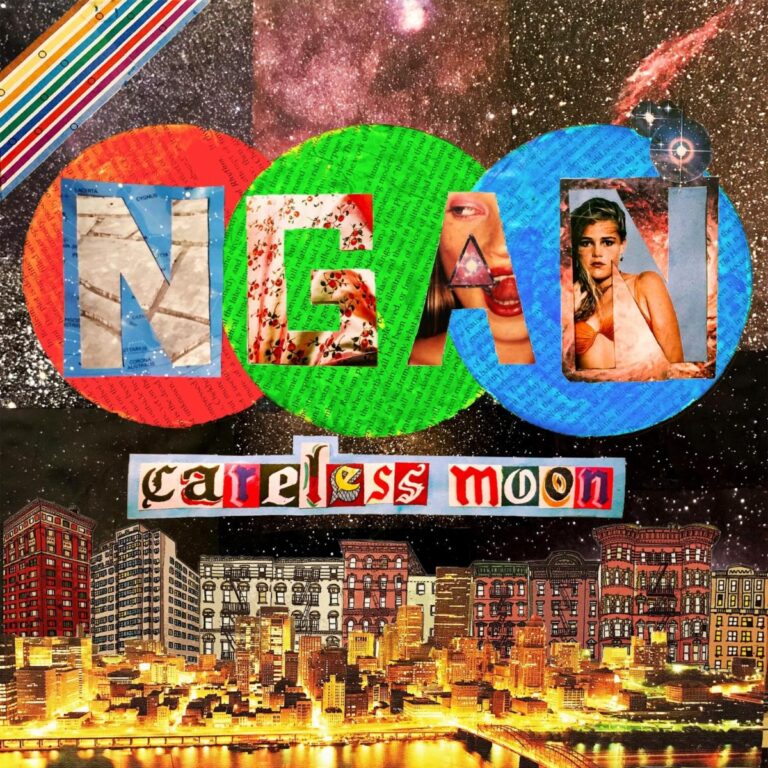
    Brooklyn-based indie rock band, The Next Great American Novelist (NGAN), recently released their second record, Careless Moon. The DIY psych band is known for their electric and energetic live shows, where vocal harmonies showcased on the album can surround audiences in a way that even the most high-end speakers couldn’t capture.

    One track, “Ice Moon,” won Best Music Video from the Harlem International Film Festival and won Best Dance Video from the Paris Underground Music Festival.

    Next Great American Novelist

    Songwriter and singer Sean Cahill of The Next Great American Novelist describes each track:

    Blackberry – “This song is about insatiable lust; Finding peace in being selfish and embracing that desire. It came from a memory of being a child, standing in front of a massive blackberry vine and reaching through its thorns to get the fruit. As pretentious as our band name may make us seem, we keep the lyrics pretty simple in telling a story. The upbeat pacing and dynamics were a good way to open the record.

    When we were in the studio, we became enchanted with playing the mellotron and found every excuse to use it. We played with atmospheric sounds to float into a psychedelic range.

    Sometimes all it takes is a delay pedal to tap into feelings of nostalgia and give the impression of a memory. For a while I felt guilty about playing music, playing shows, as if it was a shameful or self-serving pursuit. After some reflection, I’m realizing that music is the best way I can spend my time, as it brings more light into the darkness and opens up an avenue for sharing joy.”

    Gravity’s Rainbow – “The title is a tip of the hat to Thomas Pynchon, author of the post-modern classic, Gravity’s Rainbow. Though, you’d be hard pressed to find any other reference to the book in the song lyrics, rather we took inspiration from that colorful title. I wanted to explore the romance of celestial bodies moving through space, locked in a dance with one another like the planets to the sun or the moon to the earth. It is similar to the experience of falling in love, when you see someone across the room and you are helplessly attracted to them. 

    Our band will use any excuse to use delay pedals and Mellotron so there’s a heavy dose of those vibey-studio effects on here. One of my favorite moments recording this was during the last chorus, we stacked my voice on several different tracks and ran it through a rotary speaker. The effect makes it sound like an old organ playing but it’s really just my voice stacked in a three-part harmony.”

    Bad Animation– “I wanted to have as much fun as possible with three chords. The lyrics were written as a stream of consciousness. I wanted to sing a rock anthem because you don’t hear too many of them out today.”

    Baby Duck Song– “A few years ago I decided to read all the books I could on how to make money making music. I found that the biggest demand came from Christian record labels seeking to license songs. I am agnostic, so I knew that wasn’t going to work for me, but it lead me to think, ‘can I write a song about something I don’t care about?’

    So I gave myself a prompt to explore a subject I normally wouldn’t write about: a baby duck. The song became a story of a duck who wanders from its family and explores a state of wonder and terror as they move through the world alone.”

    It’s Been You – “This song is about finding someone who you can be brutally honest with. I was aiming in genre of soul. Also, I think there are enough minor seventh chords in there to claim a fingerprint of jazz too. It’s about surrendering to the one you love and finding bliss in the moments you hear them singing along to their favorite song.”

    This one’s pretty on the nose as a 90’s alternative banger. It unabashedly harkens back to the drum thuds in Queen’s, “We Will Rock You,” and the modern classic stomp pedal chorus you’ll hear on an early Weezer song. I was looking to find a way to use words like “innocuous” and “neurosis” in a song without being pretentious.

    Wicked

    Drag – “I love New York City, though, some days it feels like a dysfunctional landscape of ill-routine. Living here, you realize you’re functionally necessary but of small significance or importance within the larger enterprise. I’m immersed in a series of habits: standing in line, getting on a train, heading to work, buying coffee, buying booze… Are these choices I want to make or am I just keeping the machine going?”

    I was going through a break up and it felt more like a death to me than the end of a romance. Kübler-Ross, a Swiss-American psychiatrist wrote about the five stages of grief in her groundbreaking book, On Death and Dying. This song draws those comparisons to the experience of losing a lover; the process of denial, anger, bargaining, depression and acceptance.

    Kubler

    Thursday – “This one is a fast moving blender of blues and Americana influences. It’s a love song about psychedelics with some dark commentary on what it feels like to be in love with someone in the age of porn. It starts with a surf rock feel, drenched in reverb then builds into a blues progression.There are no words in the chorus, just a guitar riff. We felt that it said enough.”

    Ice Moon – “This song is a reflection on living as an artist. I was working working shit jobs ad nauseam, alienated and finding relief in psychedelic dreams only available in inner life. Creating or performing felt fruitless, a vanity project, which in this age feels deplorable considering our culture, from top to bottom, is focused entirely on benefiting yourself. When you devote your life to performing, the benefits don’t happen immediately, they come sometime in the future, when you can look back and see the impressions you left and what that meant to someone else.

    There is a difference between chasing dreams when you’re 23, wet behind the ears in New York City and being 31, in a place saturated with world class talent and insurmountable bills. Whatever choice I make turns into some struggle, it might as well be the right one. Either way I’m sacrificing something. Making art allows you a feeling of impermanence, unlike many other forms of industry.”

    For more information on The Next Great North American Novelist, visit their website.

  • JLCO with Wynton Marsalis to play in Chautauqua

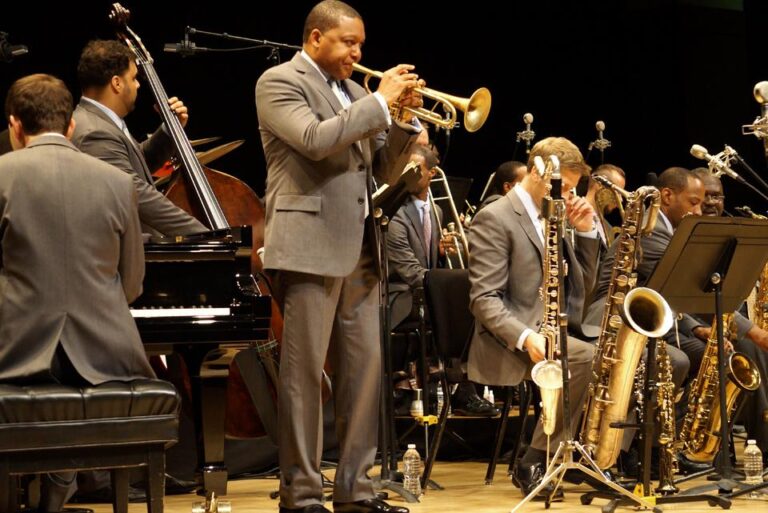
    From October 14-24, the Chautauqua Institution will be hosting the Jazz at Lincoln Center Orchestra (JLCO) septet with Wynton Marsalis for a ten day residency. The residency will focus on improvisation, blues, and swing.

    Wynton Marsalis Chautauqua

    The performances will take place at Elizabeth S. Lenna Hall and will be released to stream at a later date on the CHQ Assembly Video Platform. However, the concerts will also be available live through brunches and meals that CHQ is offering.

    Additionally, Wynton Marsalis will present three live conversations at Chautauqua on the CHQ Assembly Virtual Porch. JLCO musicians and leaders will also teach a series of multiple courses on jazz classics and culture via the CHQ Assembly Classroom (dates and times below).

    “This residency provides the opportunity for Jazz at Lincoln Center and Chautauqua Institution to deepen our relationship, which has always been about exploring important issues through art and conversation,” said Deborah Sunya Moore, vice president of performing and visual arts. “This residency will feature online performances, conversations, and classes offered for the Chautauqua Assembly community as well as communities across the globe with which JLCO has existing relationships.” 

    Watch past performances of Wynton Marsalis and Jazz at Lincoln Center Orchestra at Chautauqua here.

    The Ever Fonky Lowdown composed by Wynton Marsalis
    Tuesday, October 20 • 10:30 a.m. EDT

    Freedom Suite composed by Sonny Rollins
    Tuesday, October 20 • 1:30 p.m. EDT

    Presidential Suite: Eight Variations on Freedom: Part 1
    Wednesday, October 21 • 10:30 a.m. EDT

    Presidential Suite: Eight Variations on Freedom: Part 2
    Wednesday, October 21 • 1:30 p.m. EDT
    Charlie Parker Centennial: Freedom to Take Flight
    Thursday, October 22 • 10:30 a.m. EDT

    Freedom Across the Pond: Jazz in the U.K.
    Thursday, October 22 • 1:30 p.m. EDT

    We Insist! Max Roach’s Freedom Now Suite
    Friday, October 23 • 10:30 a.m. EDT

    Freedom of Expression: Latin Jazz in New York City
    Friday, October 23 • 1:30 p.m. EDT
  • Smoke Jazz and Supper Club Launches New Streaming Service

    The Smoke Jazz and Supper Club in NYC is starting a new streaming service, Smoke Screens, to deliver its jazz to audiences around the world. The world-renowned artists are streamed live using six HD cameras in audiophile sound.

    Smoke Jazz and Supper Club

    The program was launched in July with Wayne Escoffery. Since then, there have been sets by Peter Bernstein, Vincent Herring, Steve Turre, and other esteemed artists. Joe Farnsworth will be on September 25, joined by Wynton Marsalis, to celebrate his new album, Time to Swing.

    Smoke Screens has been considering starting a livestream for many years. However, the owner, Paul Stache, wanted to do it correctly and “reflect the quality of the artists performing.” Because Smoke Jazz and Supper Club hosts so many top artists, Stache wanted to wait until they were able to have optimum sound and lighting.

    When asked about the quarantine, Stache replied, “It’s been tough for us, it’s tough for the musicians and it’s tough for New York. All the things that we love about the city are shut down, so Smoke Screens is our attempt to bring the intimacy and excitement of Smoke into people’s living rooms and find a way to bring them the music they need.”

  • Metropolitan Opera Announces 2020-21 Season is Cancelled

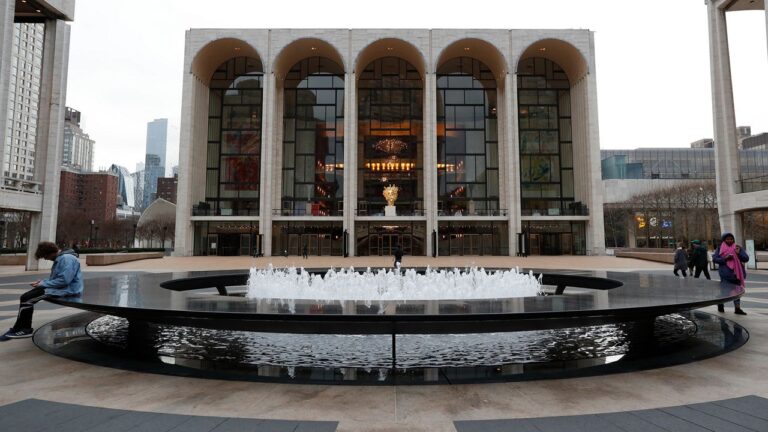
    First reported by the New York Times on Wednesday, the Metropolitan Opera announced that the COVID-19 pandemic has forced them to cancel their entire 2020-2021 season. They will reopen September 2021, at the earliest.

    Metropolitan Opera

    This decision will likely affect organizations across New York State, but around the country as well. Many arts organizations are attempting to slowly reopen in accordance with social distancing guidelines, but this decision may put an end to that.

    The pandemic closed the Met in mid-March, costing the Met $150 million in revenue and leaving about 1000 employees, including its orchestra and chorus, furloughed without pay for almost six months now.

    Peter Gelb, the general manager for the Met, has announced an ambitious 2021-22 lineup to reassure its donors and patrons that they will remain strong. In addition, Gelb said he will ask the company’s unions to agree to cost-cutting concessions that will be necessary post-pandemic.

    The Met plans to open with Terence Blanchard’s “Fire Shut Up in My Bones,” the first opera that they will perform by a Black composer. This is in part due to the rise in racial awareness that is occurring around the country, but also an effort of the Met to find more of a balance between contemporary works and the staples that made them famous in the first place.

    Two lives at the Metropolitan Opera have already been lost to the virus: Vincent J. Lionti, a violist, and Joel Revzen, an assistant director. The scheduled star of Puccini’s Turandot next season, Anna Netrebko, announced that she had been hospitalized due to the virus.

    Having already sold $20 million in revenue for 2021-22, the concern now is less about the Met Opera, and more about the other organizations that may look at the Met and their cancellation as a precedent.

    https://www.youtube.com/watch?v=sl10z41-A7s
  • Matt Smith to Release Eight New Albums Today

    Matt Smith, a Capital District-raised, Austin-based artist, has released eight new albums as well as ten digital releases from Smith’s catalog of recordings. The albums will be available everywhere music is streamed or bought. Hard copies of the album are available through Austin’s Waterloo Records.

    Matt Smith

    Smith has been working on the flagship release, Being Human, for four years. The song addresses broad themes of love, death and spirituality, along with timely issues such as immigration, narcissism and addiction.

    Parlor is a solo acoustic instrumental album recorded entirely on an 1890’s Thompson and Odell parlor guitar that has been handed down through four generations of the Smith family. Chop Shop – Live at Strange Brew was recorded at the legendary south Austin venue during the
    band’s weekly Sunday afternoon residency.

    When asked about why releasing now, Matt Smith said, “It’s an election year and there’s COVID. I had them all ready, and rather than dribble them out, why not put it all out at once? That way, I can get back to work on new material.”

  • Joshua Bell kicks off SPAC at Home Concert Series on Sept. 12

    On Saturday, September 12, Saratoga Performing Arts Center (SPAC) will begin their “SPAC @ Home: Concert Series” with world-renowned violinist and Grammy Award-winner Joshua Bell and classical pianist, Peter Dugan. The event will be held at the Arthur Zankel Music Center at Skidmore College.

    joshua bell

    The concert program includes the Beethoven Violin Sonata No. 5, the Kreisler/Dvorak “Slavonic Fantasy,” the Sarasate/Chopin Nocturne No. 20, and the Wieniawski “Polonaise de Concert.” After the concert, there will be a Q&A session with SPAC President Elizabeth Solo and Director of The Frances Young Tang Teaching Museum and Art Gallery at Skidmore College, Ian Berry.

    Tickets for the virtual event are $10 and can be purchased at spac.org. Ticket buyers will be directed to an exclusive stream.

    Born in Bloomington, Indiana, Bell began the violin at age four, and at age twelve, began studies with his mentor, Josef Gingold. At age 14, Bell debuted with Riccardo Muti and the Philadelphia Orchestra, and made his Carnegie Hall debut at age 17 with the St. Louis Symphony.

    Bell has performed for three American presidents and the sitting justices of the Supreme Court of the United States. He participated in former president Barack Obama’s Committee on the Arts and Humanities’ first cultural mission to Cuba, joining Cuban and American musicians on a 2017 Live from Lincoln Center PBS special, Joshua Bell: Seasons of Cuba, celebrating renewed cultural diplomacy between Cuba and the United States.

  • Neil Young Releases Bootleg of 1970 Carnegie Hall Performance

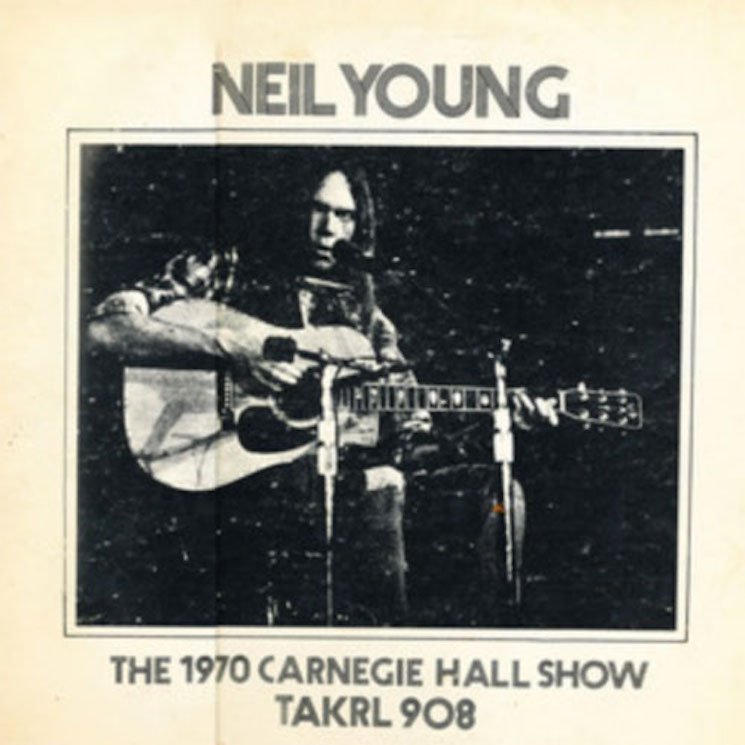
    As the inaugural release from his upcoming Official Bootleg series, Neil Young chose a concert from December 4, 1970 at Carnegie Hall. It is an unheard solo acoustic concert that happened shortly after the release of After the Gold Rush.

    neil young carnegie hall

    Young performed two shows at Carnegie Hall that week. These gigs were the end to a phenomenal year for him due to the success of After the Gold Rush and Crosby, Stills, Nash, and Young’s Deja Vu. How important were they to Young and his budding career? He flew his parents to New York from Canada to witness the show.

    In his book, Neil and Me, Young’s father, Scott Young, wrote,

    “We sat, I guess, like visitors from another world, but once the place was dark, we could all see this dark form approaching the front of the stage and then the spotlight came on him: tall and thin, blue jeans, checkered shirt, work boots, dark straight hair to his shoulders or beyond, two acoustic guitars on a rack beside a plain wooden chair, a concert piano to his let. Moving gingerly as if his back was bothering him. No music to play except the songs in his head, all his own.”

    Young has not yet announced a release date for the Carnegie Hall show, but fans could likely see the release before the end of the year. It is one of many projects, including the second volume of his Neil Young Archives box set and a 1990 club show with Crazy Horse.

    “This one — Carnegie Hall, December 4th, 1970, is very special to me. Change happens fast. As I have gone through these early bootlegs, Carnegie Hall, Dorothy Chandler Pavilion [2/1/70], Royce Hall [1/30/71] and others, they show a change, something you can hear — an evolution.”

    Neil Young