In the latest turn of events, the state Supreme Court of New York has ruled that former Woodstock 50 investor Dentsu does not have the power to cancel the festival. The financial partner withdrew funding on April 29 and announced the cancellation of the event. Woodstock 50 organizers turned to state Supreme Court last week for a resolution, demanding that Dentsu return the $18 million and continue to work on the festival. Manhattan Judge Barry Osrager ruled that an ex-investor lacks authority to cancel an event, but declined to order the funds to be returned to the festival. In short, this has become a big mess.
During the Relix Live Music Conference at Brooklyn Bowl on Wednesday, May 15, a panel moderated by David Fricke led to a discussion on Woodstock 50. During ‘Case Study: The Bowery Presents’ with John Moore, Jim Glancy, Rolling Stone’s David Fricke brought up AEG deciding to not getting involved in Woodstock 50. Fricke noted “there is no indication this thing (Woodstock 50) can be saved,” which led John Moore to confirm they are “not involved in any discussions with Woodstock 50.” Jim Glancy expanded on that, saying “We had zero interest in April to salvage an event in August. I have no idea how it plays out but it’s a big mess,’ later adding, “It doesn’t feel thought out.”
Woodstock 50, an anniversary event planned to commemorate the iconic 1969 festival in Bethel, is planned for August in Watkins Glen. Festival organizers remain optimistic, despite lacking funds and a mass gathering permit.
NYC’s City Parks Foundation has announced its participation in PRS Foundation’s International Keychange pledge by presenting Summerstage 2019 lineup that features a 50:50 gender balance. The female-run festival has planned an informational panel on Aug. 4 entitled “Why Aren’t There More Women on Festival Stages?” before Grammy-winning jazz songstress Corinne Bailey Rae takes the newly-renovated stage at 7 p.m. in Central Park. Opening night for the city-wide festival includes a performance by singer-songwriter Emily King at Central Park on June 1.
In addition to a focus on gender balance, the festival celebrates diversity with two Central Park shows during Pride Month: bounce icon Big Freedia on June 13 and drag ballet troupe Les Ballets Trockadero de Monte Carlo on June 19.
The festival will also be honoring musical milestones, such as the 100th birthday of revered choreographer Merce Cunningham with a dance showcase on July 17 in Central Park and the 50th anniversary of the Harlem Cultural Festival – Black Woodstock – with a showcase of jazz and hip hop luminaries at the original festival site in Marcus Garvey Park on August 17.
Notable headliners this year also include The B-52’s, George Clinton, and The Wailers. For details on the full lineup, visit the SummerStage website.
Trey Anastasio announced today that he will perform two solo acoustic shows at New York City’s legendary Carnegie Hall on Tuesday, October 29 and Wednesday, October 30. Tickets will go on sale on Friday, May 17 at 10am ET.
The last time Trey performed at Carnegie Hall, he was joined by the New York Philharmonic Orchestra. Watch an orchestral version of Phish’s “You Enjoy Myself.” Read reviews of the 2019 shows here.
Capitol Region Teen Madison VanDenburg had made it to the final three contestants on Season 17 of American Idol. The high school student from Cohoes tried out for the show last fall in Buffalo. At last Sunday’s Hero Tribute, VanDenburg performed Pink’s “What About Us,” Elton John’s “Your Song,” and Adele’s “Make You Feel My Love.”
Tune in to the Season Finale on Sunday, May 19 when VanDenburg faces off against Laine Hardy and Alejandro Aranda. The three-hour long event starts at 8 p.m. on ABC, and will include performances by legendary artists, as well as performances by the finalists.
“Birthdays are important, but I don’t want a big one like I had a few years ago. I just want the family, a few friends and neighbors.”
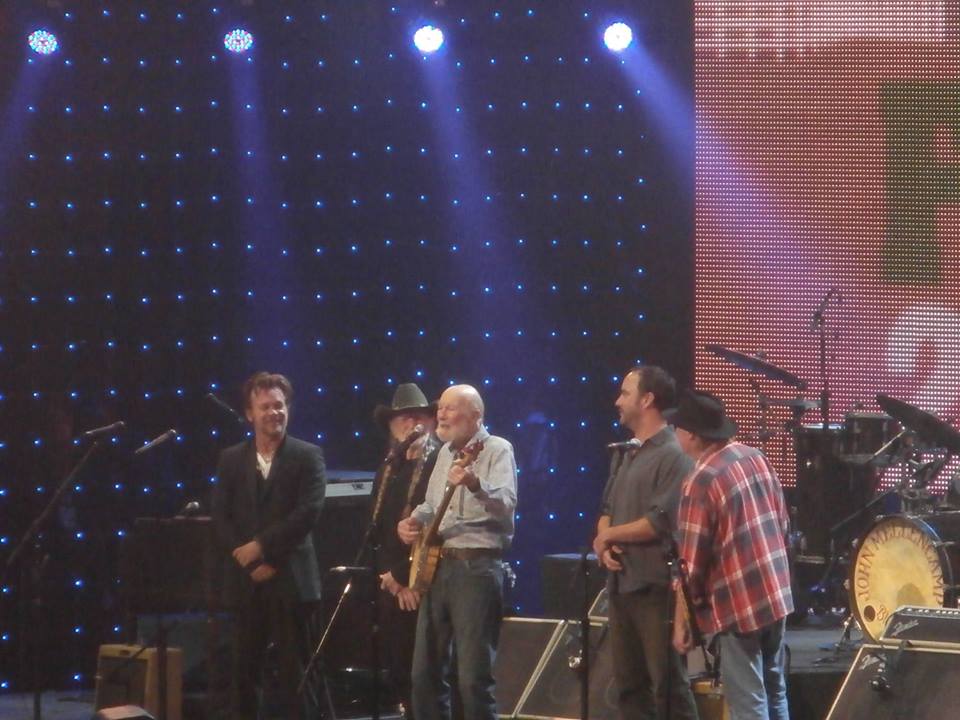
Pete Seeger would have been 100 years old on May 3, 2019. He was getting ready to celebrate his 94th birthday when we talked in April, 2013. It felt like I was talking to my favorite uncle. Pete had a way of making everyone he came in contact with feel that way whether it was Woody Guthrie, Woody’s son, Arlo, or the thousands of other folksingers he inspired.
“I’m actually going to be away on my birthday, because I have a granddaughter who’s going to a little school in Rhode Island that’s having what they call a grandparent’s day, and all the children who can are going to bring their grandparents to school. I’m gonna sing a few songs there. I’m mainly a song leader these days. I don’t have much voice left, but I’ve gotten better and better at getting a crowd to sing with me.”
Pete Seeger made a surprise appearance at Farm Aid 2013 at Saratoga Performing Arts Center
On May 23, The Egg in Albany will present a Pete Seeger Centennial Concert celebrating his 100th birthday. Arlo Guthrie and the 11 other artists performing illustrate how pervasive Seeger was as a moral compass in the history of American folk music and society as a whole. Arlo knew Pete from the day he was born. They performed together for the last time in Carnegie Hall, a month before Seeger died on January 27, 2014.
Arlo has just released Arlo & Pete’s More Together Again for digital download. Taped live in 1993 at Wolf Trap, it captures the mojo of Woody Guthrie’s son celebrating in song 60 years of the two musical families’ intertwining history. Best known for his anthem “Alice’s Resataurant,” With Seeger’s passing, Arlo is now the elder statesman and “keeper of the flame,” ignited by his father’s unofficial national anthem “This Land Is Your Land.”
“Most of the song had been written back in 1940 when he (Woody Guthrie) first came to New York,” Seeger told me in 2013. “He was actually hitchhiking, and Kate Smith singing “God Bless America” was on all the jukeboxes. His original song had all the same verses we know, but the last line was ‘God bless America for me.’ He crossed out that last line and scribbled in ‘This land is made for you and me.’ And that’s how he recorded it in 1948.”
Also included in this Centennial celebration is Guy Davis who accompanied Seeger on his last official tour in 2007. Guy is the son of Ossie Davis and Ruby Dee, stalwarts of The Harlem Renaissance. “Pete Seeger and folk music is where my folks and I intersected best,” says Davis. “Pete Seeger was a friend of both of theirs, and I got sent to a summer camp run by Pete Seeger’s brother, and the older I get, the more I’m in love with the songs I learned in the ’50s and ’60s.”
In 1949, Pete Seeger’s car was among hundreds attacked by KKK members after a concert by African American opera singer Paul Robeson. “Two stones actually went through the glass and landed on the floor of the car. I cemented them into the chimney of a fireplace I was building,” recalled Seeger
The horrible images of that attack galvanized public opinion against KKK hatred. Seeger saw the incident as “an inoculation” for America. “You know when you get a needle in your arm, your arm gets a case of smallpox. The disease precipitates the cure. The rest of your body gets alerted and does not get smallpox, and this is exactly what happened.
“Peekskill had a case of fascism there, but the rest of the country saw the pictures on TV and in local newspapers and mothers with babies in their arms and blood streaming down, and it was not a pretty picture. The rest of the country said, ‘We don’t like this.’”
“I would agree that it was an inoculation,” says Guy Davis today. “It becomes Americanized. Those signs they had, ‘Wake up, America. Peekskill did.’” Pete was first hand on the receiving end of that as was Paul Robeson, as were so many other activists. Pete took one of the stones that was thrown into his car. He had it put into the fireplace of his cabin and he said that if the final riot comes and there were stones being thrown and death being dispensed, then he was going to take that stone and use it.”
“I’ve made a lot of stupid mistakes in my life,” Seeger told me in 2013, “but at least I’m still alive even though there was a thriving branch of the Ku Klux Klan only about three miles away from me. And I’ve often wondered why they didn’t come up and shoot me down or burn down my house or something, but I found out some members of the Ku Klux Klan had some family members who said, ‘You do what you want with Seeger and you’ll regret it. Everybody will be singing his Goddamn songs.’”
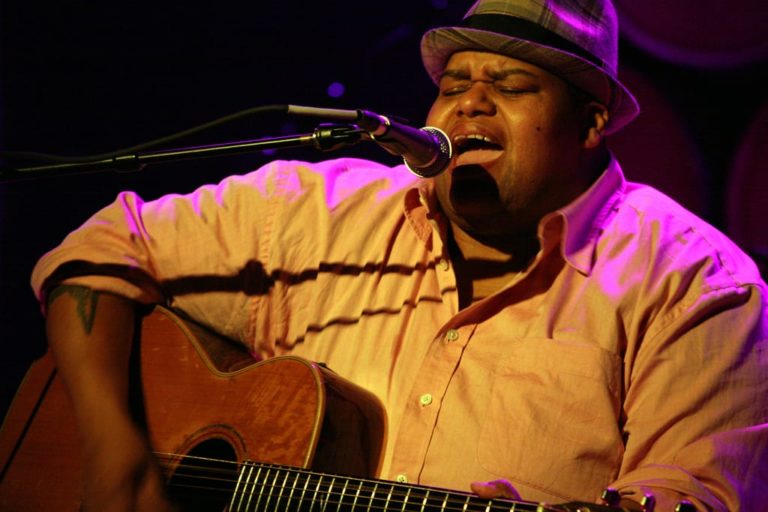
Toshi Reagon
Toshi Reagon is named after Pete Seeger’s wife and is the daughter of Bernice Johnson Reagon, civil rights activist and founder of the a cappella group Sweet Honey in the Rock. Toshi will perform her eclectic blend of rock honed on stages with Nona Hendryx, Elvis Costello, and Ani DiFranco. She considers one of her proudest moments to be when she played for her godfather Pete Seeger’s 90th birthday celebration at Madison Square Garden.
Another Centennial performer, David Gonzales, is a storyteller, musician, poet, actor, and writer and a one-of-a-kind artist. In 2009, David was commissioned to write a long form poem for the Hudson River Quadricentennial and, at the Egg, will recite excerpts from that work titled “Oh Hudson!” as they relate to Pete Seeger.
Seeger loved the Hudson River and his Sloop Clearwater became a symbol of our need to clean up our waters. He saw sailing as a metaphor for life. He remembered the time a friend took him out for his first midnight sail on an 11-foot Beetle Cat. “For the first time in my life I found out why people spend millions of dollars on private sailboats,” he said. “It’s not how fast you go, but the fact that you move at all. (Sailing) is a wonderful analogy for life. You use the force of the wind against you to move against it.”
“I was learning to sail on the Hudson, and I came along to certain places where there was a sewage outlet. I found myself sailing through lumps of this and that along with the toilet paper. I thought of the phrase of John Kenneth Galbraith, ‘Private affluence, pubic squalor.’ I had enough money to buy a sailboat, but I was sailing through shit.”
The one thing all the performers on this bill share with each other and Seeger in particular is an all-inclusive love for music as an “inoculation” against hatred and bigotry.
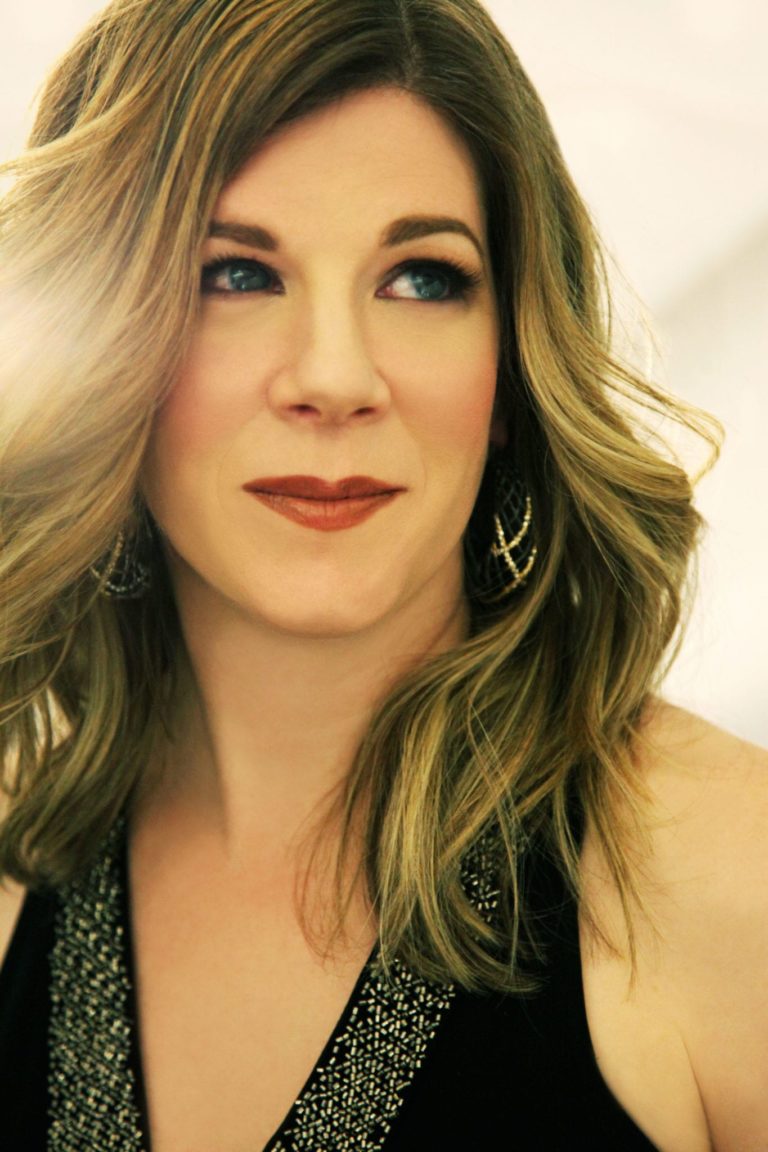
Dar Williams is a popular folksinger. The New York Times Book Review said of her book What I Found in a ThousandTowns that it “reads as if Pete Seeger and Jane Jacobs teamed up, more a report from the Green party than the green room.”
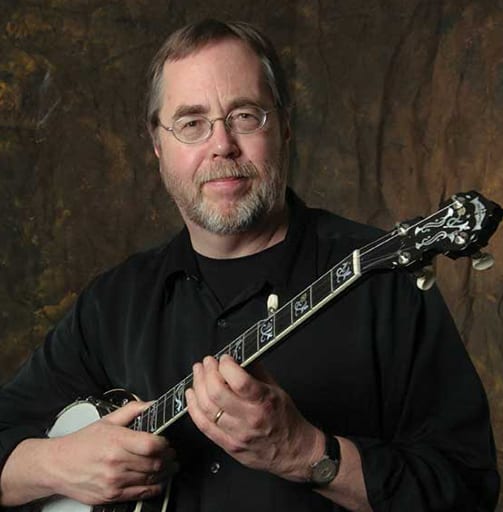
Tony Trischka is America’s consummate banjo artist and perhaps the most influential banjo player in the roots music world. He has written 15 instructional books as well as a series of DVDs. In 2009, he launched the Tony Trischka School of Banjo, an advanced, interactive, online instructional site that is the banjo home for students from around the world.
Amythyst Kiah is a southern songster who blends blues and old-time music. The only African American at the East Tennessee State University Bluegrass, Old Time and Country Music Studies Program during her enrollment, her repertoire includes the music of The Mississippi Sheiks, Son House, Jimmie Rodgers and the Carter Family. The New York Times credited her guitar playing with guaranteeing her a place among blues masters complimented by “her deep-hued voice that can change on a dime from brushed steel to melted toffee.”
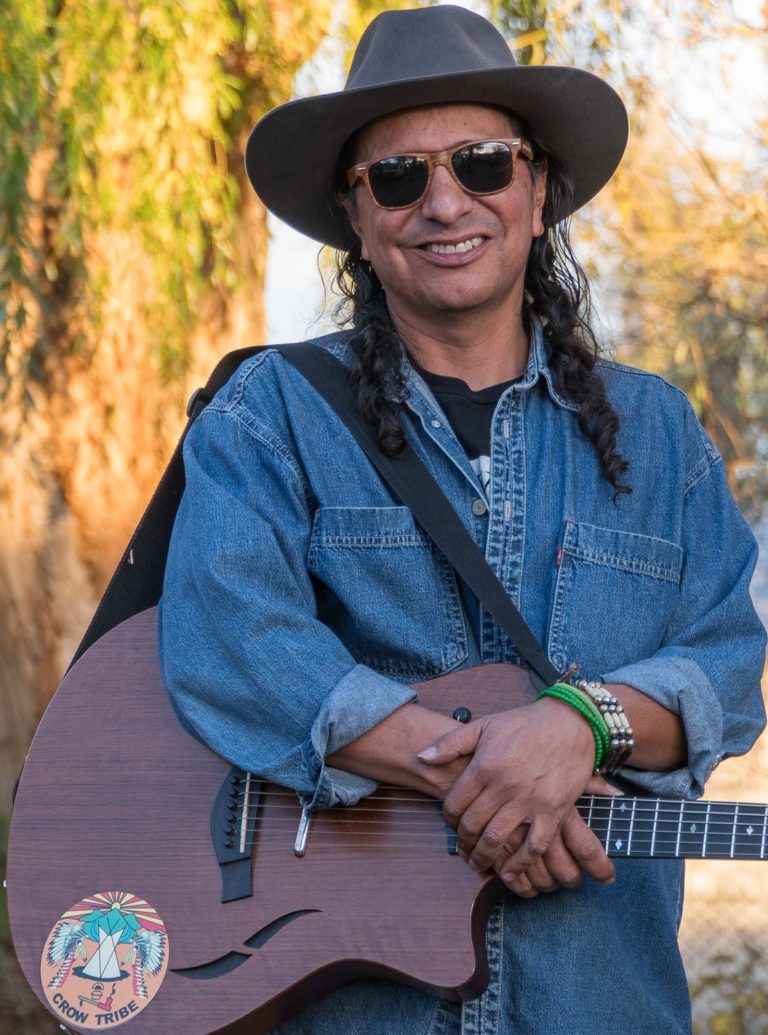
Cary Morin is a Crow tribal member who plays Americana acoustic guitar that incorporates blues, bluegrass, jazz, jam, reggae, and dance. His Cradle to The Grave album took the 2018 Independent Music Awards for Best Blues CD and earned him a 2018 Native Arts and Cultures Fellowship.
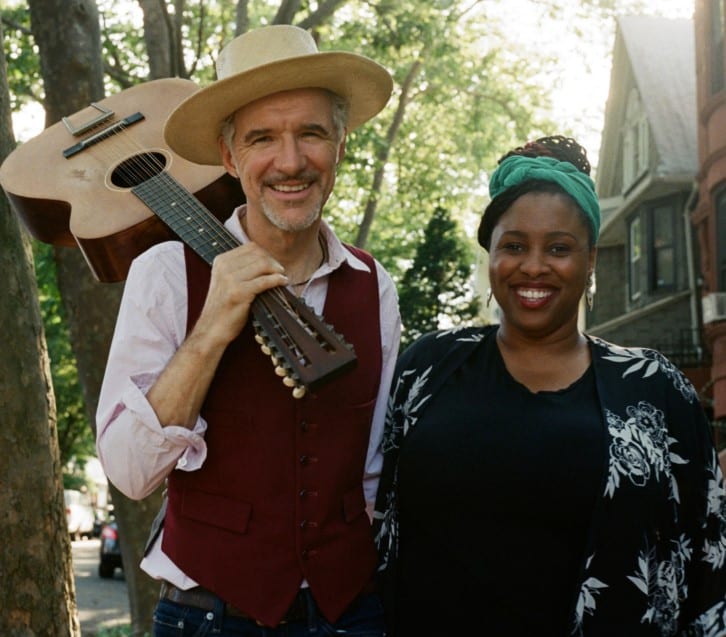
Dan Zanes & Claudia Eliaza are a couple whose Lead Belly Baby! Album is a children’s CD inspired by folksinger Lead Belly. Grammy winning Zanes began his career in the ’80s rock band the Del Fuegos. His wife Claudia Eliaz is a Haitian-American jazz vocalist music therapist.
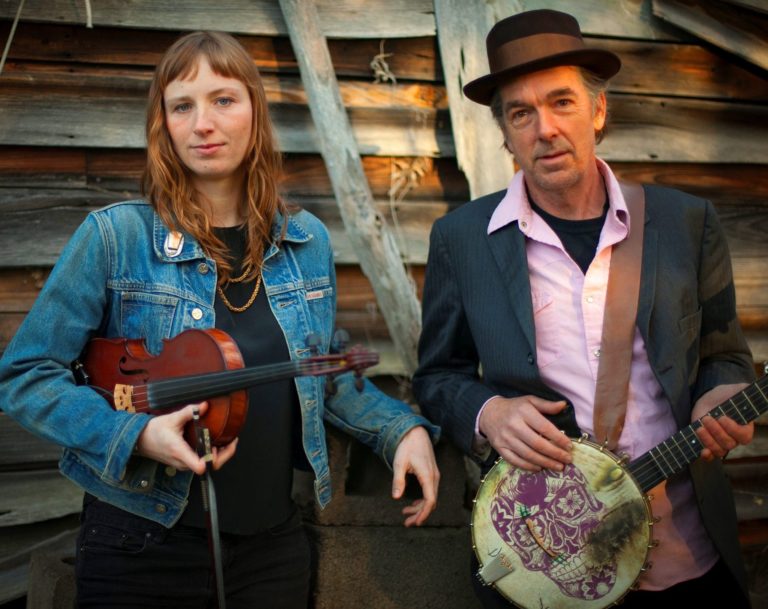
Richie Stearns performs with his wife Rosie Newton. Richie brought the old-time clawhammer banjo style to a whole new audience with the bands Donna The Buffalo and The Horseflies, and has accompanied artists such as Natalie Merchant, Bela Fleck, David Byrne, Billy Bragg & Wilco, Old Crow Medicine Show, and Joan Baez. For over 20 years, Richie performed with or for Pete Seeger on numerous occasions, and was invited to score original music for an album that featured Pete telling his life story over a music background.
Taina Asili is a New York based Puerto Rican singer, songwriter, bandleader and activist.The Huffington Post named her group as #2 in a list of “12 Freedom Fighting Bands To Get You Through the Trump Years.” She is dedicated to using her art as a tool for personal and social transformation. The themes in Taína’s writing are based in her activism in political prisoner liberation, prisoner justice, climate justice, and food justice movements.
Bill and Livia Vanaver of The Vanavar Caravan. Bill has composed and produced music for films, dance and theatre productions, including The Clearwater with Pete Seeger. The Vanaver Caravan will perform an excerpt from their Pete Seeger inspired work “Turn, Turn, Turn.”
“I’m one of the musicians. And I’m only one of them,” Seeger told me. “There are now not hundreds but thousands of people making up songs and doing things in small ways here and small ways there and following the advice of the great French biologist Rene Dubois who said, ‘Think globally, act locally.’”
He recalled the tipping point in folk music to be 1960 when folksinger Guy Carawan sang “We Shall Overcome” and it became what in 2019 terms would be considered viral. “The hit song of the weekend was ‘We Shall Overcome’ sung with this rhythmic slow thing. It was a slow song, but it had a very definite rhythm, and it was the hit song of the weekend. Five weeks later Guy was in Raleigh, North Carolina, and somebody shouted out, ‘Guy, teach us ‘We Shall Overcome.’” And that’s where they added something.
“Your right hand reaches out and holds the left hand of the person to your left, and your left hand reaches out to your right. So, your arms cross in front of you. Your shoulders touch, and your bodies sway as you sing this song. Once again, an African tradition is added to this piece of music of bodily movement at the same time you’re singing. You’re not just singing. You’re moving your body.”
Despite the problems we have as a civilization, Seeger was optimistic about the future. “My mantra today is the agricultural revolution took thousands of years. The industrial revolution took hundreds of years, but the information revolution is only talking decades, and if we use the brain God gave us, who knows what miracles may happen in the next few years.”
And he saw the arts as society’s savior. “I think the arts will be among the most important things that save us. Words can mean different things to different people and numbers can, but (it’s all about) the arts, the visual arts, the dancing arts, the cooking arts, the human arts, the sports arts, Joe DiMaggio leaping for a fly ball had all the grace of a ballet dancer, and who knows.”
I asked Seeger what was the single most important thing he’d ever learned. “I guess realizing the human race is one more invasive species,” he said.
Seeger spent long, productive life trying to teach us not to be invasive.
What: Pete Seeger Centennial Concert
When: Thursday, May 23rd, 7:00 p.m.
Where: The Egg, Empire State Plaza, Albany
Tickets: The Egg Box Office at the Empire State Plaza, 581-473-1845, or online.
Turning Stone, an award-winning, destination resort in Upstate New York, works tirelessly to bring best in music and entertainment weekly. Named as the “Best Countryside Hotel/Lodge” in 2015, their vast accommodations, casino and top tier restaurants clothe a hidden gem – Turning Stone as a music mecca. The renowned Casino not only bring us talent, they foster talent, such as The Dee Brothers.
Turning Stone Casino and Resort offers a multitude of musical options from large national acts, to new and local talent. No matter how big or small, there is a venue to host it appropriately. The Event Center is the largest with a 5,000 seat capacity. Here you’ll see large shows, sporting events, and conventions. The Showroom, first to open its doors back in 2002 seats up to 700, bringing you shows, comics and theater productions. Back in 2013, we saw Exit 33 open offering a variety of nightlight and clubs for music of all types, playing off the venues location. Whether it’s dancing at Lava, two stepping at The Tin Rooster, rocking out at The Gig, or just slow dancing at The Turquoise Tiger, there is a spot for all music lovers wishing for a great night out. Add in talent throughout many of their restaurants and atriums, and their’s music everywhere.
It’s here that Ryan and Joel Dee (The Dee Brothers) found their way from NYC. The two brothers moved to upstate New York to pursue their musical dreams and taking a job at The Gig. The brothers would bartend during the evenings, giving them time to pursue their creative aspirations during the day. Just like something out of a movie, it’s here that they found a spot to play their music. The Dee Brothers took a moment to speak to NYS Music and share a little of how their partnership with the Turning Stone has helped them out as musicians.
Kathy Stockbridge: Originally from NYC, tell us how you came to the Central NY Region and Turning Stone.
Joel and Ryan Dee: We were both itching for more elbow room, so when we heard about the opening of Exit 33, we packed our bags. It’s been the perfect fit, because we can now enjoy the relaxed vibe of Upstate New York, while also getting our fix of high energy at Turning Stone.
KS: Having a following in your hometown area, did you find it difficult to get started here?
JD and RD: Working at Exit 33 has really helped us make great local connections, and our flexible schedules allow us to pursue music during our off hours. Plus, working at a music venue continually propels our passion forward.
KS: While working at Turning Stone, I understand you were given a break to play your music. How did that transpire?
JD and RD: Turning Stone is always spotlighting its employees, including through an Employee Talent Show, where we got the chance to play and have returned every year since. It’s been a great new stage that Turning Stone has provided us to showcase our music.
KS: As an employee of Turning Stone, how supportive are they with your side gig?
JD and RD: We couldn’t ask for a more supportive employer than Turning Stone. With their flexible shifts, we still have plenty of spare time to work on our music while still making a good living with great benefits.
We both bartend at the rock and roll venue The Gig, which is awesome because it keeps music front and center in our lives, even at work.
KS: You hear of musicians working at a venue just to catch a break… how has this helped get your music out there?
JD and RD: We’re very lucky to work at a place where our passions and jobs collide. While bartending, we’re continually meeting fellow musicians, fans and making other great connections.
JD: As a songwriter, working at The Gig inspires me because of the music, conversations and moments I experience at work every day. I get to talk music theory and exchange ideas while on the job, which is a huge benefit and provides a ton of inspiration for my songs. Turning Stone is always evolving and working on the next big project, so our advice would be to be ready for any opportunity that presents itself.
KS: What are your aspirations and dreams for your band Andela? Any new music in the works?
JD and RD: In five years, we would love to be playing regularly at Turning Stone. But I can also see us on tour, traveling the world with our music. Maybe one day, we’ll get the opportunity to come back and play at the Turning Stone Event Center and bring our story full circle.
JD: We want to attract a wider audience, and we’ve really gravitated toward the new taste for songs that make you want to dance.
RD: This generation’s love for EDM has pushed us into an entirely new realm of music creation. We’re now finding our own sound that’s a balance of dance/club music mixed with a live rock feel.
KS: What advice would you give other artists starting out or wanting to work with the Turning Stone?
JD and RD: We’ve both grown tremendously working here and enjoy every day because there’s always something exciting happening that helps us grow and inspires us.
Learning about how Turning Stone has assisted the Dee brothers, and their dreams, by fostering a great working relationship and giving them a stage to perform – sharing their music that is unique. The Turning Stone happily happens to be holding a huge hiring event this coming Monday, May 13, from 10am to 8pm.
Those that may wish to find employment in fields of hospitality, culinary, gaming and many more should update their resumes and come dressed to impress. The event is titled “You’re Hired!” because qualified candidates could be given job offers on-the spot. Turning Stone recruiters and senior leaders from several departments including gaming, culinary, beverage operations, and hospitality will be on hand to answer questions and conduct interviews.
Looking for your foot-in-the-door opportunity may just be right around the corner, off of Exit 33. If asked how you learned about the event, just tell them Kathy from New York State Music sent you.
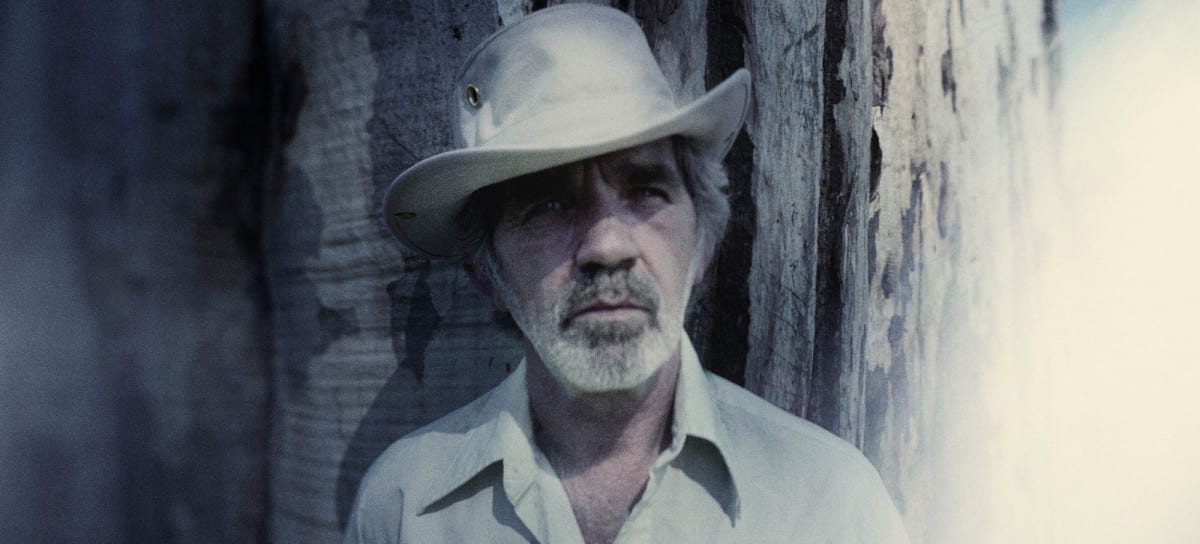
Legendary songwriter, guitarist and singer, J.J. Cale, was taken from us back in 2013, but his musical legacy will live on forever with Stay Around. His catalog of tunes have shaped lives, influenced musical styles and helped make the careers of more than one musical superstar. With songs like “Cocaine,” “After Midnight,” and “They Call Me The Breeze,” Cale’s storied musical catalog will outlast many of today’s contemporary artists. This fact is backed up by one, Mr. Eric Clapton, who has covered multiple J.J. songs and has described his 2006 Grammy award winning collaboration with Cale, The Road to Escondido as being, “the realization of what may have been my last ambition, to work with the man whose music has inspired me for as long as I can remember.”
Luckily for fans, Cale isn’t done providing new material just yet. With the posthumous release of StayAround, listeners are lucky to be provided with previously unreleased material that has been painstakingly compiled by J.J.’s widow, musician Christine Lakeland-Cale; along with friend and longtime manager, Mike Kappus.
The result is a 15-track gem of an L.P. that includes unheard material penned by Cale with the exception of “My Baby Blues,” which was written by Lakeland-Cale. This track captures Cale’s cool vocal style and sets the scene of a funky, smokey Juke Joint somewhere south of the Mason Dixon Line. The multi-layered rhythm guitar is interrupted by an oh-so-pleasing fuzzy guitar lead that effortlessly weaves itself in and out of the tune.
Another Gem on Stay Around is the tenth track, a stripped down soul cry titled “If We Try.” Lyrically, the song describes one man’s attempt at saving his relationship with his long term time lady by putting all of their mistakes in the past in an effort to give each other a fresh start. The song features a solo Cale, starkly playing on the acoustic guitar, which creates a real feeling of intimacy, as if you were comfortably sitting in J.J.’s living room next to a fire while he performs the piece on his strumming guitar.
Another favorite is the wonderfully produced “Long About Sundown,” the album’s 13th track. They say imitation is the biggest form of flattery. If you are familiar with Eric Clapton’s long musical career you know that there was fundamental shift in his playing in the mid to late 1970s. A good portion of that distinctive sound can be attributed to the fundamental core of Cale’s musical aesthetic. Sundown perfectly illustrates those similarities with an arrangement that could be right off of Clapton’s 1974 release 461OceanBoulevard.
J.J. Cale’s life in music may be over, but his long musical career was one that he lived by on his own terms. His rejection of the big corporate musical industry was the nexus of the man’s music. Truth, honesty and a genuine love for the music that he readily embraced, yielded an enviable body of work that has forever changed contemporary music for the better. Stay Around is a perfect summation of that incredible work by a legendary artist.
Key tracks: Lights Down Low, Tell Daddy, Long About Sundown
Syracuse classic rock radio station 105.9 The Rebel (WXTL) recently had it’s frequency bought by the non-profit Educational Media Foundation, which operates the Christian music networks Air1 and KLOVE.
In February, Cumulus Media sold six of its stations, including The Rebel, to EMF in a $103.5M deal. And while Cumulus is losing the 105.9 frequency on the FM dial, the station will live on through streaming.
Master of Ceremonies, Dave Frisina
Long time Syracuse DJ Dave Frisina announced on his Facebook page this morning that The Rebel will become a 24 hour streaming station at their website, through their phone app, and on smart speaker devices such as the Amazon Echo and Google Home.
Frisina has two long-running programs on the channel, the free-form Soulshine, which runs on Sundays from 10 a.m. – 2 p.m. and Soundcheck, a local music showcase that runs on Sunday nights at 10 p.m. These shows will continue as live programming on the new platform as will the inclusion of local music every hour throughout the day, something Frisina recently began incorporating into the station’s format.
In his Facebook post, Frisina explains that the format for the new streaming Rebel will be similar to the classic rock format of the over-the-air station but with the opportunity to play more deep cuts from the classic rock artists typically found in the format. He also stated that there will be only two minutes of commercial breaks each hour.
On continuing The Rebel in this new format, Frisina says:
All of this is possible because of the incredible response and support of the community who have demonstrated through emails,messages, and calls that you wanted to keep the Rebel brand alive. The music will continue to be familiar but a bit more adventurous and Local music will remain in every hour.
Dave Frisina, The Rebel Rocks
While there is no date set for the change over, it is expected to happen within a month. Frisina is looking forward to the opportunity of continuing the Rebel brand and his live Sunday shows, which he will continue to broadcast from the Cumulus studio in Syracuse.
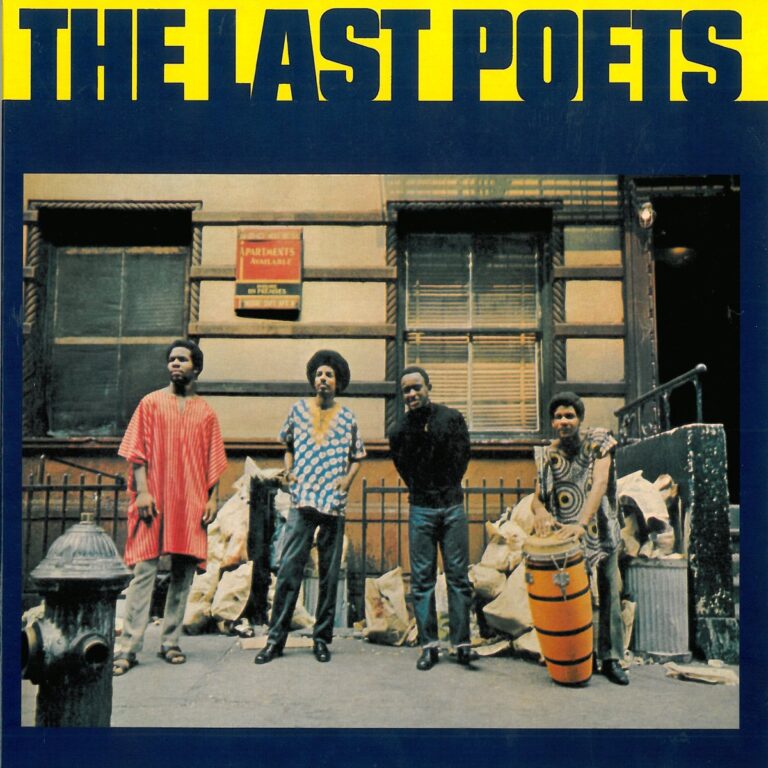
If you were to construct a timeline showing the evolution of hip hop music, where would it begin? Some may think to credit the rhythmic jazz and blues of Bo Diddley, dating as far back as the 1950s. Some may say the birth of hip hop was in the creation of turntables and sampling, made popular with the scratching and beat matching of DJ Kool Herc and Grandmaster Flash in the 1970s. Beyond these names, and others that we’ve come to know under the hip hop umbrella, nobody has stood the test of time more than The Last Poets – the spoken word masterminds of the late 1960s, and the true trailblazers of hip hop music.
Fifty years ago, The Last Poets began their ascension into the public sphere using moving poetry and smooth reggae backing tracks as a platform for voicing political activism, describing their experience as children of the civil rights movement. After decades of releasing albums and touring the world, the group released Understand What Black Is is 2018. While followers of the group are forever grateful for new music, it took the dubbing of the album by British producer Prince Fatty to bring this music – and the powerful message of unity and peace – to a younger generation.
In the 2019 dub release of Understand What Dub Is, Prince Fatty adds transient delay and reverb over The Last Poets’ original tracks, keeping many of the album’s elements the same. From simple guitar riffs to decorative flute that decorates the spaces between each stanza, Prince Fatty keeps attention on the resonating lyrics of The Last Poets. At the same time, he tends to bring light to the 1970s -style rhythm in “We Must Be Sacred,” crisping those off beat drum hits. You can hear the chilling melody of “Certain Images” intensify with panning mastery, making it almost comparable to a hook in late hip hop.
It’s clear that Prince Fatty has a deep understanding of The Last Poets’ immense impact on music and culture, as well as other creators of that era. His name, Prince Fatty, is an ode to Jamaican dub engineer, King Tubby, from the 1970s. Prince Fatty’s other successes include working with The Sugarhill Gang, making their mark on Harlem shortly after The Last Poets, with the first organized rap song to date. There’s no doubt that Prince Fatty developed a love for poetry at a young age, and followed this emergence of hip hop over the years, mixing and dubbing along the way. Understand What Dub Is is a tip-of-the-hat to the undefinable emergence of hip hop music, while bringing the inspiring voices of The Last Poets to center pan.
Key Tracks: Certain Images, Understand What Black Is, We Must Be Scared
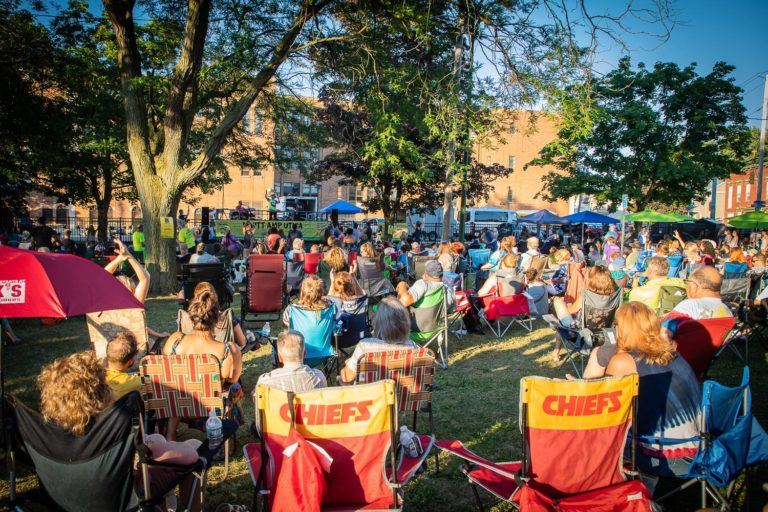
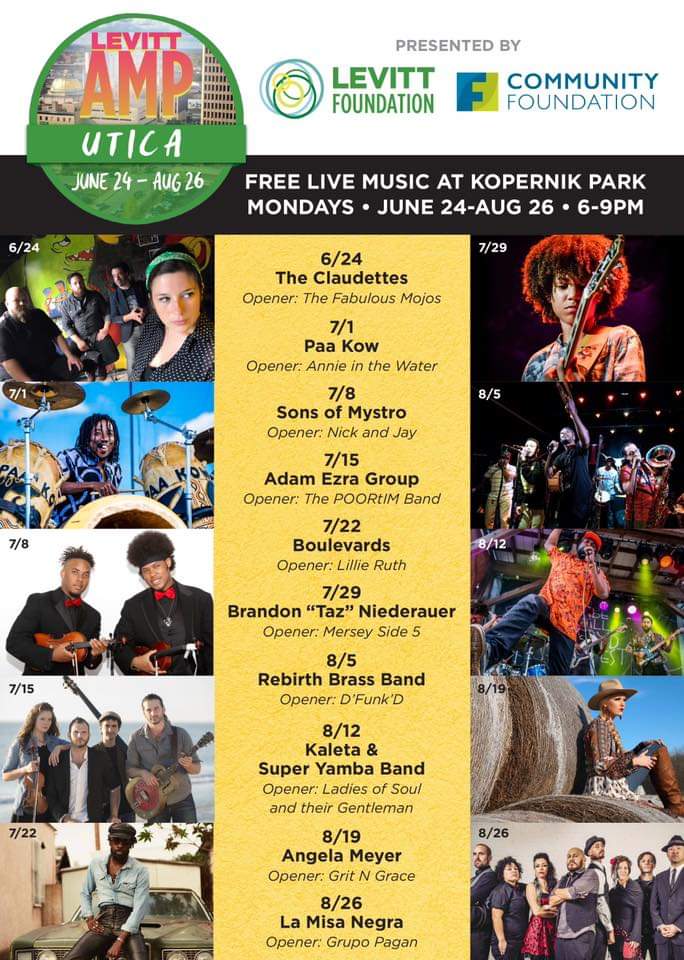
The City of Utica has been awarded a Levitt AMP concert series for the fourth consecutive year. The ten week free concert series will take place in Kopernik Park in Oneida Square on Monday nights beginning June 24 and continuing through Aug. 26.
The Levitt Foundation awards matching $25,000 grants to non-profits in select small to mid-size cities across the U.S. each year, creating a network of live music in underused spaces across the country. Eighteen cities have been selected to host the Levitt AMP series. This year, the Community Foundation provided a $25,000 match to help fund the series in Utica.
This year’s Utica Monday Night shows include a wide range of artists; from young Hendrix-influenced guitar phenom Brandon “Taz” Niederauer to the Grammy winning Rebirth Brass Band from New Orleans. Other artists include Paa Kow, a native of Ghana who combines the rhythms of West Africa with jazz to provide listeners a unique percussive sound, and La Misa Negra, a seven piece Afro-Latin collective from Oakland, CA that incorporates elements of hip-hop, metal, Caribbean and African poly rhythms.
Brandon “Taz” Niederauer
Each show will feature a local opening artist beginning at 6 p.m. See the complete schedule below. For more information about the artists performing, visit the Levitt AMP Utica website here.