Remain in Light, the Talking Heads’ fourth studio album, peaked at number 19 on the U.S. Billboard 200 in 1980. Even more impressively, Rolling Stone named it the fourth best album of the decade in 1989. On April 11, Grammy winner Angelique Kidjo will perform her interpretation of the iconic album at Kingston’s Ulster Performing Arts Center (UPAC).
Angélique Kidjo, (Angélique Kpasseloko Hinto Hounsinou Kandjo Manta Zogbin Kidjo) is a native of the West African nation Benin. No stranger to creating astounding albums, Kidjo won three Grammys for her contemporary world music and was nominated on multiple other occasions. Kidjo premiered Remain in Light at Carnegie Hall in 2017 and she claims that West African influence on the original Talking Heads’ album made her interpretation an organic fit. While Kidjo’s musical interpretation will be a unique twist, the Talking Heads’ lyrics are sure to be familiar to all.
Collaborators for this Angelique Kidjo project include producer Jeff Bhasker, who has worked with The Rolling Stones and Beyonce among others, Ezra Koenig of Vampire Weekend and songwriter Dev Hynes, also known as Blood Orange. Bhasker states the lofty goal of the collaboration was “to rip out [Remain in Lights’] guts and turn it on its head.” He explains that he and Kidjo hope the project brings the worlds of rock and African music closer together. The event takes place on Thursday, April 11 at 7:30. UPAC, located on Kingston’s historic Broadway, hosts the event. Tickets can be purchased here.
In early 1969, Michael Lang made multiple trips to the mid-Hudson Valley to find a place for Woodstock Ventures to hold their festival. As Lang mentions in his 2009 book The Road to Woodstock, he contacted a real estate agent about renting the Winston Farm, but the price of $40,000 for 12 weeks was far beyond the budget for Woodstock Ventures.
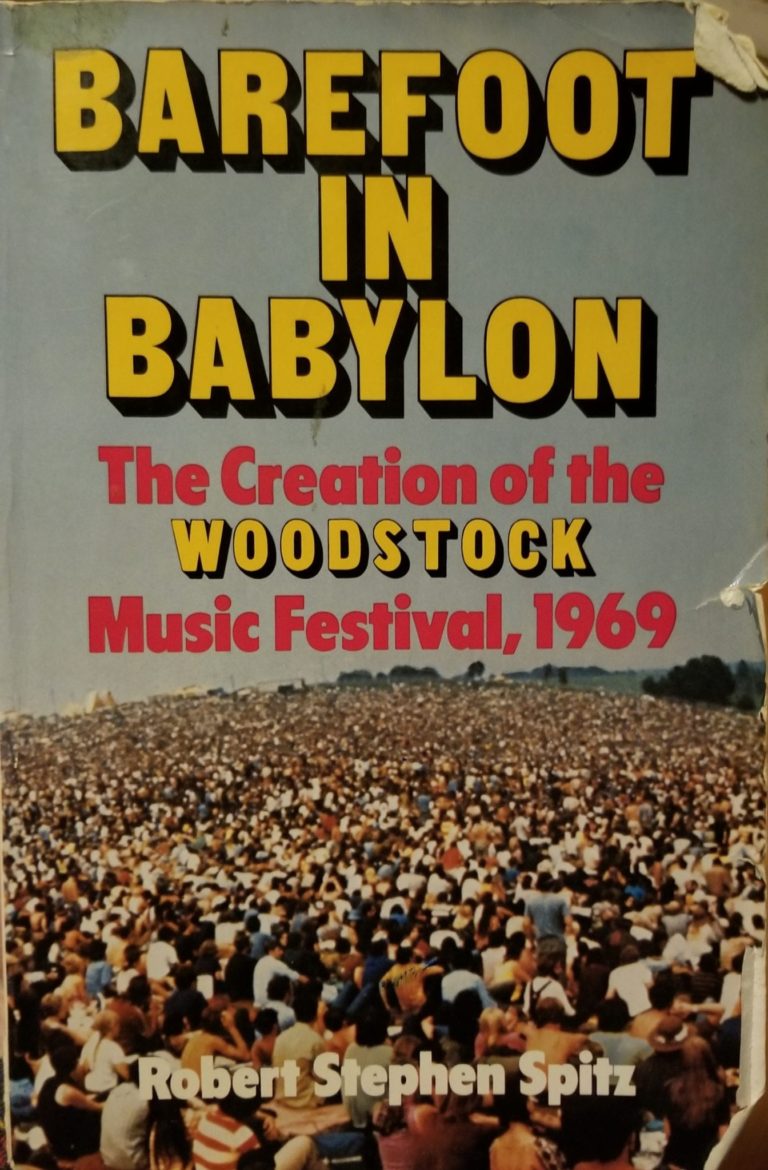
Barefoot in Babylon by Bob Spitz offers more detail on this potential property. It was owned by a frankfurter magnate named Shaler, in the town of Saugerties. With trees lining the property, permanent buildings, drainage, plumbing, wells, electric power, and a convenient exit right off the New York State Thruway, all of Woodstock Ventures partners – Lang, Artie Kornfeld, Joel Rosenman and John Roberts – rented motorcycles and drove to Shaler’s property on March 29. Although there was an initial agreement to the terms – $40,000 for 12 weeks, plus posting bond for damages and returning the land to its original state – a meeting with Shaler’s lawyer which lasted less than half an hour was ‘abrupt and cataclysmic,’ with Shaler opting to not rent the land to anyone, leaving it for his sons.
At that time, word got out about the festival. A call from Woodstock town supervisor Bill Ward, as well as an official from the county health department, made it clear that they did not want an event of this size in the area. The county had a population of 140,000 in 1970, and the festival would end up selling 100,000 tickets on presale alone. Nearly 400,000 would attend the festival, which clogged roads in rural Sullivan County, but in Ulster County it surely would have overwhelmed public services and caused even more headaches, especially along I-87.
So the search continued for a place to hold “An Aquarian Exposition: The Woodstock Music and Art Fair.” On March 30, 1969, Lang and his partners the came across an industrial park in the town of Wallkill, near Middletown. The developer was Howard Mills, interested in leasing the property to Woodstock Ventures before showing it to industries for further development. Discussing with Mills about the event, in terms of an ‘art fair,’ to appeal to the broader community, with the addition of “small concerts, featuring a few of the area’s finer musicians.” They had assumed Mills, a country farmer, would never got for a rock festival on his property. he was inclined to work with Woodstock Ventures, even if Lang and his partners had their reservations. But time was running short and they needed a venue; after much discussion, they warmed to the idea of holding their festival in Woodstock. A planning board meeting in mid-April would set the wheels in motion for everything that would come next.
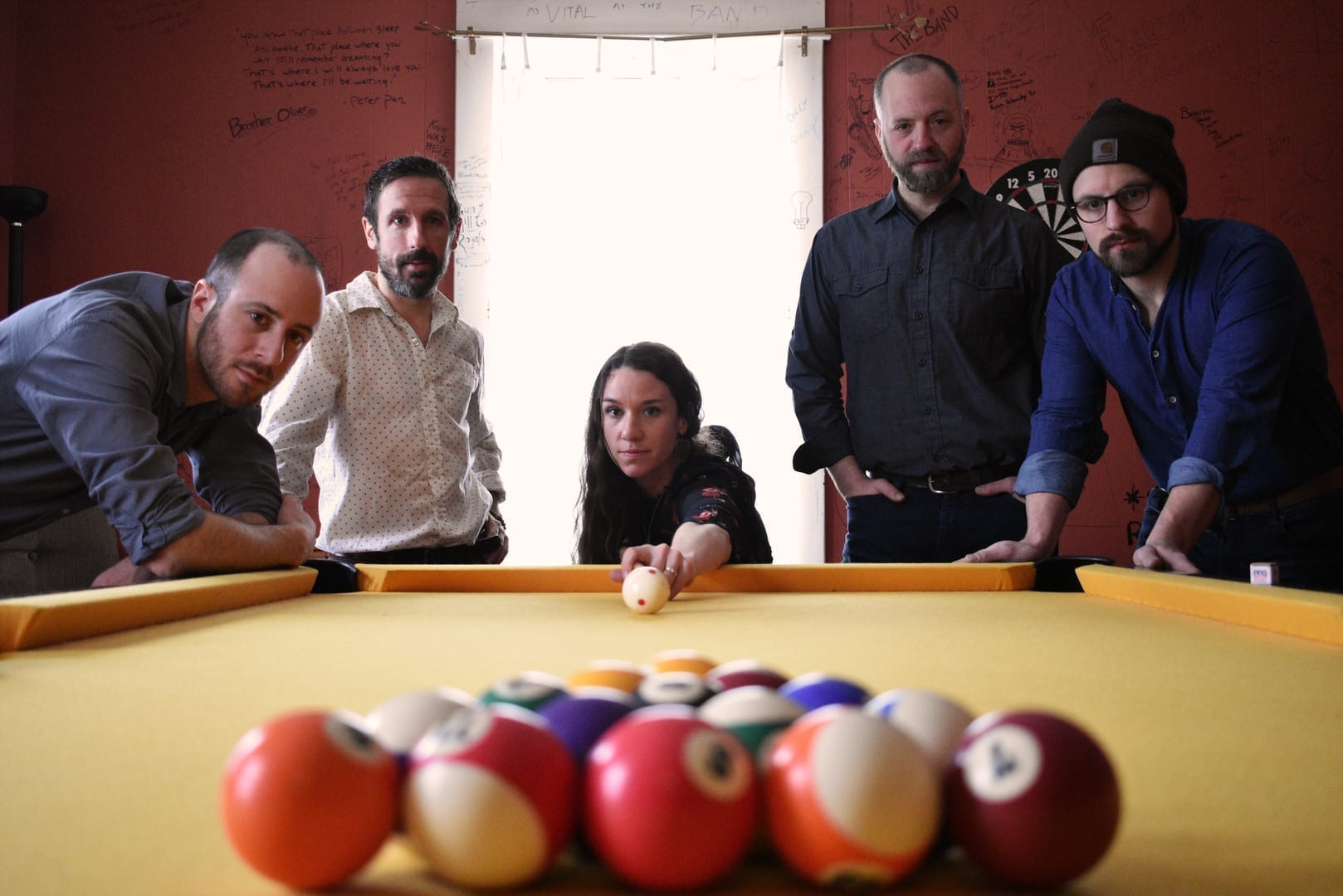
Driftwood is set to release their fifth studio album Tree of Shade this coming spring. This folk-rock and Americana-influenced band has grown over the years from a duo to a five-piece group. Band members include Dan Forsyth (guitar/vocals), Joe Kollar (banjo/guitar/vocals), Claire Byrne (violin/vocals), Joey Acuri (bass), and Will Sigel (drums). Each additional instrument and added vocalist serve to create the rounded and wholesome feel of Driftwood’s music.
Reminiscent of the sentiment of their band name, Driftwood continues to evolve with the passage of time. Tree of Shade consists of eleven tracks and represents the group’s sonic evolution as they experiment with slower paced music. Personally, listening to this album puts me back around a campfire on a chilly summer night. The opening track “California” (which also happens to be violin/vocalist Claire Byrne’s favorite track) helps set the tone for the rest of the album as it embodies the previously described ambiance.
Perhaps one of my favorite aspects of this album is the quality and quantity of the vocals. Songs like “Conquering Man” and “Santa Fe” beautifully portray the strength and conviction in Byrne’s voice while “Stick With Me” demonstrates the bright harmonies the group is capable of delivering. “Stick With Me” is another standout track for guitar/vocalist Dan Forsyth as he loves “how simple and timeless it is.” Other noteworthy elements in their music consist of the raw sounds from the guitar and banjo as well as the ever-present violin as heard in the closing few bars of “Tree of Shade,” the title track of the album.
The group created this album in the Catskill Mountains and undoubtedly captured the energy of their surrounding environment. They said it was their first time working with a major producer like Simone Felice and he really encouraged them to keep it simple and stick to whatever captures the song.When I first heard songs like “Lay Like You Do” and “What You Do to Me,” I couldn’t help but think of other beloved bands who create similar sentiments in their music. Driftwood, like The Zac Brown Band and Mumford and Sons, succeeds in inciting feelings of togetherness through the power of music. Some groups the band cite as their biggest musical influences span across generations including Paul Simon, Dr. Dog, Brandi Carlile, and Bob Dylan. It is evident by this list that they value “great songwriting and music that comes from the heart” as they told me.
“The album is emotional, mature and introspective. In some ways it’s really folky but there are also some tracks that we really took chances on.” The group shared that their goal for the upcoming album is “just to touch people’s hearts” as they “want to connect with [their] audience and share the music and this life.”
Key Tracks: Lay Like You Do, California, What You Do to Me
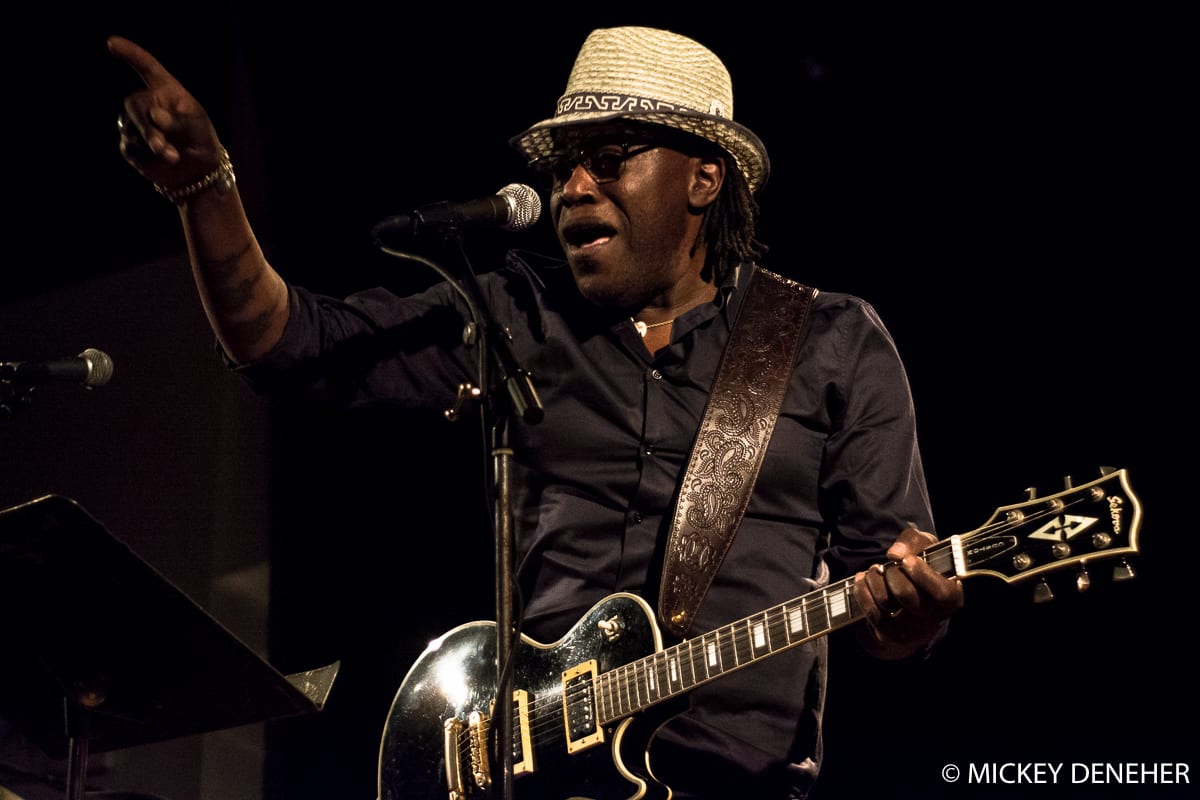
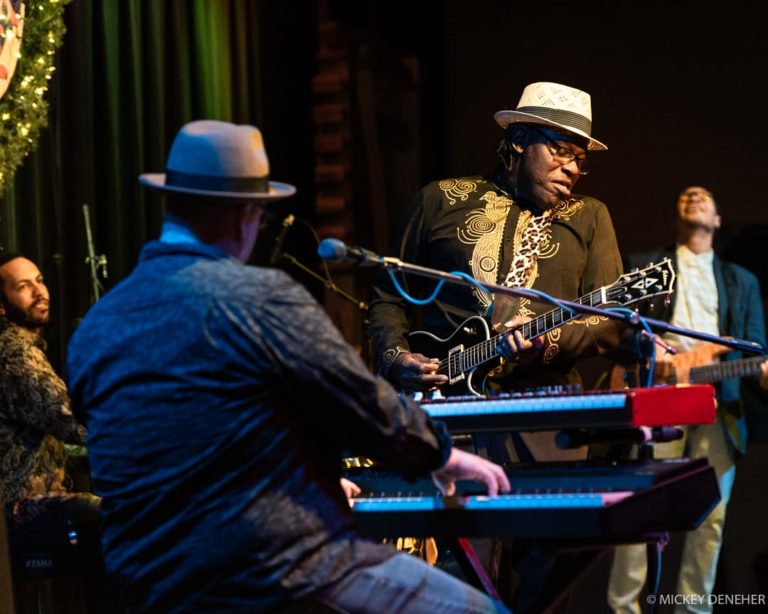
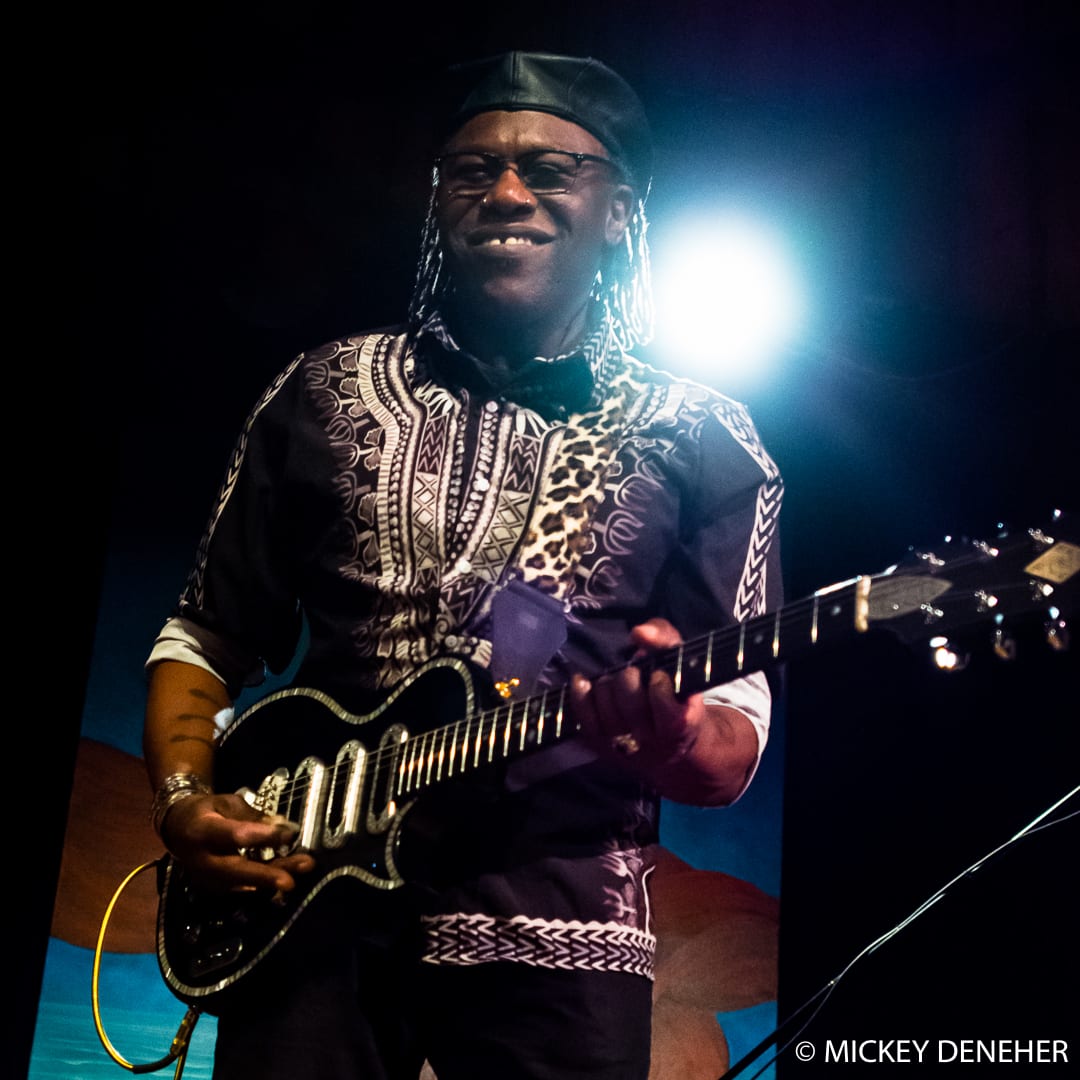
When you’ve won four Blues Music Awards, been inducted into the Blues Hall of Fame, nominated for a Grammy, and are a W.C. Handy Award recipient, your mark on the world of blues is pretty much set. Add a close friendship with B.B. King, James Cotton and Willie Dixon, and you get a glimpse into the life and career of a Blues Master: Mr. Joe Louis Walker.
Named “A legendary boundary-pushing icon of modern blues” by NPR, Walker started playing the guitar as a young boy, growing up in the Fillmore District of San Francisco in the early 60’s. Now living in the Hudson Valley for the last 10 years with his wife Robin, Joe has a non-stop schedule traveling the world; touring, writing, recording, and producing. I sat down with Joe after sound check at The Towne Crier in Beacon, N.Y. The band had just gotten in from Buffalo N.Y. and was wrapping up a few dates in the U.S. before heading off to a remote island in the Caribbean for a blues festival.
Charles Sullivan the promoter, he would give us free tickets. So we got to see the Temptations, the real Temptations. We got to see James Brown when he got a brand new bag. I got to see Little Richard with Jimi Hendricks on guitar. I got to see all of that sh#t for FREE! And plus, I got to play the Fillmore.
Mickey Deneher:Your career, over 50 years?
Joe Louis Walker: About 53 years. I’m 69 now. I turned 69 on Christmas (2018). I’ve been playing since about ’61. I joined the union in 1964. I joined the musician’s union. Been a union man all my life. Been living on my own since I was 16.
Joe Louis Walker
MD: You started playing music at a young age. What brought you to the guitar?
JLW: Well the guitar, when I was a kid, was the most accessible instrument, as it is now. The guitar was, when I was 12, 1962, only something you could look at. I went to a catholic school and at that time, you could check instruments out. If you had an aptitude, a little bit of an ear for the talent, they would nurture it. If you really had a talent, you would make a deal with your parents and they would rent you an instrument. Rent you an instrument. Not buy you one. Rent you one. With renting the instrument, come lessons. So I first rented, I checked out the violin when I was about 9, cause I could carry that home. But I really couldn’t make too much (out of it) when you’re fixated on that sound; that electric sound.
My parents had a temporary split and we ended up moving to the Fillmore District, and my world began. We moved to the projects, me and my mom and all of five kids, all of us. One project over, one housing (project), my cousins. I hadn’t seen or hung out with my cousins too much. But the first day I go there, they are on the 3rd floor of the projects; 3rd floor! I walk from the first floor. I am going to walk up three floors. You don’t want to catch the elevators. That’s where a lot of stuff goes on. All the way on the 3rd floor, all the way, the first floor to the third floor, wall-to-wall girls. Just standing and listening to my cousins play. I’m like; I am definitely going to do this now. [Laughing] Wall to Wall!
Dorian Randolph, Bruce Bears, Joe Louis Walker, Lenny Bradford.
MD: Ulterior motives!
JLW: But just to know, that there was something that we could do as young guys and make a few bucks. Buy our school clothes. Become popular without being jocks. Without being serious gang guys.
We literally, had the whole thing for ourselves. Of course there were bands all in the area. There was Sly’s (Sly and the Family Stone) brother Freddy Stewart who had a band with my cousin Ted Weisinger; Freddy Stewart and the Stone Soldiers, one of the big bands in San Francisco. This was before the hippies came to San Francisco. The hippies didn’t come till ’62, ’63, ‘64. I was in the Fillmore district in ’61, ’62. I was 12 years old in ‘62. I was lucky because there was this convergence among all the soul groups. The Fillmore at that time was like Harlem in the Renascence. It was, I would say, 75% African-American, huge amount of Japanese, a nice amount of Chinese and different, various people.
When the hippies came in to the Fillmore Auditorium, in it was sort of interesting because me and my cousins and all of us had been playing the Fillmore since we were young. That’s where we would have our battle of the bands. I went to junior high school a block from the Fillmore Auditorium. So we used to have our rehearsal there, battle of the bands there. Then, if we clean up some times, Mr. Sullivan who owned the Fillmore, Charles Sullivan the promoter, he would give us free tickets. So we got to see the Temptations, the real Temptations. We got to see James Brown when he got a brand new bag. I got to see Little Richard with Jimi Hendricks on guitar. I got to see all of that sh#t for FREE! And plus, I got to play the Fillmore.
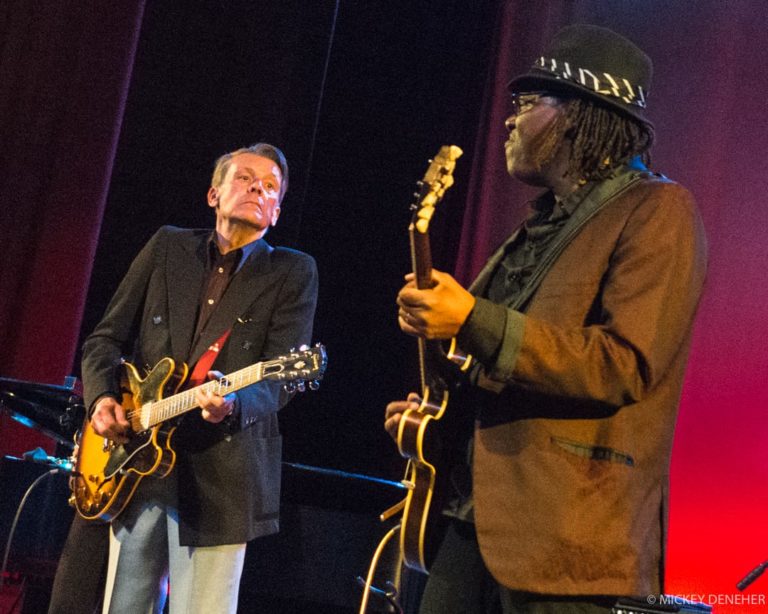
J. Geils, Joe Louis Walker
So when the hippies came there it was like ok, you know, I am cool with this. But as somebody said, very adroitly, they said “you know one of the best things to happened for a lot of the old rock and roll and blues guys was the English invasion, because they brought back interest in them.” But it was also one of the worst things to happen. Cause they put all their heroes out of work. The English guys did not mean to do that. That is not what they started for. There was like maximum R&B. That was, their heroes. That is not what they were about. Period. To note that it turned out that way, was a real drag. That is not what John Lennon and Mick Jagger and all those guys were about. They just weren’t about that. The Yardbirds, they just weren’t about all that. But that’s what it sort of turned into.
But, be that as it may, I was fortunate to be able to see all the Fillmore stuff, then play at the Fillmore. When Graham owned it; Bill would let me come any time I wanted. So I got to see all the shows.. I was fortunate to becoming up in all that stuff. It wasn’t just that; it was the young guys who were finding their musical paths.
MD:At 16 you had a name in the San Francisco music scene. Who were you were playing with?
JLW: Lowell Fulsom, Troyce Key, Percy Mayfield, Erle Hooker. You name it, I backed everybody. Katy Webster, Sly, (Mike) Bloomfield. John Lee, Earl, just on and on, and on and on. I played with all the hippie groups. I was in Blue Cheer, The Oxford Circle. We did a little fusion stuff with some other groups later. The coolest thing about that time, and that place, was that everything was progressing at the same time. What people wore, what people thought, the way the people responding to old mores, the Vietnam war, Richard Nixon, interracial marriage. Everything was happening at the same and the biggest thing I think, was what we invented in the United States in the San Francisco area, was FM radio. That was the biggest thing. Cause without FM radio we’d still be listening to The Monkees, 2 minutes, 40 seconds.
MD:You’re right. Wow, I did not think of that.
JLW: And jam bands.
MD:It wasn’t just blues, experimental, psychedelic.
JLW: It was so much. Oh my God. You could literally go out every night, hit three spots a night… You go to the Avalon Ballroom, The Family Dog (Ballroom), go see John Mayall with Mick Taylor and Muddy Water’s with his band, Big Mama Thorton. Go to the Fillmore, maybe see an Airplane with Quick Silver and Charles Lord Quartet, and Howlin’ Wolf. Four acts, that’s all in one night. That’s all in one night! Then you go to clubs after that.
Joe Louis Walker
The 60’s counterculture movement brought hippies, flower power and alternative life styles to the bay area. While the 70’s found San Francisco awash in a psychedelic haze. Walker made a conscious decision to take a detour from the 70’s status que and attended San Francisco State University, where he earned degrees in both English and Music. “It (was) important for me. Because it was something I started and didn’t finish.” Joe says. Applying his personal growth directive to music, Joe joined the gospel group The Spiritual Corinthians, in 1975.
MD:You went into Gospel. You did that for 10 years?
JLW: Longer than that.
MD:When I think about gospel, to me there is a blues base, a bluestone, that feeling.
JLW: Look at it like this: Gospel, Blues, and Soul music. Just take a for instance. For instance, in blues I mean B.B. King. I don’t mean Eric Clapton. No disrespect to Eric Clapton, ok. In blues, that is the template. Or Howlin’ Wolf. Say B.B. King, cause B.B. to me always was, and I used to have fun telling him this, “you’re just a gospel singer in a blues singer’s body.” When he was young, cause he hit all the high notes, his range was limitless.
JLW on B.B. King, Blues and Soul:
So you take a B.B. King for blues. So you take for soul music (pauses for a second), Sam Moore. Just a voice that’s just wicked, or Al Green. And say in gospel music, you take somebody like my friend, Clarence Fountain (Blind Boys of Alabama). When you have those three, all those three guys are cousins. I could take Bobby Blue Bland and interject him into soul, he wouldn’t miss a step, wouldn’t miss cause he helped invent it. I could take Sam Cooke and interject him into blues. Sam Cooke had a number 3 record; hit record with “Little Red Rooster.” A lot of people don’t know that and it’s cool. I could take Sam Cooke and interject him into soul, wouldn’t miss a step. I can take Sam Cooke, of course, interject him into gospel, wouldn’t miss a step. I can interject B.B. into gospel, wouldn’t miss a step.
Joe Louis Walker, Lenny Bradford
But now I could not interject Eric Clapton into gospel. No disrespect. I could not interject Joe Bonamassa into soul music. I can interject him as a player. But I couldn’t interject him in like Bernie Worrell or Catfish (Collins); Bootsy Collin’s brother; or someone like Jimmy Nolen who played with James Brown; or Freddy Stewart, Sly Stones brother; or Bobby Womack. I’m sure he could play all that, don’t get me wrong, but that style of playing within itself is the total opposite of this (Joe motions moving fingers all over a guitar neck at rapid speed.) Cause when you playing soul music and gospel, you are playing as an accompaniment to the voice. The lyric of the song is the star. Everything else is secondary. With blues now, and I should say blues rock, because its changed. It used to be, which it just blows your mind, go home and put on any record you like. Put on “Little Red Rooster” by Howlin’ Wolf, put on “Boom, Boom” by John Hooker, put on “Baby What You Want Me ToDo” by Jimmy Reed, put on “Got My Mojo Workin’” you will not hear one solo. You might hear four, five notes; but you are not going to hear (Joe makes sounds like a cacophony of notes played at lightning speed.) That is sort of what a lot of stuff has morphed into now. So when it’s morphed into that, and it’s morphed into screaming as loud as you can, singing as loud as you can, with a lot of fake ass emotion. I’m sorry I grew up in the same project with Etta James, I grew up in the same projects man. She never screamed on “I’d Rather Go Blind.” In that particular song she doesn’t scream. She really doesn’t.
Joe Louis Walker
So I guess we all have our points of reference. We all have what we feel moves us. The same things, it moves me all my life. Once I heard the Wolf, I loved it. I loved it just as much now. When I heard “Satisfaction” I loved the song then, I love it now. But blues has morphed, you know it’s just morphed into more of a me thing, as apposed to a we thing. Muddy Waters was great. But he sounded really good with Little Walter, he sounded really good with Otis Spann, you know what I mean. He sounded really freak’n good with Willie Big Eyes Smith. When he didn’t have Willie, when he didn’t have Otis Spann what did he do? He got Pinetop Perkins!
Those guys could literally solo over each other and not step over each other. They could solo a little during the song, but not step on each other. That it was all about we. A lot now is about me. It’s about the individual. That’s sort of the way the music business has morphed.
[bs-quote quote=” B.B. King to me always was, and I used to have fun telling him this, ‘you’re just a gospel singer in a blues singer’s body.’ When he was young, cause he hit all the high notes, his range was limitless.” style=”default” align=”center” color=”#000000″ author_name=”Joe Louis Walker”][/bs-quote]
While attending the New Orleans Jazz and Heritage Festival with The New Corinthians in 1985, Joe had an epiphany that the blues were his calling. He realigned his musical direction and has not looked back. His resume of musical accomplishments include 25 albums to date and countless guest appearances supporting the likes of B.B. King, James Cotton, Branford Marsalis, Peter Green, Elvin Bishop, Issac Hayes.
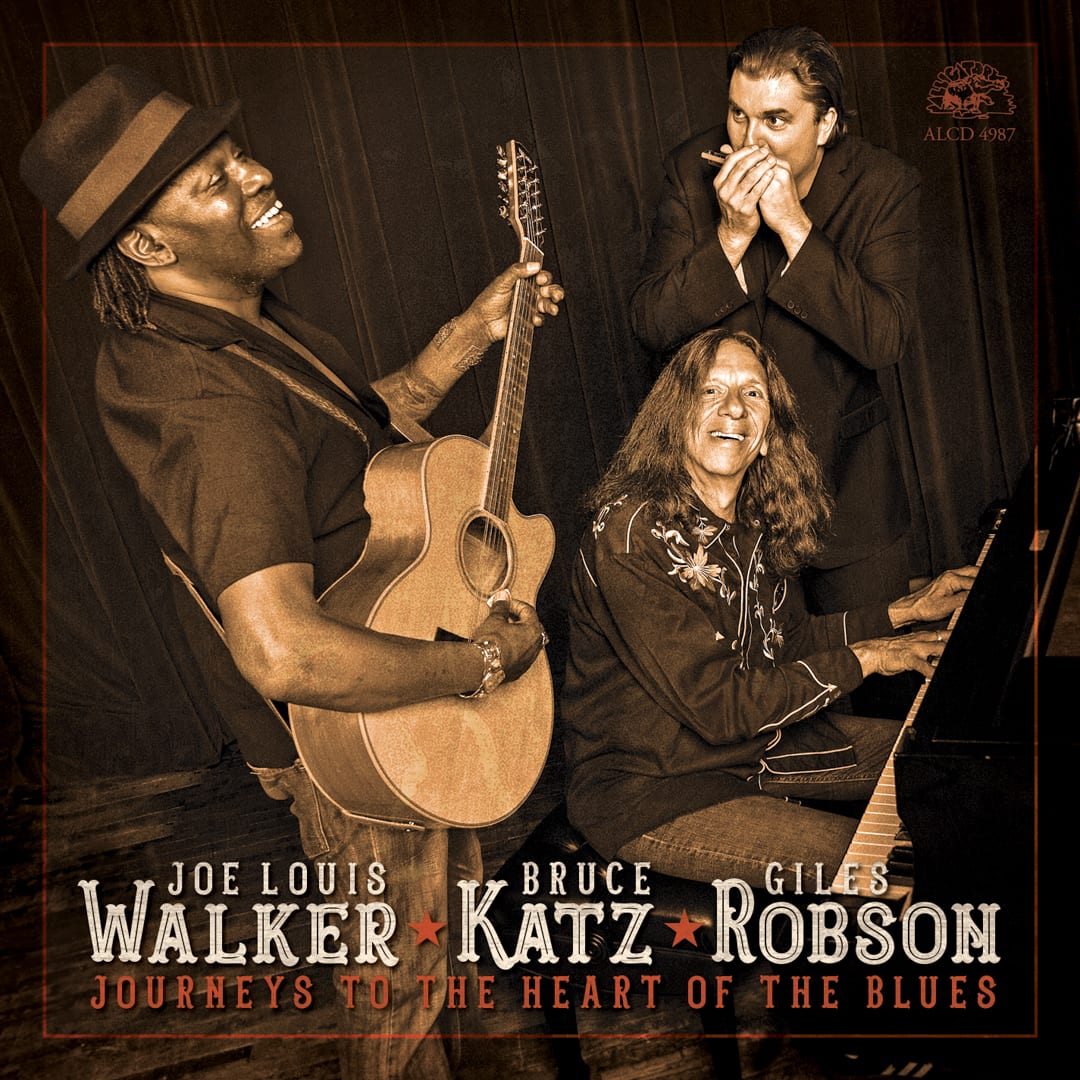
Joe’s latest project is Journeys to the Heart of the Blues. An acoustic blues album nominated for two 2019 Blues Music Awards (Album Of The Year, Acoustic Album.) Joe recorded with renowned keyboard player and fellow Hudson Valley resident Bruce Katz (Greg Allman Band,) and next-generation British harmonica ace Giles Robson. The album is out on Alligator Records throughout North America, Australia, New Zealand and Japan. Munich Records, a division of V2 Records Benelux, will release it in all other territories. The sessions were recorded at NRS Studios in Woodstock.
Joe Louis Walker, Bruce Katz, Giles Robson
Mickey Deneher:You are recording now, correct?
Joe Louis Walker: My album. We are about three quarters finished. A double album.
Joe’s upcoming album is chock full of his friends who he’s has played with over the years. The list includes: Juma Saltan, Mitch Ryder, Jesse Johnson (The Time), John Sebastian, Dion DiMucci, Ray Walker (one of the last living Jordanaires), David Bromberg, Carla Cook (Sam Cook’s daughter), Bobby Will, Charlie Harper (UK Subs,) Waddy Wachtel, Keb’ Mo’, and Jorma Kaukonen.
MD:I saw one of your recording credits is as a primary artist on William Shatner’s “Shatner’s Claus: The Christmas Album”
JLW: Yeah. We are getting ready to make a blues album next year. Going to beam us up baby. For me it’s sort of a double-edged thing. Because it’s amazing that now the blues are so popular, that literally, Captain Kirk, he done run out of universe, but he’s into blues music, and who’s he talking to? Joe Louis! I’m trying to give him a little bit of insight cause he’s very serious.
I just tell anybody that asks me; this is not about the notes. It’s not about the vintage guitar. It’s not about the tour bus. It’s not about the $5,000 Armani suits, with the $500 shades at the Royal Albert Hall. It’s not any of that. It isn’t. This here, comes out of suffering and what it is, its the social studies in survival and how to deal with adverse circumstances that are state sponsored and you have to deal with it. That’s what the blues came out of.
Catch this legendary bluesman and his band at The Egg in Albany on March 13th with The Robert Cray Band; March 21st at City Vineyard, in NYC; and March 22nd at Live at the Falcon, in Marlboro N.Y.
Lenny Bradford, Joe Louis Walker, Bruce Bears, Dorian Randolph
Marco Benevento’s performances are a lively experience to watch in any setting. Alongside bassist Karina Rykman and drummer Andrew Borger, Marco puts on an unpredictable show with a range of originals and unique deconstructed cover choices. With a history of performances with Garage a Trois, Benevento Russo Duo, G.R.A.B., Joe Russo’s Almost Dead and Bustle in Your Hedgerow, Marco is a master on the keys and a treat to see live, and today you can see a performance from Marco in 360 degrees.
So get your Virtual Reality headset on (or your tablet or smartphone) and get ready to bust out some dance moves with Karina and rock out on stage with Marco and drummer Dave Butler. This 360 experience comes courtesy of C&C Media Group, Marco Benevento, Royal Potato Family, and Ardmore Music Hall who collaborated as a way to say THANK YOU to fans by giving them an immersive 360 concert for free.
Watch “Bus Ride” from Marco’s September 22, 2018 show at Ardmore Music Hall in Ardmore, PA. Want more? Subscribe below to see the full show and tune into Set 1 and Set 2! (360 videos are best watched in 1440p on a tablet or mobile device, but are available up to 4K! If you have Google Cardboard, click on the Cardboard icon in the lower right.)
March 9 – Woodstock, NY – Levon Helm’s Barn (SOLD OUT) March 29 – New Orleans, LA – Hogs For The Cause April 26 – New Orleans, LA – Blue Nile April 27 – New Orleans, LA – Tipitina’s May 1 – Wilkes-Barre, PA – River Street Jazz Cafe May 2 – Ardmore, PA – Ardmore Music Hall May 3 – Jersey City, NJ – White Eagle Music Hall May 4 – Greenfield, MA – Hawks & Reed May 10 – Washington, DC – Pearl Street Warehouse May 11 – Harrisburg, PA – The Abbey (Free) June 13 – Bethel, NY – Mountain Jam July 13 – Marshfield, MA – Levitate Festival
The Felice Brothers have released “Poor Blind Birds” from their upcoming album Undress , set for release on May 3 via Yep Roc Records. Brothers Ian and James Felice grew up in Palenville in the Catskills, and are joined by Will Lawrence and Jesske Hume and other Hudson Valley musicians from time to time.
Reflecting on the current political climate and general uncertainty in the world, Undress finds the group in a very different place than their last album, 2016’s Life In The Dark. Between personnel changes, families growing and the political landscape, the result is a tighter, more pared-down release. “Every song is a story,” said James Felice. “On this album everything was a bit more thoughtful, including the arrangements, the sonic quality and the harmonies.”
photographs by lawrence braun
Ian and James Felice are self taught musicians, inspired as much by Hart Crane and Whitman as by Woody Guthrie and Chuck Berry, they began in 2006 by playing subway platforms and sidewalks in NYC and have gone on to release nine albums of original songs and to tour extensively throughout the world. Following the release of Life in the Dark, The Felice Brothers served as the backing band for Conor Oberst’s 2017 release Salutations and the subsequent tour.
Tour Dates: April 27 – Skyloft – Albany, NY April 28 – The Westcott Theater – Syracuse, NY April 29 – The 9th Ward at Babeville – Buffalo, NY
April 30 – The Legendary Horseshoe Tavern – Toronto, ON
May 2 – Sleeping Village – Chicago, IL
May 3 – On the Rail Roots Festival – Lexington, KY
May 4 – Rumba Cafe – Columbus, OH
May 6 – Club Cafe – Pittsburgh, PA
May 7 – Tellus 360 – Lancaster, PA
May 9 – Johnny Brenda’s – Philadelphia, PA May 10 – The Bell House – Brooklyn, NY May 11 – BSP Kingston – Kingston, NY
May 12 – Hopewell Theater – Hopewell, NJ
May 15 – 35 Artspce – Portsmouth, NH
May 16 – Columbus Theatre – Providence, RI
May 18 – The Sinclair – Cambridge, MA
May 23 – Elevation 27 – Virginia Beach, VA
May 24 – Richmond Music Hall – Richmond, VA
May 25 – Wolf Trap – Vienna, VA (with The Avett Brothers)
June 6 – Grey Eagle Tavern – Asheville, NC
June 7 – Eddie’s Attic – Decatur, GA
June 8 – Exit/In – Nashville, TN
June 9 – Avondale Brewery – Birmingham, AL
June 10 – Gasa Gasa – New Orleans
June 12 – Barracuda – Austin, TX
June 14 – Tumbleroot – Santa Fe, NM
June 15 – 191 Toole – Tucson, AZ
June 16 – The Casbah – San Diego, CA
June 17 – Bootleg Theater – Los Angeles, CA
June 19 – The Chapel – San Francisco, CA
June 21 – Doug Fir Lounge – Portland, OR
June 22 – Tractor Tavern – Seattle, WA
June 24 – Visual Arts Collective – Garden City, ID
June 25 – Urban Lounge – Salt Lake City, UT
June 27 – Bluebird Theater – Denver, CO
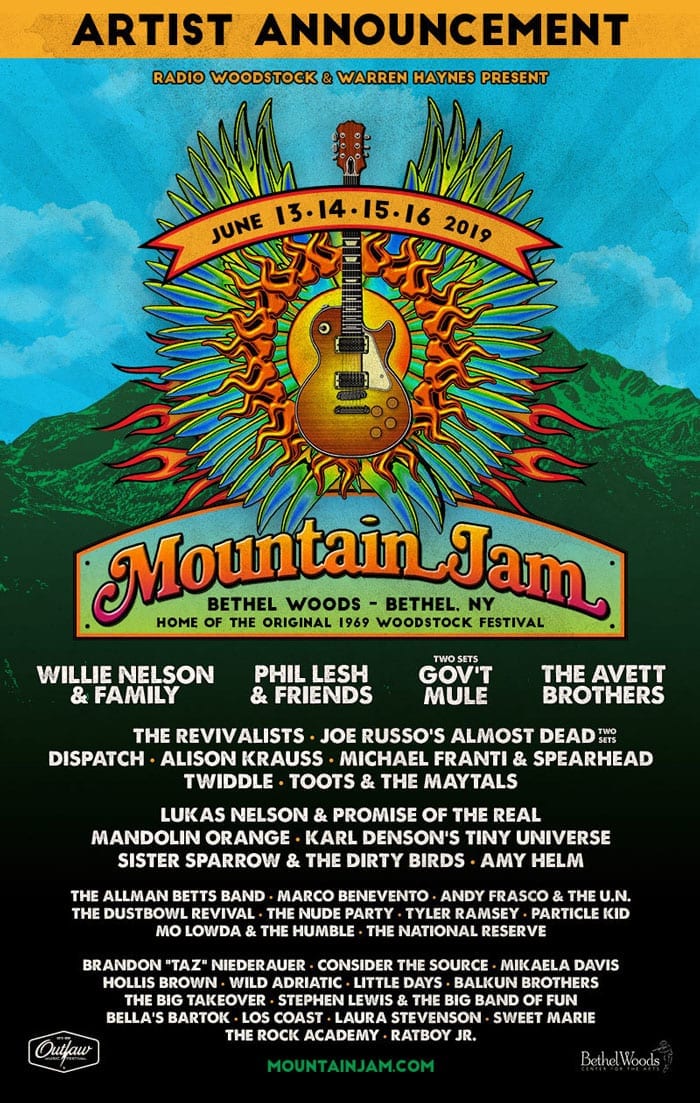
Now in its 15th year, Mountain Jam will be taking place at Bethel Woods Center for The Arts, home of the original 1969 Woodstock Festival. Bethel Woods is one of New York State’s most pristine amphitheaters located in a picturesque setting in the Catskill Mountains. The event will feature on-site camping and offer car camping as well. There will be 3 stages: a covered amphitheater, a 2nd stage on the lawn area & a terrace stage in a Greek- style amphitheater. The festival will also offer on-site activities including walking tours of the 1969 Woodstock site each morning, daily yoga, free entry to the The Museum at Bethel Woods and more. The VIP Program has been enhanced for 2019 with the addition of CID Entertainment. Learn more about VIP offerings here. There are new hotels in the area, Resorts World Catskill and The Kartrite Resort & Indoor Waterpark are two of the new accommodations. There will be shuttle buses running from both.
The 2019 Mountain Jam is going back to it’s roots, getting “Back To The Jam.” Tickets available now online.
Welcome to Sad Songs Summer Camp, where you’ll talk, listen to, and learn about music from the Milk Carton Kids. You’ll also get the chance to workshop sad and not-so-sad songs during your stay, with input from the duo. From July 23, to July 26 at Full Moon Resort in Big Indian, New York, you’ll join a camp full of other music lovers for an all-inclusive music vacation, complete with lodging (available in multiple packages), provided meals, and more.
The camp is powered by Music Masters Camp, a series of interactive retreats and workshops which bridge the gap between performers and their audience.
Kenneth Pattengale and Joey Ryan sum up the experience in their special, banter-filled style in a transcribed bit from the above trailer video.
Pattengale: “Basically, we all wake up, eat breakfast in the morning, Joey and I will give a master class, then a guest artist will give a masterclass. We eat lunch –
Ryan: “Master class?”
Pattengale: “Yeah, we’ll teach things, like things that we know. Harmony Singing, songwriting, lyric writing…”
Speaking to NYS Music about the camp following a recent show at Tarrytown Music Hall, Ryan described the way the camp came together.
“We’ve been aware of camps like this because friends of ours do them. Steve Earle does a camp called Camp Copperhead and the other people in our band will go and teach at folk and bluegrass camps. So, we’ve been aware of camps like this but we never thought that we would do one ourselves. When we got the call with the opportunity to host a camp, we thought it’d be a great chance to work with people directly and share a combined musical process.”
On reflecting if working in a teaching and workshop capacity is of particular interest, Ryan commented:
“I enjoy talking and getting to know people. We’re around musicians on tour all the time, so it’ll be great to spend time with people and musicians in another capacity, where we can learn about them and work directly. Conversations at merch tables are a quick ‘We loved your show’ and ‘Thanks, here’s a t-shirt we have,’ where at Sad Songs camp, we’ll be able to get to know people and fans on a deeper level that we aren’t usually able to, and work with their music, while spending some time to write for ourselves as well.”
According to the website, camp goers can expect a full, crafted experience.
“The camp will provide a space for a lucky group of individuals to learn, co-write, workshop, and, if desired, perform for an audience of like-minded peers — all with the guidance of the Milk Carton Kids and some of their favorite songwriters and comedians. Mornings will have Kenneth, Joey and their hand-picked guest artists guiding master classes that explore the ins and outs of harmony singing, songwriting, arrangement, lyricism, stage-banter and performance. After lunch, students will break off into workshops, working solo or with other campers on the skills of their choice, with encouragement and tips from TMCK and other SSSC instructors. Evenings are packed with entertainment, with performance opportunities for campers (don’t worry they’re not required), late night jam sessions, and informal song circles. Not to mention two intimate Milk Carton Kids concerts. Whether it’s over breakfast or around the campfire, students will have the opportunity to hang out with TMCK and friends while learning the tricks of their trade.”
Non-musicians are welcome to spend time and attend the camp as well. Interested people who have a roommate in mind are welcome to sign up at the same time to secure a spot together. The camp is a unique opportunity for Milk Carton Kids and folk fans to spend intimate time with an artist, and engage in a study of the craft together.
An early-bird special is available if you book before March. Secure your spot at Sad Songs Summer Camp.
“Woodstock never happened – it was planned.” This phrase sums up the massive effort put into the original Woodstock music festival, and after reading Barefoot in Babylon, you’ll see how much planning, including last minute changes of venue and crises both big and small, went into making Woodstock a pinnacle event in American music history. For those who enjoy a good music festival, there is perhaps no better publication recounting the extreme detail that went into planning this generation-shaping event than Barefoot in Babylon: The Creation of the Woodstock Music Festival, 1969.
In reading the 1979 history of the festival, one notices not only the culture of the late 1960s and the prevailing anti-war attitude in the nation, but also the minutia that we commonly overlook when we go to a festival. Food, security, fences, water, stage set-up, the performers, traffic, bathrooms, medical assistance, and just the all-around aura of each festival is given a full treatment in Barefoot in Babylon. As problems arose, sleep was lost, people ingested bad acid, a few deaths occurred, camaraderie was had between people from every part of the country, and memories were all that was taken. And a movement of music festivals around the country took on new life.
The struggles that Woodstock Ventures had in securing the site is a recurring theme throughout the book as they are constantly told there is no room at the inn. Various townships, including Wallkill, found ways to prevent the festival from taking place with only weeks to go before fans arrived. There is an overwhelming feeling that you are there, and can visualize every moment of the festival, how the stage slipped 6 inches during a torrential downpour, security extorting money from the festival producers, possible mass-electrocution, and the National Guard waiting on standby for what they thought would be a major health crisis. Regardless, the festival went off, hitches and all, and the legacy of the efforts of two hippies and two businessmen culminated in a weekend we continue to experience in spirit when attending music festivals each year.
Barefoot in Babylon is meticulously researched, with Spitz working a decade after the festival ended and working tirelessly to track down every member of the original staff that could be found. Stanley Goldstein, headhunter and campgrounds coordinator for the festival, was a major asset to Spitz, identifying and helping to connect him with staff so that he might jog their memories, and then, painstakingly, piece the stories together chronologically. Musicians including Richie Havens, Country Joe McDonald and more filled in behind the scenes details, with a full view of every detail of the planning of Woodstock extensively chronicled.
Tracking down a copy of this book takes some effort, as the book is out of print, but online retailers have used copies for sale. 500 pages doesn’t seem like enough to tell the whole story of Woodstock from conception to cleanup, but every moment, every individual, every problem that arose – and there are so many, you’ll be shocked they pulled it off – are all documented with great precision.
Barefoot in Babylon is written by Bob Spitz, author of The Beatles: The Biography, and whose most recent book, Reagan: An American Journey., is now available.
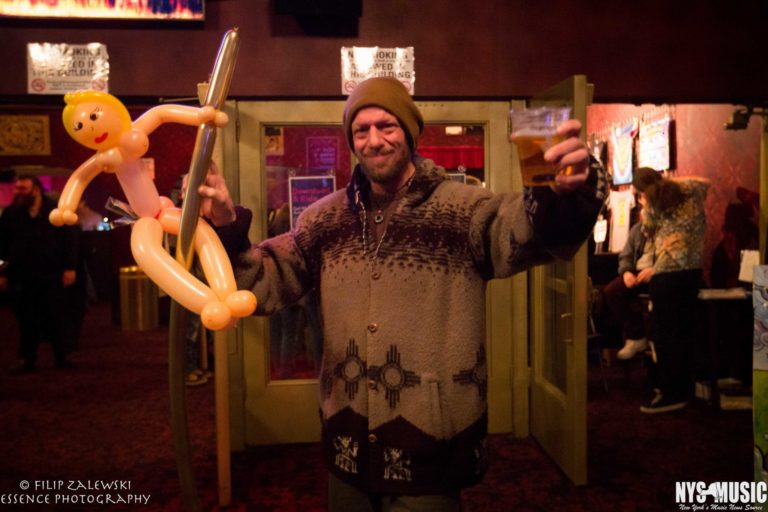
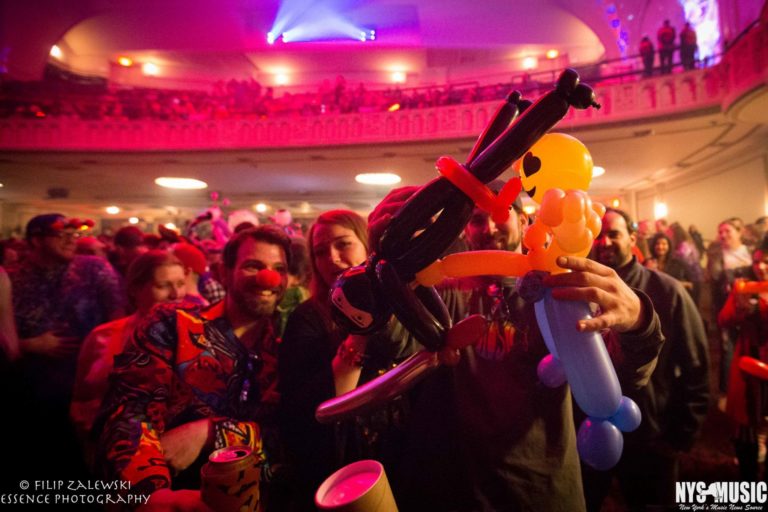
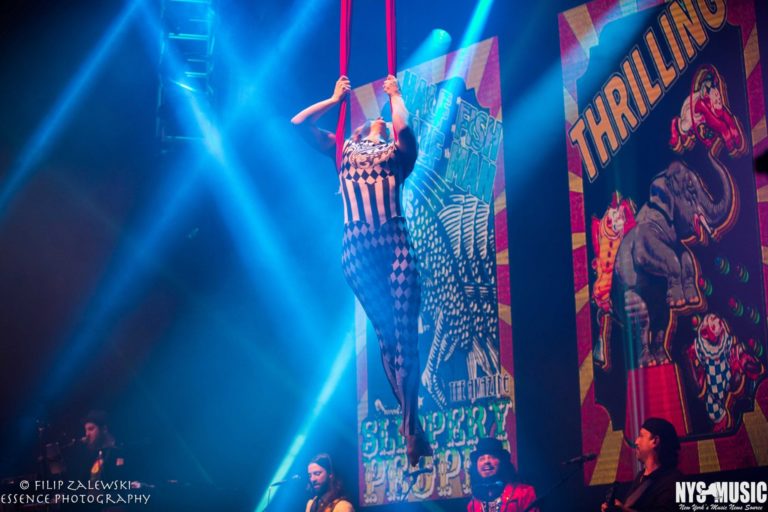
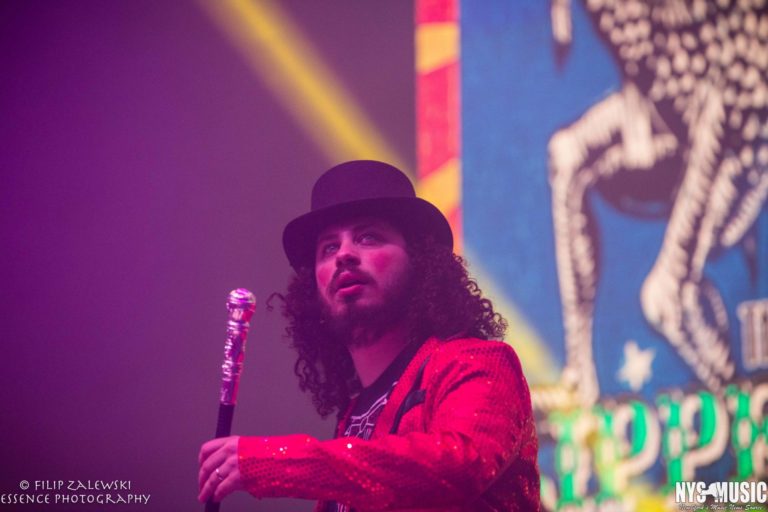
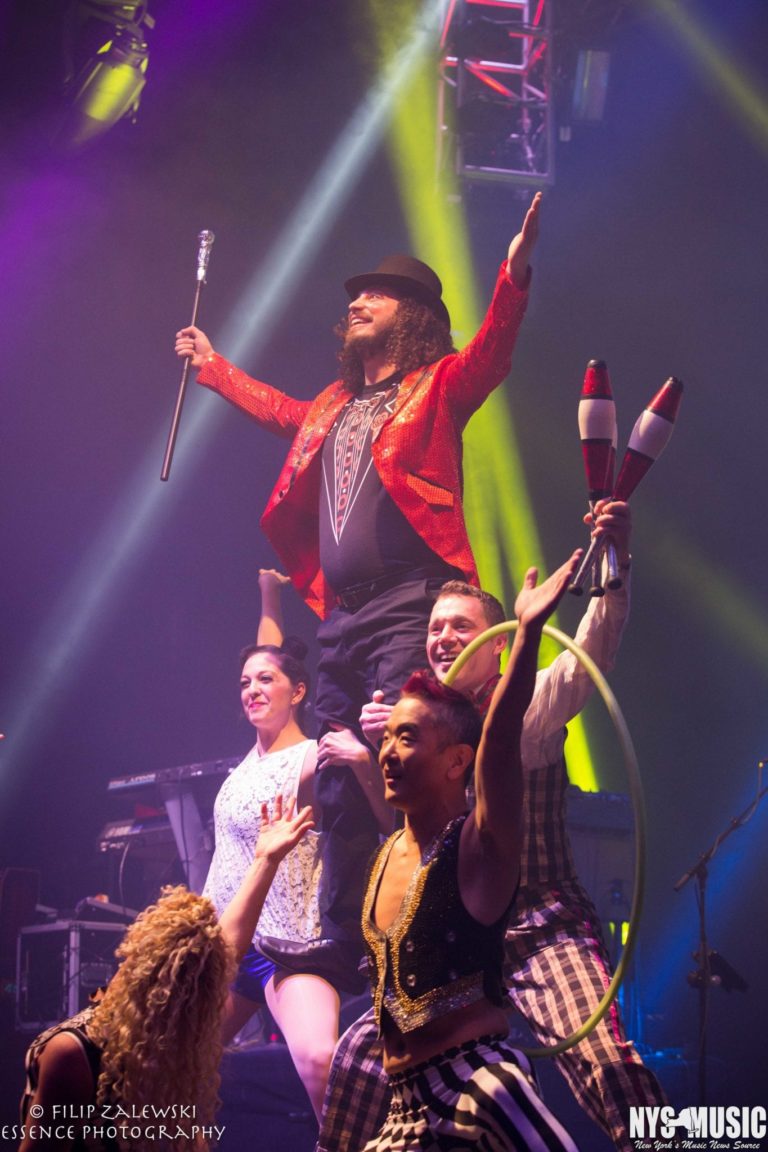
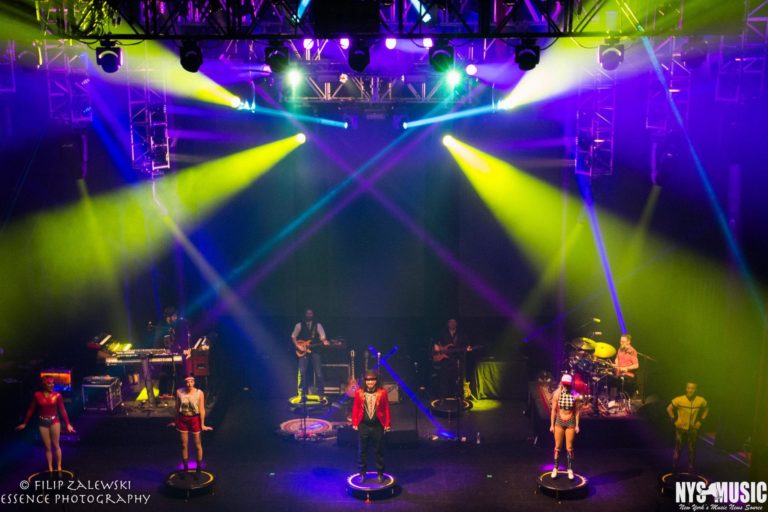
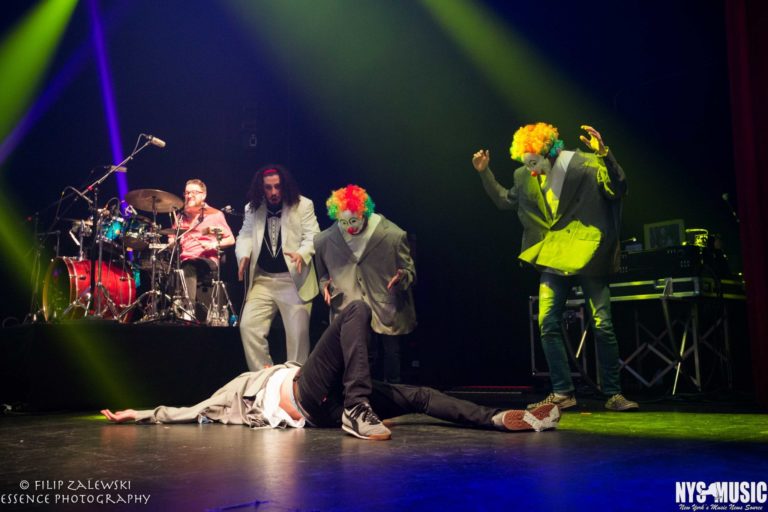
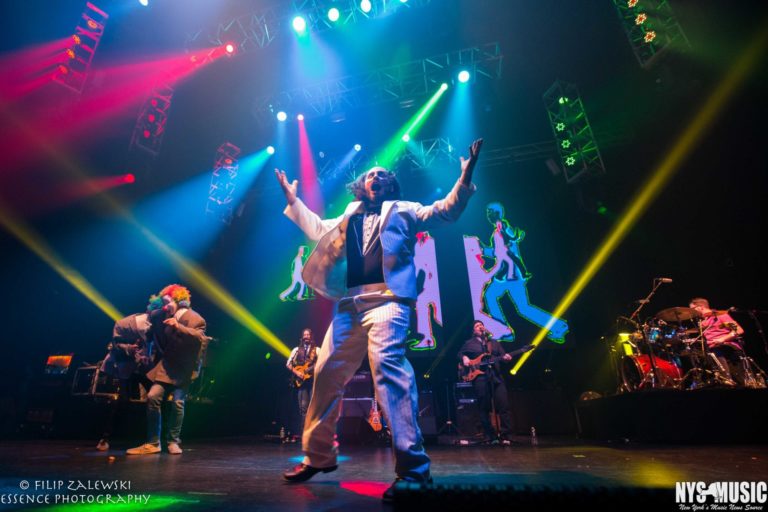
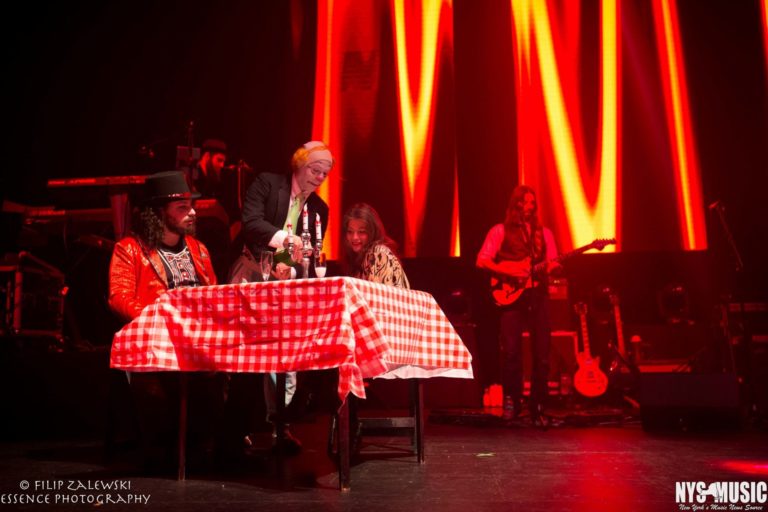
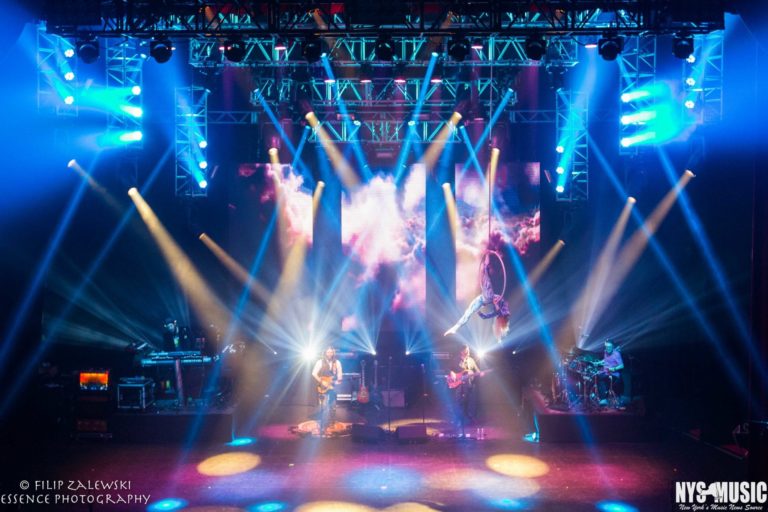
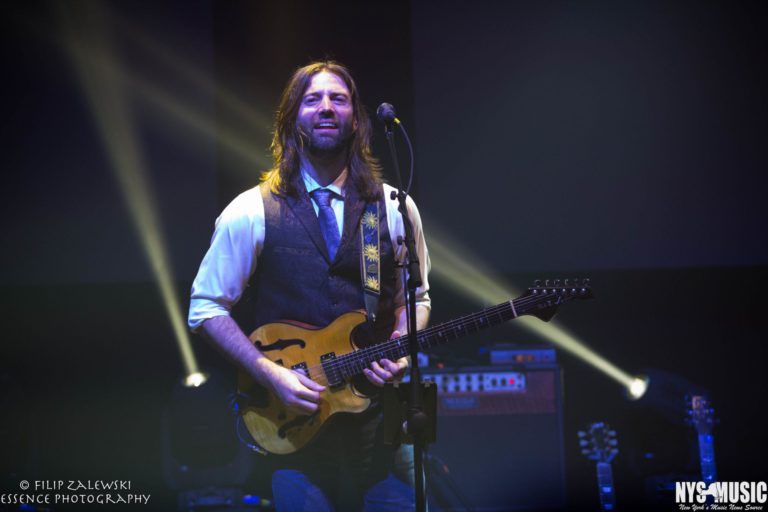
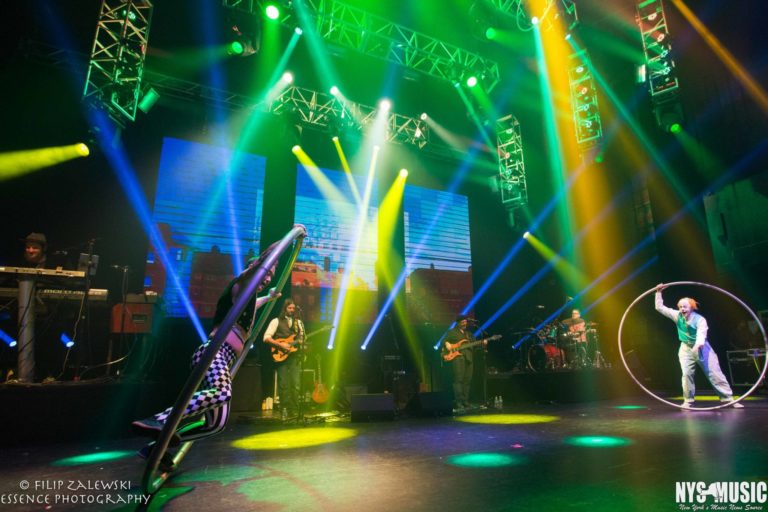
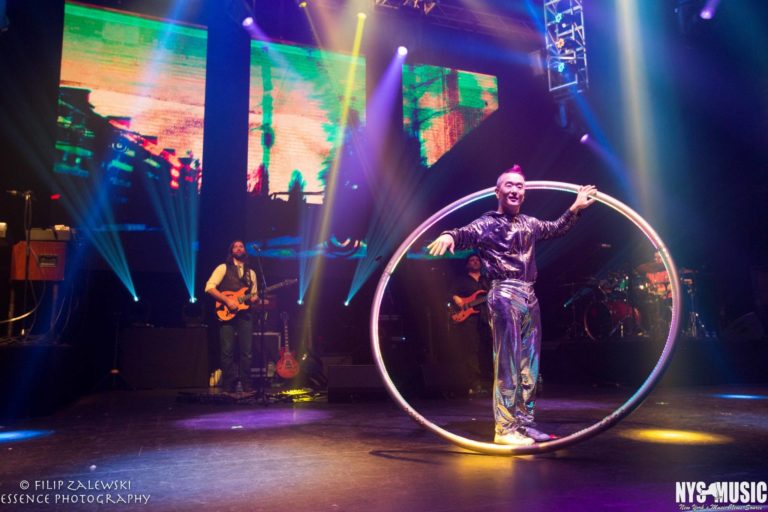
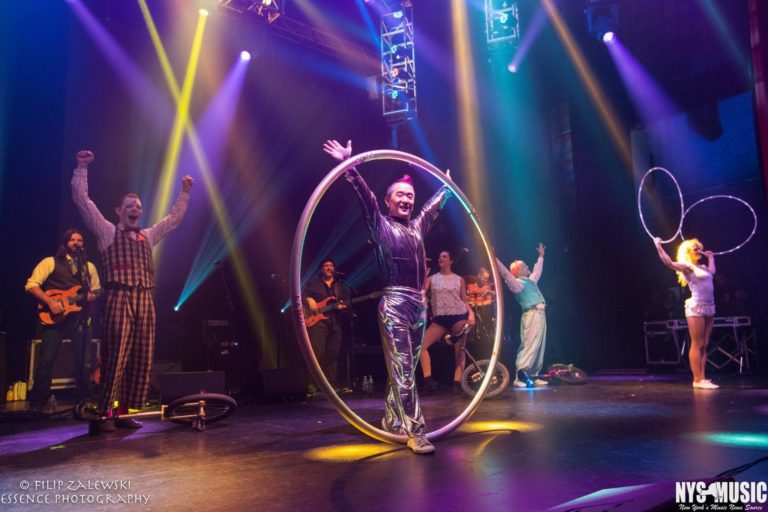
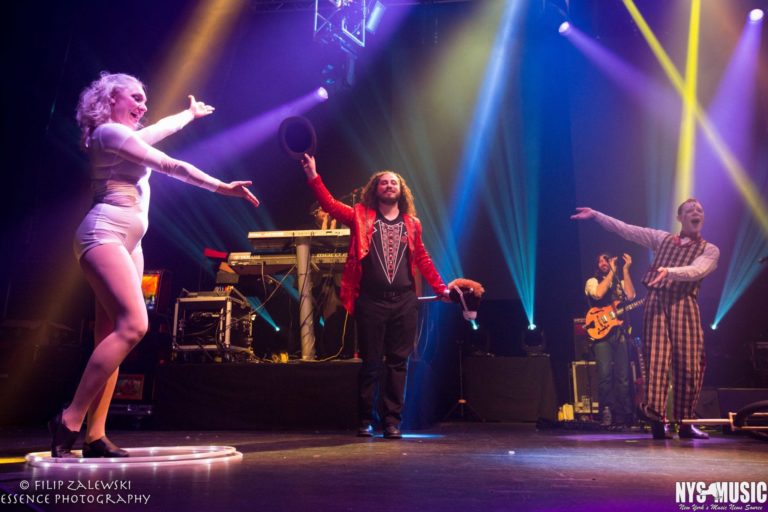
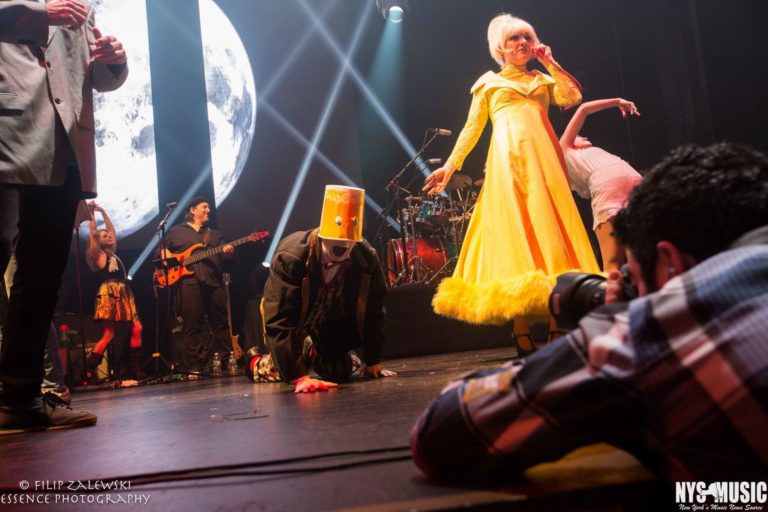
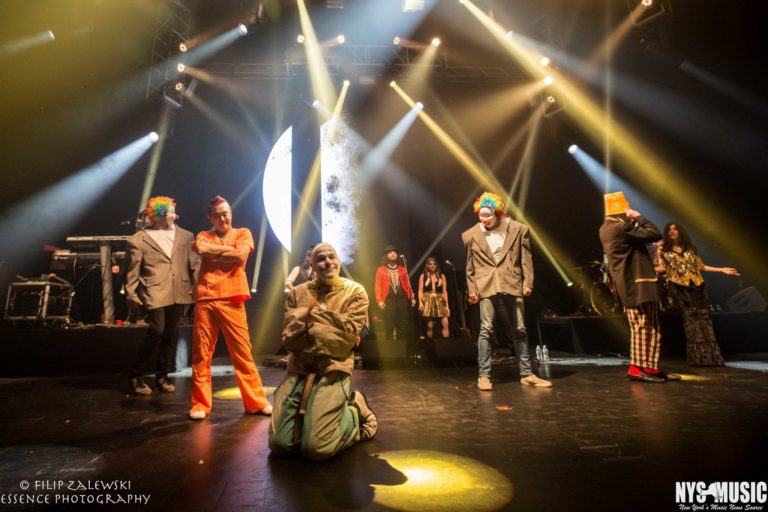
Pink Talking Fish literally brought the circus to the Capitol Theatre with Greg Ormont from Pigeons Playing Ping Pong stepping in as The Ringmaster. There was talk of circus performers and antics happening during the show, but what occurred can be described as nothing short of a spectacle!
Scrambled Greg was the perfect fit for the role of ringmaster. He stepped up whole heartedly and was silly, incredibly enthusiastic and hilarious. It appeared that he was having the best time out of anyone in the theatre. Greg sat in on guitar for a couple of songs, doing vocals on “Icculus” and even manning a trampoline during “You Enjoy Myself.”
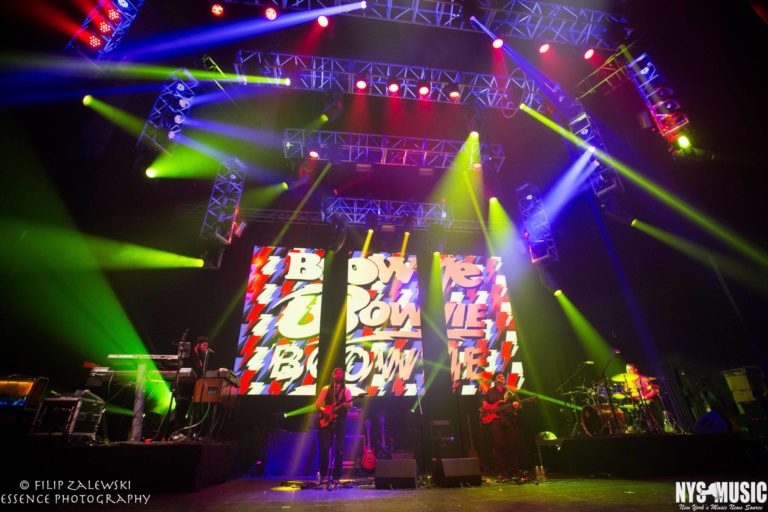
Pink Talking Fish burned down the house with an incredible musical performance featuring amazing takes on Pink Floyd, Talking Heads and songs off Phish’s Junta including “Y.E.M,” “Divided Sky,” “David Bowie,” “Fluffhead” “Fame,” “Foam,” “Dinner and a Movie,” “The Great Gig in the Sky,” “Brain Damage” and so much more. There was even a memorable sit from Ben ‘Junta’ Hunter, the first manager of Phish.
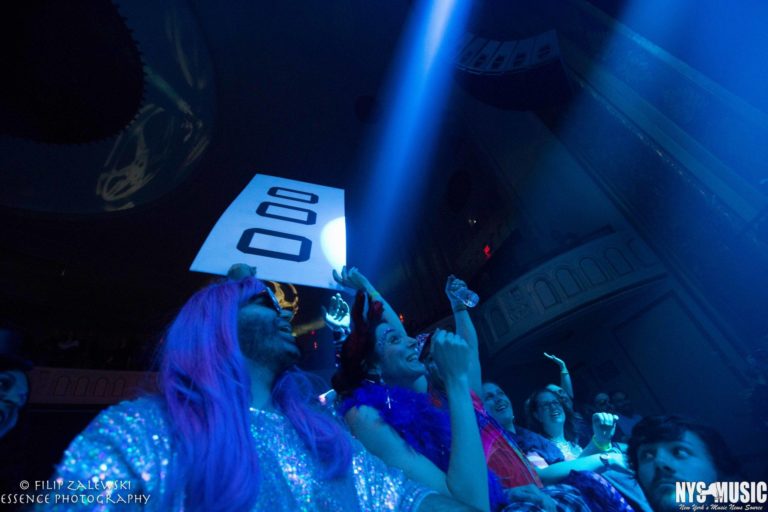
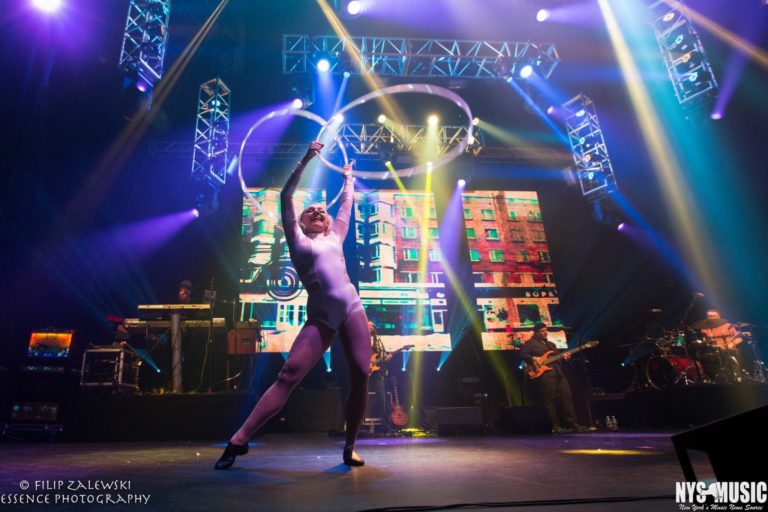
The Big Apple Circus featured an eclectic group on incredibly talented performers featuring clowns, aerialists, and a woman who could hoop ten-thousand hula hoops. The circus kept the show incredibly visually stimulating while PTF kept the jams going all night long.
Seems that this display is a notch up for PTF. Undoubtedly, this show took an immense amount of preparation and coordination by everyone involved from lighting designer to clown. They’ve showed that with a lot of dedication, with the power of music, and a little help from your friends incredible spectacles can be created.
“The circus is the place for me with bears and clowns and noise. I love the shiny music that descends from overhead”.
Pink Talking Fish: Junta Circus ft Greg Ormont 2/23/19
Set 1: Fee > Once in a Lifetime, You Enjoy Myself > Learning to Fly > You Enjoy Myself, Free Four, Esther, Life During Wartime, Golgi Apparatus
Set 2: Foam, Have a Cigar, Dinner and a Movie, Cities > Divided Sky > The Great Gig in the Sky > Divided Sky > David Bowie > Fame > David Bowie, This Must Be The Place > Fluffhead > Contact, Union Federal, Brain Damage > Sanity > Brain Damage > Eclipse > Icculus
 Angélique Kidjo, (Angélique Kpasseloko Hinto Hounsinou Kandjo Manta Zogbin Kidjo) is a native of the West African nation Benin. No stranger to creating astounding albums, Kidjo won three Grammys for her contemporary world music and was nominated on multiple other occasions. Kidjo premiered Remain in Light at Carnegie Hall in 2017 and she claims that West African influence on the original Talking Heads’ album made her interpretation an organic fit. While Kidjo’s musical interpretation will be a unique twist, the Talking Heads’ lyrics are sure to be familiar to all.
 When I first heard songs like “Lay Like You Do” and “What You Do to Me,” I couldn’t help but think of other beloved bands who create similar sentiments in their music. Driftwood, like The Zac Brown Band and Mumford and Sons, succeeds in inciting feelings of togetherness through the power of music. Some groups the band cite as their biggest musical influences span across generations including Paul Simon, Dr. Dog, Brandi Carlile, and Bob Dylan. It is evident by this list that they value “great songwriting and music that comes from the heart” as they told me.