Category: Albany

  • Mister F: The Hiatus Interview

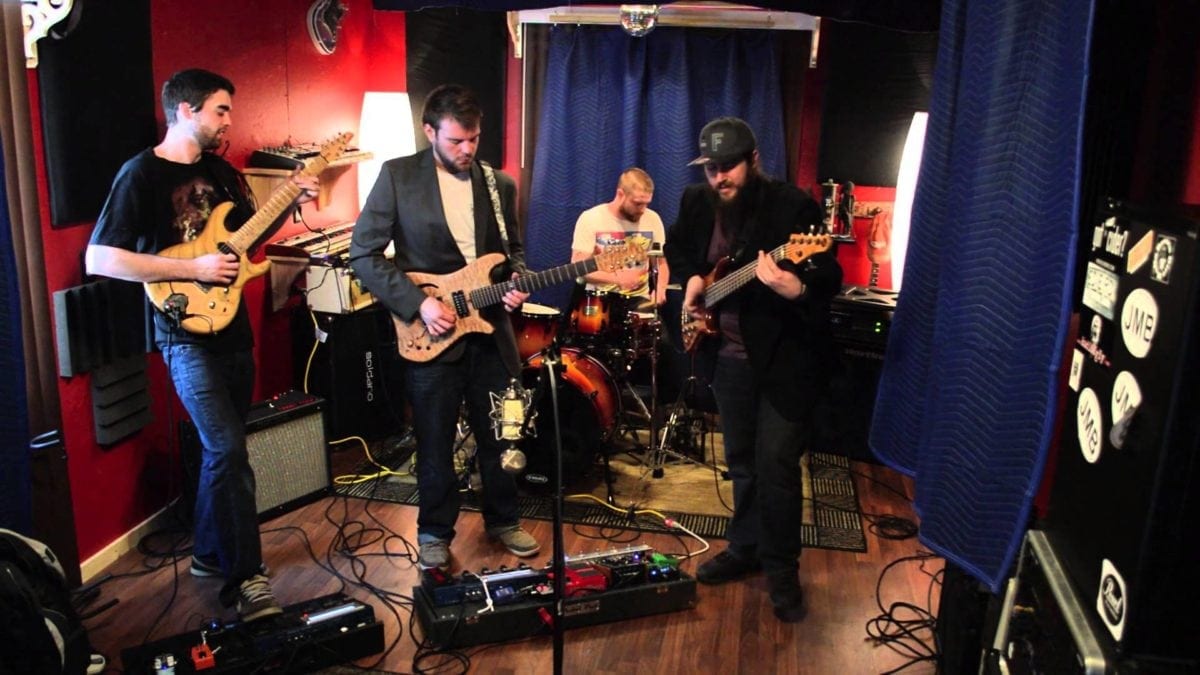
    Not all bands make it. Some break up. Some grow apart, others go on hiatus. and fewer return. Mister F is a band about to go on hiatus. The group formed in March of 2013 with 3 members of Timbre Coup joining forces with Scott Hannay of Capital Zen, to form a prog-rock jamband, and one that had a slew of songs right out of the gate. A cover of Particle’s “Elevator” (inspired, purely by coincidence, by a video my friend Mark mad 10 years earlier) was a highlight, as were original tunes “This one Goes to 11” and “Hedgehog” among others. Drummer Matt Pickering gave me the heads up and had incredible enthusiasm for this project, and the half full Hollow agreed that this enthusiasm was well placed for Mister F’s debut, and not just among Arrested Development fans.

    Over 5 years, they’ve played more than 580 shows, produced one studio album, with another on the way in 2018, but for now, they’re stepping back from the road and performing for the near future. Their final show, for now, will be at The Hollow on December 30 with Goose, starting a hiatus in the same place where the band started their journey nearly 5 years ago.

    But how did the band end up here, calling for a hiatus after five solid years and a strong core fan base across the Northeast and Midwest? Was it preventable, a series of unfortunate events, or something else? With their final show before hiatus this week, NYS Music spoke to members of Mister F, past and present, as well as former managers, to get the first hand account of what led to this asterisk on their career. Read the story of a band who spent 5 years working tirelessly to make it as touring musicians, and discover what drove the band to get this far, and to decide to put the brakes on, for now.

    Mister F HiatusScott Hannay: We started writing music toward Mister F in late 2012 as a side project – a way to throw some tours in here and there, as Zen and Timbre Coup weren’t able to be in tour mode at that time. We all wanted to get ourselves out there. It quickly became a vehicle to do that, and overwhelmed the other bands. I was let go from Capital Zen, who moved on without me, and later that year, Timbre Coup also folded.

    Matt Pickering: When Timbre Coup was slowing down, the 3 of us who were living in the bandhouse were still interested in going full steam ahead and touring as often as possible. At the time, we really wanted to keep the same instrument switching aspects TC had and besides Dan (Gerken), Scott was really the only other person we could think of who played bass, guitar, and keys. We knew him as a keys player from shows with Capital Zen and we were quickly impressed with his guitar and bass skills when he sent us hopeful future parts/tracks that he wrote. Scott was great from the get-go and he was totally on board with our plan to play 140 shows a year. That was how the last 5 years of my life started.

    Andrew Chamberlaine: Before Joining Timbre Coup I was pursuing a degree in Music Ed at (The College of) Saint Rose. I had known Ben for a while because we were in the Music program at SCCC together. I played in a band for a short time With Dmitry Bolotny (who went on to form Dirty Paris shortly after) and crossed paths with the rest of Timbre Coup while playing a gig with them at Savannah’s in Albany sometime around 2008-ish. A few months after that gig I got a message from Matt asking me to try out for their band.

    We all knew that changes were coming for Timbre Coup so Mister F was formed out of necessity to continue our passion for creating unique music. Initially we wanted to keep the ball rolling with Timbre Coup and make necessary changes but it didn’t work out that way so we re-branded and started from scratch (more or less). In hindsight creating Mister F with most of our existing lineup allowed us to create some really cool new music and fix a lot of the things we felt Timbre Coup fell short with. TC’s music was pretty complex (I mean how does one dance to a song that’s in 7/8, 5/4, and 4/4 at the same time?! lol) so we decided to tone in back and reach our audience better while still keeping the music unique and original. At the very least we discovered two things with Mister F; 1: you really can make a song groove in an odd time signature, and 2: the van doesn’t smell good after a while.

    As Mister F began touring, there was a drive to the band to set goals for themselves. Relationships that had been developed over years as fans and musicians, particularly with Umphrey’s McGee, lead to official after-shows and greater opportunities and encouragement.

    Ben Pickering: I felt like there were a lot of factors pushing us when we first started touring. We started traveling as soon as we had enough material to play a show. Our sixth show was an Umphrey’s McGee after-show in Chicago. The relationships we made with bands in previous years allowed us to pick up great gigs and some great festival plays really early on. It felt really good and it didn’t take too long to feel like we achieved more in a couple years with Mister F than we did in our previous bands. Getting opening slots for some of the bigger band almost felt like we got their approval and helped push us to work as hard as we could. We’ve always been very goal oriented, whether it be playing X amount of shows in a year, or hitting a couple big festivals a summer, we always focused on one thing at a time and got it done. And we’ve always had a great team helping us along the way: David Limentani our booking agent, Mike Dean and Aaron Hagle both former managers, and Greg Bell were huge factors in getting us to this point.

    Mike Dean: I think I had only heard one or two songs the band recorded in their practice room by the time I decided to make the move to Albany.  I was a huge fan of Timbre Coup at the time, and knew what the guys could bring to the table musically. Aside from the logistics of moving roughly 700 miles away and entering an industry in which I had no experience, it was a no brainer.

    We were fortunate to be able to kind of pick up right where Timbre Coup left off.  Already having lots of contacts for venues, promoters and festivals along the East coast was a huge plus.  From that point, it was just a matter of increasing that base of contacts all across the country and trying to work our way further from home each tour.  Most of what actually gave the guys their running start was their desire to tour relentlessly from the get-go.  By 2014, we were already hitting 130+ shows a year.  We did quite a few Umphrey’s McGee after parties during my time with Mister F.  It was always a right place/right time scenario, and we were lucky enough to get the “official” stamp a number of times, which helped considerably with turnout.

    As things got rolling early, all signs were positive. The band dealt with ironing out aspects of their sound, including ending the instrument switching mid-set that was a staple of Timbre Coup and early Mister F. 

    MP: We were so young when we started Timbre Coup but we learned everything we know about how to play shows in that band. We were very serious about it, but it takes a few years to learn the business and really be on the road. So we started Mister F with lots of experience and one thing we wanted to do was find our sound. We were going for more funky, a bit less edgy. Timbre Coup had so much material so it’s hard to sum it up but it was prog based and more math-y fusion. We were shooting for a toned down version and with more keys. Just changing one member makes you sound incredibly different, though. So while we were writing early on, we worked fast but were very picky and choosy with what we went with. A couple years in we also decided to keep Ben on bass and off guitar, and Scott on keys and off guitar and bass. The instrument switching every show turned into a challenge. It also made it hard for us to find our sound we had so many that we could choose from with in our own band members we felt it was best and we wanted to put our best foot forward.

    SH: Our early goal after our other band obligations went by the wayside was just to tour as much as possible. We worked hard at booking ourselves in all sorts of places, doing it in-house with the help of our former manager Mike Dean. He had moved up from North Carolina to work for us because he was a good friend who believed in us and really went to bat for us, and I’ve always understood that’s the kind of person you want as your manager. We were reaching out to all our friends we’d made from our old bands to open for them, some were reaching out to open for us, we tried really hard to get everything we set our minds to. We got an opening slot for Suckerpunch (tDB/New Deal/Lotus side project) at the Howard Theater in Washington DC in our third month as a band, just because our friends rallied for us.

    Mike Dean: I reached out about the opening slot for Snarky Puppy the day I saw the show announced at Upstate Concert Hall in Clifton Park, NY.  We were playing directly before Snarky Puppy at Mantrabash festival in NC a few weeks before said show, and I still hadn’t heard anything back.  I’m pretty fuzzy on the exact details, but at some point after our set, Ben was backstage talking to Michael League (bass/band leader for Snarky Puppy) and mentioned how we had tried reaching out about the gig.  Michael said he’d touch base with their management as soon as he had cell service and make it happen.  A few days later I got a call from an unknown number and it was Snarky Puppy’s manager informing me that Mister F got the gig!

    Over the next two years, the band soldiered on, touring around the east half of the country and filling festival bills and drawing larger and larger audience at the club level. Then the band ran into some unfortunate circumstances beyond their control.

    SH: Unfortunately money for these things don’t always align with the opportunity. To make matters worse, our van was broken into and we had two instruments stolen, one of which a very unique and expensive custom-built guitar belonging to Andrew which he had to use buy now pay later loans to acquire. Mike ended up not being able to keep up with the small amount we were able to offer him, and his time with us came to an end around the same time Andrew gave his notice.

    MD: I hit that point where it became impossible to balance the life on the road with my own personal financial obligations.  I think almost anyone who has ever been involved with a touring band at this level can relate.  It was one of the hardest decisions I’ve ever had to make.  Working for Mister F was the most enjoyable and rewarding experience I’ve ever been apart of, and it was tough to leave that behind.  I’ll always cherish the friendships and memories I made during my time with the band.

    Andrew departed the band not because the guitar was stolen, but due to financial and family reasons. 

    AC: As much as it sucks having a guitar stolen that’s worth five times as much as your car at the time, that had little to do with my departure. I had two main reasons for leaving Mister F. The obvious one is money. Money had always been tight with both of our projects (Timbre Coup and Mister F), and we were working our asses off to create what we thought was good, forward-thinking music and I thought we were doing a pretty good job, however my wallet never seemed to agree. Around the same time Mister F formed I took a teaching position at Parkway Music. Both were growing at the same time and the balancing act became impossible. I only had one choice if I wanted to use my guitar and music to pay my bills on time. I love creating my own original music, there’s nothing quite like it, but I also love teaching the guitar & teaching people about music. I now have around 45-50 students, manage the lessons department at Parkway and can honestly say I love my job!

    The other reason was family. Being on the road as often as we were led to missing out on a lot of things, which for a while I dealt with. The main factor for me was the loss of my last grandparent, my Grandmother Ila. She had always supported me, really ALL of my family has always supported my musical endeavors which is why I’ve been able to take it this far (shout-out to my girlfriend, mom, dad, aunts, uncles and friends!) But she was a huge reason I was even able to pursue my passion in the first place. Sometimes you have a family member that really holds the whole family together, so when she passed away I knew I had to step in and pick up the pieces and be there for those who needed me as much as I’d needed them before.

    Guitarist Mike Candela replaced Andrew on short notice

    SH: At this point, we had a southern tour scheduled with McLovins less than a month away, with no manager and no guitarist. Mike Candela reached out to us because he’d just left his band. It was perfect timing, and he was able to learn the material and come on the road right away. Our writing dynamic was never the same, and it felt more like a bandaid had been affixed. Mike is one hell of a guitarist, but musical differences upon finding someone on such short notice eventually became apparent.

    Mike Candela: I actually opened for Mister F with my previous band Dale and the ZDubs. I left DZD due to creative and personal issues with frontman Dale Rodman. After leaving DZD I actually hit up Scott Hannay and asked if they had ever thought of a second guitarist and he initially told me they were good as a 4 piece but to come sit-in anytime. After Andrew left, Scott hit me up and we hit the road. In my time with the band we handled the road pretty well I think. We were fortunate in terms of the bands we played with and the venues we played at and got to play in front of a lot of people. We all were personal and talkative with the fans we already had who would come to shows and made a bunch of new ones. Musically I think we were constantly pushing ourselves play our best each night. In terms of growth, it seemed to me like we were always generating interest and praise, but we always tried to handle it with humility and stay focused on our goals as a band.

    I ended up departing the band for a number of different reasons. I wasn’t really aware of how badly the band wanted new material and thus didn’t try to write any songs. I was also very different stylistically from Andrew as a player, especially when it came to solos. I have always been more of a funk/jam player rather than a progressive/jazz guy. Colin was available and a much better fit for the band in my opinion. Obviously I left on good terms and have since sat in with the band a bunch, as well as covering for Colin when he had surgeries for kidney stones.

    Mister F Hiatus
     
    When Mike didn’t work out, the band found Fat Aztec guitarist Colin Shore to fill in, but there were complications.

    SH: We then looked to Colin Shore for our full-time replacement. We’d played with his band Fat Aztec and had him sit in with us before. We’d had a lot of great musical conversations with him, and had unanimously decided “he’s the guy”. He took over mid-July 2016. But shortly after he started suffering severe kidney stone issues that put Mike Candela back in the van with us for two full tours toward the end of the year. While it was fun playing with Mike again, we were all that time unable to pursue the growth in the areas that we were hoping to continue growing with Colin.

    Colin Shore: Fat Aztec was coming to a pretty organic close at the time. The other members of the band were moving on into other non-musical endeavors while I was still interested in chasing the tour life. My joining with Mister F happened at a good time in my musical career for sure.

    Having to take a break from touring to deal with medical issues was a huge drag. I was very fortunate that the guys in the band are such good folks and good friends that they were willing to work with me and be patient despite the roadblock. There may have been some slight interruption to our musical advancement at the time. But overall I felt a renewed sense of purpose and connection with the band coming back into the fold in 2017. I felt the band really evolve musically throughout the year.

    Starting in 2017, Colin was healthy and a new manager, Aaron Hagele, joined the band to work with the band and get things back on track. The bands van died only a few months into 2017, just as plans to record an album came into the picture. A Kickstarter with a simple goal of $100 was easily met, but they could not both fund an album and buy a new van. 

    SH: We didn’t owe it to people to buy a van, we owed it to them to record an album. And we were forced into an expense of minivan rentals for subsequent runs while not making any more than we were before. We then decided to take some time off from touring to complete the album that we owe everyone, and to figure out what as a band we need to do to carry on in a productive way without putting our own well-being at risk.

    Aaron Hagele: I started working with Mister F fall of 2016, when Mike was touring with the band temporarily. Colin is a beast, but in the most tasteful restrained way possible. The first time I heard him play I knew he had something unique, the ability to shred and play amazing runs but the restraint to play tastefully and listen on stage, being ever present. I however, would have worked with them with or without Colin. Matt and Ben Pickering as well as Scott Hannay are some of my oldest music industry friends, I had been gig trading with their previous bands going back 7 years. I wanted to work with them because I have always been inspired by ALL of their musicianship: Matt is one of my favorite drummers ever, with chops for days; Ben couldn’t be smoother in the pocket if he tried (which often seems like he doesn’t have to) and Scott has one of the most gifted musical minds on the planet, seriously.

    The real underlying reason is I thought I could help them further themselves on a professional level, improve aspects of their organization and help them grow; I wish I would have been able to do more. The reason I ultimately left was because it was clear that I was no longer able to help them enough to merit my role. It had been too little too late to affect the change needed to right the ship, I had become busy with my own band, and it had become clear that the guys no longer wanted to tour in the same way. We remain very close friends, and in fact Goose will be opening for Mister F in Albany on December 30th for a Twiddle afterparty, and as is tradition, hopefully they will have me up for a sit in!
    Mister F HiatusThere are a lot of ‘What ifs’ in the story of Mister F. What if the vans hadn’t broken down? What if touring led to a steady increase in revenue over the years? But more importantly, for touring bands out there who are just getting going, what are the lesson to be learned from the (still unfinished) story of Mister F? Fate is a fickle bitch who plays her hand as she sees fit, and certain fates fell upon Mister F in a slow moving succession that led them to this point. But maybe in a way, they did make it. Andrew Chamberlaine offers this parting thought on what might have changed the band’s circumstances:

    Luck, and maybe more of a “business mentality” but who the hell wants to treat art or music like a business?! So much of this industry is based on luck. For every successful band/musician we know of there are at least 100 bands/musicians with more talent and originality that we won’t hear of because they didn’t catch that break or weren’t in the right place at the right time. I always think “Well what if I gave it more time?,” but the fact is time is finite for us all, just do what you love and have fun with the little time you have here on Earth and I can guarantee you’ve “made it” in your own right.”

  • Writer Garret Woodward talks Bluegrass ahead of Book Readings Dec 27 & 28

    Author and New York native Garret Woodward will host two readings and discussions of his first book “If You Can’t Play, Get Off the Stage.” The bluegrass-centric book covers interviews with dozens of bluegrass, folk and Americana legends, and dives deep into the genre with the performers themselves.

    Garret WoodwardWoodward will be at Champlain Meeting House in Champlain on Wednesday, December 27 and at Nine Pin Cider in Albany on Thursday, December 28. Both events start at 6:30pm. Currently based in Asheville and serving as the Arts/Entertainment editor for The Smoky Mountain News, in addition to duties as music editor for Smoky Mountain Living magazine, Woodward published his debut book earlier this year to rave reviews. His weekly column in The Smoky Mountain News, “This must be the place,” is a must read.

    NYS Music spoke to Woodward about his book, bluegrass in New York and what kind of music scene can be found in Rouses Point.

    Pete Mason: Your book “If You Can’t Play, Get Off the Stage” features interviews with numerous bluegrass musicians from around the country. How did you select the interviews that made the book, and do you have any particular favorites?

    Garret Woodward: Well, the book itself came as a result of my 2016 nomination for “Print/Media Person of the Year” from the International Bluegrass Music Association, or IBMA, which is the overseeing body of the entire bluegrass industry. Kind of like the Grammys of bluegrass, in a sense. Though I didn’t win the award, I realized those that had won it previously had been involved in book projects. And yet, it’s not about winning the award. In all honesty, it was about realizing I needed to take my music journalism to the next level, which is doing long-term projects. As an arts and entertainment editor in Western North Carolina, in the shadow of the Great Smoky Mountains, you really can’t throw a rock around these parts without hitting a talented bluegrass picker or singer. This is the birthplace of so many incredibly iconic bluegrass and mountain music performers. What’s interesting is, some of the finest, most intricate pickers I’ve ever come across never actually “left the porch,” where they looked at the picking after dinner or on the weekends as pure enjoyment, as if to say, “if you were lucky enough to hear it and witness it first-hand, you were lucky enough.”

    That said, in my five years at The Smoky Mountain News, I’ve had the pleasure of simply being around so many great bluegrass players, many of which live within an earshot of my home-base in Waynesville, North Carolina. Heck, one of the most successful and award-winning bluegrass groups nowadays, Balsam Range, all live in Waynesville. I run into them at the coffee shop, post office and local breweries. We’ve become great friends over the years, too, which I cherish. You also have folks like The Steep Canyon Rangers and Mountain Faith hailing from these parts. Beyond that, the more I immersed myself into the bluegrass scene, the more I kept discovering, the more questions I had, the more musicians I came across, all of which I had, and continue to have, a deep, unrelenting desire to interview and document.

    Truthfully, each of the interviews in the book hold a special place in my heart. First and foremost, my decade-long friendship with Peter Rowan, who also wrote the introduction to the book, stands out. He and I have sat down and interviewed more times than I can remember. A true cosmic cowboy. Alongside that, I would also have to add the time I headed up to Bill Monroe’s Bluegrass Hall of Fame in beautiful Bean Blossom, Indiana, and covered the Hall of Fame induction of my friend, Western North Carolina native and banjo great Raymond Fairchild. That was a tear-jerker standing there, watching him finally get the recognition he deserved after so many years of being either overlooked or forgotten. And then there was the time I drove all the way down to a bluegrass festival in Florida, and had planned on doing a backstage interview with David Grisman, only to have the “Dawg” bluntly say he wasn’t interested in talking to me. So, I went and sat sidestage and still watched his show, mesmerized. I swear, he kept looking over at me every-so-often and grinned, as if to acknowledge my pure love and interest in what he was doing. Following the show, he came up to me and said, “Ok, you can ask one question, but it better be good.” We ended up talking for the better part of an hour, walking away as friends.

    PM: Why bluegrass? What is the appeal of the genre to you to compile a book of this nature?

    GW: The beauty of bluegrass comes from the mere fact you can’t hide behind anything. It’s a human being with an instrument and a voice, standing amongst others doing the same. What you see is what you get, what you hear on an album is exactly what you will hear onstage, and amid layers of intricate jamming and soloing. There are no gimmicks or stage tricks with bluegrass. It’s honest music about honest people trying to make an honest living in a sometimes cruel and confusing world. It’s also the music of the history of America. At its core, bluegrass is the intersection of British Isles ballad traditions and African/African-American culture, in terms of slavery coming to this country. Most folks don’t realize that the banjo is actually an African instrument. So, you take those two backgrounds colliding, add in centuries of mountain isolation and a crucial tradition of oral storytelling in these mountains, and you have bluegrass.

    PM: You grew up in Rouses Point, one of the northernmost towns in all of New York. I may only be able to get an answer once in a lifetime – what’s the music scene like up there?

    GW: The music of Rouses Point was, and I would surmise remains, similar to many other towns of the Northern Tier and Route 11 corridor. It’s a ton of tribute bands onstage in just as many dive bars, many of which playing a heavy mixture of The Tragically Hip, Grateful Dead, April Wine, Phish, an oddly large amount of southern rock, and so on. So many tribute bands, but all of which filled with familiar faces that had, and still have, a deep love for music and musicianship. Aside from that, there is a large segment, and also appreciation, for string music and bluegrass. You have to remember, a big portion of that British Isles culture didn’t come through Ellis Island in New York City, but rather through the St. Lawrence Seaway into Quebec and Ontario, onward into Upstate New York and Vermont. As a kid, I remember plenty of bluegrass festivals, in Plattsburgh, Jericho, Mooers Forks, or wherever there was an open field on a day that wasn’t freezing. Rouses Point is pretty far away from any type of scene, unless you wandered down to Burlington, Vermont, or over the border to Montreal. So, we’d all get a bonfire together and a group of folks, grab a few cases of Labatt Blue, and rock out. There were always instruments around, but more so it’d be somebody blasting the new Phish or Strangefolk bootleg in their rusty truck with a stereo and speakers worth more than the whole vehicle.

    PM: The North Country has a music culture all its own. What do you see as a standout feature to the music coming from this region of the state?

    GW: A big component of the North Country music scene kind of pertains to what I had just mentioned, which is this huge appreciation for music, and also a keen aptitude for sound and rhythm. In terms of the music itself, it’s sonic signature would reside in that every band is unique, and also a sponge that soaks up whatever everybody else is doing. Running around covering shows in the North Country, and also managing one of the area’s biggest bands for a spell, I will say the camaraderie between groups is incredibly unique for a scene. Everybody who is onstage playing one show will, like clockwork, all go and see the late-night band next door following their set, the same late-night band that was rocking out in the crowd at the initial show. I also have to point out that though the North Country may seem, and is, geographically isolated, it’s that same isolation that attracts interesting and talented folks from all over the world. You see and hear so many musicians up there where many of them came from somewhere else, and with that, brought along all their musical influences and skills, only to contribute to the ever-evolving and growing pile of creativity in the North Country.

    Beyond that, with never-ending, merciless winters and just the sheer nature of isolation from urban areas, folks up there have a lot of free time when they’re not hard at work trying to live and trying to survive. So, with that precious free time, they either practice their instruments or spend endless hours listening to music.

    What I’ve also always liked about my fellow North Country folks is their sincere gratitude for the experience of a live show. They’ll, and myself included, go to any band that’s playing anywhere in their town, just to get down and sweat out the lingering winter and perhaps stagnant nature of life itself in that small town. And the live show is a congregation of small towns in the North Country, maybe the one time of the week you run into most of the people you know where you live. Those same folks will also throw down on a big show, too. I can’t tell you how many friends and family members of mine truly save up throughout the year to do a Phish New Year’s Eve run or follow moe. around the East Coast. We love our music, especially when performed live.

    PM: How have you seen the brand of bluegrass found in New York compare to that of other areas of the country?

    GW: With New York bluegrass, the obvious ambassadors would be The Gibson Brothers. They’re from a couple towns over from where I grew up, in Ellenburg Depot, the epitome of a “cow town,” where there are more cows than people when it comes to the population. They have made quite a name for themselves locally, regionally, and nationally, as one of the premier bluegrass acts anywhere today. And their story of how they came across bluegrass, and what it means to be from the North Country and such, is very similar to mine, which is why we’re become good friends over the years of crossing paths at shows and events. With the Gibsons holding strong to that traditional sound, you also see a lot of scrappier, what we would call “mountain music” bands in New York, where it’s not technically bluegrass, in terms of a traditional or mechanical sense, but the attitude and sincerity of the stage show resonates just as deeply and passionately. That scrappier New York style of, well, I guess bluegrass, seems to be played much faster than the traditional style, and with more urgency, where it’s more about getting the crowd going than actually trying to impress the audience, as if to say, “there’s no time to show off, let’s get this party started.”

    PM: What is it about music that inspires you to write?

    GW: Music is the one thing that makes sense to me. Whenever I’m frustrated with life, whether my own or the world-at-large, going to a live show or throwing on a favorite album brings an immediate calmness to my heart, and also a much-needed spark to the fire within my soul. I started writing about music purely by accident. It really kind of happened out-of-nowhere. And it felt good, so I kept doing it. Now? It’s my “Zen zone,” almost like a meditative state, where I have my headphones on and I dive into the depths of my thoughts, emotions and interpretations of what I see and hear, and why it’s important to, and for, the greater good. I aim to share my love for music with others, because, as we music lovers and freaks are well-aware of, there’s nothing like a live show and making a connection with those onstage and around you.

  • Best of NYS Music 2017: Staff and Reader Picks for Best Venue

    NYS Music is celebrating the end of 2017 by sharing our staff and reader picks in 10 categories, and today we are highlighting the winners of the Best Venue in New York State.

    Staff Picks

    Brooklyn Steel

    This new venue in the heart of the East Williamsburg neighborhood of Brooklyn has been quite busy in its first year of existence.  Playing host to such acts as Ween, Pigeons Playing Ping Pong, Turkuaz and Yo La Tengo, this 1,800 person capacity room prides itself on open sight lines and great acoustics thanks to a roof specially designed to keep in sound.  The venue’s name is derived from the previous use for this building on the corner of Frost and Debevoise streets, steel fabrication, and patrons are constantly reminded of this with a minimalist decor furnished with scrap metal.

    Owned by Bowery Presents, the similarities between Brooklyn Steel and Terminal 5, another Bowery Presents-owned NYC music venue, are unmistakable.  Both rooms have an industrial feel to them, highlighted by the standing room only viewing areas that surround the stage on both sides.  With fairly easy access thanks to the L line Subway stop nearby and featuring a room with good sound and sight lines, it’s a pretty easy prediction that Brooklyn Steel will be a staple of the city music scene before long.

    Here’s an interesting time lapse video showing the remarkable transformation of an old steel factory into a first rate concert venue.

    The Capitol Theatre

    Located just a short drive outside the city is Port Chester, home to the historic Capitol Theatre which is constantly housing first rate bands and artists.  It was originally designed and used as a theater for cinema and Vaudeville acts when it first opened way back in 1926, but it’s since been redeveloped as a music venue and has seen a wealth of musical royalty pass through its doors.  Acts like Pink Floyd, Janis Joplin, Traffic and The Grateful Dead, who played 13 gigs there in a one year span from 1970-71, all drew large crowds there back in the day just as acts like moe., The Disco Biscuits, Twiddle and Joe Russo’s Almost Dead do now.

    Affectionately known as “The Cap,” this building has all the looks and feels of a classic music hall with modern day amenities. An open floor area generally has more than enough space for concert goers, even for shows that are sold out, while the expansive mezzanine offers seats as well as additional bars upstairs. And if that’s not enough, the adjoining establishment to The Cap was bought out and turned into a bar as well, appropriately named Garcia’s. Peter Shapiro, who also owns Brooklyn Bowl, has done a nice job of refurbishing and putting the Capitol Theatre back on the map as a first rate home for live music in New York State.

    Here’s a clip of moe.’s performance from last year that gives you a little idea of the views and the usage of the walls to double as projection screen of sorts at The Cap.

    The Egg

    The last of our staff picks for best music venue in NYS is that oddly shaped building you might have seen at Empire State Plaza in Albany.  Completed in 1978, this circular shaped performance venue actually holds two different theaters inside with the 982 seat Hart Theatre being the one mainly used for concerts. Although the smaller, 450 seat Swyer Theatre that resembles more of a lecture hall than a music hall recently played host to an acoustic evening of Keller Williams tunes.

    As you would expect from observing it from the outside, The Egg has no sharp angles or straight lines inside with almost everything having a gentle curve to it, even the walls as they meet a gently concave ceiling above them.  This results in not only a relaxed atmosphere for a show, but impeccable acoustics as well. Phish’s Mike Gordon even put out a live release that was recorded here simply called The Egg.  It may not host the large, national touring acts that can fill an arena, but for a pure musical experience with pristine sound in a sit down environment, it doesn’t get much better than The Egg.

    Here’s a clip of the aforementioned Keller Williams playing piano in the smaller Swyer Theatre that gives you a taste of the sound and intimate feel of the room.

    Readers’ Pick

    Bearsville Theater

    The NYSMusic.com readers have spoken and, in a bit of a surprise, the Bearsville Theater located in Woodstock came out on top when the polls closed.  This iconic, yet quaint, music hall is located on the outskirts of town and a perfect location for an intimate evening. Stop next door at Bear Cafe for fine New American dining options before the show, then saunter next door and enjoy the warm ambiance of the lounge and bar inside, before entering the venue and enjoying the incredible acoustics of a popular venue in one of New York’s most iconic towns for arts and music.

    Stay tuned all week for more of our series of the Best of NYS Music.

  • Hearing Aide: Wavy Cunningham ‘Welcome to the Wave’

    Albany has always had a diverse music scene. The Capital Region has a way of nurturing countless acts and genres throughout the years and our city always seems to have a surprise up its sleeve. The biggest surprise in 2017 has been the release of the newest project from Wavy Cunningham, Welcome to the Wave. This endeavor showcases Wavy’s ear for samples and his ability to paint a story. Ever eloquent, Wavy shows us that he can be the light of the party.

    wavy cunningham
    Wavy’s most ambitious project yet starts with “Sunrays,” a calypso-inspired introduction track whose chorus echoes the theme that persists throughout the album, “518, if you didn’t know you know now.” He peppers his storytelling with various local references and a sound that encompasses the feel of the State Capitol. This is apparent in his upbeat manifesto, ‘Welcome to the Wave,’ which is a prime example of how Wavy can balance the tempo, timbre, bass and rhythm of a track while spinning a yarn to the listener.

    The most impressive aspect of Wavy is the sheer number of genres he uses in his samples. Two shining examples of this are the incredible Barry White sample in ‘Back on the Scene’ and the Bob Marley vibe surrounding ‘Montego Bay’. However, Wavy is able to move past relying on popular samples by creating his own atmosphere which permeates the album. ’Bout Me’ possesses a striking West Coast influence while maintaining Wavy’s Northeast attitude and the angelic track, ‘Ain’t Fo Sho’ flourishes while Wavy floats amongst syllables.

    Welcome to the Wave shows that hip-hop is alive and well in Albany. This is the perfect summertime album and while we may be in the depths of winter, don’t be surprised if the next 518 party you attend has Wavy playing in the background.

    Key Tracks: Sunrays, Welcome to the Wave, Aint fo Sho

  • Falling short on a chance to open Albany’s largest block party, The Late Shift thrives nonetheless

    Wednesday night gigs guarantee small crowds. The Late Shift was one of four bands to play Jupiter Hall on what was the final round of Wednesday night shows 102.7 WEQX organized for a weekly Battle of the Bands. The vertical string of mid-week nights strung across the month of August to determine who would open its annual Pearlpalooza music festival in Albany that summer.

    There is, of course, an exception to every rule of thought. It wasn’t just a “battle” amongst musicians fighting for recognition: each band was tasked with the near impossible task of coaxing its fans to come out for support. Thursday mornings are not the time to be nursing a hangover, either from alcohol consumption, sleep deprivation or both. It’s the type of dedication to their bands that fans pay forward with sloppy TPS reports and copious amounts of coffee.

    The Late Shift consists of four guys who graduated from Shaker a few years back. They messed around with some instruments in high school and about five years ago, band frontman Scotty Somerville said they flipped the switch to become the group they are today. That band has cultivated a following that now allows them to host an annual Halloween party on the Captain J.P. Morgan Cruise and a regular “Thanksgiving Eve” gig at The Hollow Bar and Kitchen.

    When Scotty, Mike Davies, Jake Lester, and Sean Murphy took to the Jupiter Hall stage, a relative swell of people crossed the floor towards the stage — relative in terms that a bulge of bodies from the approximately 80 in attendance started dancing. In a competition where the crowd was asked to submit hand written ballots to decide the winner, the proverbial hat had been tipped. Chanting and singing along to the songs, the favorite seemed to have already been named with still two bands yet to perform. But, it wasn’t so.

    Ultimately, Hasty Page won over the crowd as the final act of the evening. The three-piece band out of Albany (has since been playing with a fourth band member) earned the spoils of kicking off the Capital City’s biggest block party of the year. But, it turns out that oft-quoted line by Ricky Bobby “If you ain’t first, you’re last,” isn’t true.

    “Sometimes it’s a humbling experience to go into something very confidently and not necessarily have the results you want,” said Somerville, who added he and his bandmates didn’t walk into the room with the expectation of winning. He acknowledged that the pool of bands they were up against, like Hasty Page, were already “more up-and-coming than us.” [But,] we actually wound up getting a lot of great exposure from it. It really started our relationship with a lot of people.”

    Along with the exposure to additional fans and WEQX, Somerville said Greg Bell of Guthrie Bell Productions was in attendance, too. Bell is responsible for bringing in many of the regional acts who perform at the Palace Theatre, Cohoes Music Hall and The Hollow. Somerville said the performances at the Battle of the Bands impressed Bell enough to have The Late Shift open for Jimkata’s farewell performance at The Hollow in October.

    Jimkata is one of those regional bands with the reputation of working hard, performing more than 150 shows a year. After several years together, the band’s last album In Motion dropped last year, Jimkata decided to call it quits. The opportunity to play with them, Somerville said, was inspiring.

    “It’s funny whenever you get an opportunity to play with a band having a lot of success, whether that success is coming to an end or it’s just starting,” he said. “Just speaking with them, we’ve done a lot of things similar as bands, we know a lot of similar people. It’s amazing to find people who are having a lot of success and see that they do a lot of the things you are, it’s definitely inspiring.”

    Flash forward to the day before Thanksgiving. Another Wednesday night gig. Another surprisingly large crowd. The Late Shift is headlining its “Thanksgiving Eve” party, a show they’ve put together now for four years at arguably one of the hottest joints in a hot local music scene. “There are more and more incredible acts popping up everywhere,” said Somerville. “It seems like on any Saturday, you’ll see several great shows that you actually have to pick and choose between what you can actually go see. To me, although it fluctuates… I see the scene as hot as it’s ever been right now.” And, on an evening before fans go to see family for the holidays, a vibrant crowd packed the Hollow to see The Late Shift, along with local hip-hop artists Wavy Cunningham and DJ Mercy, and The Other Brothers, a funk rock band out of New Paltz. No TPS reports or college papers due the following day so the crowd let loose. Late into the night, The Late Shift lead the crowd into a sing-along to Aerosmith’s “I Don’t Want to Miss a Thing.” It’s an obvious favorite, but it lends something of an anthem. A mid-week crowd wishing it can “stay lost in this moment,” dedicating themselves to both a band and music scene on the rise.

    Plans are already in motion for 2018. Somerville said the band has two more gigs planned this month, including a New Year’s Eve show that’s still being worked out. The band already has the bridge work laid out to follow-up last year’s Fork & Knives.

    “We can’t put a date on it, but there’s definitely some stuff going on behind the scenes,” said Somerville. “There’s some new songs, and some new approaches for some of the songs, too. Some new styles. All within our wheelhouse, but kind of exploring a few different things. There’s some stuff we’re really excited about.”

    This article was originally published by The Spot 518 and is the property of Spotlight Newspapers in Albany, N.Y., and appears as a special to NYS Music. TheSpot518 and NYS Music work in partnership to provide readers with in-depth coverage on the local music scene in the Capital District and New York state, respectively. For more, visit TheSpot518.com.

  • Hearing Aide: Sun Parade’s ‘Shuggy Mtn Breakdown’

    Relinquishing their debut full-length album to the world, Sun Parade successfully tugs at familiar emotions to send listeners on a 12-track sensory highway. Shuggy Mtn Breakdown boasts airy pop-rock blended with vibrant psychedelia that comes crashing down in waves. The 5-piece Northampton, MA outfit take you on a journey through self discovery with thematic commonalities all humans endure–love, life, questioning happiness and how to pursue it.

    With infectious melodies and light-hearted vocals,  Chris Marlon Jennings (vocals, guitar), Jeff Lewis (vocals, guitar), Max Wareham (bass, vocals), Karl Helander (drums, vocals), and Eli Salus-Kleiner (keyboard) are able to instantly grab a listening ear through their radio-ready sound while remaining comfortably candid. Reminiscent of elements of the White Stripes’ prominent and punchy vocals, Tame Impala’s airy singing and the Black Keys‘ american rock tone, the indie, power-pop album was recorded in a one-room studio on the 4th floor of an old industrial Brooklyn building. It’s no surprise that Rubblebucket’s own Ian Hersey sat in the producer’s chair to extend a helping hand and trained ear.

    The whimsical opening track of “Sleep Alone” warmly welcomes listeners into a dream-pop state of mind before launching into the cheeky “Cheer Up,” which does just as its title implies with both tempo and mood simultaneously picking up. Distorted noise and spoken word vocals shine on “Steal My Thunder” while “Game Boy” brings forth an extremely relatable message, embracing hooks and easy-to follow lyrics.

    A relaxed and slowed down “Braindrain” flips a genre switch as it walks away from the bubblegum sound and introduces a more delicate, soul-leaning attitude, complete with mesmerizing synth sounds and whistle-along tangents. The hard hitting and emotional rock track “Psycho” follows with wailing vocals and gritty grunge guitar breakdowns you didn’t see coming but can’t imagine the album without. “Shuggy Mtn” holds its own as the album’s party anthem. The namesake song dives into sonic exploration and punk tendencies by blending psychedelic rock elements with wailing vocals and hard hitting on the drum kit.

    The second to last track on the album, “Echoes of My Heart,” softens the tone and slows the release’s pulse with a quick, dreamy interlude before “Tear (Can’t Stop Believing),” wraps Sun Parade‘s initial release and circles back to the album’s blunt storytelling and hopeful tone.

    Through airy vocals and melodic exploration, the quintet proved they aren’t afraid to have fun and dip their toes in a pool of myriad genres while getting emotionally raw with their audience. Shuggy Mtn Breakdown aims to be timeless, allowing their hopeful and tender lyrics to appropriately contrast and offset its darker rock and roll musical elements.

    Touring in support of their release, Sun Parade will storm through Rochester’s Bug Jar on Dec. 10 just ahead of Swordpaw on Dec. 15. Listen to Shuggy Mtn Breakdown in it’s entirety below:

    Key Tracks:  “Steal My Thunder,” “Braindrain,” “Psycho”

  • Keller Williams and Danton Boller Perform Intimate Show at The Egg’s Swyer Theater

    Guitar virtuoso Keller Williams returned to The Egg Performing Arts Center on Thursday, December 7, and performed two intimate one hour sets in the Swyer Theater, alongside stand up bassist Danton Boller, the first of three shows together.  Keller recalled his previous shows in the Hart Theater (which he referred to as the “Red Room”), and how years ago before going on stage, he stuck his head into the Swyer Theater and professed a desire to play the room.

    Keller Williams Danton BollerKeller started the first of two acoustic sets with the Grateful Dead’s “Bird Song” and Phish’s “Birds of a Feather,” all while wearing a guitar strap featuring Angry Birds. Williams showed some more love for Jerry Garcia in the form of the Peter Rowan tune “Mississippi Moon,” and after the classic “Freeker by the Speaker,” wrapped up the first set with a 78 RPM version of “Samson and Delilah.”  Set 2 kicked off with the audience contributing to “Off Time” and “Breathe,” with one of Keller’s best hits, “Best Feeling,” emerging from an open call to the audience for suggestions. A little more Dead followed in the form of a tease-happy “Scarlet Begonias” wrapped up the show with an encore of “I Feel High” off the appropriate album, Vape. Keller Williams and Danton Boller will wrapped up their three show run on Saturday night at Stage One at FTC in Fairfield, CT.

  • Brandi Carlile Announces 2018 New York Tour Dates

    Brandi Carlile fans are some of the luckiest fans in the world. They can see Carlile just about any time they’d like to because she always seems to be on tour. She’s performed at least once a month, almost every single month since 2014 and will continue this streak well on into 2018, making several stops in New York along the way. These shows include a three-night run at the Beacon Theatre on April 5, 6 (Sold Out) and 7, the Palace Theatre in Albany on May 6 and the State Theatre in Ithaca on May 8. Tickets for all of these shows are available now and are modestly priced. Again, the April 6 show and the Beacon Theatre is sold out.

    Brandy Carlile Tour

    Carlile will be touring with her five-album discography and will likely showcase some new material from her soon to be released collection, By the Way, I Forgive You. Listeners can get a taste of the new album by checking out the single, “The Joke.” It’s sentimental and a bit melancholy, which isn’t unheard of for Carlile. But taking into account this track’s tone coupled with some emotional album artwork, it raises the question, what will the rest of the album sound like? That question will be answered on February 16, 2018.

    Anyone unfamiliar with Carlile’s work should give her the old college try. Her music is wholesome, moving, catchy and beaming with energy. On top of her extensive musical career, she and her bandmates, Tim and Phil Hanseroth also found the time and energy to create a nonprofit called the Looking Out Foundation. They, “band together with fans, nonprofits, and corporations to translate voices of song to voices of action,” as well as donating $1 from every concert to their efforts and related charities.

    Tour Dates:

    April 5 – Beacon Theatre – New York, NY
    April 6 – Beacon Theatre – New York, NY (SOLD OUT)
    April 7 – Beacon Theatre – New York, NY
    May 6 – Palace Theatre – Albany, NY
    May 8 – State Theatre – Ithaca, NY

  • Front Country swing through NY for 3 shows this week

    Front Country, a Roots Pop band out of the San Francisco Bay Area heads into New York this week for three shows in NYC, Albany and Nelson. NPR has recently said of these musicians “In the bluegrass world, musicians tend to define themselves by their tradition and discipline. But Front Country is defined by its no-rules approach.”

    With acoustic string instruments, the group finds a way to combined acoustic sound with pop songwriting, the byproduct being both complicated yet infectious. Their most recent release Other Love Songs has emotional songs throughout, with lead singer Melody Walker penning 8 of the 12 tracks

    “These songs follow the lessons that everyone learns in their own personal evolution toward emotional maturity and vulnerability,” says Melody Walker, “in which all of us learn to break down toxic romantic fairy tales and write our own Other Love Songs that work for real people in the real world.”

    Catch Front Country this week across New York. Thursday the 7th they’ll be at American Beauty in NYC, Friday they are at The Egg in Albany supporting Darlingside, and Saturday they play The Nelson Odeon in Nelson, NY.

  • Refusing the Rules of the Game, Grace VanderWaal Steals the Show

    Refusing the Rules of the Game, VanderWaal Steals the Show: How a 13-year old’s authentic sound reminds us to be ourselves

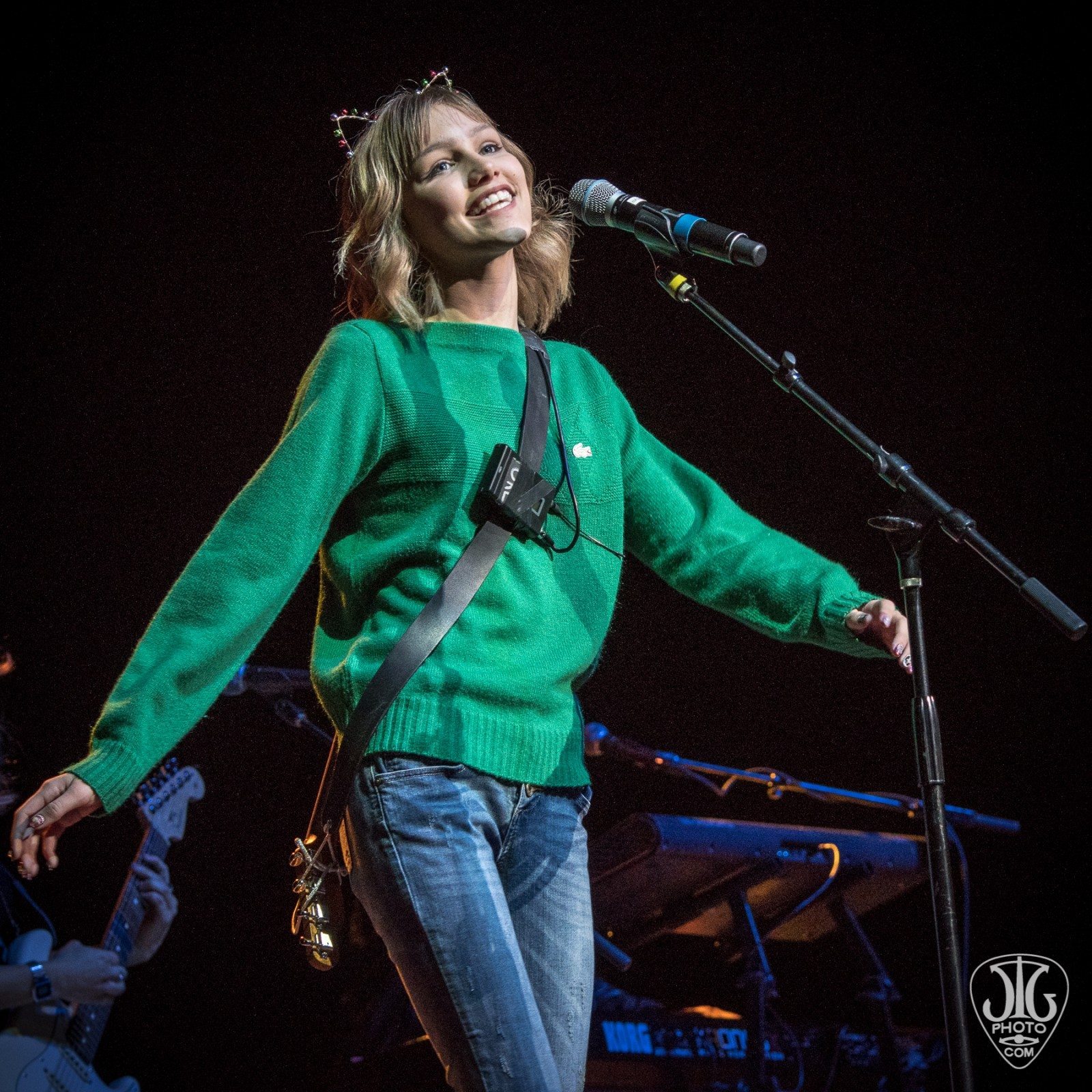
    Tucked in between artists still struggling to find their voices, Grace VanderWaal let her light shine brightly at the Palace Theatre Tuesday night hosted by local radio station FLY 92. Skipping on the stage wearing a feline headband, worn jeans, a modest knit top and raspberry socks tucked in loafers, 13-year-old VanderWaal charmed the audience immediately with her authentic smile and honest voice.

    Strumming her ukulele and stretching her ethereal voice with “Moonlight” and “Florets,” VanderWaal smiled, jumped, danced, and even sang with her hands at times betraying some nervousness normal for 8th graders. This New York State kid from Suffern’s talent is far beyond normal though; she writes her own songs, and her performances offer a fresh and vulnerable persona rarely seen in pop music these days.

    She was incredibly earnest when she asked the audience to sing along to “I Don’t Know My Name,” perhaps her most widely recognizable hit from TV show America’s Got Talent. She added that it makes her happy to hear people sing her words, and the audience eagerly obliged.

    Songs like “So Much More Than This” and “Scars To Your Beautiful” speak with authority about being young and not wanting to fit in, and accepting imperfections with pure joy rather than compromise. Who better to peddle hope to teenagers that a thirteen-year-old who titled her first short release “Perfectly Imperfect?” VanderWaal offers hope from a place of reality: she isn’t just writing about being awkward and inexperienced, but from living and embracing being awkward and fresh on the scene. In fact, she’s holding on tightly to who she really is, and is reminding us that we should, too. Her promise was that by being oneself, one can actually be happy.

    VanderWaal covered “Home,” and the intensity of her plucky, hopeful spirit couldn’t be contained. Accompanied by a keyboard, guitar, and drummer, VanderWaals’s contagious smile and energy helped to forgive some pitches she reached for a just slightly fell flat. Because of her joyfulness, the message of authentic courage, and marching dance style across the stage, it was easy to forgive the few notes that didn’t quite meet their mark. She hopped like a small finch across the stage, singing her lyrics and owning the Palace.

    By the end of the short set, she had inspired singing, dancing, and even crowd participation with cell phone lights. VanderWaal certainly doesn’t play by the rules, as she wrote in her song. She left us with goosebumps and this startling realization: we were in the presence of a real musician, an authentic teenager, and a genuine hope monger for her generation.

    Keep your eyes and ears open for Grace VanderWaal. Her joy won’t, and shouldn’t, be contained. If you get the chance, go catch some of it. You will leave uplifted and be believing not just in music, but even a bit in your imperfect self again, courtesy of VanderWaal’s youthful wisdom.