Category: The Northeast

  • South Africa’s Cultural Ambassadors, Ladysmith Black Mambazo, Come to Fairfield

    NYS Music had the honor and pleasure of speaking with Albert Mazibuko, an original member of Ladysmith Black Mambazo, the a cappella revolutionaries from South Africa. They gained global recognition from their collaboration with Paul Simon on his album Graceland and their careers have skyrocketed since. They worked with a variety of widely recognized artists from Dolly Parton to Sarah McLachlan and released a plethora of albums over the course of 50 years. Tickets are now on sale to see the group perform at the Fairfield University Quick Center in Connecticut, Sunday, March 12 at 7:00 p.m. Mazibuko tells NYS Music about their humble beginnings, stories of their time with Paul Simon and more information about their upcoming performance.

    David Ostroff: When was the last time Ladysmith Black Mambazo came to Connecticut?

    Albert Mazibuko: I cannot be specific, but it was maybe a year or two years ago. I cannot tell because we are always around the country

    DO: That’s not surprising. Ladysmith has been performing constantly for years now. That being said, how do you and your team keep up your enthusiasm after 40 plus years of recording and performing?

    AM: The music itself gives the energy that we need. Sometimes, I’m feeling tired before the show. But then we get together and we pray. After that we start a song to warm up ourselves and then the energy just comes. Before I hit the stage, I am a new person.

    DO: I have to ask. I did some research and saw that in South Africa, before you came to the states, Ladysmith would perform in a cappella competitions. But you guys were so good that they wouldn’t let you compete. How did that happen?

    AM: Wow, that is a good refresher! I’ll never forget that day. We were finally allowed to enter the competition (because their music was a different style than other groups). After we sang, the judges and audience stood up, and the other groups said, “You already won!” They decided the music was too good to entertain, so what (we) would do is sing from 8 to 12, and then after, the other groups will compete. We couldn’t believe it happened. We really missed the competition. But not anymore, after our success in our group.

    DO: What were some of your best memories when working with Paul Simon?

    AM: When we first received the message that Paul Simon was in Johannesburg to met Joseph Shabalala, we wondered why he would want to meet (Joseph)? We first thought it was someone who would sing American gospel, which is similar to our music. But when we heard it was Paul Simon, because we knew his music, it would play all over radio’s in South Africa, we said, “How?? Why does he want to meet him?” When Joseph went there, I remember he went there in the morning because we were around in Johannesburg on tour so he went to meet him in the studio and Joseph came back in the afternoon. We asked him what Paul said, Joseph said, “He is a man of music. He wants to do something with us.” So the concern was more than before. In two weeks time, he sent us a letter with a demo (of the track “Homeless”). Along with it came a piece of paper in Paul’s handwriting that said, “Dear Joseph, Don’t change this because I took it from one of your recordings.” Paul only sang two lines by himself which were “Homeless, homeless.” (The chorus) This was the right time to write the music because this would go with the situation in South Africa. Violence was all over the place. We then received a message that we had to go to London to meet with Paul. We went as a group and we were so excited. We stood behind the microphones, and Joseph told Paul we had been trying to work on the song.  We tried to record the song on the first day and it did not work at all. It was so much different with all the people trying to help and the song was not getting together. We were in the studio at two in the afternoon, and by six in the evening, Paul said let’s all go back to the hotel. We were very disappointed because Ladysmith Black Mambazo would usually record up to 12 songs a day. We practiced until midnight. The following day, we went into the studio. Joseph told Paul that that we had been rehearsing and to take a listen to this one. We sang the whole song, someone said, “This is it,” and in two hours we knew the song was there.

    DO: Well it must have been worth putting that effort into that song, though. It’s absolutely beautiful.

    AM: It was like a nightmare to us! One song for three, four hours?  But we understood that it was something else that was introduced to us. I appreciate that because, after that, everything was so much better for the group.

    DO: I didn’t know much about your music aside from your work with Paul Simon and most of my generation have limited knowledge of Ladysmith Black Mambazo as well. What else would people my age recognize Mambazo from?

    AM: We have worked with a song on Michael Jackson’s “Moonwalker” and we collaborated with artists like Dolly Parton, Stevie Wonder and Ben Harper. There were so many others. Sesame Street (“Put Down the Duckie”) was a very famous one, The Lion King (“Upendi” from The Lion King 2) and the track for Eddie Murphy in “Coming to America” (“Mbube”).

    DO: Aside from your generation, Americans most likely remember Ladysmith from their intro in Paul Simon’s “Diamond on the Soles of Her Shoes.” What is the rough translation of that intro in English?

    AM: That one happened in the way that we used to do things. One day we came to New York to perform on Saturday Night Live. (The day before SNL) Paul Simon was recording and he said, “You can come in.” When we went in we found he was working on this song, “Diamonds on the Soles of Her Shoes” and he said to Joseph, “Just give me some blessings in my song.” We listened and said, oh this song is complete. But Paul Simon insisted that we do something. Joseph just took a piece of paper and a pen and wrote it down.  It translates to, “It’s unusual, the girls, they take care of themselves so they don’t depend on a man.” He was responding to the song about this girl who is rich. The girls have their own money so they take care of themselves. We recorded that on the last day, and it took not even 30 minutes. To tell you the truth, this is a song that after I heard it for the first time I thought, “Oh it’s one of those song where you said, ‘Okay I need 12 songs, so I’m going to put something that makes number 12’”. But I was mistaken, because after I played it the third time I realized, this song is good!

    DO: One more question before we move to your performance in Fairfield. Your group has been recording and performing for more than half a century now. Many bands and musicians that stay together for even half that time were doomed to have conflict, like Simon and Garfunkel. How did you and your group keep such good ties with one another?

    AM: I think something is helping us.  You see groups all over the world that have been together for two or three years and then they go separate ways which is sad, most of the time. But in ours, we are fortunate that we are all family. In our culture, the family will stick together, no matter what. And also, our culture tells us that the person who is in charge of the family is a leader of that group. We are bound to listen to that person and respect that person and also respect one another. We believe that (Ladysmith Black Mambazo) is a family and if I have a different opinion than my brother, or whomever, I represent that in a respectful way. So even if we have some disagreement in the group, we always tell it with respect. It helps us a lot because I can tell you the truth that we’ve never had something like a fight between us. We do have different opinions sometimes when we talk about things. But we find a solution and a common ground. If my way works, I will never say, “What did I tell you? Your idea was useless.” No you don’t say that. In our group, we will always find a way to agree with one another.

    DO: On behalf of all people that love your music, thank you for thinking in such a way and staying together for as long as you have. Your contribution to American music was immense. Let’s move on to your performance at the Quick Theater. What kind of audience usually attends your shows?

    AM: It’s amazing that we see all ages. All people. Older people up to the toddlers. All the nations and the colors enjoy our music. Joseph used to say, “Our music, it’s coming from the blood to the blood.” So everyone creature who is a human being in this world can relate to our music because we speak to the soul of the people. When I look to our audience, every time I will see a 90-year-old and then I see the toddlers, maybe three years, which we are so grateful for that.

    DO: In a few of your albums and performances I hear some light instrumentation. Will we see a strictly a cappella or will there be a band accompanying you?

    AM: No it will just Mambazo. When you get into the theater you will see 10 microphones lining up on the stage. You will see 10 guys, they walk to the stage with colorful clothes, white shoes and the song will begin. Some parts we will include the audience and so we engage them. We give them something and then we sing so it’s like a competition then after that we come together and we sing. It’s a very good lineup. It’s songs that are entertaining and uplifting. They are more encouraging with a positive message, especially in this time. It seems that this beloved country is in a conflict. We choose very specific songs for that. The songs that we sang for South African people, it helps them and encourages them. They were able to solve their problems. Hopefully the message is going to be held in America so it can open into its beauty again. Our music is about love, peace and harmony. We want people to take peace and feel that harmony. By doing that, we will make this world we’re living in a beautiful place to live

  • Minus Zero Winter Sports and Music Festival Finalizes Lineup

    Putting an end to the winter season, the Minus Zero Winter Sports and Music Festival, is ready for another go-around.  Festival organizers have announced the lineup for their second annual event, taking place at the Stratton Mountain Resort, in South Londonderry, VT, on April 7 and 8. Minus Zero, not only features music across three different stages, festival goers can also hit the slopes with their skis or snowboards.

    Zeds Dead, will headline the opening night of the festival, with Bassnectar and GRiZ, headlining the closing night. Fans will see support from Illenium, Pierce Fulton – who returns for his second stint on the festival – and a back-to-back set by Nekro and Exssv.

    Fans with lift passes can head up the mountain where they will find the Summit Stage, and take in not only beautiful scenery, but some live music before heading back down one of the 97 trails the mountain has to offer over it’s 670 plus acres. The summit stage will run both days (weather permitting) from 11:30 am – 3:00 pm.

    Last years inaugural event saw the likes of Deadmau5, and Kaskade in the headlining spot with support from Surge Devant, Thomas Jack and Tony Arazdon to name a few.

    Two day passes will cost $139.00 before fees. Fans in Manhattan can purchase a 2-day shuttle option to and from the festival for $209.00 before fees. Single day tickets cost $69.00 before fees. One, Two, and Three day lift tickets are available for $62, $122, and $180, before fees. Onsite lodging, V.I.P passes, and free parking are also available.

    Friday’s Lineup: (Main Stage)
    Zeds Dead  – 10:30 – 12:00
    Illenium  – 8:50 – 10:20
    Marvel Years – 7:50 – 8:50
    Dj Shift – 6:50 – 7:50
    Dudenguy – 6:00 – 6:50
    Lestats – 5:00 – 5:55

    Apres Ski:
    Bamboora – 3:10 – 4:00
    Voltran – 2:20 – 3:10
    Nekro/Exssv – 1:30 – 2:20
    Detox – 12:40 – 1:30
    Michael Pata – 12:00 – 12:40

    Saturday’s Lineup: (Main Stage)
    Bassnectar – 10:30 – 12:00
    GRiZ – 8:50 – 10:20
    Pierce Fulton – 7:35 – 8:35
    Yookie 6:40 – 7:35
    Brightside 5:50 – 6:40
    Mike Chach – 5:00 – 5:50

    Apres Ski:
    Sam Allan – 3:10 – 4:00
    Vavo – 2:20 – 3:10
    Adam Scott – 1:30 – 2:20
    Shotgun Styles – 12:40 – 1:30
    Nelvis Tolentino – 12:00 – 12:40

    Summit Stage (Friday/Saturday, 11:30 – 3:00 – weather permitting):
    Auten, Average Joe, FENX, Fifth Year, Lucid Noise, Sicoli, Tony Mancuso, Vinny Vibe.

  • The Peach Music Festival Announces 2017 Lineup

    Montage Mountain, in Scranton, PA is ready for another four-day festival weekend this summer, as the Peach Music Festival, has announced its 2017 lineup for the festival’s sixth annual event which takes place Aug. 10-13.

    This year’s lineup will include several New York State, including New Hartford native Joe Bonamassa, NYC natives Lettuce, who will feature Chaka Kahn during their set, and Buffalo’s Aqueous, performing two sets during the festival.

    Other artist appearing over the four-day festival will include Gov’t Mule and Friends, My Morning Jacket, Dark Star Orchestra, Rusted Root, Mike Gordon, Papadosio, the Record Company, Whiskey Myers, Pink Talking Fish, Holly Bowling, the Jauntee, Elise Testone and Widespread Panic, who will be performing on two separate nights.

    Also, Umphrey’s McGee, and Joe Russo’s Almost Dead, will each perform 2 sets in one night during the festival.

    Jam band fans love the Peach Music Festival. The festival has a wide variety of music genres that include folk, country, jazz, and several styles of rock.

    The festival was created by the Allman Brothers Band, along with Live Nation Entertainment, in 2012. Festival lovers were worried in 2015, that the annual event would end, after the Allman Brothers Band decided to quit touring after 45 years in 2014, but side projects of band members appearing at the festival, helped ease the minds of attendees that the Peach Music Festival is sticking around for awhile.

    Vendors for the festival have not been named as yet, and the festival itself is still taking vendor applications.

    There are several different ticket levels to purchase. Pass levels include General Admission (GA), Reserved, VIP, and Super VIP. All passes include all four days of the festival. No single day passes are available. Prices for passes increase $20-$30 over time as the show draws closer. Children passes (ages 6-10) will be available at the door for $60 before fees while supplies last. Children five and under do not require a ticket.

  • Tumble Down 2017 Lineup Includes Fruition, Aqueous

    Twiddle has announced the 2017 lineup for their second annual Tumble Down music festival, held on the Burlington, Vermont waterfront, will include Fruition, Madaila, Aqueous and more.

    Tumble Down, Twiddle’s music festival returning to Waterfront Park in their hometown of Burlington, Vermont July 28 and 29, features four sets from Twiddle along with sets from Americana/bluegrass act Fruition, Burlington psych pop band Madaila, Buffalo jammers Aqueous, and San Francisco-based Midnight North. The festival also features daytime sets from New York based acts Lucid and Teddy Midnight, along with Strange Machines, Holly Bowling and Vermonters Navytrain and The Mangroves.

    In addition to the waterfront festival, Tumble Down features late night performances each night. July 28 will see the Everyone Orchestra, conducted by Matt Butler and featuring Holly Bowling along with members of Twiddle, Fruition and Midnight North, at Higher Ground, while lespecial and the Pitchblak Brass Band play Club Metronome. On July 29, Mihali and Friends play Higher Ground, and Gang of Thieves with Backup Planet are at Club Metronome. All the late night shows start at 11 p.m. The Higher Ground shows are all ages and are $18 in advance or $23 at the door, while you must be 21 or over to attend the Club Metronome shows, which are $10.

    Tickets for Tumble Down 2017 and all the late night shows are on sale now. A two day pass for Tumble Down costs $63.

  • Prodigy Bobby Paltauf Comes to Stage One in Fairfield Connecticut

    It’s hard to be so humble and mature when talent comes so naturally to someone, but Bobby Paltauf proved in an interview it’s possible, as he is undoubtedly one of the most professional and grounded  young musicians out there.

    He’s coming to the Fairfield Theater Company‘s secondary venue, Stage One, on Saturday, March 11 and NYS Music revealed some information about the show and how he got started. Paltauf also talks about a pre-show fundraiser with organizations like Horns For Kids, along side Rock Cottage Studio as well as how a portion of the ticket sales going to Zach Staden, a man who requires stem cell therapy for a spinal chord injury.

    Dave Ostroff: What age did you pick up the guitar?

    Bobby Paltauf: Around 7, I’ve been playing for about 10 years now. Started right on a Strat too, it’s a huge guitar. My dad used to play a lot and he had an acoustic and Strat and I dove right into those.

    DO: Did your dad tempt you to play?

    BP: It was always more of my doing. My dad always played great music. When I was a kid we would just rock out to Led Zeppelin. He played one Zeppelin song and it just intrigued me. I picked up his guitar one day and I tried to learn it.

    DO: Did you ever get stumped and need that extra push to keep learning?

    BP: Definitely. It was hard especially when you have those baby fingers. There were songs that I wanted to learn, a lot of Led Zeppelin stuff. It was about a year, year and a half where I was kind of getting it… and then it just clicked.

    DO: When did you get together with the people you put the album out with?

    BP: 2013. I started going to BRYAC. They had a funk night and there, someone told me about this bass player and drummer and we met in their basement and we just clicked right away. We added a keyboard player that we knew and then we put together that record.

    DO: You guys sound fantastic. One of my favorites is Atmosphere. Talk us through the creative process of that song.

    BP: When I first met with the drummer Kaitlyn, and the bass player Miles, we jammed on a funk tune and directly after, Miles started playing some diminished line, and we wrote the tune right there on the spot. It was the first or second time we met. We molded it out every night that we were on tour and it just came to be the song.

    DO: What would you define the album is in terms of genre?

    BP: A lot of it is instrumental, it’s funky with a little bit of jazz influence, so I would just call it a funk rock album.

    DO: A lot of the music, as you said is instrumental, but in some songs you sing. Did you want to stay more instrumental because that’s your strong suit?

    BP: At the time we put out the record I was only 14 and at the point your voice is changing every couple of months. At that point my voice wasn’t my strong suit and I was more engulfed in the guitar, so I just wanted to make that album based around instrumental stuff. I wanted to let my voice develop more. That’s actually what I’ve been doing for the past year/ two years now is writing lyrical based music. The next record is going to be a complete twist, all lyrical stuff.

    DO: Led Zeppelin was your muse for your guitar work. Do you pull any inspiration from famous vocalists?

    BP: Back then I was focused on guitarists. But in the past couple years I’ve been getting into folk singers like Bob Dylan. I like his less technical approach, just singing from your soul. I’ve been working on my own, which will be on the new album.

    DO: Is there an expected date for the album drop?

    BP: Mostly likely early May.

    DO: Compared to Lost and Found, are we going to see a similar genre? Striving for something new?

    BP: I’m definitely going to go for more of a rock and roll feel, going back to the music I really fell in love with years ago. It’ll definitely be more rock based, there will be tracks that go off a little bit and jam with a little bit of funk thrown in. Also some more lyrically developed idea.

    DO: You’re show at the FTC is coming up in March, are we going to see anything from the new album?

    BP: We’re actually going to play the entire new album. We might throw in some stuff from lost and found, but it’ll almost all be new stuff.

    DO: You got to sit in with Buddy Guy among other famous musicians. How did you get that gig and what was it like?

    BP: I played with him at the Ridgefield playhouse and my aunt who works there set me up with him. I didn’t really know who he was. I was more into the rock stuff, but I started to check him out and thought, “I need to see this guy he’s a legend!” She ended up getting me to meet him before the show, he had me play a little bit in front of him, he said, “Stand over here by the side stage and I’ll call you up for a song. It was just so incredible and surreal.

    DO: Was that the most memorable sit in with an artist?

    BP: Buddy Guy was probably the big one. The other one at Catskill Chill when I sat in for The Meters with Paige from Phish. That one was incredible. I was around 14 for that one. I happened to be a in a Meters phase too. It was incredible to play with George and Leo.

    DO: Did any of these big names say or do anything that will stick with you for the years to come?

    BP: I’ve seen Buddy Guy so many times after that. You see he brings so much energy to the shows. It shows that it’s all about the music, but you need to keep people engaged, especially nowadays. The Meters show was a fun jam for jam lovers, but the Buddy Guy one stuck with me. You need to keep the crowd engaged. He walks around the stage, into the crowd and up into the balcony. He has a lot of fun with it.

    DO: You’re playing with Grayson Hughs at the FTC, have you talked to him? Know him at all?

    BP: I’m actually in his band too. He called me up a few years ago, I had no idea who he was. He got my number from a girl in my school who was family friends with him. He’s this legendary soul singer from the 80’s who fell out but is making a come back with a few albums.  He happens to be from Danbury and he tried to put together a band, he found me, a drummer and bass player and we’ve been rehearsing for about a year and a half. We thought about the idea of merging the two bands at a bigger venue- Stage One in Fairfield.

    DO: So your group is going to open first, and then you’ll combine together for the second set?

    BP: We’ll do a little over an hour and then change over and he’ll do about 90 minutes with us.

    DO: Do you guys plan on heading over to NYC anytime soon?

    BP: We plan on doing a bigger run when the album drops. We loved playing New York City, and hopefully try to get a nice run together for the early summer.

    DO: Any other info regarding your upcoming FTC show?

    BP: Before the show we are going to have a bunch of local organizations and causes setup in the art gallery at FTC StageOne to promote what they do and to raise donations.  There will be a table for Zach Standen setup where they will be collecting donations for medical funds, stem cell therapy, and more (as well as a portion of the ticket proceeds will be also going to him).  Rock Cottage Studio will have a setup to spread Horns For Kids, which gives instruments to underprivileged kids who can’t afford them. There will be many other things set up at doors before the show and we will also have merch and cd’s.

  • Hearing Aide: The Bowling Alley Sound ‘The Bowling Alley Sound EP’

    On Friday, February 24, New Jersey’s own The Bowling Alley Sound will release their self-titled EP on their label 46 West. Their sophomore release brings musical and physical growth, as the original 4-piece has now transformed into a quintet with the addition of bassist and album cover artist, Andrew Capuano.

    The post-rock follow up to their 2014 debut, Metaphysical You, begins with the most energetic release of the four-track list, “Henry and Clark.” Well-known bands in the post-rock genre such as Explosions in the Sky and Mogwai can be heard echoed in their opening song as EP producer and guitarist, Mike Basil, kicks it off with a soft and subtle rift. Nick Looney’s drum playing anchors the song in place until the final section finds Issac Rubins’ violin eerily bringing the song to an end.

    “Night Flight” recreated the rich and repetitive textures heard in the first track, but much like the song title, the listener is reminded of dreams about flying. While the song will not make you want to get up and dance, or get up at all really, it would fit well at a yoga studio, meditation session, or music score of a Planet Earth episode.

    During the final two tracks, they inject muffled crowd noise to bring the listening audience together as one with the band. The group attempts vocals for the first time during the closing track, “The Conversation Of The Street Lights Will Pass As Quickly As Our Words,” a title almost as long as the EP itself. The post-rock vocal approach is very different from the typical verse-chorus structure found in many other rock genres, and The Bowling Alley Sound stay true to form using soft, spoken words to poetically describe a 2017 New Year’s resolution. While I would have liked to hear more trumpet textures from Danny Molloy, the final track sends the listener off in a tranquil and serene mood.

    The digital-only release of The Bowling Alley Sound will be available on all major platforms and can be pre-ordered now for only $1 (US currency).

    Key Tracks: Henry and Clark, The Conversation Of The Street Lights Will Pass As Quickly As Our Words

  • Sinkane Brings A Well-Traveled Musical Experience to Great Scott

    This past Thursday night, February 16, Great Scott welcomed the hip shaking, heart grooving, culturally wide-brimmed (wider than the brim of frontman Ahmed Gallab’s awesome cowboy cap) group known as Sinkane to an excited crowd.

    The Brooklyn based band was only on their second stop in their Life & Livin’ It tour. And after spending the past month in a rehearsal space in New York City, it was clear Sinkane was eager to show exactly what they had spent their time honing in on, which was nothing short of a very tight, impactful and all around free flowing and positive performance, often extending their songs into engaging jams.

    Sinkane1

    Immediately of interest was the shear size of the crowd. Last time Sinkane trekked their way up to the Bean Town (without the accompaniment of keyboardist and co-singer) they played to a mere ten people, one of which Ahmed Gallab impressively remembered and called out to from the stage in thanks of the support. This time however, the audience packed the venue and it’s a clear case in point of Sinkane’s success with the time acquired in-between. The band has really honed in on their sound, and with Life and Livin’ It, Sinkane is able to exhibit where they truly glow. It isn’t in one particular style in fact. Reggae, psychedelic, jam, funk, world—all of these peak their way into the uniqueness of what is Sinkane. Take their tracks “U’Huh” and “Favorite Song” for example, both off Life and Livin’ It. These take on so much influence from great songs and genres that the outcome is more along the lines of highly cultivated originality.

    Sinkane3

    With the help of one of the opener bands, No BS! Brass Band, for horns, Sinkane even furthered the immensity of their sound. The two groups had actually never performed together, as Gallab was excited to admit, and yet the result was an even fuller and more dynamic, refined sound. This might be something Sinkane wants to consider adapting to their live set next time around on tour, which if history repeats itself will likely be performed to an even bigger crowd.

    Sinkane closed with the audience favorite “How We Be,” and afterwards came back on stage for an encore that jammed into the wee early hours of 1:30am. This is a band that simply loves to play. And only the most respect goes to this group who’s shining attributes are giving every musical bone a rattle and shake and spreading some obvious cheer and positivity while doing it.

    [ngg_images source=”galleries” container_ids=”338″ sortorder=”8625,8619,8621,8616,8623,8620,8617,8618,8622,8624″ display_type=”photocrati-nextgen_pro_slideshow” image_crop=”0″ image_pan=”1″ show_playback_controls=”1″ show_captions=”0″ caption_class=”caption_overlay_bottom” caption_height=”70″ aspect_ratio=”1.5″ width=”100″ width_unit=”%” transition=”fade” transition_speed=”1″ slideshow_speed=”5″ border_size=”0″ border_color=”#ffffff” ngg_triggers_display=”always” order_by=”sortorder” order_direction=”ASC” returns=”included” maximum_entity_count=”500″]

  • Hearing Aide: Ross Jenssen ‘Stories’

    Future groove group Ross Jenssen put forth their sophomore release February 7, titled Stories. The instrumental nature of the album , sans lyrics, provides a suitable backdrop for listeners to marry their own imagination with the instrumentation. A frantic moodiness looms throughout the EP, keeping the listener ever so slightly on edge. Ross Jenssen (writer/producer), Brian Ross (bass), Sam McGarrity (guitar), Jules Jenssen (drums/moog), and Ricky Tiven (violin on tracks 2,3) are the instrument wielders behind the madness.

    Stories opens with “The Chronicle,” which begins with brooding bass before quick and subtle percussion and guitar distorted with a trace of metal lend the song a sense of urgency. “The Tall Tale” holds a beat that ceaselessly drives the song forward before sliding into its own noodly jam. “The Myth” rounds out the three-track trio with a flurry of wavering tempos that suggest the group couldn’t settle on a cohesive rhythm for the closing tune.

    The songs are similar enough in style that if you were to listen without paying attention to track numbers or knowing this was a three song EP, you could mistake it as one lengthy jam. It’s a bit too repetitive, although the musicianship is crisp and controlled. Recorded at Sub Station Studio in Housatonic, MA, the EP was engineered by Jackson Whalan, Jules Jenssen, Ian Stewart, mixed by Ian Stewart, mastered by Taylor Larson (periphery, veil of maya, FFTL) with album cover by Simon Ban. Get the album here.

    Key Track: The Chronicle

  • Albert Cummings Brings Best the of the Blues to Stage One

    The best performances of the blues will always be in an intimate venue. Singing the blues, contrary to it’s name, is about having fun and make the best of sticky situations. Lyrically, artists talk about woes, troubles and sorrows, but the instrumentals are mostly uplifting and emotional.  And when musicians can belt out these feelings to a smaller audience, it feels like a conversation with good friends. Granted, seeing B.B. King play a 10,000 person venue would be a once in a lifetime experience, but it doesn’t compare to paying 20 bucks to sit 20 feet away from a few talented musicians playing some of the most important and influential musical styles ever created. Stage One at the Fairfield Theater Company in Connecticut is just the place to hold concerts like this and fit the bill perfectly for the Albert Cummings band.

    The best way to describe Cummings is a mix between Vaughan and Hendrix. They had the power and modern blues sound of Stevie but with the musical and visual flair of Hendrix. Their recordings are immaculate and unique but seeing them perform live gave their music a bit more magic. They were well rehearsed, energetic, relentless and without these characteristics the show would not have been the same. Causal listeners of the blues may have a notion that blues music is slow or depressing, but it’s not all like that. The patterns were the same, they mostly stuck with a 12 bar blues sound, but managed to make each one interesting and unpredictable.

    There weren’t too many theatrics to the show, but just enough to keep things visually interesting. Stage One just isn’t that type of venue. The light work was mild, no spotlights or grand entrances. Most of the pizzazz came from a very animated drummer and from Cummings himself, who did everything Jimi would have done on stage just short of playing the guitar with his teeth. He would dance around the stage during his solos, swing his arms around and even bowed the neck of his guitar against his mic stand.

    They warmed up with a few of their own compositions like “The Blues Makes Me Feel So Good” which all had a very aggressive attitude and high energy. Drummer Warren Grant gave the performance the energy it needed to keep people energized and interested. Without Grant, the show would have had a completely different attitude. He was a fun character to watch when he got his turn to flaunt during drum fills and the crowd loved it. His aggression is what gave the Stevie Ray vibe to it with his brash but precise style. Bassist Scott Spray gave the low end of the sound a great character as well. He was able to hold the beat and groove effortlessly while still having his own fun.

    The crowd of 60-70 people immediately felt a connection with the band and began shouting out requests and telling Cummings where they came from and how much they love him. The worked their way through the set to a classic B.B. King tune “Three o’clock Blues” to which the crowd reacted very positively too. One woman almost stopped the performance as she screamed out, “getting wetter over here!” The look on Cummings’ face was absolutely priceless.

    One 12 bar blues song after another can get a little monotonous so they were sure to throw in some good old American rock. A steady drum chop from Grant gave the songs a powerful feel, Spray laid low and let Cummings have his fun with his wide array of floor pedal that gave his guitar a nice variety of voices to choose from. He stuck to a few covers including “Hoochie Coochie Man” among others which got a rise out of the crowd. Unfortunately, it was hard to differentiate what was a cover and what was an original recording because there was no set list. When asked what Cummings played that night, he replied, “I have no idea what I played. I don’t use a set list.” That’s not what’s important, though. The groups  attitude and good spirits made for a fantastic show that left the crowd on their feet cheering for an encore.

    Sadly, Cummings won’t spend anymore time in New England and is headed south to finish his tour, but he has a plethora of music to enjoy on multiple platforms including iTunes, Spotify, Soundcloud and physical CD’s available for purchase on his website.

  • Hearing Aide: John Ginty ‘Rockers’

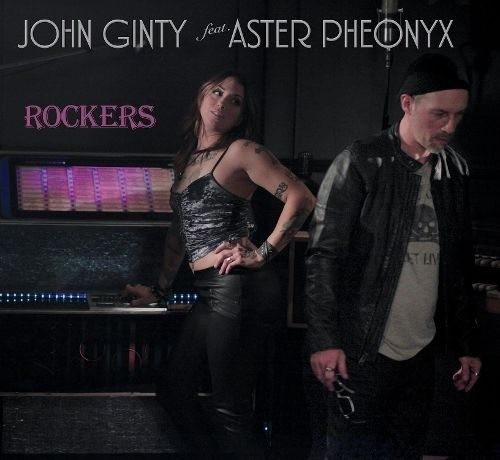
    John Ginty has recently released a new album titled, Rockers, featuring his band’s new lead vocalist, Aster Pheonyx. This is his fourth studio effort, which was set into motion following his discovery of Pheonyx’s powerhouse vocals when she opened for his band at the Wonder Bar in Asbury Park. Following some backstage conversation and jamming, he invited her to perform with his band and the chemistry during the unplanned performance was what led to the birth of this swell new line-up and album.

    Ginty is a celebrated performer and recording artist, known not only for his mastery on organ and keys, but also his extensive catalog of performances as a session musician. His career kicked off in the mid-1990’s following his contribution on Neal Casal’s “Fade Away Diamond Time,” which opened a number of doors for him. He joined Jewel’s touring band soon after, and then, went on to perform on records by Citizen Cope, Matthew Sweet and Shannon McNally. Ginty joined Robert Randolf in 2000, as a founding member of Robert Randolf & the Family Band. He has performed with nationally acclaimed artists such as, Warren Haynes, Albert Castiglia, Cris Jacobs, Alecia Chakour, Todd Wolfe and more.

    His band also features Justine Gardner on bass, Maurice “Moe” Watson on drums and BKG vocals, and Mike Buckman on guitar. Special guests on the album include Jimmy Bennett (guitar), Paul Gerdts (BKG vocals), Josh Gannet (guitar, percussion, backwoods), Paul Kuzik (bass) and Reggie Noble as DJ.

    Aster Pheonyx certainly brings her own flair to the table, bringing spice to Ginty’s expertise with her compelling vocals. Pheonyx, a three-time winner of the Top Female Vocalist from the Elephant Talk Indie Music Awards, is influenced by artists like Beth Hart, Susan Tedeschi and Amy Helm, which is undeniable in the way her sound ripped through the 12-track album that she co-wrote with Ginty.

    https://www.youtube.com/watch?v=WZgPXVv1Z5o

    The first track, “The Shark,” doesn’t feature vocals, and instead eases you in with a funky melody that has Ginty rip-roaring the organ. “Lucky 13,” a hard rocking blues number that features the full band and Aster’s raging vocals that fit the music like a glove, was released as a single prior to the album release, with an accompanying music video. It has an urgent tone that shows right off the bat the power of Pheonyx’s vocals, underlined by the band’s rock fusion. “Believe in Smoke” is a great track, because it showcases the successful combination of Ginty’s sound buttered by Aster’s vocals, before diving into a great jam at the end of the song. “WKYA” breaks up the music a bit with an amusing skit featuring Reggie Noble as a radio DJ interviewing Ginty.

    Another favorite was “Mountains Have My Name,” which is where one can really hear the Susan Tedeschi influence on Aster’s voice, while the keys in this track add a special element. This beautiful soulful number features Ginty on piano and is about a woman who is called away from her man by the mountains. The instrumental title track, “Rockers,” is the last track, and it is a great way to close the album, because it leaves the audience with a full lick of their musical capacity.

    John Ginty is currently on tour in the south. He returns to the Northeast for an album release party on Feb. 17 at Revolution in Morristown, New Jersey. He also plays the Fountain House in Newton, New Jersey on Feb. 24. Rockers will be released on Friday, Feb. 17. For tickets and more information visit here.

    Key tracks: Lucky 13, Believe in Smoke, Mountains Have My Name, Target on the Ground, Captain Hook