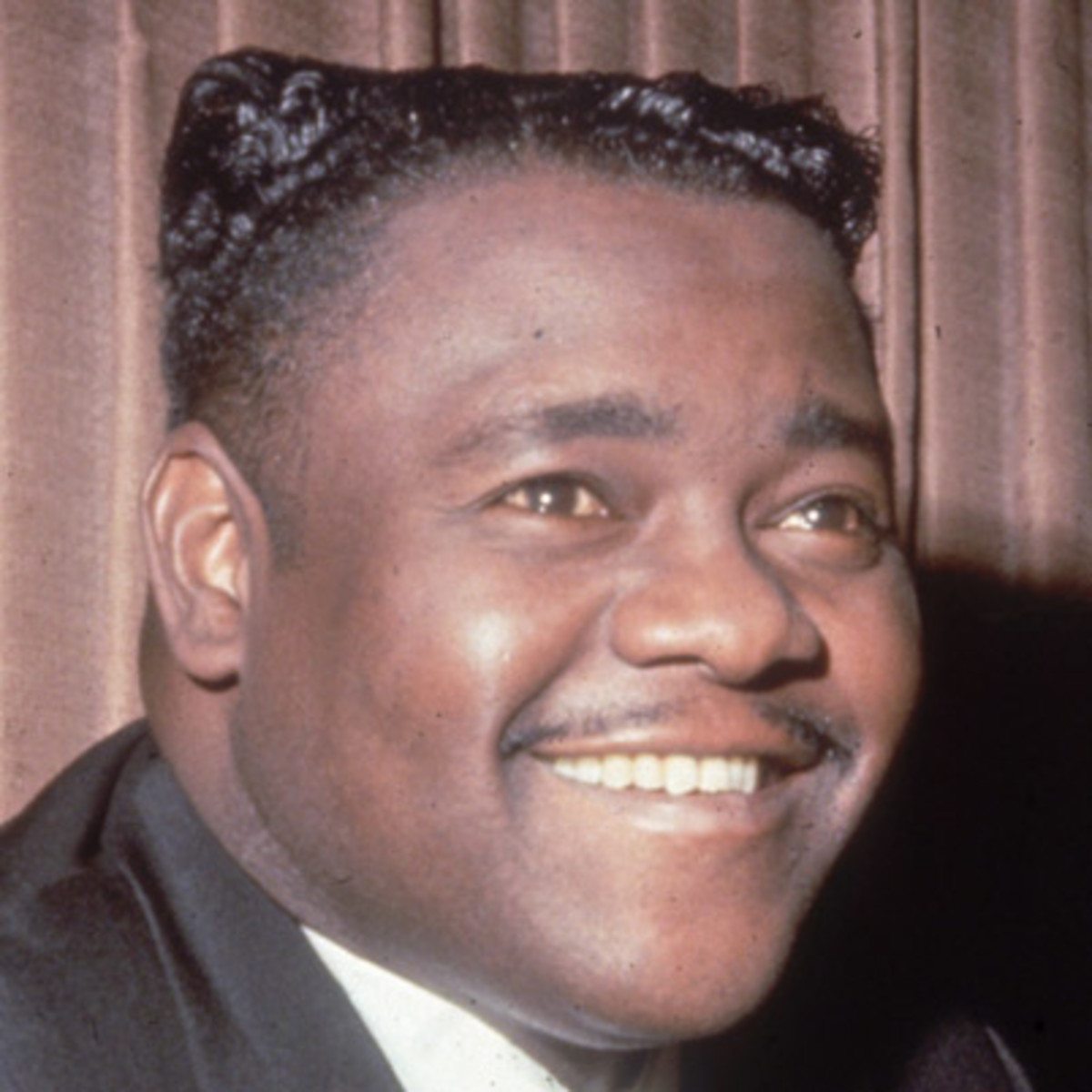
Fats Domino, whose boogie-woogie style of piano playing influenced generations of rock n’ roll musicians, died Tuesday in Louisiana. He was 89.
Born Antoine Domino, Jr. in New Orleans in 1928, the pianist and singer was second only to Elvis Presley in sales during the early rock n’ roll era of the late ’50s and early ’60s.
Domino’s string of hits included “Ain’t That a Shame,” “Blueberry Hill” and “Walking to New Orleans.” His New Orleans upbringing influenced his music, incorporating the rollicking piano style of Fats Waller and Professor Longhair.
Domino’s influence has carried on through the works of the Beatles, Cheap Trick, Led Zeppelin and Randy Newman. While he is largely credited with being one of the fathers of rock n’ roll, Domino dismissed the notion, telling Rolling Stone, “it wasn’t anything but the same rhythm and blues I’d been playin’ down in New Orleans.”
Domino’s relationship with his long time co-writer and producer Dave Bartholomew generated a string of hits as well as a style of production that influenced Phil Spector’s Wall of Sound. Bartholomew brought extra bass and drums into the studio to assure they could be heard above Domino’s piano. Bartholomew said of his late partner, “just like the cornerstone — you build a new church and you lay the cornerstone, and if the church burns down, the cornerstone is still there.”
He was married in 1947 to Rosemary Hall and they had eight children, all with names that began with the letter A.
When your nation’s leader gives a tearful press conference lamenting that they are less of a country without you in it. When your country’s flagship news magazine spends the majority of its broadcast speaking of your legacy. When a national network dedicates hours of programming on both television and radio to the news of your death. When the Toronto Maple Leafs hold a moment of silence for a lifelong Boston Bruins fan. When your hometown’s mass transit system substitutes the bus route for “thanks for your life” on the message boards. When musicians, athletes, politicians, actors, commentators, indigenous leaders and everyday people recount memories of their encounters with you. These are all signs that you led a life to be celebrated.
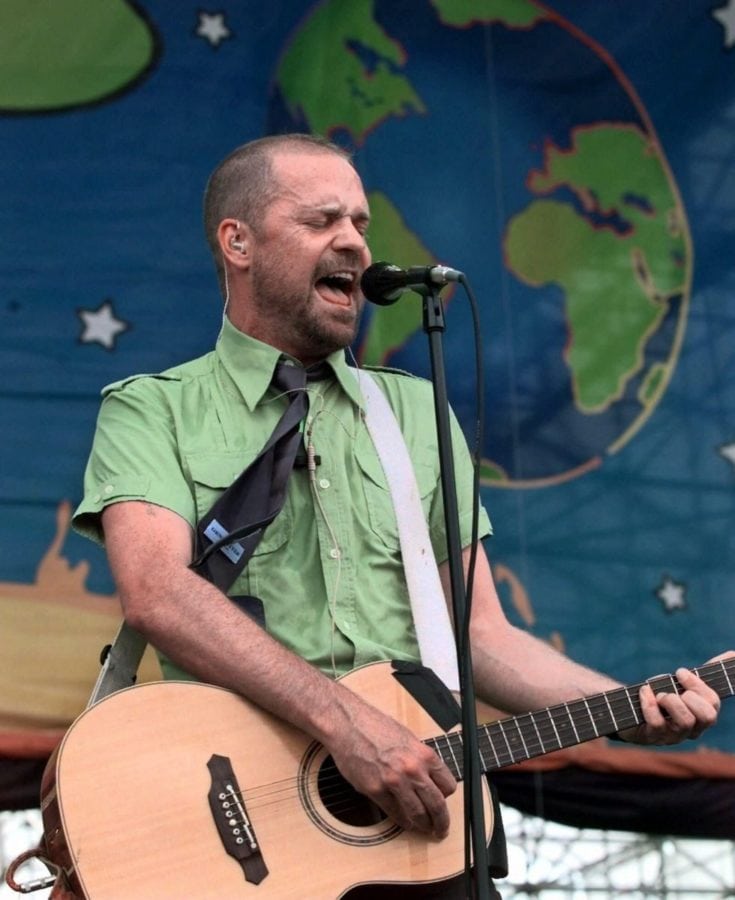
Gord Downie of the Tragically Hip passed away Oct. 17, a casualty of glioblastoma, a severe and incurable form of brain cancer. His diagnosis followed a seizure he had in December of 2015. Why this resonates so strongly with me is that my mother was diagnosed with the same. The fact that he didn’t take this diagnosis as a death sentence but as a mission to bring his message to Canada and the world, speaks to the character of the man. The period following his diagnosis turned out to be one of his most prolific.
Downie was genuine. Downie was intense. Downie was humorous. Downie broke down fences. Downie built bridges. Downie was uniquely Canadian. Downie was one of kind.
The Tragically Hip was never a big name in the U.S. Perhaps the obtuse poetry of the band’s lyrics or the uniquely Canadian references in their songs kept that from happening. Those Americans who had heard of the Hip and who learned to love the Hip most likely did so because of some connection to Canada, whether it be proximity to the border, family ties or a friend in the know. For me, it was a combination. I was turned on to the Hip by my friend Derrick, who had played hockey professionally and had many Canadian friends who were big Hip fans. Knowing my fondness for the Toronto Maple Leafs, Derrick told me about a Hip song that lamented former Leafs player Bill Barilko, entitled “50 Mission Cap.” I was hooked.
I was in my mid-20s when I dove into the Hip. I dove in deep. Perhaps it was my many family trips to Canada in my childhood. Perhaps it was my need to be different than others. Whatever it was, I loved the sound of the Hip and the content of their lyrics. Through those lyrics, I discovered more about Canada than I ever would have otherwise. I was fascinated by the story of Barilko. I researched Hugh MacClennan and David Milgaard. I was an American with my own little Canadian secrets.
Perhaps the coolest thing about being an American Hip fan in their heyday was that seeing them live didn’t involve sleeping out for tickets or sitting in a huge stadium to see them play. While the band’s hometown of Kingston, Ontario is just a few hours away from my hometown of Rome, New York, in Hipworld, it may as well be light years away. My first time seeing the band was at the Club Chameleon on the Day for Night tour in Syracuse in 1995 with a band called the Rheostatics opening. Not only was I getting an opportunity to see a new favorite band in an intimate venue, I was also being introduced to a cool new band I had never heard of in the Rheos. I’ve been a Rheos fan since that day and have the Hip to thank for that.
The people working the door that night were asking each attendee how far they’d come for the show as they entered. I’d never encountered that when going to a concert. A few years later, I realized why. It soon became apparent that Hip fans travel, not unlike Pittsburgh Steelers fans. And I can’t say as I blame them. Given the choice between seeing my favorite band among 20,000 others in a stadium or with 1000 people in a small bar in Central New York, I’d choose the latter as well.
Perhaps the Tragically Hip’s greatest legacy is that on Canadian music as a whole. In the year and a half since Downie’s illness was revealed, generations of Canadian musicians have come forward to express their gratitude for the band’s music. On New Year’s Day, 2017, Canadian radio host George Stroumboulopoulous celebrated the career of the Tragically Hip in a four hour show that brought together artists as varied as Sam Roberts, Geddy Lee, Blue Rodeo, Barenaked Ladies, A Tribe Called Red and Tanika Charles to perform versions of Hip classics and discuss the band’s influence on them and the musical culture of Canada as a whole. You can listen to that show here.
Perhaps my biggest takeaway in becoming a Hip fan is the relationships I’ve developed along the way. To meet a fellow Hip fan is to meet a kindred spirit. And if you happen to be wearing something Canada-related, the barriers are immediately broken. This happened to me at Syracuse’s Landmark Theatre during the Phantom Power tour in 1998, the second of mine and my wife’s three consecutive “Thruway Tour” shows that also hit Albany and Rochester that year.
It’s pretty much a requirement to wear something Canadiana to a Hip show, whether it’s a maple leaf patch on your jean jacket, a hockey jersey or the shirt of any Canadian band. I wore my favorite Maple Leafs hat to every Hip show that tour. While waiting in line for a beer, a tall gentleman in front of me turned and asked where in Canada I was from, apparently bewildered that an American would be a fan of a Canadian hockey team. I mentioned that I was from less than an hour away and have been a Leafs fan for years. That question led to a friendship going on 20 years now. My friend Tom hailed from Barrie, Ontario and made the trip south for the show in Syracuse. He spoke about the tremendous time he had at the Hip’s run of shows at Bill’s Bar in Boston earlier that year and how he wished he could hear those shows again. As luck would have it, I happened to have said shows on tape from a trade I had made on a Hip listserv. He jotted his address down on a cocktail napkin. A few days later I copied the shows and mailed them off to Barrie and a friendship was born. Tom now lives in the Calgary area, but thanks to the miracle of technology, he and I have been able to maintain our friendship over all these years and I can count him as one of my truly best friends.
Since 1995, I have been fortunate enough to see the Hip a total of 12 times, the most memorable was at Woodstock ’99 on the Saturday morning of that weekend in my hometown. Definitely one of the finest performances I’ve witnessed by any band, Gord at peak stream-of-conscious banter. When Downie said, “Ah, it’s nice to be back in Rome,” my face lit up, despite the fact that he’d more than likely never been here before. The last time I saw them was with my wife at CMAC in Canandaigua on July 4, 2015. You can read my review of that show here.
The night of the band’s final performance, in their hometown of Kingston last August 20, I sat in my living room, watching along with 12 million others across Canada and throughout the world as Downie gave his final farewell, tears in my eyes.
Gord Downie brought people together. He had a magical touch that reached the rock fan and the poets. In times that have become increasingly divided, the world could use a lot more Gord Downies.
Rest in power, Mr. Downie. You have enriched the lives of millions. Your words, your actions, your life will live on in those you’ve inspired.
Charismatic frontman and Canadian national treasure, Gord Downie of the Tragically Hip passed away Tuesday night at the age of 53.
Downie was diagnosed with glioblastoma, an aggressive form of brain cancer, in December 2015. It was discovered after he suffered a seizure.
The diagnosis wasn’t publicly revealed until May of last year when the band also announced a final Tragically Hip tour. The Hip, with Downie (vocals), Rob Baker (guitar), Paul Langlois (guitar), Gord Sinclair (bass) and Johnny Fay (drums) embarked on a 15 show cross-Canada tour in 2016, culminating in a nationally-broadcast show in their hometown of Kingston, ON on Aug. 20.
Gord Downie assessing the situation in Canandaigua.
A statement issued on the band’s website spoke of the inevitability of Downie’s passing, “Gord knew this day was coming – his response was to spend this precious time as he always had – making music, making memories and expressing deep gratitude to his family and friends for a life well lived, often sealing it with a kiss…on the lips.” Downie made a point to kiss his bandmates on the lips at the end of each performance on the Man Machine Poem tour in 2016 to show his love for them. The full statement from the Downie family:
Last night Gord quietly passed away with his beloved children and family close by.
Gord knew this day was coming – his response was to spend this precious time as he always had – making music, making memories and expressing deep gratitude to his family and friends for a life well lived, often sealing it with a kiss… on the lips.
Gord said he had lived many lives. As a musician, he lived “the life” for over 30 years, lucky to do most of it with his high school buddies. At home, he worked just as tirelessly at being a good father, son, brother, husband and friend. No one worked harder on every part of their life than Gord. No one.
We would like to thank all the kind folks at KGH and Sunnybrook, Gord’s bandmates, management team, friends and fans. Thank you for all the help and support over the past two years.
Thank you everyone for all the respect, admiration and love you have given Gord throughout the years – those tender offerings touched his heart and he takes them with him now as he walks among the stars.
Love you forever Gord.
The Downie Family
Downie’s final days were spent championing indigenous causes, forming The Gord Downie and Chanie Wenjack Fund to support reconciliation between indigenous and non-indigenous people in Canada. Chanie Wenjack was a young indigenous boy who died while trying to escape one of Canada’s now defunct residential schools in 1966. Downie released a solo album entitled Secret Path, accompanied by a graphic novel, last October to bring light to Wenjack’s death and the impact of the residential schools on Canada’s indigenous people.
As a result of his tireless work for the First Nations people, Downie was honored at a ceremony given by the Assembly of First Nations last December. National Chief Perry Bellegarde bestowed an eagle feather, a symbol of the creator, on Downie and gave him an honorary aboriginal name, Wicapi Omani, which means “man who walks among the stars.”
Gordon Edgar Downie was born in Kingston, ON on Feb. 6, 1964. He attended the Kingston Collegiate and Vocational Institute, where he met his future bandmates. Davis Manning was an original member of the band as saxophonist. He was replaced by Langlois in 1986. The band inked a deal with MCA Records after an appearance at Toronto’s famed Horseshoe Tavern, releasing its self-titled EP in 1987. The follow-up Up to Here in 1989 produced four hit singles for the Hip in Canada, “Blow at High Dough,” “New Orleans is Sinking,” “38 Years Old” and “Boots or Hearts.”
The band’s blues-based sound and poetic Canadiana lyrics endeared them to Canadians of all walks and perhaps kept the Hip from success in the U.S., aside from the border towns. Nonetheless, the Hip became Canadian rock royalty, garnering 16 Juno Awards (Canada’s equivalent of the Grammys), the Order of Canada, induction into the Canadian Music Hall of Fame and a street naming in their hometown.
Over the course of 30 years, 14 Tragically Hip albums, five solo efforts (with another set for release on Oct. 27) and many collaborations, Gord Downie was a champion of music, especially Canadian music. The Hip brought many Canadian artists with them on tour, including the Arkells, Rheostatics, the Sadies, Eric’s Trip, Spirit of the West, the Inbreds and Ron Sexsmith among others. Many of them have left fond remembrances. Max Kerman of the Arkells told CBC Radio’s “Q” podcast, “Gord taught me that it’s OK to dance.” The Toronto Globe and Mail tweeted, “Gord Downie, troubador of Canada, charmed and challenged a nation.”
Canadian Prime Minister Justin Trudeau, visibly emotional, delivered a statement on Wednesday, describing Downie as one who “gave us goosebumps and made us proud to be Canadian.”
But Downie was more than a musician. Downie was an activist. He was a performer. He was a poet. He was an actor. Gord Downie was a treasure. To gather an image of who Gord Downie was, the New York Times said it best, “The place of honor that Mr. Downie occupies in Canada’s national imagination has no parallel in the United States. Imagine Bruce Springsteen, Bob Dylan and Michael Stipe combined into one sensitive, oblique poet-philosopher, and you’re getting close.”
Farewell, Mr. Downie. “It was a pleasure doing business with you.”
Eminem put President Trump and his supporters on blast in a video that aired during Tuesday night’s BET Hip Hop Awards. The freestyle rap titled “The Storm” has Eminem lashing out at Trump as a “racist grandpa” and for being a hypocrite.
He also calls out Trump for using Twitter to distract from bigger issues and for his responses to hurricane relief efforts in Puerto Rico, the violence in Charlottesville, VA and the mass shooting in Las Vegas.
The nearly five minute video holds nothing back and is sure to generate controversy. Several celebrities and athletes including LeBron James, T Pain, Colin Kaepernick, Keith Olbermann and Ellen DeGeneres have lit up the twittersphere in support of Eminem. Olbermann called it “Best politcal writing of the year, period.”
Eminem is no stranger to controversy nor criticism of Trump. In October he released a freestyle called “Campaign Speech” where he called Trump “a loose cannon who’s blunt with his hand on the button.”
The Detroit rapper also took his followers to task in his lyrics:
And any fan of mine/who’s a supporter of his/I’m drawing in the sand a line/you’re either for or against/and if you can’t decide/who you like more and you’re split/on who you should stand beside/I’ll do it for you with this (middle finger)
The Ominous Seapods’ Tom Pirozzi revealed in September that the band’s reunion show at Cohoes Music Hall on Saturday, January 13 would become a two-night run, plus an addition show on Sunday, January 14 at Brooklyn Bowl, followed by the Zen Tricksters.
I want to thank everyone who bought Ominous Seapod tickets for January 13th. The show sold out in just 5 days! The band is overwhelmed by the support. Due to that fact, and the fact that Dana Monteith is coming all the way from Australia for the show, we’ve decided to expand the event to a weekend run. We will be adding Friday night, January 12th at the Cohoes Music Hall and an encore performance at the Brooklyn Bowl on Sunday Jan. 14th. The Brooklyn Bowl show will be one 90 minute set at 7:30pm followed by a set by the Zen Tricksters. The next day is a holiday so we can all rest on Monday. More details coming soon!!!
When we last saw the Ominous Seapods, they were bidding a fond farewell to co-founder Dana Monteith as he and his wife Deb prepared for a life down under in Perth, Australia. The farewell was Dec. 17, 2011 at Valentine’s in Albany. That show saw a tight version of the band throwing down with guest appearances from moe. drummer Vinnie Amico, Josh Himmelsbach on mandolin and promoter Greg Bell on vocals. Tickets for both Cohoes shows are sold out
The original lineup of the band (Monteith on guitar and vocals, Tom Pirozzi on bass, Ted Marotta on drums, Max Verna on guitar and Brian Mangini on keys) will be on hand for the reunion.
Known for their psychedelic jams and onstage humor, the Ominious Seapods came of age during the “New Renaissance of Jambands” in the early to mid-’90s and achieved a moderate level success over the course of four albums. The band broke up in 2001 and have played a handful of reunion shows since.
Tom Petty lived a life that was one of persistence and a never say die attitude. The same could be said of his death. On Monday, reports began circulating that Petty had been found unresponsive in his Malibu home due to cardiac arrest. He was transported to UCLA Medical Center, placed on life support then removed from life support due to no brain activity. Reports of his death began populating social media despite the fact that there was never any official indication that he was dead.
Late in the day, news of his death was retracted. Petty had been taken off of life support but began breathing on his own. He was fighting death just as he had fought record labels throughout his career.
Late Monday, Tony Dimitriades, Petty’s long time manager, confirmed the Rock and Roll Hall of Famer’s death, “We are devastated to announce the untimely death of our father, husband, brother, leader and friend Tom Petty,” Dimitriades said on behalf of the family.
He died peacefully at 8:40 p.m. PST Monday surrounded by his family, bandmates and friends.
Petty was a rare artist who transcended generations. Throughout the day Monday, tributes to Petty were posted on social media from fellow musicians and fans both young and old. His songs have been staples of FM radio since the late 1970s, beginning with the debut album Tom Petty and the Heartbreakers through the 1980s as a member of the supergroup the Traveling Wilburys with Bob Dylan, George Harrison, Roy Orbison and Jeff Lynne.
Petty took pride in the fact that the band maintained an ability to attract young fans over the decades. He headlined both the 2006 and 2013 Bonnaroo Festivals and told Rolling Stone about the experience, “We’re one of those old, lucky bands: Young people come to see us. It makes a difference. There are people who have picked up on you fairly recently, or they’re just learning about you. It brings a different excitement into the crowd.”
Recent years saw Petty reuniting his original Gainesville, FL band Mudcrutch as well as the Heartbreakers. Petty and the Heartbreakers just wrapped up a 40th anniversary tour last week at the Hollywood Bowl.
Thomas Earl Petty was born in Gainesville on Oct. 21, 1950. His admiration of cowboys led him to take up the guitar. He once stated, “I always liked the idea of the guitar, because cowboys played the guitar.” This passion escalated when his uncle took the 10 year-old Petty to the set of a movie Elvis Presley was working on. It was this meeting that propelled him to make music his life passion.
The band’s 1976 eponymous debut took time to gain traction in the U.S. Once it did, the single “Breakdown” crept into the lower reaches of the Billboard charts.
Petty famously battled record labels early in his career. When MCA Records attempted to buy out his contract with ABC Records, Petty declared bankruptcy, claiming the contract signed with ABC was made under duress. Petty was able to renegotiate his contract and MCA resigned the band, releasing its third album Damn the Torpedos under its own imprint, Backstreet Records. Torpedos went on to sell over two million copies behind the strength of Petty classics as “Refugee” and “Don’t Do Me Like That.”
Prior to the release the band’s next album Hard Promises, MCA wanted to cash in on Petty’s celebrity, introducing a new level of pricing for superstar LPs. The label planned to price the new release at $9.98. Petty relented, even threatening to name it The $8.98 LP. MCA eventually caved and released it at the $8.98 price. Hard Promises furthered Petty’s superstar status with the hit “The Waiting.”
The mid-’80s had Petty and the Heartbreakers branching out. They performed at Live Aid in Philadelphia in 1985, collaborated with the Eurythmics’ Dave Stewart on the Alice in Wonderland themed video for “Don’t Come Around Here No More” and toured with Bob Dylan and the Grateful Dead.
Petty joined Harrison’s Traveling Wilburys in 1988. This collaboration of rock royalty resulted in a triple platinum album and renewed success for Petty after a disappointing Let Me Up (I’ve Had Enough) in 1987. He parlayed that success into Full Moon Fever, his first solo release, although accompanied by Lynne and the Heartbreakers in the studio.
https://youtu.be/L8s9dmuAKvU
In 1994 Petty began a working relationship with producer Rick Rubin for his second solo album Wildflowers. The album again sold in the millions, earning him a legion of new fans. Rubin then recruited Petty and the Heartbreakers to be Johnny Cash’s backing band for the landmark 1996 album Unchained, which earned a Grammy for Best Country Album of that year.
The end of the Wildflowers tour also resulted in the end of his 22 year marriage to Jane Benyo. Petty moved from their home and fell into a heroin habit. He eventually cleaned up after entering detox and the resulting album, 1999’s Echo revealed a dark side of Petty that he has rarely visited since.
In 2001, he married Dana York Epperson while beginning work on The Last DJ an indictment of the recording industry that he saw as having little regard for the art or artists it promoted. This period of Petty’s career didn’t generate radio hits, despite solid efforts both solo and with the Heartbreakers but he was still a successful touring act.
In 2007 Petty reunited with his old bandmates in Mudcrutch (Tom Leadon and Randall Marsh along with Heartbreakers Benmont Tench and Mike Campbell) for a self-titled album and a brief tour. They released a second album, 2 in 2016 that was followed by a national tour.
Petty and the Heartbreakers returned in 2014 with the band’s first ever number one album Hypnotic Eye. They had toured behind it in 2017, a tour that also celebrated the band’s 40th anniversary.
Prior to the tour, Petty told Rolling Stone, “I’m thinking it may be the last trip around the country.” Sadly, it was.
Petty is survived by his wife along with a brother, Bruce; his daughters, Adria and AnnaKim; his stepson, Dylan Petty; and one grandchild.
The lineup for this year’s KettleFest includes Anastazja, Some Ska Band, Ruckus Juice Jug Stompers and String Chickens. The one day celebration of sustainable farming takes place in on Saturday, Sept. 16 at Kettle Ridge Farm in Victor, NY. In addition to music, there will be workshops, children’s events, crafts from local artisans, and a wide selection of food and beverages.
Admission is $6, and children under 13 are free. Kettleridge Farm is located at 515 Log Cabin Road in Victor, NY. For more information, visit the Kettlefest website.
Music Schedule:
Main Stage:
– 10:15 a.m. – Anastazja
– 12:15 p.m. – Some Ska Band
– 2:15 p.m. – Ruckus Juice Jug Stompers
Grant Hart, drummer and one third of the highly influential St. Paul, MN band Hüsker Dü has succumbed to cancer at the age of 56, according to Variety. The announcement was made through an uncaptioned photo of Hart on Hüsker Dü’s Facebook page posted around 2 a.m. Thursday.
Hart met singer/guitarist Bob Mould and bassist Greg Norton in 1978 at the Cheapo Records where Hart worked. As Hart remarked in a July 2000 interview with The Onion, it wasn’t so much what the three had in common that brought Hüsker Dü together as a band, but their differences. Hart was a champion of the local scene while Mould was a fan of the punk being made on the East Coast and largely unavailable in the midwest.
The band’s hardcore sound evolved into a more melodic style, earning them airplay on college radio stations around the country. Hüsker Dü’s first release, the single “Statues” was released in 1981 on the band’s own label Reflex Records. Hart’s songwriting contributions were a stark contrast to Mould’s more bitter lyrical style, offering ranging subjects in songs like “Diane” and “It’s Not Funny Anymore,” his contributions to the band’s EP Metal Circus.
Minutemen and fIREHOSE bassist Mike Watt offered his condolences in a Facebook post early Thursday:
Hüsker Dü’s breakthrough came on the seminal double album Zen Arcade, released in 1984. That same year Watt’s Minutemen also released their high watermark Double Nickels on the Dime, both on Greg Ginn’s SST label. The two bands toured together often in the early years and formed a bond in the process.
Hart was the subject of the 2013 documentary Every Everything: The Music, Life and Times of Grant Hart. The film gives a unique inside view of Hart the man and Hart the musician from his youth up to the recording of his final studio album The Argument, a concept album based on John Milton’s Paradise Lost.
Hüsker Dü proved to be a huge influence on what would become the alternative scene of the early 1990s with bands such as the Pixies and Nirvana citing them as an influence. Nirvana bassist Krist Novoselic once said,”What Nirvana did was nothing new; Hüsker Dü did it before us.” Dave Grohl of Nirvana and Foo Fighters has cited Hart as a huge early influence on his style of play.
The band was one of the first of the early ’80s punk/hardcore scene to score a major label record deal, signing with Warner Brothers for 1986’s Candy Apple Grey. However, it wasn’t long before tensions between Mould and Hart would lead to the dissolution of the band on the tour for its final album together, the 1987 double album Warehouse: Songs and Stories.
The acrimony continued until just recently when the two performed on stage together at a July show in Minneapolis that also included fellow Minnesotans Babes in Toyland and Soul Asylum. At the end of a set that saw Hart perform several both solo and Hüsker Dü works, Hart signed off simply, “We’ll see you a bit further down the trail.”
Mould paid tribute to his bandmate in a Facebook post early Thursday, saying:
We stopped working together in January 1988. We went on to solo careers, fronting our own bands, finding different ways to tell our individual stories. We stayed in contact over the next 29 years — sometimes peaceful, sometimes difficult, sometimes through go-betweens. For better or worse, that’s how it was, and occasionally that’s what it is when two people care deeply about everything they built together.
The tragic news of Grant’s passing was not unexpected to me. My deepest condolences and thoughts to Grant’s family, friends, and fans around the world.
Grant Hart was a gifted visual artist, a wonderful story teller, and a frighteningly talented musician. Everyone touched by his spirit will always remember.
Godspeed, Grant. I miss you. Be with the angels.
Just last week, it was announced that a new Hüsker Dü box set entitled Savage Young Dü will be released in November. The three-disc box includes 69 tracks recorded during the band’s pre-SST days from 1979-1983 including all of their 7″ singles, a remastered version of their second album Everything Falls Apart and an alternate recording of the debut, Land Speed Record. Also included in the set is a booklet chronicling the band’s early years.
In a 2009 interview with the Minneapolis Star Tribune, Hart offered the following on his legacy:
A long time ago, I started looking at my permanent record — the history of me after I’m gone. Even to speak of it reeks of egotism run wild. But I think when all is said and done, the work that I produced in this lifetime will more than repay the world for any inconvenience I’ve caused it.
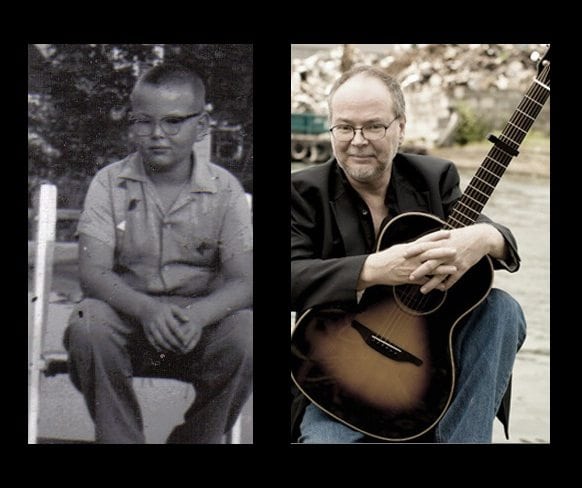
Walter Becker, bassist and guitarist for the highly successful rock duo Steely Dan died Sunday at the age of 67. His death was announced on his website with a simple diptych of Becker as a child and an adult with the caption, “walter becker feb. 20 1950 – sept. 03 2017.” No further details on the cause of death were provided.
Becker missed both July Steely Dan dates of the Classic West and Classic East shows due to a procedure, his performing partner Donald Fagen revealed in an August interview in Billboard. Fagen didn’t elaborate. The band also recently announced a fall tour with a scheduled stop at Shea’s Performing Arts Center in Buffalo Oct. 17.
Becker was born in Queens and graduated from Stuyvesant High School in Manhattan in 1967. He met Donald Fagen while both were students at Bard College in Annandale-on-Hudson, New York that same year. A quick friendship was formed when both realized similar interests in music and the beat poets. They performed in various local groups, including the Leather Canary, which included comedian Chevy Chase on drums.
Upon Fagen’s graduation in 1969, the two moved to Brooklyn. Becker and Fagen became touring musicians for Jay and the Americans for a brief time before leaving due to a pay dispute. Their biggest success while still in New York was Barbra Streisand’s recording of their song “I Mean to Shine.” The duo recorded a series of demos and scored a soundtrack for an early Richard Pryor film before making tracks to Los Angeles.
The move to Los Angeles proved fruitful for the eventual Steely Dan. It was here that they connected with ABC Records producer Gary Katz. Katz hired Becker and Fagen as staff songwriters for the label and would go on to produce all of Steely Dan’s 1970s output.
It was in Los Angeles where the two musicians struck out on their own, recruiting guitarists Denny Dias and Jeff “Skunk” Baxter, drummer Jim Hodder and singer David Palmer to form Steely Dan. The name was chosen as a nod to beat writer William S. Burroughs. The “Steely Dan” was a sex toy mentioned in Burroughs’ Naked Lunch.
What followed was one of the most unlikely string of successful albums put to tape. From Steely Dan’s debut, Can’t Buy a Thrill in 1972 through the 1977 pinnacle album Aja to 1980’s Gaucho, the band’s penchant for obscure references, dark humor, quirky time changes and studio perfection landed them in an unlikely spot on the Billboard charts time and again.
The duo parted ways in 1981, with Becker taking his family to live in Maui, HI where he quit using drugs and, according to the Steely Dan Timeline, became “a gentleman avocado rancher and self styled critic of the contemporary scene.” During this time, Becker began producing in earnest as well as working with English pop band China Crisis.
Despite the inactivity of Steely Dan, Becker and Fagen still managed to work together formally and informally during their hiatus. Becker sat in with Fagen’s New York Rock and Soul Revue in 1991, which led to his producing Fagen’s 1993 solo album, Kamikiriad. Fagen returned the favor, producing Becker’s 1994 solo outing 11 Tracks of Whack. These collaborations renewed the Steely Dan spark and led to the band’s first tour in 19 years.
They continued to tour and in 2000 dropped an album of all new material, Two Against Nature that garnered Steely Dan four Grammy Awards, including Album of the Year. In 2001, Steely Dan was inducted into the Rock and Roll Hall of Fame and was honored with an Honorary Doctor of Music degree from Berklee College of Music.
Another Steely Dan album followed in 2003, with Becker making his vocal debut on the track “Slang of Ages” and the band continued touring through the mid 2010s, including a headlining spot at 2015’s Coachella Festival in Indio, CA.
Becker’s work left an indelible mark on the music industry and musicians worldwide have been offering tribute to him since his death was announced. Josh Kroop, former manager for Connecticut jamband Kung Fu shared professionally shot video of the band’s The Royal Scam set from two years ago, featuring members of the Steely Dan band, Bernard Purdie on drums and Jon Herington on guitar.
On Sunday, Fagen shared a note remembering his long-time friend and collaborator. The full text is below:
Walter Becker was my friend, my writing partner and my bandmate since we met as students at Bard College in 1967. We started writing nutty little tunes on an upright piano in a small sitting room in the lobby of Ward Manor, a mouldering old mansion on the Hudson River that the college used as a dorm.
We liked a lot of the same things: jazz (from the twenties through the mid-sixties), W.C. Fields, the Marx Brothers, science fiction, Nabokov, Kurt Vonnegut, Thomas Berger, and Robert Altman films come to mind. Also soul music and Chicago blues.
Walter had a very rough childhood – I’ll spare you the details. Luckily, he was smart as a whip, an excellent guitarist and a great songwriter. He was cynical about human nature, including his own, and hysterically funny. Like a lot of kids from fractured families, he had the knack of creative mimicry, reading people’s hidden psychology and transforming what he saw into bubbly, incisive art. He used to write letters (never meant to be sent) in my wife Libby’s singular voice that made the three of us collapse with laughter.
His habits got the best of him by the end of the seventies, and we lost touch for a while. In the eighties, when I was putting together the NY Rock and Soul Review with Libby, we hooked up again, revived the Steely Dan concept and developed another terrific band.
I intend to keep the music we created together alive as long as I can with the Steely Dan band.
The Chenango Blues Festival has annually attracted many of the top names in the field. This year was no exception with headliners North Mississippi Allstars with John Medeski and Victor Wainwright. The two-day affair, hosted by the Chenango Blues Association, drew record crowds for its Silver 25th Anniversary fest at the Chenango County Fairgrounds in Norwich Aug. 18 and 19. A mid-afternoon storm did little to dampen the enthusiasm of the crowd or performers, as many crowded under the tent enjoying one of the most talked about performances of the day from Jason Ricci and J.J. Appleton with Cliff Schmitt on stand-up bass.
As he gestured with a harmonica in his left hand, Ricci said, “I’ll tell you what, man. Check it out. More people, this is a fact, I checked it out. You know they have internet on computers now, and more people have been in outer space than have made a living playing this thing.” People all over the world have noticed Ricci’s prowess, as just two days prior to his Chenango performance, in Tulsa, Ricci was awarded the 2017 Player of the Year Award by the Society for the Preservation and Advancement of the Harmonica. Ricci then launched into an exhausting seven minute solo, complete with blues, jazz, train sounds, and a tease of “Low Rider” that left the crowd in awe of his abilities. Other notable performances during the set were covers of “Black Limousine” by the Rolling Stones, with Appleton on vocals, and Ricci’s ferocious vocals on Otis Rush’s “Double Trouble.”
This showcase offers a wide range of music that can all be classified under the wide umbrella of the blues. This year’s artists included the delta offerings of Alvin Youngblood Hart, the soulful and powerful Muddy Magnolias to the jump blues of the Mannish Boy Allstars.
Lead vocalist of the Mannish Boy Allstars, Sugaray Rayford endeared himself to the Norwich faithful, leaving the stage to mingle with those in attendance mid-song. The Mannish Boys are truly an all-star act, culling its lineup from the best the blues has to offer. Accompanying the charismatic Rayford were Anthony Geraci (keys), a Pinetop Perkins Piano Player of the Year Award nominee; Kid Ramos (guitar), who has worked with Roomful of Blues and the Fabulous Thunderbirds; and Willie J. Campbell (bass) and Jimi Bott (drums), who both also worked with the Fabulous Thunderbirds. Allan Walker, a sideman for the Temptations, the Four Tops, the Drifters and Marvin Gaye, rounded out the Mannish Boys lineup on the main stage.
Festival favorites, the Memphis-based Ghost Town Blues Band had the most unorthodox entrance of the festival with a New Orleans style second line parade. The band entered through the crowd while playing “When the Saints Go Marching In” marching onto the stage to raucous applause.
Following a three song open that included the Beatles’ “Come Together” and “Norwegian Wood” into Led Zeppelin’s “Whole Lotta Love,” lead singer Matt Isbell took a ribbing from one of the audience members asking, “Do you know any blues numbers?” With that, they broke into a new original “Shine” that featured the most entertaining man of the festival, Suavo Jones on trombone. Guitarist/vocalist Matt Isbell has a gruff soulful voice that evokes that of both Gregg Allman and Warren Haynes. Ghost Town closed its set with a blistering cover of the Allman Brothers Band’s “Whipping Post” as another round of rain pounded the fairgrounds.
Following the festival, Ghost Town Blues Band laid down a particularly greasy set at the downtown Norwich bar the Blarney Stone. Utica harmonica player and Beale Street veteran Matt Lomeo sat in for two songs during the late night set.
Following a lengthy 40 minute weather delay, Tommy Castro and the Painkillers took to the main stage. Castro hosted Richard “Magic Dick” Salwitz, most famously of the J. Geils Band in the rain-shortened set. Castro ripped through some soulful memphis blues before welcoming Salwitz to the stage for a number of J. Geils Band songs including “First I Look at the Purse,” “Give it to Me,” and Magic Dick’s signature solo, the crowd pleasing “Whammer Jammer.”
One of the most highly anticipated sets of the festival was that of Victor Wainwright and the Train. Wainwright, a Georgia born and bred pianist, reminds one of a young Dr. John with his honky-tonk boogie style. Wainwright didn’t disappoint. His hands were a blur the majority of the set. He injected stories about his songs, including one about a rollicking song his 87 year-old granddaddy, who is still playing, taught him called “Alabama Jubilee” which was one of the highlights of the set. Guitarist Pat Harrington, who is from Buffalo, had several friends and family members on hand. He laid down a particularly blistering solo during “I Wanna Be Like You.”
The North Mississippi Allstars with special guest, keyboard maestro John Medeski closed out the festival. Touring behind their latest release Prayer for Peace, NMAS have a renewed vigor and have gone back to their Mississippi roots on this outing. Guitarist Luther Dickinson has established himself as one of the premier slide guitarists in music today. He mentioned that when discussing the set list with drummer and brother Cody Dickinson, the question arose of what the Chenango audience might want to hear. Luther thought the crowd was in the mood for “some of that Mississippi stank.” And some of that Mississippi stank is what they got.
The raunchy set saw seamless interplay between the the Dickinsons and Medeski, who has a history with the brothers and Robert Randolph in the gospel outfit The Word. Luther and Medeski fed off of each other with Medeski’s keyboard magic taking the bluesy stomp to another level. A cover of the traditional blues classic “Deep Ellum Blues” sung by drummer Cody and accompanied by Medeski’s keys, proved to be a highlight of the set.
In this era of flailing and failing festivals, the Chenango Blues Fest does it right. The volunteers are all cheerful and helpful to a fault and the organization is top notch. The festival has grown over its 25 years to gain the reputation as one of the best blues festivals on the circuit. This is a testament to the community, the organization and the numerous sponsors.
The Chenango Blues Association is a nonprofit 501(c)(3) organization established to foster an appreciation of blues, zydeco, jazz and gospel. The group is run by a group of volunteers who not only organize the Chenango Blues Festival each year, but also curate a summer-long free concert series in Norwich each year. In 2016 the Chenango Blues Festival was the recipient of the Blues Foundation’s Keeping the Blues Alive Award. For more information on the Chenango Blues Association and the work that they do, visit their website.
 Downie was diagnosed with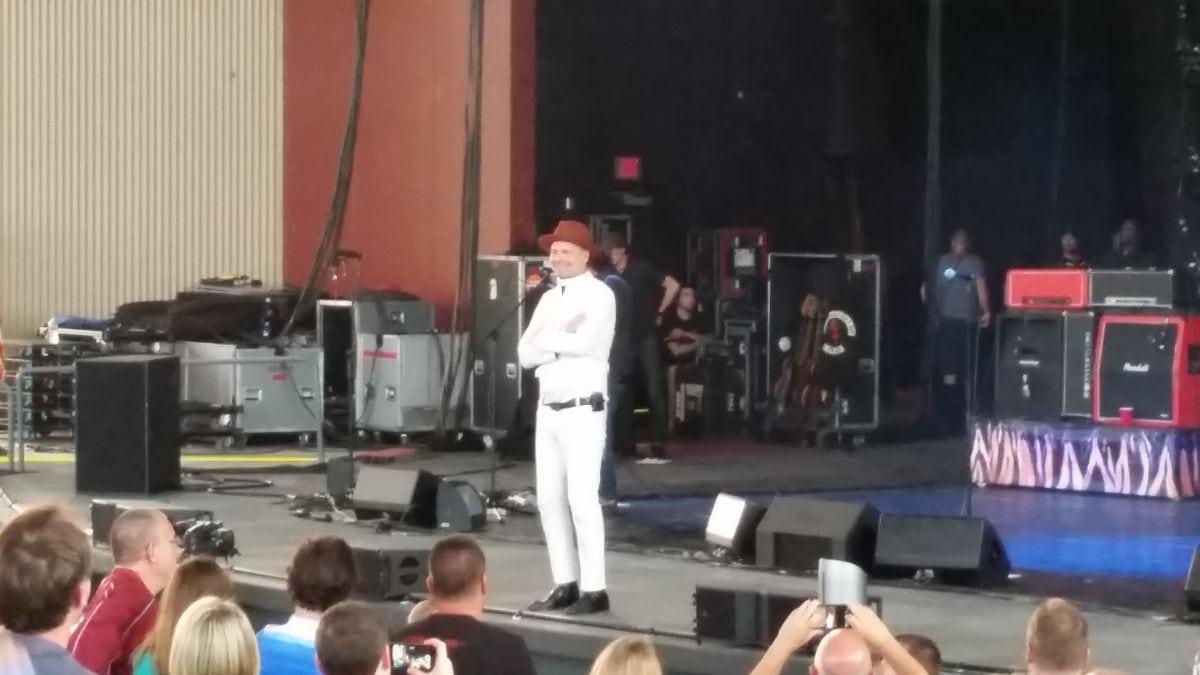
 Late in the day, news of his death was retracted. Petty had been taken off of life support but began breathing on his own. He was fighting death just as he had fought record labels throughout his career.
 Admission is $6, and children under 13 are free. Kettleridge Farm is located at 515 Log Cabin Road in Victor, NY. For more information, visit the Kettlefest
 Becker missed both July

