Category: Folk/Americana

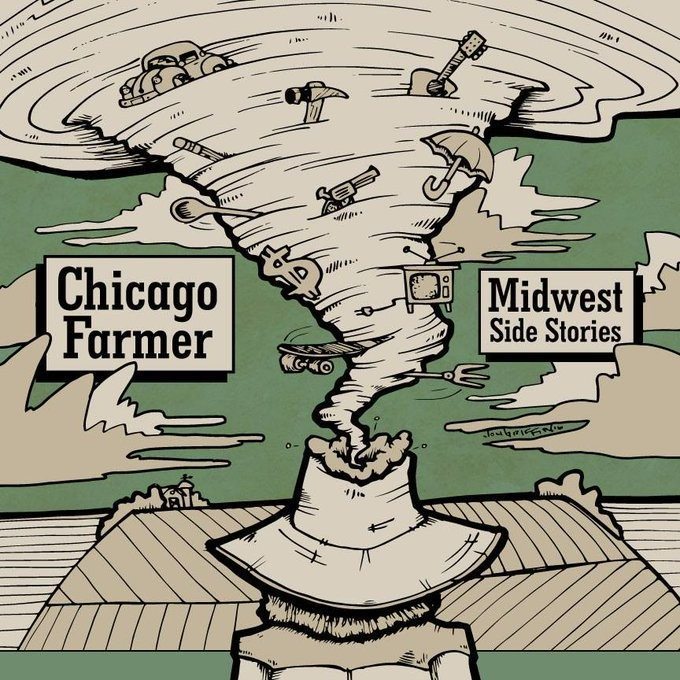
  • Hearing Aide: Chicago Farmer “Midwest Side Stories”

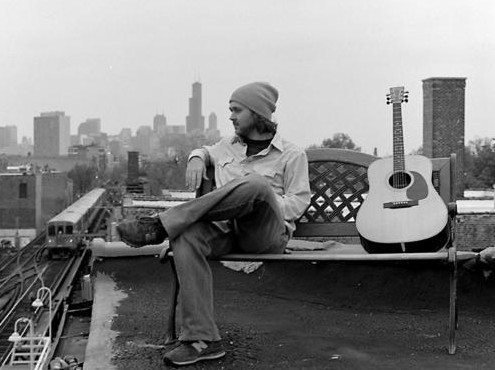
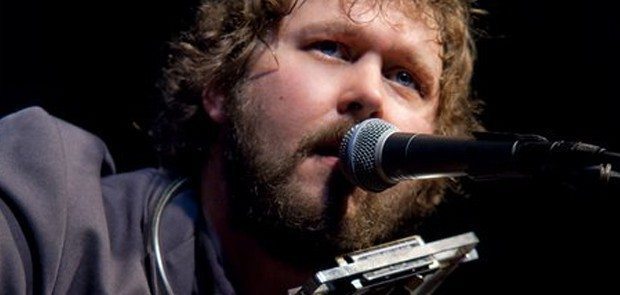
    Chicago Farmer recently released his seventh studio album, Midwest Side Stories, which debuted on September 30, 2016 on his Chicago Farmer record label. It’s the follow-up to 2013’s Backenforth, IL. Chicago Farmer is the nom de plume of Illinois-based folk artist Cody Diekhoff, who has spent the last decade barnstorming bars and theatres across his native Midwest, traveling far and wide, through dim towns and bright cities alike, to perform for a growing legion of appreciative fans. Diekhoff was born in tiny Delevan, IL, has spent significant time in Chicago, and currently calls Bloomington, IL home. It’s these localities, which are largely defined by the sordid power dynamics surrounding them, that make up the backdrop for his blue-collar ballads.

    Distilled to its essence, Midwest Side Stories is a concept album, one centered around the workingclass struggles of the people of Tazewell County, Illinois. The concept, while in league with Sufjan Stevens’ Illinois, is less sprawling, more localized, and reads sort of like Sherwood Anderson’s short-story collection Winesburg, Ohio, yet its themes are more aligned with those of another famous Illinoisian, the poet and folk singer, Carl Sandburg.
    The opening track, “Umbrella,” a seemingly autobiographical take on the life of a folksinger with a rainy day plight and a ticket to ride, acts as an overture, setting the stage for the strugglers that Chicago Farmer will routinely call into the limelight over the course of the album. The track takes its name from a simile built into the first verse, which provides an inside look at the inspiration behind the songs, while also detailing the apparent relationship between the folksinger and his subject. The first-person narrator sings:

    I went searching for some kind of meaning
    Like words looking for a page
    Came up empty and full of worry
    That nothing could cover the pain
    And these songs and stories
    Began unfolding like an umbrella in the rain.

    I want to write you a sad, sad song
    That I hope will make you smile
    And we could pass it along
    We’re only here for a little while.

    The track also sets in motion the album’s most resonant message: that storytelling is important, and that it’s equally important how one goes about it. Here, Chicago Farmer delivers a well-constructed acoustic guitar tune that’s tinged with electric honky-tonk guitar fills, and hinges on his shaky and crisp, rich as honey vocal performance, complete with emotional tension, brief yodeling, and a crafted message. And while there’s some slick lines in “Umbrella,” such as “we’ve been trying to find our way through the darkness of our minds,” we also see the traces of Chicago Farmer’s major weakness as a songwriter, that there’s a disturbing lack of particularity, personality, and local detail in these folk tales, while there’s an abundance of flat lines and forced rhymes that advance the story by length alone.

    One song in and I’m totally going for Chicago Farmer’s voice, as it’s reminiscent of Ryan Adams during the Cardinals era, while the song itself sounds more like something from Kentuckian Stoll Vaughan’s catalogue, but I’m definitely not sold on the lyrics.

    When the second song, “The Revolving Door,” hits, it’s high drama from the jump. Shrill, Neil Young inspired harmonica tears through the song like a factory whistle, while the ominous bass and drums lugs a gurney of carnage out of what seems a folk music netherland, some gruesome place from which the Byrds’ “Lover of the Bayou” once emerged, and from whence Chicago Farmer’s authoritarian boss figure comes, wielding a trembling falsetto warble like a razor, his voice haunted with the spirit of Will Oldham and bent on corporate enforcement.

    After the first verse, the song breaks suddenly into a bewitched surf-hued anthem that takes up the point of view of a worker caught in this exchange, who’s prideful in repeating “I’m a worker / Not a number,” yet fully aware that the boss dictates he always get “back in line.” Finally, the song increases in tempo and intensity, building up to the climactic moment, in which the blazing harmonica returns, as does the voice of the boss figure, who informs the worker, “saddened to tell you, sir / you don’t work here anymore / pack your things and your feelings / and head on towards the door.” And while the title seems to allude to “revolving door” politics, the song is essentially about the binary bind of incorporated power and its grip on a vulnerable labor force.

    Two songs in and Chicago Farmer has me captivated by his voice, impressed by the careful structures inherent in his songwriting, and excited about the range so far displayed.

    The next three songs, “Rocco and Susie,” “Skateboard Song,” and “Two Sides of the Story” provide the album’s most on-the-nose references to Tazewell County. “Rocco and Susie” is a stripped down, bluegrass-tinted ballad featuring acoustic guitar, tambourine, and backing vocals. There’s a slow setup as the song unfolds. The couple described, at first, “seem like your typical neighbors / [whose] children were somewhat behaved,” but, ultimately, the family succumbs to the sordid afflictions facing Tazewell County: the stock market crash, factory job loss fallout, crystal meth addiction and production, police intervention, and the dissolution of their family. While Rocco and Susie at least have names to which one can connect, they serve merely as stock pieces, with all evidence of their personalities and the sweat of their struggle erased, in what reads as basically a reductive critique of a changing economy, from which the only thesis adduced from the ordeal is simply that one should “stick to smoking grass and drinking beer.”

    “Skateboard Song” gives another passing glance at some of the participants in the local goings-on in Tazewell County, this time from the view of a first person skater riding through town; however, the characters involved in the story are warped by the lighthearted, uptempo, musical-theater style satire Chicago Farmer employs in critiquing smalltown social ills and the misguided laws meant to curb them. Every authority in town, from the signs to the cops to the judge, has only this to say, “skateboarding is bad,” which is always followed with why don’t you “take up guns” or “do some harder drugs,” or some other such miscreant behavior, and only a pop-punkish jingle by which to convey it. While the idea of making a powerful metaphor out of the skateboard has great promise, the execution is tepid, and listeners are left with a less than revolutionary assault on the powers that be.

    “Two Sides of the Story” is a John Prine-esque portrait of the small town heartbreak and struggle that seems to typify the experience Chicago Farmer presents to his audience. It’s another stripped down acoustic guitar tune, with piano and harmonica accompaniment, and featuring Chicago Farmer’s twangy vocals. From his point of view, middle America is a place divided exponentially in twos, where the politicians are feckless liars and misinformation abounds, where the media is a gluttonous machine and working-class reality its fodder, where living’s dying and dying living.

    And here Chicago Farmer uses his highly developed sense of songcraft to portray a growing chasm dividing Americans along intangible lines. In the chorus, he sings “there’s two sides to every story, there’s two sides of every town / the side of town that tells the story and the side where the story went down,” which calls attention to the gap between product and producer that outlines the larger conflict at stake. He adds depth to this stance throughout the song, stringing together artful, impactful lyrics that diagnose the worsening situation while adding some political punch. Take for example this stanza that highlights the gulf between the words and actions of politicians:

    There was a lawmaker whose laws never made any sense
    So he started making promises on both sides of the fence
    Double-crossed his fingers every other time he smiled
    Shook hands across the country, couldn’t reach across the aisle.

    Whereas, Chicago Farmer’s other story songs do well to elicit many concerning issues, they mostly fall in short driving home a moral lesson, however, “Two Sides of the Story” succeeds in convincing the audience that storytelling is important and that it’s even more important to “get your story straight.”

    Halfway through and Midwest Side Stories has proven Chicago Farmer’s obvious talents, namely songcraft and singing, but, in comparison with one another, the songs are quite uneven. In fact, “Two Sides of the Story” marks the high point of Midwest Side Stories, but it also marks the point at which the album takes a turn for the worst.
    “New Used Car” is an easy listening diddy with an attractive pedal steel part, but the trite subject matter and blithe singing give it the taste of Diet Springsteen in a can, while the feathery lyrics secure this tune’s place as the Americana version of those riding-around-town-in-a-pickup-truck revelries celebrated on pop country radio.

    The next tune, “9PM to 5,” is a straightforward country-tinged rock song in the manner of Los Lobos, which describes the life of a graveyard shift worker, but nothing ever develops regarding his situation and it’s difficult to know what Chicago Farmer is trying to invoke here.

    An uptempo fiddle-number follows with the Carter Family styled singalong “Farm and Factory,” which details the working backgrounds of the narrator’s family. Chicago Farmer’s aim here seems directed once more at a changing economy, one that used to provide satisfactory jobs for Midwesterners, either on farms or in factories, but has since rendered these institutions defunct, leaving the people in search of opportunity. He sings “thank God for the farm and the factories / thank the devil for the factory farm.” In retelling this brief, mostly detail-less history, however, it appears that Chicago Farmer’s concern is not truly complex economic despair and worn down, hardworking individuals who need a voice lifted on their behalf, but something more aligned with joining his voice in a nostalgic rank and file of troubadours singing work songs.

    The album’s penultimate song, “Homework,” continues in making rather obvious social observations, partly in reference to environmental destruction and denial, while placing the blame on a wide, vague swath of the citizenry, for which a cloudily aware, altruistic, and populist “we” becomes “the kid who does everyone else’s homework,” which precludes his half-hearted rallying cry, “we have a chance if we can enhance the number of us who’ll stand.”

    Midwest Side Stories concludes with a cover of John Hartford’s “I’m Still Here.” The approach to the song is reminiscent of Houser-era Widespread Panic, with whetted guitar leads, a solo section, a marching drumbeat, and savory vocals. It’s also refreshing to hear lyrics matching the high-stakes political matter at which the originals often obscure or only gesture toward, rather than point at, and it goes a long way in fleshing out the album’s narrator and vision to hear Chicago Farmer howling:

    My cigarettes are gone and so’s my money
    So are all my nerves and all my teeth
    My hair’s falling out, I’m looking funny
    My friends are either dead or on relief.

    When the last note ceases and the dust settles over Midwest Side Stories, what’s left is a readily accessible and highly entertaining volume of country-fried ballads in the Americana tradition, and while the songwriting is polished and the playing refined, the final product lands somewhere shy of the ambitious summit it sets for itself in the early going. Listeners get merely a glimpse of the broke-and-busted life and times of the folks of Tazewell County, Illinois, as the gritty detail and sludgy realism is mostly omitted, and the characters who appear in these weary tales are not granted the shape of their struggles or the use of their authentic voices, as Chicago Farmer flattens them to fit the contours of his traditional songwriting and the bent of his buttery vocals.

    Key Tracks 

    The Revolving Door

    Two Sides of the Story

    I’m Still Here
  • Hearing Aide: Mike Powell “Tied to the Rail”

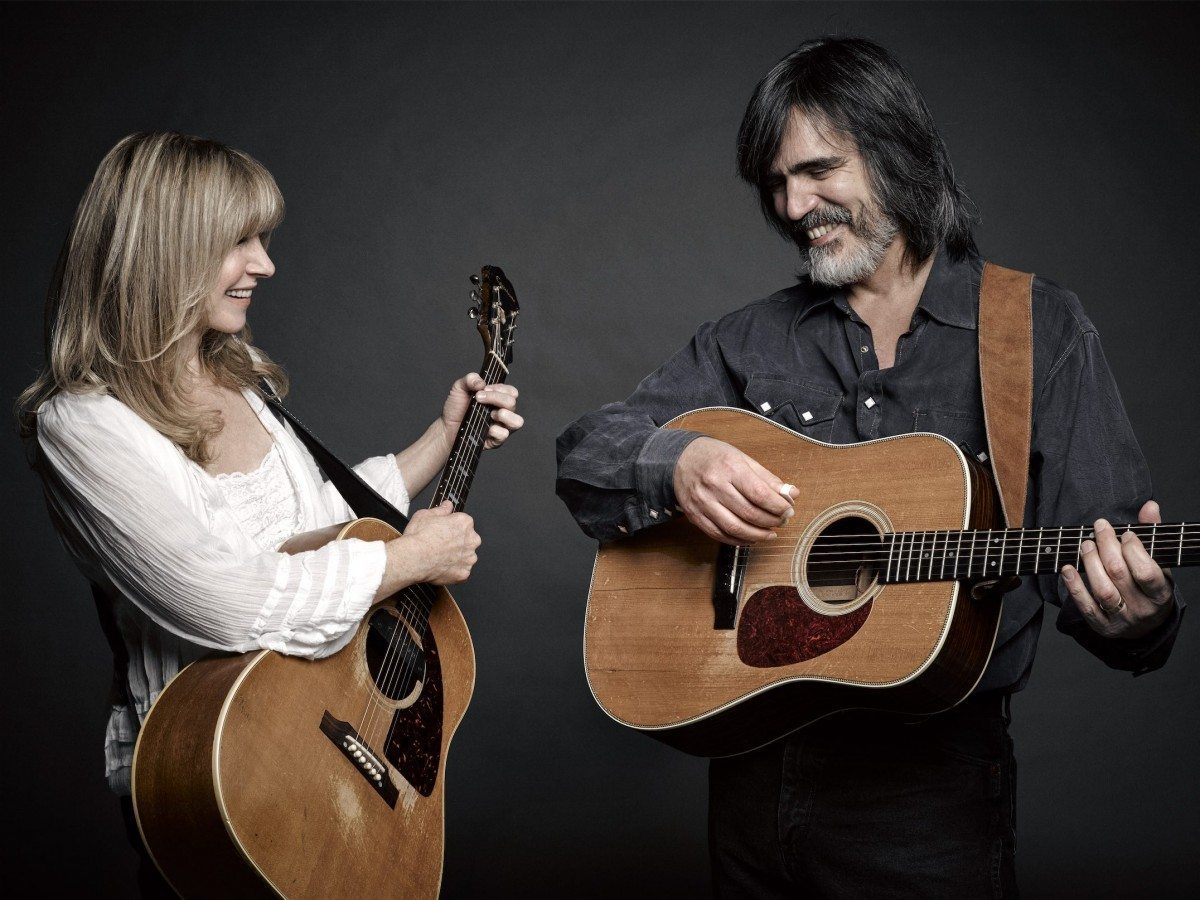
    Singer/songwriter Mike Powell has no shortage of inspiration for writing music. Raised in the foothills of the Adirondack Mountains, he taught himself guitar at the age of 13, boasting a catalog of 20 or so songs by the age of 15. Powell went on to become one of the most decorated college lacrosse players in history for Syracuse University, declining an offer to play in the pros straight out of college, opting instead to follow his passion for music and songwriting to the stage.

    With the reverent simplicity of his soulful voice, an ax, and a harmonica, he delivers nine heartfelt, timeless songs on his fourth album, Tied to the Rail. Eliciting influences from Bob Dylan and John Prine, Mike Powell has been described as a “polite rebel; a truly unique and inspiring American voice,” by The Boston Globe. Powell has also released Blue Eyes and Hand Me DownsReplevin, and the 2014 Syracuse Area Music Award-nominated Kapow.

    Powell eventually did play lacrosse professionally – for the Baltimore Bayhawks in 2005 and the Boston Cannons in 2007. Two years later, he was back on stage, touring alongside Sarah Lee, the granddaughter of Woody Guthrie. A woodworker, Powell nearly lost his ring finger on his playing hand while moving a stack of logs in 2014. With a varied past such as his, it comes as no surprise that Powell is such a great storyteller!

    The album kicks off with the folk/southern rock hybrid “Empire,” a track that showcases the power of what one can accomplish with the simplicity of an acoustic guitar and Powell’s smokey yet earnest voice. It’s a taste of what’s to come – a no-frills album showcasing powerful lyrics by a seasoned vocalist.

    The second track, “Bibles and Bourbon,” features a signature steel guitar and is a short but sweet busker song, good for helping you get out of your own head.

    His lyrics – like these from “Mary Anne” – are pieces of Americana.

    When the water cost money and the drugs seem cheap

    When all your dreams stay lost in your sleep                                    

    And you can feel a break down coming soon

    When your head gets dizzy from the rattle and the spin

    And the sadness seems to burn on your skin

    And every night you’re left yelling at the moon

    Conjuring up images of dusty railroad tracks and bible thumping preachers, “Tied to the Rail” combines folk, soul and a bit of country to create a sound that is sure to give you the feels. Inspired by the birth of his daughter in 2016, Powell is back on the road promoting his third album.

    You can catch Powell on the road Tuesday, December 13 at the Light Club Lamp Shop in Burlington, Vermont, at Ray Brothers BBQ in Bouckville, New York on Friday, December 23 and at the Brae Loch Inn in Cazenovia on Friday, December 30.

    In January, he returns to the studio with his Black River Band to record a new record set to release in March. He resumes his tour in early 2017 with over a dozen upstate New York appearances already scheduled, many of which Powell will be joined by Black River Band featuring John Hanus on guitar, Shane Kelson on keys, Joe Bell on bass and Dom Scicchitano on drums, with intimate solo shows when appropriate.

    Visit Mike Powell on Facebook or his website for more dates or to pick up a copy of Tied to the Rail.

    Key tracks: Empire, Bibles and Bourbon, Mary Anne

  • Country Couple Larry Campbell and Teresa Williams Rock Stage One

    Lovers of classic country and American roots music would have loved to see Larry Campbell and Teresa Williams perform at the intimate FTC venue, Stage One in Fairfield CT.  But people not involved in that culture may not have found show as much fun. It was a very, very laid back and low energy energy night, but that seemed to be just the right mood for the almost full house that attended, who gave the duo several standing ovations.

    They played for about two hours and featured many tracks from their new self titled album and first collaboration together as well as a number of covers and originals from Campbell. Their voices did sync up perfectly and most of the instrumental side of the performance was intriguing, but listeners didn’t go there to be blown away by guitar solos and complex riffing and movements. They came to reminisce and dream about a country lifestyle while being stuck in Fairfield County, Connecticut, the least “country” place for miles.

    The only notable downfall was the uncomfortable moments in between songs. The two were cute together but they were a bit awkward on stage with Williams lying low in conversation and a seemingly nervous Campbell stumbling over his words a little bit. The crowd didn’t seem bothered by his lack of fluency and found it to be more charming than anything else.

    Many of their songs were of a slow tempo and about love and heartbreak, like “Midnight Highway” and “Running Wild” by The Louvin Brothers, and they soon gained some momentum with a few more from their album, “Surrender to Love” and “Bad Luck Charm.” And although the audience loved every song, there was a noticeable difference in the lack of applause after several ballad songs in a row. It seemed that Larry Campbell and Teresa Williams read the Stage One room and ended the night strong and upbeat with their encore that left the audience on their feet once again.

  • Holiday Cheer for FUV 2016: A Year-End Musical Cup of Hot Cocoa with Amos Lee, Lucinda Williams, The Record Company, Corinne Bailey Rae

    The cold New York November rain was coming down as thousands gathered at Rockefeller Center for the 84th annual tree lighting ceremony on Nov. 30, but just a few miles away in the Upper West Side a few thousand lucky music fans nestled in at the Beacon Theatre for an incredible lineup of music. The 12th annual Holiday Cheer for FUV show brought crowd favorites Corinne Bailey Rae, Lucinda Williams, The Record Company, and headliner Amos Lee (and some special guests) to the historic Beacon Theatre stage.

    The evening started off with a musical introduction by Amos Lee performing “Holiday Song” before bringing The Record Company on stage. A high energy and powerful start to the show for sure, The Record Company quickly engaged the audience for their short three-song set which included their well-known “Off the Ground.” The trio from L.A. who commanded the massive stage at Mountain Jam 2016 brought the same energizing show to a much different setting at Holiday Cheer.

    A change in pace was met as British singer/songwriter Corinne Bailey Rae graced the stage with her soulful and sincere voice, accompanied by John McCallum (guitar) and Steve Brown (keys). Her set featured songs off of her latest album, The Heart Speaks in Whispers, and included her own take on Joni Mitchell’s “River,” perfect for ringing in the holiday season. The audience cheerfully welcomed the few spare minutes at the end of her set, allowing Rae to play them one more, “Sky Will Break.”

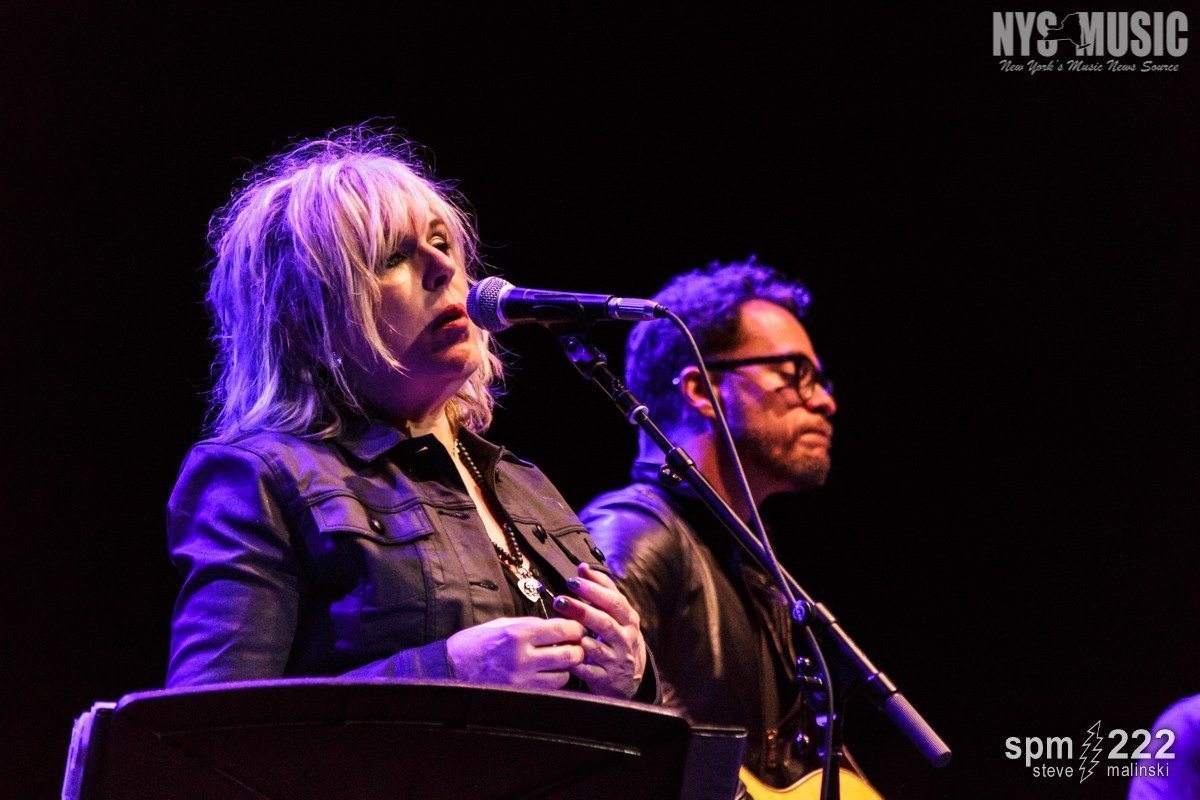
    WFUV’s Carmel Holt broke the din of the intermission with an enthusiastic introduction for Lucinda Williams, describing the singer-songwriter as an essential in the American musical landscape. After starting her set solo with the title track from her 2016 release Ghosts of Highway 20, Williams was joined on stage for a stripped-down acoustic-electric set alongside former Wallflowers guitarist Stuart Mathis who served as a perfect complement to Williams’ guitar and vocal styling.

    The evening’s headliner stepped in mid-set for a song, making the already robust stage presence even greater. Lee backed Williams up on her song “Lake Charles” constructing memorable, rich vocal harmonies. Williams’ bluesy country set concluded with a striking rendition of her 2014 song “Foolishness.” At first, Mathis’ guitar work on the song’s intro teased a possible Dylan “All Along the Watchtower” but it quickly turned into the powerful thought-provoking song soliciting cheers throughout, particularly with references against some current events in politics.

    Holiday Cheer for FUV’s 2016 headliner, Amos Lee, was no stranger to the event, having performed for it previously. Joined by a full band on stage, Lee treated the Beacon to many familiar songs from throughout his recording career along with a few holiday treats – sounds that tickled a few different listening appetites. Lee paused briefly before breaking out one of his new songs, “Vaporize,” to talk about how his 2016 album Spirit allowed him to explore sounds and styles outside of his typical arranging style, exemplified by that song. Helping Lee sing on “Vaporize” was a surprise guest, Rachael Price, from the band Lake Street Dive. Speaking of guests, Price wasn’t the only one to join Lee during his set. After a few moments of praise and admiration for Lucinda Williams, Lee brought her onstage to perform one of her songs, “I Envy the Wind.” Corinne Bailey Rae stepped out for “Keep It Tight,” and Philly-based soul singer Mutlu helped out on “Sara Smile.”

    The evening concluded in a Holiday Cheer fashion with a Christmas-themed encore of two songs. Rachel Price and Mutlu joined Lee and his band for the penultimate, “This Christmas.” Holiday Cheer’s nightcap stepped back into tradition with a rendition of “Silent Night” will all of the evening’s performers (except Williams) helping out. Lee stretched his voice unhindered into a higher octave for a verse, and Price, Rae, and Mutlu all added beautiful harmonies to the song.

    Holiday Cheer for FUV proved to be another successful live music conclusion for the year, bringing unique and venerable sounds together to resonate for the Beacon Theatre audience in a single event. The event is produced annually as a benefit concert for WFUV, a public radio station broadcasting from Fordham University in the Bronx. With 2016’s Holiday Cheer behind us, it’s time to start building anticipation for next year’s lineup.

    [ngg_images source=”galleries” container_ids=”256″ sortorder=”7233,7208,7209,7210,7229,7211,7212,7214,7215,7216,7217,7218,7219,7220,7221,7222,7230,7213,7223,7224,7225,7226,7227,7228,7231,7232″ display_type=”photocrati-nextgen_basic_thumbnails” override_thumbnail_settings=”0″ thumbnail_width=”150″ thumbnail_height=”150″ thumbnail_crop=”1″ images_per_page=”0″ number_of_columns=”0″ ajax_pagination=”1″ show_all_in_lightbox=”0″ use_imagebrowser_effect=”0″ show_slideshow_link=”1″ slideshow_link_text=”[Show as slideshow]” ngg_triggers_display=”never” ngg_proofing_display=”0″ order_by=”sortorder” order_direction=”ASC” returns=”included” maximum_entity_count=”500″]

  • Jerry Douglas: A Man, a Microphone, and a Dobro

    Last Friday, December 2 was an absolute treat for everyone that went to The Warehouse in Fairfield, Connecticut. The night was even a pleasant surprise for renowned dobro player Jerry Douglas, saying he was “shocked people wanted to sit through an hour and a half of dobro music.” His hour and a half spread over two hours after the crowd begged for more and gave him a standing ovation at the end of his performance. No more than 100 people were in attendance which made for a very intimate show, intimate enough that he came out after his set and met almost everyone that showed up.

    jerry douglas

    He played some of his own highly improvised original songs, told hysterical stories, talked with the audience mid-show, joking about how there’s some parts of his songs that he wish he never wrote, and completely opened up to everyone there about his personal life. He shared stories from how  his late and most  beloved dog inspired him to not walk off stage if he thinks there will be an encore, to how he wrote a song in spite of Maurice Sendak, because his famous book Where the Wild Things Are scared his children when he read it as a goodnight story. “I’m going to write a song about it, get rich and get back at Maurice Sendak at the same time. Neither of those things happened.” And that’s how his song “Wild Rumpus” came to be.

    To get a sense of why this was a huge surprise to see such a small turn out, one must do some homework and will appreciate the amount of time and dedication Douglas has clocked in since his start in the 1970’s. He’s worked with a plethora of world renowned artists from Ray Charles to Eric Clapton, Paul Simon to Dolly Parton and countless more, while still writing his own music and performing alongside Alison Krauss and Union Station. He has won numerous Grammy’s, many of which were awarded to his work with Union Station and some for his original recordings. He’s a Country Music Hall of Fame member, won three CMA Musician of the Year awards and a copious amount of International Bluegrass Music Association awards over the past three decades. Simply put, he’s damned good, and so was his performance last Friday.

    He played for two hours and had every soul in the house engaged for every minute he was on stage, partly because of his raw talent, but mostly because almost every song had a story behind it. He started with a short introduction and immediately everyone felt a connection with him. He opened with “A New Day,” a soft and sultry song with a perfect balance of country twang, moving to a cover of “Foggy Mountain Rock,” a recording Douglas said was made in order to compete with Elvis who had at the time was the center of attention in the music world and was, “ruining it for everybody.” This time, his fingers started flying across the frets and still managed to keep a steady melody. It blew the audience away.

    He continued on through the night performing his original song “Peaceful Return” which was unsurprisingly peaceful, simple and serene, and onto a cover of “Hey Joe” by Hendrix and many more covers  from musicians he’s worked with and ones he hasn’t. Each one was special because of the attachment Douglas had to it and knowing the backstory of each song he played made it so much more meaningful to the audience, encapturing them in a way that was never thought to be possible.

    He played about 12 songs total, and every one had a unique sound, which is an incredible feat using just one instrument. An assortment of loop and effects pedals contributed to that accomplishment, but an untrained eye would pay no mind to it and would be simply blown away by his talent and charm.

    It’s fair to assume Douglas does not have a lot of down time, so it’s undetermined when he will be touring again, but he is definitely someone to keep an eye on. His plethora of recordings are available on Spotify as well as iTunes and is worth investing some time into.

  • Wild Rivers Make Waves in London, Ontario

    From Washington, DC to London, Ontario, Wild Rivers is making a name for themselves in the world of music. This Toronto based indie folk band was born out of a duo that met in university in Kingston, Ontario. Devan & Khalid (the original group) expanded their band in 2015 creating a more holistic sound to their unique music while maintaining the compelling appeal of a male-female duo. artworks-000156565070-zmnnv5-t500x500

    Wild Rivers is touring across Canada and even extended their reach into the United States with recent concerts in Washington, Boston and New York. For a seemingly new and upcoming band, they already have established a dedicated fan base who were very visible at the show in London on November 18 at The Rosewood. With only a debut album under their belt, the audience was familiar with all of the songs played and sang along in unison to every one of the poetic lyrics primarily written by Khalid.

    Two years prior to releasing their self-titled debut album “Wild Rivers,” Devan & Khalid put out their first EP entitled “This Town.” Though their set list was mainly composed of songs from “Wild Rivers,” the audience was in for a treat when the band broke out songs featured on “This Town.”

    Wild Rivers opened their show Friday night with “Undercover” followed by one of their singles and a crowd favorite, “Already Gone.” They then played a personal favorite, “Paul Simon,” a song featured on both the band’s 9-track album and Devan & Khalid’s first EP. Though Paul Simon himself is only mentioned once in the song’s lyrics, this interesting choice of title being a well-known musician is intriguing to one who may never have heard the song before. The first time around, “Paul Simon” was recorded acoustically with nothing more than a guitar and vocals. In concert, it was performed as seen on “Wild Rivers” with the addition of a drummer and bass player making for a foot tapping, high energy performance.

    14124317_1105747572825373_5270130609197993912_o

    After closing their set with “Speak Too Soon,” a catchy sing-a-long finale, the crowd insisted upon hearing more. Not having anything else planned, Wild Rivers responded to their encore demand breaking out another song from “This Town.” They played “No Ribbons,” the first song for which they released a music video, paying homage to the beginning of their musical journey.

    Being able to share in the joy of not only the band’s passion to create meaningful music but the audience’s appreciation for the magic of live music made for an unforgettable night. This folk quartet is definitely one to be on the lookout for over the next couple of years.

    Set List: Undercover, Already Gone, Paul Simon, Rolling Stone, Heart Attack, Fish On A Hook, Mayday, Wandering Child, Speak Too Soon

    Encore: No Ribbons

  • K. Phillips Interview on Recess with Spinelli

    Mr. K Phillips opened up for Rob Thomas and the Counting Crows at SPAC in Saratoga Springs, so naturally, we had to speak with this young up-and-coming ranch-raised Texan about his passion for story-telling.

    K. Phillips
    Listen to interview: https://www.youtube.com/watch?v=ve-EK4DeG9M

    Listen to the abridged feature/interview

    Recess with Spinelli: How’s the trip going, any highlight so far?

    K. Phillips: Everything is a highlight. This is a highlight; we’re in Saratoga Springs there’s 24,000 seats in this venue.  It’s like I died and went to heaven, I’m just glad to be here.

    RWS: It sounds like this tour is largly outdoor amphitheatres?

    KP: Yes. I loved it.  It’s a little harder for us because the band rehearsed so much and and we’re so good at playing a club setting but nothing can prepare you for playing on a gigantic stage; it’s made out of aluminum and the sound shoots everywhere and it bounces off the back of the hill and comes back to you and it was very challenging, first to learn how to hear each other to play on the stage. I’ve been touring the United States for about seven years but that’s usually in front of you know, 15 people a night.

    RWS: When that transition initially happened, from going from playing in front of 15 people to playing in front of thousands or 20,000 what was your initial mindset change?

    KP: It’s actually  actually easier because when there’s 5000 people watching you who haven’t seen you seen you, some of them are listening and so maybe like 2500 people are actually watching you attentively.  It’s actually easier because you feel like you’re doing something. Sometimes when you play for 15 people, 2 of those people are listening.  We’ve been ready to do this but nothing can prepare you for it.

    RWS: The way we heard about you was through interviewing Adam Duritz of Counting Crows; Adam spoke very fondly of you and told us to check you out, How long have you actually known Mr. Duritz.

    KP: In 2012…he sponsors a blog that finds new music and he listens to all of it.  He doesn’t have to do that but he still does.  I mean, I think that’s what makes him great, is that he loves music and he’s always filling the well.  It was so funny when we started to play and he used to come to my shows and it would be 12 people, but then 1 of the 12 people would be Adam Duritz.  It was almost embarressing, you know like “you like me, but I don’t have any fans yet.”  I mean he’s like one of the greatest writers of our time and one of the greatest literate writers. it’s a very special thing for me.  And Rob too, I didn’t know Rob before this tour; they’re 2 of the nicest guys I’ve ever met and they don’t have to be, they’re super successful, they watch every show of mine and then they going to put on a show on the kill and after that we hang out; it’s amazing.  I never want it to end

    RWS: Have you noticed any doors open or any opportunities come your way because of this?

    KP: D’Angelico, the great New York guitar company gave me a guitar.  They sent me to their showroom and I just pick out a guitar to play for this tour and that was so nice.  Being somebody that they think is worthy of an endorsement, that’s kind of neat to me. Right before this tour I had a guitar in pawn which I lost because I couldn’t afford get out of pawn.  And then D’Angelico gives me this way better guitar than I had in pawn.  It’s just funny how your life changes so quickly when people help you

    RWS: Now with Mr. Duritz, I believe that you’ve done some work with him in the past, I think I saw that he covered “Kat’s Song” and I think I heard that he worked with you on the new albums?

    KP: Yeah, he let us record some stuff at his house, so one of the new songs on this was recorded at his house and actually, a guitar that we used, we found out later was the guitar from the “Mr. Jones” video, which is funny.  I was like “this guitar sounds so Counting Crows.  So we recorded at his house and he sang on it and he added this four-part harmony like it was nothing.  A few years ago I was watching the Counting Crows.  We were at the Bowery Electric and the Crows were playing a cigartette show and my friend Nekia was playing a song with them and he’s like “Dude, you gotta video tape me doin’ this song” and I’m like “Man I gotta go, I have my own show” and he said “This is gonna blow your mind.”  They go into this song and I’m like “That’s funny, I have a song that sounds alot like that.” and then Adam Duritz sings “I took that young thing to dinner,” which is my line to a song I wrote called “Kat’s Song” and I  realize at that moment that they’re not doing a song that sounds like my song, they’re doing my song. I started weeping, it was like a lifetime achievement award. The Counting Crows have too many good songs.

    RWS: As a songwriter, would you say you have a certain duty or responsibility either to yourself or to the listener to write an honest song?

    KP: My duty is to connect people and to write things which connect the song with the listener, and the only way you can do that is to have an honest narrator.  When you do that, it doesn’t matter what the story is, it’s going to connect, it’s gonna help people through whatever the situation is.

    RWS: How do you know whether or not you are being honest?

    KP: I know because, there’s a poem by Robert Graves, which I always go back to.  It’s actually what our LLC is named after.  It’s called “Love without Hope” and in four lines, Robert Graves tells the story of this bird catcher in industrial England, he spends his day in this park, everyday his job is to put larks in his hat, take them to a baker, baker gives him a piece of bread, maybe a piece of coal and that night he goes with food in his stomache and he doesn’t go cold; that’s all he has to do, just grab the birds before it gets dark.  On this particular day, he’s leaving the park, he’s got his birds and he sees this beautiful white carriage drawn by two white horses and inside is this beautiful squire’s daughter and here, this lowly birdcatcher, sees this girl and he looks at her and shee looks at him and he tips his cap; the birds fly out, the larks fly to the heavens and she watches them go to the heavens and he’s made this impression on this girl he’d never have a chance with.  Now he goes home and he’s cold and he’s hungry, but he’s made an impression on this girl.  I’ve never been a birdcatcher, bu I know from that story, I can relate and I think about that story all the time and if I wonder if my narrator is being honest, I just compare it to that, “Love without Hope.”

    RWS: Was it a relief when you were finally able to put your thoughts on paper in a cohesive manor that could be understood?

    KP: Yeah, but I can’t do that every time.  After each song you write after every record you write, you’re just starting over.  You’d think that you would get better, but the only thing that gets better is your expectations, I’ve definitely gotten better at finishing songs, I’ve gotten better at writing with people.  This last record was writted to be a breakup record.  That was fun for me to go like “How does this fit in?” or “There’s a song called 18 year old girls,” an 18 year old girl who like looks like a grown-up but she’s totally not.  It’s funny the idea of this character who’s come out of a relationship and he’s gonna bring this 18 year old girl around to his friends and they’ll be like “What are you doing, dude?”  So I am looking for more perspective than I am looking for the next what I can’t have.  What gets me off about songwriting is finding different angles and funny scenarios.”

    Recess with Spinelli can be heard every Wednesday 8pm-10pm EDT on WSPN in Saratoga Springs, NY on 91.1FM and on Hoxton FM in London, England every Wednesday 11pm-1am GMT 6pm-8pm EDT

    Follow Recess with Spinelli: Instagram Twitter Facebook Youtube Soundcloud  Mixcloud Tumblr and online at longbowmedia.us

  • The Salt City Plays Tribute to The Band

    The Central New York music community has always been a tight-knit one and one that has always held a fondness for The Band. Saturday night at the Palace Theater was the perfect example of this. The fourth edition of the Salt City Waltz gathered a bevy of local artists both young and young at heart to celebrate the music of The Band, whose The Last Waltz farewell concert occurred on Thanksgiving Day 40 years ago.

    Salt City The BandThe Salt City Waltz was created five years ago (the production took 2015 off) under the guidance of producer Stacey Waterman and music director Gary Frenay and has quickly grown to become a Syracuse must-see. Los Blancos, with honorary Blanco Scott Ebner, served as the house “Band” and, much like the musicians they were honoring, are well-versed in all forms of American music. If there is any band perfectly fit for this role, it is Los Blancos.

    Rather than a re-creation of the original farewell concert, the Salt City Waltz bills itself as a celebration of the music of The Band with a focus on the music and pageantry of The Last Waltz.  The original featured guest appearances from such musical luminaries as Bob Dylan, Joni Mitchell, Van Morrison, Eric Clapton, Muddy Waters, Ringo Starr, Neil Diamond and Dr. John. The Salt City version showcases some of Central New York’s finest musicians.   

    Salt City The BandThe Levon Helm Studio Horns, with special guest trombonist Melissa Gardiner, graced stage left all night, adding a punch of majesty and soul to classics such as “The Night They Drove Old Dixie Down,” “Don’t Do It” and “Such a Night.” The lineup of Jay Collins, Steve Bernstein and Erik Lawrence, along with Gardiner, provided the perfect accompaniment to the evening.

    The night began with the Salt City Waltz Ensemble performing “When I Paint My Masterpiece” and “Acadian Driftwood.” The latter was dedicated to the Standing Rock water protectors in North Dakota with an accompanying slide show. The lyrics of “Acadian Driftwood” were especially poignant as the images scrolled before the respectful crowd:

    They signed a treaty
    And our homes were taken
    Loved-ones forsaken,
    They didn’t give a damn.
    Try to raise a family
    End up an enemy
    Over what went down on the Plains of Abraham.

    Following the two-song intro by the Salt City Waltz Ensemble, the members of Los Blancos ascended to the stage, with Steven T. Winston’s bass dropping the opening notes of “Don’t Do It.” Winston’s soulful voice accompanied by the horn section’s punch had fans flocking to the front of the stage, getting the main portion of the show off to a funky upbeat start.

    Salt City The BandThe first guest of the night was Mark Gibson, singing “Who Do You Love.” This role is typically filled by Dugan Henhawk, who had to sit out this year’s show. Gibson gave props to Henhawk in his spirited rendition of the blues classic.
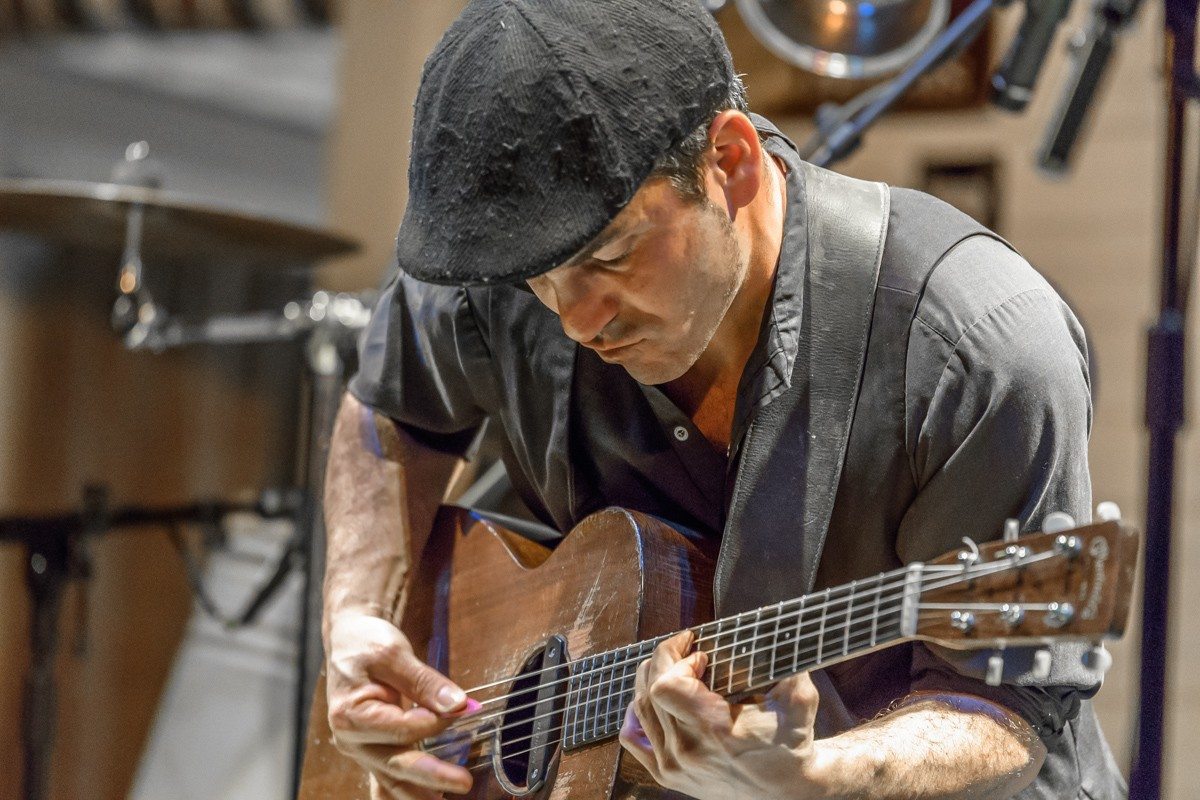
    Drummer and vocalist Bob Kane made his Waltz debut, performing “The Night They Drove Old Dixie Down.” An obviously nervous and ultimately gracious Kane delivered with Levon-like aplomb, accompanied by the audience. See a side stage performance of this in the video attached below.

    The middle section of the set scorched as Joe Altier took the stage to belt out “Mystery Train” while Pete McMahon, founding member of local blues legends The Kingsnakes, lit up the room with some serious harp blowing. Carolyn Kelly then made Muddy Waters’ “Mannish Boy” her own, changing the lyrics to suit the powerful female behind the microphone. Her soulful presence took over the room and was one of the highlights on a night full of highlights.

    Rex Lyonsof The Fabulous Ripcords traded licks with Colin Aberdeen as McMahon induced chills with an electric performance of “Further on Up the Road” to rival that of Clapton’s version, easily one of the night’s peak moments.

    Nick Piccininni and Jason Barady of Floodwood joined guitarists Penny Jo Pullus and Doug Moncrief with Liz Friedel on fiddle for an “Evangeline” that brought the tempo down just a bit from the high octane prior blues stomp. This one turned into another sing-along with audience members swaying along.

    No Waltz would be complete without the legendary Joe Whiting channeling his inner Van Morrison on a performance of “Caravan” that was equal parts manic, soulful and bluesy. Whiting is a veteran of the Syracuse music scene, having done everything from replacing Ronnie James Dio in Elf to performing with Van Halen and Savoy Brown. His stage presence and voice are powerful and demand your attention. His showmanship elevated the energy of the Palace to an even higher level.

    The main portion of the show closed with keyboardist and America’s Got Talent semi-finalist Jonah Smith pulling off a haunting vocal performance of “I Shall Be Released.”  Smith was accompanied  on vocals by Donna Colton, Cathy Cadley, Pullus and Friedel for a rousing and fitting close to the main set.

    The ensemble returned for an “Atlantic City” and “Life is a Carnival” singalong before the host band returned to the stage for the encore, a Levon Helm favorite, “Get Out Your Big Roll, Daddy,” a song made famous by Jerry Lee Lewis.

    The Palace Theater is the perfect setting for this somewhat annual event. No expense is spared in the set design or the sound engineering. The room had terrific sound all night and the production crew deserves accolades for their efforts. Smiles were had; memories were shared and made. This town is blessed with superbly talented musicians and behind-the-scenes people. They gave The Band proper tribute and the sweaty, smiling, sold-out crowd waltzed out into the cool Syracuse air thankful for the talent they had just witnessed.

    Salt City Waltz Setlist: 

    When I Paint My Masterpiece – Salt City Waltz Ensemble (feat. Gary Frenay, Cathy LaManna, Jonah Smith, John Cadley, Liz Friedel and Chris Eves)
    Acadian Driftwood – SCW Ensemble
    Don’t Do It – Los Blancos w/Scott Ebner
    Up on Cripple Creek – Los Blancos w/Scott Ebner
    The Shape I’m In – Los Blancos w/Scott Ebner
    Who Do You Love – Los Blancos w/Scott Ebner and Mark Gibson
    It Makes No Difference – Los Blancos w/Scott Ebner
    Such a Night – Los Blancos w/Scott Ebner
    Helpless – Los Blancos w/Scott Ebner, Jason Barady, Nick Piccininni and John McConnell
    Stage Fright – Los Blancos w/Scott Ebner
    The Weight – Los Blancos w/Scott Ebner and Carolyn Kelly
    The Night They Drove Old Dixie Down – Los Blancos w/Scott Ebner and Bob Kane
    Dry Your Eyes – Los Blancos w/Scott Ebner and Tim Herron
    Coyote – Los Blancos w/Scott Ebner, Donna Colton and Chris Eves
    Mystery Train – Los Blancos w/Scott Ebner, Joe Altier and Pete McMahon
    Mannish Boy – Los Blancos w/Scott Ebner, Carolyn Kelly and Pete McMahon
    Further On Up the Road – Los Blancos w/Scott Ebner, Pete McMahon and Rex Lyons
    Evangeline – Los Blancos w/Scott Ebner, Penny Jo Pullus, Dough Moncrief, Nick Piccininni, Jason Barady and Liz Friedel
    Ophelia – Los Blancos w/Scott Ebner
    Caravan – Los Blancos w/Scott Ebner and Joe Whiting
    Forever Young – Los Blancos w/Scott Ebner and Sean Patrick Taylor
    Baby Let Me – Los Blancos w/Scott Ebner and Ed Zacholi
    Follow You Down – Los Blancos w/Scott Ebner
    I Shall Be Released – Los Blancos w/Scott Ebner, Jonah Smith, Donna Colton, Cathy Cadley, Liz Friedel and Penny Jo Pullus
    Atlantic City – SCW Ensemble
    Life is a Carnival – SCW Ensemble

    Encore:
    Get Out Your Big Roll, Daddy – Los Blancos

  • Caravan of Thieves Raise the Dead at Nelson Odeon

    Imagine taking a journey on unfamiliar roads, and your GPS isn’t working. You’re left to trust your instincts, fairly confident that you’ll reach your destination, even if you don’t quite know what lies ahead of you. That’s a bit like seeing Caravan of Thieves for the very first time. The band performed at the Nelson Odeon on Saturday, November 19. Their multiple styles were all over the musical map. There were elements of swing, bluegrass, alt-country, folk, Americana, big band, gypsy rhythms, Celtic influences, and yes, disco, throughout the evening. Their infectious songs had the audience singing along on the choruses, or on familiar cover tunes, and earned the crowd’s trust that we’d all find our way to an enjoyable evening.brian-cornish-caravan-of-thieves-03 Fuzz and Carrie Sangiovanni, the husband and wife guitarists that front the band, accompanied by Nicole Scorsone on violin and Rich Zurkowski on upright bass, led a nearly full house through a rollicking two sets of high energy, foot-stomping, hand-clapping, finger-snapping songs. When not playing guitar, Fuzz played extended solos on what looked to be the world’s most make-shift percussion kit, comprising of a five gallon plastic water bottle, a sauce pan, a spring, a coffee can, what may have been half of a fifty-five gallon drum, and other instruments not readily identifiable. His drum solos added to the band’s “anything goes” attitude and brought smiles and thunderous applause.
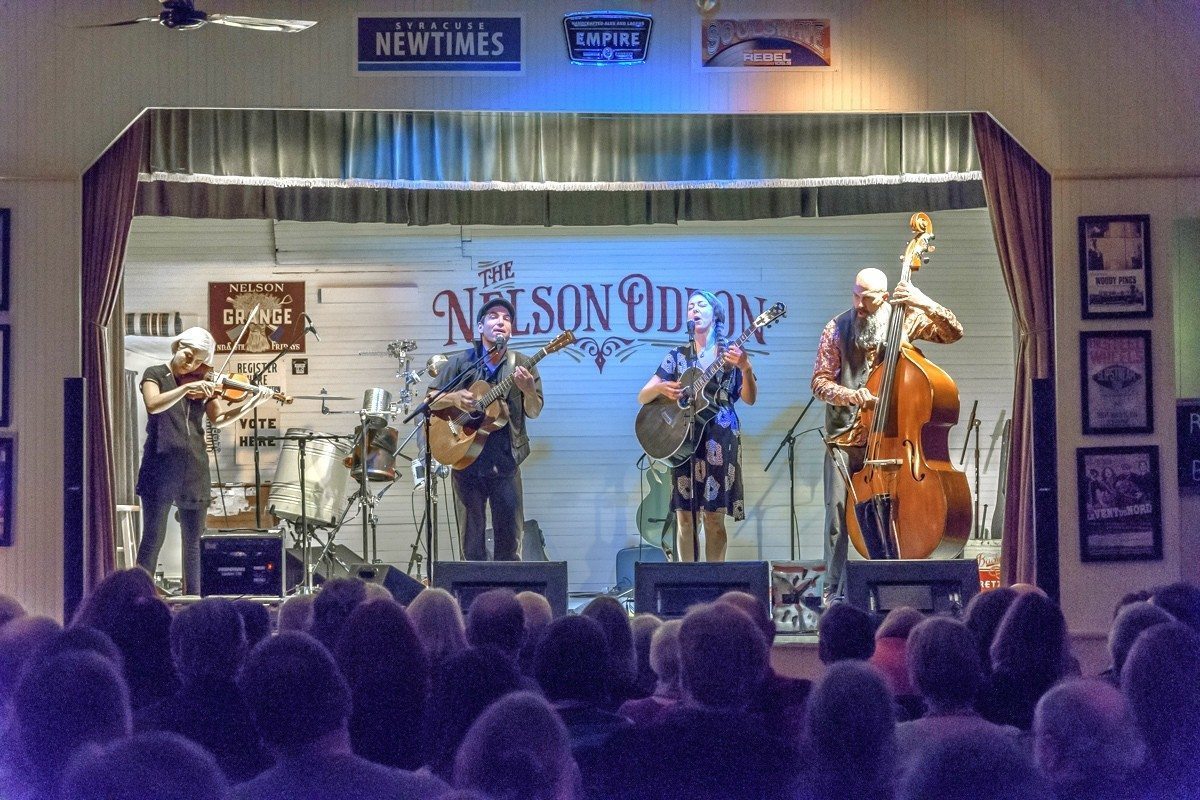
    Many of their originals, such as the opening piece “Wasting My Time,” and “I Get Sad,” showcased the remarkable harmony of Fuzz and Carrie’s voices. Scorsone’s expressive violin and Zurkowski’s double bass, which he both plucked and bowed, deserve mention for the richness they added to Caravan of Thieves sound.brian-cornish-caravan-of-thieves-01 The cover tunes were stunning in both their selection, and in their execution. The band put their own signature stamp on these pieces, rather than cookie cutter versions of the original recordings. These included a Beatles “Girl/Being for the Benefit of Mr. Kite” medley, an audience sing-along on Queen’s “Bohemian Rhapsody,” and to begin their encore, an instrumental version of Duke Ellington’s “In a Sentimental Mood,” followed by Gloria Gaynor’s “I Will Survive.” I am going to go out on a limb and state that I’m fairly certain that no other band at any time or any place has ever played those two songs back to back.

    For their finale, the band came down from the stage, gathered the audience around them, and played an unplugged rendition of their song “Raise the Dead.” This piece would be right at home in an Irish saloon, with reverence for the departed and celebration for the living, complete with a stomp, clap, and sing along chorus that those in attendance readily joined in. Maybe we didn’t know exactly how we ended up shoulder to shoulder with strangers, singing and stomping and clapping in public without a care in the world. But, I’m glad to have trusted Caravan of Thieves to get us there.

    [ngg_images source=”galleries” container_ids=”232″ display_type=”photocrati-nextgen_pro_blog_gallery” override_image_settings=”0″ image_quality=”100″ image_crop=”0″ image_watermark=”0″ image_display_size=”800″ image_max_height=”0″ spacing=”5″ border_size=”0″ border_color=”#FFFFFF” display_captions=”0″ caption_location=”below” ngg_triggers_display=”always” ngg_proofing_display=”0″ captions_enabled=”0″ captions_display_sharing=”1″ captions_display_title=”1″ captions_display_description=”1″ captions_animation=”slideup” order_by=”pid” order_direction=”ASC” returns=”included” maximum_entity_count=”500″]

  • All You Really Need: DSO at the Palace Theatre

    On Saturday night at the Palace Theatre in Albany, Dark Star Orchestra (DSO) brought the good ol’ Grateful Dead back to life in a stellar fashion.  Excitement filled the room before the first note was played as word had spread that Jeff Chimenti would be on keys for the entire show as he did the night before in New Haven, CT.  Normally holding down the boards, Rob Barraco replaced Skip Vangelas on bass creating a music chairs scenario that we were all ready to embrace.  

    DSO Palace TheatreOpening the set with a heartfelt “Sugaree,” the Capital Region crowd began to “shake it” on low gear while blissfully enjoying Jeff Mattson’s passionate vocals.  After the silky first set introduction, rhythm guitarist Rob Eaton wasted no time channeling the cowboy in Bob Weir with a wild west “Me and My Uncle> Big River” one-two punch.  While “Me and My Uncle” is by far the most played song in the Dead’s expansive repertoire, I never get tired of the rockabilly energy release after a soul searching Jerry Garcia tune.  Chimenti gave the fans a symbolic “YEEHAW” on the keys during “Big River” and reminded the room why he was invited by the remaining Dead members to join them on the “Fare Thee Well” run.  

    Slowing things down with an exceptional threesome of “Peggy-O,” “Cassidy” and “Friend of the Devil,” this show was starting to feel like a classic late-70’s gathering.  Barraco displayed his nasty bass playing abilities during “Peggy-O” before Lisa Mackey floated her way on stage during “Cassidy,” playing the role of Donna Godchaux. She would return two songs later for “From the Heart of Me” which would turn out to be one of the last times this tune was ever played on stage.  It was after “Ramble On Rose” that a wide-eyed seasoned tour-veteran giddily informed me of the Grateful Dead show the Orchestra was recreating:  January 11th, 1979 from the Nassau Veterans Memorial Coliseum in Uniondale, NY.  

    My original hunch of a late-70’s show turned out to be true, but I did not realize the importance of the date until hearing the tear-the-roof-off “Jack Straw.”  Cowboy Bob was back for this desperado masterpiece as Mattson threw in some rawer than usual jamming.  Deadheads young and old call this one of the best versions of all time for the blistering Jerry solo and, nearly 38 years later, DSO honored their heroes to the fullest extent.  Also noteworthy in the original performance was Bobby’s comical word-swap as he sang, “We used to play for acid, now we play for Clive.” But from what I heard on Saturday, Eaton left those lyrics in 1979.  Out of all the stand-out moments of the first set, the vocal belting of “Jack Straw from Wichita” hit the crowd with a sonic uppercut that we didn’t recover from until after set break.  The always rockin’ “Deal” closed out a set filled with Jerry’s greatest hits and some colossal Bobby moments in between.  

    Picking up right where the first set left off, “I Need a Miracle” carried the tidal wave of momentum that was felt over the intermission.  “Ship of Fools” calmly sailed into the number two slot of the second set before kicking off another Weir-inspired highlight in “Estimated Prophet.”  Chimenti, Barraco and Mattson provided the foundation for the psychedelic reggae and while we were in Upstate NY, the California lyrics were shown a lot of love.  “My time’s comin’ any day” eerily stood out to me as the original 1979 show would be Keith Godchaux‘ last appearance at the famed Grateful Dead stomping grounds of the Nassau Coliseum.  An even more fitting tune for the final night of Keith in Long Island, “He’s Gone” allowed my over-thinking self to read even further into the lyrics, symbolism and song placement of my favorite band.  Fortunately, we were given a temporary vocal time-out and the spinners in the audience were treated to a short and sweet “Drums” by Dino English and Rob Koritz on kits and percussion.  

    [singlepic id=6787 w= h= float=none]

    New Yorkers from Long Island to Albany were able to enjoy the home state lyrics delivered in the straightforward version of “Truckin’” before the second major highlight of the set, “Stella Blue.”  Mattson made his guitar strings shine one more time during this bluesy crowd pleaser.  “Stella” may have a somber tone, but Jerry’s fiery guitar solo always brings the boil to high during this signature ballad and the Orchestra perfected the nucleus of the original.  Closing the second set with a reminder of all we really need, “Good Lovin’” pleasantly drifted off into DSO show history.  

    The boys encored with “Casey Jones,” which serves as a rarity in late-70’s era.  The “upper” drug reference in one of the band’s most radio-played tunes gave the crowd the extra pep in their step before pouring out into the street of Albany for a night cap.  Similar to the good ol’ Grateful Dead, Dark Star Orchestra seems to have a particular affinity for the Empire State.  While I have not done the research, I would suggest that New York may have more Deadheads per capita than any other state from sea to shining sea.  Saturday night’s recreation of a legendary 1979 Nassau show performed in front of an Albany crowd furthered my love for New York State, the Grateful Dead and the incredibly talented Orchestra that pays tribute to them tour after tour.   DSO returns to the state with “the ways and means” for two shows on November 25th and 26th at The Paramount in Huntington.  

    01/11/79
    Nassau Coliseum – Uniondale, NY

    Set 1: Sugaree, Me And My Uncle, Big River, Peggy-O, Cassidy, Friend Of The Devil, New Minglewood Blues, From The Heart Of Me, Ramble On Rose, Jack Straw, Deal

    Set 2: I Need A Miracle, Ship Of Fools, Estimated Prophet, He’s Gone, Drums, Truckin’, The Other One, Stella Blue, Good Lovin’

    Encore: Casey Jones

    [ngg_images source=”galleries” container_ids=”233″ display_type=”photocrati-nextgen_basic_slideshow” gallery_width=”420″ gallery_height=”300″ cycle_effect=”fade” cycle_interval=”8″ show_thumbnail_link=”1″ thumbnail_link_text=”[Show picture list]” ngg_triggers_display=”never” order_by=”pid” order_direction=”ASC” returns=”included” maximum_entity_count=”500″]