Soundtribe Sector 9 (STS9) has come back from their space oddesey to release their 5th studio album The Universe Inside. If you’re looking for the instrumental sound tribe of yore you won’t find it here. Most of The Universe Inside is rife with vocal samples which sometimes don’t hit the mark.
This album has a lot of potential, as there is no denying that these are extremely talented musicians. Yet the pop style vocals often felt unnecessary instead of complimentary. For instance the beginning of “Worry No More” had me waving my hand around like Christina Aguilera performing an Aretha Franklin song. As the song continued though the vocals seemed overbearing, instead of helping to showcase the instrumentals.
Although for me, less is more when it comes to the samples, they still retained their essence, especially in the later tracks. A lot of the songs have a fun, disco feel, like a soundtrack to a psychedelic roller rink. The bass lines are the highlight of “Out of This World” and “Get Loud.” Their new bassist Alana Rocklin is incredibly talented, and it’s great to see a woman of her caliber at the forefront of a popular jam band.
The middle to the end of “Give & Take” is both soulful and futuristic which falls in line with their efforts to develop “a new kind of electronica that combines the energy of 21st century dance music with the dynamics of a band.” If it’s dance music you’re looking for, you’ve found the right place, . The Universe Inside is undoubtedly an album that will get you moving, and even have you singing along.
The Universe Inside is set for release September 2.
KeyTracks: World Go Round, Give & Take, The Universe Inside
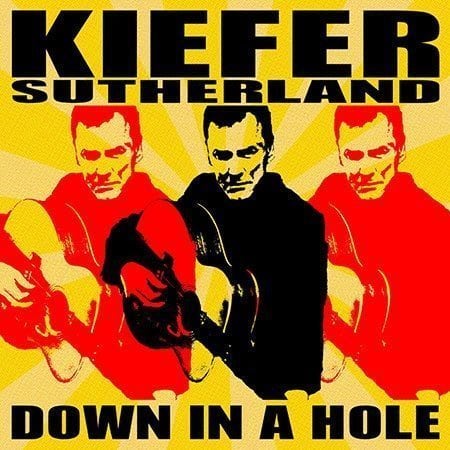
We all know Kiefer Sutherland from his starring roles in major motion pictures and tenured television career and on August 12, he joined the singer-songwriter realm with the release of his debut album, Down in a Hole. Owning an independent record label with his friend and fellow musician, Jude Cole, has allowed Kiefer to work at close range with up and coming L.A. musicians for years. Combine that with his life-long passion for music and good old fashioned Western country culture, and you’ve got a formula that takes us straight to the proverbial promised land.
“Can’t Stay Away” sees the album begin with a classic upbeat country theme that any lost boy can relate to; being hung up on another lover. The female harmonization is immediately utilized, bringing a refreshing angle to a few of the 3 to 5 minute tracks that make up Hole. Lugubrious slide guitar can be heard on “Not Enough Whiskey,” taking us away from the hustle and bustle of our usual bright lights, big city drag. “Going Home” provides a defiant edge for any young guns listening.
“Shirley Jean” continues the ambulating pace of the album, perhaps referring to a past break up. The production value is relatively high, and lyrically the songs manage to avoid some of the cliches that pigeonhole most popular country music today. The title track leaves me personally with a true desire to cowboy up. The coming weeks will tell whether or not Kiefer will be as big a hit in the studio as he is on the silver screen, but one thing is certain; he has staked a unique claim in the midst of desert saints, walking straight passed the phone booth and into the wild of country music.
Key Tracks: Not Enough Whiskey, All She Wrote, Down in a Hole
Progressive rock band Coheed and Cambria launched their newest album, The Color Before the Sun, on October 16th, 2015; but recently released a deluxe edition of the album, Deconstructed on August 19.
The Color Before the Sun Deconstructed is a companion deluxe edition to Coheed and Cambria’s newest album, under the same title (minus Deconstructed). The new title is ironic, because Deconstructed puts on bleeding display a thirty track mausoleum that gives sinew and muscle to an already great skeleton. Nothing about this edition is deconstructive.
The first part is The Color Before the Sun as it was originally released. If you haven’t yet heard the album, I recommend starting here as it gives context to everything else. “Island,” the first song kicks off the whole album with the sounds of a New York City subway fading into a simple pop rock song, yet effective allegory for not wanting to be stuck in one place. Following suit, songs like “Atlas,” “Eraser,” and “Colors,” hold ground as a thematic, and strong foundation for the rest of the album.
It is the first album that Coheed has put out to not feature a storyline related to the Amory Wars, the collection of a book and four graphic novels on which Coheed and Cambria’s concept is based.
Instead, the lyrics represent a sense of quiet introversion, personal responsibility, fatherhood, and growth. While Sanchez, in the past, has said that his lyrics are metaphors for things that go on in his own life, mostly having to do with relationships, this album’s lyrics are to be taken literally.
As for musical bravery, I cite that while every other Coheed album features what I can really only describe as “progressive rock weirdness,” this one has has few true complexities attached. Instead, TCBTSD features a very stripped down, bar chord, standard tuning, Dad rock feel, but they manage to make it work. At first listen, I must admit my aversion to this. How dare my favorite band change their sound to something so simple? But I can’t fault someone for wanting to write what they want to write. Through this mindset, I’ve come to admire this album as much as the rest. So maybe it is not as layered or as weird as Good Apollo I, but that is exactly the point. TCBTSD was meant to sound stripped down, straight-forward, and unencumbered by the weight of somewhat of an overload, just like its literal lyrics.
If, at this point, you’re thinking that this is a lot of information at once, you’re right. Coheed has always left on the table enough material to give the party something to talk about all night. This brings me to another thing I loved about TCBTSD: you don’t have to be familiar with anything Coheed related to enjoy it. TCBTS stands alone in its own lane; anyone is safe here.
So what else stood out? A whole lot, such as “Here to Mars,” a sappy, but cute love song released as a single. That last chorus/bridge, in which Sanchez and co. scream “…and we’ll never let you go…” on repeat gave me chills and is most assuredly to be a crowd pleaser, as the live aspect of Deconstructed shows.
Further notable, the use of more acoustic guitars on this album than the last ones. “Ghost,” and “Peace to the Mountain,” are almost creepy in sound and may remind one of Good Apollo I‘s “Wake Up,” one of my personal favorite songs by Coheed. Likewise, both of these songs particularly showcase Sanchez and guitarist Travis Stever’s compatibility as co – musicians and guitarists. Both songs feature a “weaving” guitar pattern and solidify the musical relationship. The ballad of Sanchez and Stever has always inspired me as a musician. In said terms, I think in previous albums they’ve made a great couple whose company you enjoy, so to speak, but by this one, they’ve gone from dating to married. “Ghost” is the best example of this.
And let’s not overlook the rest of the group. Zachary Cooper joins the ranks on bass once again (this is his third effort with Coheed, the other two being The Afterman: Ascension and Descension). Similar to the last two, Cooper brings technically refined precision to his position while giving the listener heart. I’ve always admired Coheed’s use of bass guitar. While many rock bands keep their bassist on a leash, it’s almost as if they told Cooper before recording, “Hey, buddy, go fucking crazy.” Good. But that’s not all.
You know how a lot of people think there is always that member that any given band would not be the band without? Take, for example, an image of the Rolling Stones without Keith Richards, would they still be The Stones? Maybe not.
I admire that this is really not the case for Coheed. Save Cooper, the band has a longstanding lineup, and even Cooper meshes so well with the rest of the group that he might as well be a veteran.
But Coheed has a secret weapon. Perhaps the most unique member is Josh Eppard, or Weerd Science as he appears in each hip hop solo album he’s made.What can I say about a hip hop musician playing drums in a rock band? A whole lot. He’s also contributed to keyboards and backing vocals in the past.
At first glance, Eppard’s drumming style is true to hip hop: minimalistic, but groovy and effective, matching perfectly with Cooper’s bass playing.
To the dismay of many fans, Eppard departed from Coheed and Cambria after Good Apollo I to Afterman, meaning that he was absent for two albums: they were Good Apollo, I’m Burning Star IV, Vol. 2: No World for Tomorrow (usually referred to as No World for Tomorrow to avoid confusion with From Fear Through the Eyes of Madness). During No World for Tomorrow, Coheed was joined by Foo Fighters’ drummer Taylor Hawkins, and then Chris Pennie (ex – The Dillinger Escape Plan) for its subsequent tours and next album, Year of the Black Rainbow. Josh Eppard returned for the Afterman.
Although both Eppard-absent albums were great (even considered classic to some fans), the void of Eppard could not be filled by other drummers, no matter how great (come on, The Dillinger Escape Plan is ridiculous), but Eppard’s reunion with the band solidified a lot of diehard fans’ feelings about their favorite band. I think this is because Eppard adds that simple factor that makes The Color Before the Sun/Deconstructed non – facade. It’s kind of like what the Edge adds to U2, or Keith Richards to the Rolling Stones. None of these guys play anything overly complicated, but for some reason, the position cannot be held by anyone else. An X – factor, maybe. Or maybe Eppard is what gives Coheed it’s soul, where Sanchez gives it body.
I emphasize so much the rest of the band (besides Claudio Sanchez) because although Sanchez is the primary writer, Coheed has a specialty in the department of live shows, a concept of live shows are kind of lost these days in a world of streaming, especially amongst Millennials and Gen Y. I have no data to back this up, it’s just what I’ve unfortunately noticed, and I doubt many would argue. However, bands that actually perform – I mean with real, or mostly real, instruments and few samples – know that it can take years before the live show is perfected.
For this reason, the second part of Deconstructed stands out as another form of bravery to me: it’s a set of live soundboard recordings. To my knowledge, it’s all unedited, containing no autotune or deep effects. I admire the bravery it takes for a band to release something to the open world with its mistakes still nailed, naked, to their crosses, especially in the modern day of digital perfection. There is anything wrong with digital perfection, but a true live performance can send chills down the listener’s spine in a way that a studio recording usually cannot. They loaded a number of old classics onto this part, such as fan favorite “In Keeping Secrets of Silent Earth: 3,” the title track of their second album.
The real twists come in the live interpretation of songs off their newest album, such as “The Audience,” or “Atlas.” This is why I emphasize the rest of the line up besides Sanchez. The band works together in the live setting so perfectly. It’s almost unfair, and as someone who loves playing in live bands, I’m jealous.
Other great moments included their performances of “Sentry the Defiant” (from Descension), and “Here to Mars,” (from The Color Before the Sun). These songs both reinforce the band’s live prowess.
In the next part, “Big Beige/4th Street Demos,” we hear a more intimate side of the band. I love the way that this section shows an honest look into Coheed’s writing process. I especially enjoyed the way that they included bonus tracks that did not make it onto the album, such as “Bridge and Tunnel,” a Simon and Garfunkel – type spot that I wish had made the main album.
Thirty songs deep, Coheed and Cambria has really outdone themselves, bar chords and all.
I’m not exactly sure how to rate this one. It has a hopeful air to it, it’s a fun listen, and it’s different from other releases. Other reviewers have even called it “a bold step.” I concur, and I add that it is definitely worth a few listens of all thirty tracks.
Key Tracks: Colors, Ghost (main album), Peace to the Mountain, (4th Street / Big Beige Demos), Everything Evil (Live Soundboard Bootlegs)
Big Eyes, the female fronted punk rock band from New York City formed in 2009 by vocalist Kait Eldridge featuring Paul Ridenour, Malcolm Donaldson and Griffin Harrison. The band Big Eyes have a very Joan Jett vibe to them and with a comparable sound like that there is nowhere but up for this group to go. With their new album Stake My Claim being released on August 19 via Don Giovanni Records.
This album flows with each track, starting off with a bang with the title track, the perfect way to get things rolling and gives you a good sense of what else is to come. Powerful guitars and drumming really put this track together well along with Kait’s vocals. “When You Were 25”continues the high energy and keeps you pulled into the record, allowing you to reminisce about your early twenties and the struggle of being a reckless youth needing to face the hardships of adulthood. “Alls I Know,” the final track on the album, really ties the album up perfectly; this track starts off a bit slower than the rest and picks back up into that punk rock feel about a minute into the song.
With so much potential this band has a very high ceiling and it can be heard through this album, maybe one day this band will share the stage with Joan Jett. The potential of this group is tremendous.
Key Tracks: Stake My Claim, When You Were 25, Alls I Know
The Felice Brothers album, Life in the Dark, to be released on June 24, is a great example of how to be a relevant folk band. Many bands feel they need to discuss the good ole days or life out on the farm, but the Felice Brothers largely steer clear of this theme, and are able to get their message across just fine. They define as indie-Folk, if that’s even a thing.
Songs like the opener, “Aerosol Ball”, “Plunder” and “Sally” are rocking tunes reminiscent of shows like Happy Days. Not many bands would try and pull this sound off – mixing the rock n’ roll of the 1950s under lyrics about issues of today is just, well, nifty.
“Jack at the Asylum” and Life in the Dark” are two examples of a slower side of the Brothers. In “Asylum”, Ian Felice howls “America” with what would seems like his last breath while “Life in the Park” preaches a different, very morbid message. At the end of the song chanting that “we live and we die and we don’t know why”, there seems no place for such a line, but maybe, since the album was named after this song, there is a reason its on here.
“Diamond Bell” is the only song that has a new age folk vibe. It is the story of a girl who seemingly goes on a murder spree across the country and he loves her anyway: more of the same story that’s been told a million time. My deepest apologies if this “Diamond Bell” did enter your life and cause such a ruckus, but it seems far fetched and when all is said and done it didn’t add very much value as the album is strong enough on its own. The style that fans have grown to love shines through this album. People who think folk is a dead art need to listen to “Life in the Dark”, by The Felice Brothers.
Key Tracks: Jack at the Asylum, Life in the Park, Plunder
Earlier this month, Suit of Lights released their album Break Open the Head. Suit of Lights is a musical project that was started by Joe Darone who’s played in a number of bands prior to this including The Fiendz and The Rosenbergs. You can hear Darone singing the vocals and playing keys, Chris Connors on guitar, bass and keys, Billy Carrion also on bass, and Corey Colmey on drums. Suit of Lights is based in New York City and though the band self-identifies as a rock group, this album is far from a standard rock album. Most rock albums contain songs that remain in one key and in one time signature. Break Open the Head pushes the limits of genre categorization and explores the capabilities of musical structure in just ten tracks.
The title track and first track on the album has a cool groove with offbeat accents on the hi-hat during the verse and then morphs into a half-time feel during the chorus. In accordance with the groove shifts, the mode of the music changes from minor verses to a more major sound in the chorus and instrumental break. The song “Break Open the Head” seems to be first so that the songs that follow illustrate what happens once the head (presumably figuratively) is broken or thoughts span outside of the box.
“New Frontier” begins with a spooky introduction on piano that’s passed off to the guitar. The chord progression throughout is a little unsettling as there is a harsh balance between tension and release. Featured on the track is an organ sounding instrument, or better yet, a calliope- type instrument that creates carousel or carnival music. The instrument comes in when the singer sings about a continuous carousel of time. That’s clever introduction to the timbre but the tones get a little distracting. The song is slightly unresolved at the end with the guitar feedback, perhaps indicating that the future is uncertain.
“Monsters” has a neat little 7/8 introduction that features a repetitive guitar melody. It’s all about getting rid of your monsters; it’s quite empowering. “Zero Camera,” along with others, frequently changes harmonically with the chord progressions. Though artistic, someone who doesn’t appreciate the theory may find it unsettling or too dramatic “Circle the Drain of History” features the lyrical line “monkey with brains all full of mush, about to get the royal flush, circle in the drain…” over and over again, perhaps to reinforce the concept that history repeats itself.
The instrumental prowess of the musicians is quite strong as, technically and harmonically, the backing works. But the vocals don’t match. The tenor tones are a little whiny sounding, almost in the vein of an acoustic pop punk vocalist. Some upper range notes sound like a push or slightly unrehearsed. The vocals are on key, but they’re not as strong as the instrumentals. The purpose of the album may simply be to stand as a work of art. It may be an album to spark change and stand for something more than notes and rhythms. In that case, it definitely succeeds in sounding unique and has some catchy lines that may stick in your brain. They’re not the easiest songs to sing along to as they’re very unpredictable in nature but, over time, they could become participatory.
Overall, it’s a quick album to listen through and interesting if you’re looking for a change from more mainstream artists.
Key Tracks: Monsters, The Beginning Is Near, Break Open the Head
Summer is a time for embarking on adventure and expanding horizons. Syracuse psycho-funk group The New Daze have been increasing their ear drum influence by regularly touring throughout New York, wrapping up a July residency at Funk ‘N Waffles downtown, and just releasing their third studio album, Give Them Laughter. Recorded in Ontario, NY at The Green Room, this is the first studio project for Steve Graf (drums) and Erik Hoffman (keyboard), with senior members Max Flansburg (guitar/vocals) and Jamie Knittel (bass) rounding out the quartet.
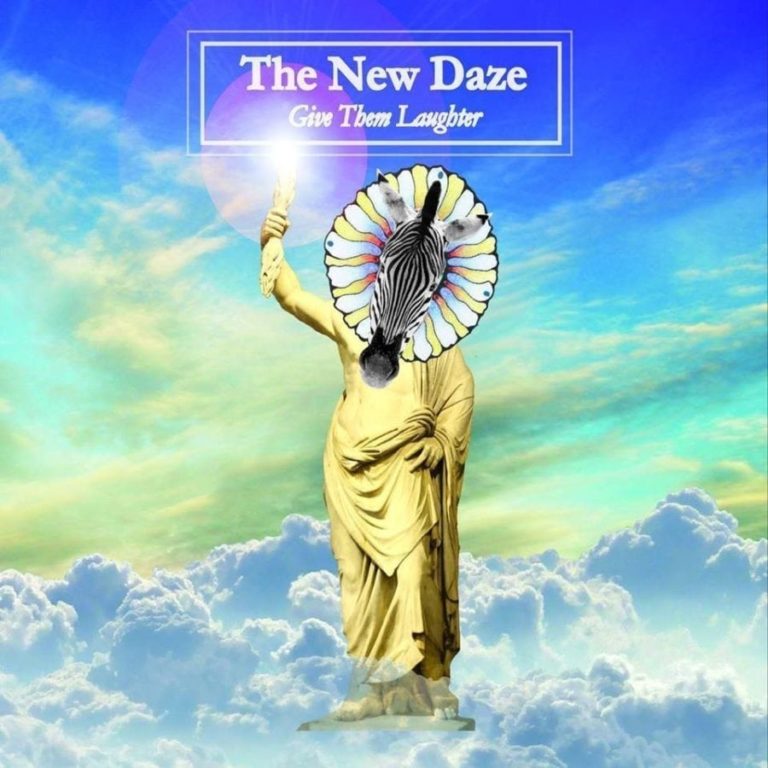
The New Daze are known for their articulate, psychedelic, disco-driven jams featuring consistently solid instrumentation and wacky effects interspersed with metaphoric yet relatable lyrics. The musicians aren’t afraid to get silly, sometimes crafting elaborate back stories to provide a whimsically rich context for their music. Take, for instance, Uncle Stremnf, the zebra mascot who often appears on stage in stuffed animal form and serves as a central part of their new album artwork.
Give Them Laughter embodies the highly danceable and imaginative foundation of The New Daze but also traverses all corners of the musical map, exploring the realm of reggae while retaining a trademark funkiness with the first track, “Pumpkins.” Flansburg’s warm vocals add richness to the tune before it breaks away with a zippy instrumental jam. The first half of “Disasterpiece” bears striking familiarity to a peppy Disney number featuring Knittel on vocals before it too picks up speed, expanding into a noble duet of guitar and keys before Knittel repeatedly decrees, “Life is meant to celebrate, even when it’s a disaster.” It’s almost impossible to not crack a smile as the song concludes with this devil-may-care notion. Flansburg resumes command on vocals for “Send It,” eliciting a more sophisticated, scratchy soulfulness which conveys a youthful crossbreed of Randy Newman and Stevie Ray Vaughn.
“Face Paint” inhabits the album as a one-and-a-half minute tornado of circus-like effects swirling with spurts of heavy drumming, guitar and organ. It serves as an enticing interlude before “Mr. Bonzai,” the longest track on the album at almost fourteen minutes long. This extended track offers a sonic patchwork stitching together techno, jazz and rock elements, at times evoking the muted melancholy of Pink Floyd. The album concludes with “Sunroof Cop,” culminating in the most intense jam on the album, giving listeners one final chance to freak out before the last thirty seconds of book end to the album with a slew of cartoon-like voices reinforcing the nonsensical nature of The New Daze.
Bringing back that same lovable soul of Nomad,Lotus recently released their thirteenth studio album, Eat the Light. Since their start in 1999, Lotus has been wowing listeners with ways of creating new sounds, while remaining distinctively Lotus, and continuing their legacy with a new 10-track record where every song features vocals.
It is a pop record in the sense that the arrangements are purposely simplified and the melodies are catchy,” bassist Jesse Miller said. “We want people to be humming these songs days after hearing them. The album doesn’t need an accompanying catalytic life story to be explained, just put it on the stereo and enjoy.”
This album includes guests such as, Oriel Poole, Steve Yutzy-Burkey and more. Each track having vocals will certainly open many doors for Lotus, especially in the jam scene with tracks such as “Move too Fast,” which is an evocative and playful track with a skittering drum beat and insistent, syncopated bass line. It evokes the feeling of weightlessness, while having a head-nodding beat and vocals by Johnny Fissinger (Philadelphia’s Damn Right!).
Not that Lotus needs any help gaining likes, but taking this new approach with Eat the Light will certainly entertain a whole new audience while keeping their diehard fans excited, especially since they plan on releasing a 2016/2017 tour.
Key Tracks: Fearless, Sleep When we are Dead, Eat the Light
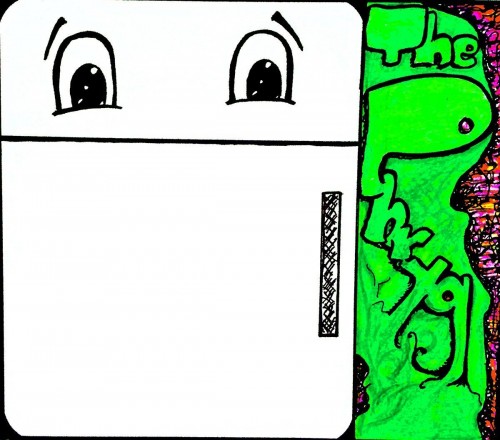
Brooklyn-based progressive funk quartet The Phryg released their full-length self-titled debut album last month. The band formed in 2013 and released their debut EP Midnight Snack in 2014. They tour regularly in the New York and Pennsylvania areas.
The Phryg kicks off with “Hello Miss,” a six minute progression that opens with a funk groove bringing the whole band into the mix. The song moves through variations of the opening groove to the bridge, which features a brief piano solo, before the song climaxes with a rocking solo from guitarist Collin Patierno. It finally comes to a close returning to the initial funk groove.
The second track “Puddin’ Head,” which is also the shortest track clocking in just under four minutes, brings a nice slow funky groove throughout. “Turn You Out” is a keyboard-led tune that rounds out the start of the album. “Crispy Hat” is an instrumental tune that shows off the band’s capabilities. The final track “Tang Slayer” is a perfect cap to the album.
The album is straight up funk grooves throughout and will keep those listening moving. Unfortunately, they don’t stray very much from a standard form with many of the songs feeling as though they were written off the same groove. The production quality of several tracks is lacking, leaving the listener wondering if they’re listening to a demo or a fully produced album. Overall, The Phryg’s debut album is a fun listen, if lacking in places.
New Jersey indie rock band Keepin’ The Family independently released their self-titled debut EP in late June. The five-piece band has been gaining ground, only just getting started in 2016. With interesting instrumentation, including a trumpet and banjo, Keepin’ The Family has a range of talent with a little something for everyone.
The first track ‘Wet Snow’ comes in fast and heavy, with lead singer Jacob Cafaro’s voice barreling through. The song’s impetus rhythm is undeniable, making it difficult to not bop your head to the beat of the drums. Throw in some banjo, and you’ve got yourself a beautifully intense song. It would be easy to pop this album in at the start of a road trip and get a solid start.
Track three, titled ‘Charlotte’s Web,’ shows the band’s ability so slow it down and make listeners daydream a little. Slower in tempo and on the playful side, the track builds to a beautiful Allman Brother’s-esque guitar solo that makes the track feel more like a story. Cafaro’s voice isn’t perfect, but always hangs on and finds the perfect place to be. The band’s playful side is apparent, whether it be a rock song or a slower ballad.
Getting to the final track, ‘Road Trip,’ listeners are given a simple, clean song that feels inspiring and promising. The banjo yet again shines through, adding a piece of bluegrass to the already classic song. It would be easy to listen a few times and want to sing along by yourself on the open road.
‘Keepin’ The Family’ is a really fantastic introduction to what this band is capable of. Their influences may be obvious to most, but the range of their music is unique and vast. Not many bands include banjo and trumpet, only adding to their already remarkable abilities. With just five tracks, listeners can be in any mood to enjoy the album in full. Keepin’ The Family has a promising future if they continue to put out albums that not just engage listeners, but make them really feel it.
Catch up with Keepin’ The Family on their Facebook page, and listen to the album on their Bandcamp.
 This album has a lot of potential, as there is no denying that these are extremely talented musicians. Yet the pop style vocals often felt unnecessary instead of complimentary. For instance the beginning of “Worry No More” had me waving my hand around like Christina Aguilera performing an Aretha Franklin song. As the song continued though the vocals seemed overbearing, instead of helping to showcase the instrumentals.
 “Can’t Stay Away” sees the album begin with a classic upbeat country theme that any lost boy can relate to; being hung up on another lover. The female harmonization is immediately utilized, bringing a refreshing angle to a few of the 3 to 5 minute tracks that make up Hole. Lugubrious slide guitar can be heard on “Not Enough Whiskey,” taking us away from the hustle and bustle of our usual bright lights, big city drag. “Going Home” provides a defiant edge for any young guns listening.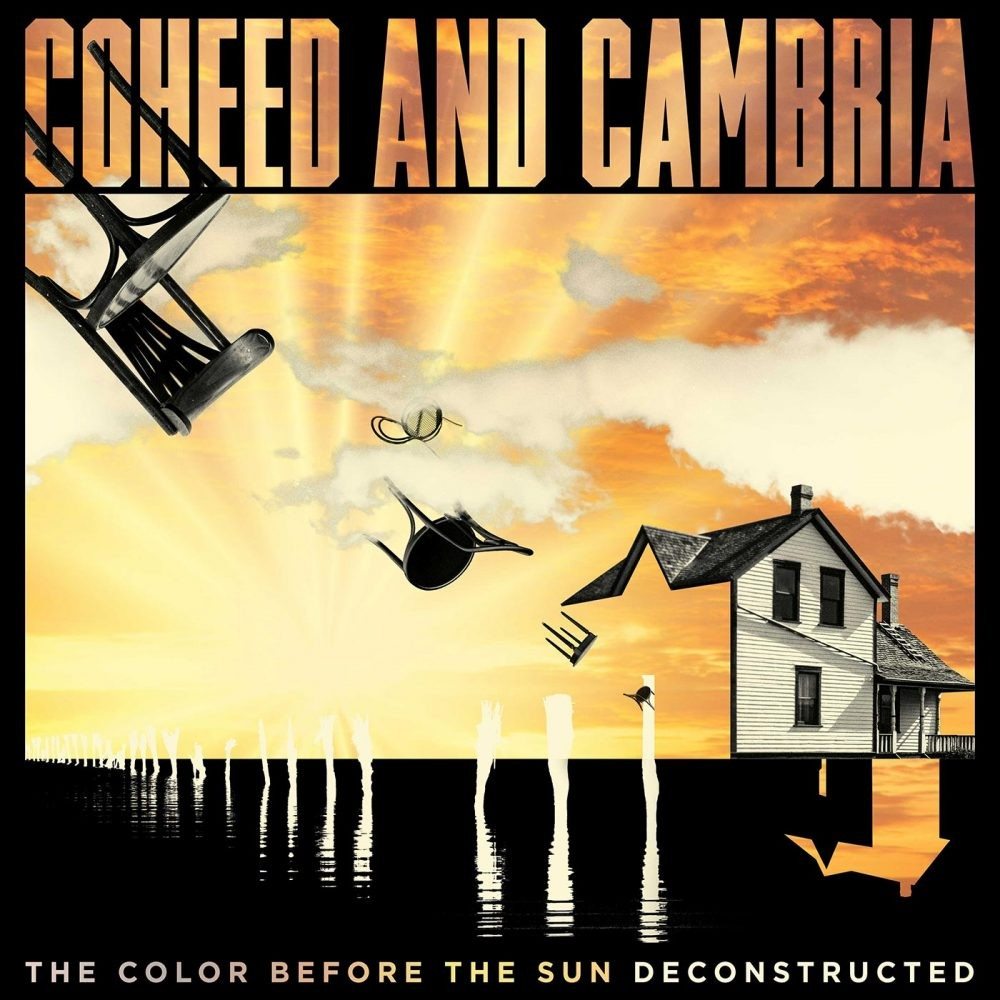
 Earlier this month, Suit of Lights released their album
  The New Daze are known for their articulate, psychedelic, disco-driven jams featuring consistently solid instrumentation and wacky effects interspersed with metaphoric yet relatable lyrics. The musicians aren’t afraid to get silly, sometimes crafting elaborate back stories to provide a whimsically rich context for their music. Take, for instance, Uncle Stremnf, the zebra mascot who often appears on stage in stuffed animal form and serves as a central part of their new album artwork.
 It is a pop record in the sense that the arrangements are purposely simplified and the melodies are catchy,” bassist Jesse Miller said. “We want people to be humming these songs days after hearing them. The album doesn’t need an accompanying catalytic life story to be explained, just put it on the stereo and enjoy.”