May 6, 1993. I was a high school junior, two weeks out from my 17th birthday. It was a Thursday night and Colonel Bruce Hampton and the Aquarium Rescue Unit were playing a gig in Syracuse at the Pump House, a semi-dive bar in a semi-seedy area of town. I had been introduced to ARU through their association with the first H.O.R.D.E tour the summer prior. I was already a Phish fan at the time, having been to seven shows already.
I missed the H.O.R.D.E. tour, however, so had not seen any of the other bands, but probably owned all of their CDs at the time. Somehow I was alerted to this ARU show in town (pre-Internet I can’t even recall how that might have been), and somehow I convinced my parents to let my friend and I go out to a bar on a school night. Just the “bar” part of that equation alone was enough to warrant a solid “no,” so not sure how I managed that, but I am forever thankful.
So my friend and I headed down to the Pump House with no idea of what we were getting into, musically or physically. We got there probably earlier than even the listed time, completely unaware how bar shows operate. We had no fake IDs. The bouncer understandably balked. We pleaded with him to let us in, promising we wouldn’t try to drink, we just wanted to see the band… which was true. I don’t remember it being all that hard, a little convincing and he let us through. We got in the bar, and it was empty. Completely dead. We took a seat at a table and waited. And waited. And waited. And waited for what felt like an eternity, and likely was well over an hour. Finally a band appeared on stage. But it wasn’t ARU. It was the (unlisted) opening band. Ugh. We were restless. Lucky for us, the opening band was pretty freaking great. They were a band from Syracuse University named Sons of Papaya. I would end up being one of their biggest fans, seeing them quite often a year later, when I went to school there. But that is a story for another time.
Finally the Aquarium Rescue Unit would take the stage. Jimmy Herring (guitar) Oteil Burbridge (bass) Apt. Q258 (on Earth known as Jeff Sipe (drums)), Matt Mundy (mandolin), and Count Mbutu (percussion), played a short intro jam before their unkempt leader, Col. Bruce Hampton, ambled on and led the band into “Payday,” off their then new release, Mirrors of Embarrassment. At this time there was still just about 20 in attendance, four of which were the opening band and two of which were my friend and I.
Listening back to the show now, I can’t even imagine what the younger me was thinking. It still sounds fresh and mind-blowing different today. They were an all-star band in reverse. We all now know their names, and know them to be some of the best at their respective instruments, but at the time they were just a young rag-tag bunch being led around by this eccentric uncle-type. It was most certainly a mind and taste-expanding experience for me. Their unique blend of bluegrass, blues, lounge, rock, jazz and everything in between filtered through the bizzaro lens of Hampton’s vision was enough to send even the most educated music fan’s head spinning.
The Colonel wasted no time getting into his antics. “Jimmy Herring, born right here in Syracuse, returning for the 2nd time to his hometown!” (Every stop on tour was his hometown…) My friend and I, none the wiser, ate it right up. Amazing! He’s from here?! “Oteil, from Egypt!” (Again, not true…) He does look kind of mysterious… “Apt. Q258!” OK, that’s just weird. (After the show they handed out signed promo posters promoting the new album, and Jeff Sipe’s signature was a drawing of a house with Q258 written on the door.)
Toward the end of the set, Hampton beckoned for Bela Fleck. Out walked the dorkiest looking musician I had ever seen, playing an electric banjo, what the?! Sadly I had no idea who he was, and as such, had no clue how great he could make the banjo sound. Meanwhile, we couldn’t quite hear what his name was and my friend continually joked how great it was that we saw Roberta Flack. I don’t even remember when it was I realized that I had seen Bela Fleck then.
Over a year later, my tape trading buddy (that was such a thing back then) re-introduced me to him when he sent me a recording of the Flecktones (which I would eventually wear thin) and was forever hooked. But at the here and now of this particular story, I was still completely clueless. Through the beauty of the internet I can now confirm that the Flecktones had a show in Syracuse that same night as well. If only I knew. Fleck would join them from Trondossa through the end of the set. On memory alone, I would say my impressions were that he was surprisingly good considering he was, I had assumed, a local musician. But listening back now, I was a fool to think that he was anything short of spectacular, shining on a solo in “Too Many Guitars” and completely owning ARU’s tribute to Sun Ra’s “Space is the Place” in particular.
The band would come back for a rather lengthy encore, as the “Aquarium Flecktones Unit” with Fleck and Futureman joining the band. Futureman would play the real drums as opposed to his usual Drumitar. But I was none the wiser. Hampton said it best, “that’s one hell of a drum section there” with Futureman, Apt. Q258 and Mbutu all together. He also called out Victor Wooten before the night closing “Jack the Rabbit,” though he was just hanging out on the side of the stage, not playing, unfortunately.
https://www.youtube.com/watch?v=bId4TxH5Q2U
This was one of those out-of-the-way random-weekday playing-in-front-of-no-one special shows. And I was there. But in this case, I was the “unsuspecting crowd”; unknowing and under-appreciating of just how unusual it was. Ending the night “past curfew” according to the stage announcement, leaves me wondering again exactly how I pulled this trick off on a school night and underage, not even a year of driving under my belt.
After the show I headed for the bathroom. Who was that at the urinal next to me? None other than Jimmy Herring. He washed up and headed out. He left the water running and I went to wash my hands. Yow! Just like his guitar playing, the water was scorching hot. My soft unworked 16-year-old skin was nearly burned. In addition to his wizardry on guitar, the fact that he could wash his hands so casually under boiling hot water had me shaking my head. Was he of this earth? No, he was from Zambi, just like the rest of them.
The show was like nothing I had seen. The Aquarium Rescue Unit put on one hell of a unique live performance, unmatched in its combination of musicianship, utter disregard for convention, and creation of its own alternate universe, without the use of over the top theatrics… pretty much on attitude alone. This original lineup would soon after dissolve, first losing Mundy and later Hampton. The band would never be the same. But with their impending reunion, the magic may be reignited.
I gave the one taper there my information in hopes of hearing that amazing music again someday. I never heard back from him, or got the tapes, but thanks once again to this internet thing, I can listen at the touch of a button now. The recording is very high quality, and as stated the music is quite incredible. I definitely recommend giving this one a listen. Take a trip to Zambi-land.
Setlist: Intro> Payday, Compared To What, Time Flack, Dead Presidents. Same Old Thing. Basically Frightened, Lost My Mule In Texas, No Egos Underwater. No Reason To Complain, Time Is Free, Yield Not To Temptation, New River Train, Trondossa*, Too Many Guitars*, Two Truckloads*, Zambi*> Space Is The Place* > Drums > Rocket #9/Space Is The Place*, Workin’ On A Building*
Encore: Swing**, I’ll Go Crazy**, Fixin’ To Die**, Shoeless Joe**, Jack The Rabbit**
Jeffrey Pepper Rodgers recently released his fifth album, “Almost There” and quickly garnered the 2015 SAMMY Award for Best Americana recording to his list of accomplishments. They’ll be celebrating the SAMMY at Small Plates in Syracuse, 116 Walton St., on May 6 with doors at 6pm, music at 7pm.
Jeffrey is a grand prize winner in The John Lennon Songwriting Contest, the founding editor of Acoustic Guitar Magazine, a regular contributor to NPR’s “All Things Considered” and author of “Rock Troubadours” (featuring his interviews with such artists as Jerry Garcia, Paul Simon, Joni Mitchell, and Dave Matthews) as well as other books on music. From his Upstate NY base, Jeffrey teaches courses on songwriting and creative nonfiction writing in the honors program at Syracuse University and leads workshops on guitar and songwriting. If that wasn’t enough, he performs solo and with The Jeffrey Pepper Rodgers Trio, members of which are featured on this release.
Joining Jeffrey (JPR) – lead vocals, acoustic guitar, Strumstick, tenor banjo, are Trio members, Wendy Ramsay (The Unstoppables) – backup vocals, flute, clarinet and glockenspiel, and Joshua Dekaney (Grupo Pagan, Mark Doyle’s Guitar Noir, Mary Fahl) – percussion kit, backing vocals (tracks 3,6) and chimes, along with John Dancks – upright bass, Rani Arbo – backup vocal (track 1), fiddle and Jason Fridley – saxophone. This offering was recorded and mixed by Andrew Greacen and mastered by Jocko Randall at More Sound, Syracuse with additional recording by JPR at home. All songs by JPR except ‘Almost Home’, words by JPR and music by JPR and Wendy Ramsay.
JPR may be the quintessential acoustic singer-songwriter, but he colors with a full palette of folk, rock, blues and soul. Adding elements tastefully to create works that entice rather than overwhelm, he makes the mixes of genres seamlessly smooth, while retaining the emotion of his topics. “Eight Days In January”’ opens with all elements on deck, banjo, guitar, upright bass, fiddle and drums telling a tale of love and loss in the internet age. So sweet and sad it’ll make you move and think at the same time, in a zydeco kinda way. “The Wrong Way Home” adds the seasoned harmony combination with Wendy and Joshua creating a bridge with the chimes, his playing is a voice of its own, integrated so delicately you just float on it. “Closer” gets funky and the band warms immediately, JPR’s expressive vocals along with Wendy and Josh’s harmonies swirl sweetly together. The rhythm section has obviously been here before and JPR’s staccato guitar line just rides on Josh’s double snare hits. A get up and dance number, no doubt.
Switching gears quickly, “Don’t Think I Can Stay Goodbye” highlights JPR’s varying acoustic styles through an emotional expose that is illuminated by fiddle and flute, accentuated by Wendy’s voice as almost an echo, reminding the protagonist why he wrote it in the first place. “Almost There” would sound great in nearly any format, it has bits of folk, pieces of rock and plenty of drive, it’s light, but pushes and pulls against the forms, very cool. “Enough About You (What About Me)” is a jaunty little number that seems to rail against social media and the opinionated, self-involved who live there. Where friends and fans count as statistics and it’s all about the ‘me’ agenda. Quite biting and hits the nail right on the head, smart and sarcastic! “I’ve Got It Here Somewhere” is a solid folk-rocker, it has plenty of room for JPR to exercise his acoustic riffs and expressive voice. A little funky, a little soulful, but right to the heart of what he’s about. Genre-defying folk rock, certainly not the easiest take. “My Bad” may hold my favorite lyrical twists that seems like opposite world, written in counter-point to what is reality.
“‘Somehow” gets slow and soulful, sensual in its analogies, slow-moving, innuendo-fired, full of wanting. There’s something familiar in the voice/guitar interplay, I can’t place it. Wait, it’s “That Heaven” from David Gilmour’s “On An Island”, not only my favorite guitar player, but one of my favorite musicians. That’s a feel that’s reminiscent throughout and sticks in my ears in a very good way. ’Turn Away’ is JPR at ease, light on his feet, singing and playing up, his band bouncing with him in full form. A love song full of confidence and conviction, self-assured and certain. “Proof” follows with another upbeat ride, call and response vocals and flute lightly accent the rhythmic acoustic and bottom line. While each piece is tied together, they each bear individual styling that can easily stand alone. Like the samba-feel that Josh drives the closer, “End Of The Line” with. JPR jumps right up and Jason’s sax flavors it perfectly, their acoustic/sax dual melody is masterful. All this song begs for is to played again and again, much like the rest of this album, I’m confident it will be. I await its highway test, I know it will pass with flying colors.
Key Tracks: The Wrong Way Home, Somehow, End Of The Line
JPR has a great website where you can learn more about the man and his varied interests. Yes, he does social media too, on Facebook and Twitter or better yet, see him live!
For Syracuse’s Gorham Brothers Music, they had to do it their way. They had to because that’s how they’ve always done it. The three brothers, Ryan, Brad, and Bobby have been entrenched in the local music scene for over ten years now. Some might know them as part of the bands Engineer and Blood Sun Circle. But these days most know them as the owners of Gorham Brothers Music, an independent guitar shop on Seeley Rd in Syracuse. The brothers took their experiences being in a gigging band and applied it to their business to make a shop run by musicians for musicians. But to get to there we have to go back and see what lead them to running their own store.
You want to bring something cool to your town. If it’s not here, you can make it here
The three brothers grew up playing guitar despite not coming from a musically inclined family. When they started playing together around 2003 it was during a point where the local scene in Syracuse was thriving. Bands always had a place to play and you could always find a show happening on the weekends. The band they have become most known for; Engineer, came together very quickly after the three brothers bounced around in other bands. They started to become serious and started practicing every day. An indication for any band that you’ve stumbled on to something good. It was a great time to start a band in Syracuse because the scene was supporting touring bands coming to town. Ample opportunities were available for the local bands to fill opening slots on a bill.
The venues weren’t big, most were under 200 capacity but they were always full. I remember being at shows where people were literally standing outside watching the bands through the windows. It hasn’t been like that since and those memories are some of my most cherished and I know many who feel the same way.
Bobby Gorham said, “Engineer was like our job, more so than any other job at that time. We were able to do it for so long, longer than any of us expected. Once you do something like that for so long, none of us wanted to get a career working for someone else. This was a way for us to still do our own thing.”
Engineer put out records that helped define the sound coming out of Syracuse during the 2000’s. Their 2007 effort The Dregs was named one of the top 40 albums of the year by respected extreme music magazine Decibel. They along with area bands like Ed Gein, Achilles, and Another Breath solidified Upstate New York’s roster of incredible local bands at the time.
But all things come to an end and Engineer slowly faded in to the background and from it came the store. Ryan Gorham compared the two telling me “Writing and recording is real expressive. You get to experiment so much in the studio. The store is sort of like another band. We go in with a focus. Not a cookie cutter store. Not always a store someone wants or expects.”
Walking into Gorham Brothers Music immediately gives you the sense that you aren’t in your typical big box music store. There aren’t any pushy sales people working on commission. You can get an answer to your question. And they’re more than happy to chat with you about music. You feel at ease. It’s a place where you can go and test out a guitar pedal and really get a feel for if it’s going to work in your set up. You aren’t battling against 25 other guitarists all trying to wail on the solo from “Eruption”.
One of the biggest takeaways in discussing the store with the three brothers was that their store can change. They have complete control which means they can mold it to fit the store they want to have. The biggest benefit of this is the fact that they can stock the store with used gear you might not see at another store. Bobby Gorham said “We can do all the wheeling and dealing. Which a lot of actual musicians like to do. They want to come in and see what comes in, old vintage gear, stuff guitar center can’t deal with as much.” And Ryan Gorham added “Buying stuff face to face from people lets us decide what we want to do. We don’t have to have Fender banners everywhere. We don’t have to order 20 squires.”
The store started to see success as the years passed after opening in December of 2011. But the biggest downside was the physical size of the storefront they were in. However when the opportunity struck, they decided to expand. In October of 2014 the brothers moved the store just a few feet down in the building they were in to a much bigger space. When I asked the brothers about the expansion what I heard from Brad Gorham was exactly the kind of thing you regret not doing “It was too good of an opportunity to miss.” While the brothers said they didn’t plan on moving they all agreed it was the right decision despite the risk they were taking on.
One of the best things to come out of the expansion was the ability to have more room for bands to play. The older smaller store hosted live acts but in the new space there is a dedicated stage with monitors set up that allows the bands to hear vocals. For anyone who has played live, you know how important that is. It’s another example of how this store is designed with musicians in mind because its owners and sole employees are musicians themselves.
I wanted to get a feeling for what it’s like to see bands play in the store so I checked out a show booked the night we conducted our interview. The store was transformed in a very subtle way to accommodate the larger amount of people than normal. Expensive gear was protected and amps were moved around. And I have to say the sound quality was fantastic. I listened to a couple of bands from the back and got right up front for another and couldn’t believe how professional everything sounded. Other venues in the area dedicated to live acts should take a few notes.
The future looks bright for the Gorham Brothers. The store is doing well and they get to wake up every day and know that they own a store that is uniquely theirs. A store that is crafted from their experiences on the road as a band going to other independent shops. Taking an idea from here and there and bringing in their own as well they have handcrafted a store as one of a kind as the music they made and the opportunity they offer Syracuse musicians to come in and get the gear they need at a price that makes you feel good. Not just for sales but for repair work and now for bands to have a venue to play at in a scene that has sadly lost venues in droves over the past ten years.
They are the local shop and I don’t think they want it any other way.
You can visit Gorham Brothers Music in Syracuse, NY at 118 Seeley Rd. They are open seven days a week. Or check them out online at gorhambrothersmusic.com.
Fishbone has been pioneering the music world since 1979 with their own brand of sound, mixing all genres including ska, funk, rock, blues, soul, and R&B. The group is an international act that tours across the world as much as they do in the the USA.
Currently, they are on a 20-date tour across this great nation with shows in NYC at the Rock & Roll Resort, two nights at the Brooklyn Bowl, and an evening at Nectars in Burlington, VT, before heading back to the west coast to finish off the tour. Show attendees can also be sure to hear a few songs from their latest EP titled, Intrinsically Intertwined, that was released last year.
Street Rock Mafia is local from Utica, NY and has recently released their first EP called Music is Life. With a full house at Gordon’s Tap Room (Utica) last saturday, S.R.M. threw one heck of a party to display their hard work, inviting guests artists such as Sam Kininger on Saxaphone and SAMMY award-winning Nineball, among other local bands. Music is Life is a five song EP packed with trembling rock riffs, funky grooves, and smooth flowing hip-hop lyrics.
Vinyl record sales are hot again. In the past three years, this segment of the music industry has seen a huge resurgence. Sales of music in the vinyl format are up seventy per cent this year over the same time period last year. Some analysts see this as simply a fad with a bubble that is ready to burst, but I beg to differ.
I’ve been participating in Record Store Day – created in 2008 as a way to help the mom and pop record stores stay afloat. Each year it has gotten bigger. This past Black Friday for 2015, a second Record Store Day was added to the calendar. Special releases are made and released on these days leading to months of anticipation for the avid music fan.
For this year’s RSD, I recruited a couple of my buddies to join in the festivities. A new store opened in New Hartford near Sangertown Mall, called ReImagine Records, July of 2014. That was our first stop of the day. Our other stops were Music and More on Seneca Turnpike in New Hartford, not far from ReImagine, and the area’s oldest record store, Off-Center Records, on Bleecker Street in Downtown Utica.
My friend Bruce is a big fan of The Flaming Lips. The Lips were releasing three 10” records to commemorate the 20th anniversary of their album Clouds Taste Metallic. Those three records were at the top of Bruce’s list. This was his second RSD. We went together last year, although he didn’t have a turntable at that point. He’s since gotten one and is now once again hooked on vinyl.
Dan was a RSD virgin. When I asked if he wanted to join us this year, his response was, “Been waiting for you to ask, like a prom date.” Dan’s a big Clutch fan so he was on the hunt for anything Clutch related.
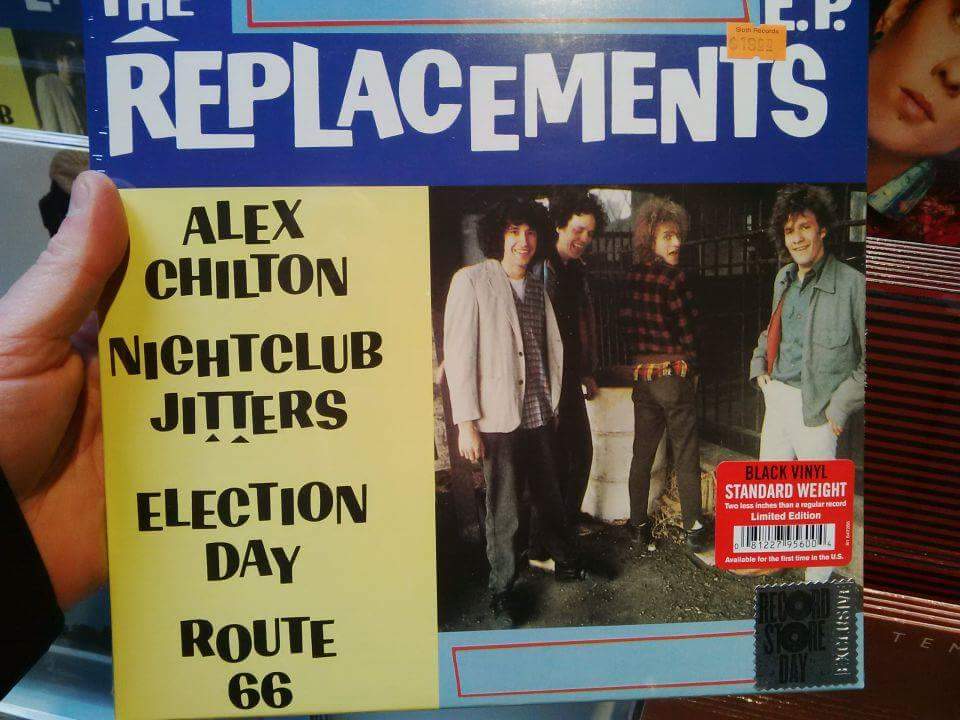
I had no real scores in mind, although I did have slim hopes of scoring the 10” release from The Replacements. I was there purely for the enjoyment of the experience. Many of the hyped RSD releases wind up being snapped up quickly by the early birds, so I rarely put much hope in picking up one of those. Unfortunately, many of these highly sought releases end up on eBay within minutes of stores opening their doors. That’s the ugly part of Record Store Day.
We arrived at our first destination at 7:45 thinking we were good for the 8:00 opening. We soon learned that there were many others more anxious than us and found ourselves in a line to check out the new releases. The atmosphere in the store was one of excitement. There was barely room to move yet there we were, music fans from teenagers to men in their sixties, flipping, eyeballing other’s scores, talking music.
With me, the allure of music, specifically records, is the interaction. Music is communal by nature. In my teen years, my friends and I made trips to the records stores part of our lives. We’d talk about music, while listening to music, on our way to buy more music to talk about. That circle hasn’t been broken in all this time.
Bruce was able to find one of The Flaming Lips’ records on his list in our hunt. Dan scored a live Clutch album. I wasn’t able to get that Replacements release but I made some great scores nonetheless.
The point of the day for me wasn’t actual purchases. To me, a visit to a record store is about the experience. The people talking about that which they are so passionate. The social experience of it all. This thought was confirmed in the post-mortem at our favorite watering hole, Stockdale’s in Oriskany. While sitting around slugging back some tasty beers and talking about music, I received a text from my friend Tom, who lives in Calgary, Alberta, Canada. Tom was just beginning his RSD and sent me a picture of The Replacements’ record, “Alex Chilton” asking, “Nineteen Canuck bucks. Need?” The international brotherhood of record geeks, connecting electronically! Tom picked up that record for me as well as another one of the Lips’ that Bruce had been seeking.
However, out of the myriad releases being promoted for that specific day, all four of us went home with items we found either in the bargain bins or in the regular used record racks. Dan’s prize pick of the day was a beat up two dollar copy of the album Restrictions by the early ’70s blues-rock band Cactus. Mine, a four-dollar copy of The Clash’s first album. Tom’s favorite acquisition wasn’t even on vinyl. He picked up a copy of a Joe Strummer and the Mescaleros CD. Bruce’s favorite pick was obviously his Lips but he also scored a great copy of the Love & Rockets album Earth, Sun, Moon. The day and the special releases drew us in on this particular day but what we took with us are what we valued.
I asked Bruce, Dan and Tom what they took away from Record Store Day. Dan explained that he had the most fun building his list of bands to seek and artists he thought were fitting of the media. Bruce summed it up perfectly, “It was more about the experience with buds than the musical trophies.” Tom’s takeaway was seeing a teenage girl walking out of The Inner Sleeve with a Muddy Waters album under her arm.
Records are back! And I couldn’t be more pleased. I don’t need Record Store Day because every day is that to me. Records are real. Records are tangible. Records demand interaction. That is what makes records so special. Is it a fad? I don’t think so. I think days like this are helping to build future generations of record fans. Fans who, as Alice Cooper recently stated in an interview – “are sick of buying air.”
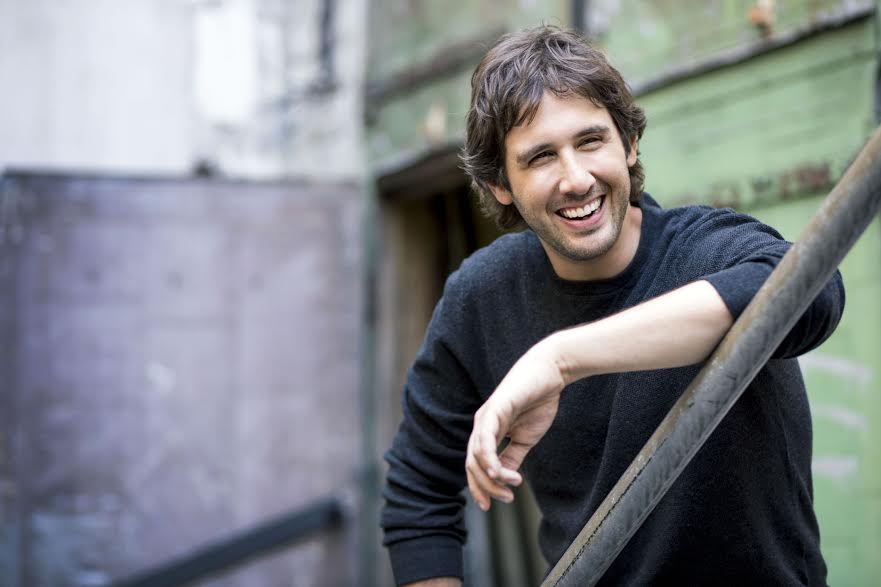
Multi-platinum recording artist, Josh Groban has announced a North American Fall Tour and will hit NY multiple times. Groban will make stops in Albany, Syracuse, Buffalo and NYC supporting his new album Stages. The Stages Tour will visit specially selected theaters to give fans a more intimate concert setting versus those accustomed to seeing him perform in arenas.
Stages is a collection of Groban’s renditions of some of the best musical theater songs of all time. It was produced by Humberto Gatica and Bernie Herms in both Los Angeles and London’s Abbey Road (with a 75-piece orchestra taboot). The album features songs from Les Miserables, The Wizard of Oz, Sweeny Todd, Phantom of the Opera and much more.
Groban describes the album as “gorgeously arranged songs that have stood the test of time.” An exclusive edition of the album will be available at Target containing two extra tracks. Until the Stages Tour kicks off in September, Josh Groban will be making plenty of television appearances on Good Morning America on April 28, The Tonight Show Starring Jimmy Fallon and Live! with Kelly and Michael on April 29, and Dancing With The Stars on May 5. He will also sing the National Anthem at the 2015 Kentucky Derby on May 2.
Tuesday night at the Landmark Theatre in Syracuse, NY a near sold out crowd is anxiously waiting for California-based rock band Primus to take the stage. Unlike many rock shows, this one has no opening act. It is two and half hours of Les Claypool, master of the bass, Larry “Ler” Lalonde on guitar and Tim “Herb” Alexander banging drums. The lights dim and the crowd jumps to their feet. A familiar tune starts pumping through the speakers. Yes, it is the “Clown Dream” sequence by Danny Elfman from Pee Wee’s Big Adventure setting the tone for the evening: An adventure that at times almost feels so surreal that it could be a dream.
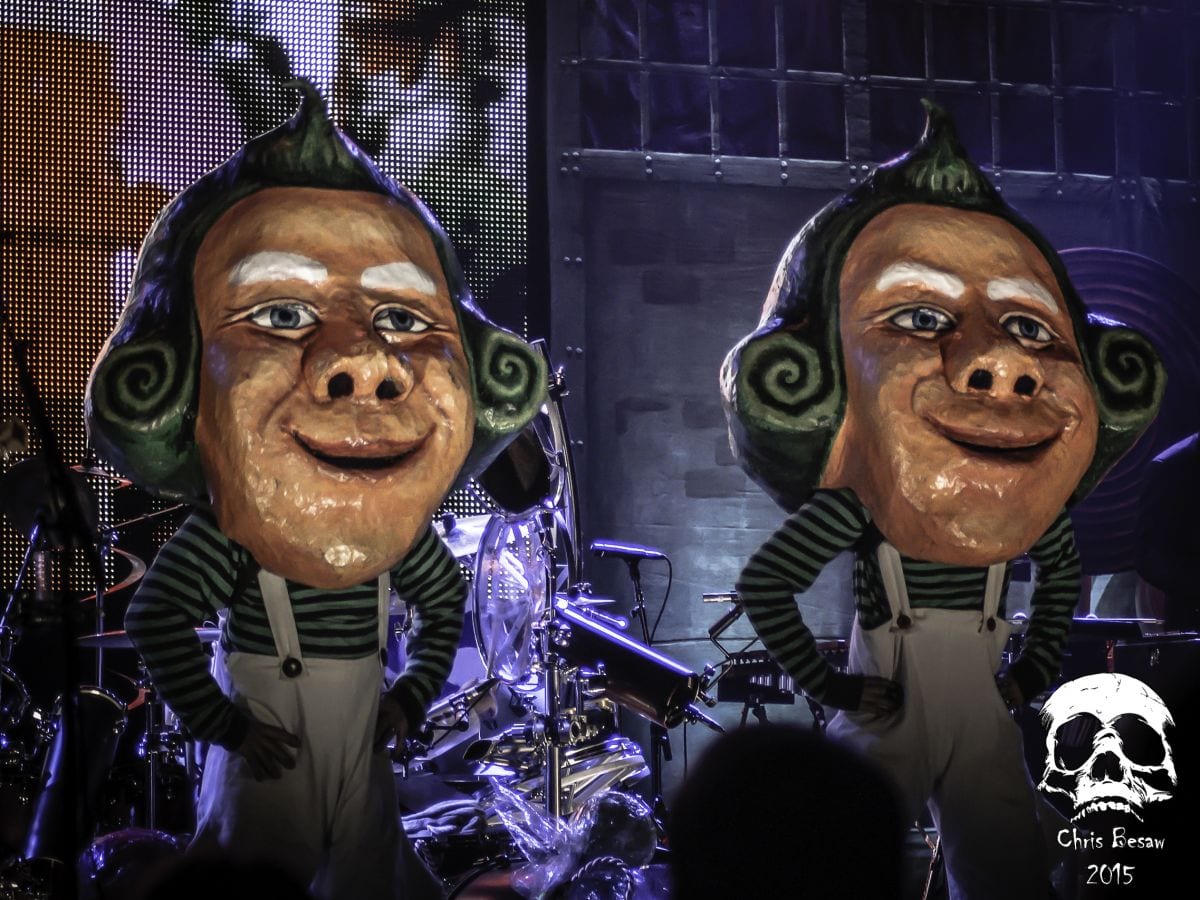
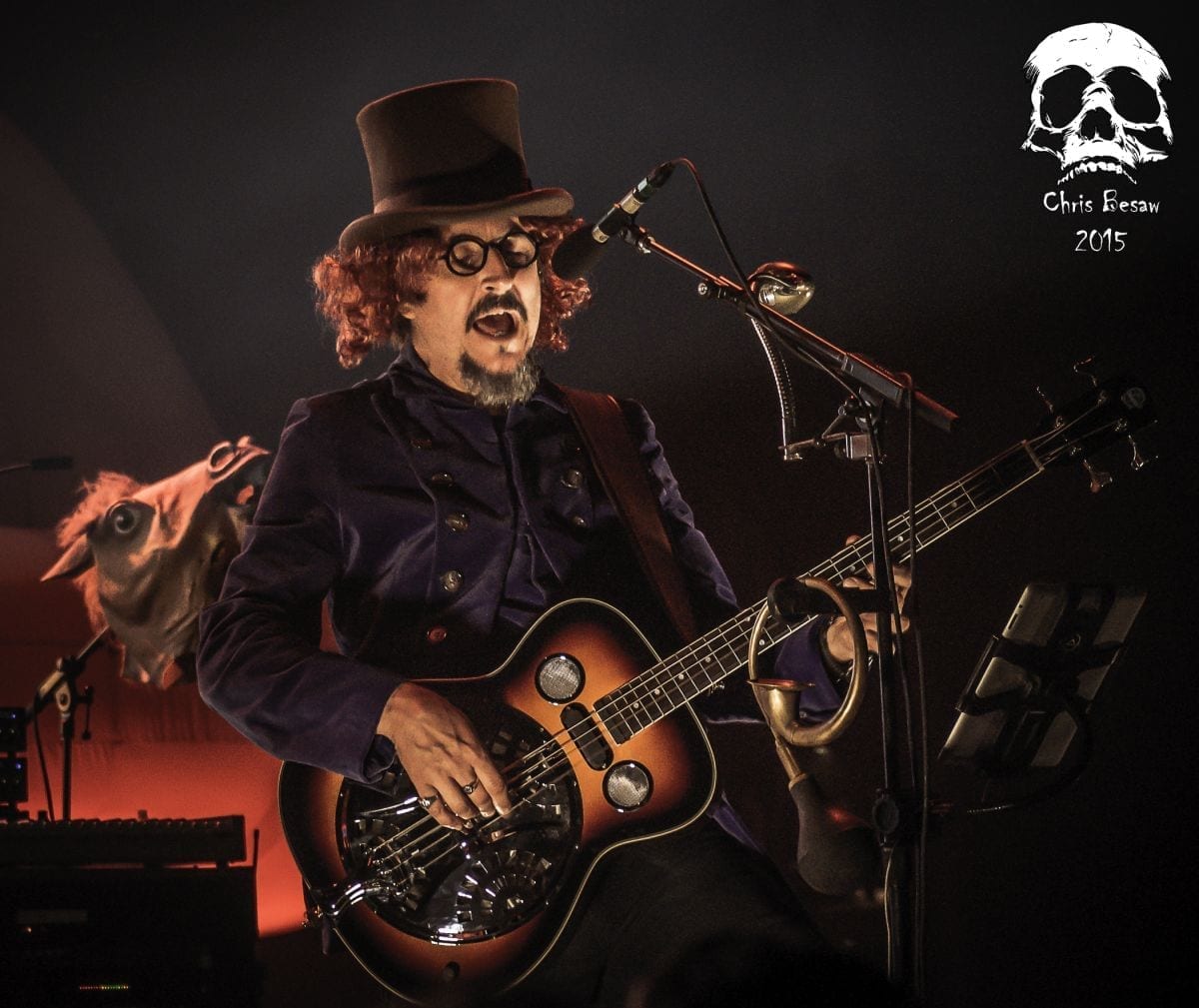
Primus is currently on tour for their new album Primus and the Chocolate Factory. The album is a creative re-work of the “Willy Wonka and the Chocolate Factory” Soundtrack. The tour has been designed so that they open the show with an hour plus long set filled with their hits. From the second they hit the stage and tore right into “Those Damned Blue-Collar Tweekers” the fans were on their feet, dancing up and down the aisles and in the balcony. Les Claypool’s calculated, yet seemingly effortless bass riffs are clearly designed to get people moving. The show was like a giant dance party from beginning to end. Several Oompa Loompa and Willy Wonka look alike’s were dancing through the crowd. While the party raged on the members of Primus never seemed to lose their focus.
I had a chance to talk to some fans before the show: “I saw Primus at the Landmark years ago. I love this place it’s so beautiful and it’s Primus so you know things are going to get weird, but they’re awesome” said Melissa Heneka from Baldwinsville, NY. Weird was an accurate description. There was a visit from Mr. Krinkle, a horse head propped on a mic stand on stage,little orange people and other unusual masks and props. Primus showcased their talents with their fan favorites: “Frizzle Fry,” “My Name is Mud” and ended their first set with “Over the Electric Grapevine”.
The band took a short break and then…”Ladies and Gentlemen, Boys and Girls, the Chocolate Room.” “Come with me and you’ll be in a world of pure imagination.” Primus, with the help of the Fungi Ensemble, took the music and the video from the movie “Willy Wonka and the Chocolate Factory” to a whole other realm of imagination. The stage set included lollipops, mushroom-shaped candies, Oompa Loompa dressed stage hands and a huge video screen that played re-edited images from the movie flawlessly synched to the music. Les Claypool showed that he is a master of the stage by playing parts of the set on an upright bass. Les added an eerie, even creepy element to the songs, “The Candy Man”, “Lucky Charlie” and “The Wondrous Boat Ride.” He brought some haunting flair to the song “Cheer Up Charlie” by mixing in a methodical, maniacal laugh.
“Little surprises around every corner but nothing dangerous.” A highlight of the set was the appearance of the oversized Oompa Loompas who danced in time to Les’s renderings of each of the children’s demises.The playful, upbeat version of “I’ve Got A Golden Ticket” is still stuck in my head twenty-four hours later. Larry Lalonde had everyone cracking up with his version of “I Want it Now.” The set ended with a stunning still shot of Gene Wilder as Willy Wonka. “We are the music makers and We are the dreamers of dreams.” That quote sums up the night.
The audience was still revved up as Primus took the stage for the third time for their encore performance that included “Fisticuffs” and “Here Come the Bastards.” Primus is the whole package, entertaining, talented and a band that appears to truly enjoy what they do. With a packed venue full of loyal fans, Primus proved that they are the “Golden Ticket”.
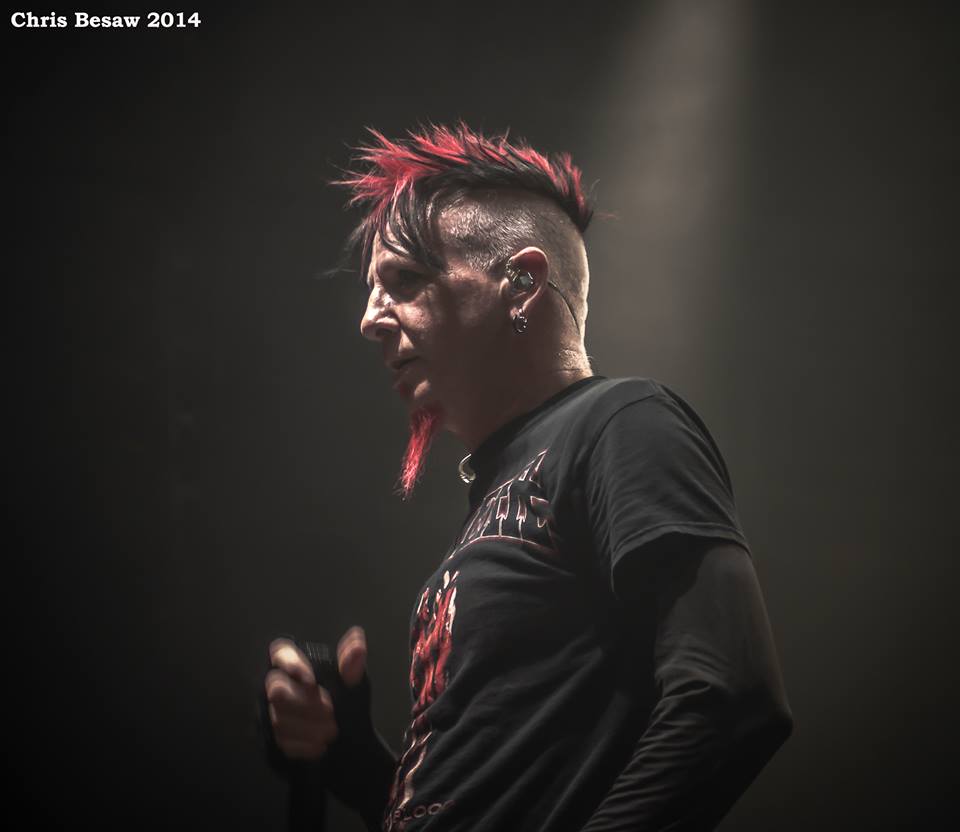
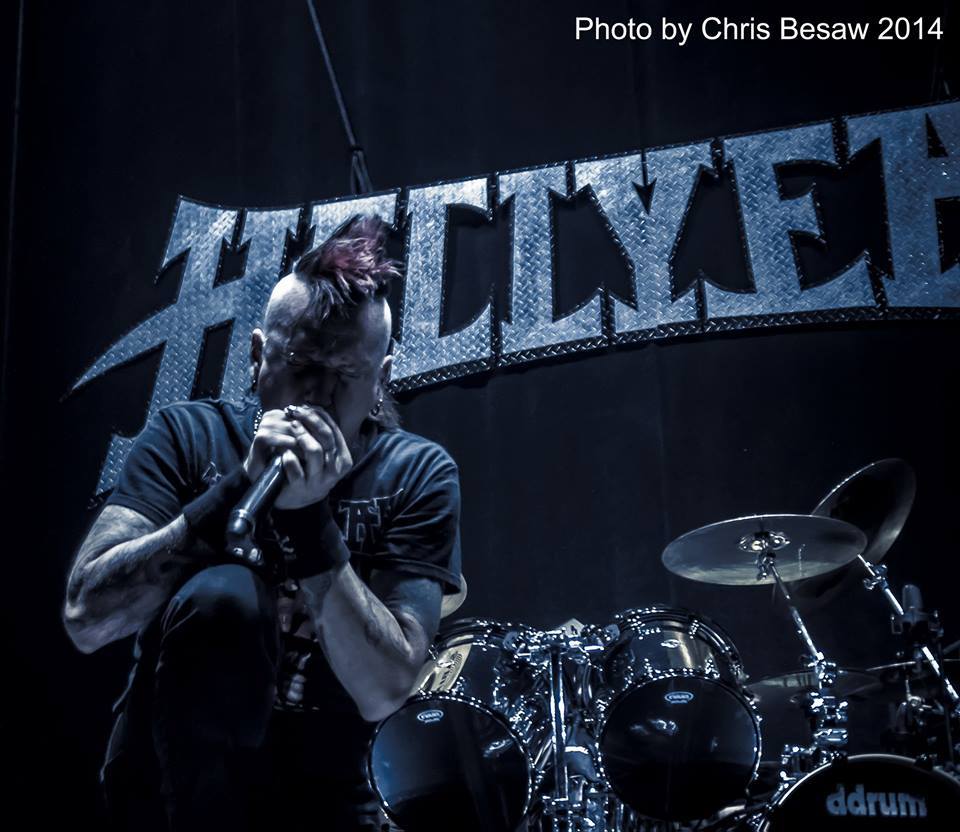
Hellyeah, the heavy metal super group that was formed from the ashes of Mudvayne, Nothingface and Damageplan, have been a whirlwind of recording and touring since 2006. What did you expect to get when you take vocalist Chad Grey, add in drums by the legendary Vinnie Paul, and bring in some serious crunch with Tom Maxwell, then round out the tempest of sound with Kyle Sanders and Christian Brady? You get one heavy as hell band ready to throw down some thunderous metal.
Hellyeah lays down some serious heaviness with the release of their newest album “Blood for Blood” Where unlike they’re previous albums which focused on some more prevalent rock elements, they return to their heaviest roots with this release.
Myself, being a fan of Chad Grey’s former band, and let’s be honest who doesn’t like Pantera? When I was approached with the opportunity to interview Chad Grey, it goes without saying, I was excited to interview him. We talked candidly about what drives him and his music and we hit upon the writing of their newest single “Hush” which dives into the horrors of domestic abuse and how Hellyeah got involved with NOMORE.org.
One thing I can say about Chad is that he is a very up front and straight shooting person not only about his life but also about his music. I was very humbled and honored to have the opportunity to interview someone I have listened to since his early bands. Enjoy.
Hellyeah kicks off their tour on April 24 supporting Godsmack and Papa Roach, making a stop at the Oncenter War Memorial on what is sure to be one hell of a Cinco de Mayo party on May 5.
BESAW: Alright, so tell me what’s new with Hellyeah and what’s going on with you guys?
CHAD: We started a new tour 4 days ago and rocking it out man. We played Texas last night, Tucson, El Paso, Houston, Austin. It’s been some radio shows with multiple bands, the kind of the level of the bands you know what I mean. Seeing how people are going to receive you.
BESAW: Nice. You guys recently released the single “Hush”, in my opinion it is a very powerful and gut wrenching song which addresses the horrors of domestic violence. Tell me a little bit on the inspiration for writing it and how you guys became involved with NOMORE.ORG.
CHAD: The inspiration is life, most of my music, all of my music is usually from some part of my past, or something and you want to take that creative outlet and exercise the little demons. I grew up in that world it’s all I knew. I think that when I was in that time of my life, you feel like you live in this bubble that you create, this bubble of isolation that you create for yourself and it’s not necessarily comfortable but it kind of beats what’s going on the other side of the wall. So, it’s kind of a lonely place and you do feel alone, and that’s kind of the mantra of the song just putting it out there, people do feel that way. Which I know that people do because I did. This reminds them that they are not alone and I think it helps them seek out and because maybe the abuser, there can’t be an intervention for that person usually in that situation, it’s happening within the family so there while there’s this violence and abuse going on there is also a lot of love. So people kind of swallow a lot. To protect that, to protect the family. Maybe not really the way they want to do it but just to speak out, to be able have some level of intervention or maybe make that person realize what they’re doing is wrong even make them take a step back and it might actually help it, it might wrinkle it a little bit at the beginning but I think overall it will help it by speaking out. No More, our publicist felt the power of the song and ran it by them and because they’re advocates of it and that’s what they want to do is raise awareness of stuff like that. Somebody over there heard it and read the lyrics and started inquiring more and more about it and wanted to couple with us and obviously in cooperation and not competition to help raise awareness. I didn’t know what NO MORE was; I’m a big football fan so I didn’t know what NO MORE was until the NFL thing with the all-white backdrop with the Chris Carters and the other NFL players doing that commercial bit and everything that happened in that. And that’s one that is good for NO MORE for being able to do that and it’s a huge fan base but at the same time not every heavy metal kid is a NFL fan so I think they saw an opportunity to double their outreach to different markets. In the heavy metal community and I think there’s a lot that, that goes on in this community, I think there’s a lot of that goes on in the hip hop community, I think a lot of that goes on in a lot of stuff and I think that music is really a great way for them to be able to target those certain genres of people. It’s been really exciting to be able to be a part of doing this with them. I believe in the raising of awareness as much as anybody else. I don’t really consider our followers fans. I look at all the people who stand in front of us who are sharing that moment of music when we play as family. It’s a heavy metal community in that area and music really did save my life and it was the one thing that I had with me in that isolated space that I lived in. That I can attach myself to and it really helped me get through a lot of really hard times and it’s something that we can all share.
CHRIS: Absolutely. Music is definitely a mystical force, in many different ways as I have come to understand it, it heals, it excites, and it’s a force unto its own.
CHAD: Its emoting man, and that’s what I love about metal. It’s so anthemic, it’s so aggressive, and on the other side it can be so helpless and it can be so emotional. That’s my take on metal personally. If I hear this beautiful guitar part or something that’s being written and it’s got melody all over it , well my first though because I’m in a metal band is I got to go all “WAAAAH YEAH” and scream all over it. (laughs) There’s something in that part that is touching me. So I want to embrace it and Tom knows that riff and that’s just my knee jerk reaction, just know you pray for quiet. And that’s how it started, hell is where I was born and hell is where I was raised. It takes that kind of almost if you took the vocals off of that, it’s kind of a more poppier sound but the vocals and the lyrics are what really gives it cheese and I think that’s the beauty of the band. Everybody works together in order to get to the pinnacle of the composition. And really give it air and let it breathe and let it be its own thing, be its own entity. Sometimes it comes together perfectly like this and sometimes it doesn’t. (laughs) You just gotta keep reworking them till you get to where you want them. That’s the beauty of being an artist; we use our instruments, our voices as our paintbrushes.
CHRIS: You guys have been performing for the last 10 years plus, been all over the world, what drives and inspires you guys to keep touring and doing music. What’s the inspiration behind that drive?
CHAD: It’s just part of me man, it really is, it’s who I am. Me and Vinnie were just talking the other day about when I started singing. I had the is little bass amp or whatever and it had two inputs on it and I would run it out of a stereo and plug one into one input and I had this little BS radio shack microphone that had a quarter-inch jack on it and I would plug that into and just run the music through that and sing with it. That’s how I kind of learned how to sing metal. Which is what we were just talking about..
CHRIS: That’s really cool.
CHAD: Vinny started on buckets and pots and pans and stuff. That’s basically my point is that long before I was ever in a band or thought of being in a band, it’s something I wanted to be. And I was willing to do whatever I had to do in order to satisfy my need at that time and that’s all I have and that’s what I used. It just grows and grows and here we are. It’s obviously something that is very deep seeded inside of me. God knows nobody is in it for the business anymore (laughs) it’s not like I got a Ferrari in the garage in my mansion over here, nor do I want that. I don’t really care about that.
CHRIS: A friend of mine, a local musician, once put it “I got into music not to make a dime and I have succeeded admirably” (laughs)
CHAD: Exactly! There’s kids looking at you asking “What’s it like, What’s it like” , I don’t know but if you want to do this you’d probably not helping anything. You just got to support and represent. It does do so much and it is so cathartic and it would be a shame to see music go away. But at the end of the day it is a job. You’re sitting at a table which somebody built that table and they didn’t build it for the fun of it.
CHRIS: Absolutely. Your music whether its Mudvayne or Hellyeah has inspired younger generations of musicians, who are the musicians and music that inspired you?
CHAD: Oh man, first real clear-cut understanding is that I grew up around music and was fortunate to have a young mother, my mom had me when she was really young and she was kind of still being a kid when I was a little kid, so it was the Bob Seeger and the Aerosmith’s and Clapton, Led Zeppelin, Sabbath. Stuff like that was always around. I enjoyed music but, man I got at some point in one of those dark times of my life, a friend of mine gave me the Motley Crue “Too Fast for Love” cassette, and I was like somebody flipped the switch in me, like holy shit I understand this. You know what I mean, this is where I belong, so it was like full metal being for that time and then it was from that to Metallica’s of the world and Megadeth, the big 4. Then from there I got into a lot heavier stuff like Deicide, Obituary and Emperor and stuff like that, black metal and kinda pulled back into that whole Seattle scene. I was a big Pantera fan and I don’t anyone that’s wasn’t a Pantera fan and I don’t want to know anyone who wasn’t a Pantera fan to honest with you. I was a Pantera fan, through that whole kind of Seattle movement and from that big 4 the band I really gravitated towards was Alice in Chains cause the darkness of the vocals , the performance of the vocals. It was just so really separate from the other ones like Pearl Jam, Nirvana and Sound Garden; I really think that Alice in Chains stood on their own. I was really into that and that really helped me become a better singer listening to that. All that kind of stuff is just kind of the usual suspects of that time. It was great, I do see younger bands now that I tour with and play shows with and those bands are like dude I have been a fan for 15 years of Mudvayne and me and what I have done. The Suicide Silence guys are really good friends and they were inspired by what I did and the early days of Mudvayne. It’s cool to see how your inspiration kind of helps develop music because obviously Suicide Silence liked Mudvayne, but it still something really great. I fucking love that band.
CHRIS: Wrapping up here anything you want to say to fans or any final thoughts?
CHAD: Come to the shows man, come and give Hellyeah a chance. We started as more of a rock band because I was doing the Mudvayne thing, both of them simultaneously doing them together and really had to separate myself from that but the more the line that’s been let out of Mudvayne. I really just wanted to get back to being a metal singer and I think that Hellyeah has really kind of landed where we always were meant to be. I think “Blood for Blood” is the record people have been really waiting for from us. So if you have written us off in the past or whatever, give us a shot. I’m back to being me and Vinnie is back to being Vinnie Paul and Tom’s back to being Tom. We’re not behind the facade that we got to keep separate from other things anymore. We wrote what we believe is a great record and I think that we really touched people, and I think that if you’ve shut your eyes to Hellyeah that you should open them again and give us another shot.
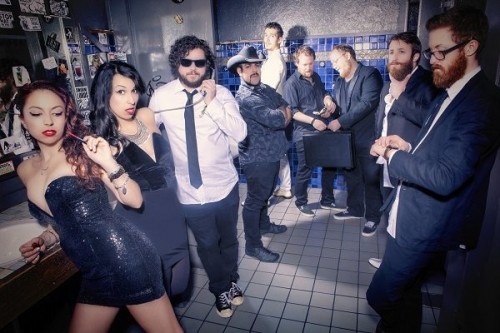
It was business as usual in Ithaca on Thursday April, 16 and by business as usual, it meant there was a raging funk storm tearing its way through The Haunt. With both bands performing new music, fans in Ithaca of Sister Sparrow and Turkuaz alike were in for a treat. As in years past, The Haunt was brimming with lovers of funk, soul, and blues, none of whom were able to keep themselves from dancing.
Hot off the new release of their EP “Stereochrome,” Turkuaz is in the middle of their Stereochrome tour, taking them from Portland to Saratoga and everywhere in between, leaving not a soul unsatisfied. Released on April 14 the new album brings one backs to the very roots of funk, with hints of Parliament and Sly & the Family Stone as well as a little of Turkuaz’s own distinct brand of soul that sends shivers running down the spine. Sister Sparrow & the Dirty Birds also brought a hefty dose of new tunes in anticipation of their upcoming album “The Weather Below,” set to be released May 19.
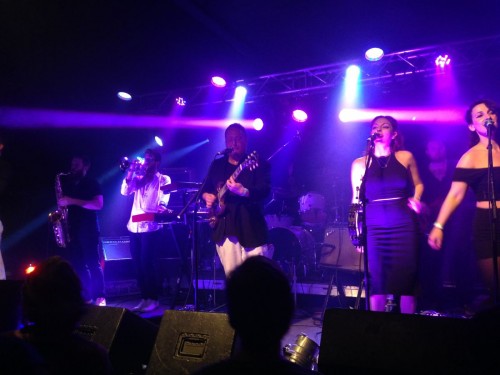
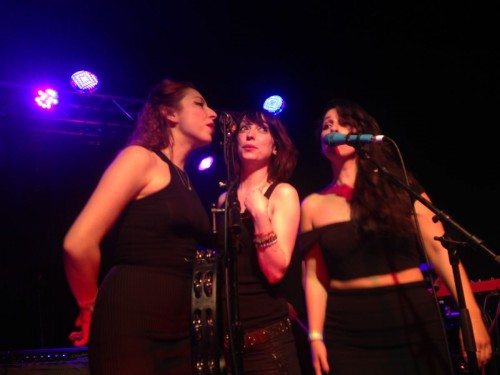
With the dance floor filling quickly, Sister Sparrow took to the stage, kicking off the show with a mixture of old crowd favorites and a couple new tunes, “Don’t Be Jealous” and “Sugar,” off their upcoming album. Though lead singer Arleigh Kincheloe may be a small woman, she has an enormous heart and a bigger voice. With vocals ranging from soft and soulful to mean and gritty, Kincheloe is the perfect match for her band that ceases to provide slow bluesy solos and hard funk rhythms. Starting off with a jam between the guitar and bass, The Haunt could not get enough as they shouted out the words to “Lasso” and its big chorus “But what do you want?” Though it started big, the song quickly transformed as a hush fell over the crowd for an almost melancholy trumpet solo leading up to a big finish. Before heading off, Greg Sanderson and Chris Brouwers, the tenor sax and trumpet players for Turuaz, joined in for Sister Sparrow’s own, “Road Trip,” which also featured one last clap and sing along by the fans.
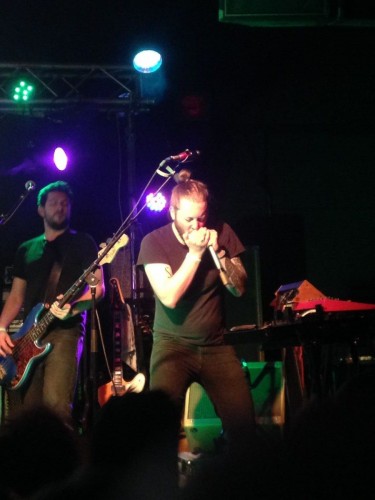
With the crowd sufficiently warmed up and maybe even a little sweaty from over an hour of dancing, Turkuaz wasted little time in making their way to the stage. The band kicked things off with their unreleased track “Type-Lika,” followed by “Bubba Slide.” Hot off their new album, Turkuaz brought out two new tracks “Tiptoe Through the Crypto” and “It’s So Hard,” featuring dueling solos with the guitar and Sister Sparrow’s Jackson Kincheloe on harmonica. The set was nothing short of a remarkable amalgam of sexy brass solos, psychedelic guitar riffs, and the tender blues voices of singers Sammi Garrett and the band’s newest member Shira Elias.
As if Turkuaz wasn’t the quintessential old school fun band with a herd of nine members, they somehow found room for more people on the stage as they brought out four of Sister Sparrow’s finest. It only seemed fit, with 13 people crowded onto the stage, that Turkuaz ended their set with a Beatles classic, “With A Little Help From My Friends.” Bari-sax player Josh Schwartz wasn’t far off from Joe Cocker himself as he belted out every word with a fiery passion that engulfed the entire venue. With the crowd left crying for “One more song!,” Turkuaz waited several minutes, building up as much suspense as possible before returning for the encore. To close out the night, the band performed “Lookin’ Tough, Feelin’ Good,” leaving everyone with the final notes of front man Dave Brandwein’s guitar solo ringing in their ears. As usual, Turkuaz and Sister Sparrow continue to impress, bringing a much needed dose of funk and soul to Ithaca’s The Haunt once again.
Setlists Sister Sparrow & the Dirty Birds
UTW, Freight, Millie, Don’t Be Jealous, Sugar, We need a love, Mama Knows, Borderline, Prison Cells, Lasso, Dr. Feelgood, You Don’t Know, Roadtrip
Turkuaz
Type, Bubba, Bijou>20 Dollar Bill, It’s So Hard>Shape, Nightswimming, Coast, Future, Lookin’ Tough, Gogo, Ballad of Castor, Chatte, With a Little Help from My Friends Encore: Lookin’ Tough, Feelin’ Good
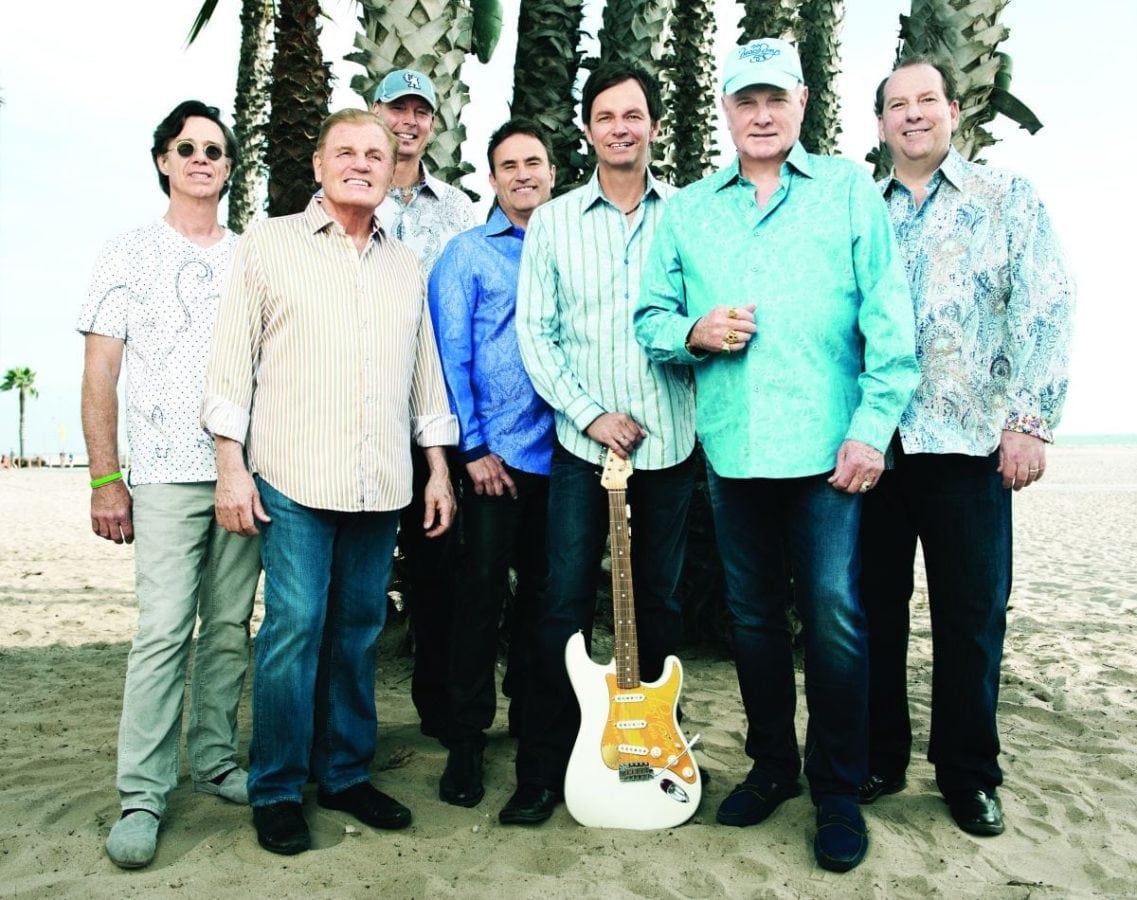
In a business that is constantly changing, few bands can boast that they have had a successful career for more than fifty years. Maintaining a strong fan base and generating new fans throughout the entire course of time, The Beach Boys should absolutely boast of their successes every chance they get. Inducted into the Rock & Roll Music Hall of Fame in 1988 and being awarded the NARAS’ Lifetime Achievement Award Grammy in 2001, their achievements have not slowed them down from doing what they love most, playing music. Mike Love
The Beach Boys
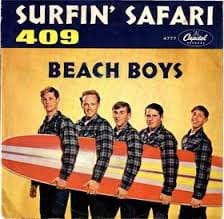
First making waves in 1961 with their hit song “Surfin’” it didn’t take long for these California teenagers to get signed and record their first album featuring hits such as “Surfin’ Safari” and “Surfer Girl” as well as the B side single of “Surfin’ Safari” – “409”, which incidentally was re-released as the A side later on. To date, the original record showing “409” as the A side has never been found. To all collectors out there, if you have it, don’t let go of it. They quickly followed this album up with “Surfin’ U.S.A.” which became their first Top Ten album going to number three on the charts. With a total of 29 albums, these bandmates have had successful careers both together, and as solo artists, riding the waves with its ups and downs throughout that time period.
NYSMusic had an opportunity to talk with frontman, Mike Love, about his upcoming show at the Turning Stone Casino Showroom April 21, 2015, his career, personal relationships, and what it’s been like to live life as a Beach Boy.
The Beach Boys
Kathy Stockbridge (KS): Thank you so much for speaking to our readers here at NYSMusic.com. We’re really excited to have you here in the Central NY area this week at the Turning Stone Casino. I have been a personal fan for years. I won’t say how many though as that may give away this girls age. You have had an iconic career. Fifty plus years in one of the most legendary bands ever is quite an accomplishment, and very hard to achieve in the music industry today. So congratulations for that. It’s a career you began this many moons ago with your cousins? The Wilsons?
Mike Love (ML): Yes, they are first cousins. Yes, my mom and their dad are brother and sister. My cousin Brian and I are just about a year apart. We grew up together and we actually had a lot of the same experiences that we actually put into songs when we first started to do this. Experiences relevant to southern California.
KS: I can just picture you folks harmonizing together around a piano on holidays? Is that how it came about?
ML: That’s exactly how it was. My mom was, Emily “Glee” Wilson, Murray Wilson’s sister, the father to Brian, Dennis, and Carl. Every birthday, every Thanksgiving, every Christmas, was a really big deal and we would do Christmas carols and whatnot together. Brian and I would get together and go every Wednesday night for Youth Night at the Angeles Mesa Presbyterian Church to sing songs there, and then on the way back to my house from there we would sing Everly Brothers songs and the doo-wop songs back in the late ’50s. So that’s how we got our start through family connections, through family Christmas’, birthday parties, and holidays. My mom was a big music enthusiast. She had recitals of all kinds, she sang in the opera, such as Madam Butterfly and such so we got that influence. We grew up with a grand piano, an organ, and a harp in our living room. That was such an omnipresent aspect of our young lives was music.
KS: That is really cool, and a cool way to grow up having music surround you. Your careers took off in a time that was in such turmoil and civil unrest. However most of your music reflected sunny southern California. Explain to me how your writing stayed so positive in a time of war and civil unrest.
ML: It was a conscious decision that we made, at least on my part. Although there were lots of issues going on during that time. We were all post WWII babies, and there was still attention to the Cold War and we were taught to drop under our desks because the Russians were going to bomb us with A-Bombs. So that type of thing was definitely going on around us but what I chose to do is accent on the positive. And so we sang of the things that were positive in our life and our life style growing up in southern California. Not to far away was the beach so there was surfing, surfer girls, high school experiences. In 1962 we wrote a song “Be True To Your School” and that was all about our high school spirit and the spirit of Friday night football, the cheerleaders, and all that. And how do you get to these places whether it’s school or beach? In southern California things are pretty spread out so you needed a car. We all had our favorite cars, that we ended up acquiring once we started to make some money. So it was cars, and beach life, and school life and of course we did a song in 1965 called Barbara Ann. ‘Went to a dance, lookin’ for romance’ . That became a big hit for us. However it was done original by an east coast group called, The Regents. It became a huge hit for The Beach Boys. We do it every night on our shows. It brings back a lot of memories for our original fans of course, but its amazing how some of these songs resonate with children. I have a 19-year-old daughter that when she was a little toddler would go up to our cd player singing “Ba Ba Ba, Ba, Ba, Bar Ann “. She wanted to hear “Barbara Ann”. She would play that twenty times in a row. So it’s kinda incredible how multiple generations are connecting to The Beach Boys and our sound, (which is primarily harmony), and the subject matter, which we said. Then as we get a little older, we get a little more introspective, then our sounds change like when the “Good Vibrations” came out in 1966 and it went to number one. It was our biggest selling single until Kokomo came along in 1988. So we had a wide range there of feelings and moods and subject matters to work with over those years.
KS: I read that after the JFK assassination you and Brian sat down to write “Warmth of The Sun”. Talk to me about where you were mentally that day as you were writing that song. How did it help you and a whole generation get through some of those difficult times going on around you?
ML: Well actually, the way it happened was, I went to Brian house. He had just recently moved out of his household where he had grown up with his brothers and his mom and dad, The group had just moved out of the home in Hawthorne, CA and had rented a house. I went over to visit him and we started writing this song. It was a very melancholy song, with beautiful harmony, very pretty melody, and I wrote the words to it from the perspective of (it was so melancholy) the loss of a love you’d once had. That the other person didn’t feel the same way any more..and that happens to a lot of us growing up over the years. We went to sleep after writing this beautiful song and we were awakened in the morning with the news that President Kennedy had been taken to the hospital in Dallas.
KS: So it preceded the events of the assassination then? Wow!
ML: It was very eerie knowing that all these feelings while writing this song and I don’t know if we were in tune with an ominous mood to come. We must have finished the song around two or three in the morning and slept until hearing the news that President Kennedy had been taken to the hospital in Dallas the next morning. So that was an enormous shock and we didn’t change the lyrics or anything like that. It’s still about the loss of a love. Although you still have the moment of having felt that way at one time. It was recorded a couple of weeks later actually in the studio. But when we recorded it obviously it was charged with a lot of emotions. When we do that song it takes me back to that time period and still to this day carries a lot of emotion. The song itself is very beautiful and haunting and the harmonies are incredible.
KS: Now speaking of things you recorded around that time, one of them was what has been deemed your “Best Unreleased Album” of all time which was “Smile”. Then the following year you re-worked that album and released “Smiley Smile”. Explain to the readers the story surrounding these two albums.
ML: Well the first one had some great tracks on it and music on it. Then Brian had an experience with LSD, in which he went from being very dynamic and resourceful in the studio to becoming a recluse. When people ask me what is my one biggest regret of The Beach Boys career, it was the influence that drugs had on some of the members. In particular, Brian. So he felt that he couldn’t go forward any more with that particular album, the “Smile” album, so he shelved it. So then we worked on something a lot more lighter, a lot more whimsical and lighter and called it “Smiley Smile”.
KS: You mention that your experiences with drugs or the choice of not using drugs. You actually chose the latter and chose to learn meditation. Talk to me about that. We see the choice today even of doing meditation and/or yoga to eliminate the stresses in life. In the ’60s you had to have been experiencing just as much stress that we do today. And do you still continue today with your meditation?
ML: Yes I do. It’s a choice. You can do things to relax or achieve a high. There’s ways of doing it chemically with drugs or people choose to drink alcohol. The problem is that many of the things people do to escape or just feel better or feel relaxed they have a not so great side effect. So experiencing that, and looking and seeing that happening around me firsthand, it made me appreciate the fact with mediation I could do something that had no negative side effects, just all beneficial, and achieved that deep relaxation is one of the most wonderful things about it to be completely relaxed without any influence of any drug or alcohol or anything like that. And it has no side effects other than you feel good and gives you more energy and creativity and clarity. So that was so obviously to me so much more beneficial than the other paths to relaxation or escape. That it lead me to not only learn TM (Transcendental Meditation) in the summer of 1967, but I was invited by Maharishi to go to India in early 1968. In fact George Harrison and I both had our birthdays (we’re both Pisces) and we both had our birthdays in the spring of 1968 at Marishi’s place in India. Rishikesh, India is where the Ganges comes out of the foot of the mountains…it’s a beautiful spot. And that was a remarkable journey. It was most fascinating to me because we meditated for long hours and then listened to Maharishi lecture virtually every night and sometimes a couple of times a day too. So it was a fascinating period of my life and one that forever gave me the appreciation of the value of meditation.
KS: It sounds surreal. It had to help as you were all on the road and in close confines and you have such stressors from your record label and fans, and having to constantly churn out musical hits one right after another, that I’m sure that this was as assistance to you, especially for your creative side. Did you find it to help stimulate you creatively?
ML: Yes. What it helped me to do is to not get into the pitfalls of drugs and alcohol that was presented to so many people. Not only in the group, but in the world. So when there was a clear decision to be made, are you going to do something life supporting or life damaging. So in the case of “Smile” I was never opposed to the music or the experimental nature of it, or anything like that. In fact there are some brilliant tracks on that, and we all contributed our voices. But what I was very concerned about was the changes I saw occurring in my cousin Brian’s behavior. He became virtually a recluse for a period of time.
KS: That had to be hard to watch occurring.
ML: It was terrible. Because you see the same thing happen to my cousin, Dennis, who passed away in 1983. He had a long struggle with alcohol and just about every drug you could possibly imagine. And to see a guy go from very handsome and vital and viral and active and dynamic on stage to just acting like and looking dissipated and to the point where I believe was the cause of …the reason they say was drowning, but he was under the influence at the time so.
KS: That’s just so sad. And you see that still today with people choosing to use those methods for relaxing and escape. Now changing stream here, I’m kinda curious about this…in 1980 you played a show at the Washington Memorial, but then three years later in 1983 you were not allowed to. What happened? Then in 1984 Nancy Reagan invited you back and you were able to again. What was that all about?
ML: That’s right. That was a fascinating time period when James Watt, who was Secretary of Interior, under the Reagans , a cabinet member, he was head of Secretary of Interior and the Parks Department is a division under that (under the Secretary of Interior) and so he made a decision (James Watt) that rock music wasn’t appropriate for July Fourth. He wanted military bands and I actually think he actually had Wayne Newton come out that day…
KS: Not to say Wayne Newton isn’t American, but come on, rock and roll and The Beach Boys can’t get much more American to me.
ML: As you had pointed out, we had done July Fourth concerts prior to that and they went over great, with hundred of thousands of people came out, and so when we were able to come back it was incredible. In fact one year we played Philadelphia in the afternoon and Washington DC in the evening. And we played to over a million and a half people on one day. It’s a Guinness Book of Records kind of thing.
KS: That’s so karmic, to be banned and then the following year have more than a million people come to see you.
ML: Nancy Reagan could not have been nicer. And Ronald Reagan just made fun of the whole thing, and treated it all as a funny joke. So Nancy was very very sweet and always has been. I got an award early last year called “The Ella Award”, named after Ella Fitzgerald. A lot of people have gotten that award, i.e. Tony Bennett, Frank Sinatra, a lot of great singers and such. I was given the honor to receive that award, and Nancy Reagan made a little recording to be played that evening to congratulate me. So even many years later she’s still be so very kind and sweet towards me and towards the group.
KS: How sweet…she is amazing! As we fast forward to your career in the 1980’s I have to tell ya that “Kokomo” is one of my all time favorite songs. As you mentioned before, you have collected new fans as the generations evolved and talk me a little about how you regenerated yourselves into a whole new generation?
ML: It wasn’t a conscious effort to go after a new generation of fans, it just so happens that The Beach Boys music appeals to all ages. It’s a pretty awesome thing that people will tell us, people we just meet at concerts and meet & greets, they’ll tell us that younger generations have their music, and that’s always so. When I was growing up we had Everly Brothers, Chuck Berry, Little Richard, and Jerry Lee Lewis, and all the doo-wop groups. And our parents had the type of music that preceded that time such as the big bands, the Andrew Sisters, the Mills Brothers, and all those of that generation. So every successive generation their people who are coming out with music that appeals to them and are the most popular groups of the day. But the thing that is remarkable about The Beach Boys is grandparents like The Beach Boys as well as children and everybody in between. So that is a pretty phenomenal achievement. It’s not a conscious achievement, it’s just that our music with the melodies and the harmonies which is what distinguishes The Beach Boys from so many others, are just so compatible. And then the subject matter appeals to the older people from the standpoint from the nostalgic point of view, but for the youngsters they are experiencing some of the things that we sang about in the earlier records. In Kokomo goes “Aruba, Jamaica, ooh I wanna take ya, Bermuda, Bahama, come on pretty mama”, well it could be the older guy saying let’s get in the RV and go to Florida or it could be the young child thinking that his mom is a pretty momma.
KS: Yes, it’s upbeat, it’s positive, that’s what makes it appeal to them.
ML: Yes, the chorus has an appeal to multiple generations right across the board which is very cool. And I pat myself on the back because I came up with that chorus.
KS: Well, I have to say well deserved because you did good. One of my favorites. You’ve had a lot of other stars cross over to do some remakes of your songs, Fat Boys did “Wipe Out”, Van Halen did “California Girls”. If you had an opportunity to go on the CMT show “Cross Roads”, who would you love to perform opposite with on there?
ML: Bruno Mars. I love his brand of entertainment because he reminds me a lot of James Brown.
KS: Love Bruno Mars, and I can see that.
ML: His total R&B thing, he does ballads just as well, and rock, and he has a great band. So I would love to collaborate with him.
KS: That would be a great one!
ML: There are plenty of great singers every generation, and sometimes music or the way it’s produced or the subject matter doesn’t appeal to everyone but we’ve been fortunate enough that our stuff has been given a bit of respect by successive generations for five decades now.
KS: You had the foresight to purchase the name or license the name “Beach Boys”. Were you always the business savvy one in the bunch?
ML: Well no, I didn’t purchase the name. What it was I was given the license to travel as The Beach Boys, and Bruce Johnson and I do that. Brian has pursued a solo career for many years, for the last 15 or more years, and he goes as Brian Wilson as I continued on with The Beach Boys as I have done since the beginning.
KS: Now you folks had the opportunity to come back together in 2011/12 to record a new album and celebrated a 50th Anniversary Tour for a set number of scheduled events. At the end of that you all once again disbanded and went on your own separate ways again. Do you foresee any other reunions in the near future? Do you want to dispel any rumors that may be floating out there about your not continuing on together?
ML: Well, there were a lot of things that were not done according to the agreements we had that left a not so great impression on me to the point where it suffices to say that the tour was great, from the standpoint of the original fans got to see us all together, those of us the remaining members, but there is no intention to do anything like that again at this point and time.
KS: Well you are a Grammy Award winner of a Lifetime Achievement Award, you are an inductee in the Rock & Roll Hall of Fame, what’s on the horizon for you? What would you love to accomplish still?
ML: Well, I’ve been writing a lot of music over the last several years and we’re looking for ways to let that music to see the light of the day. So that’s been something that we’ve been hoping to accomplish over the next several months. So, there’s plenty to do. We continue to tour, we did 142 shows last year.
KS: That’s a big tour schedule. Wow! Will I get to hear some of the new music at your show this week at the Turning Stone Showroom?
ML: The song “Pisces Brothers” which I wrote as a reminiscence of George Harrison and the time we spent in India for our birthdays in 1968, we do that in our shows. So that’s one of the newer things. And people seem to really like it.
KS: I can’t wait to hear it, especially since I have an understanding of the back story to accompanies it. I have to thank you so much again for taking the time to speak to me today. It was truly an honor.
As our interview concluded I could see why their music had touched so many during the 60’s and how it continued to span numerous generations. Throughout the 60’s when so many were writing and singing about how to make love not war, The Beach Boys continued to sing about the things that made our country great, the simple things in life during times of sadness and fear. It wasn’t because it didn’t effect them too, as it so clearly did. They just chose to take the positive approach in their writing. It suited them I believe. It suited their voices and harmonies. Mike Love had a positive attitude about life. I could hear it in his voice as he shared about his times in India. It made me want to look into this beautiful place he and George Harrison visited. I also heard the sadness in his voice when he cautiously spoke of the drug problems that faced his cousins. They are his family. They were childhood friends. But what rang out loud and clear though was the love he had for both his music and his fans throughout a career of 50+ years, and the excitement about his new music and sharing the one song especially about a time that truly was a life changing event for him. He very well could have gone a different path in life, however he didn’t. He chose to take the positive approach to making his life and career the best experiences possible. He continues to do this still today.
While researching different articles over the years about The Beach Boys, putting together questions I wanted to ask Mike (which I must add were so numerous I couldn’t possibly burden him in one interview to learn everything) I came across what seemed to be a thread of negativity. I found articles on problems he and his cousins had. I came across criticisms of his acceptance speech at the Rock & Roll Hall of Fame. And I came across half written stories of speculation about the 50th reunion tour and why they didn’t remain together. As a journalist we want to have a sensational story full of juicy tidbits that the next reporter didn’t get. We want that scoop. And after speaking with Mike I believe I did just that. I got that juicy story no one else seemed to write about. I got to hear the feelings behind the voice. These young men were not only a band, they were a family in every sense of the word. The voice I heard didn’t depict any animosity or any ill will or any negativity at all. The voice I heard carefully chose his words wondering if they would be twisted into meaning something totally different that one day he would have to explain in another interview. The voice I spoke with wanted to share how The Beach Boys were a great band that made great music during a time of ill will and despair. They were family and friends that came together to sing in perfect harmony during a time we needed harmony the most. And they still today sing in harmony, whether on the same stages or not, they still share their love of music with those that love their music, and it was apparent..they hold each other in high regard. So there’s your scoop folks, for every story, there’s always another viewpoint to those words that are written. From my viewpoint, this is the story that needs to be written. A story of the music, the family, the love from Mike Love.
Join Mike Love and Bruce Johnson, together with their amazing band as they play The Turning Stone Showroom April 21, 2015. Tickets can be purchased at The Turning Stone Box Office or online at http://www.turningstone.com/entertainment/the-showroom.


 The venues weren’t big, most were under 200 capacity but they were always full. I remember being at shows where people were literally standing outside watching the bands through the windows. It hasn’t been like that since and those memories are some of my most cherished and I know many who feel the same way.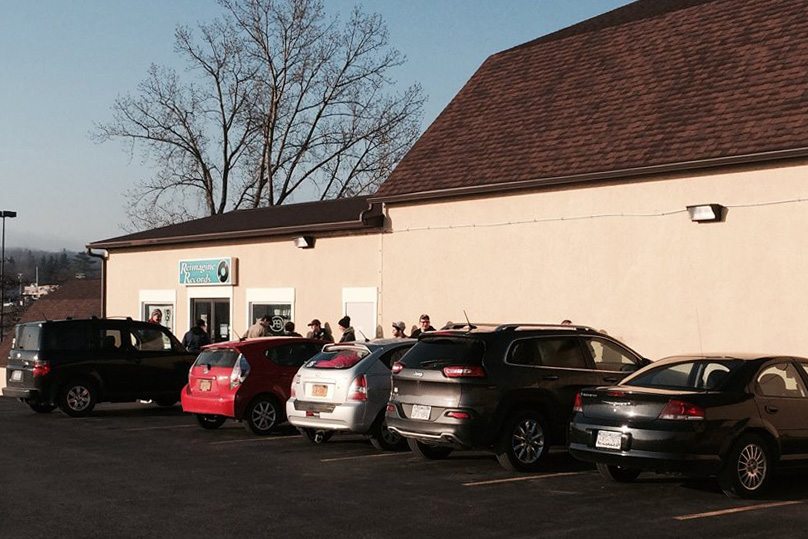

 Stages is a collection of Groban’s renditions of some of the best musical theater songs of all time. It was produced by Humberto Gatica and Bernie Herms in both Los Angeles and London’s Abbey Road (with a 75-piece orchestra taboot). The album features songs from Les Miserables, The Wizard of Oz, Sweeny Todd, Phantom of the Opera and much more.
 Primus is currently on tour for their new album Primus and the Chocolate Factory. The album is a creative re-work of the “Willy Wonka and the Chocolate Factory” Soundtrack. The tour has been designed so that they open the show with an hour plus long set filled with their hits. From the second they hit the stage and tore right into “Those Damned Blue-Collar Tweekers” the fans were on their feet, dancing up and down the aisles and in the balcony. Les Claypool’s calculated, yet seemingly effortless bass riffs are clearly designed to get people moving. The show was like a giant dance party from beginning to end. Several Oompa Loompa and Willy Wonka look alike’s were dancing through the crowd. While the party raged on the members of Primus never seemed to lose their focus.
 The band took a short break and then…”Ladies and Gentlemen, Boys and Girls, the Chocolate Room.” “Come with me and you’ll be in a world of pure imagination.” Primus, with the help of the Fungi Ensemble, took the music and the video from the movie “Willy Wonka and the Chocolate Factory” to a whole other realm of imagination. The stage set included lollipops, mushroom-shaped candies, Oompa Loompa dressed stage hands and a huge video screen that played re-edited images from the movie flawlessly synched to the music. Les Claypool showed that he is a master of the stage by playing parts of the set on an upright bass. Les added an eerie, even creepy element to the songs, “The Candy Man”, “Lucky Charlie” and “The Wondrous Boat Ride.” He brought some haunting flair to the song “Cheer Up Charlie” by mixing in a methodical, maniacal laugh.
 Hellyeah lays down some serious heaviness with the release of their newest album “Blood for Blood” Where unlike they’re previous albums which focused on some more prevalent rock elements, they return to their heaviest roots with this release.
 CHRIS: Absolutely. Music is definitely a mystical force, in many different ways as I have come to understand it, it heals, it excites, and it’s a force unto its own.