The 9th annual Backwoods Pondfest is set to take place this coming weekend, August 7 and 8 in beautiful Upstate New York at Twin Ponds Campsite in Peru. Tickets are still available online via their website (click here) and include two nights of car camping and live music. The intimate festival gathers local and regional acts as well as nationally recognized bands such as this year’s headliner Particle featuring keyboardist Steve Molitz, guitarist Ben Combe, bassist Clay Parnell and Allen Aucion on drums. The four piece livetronica funk band lays out hard hitting, improvisational jams with energetic, spacey melodies that create contagious dance grooves. I was lucky to have Steve Molitz answer a few questions for me about his July 4 weekend, new music and Backwoods Pondfest.
Susan Rice: Talk about epic holiday memory. How did it feel to perform on July 4th in Chicago as part of the Grateful Dead post show late night series? Were the Grateful Dead a major influence on your music?
Steve Molitz: “Epic holiday memory” pretty much sums it up! Our post-Dead show on 7/4 was sold out in advance, and the energy in the venue was off the charts. It was just one of those nights where everything clicked and there was a very tight feedback loop between the musicians, the music, and the fans. There was a magic in the air that the Dead created at their show, and the fans bottled it up and brought it with them to our late night. It was an absolute honor and a thrill to be a part of such a special weekend of music.
The Grateful Dead have definitely been an influence on my music, but in sort of an abstract way. Stylistically, Particle and the Dead sound very different, but thematically there’s a lot of overlap. I learned a lot from them about how to approach improvisational music with an open mind and an open heart. You really have to have faith in the unknown, and you have to be willing to place all your trust in the hands of your band members. Only then can you truly lose yourself in the moment and become an interwoven fabric of the improvisational tapestry.
I’ve been touring on and off with Phil Lesh for the past eleven years, and one cool thing that he tells his band members is that we just have to give ourselves permission to try new things. He encourages us to reach beyond our comfort level into an unknown realm, and that is always where the most profound musical discoveries occur. I have really tried to incorporate that ethos into Particle’s approach to improvisation, so in that way I suppose the Dead have been a huge influence on us …
SR: This will be your first time performing at Backwoods Pondfest. What are you most excited about for headlining this North Country festival?
SM: I’m most excited to check out some of the other bands on the festival. It’s always such a treat at these summer fests to experience so many different types of music all in one place. Off the top of my head, a handful of Backwoods Pondfest bands that I’m excited to see are Pigeons Playing Ping Pong, Sophistafunk, Normal Instruments, Lucid, Mister F, and The Heavy Pets…
SR: What new music have you been listening to on your road trips?
SM: I guess the newest music I’ve been listening to is Particle because we are in the middle of recording a new studio album right now so I’ve been completely immersing myself in those songs. That music is so new it’s not even out yet! I can’t wait for people to hear these songs, and I can’t wait to tour with all this new material…
I also listen to a lot of podcasts on the road like the Joe Rogan Experience, I Am Rapaport Stereo Podcast, Ari Shaffir’s Skeptic Tank, The Duncan Trussell Family Hour, etc..
Also, Prof’s new album Liability drops on 10/16, and that’s right in the middle of Particle’s big Accelerator Tour (tickets here), so I’m sure I’ll be bumping Prof almost exclusively come October.
SR: How have you been able to keep up with the nonstop, crazed momentum of Particle?
Pink Talking Fish, hailing from New England, is one of the most interesting tribute bands out there today, combining the music of Pink Floyd, Talking Heads and Phish into one. NYS Music recently had the opportunity to speak to Dave Brunyak, the guitarist for Pink Talking Fish, to discuss his thoughts on the music scene in general. He’s made a few waves on the festival circuit and we were interested to find out more about him.
Sarah Bourque (SB): Tell us a little bit about yourself and how you got into Pink Talking Fish.
Dave Brunyak (DB): I’ve been playing guitar since I was 14 years old so that makes about 20 years this year. I’ve been writing music and playing in my own original bands for a long time. In 2010, I started a Phish tribute band called the Phreaks. We had a four-year run and had a lot of great shows. Built up a pretty nice fan base in New England. At the end of last year, Eric Gould (bassist for Pink Talking Fish) came to Electric Haze in Worcester and saw me and Zach [Burwick] our drummer at a Phreaks show and decided that we were the best fit. He talked us into doing a few shows and we never turned back.
(SB): At Disc Jam you smashed your guitar on stage Pete Townsend style, which is pretty badass. What prompted that?
(DB): It was something I’d never done before. I’m always looking for something interesting to do to make the show a little bit more special than the one before it, but it’s fair to say that people, in their lives, go through peaks and valleys, experiences and emotions. At that particular time, I was in the valley, so it was something to help me turn the corner and get out a little bit of stress.
Credit: Amanda Sandwicch Photography
(SB): At Buffalove, you soloed on top of a speaker tower. Were you in the same kind of mindset at that time ?
(DB): Smashing the guitar set a precedent. People are looking for me to do the next crazy thing so we dragged a few speakers out on the stage just to give me something to climb on. It’s fun to do something a little bit out of the ordinary that people don’t expect. I have no idea what the next thing is going to be but it will be awesome.
(SB): It seems like you play your guitar pretty hard and have a few extras on stage because of broken strings. Is it common that you just play your guitar hard?
(DB): It’s a combination of my style of playing and the way my guitar is built, and using a heavy pick. One day I will have a guitar tech who will fix some of these things for me at a show but, for now, I just bring a few extra guitars to the shows.
(SB): How do you balance your music obligations with every other part of your life? Finding the time to practice, come up with new ideas? Where’s the balance come from?
(DB): It’s not easy. I’m lucky that the Pink Talking Fish business and itinerary is designed very efficiently and streamlined. I know where I need to be, and what I need to do, well in advance. For instance, in the Phreaks, I was wearing all the hats. I was doing the booking, the promoting, the websites, the posters, learning the tunes, teaching the tunes. Now that I’m in Pink Talking Fish, it’s liberating, actually, because I can just be a performer and just worry about playing the tunes, and playing them well. As hectic as it seems to be all over the country, playing the music and traveling, it’s actually a little bit easier than what I was doing before.
(SB): Let’s talk about Chicago. During Pink Talking Fish’s pre-show on the 4th of July, you were miracled a ticket to a Fare Thee Well show. What’s the story behind that?
(DB): The miracle, in the sense of the term, wasn’t that it came from a stranger. Actually, it was a friend that I had invited who came all the way from central Massachusetts. I didn’t even know that he had a spare ticket. He came in and watched the show. In between songs, said “hey, I gotta get outta here, do you need a ticket?” He handed it to me, gave me a salute and said, “see you in there.” I didn’t actually go in. There was a special lady I brought with me who I thought would enjoy it more than me. I love the Grateful Dead and it’s a big part of my musical vocabulary, but I’m more of a Phish guy. The girl that I brought with me is a Dead head through and through, so I gave it to her and she went in and had a good time. I went to a bar down the street and watched it on webcast.
(SB): How did you enjoy the PTF are Dead shows in Chicago? What vibe did you get from people who came?
(DB): Since I’ve been playing Trey [Anastasio, of Phish] for four or five years now, that material comes pretty easy to me. The cerebral kind of precise playing that comes along with that role. Embracing Jerry [Garcia]’s flavor was a little bit difficult for me. It’s something I didn’t have as much experience with. In the vein of Trey being in the Jerry role, I was kind of embracing the same feel. I found that everybody seemed to be really accepting and embraced the topic. We came off with some great mashup ideas that really hit home. We did this Tennessee Jed > Ocelot transition that is just crushing it. We did a Rock and Roll > Casey Jones thing, where the transitions in between made it a lot more fun, and I think that’s what brought a twist, or a little more level of interest, from the Deadheads. I don’t think they would have expected us to do something like that. Everybody really enjoyed it. I enjoyed playing for everyone and I’m happy that I got the opportunity to do it.
(SB): Did you get to meet a lot of the fans and introduce yourselves during your shows in Chicago?
(DB): When our shows were over, people were there for the Grateful Dead. That was the focus. After our shows, people were moving and had destinations in mind and that’s really what the vibe was like. I wasn’t going out there so much to chat and mingle but more to immerse myself in the moment. It may have been the best weekend of my life. I’m not sure yet.
(SB): What’s your take on playing clubs versus festivals. What’s the dynamics between the two that stand out?
(DB): They’re all awesome. It’s a different dynamic when you’re playing a club or theater show. It’s very focused because you’re the center of attention. Everyone there has come to see you. It’s a controlled environment. You get to do your sound checks and really dial everything in nice and play for a longer period of time. The exposure you get to new audiences is really beneficial.
The festival scene, though, has it’s own merits. It’s an exciting experience. There’s really so much energy in the air and you’ve got to help and get your stuff up there really fast. You’re playing, in most cases, to huge crowds. The response you get from hitting the nail on the head can be really, really exciting. They’re both great. They’re both different. We just need to be able to flex and roll with the punches and make it all work for us.
Credit: Earl Gardner
(SB): You just played at Jerry Jam, a really small festival that celebrated their 20th anniversary. How did you enjoy the festival that was all about the celebration of Jerry Garcia and the Grateful Dead?
(DB): It was definitely my first time there and I was really impressed with the venue, with the rolling hills, and the natural amphitheater style of a venue. I think people there were really excited because it was an anniversary party so it had a little bit of an extra oomph to it. Everybody there was in a good mood. I only got to spend the day there. I got to walk around and meet some people and play some acoustic songs on my guitar afterwards. All in all, it was just a wonderful experience.
(SB): What’s next for you? Do you have any side projects in the works?
(DB): That’s a good question. When I spoke to Eric [Gould] at the beginning of the year, we talked about what was going to happen this year with the intensity of travel and what we were going to try to accomplish. I told him that I was going to lay aside most everything, musically speaking, to give Pink Talking Fish everything that I could. So far it’s paying off and the dividends are huge. I think we are on a great path to success and it’s only going to be better next year.
Eventually, I would like to get back into writing my own music and performing it. It’s been a long time since I’ve written music. I’ve got a catalog of 200 songs from my original band and I’ve got it all charted down and I can go back play them. I have recordings. I listen to them and stroll down memory lane. Right now, I’m really just excited to see what Pink Talking Fish can do and giving it my all.
I’m really into country music. It’s something I just got turned on to in the past year. I’m in a country project called Heartland Radio with my friend, Dustin Snyder, and I’m trying to fit that in here, there and everywhere doing acoustic country songs. It comes as a shock to a lot of my friends. On the radio today, I really think the best guitar playing you can hear in contemporary music is in country. It’s great to listen to and it also gives a chance for my mind to rest. Playing Pink Floyd and Talking Heads and Phish is very cerebral and I have to think about it, analyze it and be very precise. With country stuff, I just let it be what it is and it gives me a chance to just relax. So it’s a nice little change of pace.
(SB): Is this original stuff or covers?
(DB): No, this is still all covers. It’s interesting because I went to Berklee in Boston and graduated at the top of my class in songwriting, and music ed too. Songwriting is like an engine. It needs to be well lubricated and running. You need to keep it active for it to be as efficient and productive as you want it to be. I still come up with great ideas but I’m just cataloging for now to turn into songs later. Like I said, I need to be able to put a lot of time and energy in to make that engine run. That’s just not something I can do right now.
(SB): Is there anything else that you would like to tell your fans out there?
(DB): I am very grateful for them showing up and seeing me play. Pink Talking Fish is a really wonderful experience. I look forward to seeing meeting as many of you out there as I can.
For more information on Pink Talking Fish, and tour dates, please visit their website. For more information regarding Dave’s side project, Heartland Radio, please visit their Facebook page.
Music. It evokes feelings, transports me back in time and recharges me almost as though it’s a battery pack. Music for Nashville’s newest sensation, Chase Bryant, is the same. It’s in his blood.
Coming from a musical family in small town Texas, Chase heard Jerry Lee Lewis’ “Lewis Boogie” and that was all it took. From that point on, his course was set. Learning to play the guitar at a very early age, he jokes that there were 20 guitars in his hometown, and he owned all of them. After seeing Chase perform recently at The Taste of Country Music Festival, his hard work and dedication to learning his skill showed as I was floored by his shredding ability and how he made his guitar sing.
Chase Bryant – Taste of Country Festival 2015
As Chase and the Shotgun Rider Tour comes to town Thursday, July 3o to Darien Lake, Chase will open for Nashville favorites Billy Currington and Tim McGraw. He graciously agreed to speak with our readers and share some details to what makes him tick.
Kathy Stockbridge (KS): Hi Chase, thank you so much for agreeing to speak with NYSMusic. You have taken Nashville by storm since your arrival and your fans and our readers just love you.
Chase Bryant (CB): Why thank you.
KS: Music seems to be something that has always been in your blood. For those that aren’t aware you grew up in a family of musicians. Share a little about what that was like for you growing up.
CB: Well it was definitely a loud household. My grandfather was a keyboard player for Roy Orbison, and he played along side him throughout high school and right up until the summer my grandfather bowed out of the band because his mom said he couldn’t play rock and roll music any more. After that he went on to college and played with Waylon Jennings, and then on the Glen Campbell television show in Lubbock Texas, and then my two uncles played in a band called Ricochet and had the hit “Daddy’s Money” back in 1996.
KS: I remember that song! So it was in your blood, you were destined. You were born to do this.
CB: Yep, there was nothing I could do about it, and I’m glad there was nothing I could do about it, because I love it.
KS: Share with our readers a little about your relationship with Barbara and Alex Orbison and how that relationship played a role in your career in Nashville.
CB: Alex I used to say was one of my best friends, but I think he’s now more like a second brother to me. He’s been great to me and we’ve built a really great relationship when it comes to music and life in general. He’s been so supportive of my music and his mother Barbara as well has been one of my biggest fans. I couldn’t thank her enough for signing me. She was a great lady and I was her last signing at her company before she passed away. So that was a pretty awesome experience.
KS: When you came to Nashville, Benny Brown — founder of BBR Music Group — was so taken back by your talent as a producer of your demo tapes, he allowed you to co-produce your album with Derek George, which I must add is not something he does often. Share with us a little about how you taught yourself the production end of recording and how you have grown since those early days as a producer.
CB: I was on a panel the other day and I was asked how do you teach someone producing, and you really can’t. If your ears aren’t there and you can’t hear the music then it might not be for you. There are some great artists that never produced their own records or played on their own records, or maybe even wrote the songs. But they were great records and ones I definitely looked up to. I got lucky and sometimes I think that maybe what I do isn’t always right, but Benny sure has given me an opportunity to expand on it. Whatever my name is or the sound that goes along with it, Benny Brown and Broken Bow and Red Bow Records have really let me carve that path and let me become who I really want to be. I’m thankful for that. I was able to write all the songs on this record, co-produce the record, and I played all the guitars. I didn’t produce it by myself either. I co-produced with my best friend Derek George. We had a blast making that record.
KS: Well the finished piece was amazing and you have a great ear for it.
CB: Well thank you.
KS: In addition to producing, you also write your own music. You say that you wrote 400 lousy songs before you wrote your first good one…what was that one song that caught the attention of Nashville manager, pluggers, and publishers? Did you know when writing that one, it as the one?
CB: I think “Take It On Back” was the first really organic, not left of center or anything that had never been done, but it was one of those songs that defined who I was and that sound that people know me by now. I think it was that, and a song called “Change Your Name,” and probably another one that did it, called “Wish I Was A Plane” was another one that set the radar for the label and set the tone for the record. Now “Wish I Was A Plane” is one we play live (isn’t on record). You have those couple of songs that lead to other songs, and those three definitely lead to probably 15 or 16 songs to be on this record that I would like to say are collectively my best pieces of music I could make at the moment.
KS: Yeah, “Change Your Name” is my fav.
CB: Well thank you. I’m hoping that’s a single in the near future. We’ll see what happens.
KS: It will definitely be a hit. You also are an amazing guitarist. You are a left hand guitarist that plays a right handed guitar upside down. It’s not something you notice either. I shot your set at Taste of Country Festival this past June, which by the way you killed it, and after I read that you had this unique talent…I went back to study the photos and sure enough…you rock that guitar left handed, upside-down! Wow…how did you manage to learn that skill?
CB: I don’t know, I’m still learning. Everybody always says “how do you do that, how do you do that?” There’s times I look at and go “why am I doing it this?” But it just happened. I think a lot of people told me no, and a lot of people thought that I would never play it like that, so I was a stubborn kid growing up and therefore I had to do it. It also saved my mom and dad a lot of money buying me my first right handed guitar because left handed ones are way too expensive. I know my mom thinks I have way too many guitars but in the end it ended up saving us a ton of money.
KS: You recently had the opportunity to do a project with Kia Motors and Michael McDonald in their ground breaking digital series Rediscovered. Share with my readers a little about that project and what that experience was like for you.
CB: Oh gosh! Ya know, I listened to the 70’s records a lot, whether it be Fleetwood Mac Rumours, or The Doobie Brothers Minute By Minute or Takin It To The Streets, any of those records defined who I wanted to be as a singer. Musically I thought Michael was just an absolute genius. The sounds that he had coming as a keyboard player and the tone of his voice; there is no way you could ever hear that voice and undoubtedly not think that was Michael. Nobody else you could think of, could it be. With modern technology today people hit their phone and ask Siri “who is this on the radio?,” and I think that is the quickest response from Siri is Michael McDonald because it’s one of the most recognizable voices of all time.
KS: I have to say when I watched that four part series (which I strongly urge my readers to watch the entire series) you nailed it. I could tell he was genuinely impressed as well. Now in that series you talk about your experience of playing at the Opry. Share with me what it was like for you the first time you performed at The Grand Ole Opry.
CB: Playing the Opry is one of those things that every time I play there I quote “there is no bigger religious experience for a country musician…than standing in that circle”. It’s just one of those things as a country artist, when you step in that circle you don’t know what to expect. I took a friend out to my last performance and the first time they toured the Opry they don’t know what to expect. It’s the same when you are standing in that circle; you don’t know what to expect. It’s one of those venues that are full of people who love country music. It’s not a crowd that’s going to walk into the show and scream and yell your whole entire set. They are there to listen to great music, and I’m just a proud part of that and I’m very glad that they asked me to come back again and again.
KS: Your first EP Chase Bryant charged out of the gate with its hit “Take It On Back.” We love that song and I love that video. How did the setting at the Tennessee Railway Museum for the video come about?
CB: I’m a huge train fan. My grandfather, who was a big influence of course, a huge huge huge influence musically but he and I were both obsessed with trains. When Wes Edwards threw out the idea, I didn’t know who was shooting the video, I just knew that “BAM” that was the one. Especially for my first single.
KS: Your newest release Little Bit of You is racing up the charts right now and grabbed the attention of Rolling Stone Magazine as they labeled you as one of it’s “10 New Country Artists You Need To Know.” That must have been awesome to see your name in Rolling Stone Magazine. Do you find yourself pinching yourself at moments saying…can this be really happening?
CB: There are some great names in that article and some of them I moved to town with, people I’m really really rooting for, and people somewhere down the road we’re still together in this. I grew up reading Rolling Stone and was a big fan, and once again it’s one of those things to know I’m a part of it is an honor to be included.
KS: Your music is what I consider feel good, toe tapping, smile making music. Your live show is amazing and full of the same energy. I get the impression that you are a very positive person from your music. Do you find that when create music, your wanting to send a message with each song or do you want your audiences to find their own meaning in the songs?
CB: My message in my music is who I am and who I’ll always be. I don’t know if there’s another way of saying it. I just know that whoever Chase Bryant is, and whatever you see live, and whatever you hear on the radio; that’s me and who I am.
KS: I love your philosophy on music. You said that “I’m just the guy with the guitar. If I wasn’t, I’d be the guy on the front row with his arm around his girl raising a glass to the guy onstage. No questions, it’s just who I am. Music is everything.” I think this philosophy truly defines you and why we adore you. You are in it for the music and sharing that passion with your fans, thank you. One final comment and question — you hands down win for best hair in country music!!! What’s your secret for keeping it perfectly in place as you are moving around on stage. That’s difficult…I know…my son struggles to keep his hair styled like that!
Chase Bryant – Taste of Country Festival 2015
CB: Well that’s actually funny, as I went through a few different hair cuts when I came to town, and thankfully I had a label that was very good and very patient with me getting my image correct. Who knows if it’s correct now but it’s nothing more than blow drying the thing up in the air and putting some paste in it. It’s a pretty simple process. It’s nothing tough or too hard to happen; and sometimes it happens when I wake up on the right side of the bed.
KS: Well you have that image down pat. Thanks again Chase for taking the time to speak with us and we can’t wait to see you at Darien Lake July 30th!!
As I ended the interview I could not help think what a nice young man he was and how well his music fits his personality. He is an upbeat, positive, fun loving young man who loves what he does, and it shows. He’s the next generation of country. With so many critics out there today picking apart country criticizing the new sound, I find Chase Bryant the perfect example of how the next generation is taking the roots of country, that he was whole heartedly immersed in as a child, and giving it the spin to generate new fans from this generation. As a role model, he’s definitely my choice, and again, hands down he wins my “Best Hair” award.
I’m truly looking forward to seeing his set again, and I strongly urge all of you to not miss this show as Chase, along with Billy Currington, and Tim McGraw will blow your socks off for a fun filled evening of country entertainment.
In the photojournalism profession, there are certain things you hope to one day do in your career. Whether it’s covering a favorite band, or capturing the perfect shot, or interviewing someone you’ve revered over the course of their career, we all have that bucket list of wishes. As we get ready to welcome Heart to the Oncenter’s Mulroy Civic Center Theaters, June 30, I recently was able to check off one such accomplishment on my bucket list. Graciously agreeing to speak with our readers, I had the opportunity to interview one of the icons of rock and roll, Ms. Ann Wilson.
Ann Wilson – Heart
Ann and Nancy Wilson are known and revered as trailblazers in a predominately male field of rock and roll. Shattering the glass ceiling and overcoming adversities, Ann and Nancy not only blazed the way, they set rock and roll on fire. Over the years their music has spanned generation after generation, and their longevity can be attributed to their ability to touch their audience no matter what age they are. Recognized once or twice along the way in their successful careers, I found Ann so humbled by it all. Let’s recap a few of those awards: In 2013 they were inducted into the Rock & Roll Hall of Fame and in 2012 they were honored with their Star on the Hollywood Walk of Fame. They have had four GRAMMY nominations over the years as well as the Lifetime Achievement Award from the GRAMMY Foundation Northwest Chapter. They have been awarded the Lifetime Achievement from the VH1 Rock Honors, and the Image Award’s Lifetime Achievement for Excellence in Songwriting from ASCAP. They have exhibits in the Rock & Roll Hall of Fame Museum, the Electronic Music Project Museum, and the Grammy Museum. Needless to say, they’ve made their mark in the industry over their more than 40-year career and along the way grown in the “Hearts” of all their fans; myself included.
As I sat down to speak with Ann Wilson, I had to pinch myself. This was definitely a humbling experience and I wanted to ask the right questions that our readers would want to know. So I took a survey and a few of these questions can be found within.
Kathy Stockbridge (KS): Thank you so much for agreeing to talk with our readers. We are so happy to have Heart coming to the central New York area. You have been one of the most influential women in rock and roll history. You and your sister have made every list possible hailing you as trail blazers in this field. When it come to breaking the glass ceiling as women in a predominately male genre, you forged the way for so many females that wanted to be like you. Being in the forefront who motivated YOU to pursue your dream in music and sculpted your love of rock and roll. Who were some of your earliest influences.
Ann Wilson (AW): You’re welcome. Well one of my really early influences would be someone like Judy Garland. You know, that’s who my mother listened to, but the people that influenced me to do rock and roll were not women, they were all men. They were The Beatles and The Rolling Stones, and people who were being played on the radio back then. Then later on it was Deep Purple, Led Zepplin, and Pink Floyd, and all those people that populated the airwaves back then is what really turned me on, and got me into it.
KS: You mentioned that your mother listened to Judy Garland. I read somewhere that your mother was a very strong woman and could be considered a feminist. How did she encourage you and your sisters when it came to pursuing your career choices?
AW: I think that our mother was pretty suspicious of the music business. She considered it to be the fake and phony tinsel world; a scary world especially for two of her three daughters to enter into. But she wanted us to be happy and wanted us to find a bliss and follow it. Yeah, she was happy about that part. She used to not have any problem with offering up her advice about how to survive in the entertainment industry though, which I always thought was pretty interesting since although she was a smart woman, she had no experience in it. She just saw what happened to Judy Garland and said, watch out, don’t do that.
KS: You had some major obstacles you had to overcome over the years along the way. What were some of those obstacles that came up and you hurdled them with no problems whatsoever.
AW: Haha, hurdle them with no problem? Well that didn’t exist. In the very beginning of course there was a level of sexism that wouldn’t be acceptable today. That was the first hurdle. Then along with that came credibility. “Are women trying to do rock and roll even credible or are they some kind of cartoon character?” That was the biggest hurdle at first. And then after that..all the typical ones like ageism, body image, like all those that people face. Only somewhat amplified because it’s in entertainment. But the thing is if you really love and are focused on what you’re doing and that’s your main focus, than you can always look at that and center on that and some of that stuff can go by without really screwing you up too bad.
KS: Absolutely … kinda like you had to do twice as much as the next male artist to get to where you were.
AW: Yes, but backwards and in high heels, right?
KS: And you did it! Along the way, who was there for you before you were famous that you would say thank you to? The one person that made a difference in your career?
AW: I would have to say my parents. My blood family. Our older sister and my parents were the ones who were most there for us and our friend, Sue Ennis, she was there too. And the original lineup of the Heart band was a tight and committed little unit so we were all there for each other.
KS: You have played with some amazing musicians over the course of your career. What are some of the “stand out” moments, moments that resonate as “ah ha/oh wow” moments for you?
AW: Getting to go into the studio at all and make a record was a big “oh wow”, and the whole thing expanded from just different levels of it. First you play a big club, then you get to play a big outside show, then you might get to open up for someone big in an arena, then you get to headline the arena yourself. As it climbs, there are just bigger levels of “oh wow” I guess. Then there are some moments like you get your first gold album, then you get to star in a rock video, then you have to deal with all those problems we talked about a minute ago. Those are “oh wow” moments too when you say, “okay this is what I signed up for … oh wow.” Then in later years I think moments like being inducted in the Rock & Roll Hall of Fame, that was big. Then playing for the President at the Kennedy Center Honors was very big. That was pretty great, yeah really great.
KS: Did you deal with phobias at all like stage fright in the beginning? I know like for myself, I still have to sometimes take a deep breath and begin as I do an interview such as this with yourself, as I get a bit nervous.
AW: Oh thank you. There were times when I did have fears before going on stage. But after a while both Nancy and I learned that is just really so counterproductive. I mean if you allow yourself to fall into that, really your just looking at yourself. You’re not going out there and putting out and getting into it. So we learned different techniques you know like breathing and just being more mindful about being in the moment. So to answer your question, I rarely have any nerves now before I go on. But I do want to be awake and alive up there. I don’t ever want to be just acting it out or holding it in.
KS: Do you feed off of the audience in that moment?
AW: Oh yes, totally. It’s all about that!! If you feel like they’re not there or they’re drifting, or looking at their cell phones, or yawning, or something you take it personally. And then when they’re there and everybody is up on their feet and loving it, and you see peoples eyes are full of excitement, then it really does affect you. It helps you be excited, and then therefore they’re more excited. They factor a lot.
KS: Not sure if the readers are aware but in the 90s you played a part in the Seattle music movement. Talk to me a bit about those years, the grunge movement, and how you all had a hand in that.
AW: Well, I don’t know if we had a real hand in the grunge movement. I would say that if anything we were involved in the 80s in the big bombastic movement in the 80s which grunge was a reaction to, partially. We did live here then, and when we came in off the road when the 80s were over, we just kinda melted into the music community and made friends with a lot of those guys who were being sought out by the record companies. Suddenly Seattle was the place for the record guys to go and like put on their plaid shirt at the airport and come try and find people. And there were a generation or two down from us who were having a big struggles with singing and drugs. The music community was pretty close at that point and we found ourselves hanging out a lot. There were hard times with people dying and people really fading, and so there was a support system there that was really really cool. We would get up on stage at each others shows locally and there was some really great people involved in that scene. And they didn’t appreciate the title “grunge” either.
KS: I think the movement grew more after the fact. I think in the moment, it was the “hip” thing. But people didn’t appreciate truly it till it was over.
AW: I think that’s probably the way it is with most movements. Like even the hippy movement, when the rest of the world finds out about it, it’s really over. And that’s how it was here.
KS: You folks were playing music for years. You started playing in the late 60s early 70s, during the end of the hippy movement, and then continued through and had such a long lasting career. What do you think your longevity is attributed to? And how do you see your music progressing through those times?
AW: Back in the 60s I was still in high school and at art school so I wasn’t really performing professionally until the mid 70s. But from the mid 70s till now has been nearly 40 years, and it’s just been a time continuum focusing on something I just really love to do. And sort of whitewater rafting the music industry changes.
KS: You’ve stayed true to yourselves and your sound. You’ve not succumbed to the different genres to stay popular. In fact I see you fluctuating between a rock sound and a kinda folky rock sound throughout all the years. I attribute that to your longevity and ongoing popularity over the years and through several generations. My son who is a teenager and he and his friends, they all know who you are. Demonstrating the generational span. But your talents do not end there. You mentioned you were in art school. You recently put out a book where you illustrated the entire book as well as wrote with your sister both that one and your memoirs in Kicking and Dreaming. Was that therapeutic to you to get that all out on paper? What was the motivation for that book?
AW: Yeah, doing that book was a little like being in therapy. We just wanted to “from the horses mouth” tell our side of the story, because there is so much of the story that gets told for us and is sort of misinterpreted. Especially in the early days when there were no women really doing rock, there were a lot of people going that this is how they should be stereotyped. So I think we felt it was important to set the record straight and show what it was like for us. And we worked with Charles Cross who is a great writer, and wrote a great book about Kurt Cobain, and another great one about Jimi Hendrix. He is from here in Seattle so he kinda had a clear understanding of Seattle musicians. A real first hand knowledge of them. So that’s why we chose to work with him.
KS: You also are in the process of putting out a children’s book. Talk to me a little this project and your illustrations in the book. You are extremely talented, you sing, you play, you write, you draw, you do everything!
AW: Well thank you. The book came out of the lyrics to the song “Dog & Butterfly” obviously, but to make a full book out of a set of lyrics you have to expand on it. So that’s what we’ve set out to do is make a bigger story out of the visual of the dog chasing the butterfly, and the metaphor of a person chasing after their dreams. So it’s for the kids, but it’s also for the lucky adult who gets to read the book a hundred times to the child, because having done that myself I know how much I really appreciated the books that my kids loved that I read to them that were well done.
So we’ve tried to do that, and make it a worthwhile story. Has a little moral that if you keep going after something and you keep at it you’re patient, it may come to you. There’s a really good chance of it coming to you.
KS: You do so much, what is your favorite part of the work you do. Do you find that one creative outlet tends to call to you more than another?
AW: My favorite part is singing. The actual act of singing itself. All the stuff that surrounds it, and nothing against interviews I like doing them, but the actual getting out there and being one with the melody and physicality of singing is what I really like the most. It’s spiritual to me, it’s more than just getting up there and screaming. It’s way more than just getting out there to make money or having lifestyle maintenance, ya know. Yeah, yeah that’s my favorite part.
KS: Throughout your entire career you’ve been recognized on the Walk of Fame, The Rock & Roll Hall of Fame, but for all of that that you have been recognized what strikes me as most poignant is all your work with charitable organizations. Talk with me a little about these organizations you feel passionate about and why you lend your name and time to these causes.
AW: Well, if you care about the world and you feel like a participant, I think artists should be participants. If someone comes to you and they say “I’ve got this project and as part of the outreach for awareness we’re doing this album or we’re doing this show,” then that is like nail on the head. That is what I know how to do and that’s what I can give. So that’s why we’ve contributed to different causes in the past; the trafficking, the LGTB’s, and all the different things that we’ve done all are important.
KS: If I were to sum up your career in one paragraph, what would you want your legacy to be?
AW: I think that a really important part of it is, and not to harp on the gender thing constantly, but it’s important that rock music and that art in general not be delegated to one gender or the other. It’s about equality and that’s one of the biggest things that Nancy and I would like people to remember when they look back on us.
KS: If you were to have a sound track of your life, what would you name it?
AW: “Hope and Glory” (which is also the name of her 2007 solo album)
KS: At the end of the day you made so many sacrifices along the way, to you were they worth it? Is there anything you would do differently?
AW: The sacrifices are worth it. Definitely. I think if I had to do anything differently, I probably wouldn’t have gone to so many parties in the 80’s. I think I would have been a little bit more mindful of my physical health. Other than that, it’s really when you go back and see that one thing leads to another, and one decision you makes something happen which makes the next thing happen, I don’t think it’s really important to say “would I change anything?” Because you can’t.
KS: I feel the same way. I think everything we do throughout our lives molds us to who we are and those decisions (at that time) we felt were right. Ms. Wilson it was so nice talking to you. Thank you so much taking the time to speak with us and I look forward to your show in Syracuse. And as a music photojournalist, this was truly a highlight of my career so thank you. And let me thank you as well for forging the way for so many women that have followed you and your sister in rock and roll.
AW: I enjoyed this, thank you. And I really appreciate your thoughtfulness.
So as I hung up the phone I basked in an afterglow of the conversation and all that it held. Ann Wilson was a generous, thoughtful artist that truly loves music and everything about music. I get the impression along the way she had to battle so many adversities, that it caused a certain mistrust with not only those in the industry but media as well. But I bow to her as she hurdled all those difficulties and blazed a new direction of music for women. In the beginning I felt her apprehension in our interview, and I could tell that she was cautiously choosing her words, but as time went on I felt that it became a conversation between us and that perhaps she trusted that my intentions were genuine. I was so humbled by the conversation, and had to seriously pinch myself a time or two to make sure it was actually occurring. Going in to the interview I was a huge fan of hers just by what I knew about her, but after speaking to her I became a big fan of hers as a person. The shear talent this woman possesses in all creative mediums is amazing. I got a sense of gratitude that over the years she’s survived the challenges, and celebrates now that in the end gets to just play the music she loves to the audiences that she so loves. So glad she persevered and came out the other side to enjoy the part that feeds her soul.
I am truly looking forward to celebrating this music and this week with the band that changed the face of rock and roll forever. It’s time to just enjoy the moment and celebrate the music with the queen of Hearts, Ms. Ann Wilson.
Everybody needs to have some fun with proper dosage of Hudson Valley rock. That’s what Joe Duraes & The Skills are all about. Rooted in the lower Hudson Valley of NY (Peekskill, to be precise), JD&TS strips down the heavily wax-coated, over-produced sounds common to today’s records to the purer elements of a four-piece rock and roll band. Their focus on performing with a cohesive energy and engaging tunes has garnered attention and brought people back to more of their shows around town.
The band didn’t quite start as a band; rather a solo act of Joe Duraes with a regular residency at the Peekskill Coffee House and a few other small gigs here and there. It was early 2014 when things finally lined up and clicked to bring together a group of talented musicians to play the songs Duraes had previously written and work on new material as a band. Currently, Joe Duraes and The Skills is Joe Duraes (guitar, vocals), Rodman del Castillo (lead guitar), Steve Geller (bass/vocals), and Kevin Hupp (drums).
The band rolled out a much stronger, tighter sound with the debut of drummer Kevin Hupp at The Winery at St. George in Mohegan Lake, NY on June 13, 2015.
Let’s hear what JD&TS had to share with NYS Music.
Steve Malinski: So Joe, what prompted you to form the band and how did it come about?
Joe Duraes: There are a couple of reasons. First because I wanted to have a band to play my songs with me. I missed having that for a long time, doing the solo gigs for a while. The other reason is I released Ebb Flow in 2013 and because that album was so well produced it just didn’t make sense for me to do all that work only to go play it solo/acoustic again. It was very necessary to get a band together for that, so people can get the full effect. I put the band together January 2014. I put a few ads on Craigslist for a drummer, bass player, and a guitar player and that’s how I found them.
SM: What are your backgrounds in music?
JD: For me, I’m really just self-taught. I started on guitar when I was 13, kind of following the footsteps of my older cousin who at the time was 18. My lessons were really listening to the records I picked up – they were my teachers. All the bands I had listened to over the years, that was my schooling. In my 20’s I was in my first band – well I was in my first band when I was 16 but we never played any gigs – Most of the bands were goth and alternative, so I kind of went through that phase. Then I stopped for about 13 years, a break for a while. I got back into it when I started writing songs again and a few of those made it to the Ebb and Flow record. So the Skills has really been like my baby for the last three years, including the recording process (even though the band has only been around for a year or so now). I was joking recently with Steve and Rodman that they were at their one-year mark and that I had to get them something – a pin or something.
Steve Geller: I’ve been a bass player for close to 30 years now, both road musician and studio musician. The most famous gig I had was with The Monkees. I’ve worked with a lot of me heroes – Pete Best (original drummer for the beatles), Ray Manzarek of The Doors, Buckethead, Jane Wiedland from The Go Go’s, just to name a few.
Rodman del Castillo: I started with a metal band – Planet Hate back in the early 90’s. From there I did my own thing in Manhattan with My Brothers Dream, kind of a typical rock thing. Did a lot of funk-rock type things and played CBGB’s a couple times. From there I went on with Elisabeth Withers, a singer who later signed with Blue Note Records. I wound up on tour with Janice Robinson – the opening act for Tina Turner on her 2000 tour. Then I came back to NY doing a blues, Hendrix type thing in the Village.
Kevin Hupp: In the last 15 years I’ve been producing records out of my studio and Joe came along and I was taken by his sound. We got along very well and I produced and played on his debut album. Fast forward: I’d seen him live a few times and the band sounded great. But as a producer and someone who knows the songs inside-out, something just wasn’t quite gelling. Last time I saw him live I was thinking to myself about who I could turn Joe on to the drums and I thought about it for a moment. So the next day I got a text from Joe about joining the band and we talked for a while. I thought it would be a lot of fun. Joe’s got a great live sound.
SM: Can you tell us who some of your influences are?
JD: Gosh, I’m going to start with the Beatles. It depends a lot on the decade we’re talking about as I’ve been listening to music since I was five years old. Beatles, Led Zeppelin, U2, Nirvana, Peter Murphy, Bob Mould – I always play his stuff.
SG: The Beatles of course. I grew up in the 60’s. I watched the Ed Sullivan Show the night they were first on and it changed my life. I saw McCartney with the left-handed violin shaped bass and it was all over for me – “I want to learn how to do that!”
RdC: I started off digging “Frankenstein” by Edgar Winter and that was it, I was pumped. When I was 9 my cousin asked if I could play this and I was like “no”. Also Clapton, the classic Hendrix. On into the 80’s and 90’s I was getting into the metal guys, Testament, some of the older acts. I liked to listen a lot and emulate their stuff.
KH: I’d say the one person I respect a lot is Dave Grohl because he basically came from behind the drum kit with Nirvana and now he’s one of the biggest artists out there and I love his band, what he does. Great drummer, great producer. I appreciate the mindset where a drummer can come to the front of the band and produce as well. There’s been a handful of those guys over the years.
SM: Each of you have a somewhat similar story behind joining up with Joe for the band. What can you say about that?
SG: I had been on the road non-stop for about six years and I was pretty burnt out and needed to be home. But I wanted to keep playing, not in a local classic rock cover band though. So I started answered some ads, went to some auditions. Then I saw an article in a paper on Joe and later an ad which happened to be Joe’s. We played together and knew right away that this was something that was interesting and I’d want to be involved with. It was too good not to become a part of.
RdC: I was just looking around on Craigslist and saw the ad. Joe and I spoke by phone several times and things started clicking. He mailed me the record, I liked it and started learning the stuff. There was a chemistry there.
Left to Right: Kevin Hupp, Steve Geller, Joe Duraes, Rodman del Castillo
SM: Kevin, since you already mentioned how you recently joined the band, how did you first get involved with Joe’s music before the Skills even came about?
KH: Joe was referred to me by Matt Turk, another artist in the Hudson Valley. Joe called me up and I listened to his songs. The cool thing is that Joe sounds like Joe, with a really identifiable voice and the things he brings to the songs. When you’re producing a record you look for things like that and things took off from there.
SM: And Joe, what’s the story behind Kevin joining the band in 2015?
JD: I met Kevin around 2012 when I hired him to produce ebb and flow and always wanted him in the band. I asked him several times but he politely declined because he wasn’t around. We’ve had a couple of drummers in the band and while they were good players they just weren’t the right fit for us. So we recently spoke to Kevin about going back to record in the studio again and I asked him like a hail-Mary pass and I asked him as a far-reaching question if he’d consider again joining the band. I didn’t expect in a million years for a reply but just 5 minutes later he said that he was actually thinking about that. So we talked, the four of us. I basically told him that he created the sound of the CD and that set the foundation for what became The Skills, we play those songs live. Every drummer we’ve had has basically been playing your parts so it just makes sense for you, as the creator of that rhythm and sound to be a part of the group.
SM: What’s the future looking like for Joe Duraes & The Skills?
JD: The future’s looking good now that Kevin is in the band. Kevin, being a world-class musician, drummer and producer for 35 years, brings with him a lot of experience and a lot of knowledge not just with playing drums but in music. You can be a drummer but if you’re not a musician you’re not a good drummer. We’re really looking forward to the door this will open for us. He has a lot of friends, and we have a lot of friends and it should bring us new opportunities to play bigger shows, bigger venues.
Joe Duraes & The Skills are online at their website, Facebook, YouTube, and ReverbNation where you can keep up with their show schedule. Check out the gallery below of some of their 2014 performances in Peekskill, at the River Street Beat Shop in Troy, NY and of Kevin Hupp’s June 2015 debut at The Winery at St. George in Mohegan Lake, NY; but more importantly check them out live.
Life is good for Mike Gordon these days, with Phish coming off arguably one of the most creative years in its 32-year history and his solo band gaining steam across the country.
On top of that professional success, the 50-year-old bassist says he has a wonderful family life, one that allows his wife and daughter to travel with him when he’s on tour. This time spent with his 6-year-old daughter has changed his perspective on a bevy of things.
“I waited until I was older to have a child,” Gordon said. “And I was so ready for it. I spend time with her every day and I don’t tour as much as I used to. It’s cliché, but I get to see the world through young eyes. It’s a unique and whimsical perspective.”
Gordon, who is in the middle of a tour with his band, treks through New York this week, stopping in Buffalo on Tuesday and Syracuse on Thursday, before stopping at the Egg on Friday in Albany. Accompanying Gordon is Max Creek guitarist Scott Murawski, Craig Myers on percussion, Robert Walter on keyboards and John Kimock on drums. This is the second tour Gordon has done since he released Overstep, an 11-song LP featuring songs such as “Say Something,” “Yarmouth Road” and “Tiny Little World.” Gordon and Murawski wrote all the songs over a handful of trips to places in New England, such as North Adams, Mass., where Gordon’s mother, Marjorie Minkin, owns a loft.
“With Overstep, our goal was to rock and display a lot of raw energy,” Gordon said. “Moving forward, we don’t want to stop that, but we want to be more experimental, maybe a bit thrashy. We’re exploring all sorts of themes.”
Gordon added that his daughter has been a big inspiration for a lot of the lyrics he’s written lately, and added that Tessa also influenced some of the writing on Phish’s most recent album, Fuego.
This band has become Gordon’s personal artistic outlet. Trey Anastasio and Tom Marshall are the “chief” songwriters in Phish, and this band gives Gordon the ability to do what he wants. Full creative control, if you will. He spoke of seeing the Trey Anastasio Band recently.
“Trey is great about running a tight outfit and I admire it a lot,” Gordon said. “I saw them recently and the horns really work great in the band.”
Seeing as how Phish fans are highly critical of just about everything anyone in the band does, it’s easy to draw comparisons between Gordon’s band and TAB, but none of that seems to affect the bassist.
“I want to be edgy, to push the limits further,” he said. “I love it when we’re tight and loose at the same time. I don’t have much to prove — we take chances, especially with the strange, angular parts. We try to just live in the moment.”
Gordon has been a fan of Max Creek for many years, and recalled the first time he saw Murawski and the band.
“It’s pretty cool,” he said. “Not just his playing, but his whole vibe. Seeing Max Creek play a long time ago – people say they sound a lot like the (Grateful) Dead. I see them as a tweaked version of country rock. Scott smiles so much and is always in control, yet he’s humble at the same time. Before I knew him, I noticed that he always looked so comfy (on stage) and I really like that influence.”
So in his two bands, Gordon plays with two different guitar monsters in the jam band scene in Murawski and Anastasio. On the surface, both guitarists share some similar themes and styles in their playing, but Gordon did his best to explain the differences between the two.
“Scott is very clever about outlining chord changes as they happen,” he said. “Trey is the opposite. He’s good at flowing over the changes, creating textures. Sometimes he sounds like a movie soundtrack in the way he flows. But I definitely think there is some cross influencing going on between them.
“One week after I met Trey, we went and saw Max Creek. Not long after, Trey got his Ibanez. Maybe it was just a coincidence. And Scott now owns a Languedoc. Trey is great at melody, and I’ve noticed Scott bring some of that in. Every connection is based on another connection.”
Gordon went on to conclude the topic: “Scott and I spend so much time together, it’s just organic. Scott is the one who wants to jam as long as possible and stretch things out. So I guess it’s apples and oranges.”
While Phish is lauded for the light show that accompanies its marathon concerts, Gordon’s band takes stage production to the next level. He and Murawski had special guitars built for last year’s tour, and they are all black with sensors on them that reflect the light, making them appear luminescent.
Gordon also revealed that he is going to debut another new bass sometime soon, which he dubbed it the “2.0 version” of the bass he had been playing in his solo band. The concept was designed by Gordon, who said it looks like a Modulus, but is a hollow body, which gives the appearance of a 3D effect. He said it has an EMG/Modulus sound. The guitar was built by Ben Lewry of Visionary Instruments, which Gordon gave high praise.
“This is very organic,” he added, saying Murawski’s guitar has basically the same concept. He didn’t specify when he will be debuting the new bass, but said it will happen on this tour.
Back in 2011, Gordon played The Egg, a venue nearly universally applauded for its stellar acoustics, uninhibited sight lines and friendliness to performers. It ended up being one of the few official Mike Gordon Band releases, and Gordon said he is quite excited to return to the venue.
“I loved that show,” he said. “The sound at the venue is conducive to what we do and it’s very technical. A lot of times there are different challenges at venues like unpredictability and that can make a lot of things pretty hard. We already have enough to think about and the Egg is just so easy to play. I can hear it all, both the loud and the soft, and it all resonates in a very controllable way.”
As for his work with Phish, Mike Gordon said that he’s mostly focused on his work on this solo tour, but did give a glimpse into what Phish has been up to recently.
“It’s hard to think about, because I have so much going on with this band, but I’ll tell you this: The guys in Phish all got together two months before our tour is starting, and this is the first time in a long time I can remember us practicing so much, this early before a tour,” he said. “Who knows, we may even have a handful of new songs.”
He even shared a brief thought on the upcoming Fare Thee Well shows, celebrating 50 years of the Grateful Dead.
“The Grateful Dead have obviously been a big influence, and it’s really nice they feel proud enough to commemorate the 50th,” he said. “All four of them still have the fire.”
Over the past two years, Gordon has been sharing his own version of Couch Tour with fans via his Facebook page, posting photos of him on various couches, often with a funny look on his face.
Is the couch tour going to continue? More importantly, has Gordon settled on a couch?
“Yes, I am going to continue it and yes I found a couch, but … it needs a little work,” he said.
There has been a lot to be said about the Buffalo music scene these days, especially with bands like moe. and most recently Aqueous, making a splash in the music community. One band that has been around for the last few years is Buffalo’s Funktional Flow.
Pictured left to right: Matthew Lester, Joey Lewis, Jeffrey Kuebler, Jim Edgar, and Ben Whalen
They added two new members to the trio. Joining the band is guitarist, Joey Lewis. Alongside horn/keyboard player, Matthew Lester, everything seems to be moving onward and upward since. It was only a month or so ago that both were introduced as full-time members during the band’s CD release party for, Let it Settle, that went down at local music hot spot Nietzche’s.
Lester and Lewis join original members Jeffrey Kuebler (guitar), Jim Edgar (drums) and Ben Whelan (bass).
NYS Music caught up with the band while they were rehearsing for their much-anticipated sets for Buffalove Music Festival at North Fork Music Park in Warsaw, NY. The festival will take place June 18-20 and Funktional Flow have been a big part of Buffalove since the beginning.
Tom Sgroi: For those people who haven’t seen or heard you, who is Funktional Flow?
Jeffrey Kuebler: Funktional Flow is a melting pot of a lot of different genres that we are influenced by. It’s basically each one of us in the band and our different influences that we bring to the table, a lot of different styles and genres that we kind of throw in a blender. If we’re into reggae at one time that will come out and if it’s funk that will come out.
Jim Edgar: Whatever music you get into at the time that you listen to definitely influences you.
TS: What’s been the most difficult thing for the band with going through a few different guitarists since the beginning?
JK: Integrating different people to the music, songs that we played a thousand times we had to run over and over and getting them integrated into has probably been the biggest setback. At the end of the day it was a good learning experience and it made us all better going through it.
JE: Yea, definitely three different guitar players gives the band three different sounds for sure, it does make song more fun as it wasn’t the same over four years (laughs).
TS: Tell us a little about the newer members with Matt and Joey, how you guys ended up picking them up and having them come on full-time?
JK: It was a natural progression and Matt was before Joey. We played with Matt with Ben Whalen, Your Mom and the Reacharounds and that got us playing together and he got familiar with our style and that was a no brainer. Me and Joey have been playing for years, pushing a decade really, so that was a natural thing, it was great having him come aboard and were very happy with the current and final lineup.
TS: Ben, Jim and Jeff, you’re all original members, how have you guys kept it together since the start?
JK: A lot of fist fights (laughs).
Ben Whalen: I don’t know, communication and true friendship. We’re actually friends when were not playing.
JK: We have a lot of fun and that’s what it really boils down to.
TS: How do you think adding keys and horns will add to the overall sound of the band?
JK: It can only add to it and make it more dynamic and full sounding. It also kinda lends itself to what we originally wanted when we set out to create the band. When we generally write songs we will write them in mind of all the instrumentation. Having that has really rounded out our sound.
TS: Tell me a little about Buffalove. You guys have really been the forefront of it, what is it all about?
JK: Yea Cody (Conway) built the festival around us and Aqueous and it’s grown from there. Its getting bigger every year and to play with some of the caliber of bands it’s getting, is really a cool thing.
TS: Matt and Joey, what’s it been like for you guys joining the group?
Matt Lester: Yea I started playing with these guys a lot, anytime they needed horns I would play. I was fortunate to be invited to Bliss, NY to the cabin they go down to and that was the first time I played keys for them and that’s when everything starting clicking. It’s been a lot of fun for sure.
TS: Joey?
Joey Lewis: Yea, I was there for a while seeing how the rotation was going for Funktional Flow. Having the guitarists and not having the best of luck and I would help out with whatever gig I could. I was pretty aware of the songs so they didn’t need to waste time. So, finally I decided I wanted to play with the kids I grew up with and are my friends, and the music I like to play. I was really happy when they asked me to be in the band and contribute.
TS: Yea, because you were involved with a couple other bands. ( The Heritage and Whiskey River).
JL: Yea, I felt obligated to them but at the end of the day when you hone in your talent and want to play the music you want to play and you don’t want to do it for any other reason that is when I asked Jeff and Ben if they wanted to bring me on full-time.
ML: Yea like joey said we were in other bands and had an obligation but at the same time when the opportunity arose it wasn’t something we could pass up for sure. I’m really glad we made the decision because it’s been a blast ever since.
TS: This is more for Jeff, Jim and Ben again but last year you guys played Catskill Chill, what festival would you want to be part of in the future?
JK: Any and all of them, I would love to play Summer Camp
BW: F@#$! Yea, Summer Camp!
TS: Ok, sounds like that is the big one for every one.
TS: What other local or regional bands influence you guys?
JK: Oh man there is so many good bands around here with so many talented people and to be part of the scene is great. I would say at the top of the list would be our boys, Aqueous. We have done a lot with them and they’re doing some great things and representing for our area. They have been a big influence, but there is so many to mention but that is the first one that pops in the head. We go out to so many show’s in Buffalo since Ben has a hand in so many shows. I say that we gain a bit of influence from every band we play with.
JE: I’d say anyone we play with in the area too.
TS: If there was one band you could tour with and open for perhaps who would it be?
JK: Umphrey’s McGee!
BW: I think we would be a better fit for like moe. or a reggae band. The Green or Rebelution.
JK: Revolution would be awesome. Umphrey’s would be a dream and I could hang it up after (laughs).
TS: Is there one musician, past or present that if you could have a conversation with you would pick?
JK: Bradley Nowell
JL: Shannon Hoon
ML: That’s a really good question and there is so many to choose from but I have a deep affiliation for Phish pretty heavy I would have to say Page McConnell.
JE: There is probably a million people but drummer wise I would have to say Keith Moon, maybe.
BW: Hendrix I guess
TS: Anything else you guys want to add?
BW: New album coming in the late summer/fall.
TS: Yea, I know you guys have been writing a bunch of new songs so that is good to hear, so new album the fall. Well thanks for your time guys and I look forward to checking out your sets with the upcoming Buffalove Music Festival in a few weeks.
Check Funktional Flow out with a bunch of other great bands at Buffalove Music Festival! Get your tickets here.
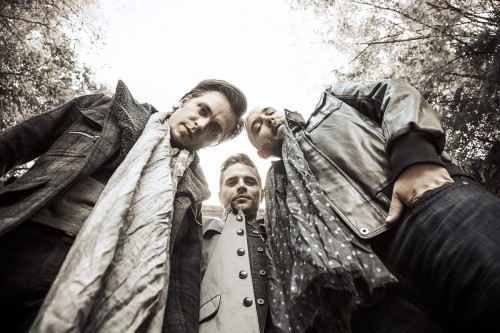
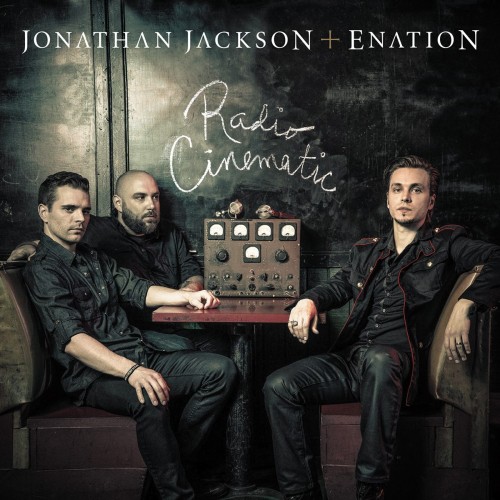
Kicking off their Radio Cinematic Tour this past week, Jonathan Jackson + Enation will be making their way to the Westcott Theater, on June 1 for their first time performance in Syracuse. Although it’s their first time playing in this area, this trio of musicians although new to some of us, have certainly earned their stripes in the entertainment business in both film and music.
Jonathan Jackson + ENation
Jonathan Jackson + Enation consists of brothers Jonathan and Richard Lee Jackson together with long time friend and musician Daniel Sweatt. Many of you may already know Jonathan from his current role on ABC’s hit series, Nashville as Avery Barkley. You may recognize Richard in his roles in both film and television. These two brothers together with musician and friend Sweatt, have taken the country by storm with their recent release, Radio Cinematic, their fourth album to date. This album, really showcases their essence of sound and personalities in their music.
Richard took a moment out of his really hectic schedule prior to the start of the tour to speak with NYSMusic about their musical careers, making of the new album, and life in Nashville.
Kathy Stockbridge (KS): Hi Richard, so nice to talk with you and thank you so much for agreeing to speak with our readers. We’re really looking forward to having you up this way to the Westcott Theater in Syracuse. Have you played up this way before?
Richard Lee Jackson (RJ): The closest we’ve played in Upstate, NY would be Rochester. So we haven’t actually played yet in Syracuse.
KS: I feel like I’m late to this party. You guys have been making music now for quite a few years and I’m just now discovering you. I love your sound by the way. It’s really unique and cool. You and your brother started playing music together at a young age. Talk to me a little about how that came about. Was it something your family fostered, or was it something you just picked up?
RJ: Well my brother and I started music when we were pretty young. I started playing drums when I was in first grade, and Jonathan started guitar when he was 8-years-old. So we were both very young. Our family is very musical. My dad was a country music singer for a while, kinda semi-professional. So we would play with him in concerts, and be his special guests. So we grew up around music in that sense. But we really didn’t know we were going to do it as a band until we got to be teenagers. We lived in Los Angeles at the time, and we started playing at clubs on the Sunset Strip, like The Whisky A Go Go, The Roxy Theater, and The Viper Room.
KS: Wow, those are great venues to start playing in.
RJ: Yeah, they were great. We were so young, Jonathan I think was 14 and I was 17 when we started doing that. So we couldn’t drink as we were too young, but we had a great time. The band, Enation formed not long after that when we met up with Dan (Sweatt) our bass player, and we started playing together.
KS: Now was Dan a family friend or how did you come to find Dan?
RJ: Our friendship revolved around music as we were in the same group of friends. We found out that he was a guitar player, so he originally started playing guitar for us, but moved to bass a couple of years after. We just started playing together, and there was this chemistry between the three of us, from the bands we listened to and the music that we liked, it was kind of natural communication and friendship that developed around it. It’s been really strong, and really fun. We’ve been doing this now independently for about eight to 10 years, but then this last year we finally got signed and took it to another level.
KS: Yeah I see that as I was researching that you have been doing this now for years; this isn’t your first album. So do you find that your father’s influence and musical taste influenced the direction you guys went, or did you develop your own direction based on those influences and musical likes you had at the time growing up?
RJ: I think we were more influenced by the music we listened to. Back in the early ’90s and the mid ’90s we were all very much in to the alt rock scene. I guess U2 and REM are not quite alt rock, but Pearl Jam and Smashing Pumpkins and Radiohead kinda met with U2, REM, and Peter Gabriel and somewhere in this anthemic rock we had an emotional experience attached to the music and it sort of infiltrated our perspective. Our dad sang a lot of country, but he and his brother grew up listening to a lot of rock and roll and southern rock. So we grew up around Led Zepplin and that type of music as well, and that also has a place in our music as well.
KS: A lot of times when writing about a style of music and describing it to our readers I tend to categorize the sound and I give examples of artists they may sound like. With your music though I can’t pinpoint it to a specific sound because it’s so unique. You have a distinct unique sound, an awesome sound. And it’s one of those things that people will say they sound like “you” we sound like Enation.
RJ: Thank you. That’s a huge compliment. That’s great of you to say.
KS: I must add also, I cover a lot of shows and I notice that music tends to be categorized in a specific genre of a sound. Then there’s those break out artists that go out on their own and develop a new sound, like the hair bands of the ’80s or grunge sound of the ’90s. I find your sound is distinctive and pleasing, and I can see it as a break out sound to be emulated by others.
RJ: I don’t know how that comes to be, but for a long time we’ve been searching to be genuine and authentic and who we are. I think when you are a young band you have to imitate in some ways, because you’ve never done it before. But pretty soon we started to realize that imitation isn’t that great. So we are always trying to find that sound and feel that is most genuine to us. So maybe that’s part of where it comes from.
KS: Exactly. You’ve been in the business for a long time now, not just with music, but with acting as well. Talk to me a little about that journey and do you feel that one calls to you more than the other? Or does it satiate your soul by being able to do both and pursue both avenues?
RJ: I think that being in the acting and film making world has helped us in some ways as artists. It gives you kind of an idea of building an emotional story and relating to an audience on an emotional level, because a lot of what you’re doing as an actor is trying to communicate something in that story that touches people and communicates emotionally. Especially Jonathan as the front man of the band, he is a very fine actor, he has a real strong sense of how to relate something from that emotional place and how to experience something like music, concerts, the album. So it’s not enough for us to just play our music we’re always trying to figure out, is there an emotional moment that we can pinpoint that might take this music to the next level. It could be visual, it could be a song, a theme, lyrics… So from an artistic standpoint I think it’s very complimentary. From a business standpoint, logistically you have to gauge where your going to put your time and energy. So for us right now, Jonathan is working on the tv show for about nine months out of the year. So that creates some logistical complications, but it also gives us an audience to communicate with. So there are pluses and minuses at being in both worlds. Ultimately though, we look at it as something that complimentary.
KS: You just recently moved to the Nashville area. This must give you more time in the studio, as you are right there all together at the same time now. Is that what drew you towards Nashville, or is it that Nashville is just a really cool musical scene right now that you just wanted to be out there?
RJ: Nashville is a great city in and of itself for sure, but the main draw for the band to relocate here is because this is sort of where the center of our music team is. Our management is here. A lot of the meetings that we have are here. Of course Jonathan’s working here right now on the tv show. But the studios, and the producers, and just kind of the whole atmosphere is so exciting and makes life a lot easier to be in one place. You know, we lived in LA for a long time, and of course there’s a great artistic community there, but there is something unique about Nashville that it just seems very communal. Very community oriented. You’re not afraid to really reach out and develop relationships and often times people are real friends, they’re just not business acquaintances.
KS: It’s that southern hospitality.
RJ: It is. It definitely is.
KS: For most of those coming to the show that may never have heard your music before, they may assume it’s country. What would you categorize your music as. Indie, New Rock?
RJ: Well, when I’m explaining it to people I usually say it’s like U2, Pearl Jam, and Bob Dylan adopted a baby boy and left it to fend for itself. In terms of a genre I like to say it’s alt/rock/pop because it’s really all three of those things. If someone wants to call us indie, then that’s totally fine. On iTunes we’re just under rock or alternative. But iTunes has big umbrellas so if I was going to have an expression of our music it’s a little bit nuance, I would probably say alt/rock/pop. If I was to have a blanket statement I would say indie or alternative.
Jonathan Jackson + ENation
KS: You’re touring right now for Radio Cinematic, your fourth album released back last November. Talk to me a little about this album, making it, some things you want our readers to take away after listening to the album.
RJ: We made the record with our co-producer Greg Archilla who worked on Matchbox 20 and some Collective Soul stuff. He’s someone we met in town, and he got really excited about working with us after seeing our live show. One of the goals we have in making Radio Cinematic was trying to capture the sense of what our band is like live. And it’s a difficult thing to do, transitioning from one type of outreach of music to the other. But we felt that Greg really got that after coming to our show. So we were really excited to work with him. We demoed about thirty to forty songs over the course of two years and then narrowed down to the final twelve songs on the record.
You never know exactly what’s going to happen when we go in, but as the canvas formed and the paint started to get thrown on we kinda started seeing this picture of wanting to explore music as something cinematic. So juxtaposition of radio cinematic has to do with a combining of the audio and visual of an artistic expression, and wanting to tell a story in a way that really brings out an emotion in our story. In terms of a theme of the record, I would say that it kind of comes down to of a sense of ..we’re born and we live in a sense of wonder as children and along the way we sort of lose that as we get older. And so one of the songs leads off with how do we get back to that. The record sort of explores these ups and downs of our emotional journeys from childhood to adulthood, and how do we find that sense of joy again in life. Maybe it’s a fact that we’ve been a band for a while but whether it’s a band, or a friendship, or a marriage, or even a business partnership, you sometimes loose that lust for life. And we explore those themes in our songs on how do you renew and refresh and get back that sense of wonder in life.
KS: I can’t wait to see you live. I loved what I’ve heard. Now do you all write and add to the songs? Is it a group collective process?
RJ: It’s a very collaborative process with us. Jonathan is the lyricist, I’ve written a couple of songs with him, one on this album. But Jonathan has 99% of the songs structured already when he brings them to us. So he has the basic structure, and then the band will get together and sometimes the songs will take on a completely different life when we’re playing them, and sometimes our aim is to execute something that Jonathan’s already brought. But it’s a very collaborate process. That’s why we put that this album was co-produced by us because every piece of it was all of us “all hands on deck” to figure out how best to tell the story.
KS: One of the things I came across when preparing for our interview was you recently accomplished a 1/2 marathon. That is quite an accomplishment as I am a runner, okay a brisk walker, and I really want to congratulate you on that accomplishment. You raised a lot of money for St. Jude Research as well. How did you get involved with this, especially with your hectic schedule, how did you fit something like training for something like that in there?
RJ: I’ve always been a little bit of a runner in that I ran a few miles here and there but never more than three or five miles. I was inspired by a couple of my friends who run like that, and I thought if they can do it, I can do it. It’s fun to set goals, and I thought a little bit about wanting to be in great shape before the tour. Then while signing up I realized that St. Jude Research was involved so I was really happy about that, that I was able to put a little bit of a buzz out there to help them out. I can’t believe that the race that day helped them raise over two-million dollars. That was an amazing thing. Yeah, the hectic schedule is definitely there, but you kind of have to make it priority and once you do, you do your best to stick with it and hope everything goes well on the race day.
KS: Well congratulations on the race, on the tour, and we can’t wait to see you here in Central New York.
As I hung up from my interview with Richard, I couldn’t help but think how down to earth this young man was and how creative this band is in their interpretation of music. He nailed it with his description of the love child of U2, REM, and Peter Gabrielle. Their sound is a mixture of all my favorite sounds from several ’80s, ’90s, and millennium bands that blend so perfectly to make their own unique sound. Like I was saying to Richard, I try to give a description to readers so they know what they can expect, however with ENation, it’s something you must listen to, to appreciate. Trust me that this not a country band by any means. Although I love Jonathan’s character and musical renditions on the show, Nashville, it’s a pleasant surprise to see him in a new context that showcases his musical abilities and creativity of the band. If their album is anything close to their live show, I will guarantee you will not be disappointed. Hope to see you there. Tickets can be purchased online.
Jonathan Jackson + Enation
Tour Dates:
5/22 – 3rd & Lindsley – Nashville, TN
5/23 – Vinyl Room – Atlanta, GA
5/24 – Double Door Inn – Charlotte, NC
5/28 – Madison Live – Covington, KY
5/29 – A&R Music Bar – Columbus, OH
5/30 – The Broadberry – Richmond, VA
5/31 – Hard Rock Café – Pittsburgh, PA 6/1 – The Westcott Theater – Syracuse, NY
6/11 – Expo Five – Louisville, KY
6/18 – The Nick – Birmingham, AL
6/19 – George’s Majestic Lounge – Fayetteville, AR
6/20 – Outland Ballroom – Springfield, MO
6/21 – Atomic Cowboy – St. Louis, MO
6/22 – Knuckleheads – Kansas City, MO
6/24 – McGonigel’s Mucky Duck – Houston, TX
6/25 – Gas Monkey Bar N’ Grill – Dallas, TX
7/1 – The Hi-Fi – Indianapolis, IN
7/2 – M.I.K.E Stage on the Green Space – Sheboygan, WI
7/25 – Jefferson Park – Chicago, IL
For the past year or so I have been following a musical movement that has taken on momentum like a snowball rolling down the mountainside. The movement began when Blake Morgan, founder of ECR Music Group, responded to a comment made by Tim Westergren, Pandora Radio’s co-founder.
Tim Westergren wanted already struggling artists who weren’t compensated completely for the use of their music on his station, to take a decrease to keep it afloat. While not only was Pandora afloat, the luxury cruise ship was sailing off into the sunset enjoying themselves to the hilt while the artists that powered that ship were stranded on an island all alone, and without compensation.
Frustrated by one of the only American industries that felt entitled to the ownership without compensation, Blake responded to Westergren and this response gathered the attention of The Huffington Post. From this heated email discussion, grew the IRESPECTMUSIC movement.
Blake Morgan – #IRESPECTMUSIC
One by one, artists in the industry began to awaken and concur with the sentiments of Blake Morgan. The sentiments being that artists should be compensated for the use of their music on all radio and digital sources. It was recognized that to make a change, the laws behind the copyrighting of music had to change as well. The laws in place currently allowed the music moguls such as Pandora, Spotify, and so many internet radio stations across the nation to continuously use music without paying the artists. No other business model in our nation works this way. You create a product, you sell the product, you are compensated for the product, and the purchaser enjoys the product. No where else is a product created and lent out for use without compensation, under a pretense of giving it more visibility for future sales. What? If that model worked no one would get paid. We would all advertise products for free.
Like millions of others, I too enjoyed my playlists on Pandora. With an occasional advertisement here and there, I didn’t have to buy the cd’s or download to my iPod. I could enjoy them digitally wherever, and whenever I wanted. I always assumed that licensing was paid to the artists to play the music from those sources. I had no clue until this began, how the music industry really worked. In fact, I wanted to know more about this movement and how the industry worked. I wanted my readers to understand every time they played those stations, how they were hurting the music industry they loved. So I reached out to the man himself, Mr. Blake Morgan. Blake graciously agreed to talk with NYS Music about #IRESPECTMUSIC and enlighten both myself and the readers to the ins and out of the music industry.
Blake Morgan – #IRESPECTMUSIC
Kathy Stockbridge (KS): Blake, thank you so much for agreeing to talk with our readers today. You have been in the business now for many years…tell me a little bit about your background and some of the changes you’ve seen over the years in the music business.
Blake Morgan (BM): I love where I am in music and my musical life..because I’m a recording artist, and I’m a record producer, and recording engineer, and a label owner. So I kinda have this eagle eye view of what it means to be a music maker in this country, and it’s a very fulfilling musical life to really have three careers happening at the same time.
KS: Explain to those that may be reading this the differences between a musical engineer and record producer.
BM: That’s a really good question, a lot of people don’t know what it means when someone says I’m a record producer. Being a record producer somehow in music we don’t necessarily have a sense of what that means, but somehow the lay person inherently knows what a film director does. Right? So a record producer does for music and for making albums, exactly what the film director does for movies, you’re the director. So let’s say you want to make a record. You’re the artist and you are a singer songwriter so you have essentially written the script because you wrote the songs. You’re the star actor, because you’re the artist, the singer. Then the record producer is then directing the movie. It is clearly your movie, but I’m the one trying to understand what your vision for this record would be, and then realize it for you in a way that actually turns it, hopefully, into the record you’ve always wanted to make. It’s interesting because being a recording artist and singer specifically really helps me be a good record producer.
KS: Absolutely.
BM: And I know what it means to be on both sides of the glass. It has been a huge bonus, and I would argue its actually why the records I make are as good as they are, not to brag. But I’m serious. I really think there’s an intangible thing available to one, when you understand what it means. There’s a reason why baseball players wind up being the best coaches. The fact that my new record came out last year, and I recorded and produced four records since then has been a really vibrant way for me to realize all of the things I will want to do in music, which lead me to also forming the label. Which is an extension of that as well. So, it’s very busy, and people ask me all the time, do you ever sleep? and the answer is, not really. But all jokes aside, one of the things I did discover early in my career is that doing all of these things, people ask me all the time, doesn’t being a recording artist take time away from running the label? or doesn’t being a record producer take time away from being a songwriter? and the answer is, yeah, it does. Because I’m doing all of those things. But what I learned early in my career, is that in my case, my doing all of these things and doing them well, actually takes much less time than making something you really cared about, that you really bled over, and then handing it to somebody who doesn’t know what they’re doing.
Blake Morgan – #IRESPECTMUSIC
KS: So do you find it hard to take off one hat and put on the next one when you’re doing a project like that, when you’re doing so many portions of the album?
BM: No, and I can understand why one might think that would be the case. It’s just the opposite. On Janita’s new record that my label made, just released in March. I recorded and produced it, I mixed it, and I’m also playing bass on the record. I just happened to be the right bass player for the record. So she’s playing guitar and I’m playing some guitar which actually makes it much more electric, much more methodical on the one hand and also more creative on the other hand. When you can say, hey wait a minute, you pick that up let me pick this up, it becomes this Thomas Edison crazy workshop kind of thing. So you don’t really get in each other’s way, it’s just the opposite as I discover I’m using all of my muscles. I’m like a musical decathlete. It’s not just people who make music. It’s people who love music. They are standing with us and saying, wait a minute, sometimes we don’t know what’s wrong and what’s right. But this time we do. This is wrong. Let’s fix this.
KS: I’m really super impressed right now.
BM: It took me a long time to realize not only is that okay, but it is actually what I’ve really always wanted. The musicians that I admire the most, that I aspire to get to the level of their excellence; musicians like Daniele Lanois, Jon Brion, Nigel Godrich, artists/producers like that who play a lot of instruments and make a lot of different kinds of records with different artists, that’s the kind of musician I’ve always wanted to be. So they don’t really get in each other’s way, they help each other. So in the end if I wind up becoming a musical decathlete or musical swiss army knife, so be it.
Blake Morgan – #IRESPECTMUSIC
KS: And I’m sure it all helps you grow in each area as you experience it. Thank you for that explanation for our readers, and myself. I think we all picture it as the band comes in with their instruments, you turn on the recorder like a cassette tape and then you’re done. And it’s so not like that.
BM: I think you’re right, and I think that is a part of what #IRESPECTMUSIC is all about and why I use those three words. I think there are some people out there still that sorta feel that its money for nothing and your chicks are free. So I think as artists fight to be paid fairly for their work, I think there was, prior to this last year because I think it’s really going to change, there was a vein that ran through where people thought why should you get paid for the job you don’t have. You don’t have a “real job.” And I don’t think it was personal. It was like, I work for real. I don’t really have a job, I have nine jobs. And I don’t believe that anything I do is more or less important than anything anyone else does. But we live in a capitalist society, and people get paid for their work in a capitalist society. I don’t think we can fight to get paid as musicians till we turn the tide and music itself gets a different kind of respect. And I do believe that that’s fundamentally changed this last year.
KS: I want to say, and please correct me if I’m wrong, music has evolved. Not only the sound of music, the production of music has evolved, and what used to be where artists would record their own albums and music and they would drive it to all the local radio stations and ask them to play it for free. I don’t believe it to be that way any more. The people listening to the music on the radio don’t understand that process with licensing, etc. With technology and how technology has evolved and helped, you see fewer DJ’s on the radio replaced by more recorded music. So could you explain to our readers the evolution of music through the different mediums – vinyl, 8tracks, cassette, cd’s, digital? How its hurt, and how do you see progressing? Also, you mentioned in an article once that it hurts the middle class artists. These artists being the ones that drag their gear around from stage to stage, now not getting paid. Explain that statement to our readers.
BM: I think there are two parts here. So let me address the middle class artist statement first. The music industry just a few years ago was a 15 or 16 billion dollar industry. Now it’s like a 6 billion dollar industry. So all that money has gone away. I believe part of the argument that the Opponents to Artists Getting Paid Fairly use is to put this idea out there that why should we care if Justin Timberlake is making a million dollars less than he’s suppose to. He still has plenty. Right? But here’s the point about the middle class. That even for superstars like Justin Timberlake, it’s not just about Justin Timberlake. He’s needs to go to a recording studio and make that record. And that recording studio employs people. It also employs 20-year-old kids that are being paid very little, but they love music so much they want to kinda break in. And by the way, those recording studios are closing, all the great studios are closing. So many of the great venues here in NYC are closing. And that’s just not places that a middle class successful artist like myself might go to play. And guess what? It’s also electricians that wire stages for sound, its carpenters that build those stages, and union workers are working at the door or maybe taking tickets or serving beer. This is a major job driver to our country’s economy. So it’s not just about millionaire rock stars. It’s about millionaire rock stars that aren’t getting paid, it’s about hard-working class and middle class artists, AND people in other industries that dovetail into music. Right?
KS: Right.
Blake Morgan – #IRESPECTMUSIC
BM: So, when you get to the middle class artists themselves, like myself and some of the artists on my label, so what ends up happening in the music world in an industry where people are so desperate for the next payday or the next dollar that even the large record companies are thinking now about this quarter. Not about two years from now, or a year from now, or even this summer. They are thinking about kinda making that nut for this quarter. And that drives what we see in movies also again happening in music. That these places need HITS, they need blockbusters, right? So we all know when it comes to movies we’re much more likely to see Transformers 9 than we are to see Silver Linings Playbook 2. But that’s true for music as well. Don’t forget it was Motown and Atlantic, these kind of labels, that developed artists for years. They developed them over the course of three, four, five records until you wound up with the iconic musicians and artists you think of. So the middle class in music has really suffered. 80 percent fewer songwriters in Nashville over the last 10 years. So this is really about the middle class in music like it is in so many other professions.
So when it comes to technology, technology is completely neutral. This isn’t about the apparatus. Technology is neither good nor bad. It’s about how one uses technology, it’s about the individuals using it, morally or not morally. So the balance between art and commerce has always been a somewhat fragile one throughout the ages. It’s not like musicians had it made 400 years ago. What’s been happening the last 10 years is unlike anything we’ve ever seen. It’s where the idea is, that if you feel that a billion dollar company is using your music without your permission and they are making money on it. And you’re not making any money on it. Suddenly, you’re anti-technology. So when Taylor Swift pulled her catalog from Spotify, one of the ways that she was attacked (hilariously I must add) is they claimed she was just a little girl. They attacked her unbelievably in such a sexist manner. But right next to that they said…’oh she doesn’t understand technology…this is about the future…you can’t stop the future.’ Well the future is not about not paying people? The future is the future they said. Why can’t we make the future better? Why can’t artists get paid in the future? Fairly? Right?
KS: Not for nothing, but those of Taylor Swift’s generation know technology much better than our generation. Just saying.
BM: Exactly. I don’t know any kid that would say, musicians shouldn’t get paid. But the idea put forward by these billion dollar tech companies is that this is the future so don’t be against the future. In a CNN interview I did, the host was terrific, she asked me, well isn’t this about technology? You can’t stop progress. And I said, this isn’t about technology, this is about artists being paid for their work. No one is against the internet at all that I’ve ever met. I’m simply saying that if you use my music, by the way as radio is allowed to, terrestrial radio which is what #IRESPECTMUSIC is really focused on, terrestrial radio is allowed to play my music and not pay me anything. So the National Association of Broadcasters (NAB) made 17 billion dollars in advertising alone. In one year, 17 billion dollars. They did not pay one dollar to any artists for using their recordings.
KS: Being naive to this subject matter, I assumed they pay royalties to artists, or licensing fees to utilize those songs. So they don’t have to pay those fees?
BM: That is correct. #IRESPECTMUSIC is an homage to the woman I’m about to tell you about. So when you hear the song ‘R-E-S-P-E-C-T” who do you think of?
KS: Aretha Franklin of course
BM: Right. So what most people don’t know or what some people don’t know is that Aretha Franklin has never made a dollar from that song being on the radio. Ever. In the United States. EVER. EVER. And that is because the United States is the only democratic country in the world where artists don’t get paid for radio airplay. Otis Redding wrote that song. The great Otis Redding. And Otis Redding gets paid. Or his estate gets paid when that song is on the radio. Songwriters do get paid. As they should. They don’t get paid as much as they should. But they do get paid something. But the artist that made that song the iconic almost national anthem that it is, Aretha Franklin, has never made a dollar from that song. And think about the repercussions of that in other kinds of music. Think about jazz. Think about our legacy jazz artists who are in their ’70s or ’80s now living uptown on the very island I’m on right now. Jazz for sure is about composition, it’s about new songs, new works, but so much of jazz is about reinterpreting standards. Right? John Coltrane never made a penny from “My Favorite Things” being on the radio. That doesn’t sound right to anybody. And what I always say is, how is it possible that the short list of countries that agrees with the United States is North Korea, Iran, Rwanda, China, I mean is this really a list that the United States of America wants to be on?
Blake Morgan – #IRESPECTMUSIC
KS: So how do other countries manage to do this than? How do they work it? To where they are able to play the songs and yet still compensate the artists that are performing those songs.
BM: Everywhere else in the democratic world, everywhere else in the civilized world, both the artist, meaning Aretha, and the songwriter, meaning Otis, both get paid. And no where else has it driven music off the radio. No where else in the world has it put radio stations out of business. No where in the world is it even thought of to be anything but “of course we’re going to pay for the recording of the song.” This is ridiculous. And it’s Congressman Nadler who is a real advocate for musicians and for artists on Capital Hill. Congressman Nadler, who is also on the House Judiciary Intellectual Property Sub-Committee, is working on legislation that would correct this. And he always says, I can’t think of anywhere else in our country, in our economy, where people are told that they shouldn’t be paid for what they do because it’s actually just promoting them.
KS: Right
BM: The example he always gives is, he says you just don’t get to drive a car off the dealership lot and tell the dealership, “listen, I’m not going to pay you for the car because I’m going to put signs on the car and advertise your dealership”. It’s ridiculous. Unfortunately, this is something that we’re getting wrong as a country, and that is what #IRESPECTMUSIC has been all about. This petition, and putting pressure on Congress and urging Congress to support Artists Pay for Radio Airplay to join the rest of the civilized and democratic world. And we’ve gotten so far. There is so much that Congress is on the move on this issue. And I’ll tell you why. We all know the state that Congress is in, and how partisan it is. This issue isn’t a partisan issue. Republicans and Democrats agree about this. And it’s very easy to understand why. It’s about jobs. This is about American jobs. And you know what? I am very proud to be an American songwriter. I’m very proud to be a recording artist, record producer, and label owner my entire adult life. It’s the think I’m most proud of. As Americans I wonder if we’re taught to prize innovation above anything? Right? We’re the country that innovates. We’re the country that comes up with the next big idea. So we’re taught to prize innovation, but see here’s the thing. Rock and Roll is an American innovation. Hip Hop is an American innovation. Jazz is an American innovation. Blues, Country. Bluegrass. They are American innovations. And on and on and on. Each of these are American innovations. Music is one of the things that Americans still makes that the world still wants. The people who make that music should be paid for their work.
KS: I agree.
Blake Morgan – #IRESPECTMUSIC
BM: And when members of Congress connect with that, they go, well this is ridiculous. We’re not going to lose the rock and roll battle to Belgium.
KS: Yep, Elvis would roll over…
BM: Well Elvis is still alive…haha. One crisis at time please!!
KS: So tell me, how did this whole campaign come to fruition? What was the catalyst?
BM: So a year and a half ago, and email exchange between myself and the founder of Pandora, Tim Westergren, was published in the Huffington Post. (Read the article.) It really became a firestorm. Pandora was encouraging artists to sign to a letter they were going to bring to Congress. They were getting some artists to do it except unfortunately what Pandora was really doing was they were going to take this letter to Congress to lobby Congress to lower our royalties even further. So they were tricking artists to sign a letter that was not in their self-interest. So I actually wrote back. I got this email from Mr. Westergren at Pandora, and I wrote back, and I called him out on it, very respectfully. And then he wrote back, and I wrote back and that email thread became something of a firestorm, and there was a lot of press around it. It was such bad PR for Pandora that a couple of months later they pulled own signature legislation that was sitting in front of Congress. They pulled it. They said, we’re not going to fight this anymore. We’re not going to lower their royalties further, at least through legislation. That really felt like a sea change moment, that was very different from musicians I think had been experiencing on mass for the last ten years. I don’t know if we felt like it was a victory, but we sure knew it didn’t feel like losing. So it was following that victory, that cautious victory, that I said “You know what? What if instead of always playing defense, as we fought off another terrible thing. What if, we went on a joyful, respectful, offense? And in fact tried to get this radio royalty at all forms of radio? Digital and Terrestrial. What if we got AM/FM to pay their fair share? What if we did that? “What is the clearest example of this?” And it’s the Aretha/Otis example. So that’s why I started thinking about that word RESPECT. And I wrote an Op-Ed also in the Huffington Post at the end of last year that was about an experience I had going back to my high school for career day talking about my life as a musician. Something very dramatic happened in this career day. And I wrote about that day and I ended that piece with the words #IRESPECTMUSIC . The piece really blew up and got a lot of attention. It was a month later that I posted a seven second video of myself writing the words #IRESPECTMUSIC on a card with a hashtag and let people know that #IRESPECTMUSIC was launching. I didn’t even say what it was. The day that we launched, people started spontaneously posting these selfies with the hashtag. And we got hit so much on the very first day, that the site was running slow due to so much traffic. People were trying to sign the petition, and it was amazing. It was just amazing. And that’s how this movement really got born. Which was out of the email exchange with Mr. Westergren, and then the off ad that I wrote, and the press I was doing, I just wanted to turn that hope and that positive energy into an action, so that music makers and music lovers could stand together. So many music lovers have signed this petition. It’s not just people who make music. It’s people who love music. They are standing with us and saying “wait a minute, sometimes we don’t know what’s wrong and what’s right. But this time we do. This is wrong. Let’s fix this.” So a very simple message that’s positive said here’s this petition, we’re going to urge Congress to support this. And it’s worked phenomenally well. And it’s ongoing. I’ve been to Capital Hill many times and talked with many members of Congress, and the tide has really turned. I’m going to be back in Washington in just a couple of weeks.
KS: What do you foresee? What changes do you foresee? How soon do you expect them?
BM: This is the year. This is a really big year. Copyright-Royalty Board is about to release their findings on a gigantic study they did on the state of copyright. Really the state of artists being able to protect and monetize their work. Congressman Nadler is leading the charge in Congress along with other courageous Democrats and Republicans to put together comprehensive legislation that is going to fix the terrestrial radio issue, issues on digital radio, records that came out before February of 1972 that are no longer getting royalties paid to them, which is ridiculous, as well as the rates that artists are paid making them much more consistent across different platforms. So there are major artist and copyright overhauls that need to happen in 2015. It’s really good news, A lot of this has to happen in 2015 because a lot of deals and agreements are up. So it’s been a fantastic time for the public to get mobilized, the grassroots way and make their voices heard. We need that to continue. Something Congressman Nadler often says, with people speaking up that’s how change happens. That’s how Washington changes. People out here have said, wait we’ve had enough. So I think the time is now. I think we’re going to see profound, exciting, and dramatic changes over the next year if we continue to roll up our sleeves and do the work.
KS: This whole process has been very exciting to watch unfold. Where have you found the most success, the most support from? Is it certain areas whether it’s certain genres of supporters or demographic areas, or has it been spread out? Are there any groups you still would like to reach?
BM: It really has been across the board. It’s been superstars posting selfies, it’s been working musicians, it’s been up and coming musicians, it’s been middle class musicians, it’s been engineers, it’s been an unbelievable panoply of people. One of the really exciting things is there have been these little spontaneous chapters of #IRESPECTMUSIC pop up all over the country. #IREPSECTMUSIC Pittsburgh, #IRESPECTMUSIC Nashville, I think there’s an Austin, there’s an Athens, there’s a Portland. So people all over are deciding, which the beauty of the hashtag, (I don’t own the hashtag), so people are setting uptheir own chapters and having their own events. We had a big #IRESPECTMUSIC event here in NYC in October, with members of Sound Exchange, other Performance Rights Organizations, we had different artists perform, again Congressman Nadler showed up because it’s in his district. So again, it’s been a remarkable national movement that’s actually gotten off the ground. A real grassroots organization. I recently gave a speech at American University and there was a professor there in the back and he stood up at one point and said to the students “you should really take note of this, because this is a genuine grassroots movement. This is for real. This isn’t like those astroturf movements that you see sometimes.” It’s powerful because we’re free to actually speak our mind. It’s been a brutal ten years for music makers. If you think back to Lars Ulrich and Metallica. He correctly spoke up about musicians getting screwed by Napster. He was just absolutely attacked, brutally and unthinkably for doing that. Ten years later look at all these people who are stepping up. Zoe Keating, Taylor Swift, David Lowery, Aloe Blacc, the list goes on and on. Courage breeds courage.
KS: So how can our readers help you?
BM: Go to IRESPECTMUSIC.COM and sign the petition, and post a selfie with the sign #IRESPECTMUSIC. Find me on Twitter, find me on Facebook, and stay tuned as we have actions set for the next few weeks that are going to be kinda exciting. So stay connected and speak up and take action in making history. That’s what we tell people to do.
KS: Don’t want to digress here, but I think it’s worth mentioning this story. I read recently about you visiting your high school for career day. The one you mentioned previously. I want to share this with my readers.
BM: I was kinda the kid in class who would sometimes challenge the teacher, and get into trouble. Not because I was being snarky, but because I wouldn’t take necessarily what the teacher was saying as gospel. I was the kid who would challenge authority. That didn’t clearly change when I became an adult. It was funny because I found myself back at my high school, not just any old high school, but mine. (for career day to talk about his career). So I said to the kids,” if you’re in this room and you picked the art room, instead of the doctor room or the marketing room, or the advertising room there’s something inside of you that has called you here. And I bet you’re already hearing the voices that it’s not reasonable and that you shouldn’t go for it, so for my three minutes here, I just want to tell you that I for one hope you do go for it. And I hope you go for it with everything you have. And without a Plan B.” That’s when she (the teacher) stood up at the Plan B part where she stood up and said “no, no, no, that’s not right. You should always have a Plan B.” That was the part that I stood up and said “Listen, this is exactly what I’m talking about. Do you think any of the kids in the doctor’s room are being told that they should have a Plan B? Not everyone that goes to medical school becomes a surgeon. Do you think the people in the Law Room are being told to have a Plan B? Or the Marketing Room? This is what I’m talking about. And there are daunting risks in every profession. But I’ve never heard of anyone being successful anywhere who didn’t go for it with everything they had.” So that experience really illustrated perfectly how music is thought of and art is thought of as a profession that is not worth fighting for. But they are. They are professions that are worth fighting for. And the simple RESPECT they deserve is no more or no less than other professions. One wouldn’t imagine being so hard, especially when so many of these art forms are art forms that were innovated by our own country, our own citizens.
KS: I want to tell you. I’ve interviewed so many musicians about how they began, and what were their influences, and never once did any of these musicians ever tell me that their music career was their Plan B! This was something in them and they were going to do it whether they got paid for it or not. To them it was a passion.
BM: Which is by the way, often the best way to get paid for something. I’m doing this because I have no choice. Necessity is the mother of invention. Sometimes desperation can be too. But these were kids. These were kids saying, maybe I want to be a cartoonist; maybe I want to be a trumpet player; maybe I want to write a screenplay; maybe I want to be a dancer; I’m thinking about it. But to be crushed right out of the gate…when we encourage everybody to go to become a doctor and lawyer.
KS: Not everyone is cut out from the same cloth. My son is the perfect example. He’s not going to be a doctor or lawyer. His skills lie elsewhere. And this is something I’ll encourage. Whatever you do…do to your best. Our local high school is very supportive of the arts with students. But not all high schools are like that.
BM: Because those fields are not seen as necessity, but it’s seen as luxury. But you see, the truth isn’t a luxury. Art isn’t a luxury. Life simply can’t be about car payments and mortgages. We’re here for something else. Aren’t we here to learn about ourselves and make this a better world that we want to actually live in? Isn’t comedy, and music, and art, and writing, and plays, and movies; isn’t this how we define ourselves? And certainly when it comes to these art forms in music, these are a part of our national identity. Who are we without rock and roll? Or Hip Hop? Who are we? If we are going to walk around saying we are the greatest country in the world and we certainly have the potential to be, how are we going to look ourselves in the face and say that when the next Billie Holliday is being told not to go for it. The next Jeff Buckley can’t get paid because of Spotify. The next Elvis Presley doesn’t make any money on the radio. People aren’t going to go into a field where there’s no hope. So we have to win this battle now for our national identity. That’s what I think.
KS: I can recall in fifth grade completing book reports about other countries and outlining things about them. I would list their population, their crops, and their culture, which often included music and arts. Never once did I list about a doctor and lawyer. Our culture is ever evolving and this includes music. As a huge country music fan, I’ve watched the evolution of what we hear today from what once was bluegrass primarily, to now a mixture of that plus rock and roll plus so many other genres. It’s ever evolving.
BM: A perfect example of what you were just saying, is I recently had the honor of meeting with Congresswoman Marsha Blackburn, from Nashville. She’s a Republican Congresswoman and every inch of her waiting area is covered with things relating to music. What I agree with and don’t agree with Marsha Blackburn out here in the world was frankly irrelevant. At that moment when I walk into her office and every single thing on her wall is about music; I think that’s remarkable. And that’s her saying, “Hey I’m a Congresswoman from Nashville, Music City, and I have to stand up for what my city’s about”. We’re about Dolly Parton and Willie Nelson and so many others. I thought that was amazing. I wish we saw more of that.
KS: Music is part of who we are and part of what we need to save. It is our culture. I cannot tell you enough what a great crusader you are for this effort. You are a great spokes person. I feel the passion when you talk about the subject. And it’s…contagious.
As I ended the interview I was amazing at this man’s ability to speak from the heart. I truly believe people are given roles in life to carry out certain messages and as fate had it, Blake Morgan’s fate was to deliver this message. His tireless efforts, his continued talks and education moments with not only lawmakers, but students and citizens everywhere, educating them on this issue has brought forth change. As the fine professor pointed out, grassroots efforts are what make this country special.
I conducted this interview last December. As time progressed I waited to print this hoping to have some good news to share. Since this time, Blake and his team of supporters have worked diligently to move this fight for air time pay for artists forward with great success. I am happy to announce that I recently received word from Blake with that through the support of Congressman Nadler and Congresswoman Blackburn, this bill was recently introduced and progress is being made.
Blake Morgan – #IRESPECTMUSIC
As the word is spread, I have great hopes that the music industry will get it’s fair due to them. I recently accompanied Blake as he visited our local Syracuse University campus to speak with the students in Professor David Crider’s Communication Law class. Bringing awareness to these students, tomorrow’s future, brings me hope that those today will see the importance of the Fair Pay Fair Play Act of 2015, and keep this momentum rolling. With venues closing, technicians being left without work, and musicians struggling to get their voices heard, the music industry is not what it once was. Awareness is key to keeping those in the business, in the business. By visiting and supporting Blake at IRESPECTMUSIC.org and signing the petition, we all can take part in keeping our favorite music heard. Why should I do this, you ask? Because #IRESPECTMUSIC, and I care. Don’t you?
On Thursday, May 14, Toby Keith’s I Love This Bar and Grill will be welcoming one of country music’s hottest new groups, Parmalee, to their Syracuse location. Just off of the stage at 2015’s Stagecoach Festival, Parmalee will return to upstate New York to bring the rocking country music party to Central New York.
Parmalee – Stagecoach 2015 (Photo by Kevin Winter/Getty Images for Stagecoach)
Touring now with their debut album with Stoney Creek Records, Feels Like Carolina, and just finishing up a sound check at the Stagecoach Festival, Matt Thomas took a moment to say hi to NYSMusic.com readers and talk with me about the journey, and what it means to the group to be so loved by fans.
Kathy Stockbridge (KS): Hi Matt, so nice to speak with you. You guys have a huge following up here in Central NY and we are so excited to welcome you to Toby Keith’s in Syracuse.
Matt Thomas (MT): We can’t wait! It’s always fun up there seeing the crowds and all.
KS: Every band has a story on how they’ve made their way in the music business. Yours has been rather exciting along the way. Starting from the beginning, you hail from a small two-light-town in North Carolina where I read that when you guys practiced, the town was so small everyone knew it and you would have to end practices by 11pm.
MT: Yeah, everybody like us had to get up and go to work so we’d make sure we’d stop by 11pm.
KS: Now growing up in a musical family did your father and mother encourage your musical education?
MT: Oh yeah. I played with my dad in his band growing up. He was the kind of guy you always looked up to, and my mom played piano at church. They were always encouraging to us to play.
Photo Credit Unknown
KS: And when you were younger, what kinda places did you play? What was it like to finally get that moment up on stage?
MT: We would play anywhere anyone would have ya. That was the deal. We played back porches, trailers, private parties until we could get to where we could play the clubs. People would hire ya but pretty much starting out on the back porches though.
KS: Then your cousin, Barry, and friend, Josh, joined in. Were they with you both during those garage band days and joining your father on stage?
MT: Yeah, we were going out there doing what we could to get our name out there. You kinda just play for people that’ll have ya, then you start getting paid for it..and you move on up from there…take gigs and start writing music and I think most people start off like that in little hole in the wall places.
KS: Have you always been country, blues, and rock or did the sound you have today kinda evolve into your distinctive sound as you guys played together more?
MT: That’s what we were all brought up on, and we were influenced by everything. But that was the first stuff we heard; the country, soul, blues, sound while we were growing up. There’s a lot of stuff I love though, we listened to everything. Being a guitar player I was influenced by the great guitar players Stevie Ray Vaughn, Jimi Hendrix, and all those guys. Classic guitar players; I listened to a lot of those guys to learn how to play.
KS: Yeah, Stevie Ray Vaughn, that’s one musician I would have loved to see play. What an amazing musician.
MT: Yeah, me too.
KS: You’ve had a tumultuous time getting your music out there. Many artists take on a long and winding road trip, but your road was way bumpier than most. Take us on a road trip leaving Parmale, NC and tell us where it took ya
MT: Being based out of Parmale, we played regionally as much as we could. We played a lot up and down the east coast over the years tying to catch on and developing a fan base. Did a lot of shows up in New York. We never had an opportunity to play out west at all until we got signed and put out our first single to country radio. We never really had the chance till then to tour the country. Thankful for that hit that allowed us to go everywhere. We just took all the opportunities that we could at that time trying to make something happen. But mostly the southeast region where we would just burn it up. It was our top market. A lot of times we would play the weekends because we were working all week too. So we would only play three nights a week for a long time.
KS: While out on the road playing gigs, a horrible event occurred when two men decided to rob you one night after a gig at gunpoint. Briefly tell our readers that may no know the story, what happened that evening.
MT: We played a show and as we were leaving two guys tried to rob us by basically pulling us into our RV and wanting cash money. They fired on us, and Scott who has a license to carry, returned fire and we had a gun fight in the RV. Scott was shot three times and spent 40 days in the hospital . It was a bad deal. But we came out of it, and four months later we did our showcase for Broken Bow Records which got us our record deal.
KS: I read how your fans and the music community rallied around you and were very supportive. What did that mean to you guys?
MT: Oh it was great. We realized that we had connected with people on another level and that we meant something to them so much that they would get together and help us out. It was awesome. They helped pay for all our medical expenses, daily expenses, and really helped get us back on our feet. It was pretty awesome.
KS: Now that you have those dark times behind you share some highlights with our readers.
MT: We’ve been able to travel the country, number one single, and we’ve had four top 40 singles now, two are top five. It’s been great being able to achieve our life long dreams out here. Then there’s those cool things like traveling the country and going to the awards shows, just being a part of the whole experience.
KS: Well I’m so happy for you guys, and yes, talk to me a little about the ACM’s you attended.
MT: Oh my it was amazing, it was the biggest show. It was unbelievable how many people who were inside that arena, it was crazy. It was a spectacle to see, was great seeing all the other artists play and hang out…was such fun walking the red carpet. We had some good times.
KS: You excited about Stagecoach this weekend? Is this your first time performing there?
MT: Oh yeah, that’s gonna be off the hook. We actually just got done with our sound check. We’ve been wanting to get out here the last few years, and it just worked out that. But it’s going to be great.
KS: I will be front row watching you guys this weekend on AXS.TV. Where else will we see you guys at this year?
MT: Oh we’re playing all over the place this year…fans can just check out our schedule online. It’s hard to keep the schedule in our heads.
KS: It must be so hard on your guys trying to keep your bearings at where you ‘re at all the time as your touring everywhere. You guys are really fan oriented. I notice you are constantly retweeting and scheduling YouTube chats with fans. I think that’s amazing how you do that. How do you fit it all in?
MT: We make sure we put it on our schedule. We have a media team that helps too.
KS: It’s so good to have people. Well at each interview I try to give the fans an insight into the personalities of their favorite musicians with a social speed round…mind playing along?
MT: Yeah sure.
KS: You’re on the road…you’re super hungry…you see this and you make the bus pull off every times!!!
MT:Chick-fil-A
KS: You all get a day off and decide to go to the movies. The town you’re in is so small that I only has a Dairy Queen and movie theater that plays previously released movies. After discussion ensues..you all decide on a) National Lampoons European Vacation b)Godfather c)Die Hard or d)The Notebook
MT:National Lampoons European Vacation
KS: What’s on your playlist right now?
MT: I like to listen to Pandora so my playlists have the Frank Sinatra Radio on, Today’s Top Hits, Country, just about everything.
KS: ____________reminds me of home
MT:Smell of pine trees
KS: As a writer I need to describe each of you in one word only…What one word/adjective describes… Matt:Scatterbrained Scott:Neat Barry:Messy Josh:Prompt
As we completed our conversation I couldn’t help but be in awe of their determination and drive to achieve what they loved, music. I could totally relate to the working the 9 to 5 job to support their passion of music. By traveling countless hours, playing anywhere they could get an audience, these four men only had one goal in mind, reaching the country music fans worldwide and living their dreams. So happy to see that although a bumpy road, they’ve finally found the path that brings them to all country fans.
Hope to see everyone May 14, at Toby Keith’s I Love This Bar and Grill, at Destiny in Syracuse.
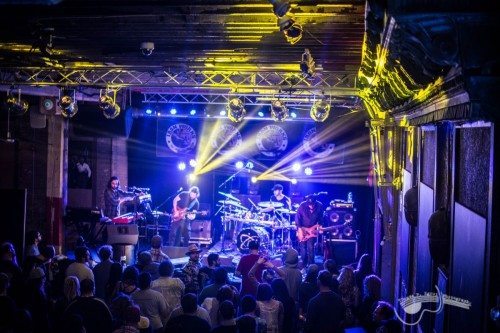
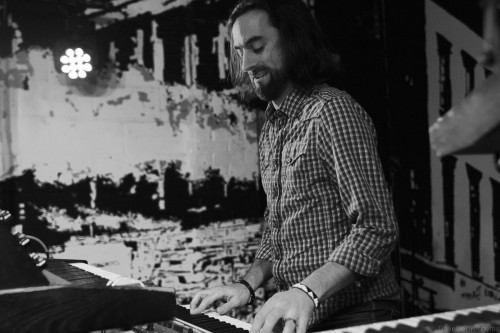


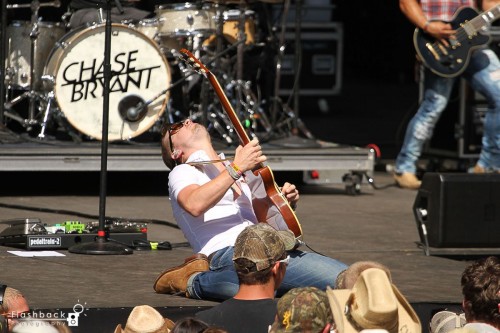
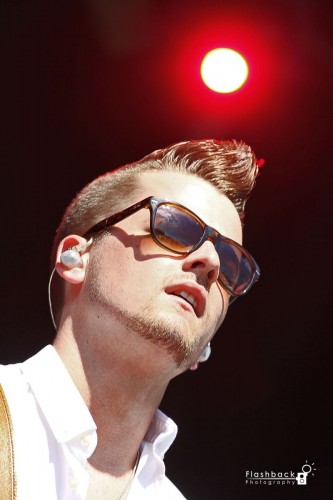

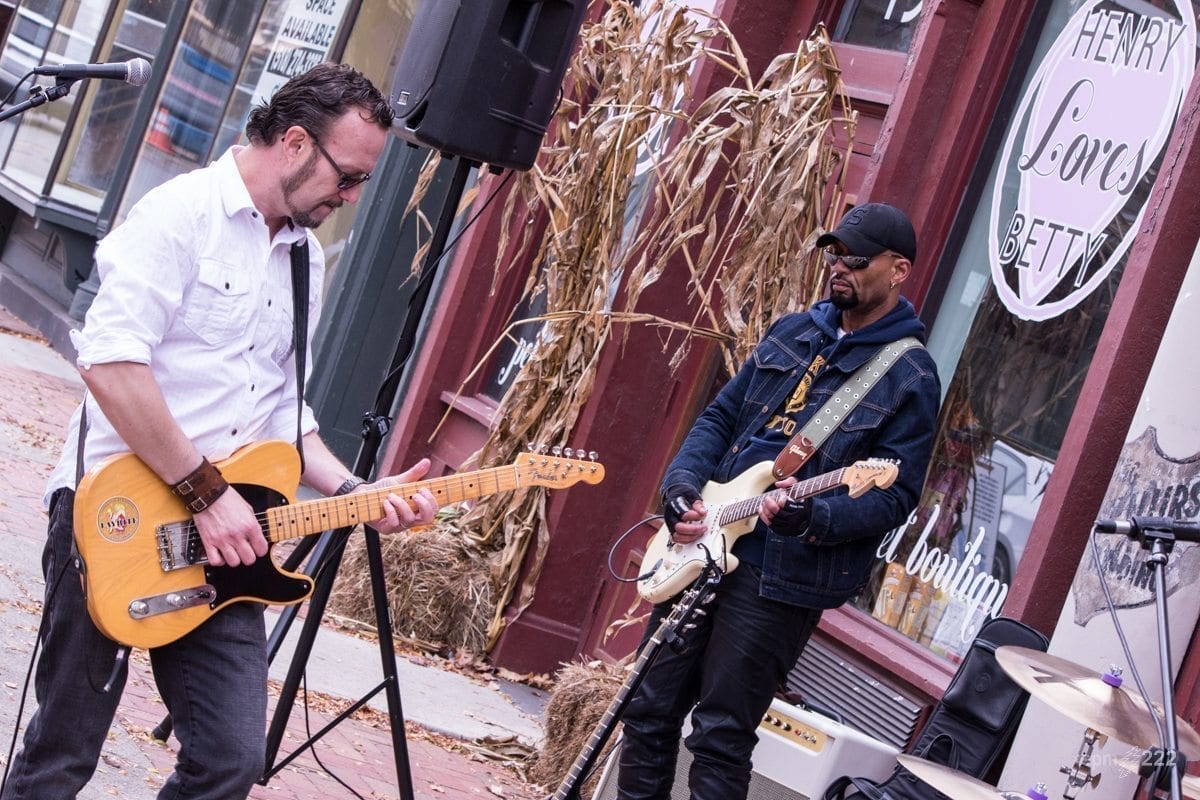 The band didn’t quite start as a band; rather a solo act of Joe Duraes with a regular residency at the Peekskill Coffee House and a few other small gigs here and there. It was early 2014 when things finally lined up and clicked to bring together a group of talented musicians to play the songs Duraes had previously written and work on new material as a band. Currently, Joe Duraes and The Skills is Joe Duraes (guitar, vocals), Rodman del Castillo (lead guitar), Steve Geller (bass/vocals), and Kevin Hupp (drums).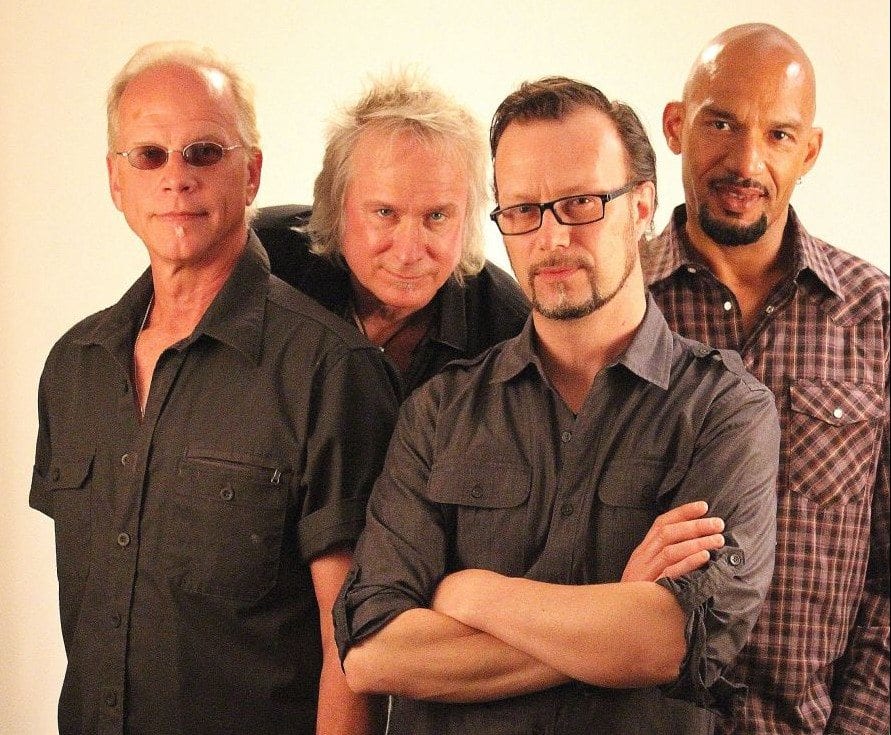
 Gordon added that his daughter has been a big inspiration for a lot of the lyrics he’s written lately, and added that Tessa also influenced some of the writing on Phish’s most recent album, Fuego.
 So in his two bands, Gordon plays with two different guitar monsters in the jam band scene in Murawski and Anastasio. On the surface, both guitarists share some similar themes and styles in their playing, but Gordon did his best to explain the differences between the two.
 “I loved that show,” he said. “The sound at the venue is conducive to what we do and it’s very technical. A lot of times there are different challenges at venues like unpredictability and that can make a lot of things pretty hard. We already have enough to think about and the Egg is just so easy to play. I can hear it all, both the loud and the soft, and it all resonates in a very controllable way.”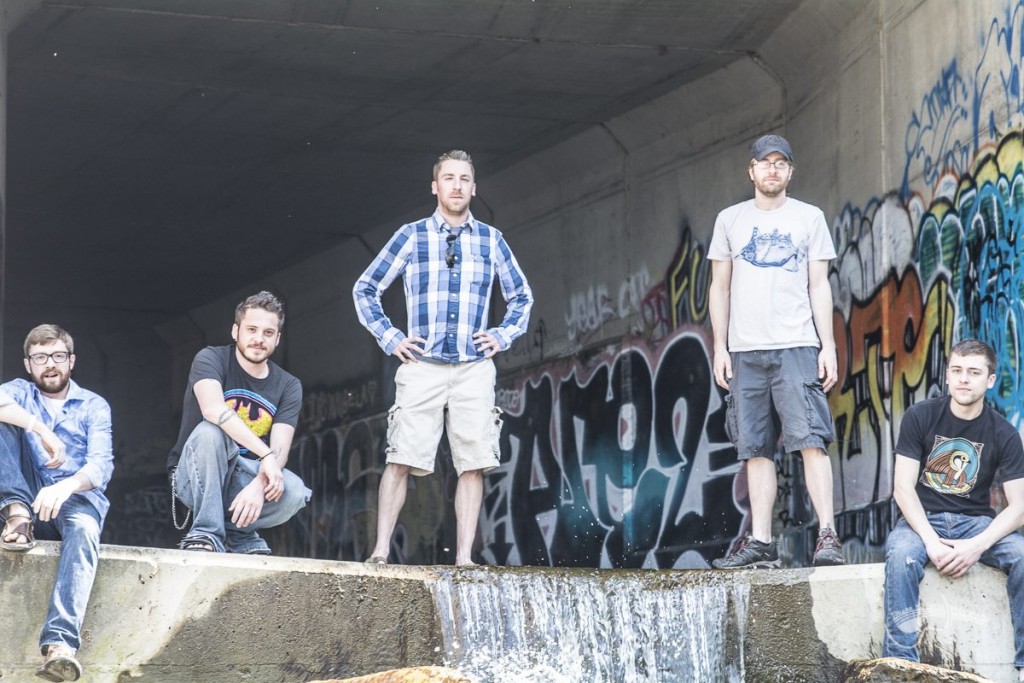
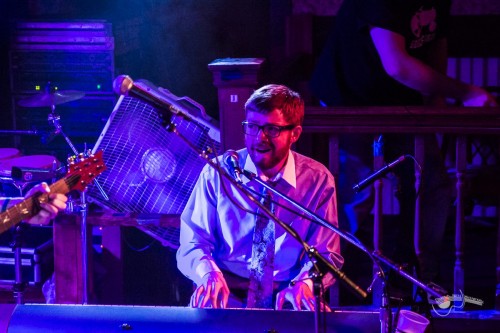
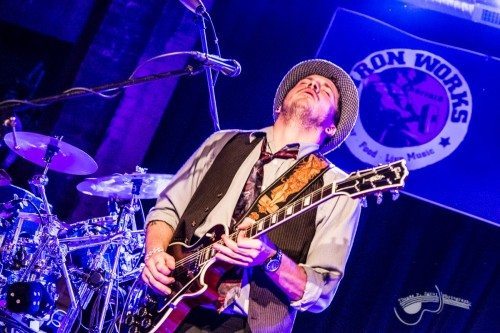
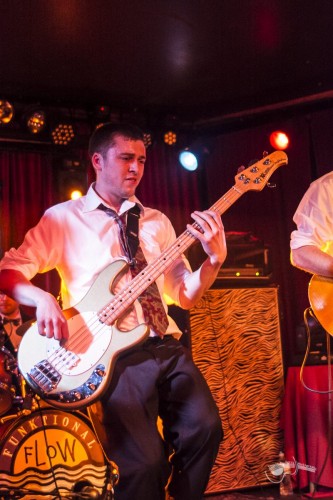 JE: I’d say anyone we play with in the area too.