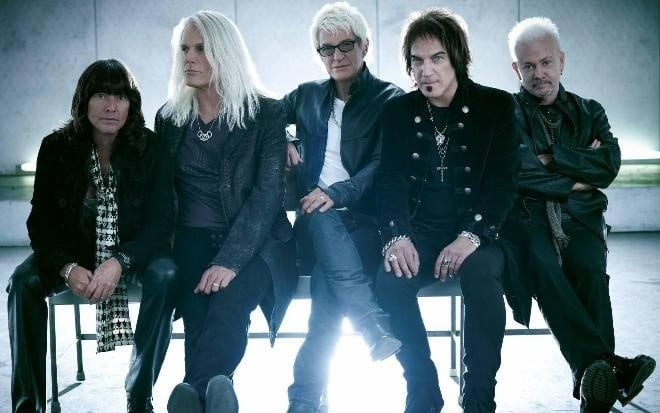
Ray Paczkowski, the bearded, bespectacled Vermonter behind the keys in Trey Anastasio Band, and is a hard man to track down. Having first played with TAB in the summer of 2001, ‘The Milkman” has been a staple of Stage Left, holding down the organ, clavinet and keys and adding funk to the well-rounded sound of Anastasio’s side-project.
Paczkowski is also one half of the duo Soule Monde, alongside drummer Russ Lawton, whose funk blend infuses jazz elements and Brazilian and World music themes for a full bodied sound.
Currently on Fall Tour with Trey Anastasio Band, Paczkowski and drummer Russ Lawton recently released a new EP, Smashed World. This June at a music festival in the Berkshires, Ray found time to sit down and have a conversation with NYS Music about his music.
Pete Mason: How did you get your name “Milkman?”
Ray Paczkowski: I worked on a dairy farm for 10-12 years when I was first in Vermont, doing gigs and milking cows. Trey always thought that was funny.
PM: When did you first start playing piano?
RP: I took piano lessons as a kid and started playing out in various projects. I always wanted to just play piano but you can’t haul a piano around, and digital pianos I just hated. Then I started hearing Jimmy Smith, (John) Medeski, and those guys and the sounds that they were getting out of that instrument, it was just so cool and I found that the Hammond has the same quality as a piano and everyone is different and every night there’s some kid of sound that pops out and that’s when I started doing it. A guy I worked with had a Hammond and just said take it.
PM: When was this?
RP: Early ’90s
PM: How did you get on Trey’s radar along with the Vermont musicians that have made up Trey Anastasio Band, particularly on your first tour in Summer 2001 with fellow Vermonters Jennifer Hartswick, Dave Grippo and Andy Moroz?
RP: I was in a band for a long time called Viperhouse and the lead singer, Heloise Williams, did some work with Trey, and we were kind of on a similar circuit, Phish had just started taking off, like we would be playing a club and they’d be next door in the arena. We would see them all the time, it’s Burlington, it’s a small musical community. I would play with Vorcza, a jazz trio and Trey would come listen to it and when he decided to put a band together, he asked me to do it.
PM: What was that first meeting like?
RP: We were doing a gig with Viperhouse in Winston-Salem, NC at Ziggy’s and they were playing next door in the arena. We went over to their show, they came over afterwards and he mentioned that he was thinking of putting a band together and said if I was ever interested and I said ‘Yeah’, but never really thought about it after that. A year later he showed up at a gig I was playing and asked me to do it. I thought about it for like five minutes and said ‘yes’ (laughs).
PM: What were those first shows like for you on the Summer 2001 TAB tour?
RP: It was at a whole other level with bigger shows, a full crew, and it was kind of bewildering going from just driving around in a van to a full scale operation. It was really fun with such a big band, and at that time I was playing in a trio and they had a much smaller sound, so fitting into that thing (with TAB) it was interesting, it was really cool. It was more orchestrated, I don’t know what the word would be exactly. I liked everyone and the music was great.
PM: Did you and drummer Russ Lawton know each other before playing together in Trey Anastasio Band?
RP: We had met here and there but I only knew him as a drummer. I didn’t meet him until we were playing together.
PM: So Soule Monde formed directly out of TAB?
RP: Yup.
PM: What were you seeking to create with the side project?
RP: I live in Vermont and Russ and his family had just moved here, and they were in the next town over. He called me up one day and said “I know this place that has a Hammond organ, let’s go there and make some shit up.” So we did, just kind of went from there. That was maybe 2008 or so.
PM: One of your first shows was a late night show in a cabin at StrangeCreek Campout. It was an unknown performance, knowing that two musicians in TAB were performing under the name Soule Monde, making for an intimate performance.
RP: I remember that, that was one of the first shows. We would just play at this place in Vermont and just make shit up.
PM: And now you’ve gotten to the point where you have songs and a wide array of compositions, have released one self-titled album and plan to release a new album this fall (the recently released Smashed World)
RP: Yeah we’re at a ‘one album every three years’ pace these days.
RP: It was just kind of random, we were driving to New York and I thought ‘Let’s call Trey, see if he’s around and wants to come to the show.’ We thought maybe we’d see him and hang out a little bit. He said “Mind if I bring my guitar?” I’m never one to ask, ‘Hey, come sit in with us?’ so he came down and played the whole second set. It was great!
PM: How has Soule Monde been on tour and the audience response over the past few years?
RP: We don’t travel much, do a lot of local stuff, like Disc Jam, that has a close range to Vermont, but the response has been good all around. With the new album, we’re trying to push it up to the next level, whatever that might be. It’s been really good and people are coming out. I think that not many people know the name Soule Monde, who or what it is. It’s really a factor of just hammering on the name even though we’re not on the road a lot, months out of the year.
PM: You and Russ being out of Vermont and knowing the local scene, and even the more rural areas, are there any musicians in Vermont that people should know about?
RP: I know a lot of players that are involved in various things, from folk type stuff to soul. I know a lot of musicians, but not so much the bands they are in. There’s a lot of good shit coming out of Vermont.
PM: Is there any music that you are listening to right now that is catching your ear?
RP: I have a 15 year old daughter and she turns me onto all this electronic type stuff.
PM: There must be an interesting connection between that genre and playing keys.
RP: It’s a cool genre, I don’t know that much about it. As far as listening to music, I’m a radio guy. When I’m traveling around, I’ll scan through things and if you’re in any area with college radio, you’ll get this weird stuff and find some new music.
PeteMason: As you start your east coast fall tour, you are playing a variety of venues – larger rooms such as Higher Ground in Burlington, 8×10 Club in Baltimore, Gypsy Sally’s in Washington D.C., and more intimate rooms like The Lily Pad in Cambridge, MA, and Underground Arts in Philadelphia. How do the listening experiences for the audiences compare in different environments?
HollyBowling: The rooms I’m playing this tour definitely have a lot of variety! It’s less about size though and more about the feel of the venue. I’m playing some spots where it’s unusual to see a solo piano act – places where you’re more likely to see a full band and spend most of the night dancing – and then I’m playing some spots that are more of a mellow environment, places where you might usually see jazz or classical music.
The contrast between them is something I’m really looking forward to. They both have their strengths. Sometimes I think the setting that classical or jazz music is played in can be hard for people to get into. It can be a little restrictive, a little stifling – you can’t move around during the show and there’s a pretty strict concert etiquette. The freedom in clubs that usually play host to rock music can be really refreshing – for the audience but also for the performer. I think it encourages you to play a little looser, to take chances.
But at the same time, there’s something really special about a room full of people sitting down and intently focused on the music together like what you get in a concert hall or a quiet jazz club. No distractions, no socializing, just a really intense inner musical experience. It can be really powerful even though people don’t really express the emotions the music inspires in them as outwardly in a place like a symphony hall the way they would at a club or an arena show.
You can really get lost in the music in a different way and just get swept away. Especially with as many distractions as there are at music events these days, and in life in general, it’s pretty great to find a space to just completely immerse yourself in experiencing music for a few hours and give yourself over to that entirely. So I’m excited to be playing both types of venues on this tour. I think the contrast will be really interesting and each setting will take the music in a different direction.
Pete Mason: Are you viewing these venues as offering a balance between rock club and jazz club?
Holly Bowling: There are definitely some venues out there that have one foot in each world and I’m always on the hunt for those. They’re few and far between but really lend themselves well to the music I’m playing. I mean it’s not really classical and its not really rock, so where do you put it? I think it can be enjoyed in a lot of different settings – and actually, pushing the boundaries and expectations of what you can do in each venue setting is something that’s really interesting to me – but the rooms that are a crossover between the two are really a great fit.
I love to see music in places where you can be comfortable and have some freedom but the focus is also 100% on the music and there aren’t a lot of distractions. It can be a delicate balance to strike but those rooms and crowds are the best. It’s where I most like to see music when I’m on the audience side, and where I like to play best too.
Pete Mason: How have you found yourself pushing the boundaries so far in your performances this year, and in what way, if at all, do you tailor your performance to setting?
Holly Bowling: This year has been interesting because it’s been kind of a whirlwind of experiences. My first album just came out a few months ago and I spent a lot of time leading up to recording it working out arrangements very carefully and doing a lot of meticulous detail work. Then I started playing shows in support of the album and it took a little while for the arrangements to settle and have a little more room to breathe. Whether it’s pushing boundaries or just allowing things to progress and evolve naturally at this point, I’ve enjoyed letting things open up more as the year has gone on. Allowing myself the freedom for improvisation during shows and even letting the arrangements stray further from where the jams usually go and letting them go off the rails a little… that’s been really fun.
Also, I’ve been playing around with segues in the setlists and a different incarnation of the “jam transcriptions” like what I did with the Tahoe Tweezer. I saw a bunch of Phish shows this summer and it was such a spectacular tour musically that, by the end, there were more memorable jams that I really wanted to study than I could possibly ever tackle if I was transcribing and arranging them all from start to finish. So I started playing around with the idea of just pulling out a peak moment from the jam – the theme that you get stuck in your head for a week and can’t stop listening to – and transcribing and arranging just that part. And then I’ve been weaving those into the setlists. It’s sort of an homage and a thanks for the music we got to enjoy this summer, and also a bit of a retrospective of some of the transcendent musical moments from this tour.
PeteMason: Can you give a few examples of the ‘peak moment from the jam’ that you have transcribed?
Holly Bowling: Sure, here’s a story of how you know what the peak moment of a jam is. I came back from Phish’s summer tour and woke up in the middle of the night with a fragment of music stuck in my head. Clearly Phish, and clearly from a recent show, but I couldn’t place it. Couldn’t sleep. I sang the melody to my (attempting to sleep) husband and he knew it instantly and finished the phrase. The next morning (with the melody still stuck in both of our heads) we figured it out – 17:00 – 18:00 in the Mann Twist. I’ve listened to that jam a lot since then. Peak moment for sure.
Another one is the G major section of the “Down With Disease” from Colorado this year, the build from the 12 minute mark on. I mean the whole jam is great, but from 12 minutes on it just blasts off into bliss.
It’s the parts of the jams that you can sing or play a little fragment of and a good portion of Phish fans will recognize it even though it sounds nothing like the original song. I mean, it’s pretty nuts really… I really don’t know of another band where you could play 30 seconds worth of one particular live version of one of their songs, on another instrument, in a different key, several years after the fact, and people in the crowd would instantly recognize the theme. Every time I’ve teased a theme from one of Phish’s jams, people come up to me and know what it was. It’s just nuts. I think it’s the coolest thing what Phish inspires.
Pete Mason: Regarding your recent setlists – you are playing more Phish songs and transcriptions, have been interspersing a few teases and even a few Grateful Dead songs in the mix. Is this a sign of increased comfort as a performer?
Holly Bowling: Definitely. A lot of the material I was playing earlier this year was very new at the time. It’s hard to be playful and creative with something you’ve just gotten a handle on. Now that the songs I arranged for the album are old friends, I can explore new things to do with them. It gives you a more solid footing to launch into whatever else you want to do.
The Grateful Dead songs made their way into my shows by accident. I was planning on doing one show, the last show of my fall tour (in Pittsburgh) that would be Phish and Dead songs interwoven with each other, just as kind of a one-off thing. But when I started working on learning the songs, I fell in love with them and kept finding myself ending up there no matter what I was playing. And there was no reason to fight it. They’re beautiful compositions and very different from some of the more technically intense and high energy Phish songs. I like the contrast and the ebb and flow.
PeteMason: If the songs on the album are ‘old friends’, what ‘new friends’ can fans expect to hear this fall, on Jamcruise and into 2016? Surely you’ve had your share of suggestions from fans
Holly Bowling: I like surprises so I won’t reveal much but I have been working on some new Phish arrangements that have been both challenging and rewarding. I just finished learning “It’s Ice” and it was the toughest Phish composition I’ve learned for sure. There’s a lot of different rhythmic patterns and cycles superimposed on each other which is tricky enough when you’re locking several instruments into sync together, but having them split between two hands was really tough at first! I actually ended up color-coding the score I wrote to help keep the patterns straight. My score for the middle section (the part that’s sort of percussive and dissonant and full of repeating rhythms) is full of purple notes, blue notes, green notes… that part took forever to work out but was incredibly interesting to study and analyze. And there’s definitely some other new arrangements I’ve been working on. Albany will have some debuts for sure!
I am especially excited about playing The Massry Center because it’s so different from the venues where most of us often see music. The acoustics are incredible and they have a Steinway concert grand that is going to be just amazing to play. I think they may have to pull me away from it at the end of the night! I’m actually going to play three sets at the Albany show because I’m so excited to play this music on a piano that really expresses the full range of what the instrument can do. The Tahoe Tweezer jam transcription is really meant for a piano like this – where you can unleash a dark tone from the instrument in the heavy sections but you can also find a sweet, delicate sound and create an ethereal resonance in the middle part of the jam. I can’t wait.
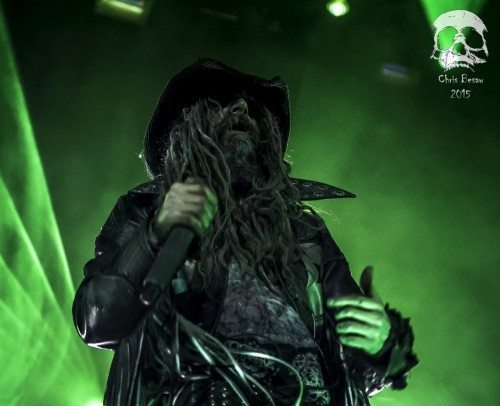
The darkness ascends quietly like a phantom upon the southern NY town of Binghamton, the dead leaves are falling, and there is a slight spine tingling chill in the air. It’s October! Is there a better way to usher in in the Halloween season than with the man who makes all your heavy metal horror dreams come true? Yes folks, that’s right Rob Zombie’s nightmarish heavy metal and mayhem show made a stop at the Floyd L. Maines Veterans Memorial Arena (formerly Broome County Arena) last week.
Fans of all ages were lined up at the venue getting into the spirit of the season. Some were dressed as ghouls and other grotesque creatures; there was even a very impressive Captain Spaulding walking amongst the concert goers! If you’re a fan of Rob Zombie, I hope you know who Captain Spaulding is.
The show opened with Rob Zombie’s drummer DJ Ginger Fish donned in a creepy skull mask showing off his DJ skills. DJ Ginger Fish spun some high energy mixes that included Rammstein, Pantera and even a mix of 50s Doo Wop. Even though he was struggling to keep his mask on the entire time, he still spun a very intense set that the crowd was into.
The lights go out, the smoke begins to roll out onto the stage that is adorned with classic Universal horror movie monster backdrops; 1000s of fans are chanting ZOMBIE! One by one the band quietly creeps onto the stage; John 5 looks terrifying in an LED lit gas mask that I can best describe as a robotic human fly; bassist Piggy D is sporting his Dracula look; Ginger Fish looks ready to dominate the drums; Rob Zombie slinks to center stage, his face hidden beneath a pile of hat and hair. The crowd erupts in a massive mosh pit with bodies flying in the air as Zombie and crew tore into their hit “More Human Than Human.”
Without hesitating they ripped right into “Superbeast” and “Never Gonna Stop (The Red, Red Kroovy).” The band delivered a super high energy set and even played a few covers including “Am I Evil” by Diamondhead and in the words of Rob Zombie, “Since we’re in NY, f@ck it let’s do it,” the band caught concert goers by surprise by unleashing a killer version of the Ramones’ anthem “Blitzkrieg Bop.”
The band took their bows, said thanks and left fans crazed and excited from their explosive performance! Overall, Rob Zombie and crew never disappoints!
Also prior to the show I had the honor and privilege to sit down and talk with guitarist extraordinaire John 5. John 5 was very welcoming, funny and sincere. We chatted about what inspires him as a musician, touring and his favorite horror movies. Check out the interview and enjoy!
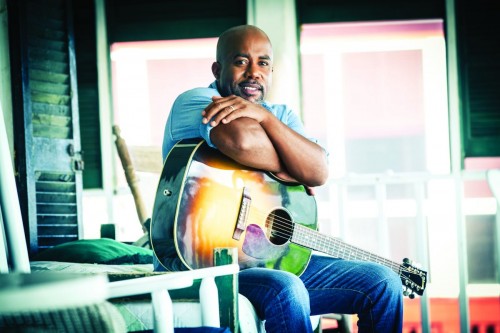
Sometimes a conversation enlightens you and broadens your ability to appreciate things even more so than you already do. This was the case after speaking with Darius Rucker. Known to most as the lead singer to the Grammy Award winning group Hootie and The Blowfish, Darius Rucker had already made his mark on music lovers nationally in the genre of rock/pop.
Why in the world would an artist of his caliber decide to switch genres and “go country?” How would the country genre accept him? What was the motivation behind this need to follow his musical journey down a new road?
I had an opportunity to speak with Rucker about his career, his beloved Charleston, South Carolina, and what motivated him to make this move towards what has become his true calling.
Kathy Stockbridge (KS): Hi Darius, thank you so much for speaking with us at NYSMusic. We are really looking forward to your shows here in New York and want to give you a warm welcome.
Darius Rucker (DR): Thank you.
KS: You were born and raised in Charleston, South Carolina. Were you raised in a musical household?
DR: Well everyone in our house sang. We sang a lot. Especially my mom. She sang all the time. And my sister as well. There was always music being played whether it was the radio or the big ol hi-fi we had. So yes, I would say it was a musical household.
KS: What are a few of your earliest influences in music?
DR: Early on for me Al Green was just everything. I can remember being a little kid (around 4 or 5) and hearing his voice and hearing him hit those notes. I remember thinking ‘that’s what I want to do. I want to do what Al Green’s doing’. He, as well as Gladys Knight and the Pips. Then when I got a little older, like 6, 7, 8, or 9 I started really getting into AM radio and that’s when it just went across the board. The Opry shows, Kenny Rogers, or Cheap Trick. Anything I could hear (influenced me), literally anything.
KS: I, like many others, have followed your career since Hootie & The Blowfish days. You are one of those artists that have been able to successfully cross over from rock to country and you did it so seamlessly. Talk to me a little about that transition, and what made you decide to go from a very successful rock career into a new genre such as country music.
DR: You know, we had been touring for a while. We had been on the road pretty much every summer since we all got out of college. One of the band members mentioned that they didn’t want to do it every year any more. Ever since the late 80’s I was big into Foster and Lloyd. Then Radney Foster came out with his solo record Del Rio TX 1859, and I just remember hearing that record for the first time and after hearing that record I would tell anyone who would listen, that I was going to make a country record some day. I had never thought of singing it, until I heard that record. I just wanted to sing that record. I wanted to sound like that. I wanted to be that. So I said, someday when I get the chance I’m going to make a country album. When we decided to take a break, I was like, I’m going to make my country record. And to be honest with you I didn’t think I could get a record deal.
KS: Really?
DR: I wouldn’t have given me a record deal. I mean why? There was this African-American guy that just came from a very successful rock band, they had a great run and are out touring, so why would some country guy go ‘yeah I’ll give you a shot’? I wasn’t even looking for a record deal to be honest with ya. I was going to do it here in Charleston with my buddies. And then my manager got me a record deal with Capitol. It was fun making the record and then all the hard work started with the tour; going to 10o something radios stations, shaking hands, saying hey, and playing for six people in the cafeteria or the conference room, a lot of work but all in all it was fun. I had a great time and I’ve made some great friends who are still great friends on that tour. And finally we convinced them (the radio stations) that “Don’t Think I Don’t Think About It” was a song that they should play, so they did.
KS: I have to tell you, to me it seemed very seamless. It was one of those things that just seemed like it was meant to be.
DR: I think so.
KS: So right now you’re touring with your new Southern Style album, which is your fourth solo album. Talk to me a little about this new album and what you hope listeners will take away from it.
DR: I hope they take away how much fun I’m having in country music. The songs are always important to me, that’s why I write so many, and to come down to such a small number of thirteen when you write 50 something, it tough to decide but you want great songs on it. You can expect great country music on it because it’s a lot of fun,this album. And it’s been great playing it live and seeing the crowds singing along with the songs.
KS: Is it tough to choose which you decided to put on an album? And the others, do you say I’ll put these back here because I’ll put those on another album.
DR: We keep a lot of them, but some of them we try to get cut by other folks. Every record there are 50 songs I think are great, that I love, but I just can’t cut an album with thirty songs.
KS: Right, exactly. Now I have to say, for several years I lived in Charleston and it became “my happy place”. When you live there it becomes something very special to you. It’s rich with history, culture, architecture, and has a peace that is tough to put into words. When listening to “You Can Have Charleston”, I think you captured some of that emotion I feel towards the city. Talk to me a little about that song and some of the others from that album that focus on that area.
DR: Yeah, Charleston, that’s a great way to say it. It’s “my happy place” That’s a wonderful thing you just said because I think it’s the most wonderful place in the world. I’ve been a lot of places and this is where I want to be. I choose to live here. I can live anywhere in the world I want, but I choose to live here, because this is where I want to be. “You Can Have Charleston”, is such a great song. I love it. When Frank Rogers brought it to me, I thought to myself I wish it was a little more positive but the positiveness of the song for me is how much he loves the city and can’t believe he is leaving it. He loves her and he just can’t stand it, as that’s the last thing in the world he wants to do. That beginning verse with the topsails and the Clydesdale, that’s my life. That’s my city.
KS: In 2012 you had an experience where you joined Old Crow Medicine Show on the stage at The Grand Ole Opry where you sang a little song that was originally sketched by Bob Dylan and modified by Ketch Secor of Old Crow Medicine Show — Talk to me a little bit about that experience.
DR: Oh that was so great. Those guys have been so great to me. We had played the Opry two or three times together where we played “Wagon Wheel”. I can remember after I cut it and started hanging with those guys, I was talking to Ketch and he said ‘I heard your version of it and I love it’. I was like ‘thank you, that means a lot’. Their version is just perfect. And he was like ‘I realized when I wrote that song a long time ago I was going to have to play that song for the rest of my life. So you better look out, because you are going to have to play that song for the rest of your life’. Sure enough, he’s right. Every time I play a country show, I play that song. It’s so cool to have a song that iconic, and to just be a part of that song and the greatness of that song, it deserves to be in the Library of Congress. It will always be one of those american classics. Long before I remade it, it was just a perfectly great song. Written by two guys at two different times of their lives, and is just a wonderful piece of work.
KS: The interesting part of this is that the original lyrics were just a few lines jotted down by Bob Dylan and then Ketch Secor picked up and expanded upon it making it the iconic tune we know today. That song has actually taken you on quite a journey. Talk to me a little about when that song hit and what happened afterwards.
DR: We released it, and then all of a sudden it took off. It took off. You know, we play it everywhere and people love it, my fans just love it. It was one of those songs that you stand out of the way and let it happen.
KS: I can remember the night you received the Grammy for it. It was an amazing evening for you and the song. That same year you were invited to become a member of The Grand Ole Opry. Talk to me a little about that evening.
DR: When I first met with Mike Duncan to sign my record deal I told my management I want to play The Opry as much as I can because it’s important to me to some day be a member of The Grand Ole Opry. I want to be a part of that family. And we did, and we worked hard and when they asked me to be a member of The Grand Ole Opry that was probably the first moment that I thought ‘okay, this is really happening. I’m really a part of country music’, and it was a great feeling. It is truly amazing to me that they kept that from me for a month. My kids knew for like six weeks and didn’t tell me that.
KS: How did they do that? That’s so impressive.
DR: Yeah, they were like 8 and 12 back then, and they didn’t tell me. You’ve got to be kidding me? I’m there and I’m singing my song, and Brad (Paisley) comes up and he says that to me, and I look over and all my friends and family are there. I was like ‘wow, how did you pull this off?’ It was great!
KS: That’s wonderful. And speaking of wonderful, for some that may not know, each year you get back together with the guys from Hootie & The Blowfish to reunite to perform. Tell my readers why this is so special.
DR: Oh it’s a big thing for Charleston. There are people who have seen us for years around the country, some may live here, some even plan vacations around it. They come down to Charleston for the week, see our shows, and in turn we get to help our community. The great things we get to do, for example, the roundup where we get kids and give them haircuts, and dental exams, and eye exams, shoes, backpacks, and all the school supplies they need. And all of this comes from that show. So we keep doing it so that we can help out.
KS: Now you’ve done a Christmas album, Home For The Holidays. What prompted that particular album?
DR: Well I’ve been asked several times by people if I had thought of doing a Christmas record. I had thought about it, but didn’t think it was time. So last year when it was brought up, I thought it was time. So we sat around and we said ‘let’s make something old school’ like those Christmas records we used to listen to. So we tried to make something cool and laid back, and great cool arrangement. I’m so proud of that record, so proud of it.
KS: As a journalist I have this long list of people I’ve always wanted to interview, such as yourself. Who is on your bucket list, what is something you still would like to accomplish?
DR: Ohhh…good question. Lots of crazy stuff. I still want to be on the big screen at The Superbowl, I still want to meet Sir Paul McCartney, I still would love to be in a Martin Scorsese movie, see I want crazy stuff.
KS: Seems doable to me and I hope you can do all of those things! Thank you again so much for speaking with us and we can’t wait to welcome you to our area this October.
As I hung up the phone, I couldn’t help but feel like I had just made a new friend. What a great guy. What an honestly true human being. I had already felt a kindred spirit with him being that he’s from “my happy place”, Charleston, South Carolina. After our conversation though and learning so much about him as a person, as well as an artist, I truly admired his spunk, his vision for his life, dedication to achieving his dreams – TWICE, and his overall genuine demeanor.
It was a few weeks later after I conducted this phone interview that I had the chance to watch another interview Darius Rucker did with Dan Rather for his show, The Big Interview. I saw once again the same genuinely decent person speak of his journey, sharing intimate parts of his struggles, his losses, and victories. When asked by Dan “Why do you think it’s working for you in country?” Darius replies, “..I think the main reason is that people realized how real it was for me. It wasn’t about money. It wasn’t about trying to be a superstar. I was going to do this in the basement with my buddies. It was about the music. I wanted to be country. I wanted to play country music”.
Personally, I can’t wait to see his upcoming show and see my new Charlestonian friend rock the country music as he has rocked all the music he’s performed all these years. I strongly urge you to take in one of two shows he will be playing here this month in New York to see what I’ve seen. He will play Oct. 22, at the Oncenter War Memorial in Syracuse. Then he will trek on down the road to Albany on the Oct. 23 where he’ll play once again at the Times Union Center. Joining him on his Southern Style Tour are newcomers David Nail, and Cam. Both amazing artists that are blazing up the charts with hits.
If I had to describe Darius Rucker I would tell someone he’s a musician that is truly a risk taker, a trail blazer, a door opener, an odds beater, a hard worker, and a genuinely kind man. It was my pleasure interviewing him, and I can’t wait to see this low country fella tear up the stage living the dreams he always wanted and playing the music that was always in his heart.
Rather than shaking things off through catchy choruses and lip-gloss beats, Lilly Hiatt heals old wounds with poetic confession and shadowy synths on her second record, Royal Blue, released in March.
Photography by Gregg Roth
Hiatt, as the sole writer on the album, conjures grim daydreams of soured love and self discovery that float through 12 tracks rooted in traditional folk and alt-country, but draw on Hiatt’s favorite 80s and 90s influences (think The Pixies, the Breeders, Dinosaur Jr.). Hiatt’s sweet, soft voice sings of a starry-eyed woman scorned and she slays through the wreckage with clever lyrics, because that’s what any good woman with her musical lineage would do—she’d move on and write a song or two, as she proclaims in the title track.
It’s Wednesday afternoon and Hiatt dials in from East Nashville; she’s down-to-earth and speaks with the same girlish honesty that’s reflected in her songs. At the moment, she and band mates—Beth Finney on lead guitar, Jake Bradley on bass, Luke Schneider on pedal steel guitar, and Jon Radford on drums—are rehearsing for a 10-date tour. Several of her east coast shows, including an October 8 stop at the Bell House in Brooklyn, are in support of Austin musician Bob Schneider who Hiatt has never shared the bill with but admires for his similar sense of songwriting humor. “Although, I’m getting tired of writing about my struggles,” she quips. But capturing a perfect Polaroid of real life just comes natural to the rising singer-songwriter whose father is iconic musician John Hiatt. “The biggest thrill of all is the initial coming up with the words; it’s some sort of relief for me,” she says. Hiatt confesses that she’s actually staring at her acoustic guitar, a hand-me-down Martin from her father that is her songwriting muse and never leaves home. “I’ll pick up my guitar and start strumming, or I’ll think about something I want to write about or think of a line that I want to put somewhere,” she says of her method. “I’ll sing something that I don’t know where it comes from; it’s decided, well, OK this is how you’re starting it clearly because I can’t stop singing that one thing, and then this helps me navigate where the rest of it goes.”
And when it comes to laying down tracks and playing them live, Hiatt doesn’t shy away from giving her band the creative rein to guide her songs to places she never imagined, she says. Case in point: “Far Away” had a more folk element before the band’s influence evolved it into a riff-y power-pop piece. “We’re in this singer-songwriter twang-y world and there’s sometimes an unspoken feeling of things you’re not allowed to do for this kind of music, but the band finally felt the green light from me that said screw that,” she says. As for Royal Blue in particular, a progressive follow-up to 2012’s more loosely country-rooted Let Down, Hiatt says the record’s sound is a result of working with analog studio producer Adam Landry (Deer Tick, Diamond Rugs) and a natural gravitation to exploring the darker more dissonant sounds. “We’re a four-piece band of all rockers and we have a similar mentality, but we’re not rough around edges,” she says. “My drummer now totally grew up on punk rock and my guitar player is into psych-rock. When you get the right people together and let them do their own thing you hear that come out a little and I like to encourage that.”
As for her own favorite band, Hiatt says without hesitation, Pearl Jam (she even recently guest hosted on the band’s Sirius XM radio channel). “They have been a band for so long and have been a part of my life for so long. I just have this immense admiration for them and it awakens something in me that I can’t even, it just feels like home when I hear them,” she says. “They have such a base of hardcore fans, and I know because I text with some of them; we’re giggly texting about Pearl Jam and it’s so funny because I think they’re really good to their fans and they make you feel like you’re part of something.” Hiatt is also influenced by other modern-day front women taking risks in their music like Bully’s Alicia Bognanno and Jenny Lewis. “I really look up to Jenny [Lewis]; she always takes chances and she’s so honest in her writing,” she says. “I just love her, and I freaked out for her album [Voyager]; it just brought out something different, and it was awesome.” And Hiatt plans to continue forging her way and not feeling limited in her work. “Records are records. For me, an album isn’t so much a massive representation of this is me the artist, but more of a snapshot of a period of time of what I’m doing right now because there are so many components of being a creative person. It’s hard to hone in on what you do best no matter what profession, but if you’re genuine about things and you work hard it’s going to pay off, or maybe I’m just naive,” she laughs.
Photography by Gregg Roth
Although she’s only three years into her professional career under Athens, Georgia-based label Normaltown records (and still held her supermarket chain day job until last year), Hiatt says she always had this “weird understanding” that she’d end up in music. “In the back of my head I knew this is what I’m going to do, but I didn’t know how because I’m shy,” she says. “I would write in my room and sing and record, but I never performed until toward the end of college… Some people can shake a tambourine and work it and that just doesn’t come natural to me; I’d literally crawl out of my skin before every show and it was excruciating, but I knew I was going to go through with it and that’s now dissipated into a more OK-let’s-go energy that is fun to channel into the show… I think it’s important to be humble.” After graduating from Denver, Hiatt returned to her Music City roots and admits she is still “building my thing” and searching for ways to tap into her creative rhythm. “Writing, or just growing as a human, is an ever-evolving thing, so the goal is to find a spot where the process is effortless,” she says, noting that she admires writers like John Prine and Guy Clark. “When I’m in vulnerable open thought is when the best stuff happens, but I’m trying to write new stuff right now, and I feel like Royal Blue went in a specific territory, a little self indulgent, which is fine, but I’ve gotten so accustomed to writing about painful things and changes and now I’m not so much in that spot. I used to wait until I’m feeling it, but you have to generate that for yourself sometimes; there’s a discipline involved, and I’m trying to look out a little more and figure out how to find the inspiration from all the positive things.” While Hiatt may ponder about getting things right, it’s clear she’s going to be just fine in this “mean machine, this lonely world,” regardless that she’s somebody’s daughter.
Lilly Hiatt Tour Dates 10/8 The Bell House, Brooklyn, NY* 10/9 Ardmore Music Hall, Ardmore, PA* 10/10 Mr. Small’s Theatre, Millvale, PA* 10/11 Culture Center Theater, Charleston, WV 10/17 Hill Country DC, Washington, DC 10/22 Southgate House, Newport, KY** 10/23 Rumba Cafe, Columbus, GA** 10/24 Musica, Akron, OH** 11/11 Old Town School of Music, Chicago, IL*** *Bob Schneider Music **Patrick Sweany ***Del Barber
Jubilee Riots (formerly known as Enter the Haggis) made a return trip to Saranac as part of the brewery’s Saranac Thursday Concert Series on July 23. Hailing from the greater Toronto area, Jubilee Riots have made it a tradition to perform at Saranac the Thursday prior to the Great American Irish Festival in nearby Frankfort. While the band wasn’t performing this year’s Irish Fest, its traditional set on the brewery stage attracted many Enter the Haggis/Jubilee Riots faithful.
Jubilee Riots is a band that is constantly working, constantly thinking, always thinking of its fans. The last three albums recorded have all been funded through crowd sourcing. There aren’t many working bands today that can say they’ve been able to produce three straight albums funded exclusively by their fan base. The band’s most recent release, Penny Black, is the first under its new moniker, Jubilee Riots. The first video from this release is an entertaining gospel-like animated take on the song “Trying Times”.
The band began as Enter the Haggis in Toronto in 1996, playing a mix of Celtic and modern rock music. It toured the Celtic festival circuit extensively, building a sizable and loyal fan base along the way. Over the course of seven studio albums, two live albums, a performance on Regis and Kathie Lee and a live DVD filmed for PBS, the band’s sound transitioned to where the Celtic sound was becoming less prominent. The Celtic core was still there but listening to each successive album revealed an evolution to a more mainstream northern roots rock sound. To get a true feel for this transformation, one must listen to the catalog from its beginning to the present release. Doing so reveals a band that has matured in songwriting style and musicianship while still maintaining the feel good presence of the original Haggis sound.
Eventually, a change in the style of music, prompted the band to consider a name change. This was something that didn’t come easily to a band with an already established and enthusiastic fan base. However, as piper/trumpeter Craig Downie, the only original member of the Enter the Haggis, mentioned in the press release announcing the name change, “We toured and recorded as Enter The Haggis for a long time, but that name no longer represents the music that we’re making.”
On Sept. 8, 2014, it became official. Going forward, Enter the Haggis would now be known as Jubilee Riots. The final show as Enter the Haggis occurred at the Westcott Theatre in Syracuse on Oct. 11, 2014. A show that was billed as Exit the Haggis. To celebrate the one year anniversary of that show, the band is returning to the Westcott Theatre in Syracuse for a show on Oct. 9.
Prior to the recent Saranac show, NYSMusic sat down in the 1888 Tavern with lead singer/violinist/man of many hats, Brian Buchanan, bassist/vocalist Mark Abraham and drummer/percussionist Bruce McCarthy to discuss the band’s direction, crowd funding, technology, the writing process, a little hockey and what thought goes into changing a band’s name midstream. Original member Craig Downie and guitarist Trevor Lewington round out the band’s lineup.
NYSM (to Brian): You’re a Leafs fan, have you seen the news today that they hired Lou Lamoriello as the new GM?
Brian: I hope you’re joking. ARE YOU SERIOUS? WOW! (gives a background on Lamoriello’s background building the New Jersey Devils franchise)
NYSM: He’s got a Utica tie-in as well. He used to be the GM when the Devils had a team here.
Brian: Wow, what a weird combination of people. You’ve got Brendan Shanahan as President, Babcock as coach and Lamoriello as GM. That’s pretty powerful stuff.
NYSM: Speaking of change, how are you guys doing with the name change? You’re not the first established band to do it. The Who did it. They were The Detours and The High Numbers. The Beatles did it. They were once The Quarrymen. So you’re in good company.
Brian: It’s a challenge. We knew it was gonna be a challenge. We didn’t make the decision because we thought it would be the easiest business decision in the world. But, also our fans have really been supportive and have been behind us. I think some people are still really confused, saying “I’ll call myself a Haggis Head til the day I die,” and that’s absolutely fine with us. So in some ways it was kind of an artistic decision more than anything else and it still feels good and it feels like it was the right decision to make…”
[Interrupted by a fan looking for a selfie with the band, handled very deftly by Brian “Good times. Good times.”]
NYSM: Obviously you have a huge loyal fan base. When you started doing crowd funding for your albums, it took you, what, eleven hours to reach your goal?
Brian: The first one, yeah. This last one was just about as good too. And we raised about the same amount of money. It’s incredible. Over three records, we’ve raised over $150,000 from the fans, financing the records, the promotion of the records.
NYSM: So you’re not beholden to a record company…
Brian: No, and there’s not a lot of bands out there that can say that. The crowd funding thing is getting a lot more mainstream and a lot more popular, but you still need the fan base to step up. And I know lots of bands who are objectively bigger names than we are who can’t get crowd funding campaigns off the ground. Because they just don’t have that kind of personal loyalty.
NYSM: Well you guys kinda did that through the ground roots anyway, traveling around, meeting your fans, engaging them…
Brian: True, every fan we have is one we’ve played for and shaken hands with. It’s definitely been one fan at a time.
NYSM: You guys are an easy band to like anyway. You’re so cordial to deal with, taking selfies with fans in the middle of interviews…
Brian: We’re Canadian…(laughter)
Bruce: That’s what we’re constantly telling one another too, “Man, you’re a really easy guy.”
NYSM: You guys are all kinda separated now? As far as where you live?
Brian: I live in Philly now. Three of the guys are still in Ontario. From where Trevor lives to where Craig lives is like four hours and then Bruce is kind of in the middle and Mark’s in Maine. We’re definitely spreading out further and further as time goes on.
NYSM: Of course it’s a lot easier now with technology for you to collaborate, as we were saying, with Dropbox and Skype and Google Docs, your Patreon thing…
[Patreon is a crowd funding platform that Brian uses to release music and blogs that he otherwise wouldn’t do within the context of the band, with the eventual hopes of putting together his own traditional fiddle album, covers album or “bizarre and overwrought theatre-pop.”]
Brian: There are so many avenues to generating interest and as a nice by-product, generating income, but even as a band, even though we’re spread out as far as we are,when we were getting ready to put together the last album, we set up a Dropbox account. Trevor and I or anyone else, could record a demo and stick it in Dropbox and the rest of the guys could open it up and listen to it and add their comments. We did all the lyrics and artwork through Google Docs and people could add their thank yous and change lyrics and do everything through there and keep everything updated. The tools that are available for free now are mind-blowing. You think back twenty years ago, the things that we take for granted now as a band; tools that we use every day that didn’t exist. Things that would have taken a team of people to do. You’d have to lick 20,000 envelopes. Now I can spend 20 minutes writing an email and get the same reach.
Bruce: We have a WiFi hub in the van that we use to broadcast. It broke and we haven’t had it fixed yet so we had to grab one of those tourism books and that was the beginning of us driving around just trying to find a hotel; which is how the band used to do things once upon a time before Priceline and Hotwire and all that. It was a sobering experience.
Brian: The fact that we have internet accessibility in the van, when you’re on the road for twelve hours in the van, it’s not twelve wasted hours. We can actually get a lot of work done. You can be interacting with the fans. We’ll do live streaming conversations with the fans while we’re on the actual road.
NYSM: So when you do record, you said you just kind of drop things into Dropbox. Do you still get together in an actual studio to do the recording or is it mainly all Dropbox then putting it all together?
Brian: Even if we did use that, it would be the roughest of rough demos. Then, for the last couple of records, we got together at Bruce’s house. He’s got a studio in his basement. So we’ll do comprehensive demos there to nail down a playlist and then book a professional studio for a month to finalize everything. It’s a nice luxury to be able to do that. My girlfriend’s band, they’ve been trying to put together an album for over a year, because they all have jobs. They all go to school. So they try to find a weekend here or there where they can get into a studio. We have a nice luxury to be able to do it this way.
NYSM: On to your latest album, Penny Black; it’s kind of fan-based project where you asked fans to submit letters and the best thing about it, again, going back to the technology thing, you kind of reversed things. The submissions had to be hand-written and sent via snail mail in order to be considered.
Brian: Analog!
Mark: It was probably close to 500 letters. I still used technology to scan them in and put them on Google Docs. It was cool because I got to read all of them.
Bruce: It was sort of very convoluted that way we set it up, just to end up scanning the stuff anyway.
Brian: We did a video and sent out emails telling people to write us letters by hand, which they would mail to us so that we could scan them into Google Docs then use them to write the album. (laughter)
NYSM: So, why mail? Why that way?
Brian: We just liked the idea of seeing people’s stories in their own handwriting.
Bruce: Well it’s also the whole Penny Black idea.
Brian: The Penny Black was the first mass-produced postage stamp, so we just liked the old idea of people taking the time and writing a letter and really thinking about writing a letter and not just instant messenger. Writing it out in your own words and sending it to somebody. I’ve talked to a few people who said they wrote multiple drafts before sending them. When you’re doing it by hand, ya know, that’s a commitment.
Bruce: Some of them were like ten pages long, double-sided, small print…
Brian: Some of them were anonymous, some put their names to them.
NYSM: So when you looked at some of them, could you tell right away who it was writing?
Brian: Oh yeah, sure. Definitely.
Bruce: Some pretty intimate stuff too. A lot of people signed their names. That’s a lot of trust. We know who these people are.
Brian: These people are bearing their souls and it was pretty heavy at times. They said they’ve never told their story to anybody so it was kind of therapeutic. Then they’ll come up to us after the show and say, “I was the one who wrote such-and-such letter” and you say to them, “I’ve never met you before but I feel like I know a whole lot about you now.”
NYSM: I think that just speaks volumes about how you feel about your fans. You actually kind of put it back on them. It was an album for them.
Brian: Oh yeah, absolutely. That was the whole idea. We meet so many people from so many different walks of life. The best stories are people stories. Everybody you meet has one story you can write a song about. And if they don’t, you can write a song about that.
NYSM: So you had 500 or so letters, do you have enough for another Penny Black in you?
Brian: We could easily write another album. I don’t know if we will but it’s possible. A lot the songs weren’t inspired by just one letter. There were certain themes that emerged; losing a loved one, meeting the love of your life, some coming-of-age story…
NYSM: The release you guys put out when you announced the name change, I think it was Craig who said, “The name just doesn’t fit what we’re doing now.” Kind of de-categorizing yourself in a way, where you’re not pigeon-holing yourself into being just an Irish-style band. We’re not just doing Irish songs, we’re starting to broaden and become un-categorizable, if that’s a word. Is that an accurate description?
Brian: Yup, definitely. We got to the point where we felt the name Enter the Haggis was a perfectly appropriate and suitable name for about 15-20% of the music that we were playing. And, sort of extension of that was the worry that the name was sort of limiting the audience to about that 15-20% of the people who would like what we do. The name is a great name for a certain style of music but it puts a picture in people’s heads before they even hear a note of what kind of music it’s going to be. And you only have so many opportunities to get people’s attention these days.
Ya know, if I hated metal and I heard the name Cradle of Filth, I would never even put the record on. But maybe years later I’d find out that I was completely wrong about that band and the type of music they were playing. It’s always kind of been in the back of our heads that our name might be limiting our exposure to people who wouldn’t even give us a chance based on the idea that they wouldn’t like it before they even heard it.
You hope that people would be open-minded. We’re competing with so much these days, it’s hard enough to even get people to listen to just thirty seconds of a song and if you’re already having to break through a barrier before you even get to that point, then it’s that much harder.
Bruce: Also, 80 percent of the band is different.
NYSM: Right, Craig’s the only original member of Enter the Haggis left, correct?
Bruce: Right. That original, if you want to call it, that Enter the Haggis sound, we don’t play any of those songs. Not a single one. It just got to the point where we still play plenty of Enter the Haggis songs and they still make up the majority of our set. It just got to the point where that first incarnation of the band, Craig was the only remaining member of that and we don’t play any of those songs. I’ve never even heard most of those songs. So it just got to a point where it kind of didn’t make sense. That duality that didn’t kind of meet anywhere in the middle where it was reconcilable.
Brian: We’ve had the luxury of being able to grow up as a band, learning what kind of band that we want to be and we’ve done it in the public eye. I liken it almost to a child actor who became really popular who became known for a certain thing and as they get older and start getting serious, branching out to different things, it’s difficult for them because if you go on YouTube and search their name, all they see is that sit-com, that catch phrase. It’s really hard for them to break away from that and do different things because everybody likens them to that original thing. That’s kind of what a band name is like.
If you go on YouTube and search “Enter the Haggis,” the way YouTube works, the oldest videos are the ones that have been watched the most times and those are what show up at the top of the search. You’ll find videos of ours that are 9-10 years old and that’s not representative of where we are now. We’re not ashamed of our legacy, but we’re definitely competing against it.
Bruce: You know what’s interesting though? Since changing the name and kind of getting a little distance from it, I think we’ve all gotten more interested in the Celtic stuff. More so than we have been in some time. It’s kind of like when you feel you have to do something, it’s an obligation, whereas if you have a choice to do something. You tend to enjoy it more. It’s two very different things. We’re starting to embrace that Celtic element of the past, even a little bit more than we had in the past five years or so.
Brian: Subconsciously, I think we were feeling the pressure as Enter the Haggis to constantly prove that we weren’t just that type of band. So we were almost pressured to move away from it. Who knows what will come next? Maybe we’ll release a trad album. (laughter)
NYSM: Do you have new venues you’ve been playing that you like, that maybe are attracting new fans?
Mark: There are a lot of people who have discovered us since the name change that didn’t even know of us before. I don’t think it was so much changing venues though.
Brian: We’ve had more radio play from this record than we’ve had before. We hit number nine on the U.S. Billboard Heat Seekers chart when the album was released, which we’ve never done before. We finally got played on the biggest rock radio station in Canada, which has never happened before. It was in a like a next big thing type of contest, which we could only enter because they didn’t know we’ve been around for fifteen years.
Bruce: I think you said it was “like” a next big thing contest. It was literally called “The Next Big Thing.” (laughter)
Following our interview, Jubilee Riots went on to perform before one of the largest Saranac Thursday crowds of the summer to long-time, dedicated fans as well as those who had never heard them before. By the end of its second set, the band had the Utica crowd dancing along. It was a night much like what was discussed in the interview. Many there had never heard the band in their previous incarnation and were won over. Such is the life of this hard-working Canadian band.
Jubilee Riots are kicking off its fall tour at the Westcott Theatre in Syracuse with a recording release show on Oct. 9. The band is releasing the historic “Exit the Haggis” from last fall’s Westcott show that night as well as performing. Julia Weldon is the opening act.
Jubilee Riots fall tour dates:
10/9/15 – The Westcott Theatre – Syracuse, NY
10/10/15 – The Town Crier – Beacon, NY
11/5/15 – Flower City Station – Rochester, NY
11/6/15 – The Putnam Den – Saratoga Springs, NY
11/13/15 – Infinity Hall – Norfolk, CT
11/14/15 – Higher Ground – South Burlington, VT
11/20/15 – The Strand Theatre – Rockland, ME
11/21/15 – Stone Mountain Arts Center – Brownfield, ME
11/27/15 – World Cafe – The Queen – Wilmington, DE
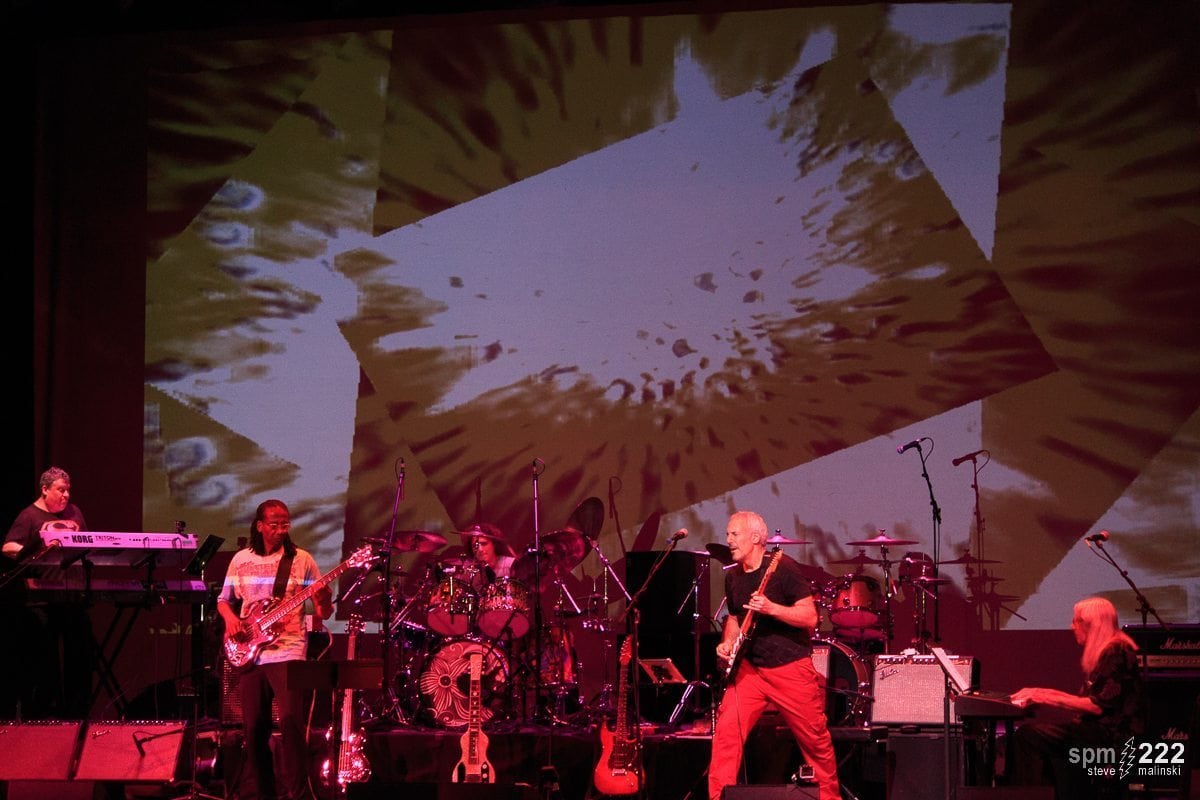
The Grateful Dead have been in quite the spotlight this past year with it being the band’s 50th anniversary and the shows they hosted to mark the occasion. After a 10-year hiatus Jazz is Dead breathed new life for a special reunion that took place August into early September, with a few shows scattered around the calendar into 2016. Jazz is Dead’s 2015 reunion is comprised of Jeff Pevar (guitar), Alphonso Johnson (bass), Rod Morgenstein (drums), Tom Constanten and Chris Smith (keys).
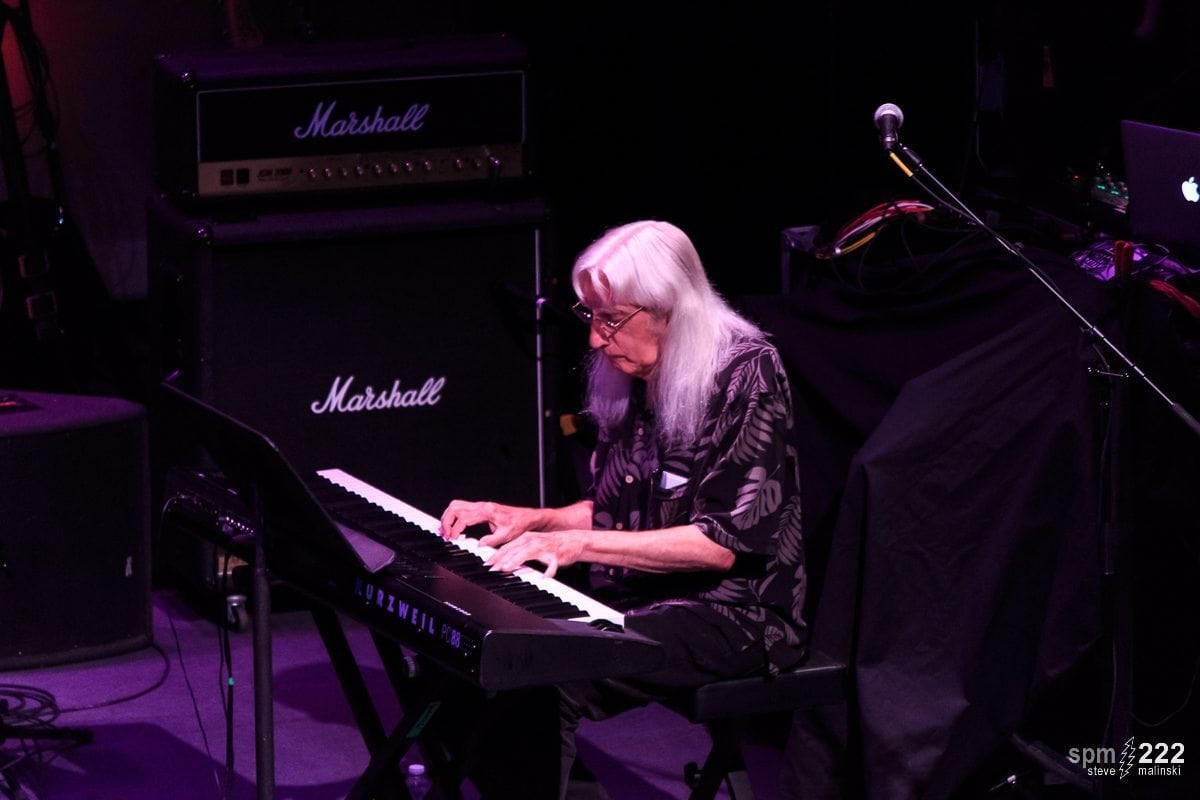
As the Grateful Dead’s keyboard player for a few years alongside Ron “Pigpen” McKernan, Tom Constanten gave Jazz is Dead a direct inject of Grateful Dead experience. Though his recording and performance time with the Dead was relatively short, his early-formed lifelong friendships with Phil Lesh and Jerry Garcia and time with the band has has rung throughout his life. After a recent Jazz is Dead performance as part of a bill with Jefferson Starship at The Ridgefield Playhouse, we chatted with him about his experiences over the years.
Steve Malinski: How is the tour going?
Tom Constanten: Absolutely wonderful.Everybody in the whole outfit is so excellent both on stage and off. The music is on a roll, each night the music is better than the previous night. I just look forward to waking up every morning.
SM: How did you get involved with this round of Jazz is Dead?
TC: I’ve been involved touring with Jefferson Starship over the last ten years or more and this is an extended family much like the Grateful Dead scene. One thing led to another. It’s almost like prom night in the back of the barn. You know, things happen and here I am.
SM: Given that you’ve had the experience of playing with the Grateful Dead, how different does Jazz is Dead feel musically?
TC: Oh, it is very different and refreshingly so. I’ve been playing with a varying number of bands over the last few decades who pride themselves on getting themselves as close as they can to the original and I’m really delighted to get away from that. One of the signs as to how much fun it is for me is none of the tricks in my bags of tricks work! I have to think of new ones and I find that challenge totally delightful. I’m plowing new furrows in my brain; I’m getting out of the rut. And being around such top-notch musicians challenges me, stimulates me. It’s like no other band I’ve played with.
SM: This was my first time hearing Jazz is Dead and to use your word, it’s definitely one of the most refreshing takes on the Dead that I’ve heard.
TC: Yeah, we fly outside of the box and think under the radar. And what you hear is the result.
SM: Going back to the roots of your involvement with the Dead, how much of an impact has that had on you over the years?
TC: Oh, immeasurable. Immense and immeasurable. I met Phil Lesh in the summer of 1961. He introduced me to his friend Jerry Garcia. Big brother Phil was 21 years of age. Jerry and I were teenagers, he was 19, I was 17, and none of us could have imagined where this was going to lead but it had delightful turns, exciting turns, and occasionally mind-blowing. Definitely unpredictable. Over the years I’ve developed a taste for that. I really like it that way.
SM: This summer marks the 20th anniversary of Jerry’s passing. What was it like to have the experience working with him?
TC: Well, like I said, we’ve done it since we were both teenagers. On stage and off, back in the early ’60s he was mainly into the Appalachian folk music. He had not yet taken up the electric guitar. Once he incorporated the blues literature in his playing, something electric happened and the rest is history.
SM: What are some of your thoughts or reflections on the Dead’s 50th anniversary Chicago shows and all the attention they’ve been getting?
TC: I’m glad they continue – I celebrate their success. I did not go to the Chicago shows. My take on that is if they invited me I would go willingly. There were a number of other invitations I got to go there but they all seemed… it seemed like I would be crashing their party and I didn’t really feel welcome by those invitations. They varied from tacky to creepy, not something I would want to be a part of. But like I say, if they invited me, I would have gone willingly. But it’s been a while since I’ve played with them and since I’ve played with them I’ve been playing with Jefferson Starship, Big Brother and the Holding Company, Quicksilver Messenger Service, Country Joe & The Fish, and it’s like I got out of the frying pan and into the lake.
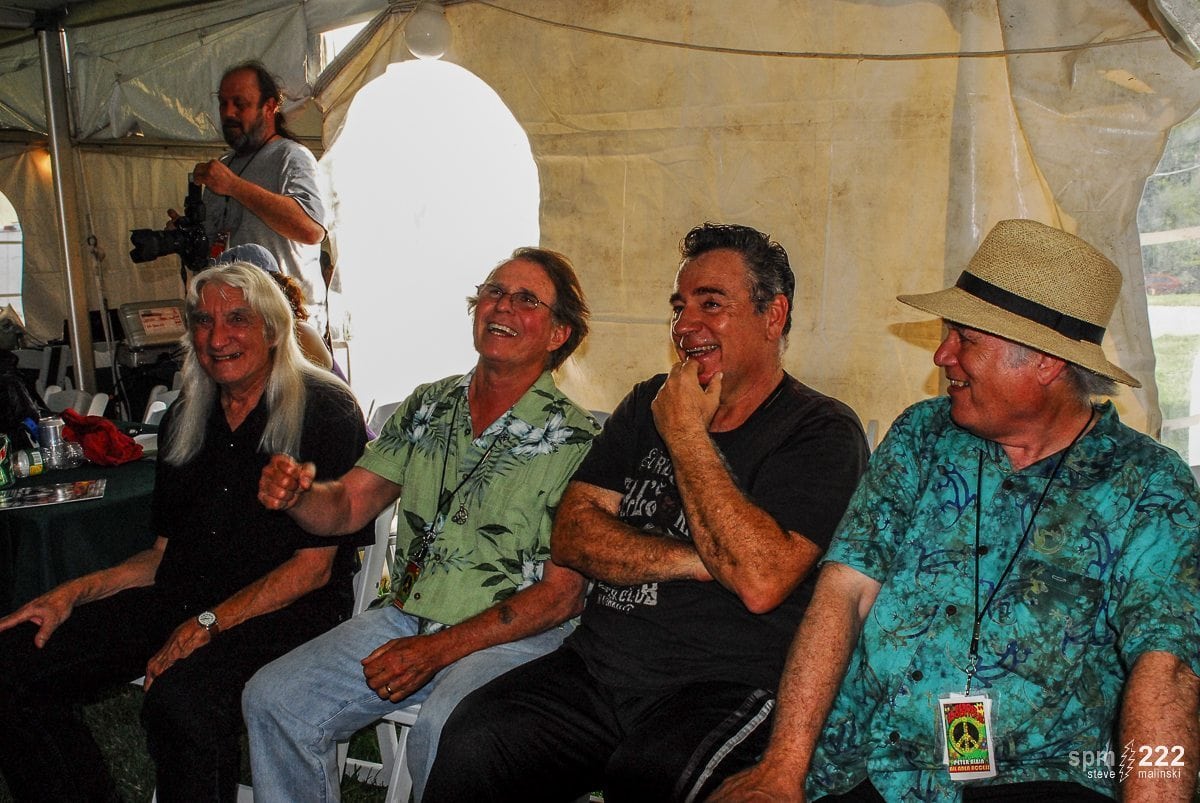
Tom Constanten with Country Joe and Peter Albin at the Woodstock 40th Anniversary celebration, Bethel Woods 8-15-2009
SM: Last time we spoke in 2009 about a week before the Woodstock 40th Anniversary show at Bethel Woods, you mentioned that you were looking forward to getting back to the site and playing some music in that setting. So, what was it actually like for you?
TC: Well, there are so many such settings. Over the past ten years, it’s been like a perpetual homecoming. Meeting long time old friends, making new ones. The line started to blur between them. It just lumbers on in the most entertaining and delightful way.
SM: As an engineer by day, I’m a fan of numbers and math and remember reading at some point you have a knack for number systems and whatnot.
TC: One of my mentors when I was a student in Europe, Henri Pousseur – I worked in his studio in Belgium for a couple of months. He was very much into applying mathematical models to music. In fact he has a [1958] piece for two pianos called “Mobile” and it’s a mobile score. Either or both pianos will start anywhere in it and there are certain rules to the road on how to proceed and I’s designed to turn up fascinating sounds whichever way you go.
SM: Going back to the Dead, would you, going forward, be willing to join up with them again?
TC: Of course I would but I’m not holding my breath. For one thing their evolution over the last forty years has been way different than mine. Their experience has been extremely different. I don’t know what it would be like playing with them again. It’s like, here I am, a 4-stripe sergeant and they’re generals, that sort of thing. The relations and connections with them have been totally friendly. It’s just uncertain what it would be like. I’m not shy, I’m not hesitant. I’m just basking in the unknown as I often do.
SM: Well, with the number of side appearances that are popping up, it seems like there’s always that opportunity for an invitation to pop up.
TC: Well, after the passage of four or five decades, people start to cultivate issues with each other, I know it’s much more complicated for them than it is for me or any of my colleagues who played keyboard for them, So I’m extremely hesitant to be judgmental because I know it’s much more complicated and sticky for them. So, bless them and may they live long and prosper.
SM: As Spock says.
TC: Yes indeed, I’m showing my split fingers to the microphone.
SM: Aside from Jazz is Dead, what other things are you up to?
TC: I’ve been travelling more as a solo act lately doing piano recitals, showing off the breadth of my material – ’60s material, stuff back to Bach, Chopin, Rachmaninoff, Brahms. I’ve played all of them and likely to try them at any time. I’ve also been working with Bob Bralove in an improvisational duo called Dose Hermanos – “dose” as in a measurement of medication not the number. We are the antidote to rigid, structured, stratified thinking. And also in the past year or so I’ve been working with a string quartet. I would prepare arrangements of music of the ’60s like “Eleanor Rigby” and Peter Rowan’s “Free Mexican Airforce” and I do the vocals and play along and have an awful lot of fun doing that. We have another show like that coming up in a couple of months. And these things are keeping me delightfully occupied.
SM: Well, that’s about all I had in mind this evening without going on for a while longer. So Tom, I greatly appreciate you spending a few minutes with me here and I’m sure we’ll chat again sometime down the road.
TC: I look forward to it. Thank you for your kind attention.
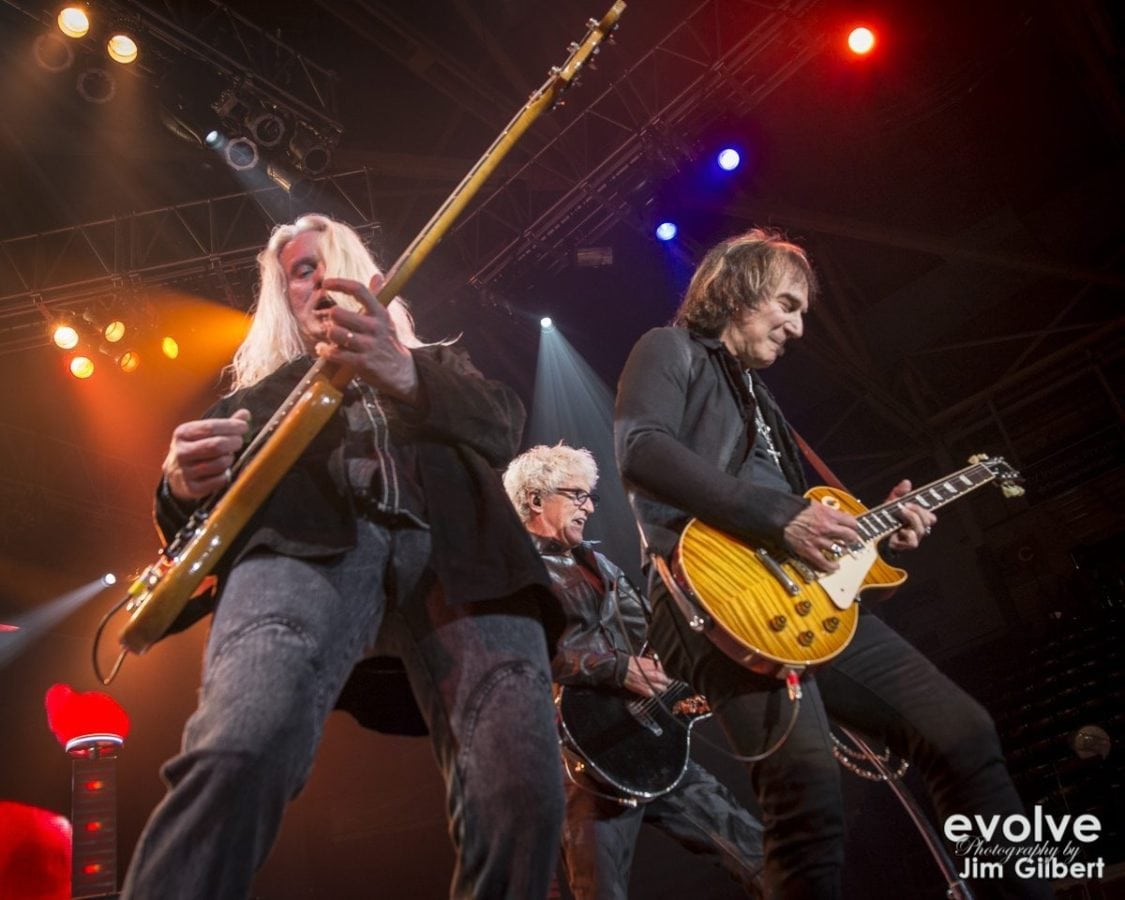
A few weeks ago I shared with you Part 1 of a two part interview with legendary keyboardist, and original founding member of REO Speedwagon, Neal Doughty. As REO rolls into town again this weekend, September 12, 2015 to the Seneca Allegany Casino in Salamanca, NY, it only seemed fitting to share the remainder of our conversation as a prelude to their upcoming show so that you could appreciate a backstory of their musical journey to today. Over a 48 year career, this group found a way to share their stories through their music, lyrics, and performances capturing the attention of generations of fans.
Before I pick up where I left off, let me recap for you a bit. A lifelong fan of this group, I couldn’t help but gush a little as I spoke with Neal about their beginnings in Illinois at the University of Illinois, some of their earlier gigs when they started out, their work on albums, the progression in song writing from their earlier works to those songs that brought them the most attention during the 1980’s, as well as how they have managed all these years keeping audiences coming back, all while not killing each other on the road.
Touring non stop since their inception, Neal’s analogy of how they have developed into an old married couple, seem spot on as these five men have gone through the highs and lows together for most of their adult lives, and have withstood all that the music industry has thrown their way while staying true to their sound. You could say they’ve ridden “…The Storm Out”. See what I did there? Okay those REO Speedwagon fans will definitely get that pun. Not familiar with the band yet, please take a moment to visit Part 1 if you haven’t had the opportunity to read it yet, then come back here so I can fill you in on where we left off of this amazing conversation Neal and I shared.
Kathy Stockbridge (KS): You have had the chance to do some pretty amazing gigs over the years. Talk to me a little about your time at “Live Aid”.
Neal Doughty (ND): That was kind of unreal almost because everybody was there. We played very early in the morning, which we weren’t used to anyways, just getting up that early made it surreal. Then we get to the show, and back stage is every famous musician in the world walking around back there. People we idolized. It was so hectic too, because they were getting bands set up. They had a revolving stage where there was never a break between bands. We had our two hits songs ready to go, we climbed up on stage while it was still turned around away from the crowd, and they said “okay, as soon as the stage rotates into view, start playing”. They had some technical glitches with the thing and as I began playing “Can’t Fight This Feeling”, nothing was coming out of the piano. So I stopped. Come to find out it was coming out to the feed that was going on television but we weren’t hearing it. So you hear me start the intro to “Can’t Fight This Feeling” twice, because the first time I wasn’t hearing it at all. I looked over to our monitor guy and go “you ready?”, then I start playing it again, and then this time I could hear it. So if you watch that old tape from Live Aid you’ll see me play about 2 bars of “Can’t Fight This Feeling”, then stop and go “are you ready?” The sound literally was not coming to the band at all.
KS: That had to be the most amazing experience though just being there in front of that audience.
ND: Oh yeah. They were telling us there were about 1 billion people watching us on television. Then when I hit the first note of our biggest song, and nothing comes out…guess that shows whether it’s 1 billion or a crowd of 1 person, you never know when something will go wrong. It’s actually scarier playing in front of a smaller crowd where you know people in the crowd. When it’s 1 billion people and they are watching on tv, that’s not REAL from where you are sitting. Of course, the 100,000 people sitting there live, well that made us a little nervous. After a while, you feed off the nervousness though. I usually play best when I’m really nervous. Which doesn’t happen often any more. I’ve done this enough now, that I’m probably going to make it through the song. We just recently played on Jimmy Kimmel with Imagine Dragons. He does this band name mashup, where we were dubbed Imagine REO Speed Dragons. That was “live” television, and in those situations you can fix something I believe up to one hour before it airs in New York, but we didn’t have to with this performance.
KS: Wow, that had to be the best. I just covered them and they are such an energetic band, that loves to play to their fans. That had to be one hell of a mashup.
ND: They were the greatest guys to work with, with so much respect for us. It was nice to have a band that hot, selling out the Forum tonight, at the peak of their career, wanting to be on tv with us. We get there and they feel the same way, they were think how do we get to be on tv with them? It was mutual respect from the minute we met each other. It went great. We did “Roll With The Changes” and we changed the beginning of it to sound a little more like an Imagine Dragons song. They have those jungle drums going…
KS: Yes they are very percussion heavy in their sound, where you guys are very heavy guitar and keyboards.
ND: We let them start the song with their big drums and then we went into “Roll With The Changes”. It was very interesting. Then we watched them play five songs on Kimmel’s outdoor stage, and they were just great. But it was so nice of a feeling for a relative new, very hot band, to be doing something with us on nationwide television, that I want to add we worked up that afternoon together.
KS: You’re being very modest I must say. You guys are legendary.
ND: I’ll accept that in the sense that yes, everybody’s heard of us. When you’re around this long…
KS: You are a legendary band, highly respected, during the 70’s and 80’s you were “THE” band to see live. So I do believe that Imagine Dragons probably grew up, like I did listening to you.
ND: Oh yes, they acted as though they were really impressed to be playing with us. We sometimes forget, as we have become very down to earth about the whole thing. We feel lucky to still be doing this, we’re pretty nice guys, and actually we are pretty modest about the whole thing. We’ve just been doing it so long that when we walk out on stage and there are 10,000 people there we say “Bless their hearts, they are still showing up”. It’s just so gratifying to feel that respect. We’ve been together so long and people will still show up by the thousands to see us play. It’s really a heartwarming feeling. Then when you have the hottest band in the country meet you and their star struck…sometimes we just forget. I’ve never thought of myself as some sort of rock star. When I’m home, I’m building a roof on the patio. People come over and see that I’m just a regular guy. Yep. Regular guy that lucked into a GREAT job!!
KS: So glad you did.
ND: The first ten years, there were a lot of moments where I thought, I should have stayed in college. Where I would be sitting on a rock by the ocean saying, “what have I done”? People would walk by and go, “are you okay buddy?”. I would say, “yeah, I just think I screwed up my life, that’s all”.
KS: In 2013, being from the Midwest myself, storms and tornadoes are unfortunately common place for the area, and due to the storms that devastated that area, you coordinated “Rock To The Rescue.” Can you tell us a little about what that was all about?
ND: That was an amazing experience where everybody we called to play this show said “heck yeah, I’ll be there”. The storms happened very close to where Gary Richrath, our guitar player, grew up, in Peoria, Illinois. Bruce, our bass player lives down in Florida and plays golf with Larry The Cable Guy, or Dan (his real name). He is a really nice guy, who volunteered to MC the whole thing. Every band we called, and most of them were from Illinois, said yes it was amazing as we threw together things so fast. Not only having Gary come up and play with us on a song or two our great friends from these Illinois based bands, like Styx and Survivor, are great buddies. Cheap Trick wanted to make it but they couldn’t do it due to their schedule, but they would have been there had things worked out as we had all hoped. These are all bands that have been our friends for decades. So to have them all in one building was amazing in itself. Back stage was like a high school reunion catching up with each other. Then having Dan go out there, MC and telling jokes, while not charging us a penny. He actually does stuff like that all the time. His showing up made the show all fit together seamlessly with no confusion between bands. It was old home week for a great cause.
We actually took the tour bus out to the neighborhood that was hit the worst and it was unbelievable. It was as though you were looking at special effects in a movie scene. As far as you could see, every house was down, furniture was in the trees, no leaves left on the trees, cars overturned and wrecked vehicles. It was like a spectacular scene from a science fiction movie, only it was really there. You can’t imagine the power of nature until you visit a scene where nature has destroyed everything for miles. And there are people who are suppose to be living there. You see a teddy bear lying in the gutter and you think, gosh that’s some childs teddy bear. Their house isn’t even there any more, but their teddy bear is there. So you think, someone has to help all these people. There is progress occurring already getting everything rebuilt, but it will take years before it goes back to the way it was. Basically we raised half of a million dollars to help take care of the people during their transitional time. You of course will not build a town with a half of million dollars, but for those whose houses blew down, you can give them some help. That was the purpose of the fundraising. We knew we couldn’t rebuild the town. Once again it was a heart warmer event as all your buddies from all the years just go “We’ll be there tomorrow”.
This job never gets boring, but then when something like that happens, it reaffirms that “man I’m never going to stop doing this”. People even ask if we get tired of playing the same songs. We say “Are you kidding me? Nobody gets to have this kind of life.
KS: Well again I want to commend you on what you did for those folks. The following year after this project you were once again out on the road together with the band Chicago. Talk to me a little about that tour.
ND: That’s probably the most fun I’ve ever had on stage. Chicago and REO started the same year, in Illinois, and until then we had never played together. Right when our band first started, their first album came out and it was a masterpiece. While living in Los Angeles, Robert Lamm, who is a songwriter, keyboard player, and one of the singers lived only two houses away from me. We used to come over to each other house and we had still never played together. We were neighbors thirty years ago and finally had a chance to play together recently. The promoters were wondering if the two groups would be able to mesh up correctly, and it just turned out so well. We each did our own shorter set, then we came out for an encore where we did three of each bands biggest hits with everybody on stage.
KS: Wow that must have been so spectacular with the horns accompanying you on your songs too.
ND: Someone asked me what it sounded like when REO and Chicago played together? I said…like Chicago, (as he laughs). Because those horns are such a distinctive part of their sound. Playing “Keep On Lovin’ You” with a horn section or “Roll With The Changes” with all the horn mix playing…well by the second or third night of that tour I was laughing out loud on stage because it sounded so good. They are all great guys and and wonderful musicians and we had such respect for each other that we just hit it right off instantly and I really hope we get to do that again. They felt the same, that we gotta do this again. We don’t want to do it exactly the same the next year, so we’ll wait a few years but we definitely want to do that again. Because that worked out way better than any of us thought. I think every show was virtually a sell out.
KS: I want to truly thank you Neal for doing this interview with NYS Music. As I mentioned to you before, I’ve been a huge fan for so many years, and this truly has been a highlight in my career.
As I basked in an afterglow of “Wow, I just interviewed Neal Doughty, one of the founding members of the my favorite band of all time”. If you were to ask me who was my favorite band of all time was, I would hands down say REO Speedwagon. They represented so much more to me than just a musical group. The immediately bring me back to my school days, with dear friends, and a place I hold dear to my heart, Illinois. Their earlier music was compelling and audioritoially moving. A huge keyboard lover, their keyboard solos paired with guitar riffs captured my heart and from “157 Riverside Avenue” to “Time For Me To Fly”, to “In Your Letter”, they had my complete and total attention and dedication for the moment I first heard them.
Written in 1968 by Kevin Cronin, “Ballad of Illinois Opry” would not be recorded until 1996 on their Building The Bridge album. This song emulates everything special about REO Speedwagon; how they continue to pay homage to their Midwest roots, how they saw their dreams of one day being on the big stage and never lost focus of that dream, and of course that classic rock and roll sound of guitar solos, strong keyboards, and stellar vocals, that we all fell in love all those years ago while standing in a horrific Midwest storm cheering for them to return to the stage.
The humility this man possessed still today when talking about his career, totally touched my heart. My favorite musicians are those that connect with their audience. Whether it’s on stage…a gesture to a fan who wants a meet & greet, or how they engage the audience and their fans while performing. Truly he didn’t think of himself as a superstar of any sort, and my clearly unprofessional means of gushing had to be apparent throughout the interview. And the fact he was touch and bewildered by reactions of others to him and his band mates was refreshing. To me it was a sign he was in it for the music, not for the fame. Fame came and stays because of the other. To him REO still was a group of friends from college in rural Champaign, Illinois just jamming and making the music they loved.
Ending our conversation as we could have continued to talk for a good long time past what we had, I was nervous and didn’t want to over stay my welcome. It was okay because I knew that although I didn’t get to cover one show here locally, I would be traveling to the beautiful Niagara Falls area to take in the show there, and once again relive all those wonderful moments I had shared with family, friends, and days gone by.
Nashville has not only become a mecca for country music but also has a melting pot of talent behind the scenes. The city has become the place for country musicians to travel to for recording. David Fanning may not yet be a name you are familiar with, but I can assure you that his talent shines through in other ways that you may have been touched by. Working together with artists Parmalee and Thompson Square, among others, this young man is wise beyond his years, and his ear for talent is spot on–not only a songwriter, but also as a producer.
Photo by Jeremy Cowart
Kathy Stockbridge: Hi David, thank you so much for agreeing to talk to NYSMusic. It’s so nice to introduce you to our readers. You grew up on a farm in Alabama, talk to me a bit about how you found your way on this path of music.
David Fanning: Well thank you for talking with me. If you could ever see a picture of the town I grew up in, it’s literally what you kinda write about in a song. It’s kinda one of those one red light kind of towns.
KS: I know them well.
DF: What got me interested in music was honestly my family. Growing up, ever since I was tiny, they were in a 50s and 60s a capella group. So they would sing bebop music on weekends just for fun, nothing obviously professional. That’s just what I grew up doing. So I was a miniature Elvis when I was like 9, 10, 11 years old. That’s how I learned about harmonies and melodies and all of that kind of stuff. It was a great experience for sure.
KS: So in addition to singing, what musical instruments do you enjoy playing?
DF: I play guitar. I’m one of those people, especially in a live setting, that love to perform. I’m definitely not Keith Urban, but when it comes down to it I can hold my own. I do a little piano, but honestly I actually started out on drums. I guess I’m one of those people that decided early on that I like to perform versus being “the guy” on any of that stuff. I do obviously play during the show a bunch, but I have a lead guitar player that is way better than I am at that.
KS: I have a feeling you’re being very humble here. I read that you have a really good ear for music. At at the age of fourteen you began producing music and you taught yourself how to use ProTools. Share with our readers a little bit about how that came about.
DF: Where I grew up we had no studios, and even though it wasn’t that far from Nashville, Nashville was still about an hour and a half away. We couldn’t afford to come up here and spend that kind of money nor did I know how to growing up. I always wanted to, but just didn’t know how to. So, even though all we had was dial up internet, I learned how people recorded music and began ordering gear and just getting by. I ended up getting ProTools and established a little set up to record at the house. I started recording my own stuff and figured out how to do it as I went along. I made a bunch of mistakes, and just learned how to get sounds and different things down. When I was finally able to go to those studios, I took what I learned there and applied it to what I already knew and it really started shaping who I was as a producer. It paid off, because I was about 22 when we produced the first Thompson Square record, and “Are You Gonna Kiss Me or Not” was my first number one that we did on that album. It was an amazing thing. I never knew growing up that I could use all those skills and apply them to what I’m doing today.
KS: Do you think having those skills helped to shape you as a better performer just knowing the whole process and how music is produced?
DF: I think so, it’s one of those things, I’m still growing as an artist. The negative (which is actually still a positive) is I took off about five or six years off from the road. I had been playing my whole life so getting back on the road the past couple years has been a new learning experience as to what works and what doesn’t work and how can I get better. In the studio it’s the same way on each project. We’re doing the new Parmalee project right now. This record is going to be different from the last record, as it’s a little more progressive. It’s awesome, but I’ve learned a lot more [in producing] since that last record too. Sonically I’ve learned a lot. With songs I’ve learned how to make dynamics happen more as well. It’s always just a learning experience. The music industry is always changing so it’s fun to evolve with it.
KS: I like that word–evolve. There are so many different sub-categories within the country genre that it allows you to be creative even more so.
DF: That’s the thing about country music. They are letting you be creative. You might be pop country, or rock country, or rap country even.
KS: Yes, exactly. You spoke of taking some time off. Share with the readers a little about your timeline in the music business and your journey to where you are today.
DF: Even though I took some time off from the road, I was working every day in town. What happened with me is when I was around 20 I moved to Nashville. It’s crazy but I emailed about 300 people when I wanted to move to town. I was actually moving from LA to Nashville, as I lived there for a little while. I had moved out there because I thought, that’s just what you do. When you come from a small town you think LA is the place to be. That’s just what I thought. So I went out there and realized that I’m definitely not that kind of person. I’m definitely more of a small town southern boy, so I moved to Nashville, and when I moved I e-mailed literally 300 people and thought maybe someone would want to give me a shot or something. There was this one guy, his name was Kevin Neal, and at the time he was at a place called Buddy Lee Attractions who booked Jason Aldean. He was like “Man I’ll come out to one of your shows”, and at the time I was playing downtown Nashville at night. He came out and he ended up hooking me up with Aldean’s band who was Kurt Allison, Tully Kennedy, and Rich Redmond. Back then Jason was just starting to get some legs under him and stuff and have some hits. Me and the guys, his band, just hit it off and started working on my stuff in the studio. We cut about six songs and realized that we really work well together in the studio, so we started a production company. The first act we produced was Thompson Square. It all kinda went from “we actually have some success here”, to “I should focus a little bit on this production thing and build a little bit more of a name for myself on that end and see where itgoes”. I went through a few years of working with Thompson Square and Parmalee, who I actually found at the Tin Roof parking lot in Nashville. [Parmalee] used to drive their RV up into town and that’s where they would park. One day I got set up to write with them and we ended up writing a song called “Musta Had A Good Time” together in their RV. I kinda fell in love with their whole vibe and I brought them to the guys and we ended up cutting “Musta Had A Good Time” and “Carolina”, getting them a record deal.
KS: They are awesome. I had a chance to speak with them earlier this year and they are a bunch of fun loving guys. Very talented. Good call there David, great discover!
DF: During their last record we were doing I looked at the guys and said, ‘I gotta go do what I was made to do. I have to go play. I can’t sit here and get this studio tan on any more’.
KS: When you talk about your production company you’re talking about New Voice Entertainment? You’re what they consider a triple threat. You perform, you write and you produce. Do you find yourself being drawn to one particular aspect of music or do all the parts feed your creative soul?
DF: Live performance for me and just live entertainment is my thing. I love it. There’s nothing like it. There’s nothing like the rush. I love writing songs and I love producing, but to me they don’t fulfill the void that I have. I could have a million number ones on the side, and still wouldn’t feel complete if I couldn’t play. That’s exactly what I’ve always wanted to do, and I’m finally getting the chance to do it. I’m obviously happier than I’ve ever been. I’m a lot more tired than I’ve ever been, but where I’m at is a fun place to be at. Sometimes you’re on a bus, sometimes you’re in a van, and you’re all over the place, and it’s definitely had its growing pains as we just did a 5,300 mile West Coast trip in a miniature bus with me and the band guys getting stuck in there for eight days. It was really cool and fun though. We had a blast. It’s one of those things where we’re definitely creating memories and such. It’s been a fun journey so far. We’re ready to come to NY though.
KS: Yeah, we’re ready to have you here. Hope you’ll be able to take in some sites while you’re here. Our Adirondacks are gorgeous!
DF: Yeah, I hear it’s beautiful.
KS: Well, right now you’re in the studio doing some recording for yourself, talk to us a little about this new album and what we can expect.
DF: I am. We’re cutting music right now. It’s got a good amount of songs and a little bit of a different direction than the rest of the music that we’ve cut previously. It has a little depth to some of it, some is a little more progressive. For me I grew up listening to Chesney and McGraw and all those artists. But I also felt like I was on the verge of where people are now. With iPhones people are able to listen to all different kinds of music; I was kinda there too. I listened to 90s-early 2000s rock, country, and pop. One thing I liked about older records was it felt like each song told it’s own story and didn’t necessarily sound exactly alike. So that’s kinda how I wanted my record to be. Some of it is country-pop, some of it’s country-rock, some of it is happy and some of it is sad. I just wanted every song to have it’s own flavor to it and sound different than the song before.
KS: I’m anxious to hear it. Will you be sharing any of the new material with us at Keg’s Canalside on August 14th, when you play?
DF: Oh yeah, for sure. The fun thing about the show is that I still play some of the music I produced so that people kinda get familiar with some of the work I’ve done. I play a bunch of familiar stuff, but I also sprinkle in a bunch of new stuff too so that people get the whole picture of who I am.
KS: Speaking of who you are. You, like many musicians, dedicate time to charity work. You work with St. Jude’s Children’s Hospital. Can you tell us a little about your cause and why you chose to work with this one?
DF: Honestly, I’ve of course heard of St. Jude’s for a long time, and I didn’t get a chance to go and visit until a couple years ago. We went there for a few days and it was just eye opening of where it’s started, where it’s gone, what they accomplish, and the success rate they are having right now. I was expecting it to be a super sad place when I toured, but it’s not. The doctors, nurses, patients and families are all so positive. It blows your mind because they are going through the hardest time of their lives yet they are building hope and finding cures. Once I saw that I just had to be a part of it. It’s something I’ll always be a part of. It’s a great cause and they can’t have too much support.
KS: Thank you so much David for speaking to us today. I am so thankful for the chance to personally welcome you to NY and allow our readers an opportunity to get to know David Fanning.
So as I finished up the interview, I found myself so impressed by this young man’s range of talent, his down-home goodness, and musical skills. I find the journey musicians take very retrospective as we discuss the beginnings, the journey and the current events occurring in their lives at that time both musically and personally. The one constant I always find among them all? The love of performing. The sheer love of the music. Whether he made a living out of it or not, I believe David would absolutely be on the stage somewhere doing what he was meant to do, perform live for anyone who’ll listen to him.
I urge you all to take a trip tomorrow night over to Keg’s Canalside in Jordon, N.Y. and meet David Fanning and give him a warm Central New York welcome.
As the CMAC Summer Concert Series continues, the remaining lineup proves to keep the momentum building for Central New Yorker’s to enjoy the best of the best this summer. This week’s featured band, REO Speedwagon, has proven to be one of the crowds favorites for many years, and personally they are my favorite. So please accept this disclaimer right up front that if you’re looking for an unbiased interview from this editor, this will not be one as it was almost impossible for me not to gush like a school girl as I spoke with Neal Doughty about the band, their careers and personal life. Yep, just call me Madden on this as I blatantly show my favoritism for this band. How can you not?
A southern Illinois gal myself, I feel a kindred connection with these guys as they began their careers only 114 miles north of my home town of Flora. While attending University of Illinois in Champaign, IL, Neal and classmate Alan Gratzer formed a band and after a few gigs on campus, found a strong following of fans. Traveling all over campus and the local region, it took REO Speedwagon (named after a flatbed truck built by Ranson E. Olds) no time at all to be recognized by the powers that be with a record deal. The rest? Well, I’ll let Neal fill you in.
Kathy Stockbridge (KS): Hi Neal, thank you so very much for agreeing to talk with us today at NYS Music. I have to say I’m a huge fan. I’ve been listening to you folks since eight-tracks were around. I can recall cruising Main Street on a Friday and Saturday night with the windows down blasting the music. Yep, I’m a diehard fan.
Neal Doughty (ND): Wow, you don’t sound old enough to be listening to eight-tracks.
KS: Already Neal, you are my favorite person!
ND: Well we are off to a great start then.
KS: When you guys started out, you started out in college. Talk to my readers that might not have been around as long as I have, about the experience of how you came together and formed REO Speedwagon.
ND: Well this band started off strictly for fun. The original four members back in the dormitory at the University of Illinois, well we were all engineering students; like scientific types, and totally planning on becoming some sort of engineers, as the University of Illinois is a very respected school for that. Across the hall from me in the dormitory happened to live a guy named Alan Gratzer. He was our first original drummer, and he and I became really good friends in the dorms. I had never even played in a band. He was in a little campus band that was just playing radio hits and I started following them around and became friends with them. Their keyboard player just wanted to stick with what they were doing but the other three guys wanted to explore some newer music coming out of the west coast, Europe, and England; so we just kinda started a new band with me playing keyboards instead of him. Really strictly for fun, playing on weekends, making enough money to buy doughnuts. And that original group was called REO Speedwagon. That’s the name of an old truck I had read about in engineer class. This was 1967, there was no MTV, there was no satellite radio, or video.
There were bands out in California like The Doors and Hendrix the people in the Midwest had not even heard of when we started doing their songs. Since we seemed to have more of an alternative set list and things that people hadn’t heard before, we quickly became the most popular band on campus and we got busier and busier until eventually we didn’t have time to go to class any more. The University of Illinois is not a place you can get away with that, it’s a tough school, so we just went with it. We thought, well we can always go back to school if this doesn’t work out. But slowly over a period of ten years we just got more and more serious about it until we woke up one day realizing this is what we did. We’re never going to become engineers, we’re just going to keep doing this. This was just totally an accident and the farthest thing of what I thought would happen in my career. Now here we are, almost 50 years later.
KS: It was meant to be. Were you from a musical background, and I read that you saved up to purchase your own keyboard and taught yourself how to play. Is that accurate?
ND: Yes, that is. My parents had a piano at home and my mom played it. Eventually it ended up in the basement. I started sneaking down there messing around on the thing. That’s about the time that The Beatles hit, and I would try to play their songs by ear on the piano, at my high school parties. I played it a lot at home but I never even thought it would be something I would do professionally. I had always been interested in some sort of entertainment. I looked at some colleges that had good theater departments, even some radio and television. So that was in the back of my head, but what at the time I was good at was engineering. I had a scholarship to the University of Illinois based on how well I scored on the scientific parts of the pre-college testing. I was pretty sure that’s what I was going to do. I probably would have really liked it as I still keep up with development with physics and science in general. But, this has worked out just fine.
KS: Yep, I’m pretty sure this was the path you were meant to take. I read that your first gig was at a fraternity house. Share with our readers about your first gig experience.
ND: We had been rehearsing in the dorm and one of the members that lived off campus had his own townhouse so we rehearsed there a lot. We just rehearsed all the time and we figured sooner or later we’re going to have to actually play a show and see what happens. So we put an ad in the campus newspaper with a picture of us saying ‘we’d love to play at your event, we’re a new band on campus’, so yeah, it was a fraternity party where the fraternity invited a sorority over for dinner, but the thing was the dinner was going to turn into a food fight that they had planned in advance. We got paid $40 and we set up on top of a bunch of tables that were shoved together. When we got there, there was brown wrapping paper on all of the walls. We wondered what that was about, and it turned out because of the food fight that the sorority did not know about.
KS: Oh, so you guys did not know about it either?
ND: No, we did not know about it. We were suspicious of why they had covered up all the walls with brown paper, but it was our first show ever and we were kinda excited actually. We were doing just fine then the big food fight broke out as we were finishing up and there was just food all over our stuff. Mashed potatoes in the drum hardware, and that’s not easy to get out. We kinda thought it was funny and actually we were not mad. This is what happens when you are in show business.
KS: Whoa, so please tell me this is not what show business is all about, and it’s not happened again?
ND: No, this has never happened again. There have been a few instances where people have thrown things at us, but they were not planned in advance. No, we’ve been pretty lucky, none of us have ever been hit with mashed potatoes again in our entire careers. So it’s working out okay.
KS: After you played gigs in town and started traveling out to the surrounding area did you start performing original songs or were you strictly covers? When did you start writing and performing your own music?
ND: The first little four piece band, two of the guys left after the one semester because they graduated. So it was just Alan and myself so we were in search of a singer and a guitar player. That’s the record we made with Terry Luttrell, he had originally brought a guitar player with him who left because he was more of a jazz player and didn’t think there was any future in rock and roll. So then is when we got Gary Richrath, the guitar player on all of our records we did for EPIC, and he played guitar on all the hits. Shortly after that we got Kevin, our singer who is still with us to this day. Kevin and Gary were song writers. They very quickly started bringing in original material and that’s when we went to a whole different phase. We stayed popular, but it was with our own original music. We still played some songs by The Doors and The Beatles but we interspersed pretty well with our own material.
Actually, we got our record contract because a producer from NY, our management talked him into coming to one of our shows in the Midwest and a couple of thousand people at an outdoor show. We were playing all of our original stuff and a terrible thunderstorm came along. We had to cover up all the equipment with plastic and run for cover to the side of the stage but the people were standing there in the rain still cheering for like half an hour, hoping we could come back. So we went over to the, his name was Paul Leka, he wrote “Green Tambourine” and “Na Na Hey Hey Kiss Good” which were huge hits from that time period, e had his own studio and I said “wow that’s too bad you didn’t even get to hear our best material” and he pointed to the screaming crowd and said “that’s all I need to hear”. And literally, that’s really what happened. So he had a studio in Connecticut and we made our first record there. He shopped it around and eventually found some people at EPIC that really liked it. We had some big fans there at that record label. So that’s how we went from campus band to as soon as we got our own material we got some interest. Took us forever to get a hit, but..
KS: I disagree. It was your earlier material that drew me to you guys. In 1977 when you put out your Live – You Get What You Play For album, because you definitely are a Live Band. Your energy levels you create at a live performance is off the charts. When you recorded that “Live..” album, especially the song “157 Riverside Avenue”, you hooked me then. And that was way before your commercial success with Hi Infidelity.
ND: Yeah that was our first really successful album. That album went Gold, and eventually Platinum. EPIC was so happy about that one that they flew us out to London for their big convention and presented us with the Gold Album there in front of record people from all over the world. But our first hit single on the radio didn’t happen till 80 or 81. That Hi Infidelity record that really put us on the map worldwide. That was our 11th album.
KS: My favorite album, besides the Live album was You Can Tune A Piano, But You Can’t Tuna Fish.
ND: Those were all popular as albums, but we had never had a number one song and EPIC was really wanting us to getting around to doing that. That all just all came together on Hi Infidelity. I really have to give credit to the people at EPIC Records, and they still handle our older records and we still have a good relationship with them, but they don’t think we need to make any new records. They aren’t really interested in that. We’ve made a couple that we’ve basically produced ourselves; financially and artistically. They had their own audience. They haven’ t been as successful as the ones before, but it just let’s people know that we haven’t stopped thinking. But a group now a days isn’t going to get eleven chances on making a hit record. The label will say, you get one shot. So we were lucky to be in that era when a record company would nurture a band for years instead of giving up on them. And we sold it door to door all over the country. You just played EVERYWHERE. Still to this day we are known best and most respected for our live shows. Even critics who don’t really like our “pop”songs from the 80’s they will still begrudgingly admit that our true strength is as a live band. We’ve always done that. People who only know us by the power ballads that we played in the 80’s are shocked when they see who we are live.
KS: It’s funny that you bring that up because I wanted to ask you; there was a completely different sound to Hi Infidelity from your earlier albums. You were more rock-based with strong instrumentals, whereas Hi Infidelity was more pop based. Did you find yourselves gradually moving towards that direction and sound or was it conscious choice to mix it up a bit with a new sound?
ND: It was not a purposeful choice. Kevin who wrote those two big number one power ballads, he wasn’t really, they were just songs he wrote like all his other songs and came from an honest place somewhere inside of him. They just happened to click as radio hits. He didn’t go about them any other way than all the songs before. Those songs are probably why we are still able to fill up shows. You have to have a couple of things like that at some point in your career, but our live show isn’t based around power ballads. Yes, there is a couple of them in there, but many others are just rock and roll.
KS: Yes and you definitely are a rock and roll band.
ND: Yeah, and when you’re hearing those power ballads live and you hear those guitars crunching, maybe the tempo slows down but not the energy level. Especially with those songs because everyone in the audience is singing along. So that adds a lot of energy right there. The show does not slow down when we do those power ballads, if anything it kinda comes up a notch. You feel a new energy because everyone in the world has heard those songs so that’s a big moment in the show, but we’re not an hour and a half of just power ballads.
KS: Since the ’80s you’ve been touring non-stop. How do you explain that and your audiences have new generations added to them.
ND: We’ve been able to tour this long because generations have passed this music down to their kids. We have people of every age in our audience. There a people there in their 70’s and there are people there that are pre-teens. I saw a little 10-year-old girl singing along with every song in the front row. That happens a lot of times. Before The Beatles came along, it hardly ever happened that you and your parents would like the same band. In fact it never happened. But my parents liked The Beatles. They first kinda established that hey there is nothing wrong with two generations going to the same concert. We see that all the time now. People in their 20’s say that they grew up with our music playing in the house all the time, because their parents were constantly playing our music and others of that time frame. We are best buddies with Pat Benatar, Styx, Journey, and Foreigner. They have had the same kind of career where it’s been passed down, and they still get big crowds at all their shows.
KS: You are on the road a lot. That’s had to be difficult with families and getting along with each other being on the road all the time together. What’s your secret?
ND: Especially when it comes to making a new record or writing new songs, things can get a little touchy, but it’s almost like a family where you get into a big fight and then be okay the next day. We’ve definitely had our spats in the band, some of them bad, but you still have each other and you work it out. I’d say we’re not as bad as a lot of groups and things have really mellowed out in the last couple years where we seldom disagree on anything. I guess we’re like an old married couple where you get to know each others behaviors and you don’t fight about anything any more. We’ve never stopped touring, where there’s never been a year that we don’t tour, but we do take some years where we play less.
This year is actually one of them. We’ve done twice as many shows in a year as we’re doing this year. We’re just picking out special spots where people like us. I’m finally after turmoil throughout my life in relationships, I am finally in the happiest personal life I can possibly imagine. I think a lot of the other guys would say the same thing. So we just don’t want to be gone all the time so we’re playing fewer shows, but there’s still not going to be a year where we don’t play any.So we’re balancing being on the road and being home, because everyone is happy at home. But when people are going to let you be a rock star when you’re pushing 70, you don’t turn that down.
Read Part two of our interview with Neal Doughty of REO Speedwagon.
So as I wrap up part one of this interview I need to share my excitement with what an awesome conversation Neal and I had. We spoke for almost a full hour. It was as though we were old friends swapping old times from long ago, and in a sense we were. Both from the Midwest, we shared a common understanding of the way of life of the area, and the importance music played for our generation and the culture. Like many of that generation, music was our thing. Yes, we had Atari but seriously, we didn’t have the video games we do today, or the social media, cell phones, or even MTV right away (and I’m referring to the music video television with the veejays; not that stuff we see today). We spent hours listening to it in our cars, on the radios, and on our turn tables and these bands and performers were larger than life to us. We couldn’t imagine ever seeing them in person, let alone interviewing them. Concerts were few and far between for most, and so our only connection to music was through albums, cassettes, and vinyl and with this diehard fans were created. My love as a fan was the fuel that propelled Neal and his band mates to a career far from the University of Illinois goals they began with, and the same fuel that propels this photojournalist to bring you music through the lens and pen each and every week.
It was a pleasure to hear the story from Neal’s perspective. As I was cruising Main Street in Flora with the windows rolled down and blasting my music, he and the rest of the band were going to college and through a love of music themselves, found the course of their lives moving in new directions. Whether it was playing fraternity houses, outdoor venues in Midwest during torrential storms (which until you live there you cannot fathom their power), or traveling the world ranging crowds that were small, medium, and then huge arenas, they knew it was what was meant to be and followed their dreams to a career that has spanned almost 50 years. Creatively they started out to bring new music to their classmates and within a few years began writing some of today’s most legendary rock and roll tunes of the days.
As I reflected on the first part of our conversation I couldn’t help wonder what magnificent feats of architecture these men could have achieved had they not followed the path they did. However the lives their music touched couldn’t have compared. So very glad they too took the chance and played as mashed potatoes were thrown at them and continued despite the fact that some felt that there wasn’t a future in rock and roll.
Join NYS Music as they cover the upcoming show on August 13 at CMAC where REO Speedwagon will be joined by locals Teagan and the Tweeds. Gates open at 7pm and show begins at 8pm. Hope to see you all there.

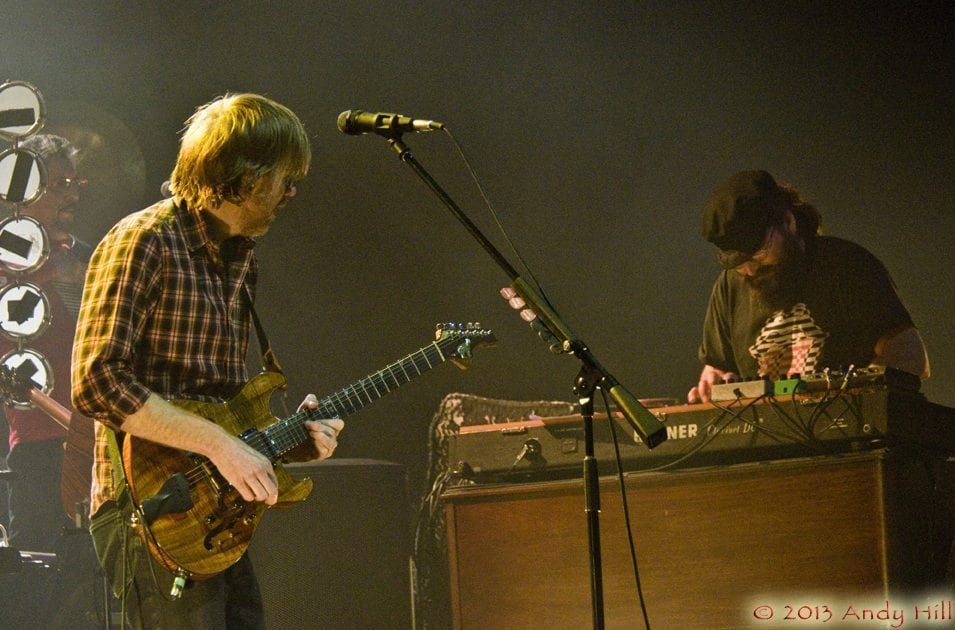
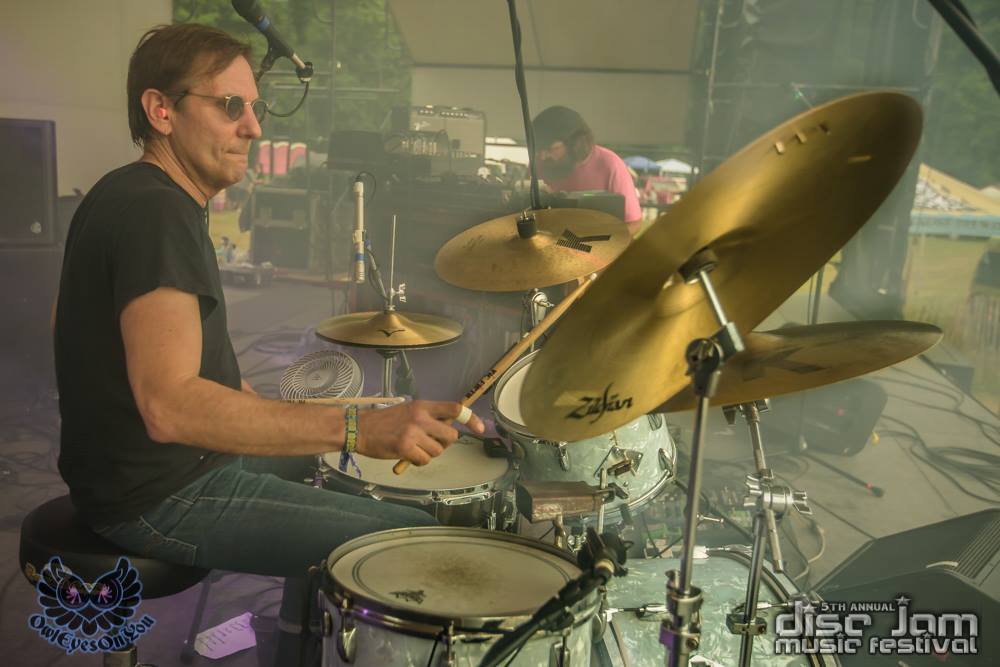

 Holly Bowling: The rooms I’m playing this tour definitely have a lot of variety! It’s less about size though and more about the feel of the venue. I’m playing some spots where it’s unusual to see a solo piano act – places where you’re more likely to see a full band and spend most of the night dancing – and then I’m playing some spots that are more of a mellow environment, places where you might usually see jazz or classical music.