Category: Editorial

  • 2015: The Year Trey Anastasio Came Full Circle

    Heading into 2015, Trey Anastasio had 32 years of accomplishments on his rock and roll resume. Fronting the most successful touring band of the last 20 years, Anastasio really had nothing to prove to fans and naysayers alike, yet Big Red barreled forth into possibly the most demanding year of his life.
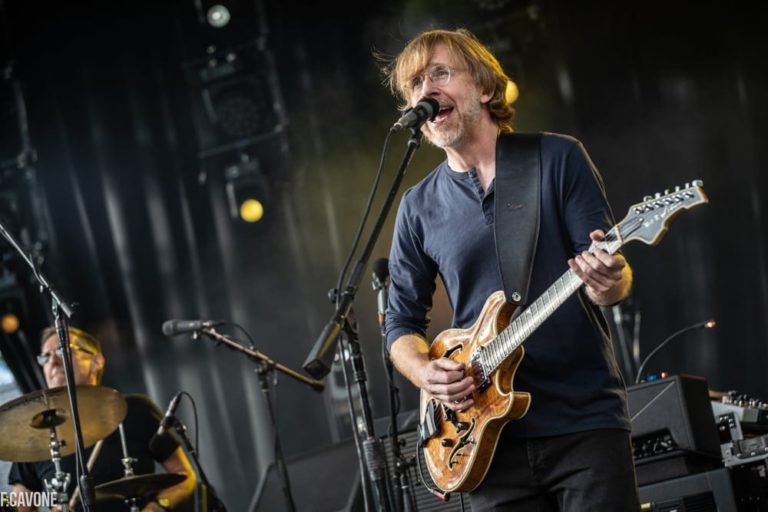
    trey anastasio 2015Fresh off a well-received New Year’s run in Miami with Phish, Anastasio didn’t take any time off, as a letter from Grateful Dead bassist Phil Lesh had requested the then-50-year-old step in to handle the role this scene was built upon: Playing lead guitar at a string of concerts celebrating the Dead’s 50th anniversary, essentially filling the shoes of a guy named Jerry Garcia.

    The Grateful Dead formed a massive traveling family built around improvisational music and the most dedicated fans on earth from 1965 until the band’s final show at Soldier Field in Chicago on July 9, 1995. Garcia would pass away one month later, and the Dead would go on in various incarnations since.

    While the Dead were ruling the hippie world, Phish was honing their craft, relentlessly playing the bar scene in Vermont, before spreading to a Northeast band in the late 1980s. By 1994, Phish had arrived and had a head of steam that just wouldn’t let up. On December 30, 1994, Phish headlined a venue that the Dead made into a second home: Madison Square Garden.

    In the clip above, Anastasio commands the biggest stage in music with authority, head held high, strutting around and picking his Languedoc while brandishing a huge grin. After more than a decade of incessant honing of their craft, Phish — undoubtedly Anastasio’s band at the time — had arrived.

    There is so much debate about which year of Phish is “best” among the fan base, and the correct answer is that there isn’t a wrong answer. Phish fans cannot be objective, since the band and its catalog are highly subjective. Experiencing Phish is a purely personal thing. That’s why there is endless internet discussion on everything the band has ever done.

    I would argue that 1995 was the most transitional year in the band’s history, as it signaled a full shift from playing medium-sized theaters to headlining the biggest venues in the country on a consistent basis. Their sound, and notably Anastasio’s, shifted for the bigger rooms and sheds.

    Then, in the summer, Garcia passed away, leaving an asteroid-sized hole in rock music. The Deadheads that planned their lives around when their band was touring suddenly had nothing to look forward to. Every music critic, journalist, writer and pundit have argued every angle since, some saying Phish only got so big because the Dead went away, others saying their fresh sound gave birth to a new generation of fans.

    Whatever the case, the two bands were completely different in every way aside from the ethos of what they did: The live show is why both groups have their respective followings. Outside of that, Phish and the Dead couldn’t be more different, but I will let you all continue that discussion.

    For the remainder of the 1990s, Phish was the biggest band in America that nobody knew. Anastasio was a guitar god, with his ability to play complex songs without error or hesitation. In 1999, Lesh returned to the stage after some health issues in San Francisco with a band that included Anastasio on guitar and Page McConnell on keyboards. The three shows performed are some of the most highly regarded post-Jerry Dead music, and for good reason. Everyone was in fine form and the music felt inspired and not stale.

    Skip to 2000, and the rigors of the road had burned the band out. Anastasio has admitted that the backstage party that was once an intimate setting for Phish in the early years had become an out-of-control animal. Often erratic playing by the band, which in a band like Phish is highly amplified when its leader flubs a composed section of a song he has nailed hundreds of times, led fans to speculate on the guitarist’s health and state of mind.

    The final two shows before the break were at Shoreline Amphitheater in California. The first night featured a sit-in by Bob Weir for takes on “Chalk Dust Torture,” “West L.A. Fadeaway” and “El Paso.”

    The Dark Days?

    Following a 15-month break, Phish returned for a triumphant 2003. The next year, however, spelled doom for the band, as Anastasio announced in a letter on Phish.com that the band “had run its course” and they were breaking up after the Coventry Festival in August, 2004.

    Anastasio looked and sounded like a man who needed a break. The guy who used to practice hours every day appeared to be uninspired, aside from a few magical moments, in 2004.

    It was an up-and-down 2006 for Anastasio, who formed a group with Mike Gordon, Marco Benevento and Joe Russo, and co-headlined a summer tour with Phil and Friends. Many of those shows featured Anastasio sitting in with Lesh, and speaking as someone who saw the majority of them, I can say it was magical. My favorite guitarist playing my favorite songs was the highlight of my music-going life.

    Later that year, in December, Anastasio was pulled over in Whitehall, N.Y., and arrested for possessing prescription drugs including painkillers. Fans’ worst fears were validated: Anastasio wasn’t doing well.

    I will call that the turning point, because since then, Anastasio hasn’t missed a beat. He successfully completed Drug Court and stayed out of the public eye for a while. Fans wondered if Anastasio would come back, and if so, how would he be? A healthy Anastasio, though, was all we really wanted.

    Then, BAM. October 20, 2007 happened, at the Glens Falls Civic Center in Glens Falls, N.Y., just a few minutes from where his arrest happened. Phil and Friends had a show that night. I just had a deep feeling that we would see Anastasio that night, in one way or another. All of my friends told me I was nuts, that he wasn’t playing with Lesh that night. I was convinced, and to this day, it is one of the only concerts I went in as early as I could.

    As I ran down the steps of the bowl, I could see a familiar sight directly in front of me: Anastasio’s unmistakable Languedoc sitting on its stand in the middle of the stage. Throughout the night, Anastasio and Lesh were all smiles, tearing through favorites such as “Help on the Way>Slipknot!>Franklin’s Tower,” “Bertha” and a magnificent “Unbroken Chain.”

    That was when I became convinced not only that Phish would one day return, but that Anastasio was a different person. He looked relaxed on stage, he had an enlightened look on his face and he was simply happy to be doing what he was born to do.

    The Rebirth

    In 2008, Phish announced they were playing three shows in Hampton, Va., in early March, 2009, nearly five years after Coventry. The subsequent seven years have been thoroughly documented and Phish has played better and better with each passing tour.

    In 2013, the band broke their Halloween tradition by performing their new album in its entirety instead of choosing a classic record to cover. Last year, they took creativity to another level with Chilling, Thrilling Sounds of the Haunted House.

    When it was announced early this year that Anastasio would be playing guitar with the Dead in Santa Clara and Chicago, I was among the absolutely elated. Others were skeptical, and a six-month internet board argument ensued between those who thought he was the right choice, and those who didn’t want him there.

    Anastasio entered what he called Dead Camp, where he basically dropped everything he was working on and spent months learning the ways of the Grateful Dead (even though he had years of experience under his belt.) He told veteran journalist David Fricke, in an interview for Relix Magazine, that he basically set out to help the Dead, a band he envied so much growing up, be happy.

    With all eyes on him heading into the Santa Clara shows, Anastasio hit a grand slam. His tone, which he spent so much time working on, was immaculate and Jerry-like, but you still couldn’t mistake it for anyone but Anastasio.

    It didn’t take long at all until Deadheads were clamoring to the idea that Anastasio was, hands down, the only person to play Garcia’s parts for these shows.

    The Chicago run was even more magical, as Anastasio stepped to the lead for a majority of the jams and was the driving force behind, and connective tissue of the band onstage. For me, Anastasio singing “Standing on the Moon” and “Althea” were the highlights, along with his reinvigorated guitar playing.

    “I just loved it, absolutely loved it. All this planning and rehearsing, back and forth, tempos and all this shit, arguing about where you’re going to set up, and we walked onstage, and then it was the Grateful Dead. It was amazing. I was freaking out. I loved it.”

    — Anastasio, Relix Magazine, October/November 2015

    The five GD50 shows did something special to Anastasio. On July 21, in Bend, Ore., Phish opened their tour and Anastasio immediately turned heads. His guitar playing had something that seemed to be lacking in previous years. He wasn’t taking a backseat the majority of the time; he was back to leading his band, with those fun microbursts of notes and flurries of scales that had propelled him to Guitar God many years prior.

    “When Trey is leading on guitar, that is when we are at our best.”

    — Page McConnell, Relix Magazine, October/November 2015

    He even wrote a handful of new songs that Phish would go on to perform (Mike Gordon gave NYSMusic a little preview back in July), songs like “Blaze On,” “No Men in No Man’s Land,” “Shade” and “Mercury,” among others, that have already become fan favorites and jam vehicles.

    This 2015 Summer Tour was the best Phish has sounded in a very long time and you can thank Anastasio for that. At the Mann Center for the Performing Arts on August 12, Phish played one of its best sets in years, with highly notable versions of “NMINML,” “Twist” and “Bathtub Gin,” as well as a personal favorite bustout of “Scents and Subtle Sounds.”

    In the Relix article, Anastasio even references that show as being a highlight of the summer, saying how free-flowing and easy-going of a set it was.

    Then, Magnaball. Phish’s 10th festival is already highly regarded among fans. Tickets sold out in advance. There was a serious buzz in the community. The band, and Anastasio, delivered one of the most memorable weekends of my life. For an idea of just how great Anastasio has been, take a listen to the “Run Like an Antelope” from Magnaball. It’s a throwback to the mid-90s, and Anastasio rips his guitar to shreds while building to a manic peak that I cannot get enough of.

    Vintage Trey, if you will.

    That’s a pretty successful year, right? Anastasio isn’t done, as he’s about to embark on a tour in support of his new album, Paper Wheels, with the Trey Anastasio Band this weekend.

    This year isn’t over, but it’s already Anastasio’s most successful. Thirty-two years ago, he and some guys in a band called Phish were playing Grateful Dead covers in the basement of some building on the University of Vermont campus at an ROTC dance.

    In 2015, Anastasio was the leader of the Grateful Dead for five nights in front of millions of fans.

    In 2015, Anastasio led Phish on one of their best tours in years.

    In 2015, Anastasio came full circle.
  • Every Bubble Has to Burst – The Limits of a Booming Festival Culture

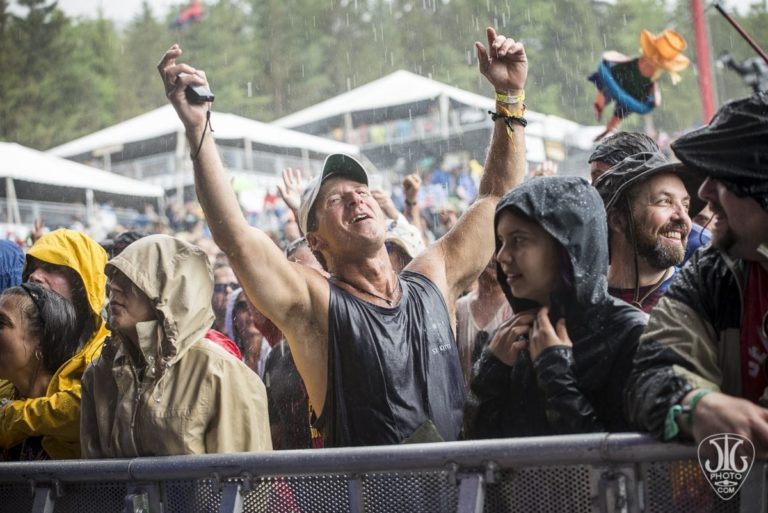
    Over the past decade, music festivals have become the summer thing to do, and not just for live music junkies, but for anyone looking to spend a weekend immersed in what often feels like a whole other temporary world, where rules are different, the party never ends and there is always something new to experience. This isn’t a bad thing. But sometimes there can be too much of a good thing, and every bubble does have to burst, and maybe the festival bubble has begun to push its limits.

    festival bubbleIn recent years, even the already massive festivals have grown in big ways; we’ve seen Coachella selling out one weekend, to expanding to two weekends and selling out just as easily. Sasquatch, Lollapalooza and Governor’s Ball, all sell out often before full lineups are even announced. People are excited to get in on the experience, and while that isn’t a bad thing, if a festival is selling out before a lineup is announced, perhaps that says something about the reasons many people attend. Maybe now it is often more about the experience, than the bands playing a certain event. A decade ago the headliners at the major U.S. festivals were drastically varied and it seemed they not dare book the same headliners as their counterparts across the country. People from the east coast would travel west to Coachella to see a lineup they couldn’t see anywhere else. Bonnaroo’s lineup would be so unique that it was hard to pass up for people all around the nation.
    Now there are dozens of options and large scale events popping up in every corner of the country, making travel easier for fans, while lineups are sometimes starting to look eerily similar. It’s more common to see one, if not several of the same headliners on many festivals. Promoters can meet fan desires to see certain acts, but the lineups are beginning to look more and more similar. The number of festival-ready big name bands is not a never ending list, and those bands, like fans, only have a finite amount of weekends per summer. It’s not a bad thing, for now, but a change will have to come and already slowly is. Trends change, genres rise and fall out of popularity, and in recent years we’ve seen major festivals that used to be alternative rock leaning will have more and more major electronic acts at the top of their bills. It’s what the youth buying the tickets want, so it’s what they get. While it makes sense to promoters and the bottom line, aside from these electronic acts that have been on the rise in recent years, there has not been as many headliner level acts in specifically the rock/alternative world, climbing the ranks to headliner status. This is not the festival world’s fault, but more a reflection on how the music industry overall has changed. Acts like Jack White, The Black Keys, Florence and the Machine and The Killers are all top notch headlining acts, but we have reached a point when you see their names at the top of lineup after lineup and you find yourself staring to say “Oh, cool, makes sense” instead of “Wow, I HAVE to be there”. You don’t HAVE to be there, at the one across the country, because there’s a good chance you’ll see all the same acts at the top of a lineup in your region.

    Promoters see the festival trend skyrocketing and there are dozens of new festivals created each year that want to catch the wave. Markets are now beginning to become saturated and toes are being stepped on. Governor’s Ball, held every June since 2011 on Randall’s Island in New York City, is an independent company that in the last month is dealing with a serious threat. AEG Live, creators of Coachella, Firefly and Hangout, have their sights set on Meadows Corona Park in Queens as the site of a new festival, Panorama. Panorama would take place only weeks after Governor’s Ball, and while it’s been reported they don’t yet have all permits in place, booking has started. It was recently announced that the organizers of Governor’s Ball have created a petition, asking Mayor de Blasio to reject AEG Live’s permits, saying it would potentially be pushing them, a smaller local business, out of the picture. They ask that the event be held at a different time, so both festivals can succeed.

    However, even if Governor’s Ball gets its way and AEG is forced to apply for permits for a different weekend, it might be that having two large scale events, presumably targeting the same audience, would still have a similar effect. There is after all, a limit on the disposable income the typical festival goer has to spend per year. With it being common that a major weekend festival has a ticket price of over $200, and factoring in any time off from work, travel, accommodations, supplies, food and drink for the weekend that one unavoidably has to spend, realistically the amount of festivals one fan can attend is very likely a smaller number than the ones they would desire to. Eventually it must start to happen that there is simply too much of a festival fan’s favorite thing. Too many “must see” events to choose from in one region will eventually become a bad thing, when fans have to pick and choose between a variety of great options but cutting some out in the process. At some point the amount of major festivals will grow to a point where more people are needed to purchase tickets to let them all successfully continue on as they are than exist in any given market. Increased sponsorship money will be needed to cover costs for all of them. There are only so many companies willing to shell out thousands for festival sponsorship, and competition will rise to claim them.

    The largest festivals nationwide is one aspect of the growing festival bubble, but on a smaller scale, the scene of indie rock and jam band oriented festivals is also exploding. In the Northeast alone there are a handful of festivals to choose from each weekend in the warmer months. These are often far more affordable than the larger festivals, but again, there are only so many weekends in the summer. It’s always been hard enough to get a festival off the ground and then able to turn a profit, but now the competition is coming from a growing number of places. There are also smaller, one day events popping up at every turn. A more inexpensive option with lighted commitment can be an attractive option for many possible attendees, but for now, promoters want to get in on the game and ride the wave of festival hype as long as possible. Ask anyone who has been involved in organizing a large scale event, and it is never easy, no matter how many years you do it. Permits, competitive booking, staffing, weather, and now the threat of competition from five guys in your neighborhood trying to do the same thing as you, thanks to perceived success of the overall festival culture.

    The greater number of festivals being created with still the same amount of festival ready bands, and weekends available, makes for tough competition. The same bands are desired from festivals not just nationwide but worldwide, every weekend, and when demand goes up, so does price. Bands can ask for more money and festivals have to pay if they want an impressive lineup, and with that, ticket prices increase. The issue becomes how large an act can a festival book before it becomes cost-prohibitive and fans find somewhere else to spend their money; at some point a festival goer will tire of so many lineups looking so similar. Or perhaps festival culture and the experience can become more important than the music itself. Maybe for a growing number of young people, the drugs, the people and the party are the appeal more so than discovering a new favorite band or hearing your favorite songs. Blogs writing about festival fashion looks for the year make many cringe, but they also attract a new audience, looking to jump into a hip trendy new world of partying, where there’s also good music playing in the background.

    Is this boom in festival popularity just a fad, and will attending a festival still be the “it” thing to do for young people a decade from now? There were few major festivals throughout the 60’s and 70’s, and then the rise of touring festivals like Lollapalooza and H.O.R.D.E. in the 90’s, but it was not until the last decade or so when we begin to see an incredible boom of weekend long festivals. Young people wanting to get involved in an environment that consists of a weekend long party where new people, new music, and a wide array of ways to enjoy yourself at every turn seems logical. It almost seems strange that it took so long for a festival resurgence, when young people would always have been interested in a large festival scene if one was presented to them.

    Perhaps once the bubble begins to reach its true limit, a festival won’t be able to get away with booking similar lineups and having a similar overall feel as its counterparts. Maybe as competition rises it will force organizers to think outside the box and ensure that the experience a fan can have at their event is unlike any other of its competitors. We see so many festivals pop up then fade away in a couple years, and some that don’t even make it out of their inaugural year with their hopes being dashed for a comeback.

    Maybe the bubble isn’t ready to burst just yet, with major festivals still selling out in minutes nationwide and some smaller ones getting off the ground each year, but waves of popularity this big don’t always last forever. It will come down to the limits that money and time put on organizers, but equally importantly, the fans. Nobody can accurately predict the future but every bubble has to burst and when it does, inevitably not all will survive. Maybe new, innovative types of events will arise. Promoters just entering this exciting world likely see opportunity, but the point of too much of a good thing may be just around the corner. For now, these are is exciting times for fans to experience live music. Organizers want audiences at their events, and they’ll do all they can to keep fans coming back, a balance of keeping supporters happy and keeping themselves not just exciting, but surviving for one more year.

  • NY Senator Chuck Schumer Introduces Anti-Ticket-Buying-Bot

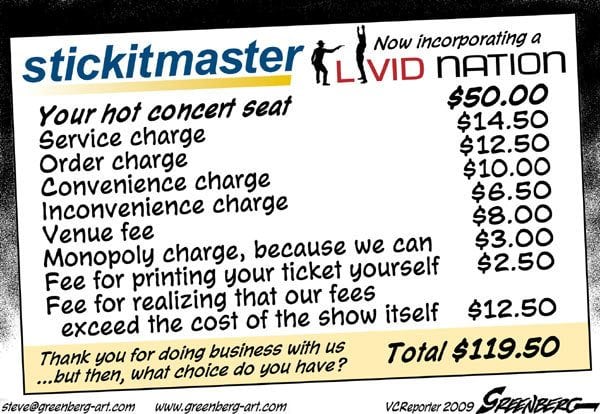
    As if outrageous “service” and “convenience” charges from maniacal agencies like Live Nation and Recording Academy weren’t bad enough, live music fans are also up against a different breed of evil: scalpers. And what’s worse? The scalpers have gone digital. NY Senator Chuck Schumer has a possible solution.

    No longer is a fan’s worst enemy the guy who bought 10 tickets for face value, only to turn around and sell eight on the corner outside the parking lot of the sold-out show for twice the value. Now, resellers (individuals and companies alike) are developing algorithms and programs to snatch up tickets en mass solely for the purpose of redistribution at a huge markup through sites like StubHub, Craigslist and even Facebook. Bottom line: While scalping has always had an effect on the ticket resale market, the problem has become increasingly substantial with the increased use of technology.

    Chuck SchumerLuckily, Senator Chuck Schumer has taken action, introducing legislation that would ban ticket buying “bots” in New York state. While this is new legislation for New York, the ban already exists in 14 other states. As many online commenters have joked, this move may have been taken in response to Chuck’s own inability to find tickets at reasonable prices for the Oct. 22 Paul McCartney show in Buffalo; currently nosebleed seats average $275+ while floor seats will catch around a cool $500. By the way – face value for nosebleed tickets was $29.50, including fees.
    Joking aside, these bots are taking far more than a small slice of tickets being sold. According to varying sources, ticketing robots can account for 30-60 percent of tickets sold for certain events. Artists have tried to combat this in a variety of ways in order to give their fans a fair shake; Foo Fighters tried to keep everything in-house and LCD Soundsystem added shows for their farewell run, for example. Still, these tactics are limited when it comes to the clever scumminess that is the mind of the scalper.

    Chuck SchumerUnder the new legislation, companies or individuals caught using “bots” to scoop up tickets solely for the sake of resale would be fined up to $1,000 per ticket, with the same fine enforced upon secondary sellers. While that sounds great on paper and would be even better in reality, the unfortunate truth is that in these bans are tough to enforce. In addition to standard reselling sites like StubHub, for example, there are numerous ways tickets can be unfairly obtained and resold. Still, a focus on correcting what has become a widespread foul practice is a step in the right direction for music fans everywhere.
    All that said, there is one important sentiment worth mentioning: Some people pay what they deserve to pay. Don’t be stupid. Don’t be the guy who spent $500 for a behind-the-stage seat at the Dead 50 reunion shows. There is something to be said for supply and demand, and the ignorance of the customer is at the fulcrum of the demand. Think about where your tickets are coming from. There are plenty of great sites, such as cashortrade.org, that forbid reselling tickets over face value. Similarly, there are plenty of online communities that operate under the same principles. Best of all, know the right people and look out for your own family and friends. Don’t scalp, and don’t be scalped. If you find yourself about to click “buy” on a ticket that is being sold for way over face value, ask yourself two questions: “Whose pockets am I lining?” and, just as important, “Is it really worth it?”

  • NYS Music Magnaball Roundtable

    It’s been two weeks since Phish’s Magnaball festival and the buzz from the weekend is still in the air. With the summer wrapping up this weekend at Dick’s Sporting Goods Park in Commerce City, CO, we asked NYS Music staffers who attended Phish’s 10th festival what their takeaways were, following time to rest and reflect on the weekend. (Ed. note – this roundtable was conducted prior to Phish’s announcement of shows in Mexico in January)

    How does Magnaball compare to past Phish festivals?

    Jim Rizzo: Having only attended Festival 8 and Super Ball IX, I’d say that Magnaball was tops. There was a lot going on throughout the weekend that kept everyone occupied and not looking to simply sit around at their campsites. A lot of planning went into the festival, and it showed. I enjoyed myself more overall at this festival than either of the two previous festivals.

    Jess Collier: This was my sixth Phish fest, and I’m not gonna lie, it was easier when I was 17 years old. Overall, though, I felt it was pretty similar to the other Phish fests I’ve been to.

    Tim O’Shea: For some reason, Magnaball felt smaller and more intimate than Phish festivals of the past. Not sure if this was attributed to residing in RV Camping for the first time or not, but the fest as a whole felt almost like oversized regular Phish shows based on this and the fairly standard song selections for the “announced” shows.

    Darren Kemp: Having experienced two previous phishtivals – Camp Oswego and Superball – it seems apparent that every one is an obvious upgrade from the previous. Camp Phish learns from their mistakes and rectifies them with ease. With ample and usually “clean enough” portapotties, unbelievable food and beverage choices at festival reasonable pricing, fast moving shower lines, roving ice carts, professional and not overbearing security, and sound and lights that are simply incomparable to peers, Magnaball proved itself to be one of the best festival experiences of a lifetime.

    Neil Benjamin, Jr.: MagnaBall was special in a different way from Superball and Coventry. It felt more together, like every single person in attendance was lost in a world that only the people around them would understand. It was all smiles, and my interaction with fans was the best I’ve experienced. And musically, it was spot-on with exploration all over. I still enjoyed Superball as a whole more, but that had special meaning attached.

    How does Magnaball measure up against other music festivals?

    Tom Sgroi: I have been to a number of different festivals and as far as setup goes I want to say Magnaball is tops. Watkins Glen is such a perfect setup and the venue worked great. I loved how Phish organized everything and with only them playing made it feel not so rushed like other festivals.

    Darren Kemp: No comparison. Instead of running from stage to stage and making decisions about what bands to see, this “one band” festival allowed the days to be about community, art, conversation, caring, and anticipation.

    Neil Benjamin, Jr.: You can’t compare a festival where one band draws 40,000 people to ones where 100 draws the same. Phish festivals are unlike anything else in the music world.

    Jess Collier: My boyfriend insists that Phish festivals are ridiculous because there’s only one band playing. “What’s the point of throwing a music festival if it’s just one band?” is his reasoning. I never really thought of that before he first mentioned it to me, since my first three or so music festivals were all Phish fests, and I never felt the need for more bands. But once he mentioned it, I started to think that maybe it wouldn’t be the worst thing ever to add some other bands.

    Steve Malinski: It’s tough to compare. Magnaball is in its own league of festival with the pace and atmosphere. While it’s not musically packed from 10am until 2am with multiple stages of music, the time to relax and make new friends put it a notch above other festivals – quality vs. quantity, as they say.

    What was the Number 1 thing you loved about Magnaball?

    Eli Stein: Enjoying a great old band with great old friends.

    Neil Benjamin, Jr.: The relaxed atmosphere. I wasn’t bombarded with people selling this or that, and didn’t have to deal with many waste cases. That, and I got to attend it with someone super close to me and also my best friend from childhood. Made it special.

    Steve Malinski: The community. I’ve only ever experienced Phish in single-day stints so the music was the only side of Phish I saw. Getting a full 3-day immersion in it, off the grid, with other phans was really special.

    Jess Collier: The music of course!

    Jim Rizzo: The energy was incredible. I realize it’s not something concrete, but there was a certain energy throughout the festival that existed among the attendees, the band, and each and every person working the festival from the vendors to the security folks. Everyone seemed to share the same energy and excitement that this was a very special event. And that made it even more special.

    Tom Sgroi: I think I enjoyed that it was just one band, it allowed for you not to miss anything and not feel rushed.

    Tim O’Shea: The number one thing was far and away the “unannounced” but universally known secret set. Take the randomness of Superball’s Storage Jam, add tremendous visual displays and more freewheeling and psychedelic jamming and you’ve got the Drive In Set.

    Darren Kemp: Phish

    What could have been improved with Magnaball? For future Phish festivals?

    Tom Sgroi: I really liked that their was only Phish but I wouldn’t have minded a smaller band at late night.

    Steve Malinski: On-site communication of weekend activities and the layout of the grounds. While only so many paper maps can be passed around, it would have been nice to see a board or something along that line at the entrances with a large map and list of activities and events. Since it’s 2015, perhaps even a smartphone app like some other festivals make for themselves would be very beneficial. The field had a few sweet spots for stage viewing but the slant of the field was slightly unfriendly for seeing the stage in some areas. Projection screens on the sides of the stage would have prevented a few achy necks. Warm showers. Though, ice cold showers are a good wakeup call.

    Jess Collier: If you’re going to make people camp that far away, maybe give them mini-sites or storage lockers or something closer to the concert grounds so they don’t have to walk the hour round trip to pick up a hoodie during setbreak. Also, screens showing what’s going on onstage would have been great for fans who didn’t want to muscle their way up through the crowd to get a good view.

    Tim O’Shea: Portable bathrooms could have been managed a little better. Page side porto’s were extremely crowded and somewhat clusterfuck-ish. And the RV camping area didn’t seem to be equipped with enough either. Thank goodness for the small public restroom with flushable toilets that everyone knew about but still kept hush hush about.

    Eli Stein: Directional signage and signage in general seemed to be an after thought. Other festivals I have been to are very easy to navigate and make ample use of clear signs. The festival signs at Magnaball mixed in with the general signs used at the racetrack. They needed to be more clearly from the festival and also needed to more clearly point the way. Big room for improvement here.

    Jim Rizzo: The walks from the campsites to the festival grounds were very long. There were also walkways and exits that did not double as entrances, which made things confusing when people tried to visit friends in other campgrounds and make their way back to their own, having to cut through the festival grounds. So I guess improved directional signage would have been very helpful. They should keep this in mind for future festivals. Signage should be extended to the drive in to allow people to better find various campgrounds to at least try to stay in the same campground as friends they aren’t arriving with.

    Neil Benjamin, Jr.: Security into the show area was annoying and slow. Let us bring beer into that area and I’m a happy man.

    What can other music festivals learn from Phish festivals?

    Jess Collier: I love the atmosphere at Phish festivals. They always have the groups of characters roaming about, and the collaborative art installations, both of which could be supercool at a lot of other festivals. I like the idea of themes for the festival as well.

    Eli Stein: The quality of sound at Magnaball was as good as any concert I have attended. Outdoor concerts in general and festivals specifically often have horrible sound. Other festivals should make this more of a priority.

    Steve Malinski: Other festivals can look up to the security and law enforcement at a Phish festival. They were remarkably friendly and cordial.

    What was the best moment of the festival for you? Why?

    Neil Benjamin, Jr.: “Blaze On,” hands down. Have had a really rough two years personally and that song picks me up and makes me smile. I got to stand arm-in-arm with my best friend since childhood, singing those lyrics of redemption. It made me tear up for the third time ever at a Phish show. If I could recreate that moment every day, I would. Bumping into old tour friends is up there, too. I just love seeing old faces from years past.

    Jim Rizzo: The best moment for me was definitely the Drive In Set. It felt like it was… IT. All the energy from the previous incredible three sets of music came to a head with that set as the anticipation built while attendees arrived wondering what was going to happen.

    Eli Stein: The jam in Tweezer mirrored the jam in Weekapaug from Colgate 4/23/93, which is one of my favorite Phish moments of all time, so that’s an easy pick for best moment for me personally.

    Anastasia Marie Michalowskij: The thing I loved about Magnaball was how laid back it was. Comparatively it was a cool change of pace to go to a music featival and only see one musical act preform the whole weekend. I also loved all of the instillation art and the featured film. It was nice to see so many other creative artforms being celebrated.

    Steve Malinski: Day 2, Set 2: I broke away from my friends for a set so I could do my best to get a good view and managed to get myself to a perfect spot next to the soundboard, no one in front of me. As the set went on a small cluster of set friends formed and we all stood our ground there for the set. It was really great to share the fun of the music with complete strangers.

    Darren Kemp: Ending the weekend on the Ferris wheel with my beautiful new girlfriend as fireworks went off over our heads was one of the most memorable experiences of my life.

    Jess Collier: “Simple” has been one of my favorite Phish songs since I started listening to them about 20 years ago, so I was thrilled when the first show on the first night opened with that wonderful tune. The beginning of the fest holds so much promise and so much anticipation, so there are few things that compare with the very first chords of the first show, anyway. And to make it my favorite song? Just magic.

  • Shapiro Does the Right Thing for “Fare Thee Well”

    Fare Thee Well promotor Peter Shapiro released a statement to fans on June 10, explaining the ticketing situation and addressing some fans’ concerns over receiving tickets for seats they did not request through GDTS TOO. In it, he talks about how he wanted to use the old mail ordering process to essentially make these shows feel just like they did in the 1980s and 90s, when fans sent in money orders in decorated envelopes in hopes of snagging tickets to see the Grateful Dead. He even offers refunds to those who are not satisfied with what they received from GDTS TOO.

    The most encouraging piece is that he is offering to refund the difference between what a fan paid for the seats he or she received if that person does not get the desired experience from the shows. I have to give Shapiro a round of applause, as this has been a difficult situation from the start.

    He also explains how promotors decided to open up the general admission portion of the venue to fit more fans inside. In a commendable response, Shapiro comes across as a true fan and seems quite sincere. I called for him to give an explanation, as did many other media outlets, of what has become a ticketing fiasco, and Shapiro delivered.

    He closes out the note with a lyric from “Terrapin Station,” where Jerry Garcia sings, “statements just seem vain at last,” making it seem like it’s in the promotors’ self interest and not the fans’. Maybe he should have completed the lyrics: “Some rise, some fall, to get to Terrapin,” as that’s how it feels to some fans.

    Either way, I pat Shapiro on the back. I won’t even call this damage control — he stood up, gave an explanation, offered a solution to unhappy ticket holders and offers encouragement in advance of the shows.

    Dear Mail Order Ticket Purchasers,

    It’s hard to believe that it’s already June. Soon we will be together in Santa Clara and Chicago celebrating 50 years of the music of the Grateful Dead. We think you know by now that we are fans too, and your experience at the event is important to us, so before we get there, we want to address an issue that has affected a number of you who ordered your tickets through GDTS TOO mail order.

    We decided early on – even though it would have been easier for us to follow the well-trodden path of nearly every promoter in the past 20 years and sell 100% of the “Fare Thee Well” tickets online – that we wanted to honor the Grateful Dead spirit and make a portion of the tickets available through GDTS TOO mail order.

    When it became clear the extent to which Dead50 was resonating with people and how many of you wanted to be part of it (over half a million mail order ticket requests), we added capacity by changing the reserved floor sections to GA and opening up the sections behind the stage – quadrupling the initial mail order allotment.

    Since the mail order process began in January, by the time we were able to make these ticket allotment changes and update our seating chart, the ticket requests and money orders had already been sent in. Despite the extra work opening up the floor and adding more mail order tickets made for us and the GDTS TOO crew, we still felt this was the best way to get more core Grateful Dead fans into the shows, so we set out to make our new seating configuration work within the confines of the January mail order ticket request submission rules.

    It was not feasible for the GDTS TOO crew to reach out to everyone who had sent in money orders for $199.50 or other priced tickets to discuss preferred alternatives to reserved floor seats or other selected seats that were no longer available, nor were partial refunds a practical option. Also, GDTS TOO did not think it was right to force fans who had ordered reserved floor seats to take general admission standing room tickets instead — anyone who had ever been to a Grateful Dead show would be at least 20 years older now and had probably ordered reserved seats for a good reason. Nor was it possible to fit everyone who had ordered reserved floor seats into the existing allotment of $199.50 seats; there simply were not enough available.

    At that point, we could have easily decided that these orders simply couldn’t be fulfilled and returned the uncashed money orders without tickets. Instead, in the spirit of trying to accommodate as many fans as possible, we decided to allocate those reserved floor and other specific requests to other available seats using the same price points. We know how disappointing mail order rejection letters are, especially since these are the band’s final shows, so we sought to figure out a way to get as many of you as possible an envelope with tickets in it.

    REFUND INFORMATION

    If you received tickets by mail order for seats in a different section than what you ordered on your envelope or were charged more than the price of such tickets on the seating chart made available at the time your order was mailed, and you no longer wish to attend “Fare Thee Well,” you may return your tickets to GDTS TOO for a full refund. Tickets must be received in the GDTS TOO office by Monday, June 22nd to be eligible. See gdtstoo.com for more information on how to obtain a full refund.

    If you received tickets by mail order and were charged more than the price of such tickets on the seating chart made available at the time their orders were mailed and still wish to attend “Fare Thee Well,” we personally encourage you to attend the shows and sit in the seats you received via mail order. If you’re not satisfied that you got your money’s worth, we will refund the difference between what you paid and the price of such tickets on the seating chart made available at the time your order was mailed. Save your ticket stubs, and in the week following the shows, check the FAQ section of dead50.net for information on how to obtain a partial refund. However, all requests for partial refunds must be received by Monday, July 20th to be eligible.

    These refund offers apply to all GDTS TOO mail order ticket purchasers who received seats in a different section than what was shown in the initial seating chart or were charged more than the price of such tickets on the seating chart made available at the time their orders were mailed.

    Please understand that we did what we did in order to enable as many of you as possible to have your ticket requests fulfilled. Given the lighting, sound and video elements we have created specifically for these shows, we are confident that all mail order ticket holders will enjoy an amazing experience.

    Statements just seem vain at last,

    Peter Shapiro
    Mike Luba & Don Sullivan (Madison House Presents)
    Promoters, “Fare Thee Well”

    Peter Shapiro’s statement on Fare Thee Well

  • Pantera To Headline Future Mayhem Festival?

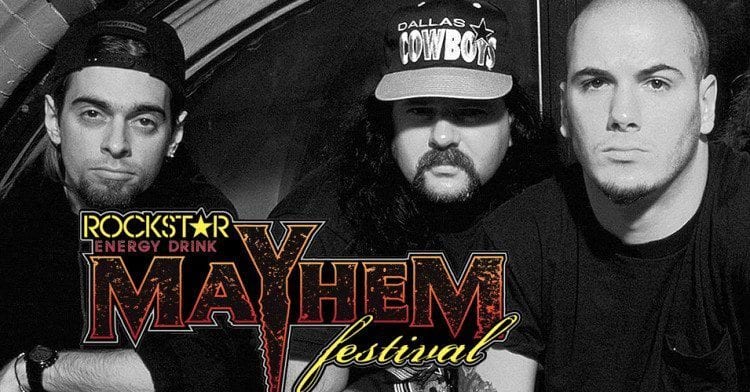
    Could Pantera finally reunite and headline a future Rockstar Energy Drink Mayhem Festival? Probably not but you never know, but if tour co-founder John Reese had his way it would have happened already Reese said in an interview with Examiner.com. Reese even went as far as to saying that he even approached the remaining member’s about the venture.

    pantera mayhem festivalReese stated “I’ve even approached them about doing it. Do I think it’s going to happen? I have no idea. I know that a heavy, heavy tragedy happened and there are some hard feelings, but it’s up to those three dudes to decide if they ever want to do something or not. If they would decide to do I would support it wholeheartedly and I would do whatever I could to be involved. But it’s up to them.”
    Still shaken by his brother’s death for over 10 years now. Vinnie Paul has stated “Dime was Pantera,” he as has also stated about the possibility of a reunion “it would never happen and not interested.” Of course frontman Phil Anselmo and Rex Brown are open to the idea even with the bad blood that still remains between Paul and Anselmo. In 2004 Dimebag Darrell was shot and murdered by a fan on stage during the first minute of the first song in the set of a Damage Plan show in Columbus, Ohio.

    Pantera released nine studio albums before the band officially broke in 2003.

  • Thanks, Dave: A Musical Tribute to the Legendary Late Night Show Host

    Self deprecating, awkward, obtuse, David Letterman. I grew up with this man. His short-lived show on NBC mornings following the Today Show was something I looked forward to more than the Price is Right on days off from school. My sense of humor was formed by this man. He combined the legacy of Johnny Carson and the lunacy of Looney Tunes and mixed it with a smidge of humanity. Dave changed the game.

    letterman zevon
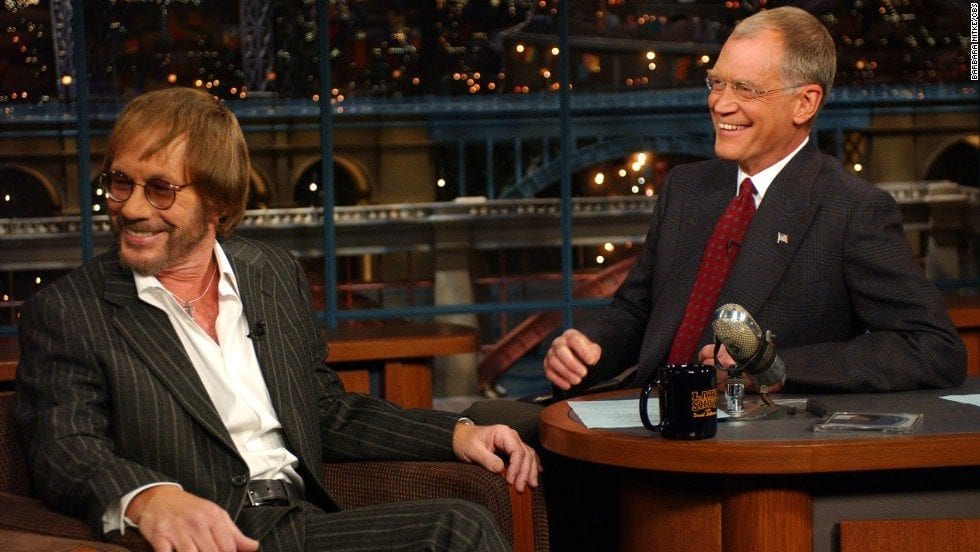
    David Letterman with Warren Zevon

    May 20, 2015 was a sad day for me. My man Letterman was heading off into the sunset. After tonight the television world will be much less funny. He has influenced me in more ways than I really considered until he announced his retirement.

    There have been many tributes to David Letterman in the past few weeks. Most of them have focused on his comedy. The man is a natural in that department. I owe a lot of my sense of humor to this legendary performer. Thanks, Dave.

    That said, Letterman did more for music on television than many realize. Prior to Dave, musical guests were primarily the hit makers of the day.

    Letterman brought in the fringe artists. Dave gave R.E.M. their network debut. Dave convinced legends like Bruce Springsteen and Bob Dylan to appear on television despite their reluctance to do so. He had Rage Against the Machine perform on the roof of the Ed Sullivan Theater.

    David Letterman gave artists such as Tom Waits and Warren Zevon a stage — he was a fan and a champion of Zevon and his work.

    A friend of mine, Lisa,  gave me a true fan’s perspective of the relationship between David Letterman and Warren Zevon. Lisa said of Zevon, “For anyone other than Letterman, I don’t know that he’d have set foot on the TV stage. Dave had a genuine respect for the musical genius and general intelligence of Zevon and it grew into a warm personal friendship.

    letterman zevon
    Photo courtesy http://warrenzevon.wikia.com/

    Among Warren Zevon devotees, the TV spots are treasured because we can look back and watch those to see a thumbnail of Zevon’s evolution into revealing himself to the public. Without David Letterman, we’d have only the music, the shows, and the chance encounters. He allowed more people to become familiar with the human behind the legend so the focus could be on the music, the product, rather than the legend.”

    Letterman thought so highly of Zevon that when his musical director, Paul Schaffer took time off, he made him the musical director for the show. He cared so much for him that he dedicated the entire hour of his show on October 30, 2002 to Zevon, in what would prove to be Zevon’s last appearance on network television before succumbing to lung cancer.

    Above all else, Letterman is a big fan of music, as evidenced by his Live on Letterman: Music From the Late Show series of albums produced by the show.

    What tribute to Letterman would be complete without the ubiquitous Top Ten List, so with that, here is tonight’s Top Ten List, Warren Zevon’s Top Ten Appearances on David Letterman.

    #10. Zevon sat in for Shaffer as music director on a couple of occasions. Letterman is giving Zevon some on the job training in this clip.

    #9. “Hit Somebody (The Hockey Song)”. From WZ’s last studio recording. Shaffer plays Letterman’s role in this version of a song about a Canadian farm boy looking to make it to the NHL as a goon.

    #8. “Mr. Bad Example” Pony-tailed Zevon delivering his trademark lyrical genius in this Letterman clip from 1993.

    #7. “Excitable Boy” and “The Overdraft” from Zevon’s first appearance with Letterman. He is championing Zevon right from the beginning. The interview piece shows how their sardonic wit jived.

    #6. “Trouble” and “Lawyers, Guns & Money.” This is a classic performance with Shaffer’s late ’80s version of The World’s Most Dangerous Band

    #5. “Boom Boom Mancini.” Being a boxing fan, this song re-introduced me to Zevon’s work outside of the FM radio staples. Tells the tragic story of professional boxer Ray “Boom Boom” Mancini.

    https://www.youtube.com/watch?v=GEuSTy5VRwQ

    #4. “Porcelain Monkey.” This is a late-era Zevon song that would fit comfortably on “Excitable Boy”. Take note of Sid McGinnis completely making this song his own on the guitar. Shaffer’s bands are always a great compliment to whomever they are backing but when Zevon was on the show, they truly gelled.

    #3. “Splendid Isolation.” From a 1995 appearance. This clip also contains some interview footage showing their admiration for each other. Letterman goes fanboy.

    #2. “Roland the Headless Thompson Gunner.” My favorite Zevon song and his final ever public appearance.

    #1. “The Mutineer.” Letterman announcing Zevon’s death and his tribute to his good friend. He ends this piece with a clip from Zevon’s final appearance on the show a year earlier.

    Letterman had Zevon as his only guest on his October 30, 2002 show, describing Zevon as, “the real deal. He’s not one of these pretty faced, phony rock and roll guys, he’s the real deal — a poet and a singer and a songwriter. It doesn’t get any better.” Zevon, despite the dire prognosis of inoperable lung cancer, kept his typical cynical sense of humor, stating, “Dave is the best friend my music has ever had.” Letterman brought Zevon’s music to the masses, even when Zevon showed resistance.

    This appearance proved to be Zevon’s final public performance. You’d never know he was suffering from inoperable lung cancer from his performance and humor on this show. I highly recommend checking out the entire episode available on YouTube. It’s strange. It’s funny. It’s hearwarming. It’s pure Letterman and Zevon.

    Letterman may have retired, but his legacy to music on late night television will continue. Thanks, Dave.

  • Festival Packing List: Things You Don’t Want to Forget!

    Festival season is upon us! It’s time to get your plans in order, buy your tickets, get your crew together, and most importantly, PACK. If you’ve been to a music festival, you know what to bring – the basics like tent, ticket, change of clothes, cooler, those are a given – but what about the items that can make your festival experience that much better, that much more fun and create the ultimate music festival experience.

    The staff at NYS Music, experienced festivarians for the most part, have come up with some items you should consider for your festival packing list and bringing along with your this summer as you head out in the world of music festivals, especially throughout New York State where there are far more festivals than any other state in the country.

    Did we miss something? Let us know in the comments section what YOU consider a *must*bring*item* for music festivals.

    Electronics

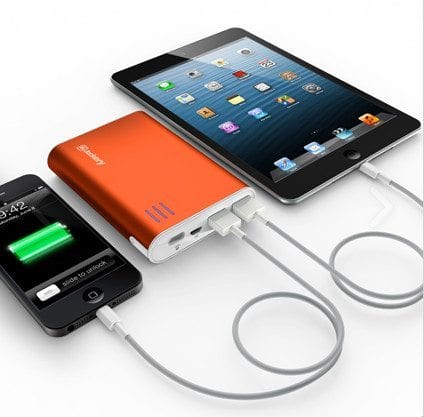
    A cell charger like Jackery or go big and get a multiple port portable charger.

    festival packing list

    An external, battery-powered speaker.

    Campsite

    A flag to spot your campsite: add one of these high enough in the air and everyone near you will use your campsite as a landmark throughout the weekend.

    festival packing list

    Solar powered lights to surround your tent and battery-powered lights that line the inside of an EZ Up.

    Candles to keep away bugs

    Headlamp for navigating back to your tent in the dark.

    Portable tent fan

    festival packing list

    WD40 and Duct tape – if it moves and shouldn’t, Duct Tape. If it doesn’t move and should, WD40

    Drinking and eating

    A flask that turns a baby doll into a beverage container

    Want to make friends at any festival? Bring copious amounts of extra bacon. Be the bacon fairy.

    Liquor in plastic bottles with mixers clearly labeled

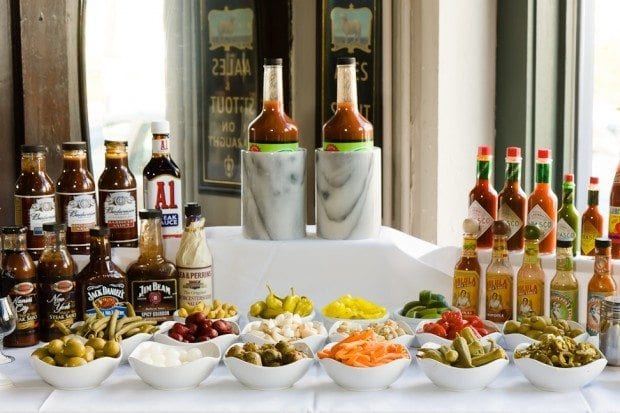
    Bloody Mary supplies

    festival packing list

    Personal items

    Extra set of car keys (save the headache of getting AAA to the fest)

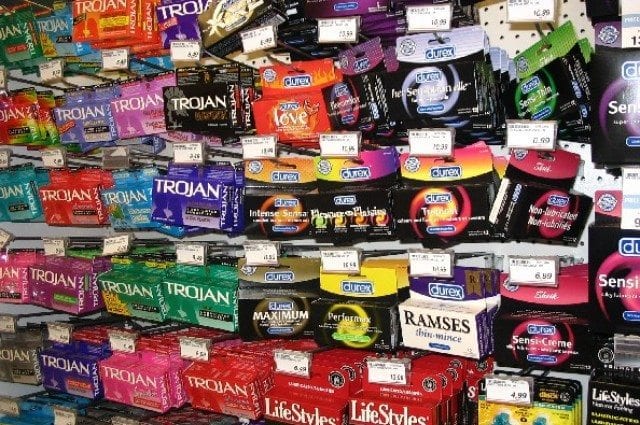
    Condoms

    festival packing list

    Extra toilet paper/tampons

    Gold bond

    Tall Wellies (aka rain boots)

    Plastic grocery bags – So many uses. Great for the rain and if you need something to keep your socks dry. It can be used as a dirty clothes bag, garbage, and are great to bag sandwiches with if you want to make some for the trek.

    Random fun stuff

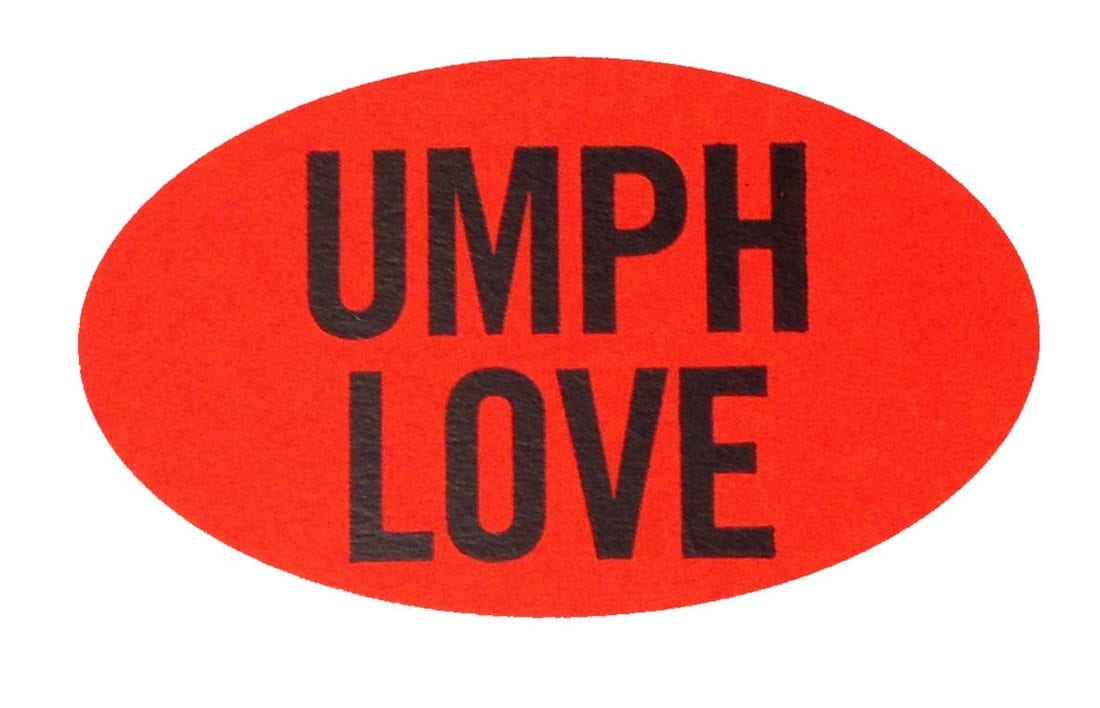
    A roll of Umph Love stickers and Walkie-Talkies

    festival packing list

    Arts and crafts and games for the kids

    A wagon for lugging in gear and/or for the kids to ride in

    Hoops, costumes, things for late night madness.

    Collaborative clothing: “There was a guy at moe.’s Tropical Throe.down this year who brought a white T-shirt that had maybe like the name of the fest and one lyric line printed on it. He brought markers, and the day he wore it, he had everyone he talked to sign it. He posted pics of it on the group Facebook when we all got home, and it was cool to see how it ended up – there were a lot of dicks and other silly pics, of course, but there were a lot of cool signatures and messages on it, too.” – Jess Collier.

    festival packing list

  • The Top 10 Fictional Hard Rock/Metal Bands

    Hard rock and heavy metal never seem to get the spotlight much in general.  But over the modern era of movies and television, some of that media did have the balls to put metal and hard rock front and center.  And when it came to light, various fictional bands were made for our viewing and listening pleasure that we all salivated over and just thought “man…if only they were REAL.”  So now let’s take a look at the top ten fictional hard rock and metal bands.

    10. Stillwater from ‘Almost Famous’ (2000)

    This movie may not have been a box office smash, but did generate Oscar nominations and a Grammy for best movie soundtrack.  The fictional band Stillwater was a 70’s hard rock band featured in this flick, as a young journalist follows them on the road.  This movie has become a cult classic and has been praised by critics and fans alike.

    9. The Foreskins from ‘How I Met Your Mother’

    I was never a fan of this show, (GASP!) however, check out these hilarious sequences below.  It’s nice to see that a primetime network sitcom had it in them to highlight heavy metal.

    8. Wyld Stallyns from the ‘Bill And Ted’ movies (1989, 1991)

    With so much buzz about Bill and Ted 3 a possibility in the near future, let’s take a look at the greatness that is the Wyld Stallyns and why they SHOULD have opened for Iron Maiden.  We can’t wait to see what the Wyld Stallyns have been up to in present time.

    7. Clam Daddy from ‘Pray For Rock & Roll’ (2003)

    Someone once close to me showed me this movie years ago, and man, what an unforgettable and overlooked movie.  It’s crammed with drama and unforgettable moments, but more importantly, it has lots of killer music.  These chicks rock hard, but struggle trying to get that major label deal that every band wants.  Check out the scene below.

    6. Satan’s Night Out/The Vampire Lestat from ‘Queen Of The Damned’ 2001

    If vampires were real, I hope they would put on a concert like this. (And maybe not sound like Jonathon Davis)

    5. The Lone Rangers from ‘Airheads’ (1994)

    I was a radio student in college and our professor MADE us watch this movie.  If I didn’t include it on this list, someone would have hunted me down.

    4. Crucial Taunt from the ‘Wayne’s World’ movies (1992,1993)

    Everyone was in love with Cassandra Wong when these movies came out.  And if Wayne and Garth were doing this in the YouTube era….watch out!

    3. Steel Dragon from ‘Rockstar’ (2001)

    SPOILER ALERT.  Yes…this movie is really about Tim ‘The Ripper” Owens and his stint with Judas Priest.  So if you know that whole ordeal then you know what to expect in this movie.  However, it was awesome seeing Zakk Wylde and Jason Bonham in the same band.  And yes that is Myles Kennedy of Alter Bridge at this scene at the end.

    2. Spinal Tap from ‘This Is Spinal Tap’ (1984)

    I’m sure there’s a lot of pissed off metal heads right now for this not being number one.  But hey, it’s on the list. ‘This Is Spinal Tap’ is like the holy Bible for metal heads and a hilarious movie.

    1. Dethklok from ‘Metalocalypse’

    This is the unquestionable greatest cartoon ever and the most powerful fictional band to ever slay the universe.  There is no justifying this fictional band for being number one.  Yes, there is a Dethklok that tours….but that doesn’t count.

    So what order do you think this list should be in, and who is your number one fictional band.  What fictional band would you include on this list that was not mentioned?  Sound off in the comments below.

  • Record Store Day Rewind 2015

    Vinyl record sales are hot again. In the past three years, this segment of the music industry has seen a huge resurgence. Sales of music in the vinyl format are up seventy per cent this year over the same time period last year. Some analysts see this as simply a fad with a bubble that is ready to burst, but I beg to differ.

    I’ve been participating in Record Store Day – created in 2008 as a way to help the mom and pop record stores stay afloat. Each year it has gotten bigger. This past Black Friday for 2015, a second Record Store Day was added to the calendar. Special releases are made and released on these days leading to months of anticipation for the avid music fan.

    RSD 2015 ReImagine Records (10)

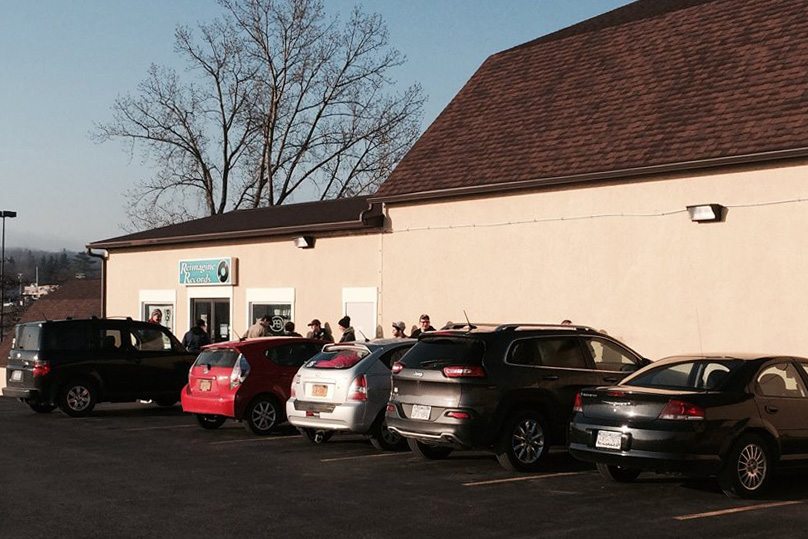
    For this year’s RSD, I recruited a couple of my buddies to join in the festivities. A new store opened in New Hartford near Sangertown Mall, called ReImagine Records,  July of 2014. That was our first stop of the day. Our other stops were Music and More on Seneca Turnpike in New Hartford, not far from ReImagine, and the area’s oldest record store, Off-Center Records, on Bleecker Street in Downtown Utica.

    My friend Bruce is a big fan of The Flaming Lips. The Lips were releasing three 10” records to commemorate the 20th anniversary of their album Clouds Taste Metallic. Those three records were at the top of Bruce’s list. This was his second RSD. We went together last year, although he didn’t have a turntable at that point. He’s since gotten one and is now once again hooked on vinyl.

    Dan was a RSD virgin. When I asked if he wanted to join us this year, his response was, “Been waiting for you to ask, like a prom date.” Dan’s a big Clutch fan so he was on the hunt for anything Clutch related.

    RSD 2015

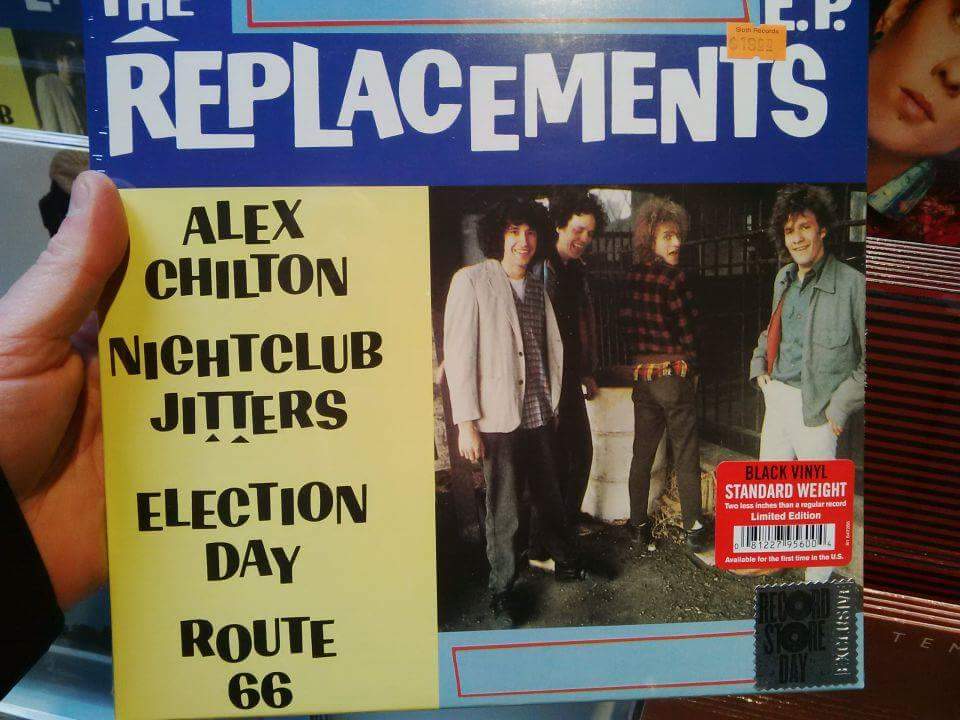
    I had no real scores in mind, although I did have slim hopes of scoring the 10” release from The Replacements. I was there purely for the enjoyment of the experience. Many of the hyped RSD releases wind up being snapped up quickly by the early birds, so I rarely put much hope in picking up one of those. Unfortunately, many of these highly sought releases end up on eBay within minutes of stores opening their doors. That’s the ugly part of Record Store Day.

    We arrived at our first destination at 7:45 thinking we were good for the 8:00 opening. We soon learned that there were many others more anxious than us and found ourselves in a line to check out the new releases. The atmosphere in the store was one of excitement. There was barely room to move yet there we were, music fans from teenagers to men in their sixties, flipping, eyeballing other’s scores, talking music.

    With me, the allure of music, specifically records, is the interaction. Music is communal by nature. In my teen years, my friends and I made trips to the records stores part of our lives. We’d talk about music, while listening to music, on our way to buy more music to talk about. That circle hasn’t been broken in all this time.

    Bruce was able to find one of The Flaming Lips’ records on his list in our hunt. Dan scored a live Clutch album. I wasn’t able to get that Replacements release but I made some great scores nonetheless.

    The point of the day for me wasn’t actual purchases.  To me, a visit to a record store is about the experience. The people talking about that which they are so passionate. The social experience of it all. This thought was confirmed in the post-mortem at our favorite watering hole, Stockdale’s in Oriskany. While sitting around slugging back some tasty beers and talking about music, I received a text from my friend Tom, who lives in Calgary, Alberta, Canada. Tom was just beginning his RSD and sent me a picture of The Replacements’ record, “Alex Chilton” asking, “Nineteen Canuck bucks. Need?” The international brotherhood of record geeks, connecting electronically! Tom picked up that record for me as well as another one of the Lips’ that Bruce had been seeking.

    RSD 2015 Music and More (4)

    However, out of the myriad releases being promoted for that specific day, all four of us went home with items we found either in the bargain bins or in the regular used record racks. Dan’s prize pick of the day was a beat up two dollar copy of the album Restrictions by the early ’70s blues-rock band Cactus. Mine, a four-dollar copy of The Clash’s first album. Tom’s favorite acquisition wasn’t even on vinyl. He picked up a copy of a Joe Strummer and the Mescaleros CD. Bruce’s favorite pick was obviously his Lips but he also scored a great copy of the Love & Rockets album Earth, Sun, Moon. The day and the special releases drew us in on this particular day but what we took with us are what we valued.

    I asked Bruce, Dan and Tom what they took away from Record Store Day. Dan explained that he had the most fun building his list of bands to seek and artists he thought were fitting of the media. Bruce summed it up perfectly, “It was more about the experience with buds than the musical trophies.” Tom’s takeaway was seeing a teenage girl walking out of The Inner Sleeve with a Muddy Waters album under her arm.

    Records are back! And I couldn’t be more pleased. I don’t need Record Store Day because every day is that to me. Records are real. Records are tangible. Records demand interaction. That is what makes records so special. Is it a fad? I don’t think so. I think days like this are helping to build future generations of record fans. Fans who, as Alice Cooper recently stated in an interview – “are sick of buying air.”

    Me? I’ll be crate diggin’.