Category: Album Reviews

  • Hearing Aide: Phish ‘Fuego’

    So this is weird…. usually a band releases an album, then goes on tour in support of the album.   Leave it to Phish to do the exact opposite.  Last Halloween, Phish broke tradition of playing an entire cover set as their “musical costume” and instead debuted twelve new songs.  The “Phishbill” announced the set as Wingsuit, and that it would be the foundation of the band’s new album. The upcoming Phish album has since been given the name Fuego after the opening track on the album.

    phish FuegoMost of the songs from the Halloween Wingsuit set made the cut and have been included on the Fuego album. “Halfway to the Moon” (a song that debuted live in 2010) was added as well.  The album was produced by the legendary Bob Ezrin (of Pink Floyd fame) and the studio tracks sound much different than when they first graced listeners’ ears that Halloween night.

    The title track “Fuego” kicks things off and is the beast and the potential improvisational behemoth of this album.  It was the star during the Halloween set and the same applies to the album.  The take from this track was recorded during a soundcheck at Boardwalk Hall leading up to the Halloween debut.  The first jam segment features drummer Jon Fishman attacking his snare drum with a ferocity most mortals have never seen.  Trey Anastasio (lead guitar, vocals) jumps on board and rips into an arena-melting solo.  Phish tells us that “Inside your fuego, we keep it rolling” and this becomes the central theme for the rest of the song — fun, upbeat and easy to sing along with.  The end has a smooth jam that stays within the confines of the song before slowly fading out.  The possibilities for “Fuego” jams in the live setting seem limitless.

    “The Line” takes the pace down and is a song about Memphis guard Darius Washington Jr. missing free throws at the end of the 2005 Conference USA championship.  The song’s backup vocals and ending harmonizing are reminiscent of some of the newer U2 offerings.  The lyrical concept of an enduring basketball heartbreak is admirable but the song has a cheeseball factor to it that is hard to ignore.

    “Devotion to a Dream” picks things back up and has a poppy sound with a mainstream feel to it.  The harmonizing vocals have a warm feel to them, adding some pep to the tune.  This song seems better left for Trey Anastasio Band than for Phish. “Halfway to the Moon” follows and translates tremendously onto the studio recording.  The song fits Page McConnell’s (keyboards, vocals) vocal range perfectly and his precisely-timed grand piano additions highlight this song.  The addition of some vocal processing help give “Halfway” a Floydian dream-like feeling.  Another track that has Phish fans dreaming of a big jam in its future.

    “Winterqueen” and “Sing Monica” have contradicting live-to-studio translations.  “Winterqueen” fell flat on Halloween but benefits from the studio setting, although still not a track that will be bringing people out of their seats anytime soon.  “Sing Monica” (named just “Monica” during the Wingsuit set) was performed acoustically during its debut and the studio version misses a lot of that live, acoustic charm.

    “555” is a huge star of the Fuego album.  The Mike Gordon (bass, vocals) and Scott Murawski (Max Creek, Mike Gordon Band) penned piece is groovy, funky, and oozing with life.  The addition of horns and backup singers make this a standout track that requires slow groove chair dancing.  “555” is 555 times better than “Winterqueen”.

    “Waiting All Night” certainly has a Bob Ezrin spin on it, and sends us back into the floating dream.  It’s not often Anastasio’s vocals jump out at you but the passion he sings with on top of the harmonies in “Waiting All Night” is some of his best vocal work in years.

    When “Wombat” debuted on Halloween, it was a thermonuclear explosion of awesomeness and  funk that erupted that Boardwalk Hall crowd.  The Fuego album version struggles to recreate the energy of that night and seems a bit too stiff.  That is until the 2:12 mark when backup singers and horns inject “Wombat” with the swag it seems to be missing.

    “Wingsuit” is the closing track of Fuego after being the opener during the Wingsuit set on Halloween.  This beautiful song has an excellent blend of all four band members.  Their four unique sounds complement each other to produce that distinct Phish sound. Anastasio closes the album (as he does many live shows) with another spine-tingling solo.

    Recorded during Phish’s 30th year of existence, “Fuego” continues the band’s legacy of trying new things and pushing things forward.  The infusion of Bob Ezrin is noticeably present and, when mixed with Phish, creates a sound that is very different from Phish’s other albums and worth a listen.  All that is left is to see is how these songs grow on this year’s summer tour which kicks off July 1st in Mansfield, Massachusetts.

    You can purchase Fuego here.

    Key Tracks: Fuego, Halfway to the Moon, 555

  • Hearing Aide: Brian Lindsay ‘The Monkey, The Tango, and The Boogaloo’

    Brian_CD_cover_The_Monkey1Brian Lindsay of Rochester recently released his third album, The Monkey, The Tango, and The Boogaloo under GFL music record company. The album dropped in late May and caused quite a stir in Upstate New York. Frank De Blase mentioned this album in Rochester City newspaper. “This is a work of art I highly recommend you spend some time with. In fact get two, one to share with a friend”. Blasé complimented.

    Lindsay’s band has made appearances at Rochester’s Lilac Festival, Party in the Park series, and The Bands on the Bricks series and Canandaigua Music & Arts Festival. They performed on the main stage at 4-day Oswego Harbor Festival when they opened for Herman’s Hermits Pete Noone.

    The Monkey, The Tango, and The Boogaloo opens up with the track “What Does Love Mean to You?” The song has a soulful vibe but with the hard guitar riffs and Brian’s old school rock voice; the song is a hit for any classic rock n roll fan.

    The album also comes with some slower and more country influenced songs. The song “Empty Heart” brings out one of those old bar songs that would be drinking over heartache.The chorus burst with a steady beat with the lyrics “Don’t believe in love at first sight. Love is romance and candlelight. Don’t go looking for love in a bar. Baby, don’t go drinking with an empty heart.”

    The album overall is a great listen. If listeners want to find something that is classic rock n roll with a touch of soul, and a hint of country, The Monkey, The Tango, and The Boogaloo is a mixture of everything.

    Buy The Monkey, The Tango, and The Boogaloo HERE

    Key Tracks: Empty Heart, What Does Love Mean To You?, Long Shot

  • Hearing Aide: Linkin Park’s ‘The Hunting Party’

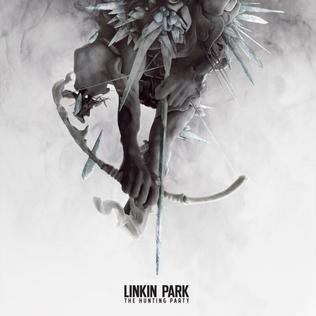
    Linkin Park drops their sixth studio album, The Hunting Party, today; to a fan base already frothing at the mouth.  hunting party

    They promised something hard, and, yeah, do they deliver.

    Their focus on electronic music is out the window. Instead, good ‘ol fashioned drums and guitar are brought back to the forefront, perhaps best showcased in the track “A Line in the Sand”.

    It’s difficult to claim that this is a return to Linkin Park’s earlier sound. In fact, it’s not. LP has gone from being a “theory” that initially incorporated traditional rock instruments with DJ record-scratching, to hip hop, to nu metal and to electronic. Each album release has contrasted in style from the last, often leaving some fans scratching their heads. Personally, I’ve found myself buying a CD, giving it a once over, only to have it sit on the shelf for a time before it ultimately grows on me. This rebellious manner by which they circumvent pressures from their record label to follow the status quo (of which Mike Shinoda has seldom shied away from referencing in previous projects – see also, Fort Minor) has served to be one of the reasons why the band has maintained relevancy since Hybrid Theory was released nearly 15 years ago.

    With the release of Collision Course in 2004, LP paired up with hip hop icon, Jay Z. Ten years later, LP is pairing up with another rap legend on the track “Guilty All the Same”.

    Rakim is as legendary as it gets in hip hop, busting out onto the sound systems of white suburbia with his smooth, lyrical flow in the mid ’80s when he was then paired up with DJ Eric B. In their prime, Eric B. and Rakim were considered by some experts to be the most influential duo in the history of the genre.

    With “Guilty All the Same” you have the aforementioned drums and guitar, and you have Chester Bennington screaming in your ears, lending little hint to the gem that resides within. Two-thirds the way in, the tempo of the music slows and dims, a figurative bow to Rakim as he starts to operate.  The R flows just as smoothly, with the same lyrical punch that he had nearly thirty years ago. Having him on the album only accentuates the greatness behind this project. The heavy and aggressive sound, along with collaborations involving Rakim, Tom Morello (Rage Against the Machine), Page Hamilton (Helmet) and Daron Malakian (System of a Down), makes this album an absolute must own.

    You can purchase The Hunting Party through the band’s website, iTunes, Amazon, and your local brick and mortar store.

    Key Tracks: “Until It’s Gone”, “A Line in the Sand”, and “Guilty All The Same”

  • Hearing Aide: Del Barber ‘Prairieography’

    Del Barber is an extremely talented young songwriter, born and raised in the Canadian Prairies, a fact that quickly becomes evident in his lyrics. When giving his latest album Prairieography a first listen, the initial thought that came to mind was that this is your basic country album. But when delving deeper into the album, really hearing what the lyrics are saying, and researching information on the artist, it soon became clear that there is so much more to this album. The songs have a familiar resonance and structure, but there is a freshness to the sound. Following up on his three previous albums, Where the City Ends (2009), Love Songs for the Last 20 (2010), and Headwaters (2012), Prairieography paints a vivid picture of rural small town living.

    The album is definitely not lacking in twangy pedal steel guitar, which is featured on every song, but the quality of the sound is unlike anything I had ever heard. That is because the reverb heard on the album was recorded inside a 150-foot grain silo! Produced by Barber and his loyal pedal steel player Bill Western, and recorded at Empire Recording in Winnipeg, “We had to disassemble the studio, scale the walls of the silo, hang microphones and a speaker,” Barber describes. “We amplified the instrument, like the pedal steel, into the silo and recorded again, then the track would have to be synched up with the song.” The effect obtained from this innovative recording technique was well worth the hard work and detail that most certainly had to be put in to achieve it. The accordion and mandolin also play important roles on this album (although they are a bit drowned out by the more dominant pedal steel). On “Peter and Jenny Lee”, the accordion comes in on the first waltz of the album, followed by “It’s Harder Than You Think”, which features real choppy licks on the mandolin, giving the song an almost reggae feel. On “Big Smoke”, if you listen carefully, you can make out audio sounds recorded from combines and augers, adding to the genuine country nature of this album.

    Barber has a sweet pure voice, which at times is reminiscent of Jackie Greene, Chris Martin, and Jackson Browne. (For those of you who enjoy singing along with your CDs, Barber sings within a manageable range of notes for the average person to be able to accompany!) It is truly worth giving the lyrics a real hard listen. Although a bit dismal at times, with songs about the prices of grain going down (in fact, there is even a clip of a radio news show describing falling grain prices inserted in the middle of “Big Smoke”), and the necessity of having to either move into a big city to make a decent living, or sell out and get a job with the corporate oil company who has set up shop in town, Barber chose to end Prairieography on a somewhat more positive note with “White Lines and Taillights”, in which Barber creates beautiful harmonies during the chorus “I pray these wheels, they turn and never stop, till I make it home to you.” When listening to this album, you can’t help but get drawn in to the rural Canadian prairie landscape, feeling the struggles, as well as the joys, right along with Barber.

    Del Barber has been quickly edging his way in to the U.S. Americana scene, having played several gigs throughout the mid-west in May, with some upcoming gigs in Texas in early June. The explosion of interest in this talented singer/songwriter was aided by an interview and video with Barber on CMTEdge.com on April 9, just prior to the release of Prairieography on April 15. If you are looking for a catchy yet deep country album with hints of Cajun boogie, folk, and even reggae, definitely give this one a listen.

    Key Tracks: Living With A Long Way To Go, Walking In A Straight Line, Big Smoke

  • Hearing Aide: Tesla ‘Simplicity’

    teslaAs Generation X approaches their 40s, many catch themselves reciting the Old Man’s diatribe, “Back in my time”. But, when the conversation gravitates towards music, it’s difficult to argue against those who wish to harken back to what was popular in the late ’80s and early ’90s.  In that time, more so than now, a wide breadth of musical genres were represented on Top-40 radio stations – rap, r&b, blues, country (who the hell is Garth Brooks?), pop, new jack swing, grunge, and even Meatloaf came back from the dead. Before they tore down the Berlin Wall, every teenager in the United States would keep a blank tape cassette in his or her stereo and curse the DJ for sneaking a Guns ‘n’ Roses track past them, after having played Whitney Houston.  I mean, who does that? Ah, but lest we forget hair metal and a band like Tesla.

    Tesla is one of those bands that helped define the metal sub-genre often associated with power ballads, catchy guitar riffs and Aqua Net. The boys out of Sacramento peaked with the 1989 release of The Great Radio Controversy, from which “Love Song” was produced.  An acoustic follow-up was released a year later, sending them back onto the charts with their rendition of the ’60s folk song, “Signs”.  However, they peaked just prior to hair metal’s collapse around 1992 when Nirvana, Pearl Jam, Soundgarden and Alice in Chains changed the focus on mainstream music. It’s only with the recent popularity of Steel Panther, and radio programs such as Hair Nation on SiriusXM, has hair metal regained popularity.

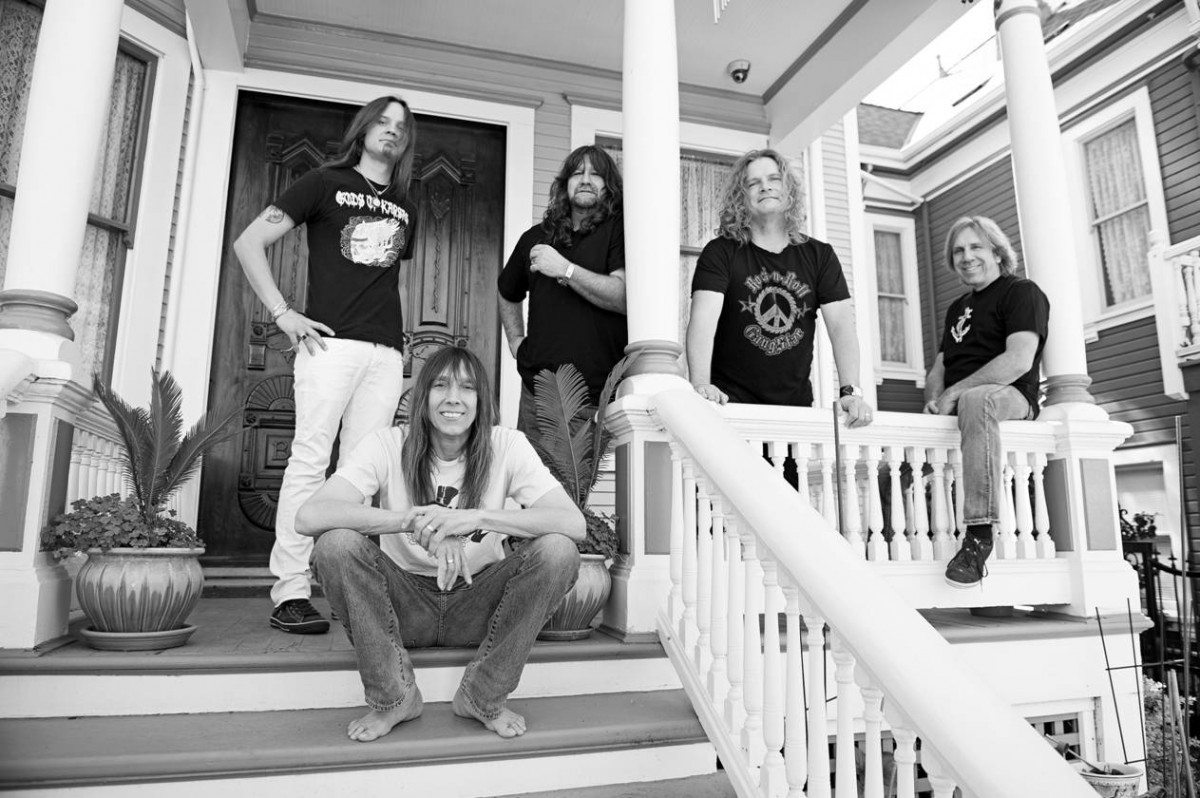
    tesla group shot
    Tesla, pictured above, is Jeff Keith (vocals), Frank Hannon (guitar), Brian Wheat (bass), Troy Luccketta (drums) and Dave Rude (guitar).

    Tesla fans have eagerly awaited a new album ever since the band released “Taste My Pain” as a stand alone single last June. However, what seems to have fans most excited about Simplicity‘s release today is the promise of hearing the return of the band’s vintage sound.

    And, that promise has been fulfilled.

    Simplicity is an intimate conversation between Tesla and the fans who grew up listening to them. From the nostalgic sound of a needle making contact with a vinyl record to introduce the opening track “MP3”, to the following message sung through Jeff Keith’s trademark raspy voice in the following track, “Ricochet”, the listener is invited to a special reunion:

    “So here we are, we’re back again/with a brand new record and ready to spin. We love our fans, want to make ’em proud/Slap it in! Turn it up loud!”

    Naturally, the ballads covering unrequited love like “Other Than Me” and “Burnout to Fade” are two of the stronger tracks on this release. It’s where they seem to shine the most, with less predictable rhyme schemes, the effort seems less forced.  Perhaps the best example of musicianship from the group is saved for the last track “Till That Day”, with a Frank Hannon’s crying guitar lingering in the memory long after the song draws to an end. Of course, it, too, is a ballad.

    If you’re interested in purchasing the album, simply click the respective links to buy via iTunes or Amazon.

    Key Tracks: Other Than Me, Burnout to Fade, Till That Day

  • Hearing Aide: Umphrey’s McGee “Similar Skin”

    For a band that has been around since 1998 and thrives mainly in the live setting, Umphrey’s McGee has pivoted focus ever so slightly with the release of Similar Skin, and in doing so, launched their own music label, Nothing Too Fancy Music.

    umphrey's mcgee similar skinPast albums have marked eras of the band’s collective psyche, such as Anchor Drops marking their presence as the next major jam band, Safety in Numbers recorded as band members began shifting outward from their familiar post-college surroundings, and Death by Stereo which followed the band’s rise and establishment of their influential prog-meets-jam sound. On Similar Skin, these children of the 80’s wear their heroes on their musical sleeve, channeling influences and well honed song-writing skills into their own unique sound, bridging two generations and putting forth their best studio effort since 2004’s Anchor Drops.
    The first six tracks of Similar Skin set the tone for what stands to be Umphrey’s finest studio material. “The Linear”, leading with a haunting hook from Ryan Stasik’s recurring bass groove frames the song, while Brendan Bayliss’ lyrics are some of the his best in recent years: “I got a little more now that I had before, if you take it all back I’d still have more”, a forward-looking view on progressing through life.

    “Cut the Cable”, opening with Bayliss singing the refrain alongside acoustic guitar, erupts into a fierce classic prog-rock song that could fit in among the sounds of bands from the 1980s who have a profound influence on Umphrey’s sound, one that is firmly rooted as their own on Similar Skin. Soaring guitar from Jake Cinninger adds depth to the track, with overlapping vocals from Bayliss rounding out what should develop and expand nicely in the live setting.

    “Hourglass” has a pure 80s synth rock vibe, akin to Australian band Icehouse while “No Diablo” could double as a Huey Lewis and The News song. Title track “Similar Skin” begins with a tribal drum intro from Kris Myers and contains lyrics that spell out a maturing look at the world as the band enters their 16th year playing and writing music together. There is deeper meaning behind the line “We all begin with a similar skin / that will evaporate”, as Bayliss notes, “We’re all the same thing, come from the same place, will all end up at the same place. All this bickering and conflict in the world…does it even matter?”, an assessment that is both poignant and wise.

    “Puppet String”, one of the best all-around songs Umphrey’s has written, finds its way from stage to studio, translating well and leaving an impression on listeners who may be used to 10 minute+ versions of this true rocker; the band is fully dialed in when reaching these peaks. While a bit hard and heavy, “Little Gift” has a hint of Def Leppard, particularly due to Jake Cinninger’s vocals. The hyper and at times erratic “Educated Guess” seems like an amalgamation, pieced together from leftover lyrics and riffs, and while complicated it is worth a few listens.

    The arching guitar crescendos throughout “Loose Ends” are matched by soaring vocals. The heavy “Hindsight” has a Helmet-like guitar groove alongside Cinninger’s lyrics; Umphrey’s occasionally tries to be a metal band, but it doesn’t always work. Final track “Bridgeless”, a classic live number, is finally brought to the studio setting. With alarm-inspiring guitar riffs, “Bridgeless” is always a crowd pleaser when played live and works well to round out Similar Skin.

    Included in the bonus materials on the album are “Morning Song” and “Room to Breathe”, two songs that shine in the live setting and both of which work well in the studio. “FF” from a private show at last month’s Summer Camp, Bayliss’ commentary on “Similar Skin” and the isolated vocals of “The Linear”, among other studio gems, make the exclusive material well worth the pre-order. An interview with Scott Hannay, who makes 8bit versions of Umphrey’s songs, dubbed Umphrey’s McNES is linked in the bonus material, as well as an 8bit version of “The Linear”

    Overall, Similar Skin has all the markings of a premiere studio album, with little to disagree with among these 11 tracks.  If you’re interested in purchasing the album or checking out all of the various packages Umphrey’s is offering along with it, click here.

    Key Tracks: The Linear, Cut the Cable, Similar Skin, Puppet String

    Catch Umphrey’s McGee this summer in the Northeast:

    August 2 – Bridgeport, CT – Gathering of the Vibes
    August 7 – Burlington, VT – Maritime Festival
    August 8 – Hampton Beach, NH – Hampton Beach Casino Ballroom
    August 9 – Upper Darby, PA – Tower Theater
    August 10 – Asbury Park, NJ – Stone Pony Summerstage

    Official website | Facebook |Band blog | Twitter | YouTube

  • Hearing Aide: Let Go Daylight ‘Traditions Carved by Wounded Hands’

    let go daylight
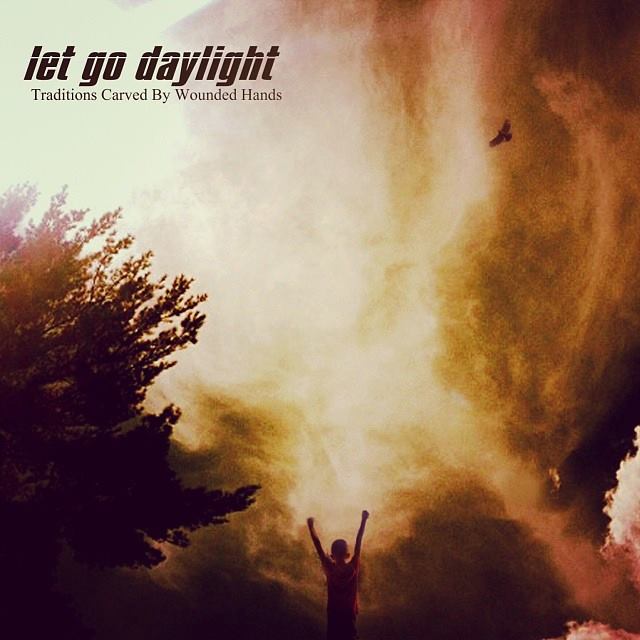
    Traditions Carved by Wounded Hands, let go daylight’s first LP, drops on Saturday, June 14th.

    Heavily steeped in the sounds of Black Sabbath and Led Zeppelin, let go daylight – they seem to market themselves in lower case – is an amalgamation of Troy musicians that have crossed over from several different bands to collaborate on this latest venture.

    Let Go Daylight’s first LP since forming in 2012, Traditions Carved by Wounded Hands successfully captures a reminiscent flare to the aforementioned Sabbath, such as with the opening track of “Honey Wagon” or “Leave Me Be”.  However, poised so close together at the beginning, it lends to some trepidation that the listener will be subjected to another Sabbath clone.  But then, a funky bass guitar played by Mike Shudt leads us into the fourth track, “The Guts and the Glory”.  As one continues to listen, you become more conscious of a transition into contemporary hard rock with “Let It Burn” to even toeing the line of punk. Ralph Renna’s bass to baritone vocals throughout the LP goes into Glenn Danzig territory with “A New Revolution”. However, a manic display of trippy guitar play by Dave White, accompanied with a strong performance by drummer Rocky Morey, at the introduction of “August Fire” showcases the band’s breadth of talent, but as it clocks in at under three and a half minutes, with a decrescendo to close out the album, I can’t help wanting more.

    This four-piece band, though together for a relative short time, each is a veteran of his trade, having cut teeth with other bands (Last Call, Flate Broke, and Thrust). Nonetheless, they compliment each other well.  After listening to this LP several times, you will start to hear a distinct sound germinated from the icons of the past and blossoming out with flashes of brilliance. Traditions is a good LP on its own, but it makes this listener perhaps more excited to hear how they progress further with their sound. If indeed the progressions realized throughout the chronology of this LP continue out to the next, that could be the makings of a standout performance.

    The band drops the LP on June 14th, coinciding the release with a live performance at Dinosaur Bar-B-Que in Troy.  If you’d like to listen to the album in full or purchase the album, click on the respective links.

    Key Tracks: The Guts and the Glory, Let It Burn, August Fire.

  • Hearing Aide: Ziggy Marley ‘Fly Rasta’

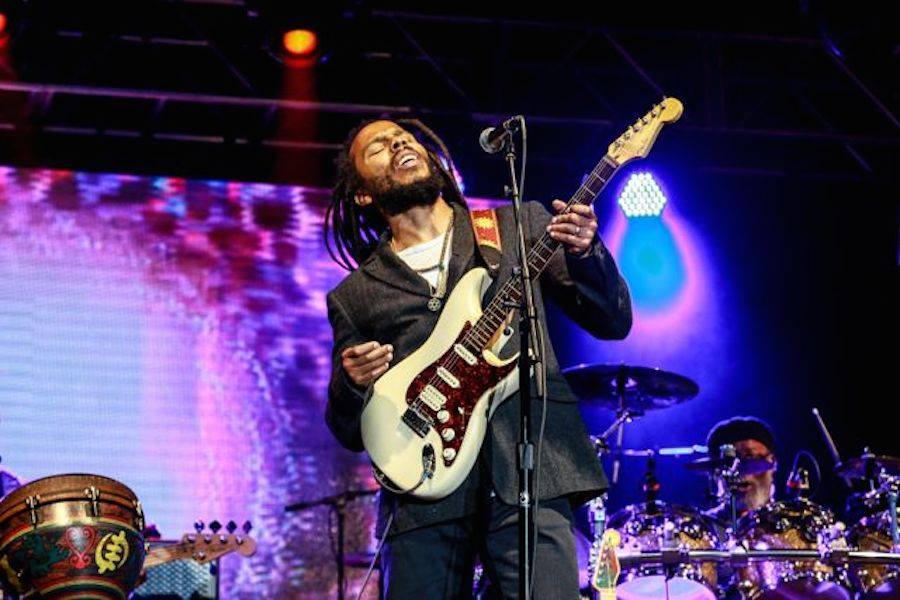
    Ziggy Marley’s new musical offering Fly Rasta combines many of the essential elements that make up Ziggy Marley as a Rastafarian, music artist, and the son of a legend. The multifaceted  record reaches to the ends of the musical spectrum, touching on pop, roots, reggae, funk and soul. Marley easily navigates through numerous genres and influences, referring to his sonic hybrid appropriately as ‘Ziggy’ music.

    Now past the age reached by his famous father, Ziggy’s discography has now arrived at its natural maturity, taking on all aspects of Marley’s philanthropist pursuits in its content and context. The album expresses the basic tenants of Rastafarianism, love, respect, hopefulness and nature through childlike expressionism uncluttered by pretense or unneeded obscure lyrical references. There is a consistency of focus on the record that is retained regardless of the thematic or genre excursions undertaken.

    ziggy marley fly rasta

    The opening track and single, ‘I Don’t Want To Live on Mars’ begins with a straight pop/rock hook that dissolves into an addictive funk groove. Marley expresses that he does not want to leave earth, nor does he have to, regardless of man’s progress or Earth’s natural disasters. This is not his father’s Reggae, this is a celebratory creation built around the integrity of Marley’s past life experiences and his forward thinking compositions that defy simple classification.

    The title track spins like a vintage dancehall groove from 1960’s Jamaica. Supported by vocal assistance from ‘U-Roy’, Marley pays his respect to and reminds his fellow ‘Knotty Dread’s that it’s time to soar. The groove is relentless, a steady heartbeat of the soul, disorienting, a pounding organic dance groove with a directive for Jah people to rise.

    The album is a grower, similar to the plentiful green Ganja fields of Jamaica that stretch toward the hot Caribbean sun. It soaks into the listener’s skin after repeated listens like salty ocean air. A testament to its divergent styles continues with the luminescent ‘Lighthouse’, a straight forward, but alluring, rock ballad that sits on a muted reggae guitar nestled into its 4/4 beat.

    ‘Sunshine’ and ‘Moving Forward’ use archetypal reggae as their launching pad, sunny compositions rooted in Ziggy’s natural element, draped in horn lines and unique guitar melodies. ‘Sunshine’ features a ticklish sitar solo midway through the track, adding a unique texture to the song.

    ‘You’ is one of the songs that perfectly illustrates Marley’s unabashed combination of musical and world elements as the song moves from ‘One Drop’, to a funky Hammond organ breakdown, and then through slick and smooth soul middle eight. Resinous wah-wah’d guitars and slick backing vocals, in addition to start and stop rock break downs, makes this one of the finest arrangements on the LP.

    ziggy marley fly rasta
    Photo credit: Roxanne Haynes

    The intimate ‘So Many Rising’ paints a troubadour on the beach at dusk, singing to the world through the deep, dark, and reflection of the night sky. Unadorned hand drums and an acoustic guitar are the only instrumentation on this song of hope and encouragement, clearly understood through its transparent and woody arrangement.

    ‘I Get Up’ follows and features sister Cedella Marley, adding her sweet vocal abilities and family support to the track about battling through every day issues and living in and for the moment. Warm descending bass lines and alternating horns tickle the melodic sense of the song.

    ‘Your My Yoko’, and ‘Give It Away’ close the album on a positive and grooving note. ‘Your My Yoko’ is a testament and tribute to women as a support system, muse and as representative Earth Mother, through a syncopated major key arrangement. The closing song, ‘Give It Away’ fittingly concludes and bookends the record with a delicious ‘riddim’. The song begins with soft vocals crooned by Marley that explore the melody of the track. The tune then moves into a gently undulating reggae groove that then suddenly shifts into a circular funk for the songs central change. ‘Only if we give it away, can love be love’ is the concluding message and a simple note to leave behind after the experience of the record.

    Ziggy Marley has now reached the point in his successful career where his legacy is in place and he has grown into his substantial shoes. The music he is disseminating to the world is truly his music, created by and stamped with his aesthetics. Marley is proud of his history and his roots, but does not let it overwhelm his need for discovery and creation. His lyrical voice expresses a proud and historic awareness, but never a pretentious or didactic attitude. It seems Marley has reached a sun-drenched plateau of confidence and security where he can develop new and interesting ways of communication through the re-imagining of the medium of reggae.

    Key Tracks: Fly Rasta, So Many Rising, Give It Away

    Ziggy Marley will be performing on June 25th at Artpark in Lewiston, NY in support of Fly Rasta. Steel Pulse will be supporting Ziggy at this performance. Tickets are available for $6.00, $11.00 and $26.00, with gates opening at 4:30.

  • Hearing Aide: Rebelution ‘Count Me In’

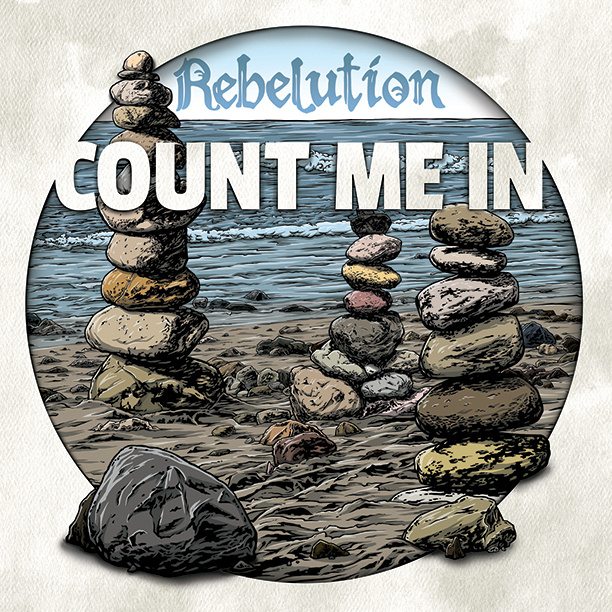
    Cover of 'Count Me In' Despite the conflict-laden name, Rebelution has a way of coloring everything with positivity. The band has always led with that feel, both lyrically and musically. Now in their tenth year, Rebelution is releasing their fourth studio album in Count Me In with many of their fans eager to hear what the Cali-based foursome have been working on as of late. While I’ll say that they certainly delivered, there were still a few surprises in there along the way and a few that were close to instant classics for me.

    The album opens on the title track, featuring a rolling bass line that almost has a swing to it and full of upbeat the band is known for. When I asked drummer Wesley Finley about how they decided to open with this one, he said, “I do have to admit that we struggled with the track order quite a bit this time, all the way until we were going to print! Since we titled the album after the track, it eventually made sense to put “Count Me In” first. Besides that, the track really embodies the general sound the band represents so we figured it would be a good introduction.” These guys haven’t made it to their tenth year missing the mark and the opener is no different.

    With all that said, the first song is merely a setup for the album standout “De-Stress.” That might’ve been by design though as Finley says, “We followed that up with “De-Stress” because it’s up-tempo and keeps the momentum building.” The opening one-two punch is a great start to the album and a possible set opener we might see this summer. The driving intro of “De-Stress” in and of itself makes the song, but singer Eric Rachmany hops around the rhythm with his delivery and adds another dimension to this track. The chorus of “And I might stress/Yes I might stress/ Too blessed to be stressed” are some nuggets we could all live by. In the world we live in today, a little de-stressing could do everyone some good.

    As the album progresses through the tracks, two stand out in back-to-back fashion once again: “Lost in Dreams” and “Fade Away” showed some growth and experimentation from the band. In some cases it felt and sounded great, like the soothing close of “Fade Away”, but something held these two back. That being said, young bands could learn from these guys as Rebelution knows exactly where to push the boundaries; these two tracks weren’t far off. When asked about the creative deviation, Finley said, “We produced “Lost in Dreams” with a friend of ours named AmpLive, who is half of the hip-hop group Zion I and a beat maker for other hip-hop artists. We tour with them every once in a while and are mutual fans of each other’s music, so it was inevitable that collaboration would happen.”

    On that collaboration note, the album features two guest appearances in the form of “Hate to Be the One” (Collie Buddz) and “Roots Reggae Music” (Don Carlos). Both guests are great fits for their respective tracks. When asked about how they chose the two, Finley said, “Collie Buddz we knew from touring together. He had come up on a song or two of ours live onstage over the years and the band is a fan of his voice, which is distinct from him being Bermudan. We sent “Hate to Be the One” to him and he came back with a whopping verse that we were very impressed with and knew we had to use. Eric’s main vocal inspiration has always been the reggae veteran Don Carlos so we instantly thought of him for “Roots Reggae Music”. He too has come onstage to sing with us for years, mostly to his own song we covered called “Johnny Big Mouth”, so we thought it would be great for him to sing something new for us. Our sound engineer is the infamous Errol Brown, who worked closely with the Marley family for many years, so when we mentioned we were thinking of asking Don to be on the track he said, “Call him up and pass me the phone. I’ll get him to do it!” We all listened as they caught up over the phone in a thick Jamaican patois. It was a classic moment.”

    Left to Right:  Marley D. Williams (bass), Wesley Finley (drums),  Eric Rachmany (vocals/guitar), Rory Carey (keyboards) Photo Credit:  Kurt Hudson
    Left to Right:  Marley D. Williams (bass), Wesley Finley (drums),  Eric Rachmany (vocals/guitar), Rory Carey (keyboards) Photo Credit:  Kurt Hudson

    The album wraps up on two songs that take a darker twist. “Against the Grain” starts off with a mesmerizing horn phrase that transitions to a vocal rally cry to whoever might be listening. The empowering words come with a hint of attitude and grit. The title is the perfect fit as it stands on its own compared to the rest of the album’s sunny positivity. It has almost a “Bad Boys,” fist in the air, fighting-for-your-beliefs feel with Marley Williams running a darker line to color the song. “Invasion” closes the album and keeps the rebel feel going. The last two songs are my favorite combo on the album and feature a darker, more serious tone for the band.

    It’s funny to think, now, that they struggled with the order of the tracks as they couldn’t have decided upon a better layout in my opinion. In flawless fashion, the band has woven together a cohesive, yet varied album that features what they’ve built their careers on while still progressing forward.

    The album drops Tuesday, June 10th, with preorders being taken here.  If you’ve been a fan of the band, or even looking to hear some new reggae, you’re going to want to check this one out.

    Key Tracks: Against the Grain, De-Stress, Invasion

  • Hearing Aide: Tommy Alexander’s ‘Basement Soul’

    Jenke Records is a Vermont-based record label started by Tommy Alexander in 2011. For many artists, self-releasing music on a personal label is a matter of maintaining complete creative control. For Alexander, however, the opportunity to run the business side of his music seems to be just as important as the influence that his Burlington label has on its community.

    By providing over one hundred donation-based classes per month, a communal recording studio, and a youth outreach program through Jenke, Alexander prioritizes his philanthropic efforts as highly as he does his music.

    In his latest release, Basement Soul, the first full-length in Alexander’s solo discography since 2012’s Bogart the Ghost, Alexander focuses on the societal outlook he has developed over the years. Dominated by acoustic guitar and genuine lyricism, the album is filled with a stirring sense of experience and passion.

    “Dreams to Dance” opens with a hauntingly fitting musical saw. It sings before two guitars enter the track, followed by Alexander’s vocals. It’s an emotional song, and Alexander delivers the lines, “I’m gonna be your fire / I’m gonna be your flame” as a percussion section builds in the song’s conclusion.

    The tracks “Another Man’s Story” and “Nobody’s Cryin’” deal with absent relationships, using string sections and intricate guitar picking to highlight Alexander’s themes.

    Basement Soul is truly a solo album. It’s an album that characterizes Alexander’s travels and his past, crafted with the creativity and the control that results in twelve of his finest tracks yet.

    Key Tracks: