After a one-year hiatus, Grammy Award-winning Chicago-based rockers Wilco return to North Adams, Massachusetts, this summer to host their Solid Sound Music and Arts Festival at the Massachusetts Museum of Contemporary Art (Mass Moca) over June 21-23, 2013.
Now in its third year, Solid Sound is a three-day celebration of music, comedy, and art located on the MASS MoCA campus. Although the musical lineup and interactive exhibits have not yet been announced, but we’re guaranteed a couple nights of Wilco and a handful of Wilco-related side projects of individual members.
Always entertaining, the comedy stage will make a return and will be curated by John Hodgman (The Daily Show and celebrated podcasts are among his funny exploits.) The stage will feature Jen Kirkman (Chelsea Lately, Funny or Die), Reggie Watts (Conan, Fallon, College Humor) and Al Madrigal (The Daily Show).
Previous years have included multiple nights of Wilco, along with The Levon Helm Band, Thurston Moore, Mavis Staples, and Avi Buffalo. Also performing were Wilco-related side projects The Autumn Defense, Pronto, On Fillmore and The Nels Cline Singers.
The $99 Early Worm tickets have already sold out, but a limited number of $124 Early Bird passes are still available, after which a three-day pass will set you back $149. Ticket prices include access to the exhibits at MASS MoCA, so if you haven’t yet made the trip, this is an excellent opportunity to catch what is arguably the most eclectic collection of modern art in the Northeast. And, it’s only a 90-minute scenic drive from Albany!
Below are scenes from the first-annual Solid Sound Festival in 2010.
Trey Anastasio loves Albany – for evidence, take a look at his opening words to the sold out house at The Palace Theater in Albany on a frigid January 26, 2013. “Thank you guys, this is the … I just want to say how much it means to me whenever I come here … I have so many friends here tonight from this part of the country … Thank you so much. This is also the last show our tour, so lets celebrate … Thank you for sharing it with us.”
And with that, Trey led his band into the song that the original trio of Trey, drummer Russ Lawton and Saratoga Springs resident Tony Markellis wrote back in 1998, “First Tube”. A Grammy nominated rock instrumental that usually closes down these TAB shows, “First Tube” got the crowd moving early on. “Cayman Review” followed, now a classic first set staple for many years now that features Ray Paczkowski on clavinet to drive the funk into the song. With the crowd settling in, they were treated to “Alaska”, one of the handful of crossover songs that Phish and Trey Band both play.
Rather than drop this tune in the middle of set two, per usual on Phish tour, Trey brought it out early and let the song shine in its proper venue – with TAB and with horns. The placement wasn’t just great – the version of the song was impressive as well, with some extra licks from Trey while Jennifer Hartswick, Natalie Cressman and James Casey (Lettuce) continued to pepper the tune with just the right dose of horn. “TubeTopFlop” (ne, Wobble), surprisingly showed up net, as this is one of the earliest songs from TAB, debuting in 2001 on his first big band tour. Although it fell out of rotation, its appearance tonight elicited great cheers from the older TAB fans who followed the bob and rhythm of the horn-driven piece.
“Pigtail”, possibly the most poppy Trey song to date, and written by longtime writing partner and friend Tom Marshall, has become a staple of Trey shows in the past two years, its flirty lyrics and confusion-inducing refrain, “I’m conscious again, unconscious again, I’m conscious again, unconscious again”, is the kind of tune that sticks in your head, pleasantly, and accented by Trey’s guitar bursts at the end of each refrain. What was once a 20-minute song in 2001, “Last Tube”is now half that but compressed into an equally stellar song. This high energy, spastic tune with a dash of Caribbean Island music gets the band firing on all cylinders at once, blowing up the song before crashing it down with a big band finish that peters out. “Last Tube”, welcome back to TAB! The Bob Marley classic “Small Axe” followed, as did two new songs, “DarkandDown” and “Scabbard”, off the new album Traveler.
“Dark and Down” was more somber than anything else up until this point of the show, while “Scabbard”, a Zappa-esque single, captures the best of Trey’s songwriting skills and multi-instrumentalism of this band. “GreyhoundRising” provided the other piece of somber bread for this relatively new music sandwich. “Shine”, Trey’s breakout single from 2005 has proven to grow as a crowd favorite and continues to take shape in the regular rotation. Set closer “Money, LoveandChange” was another oldie and goodie that can still find the nasty notes to cap off a set.
During setbreak, it was easy to observe that the crowd for a Trey Anastasio Band show is different that a Phish crowd. At SPAC in the summer, the crowd is typically 80/20 guys/gals, but at TAB it is closer 60/40, plus some older fans who come out in larger numbers to the Palace. The band attracts more couples to shows, either as a segue to seeing Phish, or replacement value for Phish shows not seen/enjoyed as a couple. The ornate building’s interior continually looks sparkling and new (The Palace is nearly twice as big as the past week’s show at the Landmark Theater in Syracuse) and the broad interior walls gave the light show room to make an incredible visual spectacle throughout the show as the lights danced all over.
Set two began with the Afrobeaty “Curlews Call”, building the band’s sound up, particularly with the percussion supplied by returning TAB member Cyro Baptista, whose inventive percussion instruments (gong and flippers, anyone?) make him not just a band member to watch, but one to listen for on show recordings. “GottaJibboo” isnever a disappointment and having horns once again adds an extra layer to the upbeat tune. A standard “AliveAgain” came next, then a trio of songs from Traveler: “LandofNod” is incredibly horn driven, especially Natalie Cressman’s trombone, while “Valentine” was played much like the album version, although that’s hardly a bad thing. The reworking of “Valentine” for Traveler includes more vocals from Cressman and Hartswick, and although when performed live, the song could have been stretched out a bit by Big Red, the true highlight in this song is the visual interpretation that one can gather from the lyrics:
“Jagged beams of light, explode and dance in the darkness around me. And I can reach out and touch the beams and the light turns sold and wraps around my wrist. One makes a loop, a thousand more follow, a thousand more follow till my arms are surrounded by a conical web of light. My arms in the eyes of a web of light, a tornado of light beams and I feel the pull and start to rise, and every beam is there to guide.”
Speaking of great lyrics, “Architect”, while a bit mellower, still carried the themes from “Valentine” that are marks of Trey’s life from 2006-2008. Fan favorite, “Sand”, recently destroyed by Phish the past few years at 18 minute clips, is a staple from the original trio. But with horns, again, it’s just sublime. Although Phish fans are getting spoiled with these extended versions on Phish tour, the reserved Sand on TAB tour not only suffices, it gives a new spin to a classic. The strong anthem of “Tuesday” stepped in, where the vocals of Hartswick and Cressman continued to dominate, but not overpower the song. Then there’s “Clint Eastwood”, the Gorillaz original that debuted as a cover last year at The Palace. Jennifer Hartswick’s powerful vocals are not to be missed – you’ll still be amazed that she did the lyrics for the album version in just one take.
With the show winding down, “Traveler” appeared, and while it started out slow, grew into one of the more impressive tunes of the night, generating swaying motions from the crowd amid the lyrics “Maybe if you stand still, you are traveling too, making it easy for someone to choose you”. Trey took a moment to introduce the band as the song’s chorus was repeated, then delved into “Push on Til the Day”, one of the most popular and well known TAB tunes, where it is always fun to watch Trey spin around with his guitar leading up to the triumphant big band ending. An encore of The Five Steps’ “O-o-h Child” was very apropos for the evening for this reviewer and capped off a whirlwind tour for Trey Anastasio Band.
Even though he didn’t play some tunes that have been staples of his shows – “Drifting”, “Sultans of Swing”, “The Devil Went Down to Georgia”, “At the Gazebo”, “The Way I Feel”, or “Burlap Sack and Pumps”, – it became clearer during this short tour that Trey’s catalog for TAB has grown so much that you can start to expect the unexpected and never get the same show twice. Trey has grown as a band leader with TAB and expanded his catalog with both bands. It is impressive enough to see him with Phish, but with TAB, it’s a completely different experience, and one that is continually changing and improving.
Set 1: First Tube, Cayman Review, Alaska, Tube Top Flop, Pigtail, Last Tube, Small Axe, Dark And Down, Scabbard, Greyhound Rising, Shine, Money Love And Change Set 2: Curlew’s Call, Gotta Jibboo, Alive Again, Land Of Nod, Valentine, Architect, Sand, Tuesday, Clint Eastwood, Traveler, Push On Til The Day Encore: Ooh Child
Last Saturday was a big music night in Albany: many downtown venues offered a genre of music complimentary to the sold out Trey Anastasio Band (TAB) show at The Palace Theatre. Hot Day at the Zoo and The Blind Owl Band were scheduled for a foot stomping, hoedown of a good time. Bluegrass at the Bayou stood on it’s own as if it were competing with TAB. Each of these bands performing at The Bayou Café have a dedicated following which filled the venue.
The hungry-for-more music aficionados left the Trey show and filed into the already bursting-at-the-seams café where Hot Day at the Zoo kicked off sometime around midnight. The deluge of music fans brought with them the carnival like atmosphere where they would boogie with their drunken hearts, ready for more. While Hot Day at the Zoo is focused on traditional bluegrass, there are subtle change ups relatable in the progression of this genre.
Throughout the set, each musician gave the others fair opportunity to take a solo, and yet, partake in a conversation through instrumentation. Musically, the roots string band captured an underlying jazz progression. Vocal harmonization with genuine lyrics could tug on the heartstrings. Hot Day often add agreeable little nuances for a finishing touch to their showcased songs. Those newly introduced to Hot Day were pleasantly surprised to hear “Ripple,” a widely known Grateful Dead tune.
Opening for Hot Day at the Zoo was The Blind Owl Band. The four piece outfit is new to the scene, but not new to eclectic sounds, traditional instrumentation and influences of some more obscure bands in the business. Geographically in the music world, location can often define a band. Hailing from Saranac Lake, these bearded boys have characterized their sound as if they stood on top of their mountain reaching out their beat up instruments grabbing various concepts of music, holding it captive ultimately for a presentation unique to the scene. On stage, they knocked the nit and grit right out of their strings. Added vocal harmonies invite us to the darker realm, where we were lead through a journey of traditional roots, dirty jams and down right scary turns along the way. Be brave and bold, these North Country boys can lighten it up a bit with Irish pub tunes as well.
Surely, those meandering out on the street missed two great acts. The energy inside was so alive you could reach out and hold on. As was the rest of South Pearl Street, which was rather magical as if some music fairy sprinkled her dust and said, “enjoy.”
The Saranac Lake Winter Carnival will take place February 1st-10th, 2013. Back in 1897, The first “Mid-Winter Carnival” began as a way to enjoy outdoor recreational activities such as skiing, sledding, and skating in the coldest days of winter. That inaugural 2 day event featured skating races, a parade and an ice tower. The following year, the first Ice Palace was constructed from blocks of ice from Lake Flower’s Pontiac Bay. Today, the The Ice Palace stands as both the centerpiece and symbol for the Winter Carnival.
Another long standing tradition at Winter Carnival is the Waterhole‘s live music series. Each night of Carnival, Waterhole features the region’s top bands and/or local favorites. This year’s lineup is top notch, check out the flier below and hopefully we’ll see you there!
What do you get when you take the mandolin from Woodenspoon, mix in the drums and guitar from moe., and add the fiddle/banjo and upright bass,? A knee-slappin’, foot stompin’, head bobbin’, skirts-a-twirlin’ good time.
Floodwood is Al Schnier & Vinnie Amico of moe., Jason Barady (mandolin) of Woodenspoon, plus Nick Piccininni (fiddle and banjo) and Zachary Fleitz (bass). This isn’t the first side project for Al and Vinnie. They have been playing together in Al & The Transamericans for over a decade.
This quintet came together about a year and a half ago, but on stage they gelled like they’ve been doing it much longer. The fun interactions between bandmates added to the warm vibe in the room as they pulled out a unique mix of bluegrass, Americana, and progressive string – or as the band would call it “Madgrass”.
While the snow may have kept some people home on Friday night, the ones who showed up got a pleasant treat. There was even one person who drove all the way in from Boston to see the show and was heading to Oneonta the next night for a double-dose of Floodwood.
The band mingled with the crowd during opening act Rebel Darling, a trio featuring two guitars and a harmonica. There were a lot of familiar fans (some of whom were family and friends) there to see the local musicians. Floodwood seemed to be right at home at The Putnam Den. In fact, during the second set, Nick Piccininni jumped down off the stage to play fiddle and dance with the many smiling faces on the dance floor.
It was a great time for those who braved the slippery conditions. If you are one of those who stayed safely at home Friday night, you will be able to catch Floodwood as they play theFiddler’s Picnic festival this year with other local favorites like the Rumpke Mountain Boys, The Blind Owl Band, Eastbound Jesus, Jatoba, and many others. But those courageous souls who made it — they got to be a part of Floodwood’s intimate, and successful, Saratoga debut.
What once was a bunch of friends jamming cover songs to an elite few in a living room while their listeners munched on hummus and drank the wine has now molded into closed session rehearsals and a slew of new songs. Those originals skipped a trial run. Instead, the five bones tossed their project out into the world for a live recording in front of a live audience at the Rustic Barn in Troy, NY.
The Bear Bones Project has drawn a following of old time hippies hanging onto Grateful Dead era songs and young followers trying to capture the essence of an era just out of their reach. The winter covered streets, the flakes in the frosted beards and ice under foot didn’t stop their dedicated following for the trek into the hills just beyond Troy. Inside the dimly lit pub, the wooden beams and stone fire place set the ambiance for a toasty evening of good grub, hearty brew and jam friendly music which will soon find it’s way to a polished disc.
Each set was a blend of originals speckled in between obscure cover songs. However, they started with a fun warm up tune familiar to most. The Bear Bones Project had a little fun with The Beatles original, “I’ll Follow the Sun.” They create a neat little arrangement of two part harmonies breaking away to the only female of the group, Sandy Decker, during the chorus. They were warmed up, the crowd was primed and they kicked it up a notch breaking into some brand new songs written by lead vocalist and guitarist, Carey Ahner. The Bear Bones Project arranged each song for an overall sound of bluesy, classy jams interjected with a playful flute. Bill Decker laid the bass lines down and drummer Eric Johnson moved the songs along as guitarist and vocalist Pete O’Hearn added just enough depth to keep this project firmly rooted in it’s inspirations of whimsy and jazzy tunes.
Each new song is rich in lyrics, and musically accomplished. There is a certain kind of sway to their songs and it is certain to get folks out of their seats. The Bear Bones Project can be seen at various clubs around the Capital District.
When most people think of Saratoga Springs it’s visions of horse racing in August. Tiffany and Jonathon Albert, Bob Millis and Jarrett Hartstone and the staff at the Putnam Den are working hard to make Saratoga known as a place to catch great ORIGINAL music, year-round! Based on the crowd at the Putnam Den on a bitter cold Thursday in January, they may be succeeding. Over 150 people braved the negative temperatures to feel the face melting heat of two talented bands, Barika and John Brown’s Body.
Barika (pronounced body-kah) started off the night with a unique blend of psychedelic charm and West African-inspired beats thrown in, crossing gracefully into the realm of dub. When Craig Myers stood center stage with a large gourd that had a long neck and bright yellow strings, heads turned. The opening act of most shows is noticed for a moment and then conversations continue throughout the room. However, when Craig started to play his Kamel N’goni – a wave of silence washed over the crowd. The Kamel N’goni sounded like two dueling banjos fighting it out to see who could please the eardrums more. Both hands plucked and strummed away at the neon strings, setting off a magnetic vibe through the Den. As Barika played, the crowd started to creep toward the stage to find out what foreign magic these strangers from Burlington, Vermont brought to Upstate New York. Craig wasn’t alone in playing the funky groove. Barika has six other talented musicians: Caleb Bronze (Drums), Rob Morse (Bass), Andric Severence (Keyboards) and on horns are Dave Purcell (Trumpet), Gordon Clark (Trombone) and Deva Racusin (Tenor Sax). Deva didn’t make it out to the Putnam Den, but you can hear everyone on Barika’s new CD, Remember, available on iTunes and other outlets.
Just as things were getting warmed up nice and toasty, John Brown’s Body came on stage and turned the heat way up. John Brown’s Body has Upstate roots in Ithaca and have been playing their future roots take on reggae for nearly 10 years. With tours around the world, it is always nice to catch them back in the area with new songs and a new EP, JBB IN DUB. JBB started the show with a song off their new release, “The General’s Ambush.” A nice steady beat and smooth horns come into play in this melodic instrumental number. Bandleader Elliott Martin got to flex his chops with the second song, “Invitation” that had more of a ska sound with the brass section sharing the spotlight with Elliott’s smooth yet strong vocal stylings. The crowd took the “Invitation”, and those fortunate enough to be at the Putnam Den had a hard time not approaching the dance floor. More dub, more funk, more dancing ensued as JBB played another track off the new album, “The Grass.” “The Grass” was reminiscent of the reggae of Marley in that it carried a strong message. The band ended up playing three songs off the new EP.
John Brown’s Body is also planning a new full length album in the next few months and played “Plantation” off that upcoming release. They also played old favorites like “The Gold”, “Resonate”, and “Push Some Air”. Look for them around the festival circuit this summer and keep an eye out for the new album. John Brown’s Body is a treasure that Upstate New Yorkers can call their own and it was a nice surprise to see them at the Putnam Den. Be sure to check out the Den’s upcoming shows and give them the support they need to keep bringing these great line-ups to the region.
Setlist: General’s Ambush*, Invitation, The Grass*, Plantation, Wellington*, Shine Bright, The Gold, Follow Into Shadow, Peace in the Valley, The Cup Dub, Empty Hands, Make It Easy, Zion Triad
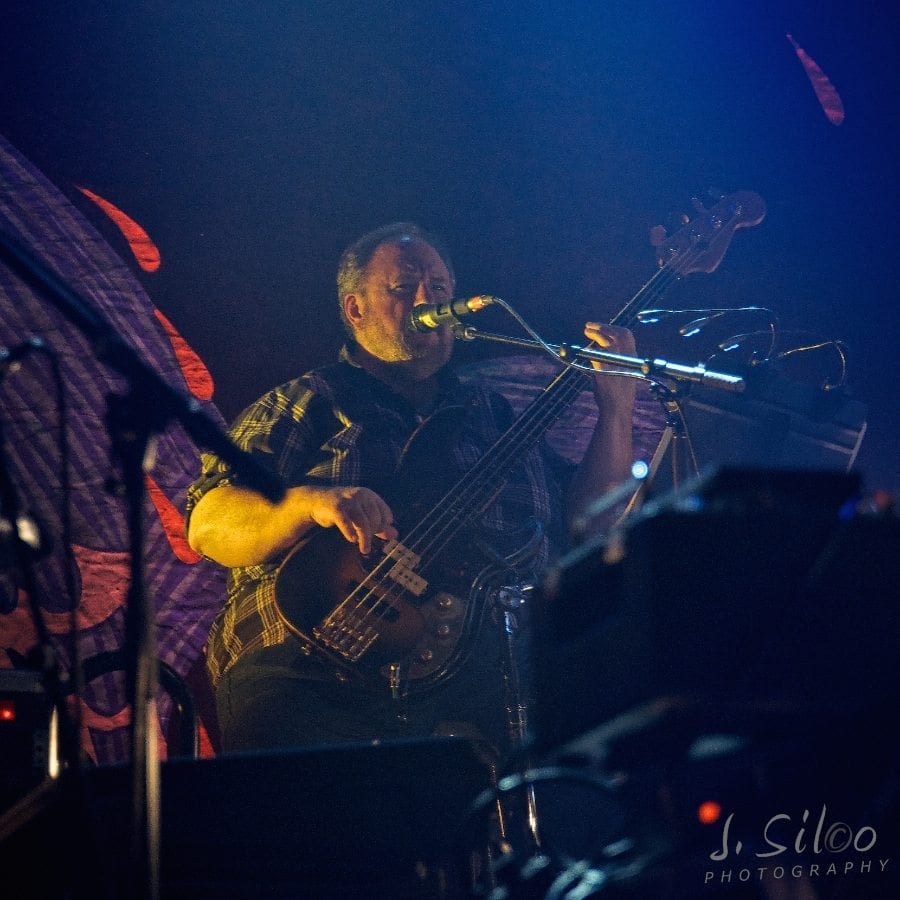
Upstate New York music legend and producer Tony Markellis has played with the likes of David Bromberg, Jo Henley, Paul Butterfield, The Mamas & the Papas, been a member of The Unknown Blues Band and is the current bassist for Trey Anastasio Band.
With a career spanning from his origins in Helena, Montana to his current home in Saratoga Springs, NY, Markellis has spent the past forty-plus years playing a wide variety of music, including jazz, folk, rock, country and blues music, including appearances on nearly 100 albums in his storied career. Tony was kind enough to sit down for an interview after meeting at the Soule Monde show at Putnam Den on May 12, 2011 and discuss his bass playing and local musical impact.
Pete Mason: What is it like being one of the most famous local music celebrities in the Saratoga area? How has your status as a musician evolved over the years living in the region?
Tony Markellis: I really don’t think about it much. I live a pretty private life, and for the most part, I come and go without much notice when I’m not in a professional setting. I don’t think most of my neighbors know what I do for a living, and I tend to prefer it that way.
PM: What is it like playing with guys like Russ Lawton and Jo Henley?
TM: Playing with Russ is a real pleasure. We’ve known each other for over thirty years, and I’ve been a big fan of his playing since I first heard him playing with Zzebra (a Vermont based Afro-fusion band led by Nigerian musician Lofty Amao, formerly of Osibisa). My band, Kilimanjaro, was losing drummers just about every five years. Every time that happened, I would recommend Russ as a replacement, but the timing was never quite right– even back then he was in high demand! When Trey called me up to start what became TAB, I couldn’t think of a better drummer for the project than Russ. My one and only regret about Russ is that he’s a strict vegan, and I’m definitely not. Wherever we go, I’m always in search of the local equivalent of a goat roasting on a spit, or just about any cuisine that involves a combination of immigrants, meat and fire. As you can imagine, we don’t get to share many dining adventures.
I’m glad you know about Jo Henley. I got introduced to them about five years ago when they were recording their CD Sad Songs and Alcohol in Schenectady, NY. They happened to be between bass players at the time. The engineer mentioned that I lived in the area, and the guys knew me from my work with TAB. It worked out well, and I even played out with them for a while. I went on to do their next CD, Inside Out, as well (which also included Russ Lawton and Ray Paczkowski from TAB). Jo Henley has just released a very autobiographical new CD called Mohawk, which is a great representation of how the current working band sounds with their new bass player and drummer.
PM: You play a wide variety of music. Where does this interest and ability come from and do you have a style that you prefer to play above all others?
TM: I’ve always had varied interests– not just in music, but in everything. Life’s just too short to think that only one type of anything is good. As a college kid in Ann Arbor, I got to start playing with some living legends like blues singer Johnny Shines and singer/songwriters like Paul Siebel and Rosalie Sorrels. After that, I worked for years with people like David Amram, David Bromberg, Kilimanjaro, the Mamas & Papas and Paul Butterfield, just to mention a few. I also got some great opportunities to play once in a while with people like Professor Longhair, Martin, Bogan & Armstrong, Ellen McIlwaine and Nick Brignola. I have played almost every form of American music in one context or another, and I hope I can continue to do that for a long time to come. I have to agree with Duke Ellington that there are only two kinds of music– good and bad.
PM: Can you talk about the group of talented musicians in the Saratoga area?
TM: There are so many great musicians in the Albany/Saratoga area who I am fortunate to have worked with at one time or another. I have a couple of great singer/songwriter friends, Michael Jerling and Bob Warren, who I have been playing and recording with for about thirty years. I’ve played Mexican and cowboy music with Don & Victoria Armstrong on and off for the same period of time. They have migrated back and forth between Saratoga and the Southwest for as long as I’ve known them. For the past ten years or so, I have worked with a great roots/blues trio called No Outlet (with Kevin Maul on slide guitar and vocals and Dale Haskell on drums and vocals). For about the same amount of time, Kevin and I have been traveling and recording with the Burns Sisters, a wonderful three-sister country/Americana act out of Ithaca, NY. I worked with the Sarah Pedinotti Band (now Railbird) for a couple of years, and for the past couple of years have been playing in an intense roots/blues trio called Street Corner Holler with Dale Haskell and slide guitarist Mark Tolstrup. For a few years, I had the pleasure of playing with Albany songwriter Rosanne Raneri, who just might be the best singer I’ve ever heard.
PM: What kind of bass do you play?
Tony Markellis, The Palace Theatre, Albany, NY February 19, 2011
TM: I have a number of basses that I use, depending on what the gig demands. I have two almost identical P-J basses (combining features of the classic Fender Precision and Jazz basses), one fretted and one fretless, that I assembled myself out of parts from various makers. The fretted one is the one I generally use when I play with TAB. I have a fretless Taylor AB-1 acoustic/electric bass guitar that I use on a lot of singer/songwriter, jazz and bluegrass gigs. I have an Eminence Portable Upright that I use on some blues and jazz gigs. And I have a couple of headless Hohner basses that sound great and are wonderfully easy to transport– I can carry them on a plane and put them in the overhead rack.
PM: How did you get into playing the bass?
TM: I began playing upright bass in the third grade in my grade school orchestra in Helena, Montana. The music teacher gave us a choice of which instrument we wanted to play, and for some reason, the bass spoke to me.
PM: Any bass influences or favorite musicians amongst your peers?
TM: From early on, I was a great admirer of Paul McCartney’s playing. Unlike most of the players who I consider influences, he was always more of a ‘guitar player playing bass’ than a bassist, but the playful fluidity of his playing was always very appealing; his playing with the Beatles is consistently brilliant. As a teenager and as a college kid, I listened to guys like Jack Bruce, Jack Cassady, Freebo, Rick Danko, Bruce Palmer and Phil Lesh, but it didn’t take me long to discover the masters– giants like Oscar Pettiford, Jimmy Blanton, Ray Brown, Willie Dixon, James Jamerson, Chuck Rainey, Duck Dunn, Jerry Jemmott, Phil Upchurch, Scott LaFaro, Eddie Gomez, Family Man Barrett and George Porter. If anyone reading this doesn’t recognize some of those names, I hope they will do themselves a big favor and go look them up. Of my contemporaries, I think very highly of Lincoln Goines, Huey McDonald, Mark Rubin, Sarah Brown, Conrad Lozano, Lee Allen Zeno, Oteil Burbridge, Victor Wooten, and of course, the late Jaco Pastorius.
PM: How did you develop your method of playing bass, seated with the bass so vertical? Is it a comfort thing?
TM: I have sustained a number of injuries over the years, the cumulative effects of which have made standing up with a bass around my neck really difficult. I was an avid and overly daring skier as a teenager, and I broke my back and one of my knees. Those injuries didn’t bother me for a long time, but they’ve both kind of snuck back up on me over the years. I also broke my collarbone as a baby. It apparently didn’t set right, and after some fifteen years of hanging heavier-than-average basses over my shoulder, I started getting pinched nerves and numbness in my left arm. About ten years ago I dislocated both ends of my left collarbone in a badly-planned home logging mishap. To top it all off, last year I was on an extremely turbulent flight on the edge of a tornado system, resulting in a case of whiplash that I’m still trying to get straightened out. With all that, a seat and a bass stand makes it a lot easier for me to do what I do.
PM: How did you develop your method of playing bass, seated with the bass so vertical? Is it a comfort thing?
TM: I have sustained a number of injuries over the years, the cumulative effects of which have made standing up with a bass around my neck really difficult. I was an avid and overly daring skier as a teenager, and I broke my back and one of my knees. Those injuries didn’t bother me for a long time, but they’ve both kind of snuck back up on me over the years. I also broke my collarbone as a baby. It apparently didn’t set right, and after some fifteen years of hanging heavier-than-average basses over my shoulder, I started getting pinched nerves and numbness in my left arm. About ten years ago I dislocated both ends of my left collarbone in a badly-planned home logging mishap. To top it all off, last year I was on an extremely turbulent flight on the edge of a tornado system, resulting in a case of whiplash that I’m still trying to get straightened out. With all that, a seat and a bass stand makes it a lot easier for me to do what I do.
PM: What is it like going from the high energy/big crowds at a Trey Band show to your regular quieter gigs in the region?
TM: In many ways, I find it easier playing for a sea of faces than for a handful of people who are only an arm’s length away. The biggest difference, though, is that on the TAB gig, everything– transportation, business, equipment set-up, logistics– is taken care of by a very well-oiled crew of professionals. Back in the real world, I have get used fending for myself again.
PM: Is it a wind or a bug?
TM: Ah, yes– I’m afraid people will be asking that question long after we’re all gone.
PM: Seriously though, how did “Windora Bug” come about?
TM: It predates me. Knowing Trey and Tom, they were probably having an evening writing session near an open window, and heard something unidentifiable outside, raising the question, “Was that a wind or a bug?” and another classic was born. Trey’s always trying out different material in different contexts, and that’s one of those songs that I guess he had tried out with Phish, and then shelved until Russ and I came along.
PM: How did Trey first invite you to join him in the creation of the original Trey Trio?
TM: When Trey first went to Burlington to look at colleges, I was playing there with Kilimanjaro and the Unknown Blues Band at a great (now-defunct) club called Hunt’s. Trey claims that we were one of the deciding factors in making him choose to stay in Vermont. He and his girlfriend Sue came out to see us on their first date; years later, we played at their wedding. As we were watching Phish develop into the juggernaut that it is today, they were also looking to us “old guys” for inspiration. The Phish guys were also big fans of the Sneakers Jazz Band, some of whom also became members of TAB. In 1999, Trey wanted to get a side project going, and he got in touch. At the time, he was very interested in African music such as that of Fela Kuti, and I couldn’t think of anyone better than Russ Lawton, with his strong background in African beats, to recommend to Trey as a drummer for the project.
PM: Didyou have any input into the evolution of the band as it went from 3 members to 6 to 8 to 9 to 10 and back to 7?
TM: I brought Russ on board– beyond that, it’s all been Trey’s doing. The process has involved Trey trying to assemble a group of individual musicians who are not only versatile enough to handle all the many styles that he might throw their way, but are also agreeable enough to coexist smoothly. And I think it’s worked beautifully– I can’t imagine a better group of not only musicians, but people, than the current TAB lineup.
PM: Describe the evolution of songs like “Sand”, “Gotta Jibboo” and “First Tube”, three of the most popular and famous TAB songs that have become full fledged Phish songs.
TM: When Russ and I first got together with Trey, he encouraged us to build some basic grooves from the bottom up, based on things we liked or had been working on individually. He then fleshed the grooves out with his own ideas. We came up with the foundations for about twelve or fifteen tunes from our first rehearsals. After we left, Trey continued to tweak ideas, eventually adding some of Tom Marshall’s lyrics onto the finished tunes. He eventually took a few of them to Phish, and now they’ve become standard parts of the Phish songbook– so much so that when a lot of people hear us play them, they think we’re covering Phish tunes.
PM: How does life on the road affect your playing over time? Do you prefer to stay local for shows?
TM: They both have their good points. I love to travel– I have since I was a little kid. My parents would throw us on a train and take us from Montana to Chicago or New York, or we’d drive to San Francisco or the Oregon coast. Now, as an adult, how much better could it get than getting paid to travel around the country playing music with a bunch of people I like? There is, however, something to be said for being able to jump in the car, drive five minutes to the gig, and five minutes back to sleep in my own bed. One thing I know is that I don’t get much time to practice when we’re on tour.
PM: How did the 6/20/10 sit-in at SPAC with Phish come together? What prompted it and how did it all go down?
TM: I hadn’t heard Phish play for a few years, and I wanted to stop by to say hi to all my friends in the band and the crew. If you know anything about Trey, you know that he is unable to pass up a show-biz opportunity. As soon as he saw me, I know he was thinking, “How can we work this into the show?” It worked out fine– he picked a song that I cowrote (Gotta Jibboo, which Phish even plays in the same key), so it wasn’t a stretch. Fishman is such a pleasure of a drummer to play with, it was just a piece of cake. I think Mike even enjoyed playing guitar for a change. I guess I’m just lucky that Trey didn’t have the crew try to stuff me in that bathtub with all those little kids!
PM: Have there been any TAB moments that stand out among the rest over the past decade-plus?
TM: I enjoy listening to the other players in the band so much that there have been moments– I couldn’t tell you exactly where or when they were– where I’ve just sort of left my body while listening to them play. I’ve enjoyed the beautiful venues we’ve gotten to play– Red Rocks stands out, as does RadioCityMusic Hall, the Ryman Auditorium, the Pabst Theater and the gorgeous Fox Theaters. One of the most memorable highlights for me would be when Carlos Santana came to sit in with us at the Warfield Theater in San Francisco in 2003. He’s been a musical hero of mine since I was in college. What a great night that was– I was grinning from ear to ear the whole time!
Questions were looming whether Camp Bisco was going to happen in Upstate New York this year. There were rumors of it being completely done; moving south or even changing it’s name. Well, Bisco fans don’t need to worry anymore. Camp Bisco announced that the show will go on for # 12 of its run. Camp Bisco will be returning to the beautiful Indian Lookout Country Club, in rural Mariaville, NY.
Camp Bisco is a unique festival for many reasons. Where else can you find such a unique blend of electonic house, hip hop, jam bands and whatever else they might throw at you every year. the only thing you can count on is that the disco biscuits will be gracing the stage and that you will have a great time. Oh yeah, there is also a good chance of rain.
The festival plans to expand and enhance the experience for attendees by adding “surround sound and greater concert production to all stages. From large-scale art installations and artist workshops to performance art demonstrations, carnival rides and more, Camp Bisco is also increasing the interactive elements in 2013 to create an even better festival experience for patrons. Long distance shuttles will also return, offering service from Albany, Baltimore, Boston, New York City and Philadelphia.”
Early Bird tickets go on sale Saturday, February 2 at 10 a.m. EST for a very limited allotment at $170. General on sale tickets will start at $185, before raising to the last minute price $199. All-inclusive pre-sale VIP packages are available again this year, starting at $450 for VIP and $1300 for a pair of Platinum VIP tickets, before increasing to $500 and $1400 respectively. Camp Bisco will also be introducing a new layaway plan, where fans can divide payments on General Admission tickets equally between the on sale date and July 1st. Tickets will be available online at campbisco.net. Camp Bisco is an 18 and over event.
Trey Anastasio Bandcomes to Albany on Saturday, January 26th, but the music doesn’t stop when Big Red leaves the stage. If you’re coming to town for the main show, stick around for three great late night options, all close by The Palace Theater. The Bayou is located a few hundred feet down North Pearl Street from The Palace while Red Square is on Broadway, a block east of North Pearl and about a 1/2 mile walk. A cab is recommended to get to Valentines.
Hot Day at the Zoo (HDATZ) is the quartet of Jon Cumming (banjo, dobro, vocals), Michael Dion (guitar, harmonica, vocals,) Jed Rosen (upright bass, vocals), and JT Lawrence (mandolin, vocals). Dion and Cumming are the band’s two main songwriters. Both, with distinctive personalities, offer enough stories to fill a catalogue of songs that are whole-hearted and full of sincerity. Add in Rosen, who’s technical prowess allows him to hold down the beat and push the music along, and Lawrence, who’s youthful energy and stellar musicianship fuel his strength in fulfilling each song’s missing piece, and the result is a band who humbly creates something bigger than any of themselves.
Rosen speaking about HDATZ’s live performance says, “Expect to see four guys up on stage playing their asses off and singing their hearts out.” All four members play with so much vivacity and vigor that an abundance of both baby powder to keep dry and superglue to prevent their fingernails from falling off is necessary. Whether they’re headlining or performing as special guest support for artists including The Band’s Levon Helm, David Grisman, Leon Russell, moe., and Hot Buttered Rum, HDATZ connects with their audience through their defiant high energy on stage. With improvisations that give songs new shape, signature arrangements of covers, and many special guests, concertgoers may expect to never see the same show twice.
The Brooklyn-based funk army known as Turkuaz “is like tossing a lit match into a dumpster full of fireworks” (bestnewbands.com). Their stage show combines influences from Sly and the Family Stone to Talking Heads into an explosive auditory and visual circus, a full-frontal assault on the senses. After multiple residencies at NYC’s Brooklyn Bowl, two blowout performances at Bear Creek Music Festival, and tours spanning the east and west coasts, Turkuaz has developed a reputation from NYC to San Francisco as the band that plays louder, faster, and harder than all the rest. Learn more at
Combining jazz, hip hop, funk, soul, and gospel, The Chronicles bring a unique sound that defies classification. Founded by upstate NY horn heavyweights, Bryan Brundige and Jeff Nania in October of 2009, The Chronicles have included and continue to feature the most talented up-and-coming musicians in the Capital Region. The Chronicles have been working hard to spread their music throughout the northeast with appearances at regional theaters like the New Hampshire Jazz Center and Proctor’s GE Theater. They have also appeared at major music festivals like Riverfront Jazz Festival, Tulip Festival, Bella Terra, African American Heritage Day, The Brooklyn Hip Hop Festival, The Big Up, and The BeatShot Music Festival. Albanyʼs alternative newsweekly, Metroland recognized them as “Best Jazz” in 2012, and in their 2011 “Best of the Capital Region” critic’s poll as the best in live hip hop with “jazz chops out the yin yang, and new tunes at their fingertips every time they pick up their instruments.”
While this is an after party, the music begins at 9pm. Formula 5 caps off the night, and they are a great up and coming jamband in Albany, with a great sound. Check out our interview with them.
Cost is $10 to get in but only $5 with a Trey ticket stub!
 And with that, Trey led his band into the song that the original trio of Trey, drummer Russ Lawton and Saratoga Springs resident Tony Markellis wrote back in 1998, “First Tube”. A Grammy nominated rock instrumental that usually closes down these TAB shows, “First Tube” got the crowd moving early on. “Cayman Review” followed, now a classic first set staple for many years now that features Ray Paczkowski on clavinet to drive the funk into the song. With the crowd settling in, they were treated to “Alaska”, one of the handful of crossover songs that Phish and Trey Band both play.
 During setbreak, it was easy to observe that the crowd for a Trey Anastasio Band show is different that a Phish crowd. At SPAC in the summer, the crowd is typically 80/20 guys/gals, but at TAB it is closer 60/40, plus some older fans who come out in larger numbers to the Palace. The band attracts more couples to shows, either as a segue to seeing Phish, or replacement value for Phish shows not seen/enjoyed as a couple. The ornate building’s interior continually looks sparkling and new (The Palace is nearly twice as big as
  With the show winding down, “Traveler” appeared, and while it started out slow, grew into one of the more impressive tunes of the night, generating swaying motions from the crowd amid the lyrics “Maybe if you stand still, you are traveling too, making it easy for someone to choose you”. Trey took a moment to introduce the band as the song’s chorus was repeated, then delved into “Push on Til the Day”, one of the most popular and well known TAB tunes, where it is always fun to watch Trey spin around with his guitar leading up to the triumphant big band ending. An encore of The Five Steps’ “O-o-h Child” was very apropos for the evening for this reviewer and capped off a whirlwind tour for Trey Anastasio Band.


 Pete Mason: What is it like being one of the most famous local music celebrities in the Saratoga area? How has your status as a musician evolved over the years living in the region?
 PM: You play a wide variety of music. Where does this interest and ability come from and do you have a style that you prefer to play above all others?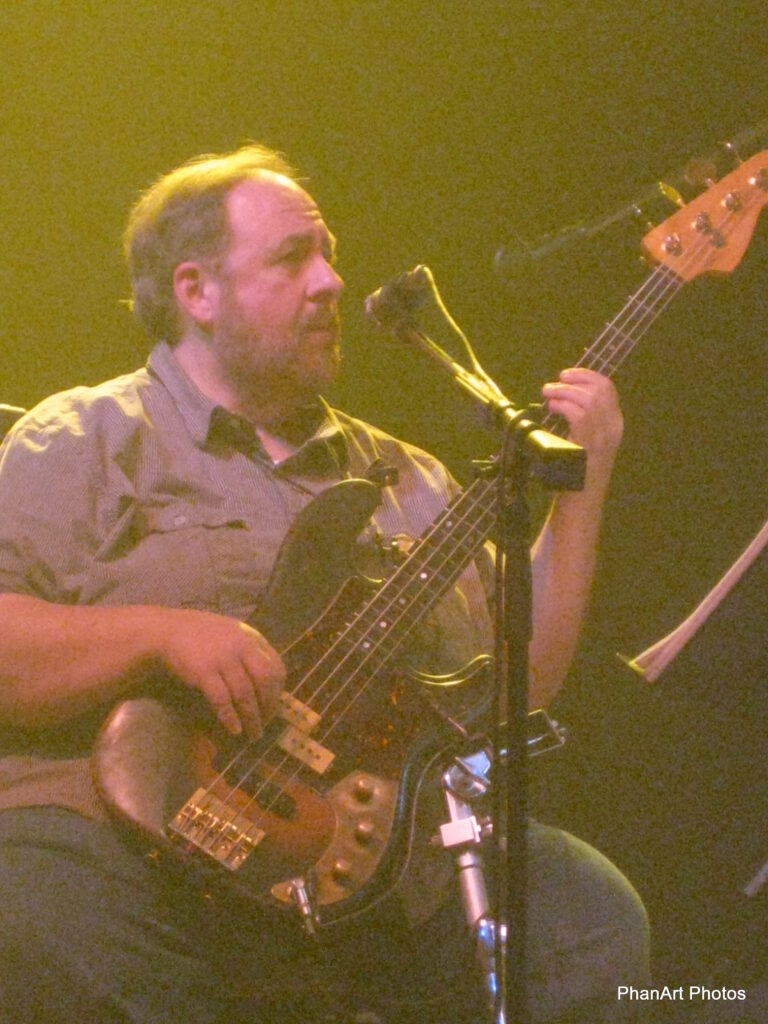
 PM: How did you develop your method of playing bass, seated with the bass so vertical? Is it a comfort thing?
