Category: Interviews

  • Dopapod set to fire up Catskill Chill

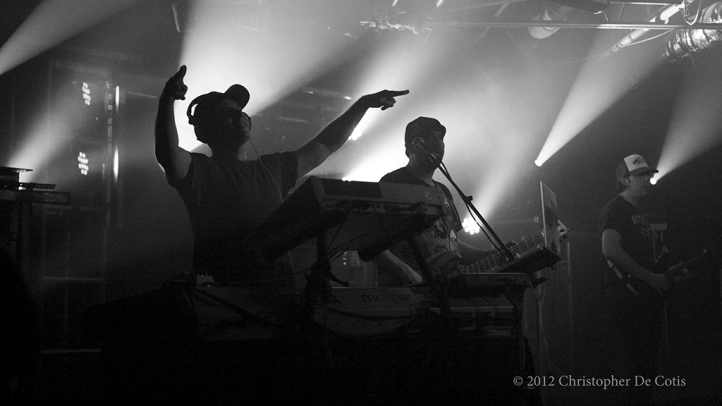
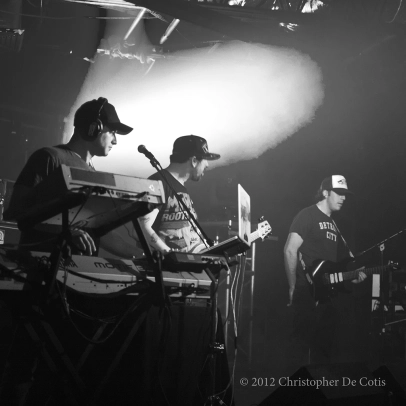
    The third annual Catskill Chill Festival takes place this weekend, September 7th-9th in Hancock, New York and one of the bands that are not to be missed by festivalgoers this year is the ever growing Dopapod. This experimental funk rock group has collected a huge fan base since starting in 2007 and shows no sign of slowing down. Dopapod will play late Friday night at The Catskill Chill, promising to be a great start to the festival weekend. With their hectic summer shows finally over but on the brink of a full fall tour, Dopapod’s guitarist, Rob Compra was able to find time to answer a few questions.

    Susan Rice: You’ve spent much of 2012 playing festivals and shows all over the eastern half of the country, you played dozens of shows including StrangeCreek, Camp Bisco, Gathering of the Vibes, and even reached 10,000 fans of Facebook. How does it feel?

    Rob Compra: It feels great! This summer has felt like a bit of a breakthrough for us. I think right now is a very exciting time for us.

    SR: Your summer tour and this upcoming fall tour are all over the east coast.  Does networking with other bands helpful to promoting yourself?

    RC: I feel like every band in our scene supports one another very heavily. At this point, all the other bands that are in the same boat as us (i.e. touring and playing clubs/festivals) are our best friends, and we all look out for each other. I don’t think any of the bands in this scene would be very successful if we didn’t have that give and take attitude for one another. For groups like us who don’t have support from a record label, it really is essential to help one another.

    SR: You play an array of cover songs, what process do you use when you choose a new cover song to play? Which song that you cover is your favorite to perform live?

    RC: Whenever we’ve got a really big show coming up, everybody kind of splits off and thinks of some ideas, and then we decide which one we like best. There’s some covers that we’ve done that have deliberately been one time things. We want the crowd to be able to say that they were lucky enough to be there for something special that not everyone else was able to see. I think that really makes people rabid to come out to more shows. But as far as favorites go, we play an instrumental cover of “Microcuts” by Muse, which is pretty much in regular rotation. We never get tired of it. It’s funny; Muse is debatedly the biggest band in the world right now, yet when we play that song, it seems as if hardly anybody knows what it is or who wrote it.

    SR: This was your first time at Camp Bisco this year. Can you sum up in the experience in 11 words? Do you feel like this was good preparation for Vibes?

    RC: Well, to be honest, it was our second time at Bisco haha. We were there two years ago as well. Due to a lack of the math and grammar skills to construct a proper sentence in 11 words, Here’s my 11 adjectives to describe the experience: fun, exciting, challenging, inspiring, stressful, sweaty, loud, exhausting, fulfilling, smelly, & friendly. I think Bisco was indeed good preparation for Vibes but, I don’t think we were really conscious of that while it was happening.

    SR: What was the experience like at Gathering of the Vibes? Was that your biggest festival? I heard your performance brought people to their knees! You played a killer show and Eli sat in with Papadosio. Any musical highlights for you from the show and the festival?

    RC: Gathering of the Vibes was absolutely amazing. We couldn’t have had a better time. We’re pretty sure that was the biggest crowd we’ve played for to date, and it was an amazing feeling to see all those people in front of us in broad daylight. It meant so so much to us to have everybody there having a great time and showing their support. I had plenty of highlights. One was Kung Fu’s set. As a guitarist, anytime I get to see Tim Palmieri play is just unbelievable. I also really enjoyed Chris Michetti’s playing in Conspirator. Papadosio’s sunrise set was terrific. Twiddle’s set was great too. They played early in the day in the pouring rain and totally brought their A game. And aside from musical highlights, the night of Papadosio’s set we all stayed up until sunrise and went to a clambake on the water with all the Dosio guys, Stoops from Kung Fu, and a ton of other great friends. That was too much fun to put into words.

    SR: What do you want first time listeners to experience at your shows? Any big surprises for fans going to your fall tour shows?

    RC: We obviously want first timers to enjoy the music, but I think we also want to challenge the listener a little bit. We don’t want to play it safe and give them something they know they already like. As far as fall tour, our surprises are so good that we don’t even know what they’re gonna be yet. Expect cameos from washed up child stars from obscure 80’s sitcoms, effigies of unpopular politicians, door prizes, and expired fun size candy bars.

    SR: You got your start playing the major markets in the Northeast, and spent some time in Upstate New York. What appeals to you about playing in Upstate New York that you can’t find elsewhere?

    RC: I personally love Upstate New York because I grew up there, in Rochester. It’s great to see old friends whenever we’re up there, and my Mom and Dad usually make the drive to shows around there, and it’s always great to see them. Also, markets like Rochester, Albany, Ithaca, Buffalo and Oneonta are great because there isn’t much to do around there (at least that’s how I felt growing up there). So when a band comes to town, everybody gets really psyched to come out. People are super eager to have something exciting to do on any given night.

    SR: Can we expect any artist sit-ins at Catskill Chill? Who are you most excited to see perform?

    RC: I think that’s a fair assumption. There’s plenty of friends there, so sit-ins are extremely likely. I’m personally really excited for Rubblebucket, Kung Fu, Lotus, Heavy Pets, Zoogma, and Consider the Source. There’s really no weak point at that festival, in my opinion. Every single act is going to be a grand slam.

    For tour dates and music from Dopapod, visit their website at dopapod.com and for more information about The Catskill Chill, go to catskillchill.com.
  • An interview with Alan Evans of The Royal Family

    An interview with Alan Evans of The Royal Family

    Alan Evans has been the drummer for funky alt-jazz trio Soulive since 1999 and laying the foundation for The Royal Family record label. With his new group, Alan Evans Trio, touring this fall in support of Drop Hop, their debut album. Alan spoke with ‘s Pete Mason regarding his new project, The Royal Family and growing up in Buffalo. The group is currently on tour, performing at Catskill Chill Music Festival on September 8th, Nietzche’s in Buffalo on September 27th and The Haunt in Ithaca on September 28th.

    Pete Mason: The Royal Family – you, Krasno, Neal, Nigel, Deitch, Zoidis and others – combine for a number of acts, some that intertwine the musicians into side projects and some that stand alone. How is it that an eclectic group of musicians can come together under one label and produce albums and acts that have broad appeal and a solid following?

    Alan Evans: Most importantly we’re all friends and we all enjoy playing music with each other and we enjoy each other’s music and that’s really what it’s all about. It’s a family, we’ve known each other, most of us, Dietch and Zoidis and Kras, we’ve known each other for 20 years now, so we’ve been at it a long time. It’s all about having fun and making good music.

    Alan EvansPM: How does the Alan Evans Trio differ from other Royal Family acts?

    AE: It differs in that Beau and Danny playing with me and they’re just different people, their take on music and their influences, it’s different from everybody else. A lot of us grew up listening to the same things but then we perceive those things as individuals, and that helps create your sound and your take on music, so that’s pretty much the difference, just the individuals and the individual take on music.

    PM: Working with new musicians, how does their presence in a free form improvisation setting change the musical environment you become accustomed to, even if only briefly?

    AE: It’s funny, it depends. Sometimes there are very subtle differences and sometimes they can make be huge (differences). For instance, we just did this album with Karl Denson, and we have played with Karl on many occasions, but just throwing him in the mix, the way he plays, we’re all ears, we’re always listening or reacting to what he does, so we have Ryan Zoidis up there playing with us and literally the next night, have Karl play the same exact tune, definitely completely different. Again, it’s all about people’s vocabulary and improvisational music is using that vocabulary to have a conversation, but at other times it can be very subtle. The thing with Neal, Eric and I, and all of us really, we’re always listening to each other so it’s not a one sided conversation.

    PM: The debut album from Alan Evans Trio is Drop Hop. Consider the uninitiated jazz fan who is unfamiliar with your work – how do you pitch the album to them as a must listen?

    AE: I can’t understate enough that I love to have fun and playing with cats who like to have fun too. The album itself, there’s no political statements; it’s a fun album that I just pulled my influences in on for the album, like Booker T and the M.G.s and The Meters. The album has a definite vibe and it takes you somewhere and if you want to go on a quick little journey, that’s the album to check out.

    PM: The new trio includes you on drums, Danny Mayer on guitar and Beau Sasses on organ. How did you first connect with each of them and how did the Trio come together as a result?

    AE: Beau and I have known each other for a long time. He’s always been a part of Royal Family circle, even before we had an idea of what the Royal Family was. Beau is a Boston cat and I’ve known Beau a long time and he does regular gigs out near my house in and basically, it’s an every Wednesday gig and whoever’s around will show up, it’s a rotating cast of characters on this show. So Beau asked me while I had some time off the road from Soulive and we’re hanging out and playing and that’s when I was like “OK, I want to create a band with this guy here,” and that was the initial scene.

    Danny, who initially came to me as a Soulive fan and musician, he wanted me to engineer and produce his band, the On the Spot Trio for their album, and then it became two albums. The last album I did for them we did out in Santa Cruz, California, and while I making the album, I was out there for like three weeks, Danny and a friend of his asked me to do a regular Tuesday night gig there, and that was the first time I got to play with Danny. That’s when I knew, “I gotta put Danny and Beau together.” So I started us with a few tunes, and I thought “I’ll record an EP and see what happens,” so I set the recording date, the mastering date, I had Danny’s ticket to fly out east, and when I got home from Jamcruise, they were going to record maybe two weeks after Jamcruise and I ended up writing the entire album. We got in the studio and the first day when Danny and Beau met each other and it just clicked and that’s the history.

    PM: Buffalo is you and your brother Neal’s hometown. In what way did growing up in Buffalo influence your musical upbringing and how did you develop as a musician while in high school in Buffalo?

    AE: Buffalo is an interesting place because back in the day it was a huge stop on the soul/jazz circuit, punk rock, everybody was coming through Buffalo. So growing up, all those influences were around us in the city and in the music we were growing up listening to. When I was about 11 years old that was when I started gigging out in clubs and such, and the cool thing about that was that I was really young and I’m hanging out with all these older musicians, very experienced, been on the road and played with everybody and everyone was very supportive, which was amazing. There weren’t a lot of haters in Buffalo, everyone was always willing to give you a chance, and then it was up to you, once you were on stage if you were going to stay up on stage. If you weren’t a hit, they would let you know kindly. It was a very supportive musical community.

    PM: You are playing Catskill Chill September 8th, a hometown stop at Nietzche’s September 27th and The Haunt in Ithaca September 28th, covering much of Upstate New York. Is there an aspect to Upstate New York that you enjoy returning to when touring makes it possible, and what can you recommend to those who head out of New York City and venture into Upstate?

    AE: I have a special place in my heart for Upstate New York. I’ve been touring this area for as long as I can remember. It’s hard for me to remember having a bad show upstate. I don’t know what it is about it, people love to get down and have a good time. Some of my favorites, Syracuse, Rochester with the Jazz Festival is amazing; I would always anyone go check that out, it’s an amazing festival. Playing in Buffalo for me obviously involves seeing friends and family, that’s just amazing, plus when you’re in Buffalo you gotta get some chicken wings. Ithaca is always dope and a crazy music scene. It’s a small town and I can think of so many great bands that have come out of there. The old Haunt has been gone for a long time but the tradition is still being carried on. There’s something in the water there; its a lot of fun to play, people really appreciate music in Upstate New York.

    PM: Having collaborated with a variety of musicians over the years, both live and in the studio, what artists out there are you looking forward to working with in the future, either ones that you know or ones that you hope to know?

    AE: Man, that is a tough one. What I’ve discovered over the years is that the collaborations that have worked best and I have enjoyed the most are the ones I wasn’t looking for, and then there have been collaborations that we worked on very hard at getting so and so into the studio and it just doesn’t work. The reason is, what I have found is that when people come and see us or hear about us and they’re really digging on it, there’s something about a more personal connection, rather than its just kind of business. With that said, one person I would love to work with, and we kinda have at one of our Bowlives is Van Hunt. Van has become a friend which is really cool, so I can hit him up whenever and we can just kick it. I’d love to get in the studio or just play live with him again. He’s just an incredible musician, incredible composer, incredible lyricist, incredible writer, all around the dude is just dangerous. On top of that he’s just an amazing human being, a really cool cat. That’s one that I’m really waiting on.

    Check out more from Alan Evans Trio at alanevanstrio.com and Royal Family Records

    Alan Evans Trio plays Catskill Chill in Hancock, NY on Sept 8th, Nietzsche’s in Buffalo on September 27th and The Haunt in Ithaca on September 28th.

  • Interview with Dave Schools of Mickey Hart Band

    Interview with Dave Schools of Mickey Hart Band

    Dave Schools, bassist for Widespread Panic for the past 26 years, has found a new role in the time that Panic has taken off, bassist for Mickey Hart Band. Playing with Hart, one of two original drummers for the Grateful Dead, has been a new venture for the bassist who has spent the vast majority of his career playing with Widespread Panic. We sat down for an interview with Dave Schools prior to the Mickey Hart Band performance at The Tralf in Buffalo.

    Lauren Lagowski: You recently moved to San Francisco and soon linked up with Mickey Hart, what was the first meeting with Mickey like and how did he invite you to join the band?

    Dave Schools: Turns out that we are neighbors in the beautiful western part of Sonoma County. Seemed like a good idea to the both of us that we got together to see how far we could push mutual love of outer space and rhythm. Obviously, it went pretty far because we now have this killer band and a great album, Mysterium Tremendum.

    LL: Bassists play in tandem with drummers, how has playing with Mickey and Ian Herman differed from playing with Todd and Sonny from Panic?

    DS: I look forward to playing with different drummers because I always learn something new that I can add to my arsenal. The Mickey Hart Band experience has been especially fruitful in that I have three unique drummers to learn from. Mickey combines shamanism and science with a natural born love of all things membranophonic. Ian (Inx) Herman is simply a beautiful person and truly communicative drummer. And then there is Sikiru Adepoju, the master of the talking drum. I can’t even begin to tell you what I have learned from him. If I did I’d have to kill you and then he would have to kill me.

    LL: What role did The Grateful Dead have on the early development of Widespread Panic?

    DS: We all grew up in the 70’s loving classic and psychedelic rock so it was only natural that we played some classics as we learned how to be a band. Grateful Dead tunes were part of that canon because they were the only band from that era that were still touring and creating viable new sounds when we were coming of age. Their music was a great starting point for us because there was an inherent looseness to the tunes. From this we learned how to listen to each other and from there we began to craft our own songs and sounds.

    LL: Recently at Gathering of the Vibes, the band played a handful of Grateful Dead classics intertwined with some songs off the new album Mysterium Tremendum. How did the band determine the Dead songs they would cover over the course of the tour, and how much input do you and other band members have in the setlist each night?

    DS: We really love the Tremendum material and obviously enjoy playing. After all, we are the ones who assembled it in real time. Playing the Dead material is more like a celebration of Mickey’s musical legacy. It gives a second dimension to the set as well as a chance to showcase the talents of the newer faces of the band in a familiar setting for long time Dead Heads. We chose the Grateful Dead tunes that seemed to fit this group’s natural abilities. We don’t want to be a cover band….we want to continue to evolution of the legacy of Mickey Hart. Everybody has input in the setlist, but Mickey gets final approval. And as always things can change at anytime during the show!

    LL: In Burlington last weekend, Mike Gordon sat in with Mickey Hart Band. What was it like playing with him and have you kept in touch with Mike since filming 2002’s Rising Low?

    DS: I’ve known Mike since Panic and Phish played their first show together down south in the late 80’s or sometime in those days. We would switch off opening and heading slots depending on where we were. So we’ve always kept in touch but it had been awhile since we had a chance to hang out. But that’s the wonderful thing about playing on the road: seeing your friends and catching up.

    LL: What are some of your musical influences that are reflected in this tour?

    DS: Each other….all day and all night…. Seriously though, we have surprised ourselves this tour with some interesting jams and cover tune choices. But I can’t tell you about those.

    LL: What kinds of things do you do differently in an intimate and carefully tuned acoustic environment like the Tralf? Is it difficult transitioning from sheds and amphitheaters?

    DS: What we strive for is consistency in being able to hear one another onstage. If that can happen there is no difference. Of course it’s always great to be able to really see the audience up close. I’ve heard great things about the Tralf.

  • Interview with Scott Murawski of Max Creek

    Interview with Scott Murawski of Max Creek

    Scott Murawski has been playing music with legendary band Max Creek since he was in high school. With a career spanning over 40 years with Max Creek, as well a member of side projects BK3 and Mike Gordon Band, as well as two festivals that bear his band’s name, Camp Creek and StrangeCreek, Murawski is a legend among jamband fans for his expansive career and incredible guitar sound. NYS Music’s online editor, Pete Mason, talked with Scott about Max Creek, music festivals and playing with Mike Gordon.

    Scott MurawskiMax Creek performs at Backwoods Pondfest in Plattsburgh, NY on Saturday August 18th and at Bella Terra in Stephentown, NY on Sunday August 19th. 

    Pete Mason: MaxCreek has just celebrated 41 years together as a band, a rare feat for any musical act. How do you explain the longevity of the band?

    Scott Murawski: We’ve lasted this long because we don’t speak to each other! Kidding!

    Way back in the beginning before “mission statements” were in fashion, we came up with the idea that Max Creek should be a place where people come to create, including the band, crew and audience. I think this attitude has given us a place where we feel the most comfortable being creative, and a place where we can bring any idea and have it accepted. Sometimes you might have to play songs that aren’t necessarily your favorites to play, but it’s an easy trade off to be able to bring any creative idea to the band and have it at least tried. I believe that this attitude is responsible for those magic moments that can only happen when everyone lets go, and that magic keeps happening and keeps us all coming back for more!


    PM: You were 15 when you joined Max Creek. What was that experience like for you and how did it shape you as you grew up with the band?

    SM: It was a great experience in many ways. It was a relief to get out of my “jock” high school and hang with college kids. It was great to be underage and playing guitar in bars. It was great to be thrown in with musicians vastly better than myself. But most of all it was great to establish connections with people that would remain my “other” family throughout my life, and to be part of an organization that would bring such beauty to so many people for years and years.

    PM: What are some of your favorite memories and notable shows over the course of Max Creek’s career?

    SM: Oh man. There have been so many shows!! I remember playing at Hammonasset Beach State Park in the late 80s. We were headlining along with Thunder Road and Cryer (I think) and they were expecting a few hundred kids and instead, 30,000 people showed up! All of the Camp Creeks have been memorable. Most recently having the band play in Costa Rica is a VERY cool thing!

    PM: Sound engineer John Archer was a pivotal part of Max Creek and his loss had a large impact on the band. In what way did he impact the band and leave a lasting impression on the groups legacy?

    SM: John was like the 5th Beatle for us. I personally feel that the sound man is the MOST important member of the band because all of the sound goes through him before anyone hears it. In the 70s and early 80s we were on the bleeding edge of technology. We were always trying to have the best sound possible and we built our own PA system and we used differential microphones and a four way crossed over system. We were always experimenting and trying to find (or make) the best of the best. Archer was an integral part of that. And even after that period, when we stopped owning our own PA and were depending on house sound systems, or rented systems, John had his own effects rack that he would bring in. He knew exactly what he wanted this band to sound like and would take extraordinary steps to get there. We owned sound analysis equipment and before each show John would “tune” whatever PA was being used, and more often than not, ended up fixing broken gear for the house. It was a great blow to the band and its sound when he left and he is still very much missed.

    PM: Camp Creek was one of the longest running festivals in the country. What made that festival experience unique, and how have StrangeCreek and Jungle Jam built off the success of past festivals?

    SM: I think the thing that made Camp Creek so amazing was the attitude of “Have fun, just don’t hurt anyone.” Again, it was the philosophy of come and be creative in any way you want. What I loved about most of the Camp Creeks was that there was only one main stage, and one smaller stage in the same area, so that there was really only one musical act to see at any given moment. I think the festivals today are trying to cram too much music down everyone’s throat. They’re hiring too many bands, which jacks the ticket price up, and forces audiences to choose between the bands they want to see.

    The other thing that made Camp Creek so special was the feeling of family at the event. Everybody was on the hill at the same time listening to the same music and it felt great that way. And there was a family feel between all the musicians and bands as well with much jamming and cross pollination between the various artists.

    PM: ‘You’re the Only One’ is one of your most popular songs and leads to audience members singing along, even with proposals during the song. What is it about this song that makes it feel so seminal and are there any other songs that you feel define Max Creek over the course of their career?

    SM: John Rider writes a great song, doesn’t he?

    People want hope. People want to belong. And they want to sing! I think that “Only One” achieves all of these with great success. It’s so hard to have a lasting relationship these days. Peoples’ attention spans are getting shorter and shorter and the globalization of our community has enabled us to reach out to exponentially more people than ever before. I think when people are singing ‘Only One’ they feel like they are part of something larger than themselves and this larger thing is giving them hope that someday they will find the one person they have been dreaming about. I’d be hard pressed to tell you what other songs define the band. I have no perspective on it!

    [youtube http://www.youtube.com/watch?v=ER-LYYlxgWM&w=560&h=315]

    PM: How and when did you first meet Mike Gordon? What was your first encounter like?

    SM: We met when we were playing in Burlington and Mike was in college up there. My first memory of him was him giving me a transcription of one of my guitar solos. Along with it was a recording of the solo, a bootleg of Creek doing “Emotional Railroad”, with Creek on the right channel, and Mike playing bass on the left channel. I was pretty impressed that someone had actually paid that much attention to what I was doing.

    PM: You have been playing guitar in Mike Gordon’s band for a few years now. How is playing in Gordo’s band different than Max Creek, and what does this collection of musicians bring to the stage each night?

    SM: Mike has an incredible work ethic and in Mike’s band you have to have a similar work ethic if you want to keep up. Mike’s band rehearses for many long days before a tour and we not only rehearse tunes, we also practice jamming together. Creek never rehearsed jamming, in fact, I don’t think we ever even discussed jamming. For Creek jamming was something that just developed over the years but it always seemed easy to us.

    The guys in Mike band come from a variety of backgrounds. Tom teaches jazz at UVM, and Todd plays jazz in NYC, while both Todd and Craig have traveled the world learning about different types of music. It’s not dissimilar to Creek where each of us has our own tastes and our own styles that we bring to the table. In both bands those styles mesh into a cohesive unit but those units are each as unique as the elements that make them up.

    PM: Phish covered Back Porch Boogie Blues back in the late 80s with Mike convincing the band it was an original bluegrass composition when it was actually a Max Creek song. How did you come to learn of this cover and what was your reaction to being covered by a then-unknown band from Vermont?

    SM: Mike told me that story years after it happened. I think it’s hilarious! I enjoy hearing other bands cover my tunes and will seek them out!!

    PM: On the road with Mike, you seem to have a hand in song selection, singing ‘One Hand in my Pocket’ as well as playing ‘Sugar Shack’. How do you approach these songs, contribute to the band’s repertoire and setlist selection each night?

    SM: I’ve brought in a few of my originals including ‘Jones’ and ‘Willow Tree’ but have also brought in some odd covers like Radiohead’s ’15 Steps’ and The Shins ‘Kissing The Lipless’.

    Mike usually puts together a rough setlist early in the day and will usually run it by me before he shares it with the rest of the band. Between us, we have over 70 years of playing to audiences and I think we both have some instinct as to how the energy of a show will flow and what songs lend themselves to certain moments within a set.

    Mike is always encouraging all of us to bring tunes into the band. Even though the band carries his name he really wants it to be a group effort and is open to trying anything any of us wants to do.

    PM: What do you feel is the long term impact of Max Creek and Phish on the music scene in the Northeast and throughout the country?

    SM: I would like to think that Max Creek is, and has been, an inspiration to younger musicians to play more experimental and improvisational music, and the same must be true for Phish as well. It’s a great honor to consider that we might have inspired Phish in some way! I think what separated Max Creek and Phish from a lot of other acts is that both bands strove to find their own sound. Even when performing covers, Creek never tried to emulate the exact sound of the originals, but rather strove to put our own imprint on them and interpret them our own way. I would hope that we encourage musicians to find their own voices rather than emulate ours.

    I also think that both bands have always attempted to make each show an event for the audiences and as a result both bands developed “a scene” at each show.

    And perhaps both bands have been influential in the creation of the “jam band” genre.

    PM:  You performed with the Bill Kreutzman Trio and have utilized improvisation inspired by the Grateful Dead. Were you approached to play with Furthur before John Kadlecik got the gig?

    SM: I was not. Although my playing has been inspired by the Dead, I don’t think I sound like Garcia, nor do I want to, and I’m not sure my sound would fit into the Furthur sound. I have a lot of respect and admiration for John K and his ability to emulate that sound and style!

  • An Interview with Adam Deitch of LETTUCE

    An Interview with Adam Deitch of LETTUCE

    Music is a powerful force, especially for musicians. You don’t touch it… It touches you. In 1992, the young group of like-minded teenagers studying at a Berklee music program met up and started jamming. Though probably unaware of the opportunity and effect they would have in the future, they, like so many other aspiring players, undoubtedly dreamt of their chance to come.

    Fast forward to 20 years later, the band Lettuce, who got their name by asking bar owners and musicians onstage a very simple question (“Let us play?”) has left an indelible mark in the world of Funk, Soul, and Hip Hop. Now, instead of the band asking the question, it’s the fans yelling a command. Ala Bad News Bears, “LET THEM PLAY!!!”

    Needless to say, Lettuce followers were eager to get a taste during their short run of upcoming dates, including a Syracuse stop at Westcott Theatre on June 7th. I got in touch with Adam Deitch via email prior to their show, and let them know that 315 is ready and read our Lettuce Interview with Adam Deitch

    1) What’s up and thank you very much for taking the time to speak with Upstate LIVE! It’s been a while and you guys are back at it… How does it feel to get back on the stage together again? Any fun surprises we can look forward to? 

    We’re back and ready to FLY. We will be playing some of our newest, freshest cuts from our new record, “Fly” as well as our classics.

    2) Lettuce has been a group for 20 years… Did you imagine the band having such a positive impact in the music world when you were first sitting down and getting started? How does it feel knowing your creations have inspired so many bands to start jamming?  

    We hope to inspire young musicians around the world to get together and explore the magic of playing FUNK music. Its a team oriented style of music that when properly “locked in”, can bring people together.

    3) Your last release “Rage!” dropped in 2008. Everyone in the group is active in other projects, so it’s been a long wait for new material? What can you tell us about the new album ‘Fly’?  

    The new album, Fly is our greatest work yet!  We spent the year working out the songs at our gigs to get them to a point where they feel just right. We recorded the album on 2 ” tape, so it has the sound and feel of a classic record.

    4) You played Westcott Theatre on June 7th, and the next day you opened for Dave Matthews at Saratoga performing Art Center. What is it like going from a 700 capacity venue to a 30k+ venue? How does the onstage dynamic change for you?   

    We will definitely be using that big stage in Saratoga!  Our bassist, Jesus Coomes likes to run around the stage and get the crowd hyped, so we’re looking forward to that one.  Musically, we approach the shows the same.

    5) Lettuce incorporates a wide range of old and new influences in your sound. How important do you think it is to have a background and understanding of the forefathers of a particular genre when forming a new project?  

    I think in ANY field that one chooses to dedicate oneself to, having a deep understanding of the forefathers in that field can only expand your understanding and help you succeed.

    6) So, Lettuce members are all very accomplished players who’ve worked/are working with a “Who’s Who” of top-notch artists and performers, and all have their own projects that they work on. Are there any new collaborations in the wing for the band as a whole or individual members?   

    Right now, we are concerned with the eight members of Lettuce and how we can take over the world. Eventually, you will see more collabs with guest “golden era” MCs and maybe some more shows featuring Maceo, Fred, and Pee wee of JB fame. Kraz is writing and producing for EVERYbody right now.

    7) Can you hip us to some of the artists you are currently digging on? What does Lettuce listen to during those long drive between venue stops?

    We listen to a lot of classic hip hop, 60s and 70s reggae/dub music, 60s and 70s (some 80s) soul and funk, as well as rare movie soundtracks from the 60s and 70s as well. Neal Evans, our keyboard player is the authority on that stuff.

    8) Lettuce has opened for some of the biggest acts in the music biz… Are their any groups that you hope to share a bill with in the future that you haven’t yet? Any places in the world you are looking to perform that you haven’t already?  

    I would personally like to do some co-bills with the Budos Band, And we REALLY want to get to Europe at some point, as well as South America, especially Brazil. We’re all fiending to get back to Japan again, also.

    9) What’s the craziest or most memorable show Lettuce has played to date? What was it like?   

    We had a great show at Electric Forest festival as well as at Camp Bisco last year, which really helped introduce us to the younger fans who normally listen to electronic music. I think we converted a few of them 🙂

    10) Lastly, what advice can you give some of the young, up and coming bands out here in Syracuse, in NYS, and everywhere that listens to Lettuce who hope to make it in music, on the road, and as a professional musician?

    Listen all day and night to the records that paved the way for the music you play. Know all the musicians that were significant in that style. Watch the musicians on YouTube and study their body language on stage. Keep writing new ideas and recording music. Stay together and make people DANCE!!  Spread positive vibes whenever possible!

    http://www.royalfamilyrecords.com/lettuce

  • Interview with Vincent DiFlore from CAKE

    What can you say about Cake? “Clever”, “ironic”, and “monotone” are just a few words that come to mind, but I’ll be darned if they aren’t one of the most interesting bands still rocking the live circuit. Their rise to prominence was inevitable. I mean, can you honestly say that when the opening for “The Distance” projects over your speakers, you DON’T turn it up? That’d be a load of rich, creamery butter.

    Forming in the early 1990’s, Cake made their way around the Cali circuit, undoubtedly turning heads and captivating crowds wherever they played. Their sound is unique and highly enjoyable… You can either listen with intent, or as background, and it just seems to make a whole lot of sense, and none at all, wherever you are.

    Brought to you by Dan Smalls Presents, Cake will be rocking Brewery Ommegang in Cooperstown on June 15th. Something tells me there’ll be plenty of good times and lots of beer drinking! It’s a “Must See” event for our area, and likely a strong sell out… Get your tickets, folks!

    Here’s Vincent DiFlore and I bantering back and forth via email, talking about stuff and junk. It’s Cake… It’ll be entertaining 🙂

    G- What’s up guys and thank you for taking the time to speak with Upstate LIVE! How’s everything been going on the current tour?

    V- Things are good. We took some long bus rides. I’m not sure if we like the same TV programs. We actually keep the TV off almost all the time, and discuss social, medical, and political issues. It’s a real laugh riot.

    G- So Cake is a little more than 2 decades old, and you’re still turning heads and making fans wherever you go. What’s the secret ingredient that makes your recipe so moist?

    V- The secret ingredient is probably the unquantifiable element, that is the gestalt of the group. Our statement as a group that plays tight arrangements with good interplay, is much more powerful than any single element on its own.

    G- Your music encapsulates many different genres, and it’d be difficult to pigeonhole your sound into one special place. If you were to explain your sound to someone who’d never heard your tunes before, what would you tell them?

    V- It’s hard core easy listening. Downstream from mainstream. Hank Williams and Sly Stone are at a party together and they’re listening to AC/DC records backwards.

    G- You have 7 albums out so far, including a b-Sides release, and 2011’s “Showroom Of Compassion” was your latest release. How do you go about writing your albums, and what is the recording process like for you guys? It must be a whole lot of fun coming up with Cake tunes!

    V- John is our primary songwriter. He brings the words and melody to us, along with other riffs he has for it, and we all contribute to the arrangement plus other melodic lines and rhythmic ideas.

    Often we will scrap one arrangement in favor of another. We diligently work on a song until it is ready to get into a final mix.

    G- How do you feel about the music permeating the airwaves these days? Is Cake a fan of anything coming out that maybe you can hip us to? What do you guys listen to when going back and forth on tour?

    V- I have a great routine going in my work area, where I also keep my turntable. I go to my collection of vinyl with my eyes closed, and grab a jacket randomly. This keeps me from being picky. I know these albums are still in my collection for a reason. I’ll take the vinyl out, and lay the needle down on any track. The results are often profound. It’s always a song that resonates with me in the moment somehow.

    G- So, who are you voting for in the election? Any particular favorites to lead the U.S. for the next 4 years?

    V- I’d like to see the President and Secretary of State continue to work their international diplomacy. I think Obama and Clinton are quite good at it.

    G-  Are there any changes you would like to see come to fruition during the next president’s term… Attainable goals you think we could hit if we put the government to work?

    V- An alternative to fossil fuels would be great. I hope we encourage and invest in innovation.

    G- Back to the music… I think, with the exception of Norwegian Black Metal, Cake could probably blend into just about any live event and make it work. Are there any acts that you hope to share a bill or collaborate with one day?

    V- Perhaps we could get together with one of these bands from Norway you mention. That would be an awesome collaboration. I’m into it.

    G- Since most of your shows are probably memorable, can you tell us about the craziest show you’ve played to date? Where was it and what was it like?

    V- Once we were asked to play at a Bar Mitzvah in Boca Raton. There was a nice invitation, so we called the family and actually set it up. It was a kick. I’m glad we did it.

    G- Lastly, what advice can you give some of the young, up and coming bands out here who want to make it in music, on the road, and as a professional musician?

    V- The advice I would give is to always work on the material. You have to have some bones to put the meat on.

    www.cakemusic.com

  • Interview with Marc Brownstein of The Disco Biscuits and Conspirator

    Interview with Marc Brownstein of The Disco Biscuits and Conspirator

    Amid a circus of DJs, 20-somethings with computers and dubstep bands, the art of live electronica has been lost. The creation of electronic dance music by a band and not solely on a computer, is an art form few have mastered. Kraftwerk, Justice, Simon Posford, The  Chemical Brothers, Sound Tribe Sector 9 and the Disco Biscuits are in a class of their own. However, from the decreased touring schedule of the latter has grown a 2004 side project that has taken itself and audiences to new heights in the development of live electronic music. Conspirator, fresh off the release of their live album Unlocked: Live from the Georgia Theater, tour 60 or more shows a year from coast to coast, opening the door for the band to make a case as the best live electronic touring act in America today. Numerous festival appearances this summer will likely cement this journey that founding Biscuits’ Aron Magner and Marc Brownstein (who joins us for an interview) has taken with guitarist Chris Michetti and a rotating cast of drummers.

    marc brownstein interview

    While the show itself was outstanding and a cadre of intensely dancing fans came to check out Dirty Paris and Blockhead open up, the interview with Marc Brownstein shed light on Conspirator, electronic music, and the current state of The Disco Biscuits. Marc said at one point, ‘It’s great to be inAlbany’, even though we were in Clifton Park. This just goes to show how big the Albany music scene is, stretching to Troy and points north, meeting up with the high peaks sounds of Saratoga.

    Conspirator 4/26/12, Northern Lights, Clifton Park,NY

    Setlist: So Much More > Step Inside, Hands Up, Countash > Feed the Wolf >Brooklyn Bridge> Hard Acid > Commercial Amen > Caves > Orch Theme > Liquid Sawyer, Gypsy Lane, Neck Romancer E: Fascinate

    Interview with Marc Brownstein:

    Your new live album, Unlocked: Live from the Georgia Theater was released recently. What is it about the creation of live electronic music that leads to such a kinetic response from the crowd?

    Electronic music in general gets a kinetic response from the crowd. Doing it live just brings in that element of surprise, and that’s the thing that we’ve always been used to having in our world, so that’s one thing that I’m not ready to give up and moving into just playing electronic music with an element of surprise in there. You can create it DJing for sure without instruments; really great DJs are great because they construct their sets the way the great bands of all time have constructed their sets and they’ve made the show flow through, they’ll play half of one song then go into another song then maybe they’ll bring in a little piece of one song over another song, and its like they’re doing the same stuff at this point that the great jambands did back in the day, and still do.

    marc brownstein interview

    What is the origin of the band name Conspirator?

    It’s mostly about collaboration. The whole idea was just to collaborate with everyone out there that we know, Joe Russo to the guys from Umphrey’s to the different drummers we’ve used, Lotus, The New Deal, KJ SAWKA and Adam Dietch. It’s about Aron and I having the chance to bring in these different influences and elements over the tracks that we produce and interpret them differently with different musicians.

    There are quite a few songs that stretch from Conspirator’s debut album, The Key, have been played by The Disco Biscuits as well. Is there a difference between playing them with two different bands, even though two members are common between them?

    It depends on the song. For Portal (to an Empty Head), the difference is that we’re not singing but we’re playing without any tracks, but (Digital) Buddha we’re not singing but we’re playing a whole different version, a computerized version of it and made a track for it. We made a computerized backtrack of Buddha and broke it up, it can be triggered and its totally loose, we’re not stuck on it, we can use it and improvise with it and tweak it, but it makes them completely different from the Buddha that we play in the Biscuits. And then there’s the ones in the Biscuits that we do without any track like Commercial (Amen) or Liquid Handcuffs or Orch Theme but over in Conspirator we play them the way they were written. In the Biscuits we interpret these electronic songs into rock form but in Conspirator we’re playing them as electronic tracks and adding rock instruments to that but staying true to the fact that they’re electronic tracks.

    What are the origins of Orch Theme? How did the song develop into such a slow building aria?

    The song was named for the sound on the keyboard that it’s based around, so the actual sound of the theme of Orch Theme was called orch theme on the computer so he (Aron Magner) named the song after the sound, which happens sometimes. It’s not the first time its happened where a sound has dictated the name of the track; after all it is music.

    So Chris (DJ Omen) and Aron wrote the theme together, then we brought it into the Biscuits, dropped everything except that Orch Theme sound and then we turned it into what we do, which is stretch it the fuck out. Sometimes we even play it without ever playing the theme, we’ve actually put it on the setlist and just played through the whole entire thing and never got to the theme and just left it and went somewhere else. Then at the end of the show we’ll be like ‘we never played that’, and we just got so far out in the jam that we felt like the actual song didn’t even get played.

    (After the show, I asked Aron Magner for his take on the origins of Orch Theme and he gave some more details to the creation of the song)

    “Orch theme I wrote in 2005 and at that time Lord of the Rings was the best thing ever, as it still is right now. I was working in the studio with DJ Omen and I was wondering if we could make some thematic and cinematic music, I wanted it to sound like electronic, like the orcs are coming in. as I was browsing through patches, I was like ‘oh my god!’, ‘Orch theme’. The motif is trying to say orchestra theme because it has layers and layers, the bottom half of the keyboard has tympanis and the upper half has violas and in between has brass, there are 36 instruments laid out throughout the keyboard that double each other depending on their range so that’s the Orch Theme. So that’s how it came about.”

    Recently, electronic music pioneers Kraftwerk performed their albums at MOMA. Did their music hold and influence over your early interest in electronica and if not, who were the first bands that turned you onto electronic music?

    Well, Kraftwerk was a thing I found out about later when people used to say that we were the first band to play electronic music, when Kraftwerk was doing this decades before we came along. So they had no influence, it was like a collective unconsciousness of ‘dude, people have been doing this for a long time”, but for us it was mostly for us, Simon Posford, the person who was our earliest influence, via our friends from England who were friends with Posford and were playing us Hallucinogen and Shpongle back in the mid-late 90s. We had heard house music but it didn’t appeal to us as much as psychedelic music. Clearly, that was the bridge, between rock and electronic, that’s why Posford was the bridge, for all of this, for real. A lot of people attribute us as a bridge in America for bringing rock and electronica together, for pushing the styles together at Camp Bisco and by forging a rock and electronica festival, but the bridge came from similarities between the psychedelia of trance and the psychedelia of the jamband world; it sounded very different but the idea was the same, to try to tweak people out.

    Your drummers rotate, including Lane Shaw, Mike Greenfield, Darren Shearer, Adam Deitch and KJ SAWKA, currently playing this tour. How hard has it been to interlace through different drummers and keep the music consistent from one night/tour to the next? 

    It’s been much better since we’ve had KJ for the last six months. Having one drummer is what we want, it’s preferable, and the band is getting better and better. Last night was one of the best shows we’ve ever played, we know each other now, and we can communicate with each other. It’s great.

    Is Conspirator, initially conceived as a side project becoming the main touring act? Will we see Disco Biscuit tours again?

    Well, when the Biscuits aren’t playing this is certainly going to be the main act. But I’m assuming there’s going to be more Biscuits tours. That’s the assumption I’m running my life on. Of course there’s going to be more Biscuits tours. We wanted 2011 off and we didn’t get it, it just didn’t happen. We wanted to take the whole year off

    You mean including Camp Bisco as well?

    Yeah we were going to take the whole year off and then we talked Jon into doing Camp and we talked him into doing Inferno and then we talked him into doing Nokia and Identity and before you knew it we played 50 shows and said “Well that wasn’t a year off.” I played another 80 on top of it, I played 130 shows and so at the end of that I think we were just like “OK that didn’t work, the only way to do this is to legitimately try to not to talk anyone into playing any shows. For me, I have to be very disciplined, “OK, I’ll book myself to play with Conspirator and play these shows because I have a lot of energy and I put a lot of effort into trying to get The Disco Biscuits out on tour all the time for years and years and years, I’m always just driving it forward and pushing shows, booking shows, pushing festivals, so for me I just have to be disciplined and say “We’re taking time off, I have to accept that we’re taking time off.” I don’t know if I’ll ever take time off myself, personally. I just don’t see the point in taking time off. I get for other people they have to but for me personally, I just don’t…yeah, there’ll be more Biscuits shows.

    Update 4/30, 11pm: This article has been updated to correct the name of a co-writer of Orch Theme. It was Chris Edmonson, AKA DJ Omen. Apologies for the confusion

  • An Interview with Natalie Cressman

    An Interview with Natalie Cressman

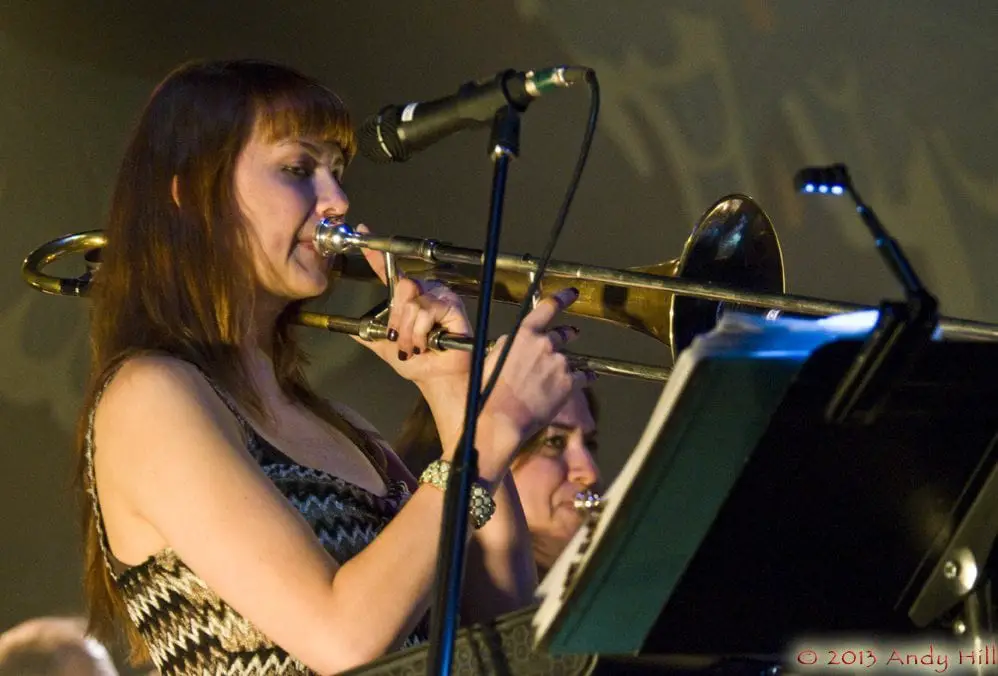
    Through Phish side projects, we are introduced to new musicians, some whom we may be familiar with, such as Scott Murawski of Max Creek, while others are new to the Phish family of musicians. Natalie Cressman, who sings and plays trombone in Trey Anastasio Band, sat down with NYS Music for an interview on her musical upbringing, her role in TAB and what the future holds with the release of her debut album.

    natalie cressmanPete Mason: Your parents, Jeff and Sandy are both musicians. Growing up, what was it like being in a musical household, with music that stretched from Brazilian to Jazz?

    Natalie Cressman: It was incredible to be exposed to such a wide array of music on such a subconscious level. I was completely unaware of how unusual my environment was as a kid, but seeing my parents, both American, immersing themselves in these musical cultures (Brazilian and Afro-Cuban) gave me a lot of respect for understanding the music’s roots. Seeing how many different styles of music share similar rhythms and how musical traditions have cross-pollinated over the years helped me think about music on a larger scale. I think being exposed to all of that set me up to be able to play any style of music I set my mind to.

    PM: Considering your musical upbringing and coming from a musical family, what made choose the trombone as your instrument? Do you or have you played others as well?

    NC: I started out singing and playing Suzuki piano at around 5. I was really into Broadway musicals for awhile, I even sang in Baz Luhrmann’s Broadway version of the Puccini opera La Boheme when I was 10 when it opened first in SF. I started trombone as soon as my arms were long enough to reach (laughs), which was around 9. I think I really liked hearing my dad play it so well and there was an extra trombone in the closet so my parents were stoked about not having to buy me a different instrument. I stopped playing piano or singing as much once I got into the trombone. I still play a bit of piano and bass, but I mostly play just when I’m writing new music.

    PM: What was it like when you were asked to join TAB? Was there any hesitancy?

    NC: When I was asked to join TAB, I was absolutely thrilled. It was my first tour ever and I thought the music was just so unbelievably great. To be a freshman in college and have a gig like that was just a total shock, in the best possible way. The only hesitancy I might have had at first was trying to figure out how it would all work with my school schedule. It is fortunate in some ways that TAB doesn’t tour that often because it makes it so I always miss just as much school as I possibly can without rubbing the Dean the wrong way. I had a couple really nice teachers who understood the nature of the opportunity and helped me figure it out.

    PM: How have you adjusted to life on the road and playing huge rooms?

    NC: I have definitely gotten more accustomed to it: I remember the first couple shows physically shaking with stage fright. It’s an intimidating thing to be out in front of a sea of people, but there’s definitely a zone of calm that I’ve figured out how to tap into now that let’s me focus on the music. I’ve always been obsessed with traveling, so being on the road is still pretty exciting. I love wandering around whatever city I’m in. I’m constantly trying to find cute little restaurants and shops that are really unique to the town.

    PM: How did you get together with the members of your band Secret Garden?

    NC: I met most of my band members through my school (Manhattan School of Music). Most of them are either current students, alums or people I’ve met through friends at school. Some of them I’ve known since before college! There are an astonishing number of talented musicians in New York City, but I think I gravitated towards the guys who now make up my band because we all have eclectic tastes in music that lie outside of the jazz world. I think what is so fun about the project is letting all our other influences seep in through the music to the point where the genre-specific lines are blurred. It gives us a lot of flexibility to make music with a fresh outlook.

    PM: You also perform with Peter Apfelbaum and the NY Hieroglyphics as well as Wyllys and the NY Hustler Ensemble. Compared to your other bands, how is that experience different, both in terms of the music and the band dynamic?

    NC: Both groups are incredibly creative and inventive. I grew up listening to Peter’s records and I remember hearing the Hieroglyphics as a teenager and feeling so excited about the music that I felt my heart pounding. Peter’s music has such a deep rhythmic groove, yet the music is definitely experimental and forward-thinking. The music is so soulful and yet at the same time so avant-garde. I think of Peter as my musical godfather, and the way he composes music, freely weaving together so many different styles so that the music itself becomes enigmatic, is super inspiring. The band is filled with old friends of my parents, so I definitely feel like I’m among family and it’s really laid back. But make no mistake, they’re super serious about the music. Wyllys’ Nu Disco and Re Edits also are on that line between soulful/groove and the experimental. With Wyllys and the New York Hustler Ensemble, things are definitely a little more unpredictable and spontaneous. But it’s a lot easier to be that unpredictable with only three musicians on stage. It would be miraculous if all 12 of us in Peter’s band could pull off the type of improvised composition that we do in the Hustler’s Ensemble. Jen and Wade are like family to me too, so every gig is always an incredible amount of fun.

    PM: Which is more creatively fulfilling for you – writing a song or recording/performing it?

    NC: That’s a really hard question. I think they are both fulfilling, but for me the writing process doesn’t feel complete until I hear it fully played, so I’d guess I’d say that performing it is the ultimate fulfillment. However, sometimes a performance doesn’t go as well as I’d like and then it’s hard to be satisfied with an off night. I often lose sleep over it, because you can’t go back and change a live performance. Even once in awhile certain recordings, you have to live with mistakes or things you might have done differently. I really like the relaxed nature of composing, of having the time to go out on a limb and try something different, then being able to erase it if it doesn’t work. It’s easy for me to write freely because there’s no need to be self-conscious or judgmental of your own work when you can tweak and perfect it to your hearts content

    PM: In the Stanford Jazz Mentors program you are teaching others. What is your favorite thing about that process?

    NC: I really love teaching because I think it is the perfect marriage between my musical skills and my killer babysitting skills (laughs). I started teaching at Stanford when I was barely 19, and a lot of the kids I was instructing weren’t more than a year or two younger than me. But I realized that was pretty insignificant, and I just did my best to get them excited about playing music. So much about teaching is psychological: it’s about giving them that bug that makes them want to know more. I’ve seen so many incredible musicians turn out to be mediocre teachers because they don’t pick up on the vibe of their students and are too caught up in teaching them what they think the kids should learn. It’s a balance for sure, but I think I’m good at figuring out how to get students excited about music, which opens them up for focused, meaningful learning.

    PM: You recently had a successful Kickstarter campaign to fund your debut album Unfolding, with fans contributing $7,000 (of a $5,000 goal). As you approached and exceeded the goal and the album’s production became a reality, what was going through your mind at this time?

    NC: It was an incredible surprise that the campaign was successful. I was going to fund the entire project on my own, since I’m not on a record label and being a 20 year-old college student it all seemed really overwhelming. A mentor of mine had recommended I work with a publicist and a radio promoter to help build some good press around the release but that was an extra $8,000 on top of paying the musicians, sound engineers, manufacturing, distribution, etc. My mom urged me to check out Kickstarter and so I did it on a whim with a small goal just to get a little help so that I could hire the PR. It did better than I ever could have expected, and the campaign will nearly fund the whole PR campaign! It was also a lot of fun to bring all the pledgers into the project, to share the process with them was really cool.

    PM: What are your musical hopes and goals over the next 10 years?

    NC: Right now I feel like I’m coming to a cross-road where I can see myself going in several directions. I could get a Master’s Degree, try to establish myself as a jazz musician, start a pop project. But from where I am now, I would love to make a name for my current band in the next 10 years, to be able to play more often, tour with my own group, and reach bigger audiences. I would love to keep writing my own songs and recording albums. With my project, I want to show jazz a relevant art form, I want to motivate other creative musicians to stop playing jazz like its classical repertoire and to tap into all the opportunities found in modern music and technology. I hope to continue playing as a sideman, especially with Trey, as each tour makes me a better musician and a better person too. All I really need to be happy is to have other like-minded musicians to collaborate with and keep me on my toes, and the rest is just the icing on the cake.

  • Interview with Liz Berlin of Rusted Root

    Rusted Root has been turning their performances into sweaty, sticky joy since 1990. I’m convinced the group could get the guards of the Royal Palace bobbing their heads in unison with their infectious rhythms and happy melodies.

    Still riding a huge wave of sustained popularity after their 1994 album “When I Woke,” Rusted Root is one of the few bands that guarantees an enjoyable, energy filled time when they grace the stage. After 22 years, 7 albums, 3 EP’s, and enough touring to make most long distance truck drivers weep, Rusted Root are true warriors of the road… They love what they do, and the proof is right there in front of you when you see them in concert.

    That being said, their May 15th stop in Syracuse is a must-see for eager fans, and arguably the best way you could spend a Tuesday evening in our fine city. I was able to speak with Liz Berlin over the phone prior to their performance to get some insights on the group’s extensive career, musical conceptualization, and how it felt to be the morning soundtrack for NASA.

    Interview:

    G- Hi Liz and thank you for taking the time to speak with Upstate LIVE!

    L- Hi!

    G- Are you currently on tour? Has the tour started yet?

    L- Well, we just completed 3 weeks of touring on the west coast, and we’ve been home for a couple of days. We’re leaving tonight to start the second leg of the tour.

    G- That’s excellent! And this is going to be another 3 week run of dates, correct?

    L- Almost 4, yea.

    G- So how were all the west coast shows?

    L- It was amazing! We played a lot of towns we haven’t been to before, and a lot of towns we don’t go to nearly enough. The tour was 98% sold out, and it was really, really awesome.

    G- Well, hopefully you bring some of the sunshine with you! What is going on after this next run of dates on the east coast?

    L- Well, we’re gonna to be finishing up this run of dates on the east coast and then we are going to be heading into the studio to finish mixing our next album, and finish up on the artwork and just get that all ready for release.

    G- Since 1990, Rusted Root has been playing shows, recording music, and logging in many, many miles… How does the group maintain such an active touring lifestyle? Any secret to it you’d care to share with us?

    L- Well, you know, I think there is a balance to it. We do tour a lot, but we also have our time at home and time to work on other projects so that we don’t get totally overwhelmed with touring.

    But really, we love it! The live performance is the highlight of our careers. Having that connection with the fans… Sort of that ritual of performing those songs and having all the fans come out… It’s wonderful!

    I think, my personal secret for touring, is I try to bring a bike with me as much as possible. I love exploring all the different towns we end up in. If I have a bike with me on the road, it helps a lot with my sanity!

    G- Right on. So, something I have wanted to ask you since my first listen… Where did your name come from?

    L- Well, when we were recording our very first songs, we had the goal of entering into a contest called “The Rock Challenge” and we had to turn in a 4 song tape. We didn’t have a name yet, and the deadline was that night. So, we sat around just brainstorming words together and, you know, someone said “Root,” as in Roots music, and I sort of ended up putting the “rust” and the “root” combination together, and that’s where it came from.

    G- Ok that clears it up for me! I’ve been waiting 16 years to ask somebody that. So, your last album release, “Stereo Rodeo,” came out in 2009, and you have been touring the album ever since. You are currently working on a follow-up to the album… Can we expect to hear any new songs on your upcoming tour?

    L- Oh absolutely! The set list in our shows these days is about 50% new material and the flow throughout the night is wonderful. The new stuff mixes very well with the old stuff and the energy is very high throughout the entire night.

    G- Alright! I’m looking forward to it. Can you tell us a bit about what is your writing process like? Who in the band typically comes up new music and how does each member contribute to the process?

    L- Well, Michael Glabicki is the primary songwriter in the band. He comes up with the skeleton… The guitar and the vocals… and brings it to the band and we all add in whatever our area of specialty is, whether it be bass or drums, vocal harmonies.

    And we’ve been developing the music a lot on the road in front of the fans, and taking a lot of input from the fans just based on how songs go throughout the night, from night to night. In that way, it is really like a collaborative process with the fans.

    G- Cool! You have released 6 albums, 3 EP’s, a Live record, and a greatest hits compilation, but according to your Wikipedia page (notoriously the most accurate website ever), Rusted Root has over 40 tracks that only exist on rare bootlegs recorded between the years of 1991 and 1995. Is this true, and do you have any intention on releasing these tracks on a studio recording? (SHAMELESS PLUG ALERT) I’d be glad to release them for you on Instant Classic Records!

    L- Oh wow! That’s funny I’ll have to read the wikipedia page… I haven’t seen it in a while. It is true that we have a lot of songs that have never been released on albums, some dating back as far as 20 years to the beginning of the band. The cool thing that happens, though, is they stick with us, and sort of surface on albums from time to time.

    For instance, on this next album, we’ll be putting a song on there called “Cover Me Up” which is a song that was written during the exact same time period as “Send Me On My Way,” “Martyr,” and “Ecstasy” and all of those songs that just never ended up on an album for some reason. But we’ve just brought it back in the last year and sort of revamped it and added a lot to it.

    G- That’s very cool! So your song, “Send Me On My Way,” was selected by NASA to be the morning wake up music for the Mars Exploration Rover Opportunity…

    L- Haha how cool is that?!!

    G- Insane! What was it like to get that phone call and realize your music was going to be in space!?

    L- It was amazing! It’s still amazing! It’s mind boggling to imagine. We just feel extremely honored and blessed and really happy that we could contribute to a positive experience for the astronauts… Up there in space… It’s awesome!

    G- If I was 5, 6, 10 miles above the surface, I’d want to hear it!

    L- Yea hahahahaha!

    G- What is your take on the different performances environments you have been able to perform? Do you prefer festivals, headlining gigs, acting as direct support? Can you tell us a bit about the difference between these forums and situations, and how you approach each performance?

    L- Well, we’ve played in so many different types of venues and situations, and I can’t say that any one type is our favorite over another. It really all has to do with the energy of the people in attendance. Any situation… It can be the smallest, dinkiest pub in the middle of nowhere… If the vibe is right and the people are pysched, it ends up being the most amazing night for us.

    That being said, Bonnaroo was pretty amazing, and so was Woodstock 99… From the stage looking out… I couldn’t see the end of the people! That was quite a rush!

    G- I was at that Woodstock 99 show, and it was something else! Which leads me to the next question… I hope you didn’t answer it already, but, as I am sure there are many great tour stories, can you tell us a bit about your personal favorite Rusted Root show to date? Where was it and what was it like?

    L- It’s not actually one particular show, but I’d say it would be the whole tour when we were asked to play as the opening act for the Robert Plant and Jimmy Page reunion tour. That was just mind boggling to me! I remember we were on the road with the Spin Doctors at the time, and I came out to the tour bus from my hotel and Jim (Donovan) said to me ‘Guess what the next gig is!’ I said ‘What?’ and he said ‘Led Zeppelin!’ I said ‘Stop lying! That will never happen!’

    And just a few days before, I had been thinking about Led Zeppelin and how I wanted to find a really good cover band to watch because I wanted to see somebody play it. But it turns out we spent 3 months crossing the country twice with Page and Plant playing hockey arenas! I basically spent everyday sitting by myself in the middle of hockey arenas watching them sound check… That was just kind of a dream!

    G- Yea well, I’m jealous hahaha! Well, obviously you’ve been on the road for a very long time, and the music industry is a very tough business. In your profession opinion, what advice can you give some of the young, up and coming bands out here in Syracuse, and everywhere for that matter, who want to make it in music, on the road, and as a professional musician?

    L- Well, you know, there is all types of advice that I could give, but really… Just focus first and foremost on the music and your playing skills. Try to write the most original music that you can, and make it solid. After that, it’s really just a matter of exploring your options and being proactive with the opportunities that you have and the resources that you have.

    With the internet and social media and all of the different sites that there are for bands, there are so many resources now that we didn’t have when we were first starting. If you want to do music seriously, then you have to just decide that that is your mission and that’s your job, and treat it like a job. Just work very hard and stay focused!

    I’d like to give Liz a huge “Thank you” for taking some time to talk with me today before she embarks on Rusted Root’s upcoming tour. They’ll be hitting Syracuse on May 15th, so go grab your tickets and go see more live music!

    http://www.rustedroot.com/

  • “Greg’s 10” Interview with… CLUTCH!

    Chevy Celebrity. 1983. Not nearly as cool as the vehicle described on “Spacegrass,” my introduction to Clutch back in high school, but it got me around. A staple on the Top 9 at 9 on K-Rock for months, a buddy of mine and I would hop into my ride, pack a bowl, and anxiously await the DJ to drop the tune. A fan is born.

    Clutch may not have reached to upper echelon of commercial success as some of their contemporaries, but most of their contemporaries aren’t even around anymore. Riding a wave of success that is, in many ways, unparalleled, Clutch’s fan base is cultish, rabid, and fiercely loyal. My last experience with the group found them selling out 2 consecutive nights at Irving Plaza in NYC… Not an easy feat anywhere, let alone a Mecca of the music world.

    I was able to check out the show this evening, and Dan Maines from Clutch was cool enough to answer a few questions about the band, their longevity, tour, and recordings for Upstate Metal.

    Interview:

    G- What’s going on, man, and thank you for taking the time to speak with Upstate Metal! How’s everything going on your current tour? I see you are playing several headlining dates in addition to sharing a bill with Hell Yeah! How have the shows been?

    D- They’ve been good. I’m sorry, but I’ve just noticed that they have Rockin’ Pies down there? This place… Do they make their own pie for sale during shows?

    G- You know, I’m not quite sure but if they do, I haven’t had dinner yet so I’m definitely down to grab one.

    D- That’s fantastic!

    G- I’ve been coming to this club for about 18 years and I’ve never seen that.

    D- Never seen anything about pies?

    G- No.

    D- OK. Moving on, tour’s been going good. We started the tour off with headlining shows. We did a few of those, and then Hell Yeah! Jumped on, or we jumped on with Hell Yeah! For the past 4 shows. Everything is going great.

    G- How’s life on the road with Mr. Vinnie Paul and crew… You guys been partying hard or what?

    D- Not yet. We’ve know Vinnie for a while. We did a tour back in the day with Pantera and we’ve been on a few tours where he’s come out to see some of the other bands. We’re just looking forward to spending some weeks on the road with them. All those guys are great guys… I’m looking forward to it!

    G- Excellent! So, Clutch has been around for more than 2 decades (They formed in 1990) and there is no indication that the group is going anywhere anytime soon… Can you talk a bit about the band’s formation and how everything came about?

    D- Yea, well we first started playing together in 1989. That was our senior year of high school. My first show was trying out for the high school talent show. I can’t even remember what we were calling ourselves, but it was me, Neil, John Paul, and this other friend of ours Brian, and Eric. It didn’t make the cut, but luckily there were so many bands that tried out for the talent show that they just decided to have a totally separate school concert, which we ended up playing.

    God, what was the name of the band? I can’t remember the name of the band… It was something terrible (laughter). And then we got Tim in the band and it was narrowed down to 4 of us. We put out our first 7” in 1991 with our friend Dave and then put out Transnational Speedway League, our first lp on Atlantic Records, or East West, in 1993. And we’ve been releasing albums ever since.

    G- Your recordings run the gamut… You incorporate many different styles into your music, and each album is a bit different, but purely Clutch. Is this intended?

    D- Umm, I think you’re gonna run into that phenomenon of a band sounding like the previous album because it’s the same people. It’s difficult to kinda stray away from your core sound in a lot of ways, and we try to do that, and we don’t try to make the same record we made the last time. We may end up making 10 albums that, in our minds, were vastly different from each previous album, but I think, as a whole, it’s pretty easy to identify our music, if you’re listening to it. I’m too close to it… I can’t tell.

    G- Can you tell me a bit more about your writing process? Who in the band typically comes up new music? Is there a primary writer, or do you guys just drink a few beers and jam out until something clicks?

    D- As far as writing the music, it is definitely a group process. All 4 of us are heavily involved in the writing. Vocally, Neil is the sole lyricist and vocalist. But we just get together at John Paul’s place and start jamming. He pushes record until we start playing something we like playing for more than 2 minutes, and we move on to another idea. Neil will take those instrumental ideas home with him and come back a day or 2 later with some vocal ideas. And usually the vocal ideas will dictate which direction a song goes in. We may drop a part altogether. A part we thought was the chorus of the song may turn out to not be the chorus of the song once you have vocals put on it. You just build it like that. It’s very rare that somebody comes to the table with a completed song.

    G- So Clutch now has their own record label, WEATHERMAKER, and you have been reissuing your classics. Are you currently working on any new releases right now? What else is in the works for Weathermaker?

    D- Well, we have a lot of things coming out, actually. We just re-released the last 3 albums we put out on DRT Records, which has folded. We acquired ownership of those 3 albums, so we’ve re-released those on cd last year, and this year we are releasing them all on vinyl.

    G- Nice!

    D- Yup. And we have a 7” inch that we are releasing right now called “Pigtown Blues” and it’s a picture disc 7”. One side is an acoustic song called “Pigtown Blues,” and the other side is an acoustic version of “Motherless Child,” which was the first song on our last full-length album “Strange Cousins.”

    And at the end of this Summer, we plan on going into the studio with the songs we are working on right now and record those and put those out on an album that should be out early 2013.

    G- Will you be demo-ing or premiering anything during this tour?

    D- Yea. We don’t have anything established as far as titles go, but we’re definitely playing new songs on the road right now. It’s Tim’s set list… We change the set list every night… and I think tim was talking about putting 3 new songs on the set tonight, which would be fun.

    G- That’d be great!

    D- But yea we have about 10 songs right now that we will be playing throughout the tour, and when we get home we are gonna continue writing and then go into the studio with, hopefully, 15 ideas and see what happens.

    G- So, after 9 albums, rare compilations, live albums, etc… Where does Clutch see itself in the next decade? Are there any countries or continents you haven’t been to yet that you are working on, or any acts you are looking/hoping to share a bill with in the future?

    D- Yea. We’ve been lucky enough to get over to places like Australia and Japan. The European tours are starting to pick up for us. We’re just starting to consider playing European festivals “routine” now, which it never was. But yea we’re still trying to get into places like South America. We’re trying to get over to Japan more often… We haven’t been over there in a while, so we’re working on that. But yea… Global Domination is definitely part of our plan in the next 10 years.

    G- On that note, what’s the craziest show Clutch has played to date, and what was it like? Do you have any particular spots that always go off?

    D- Yea (laughter)… I don’t know. I can’t remember so many shows. You definitely see some weird things. I remember playing a show in Ohio and, uhh… I spend a lot of my time looking down, and I play with a hat on a lot of times, too, so I don’t really see a lot of what’s going on in the crowd. And one show taught me my lessons in paying more attention to what is actually happening.

    (Laughter begins)

    G- Oh boy!

    D- Uhh, I mean, this was a small stage, too. Maybe 3-feet high. But these people were engaging in coitus directly in front of me! They could have touched my feet!

    At this point, I’m cracking up.

    D- And it was that close to a threesome.

    G- I think we have a winner!

    D- But the reason it caught my attention was because you could hear very clearly the guy saying something along the lines of  ‘I can’t do it with all these people around.’ That was pretty bad.

    G- Upstate Metal… I think we’ve got a winner. Clutch has the gold star so far, so it’s gonna take a while to top that one!

    But lastly, so you can go get ready for the show this evening… I just want to ask your professional opinion. You guys have been doing this for a long time, and you’re clearly doing it well. You’ve made lots of waves, and you’re still going strong… What advice can you give for up and coming bands and artists who are looking to record, tour, and make it as professional musicians these days?

    D- I think what helps a lot is figuring out what you can do by yourself on your own. It’s that DIY attitude that was in music when I first started listening to bands. I was really into hardcore, and being from DC and having bands like Minor Threat and Fugazi as your local heroes, you kinda get that DIY attitude exposed to you early on And I think that that kind of mentality is what is gonna save a lot of bands in the long run. Not necessarily having to do everything yourself, but at least figuring out what you can do by yourself and not putting your hopes or expectations on other people or other companies.

    We’re a band that’s learned you cannot rely on a record label. You thought you could… You thought that that was your ticket… That if you could make it onto a record label, your problems were solved, and that’s the farthest thing from the truth. It took us a long time to figure it out, but what was most gonna benefit this band is forming our own label and just trying to put as many things in our control as possible.

    http://www.pro-rock.com/

    http://weathermakermusic.com/