Author: Grace Kentrotas

  • In Memory of Doc Watson, 1923-2012

    In Memory of Doc Watson, 1923-2012

    Sad news in the folk and bluegrass music world, as 7-time Grammy winner Arthel Lane ‘Doc’ Watson passed away due to complications from surgery at Wake Forest Baptist Medical Center in Winston-Salem, North Carolina. He was an amazing flat-picker and played for generations of folk fans, including the third Bonnaroo in 2004. Here, we present a review of Doc Watson’s final Capital Region performance from The Egg in Albany, NY on August 1st, 2010. RIP Doc Watson.
    doc watsonUpdate 6/3/12 – A recording of this show has surfaced. Take a listen here http://bt.etree.org/details.php?id=555469

    The first time I saw Doc Watson was in 2004 at Bonnaroo on the recommendation of Trey Anastasio who remarked in the program that Doc was one of the few acts he was dying to see. Having never heard of Doc Watson, I thought, “Well, if it’s good enough for Trey, it’s good enough for me”. I was not disappointed and I even had a chance to chat with mandolin virtuoso Sam Bush before he headed on stage to play a couple of tunes with Doc.

    This performance was a bit more subdued from a tent stage playing to 5,000 sweaty 20-somethings. Instead, there were around 800 fans in attendance averaging around 40-50 years old with a few younger fans sprinkled throughout. Since I had last seen him, Doc Watson received a lifetime achievement award, predated by his 3-disk biographical album Legacy that won him one of his seven Grammys in 2002 for Best Traditional Folk Album. This collection is worth listening to if you want to acclimate yourself to this bluegrass legend.

    With Doc Watson on guitar, T Michael Coleman on bass, David Holt on guitar/banjo and later, Doc’s grandson Richard Watson on guitar, the two 50-minute sets were a trip through American Roots music history. Songs were played that will one day be forgotten in time and were so old that that they bridge the gap from the 19th century to the 21st century in both their meanings and history. Doc Watson teaches this music to us like a non-activist Pete Seeger.

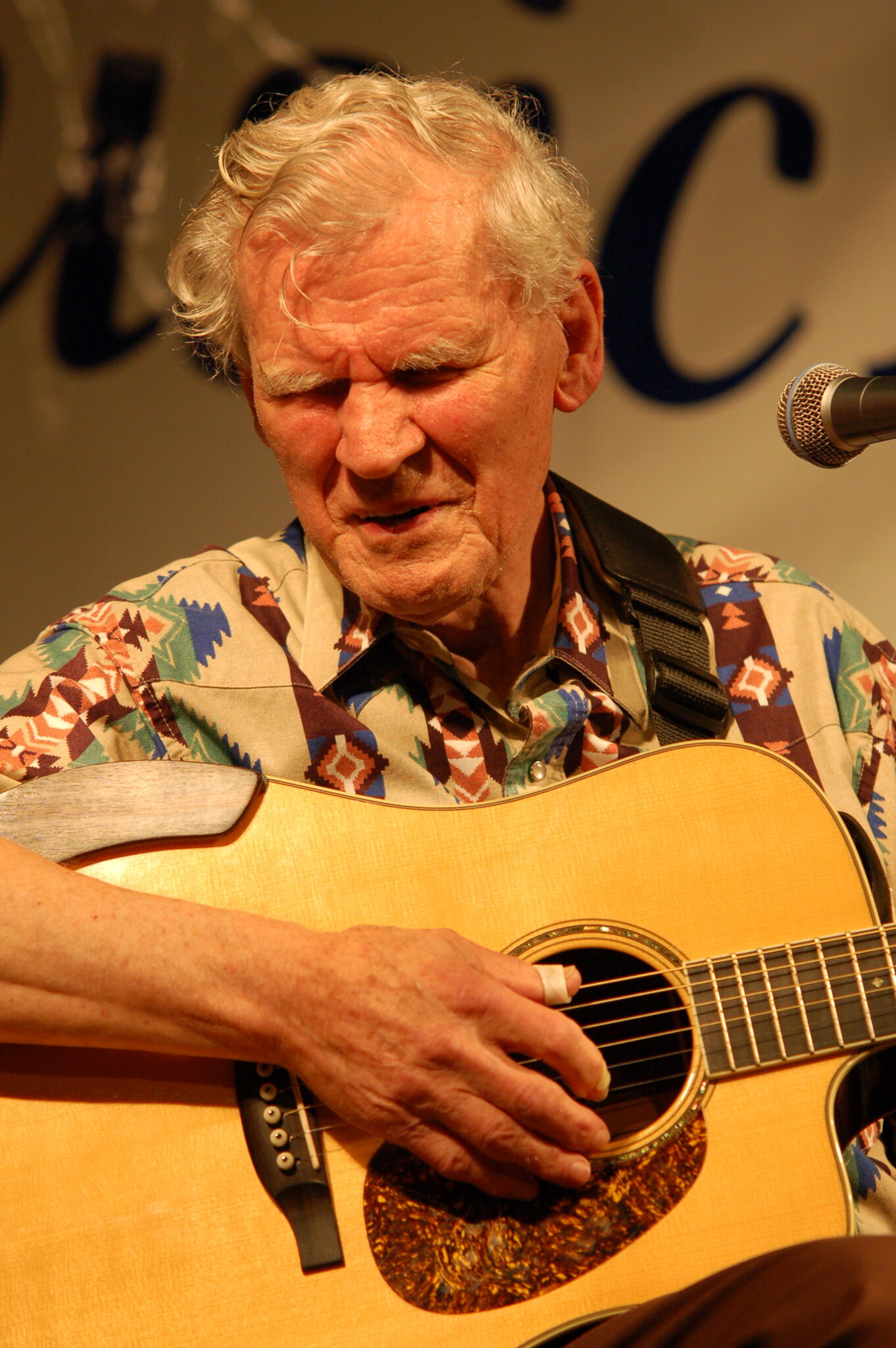
    Still playing at 87 years old, Doc was born Arthel Lane Watson with the nickname ‘Doc’ given to him as a replacement for his stuffy birth name. While he may be blind, this does not define him. His music does. The only indication of his lack of sight is that of him being led to his seat on the stage. This does not hold him back in any form nor has it ever seemed to be more than a footnote to his musical legacy.

    The songs over the course of the night gave a wide range of bluegrass and other blues-rooted music. The Carter Family song “Cannonball” which has its roots in English folk. “Feel Like Cryin’ Since She’s Gone” got the audience involved for the first of many sing-a-longs. The classic “Sittin’ On Top of the World” featured Holt on slide guitar with Doc singing a tune we all know from either The Grateful Dead or Cream or any number of acts that have made this song their own. Lyrics like “now she’s gone and I don’t worry” can resonate with so many different people that dozens of versions are the result.

    The 2nd set featured various solo tunes from Doc, with his southern hills dialect from North Carolina that has a distinct drawl on the I’s which makes each song sound that much more personal and a hesitation of ‘aih’ every so often, giving an extra breath and half per measure throughout the night. Every so often, Doc called out to his guitar to ‘behave now’, while he was prepping for the next tune. It may have been the equipment, but it all seemed to be part of Doc’s character.

    “Freight Train” by Elizabeth Cotten elicited a proud response from the crowd that knew the roots of this song. Kris Kristofferson’s “For the Good Times” was slow and not as uplifting as the original and was nearly somber at points. “Big Bouquet of Roses (for every time you broke my heart)” continued the trend by telling us a story in each verse. “T for Texas, T for Tennessee”, a classic tune of Watson’s, was a great treat for the entire audience.

    The rest of the ensemble returned for “Walk On” and the quartet provided the best tunes of the night. Some tunes in bluegrass are just arranged and meant to be played by multiple strings. “I Am a Pilgrim” by Merle Travis and “Frankie and Johnny”, a sweethearts song, were crowd-pleasers for those familiar with Doc’s catalog. “Workin’ Man’s Blues” was the most upbeat song of the night thanks to bass playing from the youngest Watson on stage.

    A personal treat was “In the Pines”, a song that dates back to the 1870s. This song has the same musical/lyrical roots as ‘Where Did You Sleep Last Night?” (also known as “Black Girl”) and was made popular again by folk troupe Leadbelly in the 1940s and again by Nirvana on their Unplugged album recorded in 1993. This version was a bit more upbeat and happier than the pain and suffering ingrained in the song’s lyrics.

    Sunday night services ended around 9:30 p.m. with Mississippi John Hurt’s “Blues for the Banjo” which had great lines that all can identify with:

    “I get the blues but I can’t be satisfied….
    I need a shot of whiskey to drive the blues away…
    I think I’ll need a quart today”

    The crowd headed home smiling and content knowing that they had seen a living bluegrass legend play great songs that were both known and already forgotten. This was a masterfully guided trip through American bluegrass and blues roots.
  • Interview with Marc Brownstein of The Disco Biscuits and Conspirator

    Interview with Marc Brownstein of The Disco Biscuits and Conspirator

    Amid a circus of DJs, 20-somethings with computers and dubstep bands, the art of live electronica has been lost. The creation of electronic dance music by a band and not solely on a computer, is an art form few have mastered. Kraftwerk, Justice, Simon Posford, The  Chemical Brothers, Sound Tribe Sector 9 and the Disco Biscuits are in a class of their own. However, from the decreased touring schedule of the latter has grown a 2004 side project that has taken itself and audiences to new heights in the development of live electronic music. Conspirator, fresh off the release of their live album Unlocked: Live from the Georgia Theater, tour 60 or more shows a year from coast to coast, opening the door for the band to make a case as the best live electronic touring act in America today. Numerous festival appearances this summer will likely cement this journey that founding Biscuits’ Aron Magner and Marc Brownstein (who joins us for an interview) has taken with guitarist Chris Michetti and a rotating cast of drummers.

    marc brownstein interview

    While the show itself was outstanding and a cadre of intensely dancing fans came to check out Dirty Paris and Blockhead open up, the interview with Marc Brownstein shed light on Conspirator, electronic music, and the current state of The Disco Biscuits. Marc said at one point, ‘It’s great to be inAlbany’, even though we were in Clifton Park. This just goes to show how big the Albany music scene is, stretching to Troy and points north, meeting up with the high peaks sounds of Saratoga.

    Conspirator 4/26/12, Northern Lights, Clifton Park,NY

    Setlist: So Much More > Step Inside, Hands Up, Countash > Feed the Wolf >Brooklyn Bridge> Hard Acid > Commercial Amen > Caves > Orch Theme > Liquid Sawyer, Gypsy Lane, Neck Romancer E: Fascinate

    Interview with Marc Brownstein:

    Your new live album, Unlocked: Live from the Georgia Theater was released recently. What is it about the creation of live electronic music that leads to such a kinetic response from the crowd?

    Electronic music in general gets a kinetic response from the crowd. Doing it live just brings in that element of surprise, and that’s the thing that we’ve always been used to having in our world, so that’s one thing that I’m not ready to give up and moving into just playing electronic music with an element of surprise in there. You can create it DJing for sure without instruments; really great DJs are great because they construct their sets the way the great bands of all time have constructed their sets and they’ve made the show flow through, they’ll play half of one song then go into another song then maybe they’ll bring in a little piece of one song over another song, and its like they’re doing the same stuff at this point that the great jambands did back in the day, and still do.

    marc brownstein interview

    What is the origin of the band name Conspirator?

    It’s mostly about collaboration. The whole idea was just to collaborate with everyone out there that we know, Joe Russo to the guys from Umphrey’s to the different drummers we’ve used, Lotus, The New Deal, KJ SAWKA and Adam Dietch. It’s about Aron and I having the chance to bring in these different influences and elements over the tracks that we produce and interpret them differently with different musicians.

    There are quite a few songs that stretch from Conspirator’s debut album, The Key, have been played by The Disco Biscuits as well. Is there a difference between playing them with two different bands, even though two members are common between them?

    It depends on the song. For Portal (to an Empty Head), the difference is that we’re not singing but we’re playing without any tracks, but (Digital) Buddha we’re not singing but we’re playing a whole different version, a computerized version of it and made a track for it. We made a computerized backtrack of Buddha and broke it up, it can be triggered and its totally loose, we’re not stuck on it, we can use it and improvise with it and tweak it, but it makes them completely different from the Buddha that we play in the Biscuits. And then there’s the ones in the Biscuits that we do without any track like Commercial (Amen) or Liquid Handcuffs or Orch Theme but over in Conspirator we play them the way they were written. In the Biscuits we interpret these electronic songs into rock form but in Conspirator we’re playing them as electronic tracks and adding rock instruments to that but staying true to the fact that they’re electronic tracks.

    What are the origins of Orch Theme? How did the song develop into such a slow building aria?

    The song was named for the sound on the keyboard that it’s based around, so the actual sound of the theme of Orch Theme was called orch theme on the computer so he (Aron Magner) named the song after the sound, which happens sometimes. It’s not the first time its happened where a sound has dictated the name of the track; after all it is music.

    So Chris (DJ Omen) and Aron wrote the theme together, then we brought it into the Biscuits, dropped everything except that Orch Theme sound and then we turned it into what we do, which is stretch it the fuck out. Sometimes we even play it without ever playing the theme, we’ve actually put it on the setlist and just played through the whole entire thing and never got to the theme and just left it and went somewhere else. Then at the end of the show we’ll be like ‘we never played that’, and we just got so far out in the jam that we felt like the actual song didn’t even get played.

    (After the show, I asked Aron Magner for his take on the origins of Orch Theme and he gave some more details to the creation of the song)

    “Orch theme I wrote in 2005 and at that time Lord of the Rings was the best thing ever, as it still is right now. I was working in the studio with DJ Omen and I was wondering if we could make some thematic and cinematic music, I wanted it to sound like electronic, like the orcs are coming in. as I was browsing through patches, I was like ‘oh my god!’, ‘Orch theme’. The motif is trying to say orchestra theme because it has layers and layers, the bottom half of the keyboard has tympanis and the upper half has violas and in between has brass, there are 36 instruments laid out throughout the keyboard that double each other depending on their range so that’s the Orch Theme. So that’s how it came about.”

    Recently, electronic music pioneers Kraftwerk performed their albums at MOMA. Did their music hold and influence over your early interest in electronica and if not, who were the first bands that turned you onto electronic music?

    Well, Kraftwerk was a thing I found out about later when people used to say that we were the first band to play electronic music, when Kraftwerk was doing this decades before we came along. So they had no influence, it was like a collective unconsciousness of ‘dude, people have been doing this for a long time”, but for us it was mostly for us, Simon Posford, the person who was our earliest influence, via our friends from England who were friends with Posford and were playing us Hallucinogen and Shpongle back in the mid-late 90s. We had heard house music but it didn’t appeal to us as much as psychedelic music. Clearly, that was the bridge, between rock and electronic, that’s why Posford was the bridge, for all of this, for real. A lot of people attribute us as a bridge in America for bringing rock and electronica together, for pushing the styles together at Camp Bisco and by forging a rock and electronica festival, but the bridge came from similarities between the psychedelia of trance and the psychedelia of the jamband world; it sounded very different but the idea was the same, to try to tweak people out.

    Your drummers rotate, including Lane Shaw, Mike Greenfield, Darren Shearer, Adam Deitch and KJ SAWKA, currently playing this tour. How hard has it been to interlace through different drummers and keep the music consistent from one night/tour to the next? 

    It’s been much better since we’ve had KJ for the last six months. Having one drummer is what we want, it’s preferable, and the band is getting better and better. Last night was one of the best shows we’ve ever played, we know each other now, and we can communicate with each other. It’s great.

    Is Conspirator, initially conceived as a side project becoming the main touring act? Will we see Disco Biscuit tours again?

    Well, when the Biscuits aren’t playing this is certainly going to be the main act. But I’m assuming there’s going to be more Biscuits tours. That’s the assumption I’m running my life on. Of course there’s going to be more Biscuits tours. We wanted 2011 off and we didn’t get it, it just didn’t happen. We wanted to take the whole year off

    You mean including Camp Bisco as well?

    Yeah we were going to take the whole year off and then we talked Jon into doing Camp and we talked him into doing Inferno and then we talked him into doing Nokia and Identity and before you knew it we played 50 shows and said “Well that wasn’t a year off.” I played another 80 on top of it, I played 130 shows and so at the end of that I think we were just like “OK that didn’t work, the only way to do this is to legitimately try to not to talk anyone into playing any shows. For me, I have to be very disciplined, “OK, I’ll book myself to play with Conspirator and play these shows because I have a lot of energy and I put a lot of effort into trying to get The Disco Biscuits out on tour all the time for years and years and years, I’m always just driving it forward and pushing shows, booking shows, pushing festivals, so for me I just have to be disciplined and say “We’re taking time off, I have to accept that we’re taking time off.” I don’t know if I’ll ever take time off myself, personally. I just don’t see the point in taking time off. I get for other people they have to but for me personally, I just don’t…yeah, there’ll be more Biscuits shows.

    Update 4/30, 11pm: This article has been updated to correct the name of a co-writer of Orch Theme. It was Chris Edmonson, AKA DJ Omen. Apologies for the confusion

  • An Interview with Natalie Cressman

    An Interview with Natalie Cressman

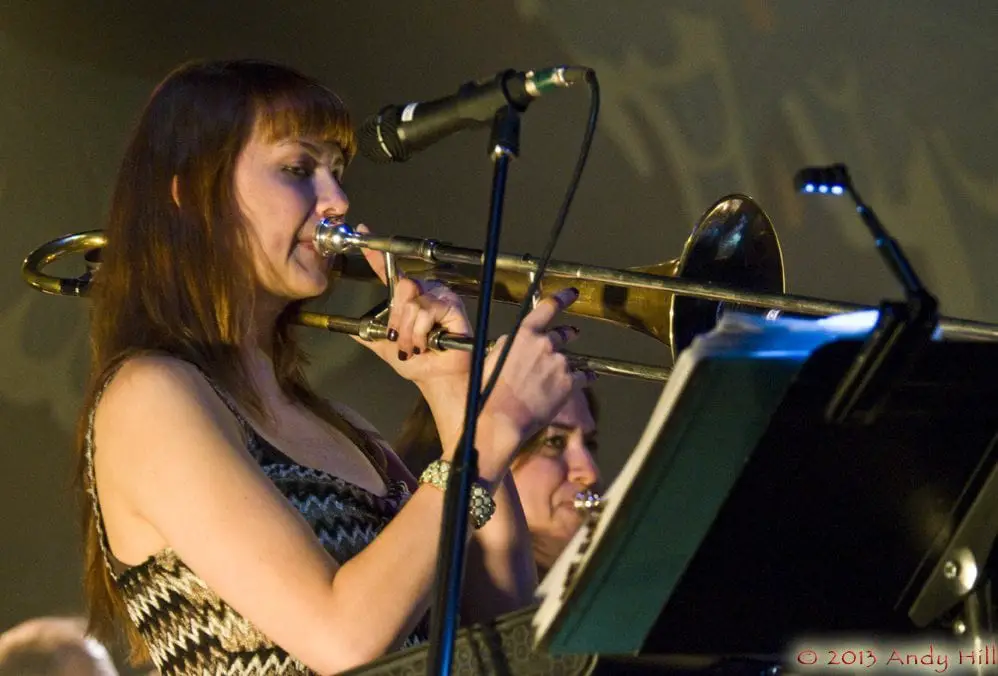
    Through Phish side projects, we are introduced to new musicians, some whom we may be familiar with, such as Scott Murawski of Max Creek, while others are new to the Phish family of musicians. Natalie Cressman, who sings and plays trombone in Trey Anastasio Band, sat down with NYS Music for an interview on her musical upbringing, her role in TAB and what the future holds with the release of her debut album.

    natalie cressmanPete Mason: Your parents, Jeff and Sandy are both musicians. Growing up, what was it like being in a musical household, with music that stretched from Brazilian to Jazz?

    Natalie Cressman: It was incredible to be exposed to such a wide array of music on such a subconscious level. I was completely unaware of how unusual my environment was as a kid, but seeing my parents, both American, immersing themselves in these musical cultures (Brazilian and Afro-Cuban) gave me a lot of respect for understanding the music’s roots. Seeing how many different styles of music share similar rhythms and how musical traditions have cross-pollinated over the years helped me think about music on a larger scale. I think being exposed to all of that set me up to be able to play any style of music I set my mind to.

    PM: Considering your musical upbringing and coming from a musical family, what made choose the trombone as your instrument? Do you or have you played others as well?

    NC: I started out singing and playing Suzuki piano at around 5. I was really into Broadway musicals for awhile, I even sang in Baz Luhrmann’s Broadway version of the Puccini opera La Boheme when I was 10 when it opened first in SF. I started trombone as soon as my arms were long enough to reach (laughs), which was around 9. I think I really liked hearing my dad play it so well and there was an extra trombone in the closet so my parents were stoked about not having to buy me a different instrument. I stopped playing piano or singing as much once I got into the trombone. I still play a bit of piano and bass, but I mostly play just when I’m writing new music.

    PM: What was it like when you were asked to join TAB? Was there any hesitancy?

    NC: When I was asked to join TAB, I was absolutely thrilled. It was my first tour ever and I thought the music was just so unbelievably great. To be a freshman in college and have a gig like that was just a total shock, in the best possible way. The only hesitancy I might have had at first was trying to figure out how it would all work with my school schedule. It is fortunate in some ways that TAB doesn’t tour that often because it makes it so I always miss just as much school as I possibly can without rubbing the Dean the wrong way. I had a couple really nice teachers who understood the nature of the opportunity and helped me figure it out.

    PM: How have you adjusted to life on the road and playing huge rooms?

    NC: I have definitely gotten more accustomed to it: I remember the first couple shows physically shaking with stage fright. It’s an intimidating thing to be out in front of a sea of people, but there’s definitely a zone of calm that I’ve figured out how to tap into now that let’s me focus on the music. I’ve always been obsessed with traveling, so being on the road is still pretty exciting. I love wandering around whatever city I’m in. I’m constantly trying to find cute little restaurants and shops that are really unique to the town.

    PM: How did you get together with the members of your band Secret Garden?

    NC: I met most of my band members through my school (Manhattan School of Music). Most of them are either current students, alums or people I’ve met through friends at school. Some of them I’ve known since before college! There are an astonishing number of talented musicians in New York City, but I think I gravitated towards the guys who now make up my band because we all have eclectic tastes in music that lie outside of the jazz world. I think what is so fun about the project is letting all our other influences seep in through the music to the point where the genre-specific lines are blurred. It gives us a lot of flexibility to make music with a fresh outlook.

    PM: You also perform with Peter Apfelbaum and the NY Hieroglyphics as well as Wyllys and the NY Hustler Ensemble. Compared to your other bands, how is that experience different, both in terms of the music and the band dynamic?

    NC: Both groups are incredibly creative and inventive. I grew up listening to Peter’s records and I remember hearing the Hieroglyphics as a teenager and feeling so excited about the music that I felt my heart pounding. Peter’s music has such a deep rhythmic groove, yet the music is definitely experimental and forward-thinking. The music is so soulful and yet at the same time so avant-garde. I think of Peter as my musical godfather, and the way he composes music, freely weaving together so many different styles so that the music itself becomes enigmatic, is super inspiring. The band is filled with old friends of my parents, so I definitely feel like I’m among family and it’s really laid back. But make no mistake, they’re super serious about the music. Wyllys’ Nu Disco and Re Edits also are on that line between soulful/groove and the experimental. With Wyllys and the New York Hustler Ensemble, things are definitely a little more unpredictable and spontaneous. But it’s a lot easier to be that unpredictable with only three musicians on stage. It would be miraculous if all 12 of us in Peter’s band could pull off the type of improvised composition that we do in the Hustler’s Ensemble. Jen and Wade are like family to me too, so every gig is always an incredible amount of fun.

    PM: Which is more creatively fulfilling for you – writing a song or recording/performing it?

    NC: That’s a really hard question. I think they are both fulfilling, but for me the writing process doesn’t feel complete until I hear it fully played, so I’d guess I’d say that performing it is the ultimate fulfillment. However, sometimes a performance doesn’t go as well as I’d like and then it’s hard to be satisfied with an off night. I often lose sleep over it, because you can’t go back and change a live performance. Even once in awhile certain recordings, you have to live with mistakes or things you might have done differently. I really like the relaxed nature of composing, of having the time to go out on a limb and try something different, then being able to erase it if it doesn’t work. It’s easy for me to write freely because there’s no need to be self-conscious or judgmental of your own work when you can tweak and perfect it to your hearts content

    PM: In the Stanford Jazz Mentors program you are teaching others. What is your favorite thing about that process?

    NC: I really love teaching because I think it is the perfect marriage between my musical skills and my killer babysitting skills (laughs). I started teaching at Stanford when I was barely 19, and a lot of the kids I was instructing weren’t more than a year or two younger than me. But I realized that was pretty insignificant, and I just did my best to get them excited about playing music. So much about teaching is psychological: it’s about giving them that bug that makes them want to know more. I’ve seen so many incredible musicians turn out to be mediocre teachers because they don’t pick up on the vibe of their students and are too caught up in teaching them what they think the kids should learn. It’s a balance for sure, but I think I’m good at figuring out how to get students excited about music, which opens them up for focused, meaningful learning.

    PM: You recently had a successful Kickstarter campaign to fund your debut album Unfolding, with fans contributing $7,000 (of a $5,000 goal). As you approached and exceeded the goal and the album’s production became a reality, what was going through your mind at this time?

    NC: It was an incredible surprise that the campaign was successful. I was going to fund the entire project on my own, since I’m not on a record label and being a 20 year-old college student it all seemed really overwhelming. A mentor of mine had recommended I work with a publicist and a radio promoter to help build some good press around the release but that was an extra $8,000 on top of paying the musicians, sound engineers, manufacturing, distribution, etc. My mom urged me to check out Kickstarter and so I did it on a whim with a small goal just to get a little help so that I could hire the PR. It did better than I ever could have expected, and the campaign will nearly fund the whole PR campaign! It was also a lot of fun to bring all the pledgers into the project, to share the process with them was really cool.

    PM: What are your musical hopes and goals over the next 10 years?

    NC: Right now I feel like I’m coming to a cross-road where I can see myself going in several directions. I could get a Master’s Degree, try to establish myself as a jazz musician, start a pop project. But from where I am now, I would love to make a name for my current band in the next 10 years, to be able to play more often, tour with my own group, and reach bigger audiences. I would love to keep writing my own songs and recording albums. With my project, I want to show jazz a relevant art form, I want to motivate other creative musicians to stop playing jazz like its classical repertoire and to tap into all the opportunities found in modern music and technology. I hope to continue playing as a sideman, especially with Trey, as each tour makes me a better musician and a better person too. All I really need to be happy is to have other like-minded musicians to collaborate with and keep me on my toes, and the rest is just the icing on the cake.

  • Americana in Albany: The Avett Brothers and Eastbound Jesus

    Albany’s best kept secret, Eastbound Jesus, started a rainy and windy day playing a free show at Jillians of Albany for a packed house prior to The Avett Brothers taking the stage a few blocks north at The Palace Theater on Sunday April 22nd. The fans that came looking for free music and respite from the rain got both, with the local flavor of EBJ warming the crowd up for two hours with foot tappin’, dancefloor stompin’ and some of the most energetic music that a band can pour onto an audience. Playing Nine Pound Hammer and referring to it as a staple of all bluegrass bands brought a bit of the group’s roots out into the set and reminded some in the audience of the traditional music they continue. A few dancin’ music tunes drew the seated from the audience to the stage and delved into a classic version of Dylan’s Maggie’s Farm. The music and style of EBJ is a little more Greensky Bluegrass and Railroad Earth than more traditional acts, leading to a larger audience in due time. The night was capped off with The Ballad of Eastbound Jesus, a single among many contenders throughout the night. My first Eastbound Jesus reaffirmed all that I had heard, and this band has a great future coming to them.

    After dinner and an early show, we walked up to The Palace for The Avett Brothers show. Two first time bands in one night and already I was sold on one. My experience with the Avetts was limited to their albums which I found enjoyable but without hearing them live the jury was out for the time being. The Avetts wound up giving a stand out amazing performance that showed why they are part of the bluegrass renaissance in America. The audience was predominantly made up of post-college and thirty-something women with their boyfriends in tow when a gaggle of girls wasn’t with them. After a few songs I was taken by the energy of the group and the music – it was summer time poolside happy hour music, tailor made for a good time, like Will You Return, which was touching and upbeat and had a great line ‘Why can’t you see yourself as beautiful as I see you?’

    Event poster, edition of 100

    Scott Avett performs with the intensity of Yonder Mountain String Band’s Jeff Austin and mentioned that they played The Lark (Tavern) on their first tour ten years ago. January Wedding was a sweet soft song off their latest album I and Love and You then the band took a moment to allow Scott a solo, followed by this brother Seth on guitar. Seth spoke about William Kennedy (to loud cheers), as he had been reading Billy Phelan’s Greatest Game and said he had been ‘coming to Albany in my head for quite a while’ and that it was nice to be here. The full band came back to the stage for At the Beach and the crowd sang along with glee to this and many songs. The title track to their latest album I and Love and You was soft but a great start to the album upon another listen after the show. Kick Drum Heart serves to be the band’s signature song, eliciting audience response with clapping and intensity from the musicians. A multi-song encore was capped nicely by Talk on Indolence, another invigorating song with rapid fire lyrics and sing along lyrics.

    As bands like The Avett Brothers and Eastbound Jesus continue to play to broad audiences, folk and bluegrass-based bands will continue to break into mainstream music and bring the roots of American music to new life.

  • RIP Levon Helm (1940-2012)

    Levon Helm, drummer and singer for The Band and one of rock’s best known personalities passed away today at age 71. Having a recent resurgence of throat cancer in recent months, Levon had rebounded from cancer and losing his voice to record Dirt Farmer and won a Grammy for the effort in 2007. In recent years, Levon would hold his famed “Midnight Rambles” at his barn in Woodstock, NY. These events attracted his fans and newcomers, as well as musicians from across the genres who played with him each night. His legacy, music and spirit will live on through the artists he has inspired and fans he has gained over his storied career. Rest in Peace Levon.

  • Sister Sparrow and the Dirty Birds at The Putnam Den

    Arleigh Kincheloe and her band of eight Dirty Birds returned to The Putnam Den on Friday the 13th after a successful Kickstarter campaign for a new tour bus, which was parked on display outside, new digs for a band that has grown immensely in the past three years. Having seen them for the first time in late 2010, they stole the show, opening for The Radiators and continued to spread their wings and tour coast to coast, garnering a following in the process. With steady stage presence by Arleigh and tighter grooves, the band played songs old and new, including tunes from their new album Pound of Dirt, notably ‘Too Much’ with harmonica from Jackson Kincheloe sounded more Popper than Musselwhite while having a kind similarity to the Stones’ Heartbreaker.

    [youtube http://www.youtube.com/watch?v=c7cCPMnvksY]

    Covers of Fat Bottom Girls and Cripple Creek were incredible (with a pseudo Saratoga reference of bets of win and show) but the highlight was Dirt, the album’s title song. Arleigh sang with the Southern (not-Scott) Joplin-esque funk with early Grace Potter vocals and the grittyness of Aguilera. The encore of Vices is always welcome, bringing with it a beat akin to Blondie’s The Tide is High. The night even attracted a full wedding party who got into the show before their (sigh) local DJ played till 4am.

    After the show, Arleigh commented the growth of the Sister Sparrow crowd upstate over the past couple years. “It seems like the crowd grows significantly each time we play upstate. It’s sweet they came to see us and are singing along in the back, it’s kinda wonderful. It feels like home, coming from Brooklyn, and we like New York.” Their summer is quite busy with trips to New Orleans Jazz Fest, Summercamp, Mountain Jam, Bonnaroo (twice), Teullride Jazz Fest and many more plus a western tour slotted fro July. In their new van, they can see the country in style and fan out across the country, blending funk and soul with amazing vocals.

  • The Return of Conehead Buddha

    Kicking off a weekend of celebration for Albany promoter Greg Bell who commemorates 20 years of bringing the best of live music to Albany, classic jamband and homegrown talent Conehead Buddha took to the stage of Valentine’s for the first time in six years. Featuring Ben Carle of Moon Boot Lover fame on bass, the eight piece band induced the packed upstairs crowd into a sweaty dancing herd, hands in the air in exultation to the music.

    Shannon Lynch, one of the founders of the jamband shared her thoughts on the reuniting after many years off: “The band has put a lot of time into really being prepared to come back and hit hard. I feel good about how the band sounds with our new drummer Tom Goss.” Listening to the show and having just seen Strangefolk perform for the first time (as the original quartet) since 2000, the benefit to practice is evident, and the time spent working on their music paid off throughout the night. Practice makes reunion tighter.

    Their ska/reggae sound wrapped in a jamband that plays for quality, not quantity, was augmented by the horn trio of Shannon Lynch, Terry Lynch and Shaun Bazylewicz, blaring their upbeat and energetic sound through the crowd while the bass/drum interplay at times gave some African vibe to exquisite funk, particularly on Hey Jody and Wear You Down. The second set included Vinnie, SWM, Wear You Down, My Way, Bobby Brooks, Must be You, Shades, Hey Jody, My Side of the Story, Sights->Psycho Killer->Sights with an encore of Johnny and his Fighting Boys with a Get Up Stand Up section. During Sights the band took off and eventually fell into a cover of Talking Heads’ Psycho Killer, setting the fuse of the crowd off in the process.

    Not surprisingly, the crowd was loud and dancing, akin to a Mighty Mighty Bosstones show, thriving, swaying and jumping with more energy as the night progressed. Dave Geoghegan from Dr. Jah and the Love Prophets, when asked what it was like to see Conehead Buddha, a group who, like many bands that came through Albany, opened up for you Dr. Jah in their early years noted “It’s cool because their music has really evolved. Some of their horn songs are so big, I feel like I’m at a stage show and the guys are really kicking it out now.”

    While this was a reunion night, it was also a celebration. Promoter Greg Bell marked 20 years of bringing the best live music to Albany and did so by reuniting one of the bands he helped bring to the big time, along with the likes of moe., Moonboot Lover, Ominous Seapods and numerous others. Greg pumped up crowd before the sets and again before the encore, keeping the crowd’s momentum electric until the last note was played. Shannon Lynch shared her thoughts: “Greg Bell has been very supportive of all the awesome bands whether they draw people or not. He knows who the good musicians are and has supported the scene; any (music) scene that exists in Albany right now is because of him. He’s been great to us and we’re very happy to be here for him.” Likewise, Dave Geoghegan looked back on the twenty years of the Albany music scene that Greg has presided over and remarked “There’s been a resurgence lately, with the Dirty Paris guys and Timbre Coup, it’s a kinda new scene and I think it’s really cool. We get to play with a bunch of them and the old school reggaes mixed with the new. I think it’s still a vibrant music scene.” As long as Greg Bell continues to promote show, Albany will continue to be the epicenter of live music in Upstate New York.

  • The Blind Boys of Alabama at The Mahaiwe, Great Barrington, Mass

    The Blind Boys of Alabama at The Mahaiwe, Great Barrington, Mass

    Few musical acts have cracked the 50 year mark for performances. Those that come to mind, Buddy Guy, B.B. King, Chuck Berry and The Rolling Stones stand alone above their contemporaries who have either passed or are slightly younger, including Eric Clapton, Paul McCartney, Pete Townshend and Roger Daltry. Consider those names and wonder who has been performing for more than 60 years, and you are likely to draw a blank. Step back 70 years into the past and this is where The Blind Boys of Alabama stand alone, having sung throughout the world to audiences of all sizes, branding a unique form of gospel music along the way and playing venues in Europe to the inaugural Bonnaroo in 2002. At The Mahaiwe, a beautiful and ornate pre-Depression-era theater just over the Massachusetts border in Great Barrington, The Blind Boys of Alabama filled the house with a rainbow of a crowd who clamored for their soul-uplifting sound, one that is impossible to bottle.

    I had only seen The Blind Boys once before live, at the Beacon Theater in New York City where they came out for the encore of a String Cheese Incident show. I didn’t get the connection or why they would bring them out (the two styles didn’t mesh in my mind) but hearing the memorable “Amazing Grace”, set to the tune of The Animals’ “House of the Rising Sun” was enough for me to enjoy the moment in eager anticipation of seeing them for a full show one day. Five years later, my wish was granted. Having won five Grammys, including a Lifetime Achievement Award, the band that was once five is now down to three, as age is creeping up on them in this, their seventh decade of performance.

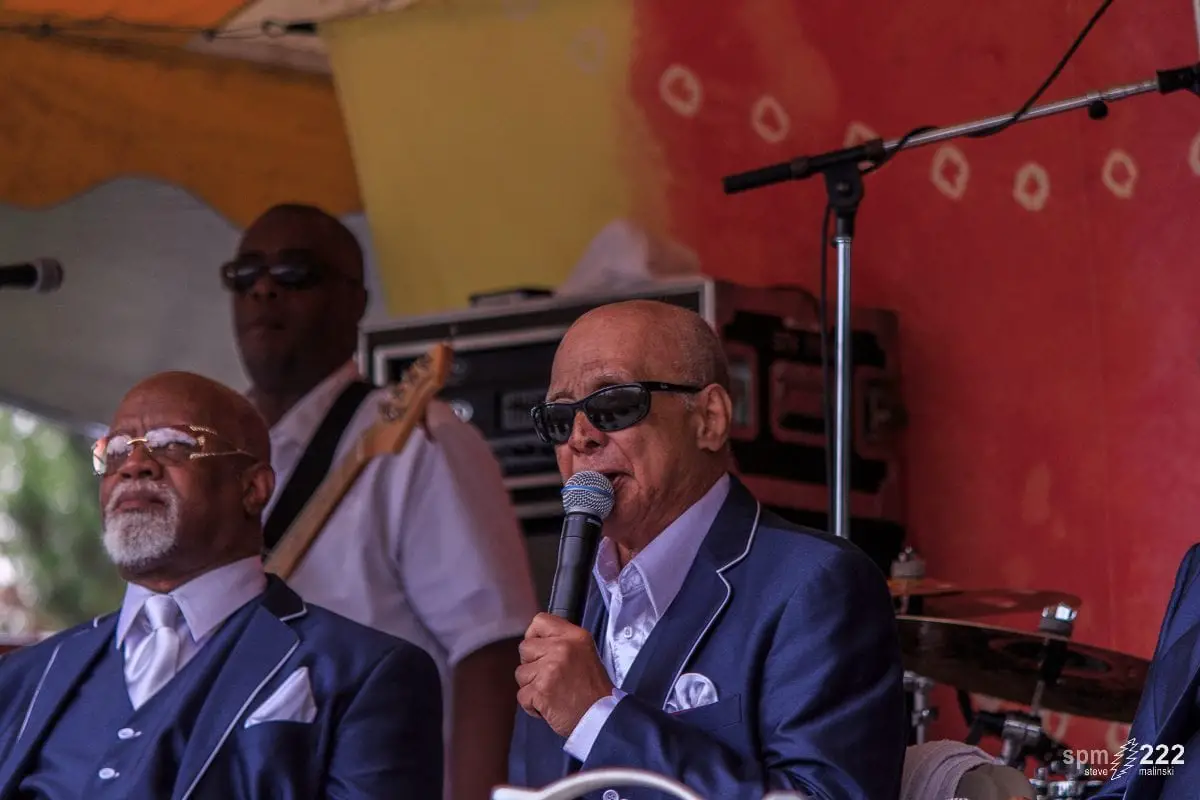
    The Blind Boys, led out with assistance, hand on shoulder in front of them, are Ricky McKinnie, Jimmy Carter and Ben Moore, as seated left to right on the stage. Jimmy, the most vivacious of them all was active throughout the night, taking to his feet and the microphone to motivate the crowd to cheer them on as they prepared to play. He spoke in a paced, slow and southern style, taking his time in between numbers to speak to the crowd, transitioning with patience, slow, delayed patience. Joey Williams (Robert Randolph & The Family Band) sang on the higher noted vocals and played guitar, Ben Odom (bass and harmony vocals), Austin Moore carried the band on drums, save one song where Ricky took the sticks, while Peter Levin, a Paul Giamatti stunt double from Sideways manned the piano and organ. The band alone was akin to The Word, the North Mississippi Allstars and Robert Randolph side-project, but a much more old school style, version 1.0.

    Blind Boys of Alabama
    Blind Boys of Alabama

    Although the Blind Boys cannot see, they do move around the stage in their space, knowing how far they have to tread and always with a helpful hand to guide them back when they venture too far from their seats. Carter told stories, McKinnie and Moore sang along side him, taking the lead depending on the key of the tune, but remained the predominant musicians on the stage, far from a novelty but rather a storied group that has spanned more than half a century in their musical careers, turning concerts into revivals wherever they play.

    Among highlights of the 90 minutes set include the title track to the Ben Harper/Blind Boys album There Will Be a Light; “Amazing Grace”, set to the tune of “House of the Rising Sun”, a phenomenal version, as seen below; “Look Where he Brought me From” which featured Jimmy Carter taking an extended walk through the crowd, extending his hand to those reaching out to shake his, moving throughout the crowd with ease, surpassing any limits the crowd may expect an octogenarian sans sight. This continued in front of the stage before taking back up to his seat to walk off stage before a call back for the encore. They capped the night off with an encore of “I Saw the Light”, the first track off their latest album, Take the High Road, featuring Hank Williams Jr. on the track, as well as country artists Vince Gill, Willie Nelson and The Oak Ridge Boys adding to the genre-crossing album.

    Post-show, the Boys signed autographs in the lobby, shook hands and chatted eagerly with fans and patrons of The Mahaiwe. I spoke to Ricky and Ben and asked them if they remembered the String Cheese show at The Beacon and before I even mentioned the venue, they said “Oh yes, that was a fun show, played ‘Amazing Grace’ with dem boys.” The minds are sharp, the age is just a number and the music is nothing short of amazing. Next time they are in the area, get to seeing the Blind Boys of Alabama, the living legends of gospel music for the masses, not just a Sunday mass.

    [youtube http://www.youtube.com/watch?v=pR1tOVd4PCk]

    Setlist:
    Intro, Spirit in the Sky*, Way Down in the Hole, God Said It, Take the High Road, I Know a Place, On a Cloudy Day, There Will be a Light, Free at Last, Amazing Grace, Look Where He Brought Me From^, Band intros
    Encore: I Saw the Light

    *Norman Greenbaum
    ^ extended jam with Jimmy Carter walk through crowd

  • Review: Binghamtronica Music and Arts Festival

    Solaris steals the show at 3rd annual festival – March 24th, 2012 – The electronic dance music scene thrived at SUNY Binghamton for third straight year, with the growing experience of the Binghamtronica Music and Arts Festival. Developed by Greg Sarafan and featuring acts including Archnemesis, Boombox, Horizon Wireless and Binghamton’s own Solaris, eight hours of grinding beats and intertwined bodies were found throughout the student union. Sarafan felt that the event “went really well, everyone had a great time and the night went off without a incident,” which, after being at the event for five hours, can be easily encored.

    Growing from the last year, the art inside was more widespread, with live painters and dancers, as well as an impressive décor. There was a great stage backdrop with arrows akin to ‘Dance Dance Revolution’ which were illuminated at times from a apropos light show. The active crowd, shifting to every bass thump and Voyager-esque drum beat, amidst a thick fog of fog and smoke, was rarely satiated, as college kids are wan to be. A young crowd with a slight tilt towards a majority of college girls, was gathered inside and out and security avoidant of interfering with the good time all were having. The young ragers in the crowd were respectful of the music and for the most part, here to dance. Throughout the night, roughly 400 entered the doors to the main room, amidst a cloud of smoke that set an inclusive club feel for the entire night, getting thicker as the evening progressed.

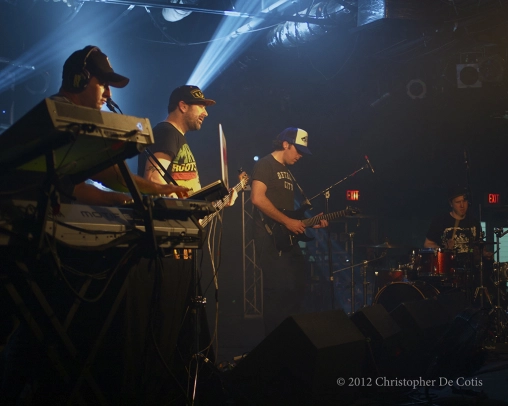
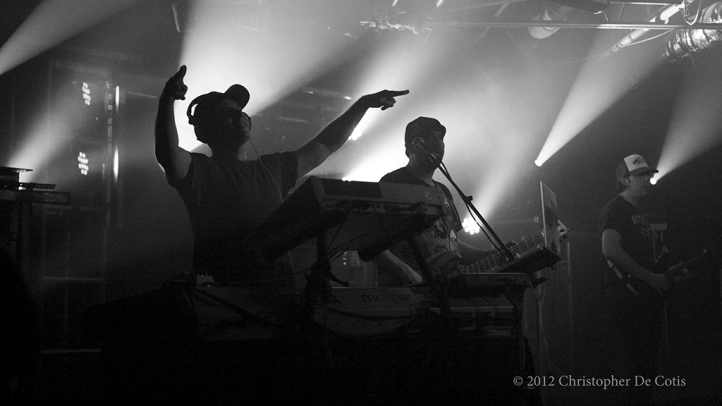
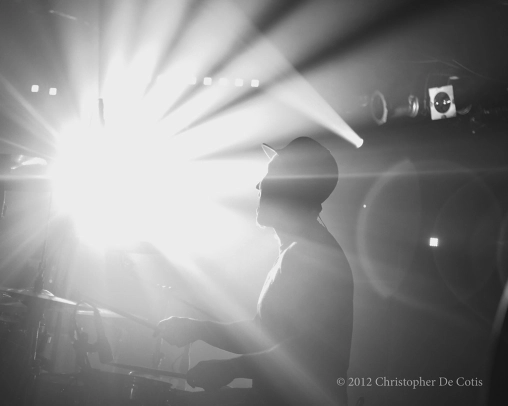
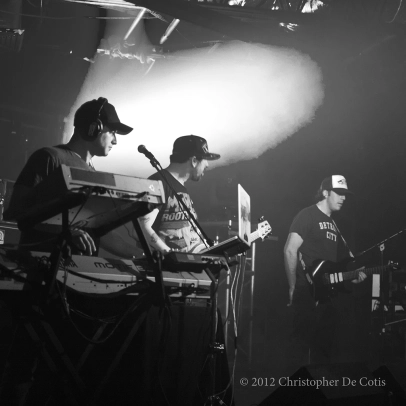
    Among the bands were Solaris, Horizon Wireless, Boombox and Archnemesis, all phenomenal electronic bands of varying ilks and sub-genres. For me, the highlight of the night was Solaris, a trio from Binghamton who are on the rise in Upstate New York. Featuring Jared Raphel on keys, Vince Naro on bass and Daniel Scott Lyons on drums, less than 15 minutes into their set were applying thick buttery beats and igniting the crowd. The music was simply intense and could wake Lazarus. I could easily say they are like The Disco Biscuits, due to their intense, tight jamming and transitions, but that would be an understatement. For 90 minutes, Solaris ventured through Not Waiting Long,
    Garage Band jam -> Smalls, Polar and THEM, all instrumental and each moving the crowd into a faster and growing frenzy. The crowd was enthralled, to say the least, gritty like organic peanut butter, pre-mix style.

    [youtube http://www.youtube.com/watch?v=y5QDTlVGMtI]

    A benefit to the event being held on a college campus is the ability to enjoy the aura of college life, including a chance to play billiards or go bowling while listening to music. Going late into the night, all that was needed at this show was a reliable location for food and drink nearby but that withstanding, I found the trip southwest for Binghamtronica to be ideal and a diamond in the rough for their small but alive music scene.

    As the festival grows, so will the audience, Sarafan hopes to make the event more dynamic, keep it student-centric and planning soon for the fourth installment with bigger bands, longer sets and more vending opportunities. It will be good to see an event of this caliber continue to grow and bring great bands to the Southern Tier of New York State.

  • Binghamtronica III Electronic Music Arts Festival March 24th

    Binghamtronica III is a one day music and arts festival held on the Binghamton University campus. Binghamtronica is a completely not for profit event with all of the profits donated to HeadCount. This year’s line up includes: BoomBox, Archnemesis (special late night), Horizon Wireless, SOLARiS, Ink Line and ConArtist.

    This year’s festival will be held on SaturdayMarch 24. Tickets are available at our box office located on the Binghamton University campus but if you aren’t in the area, you can call the box office 12:30pm – 8pm for only a $1 extra fee. Tickets are only $20!

    Music will be played from 8 PM to 3 AM with a stage located in the Mandella Room. The lobby is a large open space which will hold a shakedown with vendors, student groups, art installations (which will be in both of the performance spaces as well) and interactive activities. In addition to art installations the art of Imaginationoverload will be displayed throughout the venue.

    Binghamtronica is a completely student and alumni run event. Various student groups will be working with Binghamtronica Productions Group to bring this festival to you.

    will be covering the festival on Saturday the 24th. Look for coverage and festival updates at .com and in Music Guide.