Cabell “Cab” Calloway III was born on Christmas Day, 1907 in Rochester, living on Sycamore Street. His mother was a teacher and church organist and his father was a lawyer. When Calloway was 11, they moved to Baltimore. After he was caught playing dice on the church steps, his mother sent him to a reform school in Pennsylvania.
When he returned to Baltimore, Calloway began private voice lessons and continued his study of music throughout school. He soon began performing at nightclubs in Baltimore and was mentored by Chick Webb and Johnny Jones.
In 1927, Calloway joined his older sister, Blanche, in a tour of Plantation Days. She achieved success first, he often credited her as an inspiration to enter show business. His parents wanted him to follow in his father’s footsteps and become a lawyer. Therefore, he enrolled to college in Chicago, but spent his nights at the Dreamland Ballroom, Sunset Cafe, and the Club Berlin. At the Sunset Cafe, he was an understudy for Adelaide Hall. He also met and performed with Louis Armstrong.
Harlem
In 1929, Calloway moved to Harlem, performing with the Alabamians band. They opened at the Savoy Ballroom and broke up soon after. With help from Armstrong, Calloway established himself as a vocalist by singing “Ain’t Misbehavin’” by Fats Waller. Soon after, The Missourians asked Calloway to join and front them.
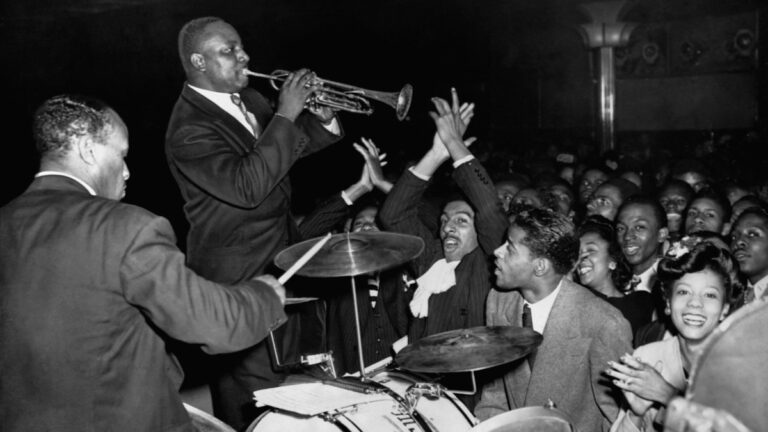
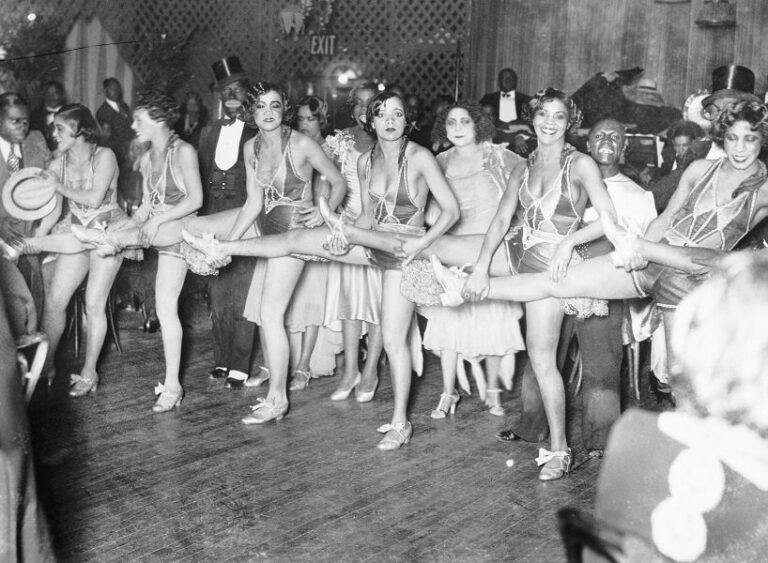
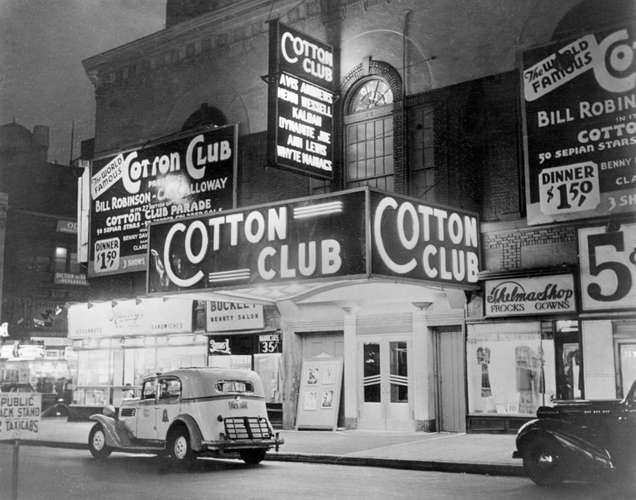
The following year, the band name shifted to Cab Calloway and His Orchestra. In 1931, the band replaced the Duke Ellington Orchestra at the Cotton Club while they were on tour. Due to the increased popularity, they were offered a permanent position there.
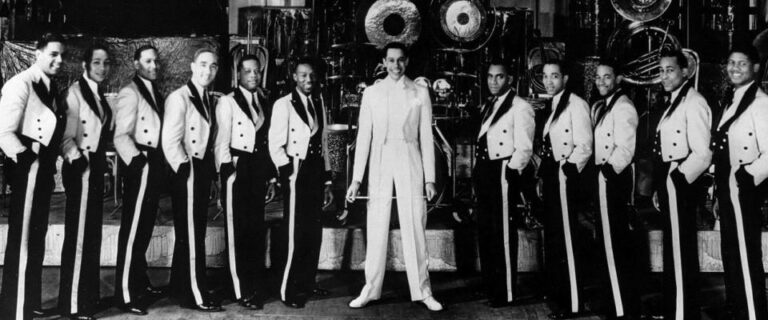
The band also performed regularly on radio broadcasts on NBC. Calloway also appeared on radio programs with Walter Winchell and Bing Crosby became the first African-American to have a nationally syndicated radio show. During the heights of the Great Depression, Calloway was earning $50,000 per year at the age of 23.
The 30’s and 40’s
In 1931, Calloway recorded his most famous song, “Minnie the Moocher.” This is the first single song by an African-American to sell one million records. Three of his songs, “The Old Man of the Mountain,” “St. James Infirmary Blues” and “Minnie the Moocher”, were performed in Betty Boop cartoons.
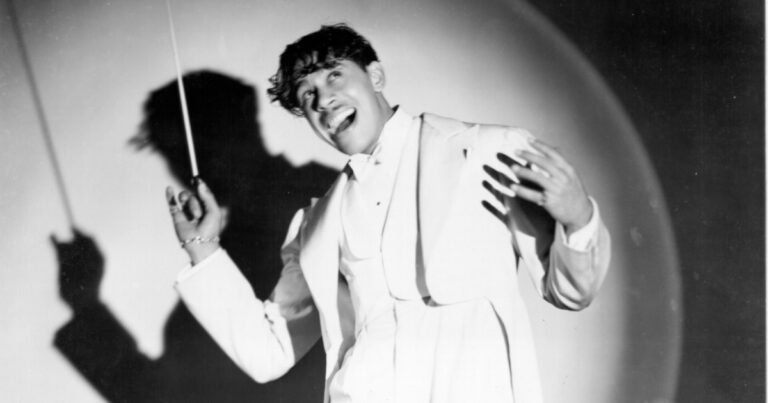
Calloway soon received the nickname “The Hi De Ho Man.” He performed in the 1930s in short films for Paramount. In these, Calloway performs a gliding backstep dance move, a possible precursor to Michael Jackson’s moonwalk.
Calloway’s band in the 1930s and 1940s included many notable musicians, such as Ben Webster, Ed Swayze, Cozy Cole, and Dizzy Gillespie. In 1940, Strike Up the Band, starring Mickey Rooney and Judy Garland, has a line of “You are not Cab Calloway” after playing poorly.
In 1941, Calloway fired Gillespie from his orchestra after an onstage fracas erupted when Calloway was hit with spitballs. He wrongly accused Gillespie, who stabbed Calloway in the leg with a small knife.

In 1956, Clarence Robinson, who produced revues at the original Cotton Club and the Apollo Theater, and choreographed the movie Stormy Weather, cast Calloway as the main attraction for his project in Miami. The Cotton Club of Miami featured a troupe of 48 people, including singer Sallie Blair, George Kirby, Abbey Lincoln, and the dance troupe of Norma Miller. The success of the shows led to the Cotton Club Revue of 1957 which had stops at the Royal Nevada Hotel in Las Vegas, the Theatre Under The Sky in Central Park, Town Casino in Buffalo.
Later Years
The Cotton Club Revue of 1959 traveled to South America for engagements in Rio de Janeiro and Sao Paulo. They also stopped in Uruguay and Argentina before returning to North America which included a run on Broadway. Directed by Mervyn Nelson and choreographed by Joel Nobel, this edition featured Ketty Lester, The Three Chocolateers. The revue toured Europe in 1959 and 1960, bringing their act to Madrid, Paris, and London.
Calloway remained a household name due to TV appearances and occasional concerts in the US and Europe. In 1961 and 1962, he toured with the Harlem Globetrotters, providing halftime entertainment during games.
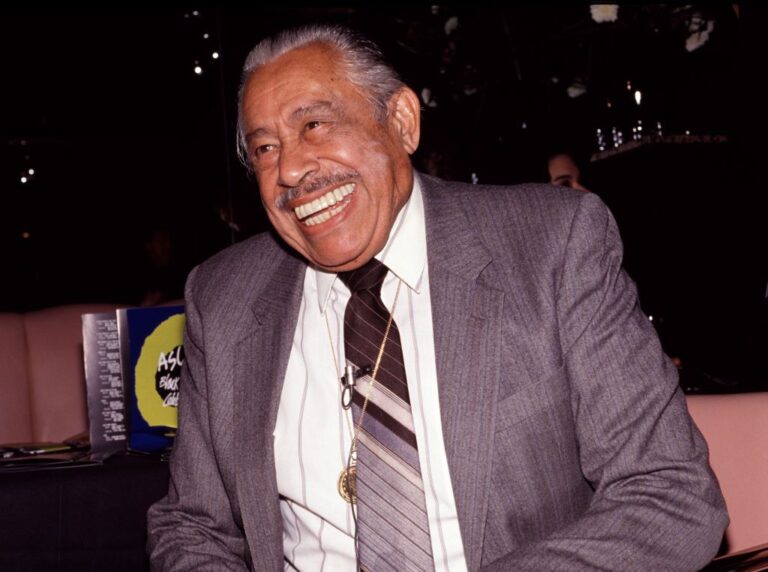
In 1985, Calloway and his Orchestra appeared at The Ritz London Hotel where he was filmed for a 60-minute BBC TV show called The Cotton Club Comes to the Ritz. Adelaide Hall, Doc Cheatham, Max Roach, and the Nicholas Brothers also appeared on the bill. A performance with the Cincinnati Pops Orchestra directed by Erich Kunzel in August 1988 was recorded on video and features a classic presentation of “Minnie the Moocher”, 57 years after he first recorded it.
On June 12, 1994, Calloway suffered a stroke at his home in Westchester County. He died five months later from pneumonia on November 18, 1994, at age 86, at a nursing home in Hockessin, Delaware.
Awards and Accomplishments
In 1990, Calloway was presented with the Beacons in Jazz Award from The New School. The NYC mayor at the time, David Dinkins, proclaimed the day “Cab Calloway Day.”

The Cab Calloway School of the Arts was founded in Wilmington, Delaware in 1992.
The New York Racing Association (NYRA) annually honors the jazz legend, a native of Rochester, with a stakes races restricted to NY-bred three-year-olds, as part of their New York Stallion Series. First run in 2003, The Calloway has since undergone various distance and surface changes. The race is currently run at Saratoga Racecourse, one of America’s most popular, premier racetracks. The Cab Calloway Stakes celebrated its 13th renewal on July 24, 2019.
He is also a recipient of an Outer Critics Circle Award (1967), member of the Big Band and Jazz Hall of Fame (1987), Beacons in Jazz Award (1990), National Medal of Arts (1993), International Jazz Hall of Fame (1995), Grammy Hall of Fame for “Minnie the Moocher” (1999), and a Grammy Lifetime Achievement Award (2008). “Minnie the Moocher” was added to the Library of Congress National Registry in 2019.