Jerusalem-native Avinoam Ettun, currently based out of Brooklyn, has announced the release of his latest EP Looking Into Your Soul, released on December 6.
Avinoam Ettun is a contemporary music performer-composer and improviser based in New York City. With a focus on creating compositions for large ensembles and his own string quartet, Avinoam combines the sounds of electric guitar and chamber music. Ettun actively collaborates with animators, painters, filmmakers, and dancers and explores the intersections of different art forms. Ettun holds a Bachelor of Music in Composition from The Jerusalem Music Academy and a Masters from the New School.
The EP features three instrumental tracks inspired by portrait imagery, recorded in collaboration with pianist Itamar Dahan, with Avinoam on guitar. The project combines jazz, contemporary sounds, and visual art. The first song on the EP, “East West” features a powerful piano riff, coupled with somber guitar tones. The track grows and morphs, hits highs and lows, before coming to a blissfully peace-laden ending.
Similarly, the title track, “Looking Into Your Soul” presents a hearty and emotional piano with an accenting guitar that adds little nuances to each section of the song. Each song sounds familiar, like it has a classic, vintage sound of talent that existed in the past. Avinoam Ettun takes this sound and makes it his own with a blend of notes of eastern instrumentation, and golden era classical music.
Finally, the last track of the EP, “The Dreaming Kid in the Sand” tells a story without using words, as Ettun’s other songs on the album do. The title perfectly encapsulates the theme and vibe of the song. The song truly feels like a child daydreaming in a peaceful yet whimsical place. Avinoam’s music is dynamic, powerful, unique, and inspiring. This kind of music is what today’s soundscape lacks in my opinion. True compositions about true, heartfelt, spiritual themes.
For more information on Avinoam Ettun and to check out his newest EP, “Looking Into Your Soul,” click here.
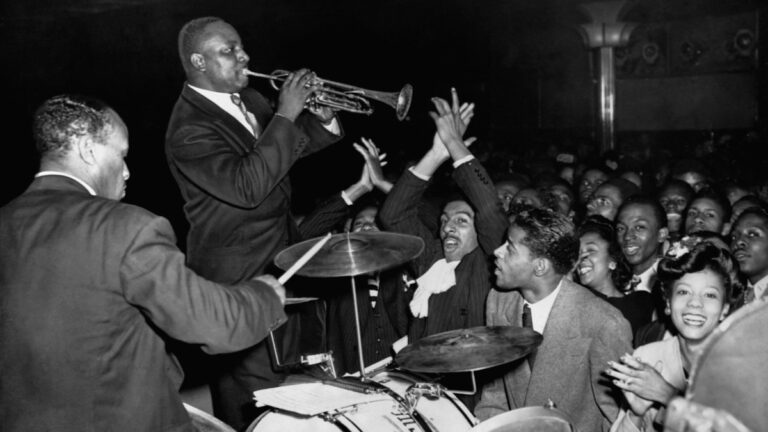
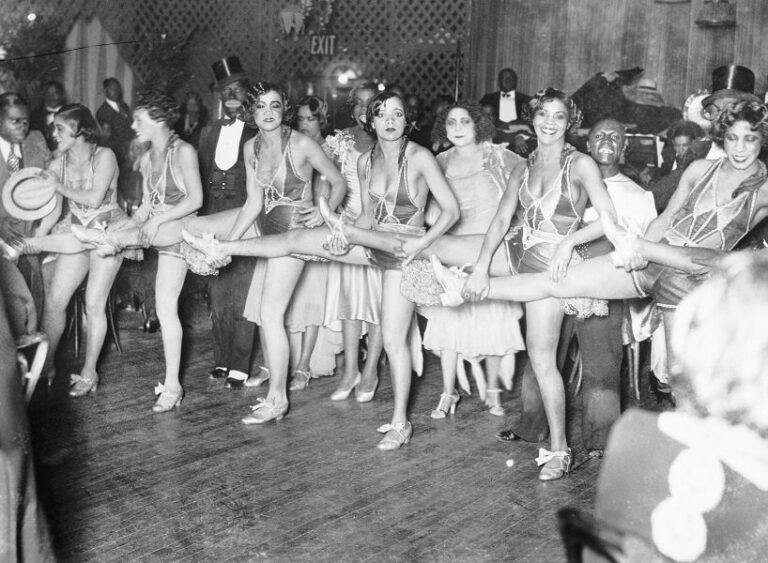
At the start of the twentieth century, many Black Americans, facing racism and discrimination across the country, moved to a neighborhood in Upper Manhattan: Harlem. This neighborhood became a cultural center in the early 1900’s, fully blossoming during the 1920’s and 30’s. This period of time, the Harlem Renaissance, is seen as a watershed for the country, but especially within the arts.
The Harlem Renaissance established itself as a period of great innovation within jazz. There was a development with the piano making it more accessible for Black musicians. Innovations like this eventually because characteristic of the artists, and the music, of this period.
There were many prevalent themes in the works coming from the Renaissance. These included ideas of a “New Negro,” a person who could fight racism and stereotypes through literature, art, and music. These themes relied on the influence of slavery and the effect it had on the Black identity.
This period saw an increase in musicians, specifically Black jazz musicians. Artists like Duke Ellington, Cab Calloway, Fats Waller, Billie Holiday, and many others were able to jumpstart their careers because of the popularity of the movement.
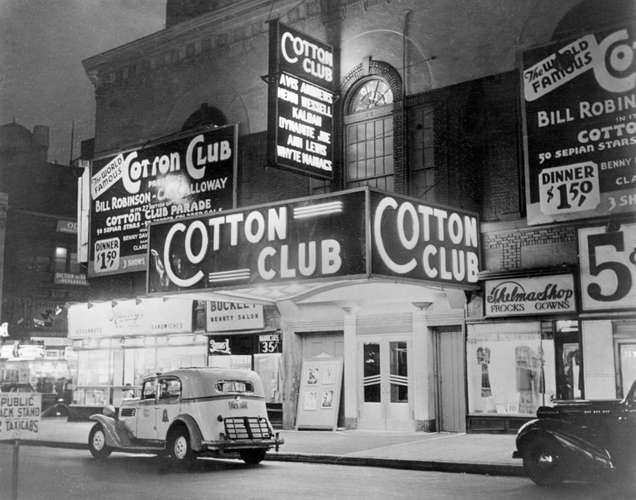
Due to the immense popularity of many Harlem Renaissance musicians, jazz clubs began to open across Harlem. The most famous is the Cotton Club, but other venues such as the Alhambra Ballroom and Apollo Theater also became staples of the Renaissance.
When talking about the Harlem Renaissance, it is important to recognize the contributions made to literature as well as music. W.E.B. Du Bois, a prominent civil rights activist and author, published many books describing the Black experience. Others such as Langston Hughes and Zora Neale Hurston were also able to describe the experiences of Black Americans in the United States.
The widely accepted theory about the Harlem Renaissance is that it occurred because of the newly-found freedoms granted to African-Americans.
Over the next few years, NYS Music will take a look at the Harlem Renaissance, including notable musicians who brought to light the explosion of arts and music in Upper Manhattan, one century ago. Stay tuned for weekly articles taking a look at the history of the Harlem Renaissance and how the impact of the cultural awakening is still felt today.
If you want to rave to a collection of saxophones and woodwinds, then Moon Hooch is the band for you. Yes it’s weird, yes it’s wild, and yes it’s a fun show to dance to.
Moon Hooch at Bowery Ballroom 12.7, Photo Credit: Aidan Lukomnik
On Saturday, December 7, Moon Hooch brought their energetic mix of Jazz and Electronic music to Bowery Ballroom in downtown Manhattan.
A truly New York sound, Moon Hooch was born when Michael Wilbur (Horns, woodwind, vocals), Wenzl Mcgowen (Horns, woodwind, synth), and James Muschler (original drummer) met at The New School. The band, now with Cyzon Griffin on drums, started playing together as buskers across the city. Often playing in the subway, Moon Hooch was banned from the Bedford Ave L station for bringing in crowds that were dangerously large.
Audience Member; Photo Credit: Aidan Lukomnik
That history of busking can be heard in their music, as the trio at times evokes the guttural sounds of an oncoming train paired with high-pitched notes reminiscent of a closing subway door. They even use found objects, like a traffic cone, on stage as a mute to alter their sound.
Photo Credit: Aidan Lukomnik
On December 7, COFRESI opened for Moon Hooch. The drummer and beatmaker brought together modern techniques (looping, drops, Trap and Dancehall melodies) with samples from hits like, “Ain’t No Sunshine,” “Stand By Me,” “Mr Sandman,” and “It’s Tricky” to create a sound all his own.
COFRESI Photo Credit: Aidan Lukomik
As Moon Hooch took the stage, audience members head banged, grinded, and jumped up and down – emphasizing how many different musical sub-cultures came out to see the band.
The band’s physicality is impressive, as Michael Wilbur and Wenzl Mcgowen dance throughout a set that’s over an hour while Cyzon Griffin’s rapid drumming holds down the beat. Throughout the set there wasn’t an idle monument with high energy songs one after another, only rarely bringing in classical music phrases to give the audience a breather before the beat drop.
Photo Credit: Aidan Lukomnik
At the same time, that lack of idleness has its own drawbacks. After a while, songs in the set started to run together with limited ability to determine where one song stops and the other begins. This run-on of songs was exacerbated by similar musical motifs and almost identical lighting cues that could cause a listener Deja Vu. While the band sometimes threw their hands up to engage the audience, they never stopped to talk to the crowd. Better performance pacing, verbal engagement with the crowd, and breaks between songs would do the band well.
Photo Credit: Aidan Lukomnik
On this tour the band isn’t just bringing their relentless energy, they’re also trying to do good. At each city, the band is auctioning off a (small) tree and giving away all of the proceeds to replant trees across the country. In NYC they also worked with Support and Feed – a food equity organization that works to address challenges in food desserts and provide information on plant-based food.
Dive bars and small clubs are generally the starting point for any fledgling band looking to make it big. Ideally, the goal is to move up to bigger and better venues eventually. Well, today, we celebrate one of the few tiny clubs that became renowned worldwide and a dream destination for any band. CBGB opened its doors 47 years ago,today, and the music world hasn’t been the same since.
Located in the heart of New York City’s Bowery district, CBGB was not always the musical Mecca it would come to be. It was previously a biker bar known as Hilly’s on the Bowery, one of two local establishments that owner Hilly Kristal managed. When his other bar was forced to close, Kristal redirected his efforts to the one left standing and made a life-altering change. On December 10, 1973, the Bowery dive bar officially became CBGB & OMFUG.
The CBGB acronym stands for Country, Bluegrass and Blues, Kristal’s initial vision for the music he wanted played there. The OMFUG supposedly stood for “Other Music For Uplifting Gormandizers.” Although a gormandizer is a term often used in reference to someone who eats food ravenously, in this case it would be the music that was being consumed. However, Legs McNeil, one of the true punk music journalists of our time and a CBGB regular in its heyday, claims the “U” in OMFUG was often left open to interpretation.
At its inception, CBGB stayed true to Kristal’s musical vision. But that would soon change, starting in February of 1974 when they booked local act Squeeze. This marked the first shift from country and bluegrass to original rock acts performing there. Another factor that led to the change in format was the nearby Mercer Arts Center burning down in August of 1973. For years, local unsigned bands of all styles had a place to play music there. Now they were in need of a new stage.
Eventually, the bookings at CBGB would lean more and more towards rock. Bands like Television, a local band at the forefront of the newly emerging punk music scene, would begin playing there. Other bands like the Patti Smith Group, Talking Heads, and Angel and the Snake (eventually renamed to Blondie) later got their start here as well. Rock legends The Ramones also played their first gig ever at CBGB in August of 1974 to a comically small crowd in hindsight.
While the early years of the club were rife with bands that would later become nationally known, CBGB was far from a financial success. Per Kristal, it was not until sometime in 1976 that the club started paying for itself. During this time, he also established two “set in stone” rules that would go on to define the ethos of this establishment. Bands had to play original material only and they had to move their own gear. In return, Kristal would allot most of the door money to the bands, encouraging them to develop a following and return.
That first year was an exercise in persistence and a trial in patience. My determination to book only musicians who played their own music instead of copying others, was indomitable. Originality (to me) was prime, technique took second place.
Hilly Kristal
Within a few years, CBGB was a known place for local artists of all kinds to experiment, play and do whatever they want – as long as it was original. It would only be a matter of time before acts based outside of New York City would begin to appear. In 1977, The Damned played a show there that marked the first time a British punk band ever played in America. Elvis Costello later opened shows there and The Police would also play their first American gigs here. As the 1980s rolled on, CBGB became primarily a haven for hardcore punk and metal acts.
With its growing success, the club was able to expand a little and a neighboring storefront soon become the CBGB Record Canteen, a record shop and cafe. In the late 80s, this was converted into an art gallery and second performance space. This would be a place for the “other” musical acts to perform, catering to fans of folk, jazz or experimental music.
Sadly, the turn of the century would begin the downfall of this iconic music venue. CBGB would soon enter into a protracted dispute over allegedly unpaid rent amounts. In 2005, atop its normally paid monthly rent of $19,000, CBGB was sued for some $90,000 in rent allegedly owed to its landlord, Bowery Residents’ Committee. Kristal claimed, and the court would later agree, that he was not properly notified about the increase in rent, marking the debt invalid. However, the two sides were unable to come terms on a new rental agreement and the soon-to-expire lease would not be renewed.
The last show at CBGB took place on October 15, 2006 and was broadcast live on Sirius Satellite Radio. Fittingly, New York City and club legend Patti Smith was the headliner, aided by Flea of the Red Hot Chili Peppers and Television’s Richard Lloyd. Smith’s rendition of “Gloria” was notably interlaced with snippets of The Ramone’s classic “Blitzkrieg Bop.” And during “Elegie,” the final encore, Smith named musicians and other music figures who had died since playing at CBGB. This marked a somewhat somber end for a venue that was undeniably full of life for decades.
Talking Heads play CBGB in 1977
Even though no more music is played here, the legacy of CBGB continues to live on. It remained open as CBGB Fashions—retail store, wholesale department, and an online store—until October 31, 2006. And in 2008, fashion designer John Varvatos opened a store there, although in tasteful fashion. Aside from a few needed upgrades, the entire interior of the club remained the same – stickers, graffiti and all – as it housed CBGB memorabilia and clothes for sale. It even has its own movie that came out in 2013.
Aside from the venue itself, CBGB Radio would later launch on the iHeartRadio platform in 2010. CBGB music festivals would later begin to sprout in 2012. And the following year, the building itself at 315 Bowery was added to the National Register of Historic Places as part of the Bowery Historic District.
CBGB was founded in 1973 on the Bowery, in a former nineteenth-century saloon on the first floor of the Palace Lodging House. The legendary music venue fostered new genres of American music, including punk and art rock, that defined the culture of downtown Manhattan in the 1970s, and that still resonate today. In this role as cultural incubator, CBGB served the same function as the theaters and concert halls of the Bowery’s storied past.
National Park Service nomination form
The spirit of CBGB and the early punk era also lives on through new forms of audio storytelling like the immersive audio walks created by arts and culture app, Gesso. Their Punks + Poets audio walk begins in Washington Square Park and ends in Tompkins Square Park, illuminating the birth of punk music in the area.
It’s truly amazing that such a small club could leave such a big impact on society. The music it inspired and the artists it gave a home to read like a Who’s Who of rock music. Kristal’s willingness to pivot from his original vision and adapt to the surge of new wave and punk rock that the 70s and 80s brought with it helped define a generation of music.
For one last look at CBGB the way it was, check out the video below.
1995 was a year that defined the 1990s. Michael Jordan came out of retirement to return to the game of basketball. OJ Simpson’s verdict was “Not Guilty.” TLC encouraged listeners to stop chasing waterfalls. Pixar changed the future of animated films with the release of Toy Story. And if you were in the jamband music scene, you experienced a seismic shift in the atmosphere.
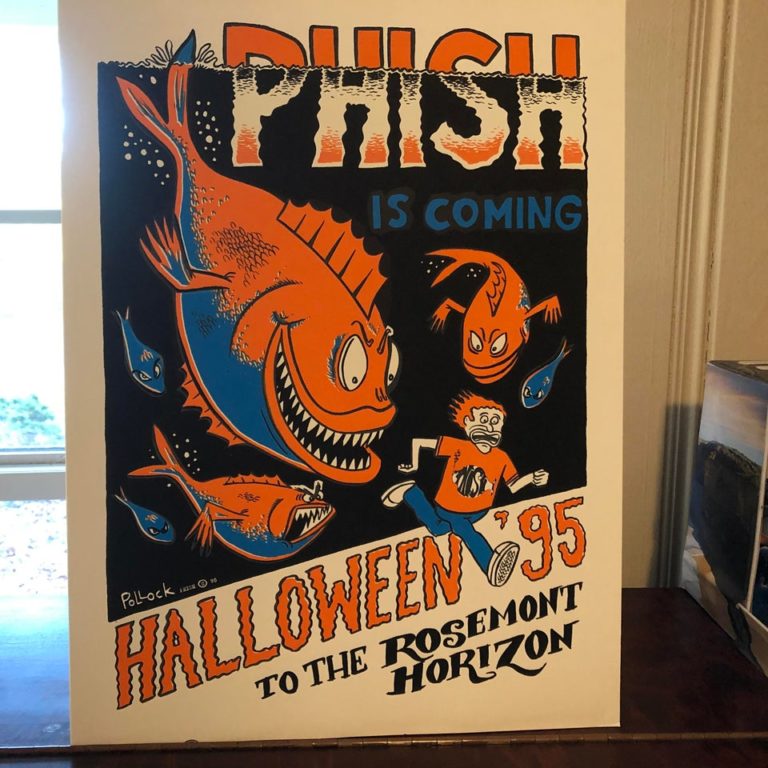
Just 49 days after Jerry Garcia passed on August 9, Phish kicked off a massive 1995 Fall Tour in the guitarist’s home state of California. The Vermont foursome played more than 50 shows through December, hitting over 30 states and making a pitstop in Canada. Fans will argue over the best shows (or even best month) during this transformative time period, but most are in agreement that The Who’s Quadrophenia Halloween show in Rosemont, Illinois was a career-defining moment for one of the year’s top-grossing acts just half-way through the megatour.
Official poster for 10/31/95 by Jim Pollock
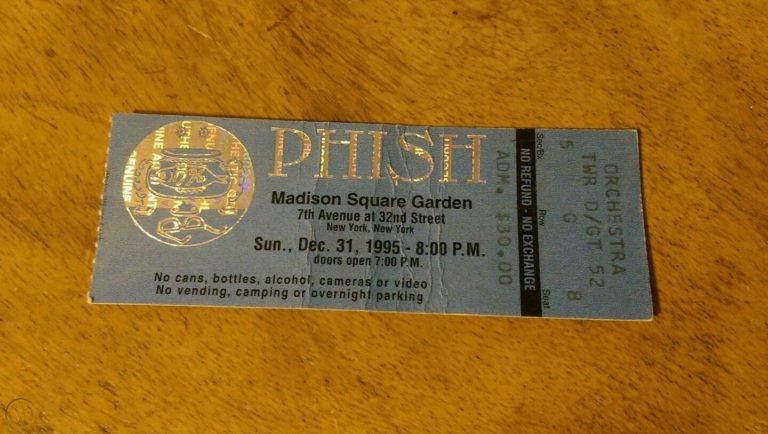
As the rising stars ripped through the frigid Northeast in December, they were only getting hotter in their raunchy, rock-forward, improvisational playing and it all culminated on Sunday, December 31, 1995 at New York’s Madison Square Garden. The date marked the third time Phish would play “The World’s Most Famous Arena,” but the first time they would sell it out for New Year’s Eve. From the 12/29/95 Worchester show to the 12/30/95 opening night at the Garden, it was hard to imagine how the well-polished act would continue getting better night after night, but Phish is always poised to shock the brain.
There was and always will be a special energy when you see Phish’s name in big bright letters on the midtown Manhattan marquee. As Jon Fishman’s father so eloquently put it, he realized his son had “made it” after the band played their first performance to a capacity NYC crowd on 12/30/1994. As fans anxiously anticipated the first note of the last show of 1995, they were greeted by their hungry party hosts with the first-ever, one-two punch of “Punch You in the Eye” and “Sloth.” It was a high-energy attempt to sonically bottle the energy of the 1995 Fall Tour and to kick off a show considered by Rolling Stone as “one of the best live performances of the ’90s.”
Flip to page 824 of the 2nd Edition of The Phish Companion, and you’ll find that five of the songs performed that night are considered some of the “best versions ever.” With a fiery first set “Reba,” the second set’s “Runaway Jim” and closer of “Mike’s Song” to introduce the Gamehendge Time Factor laboratory loop, and the unfinished and unhinged “Weekapaug Groove” from Set III with a “YEM” to top it all off, Phish had made a statement—not only in their community—but in the history of live music. They showed the world what fans had been trying to say for over a decade. They were not just a talented, pot-smoking cover band from Vermont, although they did have the chops to cover and expand upon some of the most highly regarded artists in the rock genre. Any band can cover a popular song to get a reaction from the crowd, but Phish reinvents the music they love, and one example of this is their nod to The Who in Set II’s “Drowned” > “Lizards” opener. Not only did the band double the length of the Quadrophenia studio version, but they interweaved the Grateful Dead’s “Fire on the Mountain” to pay tribute to a band that had sold out six shows at the Garden just 14 months prior. Look past the epic jams, the tribute to legendary rock bands, the New Year’s Eve shenanigans, and the three-set masterpiece performance, and you will find a band on stage that wants fans to get their money’s worth – Phish at their core.
The 1995 New Year’s Eve performance was a launchpad for great things to come. 1996 was the year Phish released one of their greatest studio albums in Billy Breathes; they created a blueprint for music festivals by welcoming 70,000 fans to North America’s largest concert event of the summer, The Clifford Ball; brought their unique sound across Europe; dressed up as The Talking Heads for Remain in Light on Halloween; and claimed the throne as the most popular jamband of the 1990s. And they were just getting started.
But the purpose of this piece was never to recap one of the greatest shows in Phishtory, that has been dozens of times before. I’m here to tell you why it sparked a new generation of Phish fans nearly 10 years later.
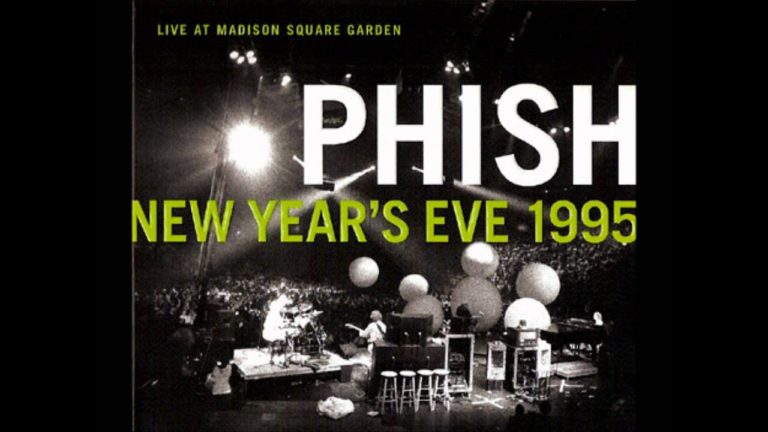
This is the story of the New Year’s Eve 1995 – Live at Madison Square Garden, the official album release.
If you were in high school during the early 2000s, you had limited ability to enjoy Phish like your cooler, older family members (or maybe even parents). With the first hiatus in 2002 followed by the official farewell in 2004, it felt like maybe you just weren’t cut out to go on a full summer tour with your future college buddies like you dreamed about sitting in Earth Science, doodling pictures of ugly pigs in your notebook.
The internet was starting to get better, but looked nothing like what it does today in 2020. We didn’t have smartphones for Spotify, LivePhish, 4K professionally shot footage, or a girthy YouTube catalog of Vermont’s greatest rock band. You could risk destroying your family’s Gateway or Dell PC by downloading Phish shows from Limewire or Napster, but a lot of them were low quality, poorly recorded, or not even actually Phish (see their “Gin & Juice” cover) and took days to transfer. Apple iPods were expensive, and the use of .mp3s was becoming more common for those somewhat technologically-advanced, but didn’t completely take over until later that decade.
We did have CDs.
Before 2005, the year I graduated high school, the only officially-released Phish shows you would find in retail record stores were Slip Stitch and Pass, A Live One, Hampton Comes Alive, and drips and drabs of the 20-set LivePhish series. If you were lucky enough to have an older friend or family member serve as a Phish mentor, you could scrounge up hand-me-down, fan-traded tapes and CDs by the dozen, but if you had no path to follow besides seeing the band at SPAC in 2004, you were shit out of luck trying to level up from “noob” status in Upstate NY.
This all changed during the holiday season of 2005, when the retired jam band released New Year’s Eve 1995: Live from Madison Square Garden. At the time, the global Phish community was still mourning the loss of their fallen heroes much like the Deadheads of December 1995. The band members were still touring, and I was lucky enough to catch Page McConnell sit in with Trey Ananastio Band at Roseland Ballroom as a college freshman in NYC. That was NOT the Phish experience I had been dreaming about throughout high school.
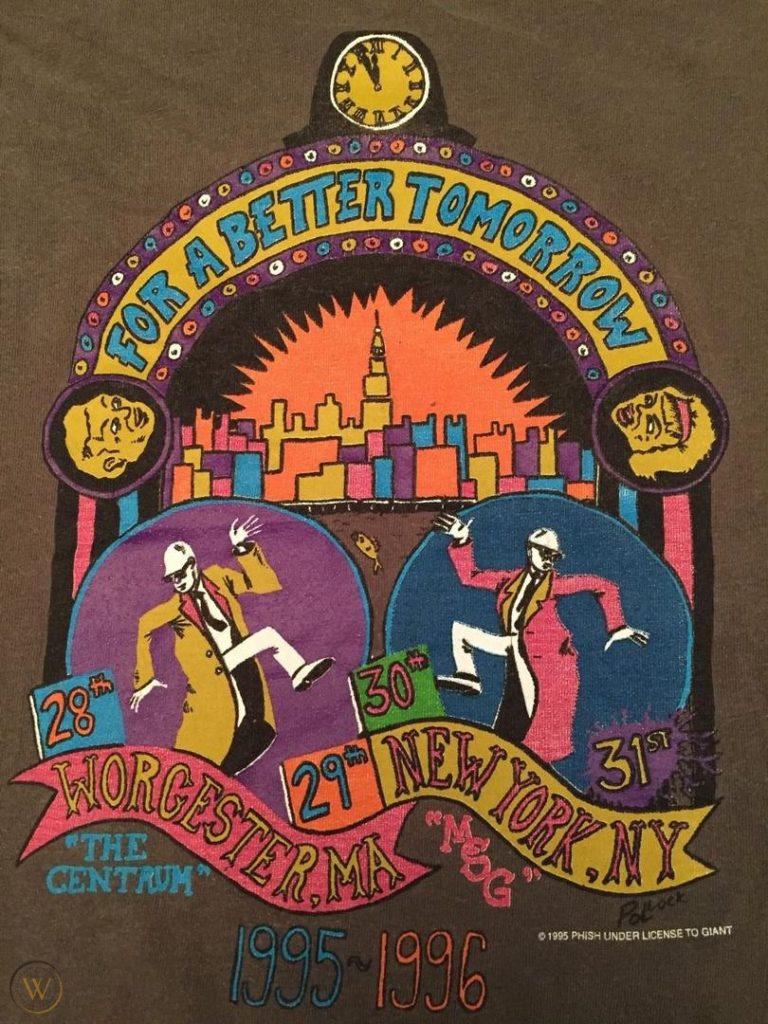
Official shirt by Jim Pollock
Santa was extra heady that Christmas and next to NBA2K6 and the iconic Tiger Woods PGA Tour 2005 for PlayStation 2, the best gift was undoubtedly the three-disc, week-old live release. From the opening “PYITE” on disc one, followed by “The Sloth,” I was hooked. I had never even heard “The Sloth” before Christmas morning 2005, likely because it was never officially released until that album.
It was like in the movie Neverending Story where Sebastian finds the book and runs off to immerse himself in the incredible journey. I had spun through Slip, Stitch and Pass and A Live One until the discs were scratched and raw, but I had never understood the importance of a full show experience until MSG 1995. It was part performance and part theatrics. The show is the blueprint for quintessential Phish. Gamehendge narration, fantastic themes about the creation of time, covers from the recently performed musical costume The Who’s Quadrophenia, and of course, driven improvisation. In the twelve years of Phish music up to that show, December 1995 is widely considered the best. An entire tour of above-average shows was summarized during that hallowed night in the world’s most sacred rock space.
The live release made a new generation of fans appreciate the show as much as those that were in attendance. It made us extremely jealous we were still in elementary school in December 1995, and if we had just known about Trey Anastasio, maybe he would have been even more important than Michael Jordan, Derek Jeter, or Hootie & the Blowfish.
Big egos can get in the way of sharing in the groove and surrendering to the flow. The most obsessed Phish fans like to think they know more, feel more, and enjoy more than their fellow fan. Although I wasn’t fortunate enough to see Phish 1.0 and barely caught the tail end of Phish 2.0, I was able to listen to the Old Testament of Phish and memorize one of their greatest shows from the front of “PYITE” to the back of the “Johnny Be Good” encore. New Year’s Eve 1995: Live at Madison Square Garden proves that everyone begins their journey in different ways. And if you want to learn how to swim, you’ve got to jump in the water.
Prog Metal legends System Of A Down have announced three stadium events for Summer 2025.
The first will take place at MetLife Stadium in East Rutherford, NJ, on August 27 and 28 with Korn; the second show to be held atSoldier Field in Chicago, IL, on August 31 with Avenged Sevenfold, and the final show at Rogers Stadium in Toronto, ON, on September 3 with Deftones. Special guests Polyphia and Wisp will open for all three shows.
As the most inspired, impactful, and inimitable rock band of the 21st century, System of a Down has sold over 40 million records worldwide, earned a GRAMMY® Award, and headlined arenas, festivals, and stadiums on multiple continents, worldwide. Formed in Los Angeles, the group have soundtracked personal, political, sonic, and spiritual revolution since the 1998 release of their multi-platinum self-titled debut. The quartet have consistently sold out shows worldwide and regularly register over 23.4 million monthly listeners on Spotify, making them one of the most-listened to rock/alternative bands in the world. System of a Down is Daron Malakian [guitars, vocals], Serj Tankian [vocals, keys], Shavo Odadjian [bass], and John Dolmayan [drums].
Korn changed the world with the release of their self-titled debut album. It was a record that would pioneer a genre, while the band’s enduring success points to a larger timeless, cultural moment. Since forming, Korn has sold more than 40 million albums worldwide, collected two GRAMMY®s, toured the world countless times, and set many records in the process that will likely never be surpassed. Korn has continued to push the limits of the rock, alternative and metal genres, while remaining a pillar of influence for legions of fans and generations of artists around the globe.
Korn – Albany, March 2022 – photo by Zak Radick
Avenged Sevenfold have sold millions of albums worldwide, earned two consecutive No. 1 albums on Billboard’s Top 200 Albums chart (2010’s Nightmare and 2013’s Hail To The King), have over a billion video views and a billion-plus Spotify streams, as well as multiple No. 1 singles on rock radio. The band (comprising M. Shadows, Synyster Gates, Zacky Vengeance, Johnny Christ and Brooks Wackerman) is equally known for their spectacular live shows, selling out arenas and headlining the world’s most prestigious rock festivals as well as always being at the forefront of rapidly changing technology, cultural mile markers, and new ways for communities to engage.
Formed in Sacramento, CA in 1988, Deftones are one of the most influential alternative bands in the world. The band, comprised of Chino Moreno, Frank Delgado, Stephen Carpenter, and Abe Cunningham, has released nine studio albums, with the most recent release being GRAMMY®-nominated Ohms. Deftones’ culture is revered as one of the most fervent that exists.
Tickets will be available starting with an artist presale beginning on Wednesday, December 11. Additional presales will run throughout the week ahead of the general on-sale beginning on Friday, December 13 at 12 pm at LiveNation.com
The whimsical singer-songwriter AURORA graced the stage of the Beacon Theatre for two nights amid her sold out What Happened to the Heart? world tour.
If you’re in search of an act straight from a storybook, look no further than AURORA. With a signature sound akin to a woodland fairytale, a voice that positively twinkles, and whimsical yet cutting lyricism, AURORA revels in the magical and channels the mystical in every sense of the words.
Born and raised in Norway, Aurora Aksnes exists within an ethereal sonic sphere entirely of her own. Beginning her songwriting and dance journeys at the age of six, creation is in her blood.
A self described “forest person,” AURORA has compared her home place of Drange to Narnia, spending her time in her home when not spent adventuring through the woods.
Releasing her fifth album What Happened to the Heart? in June of this year, AURORA’s most recent release and its subsequent headlining tour stems from a letter co-written by indigenous activists titled “We Are The Earth” which described the earth as “the heart that pulsates within us,” creating the inspiration for the album’s core concept.
Announced alongside the album was the What Happened to the Heart? world tour, which has and will continue to take AURORA throughout Europe, the United States, and South America- including a date at Manhattan’s own Beacon Theatre, which was soon expanded into a two-show run for its impressive demand.
Before the show even began, the Beacon Theatre was positively teeming with excitement. Folks were dressed in everything from band tees to ball gowns, couples were wandering the packed foyer excitedly pointing towards the merchandise table, and children were gasping in awe of the theater’s grandeur atop parents’ shoulders.
With opening support by neo-soul and hip hop artist Biig Piig, the evening’s festivities were off to a wonderfully mesmerizing start as she encouraged audience members to stand up and dance if they so wished in between tracks like the wonderfully smooth “Roses and Gold” and the hard hitting “Decimal” that had light production for days.
Prior to AURORA’s exciting step on stage, the lights dimmed to allow a nostalgically hazy projection begin to play. The excitement was palpable, but fans kept sound to an absolute hush to experience the visual to its fullest extent before she twirled her way on stage to an explosion of cheers.
Delivering a hauntingly magical performance of “Church Yard” and “Soulless Creatures,” AURORA’s main support was a small set of other vocalists that turned the theatre into an echo chamber.
With a full set list of 21 tracks, AURORA’s musicality and vibrancy both vocally and in her stage presence was on full display paired with the Theatre’s groundbreaking new Sphere Immersive Sound system.
Dazzling fans for the second night in a row with her shimmering voice, dazzling spins and leaps, and effortless sense of musical presence, AURORA made the New York dates of her What Happened to the Heart? tour ones to remember.
AURORA – Beacon Theatre – Friday, December 6, 2024
Bluegrass legend Alison Krauss and her band Union Station have announced their first tour in 10 years, the Arcadia 2025 Tour, alongside special guest Willie Watson with an extensive list of dates that include two stops in New York State.
A multi-instrumentalist, producer, and singer, Alison Krauss is a modern bluegrass legend. With 27 Grammy Awards of 42 nominations, the title of International Bluegrass Music Hall of Fame inductee, and a whopping 14 albums under her belt, itâs no wonder as to why.
Krauss partnered up with the band Union Station tangentially with the release of her first solo works, reworking themselves to Alison Krauss & Union Station soon after and quickly becoming a cornerstone unit of the bluegrass and country scenes.
Known for their boundary-transcending sound, Alison Krauss & Union Station went quiet after the release of their 2011 album Paper Airplane that saw major critical success. Over the years, the unit brought their talents to stages across the globe, but similarly took a pause on performances as a unit in 2015. However, both of these hiatuses are about to change.
In an exciting announcement, the unit has made impressive progress on their newest album release slated for 2025 in addition to an impressive tour titled Arcadia that will take Alison Krauss & Union Station across the United States and Canada over the course of 73 shows, including two nights in Manhattan and Lewiston.
Having recently joined the ranks of the band and soon to be traveling North America alongside them is the vocalist and guitarist Russell Moore, best known for his work as the frontman of IIIrd Tyme Out. Being the most awarded male vocalist in the history of the International Bluegrass Music Association, Mooreâs skills will make for a stellar addition to each nightâs performance.
If all of that wasnât exciting enough, Alison Krauss & Union Station have announced that support for the tour will come in the form of special guest Willie Watson. Fans can look forward to hearing tracks brand new and time-honored all the same as the band kicks off their performances in the spring.
âIâm so grateful to get to make music again with my comrades of 40 years. Theyâve always accomplished incredible work individually and have been constantly traveling because of it. Weâre very inspired to experience this new exciting chapter in the bandâs history.â
– Alison Krauss
Tickets for Alison Krauss & Union Stationâs exciting Arcadia tour are available now. The band will be making two stops in New York, first at the historic Beacon Theatre in Manhattan on September 12 and then at the Artpark Mainstage Theater in Lewiston on September 21.
For more information on dates, to-be-announced special guests, and ticket purchasing opportunities, be sure to check out Alison Kraussâ official website here.
The expansive full list of Arcadia 2025 Tour dates are below.
TOUR DATES
Thursday, April 17, 2025 | The Louisville Palace | Louisville, KY
Friday, April 18, 2025 | The Louisville Palace | Louisville, KY
Saturday, April 19, 2025 | Mershon Auditorium | Columbus, OH
Friday, April 25, 2025 | Cadence Bank Amphitheatre at Chastain Park | Atlanta, GA
Saturday, April 26, 2025 | Live Oak Bank Pavilion | Wilmington, NC
Sunday, April 27, 2025 | Koka Booth Amphitheatre | Cary, NC
Tuesday, April 29, 2025 | Bell Auditorium | Augusta, GA
Wednesday, April 30, 2025 | The Adderley Amphitheater | Tallahassee, FL
Friday, May 2, 2025 | The Wharf Amphitheater | Orange Beach, AL
Saturday, May 3, 2025 | Brandon Amphitheater | Brandon, MS
Sunday, May 4, 2025 | BJCC Concert Hall | Birmingham, AL
Tuesday, May 6, 2025 | Orpheum Theatre | Memphis, TN
Monday, May 12, 2025 | First Security Amphitheater | Little Rock, AR
Tuesday, May 13, 2025 | The Criterion | Oklahoma City, OK
Thursday, May 15, 2025 | Saint Louis Music Park | Maryland Heights, MO
Friday, May 16, 2025 | Walmart AMP | Rogers, AR
Saturday, May 17, 2025 | Starlight Theatre | Kansas City, MO
Thursday, May 29, 2025 | Smart Financial Centre | Sugar Land, TX
Friday, May 30, 2025 | Whitewater Amphitheater | New Braunfels, TX
Saturday, May 31, 2025 | The Pavilion at Toyota Music Factory | Irving, TX
Tuesday, June 3, 2025 | PNC Pavilion | Cincinnati, OH
Wednesday, June 4, 2025 | Devon Lakeshore Amphitheater | Decatur, IL
Friday, June 6, 2025 | BMO Pavilion | Milwaukee, WI
Saturday, June 7, 2025 | The Chicago Theatre | Chicago, IL
Sunday, June 8, 2025 | The Ledge | Waite Park, MN
Tuesday, June 10, 2025 | Vetter Stone Amphitheater | Mankato, MN
Wednesday, June 11, 2025 | Bayfront Festival Park | Duluth, MN
Friday, June 13, 2025 | McGrath Amphitheatre | Cedar Rapids, IA
Saturday, June 14, 2025 | Denny Sanford Premier Center | Sioux Falls, SD
Sunday, June 15, 2025 | The Astro Amphitheater | Omaha, NE
Monday, June 16, 2025 | Hartman Arena | Park City, KS
Wednesday, June 18, 2025 | Red Rocks Amphitheatre | Morrison, CO
Friday, June 20, 2025 | Dillon Amphitheater | Dillon, CO
Saturday, June 21, 2025 | Kit Carson Park | Taos, NM
Friday, July 11, 2025 | Arizona Financial Theatre | Phoenix, AZ
Saturday, July 12, 2025 | The Rady Shell at Jacobs Park | San Diego, CA
Sunday, July 13, 2025 | Greek Theatre | Los Angeles, CA
Tuesday, July 15, 2025 | Santa Barbara Bowl | Santa Barbara, CA
Wednesday, July 16, 2025 | The Mountain Winery | Saratoga, CA
Friday, July 18, 2025 | Grand Theatre | Reno, NV
Saturday, July 19, 2025 | Redding Civic Auditorium | Redding, CA
Sunday, July 20, 2025 | Edgefield Amphitheater | Troutdale, OR
Tuesday, July 22, 2025 | Wine Country Amphitheater | Walla Walla, WA
Wednesday, July 23, 2025 | Outlaw Field at the Idaho Botanical Garden | Boise, ID
Saturday, July 26, 2025 | Theatre at the Brick | Bozeman, MT
Sunday, July 27, 2025 | BECU Live at Northern Quest | Airway Heights, WA
Tuesday, July 29, 2025 | Grey Eagle Resort & Casino | Calgary, AB
Thursday, July 31, 2025 | TCU Place | Saskatoon, SK
Friday, August 1, 2025 | Centennial Concert Hall | Winnipeg, MB
Tuesday, August 19, 2025 | Massey Hall | Toronto, ON
Thursday, August 21, 2025 | Everwise Amphitheater at White River State Park | Indianapolis, IN
Friday, August 22, 2025 | Ascend Amphitheater | Nashville, TN
Saturday, August 23, 2025 | The Tennessee Theatre | Knoxville, TN
Sunday, August 24, 2025 | The Tennessee Theatre | Knoxville, TN
Tuesday, August 26, 2025 | Soldiers and Sailors Memorial Auditorium | Chattanooga, TN
Thursday, August 28, 2025 | The Dome | Virginia Beach, VA
Friday, August 29, 2025 | Allianz Amphitheater at Riverfront | Richmond, VA
Saturday, August 30, 2025 | Earl Scruggs Music Festival | Mill Spring, NC
Saturday, September 6, 2025 | Michigan Lottery Amphitheatre | Sterling Heights, MI
Sunday, September 7, 2025 | Jacobs Pavilion | Cleveland, OH
Tuesday, September 9, 2025 | Wolf Trap | Vienna, VA
Wednesday, September 10, 2025 | The Met Philadelphia presented by Highmark | Philadelphia, PA
Friday, September 12, 2025 | Beacon Theatre | New York, NY
Tuesday, September 16, 2025 | Veterans Memorial Auditorium | Providence, RI
Wednesday, September 17, 2025 | Leader Bank Pavilion | Boston, MA
Friday, September 19, 2025 | BankNH Pavilion | Gilford, NH
Saturday, September 20, 2025 | The Green at Shelburne Museum | Shelburne, VT
Sunday, September 21, 2025 | Artpark Mainstage Theater | Lewiston, NY
Tuesday, September 23, 2025 | Salem Civic Center | Salem, VA
Wednesday, September 24, 2025 | Credit One Stadium | Charleston, SC
Friday, September 26, 2025 | The Saint Augustine Amphitheatre | St. Augustine, FL
Saturday, September 27, 2025 | The BayCare Sound | Clearwater, FL
Sunday, September 28, 2025 | Hard Rock Live | Hollywood, FL
On Sunday, Dec. 15 from 3- 5 pm, the Brooklyn Conservatory of Music (BKCM) will present its inaugural Holiday Extravaganza featuring Caroling, Klezmer, Calypso, tea, dance lessons, and more.
Brooklyn Conservatory of Music‘s multicultural celebration invites New Yorkers of all ages to enjoy a variety of musical performances in its historic Park Slope Victorian mansion, including the surrounding gardens and front stoop. Guests can look forward to shows from BKCM’s Klezmer Hanukkah Ensemble, David Bertrand’s Calypso holiday band, and Christmas carolers, among others.
Attendees can visit the delicious Tea Station provided by Tea Arts & Culture and can also participate in dance lessons offered by Asase Ya Cultural Arts Foundation. Additionally, everyone is welcome to join in a special sing-along of Handel’s Messiah, suitable for all ages and skill levels. Guests will also be able to engage in holiday crafts from around the world and can bring their children to explore various musical instruments available at BKCM.
“The more, the merrier,” says Chad Cooper, Executive Director of the BKCM. “We love the holiday season at BKCM, but we truly embrace the spirit of togetherness year-round. We regularly host community events for our neighbors across the city to sing, dance, and enjoy each other’s company through the shared experience of live music. So, whether you celebrate Christmas, Kwanzaa, or Hanukkah—whether you’re a professional musician or simply a singer in the shower—we hope you’ll join our festivities. You won’t find five floors of music anywhere else!”
This inaugural holiday event follows in the tradition of other beloved celebrations at the Conservatory, including its annual benefit, House Party, and the yearly outdoor summer music festival, Open Stages.
Proceeds from the event will support the nonprofit’s programs and its mission to transform lives and build community through the expressive, educational, and therapeutic powers of music. To ensure accessibility for all, the Conservatory is offering pay-what-you-wish ticket pricing for the Holiday Extravaganza, with a suggested donation of $20 per ticket for those who are able. You can RSVP and learn more here.
On Nov. 13, Gina Birch, founding member of influential punk band The Raincoats, released a cover of Yoko Ono‘s “Listen, The Snow is Falling” through Jack White‘s Third Man Records.
The single, written by Ono and recorded with the Plastic Ono Band, was originally released as the b-side of John Lennon’s 1971 single “Happy Xmas (War is Over).” This single marks Birch’s first release since her solo debut album, I Play My Bass Loud, in 2023.
In 2023, Birch, with bandmates Marie Merlet and Jenny Green, chose to play “Listen, the Snow is Falling” at Tate Britain during the Yoko Ono exhibition. Birch thought it would be great to play one of Ono’s songs during the performance even though it was August.
Feeling particularly connected to Ono at the time, Birch selected the song for its haunting beauty, noting that it was released as a b-side. “Who doesn’t love a b-side?” she remarked. Birch had also been asked to write about Yoko Ono for the Tate magazine and had recently painted a full-length portrait of her for her exhibition featuring “Goddesses and Inspirations” at Gallery 46.
Inspired by the performance, Merlet suggested they record the song as a Christmas single. Birch noted that she had never made a Christmas single before, making it feel particularly fitting. They recorded it in Birch’s basement, collaboratively coming up with ideas. The track was mixed by Merlet and then mastered by Warren Defever at Third Man Mastering in Detroit.
In addition to a headlining tour in the UK, Birch has supported artists like Yo La Tengo, Sleater-Kinney, and This Is The Kit. She was also part of Tate Britain’s high-profile exhibition “Women in Revolt,” which celebrated 20 years of feminist art and activism. Her piece, “3 Minute Scream” (1977), was showcased as the poster image for the exhibition.