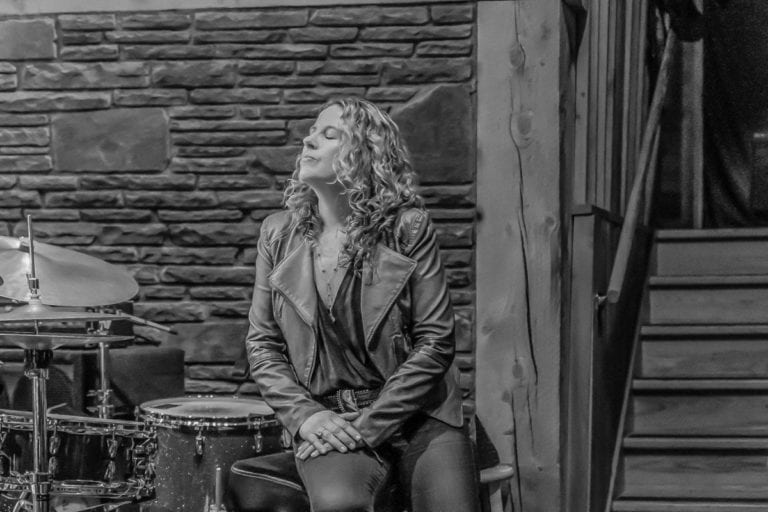
The Hudson Valley’s busiest goth triple-threat, musician/DJ/burlesque queen Tryst La Noir, has returned with a new single that’s as “raw, dirty and wild” as love itself, a sonic blast entitled “Goddamn!”
Tryst’s latest is another preview of tunes earmarked for her as of yet untitled third album slated for release in Spring 2025. Earlier this year, Tryst and her collaborator, Brooklyn-based producer/guitarist Steve Woodzell, unleashed a duo of singles from the album “Bathwater Blues” and “Oh Lover”.
Tryst says, “In comparison to my previous albums, this will be my most vulnerable yet. I have been experimenting with instruments and sounds that I never had before. And when it comes to the writing process, especially the lyrics, I am not sugarcoating anything.”
The fierce “Goddamn” bears some of the hallmarks of Tryst’s greatest musical influences, including Nine Inch Nails, Nick Cave, Depeche Mode, PJ Harvey, Morphine, and even the bluesy love laments of jazz songbird, Billie Holiday. “I really love old blues music from the 40s, along with 60s psychedelia, 80s goth, 90s grunge and post-punk. My music is a mash-up of all these styles, with an accent on full-on passion and energy.”
Tryst’s newest single slams a slow industrial groove, accented with a dense mix of fuzzy guitars, impossibly big beats, howling synths, and her caterwauling vocals. Lyrically, the song profiles a fiery love affair that sparks a combustible attraction between lovers that comes with an overdose of both passion and toxicity.
But music is just one facet of Tryst’s busy career. She also works as a DJ at leading area clubs, including Pearl Moon, Colony Woodstock, and The Avalon Lounge. Tryst also serves as a performer and host of a series of burlesque nights produced by Strangehouse, an event and video production concern she runs with her partner, musician/videographer Byron Frayne.
Look for Tryst La Noir spinning at Kingston’s Unicorn Bar for its Bowie Birthday Ball on January 24 and her ongoing Friday Night Fever at Colony Woodstock on January 3. She will also bring her burlesque spectacular to the Colony on Valentine’s Day.
The Local in Saugerties, is set to dazzle audiences with an inclusive range of creative talents of nearly 30 music, dance, and cultural events from January to May, 2025.
This vibrant venue has quickly become a cultural hub since opening in 2023, hosting a variety of acclaimed acts and workshops designed to celebrate global and local artistry, with genres featured range from jazz to folk pop and even Tuvan throat singing.
The lineup includes romantic Valentine’s Day performances, a Klezmer/hip-hop dance party, Korean funk rock, and a drumming workshop, inviting residents and visitors alike to explore diverse sounds and cultures in a welcoming atmosphere.
The Local’s commitment to sustaining a vibrant arts scene is evident in its carefully curated winter/spring 2025 schedule. Highlights include a special wine and cheese jazz night on Valentine’s Day featuring the Rachel Z Trio with Omar Hakim and Jonathan Toscano, Irish legends Lúnasa, and a conversation with legendary producer Joe Boyd, known for his work with Pink Floyd and Nick Drake.
The season promises a rich tapestry of performances, including Brazilian music, West African drumming, and contemporary folk, making it a must-visit destination for music lovers.
Co-founder Danny Melnick emphasizes the venue’s mission: “Our goal is to bring a wide array of internationally acclaimed performers and workshops to the Hudson Valley and encourage audiences to explore different cultures and new sounds.” This philosophy is echoed by performers who have experienced the unique atmosphere at The Local, creating memorable evenings for all.
The Local is located at 16 John Street, behind the Saugerties Reformed Church on Main Street.
A tour-de-force combination of acclaimed jam band artists, the Skeleton Krewe Trio composed of Rob Barraco, Barry Sless, and Stephen Inglis have announced their debut tour along the east coast, including dates in Williamsburg and Woodstock.
Born from what was intended to be a one-off performance partnership, the Skeleton Krewe Trio is possibly one of the most exciting collaborations of today’s jam band scene.
Comprised of Rob Barraco of Dark Star Orchestra, Phil Lesh & Friends, and The Dead, Barry Sless of Bob Weir and Wolf Bros, David Nelson Band, and Phil Lesh and Friends, and the GRAMMY-nominated Hawaiian slack key guitarist Stephen Inglis, the Skeleton Krewe is a set of individually talented artists whose skills, distinct backgrounds, and natural musical connection culminate in a sound definitively their own.
In an exciting development, the Skeleton Krewe Trio has announced their debut tour across the east coast, including nights at the Brooklyn Bowl on February 22 and the Bearsville Theater on February 28.
In addition to their own talents, the unit will expand to a quintet for two nights with the addition of Barraco’s DSO bandmate Skip Vangelas on bass and his son Tom Barraco on drums- one of which includes the Brooklyn Bowl.
“This collaboration represents a unique moment in time where three distinct musical paths converge. We’re creating something entirely new while honoring the traditions we each bring to the table.”
– Rob Barraco
The Skeleton Krewe Trio’s debut tour promises a variety of sounds spanning original compositions, interpretations of works by the Grateful Dead, and dynamic improvisations that span genres from traditional Hawaiian to psychedelic Americana.
Tickets for the Trio’s tour are on sale now. For more information on the tour and the Skeleton Krewe Trio as well as ticketing information, visit their official page here.
The full list of tour dates are available below.
TOUR DATES
Feb. 20 • The Hamilton • Washington, DC
Feb. 21 • 118 North • Wayne, PA
Feb. 22 • Brooklyn Bowl • Williamsburg, NY
Feb. 23 • Newton Theatre • Newton, NJ
Feb. 24 • Rams Head On Stage • Annapolis, MD
Feb. 26 • Space Ballroom • Hamden, CT
Feb. 27 • Portland House of Music & Events • Portland, ME
Feb. 28 • Bearsville Theater • Woodstock, NY
Mar. 1 • Narrows Center for the Arts • Fall River, MA
Marky Ramone’s Blitzkrieg will be playing a few select holiday dates on the East Coast including Gramercy Theatre tomorrow, December 12. See below for all dates and links to purchase tickets.
Dec. 12 New York, NY – Gramercy Theatre Buy Tickets
Dec. 13 Woodstock, NY – Bearsville Theater Buy Tickets
Dec. 14 Atlantic City, NJ – Tropicana Showroom Buy Tickets
Dec. 15 Mechanicsburg, PA – Lovedraft’s Brewing Co Buy Tickets
Music is a force, a force that triggers emotions, not unlike religion. This force can elicit elation. It can contribute to sorrow. As a social experiment, a concert reveals emotions across that spectrum. It is the rare occasion, however, that a venue can do the same. Enter, Levon Helm Studios in Woodstock.
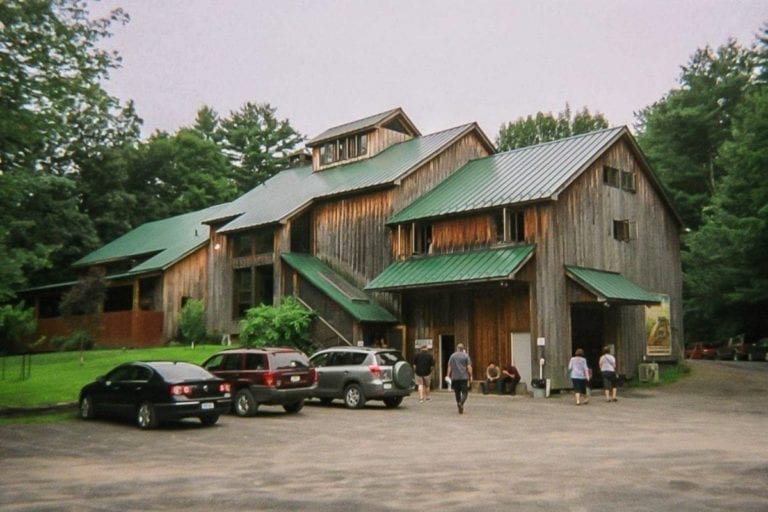
Affectionately known as “The Barn,” Levon Helm Studios is a nondescript building set off a country road on the outer edges of Woodstock. This building has an air of reverence about it as soon as you approach it. Once inside, its easy to get the feeling of being inside a church. High, vaulted ceilings with impeccable woodwork force one to take in the architecture. It’s not uncommon to see first-timers looking around with jaws agape at the craftsmanship that went into building this structure.
The story of The Barn has its origins as the home and recording studio of Levon Helm. Helm was best known as the drummer for The Band but also took turns acting in such films as “Coal Miner’s Daughter,” “The Right Stuff” and “Feeling Minnesota” among others. The Arkansas-born musician grew up with minstrel shows and wanted to recreate that in his home studio. What became known as The Midnight Ramble was born out of necessity, but also out of a love for the informal feel of a simple jam session. Helm’s Midnight Rambles began in 2004. Word spread in the musical community and Helm and his Midnight Ramble Band (guitarist/mandolinist/fiddler Larry Campbell, guitarist Jimmy Vivino, Helm’s daughter Amy and Campbell’s wife Teresa Williams) began attracting the likes of Elvis Costello, Phil Lesh, Dr. John, Emmylou Harris, My Morning Jacket and Norah Jones to this tiny Catskills hamlet two hours north of New York City.
When Helm died in April of 2012, his final words to Amy and his manager Barbara O’Brien were, “Keep it going.” And keep it going they have. The Midnight Rambles occur regularly and provide an opportunity for musicians of Helm’s ilk to “keep it going.”
The magic that occurs at The Barn isn’t just with the music and the venue. What is truly magical about this venue, is experiencing the reactions of first-time attendees. NYS Music photographer Brian Cornish attended his first Ramble with his brother in 2006. The joy in his retelling of his first Ramble is consistent with so many others who have experienced this jewel of a venue:
It was November of 2006. My brother had heard about these house parties in Woodstock where you could buy a ticket and listen to Levon Helm sing and play, and the kicker was that it was in his own home/studio. We decided to go. Following the opening act, with no fanfare and no announcement, Helm and his band emerged and walked down a hallway to the studio. He preferred to set up on stage left, to be able to look directly at all of the other musicians and catch their eye, read their moves, maybe give them a cue or a nod, or maybe grin and point a drumstick at someone approvingly at the end of a song. Due to this atypical arrangement, we astonishingly found ourselves seated at his left elbow, six feet or so from an American treasure. With a brief flourish on the snare drum, he set the tempo, the horns kicked in, and the band followed. “Boards on the window, mail by the door…” The entire crowd was immediately dancing, tapping their feet, or singing along. It was magical. It still is.
Cornish’s proximity to Helm during his first Ramble is what makes this venue so unique and keeps people coming back. You’re not attending a concert at Levon Helm Studios. You’re celebrating music in a pure listening room with friends, friends you know and friends you just haven’t yet met. The capacity is around 200 and there isn’t a bad spot in the house. It lends itself to chatting with your neighbor between songs and the chance of chatting with any of the musicians at some point during the night.
Amy Helm taking in a performance at “The Barn”
Cornish continues with another Ramble experience:
One time, I and a few friends were seated behind the keyboards so we could look across the room at Levon. A man emerged to the right of my friends, stood at the end of the row, nodded hello, and exchanged small talk between songs in the semi-darkness. After ten or fifteen minutes, he said, “It’s been nice talking to you folks, but I have to go to work.” Only when he was under the stage lights and grabbed his guitar did we realize we’d been chatting with John Prine. Unannounced drop-in guest appearances and unexpected moments are hallmarks of many Midnight Rambles.
Cornish has made it his mission to introduce as many of his music-loving friends as possible to this experience by gifting a ticket to a first-timer as long as the next time that person goes, he or she brings another first-timer and does the same. This writer was the recipient of one such gifted ticket to a Ramble. We were joined by two other music loving friends, Dan Frieden and Rob Bishton for a performance of Amy Helm and Friends on Black Friday 2015. What made this performance so incredibly special was the appearance of Donald Fagen of Steely Dan sitting in for a performance of his band’s “Black Friday.” The fact that this musical legend was mere feet away from us during this performance was not lost on us that night and is the stuff that will be remembered for a lifetime. Two new converts to the Church of Levon were made that night.
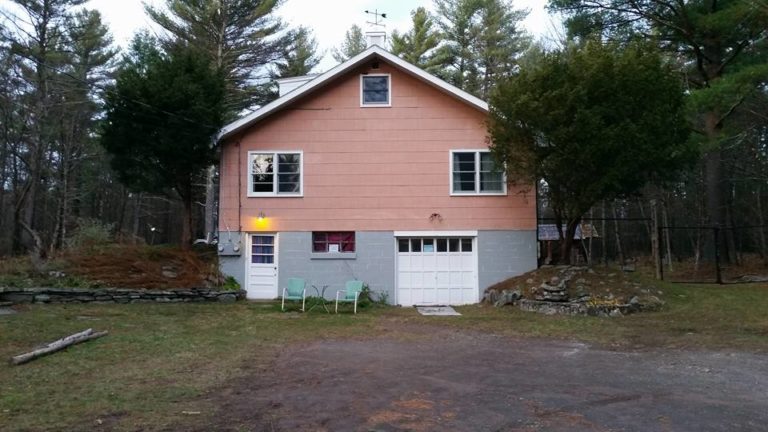
A visit to Woodstock isn’t complete without stopping by Big Pink, the house rented by the members of The Band as they killed time waiting for Bob Dylan to recover from injuries suffered in a motorcycle accident in 1966. Dylan lived in Woodstock at the time and the members of what would become The Band were members of Dylan’s backing band. Band members Rick Danko, Richard Manuel and Garth Hudson lived in this rental in the town of West Saugerties and spent time in the basement recording covers and Dylan originals. The time spent at Big Pink, so named for the pink siding that adorned the house, solidified The Band’s sound and resulted in the oft-bootlegged and finally released album The Basement Tapes in 1975.
Each time this writer visits Levon Helm Studios, a visit to Big Pink is on the itinerary, as well as a stop at Catskill Mountain Pizza Company, a pilgrimage if you will. It will be left to the reader as to how to find this legendary abode. Anyone familiar with the music of Dylan or The Band can feel the ghosts surrounding this property. Frieden described it this way:
There is an energy at Big Pink. I had never been a big Dylan fan, but being on a property that sparked so much musical creativity made me wonder what it is that really flipped the artists’ “on” switch.
A recent visit to Woodstock for a performance by Joe Henry and Rose Cousins on December 9 indoctrinated April and Enzo Cacciatore to The Barn and Big Pink. Witnessing each of them as they took in the entire experience is what sharing a Ramble is all about.
The nearly two and a half hour trip from Rome took longer than anticipated due to a Nor’easter clipping the southeast section of the state. Despite that, a visit to Big Pink still occurred as did a dinner of pizza and craft beers at Catskill Mountain. Traveling through Downtown Woodstock during Christmas season, especially in the midst of a snow storm, is magical in itself. The storefronts are all decorated as is the town square. The snow cover offered an added air of peacefulness to the town that prides itself on the ideal of peace.
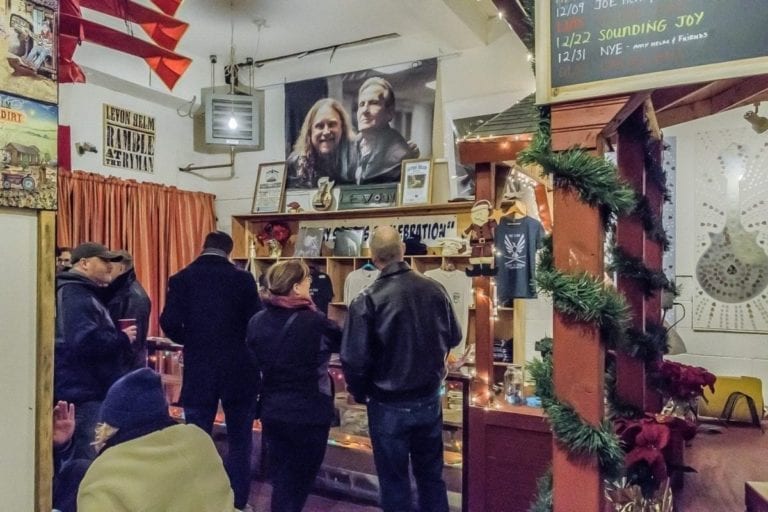
Adding to the family gathering atmosphere at the barn is the communal food table in the merchandise area. Each person is asked to bring a “dish to pass” just like at the potluck dinners of yore. This communal space in what would normally be a garage, is a place for all to gather, share food and talk music. Here, you’ll hear tales of past shows at The Barn or encounters with musicians. This is also the area where the artists’ merchandise is sold, often by themselves after their set, as was the case with Rose Cousins on this night. Cousins was friendly and quick with a joke with each person she dealt with.
Once inside, the Cacciatores took in every inch of the space. Enzo has been in the construction business as a licensed plumber and pipe fitter for almost 40 years. He’s a man who appreciates good construction and good music. He and his wife, April are 17-year veterans of the Poconos Blues Festival and regularly attend the Chenango Blues Festival. His pure appreciation for the architecture of the room was worth the price of admission. He commented that the room is perfectly built for acoustics.
April is a massage therapist and completely took in the arts-centered culture of Woodstock. Those who know April, know she wears her heart on her sleeve and this was clear in her appreciation of the music that she was just being exposed to on this night. She warned earlier in the day that tears may flow early and often throughout the show and while that can’t be proven, the emotion exhibited on stage between Cousins’ and Henry’s sets would lean this writer to believe that there were some tears shed.
Joe Henry is no stranger to this setting. His previous performance at Levon Helm Studios was with British folk/punk troubadour Billy Bragg in 2016 as they were touring their train songs album,Shine a Light. Henry commented during his performance that he and his band don’t view a stop at The Barn as just another tour stop. He likened it to being at a church, deserving of reverence.
The fact that a venue such as Levon Helm Studios exists in the age of big sheds and ticket brokers is a miracle in itself. The down-home flavor that accompanies the attendance at a Ramble and the pure magic of the room itself makes this venue a required trip for any music aficionado.
Upcoming shows at Levon Helm Studios include blues guitarist Carolyn Wonderland on January 19, The Weight Band on February 17, David Bromberg on March 3, the Zombies on March 9 and Jorma Kaukonen on March 10. To purchase tickets, you must visit the studio’s website. You will not receive a physical ticket, but rather a wristband with a number. The number on your wristband determines when you are allowed to enter the venue to claim your spot.
Join the congregation. You won’t regret the services, that’s for sure.
Canadian-born Avril Lavigne is the pop-punk singer-songwriter credited for paving the way for the female-driven pop punk music that became synonymous with the early 2000s.
Ushering in the era with her “Pop-Punk Queen” moniker and skater style with her debut studio album Let Go, Lavigne quickly rose to stardom with hits such as “Complicated” and “Sk8er Boi,” charting at the top of the Billboard 200 with her first ever release.
Since then, Lavigne has released six albums, each to critical acclaim. In addition to her traditional successes, Countless artists from punk to indie rock to emo hip hop have named Lavigne as a major inspiration or influence, creating a legacy extending well beyond herself.
Avril also earned a Guinness World Record for being the youngest female solo artist to top the UK chart and saw the success of her hit “Girlfriend” emerge as the first music video to reach 100 million views on YouTube just four years after the website’s creation.
Originally announced at the beginning of the year, Lavigne has spent the majority of 2024 performing her Greatest Hits Tour across the globe.
Supporting the tour will be special guests Fefe Dobson, Simple Plan, and We The Kings- the latter two of which will perform during all New York Dates.
Avril Lavigne will grace the stages of four venues in New York, with shows in Saratoga Springs on May 27, Syracuse on May 28, Manhattan on May 30, and Bethel Woods on June 27. The full list of dates and venues is below.
For more information on the Greatest Hits Tour and all things Avril Lavigne, be sure to visit her official website here.
AVRIL LAVIGNE: THE GREATEST HITS 2025 TOUR DATES:
Sun May 18 – Moncton, NB – Avenir Centre
Tue May 20 – Halifax, NS – Scotiabank Centre
Sun May 25 – Bangor, ME – Maine Savings Amphitheatre
Tue May 27 – Saratoga Springs, NY – Broadview Stage at SPAC
Wed May 28 – Syracuse, NY – Empower Federal Credit Union Amphitheater
Fri May 30 – New York, NY – Madison Square Garden
Tue Jun 03 – London, ON – Canada Life Place
Thu Jun 05 – Niagara Falls, ON – Fallsview Casino Resort
Sat Jun 07 – Hershey, PA – Hersheypark Stadium
Sun Jun 08 – Cincinnati, OH – Riverbend Music Center
Tue Jun 10 – Noblesville, IN – Ruoff Music Center
Thu Jun 12 – St. Louis, MO – Hollywood Casino Amphitheatre – St. Louis
Tue Jun 17 – Raleigh, NC – Coastal Credit Union Music Park
Wed Jun 18 – Charleston, SC – Credit One Stadium
Fri Jun 20 – Tampa, FL – MIDFLORIDA Credit Union Amphitheatre
Sat Jun 21 – Hollywood, FL – Hard Rock Live at Seminole Hard Rock Hotel & Casino
Mon Jun 23 – Jacksonville, FL – Daily’s Place
Thu Jun 26 – Burgettstown, PA – The Pavilion at Star Lake
Fri Jun 27 – Bethel, NY – Bethel Woods Center for the Arts
Sun Jun 29 – Burls Creek, ON – Burl’s Creek Event Grounds~ (visit AllYourFriendsFestival.com for ticket details)
Sat Oct 18 – Las Vegas, NV – Las Vegas Festival Grounds~ (visit WhenWeWereYoungFestival.com for more info)
moe. is throwing a party to celebrate the release of their next album, Circle of Giants, at Bearsville Theater in Woodstock. The party is so big, they’re stretching it over two night – Friday, Jan. 17 and Saturday, Jan. 18.
The shows at Bearsville are part of the band’s 35th anniversary tour, which includes intimate concerts around the country. Check out full tour details here.
The upcoming Circle of Giants reiterates the dynamic, genre-defying sound that has contributed to the beloved ensemble’s longevity in the jam world. This album is also the first to feature keyboardist Nate Wilson, who joined the band in 2023–a testament to moe.’s spirit.
For hardcore moe.rons, VIP packages are available for Saturday, which features an intimate pre-show set and Q&A, early entry, first dibs at the merch table, a VIP laminate, and an exclusive merch item.
Circle of Giants is available for pre-order. Tickets for moe. at Bearsville Theater are on sale now – for more info, head to moe.org/tour.
In 1986, Bob Mugge, the foremost documentarian of music giants, decided to make a film about jazz’s greatest living improviser, the “Saxophone Colossus” himself, Sonny Rollins.
Prior to tackling the mighty Rollins, Mugge had created acclaimed documentaries profiling Latin pop star/political activist Ruben Blades, proto-rapper Gil Scott-Heron, soul/gospel legend Al Green, intergalactic jazz visionary Sun Ra and a bevy of reggae’s biggest stars at 1983’s Sunsplash Festival.
To capture Rollins, Mugge would first travel to Tokyo for the world premiere of his “Concerto for Tenor Saxophone and Orchestra” with the Yomiuri Nippon Symphony. The director then sought to contrast the pageantry of the symphony hall by documenting Rollins at what he called a “bread and butter gig,” a typical performance by Sonny and his four-man touring band of the time.
In search of a suitably dramatic background, Mugge first attempted to get approval to film Rollins and band on a Circle Line Jazz Cruise on the Hudson River in Manhattan. When this fell through, Mugge lucked into something that proved even more unique. It was a concert already on Rollins’ schedule that would take place upon a rock stage at one of America’s most impressive earthworks, the sculpted rock quarry Opus 40 in Saugerties, New York.
Created by pioneering artist Harvey Fite between 1939 and his death in 1976, Opus 40 is a world-famous sculpture park and museum with 50 acres of meadows, forested paths and bluestone quarries — including 6.5 acres of earthwork sculpture — in the heart of the Hudson Valley in Saugerties, NY. Called “the Stonehenge of North America,” Opus 40 welcomes more than 20,000 visitors yearly. It has also been the site of scores of concerts by artists like Richie Havens, Pete Seeger and Jimmy Cliff, theater stagings ranging from Macbeth to Hair and numerous films and music videos, including Amanda Palmer’s version of Pink Floyd’s “Mother.”
But no event would have the lasting impact of the performance by Rollins on August 16, 1986, one which is cemented forever as the centerpiece of Mugge’s recently re-released and expanded documentary, SAXOPHONE COLOSSUS.
“When it came to planning my next film, I thought what would be more interesting than doing a film on the greatest living jazz improviser,” recalls Mugge. “Sonny’s wife and manager Lucille also wanted to show that Sonny was still playing great, the best of his career perhaps. As a nice coincidence, they were then preparing for the world premiere of Rollins’ concerto taking place in Japan, so we filmed that then the Opus 40 show.
“Opus 40 is a sculpture rock quarry made by another lone genius” Mugge continues. “The monument coming out of it (the 9 ton, 14-foot tall bluestone monolith called “Flame”) proved to be the perfect opening image for the film. It embodied the ‘Saxophone Colossus’ which I knew would be the title of the film, which is also the title of one of Sonny’s most heralded albums.”
“I can’t remember how we originally booked Sonny, but a week before the concert I got a call from Mugge,” says Tad Richards, a writer, visual artist and Fite’s stepson who has run the Opus 40 non-profit with his wife Pat since 1986. “He said they were making a film and that the Circle Line gig fell through and needed to set something up quickly. He had seen us on Sonny’s itinerary and wondered if they could film it. I said we’d be honored.
“Neither of us really knew what we were getting into as holding concerts was still relatively new here and we had no idea what filming would entail,” continues Richards. “To say we were pleasantly surprised, that doesn’t do it justice.”
The film kicks off with the jaw-dropping “G-Man,” a 15-minute plus excursion where Rollins proves he is indeed the world’s greatest jazz improviser.
As the camera pans down from the monolith, we come up from behind to see Sonny Rollins and his band on the rocky stage with a huge audience in the foreground. After the simple four-bar head is repeated a couple of times, Rollins is galloping off, digging deeper and deeper, with rapid-fire chromatic licks and arpeggios alternating with long held notes and basso growls, often powered by cheeks puffed out from circular breathing. Every so often, he returns to the head and you think he is winding down, just to go off again for another few minutes of profoundly melodic and deeply emotional improvisation. With every new chapter and return, Sonny ups the energy and excitement, seeming to spiritually levitate the large and intensely focused crowd seated on Opus 40’s spacious lawn.
“’G-Man’ proved as much as anything else that he was at the peak of his powers,” adds Mugge. “It became the centerpiece of the soundtrack CD and the film.”
The real drama came later, when in the midst of a long solo improvisation in which he prowled the stone stage like a panther, Sonny Rollins decided to leap off it onto another stone outcropping six feet below.
Tad Richards recalls: “I was sitting with Lucille Rollins on the lawn, stage right, when Sonny suddenly disappeared, stage left. The audience gasped, Lucille especially, and everything stopped. And then, still out of sight, Sonny started playing again, so powerfully and beautifully that everyone in the place assumed it was part of the show, even the musicians. You can see them in the movie; first shocked, then laughing as he starts playing again.
“After a few minutes, Sonny is still playing, still out of sight and Lucille says – ‘I’m a little worried, can you go and check on him?’ So I did and I found Sonny lying on his back, playing with the cameraman standing over him. We waited until he finished his solo and then helped him to his feet.
“Sonny asked how long we wanted him to play and I said I would stop the concert right then, if he needed medical attention. ‘No man,’ he growled, “I’m going to finish the gig’ which he did standing, propped up on one foot. Afterwards, two of our volunteers who were EMTs took him over to Northern Dutchess Hospital where they confirmed he had broken his heel.”
Another witness that day was local saxophonist Gus Mancini.
“What happened was that Sonny was doing one of his long solos, quoting every song there is between these incredible improvised riffs,” remembers Mancini. “Suddenly, he leaps from the flat stone stage to one below and disappears. After a slight pause, he starts playing again, for a long time, still out of sight. Everyone kept wondering where he was. Turns out he broke his heel and was taken off in a golf cart. I actually saw him the next day on TV in a cast and was amazed at how much longer he played at the concert, with his foot in that condition.”
Mugge concludes: “It was a very surreal moment that became famous in the jazz community even before the film was finished.”
The film soundtrack CD, “G-Man,” includes other remarkable performances from that day at Opus 40. These include lengthy outings on two Rollins’ classics, “Don’t Stop the Carnival” and “Tenor Madness,” but none as fiery as the concert and film opener.
I have had the pleasure of seeing Rollins a half dozen times over the years. These included shows at NYC’s The Bottom Line, the Village Gate and his legendary 80th birthday show at Carnegie Hall, where he played for the first time on stage with Ornette Coleman. I also saw the discussed Circle Line Cruise show, a week after his outing at Opus 40.
The Circle Line concert was, with little doubt, one of the three best shows I’ve ever seen. At it, Rollins played with his casted foot elevated, laying back in a Lazy Boy Lounger! It was typical of the Sonny shows I saw. He started off with an equally exciting and lengthy version of “G-Man,” building and digging deeper with each passing minute, without ever being boring or repetitious. He did an even more amazing and lengthy exploration on Stevie Wonder’s “Isn’t She Lovely,” the encore of this boat show. I saw him do the same thing on his opening number shortly thereafter at The Bottom Line show.
After these first numbers, I always asked myself if I should just leave. What more could he possibly do to impress, entertain, enlighten? I had certainly gotten my money’s worth. It was always pure musical gladiator stuff – creativity, craft and soulsmanship of the highest order from a lone genius. A performance checkmate in one move.
Today, 90-year old Sonny Rollins lives the quiet life in Woodstock, N.Y., retired from playing due to respiratory issues linked to his being in downtown NYC on 9/11. You can enjoy him speaking about his life and craft, and at the height of his improvisational powers with his Opus 40 performance and footage from his never-released concerto with Mugge’s new expanded Blu-Ray version of the documentary.
For more jazz goodness, check out Tad Richards’ Listening to Prestige, a multipart book series and blog that is chronicling all the releases from this great independent jazz label of 50s and 60s (530 and counting to date). For the past 22 years, Gus Mancini has been performing live every Sunday morning on WDST/Radio Woodstock’s “Woodstock Roundtable with Doug Grunther,” as well as gigging with numerous outfits including his rotating cast of improv warriors, The Sonic Soul Band. And for another spirited but definitely less awe-inspiring musical chapter from Opus 40 past, catch this writer performing “Divine Nonchalance” with his Spaghetti Eastern Music under the monolith at a show on Labor Day 2018.
After the original Woodstock Music Festival in 1969, there were many people who wanted to replicate the magic of peace, love and rock n roll. But not all future endeavors were destined for success. Two music festivals in particular, the Bach to Rock Festival in 1970 and the Hamlet of Hurleyville Music Festival in 1979, were both little-known festivals in small New York State towns that ultimately failed and were mostly forgotten with the passage of time. Today we look back on these festivals that were doomed from the start.
The “Bach To Rock” Fiasco
The Bach To Rock Festival was set to take place near the Catskills in Sullivan County in the hamlet of Mountaindale. This was only about 25 miles away from Bethel, NY where Woodstock was first held. It was envisioned as a summer long cultural series with a mixture of opera, broadway music, dance and rock. The promoters hoped to attract 50,000 patrons and host events six days a week from July through August.
The small hamlet of Mountaindale – Photo from Wikimedia Commons
The ambitious festival was contentious from the start. After last year’s wild festivities at Woodstock, many locals in Mountaindale were opposed to the sex, drugs and other “unsavory” activities that would likely occur during the event. The disaster at the infamous Altamont festival back in December was still fresh in many minds as well.
Nevertheless, the festival site continued to be developed as a land deal was struck and $250,000 was put into the groundwork. The bill originally boasted acts like Joe Cocker, Grand Funk Railroad, Jethro Tull. However a concert on Randall’s Island that was occurring that same summer left many of the bands legally tied up and unable to perform again in such close proximity.
A flyer from the festival – Photo via Reddit
New bands were booked including the Grateful Dead, Van Morrison and The Band.
Then in early July, days before the start of the festival, a restraining order was issued against the Mountaindale Music Festival, prohibiting large public gatherings. The decision was later upheld on by the Sullivan County Supreme Court, one day before the concert was set to take place.
Promoter Budd Filippo pictured on the festival grounds in Mountaindale. (Photo originally appeared in NY Daily News).
On that day, July 7, the New York Times covered the ruling with an article titled “Court Order Delays Mountaindale Rock Festival.” The Times said the following:
“A borscht circuit of rock musicals that seemed to be developing in the Catskills after last August’s Woodstock Festival suffered a new setback yesterday,” the Times reported, alluding as well to a 54-hour long rock festival that had just concluded, drawing 2,000 people to Saugerties. “A temporary restraining order against the Mountaindale Music and Arts Festival, scheduled to open tonight on its own 700-acre tract in eastern Sullivan County, was upheld by Appellate Justice Michael E. Sweeney.”
But by then over 10,000 people were already on the way to to the small town of Mountaindale. The train was already in motion.
Hippies gather in Mountaindale – Photo from the New York Daily News
The New York Daily News reported, “Bands of hip mountaineers roamed the Catskills today in a nomadic search for a rock festival that was canceled at the 11th hour by a politician on the other side of the generation gap.”
While the festival was officially canceled, the masses of people threw together a free concert at hotel in South Fallsburg about ten miles from Mountaindale. There were rumors that the Grateful Dead would make an appearance, but besides some local bands the only major act who showed was Richie Havens. Havens had famously been the opener at the original Woodstock festival the year prior.
Richie Havens, famed musician who opened at Woodstock and was the only performer at the failed Mountaindale festival -Photo: Gunter Zint/K & K Ulf Kruger OHG/Redferns
After the fact, the county’s rulings were upheld in the higher courts establishing a precedent for future mass gatherings, which greatly affected proposals for other music festivals to come.
The Hamlet of Hurleyville Music Festival
Ten years after the original Woodstock, and 9 years after the failed “Bach To Rock”, Sullivan County was once again abuzz with the hopes of music. A three-day festival was set in the Hamlet of Hurleyville with a lineup that included Joni Mitchell, Hall & Oats, Cheap Trick and REO Speedwagon, among others. Promoters expected to sell around 250,000 tickets. Tickets were priced at $37.50 for all three days. There were also plans to make an album and documentary film of the festival.
The Hamlet of Hurleyville – Photo from Visithurleyville.org
The hopes with this festival was to kick off a new permanent music venue in the area with the hopes of improving the local economy. The festival was envisioned by a local promoter Leon Greenberg who had previously managed to revitalize the Monticello Raceway.
A photo of Leon Greenberg in the 70’s – Photo via New York Almanac
A brief snippet in the New York Times described plans for the Hamlet of Hurleyville Music Festival – Photo from New York Times TimesMachine Archive
Previous laws against mass gatherings established in Bach to Rock made a large number of hurdles and many locals were opposed to the festivities. A public relations campaign was launched to turn people’s sentiment, with the tagline “Success is a Traffic Jam,” which appeared on buttons and bumperstickers around town.
Ultimately, Greenberg was unable to sway the tides and the town board voted unanimously to deny a permit. The envisioned music venue which was meant to repurpose the site of the old Columbia Farm Hotel remains unused to this day.
The Columbia Farm Hotel circa 1940. It closed in 1969 and burned in a massive fire on Christmas Eve, 1971. – Photo via New York Almanac
On a positive note, the Hamlet of Hurleyville now hosts an annual Hurleyville Music Festival through the Hurleyville Performing Arts Center which engages local artists and the community in a weekend of arts, music and culture.
A biography of The Band’s Richard Manuel is slated to release this spring for the 50th anniversary of the group’s 1974 tour.
The biography is titled, Richard Manuel: His Life and Music, from the Hawks and Bob Dylan to The Band (Schiffer Publishing, on sale May 28, 2025) celebrates Manuel’s immeasurable contributions to music, ensuring his soulful voice and profound artistry endure in the annals of rock. Richard Manuel sang and played piano for The Band, which originated in Toronto, Canada and Woodstock.
The Band began as a backing group for the legendary Bob Dylan. The Band is often credited with helping to define the sound of roots rock and Americana, blending rock, country, blues, and folk into a cohesive and groundbreaking style. Their music was characterized by a raw, earthy quality that bridged the gap between traditional American folk music and modern rock.
Richard Manuel was sweetly soulful and creatively multifaceted, leaving his mark on rock history that is still celebrated today. Through insightful analysis and interviews, his troubled yet inspired spirit is contextualized within music history. From his role in forming the Band to his iconic vocals and songwriting, Manuel’s influence resonates deeply.
Author Stephen Lewis is a rock-and-roll archivist, collector, and storyteller. He owns and operates the Talk from the Rock Room website and podcast and has been writing about music for over 20 years, including contributing articles on Summer Jam and Little Feat for NYS Music. He delves into Manuel’s influence on the history of rock, along with discussing some of Manuel’s life as told through his forth coming book.
The Band in London, June 1971. From left: Levon Helm, Richard Manuel, Robbie Robertson, Rick Danko and Garth Hudson.
For more information on the biography Richard Manuel: His Life and Music, from the Hawks and Bob Dylan to The Bandclick here.