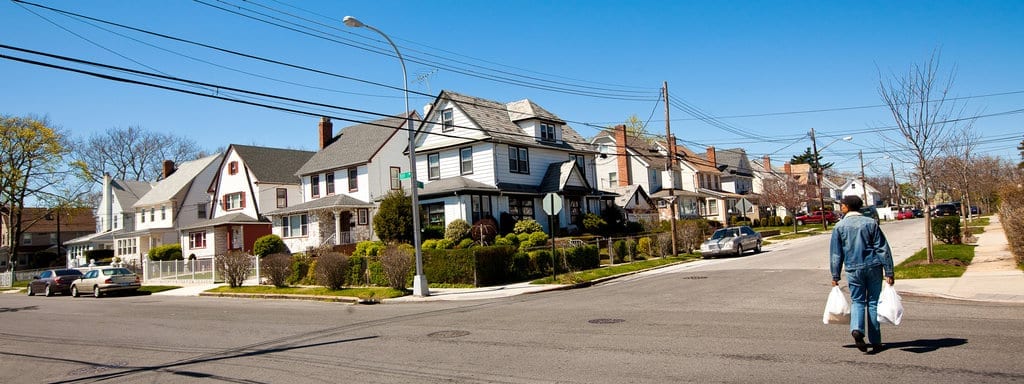
Christmas time in New York is often filled with magic and wonder. Most people have visions of marveling beneath the tree in Rockefeller Center, window shopping on 5th Avenue, or playing with all the new toys FAO Schwartz has to offer, but that is just a tiny spec of the enchantment to be found in NYC during that time of year. No matter where you are or how you celebrate, the end goals are almost always the same: to spread joy, focus on others, and spend time with your loved ones. While everyone has their own traditions, it is important to remember why you are doing so. That is exactly what Run-DMC was trying to convey with their 1987 hit ‘Christmas in Hollis.’
While Run-DMC were initially opposed to writing a Christmas song at the record company’s request, their opinion changed once they went through a crate of old odd-ball Christmas Records to see if they could be inspired. After a bit of searching, inspiration finally hit once they listened to Clarence George Carter’s funk cut ‘Back Door Santa.’ Once they decided to write the song, Run-DMC decided they were going to combine the fantasy and mysticism that comes with the holiday with real life experiences, detailing past Christmas’ spent with their families in their hometown of Hollis, Queens.
The first verse of the song belonged to Run, which draws listeners in with a surreal experience of finding Santa’s wallet after encountering one of his reindeer but returning it because he didn’t believe it was right to steal from Santa. From that point the song could have gone anywhere, but DMC decided he wanted to relate it to real life because that is the opposite of what everyone was doing with Christmas music at the time.
Run-DMC, Hollis
“Every other Christmas song is like a fantasy,” Run explains. “You know, [Sings.] ‘Santa Claus is coming to town.’ That’s a fantasy. Even Run’s verse, he’s telling a story that’s like it’s been written for a Christmas book. But my story is what really happened in real life, about real people, and what it was like as a kid growing up. It’s so real. [Raps.] “Christmastime in Hollis Queens / Mom’s cooking chicken and collard greens!” It’s funky, it’s soulful, it’s family, it’s real. “Christmas In Hollis” is real, because of my verse.”
Hollis, Queens
Hollis, Queens had an incredibly powerful impact on Run-DMC, which is why they decided to homage the neighborhood in ‘Christmas in Hollis.’ Joseph Simmons (Run), Darryl McDaniels (DMC), and Jason Mizel (Jam Master Jay) formed Run-DMC in the 1983 after being friends at school for years and realizing they had similar interests in music as they got older. At the time of the group’s formation, Hollis was a moderately stable, suburban community with a vibrant and growing hip-hop scene which inspired and cultivated each member of Run-DMC from an early age. It was a family neighborhood, and the love and support they received helped the group achieve their dreams.
As the group got bigger, the area changed, and the tranquil Hollis soon became plagued with drug and gun violence. By the late 1980’s the neighborhood became one of the most severe victims of the growing crack epidemic. Today Hollis has returned to the median income, middle-class neighborhood it once was, but there have been no sightings of Santa since that fateful day in 1987.
‘Christmas in Hollis’ Lyrics:
It was December 24th on Hollis ave in the dark
When I see a man chilling with his dog in the park
I approached very slowly with my heart full of fear
Looked at his dog, oh my god, an ill reindeer
But then I was illin’ because the man had a beard
And a bag full of goodies, 12 o’clock had neared
So I turned my head a second and the man had gone
But he left his driver’s wallet smack dead on the lawn
I picket the wallet up then I took a pause
Took out the license and it cold said “Santa Claus”
A million dollars in it, cold hundreds of G’s
Enough to buy a boat and matching car with ease
But I’d never steal from Santa, cause that ain’t right
So I’m going home to mail it back to him that night
But when I got home I bugged, cause under the tree
Was a letter from Santa and all the dough was for me
It’s Christmas time in Hollis queens
Mom’s cooking chicken and collard greens
Rice and stuffing, macaroni and cheese
And Santa put gifts under Christmas trees
Decorate the house with lights at night
Snow’s on the ground, snow white so bright
In the fireplace is the yule log
Beneath the mistletoe as we drink egg nog
The rhymes you hear are the rhymes of Darryl’s
But each and every year we bust Christmas carrols
Rhymes so loud and proud you hear it
It’s Christmas time and we got the spirit
Jack Frost chillin, the hawk is out
And that’s what Christmas is all about
The time is now, the place is here
And the whole wide world is filled with cheer
My name’s D.M.C. with the mic in my hand
And I’m chillin’ and coolin’ just like a snowman
So open your eyes, lend us an ear
We want to say Merry Christmas and Happy New Year!
Rochester-based composer mainTheme has announced the release of his rich new groove track “Take Over Me” (feat. Donno Jay).
Dan Romans plays drum set, synth, keyboard, and voice; composes and arranges music; and performs all styles. He has a diverse musical vocabulary and versatile playing style that is dynamic, expressive, and compositionally focused. mainTheme is a carte blanche repository of sounds and songs drawn from eclectic influences and presented as an approximation of pop music. mainTheme is another variation of Dan Romans’ compositional voice as he dons the figurative producer’s hat.
His latest track “Take Over Me” (feat. Donno Jay) encapsulates mainTheme’s minimal, rich groove and features storytelling and vocal talents of Miami-based hip-hop artist Donno Jay. The track is slated to release on most streaming services by December 27. The track is a powerful, introspective look at the core of one’s life, and the state of the world we all share. With Donno Jay’s cadence and hard-hitting, somber lyrics spit over the desolate electro-synth melodies, this track is strong, catchy, and meaningful.
mainTheme creates music that, to me, breaks down walls. His eclectic, diverse and dynamic range of music paints wondrous soundscapes in each piece of music released. This track, “Take Over Me” is a prime example of this idea. The instrumental to the track is smooth, unique, and presents a vibe that I can best describe as galactic. It is a spacey, synthy, psychedelic piece that contains climbing and falling volumes, with a heightened energy in the middle before slowly dying out like a dimming light. The track is brilliant in both instrumental sound from mainTheme and lyricism from Donno Jay.
For more information on mainTheme’s music and to keep up with “Take Over Me” which releases on December 27, click here.
Music superstar Nelly will hit the road in 2025 with his “Where The Party At Tour.” The tour will celebrate the 25 anniversary of Nelly’s debut studio album, Country Grammar and includes dates at the Darien Lake Amphitheater in Buffalo on Aug. 1, and Northwell at Jones Beach Theater in Wantagh on Jul. 27.
Known for iconic 2000’s hits such as “Hot in Herre” and “Dilemma,” Nelly will perform his catalog across New Zealand, Australia, Canada, Europe, and the United States in 54 shows in the “Where The Party At Tour.” The tour will marks Nelly’s return to headlining following his success as a special guest for Janet Jackson’s Together Again Tour.
An incredible lineup of special guests will accompany Nelly across the various legs of the tour. Fans can look forward to electric performances from collaborators and friends such as Ja Rule, Eve, St. Lunatics, Fabolous, Jermaine Dupri, Chingy and Additional surprise guests.
The show will take fans on a journey through Nelly’s career, including chart-topping hits like “Hot in Herre,” “Dilemma,” and “Ride wit Me.” Known for his larger-than-life personality and ability to bridge genres from hip-hop to country. Nelly promises a show packed with surprises.
Former NFL pro bowler and NY Giant tight end Darren Waller continues his post-retirement musical journey with a new single and music video featuring Westside Boogie. The inspiring track explores themes of personal introspection, blending vulnerability and memories of self-doubt to create a strong message of growth and self-discovery. Additionally, Shady Records artist, Westside Boogie, chimes in with his own moment of self-reflection to top off the emotional record. Similarly, the music video is therapeutic in its presentation, with Waller rhyming his verse as he solemnly raps his verse.
Getting Boogie for this record was really organic, thanks to a mutual connection from my high school basketball days. As an artist, he’s incredibly versatile and vulnerable, which made him a perfect fit for the record. We’ve both found success and joy in a lot of areas of our personal lives, but we’re still looking for the answers to our deepest questions.
– Darren Waller
All in all, Waller has been using his newfound career as a music artist as a form of therapy, The new song follows Waller’s Internal Warfare: This Too Shall Pass EP, which dropped last month. Inspired by a year of significant transformation, the EP takes an in-depth look at personal and professional highs and lows he experienced. Moreover, earlier this year, Waller also released On Notice: Bag Talk EP, showcasing his artistic versatility, and Mind Games: It’s All In Your Head EP, which touches on Waller’s decision to retire from the NFL.
Since calling it quits, the former NFL star has dropped a number of viral records including “Who Knew (Her Perspective)” dedicated to his ex-wife, Kelsey Plum of the Las Vegas Aces. After being drafted into the NFL in 2015, waller began exploring music, inspired by his great-grandfather, the iconic jazz pianist Fats Waller. While music initially took a back seat to football, Darren made his musical debut in 2021 with the project Delusions of Clarity. Following that release, Waller received a placement on the official Madden NFL soundtrack in 2023.
GRAMMY-award winning rapper and producer J. Cole has announced a special one-night-only show on Monday, December 16 at Madison Square Garden to celebrate the 10th anniversary of his third studio album.
A rapper, singer, songwriter, record producer, basketball player, and self-taught pianist- J. Cole has it all. Having started as the first artist to sign on to Jay Z’s label Roc Nation, each of Cole’s releases has debuted at the top of the Billboard 200 in addition to earning him two Grammys and seventeen nominations, a Billboard Music Award, three Soul Train Music Awards, and eight BET Hip Hop Awards.
In addition to his own work, Cole has produced for the likes of Kendrick Lamar, Janet Jackson, and Mac Miller. He’s also pursued other ventures like his own record label, taking shape in Dreamville Records.
Despite his massive commercial success, Cole has avoided a more sanitized pop sound to pursue works that tackle complex and conscious sounds and themes. This passion for pressing matters spread to Cole’s touring habits, introducing his annual ticketed events in 2013 aptly titled “Dollar And A Dream” shows, where fans only have to pay $1 to attend.
Having been active in the music industry for 15 years, Cole is celebrating the tenth anniversary of his third studio album, 2014 Forest Hills Drive with a one-night-only event at Madison Square Garden.
In addition to standard tickets, on the day of the show an additional 2,014 tickets will become available for just $1, continuing Cole’s tradition of “Dollar And A Dream” into this once in a lifetime event. Details on the location and time for the special $1 tickets will be revealed day of, limited to an in-person only purchase of one ticket per fan.
Standard tickets will be available on Wednesday, December 4 at 10:00 AM. For more information on this once-in-a-lifetime one-night-only event and how to attend, check out the event’s official page here.
The first ever WAV (World A Vibes) Music Fest has been announced for Mar. 28, 2025.
At UBS Arena, Spice, Skeng, Valiant, and Kraff, with more to be announced, will perform at the first full dancehall show at the venue.
The Jamaican musical genre, dancehall, while historically only finding widespread popularity on the island, has risen in popularity by extraordinary amounts in the past few years. Thanks to advocates such as Nicki Minaj among others, the excitement has culminated in bringing the first-ever Dancehall show to UBS Arena, located only 30 minutes from Penn Station or Grand Central via LIRR in Belmont Park.
The festival lineup reveals the presence of some of the biggest stars of dancehall, while also featuring many young and exciting talents. The “Queen of Dancehall”, Spice, innovative and top streaming dancehall artists Skeng, Valiant, and the rising star Kraff have been announced to perform. More electrifying artists are set to be announced in the first week of Dec. Nicki Minaj has said of Skeng, “No one is a bigger fan than me!” while Spice has collaborated with major artists such as Minaj, Missy Elliott, Busta Rhymes, and more.
The organizers highlight New York’s vibrant energy as the perfect setting for the WAV Music Fest, emphasizing a platform to showcase and support emerging talent while fostering cultural and artistic appreciation within society. In the dynamic city of New York, known for its entertainment hub and cultural diversity, the festival aims to provide an unforgettable musical celebration of dancehall.
Post Malone has announced his upcoming tour. “The BIG ASS Stadium Tour” with special guest Jelly Roll. The tour sees one date in New York at Citi Field in Queens.
Known for redefining the modern concert experience with his genre-blending sound and electrifying stage presence, Post will bring a massive production to 25 stadiums across the United States and Canada. Post Malone is set to deliver unforgettable performances across North America, including a stop at Citi Field in Queens on Wednesday, June 4, 2025. Adding to the excitement, Post Malone will be joined by the breakout sensation Jelly Roll, whose recent crossover hits and authentic storytelling have made him a powerful voice in modern country music.
Post’s catalog comprises the GRAMMY® Award-nominated “rockstar” [feat. 21 Savage” (Diamond), “Sunflower (Spider-Man: Into The Spider-Verse)” [feat. Swae Lee] (2x Diamond), “I Fall Apart” (Diamond), “Psycho” [feat. Ty Dolla $ign] (Diamond), “White Iverson” (Diamond), “Better Now” (Diamond), and more. It all started with his quintuple-platinum influential 2016 debut, Stoney. With records under his belt that will likely never be surpassed and a generation of artists and audiences worldwide under his spell, Post Malone simply doesn’t stop.
Jelly Roll and Post Malone
POST MALONE PRESENTS: THE BIG ASS STADIUM TOUR 2025 DATES:
Tue Apr 29 – Salt Lake City, UT – Rice-Eccles Stadium^
Sat May 03 – Las Vegas, NV – Allegiant Stadium^
Wed May 07 – San Antonio, TX – Alamodome^
Fri May 09 – Dallas, TX – AT&T Stadium^
Sun May 11 – Atlanta, GA – Mercedes Benz Stadium^
Tue May 13 – St. Louis, MO – Busch Stadium^
Sun May 18 – Detroit, MI – Ford Field^
Tue May 20 – Minneapolis, MN – U.S. Bank Stadium^
Thu May 22 – Chicago, IL – Wrigley Field^
Sat May 24 – Philadelphia, PA – Citizens Bank Park^
Mon May 26 – Toronto, ON – Rogers Centre^
Wed May 28 – Hershey, PA – Hersheypark Stadium^
Thu May 29 – Pittsburgh, PA – PNC Park^
Sat May 31 – Foxborough, MA – Gillette Stadium
Mon Jun 02 – Washington, DC – Northwest Stadium
Wed Jun 04 – New York, NY – Citi Field
Sun Jun 08 – Miami, FL – Hard Rock Stadium*
Tue Jun 10 – Orlando, FL – Camping World Stadium
Fri Jun 13 – Ridgedale, MO – Thunder Ridge Nature Arena
Sun Jun 15 – Denver, CO – Empower Field at Mile High
Sat Jun 21 – Glendale, AZ – State Farm Stadium*
Tue Jun 24 – Boise, ID – Albertsons Stadium
Thu Jun 26 – Seattle, WA – T-Mobile Park
Sat Jun 28 – Portland, OR – Providence Park
Tue Jul 01 – San Francisco, CA – Oracle Park
*Without Jelly Roll
^With Sierra Ferrell
For more information on Post Malone’s upcoming tour and to purchase tickets, click here.
Psychedelic funk band Lettuce and legendary emcee GZA join forces for ‘The Get Up Tour’ in 2025. The tour sees 17 dates including one at Brooklyn Steel on February 7.
GRAMMY-nominated psychedelic funk band Lettuce kicks off 2025 with ‘The Get Up Tour,’ an expansive 17-date run at prominent venues throughout the U.S. Joining Lettuce on seven of those performances is legendary hip-hop artist GZA of Wu-Tang Clan. GZA presents his iconic 1995 album Liquid Swords in full with The Phunky Nomads Band. On those performances, GZA will play the first set of the evening followed by Lettuce marking a full night of music and inevitable collaboration.
The tour kicks off on the West Coast from Jan 22 – 24 in Del Mar, CA, followed by Los Angeles and Oakland. The tour comes to a close on March 2 in Denver, Colorado. New York City gets a taste of the tour on February 7 at Brooklyn Steel in Brooklyn.
GZA’s Liquid Swords was released in 1995 and has become a widely revered album celebrated for its sharp lyricism and vivid imagery. The record heavily samples dialogue from the 1980 cult martial arts classic Shogun Assassin and uses dark, atmospheric beats throughout. The record charted at #9 on the Billboard 200 chart, #2 on the Top R&B/Hip-Hop Albums chart, and was certified platinum nearly 20 years after its release.
The Get Up Tour 2025 Dates:
Jan 22, 2025 – The Sound at Del Mar – Del Mar, CA*
Jan 23, 2025 – The Novo – Los Angeles, CA*
Jan 24, 2025 – Fox Theater – Oakland, CA*
Jan 31, 2025 – Mercury Ballroom – Louisville, KY ^
Feb 1, 2025 – Mercury Ballroom – Louisville, KY ^
Feb 2, 2025 – Newport Music Hall – Columbus, OH ^
Feb 4, 2025 – XL Live – Harrisburg, PA*
Feb 5, 2025 – Stage AE – Pittsburgh, PA*
Feb 6, 2025 – The Fillmore Silver Spring – Silver Spring, MD*
Feb 7, 2025 – Brooklyn Steel – Brooklyn, NY*
Feb 8, 2025 – House of Blues Boston – Boston, MA %
SNL has officially returned, celebrating its 50th year on the air. Since its start in 1975, the show has introduced Americans to classic comedy skits, ranging from Wayne’s World to the Blues Brothers. On top of that, comedy icons like Eddie Murphy, Adam Sandler, and countless others have SNL to thank for launching their careers. But let’s not forget an often overlooked part of SNL’s history: its musical guests.
To celebrate SNL’s 50th anniversary, let’s take a look back at 50 classic performances from throughout the show’s history. In this installment, we’ll travel back to SNL of the 1980s to see some of the decade-defining acts that grace the 30 Rockefeller Plaza stage.
The B-52’s (1/26/1980)
To kick off the 1980s, New Wave icons the B-52’s performed an energetic set. Hailing from the college town of Athens, Georgia, the band was riding high after the release of their debut self-titled album. So in January, 1980, they made the trek up to New York City to soundtrack an episode hosted by the late-actress Teri Garr.
To start off their set, the band played their biggest hit at the time – “Rock Lobster.” Before the music even started, nothing stood out more than the band’s style. Their eclectic eighties meets fifties fashion was on full display. Cindy Wilson and Kate Pierson’s mile-high beehive haircuts instantly gave the audience a taste of the B-52’s ethos. They were deeply rooted in retro aesthetics, but also spearheading a New Wave of punk.
The audience did not have much time to gawk at the band’s style, because Ricky Wilson immediately fired into the iconic “Rock Lobster” riff. Alongside guitar, singer Fred Schneider played SNL’s favorite instrument – the cowbell. Throughout the song, Schneider bopped around the stage, waving his cowbell and drumstick. This dance party of a song dramatically halted at the bridge, with the band members collapsing as Schneider yells “Down! Down!” Following this, the band immediately sprung back up, whirling around the stage. Even Keyboardist Kate Pierson left her station to join in on the vortex. The B-52’s, unlike any band from that era, matched campy theatrics with a rough punk edge.
Following a number of skits, the band returned to play “Dance This Mess Around.” This track started off much differently than their opener, with harsh keyboard stabs and dissonant guitar. For this number, Schneider passed off vocals to Cindy Wilson. Her soft vocals grew into screaming as the chorus neared, with Schenider’s distinctive yelping backing joining in soon after. Throughout the song, the band all erratically danced, while somehow remaining unsettlingly still, mirroring their SNL predecessor Devo.
With this performance, the B-52’s both carried on history, and made history of their own. They brought the 1970s New Wave of Devo and Elvis Costello to a new decade. This performance, while unassuming at the time, hinted at a decade that both New Wave and the B-52s would thrive in.
Funky 4+1 (2/14/1981)
In 1981, a Bronx-based quintet made SNL history with a single performance. On Valentine’s Day, Funky 4 +1 played the first Hip-hop performance, not only on SNL, but on all of national television.
Known hip-hop aficionado Debby Harry hosted that night, and personally vouched for the band. During her work with Blondie, Harry formed a great appreciation for hip-hop. In 1981, Blondie made history with “Rapture,” becoming the first song with a rap verse to reach number one. As part of this, Harry became close friends with rap icon Fab 5 Freddy, who introduced her to Funky 4 +1.
From the first second of their SNL performance, “That’s the Joint” was a straight blast of joy. The Funky 4 all in matching red sweaters accentuate their female lead Sha-Rock. In a way, the monochrome male backers and the standout female lead vocalist wasn’t too different from Blondie itself. A sample of “Rescue Me” by A Taste of Honey propels the song forward with funky bass and horns. Over this disco beat, the five rappers pass off lines between each other, making for a great early hip-hop track.
One key member of the band wasn’t even a member, but rather a DJ. Throughout the performance, he can be seen spinning records in front of the group. This sampling-based number marks a radical shift in the style of musical performances on SNL, foregoing live instrumentation altogether. This showing also revolutionized how rap artists performed live. Rather than bopping to the beat, the band adopted fully choreographed synchronized dance moves. Drawing from older Motown acts, the band looked more akin to the Jackson 5 than the Sugarhill Gang on stage.
Only one week after Funky 4 + 1, SNL introduced a future superstar to the world. Prince, the artist formerly known as Prince, or Ƭ̵̬̊, whatever you want to call him, he made his special debut appearance on February 21st, 1981. While not the musical guest – that was rock icon Todd Rundgren – SNL invited Prince to perform one song from Dirty Mind. This performance marked the first of four guest slots Prince filled during his life.
Following two performances by Rundgren, it was Prince’s turn to perform “Partyup.” Prince and his band emerged on stage in matching trench coats. Under his trench coat, Prince wore only a bandana, short-shorts, and stockings, mirroring the cover of Dirty Mind. The performance got off to an energetic start, driven by funky synths, bass, and guitars. Throughout the funk number, Prince’s iconic falsetto vocals soared. However, one vocal line also caused controversy. Some claimed Prince sang the original lyric “Fighting war is such a f*cking bore,” violating broadcasting regulations. Prince himself, however, claims he said “Freakin.”
Funnily enough, yet another F-bomb overshadowed this performance, this time coming from cast member Charles Rocket. During the farewell, Rocket, parodying JR from Dallas, angered TV censors yet again. Turning to the camera he said “Oh man, it’s the first time I’ve ever been shot in my life. I’d like to know who f*ckin’ did it.” Needless to say, the cast and broadcast staff were all shocked, and Michaels promptly fired Rocket. This, however, was the last time anyone outshined Prince, as he would go on to dominate for the rest of the eighties.
This performance is sadly near impossible to find in its entirety online. Whether due to the multiple swears, or Prince’s estate’s strict licensing policy is unsure. It is a shame, as it is one of the best to ever grace 30 Rock. Immediately after, Jeffrey Doumanian writing for Rolling Stone said, “I was blown away, he was just the most original act I had seen in a long time.
FEAR (10/31/1981)
For one night only, the SNL stage transformed into a no-holds-bar mosh pit. That night was Halloween of 1981, when Lorne Michaels invited LA-based hardcore band FEAR onto the program. With his previous bad luck with punks *cough, cough, Elvis Costello* why would Michaels push his luck with an even rowdier crowd? The answer is pretty simple: he didn’t. In fact, it was SNL alum and notorious party animal John Belushi who pitched the idea.
John Belushi was an avid fan of all things punk rock, quickly becoming close friends with FEAR. Earlier that year, he even offered the band the opportunity to soundtrack his movie Neighbors. The studio, however, was not impressed and thought the band’s music was highly inappropriate. Belushi, being the good friend he was, offered FEAR a musical slot on SNL to make up.
Belushi’s plan, however, was much more complex than just having the band perform. He pitched Michaels his idea – to turn 30 Rock into a full-fledged punk venue with slam dancers. Then, Belushi began making calls to punks across New York and Washington DC. By Halloween night, 40 punks closed in on the SNL studio, including future Minor Threat singer Ian Mackaye. For the dress rehearsal, the punks mellowed out, lulling Michaels into a false sense of security. But when have punks ever been ones to follow the rules?
When FEAR took the stage that night, all hell broke loose. They began with “Beef Bologna,” a breakneck pace hardcore track with screamed vocals and fiery guitars. As soon as the music began, the punks in the audience showed what they were really made of. Some dove across the camera, others stormed the stage, and all of them indulged in the pure chaos. As singer Lee Ving recalled, “The real audience at Saturday Night Live was scared to death.” Luckily for everyone at 30 Rock, after the relatively short song, the crowd seemed to calm down slightly.
It wouldn’t last. Ving – the comedian he is – grabbed the mic and said, “It’s very nice to be here in New Jersey,” warranting immediate boos. This segued into their second track “New York’s Alright if You Like Saxophones.” Sonically, this song is unique among eighties hardcore, featuring dissonant saxophone at its center. The audience couldn’t savor this musical complexity, as not even two seconds into the song, the moshing resumed. In the mayhem, the mic even fell into the audience. The young DC-raised Ian Mackaye seized on this opportunity, yelling “New York Sucks,” starting a small fight.
The band’s final track was “Let’s Start a War,” which seemed like a good reflection on what they were doing in the studio. Unfortunately for FEAR, they did not have the chance to finish this performance. In fact, they didn’t even get 15 seconds in. From stage right, a man entered holding a massive pumpkin. Lumbering across the stage, he then chucked it directly at producer Dick Ebersol’s chest. In a panic, SNL cut to dead air for the first time in its history. After some hesitation, the broadcast resumed with a pre-recorded Eddie Murphy skit. As audiences watched on, cops chased the 40 punks out of the studio, restoring order to 30 Rock. Needless to say, Lorne Michaels never invited FEAR back to SNL.
Queen (9/25/1982)
SNL’s eighth season began with a performance by one of the biggest legends in rock: Queen. With SNL alum Chevy Chase hosting, the band joined to perform two songs from their 80s discography. This should have been an easy slam dunk: iconic host, equally iconic band, how could it go wrong? The issue came with Queen’s touring schedule. The SNL premiere came on the back of a 27-city US tour. The band were all exhausted, and Freddy Mercury’s booming voice was shot. Queen, however, were never a band to shy away from a challenge, and persevered. Playing sped up, more rock-edged versions of their tracks, they stunned the audience.
The first track they performed was #1 hit “Crazy Little Thing Called Love.” This performance was a much more beefed-up rock version of the hit. It began with Mercury front-and-center, surprisingly playing the acoustic guitar. Maybe it was because of his vocal limitations, or the need for the song’s iconic riff, Mercury ditched the keyboard for the guitar. Once the song started, honky tonk pianos and a jazzy electric guitar riff from Brian May joined in. Listening to the performance, you couldn’t even tell Mercury’s voice was all but destroyed from a month of touring. To close out the track, May laid down a legendary extended electric guitar solo.
Later in the episode, Queen returned to the stage to perform “Under Pressure.” Although their latest album Hot Space was a commercial disappointment, its lead single – a debut with David Bowie – was an instant classic. Prior to Mercury’s passing in 1991, “Under Pressure” was a sole Queen live track – with or without Bowie. Beginning with the song’s iconic bassline, everything started according to plan. However, when Mercury’s vocals begin, his exhaustion was much more noticeable. There was no way he would be able to hit the song’s rising vocal lines. As a result, he had to alter the melodies, allowing his more limited register to boom through the studio. Throughout the song, he confidently strutted across the stage in a leather jacket. It was clear that his voice didn’t phase him in the slightest.
This performance marks a sad moment in music history. SNL was the final performance the band ever played in the US prior to Mercury’s passing from AIDS 9 years later. Even though it was their final American show, and the band were clearly not at their highest, it was a clear show of force. They may have been exhausted and had no voice, but their musical prowess and stage presence made all of that unimportant. Watching the performance, there is no question why Queen was one of the greatest bands to ever do it.
The Replacements (1/18/1986)
Yet another punk band banned from SNL for disorderly behavior – I guess third times a charm. This story, much like Elvis Costello, began with a last-minute fill in by Lorne Michaels. Originally, SNL booked the Pointer Sisters to perform on a Harry Dean Stanton hosted episode. However, when they canceled, Lorne Michaels called in Minnesota-based alternative band The Replacements.
Riding on the success of their major label debut Tim, the Replacements’ SNL performance was a medium to prove themselves on a live stage. What better way to prepare for such a momentous occasion than partying like there’s no tomorrow. Leading up to the performance, the band made a day of binge-drinking with Harry Dean Stanton. And did they drink…and drink…and drink. When it came time to go up on stage, guitarist Bob Stinson tripped and fell, smashing his guitar.
Once a replacement guitar was given to the Replacements, they took the stage for their first song. From the first second of “Bastards of Young,” it was clear something was off. It seemed like each band member was playing in a different key. In other words, their drinking had caught up to them and the performance was a mess. Clearly, the band was already at odds with Lorne Michaels, poking fun at him during the performance. As Paul Westerberg sang, “The ones who love us least are the ones we’ll die to please,” he gave a big exaggerated wink right in Michaels’ direction.
The real trouble came right after this. Westerberg was worried that Stinson was so intoxicated that he would miss his cue for the song’s guitar solo. Taking action into his own hands, Westerberg yelled, “Come on f*cker” to cue Stinson himself. Michaels was furious, fearing backlash from network censors for this use of profanity.
Michaels, however, did let the Replacements take the stage for another song. When the band reemerged, they seemed to have swapped outfits with each other for some reason. Maybe it was the outfit change, or the extra time to sober up, but their performance of “Kiss Me on the Bus” was much more composed. The band played together, in tune, and in key. When the moment of truth came for Stinson to play his solo, he was even able to do so without any swearing needed.
This cleanup job was not enough to quell Michael’s anger however. By the time the Replacements left the stage, Michaels had banned them. For the third time in SNL’s history, a punk act’s hijinx had gotten them banned from the show. Singer Paul Westerberg, however, was allowed to return to the show seven years later as a solo act. During this performance, he even played a Replacements track – “Can’t Hardly Wait.” The band’s next performance at 30 Rock wasn’t until a 2014 appearance on Jimmy Fallon – a whopping 32 years later.
Phillip Glass (3/22/1986)
Who screams SNL musical guest more than pianist and experimental composer Phillip Glass? If you thought literally anybody else, you’d most likely be correct. However, for one special episode of SNL, Glass performed and soundtracked the whole night. This decision, while odd at first glance, makes much more sense in the greater context of the unique episode it soundtracked.
On March 22nd, 1986, filmmaker Francis Ford Coppola hosted alongside comedian George Wendt. This episode, unlike SNL’s normal skit-based format, this night had an overarching narrative arc. It followed Coppola in his quest for an Emmy award. To do this, he directed the entire episode, repeatedly misunderstanding and twisting SNL’s concept to make it more artful. This vision was put on display immediately after the cold open. In place of the show’s fun intro was a moody opening credits sequence. Glass’s track “Facades” from Glassworks substituted the usual upbeat jazz theme.
After this, the show’s skits doubled down on its concept. First came Wendt’s monologue, which Coppola repeatedly interrupted hoping to capture the perfect take. To add onto this, he even told the audience how they should laugh in response. Following the monologue was a number of experimental, esoteric, and realist sketches tackling everything from Vietnam to The Honeymooners. Coppola even recorded a number of satirical commercials to make sure every aspect of the broadcast was up to his standards.
Throughout this experiment in television broadcasting, Coppola invited the Phillip Glass Ensemble to perform twice. The first of these was “Lightning” from Glass’s 1986 album Songs from Liquid Days. This track was unlike anything 30 Rock had witnessed previously. In Glass’s normal fashion, repetitive whirling percussion and winds propelled the song forward. Minor-key keyboard stabs supplemented this, creating an almost alien atmosphere. At the center of the piece was Janis Pendarvis’ beautiful operatic vocals, performing lyrics by Suzanne Vega. This track marked one of the most accessible moments in Glass’s discography, while remaining musically complex.
Glass’s second performance was “Rubric,” an excerpt from his 1982 classical opus Glassworks. This track was much more abstract than its predecessor. Keyboard and woodwind arpeggios drove the song forward. This song was much more emblematic of Glass’s discography, being a repetitive, deeply-minimalist composition. As it went on, it grew more and more lush, adding operatic vocals on top of the mix. As the ensemble performed, clips from the experimental documentary Koyaanisqatsi overlaid the show. The excerpts, featuring nighttime timelapses of a city, only added to the monumental aura of the performance.
Due to the unorthodox one-off nature of this episode, it is unlikely that 30 Rock will witness anything else like it again. It really is too bad, as the Phillip Glass Ensemble’s appearance was one for the ages. Equal parts experimental and approachable, minimalist and lush, the performance bent the rules of what an SNL performance could really entail.
Elvis Costello (3/25/1989)
So far, Lorne Michaels has not shied away from banning anyone he disagreed with. Play a song he didn’t like – banned. Said a naughty word on air – really banned. However, on March 25th, 1989, Michaels felt in a much more forgiving mood. After a 12 year ban, SNL invited back New Wave icon Elvis Costello for a solo performance. 12 years prior, Elvis Costello and the Attractions received a “lifetime” ban for going off script. Instead of playing “Less than Zero” like planned, Costello switched into a rendition of “Radio, Radio,” which angered Michaels beyond belief. Now a solo artist, Costello returned to support his hit album Spike, playing two new songs.
In the leadup to Costello’s first song, host Mary Tyler Moore made one of the strangest performance announcements in the history of SNL. Continuing a streak of raunchy language, she told the audience “Elvis Costello’s penis is here tonight, so stick around, we’ll be right back.” After that strange introduction, Costello took the stage to perform top-20 hit “Veronica.” Co-written by Paul McCartney, the song was an upbeat pop-rock number, lacking Costello’s punk edge that got him in hot water during his first appearance. Picking up an acoustic guitar, Costello led the band, singing about a woman slowly losing her memories with old age. Despite the sad lyrics of the song, you would have no idea based on Costello’s lively energy.
Following this, Costello returned to perform “Let Him Dangle.” This track is noticeably more solemn than his opener, discussing a man preparing for the gallows. The mostly acoustic track provided a comedown from the frenetic energy of “Veronica.” Despite the more serious nature of Costello’s tracks that night, he managed to stay in Michaels’ good graces. All it took was Costello staying on script. This forgiveness appears to have lasted, with Costello making two additional guest appearances throughout the 1990s.
On top of this performance, the episode was also notable for its sketches. Following Costello’s second song, SNL debuted a new sketch. Featuring Mike Myers and Dana Carvey, it introduced the world to the Wayne’s World public access television show. The charming sketch, featuring the two loveable music nerds in Wayne’s basement, quickly became a fan-favorite. Within just four years, it became a recurring sketch, spawned two movies, and got an entire generation saying “Wayne’s World, Wayne’s World. Party time! Excellent!” This one unassuming episode not only mended SNL’s past conflicts, but also paved the way to its future.
Tom Petty (5/20/1989)
In 1989, Tom Petty arrived at 30 Rock for his third appearance on SNL. This episode, hosted by Steve Martin, however, marked Petty’s first time without the Heartbreakers backing band. His solo SNL debut was also preceded by tragedy. That night, SNL original cast member Gilda Radner passed away following a battle with ovarian cancer. In response, Petty made his performance a tribute to the legendary comedian
Petty’s first song was “Runnin’ Down a Dream.” Starting with its iconic descending riff, the song quickly jumped into an upbeat rock groove.With chugging guitars and Petty’s soft vocals, the song lilted along for a really fun two minute stretch. After this, the song erupted into a fiery guitar solo from Mike Campbell to close it out. With this amped up shredding over his usual heartland rock, Petty entered his solo career with a bang.
Prior to the episode, Petty had planned to play his hit “I Won’t Back Down,” to close his set. However, as Saturday approached, he felt it did not fit the mood of the night. Instead, he opted to play a yet-unreleased track off his new album Full Moon Fever. This track was the future megahit “Free Fallin’.” Originally, his label was unconvinced, wanting him to play his tried and tested current hit. In response, Petty told them that “Free Fallin’” was actually the late Radner’s favorite song, so they relented.
This SNL episode marked the first live performance of what many consider Petty’s signature song. Unlike the album cut, this live performance featured much more lush instrumentation, mirroring a wall of sound. In place of acoustic guitar is an immensely reverberated electric one. With synth strings, piano, and reverb vocals, the song echoed like Petty was performing in a cathedral. Aiding in this feeling were the Renaissance paintings surrounding the band on stage. To end this beautiful performance, Petty decided to make things a little awkward. As the song ended, he went to hug Howie Epstein who did not seem interested. So, they both just buffered in place awkwardly until the camera faded.
In this performance, Petty took a somber occasion and made it a celebration of life. In doing so, he not only introduced audiences to his new hit, but also his new path forward as a solo artist. Following this performance, Petty returned to 30 Rock a whopping five times as a musical guest.
Neil Young (9/30/1989)
To close out the 1980s, Lorne Michaels finally caught his white whale. For the past 10 years, SNL attempted to nab Neil Young as a musical guest. The first time they tried, SNL ended up stuck with weirdo new wavers Devo. Finally, the folk legend was in the building to perform a three song set.
At the time of this performance, Young was far from young. At the ripe age of 43, Young was still at the top of his game. When he entered 30 Rock, he sported an Elvis t-shirt, leather jacket, patched up jeans, and maple leafs gears. This outfit was equal parts cool and puzzling, but one thing for sure was that it was 100% Neil Young. In his three decades performing, Young had built up a routine for putting on amazing live shows, saving the upbeat rockers for last. After hours of building up adrenaline and intensity, he would rip out fiery guitar solos like they were nothing. For SNL he had to reach this intensity level instantly. To do this, he took up an intense training regimen, including weightlifting and calisthenics. This training paid off, as Young went on to unleash one of if not the greatest SNL performance ever.
Young’s first song was his newest hit “Rockin’ in the Free World” from 1989’s Freedom. The track kicked off with its iconic chugging guitar riff imbued with fiery distortion. As Young’s lyrics entered, they only added to the sonic intensity. The lyrics initially seem patriotic, referencing the “colors on the street, red, white, and blue.” As the song continued, Young’s lyrics transformed into an indictment of HW Bush-era America as fiery as its guitar tone. With lyrics attacking everything from drug addiction, pollution, and gun violence, the song was a scathing criticism of the US. As the song continued, Young stomped and headbanged across the stage, before erupting into a legendary guitar solo. While firing out metallic guitar bends, Young jumped on the drum kit and crashed into his bandmates. Apparently, Young’s training regimen worked, with the performance having the intensity of a grunge concert.
Following this incendiary performance, Young returned with a much more somber song. The solo acoustic rendition of “The Needle and the Damage Done” worked as a much needed comedown from the explosive energy of Young’s opener. Upon retaking the stage, Young received immediate applause. The song’s lyrics tackled the issues of heroin addiction and the overdose of Young’s Crazy Horse bandmate Danny Whitten in 1972. Following applause throughout the song, Young swapped out his acoustic guitar for an electric one to begin “No More.”
As Young swapped out his gear, his band rejoined him on stage for this last piece. Young originally wrote this track as a spiritual successor to “The Needle and the Damage Done,” and it continued many of its themes. Throughout the song, Young sang of the difficulty to kick drug addiction, accompanied by bluesy solos. Compared to “Rockin’ in the Free World,” the song was much more mellow, finding a comfortable middle ground with the rest of the set. When Young reached the repeated chorus of “no more,” harsh guitar stabs amped up the track. By the time the track ended, Young made all of Lorne Michaels’s greatest wishes come true. He had finally caught his white whale, and Young’s performance was well worth the decade-long wait.
Bronx native, hip-hop musician, and professional yo-yoer Richard Pigkaso has released the music video for “Ready, Set, Go,” alongside “Wanna Play With My Yo-Yo?” ahead of the release of the album slated to be his final studio release.
Born in Castle Hill in the Bronx, Richard Pigkaso has been influenced by old school Hip Hop and R&B since youth. Described as a loner and often set apart from the crowd for being marching to the beat of his own drum, Pigkaso found solace and joy in the yoyo.
“It became my creative outlet because I would always be alone – playing video games, going outside and not having many friends. I realized it became something calming for me. Something that allowed me to forget what was going on in my life at that point.”
– Pigkaso
Over time, playing with the classic toy grew from a simple hobby to an impressive skill he showed off in competitions across the United States- even qualifying in a few international meets. The joy of the yo-yo has never left Pigkaso’s heart, but since graduating from college he saw his horizons broadened with the exciting addition of music as a medium.
Pigkaso’s musical ventures have brought him incredible joy already, but with his upcoming release he hopes to expand his love for the yo-yo and channel his musical roots through a message of love and support for those who struggle to find acceptance within themselves.
Lusus Naturae 3: You’re Beautiful Gorgeous is set to be Pigkaso’s final studio album as an artist, the culmination of both his image as the humble and charismatic yo-yoer and the ambitious emcee inextricably tied to the Bronx.
With a hard-hitting beat and one piece of the culminating lyrical royale that is the album, “Wanna Play With My Yo-Yo?” will excite old listeners and new with its hard-hitting sound.
In addition to the release of “Wanna Play With My Yo-Yo?” is the publication of the official music video for “Ready, Set, Go,” fittingly utilizing sharp editing tricks and an overarching race car driving theme.
Pigkaso’s final studio release Lusus Naturae 3: You’re Beautiful Gorgeous, the culmination of his multidisciplinary skill as a yo-yoer and musician, will release on November 15, 2024.
To learn more about Pigkaso, his past work, and all future ventures, check out his official website here.