On September 24th, the iconic Dropkick Murphys kicked off their highly anticipated fall tour with a powerful and energetic performance at the Rooftop at Pier 17 in New York City.
Supported by Pennywise and The Scratch, this show marked the first of many tour dates across North America, with stops in cities like Philadelphia, Detroit, Las Vegas, and even Canadian dates in Vancouver, Calgary, and Winnipeg. The tour is set to conclude in their home state of Massachusetts on October 27th before the band heads overseas for a 2025 leg that includes shows in Germany, the UK, and Austria.
The night started with Dublin-based The Scratch, whose unique blend of Irish traditional music and heavy metal got the crowd moving early. The three-piece band, who first made waves with their 2020 debut album Couldn’t Give a Rats, followed up with their 2023 release Mind Yourself, which has further solidified their growing fanbase. Their high-energy set was the perfect introduction to the night’s punk-centric lineup.
Next up was punk rock legends Pennywise, whose veteran presence brought the crowd’s energy to another level. Kicking off their set with “My Own Country” and “Every Single Day,” Pennywise proved why they’ve remained a staple in the punk rock scene for decades. With Fletcher Dragge on guitar, Byron McMackin on drums, Jim Lindberg on vocals, and Randy Bradbury on bass, they delivered a blistering set that included classics like “Date with Destiny,” a cover of The Ramones’ “Blitzkrieg Bop,” “Society,” and closed with their fan-favorite anthem “Bro Hymn.”
When Dropkick Murphys took the stage, it was clear the crowd was there to celebrate one of Boston’s most beloved bands. Since their formation in 1996, the Dropkick Murphys have carved out a unique space in the music world, blending traditional Irish instrumentation with punk rock energy. Over the years, they’ve become synonymous with anthemic singalongs and songs that reflect working-class pride, rebellion, and community spirit.
Ken Casey, the band’s frontman, may have been wearing a boot due to a torn Achilles, but that didn’t slow the band down one bit. The energy radiating from the stage was electric, and Casey, along with Tim Brennan (guitar, tin whistle, accordion), Jeff DaRosa (guitar, banjo, mandolin), Matt Kelly (drums), James Lynch (guitar), and Kevin Rheault (bass), gave a performance that had the entire rooftop shaking. Opening with “Barroom Hero” and “Boys on the Docks,” they ripped through a setlist packed with fan favorites, including “The State of Massachusetts,” “Surrender,” “Forever,” and the socially charged “Which Side Are You On?”
The band also played their new song, “Sirens,” a politically charged anthem addressing the growing divide in America. With lyrics that take aim at the billionaires profiting from societal division, Ken Casey delivered a fiery message:“For nearly a decade, the division between red and blue, right and left, has grown deeper, darker and uglier — dividing families and ending friendships. Nobody enjoys this more than the billionaires, who are making record profits off the blood, sweat, and tears of the working class. They love it when we fight amongst ourselves because their biggest fear is us joining together to come after them… THE REAL ENEMY.”
The night ended with a three-song encore that brought the house down. The crowd roared along to “Rose Tattoo,” “Worker’s Song,” and the band’s signature anthem, “I’m Shipping Up to Boston,” a fitting conclusion to a night of celebration, energy, and defiance.
With more than two decades under their belt, Dropkick Murphys have solidified themselves as legends of Celtic punk, known for their intense live performances and deep connection with their fanbase. Despite the absence of co-lead vocalist Al Barr, who took a leave of absence in 2022 to care for his ailing mother, Ken Casey has taken over full lead vocal duties, and the band hasn’t missed a beat. Barr’s return remains uncertain as he continues to focus on family, but fans hold hope for his eventual comeback.
As Dropkick Murphys power through their fall tour, their message remains as strong as ever: unity, pride, and standing up for what’s right. With the release of “Sirens” and plans for an expansive 2025 tour, the Murphys are showing no signs of slowing down. Whether you’re catching them stateside or overseas next year, one thing’s for sure—Dropkick Murphys will continue to bring their unmistakable energy and passion to stages worldwide.
Pennywise Setlist: My Own Country, Every Single Day, Staright Ahead, Same Old Story, Date With Destiny, Fuck Authority, Blitzkrieg Bop, Pennywise, Society, Broken, Stand By Me, Bro Hymn
Dropkick Murphys Setlist: Barroom Hero, Boys on the Docks, The State of Massachusetts, The Boys Are Back, The Spicy McHaggis Jig, Surrender, The Gauntlet, The Fields of Athenry, Johnny, I Hardly Knew Ya, Sirens, Smash Shit Up, Forever, Captain Kelly’s Kitchen, My Hero, Caps and Bottles, Which Side Are You On, The Hardest Mile, Good As Gold, Bastards on Parade, The Irish Rover, Until Next Time, Rose Tattoo, Workers Song, I’m Shipping Up to Boston
With SNL’s return on September 28th, the show will celebrate its 50th year on the air. Since its start in 1975, the show has introduced Americans to classic comedy skits, ranging from Wayne’s World to the Blues Brothers. On top of that, comedy icons like Eddie Murphy, Adam Sandler, and countless others have SNL to thank for launching their careers. But let’s not forget an often overlooked part of SNL’s history: its musical guests.
To celebrate SNL’s 50th anniversary, let’s take a look back at 50 classic performances from throughout the show’s history. To start off this series of articles, we’ll travel back to the 1970s to see some of the decade-defining acts that grace the 30 Rockefeller Plaza stage.
Simon and Garfunkel (10/18/75)
Perhaps the first great performance in SNL’s history came in only its second episode. This episode made history, with Paul Simon as the first musician to host. Despite his singer-songwriter bona fides, Simon was not advertised as one of the musical acts on the show. Instead, he was to host in promotion for his new album Still Crazy After All These Years. In his place, was a host of folk legends: his former partner Art Garfunkel, as well as Randy Newman, Phoebe Snow and Jessy Dixon.
Being the host did not stop Simon from taking the stage to perform. After opening the night with the title track from his new album, Simon joined Garfunkel on stage to perform three songs. This historic reunion was only the second time the duo had performed together since their breakup five years earlier. The crowd recognized the impact of this performance, cheering and clapping to the point where nothing else could be heard at the beginning of the performance. When the roaring faded however, the tension between the duo was thick enough to be cut with a knife.
Before anything else, Simon turned and said “So Artie, you’ve come crawling back,” which prompted more laughter. In response, Garfunkel was quiet and only thanked Simon for inviting him to “his show.” When the music started, however, you could hardly tell there was any tension between the two. They immediately began a rendition of “The Boxer,” propelled by only vocals and Simon’s acoustic guitar.
As soon as this spirited performance, the awkwardness returns with Garfunkel dryly stating “two part harmony. It’s the greatest.” Then, again, as if nothing happened, they jumped straight into “Scarborough Fair,” performing as one well-oiled folk machine. This dichotomy between their awkward banter and cohesive performances provides an interesting look into Simon & Garfunkel that fans could not really see elsewhere.
To cap off their performance, Simon dropped his guitar, as the duo took the stage with a full band backing. Their final song “My Little Town” off Simon’s Still Crazy After All These Years was the duo’s only song recorded since their breakup. With the SNL band behind them, Simon and Garfunkel belted out an impressive rendition of the song before leaving the stage. In many ways, their whole performance acted as a post mortem on their partnership, traversing their greatest hits from different eras of their career. In that way, this track – their last track – acts as a fitting Bookend to the Simon and Garfunkel experiment.
The highlight of this performance is its improvisational quality. Between each song, Simon just suggested a tune, and started plucking away at his guitar strings. With no more than a second thought, they were able to compose themselves and perform vocal harmonies that sound just like the recorded versions.
Patti Smith (4/17/76)
Only six months after Simon and Garfunkel graced the SNL stage, the show would make history again. This time, Lorne Michaels invited the New York-based Patti Smith group to perform. This performance marked the first appearance of Punk Rock on television, helping to propel the genre into the public eye.
By April 1976, Punk Rock was still in its infancy. Bubbling up out of Manhattan’s CBGB club, bands began to infuse 50s rock with a new speed and angst to mirror the disorder of the city around them. Patti Smith became the first member of this scene to release an LP: 1975’s Horses. By the time of her performance, she was alone in this field – her colleagues the Ramones wouldn’t release their debut until the next week. So in many ways, Smith not only sang for herself, but on behalf of all punk rock during her SNL performance.
Smith’s punk ethos stood in stark contrast to the episode’s host Ron Nessen – Gerald Ford’s White House Press Secretary. Introduced to the audience by the president himself, Nessen was the epitome of the establishment. His dry speech and stunted attempts at humor were befitting of the Republican White House at the time – a frequent target of SNL’s attacks.
Nessen’s presence made the Patti Smith Group’s performance even more impactful. As members of the underground, much of the audience had no clue what to expect from their performance. Following Nessen’s introduction of the group, there was a noticeable before any applause. By the end of their first song, however, there was no doubt that Patti Smith was a star. The group began with a cover of Van Morrison’s 1964 song “Gloria.” Starting with solo piano, amplified guitars joined as the tempo gradually increased. Within the blink of an eye, the song erupted into an uptempo punk number – the first of its kind on any TV broadcast.
As the band hammered away at their instruments, Smith bounced and thrusted around the stage while belting out the vocals “G-L-O-R-I-A.” By the end of the track, it was clear that the Patti Smith group was making history, with the once-hesitant audience immediately applauding the performance. Smith capped off the performance by saying “Happy Easter CBGB,” giving a nod to her punk home. This shoutout helped introduce the now-legendary CBGB and punk as a whole to countless viewers across not only New York, but the whole country.
Patti Smith and John Belushi backstage in April 1967. Photo by Allan Tannenbaum
Following a number of skits, the band returned to perform another amped-up sixties classic – The Who’s “My Generation.” The fairly conventional cover quickly devolves into harsh guitar noise under Smith’s screeching vocals. As the performance ended, Smith made a statement calling out network censorship, barely heard over her guitar’s feedback and the roaring audience. By the end of this performance, Smith had become a staple of SNL as well – with Gilda Radner regularly spoofing the singer with her punk character “Candy Slice.”
This performance highlights an interesting snapshot in time. One where both SNL and Punk Rock were part of the underground, coexisting in the same circles. At the same time this episode represents a turning point in American culture as a whole. On one hand is the stale representative of the increasingly-unpopular conservative President Ford. On the other hand is a new generation of musicians turning the staples of the past upside down to make something completely new.
The Band (10/30/76)
The third of these great SNL performances was a legendary set by The Band. In late October 1976, the legendary Canadian folk band took the stage at 30 Rock. Invited by their fellow Canadian and SNL showrunner Lorne Michaels, The Band performed four songs that would go down in history.
The secret to this performance’s legendary status is timing, timing, timing. The Band’s performance sat in the shadow of two looming events. The first was The Band’s Last Waltz concert in San Francisco on November 25th. Billed as their farewell show, The Band did not pull any punches. At the epic performance, they took the stage alongside legends ranging from Joni Mitchell to Eric Clapton. In many ways, this SNL appearance was a practice run for their Last Waltz, taking the audience through their storied career.
The Band with Joni Mitchell, Neil Young, and Bob Dylan during the Last Waltz concert. Photo by Gary Fong, San Francisco Chronicle via Getty Images.
The second event looming over the performance was the 1976 Presidential election between Gerald Ford and Jimmy Carter. The politically-minded Lorne Michaels was no fan of incumbent Republican President Ford to say the least, frequently parodying him on SNL. As this October 30th show was the last airing before the election, Michaels wanted to remind audiences what was at stake through both the show’s skits and performances.
The Band’s SNL set did not start off politically. Rather, they took audiences on a journey through their discography with three classic songs. Without hesitation, The Band launched into “Life is a Carnival,” with a funky rhythm section and soulful horns propelling the song forward. This opener gave the SNL audience a taste of their musical chops through fiery guitar and organ solos.
The next song “The Night They Drove Old Dixie Down” saw The Band look back to their 1969 self-titled album. Jumping right into the song, drummer Levon Helm took over with his rich vocals. What stands out about this performance is The Band’s complete lack of stage presence. The members stand almost completely still while laying down the track. But it doesn’t matter one bit, as their musical talents are so immense that they were able to move the audience nonetheless.
The Band closed this first set with the title track from 1970’s Stage Fright. Keyboardist Garth Hudson took center stage during this piece. As he erupts into a fiery keyboard solo, an overhead camera captured his shredding in real time. This track would have been an otherwise perfect end to their set, but as it turns out The Band had one last number in them.
To close out the show, The Band reappeared to perform a rendition of Hoagy Carmichael’s “Georgia on My Mind.” As part of Lorne Michaels’ political ethos, the track was intended as a final reminder for who to vote for. In this case, it referenced then-Georgia governor and Democratic candidate Jimmy Carter. While this track was noticeably slower than their previous songs, they are able to imbue it with unbelievable amounts of soul. As it turns out this soulful tune managed to sway audiences watching at home. As drummer Levon Helm recalled, they played “and a few days after that, Jimmy Carter was elected president.”
Paul Simon & George Harrison (11/20/76)
In November 1976, Paul Simon returned for his second appearance as SNL host. Starting off the show, he immediately sought to parody his first stint on the program with another performance of “Still Crazy After All These Years.” The only difference with this performance was that Simon was in a giant turkey costume – it was the Thanksgiving show after all. After cutting the performance short, Simon joked about not wanting to be made a fool of.
Simon had no need to worry about being a fool, because his performance that night proved his folk bona fides. The performance came as part of a collaboration with musical guest and Beatles guitarist George Harrison. Prior to this episode’s filming, Lorne Michaels had an idea for a publicity stunt. He offered $3,000 for a Beatles reunion on SNL, hoping to capitalize on the remaining bits of Beatlemania. To his surprise, George Harrison showed up and tried to collect the money as a joke. Michaels obviously said “no” as you can’t have a Beatles reunion with only one Beatle.
Despite this, Harrison continued to play four songs that night, alongside Simon. The highlight of the night took the form of a collaboration with Paul Simon and George Harrison. Each of these artists had a claim as the greatest songwriter on their respective side of the Atlantic, so having them perform together was a greater crossover than anyone could have hoped for. They began their set with the Beatles’ classic “Here Comes the Sun.” With Harrison leading and Simon providing harmonies, the duo performed a great acoustic rendition of the track. The duo then fittingly followed this up with a rendition of a Simon & Garfunkel classic “Homeward Bound.”
Paul Simon and George Harrison on “Saturday Night Live”
Throughout the broadcast, Simon performed three solo tracks. He began with the classic “50 Ways to Leave Your Lover,” off of his latest release. Simon then worked his way backwards through the seventies, with “Something So Right” off 1973’s One Trick Pony. Finally, he ended the night with a solo rendition of “Bridge Over Troubled Water,” originally recorded with Art Garfunkel. This version, featuring only Simon’s vocals and acoustic guitar provides a much more stripped down reimagining of the original song.
Turning the attention back to the night’s star – George Harrison – he highlighted two tracks from his new album Thirty Three & ⅓. I would have said performed … except that in a strange turn, Harrison opted to splice in music videos for his tracks “Crackerbox Palace” and “This Song.” This move really highlights SNL’s roots in the 1970s variety show trend, something that is lost to audiences today. Prior to the videos’ screenings, Dan Aykroyd introduced them as “films.” This performance, although unconventional, reflects the variety of early SNL, combining music, film, and comedy into a new revolutionary form of television.
Ray Charles (11/12/77)
Following Paul Simon’s lead, Ray Charles took up the double duties as host and musical guest on November 12th, 1977. This appearance allowed Charles to illustrate that he was truly a 20th century Renaissance man. Not only did he have serious chops as a vocalist and pianist, but his comedy rivaled many of SNL’s cast members. Starting off the show, Charles revealed his reason for hosting. “When the people from Saturday Night first asked me to host this show, of course I said absolutely not. I knew the show was tasteless and offensive and there was no way I was gonna let 30 years of my career go down the drain. I might be blind but I’m certainly not stupid.”
The rest of the night proved that Charles’ decision to host was anything but stupid. His performances brought the energy and sound of his 1950s recordings straight to the 30 Rock stage. Charles was very particular when it came to faithfully recreating the sound of his records. As a result, he opted not to use SNL’s in-house band, bringing his own musicians with him. Among the musicians was his original 1950s horn section and the Raelettes to back him up.
This attention to detail proved its worth with their first song “I Can See Clearly Now.” Driven by Charles’ soulful vocals, this Johnny Nash cover easily outshines the original. Throughout the track, layers of joyous gospel vocals backed up Charles’ singing. As the song progressed and the horn section joined in, Charles’ vision became clear. Each performer in Charles’ ensemble played perfectly as one well-oiled machine. Following the performance, Charles illustrated his comedic chops once again, faking out the audience with the intro to “Georgia on My Mind” – a nod to then-president Jimmy Carter.
To follow up this amazing cover, Charles then performed an original – “What’d I Say.” For this number, Charles moved over to the electric keyboard and ripped out the song’s iconic riff. While this song started off much more restrained than its predecessor, it quickly grew in intensity. The highlight of the song is the vocalized call and response between Charles and the Raelettes – an undeniably catchy piece of music.
After “What’d I Say,” Charles performed two songs highlighting his range as a musician. First comes “I Believe to My Soul,” a much bluesier number than before. This slower track highlighted Charles’ rich vocals, highlighted by the Raelettes’ minor-key backing. The next track, a rendition of “Hit the Road Jack,” goes into full-on jazz. Each section of Charles’ horn ensemble gets the chance to play an extended solo, providing a much different aura than their previous tracks.
The pinnacle of Ray Charles’ performance was his closing track “Oh, What a Beautiful Mornin’.” The song’s slow piano intro quickly evolved into a lilty pop tune propelled by organ and Charles’ vocals. As the horn section joins in, the song’s full colors shine, with the listener being able to picture themselves in the lovely morning Charles sings about. Throughout the performance, Charles swayed in his seat and stomped along to the beat so powerfully he nearly pushed his piano bench over. With this piece, Charles used a beautiful mornin’ to send off a beautiful night.
Elvis Costello (12/17/77)
Elvis Costello came as the second of many punk performances on SNL. During his set, Costello embodied punk more than anybody else, and took a direct stand against Lorne Michaels. This was a decision that cost Costello dearly and destroyed any relationship he had with SNL.
Originally, Michaels had no plan for Costello to perform on SNL. Seeing the shifting musical landscape in England, he wanted to get ahead of the curve and invite up-and-coming punk rockers: the Sex Pistols. As it turned out, the Pistols’ reputation that caught Michaels’ eye also ruined any chances of them performing. Not only were network executives worried about what provocative actions the band would take, but they were also in trouble with the law. The members’ history of drug and assault-related offenses had reached the US embassy in London. By the time they had applied for visas, the embassy replied with an unflinching “no.”
This legal snafu made Michaels nervous to say the least. He scrambled to find another punk act to fill in. First, he turned to New York’s Ramones, who were not receptive to his offer. Johnny Ramone simply replied “We don’t substitute for nobody.” This left one option for Michaels: Elvis Costello. Costello and the Attractions were in New York as part of an American tour and would still provide some degree of punk credos.
Today, it’s funny to think of Costello as being transgressive or controversial by any means. However, in 1977, he stood as part of a “New wave” of British acts building on punk. While his sound deviated from traditional punk, his attitude did not. His set started normally enough, with a performance of ‘Watching the Detectives.” The track combined punk with a reggae beat and staccato organ stabs, creating a sound unique to Costello.
The highlight of Costello’s performance came with his second track, “Less Than Zero.” Prior to his appearance, Costello’s record label pushed him to perform the track on SNL. Costello had a few qualms with the idea however. Firstly, the song discussed British fascist leader Oswald Mosely, who was widely unknown to American audiences. Secondly, it was too low key. Costello knew he had to woo audiences, and wanted to play a song with real power behind it.
That’s why not even five seconds into the song, Costello abruptly yelled “Stop!” Turning to the Attractions, he waved his hands and got them to go quiet. He then said to the audience “I’m sorry, Ladies and Gentlemen, there’s no reason to do this song here.” Then, without hesitation, the band jumped into the then-unreleased “Radio, Radio.” The song, inspired by the BBC’s ban of the Sex Pistols, embodies the best aspects of punk. The anti-establishment track rallies against media censorship of bands – something that reminded Costello of how his label treated him. This performance is undoubtedly one of the greats of the 1970s, with the band bringing both an energy and refinement to the track. The audience also loved the track, applauding and cheering as soon as the band stopped.
Despite this success, Michaels was outraged. He took Costello’s choice to deviate from the setlist as a personal affront that threatened his authority on the show. As a result, Michaels banned Costello from SNL until 1989. It was only 12 years later that Costello returned as a solo act to perform his hit song “Veronica.”
Blues Brothers (4/22/78)
April 22nd, 1978 brought something completely new to SNL – an in-house musical act. For two years, comedians Dan Aykroyd and John Belushi had been cooking up a musical project, simply known as the Blues Brothers.
The inklings of the Blues Brothers began in 1976, with the sketch “Howard Shore and his All-Bee Band.” The duo took up the roles of Belushi on vocals and Aykroyd on harmonica. The only difference was that they were – as the name suggests – dressed as giant bees. Despite the one-off nature of this skit, the duo continued to pursue the blues. When guitarist Arlen Roth played the show in 1978, he taught the duo how to play Jackie Brenston’s “Rocket 88,” continuing down the blues pipeline.
Jim Belushi in full Blues Brothers get up with Art Garfunkel prior to Arlen Roth’s performance. March 11th, 1978
Soon, Aykroyd and Belushi had dubbed themselves “the Blues Brothers,” donning sharp black suits, shades, and fedoras. Their appearance on SNL in 1978 helped to further cement their characters and introduce them to American audiences. The skit starts off with SNL bandleader Paul Shaffer taking up the role of the band’s agent, introducing them to viewers. He calls them “a new blues act that had been playing in a small, funky club on Chicago’s South Side.” Poking fun at the duo, he points out “they are no longer an authentic blues act, but have managed to become a viable commercial product.”
And just like that, audiences came to know “Joliet” Jake and Elwood Blues. Standing on stage in their matching outfits, they jumped into their first track “Hey Bartender.” If anybody had doubts about the comedians’ blues chops, this performance proved them wrong. A bluesy rhythm section and soulful horns propelled the song forward with an unmatchable groove. The highlight of the song, however, has to be Jake’s vocals. Throughout the song, Jake absolutely belted out his lines, while spinning in circles. Elwood, while never speaking, was silent by no means, busting out a fiery harmonica solo midway through the track.
Following this blowout performance, the band gave way to a number of skits, including Steve Martin’s timeless “Funky Tut.” Towards the end of the show, the Brothers returned to perform “I Don’t Know.” The track started off with Elwood’s bluesy harmonica riffage, which immediately gets the audience clapping along. As the song progressed, the backing horns and organ mirrored Elwood’s lead. Elwood then ripped out another harmonica solo, with Jake clearing the stage to perform somersaults. Halfway into the song, Jake went into a hilarious spoken word interlude, filled with a number of cigarette-themed double entendres.
Although this performance wasn’t the beginning of the Blues Brothers, it was certainly their introduction to countless Americans. After their set, it was clear that “Joliet” Jake and Elwood Blues had become staples of SNL. With their hit movie only 2 years later, the Blues Brothers proved themselves to be the “viable commercial product” their agent had bragged about.
The Rolling Stones (10/7/78)
For SNL’s Season Four premier, Lorne Michaels booked one of the greatest bands in rock history: The Rolling Stones. Lorne believed that this would be a victory lap, proving that despite everything going against it, SNL was a bonafide cultural phenomenon. However, as it turns out, nothing can be that easy when it comes to planning an SNL episode.
First off, NBC had concerns due to the Rolling Stones’ reputation. Execs feared that Rolling Stones fans might even try to storm 30 Rock to get a glimpse at the rockers. This in reality was nothing compared to the danger the band itself posed. On top of their reputation as all-time performers, the band also had a reputation for being all-time partiers. This, combined with SNL’s very own John Belushi, was a recipe for disaster.
Ronnie Wood and John Belushi. Photo by Ken Regan
While rehearsals started out well, they quickly devolved into chaos. As the show date approached, the band’s behaviors started to concern the cast. The Stones were openly drinking vodka and snorting cocaine during rehearsals, and were spending more time with Belushi at late-night parties. So when the fateful Saturday night finally arrived, no one had any idea what to expect.
On top of hosting the show, the Stones took the stage to perform a 13 minute set made of songs from their new album Some Girls. From the start of their first song “Beast of Burden,” there was an immediately evident problem. Days of partying and drinking had left Mick Jagger’s voice absolutely shot. For any lesser band, this would have been the nail in the coffin, but somehow it did not seem to matter. Despite his raspy vocals, Jagger’s stage presence was unmatchable. He danced around the stage with a cigarette all while wearing a bright orange “beast” shirt and a Scottish tam hat – a look that was very 70s to say the least.
After finishing their classic opener, the band shifted to “Respectable.” This more punk-influenced track saw Jagger join Ronnie Wood and Keith Richards on guitar. Most people would assume having to play guitar would constrain some of Jagger’s on-stage antics, but they would be wrong. As Ronnie Wood shredded out the song’s solo, Mick Jagger went right up to him and licked his face. As Wood recalled, ““I had my eyes closed for a few seconds and suddenly I felt this wet, warm thing slurping on my face. It was Mick’s tongue. I tried to kick him, but he was too fast.”
If face licking and punk riffs weren’t enough, the Stones felt the need to one up their own chaos on their final song “Shattered.” Throughout the song, Mick Jagger ran around the stage, while not losing a breath. While it started off pretty standard, things began to go downhill during Ronnie Wood’s solo. Jagger must have had it out for his guitarist that night, because he took off his blazer and began hitting Wood with it, which somehow did not seem to phase him. For the remainder of the song, Jagger continues to sing along, while ripping apart his shirt and gyrating towards the camera. These moves reportedly scared NBC censors in the moment, who feared that Jagger would continue to remove his clothes.
This performance remains a contentious part of SNL’s music history, with audiences still debating over its status. The in-studio audience on October 7th, 1978 appeared to love the act, applauding each number. However, when viewing the recording afterwards, Jagger admitted “Maybe this wasn’t such a good show.” Still, whether audiences loved or hated the performance, they surely remembered it.
Devo (10/14/78)
The next great performance came only one week after the Rolling Stones’ headlining gig. Despite being only the next episode, Devo was musically as far from the Stones as you could get at the time. Although Devo are now known as MTV New Wave stars, in 1978, they were virtually unknown. That’s why when their manager reached out to Lorne Michaels pitching the band for SNL, he immediately said “no.” To Michaels, Devo was a wacky band not ready for the limelight. Only after a series of negotiations, where their manager promised a future appearance by Neil Young, was Devo allowed to take the stage.
From the second they took the stage, it was clear that Devo was unlike anybody else to play SNL. Their first number was a cover of The Rolling Stones’ “Satisfaction.” It might just be coincidence that their biggest song was a cover from the prior week’s host, but it almost seemed like a fated changing of the guard.
Whereas the Rolling Stones performed in colorful outfits and danced around the stage, Devo was unnaturally stiff. All the members emerged wearing matching yellow jumpsuits and square sunglasses. Not only did they look like robots, but they also moved like them, with jagged and jittery movements choreographed throughout their set. In terms of the song itself, “Satisfaction” was nearly unrecognizable. The original song’s fuzzed out guitars were replaced by syncopated, almost funky lines. In the place of Mick Jagger’s growl was Mark Mothersbaugh’s off-kilter yelps. If the Rolling Stones were veterans of the past, Devo came straight from the future.
What came next from Devo was something unique: a self-made intro skit introducing their next number. The video is surreal to say the least. It follows the band’s mascot Booji Boy, as he carries papers to a US general. The general declares that “every man, woman, and mutant on this planet shall know the truth about de-evolution.” This video points to Devo’s origins as an avant-garde group – something lost on people who have only heard “Whip It.”
Following the Kent State Massacre, the members of Devo were convinced that humanity was devolving, rather than evolving – hence the name Devo (short for De-evolution). They used their robotic movements and off-kilter music as an art piece to show what people would look like when a fully devolved herd mentality took over society. Following their intro skit which introduced these ideas, the band played “Jocko Homo.”
If “Satisfaction” was otherworldly, then “Jocko Homo” came from another dimension. As the band played, green lights illuminated the SNL stage, making the band look like they were inside a UFO. Whereas guitars drove “Satisfaction,” the keyboard takes center stage in this number, with its odd timbre sticking out like a sore thumb. Throughout the whole song, Mark Mothersbaugh and the other members repeat a monotone call and response, “Are we not men? We are Devo.”
Halfway through the song, Mothersbaugh’s vocals cut out and the tempo picked up. As soon as this happened, the band members all began to tear apart their jumpsuits to reveal what can only be described as matching Devo-themed roller derby outfits. This moment demonstrated to audiences Devo’s theatrical weirdness that later rocketed them to fame in the 80s. As the band ended their set and Morthersbaugh yelled “Beaming down from the future,” the audience went wild.
This performance was the world’s introduction to Devo, and helped to push their career to heights they could not have imagined before. As bassist Jerry Casale recalled, “We went from playing in front of 200, 300 people a night to 3,000, 5,000 people a night.” All it would take was MTV to make these up-and-comers stars
David Bowie (2/15/79)
The final great act of the 1970s came from the legendary David Bowie. With actor Martin Sheen hosting the episode, Bowie was invited to play three songs throughout. All three of the performances that night illustrated that nobody could put on a show quite like David Bowie. Whether it was subverting gender stereotypes, messing with special effects, or just being odd, Bowie brought his trademark energy to the show that night.
To start off the night, Bowie performed an older track, “The Man Who Sold the World.” As the spotlights illuminated the stage, Bowie appeared wearing a ridiculously exaggerated plastic outfit. With a long skirt, jagged corset top, and comically large bowtie, Bowie was left almost completely immobile. This left his backup singers with the duty of carrying him to the mic. In terms of backup singers, Bowie enlisted German countertenor Klaus Nomi and cabaret singer Joey Arias. With dyed black and pink hair, monotone uniforms and ashen faces, they added to the performance’s otherworldly aura. Throughout the song, their vocals accented Bowie’s, making an otherwise standard rock track sound near-operatic.
After a number of skits, including a parody of Sheen’s Apocalypse Now, Bowie returned to the stage. This time, Bowie played “TVC15” from 1976’s Station to Station. The more funk and soul influenced track also saw Bowie take up a more down to Earth fashion style. That outfit included what can only be described as a blue Mao suit, heels, and a long skirt. This left Bowie much more mobile to dance along to the upbeat track. While being more conventional, the performance was still heavily rooted in the avant-garde. Throughout the performance, a fake pink poodle sat next to Bowie. At one point the camera slowly zoomed into the poodle’s mouth revealing a screen also showing the performance creating an almost inception-like quality.
The final track of the night was the live debut of “Boys Keep Swinging” from Bowie’s latest album Lodger. One might ask themself, “how can Bowie one up these already insane performances?” Well the answer is simple: He green screened a puppet body onto himself. Throughout the performance, Bowie operated a small pink puppet, using the studio’s special effects to superimpose it over himself for audiences at home. The effects by today’s standards look dated to say the least, and even at the time they must have looked campy. Despite this, watching Bowie’s puppet body flail across the stage is an undeniably funny experience.
Farm Aid 2024 was a rousing success, as tens of thousands of fans packed Saratoga Performing Arts Center for a long day of music from more than a dozen artists. Adding in the musicians, backup singers and dancers on stage, nearly 100 different musicians were on hand for this special day of music at SPAC.
At 1:00 pm the Farm Aid entertainment was officially underway on the Broadview Stage at SPAC after a brief introduction from New York Governor Kathy Hochul who noted that more than $80 million has been raised by farmers.
Hochul introduced Kontiwennenha:Wi (goon-dee-one-naw-ha-wee), or “The Women Who Carry Words,” who belong to the Akwesasne community of the Kanienʼkehá:ka (gaw-nyun-geh-haw-gaw), “People of the Flint,” often known as Mohawk.
Together since 1996, the group is made up of Elizabeth Nanticoke, Theresa Bear Fox and Lawentas Nanticoke. Their short set of songs started with a brief monologue that honored the Creator. Songs featured vocal acapella harmonies in both their traditional language and in English, at times assisted by hand percussion.
The first set of the day also revealed the video-installation inspired stage design for the festival – the Farm Aid logo emblazoned above a projection of rolling fields of grain. Projections of straw, peppers, pumpkins and other agricultural images served as a backdrop slideshow of sorts, with accompanying LED scrims on each side, for the entire fest.
The Wisdom Dancers offered a blessing and traditional dance. They were unexpectedly joined by Margo Price who sang a solo rendition of “The Lord’s Prayer.” Price wasn’t originally announced as a Farm Aid performer, but announced her participation in the festival about a month ago during her opening set for Tedeschi-Trucks on August 31.
Protest singer Jesse Welles next took center stage with only a Gibson acoustic. He opened with the highly-entertaining anti-big box song, “Walmart”. The clever lyrics of the subsequently performed “Cancer” and “War Isn’t Murder” immediately called to mind John Prine in the way they mixed observation, humor, and social critique.
Portland-Oregon-based Cassandra Lewis made her first Farm Aid appearance next, and her set was the first of the day featuring a full band. The group dished out a competent set of bluesy Americana highlighted by the opener “Too Much” which put Lewis’ powerful, melismatic voice on full display. Lewis also featured “Some Kind of Love”, a song she called her favorite off of her 2024 Dave Cobb-produced album, Lost in a Dream.
Southern Avenue’s set brought the sounds of Soulsville to Saratoga Springs. The six-piece group from Memphis featured slinky blues guitar work of Ori Naftaly, swirling organ courtesy of Jeremy Powell, and the electric lead vocals of Tierinii Jackson (who in a better world would be a star on the level of Beyoncé). Standout track “Upside” wouldn’t have been out of place in a TTB setlist — and the group seemed to be the best mixed of the show so far, with crystalline, balanced audio on the lawn. The relentlessly swampy riff of “Don’t Give Up” encouraged some audience participation by the chorus and brought closure to one of the afternoon’s best sets.
The laid-back indie-folk-RnB of Joy Oladokun’s “If You Got a Problem” fit the benefit concert spirit with its lyrics of friendship and support. It belongs in the pantheon of put-your-arm-around-me classics like “Lean on Me” and “You’ve Got a Friend”. Oladokun’s smooth vocals, overdriven Fender guitar sound, and intelligent lyrics have established her as a must-see singer/songwriter who can navigate comfortably across a number of genres. Oladokun’s set full of self-described “deep cuts” was introspective and personal. She also played the first notable cover of the day, a stirring take on The Beatles’ “Blackbird”. Additionally, Oladokun mentioned she came from an Arizona dairy farming community, had a tomato farmer for a grandmother, and dreams of one day living peacefully on a farm.
Charley Crockett kicked off his set with “$10 Cowboy” yet looked like he was worth a good deal more in a smart blue denim suit and Stetson. He told the audience he learned how to play this music working on farms in Northern California. His Ernest Tubb-influenced baritone was born to pair with a sweetly singing pedal steel. The Mariachi meets Bakersfield sound of “Run Horse Run” was Western soundtrack-ready pickin’ music of the first order. Crockett is certainly carrying the honky tonk outlaw torch and proved he’s up to the challenge with a sensational cover of Waylon Jennings’ “Are You Sure Hank Done It This Way” to close things out.
Nathaniel Rateliff & The Night Sweats wasted no time energizing the crowd with a powerhouse version of “Suffer Me”. A veteran of Willie Nelson’s Outlaw Music Tours, Rateliff wore a classic “Stop Factory Farming” t-shirt with suspenders, looking like he just stepped off the John Deere. On “S.O.B.”, Rateliff’s blues shouting brought the audience to its feet. The refrains of the horn section turned the lawn into the party it always should be, egged on by Nathaniel’s soft shoe moves. He’s a rave up frontman preacher at heart and his energetic soul is even bigger than his voice and husky frame. Several of the concertgoers I spoke with mentioned it was Rateliff they were here to see, and his status has certainly increased since his last appearance on the Broadview Stage.
On “A Little Honey” Rateliff got behind the keys and the entire ensemble was featured. Together, The Night Sweats make top shelf groove-n-blues music that exudes a level of energy that is hard to maintain. The band is aptly named too: Rateliff sweats through his shirt every gig and puts it all out there, which makes his brand of American music the perfect pairing for a festival about people who sweat for a living everyday.
“Intro” offered a glimpse of ideal Stax soul with a huge B3 swell, booming bass drums, and a great horn solo, accentuated by the percussive voice of Rateliff. In a set that never got old, Rateliff and company brought the house down with “I Need Never Get Old” off his breakthrough 2015 album — a song that at nine years old, already feels like a classic old standard and is always a highlight of a night with the Night Sweats. The first of Farm Aid’s more robust sets closed with a spirited take on “Love Don’t”, another song with boundless rhythmic energy.
Lukas Nelson, often spotted with his rockin’ band The Promise of the Real, went acoustic this time with another famous family band, The Travelin’ McCourys, a traditional bluegrass act that features two of bluegrass legend Del McCoury’s sons, Robbie and Rob. “Ladder of Love”, penned by Lukas was an early highlight. Their set also featured some fine pickin’, courtesy of mandolinist Ronnie McCoury, especially during a surprising take on Adele’s “Someone Like You”.
Father of Ronnie and Rob, Del McCoury, still youthful sounding at 85, made a surprise guest appearance for a rendition of “Man With The Blues”. He stayed on stage to close things out with a gospel classic oft-associated with Lukas’s father Willie (as well as Flatt and Scruggs): “Rollin’ In My Sweet Baby’s Arms”. Lukas and Del sounded great trading verses and then new McCoury’s guitarist Cody Kilby and mandolinist Ronnie traded hot solos of their own, coming to a harmonious close from the high lonesome musicians.
Another 85 year old legend, Mavis Staples, took the stage next. Her gospel power showed no signs of slowing down on The Staple Singers’ classic call-and-response “If You’re Ready (Come Go With Me)”.
Staples’ guitarist and bandleader Rick Holstromm did an impeccable job turning his Fender sound into a clone of Pops Staples, notably on the tasty lick on “I’m Just Another Soldier” (in the Army of Love, of course). Staples is undoubtedly a soldier in love’s army – you can’t help being in her presence without feeling good about life. Perhaps that’s what attracts such amazing musicians to her, whether it is her frequent collaborator Jeff Tweedy of Wilco, or Will Lee, longtime bassist in the Late Show with David Letterman band, who held down the bottom end for Staples at Farm Aid. She told the crowd she was bringing some positive vibrations and that she came “to have a good time, so y’all have to get onboard”.
One of the most moving segments of the set was Mavis’ rendition of the uplifting Pops Staples tune “Friendship” followed by the classic civil rights anthem “Freedom Highway”. Staples and Tweedy recently performed the song on The Late Show with Stephen Colbert after the Democratic National Convention. Her appearance here in support of Farm Aid suggests Staples is just as relevant here in 2025 as she was back in the 60s and 70s.
Farm Aid Board Member Margo Price was on the SPAC stage only a few weeks ago supporting Little Feat and Tedeschi Trucks Band. Backed again by her tight band The Pricetags featuring her husband Jeremy Ivey (rhythm guitar, harmonica) and crack guitarist Jamie Davis. On “Loner”, Davis unleashed a great tele-solo to support Price’s skillful lyrics, delivered like Emmylou with a twist of Loretta.
Keeping track of the covers during a festival like this is always great fun, and Price was the second act to cover Waylon Jennings’ song, “Kissing You Goodbye” with the hilarious lyrics “get your tongue out of my mouth, I’m kissing you goodbye.”
“Never Say Die”, which Price played in Saratoga back in August, was another highlight and fit the night with its Neil Young-inspired “Hey Hey, My My” riff. Some of Price’s set suffered from an odd mix with the bass way loud and the drums a bit down in the mix. Still, Price’s strong voice cut through as the focal point and she looked every bit a ‘70s Opry star in a sequined, bejeweled, burgundy velour ensemble, complete with bell-bottoms. The most powerful segment of her performance came in “Change of Heart” > “God’s Gonna Cut You Down”. During a lengthy string-bending workout from Davis, Margo entered the audience with a bouquet of flowers, handing them out like a fresh harvest bounty as the guitar played.
Dave Matthews & Tim Reynolds opened with “Save Me” off Dave’s solo album Some Devil. “We’re all human beings” said Matthews, mentioning that a night like tonight is one of those that can give you hope. Then he broke into his classic “Don’t Drink the Water”. Dave and Tim continue to amaze in their ability to sound like a full band with percussive strumming and vocalese to fill out the tracks. During “Don’t Drink The Water” Matthews spontaneously broke into “The Land is Your Land” before returning to the Before These Crowded Streets anthem.
The crowd reaction to the opening chords of “Ants Marching” may well have been the biggest of the fest. Reynolds’ accompaniment was particularly playful and at times the longtime duo sounded like four hands playing the same guitar.
Matthews gave one of the most impassioned political pleas of the night asking the crowd to contact their Congresspeople to hold pesticide and fertilizer companies responsible for potential cancer-causing agents in their products.
To close their set, Lukas Nelson, Micah Nelson, and Nathaniel Rateliff joined Dave and Tim for a star-studded singalong of “The Weight”. The only thing it was missing was Mavis Staples who sang it on the legendary The Last Waltz.
Founding Farm Aid member John Mellancamp opened his set with “John Cockers”, sending his gravelly voice out into the Saratoga night and making it feel everybit like the heartland. His set included all the hits – “ Small Town,” the accordion laden “Check It Out,” the seminal sing-along “Jack & Diane,” the powerful rock ballad “Rain on the Scarecrow” and of course, “Pink Houses.”
Neil Young took the stage, wearing an EARTH shirt with a red flannel that emphasized the middle of the word – ‘ART’ – and opened with “From Hank to Hendrix,” backed for the first time by The Chrome Hearts. The band features organist Spooner Oldham, guitarist Micah Nelson, and a familiar rhythm section from the Promise of the Real, bassist Corey McCormick and drummer Anthony LoGerfo.
Hearing Young’s harmonica is such a familiar and comforting sound – it might as well be the old well-worn scotch plaid flannel of music. “Harvest Moon” was a logical second cut on the Saturday before the official first day of Fall (and one dedicated to the farmers who have a lot of work ahead of them this harvest). Following “Unknown Legend”, Neil headed to the piano to play “Journey Through the Past,” a moving track that seemed melancholic, given the decades he has played Farm Aid with his career in its twilight.
Asking the crowd “What’s your favorite planet?” Neil referenced his EARTH t-shirt, suggesting “If we say it together, the planet resonates.” The result led into “Love Earth,” a song so simple it would find its home in a grade school concert. After all, as Neil said, “That’s something we can do to help all the farmers.”
The classic “Heart of Gold” and more recent “Homegrown” followed, the latter with Neil on electric guitar. And while the crowd cheered for one more – many calling for the always appropriate “Rockin in the Free World”, Neil went back to Rust Never Sleeps to play “Powderfinger”, an apt substitute for a rocking show closer, and this version did not disappoint. From the opening warning bell lyrics “Look out Mama”, Neil and the Chrome Hearts were off and running, pouring gallons of emotion into each verse, and later taking the lead into “Shelter me from the powder and the finger” and stretching it out to build anticipation for the final set of lyrics, a truly rock n roll moment for a man who has hundreds of them in his cache.
Willie Nelson finally hit the stage at 10:10pm and after asking the audience how they were doing, heopened with “Whiskey River” (as always). Working through a set that included “Stay All Night (Stay a Little Longer)” and “Bloody Mary Morning” a small power issue halfway through arrived that a made SPAC feel like a big living room, the acoustic song (and puzzled Willie) slightly audible even from the top of the lawn. “Flooding Down in Texas” was sung by Lukas Nelson and featured a great guitar interchange between Lukas and Willie.
The sad yet chuckle-worthy lyrics “If I die when I’m high, I’m halfway to heaven” were the focal point of “Die When I’m High” – sung in tandem with Micah Nelson – followed by “Mammas Don’t Let Your Babies Grow Up To Be Cowboys”
With David Amram on stage with the band, “Angel Flying Too Close to the Ground” and “On The Road Again” were performed, as was “You Were Always On My Mind” featuring a nice solo on Trigger despite Willie’s arthritic hands; he really loosened up on this one to plays his Django-esque lines.
Rounding out the closing set were “Just Breathe” (a duet with Lukas & Willie), “Georgia On My Mind” (with a tight Mickey Raphael solo), “Help Me Make It Through The Night” (sung by Waylon Payne), “Everything is Bullshit” (Micah Nelson, channeling Neil Young’s guitar sound), “Last Leaf on the Tree”, “Roll Me Up and Smoke Me When I Die”, Mac Davis’ “It’s Hard to be Humble” and finally, with everyone on stage, “Will The Circle Be Unbroken” mashed up with “I’ll Fly Away,” two truly American songs for a truly American musician.
After 39 Years of Farm Aid, the cause lives on and the music lineup is second to none. Enjoy photos from Zak Radick and Derek Java from the course of this incredible day of music.
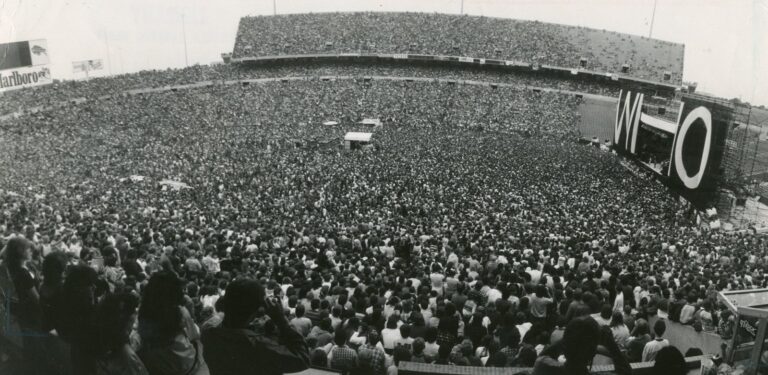
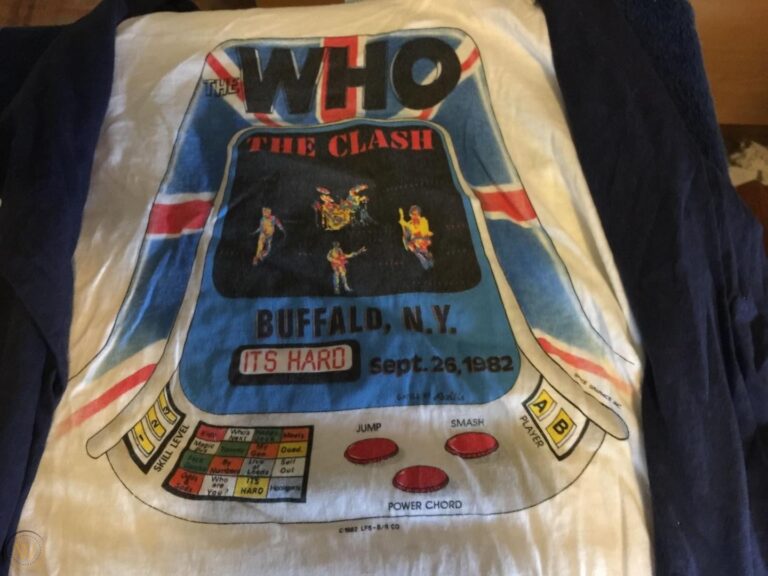
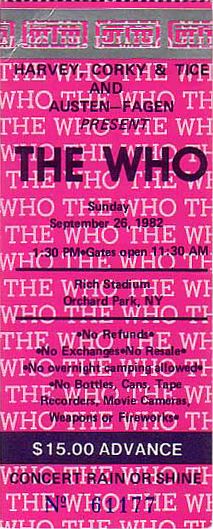
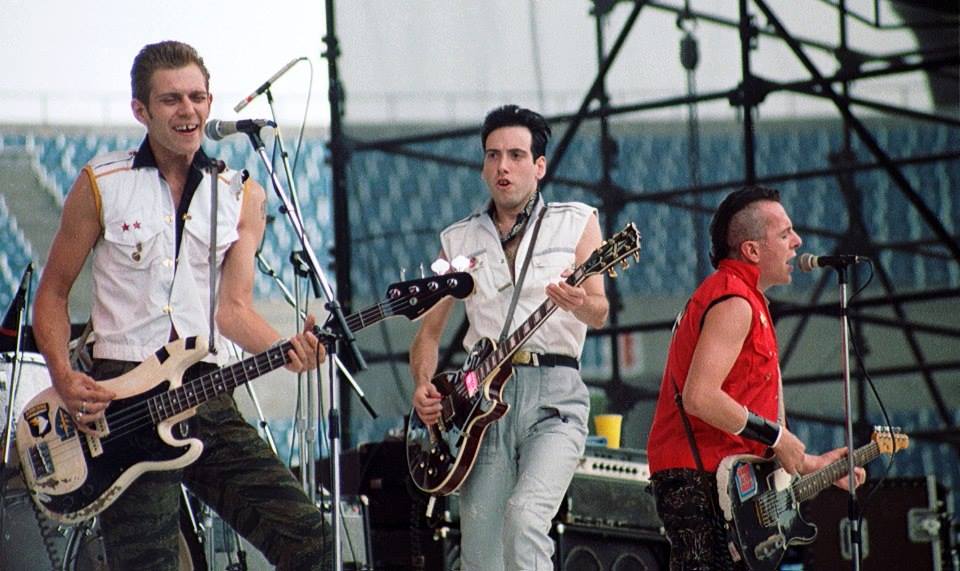
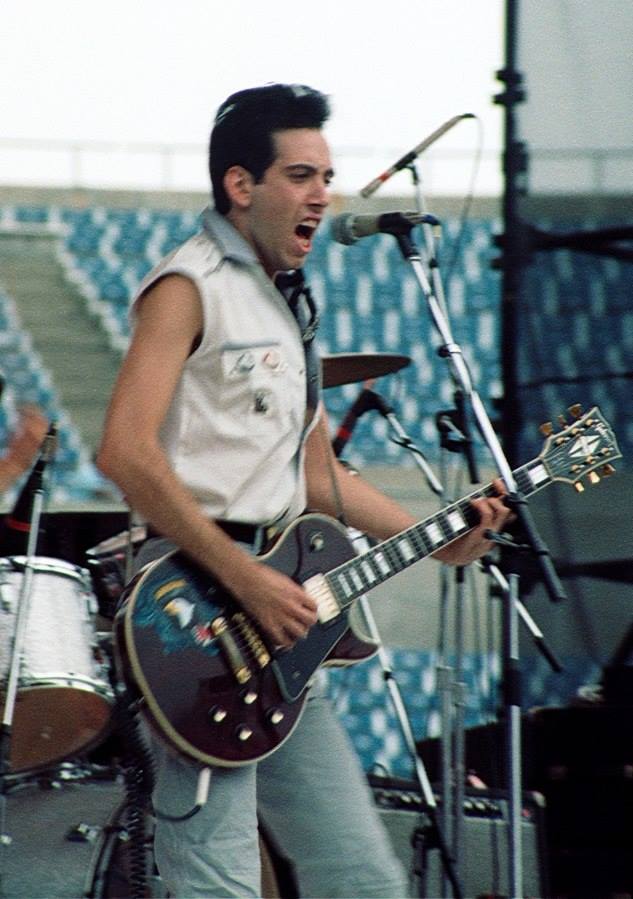
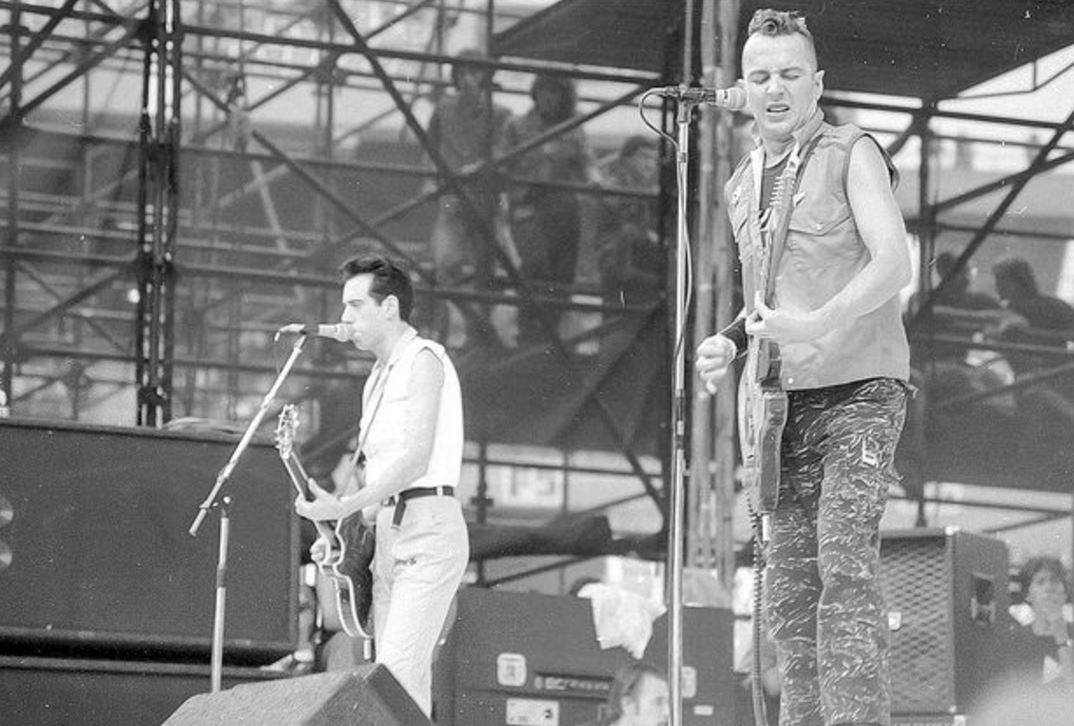
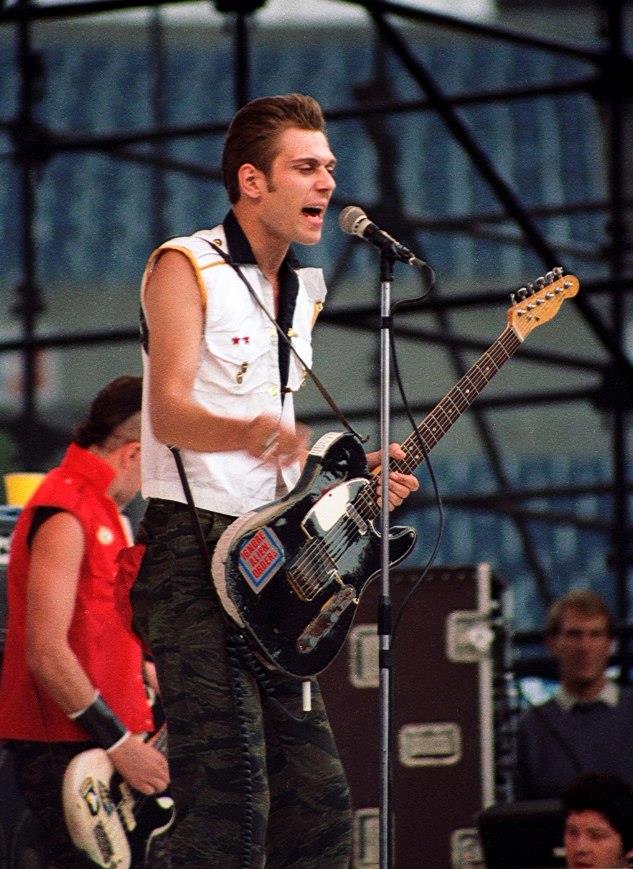
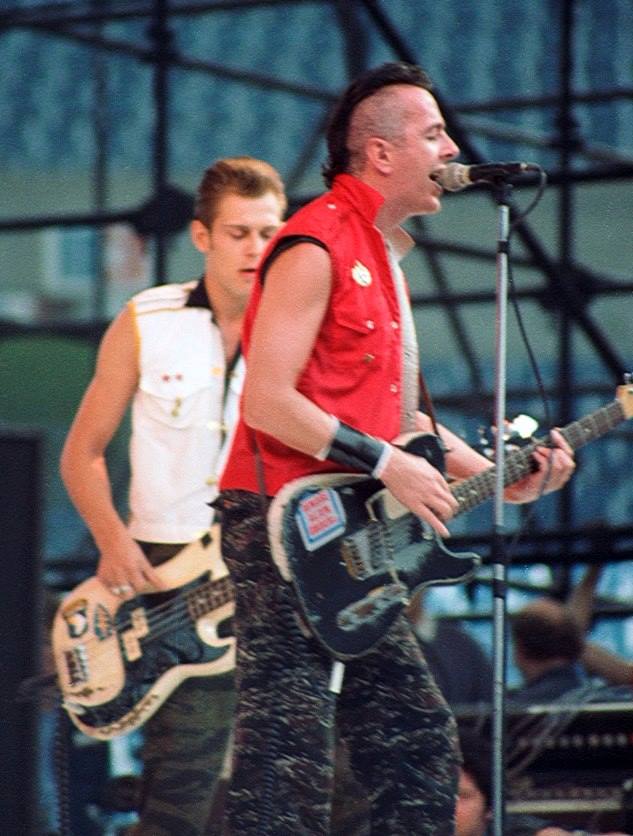
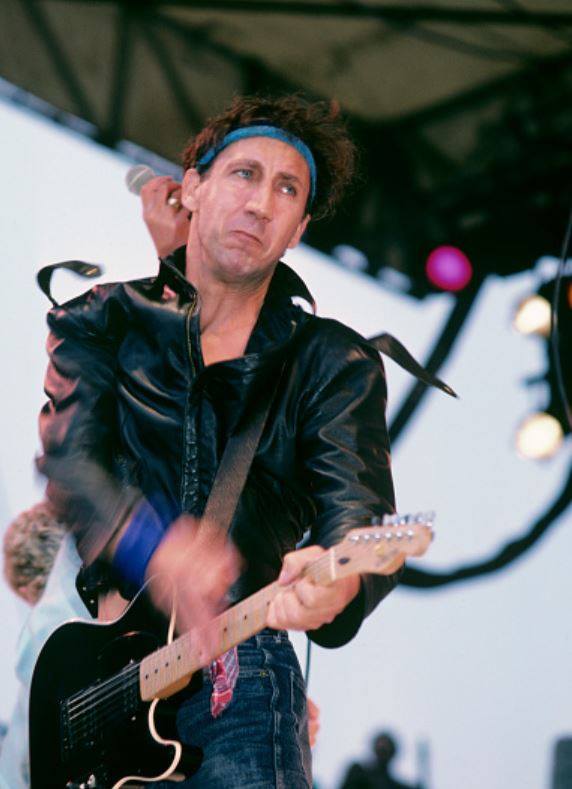
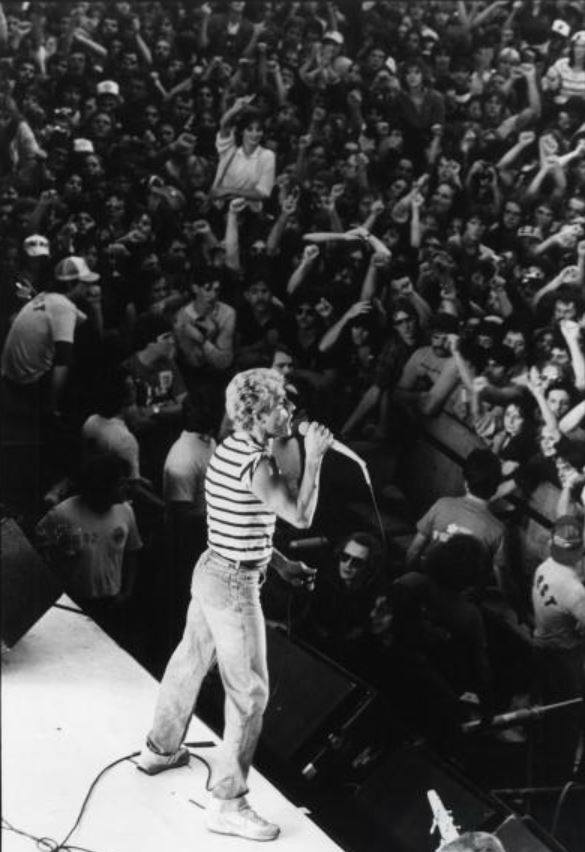
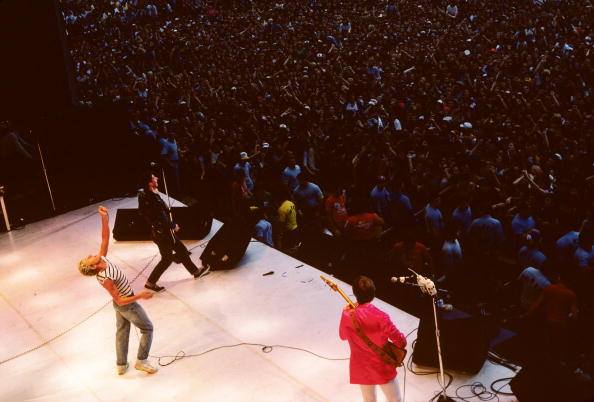
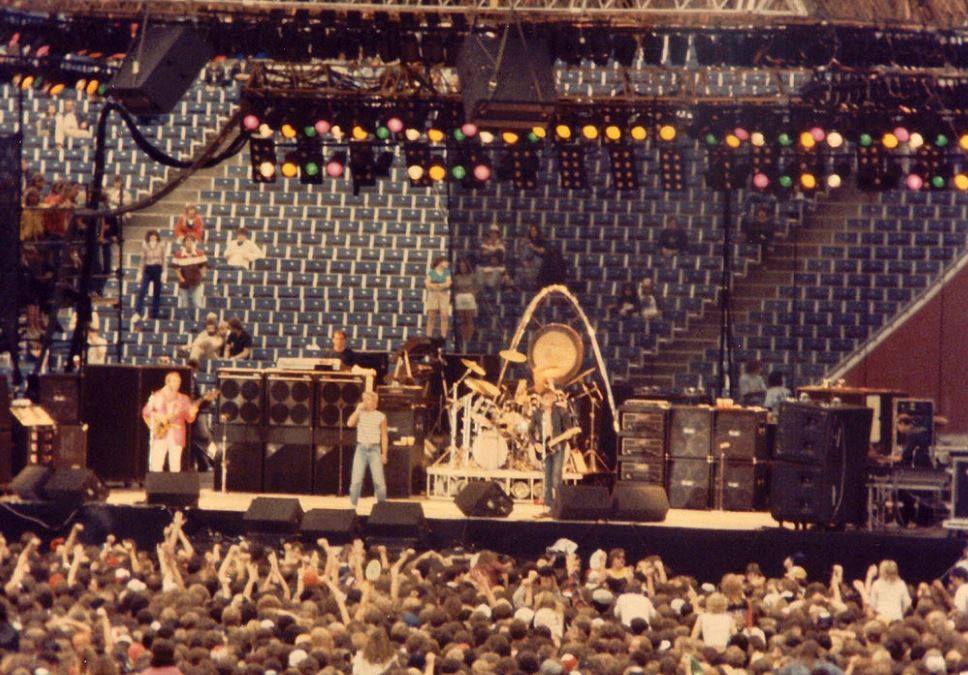
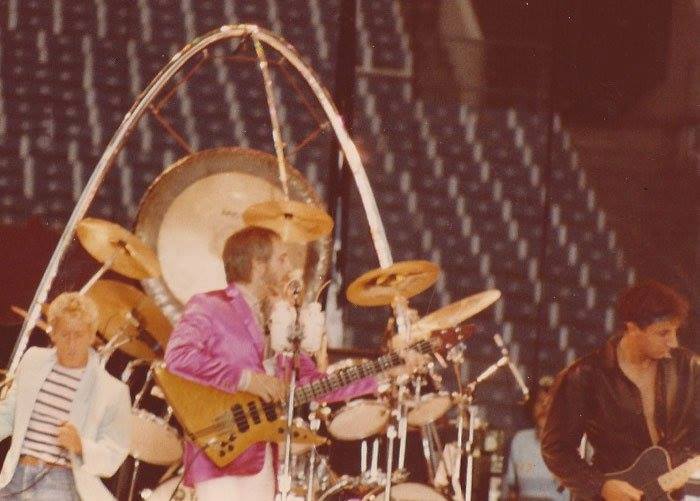
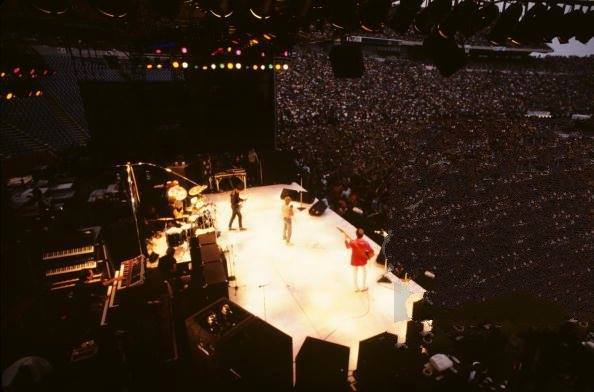
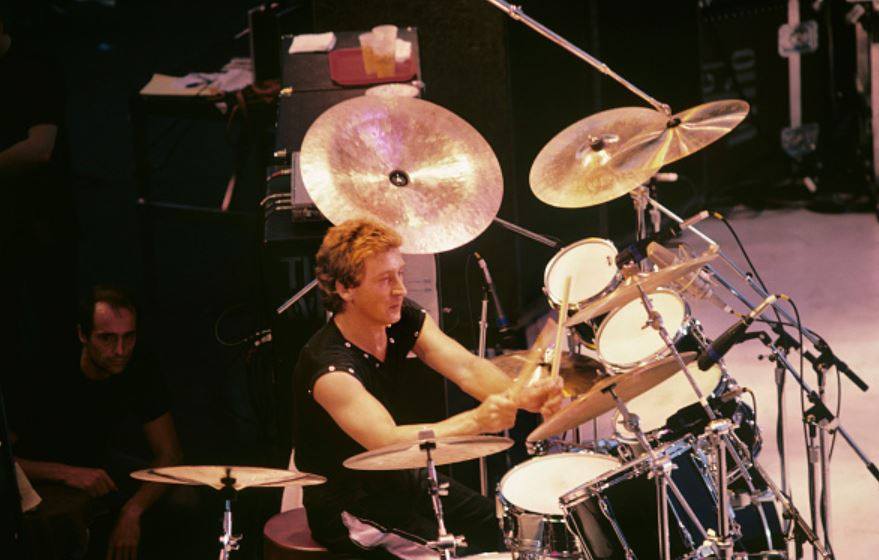
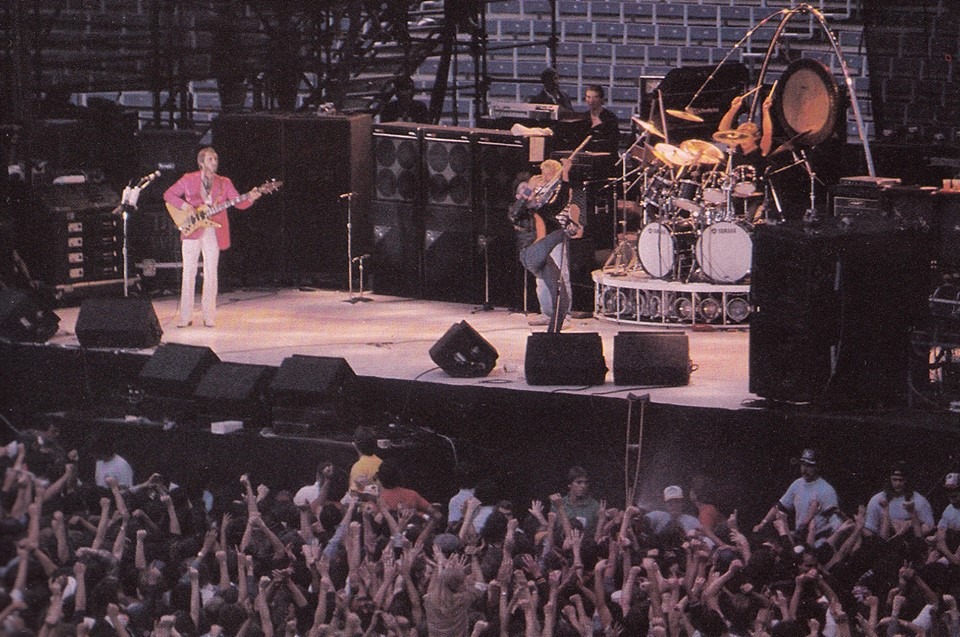
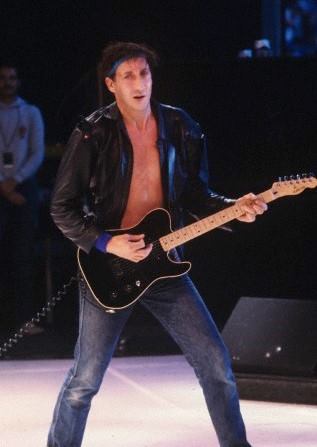
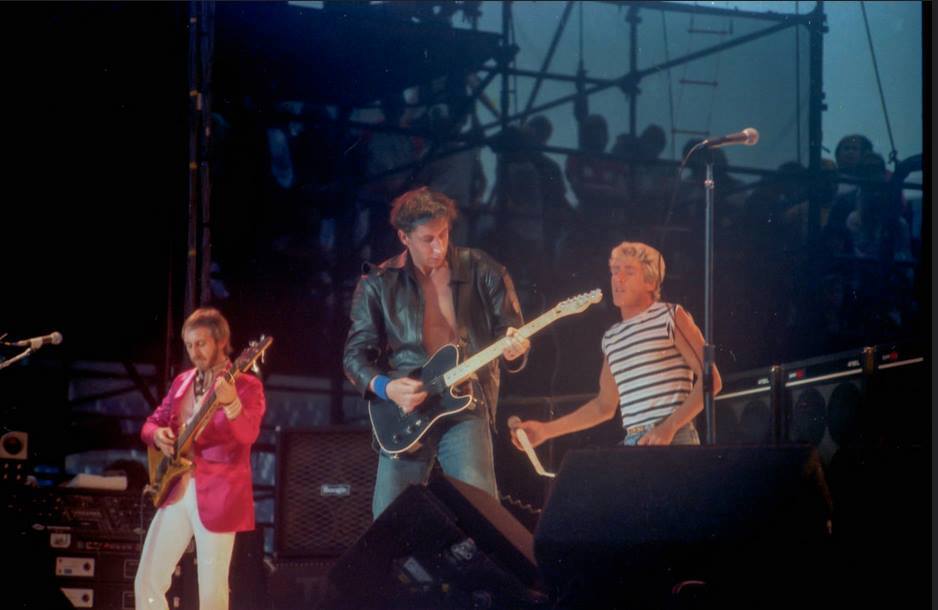
This concert is seen as an historical moment, where one older punk band, The Who, passed the torch to a new, younger one, The Clash.
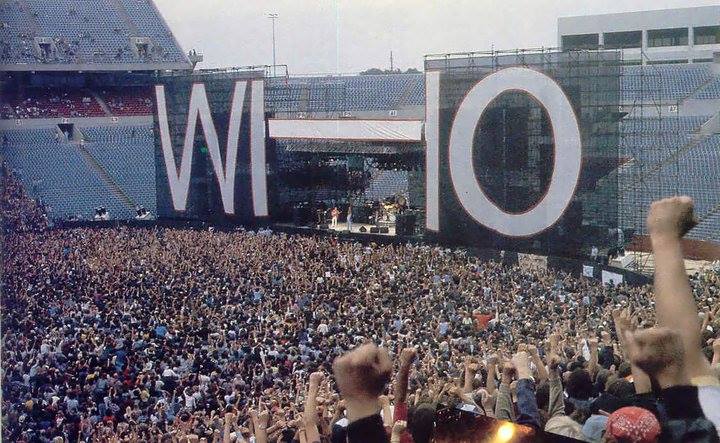
An expectadly rowdy crowd of more than 80,000 packed The Rich. David Johansen warmed up the crowd with a half-hour set, including “Stranded in the Jungle” and a medley of the Animals “We Gotta Get Out of This Place”, “Don’t Bring Me Down” and “It’s My Life.”
The Clash were just coming off the release of Combat Rock, recorded at Electric Lady Studios on West 8th Street in New York City. Hits including “Rock The Casbah,” which reached the Top 10 in America, and “Should I Stay Or Should I Go” gave The Clash a worldwide smash hit in 1982. Less than a year after this performance in Buffalo, guitarist Mick Jones would leave the band. Watch a slideshow of photos by Michael Mack of The Clash from the performance below.
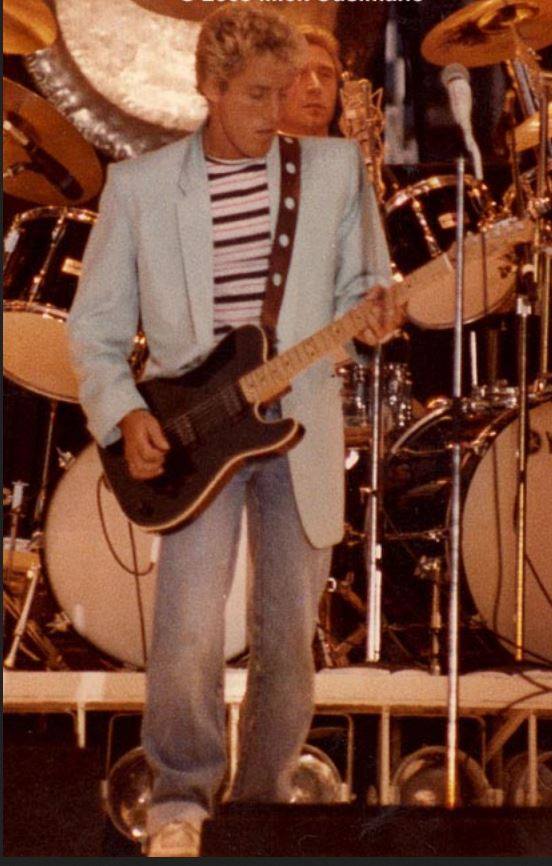
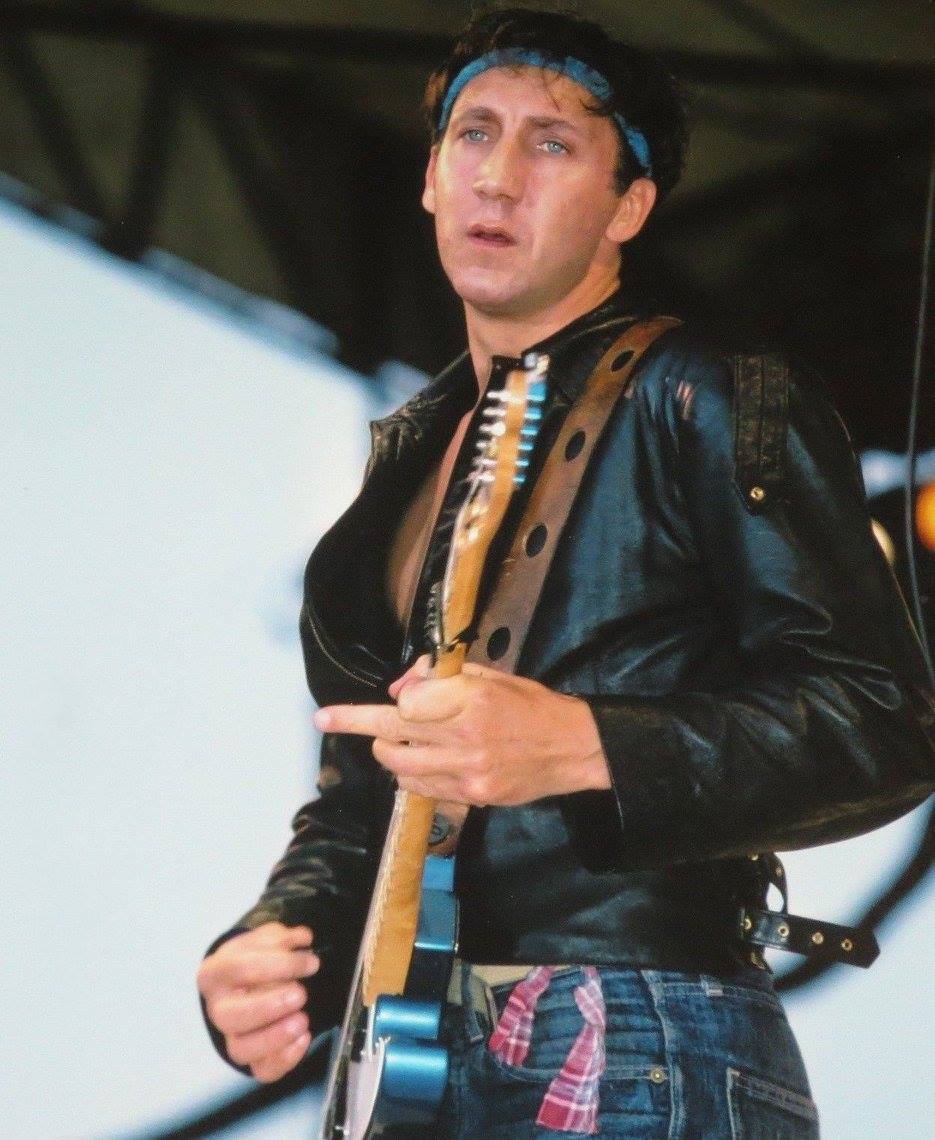
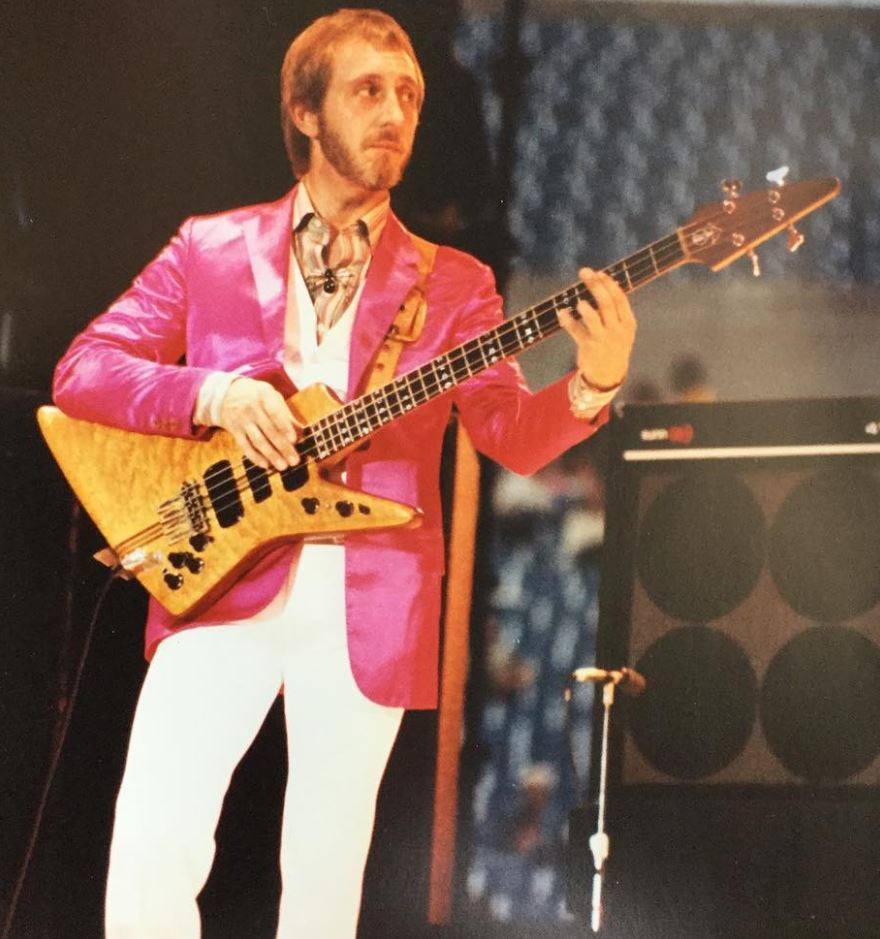
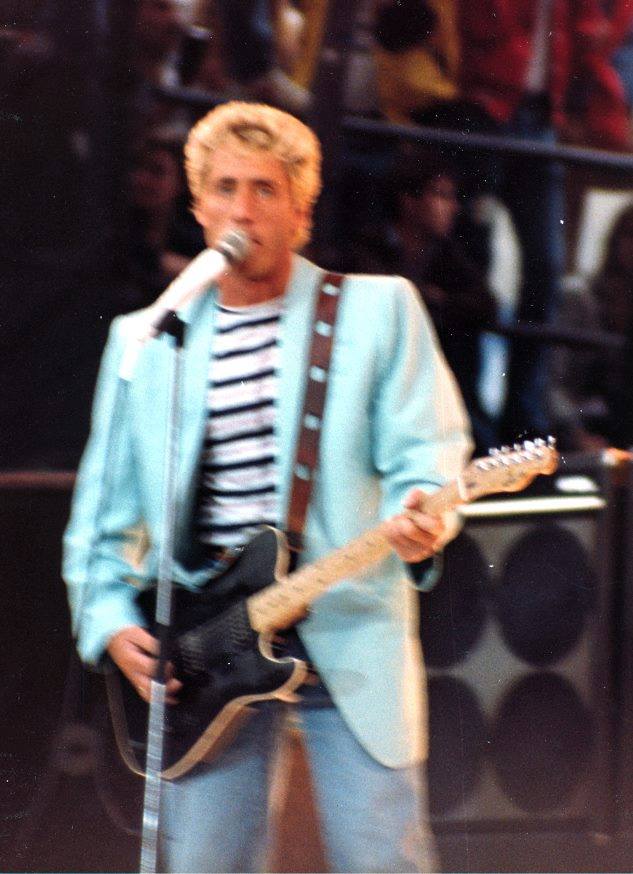
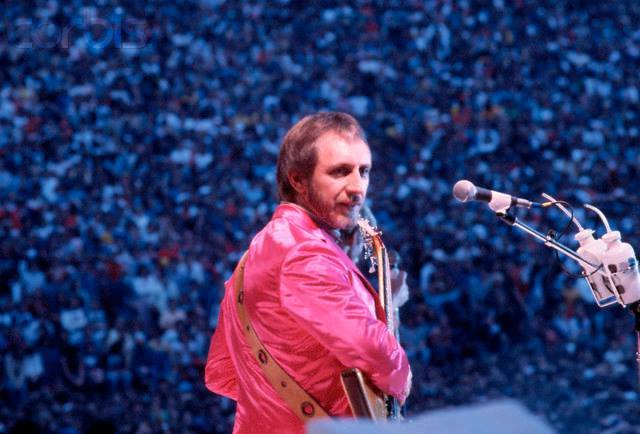
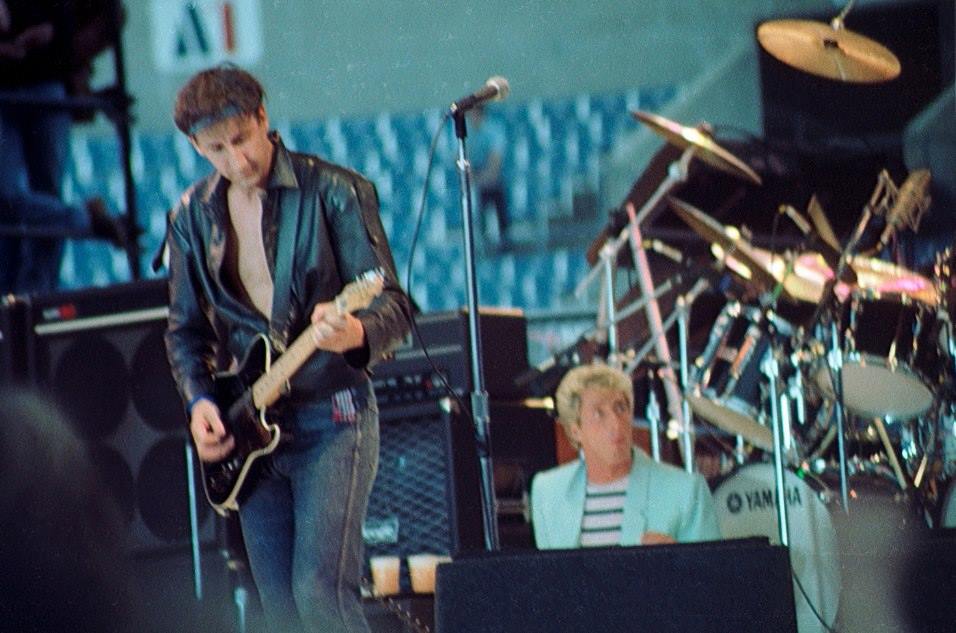
For The Who, this was the first of many farewell tours, having lost drummer Keith Moon just 4 years prior. Kenney Jones (Small Faces, Faces) took over behind the kit, with Tim Gorman on keys, Roger Daltrey on harmonica, guitar, and vocals, John Entwistle on bass and Pete Townshend on guitar and vocals.
Given the packed Rich Stadium – with entrances only on the floor at the time – the temperature inside the stadium was warm to say the least, with fans drenched in sweat, and some passing even out. As if Keith were looking down from heaven, the skies that were overcast all day opened up during the emotionally charged “Love Reign O’er Me,” the only time of the evening it would rain. As the song ended, Daltrey remarked “How’d you like that one?,” with Townshend saying “Even the Rolling Bones couldn’t have done that one.”
via Matthew Heimberg
While no video or audio exists from this show of The Who, you can view a slideshow of photos by Michael Mack here, and watch below for The Who from December 17, 1982, closing our their North American tour in Toronto, Ontario, Canada.
The Clash setlist: London Calling, Career Opportunities, The Guns of Brixton, Police On My Back, Rock the Casbah, Magnificent 7, Train in Vain, Brand New Cadillac, Armagideon Time, Should I Stay or Should I Go?
Encore: Clampdown, I Fought the Law
The Who setlist: Substitute, I Can’t Explain, Dangerous, Sister Disco, The Quiet One, It’s Hard, Eminence Front, Behind Blue Eyes, Baba O’Riley, I’m One, The Punk And The Godfather, Drowned, A Man Is A Man, Cry If You Want, Who Are You, Pinball Wizard, See Me Feel Me, 5.15, Love Reign O’er Me, Long Live Rock, Won’t Get Fooled Again
Encore: Naked Eye, Summertime Blues, Twist And Shout
Ringo Starr and His All-Star Band delivered a laid-back yet nostalgic performance at the OLG Stage, Fallsview Casino, on Sunday, September 22. With a notably early 7:05 pm start and a crowd whose average age hovered around 70, the evening had an easy-going vibe, more in tune with quiet reflection than raucous rock.
Yet, despite this atmosphere, the night offered plenty of memorable moments, capturing the essence of Ringo’s lifelong musicianship and his enduring charm. Ringo Starr was last in the area ten years ago at Artpark in Lewiston.
Ringo Starr
Ringo’s Enduring Presence
At 84 years old, Ringo Starr continues to be a magnetic stage presence. Alternating between vocals and his iconic spot behind the Ludwig drum kit, Ringo displayed both energy and humor. Early in the show, he quipped, “I guarantee everyone here will know at least one song, and if you don’t, I don’t know why you are here,” setting the tone for the night with his easy humor and rapport with the audience. His performance, while not flawless, was full of heart especially when he asked the band to restart “Boys” after making a mistake early in the song. It was a candid and endearing moment that underscored Ringo’s human touch, something fans have loved him for since his Beatles days.
Ringo Starr
A Setlist That Surprised
Though many came hoping for a set heavy with Beatles classics, the show took a different direction, giving room to the diverse talents of his All-Starr Band. Steve Lukather (Toto), Colin Hay (Men at Work), Warren Ham, Hamish Stuart (Average White Band), and Gregg Bissonette all had their moments to shine, playing a range of hits that leaned more on Toto and Average White Band than the Fab Four. This could have been a disappointment to purists, but for the seasoned crowd, it provided a fresh mix of classic rock and pop staples. Lukather’s precision on guitar and Hay’s vocals were particularly strong, bringing life to tracks like Toto’s “Africa” and Average White Band’s funky “Cut the Cake.” His usual keyboard player Edgar Winter was not seen on stage
In a playful twist, the band spiced up their performance of “Cut the Cake” by weaving in snippets of iconic songs like “We Will Rock You,” “Moby Dick,” and even Led Zeppelin’s “Immigrant Song,” which sent ripples of excitement through the audience.
A Lighter Touch of Beatles Magic
Beatles fans were rewarded with only four songs from Ringo’s original group, and while this might have been fewer than expected, each performance carried its own magic. “Yellow Submarine” and “Down Under” both invited sing-alongs from the crowd. These moments were cherished by the audience, even if they weren’t the show’s central focus.
The Venue and Atmosphere
The OLG Stage at Fallsview Casino, with its 5,000-person capacity, created an intimate atmosphere well-suited to the more laid-back energy of the evening. The audience, particularly those in the upper levels, stayed seated for most of the night. Some on the floor level were standing. There was a subdued but sense of nostalgia as people swayed and sang along to familiar tunes.
The stage production added a layer of subtle drama, with the use of haze and smoke enhancing the lighting effects. Heavy magenta tones dominated the palette, giving the stage a soft, ethereal glow. This visual element, though not overbearing (for non-photographers), helped elevate the mood and complemented the All-Starr Band’s dynamic performances.
Ringo Starr
Final Thoughts
Ringo Starr may be 84, but he’s still rocking. The show wasn’t just a nostalgic trip down memory lane; it was a testament to his enduring love for performing and his ability to bring together an eclectic group of musicians who each add their unique flair. While it wasn’t a Beatles-heavy evening, it was an enjoyable celebration of music’s timelessness. For the crowd of mostly older fans, it was a comfortable, cozy night spent with one of rock’s most beloved drummers.
If this performance was any indication, Ringo’s all-star band experiment is still going strong, as he continues to charm and entertain with humility and humor. Ringo’s final show of this tour will be in NYC on 9/25/2024.
Setlist: Matchbox, It Don’t Come Easy, Rosanna, Pick Up the Pieces, Down Under, Boys, I’m the Greatest, Yellow Submarine, Cut the Cake, Octopus’s Garden, Back Off Boogaloo, Overkill, Africa, Work to Do, I Wanna Be Your Man, Who Can It Be Now? Hold the Line, Photograph, With a Little Help From My Friends
On Friday, September 20, Brooklyn based female singing trio Say She She made a long-awaited stop at Lark Hall in Albany. Lead singers Piya Malik, Sabrina Mileo Cunningham, and Nya Gazelle Brown are all classical trained singers but come together to create disco-funk music.
Say She She gave a beautiful performance filled with songs that had all of Lark Hall following their dances. Their stage presence was captivating; from the audience we were able to see the band’s friendship on display.
During the show, Say She She gave a speech about the upcoming election making huge impact on many controversial laws. They invited Lark Hall to join them in promoting change by sending post cards addressed to their Representatives, begging for stricter gun laws. The band also spoke out on abortion laws and asked the audience to raise their hands along with them in support of anyone who has been harmed by these laws.
They then sang “Echo In The Chamber”a song they stated is the soundtrack to their campaign for better gun laws. The song features the heartfelt lyrics “Call the shots, make it stop, what’s it gonna take?” and “Just because you know who they are, doesn’t mean they bear you no harm.” The song resulted in a sea of hands raised in support and all of Lark Hall rushing to fill out postcards.
Indie rock fans flocked to the State Theatre in Ithaca on Tuesday, September 17 as Band of Horses wrapped up their summer tour with a performance in the picturesque town.
This show was a long time coming for fans of the Seattle rockers, as illness forced postponement of the originally scheduled show in February. The delay did not deter a strong contingent of fans from turning out, as the show was nearly sold-out.
The evening kicked off with a passionate performance from singer-songwriter Nolan Taylor. The Ohio native performed forty minutes of what he called “sad songs”. Taylor strummed an acoustic guitar and was flanked by friend and bandmate Clarke Sexton, also on guitar.
Taylor’s vocals soared through the theater, as he performed heartfelt tracks such as “Wicked Ways” and “68” the later of which oozed with emotion and previously served as the introduction to Taylor for many, when a video of him performing the track in the woods went viral last year.
After a brief set change over, the audience took their seats for Band of Horses. Singer Ben Bridwell took his place behind a pedal steel while his four band members gathered round. Bridwell began the opening strums of “Monsters”, a stand out track from the band’s 2006 debut release. The band would follow with “The First Song” and “The Great Salt Lake” all from their debut album, and serving as an impressive 1-2-3 punch to open the evening.
Bridwell and his band mates performed a set spanning the band’s 20 year career. Ballads like “Is There a Ghost” and No One’s Gonna Love You” brought the audience to their feet and illuminated the lower portion of the theater in cell phone lights, while “The Funeral” had the audience shouting the song’s anthemic chorus.
After a 17 song main set, the band returned to the stage for one final number; the rollicking, foot stomping “The General Specific”. The track saw the band calling members of their crew to the stage to join in on the fun, grabbing a hold of tambourines, cowbells, and what ever else could be used as a percussion instrument. It was a fun end to the evening in Ithaca, and a celebratory way to end a long tour for Band of Horses.
On September 19, the West Side Tennis Club welcomed Kings Of Leon to the borough of Queens with open arms on a picturesque Wednesday evening.
The 18th stop on their ”Can We Please Have Fun” summer tour, the indie rock quartet from Mount Juliet, Tennessee are touring in support of their ninth studio album of the same name, released on May 10.
Kings Of Leon | Photo Credit: Michael Dinger Photography
One of New York City’s best concert venues, indoors or out, Forest Hills Stadium is truly a gem with a rich, storied history that is now one year removed from its centennial anniversary. Originally designed in the early-1920s as the original home of the U.S. Open tennis tournament, the Romanesque stadium and its grounds hosted 60 editions of the major tournament before it moved to its current home in Flushing Meadows in 1978. Beginning in the 1960s, the tennis club began booking concerts and quickly attracted some of the most culturally significant artists of our generation, including The Beatles, Jimi Hendrix, The Rolling Stones and Bob Dylan.
In August 2013, after decades of neglect and narrowly escaping demolition, the 14,000-capacity facility re-opened with Mumford & Sons performing the inaugural concert (my wife and I were there!). Not yet satisfied with their face lift, over the next few years, Forest Hills Stadium underwent multi-million dollar state-of-the-art renovations including optimized acoustics, the installation of a permanent stage and redesigning and expanding the concourse to twice its original size.
Forest Hills Stadium | Photo Credit: Michael Dinger Photography
Providing opening support for Kings Of Leon on this 28-date tour of North America, which launched in Austin, Texas on August 14, was Phantogram. Formed in 2007 and hailing from Saratoga Springs, just a few hours’ drive up the NY State Thruway, the electronic dream pop duo are comprised of multi-instrumentalists and vocalists Sarah Barthel and Josh Carter. Friends since their preschool days, Barthel and Carter were joined by a touring drummer and keyboardist as they mesmerized the steadily growing audience filling up the stadium with their swirling guitars, spacey keyboards and airy vocals.
Over the course of 40 minutes, Phantogram presented a 10–song set spread evenly across their soon-to-be five album discography, including their opening song “Don’t Move” from Nightlife, an EP released in 2011. Their fifth studio album, Memory of a Day, is scheduled to drop on October 18 via Neon Gold. The 12-track LP is preceded by lead singles “All A Mystery” and “Happy Again,” both of which were performed live onstage as if they were already classics in their storied repertoire.
Phantogram | Photo Credit: Michael Dinger Photography
Barthel and her hypnotically engaging lyrics were perfectly complimented by Carter’s atmospheric guitar work (who was sporting another one of his signature baseball hats, this time with “NY” fittingly represented) and mastery of his beat sequencing machinery, for a captivating, dreamy set. Stand-out numbers from Phantogram’s trip hop setlist were “Fall in Love” and “Black Out Days,” released more than a decade ago on their sophomore studio album Voices.
As the night’s festivities continued to move briskly along to comply with the strict 10:00 pm curfew (an effort implemented in April by the State Supreme Court order to appease residents in the surrounding neighborhood), I secured my position back in front of the mixing soundboard and readied my camera. The sun having completely set, Kings Of Leon took the stage at 7:45 pm, led by frontman Caleb Followill. As “Ballerina Radio” got underway, the lead track from Can We Please Have Fun, brothers Nathan (drums) and Jared (bass), along with cousin Matthew (lead guitar), suddenly appeared from the dark shadows. Accompanied by touring musicians Liam O’Neil (keyboards, percussion) – who was also celebrating his birthday – and Timothy Deaux (rhythm guitar, keyboards), it was ‘Game On!’
Kings Of Leon | Photo Credit: Michael Dinger Photography
Formed in 1999, the gritty, garage rock sound that Kings Of Leon embodies has been compared to that of Manhattan’s very own The Strokes, intermixed with blues boogie vibes reminiscent of Lynyrd Skynyrd for good measure. The entirety of Kings of Leon’s impressive catalog, now going on more than two decades, was represented in Queens this hump day by at least one track, with Can We Please Have Fun getting the strongest representation (six numbers in total), an album reminiscent of their innovative, early career recordings.
Having never seen Kings Of Leon perform live, the song I wanted to witness firsthand, above any other, was “Sex on Fire” (Only by the Night, 2008). Well, I did not have to wait very long, because my wish was granted one-third of the way into their set! After that, everything else was gravy.
Kings Of Leon | Photo Credit: Michael Dinger Photography
Since I am not someone who checks out setlist.fm or does extensive research ahead of a band’s gig, because I like the element of surprise, I did not know that on this tour Kings Of Leon have been setting aside ‘one-off’ numbers not performed at other shows on the same tour, affectionately known as “song for the city.”
This is the point of the evening where we play a special song just for you. No one else gets to hear it on the tour. In fact, not many other people have ever heard it. So, uh, we’re gonna give it to you tonight for your song for the city. This song was written in New York, and it’s about New York. This is “The Face” [second ever performance and first since 2014].
Caleb Followill
Being only my fifth show at Forest Hills Stadium . . . in addition to Mumford and Sons in 2013, I saw them again in 2016, along with Beck and Cage the Elephant (2019) and Weezer (2023), like the others, tonight’s show was just about fun, enjoying yourself and/or who you were with, and forgetting about life for at least a little while. Aside from stellar musical offerings from both Phantogram and Kings Of Leon, the stage design was visually stunning and the balloon rainstorm during the encore was the cherry on top to a glorious night.
Watch Kings Of Leon conclude their epic, 26-song set with the anthemic “Use Somebody,” from Only by the Night, here:
With just 10 more shows to go on the tour over the next couple of weeks, what lies next for these Southern gentlemen – outside of a much needed break from the road – is still a mystery. Regardless of future plan announcements or details about their next project, eager anticipation by their legion of fans is sure to ensue.
Phantogram Setlist: Don’t Move > Fall in Love > Pedestal > All a Mystery > Cruel World > Mr Impossible > Happy Again > Answer > Black Out Days > When I’m Small
Kings Of Leon Setlist: Ballerina Radio > The Bucket > The Bandit > On Call > Nowhere to Run > Manhattan > Razz > My Party > Sex on Fire > Revelry > Beautiful War > The Face > Supersoaker > M Television > Back Down South > WALLS > Pyro > Mustang > Molly’s Chambers > Waste a Moment > Find Me > Seen > Closer > Encore: Rainbow Ball > Knocked Up > Use Somebody
UPCOMING TOUR DATES
September 20 – Washington, DC @ The Anthem
September 22 – Washington, DC @ The Anthem
September 23 – Philadelphia, PA @ Mann Center for the Performing Arts
September 25 – Atlanta, GA @ State Farm Arena
September 26 – Nashville, TN @ Bridgestone Arena
September 28 – Chicago, IL @ Huntington Bank Pavilion at Northerly Island
October 1 – Toronto, ON @ Budweiser Stage
October 2 – Laval, QC @ Place Bell
October 5 – Bridgeport, CT @ Hartford HealthCare Amphitheater
Under the Saturday night stars on September 14, Austin Richard Post – a.k.a. Post Malone – delivered an unforgettable barefoot performance, a hometown show in Syracuse.
The sold-out crowd filled the Empower Federal Credit Union at Lakeview Amphitheatre with energy, creating an electric atmosphere for Post fans. Dan Spencer and Muscadine Bloodline opened the Syracuse F-1 Trillion tour stop.
Post is just a few dates in to his much-anticipated F-1 Trillion tour in support of his new crossover country album. Captivating the hometown fans with a setlist that balanced his chart-topping hits and brand new sound. Songs like âCirclesâ and âRockstarâ resonated through the air, while his new material like his duet with Luke Combs, “Guy For That” showcased his artistic evolution and versatility.
Until the age of 10 Post was living in Baldwinsville with his family until his dad was offered a position with the Dallas Cowboys. Residing in Utah now, currently the family does still have a home in Baldwinsville.
A standout feature of the night was a Post wearing an Otto the Orange shirt performing barefoot. Opening the show with the song “Wrong Ones” from his new F-1 Trillion album. Impressive stage production, highlighted with striking pyro effects ignited certain songs with explosive energy. Bringing the stage to life from his older rap hits to his newer country twang – Post really proved he truly is a Rockstar.
The new Post Era includes songs like “Yours” which is about being a girl dad and how it has changed his life.
Adding to the experience was the display of the iconic truck from his music video, Throughout the night, Post Malone took the time to connect with the audience, expressing genuine appreciation for their support.
Syracuse fans echoed the energy and showed Post he always has a place here at home. As he thanked the crowd multiple times for their energy and support, it was clear that this night would be cherished by all who were lucky enough to attend. After the final notes faded, Post jumped into the pit, taking the time to sign autographs and hug fans, further solidifying his reputation as a good guy. Those lucky enough to meet him remarked on his kindness and authenticity, a testament to his character beyond the stage.
With heartfelt gratitude and unforgettable moments, Post Malone once again proved why he is one of the most humble, iconic and loved artists of our time.
Catch Post again in New York at Saratoga Performing Arts Center on Monday, September 23 with Jelly Roll.
Post Malone – Empower Federal Credit Union at Lakeview Amphitheatre, Syracuse, NY – Saturday, September 14, 2024
Setlist: Wrong Ones, Finer Things, Circles, What Don’t Belong to Me, Guy For That, Chemical, California Sober, M-E-X-I-C-O, Candy Paint, Fallin In Love, Who Needs You, Two Hearts, Stay, I Fall Apart, Better Now, Psycho, Losers, Yours, White Iverson, Aint How It Ends, Go To Hell, Had Some Help, rockstar, Congratulations Encore: Sunflower
Outernational was on the Lower East Side under the Williamsburg Bridge at a makeshift staging area on Tuesday, September 17. Myles Solay, the band’s lead singer had reached out and asked if NYS Music could document their secret pop up show taking place on top of a flatbed truck, while driving around the Lower East side for a few hours.
Outernational pop up show in the Lower East Side September 17th, 2024
With no permit in sight and help from the folks of First Live who rigged up the truck in a true DIY fashion, everything was set for a 3pm departure. Chad Smith (of The Red Hot Chili Peppers) rolled in around 2:50pm, and with no soundcheck, took his place at the kit and drove off to the first location.
The route included stops at various staples like the Joe Strummer mural in front of Niagara on Avenue A, Union Square, Tompkins Square Park, McDougal Street, and a layover stop at Heaven Can Wait to say hello to Jesse Malin and his crew, dedicating a few songs to him. After a few rounds about Washington Square Park, the mobile pop up show ended on Bleeker Street at Village Revival Records.
After the final few songs in front of Revival the band hopped off the truck, vinyls in tow for a meet and greet and record signing with fans inside the store.
The new release Welcome To The Revolution was produced by Myles and Chad Smith, and was released on September 13 this year. The band is set to play two record release shows with special guest Chad Smith sitting in on drums at both.
On Thursday September 19, they play (le) poisson rouge in New York and the second show is in Los Angeles on September 28.