On Friday, December 6, Smokey Robinson graced the stage at Newark’s New Jersey Performing Arts Center (NJPAC) as part of his ongoing Legacy tour. The evening was filled with musical nostalgia, heartfelt storytelling, and timeless artistry that captivated the audience throughout.
A Legacy in Motion
The evening began with Smokey delivering an impeccable rendition of Being With You. The opening chords set the tone for a night filled with love, soul, and connection. Midway through the second song, the legendary singer melted hearts by bringing his infant great-nephew onstage. As he crooned Second That Emotion and You’ve Really Got a Hold on Me to the baby, the audience erupted in applause, charmed by the intimate family moment.
Highlights of the Evening
Smokey’s performances of Quiet Storm and the iconic Ooo Baby Baby stood out as unforgettable moments. The emotional delivery of Ooo Baby Baby brought the audience to their feet for a five-minute standing ovation. Clearly touched, Smokey expressed his gratitude, his voice trembling with emotion. The moment showcased his remarkable ability to forge a deep and personal connection with his fans, even after decades in the spotlight.
Introducing Gasms
Smokey took a moment to discuss his latest album, Gasms, expressing surprise at its success. “I was only supposed to release one single,” he shared with a grin, “but there are already four!” He performed two tracks from the album, I Wanna Know Your Body and How You Make Me Feel, which showcased his ability to blend sensuality with sophistication, proving that his creativity remains as vibrant as ever.
Closing the Night
For the encore, Smokey pulled out all the stops. He sang Just to See Her and Tracks of My Tears, prompting a wave of nostalgia that swept through the theater. The evening ended with an interactive performance of Cruisin’. Smokey invited two women from the audience on stage, assigning them each a section of the crowd to see who could sing the loudest. The playful competition filled the hall with energy and joy, capping off an unforgettable night.
Looking Ahead
Smokey Robinson’s Legacy tour continues to enchant audiences, with upcoming dates spanning the United States, Canada, and even the United Kingdom. Highlights include performances at The Paramount in Huntington (March 6, 2025), and The Capitol Theatre in Port Chester (May 31, 2025), before concluding at the Love Supreme Festival in the UK in July.
At NJPAC, Smokey Robinson reminded everyone why his legacy endures. It wasn’t just the hits or the new material but the warmth and humanity he brought to the stage. This concert wasn’t just a trip down memory lane—it was a celebration of a living legend still at the height of his powers.
For fans who have yet to experience this extraordinary tour, Smokey Robinson’s Legacy is not to be missed.
Setlist: Being With You, I Second That Emotion, Really Got A Hold On Me, Quiet Storm, Temptations Melody, Gasms, OOO Baby Baby, Fly Me To The Moon, I Love Your Face, How You Make Me Feel, I Wanna Know Your Body, Just To See Her, Tracks Of My Tears, Cruisin’
On December 7, Lespecial brought their genre-defying prog-rock energy to Albany’s Lark Hall for a night of unforgettable music.
The evening kicked off with a lively performance from Timbre Coup, the Capital Region-based jam/prog-rock foursome. With plenty of local supporters in the crowd, the band’s energetic set got the audience primed for Lespecial to take the stage. Their engaging performance left an impression, and fans should keep an eye on their Facebook page for future shows.
Timbre Coup setlist: Firestorm, August, 55, Arnold Schwartzeneggar, HTRAB, Machine Head (Bush cover), January
Lespecial, a prog-tronic power trio took the stage with their signature sound that defies expectations. With each member contributing vocals and synths in addition to guitar, drums, and bass, their music filled the room with a robust energy that was hard to believe came from just three people. Seamlessly blending genres, the band moved effortlessly from smooth, swaying jams to heavier riffs that had the crowd headbanging in unison.
The band made several references to an incident after the previous night’s show in Syracuse, where their van was broken into, and bass guitars, along with Luke and Rory’s luggage, were stolen. Despite the setback, bassist Luke Bemand powered through with help from his trusty Ibanez Soundgear bass, which he hadn’t used in years, while both musicians rocked Lespecial merch as an improvised wardrobe solution.
As the set approached its finale, drummer Rory (check out his Primus audition reel) delivered a jaw-dropping solo while the other band members took a short break to prepare for the final songs. The crowd was left in awe of his stellar performance, capping off an unforgettable night of progressive rock brilliance. Exiting the warmth of Lark Hall, concertgoers were greeted by a steady snowstorm blanketing the streets—a fitting end to a night that will be remembered for its electrifying energy and unique challenges, both on and off the stage.
lespecial – Lark Hall, Albany – Saturday, December 7, 2024
Setlist: Repeater, Machine Elf, Snell’s Fleet, First Light, Rays, Divider, Bitch Don’t Kill My Dub (Kendrick Lamar cover), Disassociate, Fruit Wolf Dance, Orb, Vessel, GDH3, Unearthed, Drums, Thela Hun Ginjeet (King Crimson cover), Lungs of the Planet
If you want to rave to a collection of saxophones and woodwinds, then Moon Hooch is the band for you. Yes it’s weird, yes it’s wild, and yes it’s a fun show to dance to.
Moon Hooch at Bowery Ballroom 12.7, Photo Credit: Aidan Lukomnik
On Saturday, December 7, Moon Hooch brought their energetic mix of Jazz and Electronic music to Bowery Ballroom in downtown Manhattan.
A truly New York sound, Moon Hooch was born when Michael Wilbur (Horns, woodwind, vocals), Wenzl Mcgowen (Horns, woodwind, synth), and James Muschler (original drummer) met at The New School. The band, now with Cyzon Griffin on drums, started playing together as buskers across the city. Often playing in the subway, Moon Hooch was banned from the Bedford Ave L station for bringing in crowds that were dangerously large.
Audience Member; Photo Credit: Aidan Lukomnik
That history of busking can be heard in their music, as the trio at times evokes the guttural sounds of an oncoming train paired with high-pitched notes reminiscent of a closing subway door. They even use found objects, like a traffic cone, on stage as a mute to alter their sound.
Photo Credit: Aidan Lukomnik
On December 7, COFRESI opened for Moon Hooch. The drummer and beatmaker brought together modern techniques (looping, drops, Trap and Dancehall melodies) with samples from hits like, “Ain’t No Sunshine,” “Stand By Me,” “Mr Sandman,” and “It’s Tricky” to create a sound all his own.
COFRESI Photo Credit: Aidan Lukomik
As Moon Hooch took the stage, audience members head banged, grinded, and jumped up and down – emphasizing how many different musical sub-cultures came out to see the band.
The band’s physicality is impressive, as Michael Wilbur and Wenzl Mcgowen dance throughout a set that’s over an hour while Cyzon Griffin’s rapid drumming holds down the beat. Throughout the set there wasn’t an idle monument with high energy songs one after another, only rarely bringing in classical music phrases to give the audience a breather before the beat drop.
Photo Credit: Aidan Lukomnik
At the same time, that lack of idleness has its own drawbacks. After a while, songs in the set started to run together with limited ability to determine where one song stops and the other begins. This run-on of songs was exacerbated by similar musical motifs and almost identical lighting cues that could cause a listener Deja Vu. While the band sometimes threw their hands up to engage the audience, they never stopped to talk to the crowd. Better performance pacing, verbal engagement with the crowd, and breaks between songs would do the band well.
Photo Credit: Aidan Lukomnik
On this tour the band isn’t just bringing their relentless energy, they’re also trying to do good. At each city, the band is auctioning off a (small) tree and giving away all of the proceeds to replant trees across the country. In NYC they also worked with Support and Feed – a food equity organization that works to address challenges in food desserts and provide information on plant-based food.
1995 was a year that defined the 1990s. Michael Jordan came out of retirement to return to the game of basketball. OJ Simpson’s verdict was “Not Guilty.” TLC encouraged listeners to stop chasing waterfalls. Pixar changed the future of animated films with the release of Toy Story. And if you were in the jamband music scene, you experienced a seismic shift in the atmosphere.
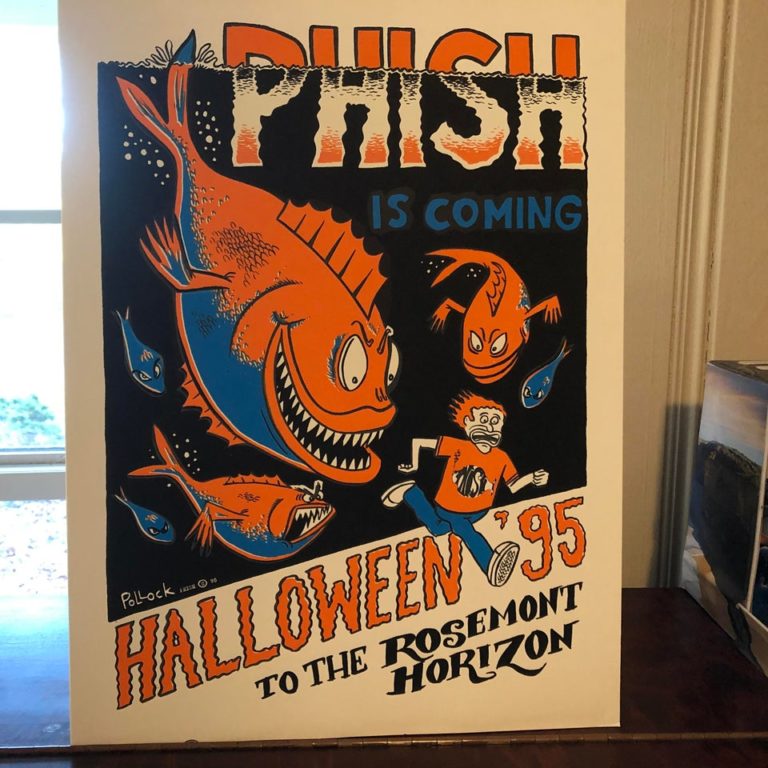
Just 49 days after Jerry Garcia passed on August 9, Phish kicked off a massive 1995 Fall Tour in the guitarist’s home state of California. The Vermont foursome played more than 50 shows through December, hitting over 30 states and making a pitstop in Canada. Fans will argue over the best shows (or even best month) during this transformative time period, but most are in agreement that The Who’s Quadrophenia Halloween show in Rosemont, Illinois was a career-defining moment for one of the year’s top-grossing acts just half-way through the megatour.
Official poster for 10/31/95 by Jim Pollock
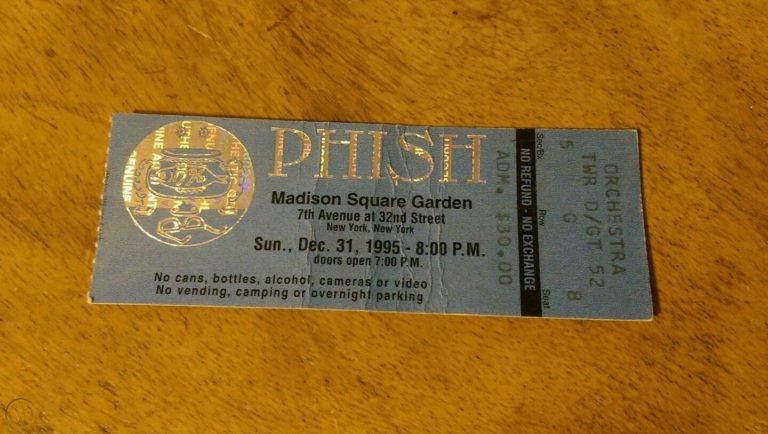
As the rising stars ripped through the frigid Northeast in December, they were only getting hotter in their raunchy, rock-forward, improvisational playing and it all culminated on Sunday, December 31, 1995 at New York’s Madison Square Garden. The date marked the third time Phish would play “The World’s Most Famous Arena,” but the first time they would sell it out for New Year’s Eve. From the 12/29/95 Worchester show to the 12/30/95 opening night at the Garden, it was hard to imagine how the well-polished act would continue getting better night after night, but Phish is always poised to shock the brain.
There was and always will be a special energy when you see Phish’s name in big bright letters on the midtown Manhattan marquee. As Jon Fishman’s father so eloquently put it, he realized his son had “made it” after the band played their first performance to a capacity NYC crowd on 12/30/1994. As fans anxiously anticipated the first note of the last show of 1995, they were greeted by their hungry party hosts with the first-ever, one-two punch of “Punch You in the Eye” and “Sloth.” It was a high-energy attempt to sonically bottle the energy of the 1995 Fall Tour and to kick off a show considered by Rolling Stone as “one of the best live performances of the ’90s.”
Flip to page 824 of the 2nd Edition of The Phish Companion, and you’ll find that five of the songs performed that night are considered some of the “best versions ever.” With a fiery first set “Reba,” the second set’s “Runaway Jim” and closer of “Mike’s Song” to introduce the Gamehendge Time Factor laboratory loop, and the unfinished and unhinged “Weekapaug Groove” from Set III with a “YEM” to top it all off, Phish had made a statement—not only in their community—but in the history of live music. They showed the world what fans had been trying to say for over a decade. They were not just a talented, pot-smoking cover band from Vermont, although they did have the chops to cover and expand upon some of the most highly regarded artists in the rock genre. Any band can cover a popular song to get a reaction from the crowd, but Phish reinvents the music they love, and one example of this is their nod to The Who in Set II’s “Drowned” > “Lizards” opener. Not only did the band double the length of the Quadrophenia studio version, but they interweaved the Grateful Dead’s “Fire on the Mountain” to pay tribute to a band that had sold out six shows at the Garden just 14 months prior. Look past the epic jams, the tribute to legendary rock bands, the New Year’s Eve shenanigans, and the three-set masterpiece performance, and you will find a band on stage that wants fans to get their money’s worth – Phish at their core.
The 1995 New Year’s Eve performance was a launchpad for great things to come. 1996 was the year Phish released one of their greatest studio albums in Billy Breathes; they created a blueprint for music festivals by welcoming 70,000 fans to North America’s largest concert event of the summer, The Clifford Ball; brought their unique sound across Europe; dressed up as The Talking Heads for Remain in Light on Halloween; and claimed the throne as the most popular jamband of the 1990s. And they were just getting started.
But the purpose of this piece was never to recap one of the greatest shows in Phishtory, that has been dozens of times before. I’m here to tell you why it sparked a new generation of Phish fans nearly 10 years later.
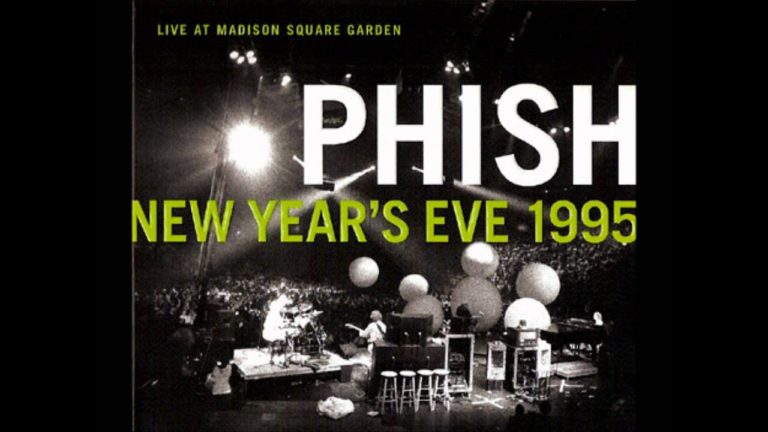
This is the story of the New Year’s Eve 1995 – Live at Madison Square Garden, the official album release.
If you were in high school during the early 2000s, you had limited ability to enjoy Phish like your cooler, older family members (or maybe even parents). With the first hiatus in 2002 followed by the official farewell in 2004, it felt like maybe you just weren’t cut out to go on a full summer tour with your future college buddies like you dreamed about sitting in Earth Science, doodling pictures of ugly pigs in your notebook.
The internet was starting to get better, but looked nothing like what it does today in 2020. We didn’t have smartphones for Spotify, LivePhish, 4K professionally shot footage, or a girthy YouTube catalog of Vermont’s greatest rock band. You could risk destroying your family’s Gateway or Dell PC by downloading Phish shows from Limewire or Napster, but a lot of them were low quality, poorly recorded, or not even actually Phish (see their “Gin & Juice” cover) and took days to transfer. Apple iPods were expensive, and the use of .mp3s was becoming more common for those somewhat technologically-advanced, but didn’t completely take over until later that decade.
We did have CDs.
Before 2005, the year I graduated high school, the only officially-released Phish shows you would find in retail record stores were Slip Stitch and Pass, A Live One, Hampton Comes Alive, and drips and drabs of the 20-set LivePhish series. If you were lucky enough to have an older friend or family member serve as a Phish mentor, you could scrounge up hand-me-down, fan-traded tapes and CDs by the dozen, but if you had no path to follow besides seeing the band at SPAC in 2004, you were shit out of luck trying to level up from “noob” status in Upstate NY.
This all changed during the holiday season of 2005, when the retired jam band released New Year’s Eve 1995: Live from Madison Square Garden. At the time, the global Phish community was still mourning the loss of their fallen heroes much like the Deadheads of December 1995. The band members were still touring, and I was lucky enough to catch Page McConnell sit in with Trey Ananastio Band at Roseland Ballroom as a college freshman in NYC. That was NOT the Phish experience I had been dreaming about throughout high school.
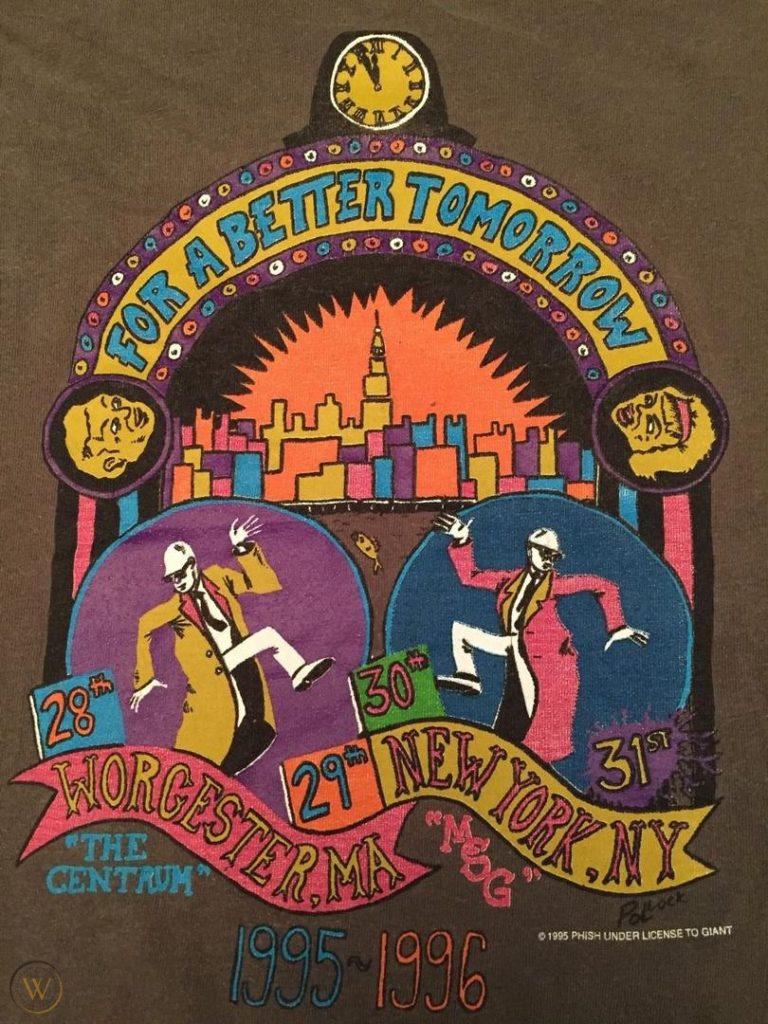
Official shirt by Jim Pollock
Santa was extra heady that Christmas and next to NBA2K6 and the iconic Tiger Woods PGA Tour 2005 for PlayStation 2, the best gift was undoubtedly the three-disc, week-old live release. From the opening “PYITE” on disc one, followed by “The Sloth,” I was hooked. I had never even heard “The Sloth” before Christmas morning 2005, likely because it was never officially released until that album.
It was like in the movie Neverending Story where Sebastian finds the book and runs off to immerse himself in the incredible journey. I had spun through Slip, Stitch and Pass and A Live One until the discs were scratched and raw, but I had never understood the importance of a full show experience until MSG 1995. It was part performance and part theatrics. The show is the blueprint for quintessential Phish. Gamehendge narration, fantastic themes about the creation of time, covers from the recently performed musical costume The Who’s Quadrophenia, and of course, driven improvisation. In the twelve years of Phish music up to that show, December 1995 is widely considered the best. An entire tour of above-average shows was summarized during that hallowed night in the world’s most sacred rock space.
The live release made a new generation of fans appreciate the show as much as those that were in attendance. It made us extremely jealous we were still in elementary school in December 1995, and if we had just known about Trey Anastasio, maybe he would have been even more important than Michael Jordan, Derek Jeter, or Hootie & the Blowfish.
Big egos can get in the way of sharing in the groove and surrendering to the flow. The most obsessed Phish fans like to think they know more, feel more, and enjoy more than their fellow fan. Although I wasn’t fortunate enough to see Phish 1.0 and barely caught the tail end of Phish 2.0, I was able to listen to the Old Testament of Phish and memorize one of their greatest shows from the front of “PYITE” to the back of the “Johnny Be Good” encore. New Year’s Eve 1995: Live at Madison Square Garden proves that everyone begins their journey in different ways. And if you want to learn how to swim, you’ve got to jump in the water.
For the past quarter century, a trio of future-forward NYC-based musicians have been deftly navigating the boundaries between King Tubby-style dub, Delta Blues, electronica, 70s-styled jazz fusion, metal, ambient, noise- and progressive-rock to the delight of discerning audiences and delighted critics alike. On Saturday, December 7, this triumvirate, Harriet Tubman, provided a 90-minute set of unparalleled sonic and melodic creativity for the culmination of the latest season of soul-stirring concerts at Poughkeepsie’s Cunneen-Hackett Arts Center curated by Elysium Furnace Works.
Harriet Tubman was formed 25 years ago by some of the most versatile and ferocious players on the scene: guitarist/vocalist Brandon Ross (Cassandra Wilson, Lounge Lizards), bassist Melvin Gibbs (Decoding Society, Henry Rollins), and drummer JT Lewis (Sonny Sharrock, William Parker, Whitney Houston). They take their moniker from Harriet Tubman, an African-American woman born into slavery who was renowned as a liberator of other slaves who, like she, chose to seek freedom by escaping to the North. She accomplished this with the help of a secret network of safe houses, or “stations,” on what was known as “The Underground Railroad.” Together, the trio has waxed five critically acclaimed albums, including I Am A Man (1998), Ascension (2011), and their latest, The Terror End of Beauty (2018).
Many of the original compositions performed commence with tightly structured melodic heads before departing for improvisations that venture into noisy, fierce dissonance. But for all the stylistic departures and daring atmospherics, the underlying melodies and phrasing are a mournful and beautiful blue. Maybe like Hendrix’s Band of Gypsys, a favorite comparison often pulled up by critics, Harriet Tubman is a blues band in disguise – a genuinely original one unchained from the 12-bar, 1-4-5 form, one completely abetted rather than undermined by the technology they wield.
In his work with vocalists like Cassandra Wilson and Jewel and his excellent solo discs like Costume (2004), Ross is coveted for his delicate acoustic guitar work. In Tubman, he is unleashed and fully electrified. He’s most often the one creating the backdrop, with washes of gentle chording and loops that serve as the sonic undercurrent for Tubman’s tunes. Then he turns his Fender Twin to 11 and stomps on his numerous distortion pedals, filters and wah-wah to conjure soaring solos that square the root of Hendrix, Sonic Youth, saxman Albert Ayler, and another great avant-garde guitarist of a generation only slightly before, Michael Gregory Jackson.
Once called the “egg in the meatloaf” by his one-time band leader, the late Ronald Shannon Jackson, Gibbs’s bass playing is as solid and rootsy as it comes. He uses his five-string fed through a massive Ampeg speaker cabinet to provide rib-shaking sub-harmonic riffery. These are usually unadorned and repetitive four to five-note lines that anchor the band. However, much of the uniqueness of the Tubman sound comes when Melvin stretches the limits of the bass. His lines are often heavily distorted and looped, and he frequently holds down the harmony for the band with his chording on tunes like “Farther Unknown.” On several, Gibbs was the main texture, laying down his repetitive echoed drenched textures, often with a string generator, over which he laid down furious sheets of sound solos.
Drummer Lewis provided an adept circle of rhythm to keep the trio firing on all cylinders. But what may be most impressive is his restraint. Several times in the set, JT just sat out completely, adding a more intimate dimension for the duet and interplay created by his guitarist and bassist.
Standouts in the set were the aforementioned “Farther Unknown” and “Green Book Blues,” the latter is a nod to the famous travel guide written in the 1930s that helped African-American road trippers get safely from one place to another. This tune included a great deal of melodic tension, with a cool reverse-delay effect on Ross’s guitar during his fuzzy, screamy solo providing a ghostly ambience.
The trio offered up an excellent take on the bluesy ballad, “Where We Stand,” from their acclaimed 1998 debut disc, “I Am A Man.” Ross’ melody evolves slowly, with subtle volume swells, over Lewis’ chattered cymbal work. It was an unhurried purple lament, a sad lullaby with spacey overtones. A higher energy approach came to the fore with “Adapted,” the set opener also from their debut disc, and “The Terror End of Beauty” the title track of their latest album.
After a brief flowing intro, “Adapted” kicked in, driven by a strong, kind of prog-rock, odd meter beat by Lewis and Gibb’s busy percolating bass. Ross’s solo was brisk, leaning on blues and chromatic side-stepping smears. This tune showcased JT’s deft drumming, with his building to numerous crescendos introduced with tight rolls to fire Ross’ soloing. “The Terror End of Beauty” was introduced as a tribute to the late avant-garde guitar pioneer Sonny Sharrock. An evocative climbing and descending minor chordal pattern played by Gibbs devolves into a fierce noise extravaganza, one that was pure Sharrock and made a Sonic Youth rave-up sound like Yacht Rock. Noise and dissonance led to even more furious strumming and, finally more dark, unnerving majesty when Ross, like Sonny, employed a slide and some furious fist bashing and atonal tapping on his guitar.
Seeing a healthy crowd support this kind of exploratory music in the Hudson Valley was heartwarming. Some audience members even traveled up from the Big Apple for this event. James Keepnews and Mike Faloon, the duo behind event curator Elysium Furnace Works, should be commended for their dedication to bringing “vanguard artists” like this immensely talent trio to our area.
Nineteen eighty-seven was undoubtedly “the year of the Anthrax.” The Queens thrash metal band released their third album, Among The Living, which elevated them from underground thrash metal heroes to wider acclaim.
The first show of that tour was at a club in Rochester, in May 1987. In Albany they played a half-filled Palace Theatre that same month and then toured both nationally and internationally for the rest of the year. Among the Living garnered wider record sales and great reviews, and they had a surprise hit when b-side hip-hop/metal crossover song “I’m The Man” broke big. By December 1987 Anthrax were headlining large theaters and small arenas – including this packed-out show at Poughkeepsie’s Mid-Hudson Civic Center.
This show had a bulletproof triple-bill, with two fantastic opening acts: Bay Area thrashers Exodus, promoting second album Pleasures Of The Flesh, and the mighty Swiss heavies, Celtic Frost on their Into The Pandemonium tour.
Exodus guitarists Rick Hunholt and Gary Holt – photo by Mark Kurtzner
Exodus and Celtic Frost switched playing first and second throughout this tour, and in Poughkeepsie Exodus opened. They blasted through a quick 6-song set, mostly tracks from the new Pleasures album like “Faster Than You’ll Ever Live to Be,” but some tracks from that classic first album Bonded By Blood (“Piranha,” “And Then There Were None”) and a cover of AC/DC’s “Overdose” dedicated to Celtic Frost drummer Reed St. Mark, for his birthday.
Exodus vocalist Steve Souza – photo by Mark Kurtzner
Celtic Frost played next, and this was their classic Tom Warrior/Martin Ain/Reed St. Mark lineup, and they were amazing. They opened with “The Usurper,” from second album To Mega Therion, an absolute blast of real metal greatness and played a mix from all three of their records. Then-new album, Into The Pandemonium, was different from the guttural early thrash of the first two records, definitely not a sell-out or commercial compromise (they’d do that the next year with the shitty Cold Lake record), but kind of adventurously artsy-fartsy, or “avant garde” as all the reviews called it.
However, the adventurous third record didn’t translate live as well as those earlier songs, so the set had a few new songs (including their cover of Wall of Voodoo’s “Mexican Radio,” and the more traditionally thrash “Inner Sanctum”) but relied more on earlier songs like the crushing “Circle of the Tyrants” and the chugging, head-stomping show-closer “Procreation (of the Wicked).”
Celtic Frost drummer Reed St. Mark – photo by Mark Kurtzner
Drummer Reed received a “Happy Birthday” salute-song onstage, with silly string from the other bands, before Frost concluded their set. Great stuff from a band at their peak, but sadly this lineup’s last show was a few days later when this tour ended, after which drummer St. Mark and iconic bassist Martin Ain departed the band, and mainman Tom Warrior assembled a new lineup which would produce the 1988 blunder Cold Lake, an ill-advised foray into hair metal which destroyed the band’s reputation for some time.
Anthrax guitarist Scott Ian – photo by Mark Kurtzner
Anthrax then hit the stage to huge mosh pits with new album title track “Among The Living,” and played mostly songs from their second and third records: “Caught in a Mosh,” “Indians,” “Medusa,” “Armed & Dangerous,” etc., with only “Metal Thrashing Mad” from first album, Fistful of Metal. The response was huge, and the set finished with key thrasher “A.I.R.,” which had a mid-song sidetrack into “I’m The Man” (singer Joey Belladonna taking over drums while the other band members took the mic and guitarist Danny Spitz chugged along on guitar), back into “A.I.R.,” followed by an encore cover of the Sex Pistols’ “God Save The Queen” and the total thrash of “Gung-Ho!” to conclude the night. A ripping set, and a legendary thrash metal triple-bill.
Anthrax vocalist Joey Belladonna – photo by Mark Kurtzner
Anthrax setlist: Among The Living, Caught In A Mosh, Metal Thrashing Mad, I Am The Law, Madhouse, Indians, Medusa, NFL, Armed & Dangerous, A.I.R., I’m The Man, A.I.R. (cont’d), God Save The Queen, Imitation of Life/Gung Ho!
“Give peace a chance, not shoot people for peace. All we need is love. I believe it. It’s damn hard, but I absolutely believe it… We’re carrying that torch, passing it from hand to hand, to each other, to each country, to each generation. That’s our job.”
There is no better way to capture the whit of music legend and galactic dreamer, John Lennon, than amidst his own words. In hindsight, a dramatic quote proves ever important on the icon’s 40th death anniversary. His words spark a flame in young and old, seasoned and aspiring; to carry on a tradition, to be one, to share your quirks through this thing we call music. It’s why you’re here, reading.
Three days later, Lennon was shot dead in the archway of the Dakota apartment building, in New York’s upper west side. Living with wife Yoko Ono, and inseparable, they were on their way back from a recording session when Lennon was pointlessly gunned down.
John Lennon – December 5, 1980.
“Welcome to the inner sanctum!”
Lennon’s words in comparrison were wilful, he knew exactly what he was doing. Even pro-Beatle Lennon, wanted to get away from any grounds on his blooming self exposition. It’s a continuous flow of self exploration that Lennon created over. It seems overly introverted, yet Lennon learned about himself in a roundabout, extroverted way. “We write lyrics, and I write lyrics that you don’t realise what they mean until after… like ‘Walrus.’ The whole first verse was written without any knowledge, and ‘Tomorrow Never Knows‘— I didn’t know what I was saying, and you just find out later.”
As we delve into Lennon interviews over the years it is clear why he has reached monumental stature. According to Writer Jonathan Cott, Lennon was unlike almost any other artist, “he allowed himself to be interviewed at crucial points in his life in order to reveal and, perhaps, define for himself where he was in his world,” Shadow In The Night.
Jann Wenner said his interview with Lennon was “The most important, and the peak, of the whole concept of the Rolling Stone Interview. He [Lennon] went all the way to the theory of it, to the hilt.” Wenner never did another one, except with the Grateful Dead’s Jerry Garcia.
John Lennon’s Self Portrait elusive in value, yet monumental in pop-culture.
Mark Chapman, a troubled American “Beatles fan” had travelled from Hawaii to NYC. After Lennon kindly signed his copy of Double Fantasy, Chapman would seek out the star and fire five hollow-point bullets from a .38 special revolver. Four hit Lennon in the back. Chapman claimed he was angered by Lennon’s lifestyle and public statements, thus remained at the scene, reading The Catcher in the Rye until he was arrested. Lennon was pronounced dead on scene. The world was devastated.
Yoko: There’s no bullshit.
John: There’s no bullshit.
But, this was bullshit.
It wasn’t until ten years ago that these last interviews began to see light. With each passing year Lennon would grow stronger in our hearts. His music, and moreover, his philosophy would continue to inspire for generations to come.
“Ive never claimed divinity. I’ve Never claimed purity of soul. I’ve never claimed to have the answer to life. I only put out songs and answer questions as honestly as I can, but only as honest as I can—
John Lennon, Dec. 5, 1980.
With earlier Rolling Stone interviews, on Sept. 17 and 18, 1968, John Lennon was much less raw in his response. His light and airy nature was apparent, walking around the room of his apartment, singing “Hold Me Tight,” and sitting on the floor to chat, despite two hours’ sleep.
Still distinctively Lennon, he remised about his past and heightened personal nature of his work. Lennon is direct. It’s wasn’t a child’s feeling, it was mine. “It was writing about my past, so it does get the kids because it was me at school, my whole bit,” on “Good Morning, Good Morning,” and the same with “Penny Lane.”
“We really got into the grove of imagining Penny Lane— the bank was there, and that was where the tram sheds were and people waiting and the inspector stood there, the fire engines were down there, it was just reliving childhood.”
“I don’t like the Blood, Sweat and Tears shit. I think all that is bullshit. Rock & roll is going like jazz, as far as i can see, and the bullshitters are going off into that excellentness which I never believed in and other going off… I consider myself in the avant grade of rock & roll.”
Here John begins, and was the only to explicitly, demystify his Beatles persona. “We were like kings of the jungle back then,” and later on when asked if Lennon would take it all back he says: If i could be a fuckin’ fisherman, I would. If I hat the capabilities of being something other than I am, I would.
Love, love, love
Love, love, love
Love, love, love

There's nothing you can do that can't be done
Nothing you can sing that can't be sung
Nothing you can say, but you can learn how to play the game
It's easy

Nothing you can make that can't be made
No one you can save that can't be saved
Nothing you can do, but you can learn how to be you in time
It's easy
A mass of John Lennon interviews is worth the read. Don’t listen or analyse too much, just be free in the moment like he was. Put a record on and recount Lennon’s LSD trips, gripes with The Beatles, his love for Yoko and pure artistic outlook on the world. It’s enlightening.
John Lennon is the musical equalizer. He says it how he sees it, and sadly he unexpectedly paid for those words 40 years ago today. The simple minded Lennon (in principle) fancied classic rock like “Spirit in the Sky,” and was “influenced by acid and got psychedelic, like the whole generation, but really, I like rock & roll, and I express myself best in rock.
“Because that’s what’s happened, all these songs just came out of me. I didn’t sit down to write. They all came out , like the best work that anybody ever does, wether it is an article or what, it’s just the best ones that come out.”
The dream is NOT over.
Why Can’t Lennon be alone, without Yoko?
I can be, but I don’t wish to be. Theres is no reason on earth why I should be without her. There is nothing more important than our relationship, nothing. We dig being together all the time, and both of us could survive apart m but what for? Im not going to sacrifice love, real love for any… 🙂 …
Rest In Peace John Lennon: to the one you loved most and to a world you continually inspire.
Months earlier marked Lennon’s 80th birthday. On October 9, a live stream from London’s Hard Rock Hotel celebrated the 2nd annual Dear John concert. The event supported a heartfelt charity, War Child U.K., an organization that helps impoverished families across war zones throughout the world.
Blurred Vision frontman, Sepp Osley, hosted the virtual show featuring tributes from Peter Gabriel, Richard Curtis CBE, Maxi Jazz of Faithless, Lindsay Ell, PP Arnold, Lawrence Gowan (Styx), Andy Fairweather Low, KT Tunstall, Larkin Poe, John Ilsley of Dire Straits, Nick Van Eede (Cutting Crew), Mollie Marriott and Laura Jean Anderson.
hannah bahng brought her sold-out debut Abysmal Tour to Mercury Lounge on December 5, promising to deliver “The Worst Night Of Your Life”.
Self-written, self-composed, and co-produced, hannah bahng is a multitalented artist with the skill and vision to realize every facet of her creative endeavors with evident care and precision. Hailing from Sydney, Australia, 20 year old bahng entered the music sphere with the perfectly nostalgic, sea-salt tinged “perfect blues” and its slightly hazier, dreamy counterpart “OLeander” on July 14, 2023.
Since the dual-single release, bahng has seen a meteoric rise in popularity, and certainly for good reason. Releasing her debut The Abysmal EP on May 31 produced in partnership with Andrew Luce, bahng delivered a total of seven tracks that cut deep sonically and lyrically, pulling listeners through each and every emotion with vibrant intensity.
This same intensity was on full display at the Mercury Lounge on December 5, one of several shows of bahng’s first ever tour which very quickly sold out and saw various venue upgrades due to a widespread hope to experience what was marketed as “the worst night of your life.”
This sentiment was equally felt in line outside the venue and within its doors, the warm lights of the Mercury Lounge twinkling invitingly as fans meandered their way inside.
Concert-goers could be found excitedly waiting in line for bahng’s adorably curated merchandise or exchanging homemade goods like bracelets and photocards just outside the entrance (the latter a tradition emerging from the K-Pop scene, which has since evidently bled into tangential spaces and beyond)- all various shades of blue in a lovely nod to her debut single.
Chatting with other fans proved effortless as everyone shared an intangible undercurrent of knowledge that something special was about to happen- after all, the Mercury Lounge marked the historic third show bahng has ever performed in the professional sphere following two dates in Texas.
And, as hannah herself would mention later in the evening, it marked her first ever performance in New York after visiting the city as a songwriter and audience member prior.
As bahng took the stage, the energy was electric. Opening the similar form to her Abysmal EP, she delivered a captivating performance of “OLeander” followed by a gut wrenching rendition of the deeply personal “hannah interlude” which was written while bahng was visiting New York out of a rented studio.
Similarly, the unreleased “Ribs” features bahng and a piano in a moment so deeply vulnerable it was as if the entire space around her took a moment to pause and listen in.
Between tracks, the intimacy of the venue resulted in an almost conversational rapport between hannah and the audience in which fans showered her in compliments, asked about her Pokémon jacket- custom made by a friend in the audience- and learned that her favorite Pokémon of the franchise is the definitively underrated cubone.
I’d also be remiss to not mention the vicious Rubiks Cube battle that occurred on stage. A lovely audience member went head to head with bahng in a tense battle of wits, and hannah reigned victorious- but not before passing off her newly signed cube to the audience participant with a hug and cheers from the crowd.
More hard hitting tracks followed, including the bass-heavy “POMEGRANATE” and the unreleased “What Never Lived” that mourns the death of a relationship that never quite happened, which quickly grew to be a personal favorite.
Tracks of her own weren’t all that hannah had to offer, either. Covers of Chase Atlantic’s “Church” and Bon Jovi’s “Livin’ On A Prayer” came next, the former a favorite of bahng’s that she explained was performed to balm the lack of the track at a Chase Atlantic concert she had attended, and the latter for the parents in the audience- though, as a nearly twenty-something myself, I found myself thanking my father’s influence on my music taste as I belted along.
As bahng bowed out for the evening, the cool blues of the lights faded to a dim gray- but this did nothing to deter the audience, who promptly jumped into cheers asking for just “one more song,” to which hannah delivered. Returning for a vibrant performance of “perfect blues,” the carefree joy felt in the room was tangible.
A room full of folks young and old gathered to celebrate the promising start of something beautiful, singing in tandem to the first song of her professional career- the promising creative sway of hannah bahng was in full effect as her first official concert in New York came to an end.
hannah bahng – Mercury Lounge – The Worst Night Of Your Life – Thursday, December 5, 2024
For their final East Coast shows of 1971, The Grateful Dead played a four-night run at the Felt Forum in New York City. December 7 marks the fourth and final one of these shows during a still transitional era for the band. Drummer Mickey Hart left the group earlier in the year and the Dead were still in the process of integrating new keyboardist Keith Godchaux who joined them in September.
Original keys player and founding member Pigpen had also recently rejoined the group after a stint in the hospital. With the band now at full strength, they unleashed a chock full two sets of music on this evening that showcased their full potential, paving the way for their legendary Europe ’72 Tour that would follow a few months later. This show in particular was deemed so good that it would later go on to become an official Dave’s Picks release, serving as Volume #22 in the series. It sees the band at their finest, mixing up a healthy blend of rock, rhythm, and blues along with a little holiday cheer.
Grateful Dead Felt Forum 1971 Dave’s Picks
The last show of the Felt Forum run of ’71 begins with “Cold Rain and Snow,” a song that had established itself as a common opener in this era of Grateful Dead. Garcia delivers a couple of pristine guitar licks with new keyboardist Keith Godchaux providing timely fills on organ. The newest member of the band then moves over to piano as Bob Weir takes over on vocals for a quick yet feisty “Beat It On Down The Line.” With the band seemingly warmed up on a couple of classic numbers, Pigpen then takes over on lead vocals for the first time with the fairly new “Mister Charlie,” a song that debuted just a few months ago at the Yale Bowl which would be played every night of this run and for good reason. His sultry singing combined with some more vintage Garcia guitar play make for a soulful combination that, alas, doesn’t stray too far.
The first extended play of the evening is another fairly new song that actually debuted at the same show, “Sugaree.” Garcia and Godchaux exhibit more great chemistry early on with each taking a nominal solo and bassist Phil Lesh locking down the bottom line in style throughout. An even newer song that would remain a staple of live Dead shows for their entire career then follows in “Jack Straw,” another one that made an appearance at all four shows of the run. Godchaux’s work on piano compliments Weir’s vocals perfectly and the band eases through this classic number that seems to pick up speed from start to finish. After a quick introduction from Lesh, Pigpen then returns to center stage for his typical rambunctious take on “Next Time You See Me” that includes a couple of ripping solos on harmonica. The joy that the Grateful Dead get in playing this blues cover is nearly palpable.
This carries right over into another one of the new batch of songs, “Tennessee Jed,” which has Weir and Garcia harmonizing nicely on the choruses. Another song that would remain on set lists for years, this one is peppered with an extra bluesy guitar solo from Garcia that’s dripping with flavor. After Weir leads the Dead through a lively “El Paso,” things slow down considerably with the “Brokedown Palace” that follows which gets a considerable round of applause from the Felt Forum crowd at the onset. It’s a true group effort with Lesh joining in on some vocal harmonies and another typically tender, yet brief, solo from Garcia.
With the Dead no strangers to a Chuck Berry cover, afterwards they get in the holiday spirit and bust out a cover of “Run Rudolph Run,” a song they would only play a handful of times ever this month. It’s classic 12-bar blues with Pigpen, naturally, on lead vocals for a quick song that’s melodically similar to Berry’s “Little Queenie.” The band then stays in blues cover mode with a rare take of “You Win Again,” a ballad first sung in 1952 by Hank Williams which made its live debut just last month and would never be played again after 1972. The first set then wraps up with a couple of Grateful Dead classic originals starting with a fiery “Cumberland Blues” that sees Lesh leading the way with spirited bass play and Godchaux delivering a flurry of chords on piano. That troublesome train conductor “Casey Jones” then caps off a jam packed first set that seems to cover all the bases.
With the bar set high from a rollicking first set, the momentum carries right over into the second set with a powerful opening 1-2 combination of “Sugar Magnolia” and “Ramble On Rose” that sees Weir and Garcia passionately belting out the vocals on each, respectively. The torch is then passed back over to Pigpen who leads the band through yet another classic cover, this time it’s Jimmy Reed’s “Big Boss Man.” Another soulful harmonica solo serves as the bridge to some more bluesy guitar licks delivered by Garcia on this one. A lightning quick take on the new “Mexicali Blues,” another song that found its way onto the set list all four nights, then precedes a silky smooth rendition of “Brown Eyed Women.”
This sets the stage for the last Pigpen-centered song of the evening and the most extended “jam” of the show – a 12-minute enthralling cover of Howlin’ Wolf’s “Smokestack Lightning.” Pigpen’s iconic singing and harp play mesh perfectly with Garcia’s blues-driven guitar stylings and the band takes their time on this one, stretching it out nicely. Sadly, this is the second to last version the Dead would ever play with Pigpen, a founding member of the band. The “I been gone so long” lyrics sang in repetition towards the end of the song hit especially hard knowing that.
This is followed up by a rather mellow take, compared to later standards of “Deal” another fairly new song in the band’s catalog that made its debut at Port Chester’s Capitol Theatre earlier that year. This is succeeded by “Truckin’,” a song the Dead played at every show of that vaunted Capitol Theater run earlier in the year and one that finally sounds like it’s starting to develop an identity and jam capabilities thanks to the addition of Keith Godchaux who shines on the organ on this rendition.
The second set then comes to a triumphant finish with the classic closing sequence of “Not Fade Away” > “Goin’ Down The Road Feeing Bad” > “Not Fade Away.” Bill Kreutzmann on drums makes his presence felt early and often on “Not Fade Away” which elicits a truly blissful jam of sorts that flows effortlessly into the beginning of “GDTRFB.” For an encore, the band breaks out one last song from the new batch, “One More Saturday Night.” It would only be the second time ever used in this spot, one that it would soon become commonplace for the rest of their storied career, closing out the fourth and final show Dead show at Felt Forum in grand fashion.
Grateful Dead – Felt Forum, New York, NY – December 7, 1971
Set 1: Cold Rain and Snow, Beat It On Down The Line, Mister Charlie, Sugaree, Jack Straw, Next Time You See Me, Tennessee Jed, El Paso, Brokedown Palace, Run Rudolph Run, You Win Again, Cumberland Blues, Casey Jones
Set 2: Sugar Magnolia, Ramble On Rose, Big Boss Man, Mexicali Blues, Brown Eyed Women, Me and My Uncle, Smokestack Lightning, Deal, Truckin’, Not Fade Away > Goin’ Down The Road Feeling Bad > Not Fade Away
Encore: One More Saturday Night
View this and more Grateful Dead shows from across the years in New York State with our interactive map below
There’s something about anniversary shows that really gets a crowd going. Pressed against each other in the pit, hands swaying, chanting in time to favorite songs. What better way to celebrate 20 years of Interpol’sAntics than a 3-day sold out show at Brooklyn Steel? Longtime fans gathered for opening night on December 3. Ready to revel in the gritty, driving force of rich guitar playing and powerful lyricism.
Around since 1997, Interpol was formed under New York University doors, beginning with lead guitarist Daniel Kessler, frontman Paul Banks and drummer Greg Drudy. Their post-punk sound has become a staple amongst New Yorkers, emerging as a key rock revivalist of the early 2000s. In hopes to sound sleek and mysterious, they derived their name from The International Police Association, signing with Matador Records in 2002. Now, Interpol has played at a multitude of venues across the world, joined by Sam Fogarino on the drums.
With white sheer curtains draped across the front, a hush fell over the crowd as Interpol took stage a few minutes past 9:15pm. Opening with “Next Exit”, the band remained obscured. The crowd focused on projections of their silhouettes, jumping back and forth across the curtains. Once their second song, “Evil” reached crescendo, the lighting crew scrambled into the photo pit. The crew pulled back the expansive white sheet to reveal the band, dressed to the nines in black tailored suits.
After every song, fans whooped and hollered, dazed by the thick smoke and dramatic strobe lights. Lush storytelling balanced out catchy choruses, pairing with intricate guitar riffs to make a visually immersive performance. Their iconic color scheme of black, white and red alongside a sharp typeface held true. Non stop energy created through intriguing lighting choices and special effects.
As Interpol performed fan favorites such as “C’mere” and “Rest my Chemistry” the crowd pushed forward to the edge of the barricade, unable to peel their eyes off of the stage. By the time the 21 song setlist came to a close, the venue was absolutely packed. Reveling in the rush, fans lingered in the pit, chatting excitedly while sharing videos and treasured moments.
Interpol – Brooklyn Steel – Tuesday, December 3, 2024
Set 1 (Antics): Next Exit, Evil, Narc, Take You on a Cruise, Slow Hands, Not Even Jail, Public Pervert, C’mere, Length of Love, A Time to Be So Small Set 2: Pioneer to the Falls, No I in Threesome, The Rover, Rest My Chemistry, My Desire, Roland, Lights, All the Rage Back Home, Obstacle 1 Encore: The New, PDA