Category: Flashback

  • 50 Years Of Performance: The Best SNL Acts Of The 1980s

    SNL has officially returned, celebrating its 50th year on the air. Since its start in 1975, the show has introduced Americans to classic comedy skits, ranging from Wayne’s World to the Blues Brothers. On top of that, comedy icons like Eddie Murphy, Adam Sandler, and countless others have SNL to thank for launching their careers. But let’s not forget an often overlooked part of SNL’s history: its musical guests. 

    To celebrate SNL’s 50th anniversary, let’s take a look back at 50 classic performances from throughout the show’s history. In this installment, we’ll travel back to SNL of the 1980s to see some of the decade-defining acts that grace the 30 Rockefeller Plaza stage. 

    SNL50 SNL SNL

    The B-52’s (1/26/1980)

    To kick off the 1980s, New Wave icons the B-52’s performed an energetic set. Hailing from the college town of Athens, Georgia, the band was riding high after the release of their debut self-titled album. So in January, 1980, they made the trek up to New York City to soundtrack an episode hosted by the late-actress Teri Garr. 

    To start off their set, the band played their biggest hit at the time – “Rock Lobster.” Before the music even started, nothing stood out more than the band’s style. Their eclectic eighties meets fifties fashion was on full display. Cindy Wilson and Kate Pierson’s mile-high beehive haircuts instantly gave the audience a taste of the B-52’s ethos. They were deeply rooted in retro aesthetics, but also spearheading a New Wave of punk. 

    SNL50 SNL

    The audience did not have much time to gawk at the band’s style, because Ricky Wilson immediately fired into the iconic “Rock Lobster” riff. Alongside guitar, singer Fred Schneider played SNL’s favorite instrument – the cowbell. Throughout the song, Schneider bopped around the stage, waving his cowbell and drumstick. This dance party of a song dramatically halted at the bridge, with the band members collapsing as Schneider yells “Down! Down!” Following this, the band immediately sprung back up, whirling around the stage. Even Keyboardist Kate Pierson left her station to join in on the vortex. The B-52’s, unlike any band from that era, matched campy theatrics with a rough punk edge. 

    Following a number of skits, the band returned to play “Dance This Mess Around.” This track started off much differently than their opener, with harsh keyboard stabs and dissonant guitar. For this number, Schneider passed off vocals to Cindy Wilson. Her soft vocals grew into screaming as the chorus neared, with Schenider’s distinctive yelping backing joining in soon after. Throughout the song, the band all erratically danced, while somehow remaining unsettlingly still, mirroring their SNL predecessor Devo. 

    @thealmanac77

    SNL The B-52’s (26-01-1980) I still think they needed more cowbell… #snlmusicalguest #theb52s #universalplus #rocklobster

    ♬ original sound – thealmanac77

    With this performance, the B-52’s both carried on history, and made history of their own. They brought the 1970s New Wave of Devo and Elvis Costello to a new decade. This performance, while unassuming at the time, hinted at a decade that both New Wave and the B-52s would thrive in. 

    Funky 4+1 (2/14/1981)

    In 1981, a Bronx-based quintet made SNL history with a single performance. On Valentine’s Day, Funky 4 +1 played the first Hip-hop performance, not only on SNL, but on all of national television. 

    Known hip-hop aficionado Debby Harry hosted that night, and personally vouched for the band. During her work with Blondie, Harry formed a great appreciation for hip-hop. In 1981, Blondie made history with “Rapture,” becoming the first song with a rap verse to reach number one. As part of this, Harry became close friends with rap icon Fab 5 Freddy, who introduced her to Funky 4 +1.

    SNL50 SNL

    From the first second of their SNL performance, “That’s the Joint” was a straight blast of joy. The Funky 4 all in matching red sweaters accentuate their female lead Sha-Rock. In a way, the monochrome male backers and the standout female lead vocalist wasn’t too different from Blondie itself. A sample of “Rescue Me” by A Taste of Honey propels the song forward with funky bass and horns. Over this disco beat, the five rappers pass off lines between each other, making for a great early hip-hop track. 

    One key member of the band wasn’t even a member, but rather a DJ. Throughout the performance, he can be seen spinning records in front of the group. This sampling-based number marks a radical shift in the style of musical performances on SNL, foregoing live instrumentation altogether. This showing also revolutionized how rap artists performed live. Rather than bopping to the beat, the band adopted fully choreographed synchronized dance moves. Drawing from older Motown acts, the band looked more akin to the Jackson 5 than the Sugarhill Gang on stage. 

    Prince (2/21/1981)

    Only one week after Funky 4 + 1, SNL introduced a future superstar to the world. Prince, the artist formerly known as Prince, or Ƭ̵̬̊, whatever you want to call him, he made his special debut appearance on February 21st, 1981. While not the musical guest – that was rock icon Todd Rundgren – SNL invited Prince to perform one song from Dirty Mind. This performance marked the first of four guest slots Prince filled during his life. 

    Following two performances by Rundgren, it was Prince’s turn to perform “Partyup.” Prince and his band emerged on stage in matching trench coats. Under his trench coat, Prince wore only a bandana, short-shorts, and stockings, mirroring the cover of Dirty Mind. The performance got off to an energetic start, driven by funky synths, bass, and guitars. Throughout the funk number, Prince’s iconic falsetto vocals soared. However, one vocal line also caused controversy. Some claimed Prince sang the original lyric “Fighting war is such a f*cking bore,” violating broadcasting regulations. Prince himself, however, claims he said “Freakin.”

    Funnily enough, yet another F-bomb overshadowed this performance, this time coming from cast member Charles Rocket. During the farewell, Rocket, parodying JR from Dallas, angered TV censors yet again. Turning to the camera he said “Oh man, it’s the first time I’ve ever been shot in my life. I’d like to know who f*ckin’ did it.” Needless to say, the cast and broadcast staff were all shocked, and Michaels promptly fired Rocket. This, however, was the last time anyone outshined Prince, as he would go on to dominate for the rest of the eighties. 

    This performance is sadly near impossible to find in its entirety online. Whether due to the multiple swears, or Prince’s estate’s strict licensing policy is unsure. It is a shame, as it is one of the best to ever grace 30 Rock. Immediately after, Jeffrey Doumanian writing for Rolling Stone said, “I was blown away, he was just the most original act I had seen in a long time.

    FEAR (10/31/1981)

    For one night only, the SNL stage transformed into a no-holds-bar mosh pit. That night was Halloween of 1981, when Lorne Michaels invited LA-based hardcore band FEAR onto the program. With his previous bad luck with punks *cough, cough, Elvis Costello* why would Michaels push his luck with an even rowdier crowd? The answer is pretty simple: he didn’t. In fact, it was SNL alum and notorious party animal John Belushi who pitched the idea.

    John Belushi was an avid fan of all things punk rock, quickly becoming close friends with FEAR. Earlier that year, he even offered the band the opportunity to soundtrack his movie Neighbors. The studio, however, was not impressed and thought the band’s music was highly inappropriate. Belushi, being the good friend he was, offered FEAR a musical slot on SNL to make up. 

    SNL50

    Belushi’s plan, however, was much more complex than just having the band perform. He pitched Michaels his idea – to turn 30 Rock into a full-fledged punk venue with slam dancers. Then, Belushi began making calls to punks across New York and Washington DC. By Halloween night, 40 punks closed in on the SNL studio, including future Minor Threat singer Ian Mackaye. For the dress rehearsal, the punks mellowed out, lulling Michaels into a false sense of security. But when have punks ever been ones to follow the rules?

    When FEAR took the stage that night, all hell broke loose. They began with “Beef Bologna,” a breakneck pace hardcore track with screamed vocals and fiery guitars. As soon as the music began, the punks in the audience showed what they were really made of. Some dove across the camera, others stormed the stage, and all of them indulged in the pure chaos. As singer Lee Ving recalled, “The real audience at Saturday Night Live was scared to death.” Luckily for everyone at 30 Rock, after the relatively short song, the crowd seemed to calm down slightly. 

    SNL50

    It wouldn’t last. Ving – the comedian he is – grabbed the mic and said, “It’s very nice to be here in New Jersey,” warranting immediate boos. This segued into their second track “New York’s Alright if You Like Saxophones.” Sonically, this song is unique among eighties hardcore, featuring dissonant saxophone at its center. The audience couldn’t savor this musical complexity, as not even two seconds into the song, the moshing resumed. In the mayhem, the mic even fell into the audience. The young DC-raised Ian Mackaye seized on this opportunity, yelling “New York Sucks,” starting a small fight. 

    The band’s final track was “Let’s Start a War,” which seemed like a good reflection on what they were doing in the studio. Unfortunately for FEAR, they did not have the chance to finish this performance. In fact, they didn’t even get 15 seconds in. From stage right, a man entered holding a massive pumpkin. Lumbering across the stage, he then chucked it directly at producer Dick Ebersol’s chest. In a panic, SNL cut to dead air for the first time in its history. After some hesitation, the broadcast resumed with a pre-recorded Eddie Murphy skit. As audiences watched on, cops chased the 40 punks out of the studio, restoring order to 30 Rock. Needless to say, Lorne Michaels never invited FEAR back to SNL. 

    Queen (9/25/1982)

    SNL’s eighth season began with a performance by one of the biggest legends in rock: Queen. With SNL alum Chevy Chase hosting, the band joined to perform two songs from their 80s discography. This should have been an easy slam dunk: iconic host, equally iconic band, how could it go wrong? The issue came with Queen’s touring schedule. The SNL premiere came on the back of a 27-city US tour. The band were all exhausted, and Freddy Mercury’s booming voice was shot. Queen, however, were never a band to shy away from a challenge, and persevered. Playing sped up, more rock-edged versions of their tracks, they stunned the audience. 

    The first track they performed was #1 hit “Crazy Little Thing Called Love.” This performance was a much more beefed-up rock version of the hit. It began with Mercury front-and-center, surprisingly playing the acoustic guitar. Maybe it was because of his vocal limitations, or the need for the song’s iconic riff, Mercury ditched the keyboard for the guitar. Once the song started, honky tonk pianos and a jazzy electric guitar riff from Brian May joined in. Listening to the performance, you couldn’t even tell Mercury’s voice was all but destroyed from a month of touring. To close out the track, May laid down a legendary extended electric guitar solo.

    SNL50

    Later in the episode, Queen returned to the stage to perform “Under Pressure.” Although their latest album Hot Space was a commercial disappointment, its lead single – a debut with David Bowie – was an instant classic. Prior to Mercury’s passing in 1991, “Under Pressure” was a sole Queen live track – with or without Bowie. Beginning with the song’s iconic bassline, everything started according to plan. However, when Mercury’s vocals begin, his exhaustion was much more noticeable. There was no way he would be able to hit the song’s rising vocal lines. As a result, he had to alter the melodies, allowing his more limited register to boom through the studio. Throughout the song, he confidently strutted across the stage in a leather jacket. It was clear that his voice didn’t phase him in the slightest. 

    This performance marks a sad moment in music history. SNL was the final performance the band ever played in the US prior to Mercury’s passing from AIDS 9 years later. Even though it was their final American show, and the band were clearly not at their highest, it was a clear show of force. They may have been exhausted and had no voice, but their musical prowess and stage presence made all of that unimportant. Watching the performance, there is no question why Queen was one of the greatest bands to ever do it.

    The Replacements (1/18/1986)

    Yet another punk band banned from SNL for disorderly behavior – I guess third times a charm. This story, much like Elvis Costello, began with a last-minute fill in by Lorne Michaels. Originally, SNL booked the Pointer Sisters to perform on a Harry Dean Stanton hosted episode. However, when they canceled, Lorne Michaels called in Minnesota-based alternative band The Replacements. 

    Riding on the success of their major label debut Tim, the Replacements’ SNL performance was a medium to prove themselves on a live stage. What better way to prepare for such a momentous occasion than partying like there’s no tomorrow. Leading up to the performance, the band made a day of binge-drinking with Harry Dean Stanton. And did they drink…and drink…and drink. When it came time to go up on stage, guitarist Bob Stinson tripped and fell, smashing his guitar. 

    SNL50

    Once a replacement guitar was given to the Replacements, they took the stage for their first song. From the first second of “Bastards of Young,” it was clear something was off. It seemed like each band member was playing in a different key. In other words, their drinking had caught up to them and the performance was a mess. Clearly, the band was already at odds with Lorne Michaels, poking fun at him during the performance. As Paul Westerberg sang, “The ones who love us least are the ones we’ll die to please,” he gave a big exaggerated wink right in Michaels’ direction.

    The real trouble came right after this. Westerberg was worried that Stinson was so intoxicated that he would miss his cue for the song’s guitar solo. Taking action into his own hands, Westerberg yelled, “Come on f*cker” to cue Stinson himself.  Michaels was furious, fearing backlash from network censors for this use of profanity.

    Michaels, however, did let the Replacements take the stage for another song. When the band reemerged, they seemed to have swapped outfits with each other for some reason. Maybe it was the outfit change, or the extra time to sober up, but their performance of “Kiss Me on the Bus” was much more composed. The band played together, in tune, and in key. When the moment of truth came for Stinson to play his solo, he was even able to do so without any swearing needed. 

    This cleanup job was not enough to quell Michael’s anger however. By the time the Replacements left the stage, Michaels had banned them. For the third time in SNL’s history, a punk act’s hijinx had gotten them banned from the show. Singer Paul Westerberg, however, was allowed to return to the show seven years later as a solo act. During this performance, he even played a Replacements track – “Can’t Hardly Wait.” The band’s next performance at 30 Rock wasn’t until a 2014 appearance on Jimmy Fallon – a whopping 32 years later. 

    Phillip Glass (3/22/1986)

    Who screams SNL musical guest more than pianist and experimental composer Phillip Glass? If you thought literally anybody else, you’d most likely be correct. However, for one special episode of SNL, Glass performed and soundtracked the whole night. This decision, while odd at first glance, makes much more sense in the greater context of the unique episode it soundtracked. 

    On March 22nd, 1986, filmmaker Francis Ford Coppola hosted alongside comedian George Wendt. This episode, unlike SNL’s normal skit-based format, this night had an overarching narrative arc. It followed Coppola in his quest for an Emmy award. To do this, he directed the entire episode, repeatedly misunderstanding and twisting SNL’s concept to make it more artful. This vision was put on display immediately after the cold open. In place of the show’s fun intro was a moody opening credits sequence. Glass’s track “Facades” from Glassworks substituted the usual upbeat jazz theme. 

    After this, the show’s skits doubled down on its concept. First came Wendt’s monologue, which Coppola repeatedly interrupted hoping to capture the perfect take. To add onto this, he even told the audience how they should laugh in response. Following the monologue was a number of experimental, esoteric, and realist sketches tackling everything from Vietnam to The Honeymooners. Coppola even recorded a number of satirical commercials to make sure every aspect of the broadcast was up to his standards. 

    Throughout this experiment in television broadcasting, Coppola invited the Phillip Glass Ensemble to perform twice. The first of these was “Lightning” from Glass’s 1986 album Songs from Liquid Days. This track was unlike anything 30 Rock had witnessed previously. In Glass’s normal fashion, repetitive whirling percussion and winds propelled the song forward. Minor-key keyboard stabs supplemented this, creating an almost alien atmosphere. At the center of the piece was Janis Pendarvis’ beautiful operatic vocals, performing lyrics by Suzanne Vega. This track marked one of the most accessible moments in Glass’s discography, while remaining musically complex. 

    Glass’s second performance was “Rubric,” an excerpt from his 1982 classical opus Glassworks. This track was much more abstract than its predecessor. Keyboard and woodwind arpeggios drove the song forward. This song was much more emblematic of Glass’s discography, being a repetitive, deeply-minimalist composition. As it went on, it grew more and more lush, adding operatic vocals on top of the mix. As the ensemble performed, clips from the experimental documentary Koyaanisqatsi overlaid the show. The excerpts, featuring nighttime timelapses of a city, only added to the monumental aura of the performance. 

    Due to the unorthodox one-off nature of this episode, it is unlikely that 30 Rock will witness anything else like it again. It really is too bad, as the Phillip Glass Ensemble’s appearance was one for the ages. Equal parts experimental and approachable, minimalist and lush, the performance bent the rules of what an SNL performance could really entail.

    Elvis Costello (3/25/1989)

    So far, Lorne Michaels has not shied away from banning anyone he disagreed with. Play a song he didn’t like – banned. Said a naughty word on air – really banned. However, on March 25th, 1989, Michaels felt in a much more forgiving mood. After a 12 year ban, SNL invited back New Wave icon Elvis Costello for a solo performance. 
    12 years prior, Elvis Costello and the Attractions received a “lifetime” ban for going off script. Instead of playing “Less than Zero” like planned, Costello switched into a rendition of “Radio, Radio,” which angered Michaels beyond belief. Now a solo artist, Costello returned to support his hit album Spike, playing two new songs.

    In the leadup to Costello’s first song, host Mary Tyler Moore made one of the strangest performance announcements in the history of SNL. Continuing a streak of raunchy language, she told the audience “Elvis Costello’s penis is here tonight, so stick around, we’ll be right back.” After that strange introduction, Costello took the stage to perform top-20 hit “Veronica.” Co-written by Paul McCartney, the song was an upbeat pop-rock number, lacking Costello’s punk edge that got him in hot water during his first appearance. Picking up an acoustic guitar, Costello led the band, singing about a woman slowly losing her memories with old age. Despite the sad lyrics of the song, you would have no idea based on Costello’s lively energy.

    Following this, Costello returned to perform “Let Him Dangle.” This track is noticeably more solemn than his opener, discussing a man preparing for the gallows. The mostly acoustic track provided a comedown from the frenetic energy of “Veronica.” Despite the more serious nature of Costello’s tracks that night, he managed to stay in Michaels’ good graces. All it took was Costello staying on script. This forgiveness appears to have lasted, with Costello making two additional guest appearances throughout the 1990s.

    On top of this performance, the episode was also notable for its sketches. Following Costello’s second song, SNL debuted a new sketch. Featuring Mike Myers and Dana Carvey, it introduced the world to the Wayne’s World public access television show. The charming sketch, featuring the two loveable music nerds in Wayne’s basement, quickly became a fan-favorite. Within just four years, it became a recurring sketch, spawned two movies, and got an entire generation saying “Wayne’s World, Wayne’s World. Party time! Excellent!” This one unassuming episode not only mended SNL’s past conflicts, but also paved the way to its future. 

    Tom Petty (5/20/1989)

    In 1989, Tom Petty arrived at 30 Rock for his third appearance on SNL. This episode, hosted by Steve Martin, however, marked Petty’s first time without the Heartbreakers backing band. His solo SNL debut was also preceded by tragedy. That night, SNL original cast member Gilda Radner passed away following a battle with ovarian cancer. In response, Petty made his performance a tribute to the legendary comedian

    Petty’s first song was “Runnin’ Down a Dream.” Starting with its iconic descending riff, the song quickly jumped into an upbeat rock groove. With chugging guitars and Petty’s soft vocals, the song lilted along for a really fun two minute stretch. After this, the song erupted into a fiery guitar solo from Mike Campbell to close it out. With this amped up shredding over his usual heartland rock, Petty entered his solo career with a bang. 

    Prior to the episode, Petty had planned to play his hit “I Won’t Back Down,” to close his set. However, as Saturday approached, he felt it did not fit the mood of the night. Instead, he opted to play a yet-unreleased track off his new album Full Moon Fever. This track was the future megahit “Free Fallin’.” Originally, his label was unconvinced, wanting him to play his tried and tested current hit. In response, Petty told them that “Free Fallin’” was actually the late Radner’s favorite song, so they relented. 

    This SNL episode marked the first live performance of what many consider Petty’s signature song. Unlike the album cut, this live performance featured much more lush instrumentation, mirroring a wall of sound. In place of acoustic guitar is an immensely reverberated electric one. With synth strings, piano, and reverb vocals, the song echoed like Petty was performing in a cathedral. Aiding in this feeling were the Renaissance paintings surrounding the band on stage. To end this beautiful performance, Petty decided to make things a little awkward. As the song ended, he went to hug Howie Epstein who did not seem interested. So, they both just buffered in place awkwardly until the camera faded. 

    In this performance, Petty took a somber occasion and made it a celebration of life. In doing so, he not only introduced audiences to his new hit, but also his new path forward as a solo artist. Following this performance, Petty returned to 30 Rock a whopping five times as a musical guest.

    Neil Young (9/30/1989)

    To close out the 1980s, Lorne Michaels finally caught his white whale. For the past 10 years, SNL attempted to nab Neil Young as a musical guest. The first time they tried, SNL ended up stuck with weirdo new wavers Devo. Finally, the folk legend was in the building to perform a three song set. 

    At the time of this performance, Young was far from young. At the ripe age of 43, Young was still at the top of his game. When he entered 30 Rock, he sported an Elvis t-shirt, leather jacket, patched up jeans, and maple leafs gears. This outfit was equal parts cool and puzzling, but one thing for sure was that it was 100% Neil Young. In his three decades performing, Young had built up a routine for putting on amazing live shows, saving the upbeat rockers for last. After hours of building up adrenaline and intensity, he would rip out fiery guitar solos like they were nothing. For SNL he had to reach this intensity level instantly. To do this, he took up an intense training regimen, including weightlifting and calisthenics. This training paid off, as Young went on to unleash one of if not the greatest SNL performance ever.

    Young’s first song was his newest hit “Rockin’ in the Free World” from 1989’s Freedom. The track kicked off with its iconic chugging guitar riff imbued with fiery distortion. As Young’s lyrics entered, they only added to the sonic intensity. The lyrics initially seem patriotic, referencing the “colors on the street, red, white, and blue.” As the song continued, Young’s lyrics transformed into an indictment of HW Bush-era America as fiery as its guitar tone. With lyrics attacking everything from drug addiction, pollution, and gun violence, the song was a scathing criticism of the US. As the song continued, Young stomped and headbanged across the stage, before erupting into a legendary guitar solo. While firing out metallic guitar bends, Young jumped on the drum kit and crashed into his bandmates. Apparently, Young’s training regimen worked, with the performance having the intensity of a grunge concert. 

    Following this incendiary performance, Young returned with a much more somber song. The solo acoustic rendition of “The Needle and the Damage Done” worked as a much needed comedown from the explosive energy of Young’s opener. Upon retaking the stage, Young received immediate applause. The song’s lyrics tackled the issues of heroin addiction and the overdose of Young’s Crazy Horse bandmate Danny Whitten in 1972. Following applause throughout the song, Young swapped out his acoustic guitar for an electric one to begin “No More.” 

    As Young swapped out his gear, his band rejoined him on stage for this last piece. Young originally wrote this track as a spiritual successor to “The Needle and the Damage Done,” and it continued many of its themes. Throughout the song, Young sang of the difficulty to kick drug addiction, accompanied by bluesy solos. Compared to “Rockin’ in the Free World,” the song was much more mellow, finding a comfortable middle ground with the rest of the set. When Young reached the  repeated chorus of “no more,” harsh guitar stabs amped up the track. By the time the track ended, Young made all of Lorne Michaels’s greatest wishes come true. He had finally caught his white whale, and Young’s performance was well worth the decade-long wait. 
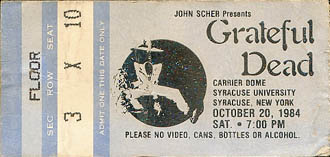
  • Grateful Dead Take One Last Step Back in the Carrier Dome: 10/20/84

    On Octorber 20, 1984, The Grateful Dead played their third and final show at The Carrier Dome in Syracuse. It would be the last East Coast show of their Fall 1984 tour, following two nights at Brendan Byrne Arena in East Rutherford, NJ a few nights prior. Playing to a clearly packed Dome, the Dead throw down a vintage show full of original classic and noteworthy cover songs.

    After a brief warmup, the band jumps headlong into a bubbly and downright perky “Bertha.” Brent Mydland is engaged right from the get-go and peppers this one with soulful organ fills throughout before Jerry Garcia takes his first prolonged guitar solo of the evening. It’s not quite a segue, but at song’s end there is an immediate shift to “Greatest Story Every Told” with Bob Weir taking over on lead vocals and Mydland supplying harmonies. Garcia’s tone, again, sounds immaculate on guitar, providing a thick, funky vibe to this one. Once completed, after a brief tuning lull, Garcia starts up “West L.A. Fadeaway” and the Dead are off and running again in the Carrier Dome. It’s a somewhat slow and moody “Fadeaway” that works nicely in this early slot in the first set and even features some slight vocal effects.

    Things shift back to a bluesy mood with Weir taking back the mic on a classic run through of “C.C. Rider.” The full band soon gets involved and this is a version that reeks of blues and stretches out naturally. At it’s conclusion, Weir plays the role of traffic cop and leads everyone’s favorite crowd instruction for those crammed up front in “Take A Step Back,” replete with super echoey vocal effects for good measure.

    With this seemingly resolved, the band then leaps into a pleasant and lively “Ramble On Rose” with Garcia belting out the lyrics flawlessly. However, afterwards, Weir gets even more dire and serious with a second and third renditions of “Take A Step Back” that seems to be for the benefit of the crowded “bug-eyed” folks up front at the behest of the fire marshal. It’s pretty remarkable that a venue as massive as the Carrier Dome can have the floor fill up to near fire-hazard capacities.

    Grateful Dead in Concert at the Carrier Dome, 20 October 1984

    After a quick jaunt through “My Brother Esau” that almost sounds like it’s cut off preemptively at the end, “Birdsong” then starts the ending sequence of the first set with a poignant version that again sees Garcia up to the task on vocals. This one bobs and weaves for a while enjoyably before eventually straightening out, eliciting a long round of applause from the Syracuse faithful.

    There would be time for only one more number in this set and the Dead make it count and then some with a pristine “Jack Straw.” Garcia and Weir belt out the poignant lyrics from the outset on this one before it slowly intensifies into its usual pace with Garcia leading the charge with some impeccable work on the fret board. Once finished, Weir notifies the crowd that they’ll be right back and makes one more plead for everyone to “take a step back” before they leave the stage. Was the floor just oversold? People sneaking in from the sides? Maybe a little of both.

    The second set later begins with an audio clue of sorts, as some signature funked out tuning licks give way to a full fledged “Shakedown Street.” The Dead rip through the composed section which contains some more echoey vocal effects, clearly taking advantage of the Carrier Dome acoustics. This elicits a thoroughly funked out jam that sees the rhythm section fully engaged and on point, led by bassist Phil Lesh. This leads directly into the drum-heavy intro of “Samson & Delilah” in a true segue that’s executed flawlessly. An extended intro fuels a powerful take on this classic Dead number that features some more timely organ fills from Mydland although it doesn’t get stretched out very far, coming to a fairly abrupt stop. Things then get considerably more mellow with a heartfelt take of “He’s Gone,” a nod to the late Pigpen, one of the founding members of the Grateful Dead. Both the “steal your face right off your head” and “nothing left to do but smile” lyrics get noticeable rounds of applause from the Carrier Dome crowd and Garcia drops some more dazzling guitar licks in the middle of this one.

    “He’s Gone” elicits another soulful, bluesy extended jam which feeds directly into a quasi-bust out of sorts with the return of “Smokestack Lightning.” Before its last performance eleven days ago in Worcester, this one hadn’t been played by the Dead since March of 1972. Some beautiful interplay between Garcia and Mydland highlight this performance which fuels one of the more sizable and extended jams of the evening. Once it begins to dwindle out, this sets the stage for the “Drums” portion of the show with Bill Kreutzmann and Mickey Hart, aka The Rhythm Devils, taking center stage on percussion.

    After the rest of the band returns to the stage, the closing leg of the show kicks off with “The Wheel” whose jam serves as the launching pad for a spirited “The Other One” that features some more sublime work on the piano from Mydland early on. It’s one of the more powerful songs of the whole show with Lesh dominating the rhythm on bass while Garcia throws in a bevy of fast-paced licks on guitar. As the jam lessens in intensity, it slowly funnels into a “Black Peter” with Garcia belting out the soulful lyrics flawlessly.

    Instead of getting stretched out, “Peter” shifts almost instantly to a rousing version of “Turn On Your Lovelight.” It sees Weir doing his best Pigpen impression with some soulful, freeform lyrics towards the end as the second set comes to a close. For an encore, the Dead treat the Carrier Dome to a cover of The Beatles’ “Revolution” with Garcia on lead vocals as the third and final show at this iconic Central New York venue comes to a close.

     View this show and more Grateful Dead shows from across the years in New York State with our interactive map below!

    View this and more Grateful Dead shows from across the years in New York State with our interactive map below

    Grateful Dead Carrier Dome – Syracuse, NY 10/20/84

    Set 1: Bertha-> Greatest Story Ever Told, West L.A. Fadeaway, CC Rider, Ramble On Rose, My Brother Esau, Bird Song, Jack Straw

    Set 2: Shakedown Street-> Samson & Delilah, He’s Gone-> Smokestack Lightning-> Drums-> The Wheel-> The Other One-> Black Peter-> Turn On Your Love Light,

    E: Revolution

  • How One Man and a Magazine Documented the Music Scene of the Hudson Valley in the 1980’s

    Rock legends can never seem to have enough press. From Rolling Stone magazine and personal memoirs to archived concert footage, the rich history of Rock and Roll is well-documented on the surface level.

    But it’s on the local level that unsung Rock and Roll veterans of their own right typically go unnoticed. Musician and journalist Michael Rabb didn’t want that to happen in the Hudson Valley.

    MusicMachine Magazine
    Michael Raab pictured at a film festival where one of his documentaries was streamed.

    In the late 70’s Raab – who grew up in Cornwall, NY – meticulously documented the music scene of the Hudson Valley for the subsequent decades. In 1979 he created the MusicMachine Magazine and started writing articles about bands in the region. He had first noticed a surge of live music and bands in Orange and Dutchess Counties but became frustrated when local papers didn’t cover the local scene. So armed with an IBM Selectric typewriter, he took matters into his own hands and began publishing his own articles.

    “The region was ready for media coverage in the trenches where it was all happening,” Raab said. “The time was right for Musicmachine Magazine.”

    Raab himself was part of a band called the Jelly Bean Bandits in the 60’s and 70’s. The group worked their way into a record deal with Mainstream Records and recorded an entire album in 12 hours in a studio in Manhattan. (Their 1967 debut self-titled LP still averages a few hundred streams every month on Spotify, Raab informs me.)  

    The Jelly Bean Bandits self-titled LP

    When the band first started out, they played all over the Hudson Valley in places like the Trade Winds nightclub in Newburgh and the Buccaneer in Poughkeepsie. The Bandits would eventually dissolve before releasing any subsequent records but has reunited a few times over the past decades for reunion shows and charity events in the region.

    As the 80’s came around, readership continued to grow for MusicMachine and the magazine expanded. The magazine partnered with brands like Budweiser Beer and even grew to interview stars such as Southside Johnny (of the famed Asbury Jukes)

    A rare interview with Southside Johnny in a 1983 edition of the magazine – photo via Michael Raab and MusicMachine Magazine Archives Facebook Page
    A 1983 edition of the magazine detailing concert ticket winners from a recent giveaway – photo via Michael Raab and MusicMachine Magazine Archives Facebook Page

    In the 90’s, Raab moved to North Carolina but continued to operate the MusicMachine remotely with the help of a friend and eventually sold the magazine to a company that ended up going bankrupt. In North Carolina, Raab also had an eye for the emerging music scene there and purchased a struggling publication called The Beat and eventually sold that as well.

    Later with the advent of the internet, Raab was able to archive video, photos and articles from the MusicMachine and share them with the world. He even made a documentary titled “Hudson Valley Music of the 1980s’, which is now available to watch on his Youtube channel.

    As Michael Raab himself puts it, “that’s the condensed version of an exciting 12 years in mid-Hudson music.”

    To explore more of the rich history of music in the Hudson Valley in the 80’s, check out the archives of the Musicmachine on Facebook: here

    Hudson Valley Music of the 80’s documentary by Michael Raab.
  • 50 Years of Performance: The Best SNL Acts of the 1970s

    With SNL’s return on September 28th, the show will celebrate its 50th year on the air. Since its start in 1975, the show has introduced Americans to classic comedy skits, ranging from Wayne’s World to the Blues Brothers. On top of that, comedy icons like Eddie Murphy, Adam Sandler, and countless others have SNL to thank for launching their careers. But let’s not forget an often overlooked part of SNL’s history: its musical guests. 

    snl50

    To celebrate SNL’s 50th anniversary, let’s take a look back at 50 classic performances from throughout the show’s history. To start off this series of articles, we’ll travel back to the 1970s to see some of the decade-defining acts that grace the 30 Rockefeller Plaza stage. 

    Simon and Garfunkel (10/18/75)

    Perhaps the first great performance in SNL’s history came in only its second episode. This episode made history, with Paul Simon as the first musician to host. Despite his singer-songwriter bona fides, Simon was not advertised as one of the musical acts on the show. Instead, he was to host in promotion for his new album Still Crazy After All These Years. In his place, was a host of folk legends: his former partner Art Garfunkel, as well as Randy Newman, Phoebe Snow and Jessy Dixon. 

    SNL50

    Being the host did not stop Simon from taking the stage to perform. After opening the night with the title track from his new album, Simon joined Garfunkel on stage to perform three songs. This historic reunion was only the second time the duo had performed together since their breakup five years earlier. The crowd recognized the impact of this performance, cheering and clapping to the point where nothing else could be heard at the beginning of the performance. When the roaring faded however, the tension between the duo was thick enough to be cut with a knife. 

    Before anything else, Simon turned and said “So Artie, you’ve come crawling back,” which prompted more laughter. In response, Garfunkel was quiet and only thanked Simon for inviting him to “his show.” When the music started, however, you could hardly tell there was any tension between the two. They immediately began a rendition of “The Boxer,” propelled by only vocals and Simon’s acoustic guitar. 

    As soon as this spirited performance, the awkwardness returns with Garfunkel dryly stating “two part harmony. It’s the greatest.” Then, again, as if nothing happened, they jumped straight into “Scarborough Fair,” performing as one well-oiled folk machine. This dichotomy between their awkward banter and cohesive performances provides an interesting look into Simon & Garfunkel that fans could not really see elsewhere. 

    SNL50

    To cap off their performance, Simon dropped his guitar, as the duo took the stage with a full band backing. Their final song “My Little Town” off Simon’s Still Crazy After All These Years was the duo’s only song recorded since their breakup. With the SNL band behind them, Simon and Garfunkel belted out an impressive rendition of the song before leaving the stage. In many ways, their whole performance acted as a post mortem on their partnership, traversing their greatest hits from different eras of their career. In that way, this track – their last track – acts as a fitting Bookend to the Simon and Garfunkel experiment. 

    The highlight of this performance is its improvisational quality. Between each song, Simon just suggested a tune, and started plucking away at his guitar strings. With no more than a second thought, they were able to compose themselves and perform vocal harmonies that sound just like the recorded versions. 

    Patti Smith (4/17/76)

    Only six months after Simon and Garfunkel graced the SNL stage, the show would make history again. This time, Lorne Michaels invited the New York-based Patti Smith group to perform. This performance marked the first appearance of Punk Rock on television, helping to propel the genre into the public eye. 

    By April 1976, Punk Rock was still in its infancy. Bubbling up out of Manhattan’s CBGB club, bands began to infuse 50s rock with a new speed and angst to mirror the disorder of the city around them. Patti Smith became the first member of this scene to release an LP: 1975’s Horses. By the time of her performance, she was alone in this field – her colleagues the Ramones wouldn’t release their debut until the next week. So in many ways, Smith not only sang for herself, but on behalf of all punk rock during her SNL performance. 

    SNL50

    Smith’s punk ethos stood in stark contrast to the episode’s host Ron Nessen – Gerald Ford’s White House Press Secretary. Introduced to the audience by the president himself, Nessen was the epitome of the establishment. His dry speech and stunted attempts at humor were befitting of the Republican White House at the time – a frequent target of SNL’s attacks. 

    Nessen’s presence made the Patti Smith Group’s performance even more impactful. As members of the underground, much of the audience had no clue what to expect from their performance. Following Nessen’s introduction of the group, there was a noticeable before any applause. By the end of their first song, however, there was no doubt that Patti Smith was a star. The group began with a cover of Van Morrison’s 1964 song “Gloria.” Starting with solo piano, amplified guitars joined as the tempo gradually increased. Within the blink of an eye, the song erupted into an uptempo punk number – the first of its kind on any TV broadcast. 

    As the band hammered away at their instruments, Smith bounced and thrusted around the stage while belting out the vocals “G-L-O-R-I-A.” By the end of the track, it was clear that the Patti Smith group was making history, with the once-hesitant audience immediately applauding the performance. Smith capped off the performance by saying “Happy Easter CBGB,” giving a nod to her punk home. This shoutout helped introduce the now-legendary CBGB and punk as a whole to countless viewers across not only New York, but the whole country. 

    SNL50
    Patti Smith and John Belushi backstage in April 1967. Photo by Allan Tannenbaum

    Following a number of skits, the band returned to perform another amped-up sixties classic – The Who’s “My Generation.” The fairly conventional cover quickly devolves into harsh guitar noise under Smith’s screeching vocals. As the performance ended, Smith made a statement calling out network censorship, barely heard over her guitar’s feedback and the roaring audience. By the end of this performance, Smith had become a staple of SNL as well – with Gilda Radner regularly spoofing the singer with her punk character “Candy Slice.”

    This performance highlights an interesting snapshot in time. One where both SNL and Punk Rock were part of the underground, coexisting in the same circles. At the same time this episode represents a turning point in American culture as a whole. On one hand is the stale representative of the increasingly-unpopular conservative President Ford. On the other hand is a new generation of musicians turning the staples of the past upside down to make something completely new. 

    The Band (10/30/76)

    The third of these great SNL performances was a legendary set by The Band. In late October 1976, the legendary Canadian folk band took the stage at 30 Rock. Invited by their fellow Canadian and SNL showrunner Lorne Michaels, The Band performed four songs that would go down in history.

    The secret to this performance’s legendary status is timing, timing, timing. The Band’s performance sat in the shadow of two looming events. The first was The Band’s Last Waltz concert in San Francisco on November 25th. Billed as their farewell show, The Band did not pull any punches. At the epic performance, they took the stage alongside legends ranging from Joni Mitchell to Eric Clapton. In many ways, this SNL appearance was a practice run for their Last Waltz, taking the audience through their storied career.

    The Band with Joni Mitchell, Neil Young, and Bob Dylan during the Last Waltz concert. Photo by Gary Fong, San Francisco Chronicle via Getty Images.

    The second event looming over the performance was the 1976 Presidential election between Gerald Ford and Jimmy Carter. The politically-minded Lorne Michaels was no fan of incumbent Republican President Ford to say the least, frequently parodying him on SNL. As this October 30th show was the last airing before the election, Michaels wanted to remind audiences what was at stake through both the show’s skits and performances. 

    The Band’s SNL set did not start off politically. Rather, they took audiences on a journey through their discography with three classic songs. Without hesitation, The Band launched into “Life is a Carnival,” with a funky rhythm section and soulful horns propelling the song forward. This opener gave the SNL audience a taste of their musical chops through fiery guitar and organ solos. 

    The next song “The Night They Drove Old Dixie Down” saw The Band look back to their 1969 self-titled album. Jumping right into the song, drummer Levon Helm took over with his rich vocals. What stands out about this performance is The Band’s complete lack of stage presence. The members stand almost completely still while laying down the track. But it doesn’t matter one bit, as their musical talents are so immense that they were able to move the audience nonetheless. 

    SNL50

    The Band closed this first set with the title track from 1970’s Stage Fright. Keyboardist Garth Hudson took center stage during this piece. As he erupts into a fiery keyboard solo, an overhead camera captured his shredding in real time. This track would have been an otherwise perfect end to their set, but as it turns out The Band had one last number in them.

    To close out the show, The Band reappeared to perform a rendition of Hoagy Carmichael’s “Georgia on My Mind.” As part of Lorne Michaels’ political ethos, the track was intended as a final reminder for who to vote for. In this case, it referenced then-Georgia governor and Democratic candidate Jimmy Carter.  While this track was noticeably slower than their previous songs, they are able to imbue it with unbelievable amounts of soul. As it turns out this soulful tune managed to sway audiences watching at home. As drummer Levon Helm recalled, they played “and a few days after that, Jimmy Carter was elected president.”

    Paul Simon & George Harrison (11/20/76)

    In November 1976, Paul Simon returned for his second appearance as SNL host. Starting off the show, he immediately sought to parody his first stint on the program with another performance of “Still Crazy After All These Years.” The only difference with this performance was that Simon was in a giant turkey costume – it was the Thanksgiving show after all. After cutting the performance short, Simon joked about not wanting to be made a fool of. 

    SNL50

    Simon had no need to worry about being a fool, because his performance that night proved his folk bona fides. The performance came as part of a collaboration with musical guest and Beatles guitarist George Harrison. Prior to this episode’s filming, Lorne Michaels had an idea for a publicity stunt. He offered $3,000 for a Beatles reunion on SNL, hoping to capitalize on the remaining bits of Beatlemania. To his surprise, George Harrison showed up and tried to collect the money as a joke. Michaels obviously said “no” as you can’t have a Beatles reunion with only one Beatle.

    Despite this, Harrison continued to play four songs that night, alongside Simon. The highlight of the night took the form of a collaboration with Paul Simon and George Harrison. Each of these artists had a claim as the greatest songwriter on their respective side of the Atlantic, so having them perform together was a greater crossover than anyone could have hoped for. They began their set with the Beatles’ classic “Here Comes the Sun.” With Harrison leading and Simon providing harmonies, the duo performed a great acoustic rendition of the track. The duo then fittingly followed this up with a rendition of a Simon & Garfunkel classic “Homeward Bound.”

    SNL50
    Paul Simon and George Harrison on “Saturday Night Live”

    Throughout the broadcast, Simon performed three solo tracks. He began with the classic “50 Ways to Leave Your Lover,” off of his latest release. Simon then worked his way backwards through the seventies, with “Something So Right” off 1973’s One Trick Pony. Finally, he ended the night with a solo rendition of “Bridge Over Troubled Water,” originally recorded with Art Garfunkel. This version, featuring only Simon’s vocals and acoustic guitar provides a much more stripped down reimagining of the original song. 

    Turning the attention back to the night’s star – George Harrison – he highlighted two tracks from his new album Thirty Three & ⅓. I would have said performed … except that in a strange turn, Harrison opted to splice in music videos for his tracks “Crackerbox Palace” and “This Song.” This move really highlights SNL’s roots in the 1970s variety show trend, something that is lost to audiences today. Prior to the videos’ screenings, Dan Aykroyd introduced them as “films.” This performance, although unconventional, reflects the variety of early SNL, combining music, film, and comedy into a new revolutionary form of television.

    Ray Charles (11/12/77)

    Following Paul Simon’s lead, Ray Charles took up the double duties as host and musical guest on November 12th, 1977. This appearance allowed Charles to illustrate that he was truly a 20th century Renaissance man. Not only did he have serious chops as a vocalist and pianist, but his comedy rivaled many of SNL’s cast members. Starting off the show, Charles revealed his reason for hosting. “When the people from Saturday Night first asked me to host this show, of course I said absolutely not. I knew the show was tasteless and offensive and there was no way I was gonna let 30 years of my career go down the drain. I might be blind but I’m certainly not stupid.”

    The rest of the night proved that Charles’ decision to host was anything but stupid. His performances brought the energy and sound of his 1950s recordings straight to the 30 Rock stage. Charles was very particular when it came to faithfully recreating the sound of his records. As a result, he opted not to use SNL’s in-house band, bringing his own musicians with him. Among the musicians was his original 1950s horn section and the Raelettes to back him up. 

    SNL50

    This attention to detail proved its worth with their first song “I Can See Clearly Now.” Driven by Charles’ soulful vocals, this Johnny Nash cover easily outshines the original. Throughout the track, layers of joyous gospel vocals backed up Charles’ singing. As the song progressed and the horn section joined in, Charles’ vision became clear. Each performer in Charles’ ensemble played perfectly as one well-oiled machine. Following the performance, Charles illustrated his comedic chops once again, faking out the audience with the intro to “Georgia on My Mind” – a nod to then-president Jimmy Carter. 

    To follow up this amazing cover, Charles then performed an original – “What’d I Say.” For this number, Charles moved over to the electric keyboard and ripped out the song’s iconic riff. While this song started off much more restrained than its predecessor, it quickly grew in intensity. The highlight of the song is the vocalized call and response between Charles and the Raelettes – an undeniably catchy piece of music.

    SNL50

    After “What’d I Say,” Charles performed two songs highlighting his range as a musician. First comes “I Believe to My Soul,” a much bluesier number than before. This slower track highlighted Charles’ rich vocals, highlighted by the Raelettes’ minor-key backing. The next track, a rendition of “Hit the Road Jack,” goes into full-on jazz. Each section of Charles’ horn ensemble gets the chance to play an extended solo, providing a much different aura than their previous tracks. 

    The pinnacle of Ray Charles’ performance was his closing track “Oh, What a Beautiful Mornin’.” The song’s slow piano intro quickly evolved into a lilty pop tune propelled by organ and Charles’ vocals. As the horn section joins in, the song’s full colors shine, with the listener being able to picture themselves in the lovely morning Charles sings about. Throughout the performance, Charles swayed in his seat and stomped along to the beat so powerfully he nearly pushed his piano bench over. With this piece, Charles used a beautiful mornin’ to send off a beautiful night.

    Elvis Costello (12/17/77)

    Elvis Costello came as the second of many punk performances on SNL. During his set, Costello embodied punk more than anybody else, and took a direct stand against Lorne Michaels. This was a decision that cost Costello dearly and destroyed any relationship he had with SNL. 

    Originally, Michaels had no plan for Costello to perform on SNL. Seeing the shifting musical landscape in England, he wanted to get ahead of the curve and invite up-and-coming punk rockers: the Sex Pistols. As it turned out, the Pistols’ reputation that caught Michaels’ eye also ruined any chances of them performing. Not only were network executives worried about what provocative actions the band would take, but they were also in trouble with the law. The members’ history of drug and assault-related offenses had reached the US embassy in London. By the time they had applied for visas, the embassy replied with an unflinching “no.”

    This legal snafu made Michaels nervous to say the least. He scrambled to find another punk act to fill in. First, he turned to New York’s Ramones, who were not receptive to his offer. Johnny Ramone simply replied “We don’t substitute for nobody.” This left one option for Michaels: Elvis Costello. Costello and the Attractions were in New York as part of an American tour and would still provide some degree of punk credos. 

    Today, it’s funny to think of Costello as being transgressive or controversial by any means. However, in 1977, he stood as part of a “New wave” of British acts building on punk. While his sound deviated from traditional punk, his attitude did not. His set started normally enough, with a performance of ‘Watching the Detectives.” The track combined punk with a reggae beat and staccato organ stabs, creating a sound unique to Costello.

    The highlight of Costello’s performance came with his second track, “Less Than Zero.” Prior to his appearance, Costello’s record label pushed him to perform the track on SNL. Costello had a few qualms with the idea however. Firstly, the song discussed British fascist leader Oswald Mosely, who was widely unknown to American audiences. Secondly, it was too low key. Costello knew he had to woo audiences, and wanted to play a song with real power behind it. 
    That’s why not even five seconds into the song, Costello abruptly yelled “Stop!” Turning to the Attractions, he waved his hands and got them to go quiet. He then said to the audience “I’m sorry, Ladies and Gentlemen, there’s no reason to do this song here.” Then, without hesitation, the band jumped into the then-unreleased “Radio, Radio.” The song, inspired by the BBC’s ban of the Sex Pistols, embodies the best aspects of punk. The anti-establishment track rallies against media censorship of bands – something that reminded Costello of how his label treated him. This performance is undoubtedly one of the greats of the 1970s, with the band bringing both an energy and refinement to the track. The audience also loved the track, applauding and cheering as soon as the band stopped.
    Despite this success, Michaels was outraged. He took Costello’s choice to deviate from the setlist as a personal affront that threatened his authority on the show. As a result, Michaels banned Costello from SNL until 1989. It was only 12 years later that Costello returned as a solo act to perform his hit song “Veronica.”

    Blues Brothers (4/22/78)

    April 22nd, 1978 brought something completely new to SNL – an in-house musical act. For two years, comedians Dan Aykroyd and John Belushi had been cooking up a musical project, simply known as the Blues Brothers. 

    The inklings of the Blues Brothers began in 1976, with the sketch “Howard Shore and his All-Bee Band.” The duo took up the roles of Belushi on vocals and Aykroyd on harmonica. The only difference was that they were – as the name suggests – dressed as giant bees. Despite the one-off nature of this skit, the duo continued to pursue the blues. When guitarist Arlen Roth played the show in 1978, he taught the duo how to play Jackie Brenston’s “Rocket 88,” continuing down the blues pipeline.

    Jim Belushi in full Blues Brothers get up with Art Garfunkel prior to Arlen Roth’s performance. March 11th, 1978

    Soon, Aykroyd and Belushi had dubbed themselves “the Blues Brothers,” donning sharp black suits, shades, and fedoras. Their appearance on SNL in 1978 helped to further cement their characters and introduce them to American audiences. The skit starts off with SNL bandleader Paul Shaffer taking up the role of the band’s agent, introducing them to viewers. He calls them “a new blues act that had been playing in a small, funky club on Chicago’s South Side.” Poking fun at the duo, he points out “they are no longer an authentic blues act, but have managed to become a viable commercial product.”

    And just like that, audiences came to know “Joliet” Jake and Elwood Blues. Standing on stage in their matching outfits, they jumped into their first track “Hey Bartender.” If anybody had doubts about the comedians’ blues chops, this performance proved them wrong. A bluesy rhythm section and soulful horns propelled the song forward with an unmatchable groove. The highlight of the song, however, has to be Jake’s vocals. Throughout the song, Jake absolutely belted out his lines, while spinning in circles. Elwood, while never speaking, was silent by no means, busting out a fiery harmonica solo midway through the track.

    Following this blowout performance, the band gave way to a number of skits, including Steve Martin’s timeless “Funky Tut.” Towards the end of the show, the Brothers returned to perform “I Don’t Know.” The track started off with Elwood’s bluesy harmonica riffage, which immediately gets the audience clapping along. As the song progressed, the backing horns and organ mirrored Elwood’s lead. Elwood then ripped out another harmonica solo, with Jake clearing the stage to perform somersaults. Halfway into the song, Jake went into a hilarious spoken word interlude, filled with a number of cigarette-themed double entendres. 

    Although this performance wasn’t the beginning of the Blues Brothers, it was certainly their introduction to countless Americans. After their set, it was clear that “Joliet” Jake and Elwood Blues had become staples of SNL. With their hit movie only 2 years later, the Blues Brothers proved themselves to be the “viable commercial product” their agent had bragged about.

    The Rolling Stones (10/7/78)

    For SNL’s Season Four premier, Lorne Michaels booked one of the greatest bands in rock history: The Rolling Stones. Lorne believed that this would be a victory lap, proving that despite everything going against it, SNL was a bonafide cultural phenomenon. However, as it turns out, nothing can be that easy when it comes to planning an SNL episode. 

    First off, NBC had concerns due to the Rolling Stones’ reputation. Execs feared that Rolling Stones fans might even try to storm 30 Rock to get a glimpse at the rockers. This in reality was nothing compared to the danger the band itself posed. On top of their reputation as all-time performers, the band also had a reputation for being all-time partiers. This, combined with SNL’s very own John Belushi, was a recipe for disaster.

    Ronnie Wood and John Belushi. Photo by Ken Regan

    While rehearsals started out well, they quickly devolved into chaos. As the show date approached, the band’s behaviors started to concern the cast. The Stones were openly drinking vodka and snorting cocaine during rehearsals, and were spending more time with Belushi at late-night parties. So when the fateful Saturday night finally arrived, no one had any idea what to expect.

    On top of hosting the show, the Stones took the stage to perform a 13 minute set made of songs from their new album Some Girls. From the start of their first song “Beast of Burden,” there was an immediately evident problem. Days of partying and drinking had left Mick Jagger’s voice absolutely shot. For any lesser band, this would have been the nail in the coffin, but somehow it did not seem to matter. Despite his raspy vocals, Jagger’s stage presence was unmatchable. He danced around the stage with a cigarette all while wearing a bright orange “beast” shirt and a Scottish tam hat – a look that was very 70s to say the least. 

    After finishing their classic opener, the band shifted to “Respectable.” This more punk-influenced track saw Jagger join Ronnie Wood and Keith Richards on guitar. Most people would assume having to play guitar would constrain some of Jagger’s on-stage antics, but they would be wrong. As Ronnie Wood shredded out the song’s solo, Mick Jagger went right up to him and licked his face. As Wood recalled, ““I had my eyes closed for a few seconds and suddenly I felt this wet, warm thing slurping on my face. It was Mick’s tongue. I tried to kick him, but he was too fast.” 

    If face licking and punk riffs weren’t enough, the Stones felt the need to one up their own chaos on their final song “Shattered.” Throughout the song, Mick Jagger ran around the stage, while not losing a breath. While it started off pretty standard, things began to go downhill during Ronnie Wood’s solo. Jagger must have had it out for his guitarist that night, because he took off his blazer and began hitting Wood with it, which somehow did not seem to phase him. For the remainder of the song, Jagger continues to sing along, while ripping apart his shirt and gyrating towards the camera. These moves reportedly scared NBC censors in the moment, who feared that Jagger would continue to remove his clothes.

    This performance remains a contentious part of SNL’s music history, with audiences still debating over its status. The in-studio audience on October 7th, 1978 appeared to love the act, applauding each number. However, when viewing the recording afterwards, Jagger admitted “Maybe this wasn’t such a good show.” Still, whether audiences loved or hated the performance, they surely remembered it. 

    Devo (10/14/78)

    The next great performance came only one week after the Rolling Stones’ headlining gig. Despite being only the next episode, Devo was musically as far from the Stones as you could get at the time. Although Devo are now known as MTV New Wave stars, in 1978, they were virtually unknown. That’s why when their manager reached out to Lorne Michaels pitching the band for SNL, he immediately said “no.” To Michaels, Devo was a wacky band not ready for the limelight. Only after a series of negotiations, where their manager promised a future appearance by Neil Young, was Devo allowed to take the stage. 

    From the second they took the stage, it was clear that Devo was unlike anybody else to play SNL. Their first number was a cover of The Rolling Stones’ “Satisfaction.” It might just be coincidence that their biggest song was a cover from the prior week’s host, but it almost seemed like a fated changing of the guard. 

    Whereas the Rolling Stones performed in colorful outfits and danced around the stage, Devo was unnaturally stiff. All the members emerged wearing matching yellow jumpsuits and square sunglasses. Not only did they look like robots, but they also moved like them, with jagged and jittery movements choreographed throughout their set. In terms of the song itself, “Satisfaction” was nearly unrecognizable. The original song’s fuzzed out guitars were replaced by syncopated, almost funky lines. In the place of Mick Jagger’s growl was Mark Mothersbaugh’s off-kilter yelps. If the Rolling Stones were veterans of the past, Devo came straight from the future. 

    What came next from Devo was something unique: a self-made intro skit introducing their next number. The video is surreal to say the least. It follows the band’s mascot Booji Boy, as he carries papers to a US general. The general declares that “every man, woman, and mutant on this planet shall know the truth about de-evolution.” This video points to Devo’s origins as an avant-garde group – something lost on people who have only heard “Whip It.” 

    Following the Kent State Massacre, the members of Devo were convinced that humanity was devolving, rather than evolving – hence the name Devo (short for De-evolution). They used their robotic movements and off-kilter music as an art piece to show what people would look like when a fully devolved herd mentality took over society. Following their intro skit which introduced these ideas, the band played “Jocko Homo.”

    If “Satisfaction” was otherworldly, then “Jocko Homo” came from another dimension. As the band played, green lights illuminated the SNL stage, making the band look like they were inside a UFO. Whereas guitars drove “Satisfaction,” the keyboard takes center stage in this number, with its odd timbre sticking out like a sore thumb. Throughout the whole song, Mark Mothersbaugh and the other members repeat a monotone call and response, “Are we not men? We are Devo.” 

    Halfway through the song, Mothersbaugh’s vocals cut out and the tempo picked up. As soon as this happened, the band members all began to tear apart their jumpsuits to reveal what can only be described as matching Devo-themed roller derby outfits. This moment demonstrated to audiences Devo’s theatrical weirdness that later rocketed them to fame in the 80s. As the band ended their set and Morthersbaugh yelled “Beaming down from the future,” the audience went wild. 

    This performance was the world’s introduction to Devo, and helped to push their career to heights they could not have imagined before. As bassist Jerry Casale recalled, “We went from playing in front of 200, 300 people a night to 3,000, 5,000 people a night.” All it would take was MTV to make these up-and-comers stars

    David Bowie (2/15/79)

    The final great act of the 1970s came from the legendary David Bowie. With actor Martin Sheen hosting the episode, Bowie was invited to play three songs throughout. All three of the performances that night illustrated that nobody could put on a show quite like David Bowie. Whether it was subverting gender stereotypes, messing with special effects, or just being odd, Bowie brought his trademark energy to the show that night. 

    To start off the night, Bowie performed an older track, “The Man Who Sold the World.” As the spotlights illuminated the stage, Bowie appeared wearing a ridiculously exaggerated plastic outfit. With a long skirt, jagged corset top, and comically large bowtie, Bowie was left almost completely immobile. This left his backup singers with the duty of carrying him to the mic. In terms of backup singers, Bowie enlisted German countertenor Klaus Nomi and cabaret singer Joey Arias. With dyed black and pink hair, monotone uniforms and ashen faces, they added to the performance’s otherworldly aura. Throughout the song, their vocals accented Bowie’s, making an otherwise standard rock track sound near-operatic. 

    SNL50

    After a number of skits, including a parody of Sheen’s Apocalypse Now, Bowie returned to the stage. This time, Bowie played “TVC15” from 1976’s Station to Station. The more funk and soul influenced track also saw Bowie take up a more down to Earth fashion style. That outfit included what can only be described as a blue Mao suit, heels, and a long skirt. This left Bowie much more mobile to dance along to the upbeat track. While being more conventional, the performance was still heavily rooted in the avant-garde. Throughout the performance, a fake pink poodle sat next to Bowie. At one point the camera slowly zoomed into the poodle’s mouth revealing a screen also showing the performance creating an almost inception-like quality. 

    The final track of the night was the live debut of “Boys Keep Swinging” from Bowie’s latest album Lodger. One might ask themself, “how can Bowie one up these already insane performances?” Well the answer is simple: He green screened a puppet body onto himself. Throughout the performance, Bowie operated a small pink puppet, using the studio’s special effects to superimpose it over himself for audiences at home. The effects by today’s standards look dated to say the least, and even at the time they must have looked campy. Despite this, watching Bowie’s puppet body flail across the stage is an undeniably funny experience.

  • Long Live Rock the Casbah: The Who, The Clash Rock Rich Stadium

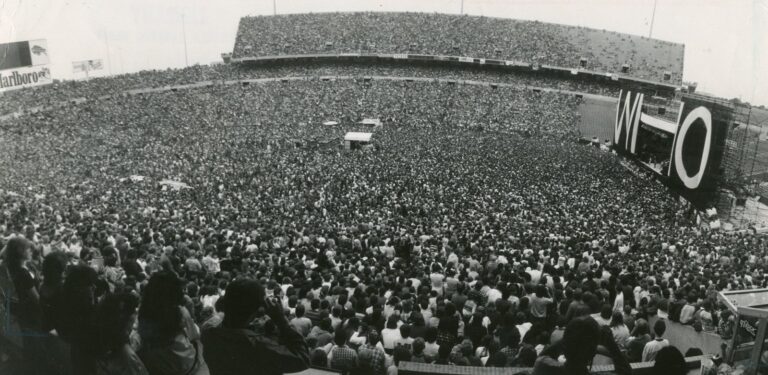
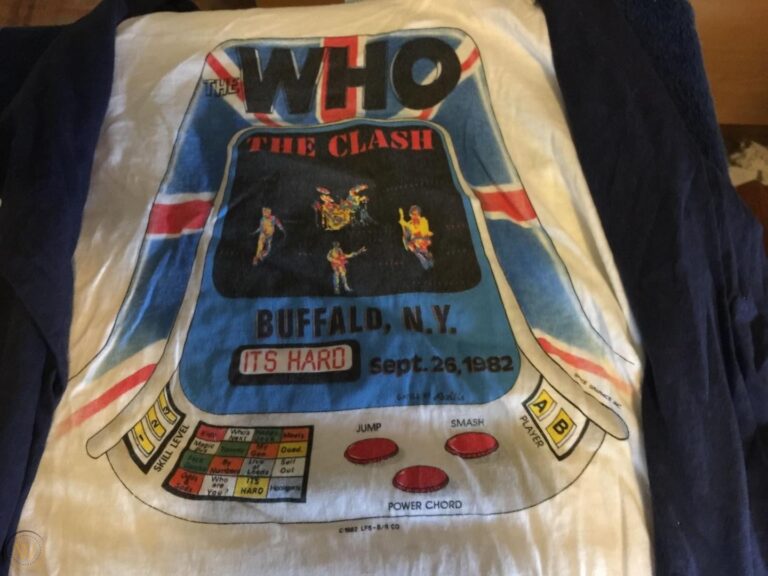
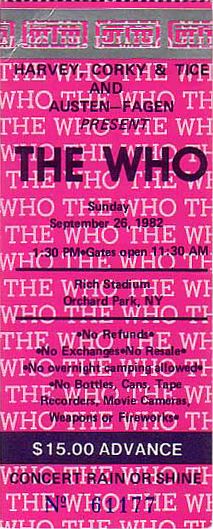
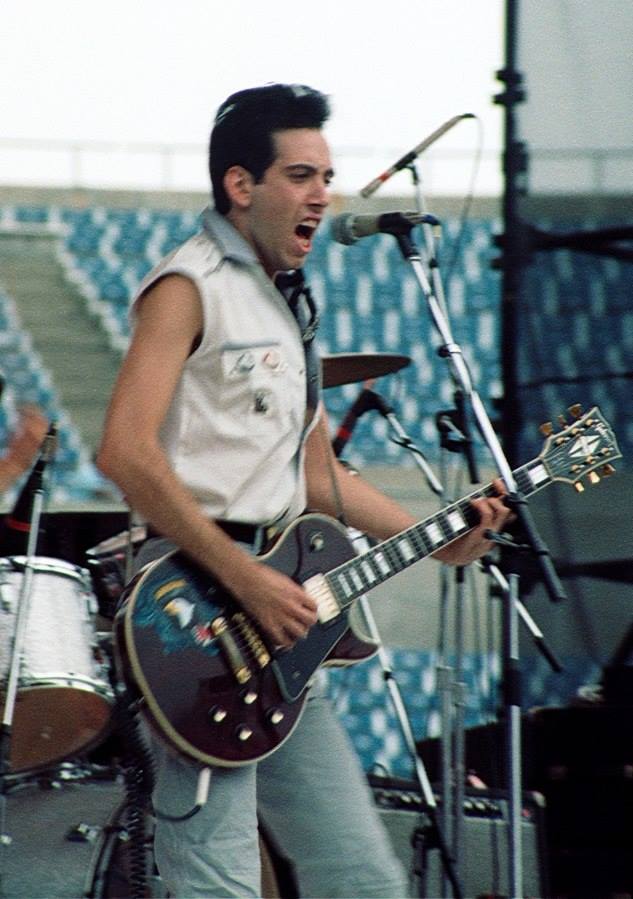
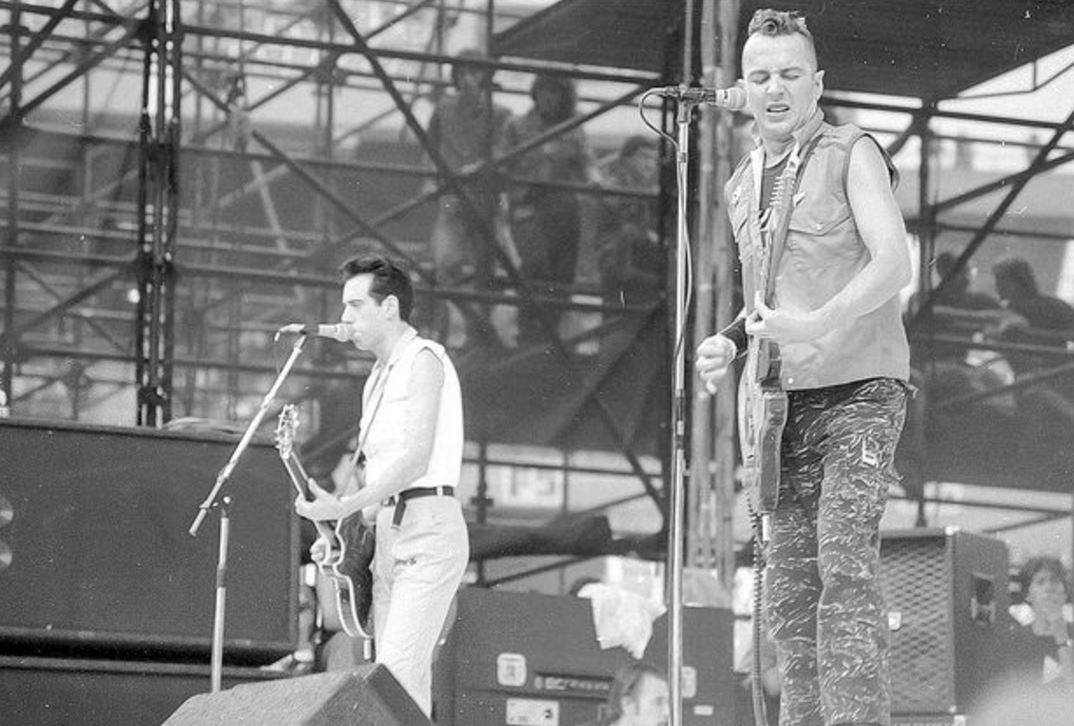
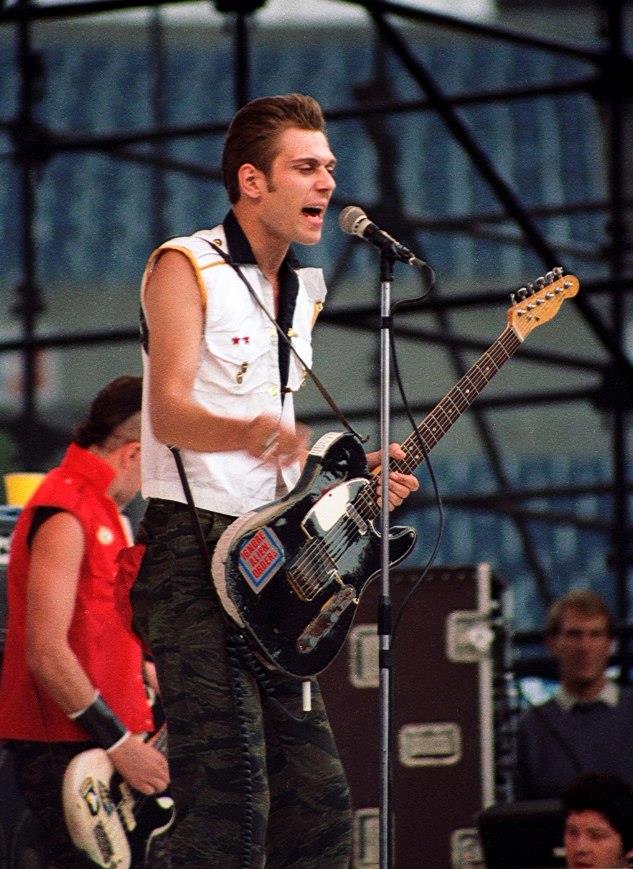
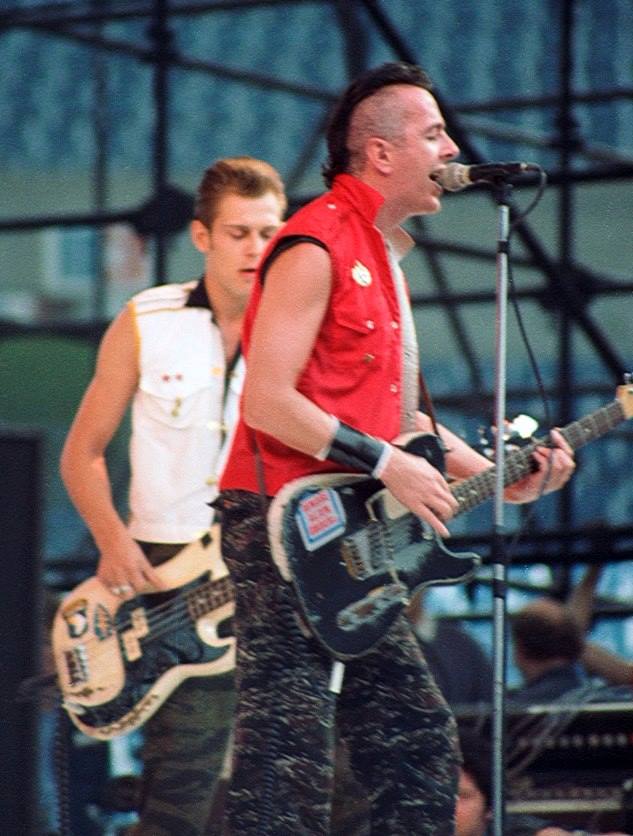
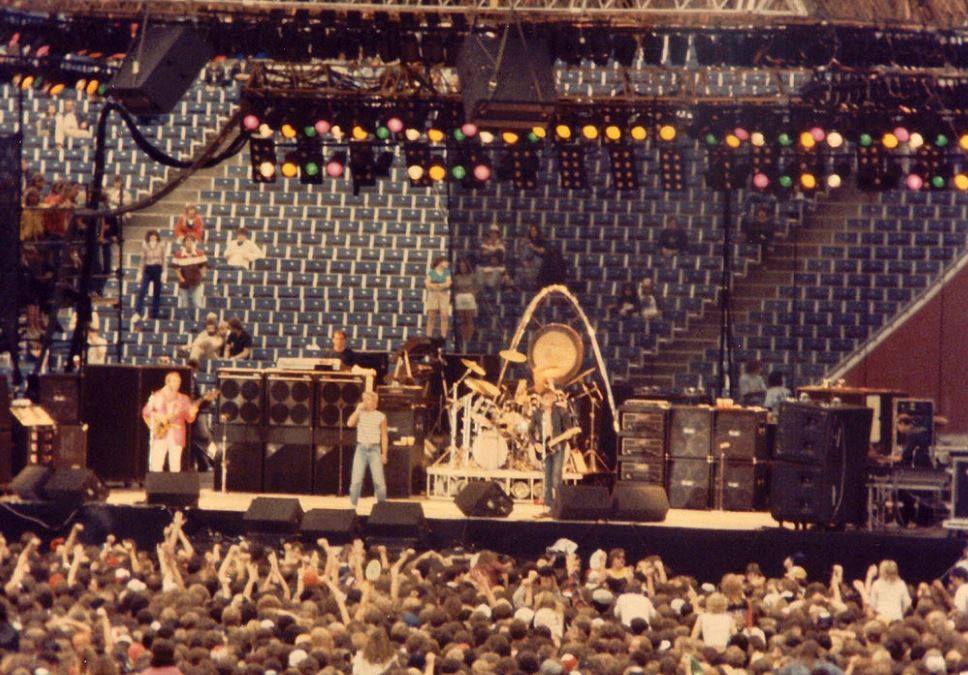
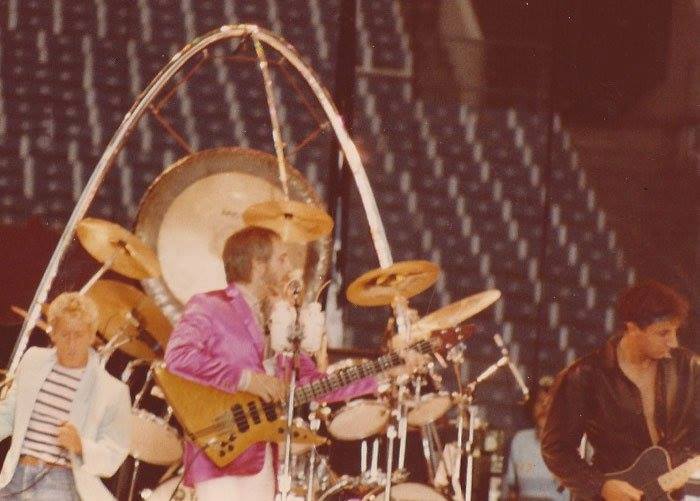
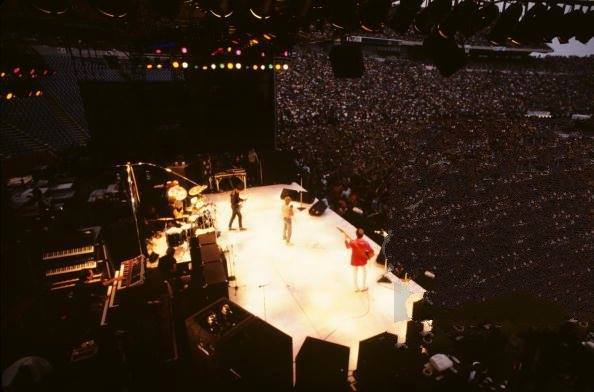
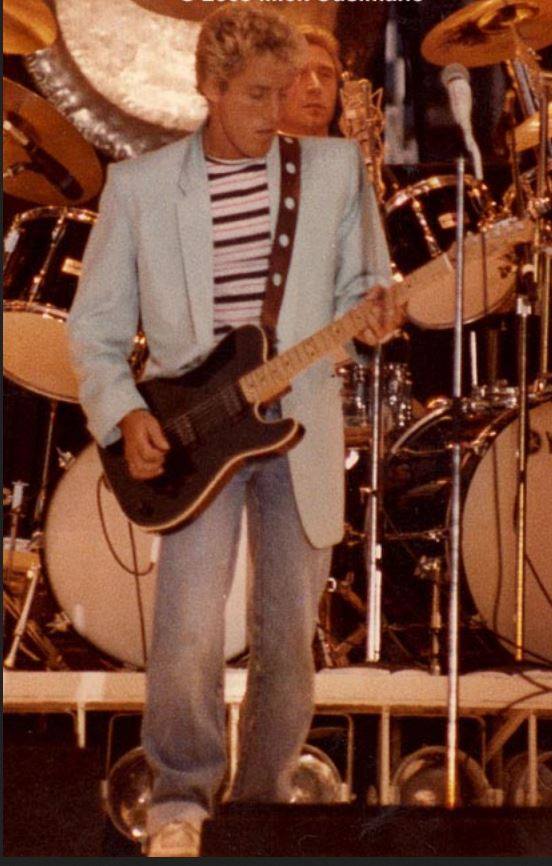
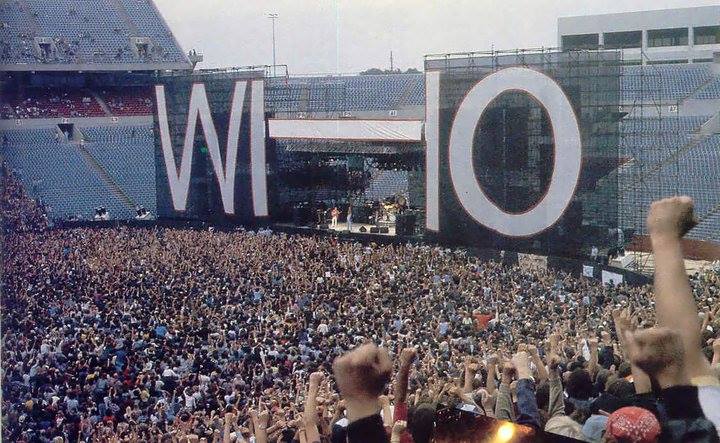
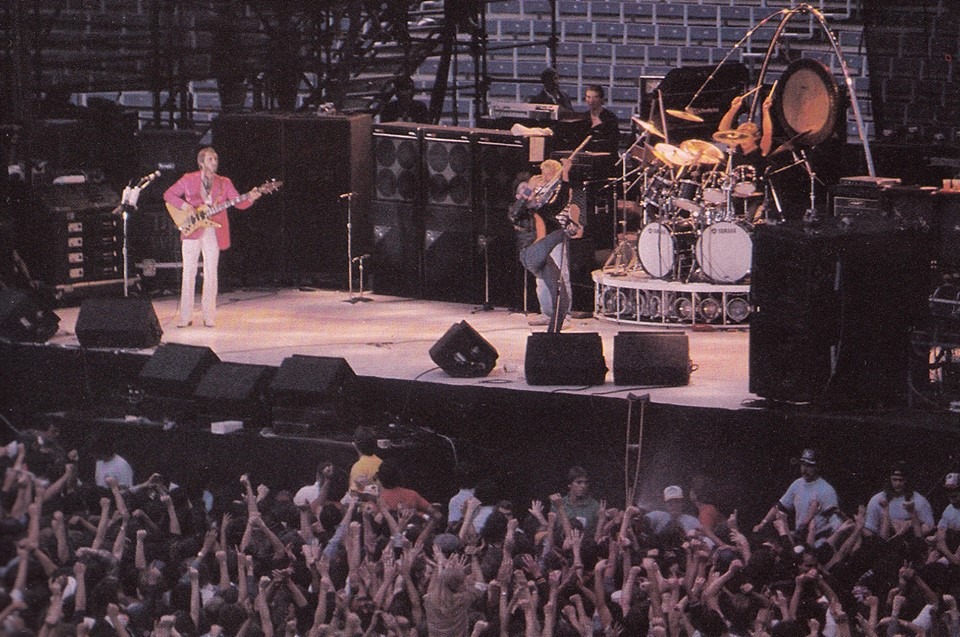
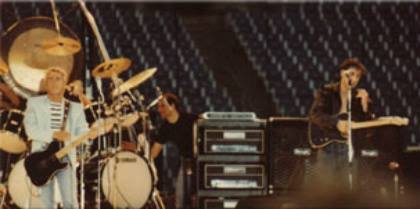
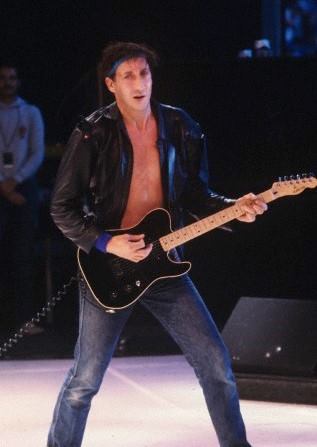
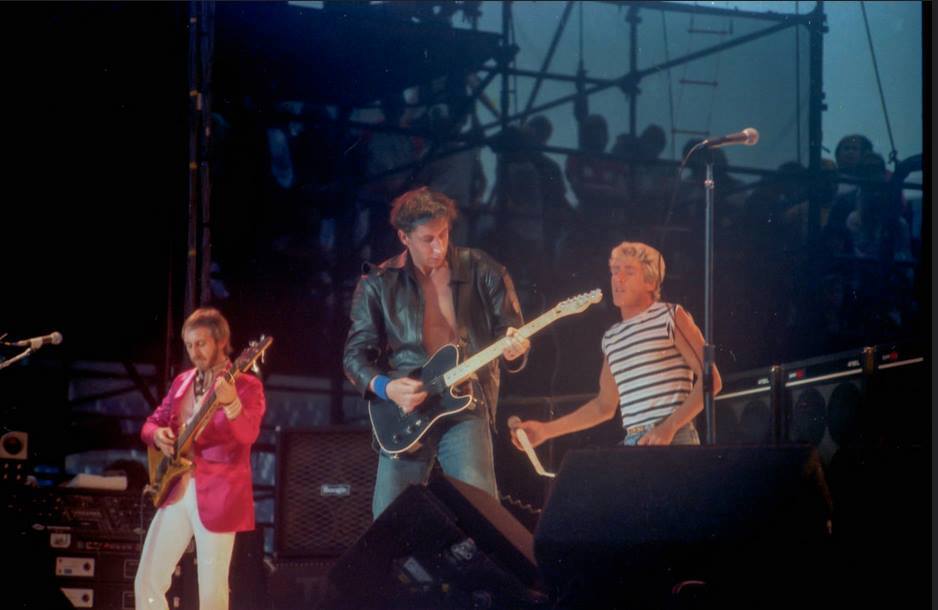
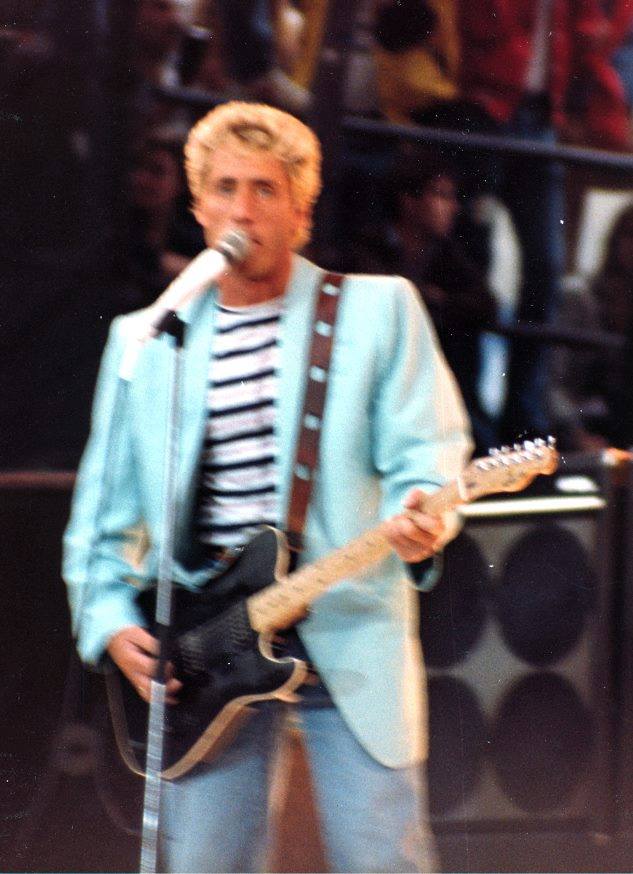
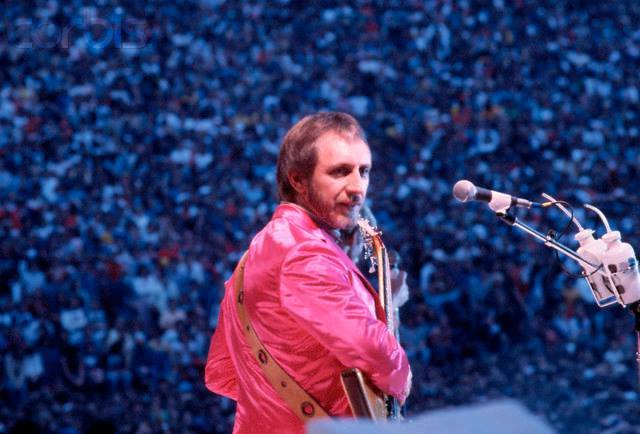
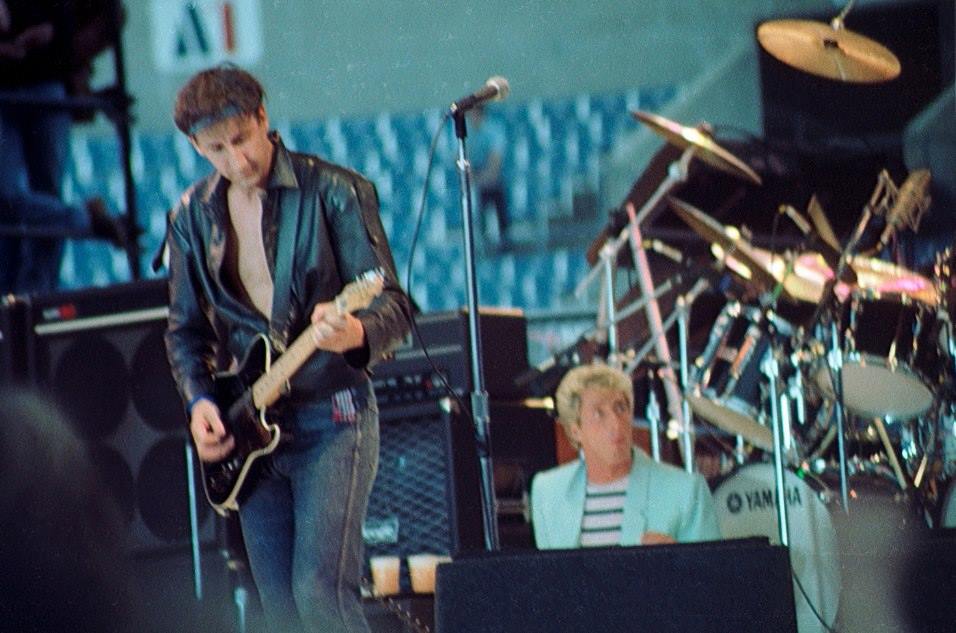
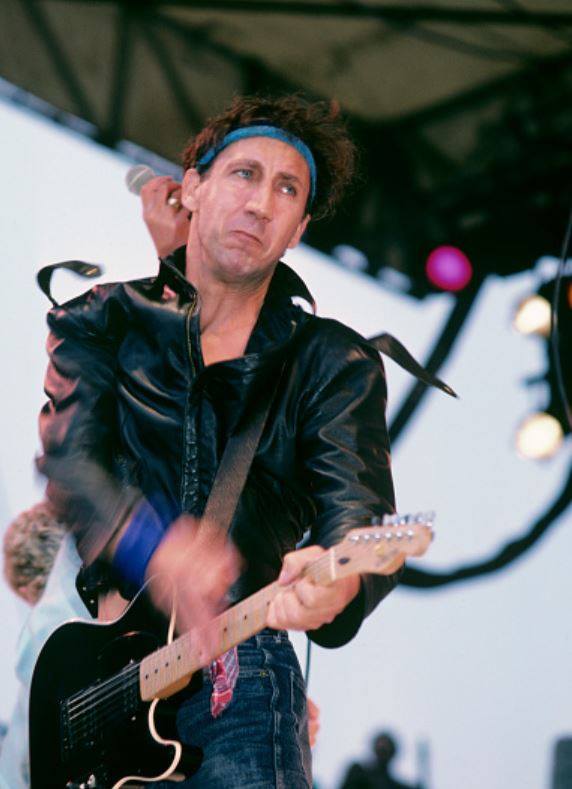
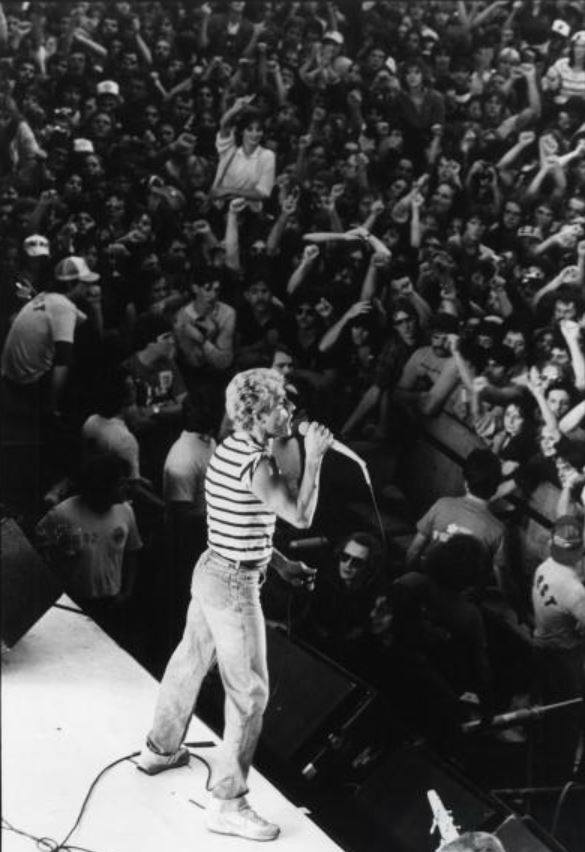
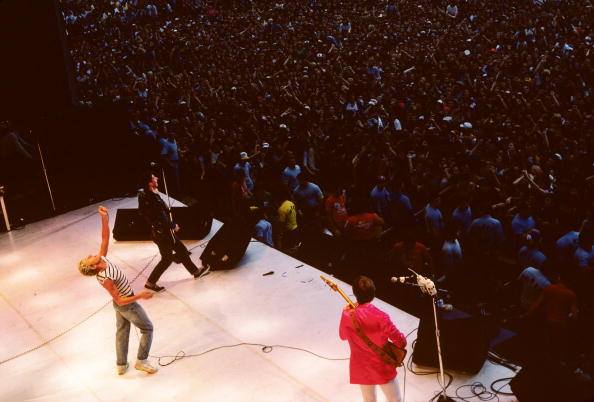
    London punks, both young and old, invaded Orchard Park, NY on September 26, 1982. The Who and The Clash, as well as New York Dolls frontman David Johansen, performed before a sold out crowd at Rich Stadium, home of the Buffalo Bills.

    the who the clash
    photo by Michael Mack

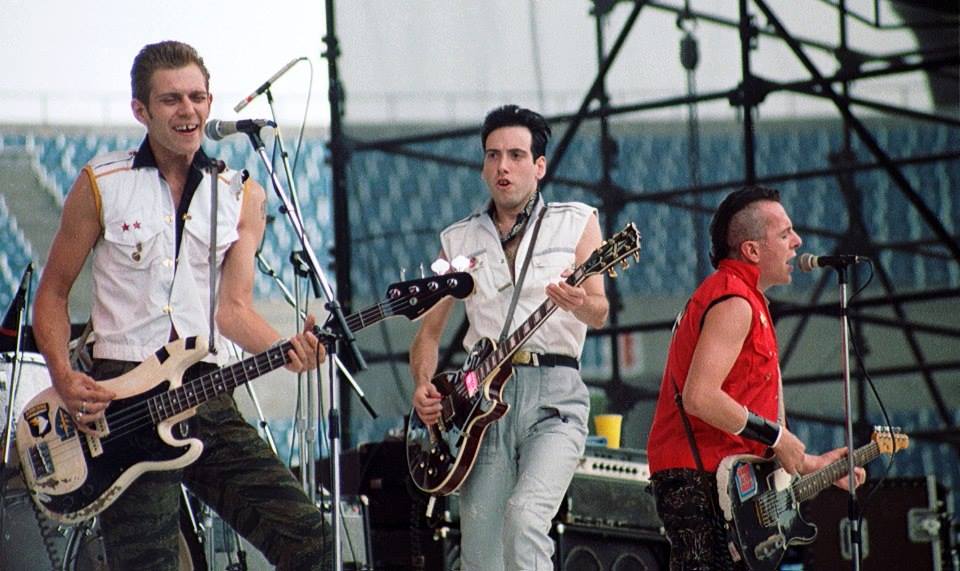
    This concert is seen as an historical moment, where one older punk band, The Who, passed the torch to a new, younger one, The Clash.

    the who the clash

    An expectadly rowdy crowd of more than 80,000 packed The Rich. David Johansen warmed up the crowd with a half-hour set, including “Stranded in the Jungle” and a medley of the Animals “We Gotta Get Out of This Place”, “Don’t Bring Me Down” and “It’s My Life.”

    The Clash were just coming off the release of Combat Rock, recorded at Electric Lady Studios on West 8th Street in New York City. Hits including “Rock The Casbah,” which reached the Top 10 in America, and “Should I Stay Or Should I Go” gave The Clash a worldwide smash hit in 1982. Less than a year after this performance in Buffalo, guitarist Mick Jones would leave the band. Watch a slideshow of photos by Michael Mack of The Clash from the performance below.

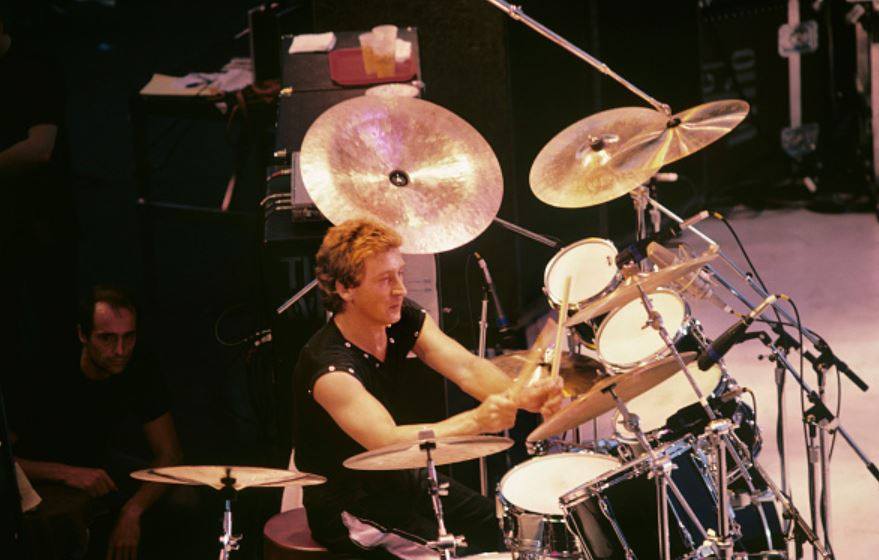
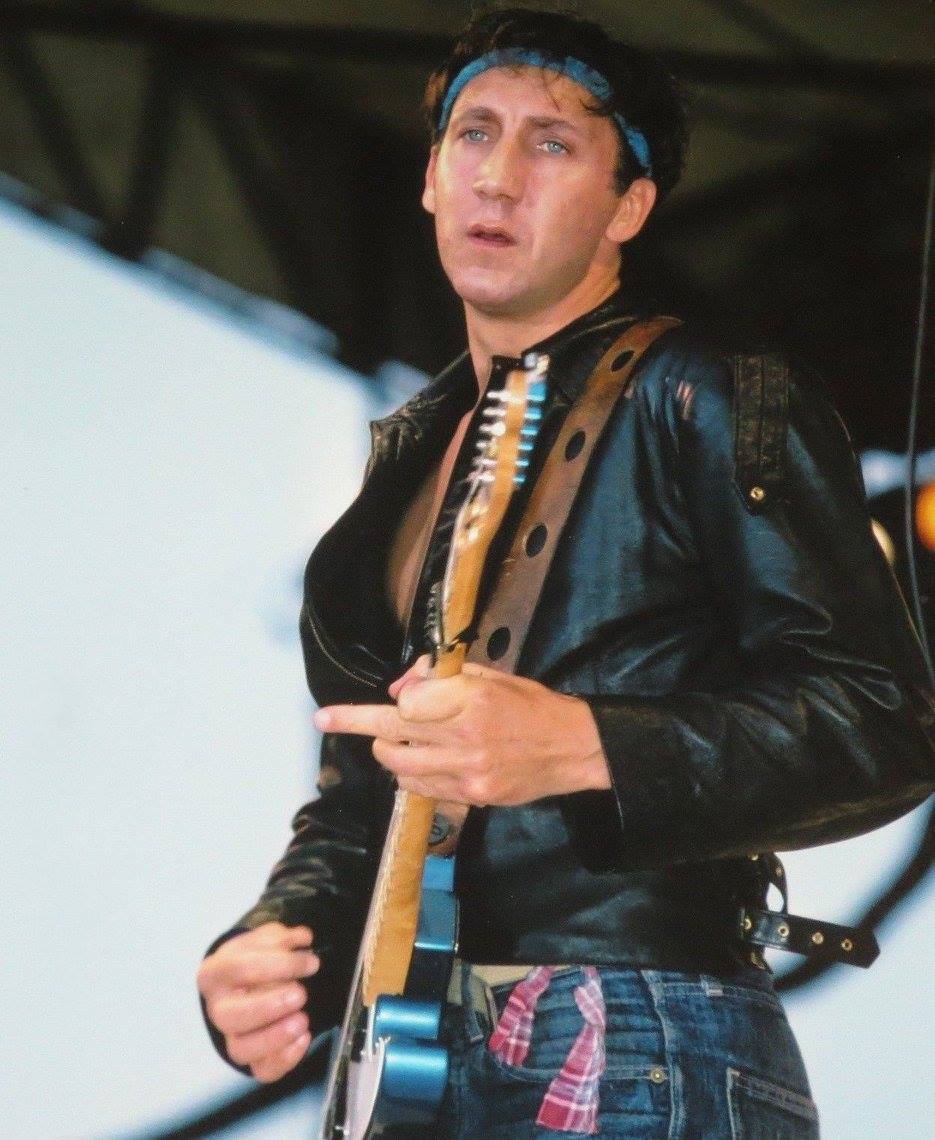
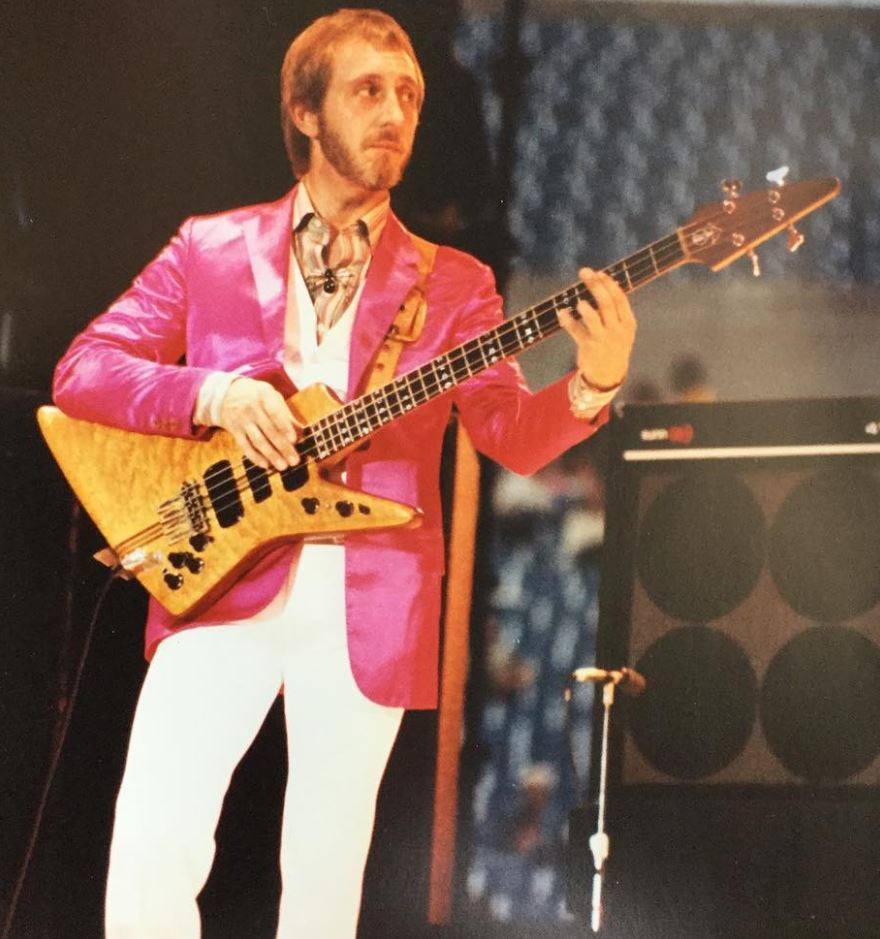
    For The Who, this was the first of many farewell tours, having lost drummer Keith Moon just 4 years prior. Kenney Jones (Small Faces, Faces) took over behind the kit, with Tim Gorman on keys, Roger Daltrey on harmonica, guitar, and vocals, John Entwistle on bass and Pete Townshend on guitar and vocals.

    Given the packed Rich Stadium – with entrances only on the floor at the time – the temperature inside the stadium was warm to say the least, with fans drenched in sweat, and some passing even out. As if Keith were looking down from heaven, the skies that were overcast all day opened up during the emotionally charged “Love Reign O’er Me,” the only time of the evening it would rain. As the song ended, Daltrey remarked “How’d you like that one?,” with Townshend saying “Even the Rolling Bones couldn’t have done that one.”

    The Who The Clash
    via Matthew Heimberg

    While no video or audio exists from this show of The Who, you can view a slideshow of photos by Michael Mack here, and watch below for The Who from December 17, 1982, closing our their North American tour in Toronto, Ontario, Canada.

    The Clash setlist: London Calling, Career Opportunities, The Guns of Brixton, Police On My Back, Rock the Casbah, Magnificent 7, Train in Vain, Brand New Cadillac, Armagideon Time, Should I Stay or Should I Go?

    Encore: Clampdown, I Fought the Law

    The Who setlist: Substitute, I Can’t Explain, Dangerous, Sister Disco, The Quiet One, It’s Hard, Eminence Front, Behind Blue Eyes, Baba O’Riley, I’m One, The Punk And The Godfather, Drowned, A Man Is A Man, Cry If You Want, Who Are You, Pinball Wizard, See Me Feel Me, 5.15, Love Reign O’er Me, Long Live Rock, Won’t Get Fooled Again

    Encore: Naked Eye, Summertime Blues, Twist And Shout

    photos by Marc Starcke

  • The Dead Give ‘Em The Horns In Syracuse: September 17, 1973

    The Grateful Dead played a brief 10-show tour in September of 1973 and included among these was a stop at the Onondaga County War Memorial in Syracuse. This tour featured the one and only time the band would be joined by a horn section on stage. Tenor saxaphonist Martin Fierro and trumpeter Joe Ellis were familiar with some of the Dead’s catalog, mainly due to their involvement with the recording of the band’s sixth studio album Wake of the Flood, which would be released the following month.

    As it happens, Fierro and Ellis were members of The Doug Sahm Band which served as the opener for eight of these shows. Since they were already on tour with the Dead, a sit-in seemed only natural. According to Fierro, the horns were not incredibly well received at the time as this was a stray from the standard Grateful Dead concert experience. But their knowledge of the material is evident and offers a unique twist on some of the classic songs from the band’s repertoire. On this evening in Syracuse, with the exception of “Here Comes Sunsine,” the entirety of Wake of the Flood would be played, serving as a sneak peek for the new album.

    grateful dead

    The recording of this show, which can be found below, doesn’t start until the tail end of the “Tennessee Jed” opener. The Dead follow this up with a blistering “Me and My Uncle” with Phil Lesh coming in loud and clear on the bass guitar. This is succeeded by another first set staple with an uptempo version of “They Love Each Other” which made its debut earlier this year and is highlighted by some delicious guitar licks from Jerry Garcia and timely fills from Keith Godchaux on piano. It’s a short, but sweet, take and very much to the point.

    Some classic Dead tuning then takes place with Bob Weir advising the crowd about a “couple of technical problems” before the band launches into an older first set standard with their cover of “Beat It On Down The Line.” Here, Donna Jean Godchaux makes her voice heard for the first time as she and Weir harmonize throughout on another crisp albeit brief opening set selection. The musical reigns are then passed back to Garcia who leads the band through a slow and soulful “Sugaree” with Lesh coming in hot on bass towards the song’s end.

    grateful dead

    Weir then reassumes lead vocals on another rapid first set song in “Mexicali Blues” that the Dead navigate through with ease before “Loser,” which is also partially cut on the recording and has some echoey vocal effects from Garcia to along with his signature pristine guitar solo. This sets the stage for a poignant “Looks Like Rain,” a song first featured on Bob Weir’s solo album Ace that was released last year. It features some interesting synthesizer and electric keyboard work from Godchaux that supplements Weir’s always impassioned vocals nicely.

    Things stay in the emotional vein with a slow and plodding “Row Jimmy” that follows with Garcia, backed by Donna Jean on vocals, leading the way and drummer Bill Kreutzmann maintaining a deliberately steady tempo throughout. A little steam begins to pick up with the “Jack Straw” that follows which sees more intricate piano work from Godchaux to go along with some three-part vocal harmonies before Garcia leads the way on another fairly new number in “Loose Lucy” which also made its debut earlier this year.

    Donna Jean even gets to take center stage in this opening set in Syracuse as she jumps on lead vocals for the Grateful Dead’s cover of Loretta Lynn’s “You Ain’t Woman Enough.” It’s a song the band would only play a handful of times in 1973 and this is the second to last ever performance of it with her husband throwing in some spirited work on piano. This carries right over into the “El Paso” that follows before the Dead end the first set at the War Memorial with the Robert Hunter and Garcia-penned “Casey Jones” that starts off rather mellow but, like a train barreling downhill, picks up in speed and intensity by the time all is sang and done.

    grateful dead

    After a chock full first set with 15 different songs played, the Dead opened up and let loose with a much more improvisational second one on this night in Syracuse and finally broke out the horn section. After an introductory “Mississippi Half-Step Uptown Toodleoo,” Martin Fierro and Joe Ellis finally emerge for the majority of the rest of the show. They begin with a rather unknown tune at the time, “Let Me Sing Your Blues Away,” which would be featured on the upcoming Wake of the Flood release. Garcia, Weir and Donna Jean are all involved on vocals with Fierro taking an extended saxophone solo that helps serve as the song’s bridge. It’s a song the band would only play live on this brief September 1973 tour.

    Phil Lesh then gives a belated and quick introduction of Fierro and Ellis before the start of “Truckin’” which has a bouncier, jazzy feel to at the outset thanks to the additions from each. The horns maintain a steady presence all throughout the composed section and well into the jam that ensues. It’s a song that had been played three times already on this tour so there’s a discernable comfort level in the playing which makes for a very unique take on a Grateful Dead classic that sees Fierro and Godchaux linking up to take control in the latter portion of the jam that ensues.

    The ensemble would go on to play some more songs from Flood, including “Eyes of the World” with Fierro and Ellis continuing to provide background harmonies on horns, especially in the purely instrumental sections between verses. Fierro gets an extended solo as the jam progresses and meshes nicely with the rest of the band although Ellis sounds a bit too excited and a bit off key before Garcia reels things back in to a more customary “Eyes” jam. Once finished, the band then jumps right into a full “Weather Report Suite” where the horns are much more understated and seem to fit a little better. The same can be said for the beginning of “Let It Grow” as Fierro and Ellis are comfortable with the composed/lyrical section but seem to do a little too much once the jam that ensues begins to stretch out a little.

    The Grateful Dead wrap up this Syracuse show with a mellow and somber “Stella Blue” that sees Fierro on sax mesh perfectly with Garcia’s guitar tone. After one last tuning break, this one seemingly inspired by the Looney Tunes theme, a “Sugar Magnolia” closes things out with the horns taking a bit of a back seat at first and then coming alive in the “Sunshine Daydream” section.

    Overall, there are moments of greatness, mainly during compositional and slower sections, but the horns seem to try to do a bit too much when the improvisation kicks into high gear. This is likely what led to some Deadheads being less than enthused about their addition to a traditional Grateful Dead show. This brief tour would go on to Philadelphia and Pittsburgh, PA before ending in Buffalo at the War Memorial nine days later.

    Grateful Dead – Onondaga County War Memorial – Syracuse, NY – September 17, 1973

    Set 1: Tennessee Jed, Me & My Uncle, They Love Each Other, Beat It On Down The Line, Sugaree, Mexicali Blues, Loser, Looks Like Rain, Row Jimmy, Jack Straw, Loose Lucy, You Ain’t Woman Enough, El Paso, Casey Jones

    Set 2: Mississippi Half Step, Let Me Sing*, Truckin’*-> Eyes Of The World*-> Weather Report Suite Prelude*-> Weather Report Suite Part 1*-> Let It Grow*-> Stella Blue, Sugar Magnolia

    *with Joe Ellis on trumpet and Martin Fierro on saxophone

  • Spread Love, It’s the Brooklyn Way: 30 Years Since Biggie’s “Ready to Die” And The Evolution of Rap Beef

    Thirty years ago, one of hip-hop’s biggest stars prepared to release his debut album. Biggie Smalls, The Notorious B.I.G, or Biggie, whichever nomenclature most suits you, had recorded one of the most important and influential albums of not only his era, but in hip hop and music history. As rap music began to take its place as part of mainstream culture, there was no telling what would follow with the release of Ready to Die on September 13, 1994.

    ready to die

    Now, a full three decades later, it’s impossible to ignore the impact of Biggie’s only non-posthumous release. For a Brooklyn native, Biggie’s music is ever-present; blasting through the speakers of passing cars, in stores, and especially at parties (even now, no party is complete without a splash of “Warning” or “Mo Money Mo Problems”).

    In Brooklyn, Biggie’s impact is found everywhere. You won’t get too far without seeing a mural dedicated to him. From East New York to Bay Ridge to Caroll Gardens, his face is plastered on walls, t-shirts, and merchandise in almost every store, and one of his most iconic (and laughably ironic) quotes from “Juicy” is spray painted everywhere: “Spread love, it’s the Brooklyn way.” Bed-Stuy revels in his impact on hip hop and the borough, as Biggie repped Brooklyn hard. Hence, now the city immortalizes him within the city’s infrastructure, with the city even naming the street he was born on after him. Rappers copied everything he had to offer; his flow, his style, his music subjects. They even would gather an entourage that was similar to Junior M.A.F.I.A., and of course, would copy his “beef” with Tupac.

    Biggie’s Legacy

    However, his legacy doesn’t stop at street signs and t-shirts or even music itself. The impact of his death (and Tupac Shakur’s) rewrote the rules to which an artist gains mainstream momentum.In the years following his and Tupac’s deaths, listeners were itching for another great conflict, missing the frequent drama and excitement and excellent music it brought. The entertainment of the Bigge-Tupac beef was what plunged rap into the mainstream, and it was only a matter of time before it became a regular aspect of the culture.

    ready to die

    Amidst the influx of West Coast success (The Chronic, Doggystyle), Biggie, Nas & Wu Tang helped turn the tide, bringing a certain grit that over produced West Coast beats could not match. After all, Ready to Die was a testament to Biggie’s days as a young hustler just trying to make it big, as he details the life in the streets and the drug game. The album featured artists that would later be leading figures in hip hop, including Diddy, Method Man, and Lil’ Kim. The three singles released in anticipation of the album, “Juicy,” “Big Poppa,” and “One More Chance,” charted on the Billboard Hot 200 and were certified Gold (“Juicy”) and Platinum (“Big Poppa” and “One More Chance”) by the RIAA.

    ready to die

    The Aftermath of Ready to Die

    The surmounting success of Biggie’s debut implemented a drastic change in the culture’s perception of hip-hop. Rap was now a serious contender in the music industry, developing its own subculture with a discernable music and fashion style. Rappers from both coasts became more present in media, each competing for the top spot in the game; Biggie, Diddy, and Wu-Tang Clan from the East, and Dr. Dre, N.W.A, and Tupac from the West.

    But with this emergence, a dark side followed. West Coast rappers were still gaining traction in the scene, battling with East Coast rappers for the top spots on the charts and within the zeitgeist. Biggie’s Ready to Die caused an almost cult-like following to develop in New York, forming the group Junior M.A.F.I.A. soonafter. In November of 1994, just two months after Ready to Die was released, California-based rapper Tupac was shot and robbed at Quad Studios in New York. By the time news of the shooting broke, most people speculated that Junior M.A.F.I.A was behind it, even if the shooters were completely unrelated. But this didn’t stop Pac from publicly pointing the finger at Biggie

    Every Man For Himself

    The music industry competitive, and there was simply not enough room for every rapper to become mainstream. Thus began an incredibly competitive culture within the genre, constantly pushing each newest member to “pick a side,” both for protection and the advancement of their career.

    Within this competitiveness, the culture of “rap beef” became part of the norm for the genre. Rappers were never ones to shy away from expressing their disdain towards their peers.

    It was during these three years that rap listeners were taking sides, proving their loyalty to the coasts, and in turn, their leaders. The Biggie vs. Tupac battle was dominating the hip-hop industry, with rappers that weren’t even affiliated with the main rivals picking sides and taking shots at one another.

    All of the media attention and perceived beef would eventually lead to the tragically early deaths of both Biggie and Tupac. In September of 1996, Tupac was shot and killed in Las Vegas, when he was only 25. Six months later, in March of 1997, Biggie was shot and killed in Los Angeles at the age of 24.

    Biggie’s Legacy and The Development of Rap Beef

    Despite its tragic ending, Biggie and Tupac’s battles were just the beginning of this development in rap culture. Rap music may have lost two of its biggest stars, but that didn’t mean that the competitiveness of the genre was ever going to end. Rap beef was now implemented into the culture and a proven method to generate album sales.

    The 2000s saw several incredibly entertaining and fundamental beefs between rappers that really elevated the genre to where it is today; Jay-Z and Nas, 50 Cent and Ja Rule, LL Cool J and Canibus, Nicki Minaj and Lil’ Kim, and so many more went through periods of time throwing shade at, or outright dissing one another on their tracks. For many rappers, their best chance at catapulting their careers was through conflict. 50 Cent became a household name through his feud with Ja Rule. While Nas’ feud with Jay-Z brought out the best out of him.

    After the tragic ending of the Biggie and Tupac feud, rap beef became less of a genuine feud and more of a corporate tool to keep hip-hop in the mainstream. There was also this sense that a rap beef would make or break someone’s career. If a rapper admitted to losing their beef, their career was on standby or disappeared completely. Some credit 50 Cent’s endless dissing of Ja Rule led to his demise, while Canibus suffered perceived losses to LL Cool J and Eminem, helping kill his flame.

    Hip Hop Bo Longer Jumping

    During the last few years, rap has grown stale. The lyrical charm was wearing off, and the idea that rap was “so different” from other kinds of music, what originally made it stand out against pop, rock, and other existing trends, was no longer true. Rap, even though it dominated radio and Billboard charts and popular culture, was no longer something unique and special; rather, it was a pre-packaged, commercialized version of what listeners were getting pre-hip hop.

    The genre has been performing poorly on the charts since 2020 after it started to turn to social media platforms like TikTok to advertise. Even if this did help more people reach the genre, it paved the way for thousands of artists to overload the app with their own music, so much so that it all began to blend together, devoid of originality or effort, and more concerned with “blowing up on TikTok” than saying or doing anything truly meaningful or different.

    A New Age

    The way we listen to music now has also played a major role; before streaming, purchasing physical copies of music meant that you could only choose a few albums at a time, or pick one and stick to it until the next album comes out. Now, we have the largest access to all of the world’s music on streaming services, whether it be Spotify, Apple Music, Soundcloud, or YouTube. Even if a rapper isn’t selling a physical copy of their music, or hasn’t been signed to an actual record label, you can access their music at any point. It’s a double-edged sword: you’re able to gain knowledge of incredible underground talent, but you’re also able to find someone that outshines them in less than ten seconds.

    Rap “beef” also took a major turn. Instead of violent threats or disses, the “beef” became more about revealing a rapper’s secrets. We see this especially with the beef between Pusha T and Drake, when Pusha revealed Drake’s secret son in “The Story of Adidon” before Drake had the chance to do the Adidas advertisement with him. There was now a fundamental shift in what rap beef was about; it was no longer a race to the top based on merit or skill, but about character.

    Drake v. Kendrick

    This brings us to the one and only Drake. Over the course of Drake’s almost two-decade-long career, he has amassed rivals spanning across multiple genres, from The Weeknd, to Pusha T, Kanye West, Meek Mill, to even his own mentor Lil’ Wayne. After all, the rumor mills say that he took music from The Weeknd for his GRAMMY-winning album Take Care and he has ghostwriters. All of these were accusations that would hurt any other rapper’s career, yet Drake was able to stay at the top of the rap game for years afterward. He continued to dominate the charts, and every album he released quickly rose to the top. Rendering impermissible to decline.

    That is until Kendrick Lamar reemerged onto the scene. With “Euphoria,” where Kendrick makes scathing accusations over a six-minute track accusing Drake of being a gambler, drug addict, and neglectful father. While also reminding the world of Drake’s not-so-spotless record with women and underage girls.

    What Now?

    But in an era where hip-hop has become so stale, even the reactions and consequences of a rivalry this intense are stale. The biggest and most impactful consequence of Kendrick’s diss tracks was a crowd of over 20,000 shouting, “Tryna strike a chord and it’s probably A-minor,” at The Pop Out in Inglewood on Juneteenth.

    However, there is something different about this rivalry that encompasses what rap beef has become about in the last three decades. It’s no longer a physical game, it’s a mental one. Kendrick did not set out to physically harm Drake in any capacity.

    Kendrick’s accusations against Drake, combined with people bumping “Not Like Us” all summer, reveal something to the audience more sinister than violence. This was not a rap beef that was essentially a petty argument about who was “better” Kendrick set out to start and finish this beef by ending Drake’s credibility within hip hop culture. He wants Drake’s impact on rap reversed. In the end, he doesn’t want Drake dead, he just wants Drake gone.

    It’s hard to tell whether or not Drake is going to be able to bounce back from the blow of “Not Like Us.” Having crowds of people, including some of the biggest stars and Drake’s own personal idols, singing “You not a colleague, you a f—kin colonizer” will not be easy to retaliate against. Perhaps Drake should listen to “What’s Beef” and take this one on the chin.

  • Flashback: Frank Zappa’s Lone Performance at SPAC, September 1, 1984

    Labor Day weekend, a noteable bootleg and a weird ramble about women’s rights. What connection do these three things have? They’re all elements of the one and only time Frank Zappa performed at Saratoga Performing Arts Center (SPAC), on Saturday, September 1, 1984.

    Zappa’s lone performance at SPAC was the final show of the first leg of the band’s North American tour before heading to Europe a week later for 28 shows stretching into mid-October. Just over a week after returning home, the band picked back up in the Northeast at Worcester Palladium in Massachusetts, with shows in NYC on Halloween at Felt Forum (now the Theater at Madison Square Garden) and the SUNY Stony Brook gym a few days later.

    Snaking through the mid-Atlantic, this tour returned again to New York, with a November 16 show at SUNY Buffalo’s Alumni Arena, a whopping eight shows for Zappa heads across the Empire State, and a monster tour altogether with more than 100 shows in the calendar year.

    Frank Zappa SPAC

    Starting the tour on July 17, 1984 with six consecutive nights at the Palace Theater in Los Angeles, Zappa and his band would play four more shows in California that month, then head east through Arizona, New Mexico, Colorado and the Midwest, arriving in the Eastern Time Zone on August 12 in Cuyahoga Falls, OH. After a day off and show in Toronto at Canadian National Exhibition Grandstand, the band played Jones Beach on August 16.

    Frank Zappa SPAC

    Now if you were really into Zappa at the time, you could have caught multiple shows in New York this month, starting at Jones Beach, then The Pier in NYC, the NYS Fair in Syracuse and the Mid-Hudson Civic Center in Poughkeepsie, all in a 13-day span, with time to rinse and rest before the tour closer at SPAC on September 1. Not to mention the shows later that fall downstate and in Buffalo.

    Among Zappa fans is a bootleg known as Kreega Bondola, which features a recording of Frank Zappa on September 1, 1984 at SPAC is one of the more widely circulated Zappa shows. This is thanks to the supposed soundboard source and first generation copy the recording stemmed from.

    The name of the bootleg refers to a call from Tarzan, “kreeg-ah bundolo” which translates to “Beware! Kill!,” which would be the 1984 alternate name of “Let’s Move to Cleveland,” which also had pen names of “Canard du Jour,” and “(So) Young and Monde.” There is also a 14-minute version of “Kreega Bondola” which may explain how it became the title of the bootleg.

    Additionally, songs from the SPAC performance, as well as the band’s December 23, 1984 show at Universal Amphitheater in Universal City (Los Angeles), California, were featured on the unofficial bootleg, All You Need is Glove, released in 1985.

    With a lineup that was only found in the North America tour of 1984, the band included Frank Zappa (guitar, vocals), Ike Willis (guitar, vocals), Ray White (guitar, vocals), Scott Thunes (bass, vocals), Chad Wackerman (drums), Alan Zavod (keyboards) and Bobby Martin (keyboards, sax). Napoleon Murphy Brock had been on tour with the band from mid July until August 1, but was sidelined with stomach flu and missed the remainder of the US tour.

    photo by Steve Schapiro

    As a bootleg, Kreega Bondola was an entry level Zappa live performance for many of the day, offering a little something for everyone.

    If you’re a casual Zappa fan or looking to wade into the waters, you’ll find “Carolina Hard-Core Ecstasy,” “I’m The Slime,” “Keep It Greasey,” and “Muffin Man” spread throughout the two hour concert. Add in Zappa’s guitar going toe-to-toe-to-toe with Ray White and Ike Willis on a shredding version of “Let’s Move to Cleveland” and you’re waist deep in live Zappa.

    For the serious Zappa heads out there, there are 24 songs spread across the show and encore, pulled from no less than 13 Zappa studio albums and records, a wide net cast across an audience that would only see Frank this one time at SPAC.

    Opening with “Heavy Duty Judy” and “Carolina Hard-Core Ecstasy” – a pair of Zappa and Captain Beefheart tunes – a seven minute “Advance Romance” followed, along “I’m The Slime” and the anti-MTV message that went along with it. Highlights include a short “What’s New in Baltimore?,” “Lucille,” “Teenage Wind” and “Sharleena,” and the stellar aforementioned version of “Let’s Move to Clevland.”

    A pair of songs, “Cocaine Decisions” and “Nig Biz,” which were often played in succession, offered a message that outweighed the music. The first was Frank’s critical take on cocaine use/abuse and the decisions that come from those who use the drug, which also highlighted drummer Chad Wackerman’s use of electronic drums for toms (at Frank’s suggestion) along with standard snare, bass drum and cymbals. The latter is a hot take on the music industry, with the protagonist, a musician under contract with a record company, being made to feel like a slave, turning to drugs in order to be accepted. Both songs were critical of the music industry and factored in Frank’s sharp wit and words as he channeled personal views and experience into the message.

    Then there is the encore break. Before closing the night, Frank received a letter on stage from a fan, reading it aloud for what is labeled as “Women’s Movement Rap” on the Kreega Bondola bootleg. The note made light of Frank’s attitudes towards women, to which Frank replied “Let me tell you something about women’s movement, there is only one good women’s movement,” leading to Frank referencing sex as the women’s movement which he is most deeply involved. And it doesn’t get less ‘weird’ by today’s standards as he keeps on going. (listen here)

    The “Women’s Movement Rap” has been described by others as “possibly the dumbest thing Frank ever said on stage,” and that is likely true for the outspoken musician, but with songs “He’s So Gay,” “Bobby Brown,” “Crew Slut” and “Be In My Video” all part of this evening’s show, let alone live rotation, it was par for the course in 1984.

    Closing the show post-‘rap’ were a smooth segue between “Camarillo Brillo,” “Muffin Man” and “Illinois Enema Bandit,” the latter of which stretches out for more than eight minutes, bringing the only Frank Zappa show at SPAC to a triumphant close. A unique show for sure in a heavy touring year for the workhorse composer and his band. Download the show here or listen below.


    Frank Zappa – Saratoga Performing Arts Center (SPAC), Saratoga Springs, NY
    Saturday, September 1, 1984

    Setlist: Heavy Duty Judy, Carolina Hard-Core Ecstasy, Advance Romance, I’m The Slime, Be In My Video, What’s New In Baltimore?, Lucille Has Messed My Mind Up, Ride My Face To Chicago, Teenage Wind, Truck Driver Divorce, Cocaine Decisions, Nig Biz, Sharleena, Keep It Greasey, Honey Don’t You Want A Man Like Me?, Carol You Fool, Chana In De Bushwop, Let’s Move To Cleveland, He’s So Gay, Bobby Brown, Crew Slut
    Encore: (women’s movement rap), Camarillo Brillo, Muffin Man, The Illinois Enema Bandit

  • 30 Years Later: Phish at Big Birch Concert Pavilion, July 13, 1994

    On July 13, 1994, while the Grateful Dead drew a reported 60,000 fans to northern Vermont, Phish performed five hours south at Big Birch Ski Area in Patterson, NY to a much smaller crowd who were treated to the musical risk-taking and on stage antics that Phish was slowly becoming known for, barely into their second decade of existence.

    Big Birch Ski Area – now known as Thunder Ridge Ski Area – is located in the rural town of Patterson, NY, close to Connecticut border in the northern reaches of Putnam County. Big Birch would host concerts each summer at the base of the mountain hill, with parking at the top of the unimposing slope. Tickets would be purchased at the Lift Ticket window, only $18.50 for tickets at this time.

    Phish Big Birch

    With a capacity of 6,000 and chill biker security, Phish had played Big Birch previously in 1992, opening up for Santana, but this day would be a vibe check on the growth of Phish in the greater Northeast, especially when the Grateful Dead are playing 45 minutes north of the band’s home.

    Phish had started summer tour out west, similar to the Dead that year. Stretching from Utah to Virginia over the course of June, July was an all-Northeast affair, with shows in Philadelphia, New Jersey, Maine, a pair of shows in Ottawa and Montréal, Great Woods, SPAC, FLPAC in Canandaigua, Jones Beach and finally, Sugarbush in North Fayston, VT.

    Phish Big Birch

    With such a big show and crowd expected at Highgate, some looked at the show in Patterson as the better option with fewer in attendance and the band rewarding those who made this decision. This small out of the way hill could have easily been overlooked in 1994 for the glitz and glory of all that Dead tour had in store, let alone in such a remote part of Vermont in the middle of the summer. While one band’s star was setting, the other’s was rising, but you might not know this looking subjectively at attendance (despite a capacity of 6,000, there are unconfirmed reports of only 1,000 at this show.) And for Phish, when you snooze on a mid-week show, history shows, you lose.

    But for those who attended, they knew to never miss a Wednesday show. A venue that had no permanent seating under the tent did have folding chairs lined up in the front of the venue, zip-tied together. What happened next – well there are two takes on this. First, from Phish.com:

    “Fans in the front dissembled the rows of zip-tied folding chairs and stacked them to maximize dancing space.”

    or you can take the first hand account of user SoundBoy1 on Phish.net:

    “Inside the venue had set up probably 1000 or so folding chairs in the front of the stage. They may have been ziptied together but in no way permanent. As soon as the show started the chairs went flying in every direction including the stage. There were piles of chairs in random spots through out the crowd. They were also being thrown on stage and the band was dodging them. I remember Brad Sands standing a bit offstage and corralling what he could… It took awhile for all that to settle down. During It’s Ice you can hear some feedback and Page sounds like he’s fidgeting around a bit. I think that was due to chair chucking. So first set was totally solid but no real hint of what was to go down.”

    Either way, Phish fans weren’t going to be seated for this show or have dance space impeded by meager folding chairs. The first set was playful, with a “Buried Alive” right out of the gate and a burst of energy from the “Poor Heart” that followed. Hoist, having been just released in April that year, found “Sample in a Jar” early in the set, followed by two live show staples, “Foam” and “The Mango Song.”

    A light jam emerged from the still new “Down with Disease,” Trey sang on megaphone during “Fee” and a pair of Rift songs – “It’s Ice” and “Fast Enough For You” – added to the consistent flow of the show. “I Didn’t Know” would feature Jon Fishman (Greasy Fizeek) on trombone for a change, shifting smoothly into a “Split Open and Melt” that ended the set.

    This first set is truly smooth flowing with a big cap ending in the “Melt,” but Set 2 was the treat the fans who followed the lines going south, instead of north. Opening with an unrefined “Possum,” the jam gets weird and stays that way, as the loose jam almost falls apart but is salvaged nicely. “Cavern” started with the typical drum intro, but when the lyrics arose, “Wilson” was sung instead by Trey, leaving the fan (and band?) confused for a moment. A rare mashup for Phish, they weave in and out organically of the two songs, never perfectly but just enough to make this mashup a must listen.

    The still new “NICU” bridged the gap to a “Tweezer” that seemed to open up with that part of a “Tweezer” jam right after the lyrics, but moved into the natural progression of the song after that, dialing in after following what could be considered a clumsy entry. Jazzy noodling at the end led into into a slow jam that found its way into an unsuspecting “Julius.” The “Tweezer” jam just seems to keep going if you aren’t watching the time tick from track to track. This isn’t a Bomb Factory “Tweezer” but the slow return would feature a few teases, including “I Know a Little” (Lynyrd Skynyrd) and make way for a country/western version of “Big Black Furry Creature From Mars” that took its time finding the ending of “Tweezer,” eventually.

    An ample “Mound” seemed to fit the venue nicely, with “Slave to the Traffic Light” starting very airy with a patient build towards the peak, the “Suzy Greenberg” that followed featuring “Slave” teases from Anastasio. The encore of “My Sweet One” and “Tweezer Reprise” capped the night, maintaining the energy of the first set and the cacophony of the second, a treat for the fans who made the call to see this show in southern New York.

    The band would pack up and head west for Finger Lakes Performing Arts Center in Canadaigua (now CMAC), then Jones Beach the night after. Traversing the state for these shows, plus the finale at Sugarbush was prime 1994 Phish, was a treat if you were able to see it in person.

    Listen to the show on PhishTracks or download from Etree.

    Phish Big Birch
    shirt via Brendan McKenna/PhanArt.net

    Setlist via Phish.net

    Phish – Big Birch Concert Pavilion, Patterson, NY – July 13, 1994

    Set 1: Buried Alive > Poor Heart > Sample in a Jar, Foam, The Mango Song, Down with Disease > Fee[1] -> It’s Ice > Fast Enough for You, I Didn’t Know[2], Split Open and Melt

    Set 2: Possum, Cavern -> Wilson[3] -> Cavern > NICU -> Tweezer -> Julius -> Tweezer -> Big Black Furry Creature from Mars[4] -> Tweezer -> Mound > Slave to the Traffic Light > Suzy Greenberg

    Encore: My Sweet One > Tweezer Reprise

    [1] Trey sang verses through megaphone.
    [2] Fish on trombone.
    [3] Played to the tune of Cavern.
    [4] Unfinished; Played bluegrass style to the tune of Scent of a Mule.

  • 20 Years Later: Phish’s 2004 SPAC Run

    In June 2004, the “end” was nigh for Phish as a band. The thought-to-be career-ending Coventry festival was slated for mid-August and all indications at this time was that there was no turning back and to savor every last performance. Before Phish would hang it up though, they graced SPAC with a two-day run over Father’s Day Weekend that featured moments of sheer brilliance, musical flubs that were all too common to this era and a surprise dad of their own that evoked memories of a happier time in the band’s history.

    Phish SPAC 2004

    This particular SPAC run, only the fourth and fifth times that the band has ever played here, starts off with a bit of a surprise in the form of a “Reba” opener. Phish breezes through the composed sections of this intricate arrangement with ease before a relatively brief but euphoric improvised jam that follows. Alas, there would be no whistle-led ending to this one. Instead the band immediately pivots to a much more traditional show opener in “Runaway Jim.” Trey Anastasio leads the way on this one with some driving guitar fills which continually increase the tempo and depth of the ensuing jam until it comes to a head.

    Tonight’s show maintains a relatively old school feel to it early on with the “NICU” that comes next with the “looked back on those days when my life was a haze” and the “Play it, Leo” lines both getting a hearty round of applause from the SPAC faithful. Phish then finally dives into their newer material with “Scents and Subtle Sounds” from their Undermind album which was just officially released last week. There would be no slow introduction for this one though as heard on the album. Instead Phish immediately jumps into the lyrical portion of the song, the first time they would ever do this. “Scents” yields another brief but truly uplifting outro jam with keyboardist Page McConnell pounding away on the piano while he and bassist Mike Gordon bookend it with harmonized lyrics.

    Phish SPAC 2004
    Phish 2004 SPAC poster by Louis Arzonico

    There’s a noticeable break between songs afterwards, perhaps with Phish trying decide how to end this first set at SPAC. It begins with a very slow, almost plodding “Wolfman’s Brother” that the band really takes their time with and certainly doesn’t suffer from a lack of funk. The “Walls of the Cave” that follows provides some of the best moments of the first set. After its typical thunderous outro jam, Phish takes it around the block and then some, going into a full Type II ambient/melodic jam that includes guitar riffs from Anastasio that would reappear in tomorrow night’s second set. As the jam slowly peters out, drummer Jon Fishman starts up the signature high-hat intro to “David Bowie” which closes out the first set in grand fashion.

    Phish jumps right back into the deep end to begin the second set with the second ever performance of “A Song I Heard The Ocean Sing,” another new selection from Undermind which debuted days earlier in Brooklyn. It showcases the band’s true colors with a rollicking early jam that stays true to the song’s original structure before veering off into another exploratory Type II vehicle that elicits authentic aquatic vibes in its early stages before a slow and gradual reshape back to form.

    Phish SPAC 2004
    poster by Jason Lees

    This sets for the stage for “Piper,” a legendary version that phish.net properly describes as “a multi-section improvisational super heavyweight.” There’s no slow build in this 30-minute plus rendition that some argue is the best one of all time. Phish gets right down to business immediately, ripping through the brief lyrical section before leaping into a ferocious jam that starts off at an incredible pace and doesn’t let up for a while. At one point, the jam starts to ascend in a true “Tweezer Reprise”-like fashion without the song ever actually being played, with Anastasio going full rock god mode and vamping maniacally. It’s all adds up to a “Piper” that rivals the one played at Camp Oswego in 1999 and one that certainly belongs in any “Best Of” discussion.

    The groove that develops on the back end of “Piper” eventually rounds cleanly into the beginning of “Gotta Jibboo.” Anastasio has the digital delay loop ready to go and this yields another joyous albeit brief jam that never rounds back into the end of “Jibboo.” Phish instead pivots to “Limb By Limb” with a standout version that features a series of patiently crafted, blissful peaks. “Cavern” then brings the second set to a close, marred a little bit by Anastasio completely spacing on some of the lyrics. Phish ends the first show at SPAC this weekend with a tame and relatively nondescript “Wading In the Velvet Sea.” Unfortunately, the same couldn’t be said about their “last” one of these at Coventry later this summer.

    June 19 review by Tim O’Shea

    Phish – Saratoga Performing Arts Center (SPAC) – Saratoga Springs, NY – Saturday, June 19, 2004

    Set 1: Reba, Runaway Jim>NICU>Scents and Subtle Sounds, Wolfman’s Brother, Walls of the Cave->David Bowie

    Set 2: A Song I Heard The Ocean Sing>Piper->Gotta Jibboo>Limb by Limb, Cavern

    E: Wading in the Velvet Sea

    https://www.youtube.com/watch?v=_UIBFR2eVVs

    In 2009, fans returned to SPAC for what would be a five-years and two month gap between Phish shows in Saratoga Springs, but no one at the time knew this, let alone the band. Having only played SPAC five times between 1994 and 2004, the band found new affinity for the (originally) summer home of the New York City Ballet and Philadelphia Orchestra. With Anastasio spending time from 2007-08 living in Saratoga Springs while serving probation, return trips to SPAC have been frequent, almost annual events, marking 19 shows since 2009 alone.

    But this 2.0 era show stands out (as does the night before) with jam highlights throughout, erasing even if briefly the specter of the band’s ‘final’ shows coming up less than two months later. Never has the phrase “never miss a Sunday show” been more ominous, as for some, this would be the last time they would see the band perform live for many years.

    Phish SPAC 2004
    Phish SPAC 2004 poster by Ryan Kerrigan

    Opening up the first set with an energetic “Rift” that lit the audience up, segueing into “Julius” during which Trey broke a guitar string. Following the repair, the band was joined by Dr. Jack McConnell, the father of Page “Chairman of the Boards” McConnell, who performed “Bill Bailey, Won’t You Please Come Home” for the first time since 1999, even donning his tap shoes to soft shoe on this Father’s Day. This sit-in followed Jay-Z joining Phish just two days later in Coney Island on “99 Problems” and “Big Pimpin’.’

    Shirt design by Tripp

    The “Waves” that followed had a heavier flow to it, pushing past the composed section and keeping the song upbeat and lively until the end. A funky ‘Gumbo” gave way to a trio of shorter songs – “Water in the Sky,” “Horn” and “Poor Heart,” which offered a break in the action, before delivering a 22+ minute version of The Who’s “Drowned.” You could lump “Drowned” in with the second set jamming that followed, and rightly so – this version of “Drowned” is often overlooked because of the lore that has followed the second set of 6/20/2004, but should not be. Anastasio is in the zone throughout, shredding and leading the way, even working in a tease of Deep Purple’s “Lazy.”

    Set two began with Round Room track “Seven Below” that showed early promise on December 31, 2002, and delivered in each appearance until that point. Starting out dark and working the tempo up, “-7” found its way into a rocking version of “Ghost.” This pairing would be found that November in Albany as another substantial “Seven Below” > “Ghost.’

    An all-time great jam followed, with the rocking funk of “Twist” getting the balcony bouncing. At 21 minutes long, this deserves a few listens. By 7:00, the first Type II jam has lifted off, and as you listen, every two minutes, there is a fresh section of improv dissimilar from the previous two minutes. The jam from 7:00-17:00 just keeps evolving and developing, with Anastasio once again leading the way, while Fishman and Gordon lay down the rhythm to keep the pace. Locked in, after 17:00, “Twist” shreds until Anastasio pulls out the ‘hose’ and winds the song towards conclusion.

    shirt design by Dylan Levene

    “You Enjoy Myself” would follow and close the set, offering thunderous approval from fans and giving SPAC the ever rare, and coveted, four song set. An encore of “Good Times Bad Times” was bittersweet and is served as a mantra for that summer’s fateful tour, one that would put the band on hold for four and a half years, but bring them back stronger than ever in 2009.

    June 20 review by Pete Mason

    Phish SPAC 2004
    Phish SPAC 2004 poster by AJ Masthay

    Setlist via Phish.net

    Phish – Saratoga Performing Arts Center (SPAC), Saratoga Springs, NY – Sunday, June 20, 2004

    Set 1: Rift > Julius, Bill Bailey, Won’t You Please Come Home?[1], Waves, Gumbo, Water in the Sky, Horn, Poor Heart > Drowned
    Set 2: Seven Below > Ghost -> Twist, You Enjoy Myself
    Encore: Good Times Bad Times
    [1] Dr. Jack McConnell on vocals and tap shoes

    Listen to both shows on Relisten.