A true hootenanny was held in the Catskill town of Olivebridge over February 2-4 at the Ashokan Center’s Winter HOOT. The weekend-long event brought together a diverse crowd of music and arts lovers, taking in the beauty of the Ashokan Center’s idyllic setting, while enjoying sets of music from The Mammals, Lau Noah, Mikaela Davis and Southern Star, Jeremy Schonfeld and many more.
Afternoon Square Dancing – photo by Mickey Deneher
Friday evening’s HOOT festivities started with a delicious dinner shared by Ashokan supporters, family and friends. Jay & Molly delighted a packed audience with storytelling and songs for the duo’s first-ever evening performance at a Hoot. The night concluded with a community jam-along where everyone got a moment to shine and solo in the spotlight with a world-class backup of musical support.
The acoustic stylings of many were heard over the course of Saturday, beginning with Little Roots – music for the kids and parents alike – a Family Square Dance, followed by piano man storyteller Jeremy Schonfeld taking the stage at 2pm. The Evening Bells shared enchanting harmonies in their hour long set, including a unique song from the late Vic Chesnutt.
Mikaela Davis and Southern Star – photo by Mickey Deneher
Rochester’s Mikaela Davis and Southern Star graced the stage for a powerful set of songs, many from their recent release, And Southern Star. A gorgeous set of music unfolded, starting with the first single, “Cinderella,” setting a tone for a smooth, flowing set that varied slightly in tempo but never lost the beauty of harp mixed with a live band including steel pedal, guitar, bass, drums and saxophone. Davis gave a nod to jazz harpist Alice Coltrane, and showed her vocal range on songs “Home in the Country” and “Don’t Stop Now,” the audience of 200 grooving along in their seats. Catch the group on tour with Circles Around the Sun this winter, with shows in Brooklyn, Ithaca and Albany.
With a brisk evening outside, amid fires to warm tots and parents, a set of Catalan guitar music inside featured old-timey songwriter fare from duo Lau Noah. Following this was the crowd being introduced to sponsors of the weekend’s Hoot, naturally in the form of song. “The NYS Music Song” was written last February and performed for the third time ever by The Mammals ahead of their set, in gratitude for NYS Music’s sponsorship of Ashokan Center events.
The Mammals – aptly described on their show poster as “Too rock for the folk show, too folk for the rock show” – were presented as advertised, and as host band, headlined the evening. Full of upbeat Americana and deceptively mellow, The Mammals fall into the Donna the Buffalo subset of the genre, sans accordion.
A brief Pete Seeger history lesson offered an interlude, recognizing the famous former local Hudson Valley resident who wanted to be remembered, above all, for teaching people to sing. With that, the crowd sang along to “I Like the Way it Feels,” to drive home the communal nature of the weekend, giving true surround sound inside the Ashokan Center lodge.
The Mammals – photo by Mickey Deneher
After Storey Littleton’s midnight set, Sunday began with a revitalizing yoga session lead by Sara Trapani – Ashokan’s Development Director – and an Ashokan tradition to sign off every program and camp with a community sing and “Ashokan” Farewell.Â
The Ashokan Center’s Winter Hoot was a rousing success from the smiles on all the faces of all ages across the room each day. Don’t miss the Summer Hoot this coming August!
Jonathon Linaberry’s stage name, The Bones of J.R. Jones, conjures a haunting image that sets a melancholic tone fitting for the depths of his latest album, Slow Lightning. Linaberry’s first full-length release in five years, and the deluxe version, out February 9, plunges listeners deeper with covers of Bruce Springsteen’s “My Hometown” and a Bones of J.R. Jones original “Out For Blood.”
Linaberry’s cover of Springsteen’s 1985 hit “My Hometown” sets a clear expectation for the mood of the fourteen-track album. A heavy song to begin with, Slow Lighting’s producer Paul Kolderie substitutes lap steel for Roy Bittan’s Nord synthesizer, adding an atmosphere of pastoral mournfulness that makes sense for an artist from the farmlands of Delhi, New York. The wailing lap steel leads to a cinematic arrangement that rolls out of speakers in a dense fog.
Strong arrangements are a hallmark of Slow Lightning. The album sounds larger, and if you close your eyes, it’s easy to imagine a larger room of musicians playing whatever they have on hand, from steel top resonator guitar to a washboard. From its sound alone you would never expect that the titular artist is just one man, that is a credit to expert production from Linaberry and Kolderie who created a seamless soundscape for the album
“Blue Skies” exemplifies this bucolic folk sound. Through a reverberating banjo twang Linaberry’s echoes lyrics that come to a tragic climax of despair, overcoming a prayer for better days and blue skies. In the video for his 2023 Tiny Desk Contest Submission, Linaberry is joined by dual backup vocalists Hannah Milnes and Maggie McDowell who add a harmonic nature to the song.
With the exception of a few tempo-pushing moments, this is not an album you will dance to. While the album’s opening track, “Animals” has an upbeat, soulful groove, these songs sound more fitting for contemplation than celebration. A long drive through a sun-soaked countryside is a fitting place for this album, which presents itself as too dour to be enjoyed over a few drinks with some friends.
Slow Lightening is an album loaded with heartbreak. The lyrics echo with lovesick despair through lines like ‘All my love, Pouring out of my eyes, Is drowning me tonight’ on “Heaven Help Me” and ‘You ain’t good for me, And you ain’t ever gonna be, But I ain’t through with you’ from “I ain’t through with you.”
Misery Loves Company spoke Mephastophilis, so there must be a catharsis in repeating “love is the kind of thing that will keep you warm” alongside strangers. Maybe at Bones of J.R. Jones broken hearts come together to reform. Linaberry’s skillful guitar playing and melodic delivery certainly give you reason to believe.
Tickets for The Bones of J.R. Jones tour are available now.
A most-esteemed American composer, Philip Glass has released a new album, Philip Glass Solo, on January 26. The collection features his most enduring and beloved piano works, painting an intimate portrait of the renowned pianist.
Philip Glass Solo was recorded during the COVID-19 pandemic, a time when the world was undergoing a major shift and Glass was shifting from a busy tour and premiere schedule to spending time at home. Glass dedicated this time to revisiting some of his most critically acclaimed piano music, taking to them with a fresh view from his home studio in New York.
Glass’ most personal record to date, Philip Glass Solo offers a snapshot of his life, and a portrait of daily practice over eight decades through several cherished works.
Now 86, Glass reflects on his career and the new release:
“This record revisits my works for piano. From 2020-2021, I had time at home to practice the works I have played for many years. This record is both a time capsule of 2021, and a reflection on decades of composition and practice. In other words, a document on my current thinking about the music. There is also the question of place. This is my piano, the instrument on which most of the music was written.
It’s also the same room where I have worked for decades in the middle of the energy which New York City itself has brought to me. The listener may hear the quiet hum of New York in the background or feel the influence of time and memory that this space affords. To the degree possible, I made this record to invite the listener in.”
Philip Glass
Philip Glass Solo features “Opening,” originally written for the 1982 album Glassworks, which remains one of Glass’ most transfixing pieces and established a sound that quickly became a calling card, the masterpiece of “Metamorphosis” I, II, III, and V, the series of music Glass arranged for his first solo piano concerts in the 1980s; one of his most beloved pieces and longest performances on record (at 16:35), “Mad Rush,” which he composed as an organ piece in 1978 when the Dalai Lama made his first public address in New York; and a reworked version of “Truman Sleeps” from the soundtrack of the beloved 90s film The Truman Show, where Glass appeared on screen performing the piano in one of the pivotal scenes of the film. His changes speak to the heart of all artists’ evolution of both themselves, and their music, over time.
Born in Baltimore, Maryland, Philip Glass graduated from the University of Chicago and the Juilliard School. In the early 1960s, Glass spent two years of intensive study in Paris with Nadia Boulanger and while there earned money transcribing Ravi Shankar’s Indian music into Western notation.
By 1974, Glass had a number of innovative projects creating a large collection of new music for The Philip Glass Ensemble and for the Mabou Mines Theater Company. This period culminated in Music in Twelve Parts and the landmark opera Einstein on the Beach, for which he collaborated with Robert Wilson.
Since Einstein, Glass has expanded his repertoire to include music for opera, dance, theater, chamber ensemble, orchestra and film. His scores have received Academy Award nominations (Kundun, The Hours, Notes on a Scandal) and a Golden Globe (The Truman Show). Glass’s memoir Words Without Music was published by Liveright Books in 2015. Glass received the Praemium Imperiale in 2012, the U.S. National Medal of the Arts from President Barack Obama in 2016, and 41st Kennedy Center Honors in 2018.
Glass’s recent works include a circus opera Circus Days and Nights, Symphony No. 13, Symphony No 14, and Triumph of the Octagon, commissioned and premiered by the Chicago Symphony Orchestra. Glass is currently writing his 15th symphony commissioned by the National Symphony Orchestra.
Philip Glass Solo is available in both digital and limited-edition condensed vinyl format. Listen and order here.
Mood Music is a real phenomenon. No, not the Joe Budden mixtape series. Although his melancholy brand of rap does allude to this actuality. Nonetheless, the idea that music is best served for a particular time, place and mind-frame is common thought. After all, your average hip hop fan more than likely has a favorite artist/playlist for several settings; a night out, late night drive, the gym. In turn, rappers cater their music to what they believe resonates best with their audience.
Well, as we trek through another brisk winter, what kind of music resonates best with the social dystopia that is this time of year? Spring, summer and fall are all backdropped with feel-good hysteria and scenery as those are America’s most profitable periods. However, the post-christmas doom-and-gloom is real. Thus, from January through April we sludge through murky streets mired in snow too dirty to appreciate, yet too cold to melt as we plunge into our seasonal depressions and await a return to the good times.
Enter: Grea8Gawd’s SNOWDAY
As we stew in our mental confinement and realize that our happiness was brought to us by Xerox in four parts without commercial interruptions, we plot an escape. But the best escape is to plunge deeper into our reality. In essence, Grea8Gawd’s SNOWDAY album epitomizes the phrase “Mood Music.” Yet, music is a funny thing. In what other context does it make sense to relate more to what can best be described as a play-by-play for drug dealing. Nonetheless, the upstate, New York native’s raw presence as he weaves through emotions and stages of “the game” throughout SNOWDAY is realer than almost anything else we get this time of year.
You’re not even supposed to see the source anyway. I said it in one of my records, I probably bought 44 birds before I met the plug. Ya’ll don’t need to who I am. What I’m saying is far more important than what I look like.
Album Review
In 14-tracks totaling only 31 minutes, Grea8Gawd embodies the polarizing underworld figure that we’ve come to devour in all forms of entertainment. With his trademark “shiesty” mask and a trunk-full of drawn out soul and jazz samples, he recounts the age-old story of meteoric rise and notoriety to evanescence. Moreover, with hip hop as glamorous as ever, Grea8Gawd capture’s the genre’s true gritty essence with story-telling gems like “Trafficking,” one of the standout tracks in what is described by Roc Marciano as a “cocaine bible.”
When I write it I want you to see it. ‘Cause really all I’m doing is recollecting.
– Grea8Gawd to NYS Music
Moreover, he album’s solemn tone is refreshing and feels appropriate with the harsh winter winds. Not to worry, SNOWDAY isn’t all doom-and-gloom. On “The 3rd Coming” he displays enough boastful exuberance to claim that “If Jesus is the 2nd then Grea8Gawd is the 3rd coming.” However, songs like “Thanks 4 Nothing,” and “Entitled” whose levels of angst, despair and somber-ness are so palpable that they inadvertently bring about empathy and offer perspective.
Theme
After all, imagery on records like “Masuca,” where the drugs boiling in the pot take the form of a woman, ought to resonate with those familiar with the lifestyle, while serving as a warning shot to the novices about how real this all can get. In essence, SNOWDAY is like watching a gangster movie and enjoying the part where everything is going right and they’re all making money. Then when it all goes to hell and you see the cost, you realize you’re happy you never went down that path.
“I can’t tell glorify that drug life without giving them [the kids] the ups and the downs. In that game when you be going so hard, sometimes people forget about their families. They forget about what’s really important.”
– Grea8Gawd to NYS Music
Even so, the album’s potency has reverberating effects for each affected party. For family and foes alike, lessons turn into tent poles to reach. With family issues arising due to the job’s demands. When that happens, money and lavish gifts can’t make up for lost time. While the underlying message of treachery, deceit and despair remains with the listener, just trying to get through winter. On “Entitled,” Grea8Gawd and Hell Rell face the fallout from their time in the streets. With the former agonizingly acknowledging “on my birthday I bought my son a watch, on Father’s Day he never even called to say ‘I love you pop.’”
In that game when you be going so hard, sometimes people forget about their family and what’s really important. With me and my son personally it was a disconnect because I was always there but I feel as though he felt like he had to try to outdo me. But, nah, I did those things so you don’t have to
– Grea8Gawd to NYS Music
SNOWDAY album cover
All in all, Grea8Gawd is well on his way. Having signed with an underground king in Roc Marciano and with the innate ability to bring his experiences to life bringing some real-ness back to the game.
On Saturday, February 3, 2024, Lucius returned home to a sold-out crowd at Brooklyn Steel. At the grand finale of their highly anticipated “Wildewoman, The Anniversary Tour,” fans poured into the venue with palpable enthusiasm. Opening act Jeff Taylor kicked off the festivities, setting the stage for the iconic duo’s entrance.
Originating from Brooklyn, Lucius, the indie band and songwriting duo composed of Jess Wolfe and Holly Laessig, curated a series of select shows to commemorate the album’s tenth anniversary that catapulted them to stardom. Returning to their roots in the city where it all began, the night held special significance for the band and their devoted fans. With multiple critically acclaimed albums under their belt and collaborations with esteemed artists such as Harry Styles, Roger Waters, and John Legend, Lucius has solidified their place in the music industry.
With vibrant hues and bold colors, the audience matched the band’s dynamic energy as the lights dimmed. The anticipation had almost reached a breaking point before they stepped out onto the stage. Made more magical by a beautiful set design, mirrors enveloping the band and reflecting back out onto the audience, the connection between the audience and the band was undeniable as the beginning notes rang out. The evening featured an array of highlights that included a special sit in by long time friend and collaborator, Louis Cato. The band also took time to read aloud letters from fans, each one recounting the impact of their music on their lives. The band played through “Wildewoman” in its entirety, interweaving a few other special songs into the setlist.
Taking an immersive turn, Lucius ventured into the crowd for their encores, symbolizing the evening’s themes of unity and celebration. Amidst the audience, they delivered an emotionally charged rendition of “Two of Us On The Run” and a fitting Beatles cover of “Goodbye.” As the evening concluded and the band navigated back through the crowd, a sense of nostalgia intertwined with excitement lingering for Lucius’ next move.
Setlist: Woman, Right Down the Line, Wildewoman, Turn It Around, Go Home, Tempest, Hey Doreen, Nothing Ordinary, Housewarming, Dusty Trails, Until We Get There, Wild Heart, Dont Just Sit There, Stranger Danger, Ice Cream, Monsters, It Doesn’t Matter Anymore, Wonderful, How Loud Your Heart Gets, Genevieve
Explore the vibrant musical landscape of the Hudson Valley with an array of venues offering unique music experiences. From dance-filled nights to repurposed factories hosting eclectic performances, each spot contributes to the Hudson Valley region’s diverse music scene.
The Ashokan Center is an independent music & nature nonprofit established in 2008 that is not only education, open to hosting public community events, but also music and dance camps, as well as a Winter and Summer Hoot – short for hootenanny.
Gear up for a night of dancing at Avalon Lounge! Its dynamic lighting and dance club atmosphere set the stage for unforgettable performances by both up-and-coming and beloved Hudson Valley artists.
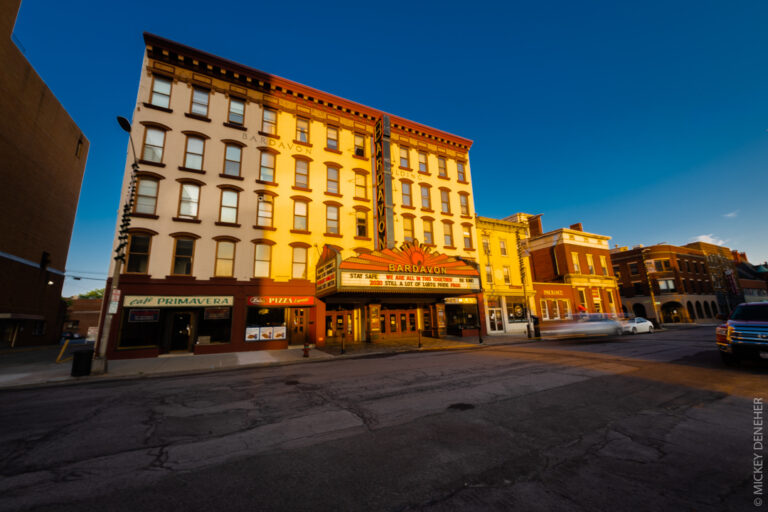
One of the oldest continuously operating theaters in New York State, and one of the oldest in the country, Bardavon was built in 1869 and served as a community performing arts center until 1923, then as a cinema and home for vaudeville until 1975, before reopening as a general performing arts facility in 1976.
Basilica Hudson, housed in a repurposed factory, stands as a haven for artists. With a blend of industrial and pastoral aesthetics, this venue hosts concerts, art shows, and movie screenings, fostering a unique and environmentally responsible space.
Address: Basilica Hudson, 110 Front St, Hudson, 12534
Originally built by Albert Grossman and opened in 1970, the historic recording studio and destination venue remains a special place where artists can rehearse for tours, record audio and/org video, and perform in an intimate, acoustic setting. The venue has been revitalized in recent years by new owner, Lizzie Vann, who has restored the theater and grounds, making great investments to preserve decades of music history while continuing to keep the tradition alive.
Founded on Yasgur’s Farm, site of the historic 1969 Woodstock music festival, Bethel Woods Center for the Arts opened in 2006 with the New York Philharmonic performing on opening night. An on-site museum, exploring Woodstock and the culture of the 1960s, opened in June 2008.
Photo courtesy of Bethel Woods Center for the Arts.
Big Cat (Kingston)
Located on the shores of the Rondout Creek, this DIY space in downtown Kingston is obscure and hosts occasional shows, shared only to the venue’s Instagram.
An iconic rock ‘n’ roll venue, The Capitol Theatre, steeped in history, continues to host spectacular performances. For a more laid-back experience, explore Garcia’s, the venue’s bar location with pre and post shows, as well as stand-alone nights of music as well!
A destination for exceptional music, captivating programs, spectacular gardens and grounds, and wonderful moments with friends and family, Caramoor Center for Music and the Arts is a not-for-profit organization, listed on the National Register of Historic Places. Through innovative and diverse musical performances, Caramoor has a mission to mentor young professional musicians and provide educational programs for young children centered around music.
City Winery Hudson Valley offers not only captivating musical acts but also an extensive wine list. Enjoy brunch or evening performances featuring renowned names amidst a winery setting.
Originally a hotel built in the 1920s, The Colony in Woodstock combines vintage charm with state-of-the-art sound and lighting systems, providing an unforgettable experience.
Experience the casual, intimate setting of Daryl’s House, known from the series Live From Daryl’s House. Enjoy beers, camaraderie, and live jamming sessions.
Co-led by Mike Faloon and James Keepnews, Elysium Furnace Works is a cooperative project that seeks to present the work of upcoming artists in dedicated art-focused settings. While not exclusive to live music, EFW primarily works through live music venues at 19th century VBI Theatre, part of the Hudson Valley’s Cunneen-Hackett Arts Center.
Bringing Broadway magic to the Hudson Valley, Emelin Theatre hosts stage productions, bands, comedy groups, and dance troupes in a large, versatile venue.
With a breathtaking view of Marlboro Falls, The Falcon offers both incredible scenery and exceptional music. Indulge in dinner and a show in its spacious dining room.
Featuring live music every weekend, Gardiner Brewing Company is farmer-owned and operated, opening its doors in Fall 2018. Founded by the 5th generation of the Wright’s Farm family, the brewery is focused on using the ingredients they grow to make delicious, seasonal beers. The Barn at Gardiner Brewing hosts live music every Saturday night, nearly year-round.
Hudson Hall is located on the site of New York State’s oldest surviving theater. After being abandoned for decades, local citizens came together in 1992 to save the building and establish a cultural center, reopening the first ground floor rooms in 1998, and completed a $9.5 million restoration of its magnificent performance hall in 2017.
For over 80 years and 4 generations, the Longobardo family continues the tradition of old school Italian American cooking in Pearl River, originally having started in the Bronx. Great for those who love live music and delicious food.
Decorated with hanging musical instruments and antiques, Last Chance Tavern is a full service restaurant, antique store, and gourmet shop with delicious cheeses and beers, plus great live music each week.
Known as “the barn,” Levon Helm Studios, designed by the legendary drummer, offers an acoustically perfect venue for near-religious live music experiences.
Opened in 2023, The Local is housed in a former Dutch chapel built in the 1800s, restored as a space for arts, culture, and community. Owners Isabel Soffer and Danny Melnick are also co-founders of Hudson Valley Live and bring more than 30 years to producing festivals, concerts, and curated arts experiences to the venue.
Olive’s isn’t just the longest operating bar in the town of Nyack, but also boasts a great deal of live music throughout the year, with an emphasis on the local indie scene. Described as “trendy, hip, indie, and above all attitude free but well behaved,” Olive’s serves great food from Marianne Olive’s garden, as well as great veggie and vegan options.
Originally a 1500-seat movie palace built by Publix Pictures, a subsidiary of Paramount Pictures, the Peekskill Paramount Theater first opened in June of 1930. Now named Paramount Hudson Valley and is managed by Paramount Hudson Valley Arts, the group has a goal of making this landmark theater a destination for the very best of live music and performing arts.
Located in downtown Beacon, Quinn’s has a wide array of live music performances, including weekly jazz sessions, along with great ramen, sakes, and even greater bar fare at this diamond in the rough venue.
Nestled among the beauty of the Catskill Mountains, Resorts World Catskills offers an unmatched experience in excitement, entertainment, and luxury, bringing tribute acts, DJs and national artists to venues and bars inside.
The Rosendale Theatre is an independently owned venue, and a regional and national gem. of its kind. It is a gem, not only in the region, but nationally and internationally. Originally opened in 1905 as the Rosendale Casino, by the 1930s, a stage was installed for live vaudeville and burlesque acts. Films and live theatre can be found these days in Rosendale.
Silk Factory is located in the heart of historic Newburgh, in a former factory from 1910, where silk thread was once made. Now a music venue, event space, restaurant and much more is found here in Newburgh.
The best dive bar in all of New Paltz, Snug Harbor – A.K.A. Snugs – is open daily from 12pm-4am and features live music from local and touring bands, with shows going late thanks to being on the cusp of the SUNY New Paltz campus.
Originally known as the Lycian Center for the Performing Arts, The Sugar Loaf Performing Arts Center is surrounded by eight acres of beautiful mountain and lake views, with a capacity of nearly 700 seats, bringing in summer concert series, international touring acts, educational programs and much more.
Built in 1885 by chocolate magnate William L Wallace, Tarrytown Music Hall opened during Tarrytown’s “Millionaire’s Colony” era when prominent families resided in the town and gathered at the Music Hall for its lavish balls, flower shows and concerts. Tarrytown Music Hall is the oldest theater in Westchester County and one of the finest examples of Queen Anne decorative brickwork in the county.
Founded in 2015 by a local father-daughter team, Tin Barn Brewing has two locations – in the Hudson Valley town of Chester, and the Finger Lakes city of Dundee, near Watkins Glens. A farm brewery specializing in some of the juiciest IPA’s in New England, a “Friday Night Acoustic Series” runs from January to March 2024, featuring some of the area’s finest singers, songwriters & duos, with a new stage and lighting for a more personal feeling.
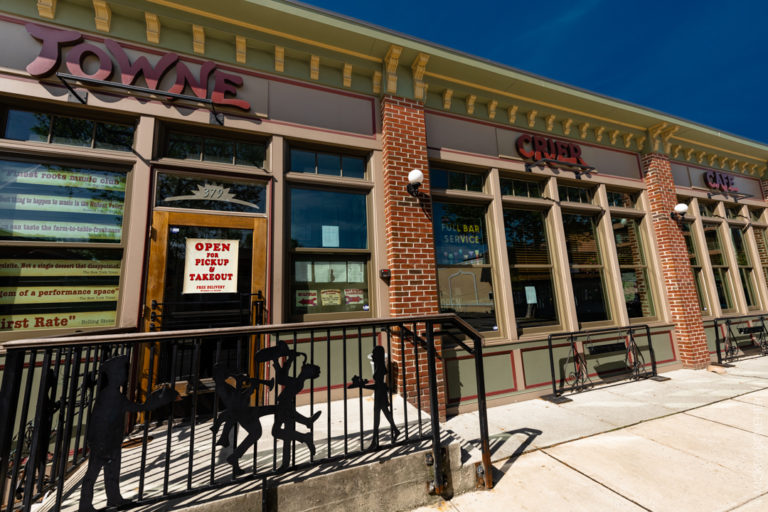
A mainstay of the Hudson Valley since 1972, this former stagecoach stop in the hamlet of Beekmanville was relocated first to Pawling and is now located in Beacon. The Towne Crier welcomes a great deal of world-class talent, and celebrated its 50th anniversary in 2022.
A neighborhood bar with food from Junebug’s Good Cookin’, Tubbys has a killer mezcal selection, natural wine, cocktails, rotating drafts, and fresh cans. Live music on occasion with sounds leaning to the left of the center. Expect cumbia, country, disco, and everything in between on the turntable.
Originally the Broadway Theater and Community Theatre, Ulster Performing Arts Center (UPAC) was build in 1926 and one of only three pre-World War II theaters in the Hudson Valley. Today, UPAC is operated by Bardavon Theatre, with the Hudson Valley Philharmonic calling the exquisite acoustics of the proscenium theater, home.
In eastern Putnam County, you’ll find live music every Wednesday through Sunday at Uncle Cheefs, in a perfectly lit room decorated with love and built to achieve the finest in acoustics. With a multi-cam video system and state of the art in house multi-track recording studio, you’ll love the music live and reliving them later on thanks for Uncle Cheefs.
At an event at Sirius Studio in New York City, Benny the Butcher marked a pivotal moment in his career as he celebrated the release of his latest album, “Everybody Can’t Go.” The album, a significant milestone as his first major label release under Def Jam, has already been making waves in the hip-hop scene.
The studio session was nothing short of electrifying, featuring an exclusive interview with Benny conducted by DStroy and Gray Rizzy. The atmosphere was charged with excitement as the rapper delved into the creative process behind the album and shared insights into the journey that led him to this groundbreaking release.
Benny treated the audience to a captivating live performance, showcasing his lyrical talent with renditions of three tracks from the album. “Big Dog,” “Jermaine’s Graduation,” and “Back Again” echoed through the studio, leaving an indelible mark on everyone present. The raw and authentic energy in Benny’s delivery resonated with fans and further solidified his status as a force to be reckoned with in the rap game.
The studio audience played an integral role in the event, engaging with Benny through a series of thought-provoking questions. This interactive element provided a unique glimpse into the artist’s mindset and the stories behind the tracks that make up “Everybody Can’t Go.”
A surprise guest appearance by none other than Bun B elevated the celebration to new heights. The special call from the legendary rapper not only underscored the impact of Benny’s work but also emphasized the camaraderie and respect within the hip-hop community.
“Everybody Can’t Go” is not just an album but a testament to Benny the Butcher’s evolution as an artist. The Def Jam release marks a significant chapter in his career, and the Sirius Studio event served as a fitting tribute to the hard work and dedication that went into crafting this masterpiece.
On February 2, Annie Trezza provided the tunes and ensued the grooves at Arlene’s Grocery, a Lower East Side treasure. From the most eastern point of New York State, Annie and her band descended into the city from Montauk, bringing their east coast surf-rock demeanor with them in blue suitcases, fur coats, and their soulful sound.
Bass rattled the vintage infrastructure of Arlene’s as Annie prepped her stage. She twirled around her staple acoustic and a sky blue electric-guitar perched behind the microphone, sipping a Tecate and dancing to the pre-show tunes. Huddled on stage was the Arlene’s grocery drum set, a bass guitar, and a pedal set that her bandmates fiddled with. Friends and family members of the band milled about the tight-spaced room, and curious New Yorkers in search of live music filed down the stairs into the pit.
Annie and her whole crew made their way onto stage. “Hey everyone! We track from the east end, AKA Montauk – the coolest place on Earth!” She wore a memorable coat with fur trimmed cuffs, velvet cowboy boots, bell bottoms, and a cowboy hat. Her style matched her sound, as she strummed her band into play.
After her first couple of songs, Annie Trezza introduced her band: Jack Marshall on the steel guitar, Andrew Winthrop on the drums, and Kevin L. on the bass. Their stage presence was commanded by Annie’s charisma, and they gelled together seamlessly. After the song “Ave. A,” Annie was excited to play her song “Summer//Winter,” which can be heard in the neo-western thriller “The Last Victim” on Hulu.
With drinkable influence from iconic artists like The Doors and Fleetwood Mac, and more modern-scale groups like Houndmouth or The Growlers, Trezza has combined classic riffs and the jam-band groove with her own poetry and life-style flair.
Each song threaded a narrative with unique lyrics. In the span of the mere hour long set, we were pulled from New York City, to Montauk, to Florida, to the French countryside. With strong influences from the ocean, surfing, relationships, and the seasons changing, Trezza holds an earthy and empathetic discography.
Their set deserved more time, for the storytelling between songs had to be nipped in order for Annie to perform the entirety of her setlist. Trezza acknowledged the time passing, “ All of these songs have a story, and I do like to ramble…” The crowd replied, “Ramble on!” The collective reference to Led Zeppelin couldn’t be missed.
A story that seemed to resonate with the audience was that behind her song “French Countryside.” Sleeping in the room next door to the person you’re in love with. The song had a tremendous build that mirrored the feeling of emotional climax – when feelings can no longer be contained and the body becomes an emotional well.
The bridge warranted dancing and Annie’s pal Kate grooved front and center. She bounced around the rim of the stage, and her energy encouraged others to move their feet. Annie invited the audience to fill in the dance floor. Bodies pushed towards the stage and the motion met the music.
“Alright, that was the acoustic set. We’re gonna go surfing again!” Annie swapped her acoustic guitar for her electirc as she geared up for the last couple of surf-inspired songs “Surf Crush,” and “Pitted.” “This song is about surfing, the greatest thing in the world! We’re in New York City, let’s get pitted!”
“Pitted” was the final song of the evening, and it ended the night on a high note. Once the show concluded, Annie hung around the Arlene’s chatting with her audience. Her artistry as well as her connective nature was genuine.
The leading fan-to-fan social ticketing platform, CashorTrade, has revealed their new collaborations with Joe Russo’s Almost Dead and the String Cheese Incident. These band partners are an effort to keep tickets in the hands of fans for two forthcoming concert runs, and also to enhance the company’s fight against ticket scalping.
Dusty and Brando Rich, founders of CashorTrade.org
As String Cheese Incident are getting ready to perform their most anticipated three-night performance at Red Rocks Amphitheatre in July, CashorTrade held a pre-sale on Thursday, February 1 through CashorTrade.org.
Additionally, the platform has also announced their collaboration with Joe Russo’s Almost Dead to make tickets available for the band’s forthcoming performance at The Fillmore in Charlotte, North Carolina on February 8.
CashorTrade proudly defines itself as the world’s only social network where fans can buy, sell and trade tickets at face value. The Vermont-based company was launched in 2009 through the efforts of Brando Rich and his older brother Dusty, who are passionate music fans. Their website includes the pre-sale feature as part of their continuous effort to help artists and guarantee fair ticketing procedures. By bypassing the middlemen and online ticket resale marketplaces, artists can establish direct connections with their fan base through their website.
“CashorTrade is thrilled to partner with The String Cheese Incident and JRAD to empower fans and combat scalping in the live music industry. Our mission has always been to prioritize the fan experience and provide a platform where tickets are traded ethically and securely.”
Brando Rich, CashorTrade co-founder
With more than a million followers on its social media, website, and app, CashorTrade has made a name for itself as a reliable spot for fans to exchange, buy, and sell face-value tickets. With its headquarters located in Vermont, the company employs thirty passionate music lovers and is getting ready to release its next-generation software, which will improve the ticketing experience for both artists and fans.
For more information about CashorTrade and the upcoming presale, fans can visit CashorTrade.org.
Dylan was at Proctors Theatre on Monday, October 30, and although he did not entertain one of the songs that follow, here is a look at the many songs written about Schenectady, as well as the songs that reference the notoriously difficult to spell Upstate city.
Prior to being settled by the Dutch in 1661, the Mohican originally lived in the area around the Mohawk River. The Mohawk referred to the area as “Schau-naugh-ta-da,” meaning ‘Over the Pine Plains” which eventually morphed into “Sche-nec-ta-dee” and finally, Schenectady. Part of the colony of New Netherland settled by Arent Van Curler of Nijkerk, Netherlands. The town was famously burned by the French and their Indian allies in February 1690 in what has been known as “The Schenectady Massacre,” killing nearly all inhabitants. Home to Union College and General Electric, the town’s sobriquet is “The City that Lights and Hauls the World,” a little more wordy than ‘The Electric City’ that many also refer to the town.
With 350 years of history, and a cultural landmark in Proctors Theatre, the historic Stockade District, miSci (Museum of Innovation and Science), Jazz on Jay, Music Haven Concert Series, the Schenectady-Saratoga Symphony Orchestra, and the still relatively new Rivers Casino, the town on the shores of the Mohawk River is experiencing a downtown Renaissance, with events for all tastes and interests found all throughout the city.
So this ‘Electric City’ of Schenectady is notable enough, both for spelling and history, that over time, a few songs have been written about the town. Two of the most notable, “I Can’t Spell Schenectady” and “Schenectady” from Synecdoche, New York, we’ll get to in a moment, but let’s look at a pair of songs written for the town.
First, there’s “Schenectady Song” from Jason Martin. A ‘love ballad to the Electric City,’ the tune was originally released on cassette in 1998 and a re-edited version from Martin’s Magic Recording Eye (2001) can be heard below. Featuring samples at the start and end mentioning ‘High Voltage Hall’ and tests of electricity, the experimental song is unique, odd, and worth a listen.
Then there’s “Schenectady’s the Place,” the Official City Song, written by Cliff Brucker in 2016, a graduate of The Crane School of Music at SUNY Potsdam and The College of Saint Rose. Brucker’s song has the ‘commissioned by the local Chamber of Commerce’ vibe, although the version by SCCC School of Music heard below does have a certain panache and inviting nature to it. For an official city song, this is spot on for style, lyrics and music.
Then there are quite a few songs – much to this author’s surprise – that reference Schenectady, including “Hamilton Hill” by Demmene Syronn, released in 2020 and referencing a small neighborhood near Mont Pleasant. “I was a witness to the cultural birth of Hip Hop / From Hamilton Hill, Schenectady, Upstate New York”
“Starlight in Schenectady” by Peter JB Carman, the first track on Life the Pain, was released on Stockade Records in 2019. The song was first played at Moon and River where Carman and wife Lynn can often be found playing. Carman is a Baptist minister, writing hymns, poems and songs about Massachusetts, Rhode Island, North Carolina and Upstate New York, all places where he has served churches.
“Walking by starlight in old Schenectady And I don’t know where I’m bound Listen to the songs from the café down the street I surely love the sound And the years they do so swiftly roll And all day long it’s trouble and toil But I’m walking by starlight in old Schenectady And it’s home, it’s home I’ve found”
“Starlight in Schenectady”
“Afro Angel” by Will Smith (yup, that Will Smith) “Nothing” by Raekwon – “He felt bad but respected me / Pass the watch and the chain off respectably / Moseyed off, ran through Schenectady” – and “Someone to Love” by Fountains of Wayne – “Seth Shapiro got his law degree / He moved to Brooklyn from Schenectady, ’93 / Got some clients in the food industry” – all mention the town.
There’s also “Grim Reaper” by MC Zappa – “Try me; you might find I’m not in my right mind / Heads will roll, and I’ll repossess ya soul / I’m murderin’ rappers from here to Schenectady / Turn around, you see a sight you didn’t expect to see” “DECAP” by Dicaprio – “And I’m from Brazil, but I’ll always representing the County of that city, electricity, Schenectady” and “Bon Soirée” by Clay Coughlin – “I was laid up in Schenectady / But I’ll be bedding down on rue Sainte-Catherine.”
But for a double dose of local Upstate references, look no further than “The End’s The Same” by Off Balance, who drop a Stewart’s reference – “So sweet you make me feel at home just like some Stewart’s ice cream” as well as one for the town – “Disorder’s light to me / I hear these grimy synths like Ludwig on the ivories / and ebonies / Like nights I’m in Schenectady”
Getting back to the history of Schenectady, the Dutch settlement was burned to the ground in February 1690 by a war party of French soldiers and allied Mohawk and Algonquin. This event may have produced the first song in the 1840s, “The Burning of Schenectady.” Originally a broadside, featuring just lyrics and sometimes a suggestion for a familiar tune to pair with, the ballad can be sung to the tune of “Auld Lang Syne.”
The Burning of Schenectady – from a painting by Giles F. Yates, owned by A. A. Yates of Schenectady
There is some debate on the origin of the poem/ballad that led to the song, with folklorist ad historian Harold Thompson noting in his 1939 book Body, Boots & Britches that the original was written by Walter Wilie of Albany in June of 1690. Wilie notes before the lyrics (abbreviated below) “A Ballad – In which is set forth the horrid cruelties practiced by the French and Indians on the 8th of last February. The which I did compose last night, in the space of one hour, and am now writing, the morning of Friday, June 12th, 1690 – W.W.” Still, a debate continues as to the true origin of the first song of Schenectady.
God prosper long our King and Queen, Our lives and safeties all, A sad misfortune once there did Schenectady befall.
From forth the woods of Canada The Frenchmen tooke their way The people of Schenectady To captivate and slay.
They marched for two and twenty daies, All thro’ the deepest snow; And on a dismal winter night They strucke the cruel blow.
….
They then were murthered in their Beddes. Without shame or remorse; And soon the Floores and Streets were strew’d With many a bleeding corse.
The Village soon began to Blaze, Which show’d the horrid sight – But, O, I scarce can Beare to Tell The Mis’ries of that night.
They threw the Infants in the Fire, The Men they did not spare; But killed All which they could find Tho’ Aged or tho’ Fair.
O Christe ! In the still Midnight Air, It sounded dismally, The Women’s Prayers and the loud screams’ Of their great Agony.
…
And Here I End the long Ballad The Which you have just redde; And wish that it may stay on earth, Long after I am Dead.
Lyrics (partial) to “The Burning of Schenectady” – Walter Wilie, 1690
The aforementioned “Schenectady” from the motion picture Synecdoche, New York, stands out as one of the two most notable songs on the town. The title of the film makes a play on pronouncing the town name – Synecdoche (Sin-eck-duh-kee) while also being a literary expression alluding to a larger concept by bringing to mind a single part of the whole. Raul Yang notes “It perfectly captures the essence of the movie it was written for, and it stands on its own as a beautiful piece of music.” The deeply surreal film with a focus on aging and death, with director Charlie Kaufman including “Schenectady,” which introduces the idea of death in its last verse: “There’s always a never again.”
But of all these songs about Schenectady, the standard bearer has to be “I Can’t Spell Schenectady.” Written in 1948, let’s glance at the lyrics first.
Reading, writing and geography; But when it comes to spelling, I’m confessin’ There’s just one word that stumps me constantly. I can spell Dakota, can handle Minnesota, but I can’t spell Schenectady, I can spell Havana and figure out Savannah, but I can’t spell Schenectady. Why, one time at a spelling bee Said teacher all at once, “Now, Willie, spell ‘Schenectady’,” I felt just like a dunce! I spelled Anaconda and even Tonawanda, So what does she expect of me? I just can’t spell Schenectady. I can spell Pomona, Seattle and Tacoma, but I can’t spell Schenectady, I mastered Ypsilanti and Agua Caliente, but I can’t spell Schenectady.
Written by Al Trace, Arthur Terker, Abner Silver and Harry Clarkson, “I Can’t Spell Schenectady” is not in the range of “Weird” Al Yankovic for comedic songs, but rather resides in the realm of satire he would come to be known for, More so, this song is akin to a Bob Hope “Road To…” film featured song.
Starting out with a high pitched Alvin and the Chipmunks voice, the song laments Schenectady’s spelling difficulties with multiple voices joining in to drive home the orthographic dilemma they face.
The song was released on vinyl in July 1953, with a B-Side of “The Who is it Song,” both songs performed by Big Jon Arthur and No School Today Cast, and released on a 45 RPM Decca (9-88153) 7″ record, Children’s Series 1-252, with artwork by Sam Norkin.
Schenectady is the home of General Electric, the early radio-drama pioneer WGY, the first television station with WRGB, not to mention bread so delicious, Jack Nicholson had Perreca’s ship him loaves of bread following the filming of Ironweed in 1987. Yet for all these, Schenectady does not get respect in song or other media as should be afforded. Sure, the town name is difficult to spell, but ‘Place Beyond the Pines’ is a bit wordy. Schen-ec-ta-dy – it’s just that easy!
Album art for “I Can’t Spell Schenectady”
FormerLate Show with David Letterman head writer Bill Scheft once referred to Schenectady as “the Xanadu of funny-sounding places” in an interview with the Daily Gazette. “Four syllables, good rhythm and that hard comedy ‘K’ right in the middle. It scans perfectly. Of course, it’s no Cohoes, but what is?” And with that, check back soon following a search for songs about Cohoes.