Rochester-based composer mainTheme has announced the release of his rich new groove track “Take Over Me” (feat. Donno Jay).
Dan Romans plays drum set, synth, keyboard, and voice; composes and arranges music; and performs all styles. He has a diverse musical vocabulary and versatile playing style that is dynamic, expressive, and compositionally focused. mainTheme is a carte blanche repository of sounds and songs drawn from eclectic influences and presented as an approximation of pop music. mainTheme is another variation of Dan Romans’ compositional voice as he dons the figurative producer’s hat.
His latest track “Take Over Me” (feat. Donno Jay) encapsulates mainTheme’s minimal, rich groove and features storytelling and vocal talents of Miami-based hip-hop artist Donno Jay. The track is slated to release on most streaming services by December 27. The track is a powerful, introspective look at the core of one’s life, and the state of the world we all share. With Donno Jay’s cadence and hard-hitting, somber lyrics spit over the desolate electro-synth melodies, this track is strong, catchy, and meaningful.
mainTheme creates music that, to me, breaks down walls. His eclectic, diverse and dynamic range of music paints wondrous soundscapes in each piece of music released. This track, “Take Over Me” is a prime example of this idea. The instrumental to the track is smooth, unique, and presents a vibe that I can best describe as galactic. It is a spacey, synthy, psychedelic piece that contains climbing and falling volumes, with a heightened energy in the middle before slowly dying out like a dimming light. The track is brilliant in both instrumental sound from mainTheme and lyricism from Donno Jay.
For more information on mainTheme’s music and to keep up with “Take Over Me” which releases on December 27, click here.
New York State has a rich and extensive history of music. From classic songs you sang in elementary school social studies class about the Erie Canal to Frank Sinatra crooning of the wonders of New York City, countless areas throughout the state have drastically influenced musicians, and left an imprint on their artistic growth. NYS Music’s New York Series is a project dedicated to exploring the history of music created and inspired by the diverse areas of the state. Each week we will focus on a different part of New York, how that area inspired a song or album by artists of various genres, and how the area changed over time. This week we will look at Bob Dylan’s ‘Talkin’ New York’ and Greenwich Village’s influence on his writing of the song, as well as how the area shaped his growing career.
Bob Dylan- ‘Talkin’ New York’
“You sound like a hillbilly; We want folk singers here.”
In the winter of 1961, a 19-year-old University of Minnesota drop out named Robert Zimmerman arrived in New York for the first time in hopes of finding his folk-singer idol, Woody Guthrie. It was the coldest winter in seventeen years, and he did not know a soul. ‘Talkin’ New York,’ the second song on Bob Dylan’s self-titled first album, is a talking blues which narrates the difficulties the young folk-singer experienced when he first moved to the Big Apple. Soon after his arrival, Zimmerman moved to Greenwich Village, changed his name to Bob Dylan, and launched one of the most successful music careers in history. 1
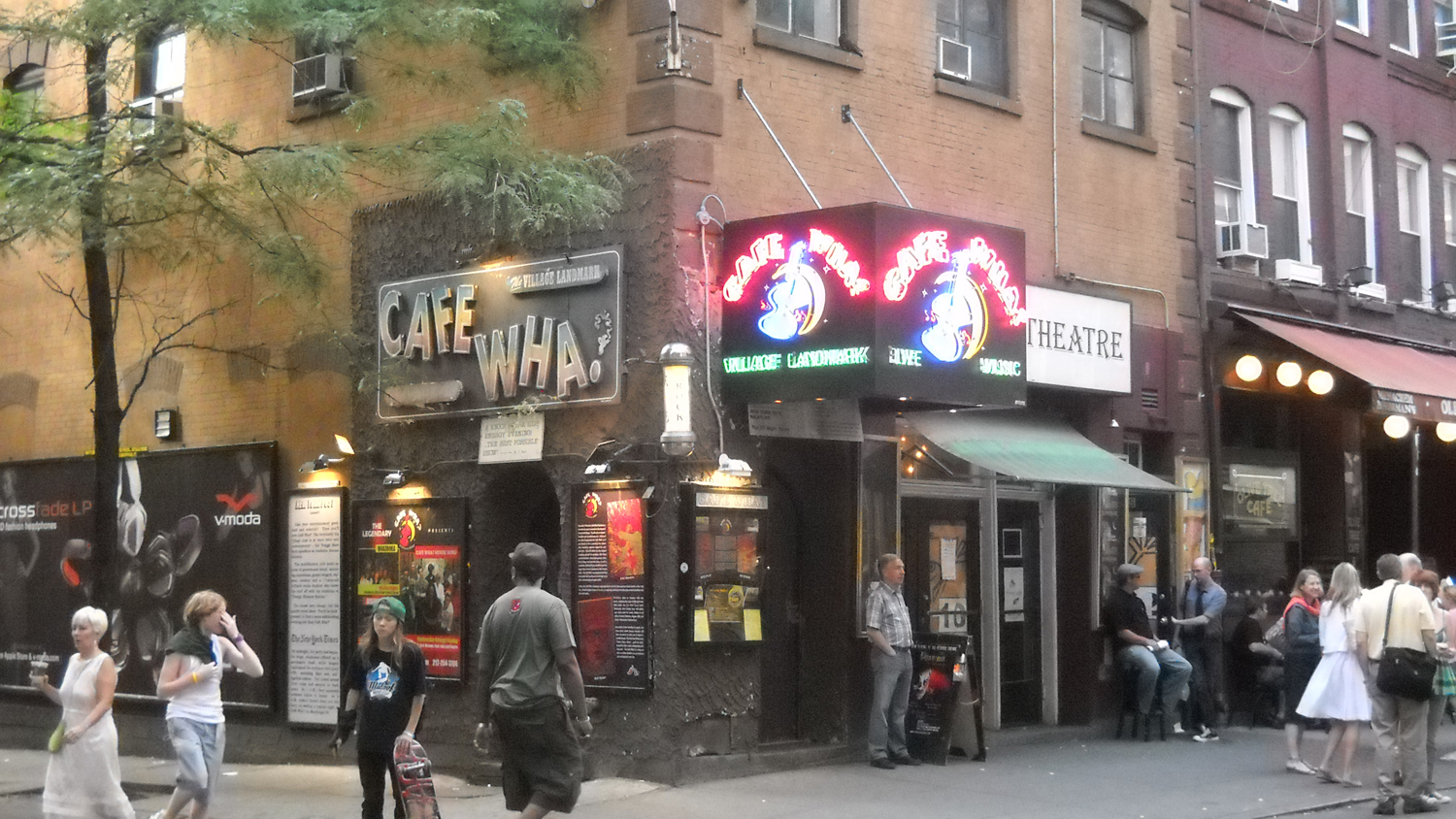
Greenwich Village in the early 1960’s was a hub for artists, poets, musicians and activists to meet, exchange ideas, and grow. When Dylan first arrived, the first thing he did was head over to Café Wha? on Macdougal Street, introduced himself as a musician, and booked himself a gig- as described in the lyrics of ‘Talkin’ New York’. His goal was to immerse himself in the culture, and establish himself as force to be reckoned with in the folk scene. After being fired for being late to three gigs at Café Wha? Dylan jumped around, exploring the many clubs and cafés Greenwich Village had to offer. He played coffee houses such as Caffe Reggio, the Commons, Caffe Dante, and underground clubs like the Gaslight Café, the Fat Black Pussycat, and the Bitter End. 2 New York was the perfect place for Dylan to experiment, meet new people who would greatly influence his career, and develop as an artist. At any point you could walk into a coffee shop and listen to a folk-singer performing, attend a poetry reading, or have an in-depth discussion about direction of the country the with like-minded political activists.
Fred W. McDarrah/Getty Images
‘Talkin’ New York’ chronicles Dylan’s initial experience in New York. It tells the story of his arrival and describes the struggles of trying to make it as a folk-singer in a new town. The area was impoverished at the time, and for the first year Dylan spent most of his time sleeping on floors. He established himself as a vagabond, and his songs began to reflect his lifestyle. After a year he found a place to live relatively cheaply which allowed him to spend more time developing his songs. Because the clubs could not pay performers, Dylan began wearing a hat and passing it around the cafes. The Gaslight Cafe was known for “basket-passing nights” where the only money performers would pocket was what was given to them by audience donations.3
Cafe Wha? 1960’s
Cafe Wha? Today
Today Greenwich Village is a different neighborhood. NYU has taken over much of the real estate in the area, and the rest has seen a drastic price increase since the 1960’s. It is far too expensive for young aspiring artists to live, but still an area worth visiting often. There are a few relics from the past, and you can go on a walking tour of the sites Dylan and other artists frequented, but today a vagabond could not arrive in the Village and squat in run-down apartments like Dylan did. A few of the old hangouts remain, but they too have evolved with the times. Caffe Dante became Dante NYC, and has moved on from folk-singers to gourmet cuisine. Café Wha? closed in 1968, but reopened in 1987, with music still playing often and the Café Wha? house band headlining many nights. The Bitter End is also still standing, and prides themselves on being New York’s oldest rock club. You can still catch a show any night of the week. While Greenwich Village has changed over the years, there is still a feeling of artistic freedom and counter-culture in many of the bars and coffee shops.
‘Talkin’ New York’ Lyrics:
Rambling out of the wild west
Leaving the towns I love best
Thought I’d seen some ups and down
‘Till I come into New York town
People going down to the ground
Building going up to the sky
Wintertime in New York town
The wind blowing snow around
Walk around with nowhere to go
Somebody could freeze right to the bone
I froze right to the bone
New York Times said it was the coldest winter in seventeen years
I didn’t feel so cold then
I swung on to my old guitar
Grabbed hold of a subway car
And after a rocking, reeling, rolling ride
I landed up on the downtown side
Greenwich Village
I walked down there and ended up
In one of them coffee-houses on the block
Got on the stage to sing and play
Man there said, come back some other day
You sound like a hillbilly
We want folksingers here
Well, I got a harmonica job, begun to play
Blowing my lungs out for a dollar a day
I blowed inside out and upside down
The man there said he loved my sound
He was raving about he loved my sound
Dollar a day’s worth
After weeks and weeks of hanging around
I finally got a job in New York town
In a bigger place, bigger money too
Even joined the union and paid my dues
Now, a very great man once said
That some people rob you with a fountain pen
It don’t take too long to find out
Just what he was talking about
A lot of people don’t have much food on their table
But they got a lot of forks and knives
And they gotta cut something
So one morning when the sun was warm
I rambled out of New York town
Pulled my cap down over my eyes
And heated out for the western skies
So long New York
Howdy, East Orange
At one point in history, the New York City subway system was among the most impressive in the world. These days it resembles what you would imagine a third world country’s subway system would look like, with third string trains donated from cities that upgraded their system years ago and no longer had any use for them, but it still gets you from point A to point B and that’s what matters. Albeit confusing to out of towners, you can hop on a train in midtown Manhattan and get almost anywhere you would like to go in the city.
Photo from Wikimedia Commons Public Domain
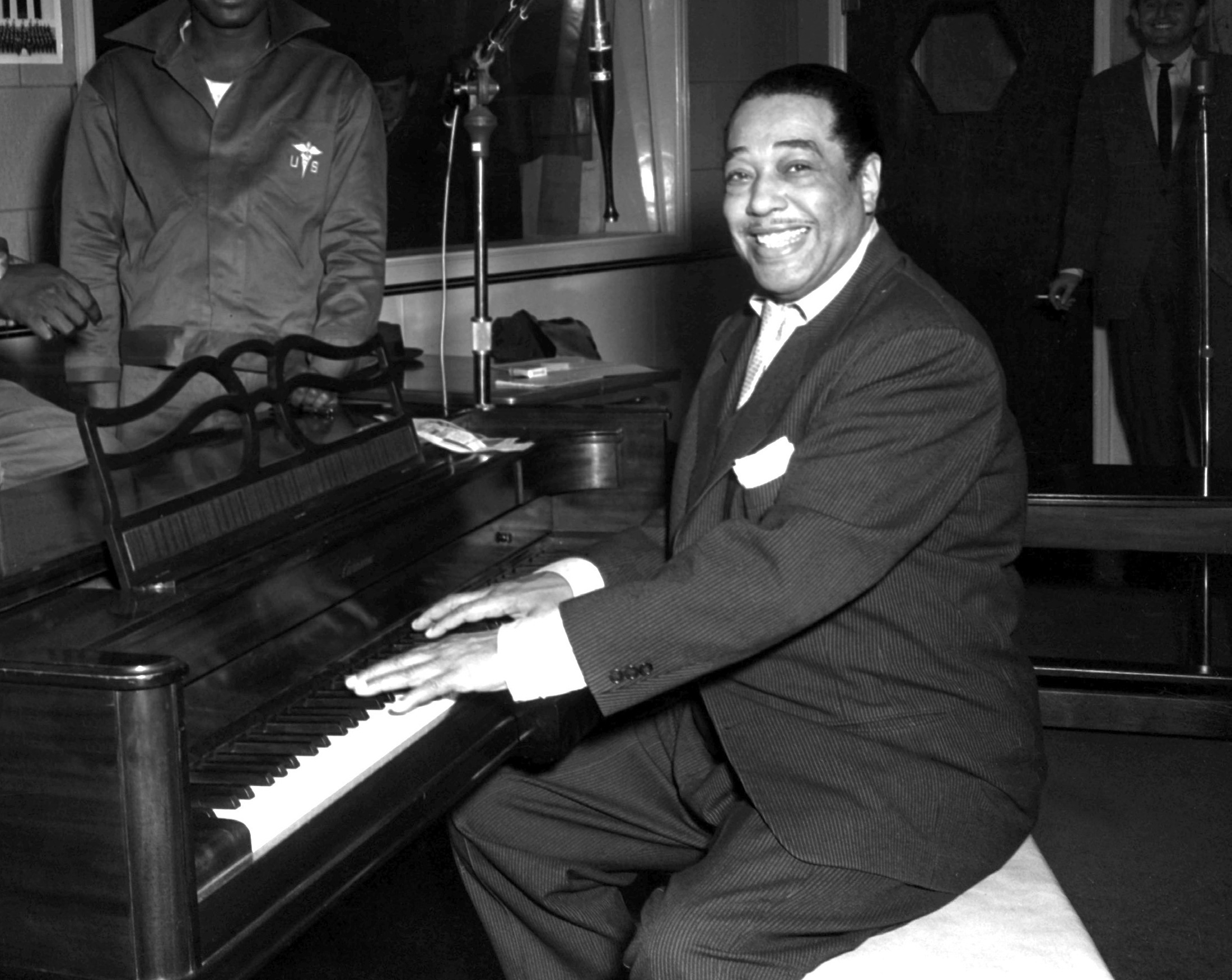
Since it is such an extensive system, those who are completely unfamiliar with New York’s subway system might have a tough time going from borough to borough, and might not even be aware that there are both letter and number trains. However, thanks to Duke Ellington and his infamous 1939 hit “Take the A Train,” almost everyone is aware of at least one line in the NYC subway system, which is more than you can say about almost any other city in the world.
Although popularized by Duke Ellington, “Take the A Train” was written by long-time collaborator and pianist Billy Strayhorn. The swing anthem became the signature piece for Ellington’s orchestra, and was often used as its opening theme and standout song. For most jazz musicians at that time, bandleaders would not put a song they didn’t write themselves in the spotlight like that, however Ellington and Strayhorn’s relationship was atypical. In his biography, Ellington said Strayhorn “was not, as he was often referred to by many, my alter ego. Billy Strayhorn was my right arm, my left arm, and the eyes in the back of my head.”
‘Take the A Train’ was written in Strayhorn’s head while at a party, then put on paper that evening when he got home. The song title was inspired by directions Ellington gave to Strayhorn to get to his house in Sugar Hill, which began with “Take the A Train…,” and the music was influenced by Fletcher Henderson’s style of jazz. Although Ellington’s rendition is instrumental, Ella Fitzgerald released a popular version with the original lyrics Strayhorn wrote about getting to Ellington’s home in Harlem.
Ellington’s home was located in the Sugar Hill neighborhood of Harlem, which is where the Harlem Renaissance took place between the 1920’s and 1950’s. At the time, Sugar Hill was the ritziest, most elegant African-American neighborhood in the United States. It was deemed “Sugar” Hill because of how sweet it was to live there, with the heart of the neighborhood located between 144th and 155th street. The high-class neighborhood was filled with stately homes and luxury apartments, and inhabited by African-American artists, activists, politicians, and intellectuals. The Harlem Renaissance was responsible for allowing African-Americans to focus on their past, as well as develop a unique identity for themselves, thus creating a culture within a culture. It brought people closer to their roots, and allowed them to celebrate who they were while exploring new creative channels to expression, with the Sugar Hill neighborhood as the epicenter of it all. “Take the A Train” became the anthem of this movement, and was highly praised by all of New York.
Today the Sugar Hill neighborhood is still lined with elegant homes and beautiful apartment buildings, with the rich, historic culture dominating the neighborhood. As most areas change over time, there has been a recent slight decline in African-Americans living in Sugar Hill to make room for other cultures, however it is still primarily a black neighborhood. Art and creativity thrives within the neighborhood, and you can still take the “A” train uptown anytime you’d like to soak up the culture and be inspired.
‘Take The A Train’ Lyrics:
You must take the A train
To go to Sugar Hill way up in Harlem
If you miss the A train
You’ll find you missed the quickest way to Harlem
Hurry, get on, now it’s coming
Listen to those rails a-hummingAll aboard, get on the A train
Soon you will be on Sugar Hill in Harlem
On December 19, Brooklyn-based softcore/alternative rock band Boston Flowers release their highly anticipated EP, Afterlife, featuring the title track alongside previously released singles “Soul Creature,” “Fever Dream,” and “Cancer Man.”
This introspective collection invites listeners to delve into profound themes of life, death, and the mysteries that lie beyond, making it a compelling addition to the band’s discography. The music video for “Cancer Man,” directed by James Morano, is already available for fans, alongside a lyric video for “Fever Dream,” showcasing artwork by Ellis Gale.
Photo by James Morano
Boston Flowers emerged from the vibrant Brooklyn rock scene, establishing a signature sound with their debut album, Mondegreen, released in 2023. The band draws inspiration from a diverse range of influences, including The Strokes, Arctic Monkeys, Turnover, Kid Bloom, and Mk.gee, blending melodic alternative rock with softcore grit. Their name pays homage to the iconic film character Austin Powers, infusing their identity with a touch of groovy nostalgia.
The band Boston Flowers consists of a talented lineup, each member contributing to their unique sound. Sam Trestman, the vocalist and rhythm guitarist, brings a decade of experience in healthcare and insights from a personal near-death experience that deeply inform the themes explored in their Afterlife EP. Zaid Khan adds atmospheric layers with his synth work, enhancing the band’s melodic richness. The driving force behind their rhythm is Rio Kelemen on drums, delivering dynamic beats that propel their music forward. Alejandro Ortiz, the lead guitarist, provides intricate guitar work that adds depth and texture to their tracks. Finally, Michael Agazzi on bass guitar anchors the band’s sound with solid bass lines, creating a strong foundation for their music.
Photo by James Morano
As Boston Flowers prepares to release Afterlife, they look forward to expanding their reach and continuing to engage with fans through live performances across the tri-state area. Their local NYC show lineup has included popular venues such as Arlene’s Grocery, The Delancey, Berlin Under A, and Bar Freda, as well as their own rooftop shows in Brooklyn.
Photo by James Morano
With the release of Afterlife, Boston Flowers invites you to join them on a journey through the complexities of human experience, celebrating the cycles of change and the exploration of what lies beyond. Pre-save the title track on Spotify and stay tuned for the official release on December 19!
Palestinian singer-songwriter Marwan Abdelhamid, known professionally as Saint Levant, showcased his debut full-length album DEIRA with a powerful performance December 13 at Terminal 5.
Photo by Molly Higgins
The packed venue was dotted with Palestinian flags and traditional keffiyehs, and fans shouted in English and Arabic alike as they eagerly awaited Levant’s entrance. After an opening set from fellow Palestinian singer-songwriter Lina Makoul, Levant kicked off the evening with “On This Land,” the first song on DEIRA.
Backed by a group of dancers performing soldier-like choreography, Levant alternated seamlessly between rapping in English and singing in Arabic in one of many musical tributes to his homeland: “We are a nation of displaced dreamers/Heritage keepers,” Levant’s lyrics profess.
“Deira is the name of the hotel that my father, Rashid, an architect, built with my mother in 2000 when they moved to Gaza,” Levant told Variety when he released the album’s title song. ““Deira means the Kasbah or the old city…Deira is anchored in Algerian culture through its sound (where my mother is from) and in Palestinian culture through its words (the land of my father). Deira represents represents a mix of my parents’ cultures.”
Levant’s Terminal 5 performance showcased his versatility as a musician—in musical style, language, vocal range, dance, and as an instrumentalist: halfway through his second song, Levant traded in his microphone and began riffing on the saxophone as fans screamed their support.
Levant played the final performance of his DEIRA tour December 16 in Chicago.
Saint Levant – Terminal 5, Manhattan – December 13, 2024
Khruangbin, Bleachers, and CAKE are slated to headline the second edition of The Capitol Groove, downtown Hartford’s premier festival, returning to Bushnell Park June 28-29.
Presented by GoodWorks Entertainment, the festival will feature 14 artists over two days with performances from Thundercat, Sammy Rae & The Friends, Thee Sacred Souls, St. Paul & The Broken Bones, Fantastic Negrito, Steel Pulse, Ripe, Improvement Movement, Ghost Funk Orchestra, The Greeting Committee, and Spectre Jones. These titillating acts are ones you’ll certainly want to see live.
Beyond the music, The Capitol Groove will also boast a lineup of local craft vendors and food trucks to be announced closer to the festival. Situated in the heart of downtown Hartford, Bushnell Park’s ample green space and natural beauty provides festivalgoers the perfect backdrop for two days of live music, all within easy reach of Hartford’s rich history and vibrant arts scene.
This upcoming festival is the second ever in the fest’s history. The Capitol Groove saw much success last summer and hopes to reach new heights with an even more exciting lineup. Acts like Khruangbin, Thundercat, Bleachers, and CAKE are must sees. These artists are known to bring the absolute groove to new levels wherever they go.
For more information and to purchase tickets to The Capitol Groove festival, click here.
Daughtry brought their “Adrenaline Gone Ballistic Tour” to Del Lago Resort & Casino in Waterloo on Saturday, December 14, bringing a mix of nostalgia, adrenaline, and excitement to the stage.
Daughtry opened the night with “The Reckoning”, a newly written song on their EP Shock To The System (Part One). The packed venue rose to their feet as head singer and North Carolina native Chris Daughtry entered the stage.
The thrilled Del Lago crowd wanted more from Daughtry, shouting requests in between songs. Chris interrupted the setlist to fulfill the crowd’s request, playing a heartfelt rendition of his acoustic song “September”, written in 2009. The fans didn’t just come for a show, they came for an exciting interaction.
The alternative rock band was formed in 2006 after Chris Daughtry made it to the finals in the fifth season of American Idol. His vocals and newly formed recognition earned him a record deal with RCA Records, and the band’s self- titled debut album would go on to sell more than a million copies after just five weeks of release, becoming the fastest selling debut rock album in Soundscan history.
As Daughtry waved the crowd goodbye and thanked the Waterloo fans for having him, the crowd stuck around as they cheered for an Encore, wanting more. With the eager fans on their feet, Daughtry rushed back out on stage to close out the show with their song “Artificial”, the first single to reach the number one spot on the Mainstream Rock chart. The band will gear up for upcoming shows in Nebraska and Minnesota, concluding their 2024 tour in Green Bay, Wisconsin.
The newest episode of Troy Story: A Podcast for the Collar City revisits the first and only time Metallica performed at the RPI Field House, on Wednesday, March 15, 1989, with opening band Queensryche.
Joining host John Salka is world-renowned drummer and lifelong Capital Region resident, Jason Bittner (Shadows Fall, Category 7), who – a 19-year-old college student at the time – attended the show on a holiday break from Berklee School of Music.
Troy Story: A Podcast for the Collar City is a monthly oral history podcast produced and hosted by John Salka, former Communications Director for the city of Troy and advisor for two mayors, bringing a firsthand perspective to recent Troy history.
Rampaging across America on their “Damaged Justice Tour”, Metallica was in support of their latest studio album (and eventually selling more than 9 million albums) …and Justice for All. The show was also the band’s second-ever performance in the Capital Region.
During the episode, Jason discusses with John, thoughts on the audio production for the “… and Justice for All” LP; speculation on how someone managed to bring a camcorder into the Field House to record the Metallica and Queensryche sets; performing with some of his favorite bands touring the world, including Overkill and Anthrax; the reunion of Shadows Fall, his new band Category 7, and previous work with local Capital Region hardcore band Stigmata; attending Metallica’s 1986 show at the Glens Falls Civic Center with Cliff Burton on bass guitar, and meeting drummer Lars Ulrich for the first time, and seeing other legendary metal bands like Ozzy Osbourne, Megadeth, Slayer, Anthrax, and Metal Church at various Capital Region venues.
Live bootleg audio from Metallica and opening act Queensryche at the RPI Field House in Troy is featured throughout the episode to immerse the listener in the story. Additional photos, video and archive materials is available on the Troy Story website.
Future episodes will feature RPI alumni and WRPI DJ Toast Eric Haskins who was part of concert security staff that night, and then-high school student and Metallica fan Kevin O’Connell – both attended the show that night in 1989 and will share their recollections of the gig.
New Rochelle indie duo Frog have returned with the first pre-release single for their upcoming album, a festive track titled “Did Santa Come”.
Photo: Collin Heroux
Comprised of the skilled musical brothers Daniel and Steve Bateman, the duo Frog has returned with the first pre-release track from their upcoming album.
Festive, jazzy, and playful, “Did Santa Come” leans into the newfound enthusiasm and naïveté about Christmas experienced by young children. “This song is about my son when he was two years old at Christmas time. Every morning for 2-3 weeks after, he would wake up and ask, “Did Santa come?” Seeing the world through the eyes of your children makes it all very beautiful.”
“Did Santa Come” is the first of many tracks fans and newcomers can look forward to, as Frog has also recently announced the release of their sixth album.
Slated for release in February, 1000 Variations on the Same Song will be promptly followed by a series of live performances all throughout March and April, including two dates in New York.
Visiting Cornell University in Ithaca on March 8 and the Bowery Ballroom on April 3, this tour is sure to excite. To learn more about ticketing information, visit their touring page here.
To learn more about all of Frog’s other works and keep up to date with their future releases, be sure to check out their official website here.
The night was every hard rock fan’s dream. They got a great mix of metal, hard rock and pop-metal while witnessing great live stage performances. Daughtry made a triumphant return to the area after touring Breaking Benjamin and Staind in September and October.
As fans pilled in from the harsh winter cold, the Memphis, Tennessee-native band Devour the Day hopped on stage. Led by Blake Allison on lead vocals, the band blasted into their first tune of the night, “Respect,” off of their Time & Pressure record. The band’s hungriness was apparent from the start. Devour the Day made sure the crowd felt their impact for the seven songs they played. The quartet was the loudest group of the night. They infused post-grunge, nu metal and hard rock influences all into one band that put together a great performance.
Joining Allison who is also the drummer for Pop Evil, is Joey “Chicago” Walser on bass guitar, Justin Kier on drums and Stephen Freeman on guitar. The foursome did an excellent job at getting the – at the time small – crowd ready for the next two acts.
In between Devour the Day and Sleep Theory, there was a brief intermission. But, it wasn’t too long until the houselights dimmed for Sleep Theory. It was fitting that Mariah Carey’s “All I Want For Christmas” was blasted through the speakers sparking holiday cheer. Sleep Theory, also from Memphis, Tennessee, jumped right into the first song of the evening “Fallout,” off of 2023’s Paper Hearts – EP. Sleep Theory’s style of music was very similar to Devour the Day’s. So, the hard rock and metal theme blossomed during their set.
Lead singer Cullen Moore’s vocals were amazing. Throughout the band’s set, he would walk back and forth on stage and interact with the audience while he belted out the lyrics. There have been few singers who could yell in key. Rob Halford from Judas Priest and Bruce Dickinson are some of the masters. But, Moore was able to be in perfect key while screaming which brought goosebumps to some of the fans.
Unfortunately, Sleep Theory was extremely backlit and at times it was hard to see them on stage. This forced fans to listen rather than gain the whole experience of the show. Nonetheless, just by listening, you could tell that the band was extremely tight and together as one on stage. Because they were excellent musicians, fans were a lot more receptive to them and cheered loudly after every song. Sometimes middle bands don’t receive such generosity so it was great that they did.
In addition to Moore, Sleep Theory consists of Daniel Pruitt on guitar, Paolo Vergara on bass, and Ben Pruitt on drums. The quartet put the fans in the right mood for Daughtry and was an excellent middle band.
By this point, the crowd was in a frenzy for Daughtry and very quickly the band jumped on stage and went straight into “The Reckoning.” For the band’s entire performance, the entire theatre was on their feet and did not sit down for one single minute. There was a buzz in the building for their headline set since the next time the group would be in the area would be on the Creed summer tour in 2025.
Rounding out Daughtry was Chris Daughtry on lead vocals and guitar, Brian Craddock on guitar, Elvio Fernandes on keys, Marty O’Brien on bass and Jeremy Schaffer on drums
Like Moore in Sleep Theory, Daughtry’s vocals were amazing and were the best out of the three. For the time that the band was on stage, you could feel his power and strength. Even though he was as serious as can be while singing, in between songs he charmed the crowd. At one point before “Home” he told the audience to “light up anything that lights up… phones… lightsabers are also welcomed.”
The band kept their stage simple so the audience could focus more on the music. Only a few screens were lit up behind the group with lights draped on the drum riser. It was nice that the band kept their stage simple and did not overwhelm the crowd. Twice during their set, they paid homage to the mighty Led Zeppelin and Journey. During their rendition of “Crashed” there was a snippet of “Kashmir” before they fully jumped into a cover of “Separate Ways (Worlds Apart).”
The crowd let out a thunderous cheer to some of their favorites. “Home” and “It’s Not Over” received the loudest approval with fans taking out their phones to record the song or their favorite moment. It was great that they even played a handful of tunes from their newest record, Dearly Beloved. Their new material was even received positively by the crowd as if it were already setlist staples
When the band walked off stage before the encore, you could hear a low roar for them to come back on stage. It originated at the back of the theatre in the rafters before thrusting its way towards the front. Fans got what they wished for. Daughtry played “The Dam,” “Heavy Is the Crown and “Artificial” as the three encore songs before calling it a night.
When the audience left the building, the buzz was still thriving throughout the crowd. They witnessed a special holiday performance. There aren’t many groups that can put together a short and small holiday tour and knock it out of the park. But, for Daughtry, they delivered one of the best holiday shows in recent memory.
Devour the Day setlist: Respect, Nobody Owns Me, Good Man, Worse Than Death, Outsider, The Bottom, Empty
Sleep Theory setlist: Fallout, Enough, Paralyzed, Static, Hourglass, Gone or Staying, Stuck in My Head, Numb, It’s Over, Another Way
Daughtry setlist: The Reckoning, Changes Are Coming, World on Fire, Crashed, Separate Ways (Worlds Apart), Home, Waiting for Superman, Shock to the System, It’s Not Over, Nervous, Pieces, Over You, The Dam, Heavy Is the Crown, Artificial


.png)