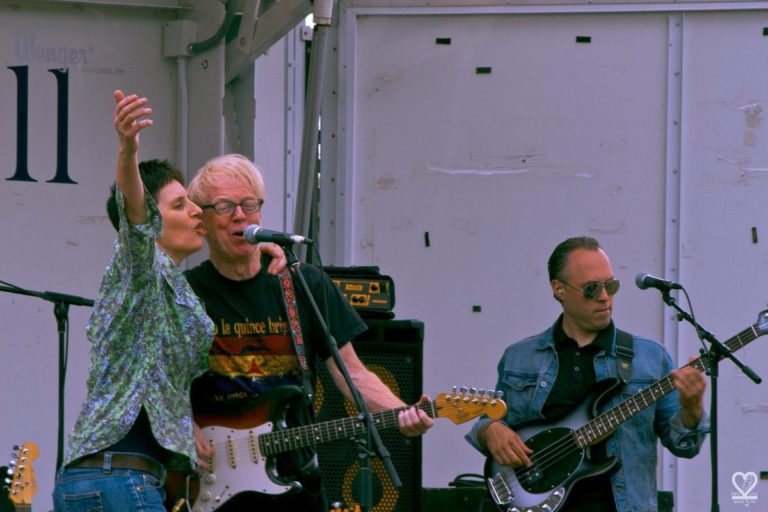
The Buffalo music scene is a prominent part of the nightlife in Western New York. Locals have numerous venue and genre choices when attending a live show.
In a unique rock nâ roll and pop genre mix, akloh. brought Electric Avenue Cafe to life on Monday, June 3. After the show, akloh. sat down and shared some insight on Buffalo, the music scene, and himself.
Alexandra Clark: Who would you say is your main inspiration or influence currently?
akloh.: Rock bands that truly value the art of quality songwriting have always been at the top of my list – Green Day, Foo Fighters, Nickelback, Switchfoot, etc. Those really haven’t changed for quite some time now because that “brand” of larger-than-life rock ‘n roll has never ceased to light a fire in me. With that said, I also draw a hefty amount of inspiration from more pop-based acts such as Jonas Brothers, The Struts, Twenty One Pilots, etc. as well as a variety of local acts.
AC: What do you love about performing live?
akloh.: I truly believe that I shine in a live-performance setting, especially considering the fact that all of my performances thus far have been delivered as a solo acoustic act. In an era when so many artists focus solely on releasing music and racking up streams/likes/views; when so many bands rely more on backing tracks than their own talents to put forth an engaging live experience; when the human-connection component of being a musician has been lost on so many, it’s a feeling unlike any other when I’m able to get up in front of a crowd armed with nothing more than an acoustic guitar and deliver a performance that’s just as if not more captivating than that of a full band.
And while I do have a live band in the works that I hope to perform with on occasion as sort of “special events,” I’m going to continue riding this solo-acoustic wave for as long as I possibly can. As a local-level artist beginning to breed notable success without having released any music or performed with a full band, I think it’s safe to say that there’s something special about the atmosphere I’m able to create with that acoustic guitar.
AC: What’s your favorite aspect of the Buffalo music scene? What about Buffalo as a whole?
akloh.: My favorite aspect of the Buffalo music scene has to be the musical diversity present within it – you can truly find acts of nearly every genre that both have originated in and perform around WNY. It’s often relatively easy to pinpoint the most prominent genre coming out of a given city, but with this city that’s simply not the case.
Otherwise, I’m an absolute sucker for Buffalo summers. While I’m not much of a fan of our winters, the way in which they create a shared sense of excitement and eagerness to be outside experiencing nature when the weather does (finally) change creates an environment unlike any other.
AC: What is your dream and or goal for your music career?
akloh.: My goal – while lofty – is to be the next artist on the forefront of the anthem and arena-rock sounds. I want to continue creating music that is not only true to myself, but that also carries with it a tangible sense of empowerment and vitality that lights the fire in others’ souls and allows them to share in that collective energy – music that 50,000+ people in an arena could relate to individually while singing and dancing along as one.
In an industry where so many artists and bands come and go, American rock and roll, country, blues and R&B hybrid band Little Feat has remained ever-present since the late 1960s.
Nearly 30 projects have come out over the course of Little Feat’s 55-year existence, with the band’s most recent full-length record coming out less than a month ago. Following their new record, Little Feat is set to headline the NYS Blues Fest in Syracuse on Saturday, June 15.
Through breakups, regroupings, lineup changes and genre-bending albums, Little Feat has maintained the spirit that gave them an audience in the first place. That of making authentic and passionate music that’s a joy to listen to and feeds the soul.
The band’s new album, Sam’s Place, just came out on May 17 and is their first album in 12 years. The record is also the first Little Feat project to feature longtime percussionist Sam Clayton on lead vocals, and the first to lean heavily into the blues.
Bill Payne, pianist for Little Feat, is the sole founding member of the band who is still actively involved. With a wildly impressive resume of musicians he played with as a session artist, including Pink Floyd, Stevie Nicks, Toto, Jimmy Buffet and many more, Payne is no amateur in the industry.
NYS Music had a conversation with Payne about Little Feat’s recent record, the significance of live music, the future of Little Feat and more.
Bill Payne playing with Little Feat at a 2010 Richie Hayward benefit in Vermont.
*This interview has been edited for length and clarity.
Erkan: The gap between Rooster Rag and Sam’s Place was 12 years. What was it like for the band to get back together and record after your longest break between albums?
Payne: It wasn’t that big of a deal. There was an interim right after Rooster Rag where I was playing with The Doobie Brothers. So that time was occupied. I didn’t feel like there was a huge gap in terms of what I was working on. I don’t think it really affected the band all too much.
Erkan: What makes Sam’s Place different from all other Little Feat projects?
Payne: I think it’s unique in a couple of senses. The biggest one is focusing on Sam Clayton for vocals. I wanted to do this many years ago, and it never took place, so I was thrilled. The other thing that I think stands out with this record is that Michael LoBue, or we call him “Bull,” was playing harmonica for us. Also, the record focuses on one genre of music rather than the eclectic mix of things that we normally do.
Erkan: Now that Sam’s Place is out, how has the reception been?
Payne: The reception is excellent. It’s always great when you can project yourself on a project. I had one guy comment saying, “Oh man, I love Little Feat, but when I found you were doing a blues record, I was like, ‘Oh no!’ And then I sat down and listened to it, and my jaw fell to the floor.”
Erkan: Have you been able to play it live yet?
Payne: We’ve cherry-picked a few songs. We were just in Berkeley, and we played one of the tunes that evening.
Erkan: How important to the band are live shows?
Payne: I think to our band in particular, and any band for that matter, especially these days, they are exceedingly important. The music industry has changed so much over the years and selling records is not what it used to be. Streaming is a conundrum in terms of you couldn’t possibly make a living doing it unless you were a star like Lady Gaga. I think all the proponents that have always been there for artists are all important. Live shows, recordings, rehearsals—the whole nine yards.
Erkan: Sam’s Place is the first Little Feat album to be released in the streaming era. What aspects of the album did it affect, if any?
Payne: I didn’t think about it one way or the other. I don’t think anybody did. We just played.
Erkan: You’ve had the privilege of seeing the music industry evolve massively throughout your career. Do you have any words on what it’s been like to exist through the countless changes and evolutions the industry has gone through?
Payne: On certain levels, it’s like a frog being boiled in water. People don’t realize things until it’s too late. On other levels, I’ve felt like Nostradamus at times. Like when I was trying to convince Warner Brothers that the internet is something they might want to pay attention to. Artists don’t write or compose or create because they want to. They have to. In other words, it’s going to come out, whether there’s a platform to present it or not. It’s something that you have in you or you don’t.
Erkan: Do you have any words of advice for people who might want to get into the industry but don’t know what to do?
Payne: If you’re the type of person who’s inquisitive about things, you have to embrace that with all with all you have. As an artist you have in your quiver, so to speak, the ability to share with people not only what you like to listen to or have been influenced by but how you might influence others, which is your own. Those things are important to share, especially in this day and age.
Erkan: Your 1978 album Waiting for Columbus made it to Rolling Stones’ 50 Greatest Live Albums of All Time list. What factors would you say contributed most to that album being so highly praised?
Payne: What exemplifies anything that we gravitate to with musicians and artists is two things: One is the music itself, the compositions. And secondly, there is the craftsmanship. The sonic quality of that record is wonderful. We had some brilliant people working with us. What makes Little Feat Little Feat, is the musicianship and great songs.
Erkan: You’ve mentioned in a couple of previous interviews that you’re actively writing a memoir. Can you tell me more about how that’s going and what stages of the book you’re in?
Payne: I’m approximately 70,000 words into it. I think that Thomas McGuane said the other day that between the musings and the dead ends, writing can often be like starting to fire in the rain. It’s tough, but I enjoy the process. All manner of things are revealed when you write about yourself. I was curious to see if I could tickle my brain and operate on myself, and yeah, it turns out I can.
Erkan: What’s next for Little Feat?
Payne: I was just listening before you called to the last mix of some songs that we have coming out on a record next year. The album is untitled, but they’re all new songs. People settled into Sam’s Place, and we’ll follow up with a punch with this new record. It’s extraordinary. There are some good guests on it. Hopefully, we’ll have another conversation about that.
Stream Little Feat’s new album Sam’s Place on all streaming platforms.
Lounge Studios in New York City, located on 39th Street and owned by Walt Randall, has been operating for over 20 years and remains one of the most popular recording studios among upcoming and established artists. In an interview with New York State Music, Randall opened up a little about his journey to becoming the owner of one of the most successful recording studios in Manhattan.
Owner and CEO Walt Randall mixing in the Solaris Room at Lounge Studios. Credit: Hummingbird Media
We previously featured Lounge over the summer, on our list of recording studios in New York City, one in a series of articles.
The interview took place in the Brown Sugar Lounge, the first room Randall built for the studio after graduating from Northern Iowa State University in 2001 and moving to New York City with $50 to his name.
The first room Owner and CEO Walt Randall ever built for Lounge Studios, titled Brown Sugar. Credit: Lounge Studios.
Established in 2003, Lounge Studios is an 11-room professional multimedia studio that houses some of the finest equipment in the music industry. Each of the eleven lounges has been meticulously designed and built by Randall himself to create the most comfortable atmosphere and highest quality. From 2013 – 2016, Lounge Studios served as the East Coast Recording Studio Headquarters for Atlantic Records and Warner Chappelle.
Of the various reasons an up-and-coming artist should aspire to record at Lounge, the number one selling point would be, Randall says, “The engineers and the environment.”
Randall continues, “Those things sort of go hand and hand because the engineers help create the environment. Like I said we’ve worked with a lot of big people, but we’re made to do independent artists. That’s where the bread and butter comes from and I’ve always kept our prices low to do that.”
Randall finishes, “That being said, we get a lot of first-time people in the studio. They’ve never been, they’re a little nervous, and you need to create a good environment for them. So our engineers are some of the best and fastest but, outside of being the best and the fastest, they’re very personable. They know how to make you relax, they can read the room, for a first-timer.”
In all his over 20 years of operating Lounge, Randall says his favorite artist to work with throughout his career is Solange Knowles.
“A Seat at the Table, the first time I ever heard the album front to back, I was like ‘Oh, this is a cultural shift album,” Randall said.
Randall continued, “At the time I was with Atlantic Records, and I used to always tell them ‘This album is going to be the album.’ Not only was it critically acclaimed, it got Album of the Decade with Noisy Magazine, she got a Grammy, that album was at the top of the Obama’s playlist. It was just a cultural thing.”
Solange Knowles worked on her groundbreaking third studio album, A Seat at the Table, at the Live Lounge in Brown Sugar at Lounge Studios.
“To me it was spiritual, we’ve had a lot of artists here but I have yet to hear an album that moved me like that immediately,” Randall finished.
Randall says he isn’t surprised by Lounge’s success, but, “Believing it’s coming, and then living the reality of not being able to pay rent sometimes, not knowing if you’re even going to be in business next year, just the struggle to make it and survive in the landscape that we were in, and trying to build a name for myself as a studio. I always had a belief that this was going to be big, and I took joy, I was in shock and awe every time there was a big artist here, but it never made me feel like I was ‘above it.”
Before opening Lounge in the early 2000s, Randall was headed towards a career as an athlete, although his passion for music was always there. After suffering injuries that prevented him from continuing to play Football, Randall leaned in fully towards this passion, a turn of events that worked out for the better in his view.
“I think music was my destination from the beginning,” Randall said.
Randall feels, that while football was a craft he was skilled at, it was never the end goal. “I was an athlete, and I was always competitive, but I never loved football.”
Despite suffering intense physical injuries in his athletic career, nothing compares to the struggles he overcame during his journey to opening Lounge.
“I’ve had three ACL tears, I’ve had all types of injuries in football, all types of adversity. None of that was even a fraction of what I’ve been through building this studio, this business, this enterprise. Not even close,” Randall said.
In a way, Randall’s injuries were an unexpected twist of fate.
“I think I got injured on purpose,” Randall said.
Randall continued, “I’m not the type of person that ever looks back and regrets anything, but specifically in this situation, I can look back and say, ‘That ended for this to start.’”
Randall concluded his interview with NYS Music by offering words of advice to anyone trying to make their dreams a reality, in the face of the curveballs life can throw at you.
“I needed to understand, personally, that there was something bigger than me,” Randall said.
“It gets so hard on this journey, that I’m not strong enough to do it on my own. There have been so many days where I’ve stepped on this floor while I was building it, and just cried, and said ‘I want to go home,” Randall said.
“It was taking forever, I didn’t have any money, I was falling behind on rent, and stuff was falling on my head in the middle of me trying to put it up. I wasn’t strong enough by myself,” Randall continued.
Randall finished, “When those insurmountable things happen, those insurmountable obstacles happen, the thing that has gotten me through is understanding that it’s not just me. I can lean on something else, I can lean on something bigger than me, that is pushing me through this when I’m tired when I don’t feel like it will ever end, I feel like a lot of times, I’ve done the work but I’ve been partially carried through those times. I get to the other side and I’m like, ‘I have no idea how I just did that.’ and I understand it wasn’t just because of me. It was because I had faith that there was something bigger than me that I could depend on.â
A week before the official release of her new album, The Healing, Sarah De Vallière hosted a listening/release party at Tones Studios in Rochester, for fans who booked a spot, which turned out to be close to 60.
In collaboration with Tones Studios, where De Vallière recorded vocals, fans were able to listen to the new album, chat with the talented artist, as well as tour the three floor studio.
Born in Rhode Island and living in Rochester, Sarah has been passionate about music for most of her life, starting with piano at age 3, and eventually graduating from Berklee College of Music. Like many artists, she uses personal experience in her song writing and as well as topics she is passionate about.
Between listening sessions, I had a chance to sit with Sarah for a few questions.
Jamie Mohr: The first time I discovered you, you were portraying Pat Benatar. There is a big difference in music between that and this album, which is very good by the way. Do you have any aspirations or ambitions to do more of that kind of music?
Sarah De Vallière: Not at the moment, though I wouldn’t totally rule it out for the future. I used to be in a relatively popular local 80’s band called the M80s (as the keyboardist) and would sing a bunch of female-led songs, and I did enjoy it. But I’m very passionate about telling stories, particularly through music. As a kid, I originally had an interest in being a filmmaker because I enjoyed storytelling, so I eventually studied film scoring as a way to tie that to my musical skill set. Then, after graduating from music school, I found myself getting right to the heart of what I love, which is telling stories through songs, and performing those songs. Long story short, I have a passion for telling stories, both my story, as well as the story of others, particularly stories that aren’t typically told. I have a deep respect for people who do tributes, and obviously, I have a deep respect for Pat Benatar, but I want to first work on telling my story before emulating someone else’s story.
SarahDe Vallière: No at the moment, that doesn’t mean I would totally rule it out. I was in relatively popular local band 80s called the M-80s (as the keyboardist) but would do a bunch of female songs and I enjoy it, I do enjoy it. I’m very passionate about telling stories and for me music is a way that I do that. I originally had an interest in being a filmmaker, as I’m writing and being an author. And actually, I really like writing music, and studied film scoring, and now I’m back to song writing. Long story short, I really have a passion for telling stories and telling my own story, as well as telling the story of others. Telling stories, that are not told as often. I have deep respect for people who do tributes and that kind of thing. I have deep respect for Pat Benatar, obviously. I want to first work on telling my own story, before I try to emulate a story of someone else.
JM: You mentioned that this is the first music/album that is truly you.
SD: Yes, out of all my previous work, “The Healing” is the fullest expression of me.
JM: The new music seems to have some deep meanings. Is this spiritual or religious based?
SD: Maybe spiritual? I am not religious, although I did grow up in a very religious home, so those themes do end up making their way into my music. Probably what you are referring to in terms of a “religious feeling” comes from one song on the album, “Saint Anne”, which is actually about Leonardo DaVinci. It’s really about his art, and most of his art was religious-themed. But yes, I do have an interest in religious figures. I find them, from a historical and storytelling perspective, very interesting. But when you really look into what I write in my lyrics, it’s likely contrary to what most religious people would want me to think.
JM: First track, “Goddess of The River”…is there a story behind or more a life lesson?
SD: It’s actually a true story of the extinction of the Chinese River Dolphin which went extinct roughly around 2016. I had an interest in writing stories to honor these lost species, and I felt very connected to the idea that the species is lost but we can still learn something from it. Yes, it’s too late for this species to ever come back, but perhaps in remembering its story and thinking of what it meant to the area where it is from, we can resolve to do something about it and save what still remains. “It’s never too late to fail, it’s never too late to mend” means, in a way we failed that species, but we can take its story and feel empowered to do something about it.
JM: One last question. You sat there for 45 minutes or so, what is it like to sit there and listen to your own album in its entirety?
SD: It’s not as difficult as I thought it would be. I thought it would be gut-wrenchingly terrible. This is the first thing I’ve put out that I feel is truly me and because of that, it is a little weird, but I feel good! I liken it to looking in the mirror. When you look in the mirror, you notice all the flaws, and you think “I wish that or that were different”. But at the end of the day, you know, I like my music. And when you have a healthy sense of positive self-image, you look in the mirror and regardless of the flaws, think “You look good”, “You look nice today”, or “You look beautiful”. I’m just happy and appreciative that I can share my true self in this form with people.
JM: Like a gentleman said in there, be proud of this. It’s a great album, super mellow and chill but has very powerful meanings behind each song, which people will talk about.
In an upcoming interview with NYS Music, owner and CEO of Lounge Studios in Manhattan Walt Randall revealed that he is starting a new surround sound company for his studio called Spatio. The company will launch during the first week of June and allow independent artists to record their music in Atmos Spatial Audio. This new surround-sound format allows for a more realistic and immersive recording experience.
The Dolby-Certified Solaris Room is the latest addition to Lounge Studios where artists will record their music in Atmos Spatial Audio. Credit: Walt Randall.
However, this new format is pricey and creates roadblocks for independent artists.
“All major labels make it mandatory to release Atmos, but it’s too expensive for independent artists. The going rate is between $500-$1500/song. This makes it impossible for independent musicians to get their songs done in Atmos Spatial Audio,” Randall said.
Randall realized what an obstacle this posed for independent artists, and decided to do something about it at Lounge.
“When I realized that this amazing format would pose insurmountable obstacles to independent artists, it became my mission to even the playing field”, Randall said.
Randall described the process of making Atmos Spatial Audio more accessible to independent artists.
“I started by building one of only three Dolby Certified, Atmos Studios in Manhattan. I then developed proprietary software systems that would help speed up the mixing process. Lastly, I trained some of Lounge Studios’ best engineers to work with Spatio,” Randall said.
Randall added, “To date, we have done Atmos mixes for every major record label and have done some of the biggest stars in every genre of music, including The Wallows and Lil Baby.”
Randall emphasized what a big deal Spatio will be for rising musicians.
“It’s going to be huge for independent artists and will change the playing field.”
To coincide with the album, Lodge has announced a tour across the East Coast starting on July 9. The tour will start in Clearwater, Florida at the Capitol Theater. Lodge’s tour will make three stops in New York. The first show is on July 17 at the Patchogue Theatre, in Patchogue, New York. The other dates are July 20 at the Tarrytown Music Hall in Tarrytown, New York and July 29 at the Bardavon Opera House in Poughkeepsie, New York.
Lodge has been the songwriter behind some of The Moody Blues’ biggest hits such as “Ride My SeeSaw” and “I’m Just A Singer (In A Rock and Roll Band).” With The Moody Blues no longer touring, Lodge is passionate about “keeping the Moody Blues music alive.”
Prior to John Lodge’s first show, he joined Michael Singer to discuss new recordings, The Rock and Roll Hall of Fame and Jon Davison of Yes.
The Dead Daisies released their brand-new single, “Light ‘Em Up,” on May 10, 2024. The tune – which is the title track of the upcoming album – features John Corabi on lead vocals. This marks the first time since 2018 that Corabi has been on a studio recording with the band.
Corabi originally departed on good terms from the band in 2019. He was replaced by “The Voice of Rock,” Glenn Hughes. That all changed in the spring of 2023 when Corabi returned to the band ahead of a United States tour. Prior to joining The Dead Daisies, Corabi had been in bands like The Scream, and Union and was Vince Neil’s replacement in Mötley Crüe.
The band has announced a United States tour that will span the month of June before heading to Europe. The band’s first show of the tour will be at Racket NYC in New York City.
Before the band’s opening night of the tour, John Corabi joined Michael Singer to discuss rejoining the band, life on the road and Muscle Shoals Studios.
Right now, folk music is having a major resurgence in the mainstream music world. One indie folk band, Tough Old Bird is looking to make their mark with their latest studio album Garden Dream, set to release April 26. So far they’ve released two singles, “Conjurer” and “Locks.”
Brothers Nathan and Matthew Corrigan first started releasing music as Tough Old Bird in 2016 and have debuted three albums since, drawing great influence from their rural upbringings in the small town of Fillmore Glen in Western New York. The band is now based out of Buffalo.
This time around, Nathan and Matthew brought in new musicians, namely Ricky Bechard on drums and Brendan O’Shea on bass. The album was recorded at Sunwood Studios in Trumansburg, NY.
I sat down with the band of brothers to discuss the creative process behind Garden Dream.
*This interview has been edited for length and clarity.
Ryan Bieber: To start, when did the idea for Garden Dream come about? And what was the inspiration behind it?
Matthew Corrigan: I remember almost conceptualizing this album in 2018, like, quite a surprisingly long time ago. We already had our previous album, The Old Great Lakes recorded and done at that point, then we had a few songs left to the side that kind of felt like we really wanted to hold on to them and go in that direction the next time. And so we had a little inkling of an idea for what it would be.
Nathan Corrigan: When we write songs, we tend to just …put them in whatever pile it seems like they belong. Then eventually an idea will start to take shape that some of those songs kind of feel like they’re dealing with some of the same things or sound like they belong together.
Matthew and Nathan performing the title track from their second studio album, “The Old Great Lakes” live.
Ryan: How does Garden Dream differ from your previous projects?
Mathew: I would say that songs themselves are definitely more autobiographically leaning than some of our previous stuff, which felt pretty important to me to reach a certain point where I was comfortable with writing more directly about myself rather than necessarily crafting narratives.
Ryan: And what’s it like being in a band with your brother? Is there some sort of extra special, like, telepathic sort of connection in the songwriting process? Is there a different energy when you write together?
Nathan: That’s a good question. I’ve never really written with anybody else, or played in any other band. So, I don’t have a lot of frame of reference there. I do think we have a pretty good partnership in that sense that we came up listening to a lot of the same music, so we definitely share a musical language that, you know, one of us can reference some very obscure song that very few people would know, but we’ve both listened to almost all the same stuff. So we can just be like, ‘Oh, we want the sound like this.’ And we’ll know what we’re talking about.
Mathew: We’re now very good at being like honest editors for each other. I’ve done a small amount of writing with other people and sometimes it’s harder when you’re less familiar with someone else to critique something or offer an opinion. But I think, between Nate and I … we’re both very respectful of each other’s opinions. I think the biggest benefit is just having someone who’s open and receptive to ideas.
Ryan: How does your upbringing in western New York inform your songwriting process, the lyrics and the themes that you write about?
Mathew: It’’s pretty massive, almost such an influence, I don’t know how to even pare it down into words. I feel like almost everything that I write about comes from my observable world and life and a ton of that is influenced by where and how we were brought up in a rural environment. I feel like the natural world is largely a character in a lot of songwriting I try to achieve.
Nathan: Yeah, I think there’s some lyrics on this album that I maybe didn’t even realize as we were writing them, our direct references to certain things that we might have experienced growing up. We lived way out in the country on a dirt road in the middle of the woods, in a little house that our dad built. And it was kind of like this almost homestead or pioneer-like childhood. And so there’s just little elements of that, that have found their way into into some of these songs that kind of feel like they’re looking back and observing that from a point of view of adulthood.
Ryan: You mentioned having the same taste in music. Growing up what kind of bands or artists were playing in the household that everyone was listening to?
Nathan: Growing up, our parents played a lot of Beatles records in the house and some singer-songwriter things like John Prine. The music that we chose to listen to when we were kids a lot of the time it was country music, because that was not something that was in our house.
Ryan: Folk music – at least some version of folk music and pop music – has definitely seen a growth in popularity in the mainstream with artists like Noah Kahan. I was curious as to your thoughts on this sort of mainstream folk popularity and have you felt like the effects of this as a folk band at all?
Mathew: I would say for for us, we’re fairly influenced by like a previous wave of mainstream folk. The early 2000s indie folk boom was very influential musically once I reached college age. I don’t know if it’s technically a different era, but in my mind, it kind of is and that’s where I’ve learned a lot about songwriting.
Nathan: It seems like that kind of stuff is always there. There’s always people doing it, but it rises and falls in popularity, and you know, it’s placed in the public consciousness. It kind of felt like that stuff was really became popular again in the early 2000s for a few years, and then maybe died off again a little bit, and a version of it is now kind of coming back a little bit again. Yeah, it’s always around.
Tough Old Bird recording Garden Dream at Sunwood Studios in Trumansburg, NY
Ryan: What are you looking for listeners to take away from this project?
Nathan: I sometimes have a hard time talking about what songs are about because I want people to listen to them and decide what they’re about for them. So I hope that people connect with it in some way and find some meaning in it.
Garden Dream is available on Bandcamp for vinyl/CD pre-order and will be streaming wherever you get music on April 26th.
The band will be playing shows in Rochester and Buffalo as well as Glenshaw, PA throughout the month of April and into May. The full tour schedule can be found on their website: here
Brass Power House group Too Many Zooz returned to the scene where it all began on Saturday, April 6 as the trio concluded their self titled album tour in epic fashion.
Retail Therapy is the band’s first album in almost five years, and we had the opportunity to ask one of the bands founding members, Matt Muirhead, about their new album, life for a band that’s been together for 10 years, and what’s next for the acclaimed trio.
The album came together more than a year ago now…generally I think our goal was just to create as much as possible, and then spend the following months trimming the fat and deciding what we wanted to keep and sculpt out, and what to get rid of.
Matt Muirhead, Too Many Zooz
Songs like “Subway Devil Blues” off their latest work and their previously released “Subway Gawds,” the roots of Too Many Zooz can be traced 10 years back to the bustling music scene in the NYC transit system, they all met as working musicians in the subway system. Despite their continued success, the band’s iconic brass and beats sound can still be heard echoing through the tunnels as they busk regularly to this day.
The subway is where we came from. It shaped our music and us as people equally. We’re very grateful for the people of New York for loving us and supporting us to this day.
Matt Muirhead, Too Many Zooz
The band consists of Leo Pellegrino, David “The King of Sludge” Parks, and Matt Muirhead. They self describe their sound as “brasshouse”, and appropriately so. Leo and Matt bring brass of varying tempos while The King of Sludge provides the perpetual beat. The vibe transcends labels as it encorporates a fusion of jazz and percussion with EDM house music. Asking about their songwriting style and process, Matt said the following:
There isn’t a set formula for us-every song is different and how they come to fruition is seemingly unique each time. Of course, over the years you start to develop habits as writers, but we try to approach each song as its own and give it the love and energy it deserves.
Matt Muirhead, Too Many Zooz
The evening at Brooklyn Bowl opened with a strong solo performance by Michael Wilbur, a long time collaborator and frequent guest star. Joining TMZ shortly after his own set, Michael was featured on Retail Therapy, and he has toured alongside them with his own band, Moon Hooch. Michael was not the only guest of the evening, as the band brought out a dynamic percussion duo that brought the evening to a whole new level.
…for me, collaboration is the thing that excites me most about the creation process…. there’s nothing more dismal than sitting in a studio by yourself . Collaborations are such a special and beautiful thing and each one is new and different so for me, I was thrilled to be able to have so many friends on the project.
Even within Too Many Zooz internally, I think what makes our bands sound so unique is the inherent creative collaboration between just the 3 of us- we all have different backgrounds and experiences and we believe in a musical democracy where those sources of inspiration can intertwine, sprout, and grow into something beautiful.
Matt Muirhead, Too Many Zooz
Too Many Zooz went viral in 2014 when a passerby recorded their performance at Union Square Station. Whether it’s their distinguishable sound, or Leo P’s classic showmanship, its clear that they have captured the publics attention, converting viewers into passionate fans. They regularly tour around the country, in the festival circuit, and play abroad. From inside the subways, to venues to around the world, their connection to the fans is undeniable.
I love our fans and am endlessly grateful for them and their support. It blows my mind sometimes how lucky we are to have such loyal fans that continue to show love all these years later. On stage, our connection is immediate . We’re definitely a band that feeds off of energy. If the crowd is crazy, the show will probably be that much crazier. Off stage, we’ve been fortunate to meet some really cool, funny, interesting people who happen to be fans of us and generally speaking I feel confident in saying that our crowds are some of the more accepting, welcoming, and warm people I’ve ever had the chance to play for
Matt Muirhead, Too Many Zooz
Being on the road and playing music together for so long, life and art are bound to blend together. When asked about what their biggest challenge as a band was, Matt reflected “This band as been an enormous learning experience in regards to working with people and truly understand teamwork.”
I was a kid when we started this band and I look back and laugh at who I was. Next to my parents and loved ones, I’ve learned more about myself and who I want to be from Leo and Sludge than anyone in my life. They have been and continue to be monumental sources of inspiration to me on and off stage
Matt Muirhead, Too Many Zooz
Retail Therapy is out now and is available for streaming. For fans who missed out on their tour, you can catch them this summer as they join Coheed & Cambria and Primus on select dates this summer. Tickets are on sale now.
It’s approaching ten years since NYC Irish rock mainstay Black 47 took their final bow at the now-dark BB King’s Blues Club in November 2014, and what an indelible performance that became. For long-time bassist Joe Burcaw, who earned the nickname “Bearclaw,” life in the time since Black 47 has been a rewarding and fruitful respite from life on the road, going from a touring musician to maintaining has passion for music as a small business owner in Connecticut. Then came 2020 when the pandemic changed the world as we know it especially in discourse of social and political issues and garnered explosions in divisiveness.
But for Burcaw this sparked and inspired the need to speak out through his creative outlet as not only a way to release steam but to also invoke thought. This grew into a new studio project, recently releasing a new EP titled Four On The Floor. It is first-class in its talent, production, and writing, and features a distinctive rock and roll voice. Burcaw took a deep dive into the project with NYS Music, along with his music school Bearclaw’s Academy of Music and of course, some reflections on Black 47.
Joe Burcaw with Black 47, 2014
Steve Malinski: Can you tell us how things came to be with Four on the Floor?
Joe Burcaw: The bass player for Living Colour lives up the street from me and I connected with him back in 2017 and took some lessons. I was at a point with my playing where it was it was a bit stagnant and I needed some inspiration. So, Doug’s an incredible inspiration and from Living Colour, one of my favorite bands. So I reached out to his wife actually, who manages him to look into doing some lessons and that led to us working together. He was familiar with Black 47 and he had asked me one session if I would be interested in doing some writing. He produces and writes and I said I would be honored. So we were writing a couple of tunes and were at the point where we need it and felt like it was all instrumental music, very dance oriented, very Euro sounding, with the emphasis on the bass guitars. But we felt like we needed a voice to mix things up a little bit. And he suggested, why don’t I call Corey? I’m thinking to myself in the back of my head, yeah, sure love the world with Corey Glover. So he called Corey, and Corey was totally into it. He came up for a couple sessions and he and I just hit it off. Just had a really nice rapport. And I had said to him at one point and I asked him if he’d be interested in maybe separately doing some songwriting together and he said I would love to. We kept in contact and then came the lockdown. So he and I were always in contact with each other.
Then with the pandemic happening in March of 2020, here we are, everybody’s at home idle, not sure what to do with themselves or their lives, wondering what’s happening with this… this disease. So I thought to myself, first off, I couldn’t get over the amount of discord and the amount of pain that people were going through. And then, you know, I read the New York Times and it made me aware of how there was an uptick in the amount of domestic abuse happening with a lot of women and children who were stuck in situations where they just could not get out and were stuck with their abusive partner. And also with the George Floyd Marches – with him, you know, being killed, the injustices, and the Black Lives Matters uprising. Just like everything was coming to a head and I just felt, I felt the need to call my musician friends and do something about this and get this off my chest – and our chest – and write. So I called up Corey and the mutual friend of ours, Jamie McDonald, and the three of us would have sessions every week bouncing ideas off of each other, lyrical ideas. It was mostly lyrical ideas and just subject matter that we could talk about and put into the lyrics of the songs. And we did that for about two year and a half, two years, and then, you know, it kind of evolved into into this EP. We weren’t sure what we were going to do with it, and then it just kind of evolved naturally into the EP. So that’s a roundabout description of how we got together.
SM: So it kind of started as a way for you guys just to kind of have this release of all the all the stress from basically the world and the pandemic and then it’s like, hey, we got something going, let’s put it on record.
JB: Yeah, that’s basically what happened. And having Corey be so open minded and into the idea of writing with us and recording with us was, to me, it was an honor. I mean, he’s my favorite by far, my favorite vocalist ever. I think he’s very underrated as a vocalist and feel like he needs way more of a spotlight than he gets. He’s a very humble human being and one of those guys where you sit in the room with him and there’s just this ease. He’s just a real gem to be around and I consider him a friend now. So it for me it’s been mind-blowing to be able to call him a friend and a working peer.
SM: So awesome. And yeah, the the first track “Zig Zag” caught my attention with like the really strong bass funk groove. And then Corey’s voice comes in and I’m just like, holy smokes, this is awesome, his voice was so distinctive.
JB: It’s undeniable that when you hear that voice and you know who it is, that’s for darn sure. And with Corey, he doesn’t have that ostentatious way about him, he’s not trying to show off. He is one of those people that has an incredible register. He never goes out of pitch, which is, for me, incredible to watch and he has so much power. I feel like his voice has gotten stronger now than it was back when Vivid came out or Time’s Up or Stain which were popular back 30 plus years ago.
So, getting back on “Zig Zag,” that song talks about having a conversation and avoiding having the conversation. And what I mean by that is that folks in this country need to really step up and be aware that racism is a is a is a problem. Still, it’s been a problem for hundreds of years.
And we’re creating a platform for people to come and talk about this and see about being able to resolve the issues and problems that the black community has been suffering and going through for all these years. Musically, I had written the music for that about a year prior to showing it to the guys. The impetus of the song really came from The Pretenders, who I’m a fan of. I was listening to…what was the song…, “My City Is Gone,” and heard a really great bass line played by Tony Butler from the band Big Country. He did session work on the Learning to Crawl album and just always that bass line just kind of stuck in my head. So I kind of (no pun intended) based the song kind of around that line; the groove is very similar to that Pretenders song and I showed it to the guys and they were really into it.. So that’s the lead single. It’s the song that we just really feel encapsulates what we’re trying to do with this project. It’s a project of community service and trying to get back to the community through our music and for inviting people to listen to it and join us on the ride.
SM: Getting further into the songs, “Mighty Real” – the thing that stuck out to me is the intro, layering all the the voices with dance type feel and then it jumps from a minor key to the major key where you get to the that classic disco feel. What can you say about that song?
JB: Corey and I are big fans of Sylvester, and that’s a remake. Sylvester had a disco tune that came out in maybe ‘79 in the “disco sucks” era, unfortunately. But Sylvester was a drag performer. He was part of a troupe called The Cockettes. They’re based out of San Francisco and they would travel from coast to coast to New York and San Francisco and other areas around the country. And that was his biggest hit. It was such a great dance track and I just remember when I was a kid hearing it, just loving it, because of the bass and the drums, the interplay between the rhythm section… it just really it really floored me as a kid. When I learned that Corey was into it as well we just discussed, why don’t we do a more modern version of the song and kind of make it our own? And add a guitar solo because on the original track there’s some rhythm guitar but there’s no solo whatsoever on that. I envisioned having this really big thought-out masterpiece outro solo. I had Vernon Reed and Missus Smith in mind. I reached out to Missus Smith first and she was totally into the idea of it.
I love, the idea of having this dance form, dance floor feel and then having this rippin’ guitar solo that lasts for 60+seconds. Just bombastic shredding. I think it really it makes the listeners kind of tilt their head going whoa, wasn’t expecting this! because it starts out really dancey and then it as it continues to the bridge section it gets harder and harder with the guitars being more upfront in the mix. We did that intentionally to have a build-up crescendo towards the end. So that song is the second single.
“Ode to Ustad”: Ustad Sultan Khan was a classical Indian musician and I first got turned on to him through Warren Cuccurullo who’s the guitar player used to play with Frank Zappa, Missing Persons, and Duran Duran. I’m a big fan of his playing and he put a record out with this gentleman, titled The Master. And it was all Indian-fused music with a lot of drones and a lot of chanting in it and just I’ve always loved the music and it just really struck a chord with me and was one of those instances where I was thinking to myself, wow, I know this guy really has influenced me and I haven’t really paid homage to that and I wanted to do so. So that’s why II titled it “Ode to Ustad.” And I wanted to have the music be more focused on Indian ragas and Indian drones and it’s all me playing it on the bass. I played six string synth bass and four string bass on that particular track.
There’s also an ongoing theme of all four songs on the EP. The reason it’s called Four on the Floor is because all the songs are 110 beats per minute or higher. So it’s kind of got that dance, you know, four on the floor kind of kind of feel.
SM: Lastly, “House Arrest” seems to link directly to the pandemic times. What kind of message are you getting to in this song?
JB: Well, it’s strictly about domestic abuse. It’s coming down on, as I said at the top of the conversation, coming down on people who are abusive to their partners and their children and also shedding light that there is hope. And there if somebody needs to get out of a situation you do it. And I know that’s easier said than done. But I’m hoping that people can listen to the track and get some inspiration and maybe make a choice that they weren’t thinking about making before listening to it, to get out of a situation that’s tumultuous, dangerous, something that that could harm the person or their family. I specifically got that idea from a New York Times article that I read. It was probably May of 2020 about when the uptick in abuse since COVID happened and people were blocking down together. That was a reaction to that. I had the first stanza down and then I showed it to the guys and we collaborated on finishing the rest of the lyrics. So, a lot of lyrics on that.
It’s a lengthy one but we just felt like we needed to have all of those words in there to get the point across. We’re happy with the way that came out, that the song has a (as far as the bass line is concerned) more of a chic-meets-Duran Duran kind of feel to it. I wrote it specifically for Corey’s voice, for a lot of the inflections that he adds to music and wanted to not get in the way of the vocal line and create a lot of space for it, especially during the verse sections where he could ad-lib a little more and not have me get in the way of the music.
SM: So who how did the virtual/remote production process go given all the moving parts?
JB: What happened was, as far as the tracking I have a DAW set up at home, I have Logic [production software] and then Corey had Garage Band And our mutual friend Jamie has Pro Tools. So, we were sending files and I was just recording my bass at home and sending it over. Jamie was doing a lot of tweaks. He’s really good with engineering. Then I had another person come in and do some mixing as well to help out with that. And then as far as you know, then I sent it to Disk Makers for mastering, had that mastered and then here we are. So yeah, everything was done on our own.
It was a real DIY instance since we weren’t able to go into the traditional studio to record and track. It was… it was different. I mean it proved to me that it’s possible to make a decent sounding record from home. Would I do it again? I don’t know. I like the idea of getting into a room and bashing out parts with other musicians there to kind of vibe off of each other. So that’s kind of more my preference as opposed to virtually recording.
SM: Yeah, I suppose it’s different if you’re just recording a backing track that somebody else wrote for you but when you’re putting your heart and soul into it, definitely the whole face to face thing is priceless.
JB: It is, yeah. We’re human beings and that’s how you work off each other. You feel what’s coming from the other human, whether that’s good or bad. With us it was great. So, I would love for us to get into the studio and do some more. There’s talk of us doing some more. I think going forward we’d like to make more in the way of singles as opposed to a full length album or EP. It’s just easier by doing it that way. We got lucky just because of lockdown that everybody was around that we were able to do that [full EP]. But now that things have opened up a bit more, I don’t know, Corey’s out on the road a bunch with Living Colour right now.
They’re playing with Extreme and had a success with that. So he’s not home much, but I did talk to him right before he left for his tour and we’re going to get back together once he gets home and work on some more ideas.
SM: I was going to ask if you guys were going to get together again and record, but do you think you might also schedules a line up to maybe do a short live show somewhere.
JB: Yeah, we’re we’re in talk talks of doing that right now [later in 2024]*. I own the music school [Bearclaw’s Academy of Music] and we’re looking to do a fundraiser for kids who can’t afford instruments or lessons, and we want to raise some money for kids that are under-privileged and not able to do so. So it would be maybe a half hour set if if that. It’s not going to be a real long thing because you know again it’s going to be during the afternoon, it’s not going to be at night. But yeah, we’re talking about that if Corey will be around.
So I think we’ll be able to do that with this project. It’s not a touring entity. It’s a studio project built around community service and giving back and writing about topical situations that not everybody talks about, ones that sometimes get thrown under the rug, like with the racism, with gay rights, with immigration oppression, domestic violence. So the idea of doing what I did with Black 47, hitting the road consistently… I just don’t think that would be feasible at this point. But one-offs, definitely. We’ll definitely do one-offs here and there.
SM: So to shift gears a little bit, how are things with your music school? You’ve been running the school for 8 or 9 years now?
JB: Yeah, yeah, it’ll be 8 years. Oh, it’s great. I love it. I really enjoy being able to be a small business owner and to teach and to kind of run the show on my own. I mean, it’s a lot of arduous work. I’m a one-man operation so I have to do everything as far as coordinating all the scheduling of my teachers and financial things as far as taking care of payroll and all that. So it’s a lot on top of teaching since I have a lot of a lot of students that I teach bass guitar and ukulele too. It’s very satisfying. I love that I can wake up and know that I don’t have to go into a nine-to-five because I’ve done that in the past and this way don’t have to listen to anybody barking orders at me. My wife is a small business owner too, she’s a music therapist so she’s taught me a lot as far as just how to run a business properly and has given me a lot of advice and assistance with that end of things.
So it’s going great. But again, it was difficult during the COVID days of 2020 and even for the last two, two and a half years it’s been kind of a rebuilding because back then virtually everybody, I mean the world, shut down and thank goodness for virtual teaching and for virtual lessons. I was able to continue doing that and it kept my business afloat while we were not able to get into the building. I look forward to branching out and to expanding and to get back to where we were right before COVID, we were doing really well with a lot of lot of students coming in. Now we’re about 75% and we’re picking up. But again, you have to keep in consideration so many people lost their jobs, so many people moved out of the area. You know, there’s so many circumstances and variables that that affect people not coming back.
SM: Yeah, different folks re-prioritizing things…
Larry Kirwan (center) sharing a song with friend Mary Courtney (left) and bandmate Joe “Bearclaw” Burcaw (right)
JB: Yeah it’s true. I’ve been really, really happy with that. It’s my new life. You know, I had an old life as a touring musician with Black 47, and now I’m small business owner. Like what? Really. I mean, I do still perform. I have a Jimi Hendrix tribute band that I play in with some buddies of mine from Boston and we play out every once in a while with that, which is nice. So it keeps me in the game a little bit as far as live performance is concerned because I really don’t get to play live that much. I have a three-year old as well, so I’m a relatively newer dad.
SM: Oh, Congrats!
JB: Thank you. Thank you. Yeah. So got a lot on my plate, that’s for sure.
SM: So do you work with both kids and adults?
JB: We do. I mean primarily kids, but we do have some older adults that are more retired age come in for lessons. I mean we’re “everybody’s welcomed with open arms” but we just find that most it’s mostly kids that do come in for the for the lessons. I do have a couple of students that I teach virtually as well that are overseas that are adults Amsterdam, UK and it’s great. I love being able to do that. It’s so convenient that you can walk down into your studio in your house, get hard wired in, get on Wi-Fi, and boom. You know, it’s fantastic to be able to communicate with somebody that’s thousands of miles away on the other side of the planet.
SM: I’ve had experience taking some group drumming lessons with a teacher in Scotland, so it’s like 5:00 PM there and we’re just having our coffee over here while we’re all in different locations. Definitely it works, but not preferred, I’ll say that.
JB: Yeah, I have to say with at least for me with bass guitar and teaching guitar it’s fine. I can understand for some instruments like drums it might be a little difficult. I mean you can do it. Obviously piano is a little more difficult because of the hand situation where you have to get the camera where it’s looking down on the kids’ hands to see if their positioning is correct and also being able to look at the person and being able to dictate what you want them to do. So it is hard with the with the piano, but I found I’ve had no problem. The only problem I ran into is there’s a bit of latency, so using a metronome is a little dicey. So, I wouldn’t recommend that until we get more software that’s more reliable. But aside from that, I love it. I really enjoy doing that.
Thomas Hamlin, Joe Burcaw, Geoffrey Blythe, Fred Parcells, and Joseph Mulvanerty (l-r) of Black 47, Peekskill September 2014
SM: Before we wrap up… Black 47, obviously that’s been a big part of your life. I see the six albums hanging up there on your wall.
JB: Yes, there they are.
SM: So you recorded six with them?
JB: I did. I did 3 studio and then one of them is the DVD Live at Connolly’s and then the other two are compilation records. So there were three I recorded on – Iraq, Bankers and Gangsters, and Last Call, as far as the studio albums are concerned.
SM: Yikes, it’s been 9, going on 10 years this coming November since Black 47 wrapped up. Having this much time since then, what does the experience feel like now versus, say, like the day after that last show at BB King’s in NYC?
JB: I don’t even feel like it was the same person. I don’t even know who that guy was. My, life has changed so drastically since that last night at BB King’s, just, you know, I got divorced. I got remarried. I had a kid. Both my parents passed away and I opened up my own business. You know, within 10 years all of this stuff happened. So it was very surreal to say the say the least. But I wasn’t despondent, you know, there wasn’t any type of despondency.. But it was a lot, you know, it’s a lot to take in. I mean first off, when you’re in a band and play with the band for just under a decade, these guys were my family. That’s the thing with Black 47 people need to understand as well, is that these guys took me under their wing, accepted me. I was never… I mean the joke was I was always the new guy, Bearclaw, the new guy. But I was never treated that way. And I always felt like I was there from day one, even though I was too young to be a part of the band. Back then, you know, when they started out, I was still a teenager. So that wouldn’t have worked out. But every night that I got on stage with those guys… I never took it for granted. I would look around at these five musicians and just thank, thank whoever the source for putting me there with them because I love the band. I was a fan before I got to play with them. Well, I first got turned on to them on 120 Minutes on MTV and saw them do “40 Shades of Blue” as one of the lead tracks that they were pushing on top of “Funky Ceili.” And I just thought to myself, wow, this is very interesting having the uilleann pipes mixed in with the Irish theme on top of having the sophistication of songwriting like Bruce Springsteen mixed in with The Clash. So then I got to see him at TT the Bears Place in Cambridge, MA when I was up in college in Rhode Island. I was just floored. My jaw hit the hit the ground just in awe at the musicianship and just the power that they exuded. That really struck me, the power of that band. And then almost 10 years later, I’m pinching myself. I’m standing on stage with him.
SM: And that was just a lucky chance, too, right? I recall you mentioned last time we spoke that it was an ambiguous newspaper ad?
JB: Advert, yeah. And at that point I was in New York City, just banging the pavement, playing with everybody and answering all these different various adverts. And there happened to be “one touring band looking for a bass player ASAP. Please submit.” So I sent my EPK and didn’t hear from them until, I don’t know. Hammy [drummer] called me a week later, using a pseudonym. He didn’t even lead on to who he was until a couple phone calls later and he got a good feel for me. And then yeah, he invited me. He just asked if I was playing out. I happened to be playing out with a band on a particular weekend that he was available and he came down to the show. I didn’t think he showed up because he didn’t introduce himself.
So I finished performing with this band and nobody was there. But I come to find out that there was a torrential downpour during this gig and he got soaked and wanted to go home before the end. But he did get to see me and was really impressed and asked me to come down for an audition. And yeah, he left me a voicemail and asked if I’d be interested in coming down. And yeah, the rest is history. So awesome. They put me on retainer for about a month after my audition then for 8 to 10 shows to see how it goes. And then after New Year’s, I think going into 2006, they asked me to become a full, full time member. The rest is history.
*Editors’ note: the potential date of the fundraiser event changed since the time of the interview from spring 2024 to fall 2024.