It was a great week for Pink Floyd fans when David Gilmour enthralled the crowds at Madison Square Garden for five nights. The five city, 20+ performance tour in support of his latest album, Luck and Strange concluded with these five magnificent nights at MSG.
Gilmour’s previous visit to the Big Apple in 2016 was a three-night spectacle unto itself, befallen upon Radio City Music Hall and Madison Square Garden. With the imprint those shows left on the city it’s no surprise that three nights sold out in a flash with two additional nights added to satiate the ticket demand.
“5 A.M.” served as the perfect opening for the evening, lending an ambience for Gilmour’s signature guitar sound to break through like a beam of light. Those first few notes seemed enough to already leave people lost for words on what they were in for the rest of the evening. The true spectacle of the shows were his iconic guitar solos – a roaring jam in “Fat Old Sun,” the melodic monologue of “Marooned,” a wailing lamentation concluding “In Any Tongue,” the helpless reminiscence of “High Hopes,” and of course, the unforgettable denouement of “Comfortably Numb.” It is easy to converse with fellow Pink Floyd fans which is the “best” or most “profound,” but in the context of Gilmour’s live shows at The Garden there can be no debate as his guitar work was so masterfully presented in each of his solos.
Luck and Strange was released only a few weeks before he began his tour in Rome, Italy, which gave a limited period for fans to listen to the new material before seeing the shows. It made sense that a few of the new songs had a less boisterous response compared to mainstays from the Pink Floyd catalogue. However, the entirety of Luck and Strange made it into the setlist unlike 2016’s Rattle That Lock which featured just a few songs from the album in that tour. It was very respectable to see the inclusion of the full album when so many fan favorites from Pink Floyd’s history could be selected.
Gilmour structured his two sets with a perfect blend of his new songs and later Pink Floyd era songs, along with a few quintessential songs from Dark Side of the Moon, Wish You Were Here, and The Wall. Weaving of the new songs with familiar territory created an exciting and refreshing concert experience for hearing the entirety of a brand new album.
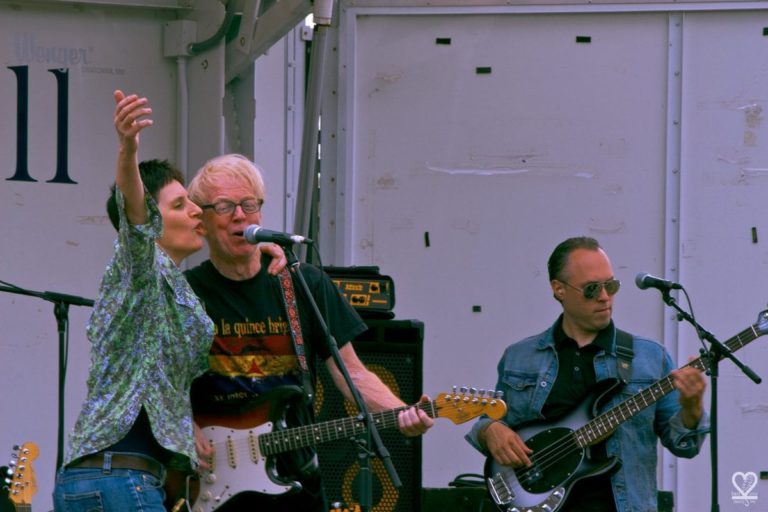
Gilmour’s touring band was nothing short of a compliment of talent to each other and to Gilmour himself. His long-time collaborator, Guy Pratt (on bass), has worked with Pink Floyd since the A Momentary Lapse of Reason tour and also toured with Nick Mason’s A Saucerful of Secrets band showcasing the early years of Pink Floyd. Gilmour’s daughter, Romany Gilmour, took lead vocals on “Between Two Points” (a Montgolfier Brothers song) and sang beautifully on an acoustic, stripped-down version of “The Great Gig in the Sky,” demonstrating the forging of a musical legacy on stage within the Gilmour family. Completing the lineup are Greg Phillinganes and Rob Gentry on keyboards, Adam Betts on drums, Ben Worsley on guitar, Louise Marshall on piano/vocals, and the Webb Sisters; Hattie Webb on harp/vocals, and Charley Webb on guitar/ukulele/vocals.
Just as he did at the conclusion of his three 2016 shows in NYC, Gilmour bid the crowd goodnight after thunderous applause, remarking “…we hope to see you again soon.” That statement came true eight years later in 2024, so the door may be open for a few more shows down the road. Until then, let’s remember those nights as priceless musical treasures.
Set 1: 5 A.M., Black Cat, Luck and Strange, Speak to Me, Breathe (In the Air), Time, Breathe (Reprise), Fat Old Sun, Marooned, A Single Spark, Wish You Were Here, Vita Brevis, Between Two Points, High Hopes
Set 2: Sorrow, The Piper’s Call, A Great Day For Freedom, In Any Tongue, The Great Gig in the Sky, A Boat Lies Waiting, Coming Back to Life, Dark and Velvet Nights, Sings, Scattered
In the 25+ years since joining Styx in 1999, keyboardist Lawrence Gowan has found a home anchoring the stage with his bandmates on top of an already successful (and still ongoing) solo career. The band has embarked on an extensive co-headlining tour this summer with Foreigner, supported by John Waite, and is coming to Saratoga Performing Arts Center on Tuesday, July 30 with subsequent performances in Pennsylvania and Massachusetts before venturing onward outside of the general Northeast area.
Lawrence Gowan of Styx at Bethel Woods Center for the Arts, August 2023
The longevity of the “classic rock” genre is proven with the younger generations (often not yet born when the bands first formed) showing up to these concerts with parents and friends the past few summers. That observation that many of us have made was affirmed from the stage perspective, echoed by Lawrence Gowan when he recently spoke to NYS Music.
Along with Gowan, Styx consists of James “JY” Young, Tommy Shaw, Chuck Panozzo, Todd Sucherman, Will Evankovich, and Terry Gowan.
Styx (Photo by Jason Powell, provided by Styx)
Gowan took a few minutes before Styx’s recent show in Georgia about the tour, his solo work, and time with Styx. Here’s the interview in its entirety:
Steve Malinski: How’s the tour going so far for you guys?
Lawrence Gowan: Honestly, it’s exceeded expectations. You know, it’s an at-capacity house every single night, and the audience, they’re really phenomenal, quite honestly. It’s amazing to see, first of all, that half the audience, on any given night, half the audience could be like, under 40 years of age. So, they weren’t even born when these biggest records of the classic rock era were recorded. And yet they’ve embraced this music like it’s concurrent with their lives. You know, you can’t miss the fact that that’s very, very evident. So there’s that. Then there’s the fact that, you know, four hours straight of classic rock where you know every single song (and I’m including opener John Waite). It’s really entertaining, quite honestly, and I’m as entertained as anyone, you know, with the fact that I get to see the other bands and we have this, shared experience of seeing that this tour has exceeded expectations, and it’s just a joy to be doing.
SM: And how’s it been sharing the stage with a Foreigner? A lot of fun for you, I bet?
LG: Oh, you know, the last time we toured together was ten years ago. We did an extensive tour together, and then we also played the UK with them. So we have a nice shared history over the years. I mean, I even remember when they were going through a lot of the transition phase, because originally, when first couple of shows I’d ever done with Foreigner anyway, was back in, I think, 2001 or 2002. And then, you know, all the various transitions that Mick Jones had to go through were really pretty phenomenal. The guys in the band today are just tremendous. They really carry that flag so well. And they sound great. Every single night they put on a great show, and, you know, they definitely set the bar really, really high.
SM: I saw you guys last year at Bethel woods as actually one of the photographers right at the front of the stage near your setup. That was a really fun show, seeing you and Joe Bonamassa there.
LG: Yeah, yeah. Wasn’t that neat? We did that one and the next night, we did Jones Beach with him as well. That was pretty amazing. Maybe 15 years ago, he came out and actually was opening shows for Styx. Of course, everybody knew it was going to explode as a phenomenon and to see that happen, another great little, you know, side feature that I witnessed in my time in the band.
SM: Very cool. Yeah. When you were out on stage, it just seemed like yourself and the whole band was having just such a genuinely fun, high energy time. What drives you to have that energy and, you know, just that stage presence every single night?
LG: Great, great question. wish I had a pat answer for that. There’s something… There’s something about this band, the chemistry of this grouping of people. It just seems to embrace the moment, and that moment being the moment we get on stage, something happens where we really just kind of bond in a very entertaining way. Because I’m as entertained as the audience is when I look across the stage and see how everyone performs. I’d say it’s just one of those rare things. If you see it happen, you can’t really distill what the ingredients are. All I can say is that everybody wants to do it and wants it to be great every single day. Even if one or two, even if a member of the band is under the weather or something, I’ve seen them pull it together and somehow get through the show and still manage to put a smile on everyone’s face. So it’s a unique grouping of individuals that’s able to pull that off. I mean, even Todd, our drummer, has commented to this point, we’ve really never had a bad show. We can have things go wrong, but it still comes across as very good show. We’re genuinely as enthused about doing it as the audience seeing it.
SM: And you’ve been with Styx for… do the math quick here… 25 years, pretty much.
LG: I’m into year 26 now.
SM: How’s that experience been? And how’s the experience been recently with your brother joining the band on tour?
LG: Well, this is a phenomenal thing. Terry [brother] played with me in my solo band, solo career in Canada that is ongoing. We just did three more shows a couple weeks ago, Vancouver, Calgary, Edmonds. I was on the break from the Styx tour. So I played with him, you know, since 1985. So this, the other cool thing is, see, Todd took him and came and played my solo shows from 2010 to 2020. So they had played together over 100 times on stage, you know, Terry and Todd. So they already were an established rhythm section. They’d already kind of worked out all kinds of, you know, things in the past. And it seemed very… it seems very natural to see him on stage, quite honestly. It’s not that big a surprise to me that I’m just thinking, wow, I wish my mom and dad had seen this. That’s the only disappointment I really feel. But, you know, it’s just one of those things that worked out just kind of right. And everyone in the band really embraced him right off the bat. And that’s all. That’s all worked out very seamlessly.
SM: Yeah. And you actually just answered a question I had about still having some time to work on solo work. But going back into your solo career a little bit before, you know, joining Styx and having that new phase of your music career, what were some memorable moments or collaborations you’ve had? I think I saw that you collaborated with Alex Lifeson [of Rush] once before.
LG: Yeah, my fourth album was called Lost Brotherhood, and Alex Lifeson is the guitarist on that album. I was managed by the same manager that managed Rush for 14 years. So I would frequently see those guys and go to their concerts, etcetera. And we used to play hockey together. When it came to my fourth album, it was the last one of the ’80s, I think it was released early 1990, but we recorded in 1989…I don’t think Rush were touring at all that year. So, I just asked Alex if he would play on the album. And he did, and we did the video together for the title track. That’s actually where my spinning keyboard comes from. We cobbled it together as a prop. But if you ever looked at that video, Alex plays the smokin’ guitar solo in the middle of the song. And that’s the first time I used my spinning keyboard was there. You know, Tony Levin is the bassist on really all my albums, actually. Tony from Peter Gabriel and Paul Simon and John Lennon, I think you know who he is. And Jerry Marotta, the drummer from Peter Gabriel, Hall & Oates [and Orleans]. He’s been on a good number of my records, actually produced one of them in the nineties. Other great collaborations would be Jon Anderson of Yes; he was on my third album, but we did a song, actually, my most successful song ever called “Moonlight Desires.” That was the number one song in Canada and double platinum. I’ve been very fortunate.
SM: I know that’s quite a list of people to work with. I’m a little jealous!
LG: Yeah. Yeah. It’s pretty astounding, actually, when I start saying them all in a row like that. It is quite amazing. And that’s all prior to me joining Styx and so getting to play with these guys, that’s kind of like the cherry on top of all of that.
SM: Nice. Briefly, I just want to go back to Crash of the Crown, which was a pandemic era recording, if you want to call it that. I’ve spoken to a number. I’ve spoken to a number of musicians that recorded or did some creative thing during the pandemic, and everybody’s got a different story. Was recording a difficult experience for you, and were there any songs you were particularly fond of?
LG: It was almost like a predestined thing in a weird way, as far as the album goes, because we actually had all but two of the songs written in 2019, and we’d already begun recording at the time. We had most live on half of the bed tracks already done. So when everybody had to go home in March of 2020, we didn’t think about the record. Actually, for the first three months because we thought, oh, no, we’ll pick it up…because we’ll, you know… this will all be over… this will all be over in four weeks. You know, everyone did. You know, it’ll be like it never happened. And then it went to two months and it went to three months. We were doing these biweekly Zoom calls, which none of us knew what they were before March of 2020, and we’re discussing… the discussion was about how the dates got postponed and what new date they were going to be on – a lot of that discussion, which ended up being worthless. But then Tommy said, listening to the songs we’ve been recording, it’s amazing how lyrically they tie into what we’re going through right now. And we were all kind of shocked by that.
So we started listening again and realizing, you know, these songs seem to be about a sense of renewal after a cataclysmic event without ever stating what that event is. But somehow a lot of the songs are about this sense of renewal and coming through something that was a difficult ordeal. And that suddenly got our attention back. And we said, okay. And then Todd mentioned or, no, no, sorry. I was an engineer. I was working in Toronto, said, you guys ever tried Audio Movers, which is where you can hook up studios in various parts of the world in real time, you know, like a Zoom call, but in real time, you could hook up various studios to where you’re listening in the monitors in your studio simultaneously, because I’m listening in Nashville simultaneously with Todd listing in Austin, Texas. And we decided, let’s try. We had a couple of newer songs that come up. Let’s try recording those this way and see how it goes. Well, as you’ll probably remember, Steve, technology very quickly becomes second nature. You know, like, when I even say to you that I didn’t know what a Zoom call was before March of 2020, it’s amazing how quickly a Zoom call became part of our lives, you know, de facto kind of accepted part of our lives. And this is what happened with us in the studio where we had each other on the screens, we play in real time together and be able to listen back and criticize, etcetera.
And the next thing you know, we’re really carving at the album and getting well down the path and realized we can. We can get to the finish line here, which we did, you know, like a studio I have in Toronto, it’s got all the analog stuff, you know, like the old Studer 24-track tape, the two-track Studer tape machines, and all my best vintage keyboards, you know, an old Steinway and B3 and Mellotron, believe it or not, Minimoog and my old Oberheim OB-X8. So I had all my vintage stuff, which is like, oh, I normally don’t get to record with this for Styx because we’re, you know, they’re Nashville or, you know, we’re usually renting vintage stuff, you know, but my own stuff has got onto that record. So when we finished it. We were really proud of it. Universal said, so here’s the plan. We’re going to hold it until you guys start playing again, which was a brilliant strategy because, you know, so much was coming out on the internet during the lockdowns that things could get lost if you weren’t actively promoting them. So it was a good move because the moment we went back out, in June of 2021, they released the album, and two weeks later Billboard had it at number one on their rock album chart. There’s a rock album chart? I had divided everything into genres and subgenres, but when we saw that, we thought, oh, this is really, really worthwhile and really great for the faithful who followed the band for all these years, to see us at the top of a chart like that.
SM: Yeah, definitely the silver lining for a tough couple of years there.
LG: Yeah. Yes, it was. It was an emotional release as well. And I don’t mean just the album, but I mean, for the audiences in that first year in particular, you could see this heightened sense of gratitude. “Grateful emotion” is basically the best way I can put it, seeing it on the faces of the audience. And when they had those songs to those newer songs to kind of celebrate the reopening of the doors, so to speak, you could see that it was connected with them in a great way.
SM: So, to wrap things up here in a bit… With the Renegades and Jukebox Heroes Tour, what can fans look forward to at that show?
LG: Four nonstop hours of classic rock, where, you know, just about every single piece of music. You know, our opener, special guest, John Waite, he starts it off. Fantastic band. He sounds tremendous. You know, he sets the bar so high, vocally speaking, for everyone else to follow on the night. And then you have Foreigner and Styx, where again, the Foreigner said, you know, every single note and you just deliver so. So in such an entertaining fashion. And then for us, I think, you know, we. We are still at the top of our game as far as trying to exceed what we’ve done the night before. And that seems to, even if it’s only by 1%, we continue to push forward with the quality of what a stick show can be. And the kind of. I call it the pompous, the epic and pompous nature of what we do, which is really ties in so well with what classic rock is. It’s a larger than life kind of breath of be, so to speak. It goes into a great rock show, and I think we’ve got that.
SM: Excellent. Okay, well, thanks for your time. I really appreciate it. And good luck there on the tour and try to stay cool there in Georgia today.
LG: That’s the one. That’s the biggest challenge of the tour so far, believe me. Charleston, South Carolina, the other night, that was. I mean, I took a shower after the show. The shower was actually drier than we were on stage!
It’s approaching ten years since NYC Irish rock mainstay Black 47 took their final bow at the now-dark BB King’s Blues Club in November 2014, and what an indelible performance that became. For long-time bassist Joe Burcaw, who earned the nickname “Bearclaw,” life in the time since Black 47 has been a rewarding and fruitful respite from life on the road, going from a touring musician to maintaining has passion for music as a small business owner in Connecticut. Then came 2020 when the pandemic changed the world as we know it especially in discourse of social and political issues and garnered explosions in divisiveness.
But for Burcaw this sparked and inspired the need to speak out through his creative outlet as not only a way to release steam but to also invoke thought. This grew into a new studio project, recently releasing a new EP titled Four On The Floor. It is first-class in its talent, production, and writing, and features a distinctive rock and roll voice. Burcaw took a deep dive into the project with NYS Music, along with his music school Bearclaw’s Academy of Music and of course, some reflections on Black 47.
Joe Burcaw with Black 47, 2014
Steve Malinski: Can you tell us how things came to be with Four on the Floor?
Joe Burcaw: The bass player for Living Colour lives up the street from me and I connected with him back in 2017 and took some lessons. I was at a point with my playing where it was it was a bit stagnant and I needed some inspiration. So, Doug’s an incredible inspiration and from Living Colour, one of my favorite bands. So I reached out to his wife actually, who manages him to look into doing some lessons and that led to us working together. He was familiar with Black 47 and he had asked me one session if I would be interested in doing some writing. He produces and writes and I said I would be honored. So we were writing a couple of tunes and were at the point where we need it and felt like it was all instrumental music, very dance oriented, very Euro sounding, with the emphasis on the bass guitars. But we felt like we needed a voice to mix things up a little bit. And he suggested, why don’t I call Corey? I’m thinking to myself in the back of my head, yeah, sure love the world with Corey Glover. So he called Corey, and Corey was totally into it. He came up for a couple sessions and he and I just hit it off. Just had a really nice rapport. And I had said to him at one point and I asked him if he’d be interested in maybe separately doing some songwriting together and he said I would love to. We kept in contact and then came the lockdown. So he and I were always in contact with each other.
Then with the pandemic happening in March of 2020, here we are, everybody’s at home idle, not sure what to do with themselves or their lives, wondering what’s happening with this… this disease. So I thought to myself, first off, I couldn’t get over the amount of discord and the amount of pain that people were going through. And then, you know, I read the New York Times and it made me aware of how there was an uptick in the amount of domestic abuse happening with a lot of women and children who were stuck in situations where they just could not get out and were stuck with their abusive partner. And also with the George Floyd Marches – with him, you know, being killed, the injustices, and the Black Lives Matters uprising. Just like everything was coming to a head and I just felt, I felt the need to call my musician friends and do something about this and get this off my chest – and our chest – and write. So I called up Corey and the mutual friend of ours, Jamie McDonald, and the three of us would have sessions every week bouncing ideas off of each other, lyrical ideas. It was mostly lyrical ideas and just subject matter that we could talk about and put into the lyrics of the songs. And we did that for about two year and a half, two years, and then, you know, it kind of evolved into into this EP. We weren’t sure what we were going to do with it, and then it just kind of evolved naturally into the EP. So that’s a roundabout description of how we got together.
SM: So it kind of started as a way for you guys just to kind of have this release of all the all the stress from basically the world and the pandemic and then it’s like, hey, we got something going, let’s put it on record.
JB: Yeah, that’s basically what happened. And having Corey be so open minded and into the idea of writing with us and recording with us was, to me, it was an honor. I mean, he’s my favorite by far, my favorite vocalist ever. I think he’s very underrated as a vocalist and feel like he needs way more of a spotlight than he gets. He’s a very humble human being and one of those guys where you sit in the room with him and there’s just this ease. He’s just a real gem to be around and I consider him a friend now. So it for me it’s been mind-blowing to be able to call him a friend and a working peer.
SM: So awesome. And yeah, the the first track “Zig Zag” caught my attention with like the really strong bass funk groove. And then Corey’s voice comes in and I’m just like, holy smokes, this is awesome, his voice was so distinctive.
JB: It’s undeniable that when you hear that voice and you know who it is, that’s for darn sure. And with Corey, he doesn’t have that ostentatious way about him, he’s not trying to show off. He is one of those people that has an incredible register. He never goes out of pitch, which is, for me, incredible to watch and he has so much power. I feel like his voice has gotten stronger now than it was back when Vivid came out or Time’s Up or Stain which were popular back 30 plus years ago.
So, getting back on “Zig Zag,” that song talks about having a conversation and avoiding having the conversation. And what I mean by that is that folks in this country need to really step up and be aware that racism is a is a is a problem. Still, it’s been a problem for hundreds of years.
And we’re creating a platform for people to come and talk about this and see about being able to resolve the issues and problems that the black community has been suffering and going through for all these years. Musically, I had written the music for that about a year prior to showing it to the guys. The impetus of the song really came from The Pretenders, who I’m a fan of. I was listening to…what was the song…, “My City Is Gone,” and heard a really great bass line played by Tony Butler from the band Big Country. He did session work on the Learning to Crawl album and just always that bass line just kind of stuck in my head. So I kind of (no pun intended) based the song kind of around that line; the groove is very similar to that Pretenders song and I showed it to the guys and they were really into it.. So that’s the lead single. It’s the song that we just really feel encapsulates what we’re trying to do with this project. It’s a project of community service and trying to get back to the community through our music and for inviting people to listen to it and join us on the ride.
SM: Getting further into the songs, “Mighty Real” – the thing that stuck out to me is the intro, layering all the the voices with dance type feel and then it jumps from a minor key to the major key where you get to the that classic disco feel. What can you say about that song?
JB: Corey and I are big fans of Sylvester, and that’s a remake. Sylvester had a disco tune that came out in maybe ‘79 in the “disco sucks” era, unfortunately. But Sylvester was a drag performer. He was part of a troupe called The Cockettes. They’re based out of San Francisco and they would travel from coast to coast to New York and San Francisco and other areas around the country. And that was his biggest hit. It was such a great dance track and I just remember when I was a kid hearing it, just loving it, because of the bass and the drums, the interplay between the rhythm section… it just really it really floored me as a kid. When I learned that Corey was into it as well we just discussed, why don’t we do a more modern version of the song and kind of make it our own? And add a guitar solo because on the original track there’s some rhythm guitar but there’s no solo whatsoever on that. I envisioned having this really big thought-out masterpiece outro solo. I had Vernon Reed and Missus Smith in mind. I reached out to Missus Smith first and she was totally into the idea of it.
I love, the idea of having this dance form, dance floor feel and then having this rippin’ guitar solo that lasts for 60+seconds. Just bombastic shredding. I think it really it makes the listeners kind of tilt their head going whoa, wasn’t expecting this! because it starts out really dancey and then it as it continues to the bridge section it gets harder and harder with the guitars being more upfront in the mix. We did that intentionally to have a build-up crescendo towards the end. So that song is the second single.
“Ode to Ustad”: Ustad Sultan Khan was a classical Indian musician and I first got turned on to him through Warren Cuccurullo who’s the guitar player used to play with Frank Zappa, Missing Persons, and Duran Duran. I’m a big fan of his playing and he put a record out with this gentleman, titled The Master. And it was all Indian-fused music with a lot of drones and a lot of chanting in it and just I’ve always loved the music and it just really struck a chord with me and was one of those instances where I was thinking to myself, wow, I know this guy really has influenced me and I haven’t really paid homage to that and I wanted to do so. So that’s why II titled it “Ode to Ustad.” And I wanted to have the music be more focused on Indian ragas and Indian drones and it’s all me playing it on the bass. I played six string synth bass and four string bass on that particular track.
There’s also an ongoing theme of all four songs on the EP. The reason it’s called Four on the Floor is because all the songs are 110 beats per minute or higher. So it’s kind of got that dance, you know, four on the floor kind of kind of feel.
SM: Lastly, “House Arrest” seems to link directly to the pandemic times. What kind of message are you getting to in this song?
JB: Well, it’s strictly about domestic abuse. It’s coming down on, as I said at the top of the conversation, coming down on people who are abusive to their partners and their children and also shedding light that there is hope. And there if somebody needs to get out of a situation you do it. And I know that’s easier said than done. But I’m hoping that people can listen to the track and get some inspiration and maybe make a choice that they weren’t thinking about making before listening to it, to get out of a situation that’s tumultuous, dangerous, something that that could harm the person or their family. I specifically got that idea from a New York Times article that I read. It was probably May of 2020 about when the uptick in abuse since COVID happened and people were blocking down together. That was a reaction to that. I had the first stanza down and then I showed it to the guys and we collaborated on finishing the rest of the lyrics. So, a lot of lyrics on that.
It’s a lengthy one but we just felt like we needed to have all of those words in there to get the point across. We’re happy with the way that came out, that the song has a (as far as the bass line is concerned) more of a chic-meets-Duran Duran kind of feel to it. I wrote it specifically for Corey’s voice, for a lot of the inflections that he adds to music and wanted to not get in the way of the vocal line and create a lot of space for it, especially during the verse sections where he could ad-lib a little more and not have me get in the way of the music.
SM: So who how did the virtual/remote production process go given all the moving parts?
JB: What happened was, as far as the tracking I have a DAW set up at home, I have Logic [production software] and then Corey had Garage Band And our mutual friend Jamie has Pro Tools. So, we were sending files and I was just recording my bass at home and sending it over. Jamie was doing a lot of tweaks. He’s really good with engineering. Then I had another person come in and do some mixing as well to help out with that. And then as far as you know, then I sent it to Disk Makers for mastering, had that mastered and then here we are. So yeah, everything was done on our own.
It was a real DIY instance since we weren’t able to go into the traditional studio to record and track. It was… it was different. I mean it proved to me that it’s possible to make a decent sounding record from home. Would I do it again? I don’t know. I like the idea of getting into a room and bashing out parts with other musicians there to kind of vibe off of each other. So that’s kind of more my preference as opposed to virtually recording.
SM: Yeah, I suppose it’s different if you’re just recording a backing track that somebody else wrote for you but when you’re putting your heart and soul into it, definitely the whole face to face thing is priceless.
JB: It is, yeah. We’re human beings and that’s how you work off each other. You feel what’s coming from the other human, whether that’s good or bad. With us it was great. So, I would love for us to get into the studio and do some more. There’s talk of us doing some more. I think going forward we’d like to make more in the way of singles as opposed to a full length album or EP. It’s just easier by doing it that way. We got lucky just because of lockdown that everybody was around that we were able to do that [full EP]. But now that things have opened up a bit more, I don’t know, Corey’s out on the road a bunch with Living Colour right now.
They’re playing with Extreme and had a success with that. So he’s not home much, but I did talk to him right before he left for his tour and we’re going to get back together once he gets home and work on some more ideas.
SM: I was going to ask if you guys were going to get together again and record, but do you think you might also schedules a line up to maybe do a short live show somewhere.
JB: Yeah, we’re we’re in talk talks of doing that right now [later in 2024]*. I own the music school [Bearclaw’s Academy of Music] and we’re looking to do a fundraiser for kids who can’t afford instruments or lessons, and we want to raise some money for kids that are under-privileged and not able to do so. So it would be maybe a half hour set if if that. It’s not going to be a real long thing because you know again it’s going to be during the afternoon, it’s not going to be at night. But yeah, we’re talking about that if Corey will be around.
So I think we’ll be able to do that with this project. It’s not a touring entity. It’s a studio project built around community service and giving back and writing about topical situations that not everybody talks about, ones that sometimes get thrown under the rug, like with the racism, with gay rights, with immigration oppression, domestic violence. So the idea of doing what I did with Black 47, hitting the road consistently… I just don’t think that would be feasible at this point. But one-offs, definitely. We’ll definitely do one-offs here and there.
SM: So to shift gears a little bit, how are things with your music school? You’ve been running the school for 8 or 9 years now?
JB: Yeah, yeah, it’ll be 8 years. Oh, it’s great. I love it. I really enjoy being able to be a small business owner and to teach and to kind of run the show on my own. I mean, it’s a lot of arduous work. I’m a one-man operation so I have to do everything as far as coordinating all the scheduling of my teachers and financial things as far as taking care of payroll and all that. So it’s a lot on top of teaching since I have a lot of a lot of students that I teach bass guitar and ukulele too. It’s very satisfying. I love that I can wake up and know that I don’t have to go into a nine-to-five because I’ve done that in the past and this way don’t have to listen to anybody barking orders at me. My wife is a small business owner too, she’s a music therapist so she’s taught me a lot as far as just how to run a business properly and has given me a lot of advice and assistance with that end of things.
So it’s going great. But again, it was difficult during the COVID days of 2020 and even for the last two, two and a half years it’s been kind of a rebuilding because back then virtually everybody, I mean the world, shut down and thank goodness for virtual teaching and for virtual lessons. I was able to continue doing that and it kept my business afloat while we were not able to get into the building. I look forward to branching out and to expanding and to get back to where we were right before COVID, we were doing really well with a lot of lot of students coming in. Now we’re about 75% and we’re picking up. But again, you have to keep in consideration so many people lost their jobs, so many people moved out of the area. You know, there’s so many circumstances and variables that that affect people not coming back.
SM: Yeah, different folks re-prioritizing things…
Larry Kirwan (center) sharing a song with friend Mary Courtney (left) and bandmate Joe “Bearclaw” Burcaw (right)
JB: Yeah it’s true. I’ve been really, really happy with that. It’s my new life. You know, I had an old life as a touring musician with Black 47, and now I’m small business owner. Like what? Really. I mean, I do still perform. I have a Jimi Hendrix tribute band that I play in with some buddies of mine from Boston and we play out every once in a while with that, which is nice. So it keeps me in the game a little bit as far as live performance is concerned because I really don’t get to play live that much. I have a three-year old as well, so I’m a relatively newer dad.
SM: Oh, Congrats!
JB: Thank you. Thank you. Yeah. So got a lot on my plate, that’s for sure.
SM: So do you work with both kids and adults?
JB: We do. I mean primarily kids, but we do have some older adults that are more retired age come in for lessons. I mean we’re “everybody’s welcomed with open arms” but we just find that most it’s mostly kids that do come in for the for the lessons. I do have a couple of students that I teach virtually as well that are overseas that are adults Amsterdam, UK and it’s great. I love being able to do that. It’s so convenient that you can walk down into your studio in your house, get hard wired in, get on Wi-Fi, and boom. You know, it’s fantastic to be able to communicate with somebody that’s thousands of miles away on the other side of the planet.
SM: I’ve had experience taking some group drumming lessons with a teacher in Scotland, so it’s like 5:00 PM there and we’re just having our coffee over here while we’re all in different locations. Definitely it works, but not preferred, I’ll say that.
JB: Yeah, I have to say with at least for me with bass guitar and teaching guitar it’s fine. I can understand for some instruments like drums it might be a little difficult. I mean you can do it. Obviously piano is a little more difficult because of the hand situation where you have to get the camera where it’s looking down on the kids’ hands to see if their positioning is correct and also being able to look at the person and being able to dictate what you want them to do. So it is hard with the with the piano, but I found I’ve had no problem. The only problem I ran into is there’s a bit of latency, so using a metronome is a little dicey. So, I wouldn’t recommend that until we get more software that’s more reliable. But aside from that, I love it. I really enjoy doing that.
Thomas Hamlin, Joe Burcaw, Geoffrey Blythe, Fred Parcells, and Joseph Mulvanerty (l-r) of Black 47, Peekskill September 2014
SM: Before we wrap up… Black 47, obviously that’s been a big part of your life. I see the six albums hanging up there on your wall.
JB: Yes, there they are.
SM: So you recorded six with them?
JB: I did. I did 3 studio and then one of them is the DVD Live at Connolly’s and then the other two are compilation records. So there were three I recorded on – Iraq, Bankers and Gangsters, and Last Call, as far as the studio albums are concerned.
SM: Yikes, it’s been 9, going on 10 years this coming November since Black 47 wrapped up. Having this much time since then, what does the experience feel like now versus, say, like the day after that last show at BB King’s in NYC?
JB: I don’t even feel like it was the same person. I don’t even know who that guy was. My, life has changed so drastically since that last night at BB King’s, just, you know, I got divorced. I got remarried. I had a kid. Both my parents passed away and I opened up my own business. You know, within 10 years all of this stuff happened. So it was very surreal to say the say the least. But I wasn’t despondent, you know, there wasn’t any type of despondency.. But it was a lot, you know, it’s a lot to take in. I mean first off, when you’re in a band and play with the band for just under a decade, these guys were my family. That’s the thing with Black 47 people need to understand as well, is that these guys took me under their wing, accepted me. I was never… I mean the joke was I was always the new guy, Bearclaw, the new guy. But I was never treated that way. And I always felt like I was there from day one, even though I was too young to be a part of the band. Back then, you know, when they started out, I was still a teenager. So that wouldn’t have worked out. But every night that I got on stage with those guys… I never took it for granted. I would look around at these five musicians and just thank, thank whoever the source for putting me there with them because I love the band. I was a fan before I got to play with them. Well, I first got turned on to them on 120 Minutes on MTV and saw them do “40 Shades of Blue” as one of the lead tracks that they were pushing on top of “Funky Ceili.” And I just thought to myself, wow, this is very interesting having the uilleann pipes mixed in with the Irish theme on top of having the sophistication of songwriting like Bruce Springsteen mixed in with The Clash. So then I got to see him at TT the Bears Place in Cambridge, MA when I was up in college in Rhode Island. I was just floored. My jaw hit the hit the ground just in awe at the musicianship and just the power that they exuded. That really struck me, the power of that band. And then almost 10 years later, I’m pinching myself. I’m standing on stage with him.
SM: And that was just a lucky chance, too, right? I recall you mentioned last time we spoke that it was an ambiguous newspaper ad?
JB: Advert, yeah. And at that point I was in New York City, just banging the pavement, playing with everybody and answering all these different various adverts. And there happened to be “one touring band looking for a bass player ASAP. Please submit.” So I sent my EPK and didn’t hear from them until, I don’t know. Hammy [drummer] called me a week later, using a pseudonym. He didn’t even lead on to who he was until a couple phone calls later and he got a good feel for me. And then yeah, he invited me. He just asked if I was playing out. I happened to be playing out with a band on a particular weekend that he was available and he came down to the show. I didn’t think he showed up because he didn’t introduce himself.
So I finished performing with this band and nobody was there. But I come to find out that there was a torrential downpour during this gig and he got soaked and wanted to go home before the end. But he did get to see me and was really impressed and asked me to come down for an audition. And yeah, he left me a voicemail and asked if I’d be interested in coming down. And yeah, the rest is history. So awesome. They put me on retainer for about a month after my audition then for 8 to 10 shows to see how it goes. And then after New Year’s, I think going into 2006, they asked me to become a full, full time member. The rest is history.
*Editors’ note: the potential date of the fundraiser event changed since the time of the interview from spring 2024 to fall 2024.