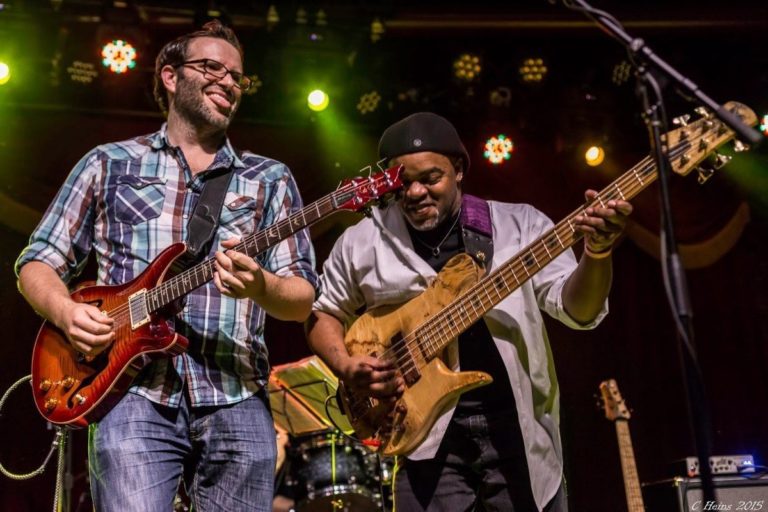
The Outlaw Music Festival has added an additional 16 shows to its lineup, including a performance at the Saratoga Performing Arts Center (SPAC) and Forest Hills Stadium this fall. Additionally, it was previously announced that the festival would have a performance at the Darien Lake Amphitheater and Bethel Woods Center for the Arts this July.
Presented by Wheatley Vodka, the largest-ever Outlaw tour continues the celebration of Willie’s milestone 90th birthday just as Willie wants it – on the road with his friends, family, and beloved fans.
The Outlaw Music Festival first began in 2016, and the sold-out show was so well received that Blackbird Presents and Nelson have developed it into one of North America’s biggest annual touring franchises. Musicians such as Robert Plant, Neil Young, Bob Dylan, Van Morrison, ZZ Top, Eric Church, Bonnie Raitt, Luke Combs, Chris Stapleton, Sheryl Crow, Sturgill Simpson, The Avett Brothers and many more have been a part of the Outlaw Tour.
“I am so thrilled to announce these additional dates for our 2023 Outlaw Music Festival Tour,” said Willie Nelson. “I can’t wait to keep the celebration of my 90th birthday going into the fall with this great lineup of artists, my friends and family, and of course, the amazing fans.”
David Binder, Willie and Wheatley fan and brand director at Sazerac, said “Wheatley Vodka is thrilled to be hitting the road with Outlaw Music Festival this year. Our vodka is made in the heartland of the USA in Frankfort, KY, and is crafted to be the smoothest, most sippable vodka on the market. It’s the perfect spirit to enjoy when rocking out to music from all the talented artists on tour with Outlaw this summer.”
Tickets to the Outlaw Music Festival, which includes a performance at SPAC and Forest Hills Stadium, go on sale April 28 at 10 a.m.
Information on individual Outlaw Music Festival tour dates and lineups:
Friday, September 8, 2023
Raleigh, NC – Coastal Credit Union Music Park @ Walnut Creek
Willie Nelson & Family
Tedeschi Trucks Band
The String Cheese Incident
Los Lobos
Particle Kid
Saturday, September 9, 2023
Charlotte, NC – PNC Music Pavilion
Willie Nelson & Family
Tedeschi Trucks Band
The String Cheese Incident
Particle Kid
More TBA
Sunday, September 10, 2023
Franklin, TN – FirstBank Amphitheater
Willie Nelson & Family
Bobby Weir & Wolf Bros. featuring The Wolfpack
Particle Kid
More TBA
Tuesday, September 12, 2023
Simpsonville, SC – CCNB Amphitheatre at Heritage Park
Willie Nelson & Family
Bobby Weir & Wolf Bros. featuring The Wolfpack
Particle Kid
Friday, September 15, 2023
Saratoga Springs, NY – SPAC
Willie Nelson & Family
Bobby Weir & Wolf Bros. featuring The Wolfpack
The String Cheese Incident
Los Lobos
Particle Kid
Saturday, September 16, 2023
Mansfield, MA – Xfinity Center
Willie Nelson & Family
Bobby Weir & Wolf Bros. featuring The Wolfpack
The String Cheese Incident
Los Lobos
Particle Kid
Sunday, September 17, 2023
Forest Hills, NY – Forest Hills Stadium
Willie Nelson & Family
Bobby Weir & Wolf Bros. featuring The Wolfpack
The String Cheese Incident
Los Lobos
Particle Kid
Wednesday, September 20, 2023
Bridgeport, CT – Hartford HealthCare Amphitheater
Willie Nelson & Family
Bobby Weir & Wolf Bros. featuring The Wolfpack
Particle Kid
Friday, September 22, 2023
Clarkston, MI – Pine Knob Music Theatre
Willie Nelson & Family
Bobby Weir & Wolf Bros. featuring The Wolfpack
The String Cheese Incident
Particle Kid
Friday, October 6, 2023
West Palm Beach, FL – iTHINK Financial Amphitheatre
Willie Nelson & Family
The Avett Brothers
Gov’t Mule
Elizabeth Cook
Particle Kid
Saturday, October 7, 2023
Tampa, FL – MIDFLORIDA Credit Union Amphitheatre
Willie Nelson & Family
The Avett Brothers
Gov’t Mule
Elizabeth Cook
Particle Kid
Sunday, October 8, 2023
Orange Beach, AL – The Wharf Amphitheater
Willie Nelson & Family
The Avett Brothers
Gov’t Mule
Elizabeth Cook
Particle Kid
Wednesday, October 11, 2023
Huntsville, AL – The Orion Amphitheater
Willie Nelson & Family
The Avett Brothers
Mike Campbell & The Dirty Knobs
Particle Kid
Friday, October 13, 2023
Brandon, MS – The Brandon Amphitheater
Willie Nelson & Family
The Avett Brothers
Mike Campbell & The Dirty Knobs
Elizabeth Cook
Particle Kid
Saturday, October 14, 2023
Southaven, MS – BankPlus Amphitheater at Snowden Grove
The Wailers from Jamaica brought classic roots reggae to The Strand Theater in Hudson Falls on Saturday, April 22. Playing to a packed theater, the band got the crowd to their feet for a night of reggae dancing after much enticing and cajoling. In the end, as it always is with roots reggae, it was the music that brought them to their feet. Roots infects the soul with a groove, and when it is the classics from The Wailers, there is no resisting the dance. New Yorkers that caught The Wailers at the Brooklyn Bowl back in 2019 know this so well!
Mitchell Brunings, lead singer of The Wailers. Photo by Derek Java.
Lead by the son of famed bassist and founder Aston “Familyman” Barrett, the band brought love and light to The Strand. Aston Barrett, Jr. sat tight on the drums all evening, keeping a groovy rhythm with bassist Owen “Dreadie” Reid. On lead guitar was Wendel “Junior Jazz” Ferraro, and on keys was Andres “Ipez” Lopez. Backup singers Alecia Marie and Teena “Tamara” Barnes were amazing and held the crowd in love. Lead singer Mitchell Brunings is perfect singing Bob Marley’s parts on the classics. Reggae is good for the soul, and this night proved to be a refreshing experience for a thirsty crowd. This concert-goer can not wait for them to return!
The Wailers band leader Aston Barrett Jr. Photo by Derek Java.
Set 1: Trenchtown Rock, Is This Love, Concrete Jungle, Chant Down Babylon, Satisfy My Soul, Destiny, Get Up Stand Up, Stir It Up, Three Little Birds, One Love.
Set 2: No More Trouble, Rat Race, Rebel Music, No Woman No Cry, Crazy Baldhead, One World, Coming in From the Cold, Lively Up Yourself.
Encore: Redemption Song, Buffalo Soldier, Could You Be Loved.
Catch The Wailerson tour now across the US and back again.
It was a hazy, high-energy night of other worldly soundscapes, prog-inspired improv, funky dance grooves, and surprise sit-ins in Saratoga Springs on April 19th, as revered indie jam rockers Dopapod and charismatic up-and-comers Baked Shrimp joined forces for a wild time at Putnum Place, a show presented by Hartstone Productions.
Kicking off the festivities was red-hot Long Island crustation sensation Baked Shrimp. The fiery trio wasted no time getting the party going, launching into mythical beast mode early with “Chimera.” “Is this all a dream or am I awake?” crooned guitarist Jared Cowen, as the band magnetically pulled you into an exploratory and surreal type-two realm before the opening 16-minute number would reach its impressive peak.
Drummer Jager Soss would take over on vocal duties during the up-tempo swing of “Molly Ann” and then trade them off to bassist Scott Reill on the equally energetic “Pig Hearts and Mechanical Parts.” Playing this particular show using Dopapod drummer Neal Evans massive kit, Soss was like a kid in a candy store here, clearly having a blast while utilizing all the bells, blocks and cymbals that were at his disposal.
The prog-heavy technical chops of the band were on full display once again during “Missing Midnight,” which by now, everyone that had been standing in the back, had collectively moved forward to get a better look at the young sorcery taking shape before their eyes. Celebrating the one-year anniversary of his custom Forshage guitar, Cowen and his trusty new ax known as “The Wrench” sounded particularly potent during the set closing “Wannabe,” which also included an “I Am The Slime” tease by Frank Zappa for good measure. Despite the time constraints, it was another impressive set by this talented young band from New York. As early believers, tracking Baked Shrimp’s continued growth over the last few years has been an absolute joy and it seems like their hard work is beginning to pay off. With a massive summer ahead that includes making their Peach Festival debut, along with high profile slots at Northlands and The Rye Bread Music Festival, it’s safe to say these talented nice guys are right on the cusp of busting out of their proverbial shells.
After a brief intermission followed by several minutes of sci-fi ambiance, it was finally time for our headliners Dopapod to take over. No stranger to the Putnum Place, the band has played several memorable shows here, including joint gigs with Pigeons Playing Ping Pong, a “Grateful Sabbath” themed Halloween show, and just last year playing a single-song set covering Pink Floyd’s “Echoes.” On the eve of April 20th, it felt like anything was fair game.
Kicking things into high gear off the rip was “Numbers Need Humans” from the bands 2019 album Emit Time. Consisting of Eli Winderman on keys, Rob Compa on guitar, Chuck Jones on bass and Neal “Fro” Evans on drums, Dopapod had the whole room vibing right from the start. The dank grooves continued as the band seamlessly transitioned into the always coveted “New James,” which took on a far more sentimental feel here as Dopapod worked in a significant “Wax” tease, paying tribute to their peers and friends in Lotus. Still fresh in everyone’s mind, fans of both bands continue to grieve the suddenly loss of Lotus’ percussionist Chuck Morris and his son Charley who tragically lost their lives on a recent kayaking trip.
“Wheazy” and “Test of Time” would then follow suit before segueing nicely into “Imaginary Friend.” From there, Dopapod would get some help from a real-life friend in moe. drummer Vinny Amico, who would trade seats with Neal Evans to sink his teeth into “Dracula’s Monk” and bring the hour long first set to a pummeling close.
Following a 25 minute intermission, Putnum Place popped off once again when Dopapod returned with a dynamic “Sonic” > “My Elephant vs. Your Elephant” combo to get the second frame rolling. The band would then invite another longtime friend, Adrian Tramontano of Twiddle/Kung Fu/ The Breakfast fame out to play drums on the popular old-school track “Indian Grits.” The heavy hands of Tramontano both brought the thunder and the house down during his extended solo, wowing the crowd to rowdy new heights.
Accompanied by a spectacular light show, the energy level would go through the roof on the next song “Vol. 3 #86” which would flow through “Man or Machine” and finally land on “Black Holes”; the only song from the band’s latest self-titled studio album to be played on this night.
With just 5 minutes to go before the stroke of midnight, the band opted to go with the appropriate “Nuggy Jawson” to officially ring in the 4/20 holidaze and put a bow on yet another memorable performance at the Putnum.
A jam packed show from start to finish, in a room full of longtime fans and friends, complete with surprise sit-ins from members of moe. and Twiddle, it was everything you could have hoped for on this mid-week throwdown in Saratoga Springs. Up next for Dopapod, the band will take a few weeks off before returning to the road for a lengthy run of shows that will see them through the end of May. Their only confirmed summer festival appearance thus far is set for the last weekend in June at the annual High Sierra Music Fest in Quincy, California.
Dopapod | 04/19/2023 | Putnam Place | Saratoga Springs, NY
Set I: Numbers Need Humans >New James * ->Wheazy, Test of Time ^ > Imaginary Friend. Dracula’s Monk +
Set 2: Sonic ^ -> My Elephant vs. Your Elephant, Indian Grits %, Vol. 3 #86 > Man or Machine -> Black Holes
Encore: Nuggy Jawson
* Wax (Lotus) tease
^ Unfinished
+ with Vinnie Amico of moe. on drums
% with Adrian Tramontano of Twiddle, The Breakfast, and Kung Fu on drums
Baked Shrimp | 04/19/2023 | Putnam Place | Saratoga Springs, NY
Setlist: Chimera, Molly Ann -> Pig Hearts and Mechanical Parts, Missing Midnight, Wannabe*
Brooklyn-based alt-band Citrus Maxima has dived headfirst into the indie-rock genre with their newest release “I Don’t Wanna Die,” the first single from their upcoming record. With hundreds of thousands of Spotify streams and years of local gigging experience around New York, the band is looking forward to releasing their upcoming debut album this spring.
The new single “I Don’t Wanna Die” is a song that cuts through the dirge of washed-out, lazy indie rock and instantly jolts the listener with its infectious chorus. The band captures this by combining wailing feedback, crunchy guitars, and driving drums with instantly catchy vocals and heartfelt melodies.
Formed in Albany, but now based in Brooklyn, Citrus Maxima offers up a fresh take on indie rock, anchored by strong songwriting, raw energetic rhythms, and melodic guitars. Citrus Maxima was originally formed in 2014 with Shawn Majeed on drums and Lucas Rinaldi on guitar and vocals. The band added members Wyatt Kirschner on lead guitar in 2018, and Max Gucinski on bass and backup vocals in 2021.
Citrus Maxima has built up a strong online presence with a string of successful releases. In December 2020, the band released “1970”, their most played song with over 250k Spotify streams, and followed up with “Sprouts” a small collection of songs including “Seeds Don’t Bleed”, which incorporates a 90s alternative rock influence.
Their “live session” videos uploaded to YouTube further solidified their online buzz, as their cover of Pavement song “Harness Your Hopes” even grabbed the attention of Pavement member Bob Nastanovich, who praised the cover on social media. Devotees of the DIY ethos, all releases, social media growth, and touring was planned and executed by the band alone without the assistance of a label or management.
Listen to “I Don’t Wanna Die” by clicking the link here.
Jazz is PHSH will be heading out on a late spring tour covering the Northeast and Midwest from May 31 to June 11. The instrumental group bring electrifying interpretations of the Phish song book for Phish phans and Jazz fans to dive into, including shows at Buffalo Iron Works and Nublu in NYC.
Don’t let the name of the band fool you – while the arrangements for Jazz is PHSH are steeped in jazz, the funky, rocking fusion interpretations of the music will bring you to your feet.
A rare treat, Jazz Is PHSH creates an exhilarating experience, journeying through the catalogue of Phish while seamlessly weaving the songs together with the music of jazz legends such as Miles Davis, Jaco Pastorius and Herbie Hancock.
Figuring out the songs as they are rearranged and reimagined is equally as fun an aspect of Jazz Is PHSH that Phish phans enjoy as much sharing in the groove of the music. For jazz fans and those unfamiliar with the music of Phish, the deep dives into the history books of jazz as well as the references to current artists like Robert Glasper and Nate Smith provide a never ending stream of auditory pleasure.
The upcoming Spring Tour includes a mix of sit down jazz clubs like the Bop Stop in Cleveland on June 1 and famous rock club venues like Nectars in Burlington on June 8.
The mix of rooms will give fans an opportunity to catch a few different shows on the tour to have a range of experiences with the band. While their catalogue is not quite as big as Phish’s hundreds of songs spanning over 40 years, Jazz Is PHSH has been touring since 2015 and has created an impressive catalgoue of their own.
With mashups of Phish’s “You Enjoy Myself” with Nate Smith’s “Bounce” and Phish’s “Divided Sky” with the John Coltrane masterpiece “A Love Supreme” along with a plethora of other mashups of Phish songs, the band is able to craft unique setlists each night so that fans that travel with the band can have unique experiences each night.
JAZZ is PHSH Spring Tour 2023
May 31 – Cincinnati OH – Fretboard Brewing
June 1 – Cleveland OH – Bop Stop June 2 – Baltimore MD – 8×10 (w/ The Chase Brothers) June 3 – Toronto ON – Adelaide Hall June 7 – Buffalo NY – Buffalo Iron Works June 8 – Burlington VT – Nectars June 9 – New Market NH – Stone Church June 10 – Manchester CT – Main Pub June 11 – New York, NY – Nublu
While she was pregnant with me, my mom saw Lou Reed perform his Edgar Allan Poe concept album, The Raven. After the show, she bought a little red baby tee, with an outline of Reed’s face, his name printed below it. She got the smallest one they had — despite the fact that she was the biggest she’d ever been — because she planned to give the shirt to her future daughter, when I wasold enough.
Lou Reed died nearly 10 years ago, in October 2013. I didn’t start listening to him until around two years later. My parents were the kind that didn’t let me watch the movie until I’d read the book, so before I could don my vintage tee I listened to a couple of records. I was instantly in love with the Velvet Underground and veritably obsessed with the casually confident Brooklyn drawl of their lead singer.
That voice was ringing in my head as I browsed Syracuse University’s study abroad program listings last year. I’d been studying French, so that was the obvious choice, but my eyes lingered over Berlin as I hummed Lou Reed’s “Lady Day.”
“I had never been to Berlin when I wrote Berlin. It was an imaginary journey,” said Reed, talking about the song, “The Kids.” “I couldn’t even go coach.”
So I made a decision worth thousands of dollars and five months of my life based on an album Lou Reed recorded without having been to the city for which it’s named. Germany was wunderbar!
Reed said he called the album Berlin because he liked the idea of a “divided city.” He said he could have called the album Brooklyn just as easily. But the music has the perverted cabaret, the purposefully out-of-tune instruments, the choppy underground scene that creeps up like a riptide in a capital city, a seat of government — much like my hometown of Washington, D.C. — after it’s been halved, quartered, chopped, and diced. So much drama and romance exists in that tension, the sneaking and smuggling, the people caught in the space between, the lovers trapped on either side.
Lou Reed lived in that in-between place. Born in Brooklyn, he moved to Long Island when he was nine. Reed was always separate from Manhattan, where the real action was, despite living only a subway ride away. In his numerous songs and albums that chronicle New York City, he sees the city from the inside and outside at once — terrible and glamorous and mysterious, his ultimate femme fatale.
His first shot at the city, in 1958 — a freshman year at New York University — flamed out. A mental breakdown sent him back home before his first year was over. His parents, unsure how to deal with their unresponsive 19 year old, turned to electroconvulsive therapy.
“I watched my brother as my parents assisted him coming back into our home afterwards, unable to walk, stupor-like. It damaged his short-term memory horribly and throughout his life he struggled with memory retention, probably directly as a result of those treatments,” his sister Merrill Reed Weiner wrote on Medium, in a self-published article detailing their childhood.
It wasn’t until 2021 that I discovered Lou Reed had also been a student at SU. I was working at The Daily Orange, the student newspaper,scrolling through its archives, when I came across the paper’s Reed obituary. That is when I first heard about The Lonely Woman Quarterly.
The Special Collections of SU’s Bird Library holds every copy of The Daily Orange, every student zine, thesis and dissertation. In this archive are two original issues of The Lonely Woman Quarterly.
The cover of The Lonely Woman Quarterly, illustrated by Karl Stoecker.
With contributions from “Luis” Reed — as he was then calling himself — “liberal arts student and sometime singer with a campus rock n’ roll band,” Joseph McDonald, James T. Tucker, Karl R. Stoeker and Lincoln Swados, The Lonely Woman Quarterly sold out in one day, according to a May 1962 Daily Orange article documenting the magazine’s premiere.
“The magazine doesn’t contain great literature, but it has material in it that couldn’t be printed elsewhere on campus,” Swados told The D.O.
In the 19-page first edition and 23-page second edition, the five sophomores offer poetry and egotism, bleed superiority with a sort of forced nonchalance.. Themes emerged that would later become commonplace in his work: the “Femme Fatale,” “the Beast,” “the Underground.” Paralleling “Luis” Reed’s lyricism in The Lonely Woman, is the music he made during his college years — heard in the resurfaced recordings released last year, Reed’s Gee Whiz, 1958-1964, and Words & Music, May 1965. Looking at The Lonely Woman, it’s easier to understand why this troubled college student, this bridge-and-tunnel-beatnik with a taste for drugs, chose to study “the liberal arts” at a fratty, private university in a small town, an awkward six hours away from home, where he would be reduced to a “sometimes singer” by the campus paper.
https://youtu.be/JJ_EOzHzLjU
Syracuse, the city, has its own draw. It’s here, in the pallid winter and gorgeous summer and frat houses and projects and farmland and undeveloped land. It’s a city built on industry: salt, concrete and ceramics; but the bottom fell out of it all. It’s a city with a highway running right down the middle. A divided city. Something about Syracuse makes you want to prove something to it. Makes you want to provoke. But it’s hard; Syracuse is used to being poked and prodded and it doesn’t scare easy.
The first story in The Lonely Woman Quarterly, written by Reed — of course — is horrifying: it details the abuse of a young boy by his mother. It’s three paragraphs with no title, just “Luis Reed” at the bottom. It starts with the image of a boy looking in the mirror:
“His reflection, ah yes, that was what it was, and he’d remove it to a more shadowy place, where his illumination gained a new fierceness, his countenance new intensity, teeth glistening, hair gleaming. He stared back with love.”
Eventually turning a corner:
“‘Oh no mommy no.’ he found his body undulating, ‘oh no mommy.’ She pulled him closer, her hands pressing him tighter. ‘That’s a good little man, that’s a good little man.’ She was breathing harder now. ‘That’s a good little man,’ she said. ‘That’s a good little man.’”
People still bought the magazine. It was still written about in the highly reputable, independent student paper. This story that shocked in Syracuse might have been overlooked in Manhattan, at NYU. Reed’s calculated tone delivers its sickening punch. Did the waves of electric shock therapy that Lou Reed endured before his arrival in Upstate New York — treatment enabled and encouraged by his mother — feel, to him, like abuse?
Poem credited to Lou “Luis” Reed in the first issue of The Lonely Woman Quarterly.
900 Ackerman
I live in Syracuse’s Eastside neighborhood. My living room window looks across the driveway into my neighbor’s kitchen, a kitchen that was once Lou Reed’s. He lived at 900 Ackerman, in the attic apartment. On the porch, hanging from the peeling wood, there’s a plaque. It reads “Here lived Legendary Musician, Lou Reed. Take a walk on the Wild Side.”
Now Linus and Thomas, two juniors who could also be referred to as sometime singers in campus bands, live in Reed’s house. I sit in their living room under a poster of Television’s Marquee Moon, with an espresso machine and amp sharing an outlet on the floor beside me. They relay Syracuse’s favorite Lou Reed urban legend; that he was in ROTC but got kicked out for pulling a gun on his commanding officer. Their attic apartment doesn’t look like it’s been updated much since Reed lived here. Thomas said he thought they were hearing Reed’s ghost at one point, but it was just squirrels that had burrowed through the walls.
“I really want us to feel his ghost,” Thomas says. “I feel like I was expecting it during the winter.”
I ask if they hear Syracuse in any Lou Reed songs like I do.
“There’s one song from the banana album,” Linus says, referring to the Velvet Underground’s 1967 debut, The Velvet Underground & Nico. “’The Black Angel’s Death Song.’ That’s very much a song about a cold Syracuse day, walking Upstate.”
The song’s psychedelic sound is augmented by John Cale on electric viola. The lyrics: “So you fly / To the cozy brown snow of the East / Gonna choose, choose again.” In the creaking strings of “Black Angel’s Death Song” lies a familiar Syracuse scene: the cold that blows in through the cracks in my apartment windows, the snow pushed up to the side of the street in a gray-brown mass; white snow meeting white sky at the horizon line looks like death, how some nights alone with my meager space heater feels like it.
Slouching Towards Syracuse
David Yaffe, music writer and English professor at SU since 2005, interviewed — or attempted to interview, as Reed had a stockpile of choice words he reserved for journalists — Reed for Rolling Stone in 2007. Yaffe had nominated Reed for an honorary doctorate. Instead, Reed was awarded SU’s most prestigious alumni recognition, the George Arentz Pioneer Medal. Yaffe was set to have a lunch interview with Reed in advance of the reception event in NYC, but the lunch was demoted to a phone call at the last minute.
“We must have talked for half an hour,” Yaffe said. “But it felt like a few months.”
It’s harder to connect in phone interviews; Yaffe said Reed was completely dissociated and closed off for much of the call, until Yaffe mentioned Delmore Schwartz.
In the 1960s, Schwartz was teaching English at SU. The once sharp poetic wit and acclaimed writer was somewhat washed up, paranoid, bipolar. When their paths crossed, Schwartz and Reed formed a deep bond. Schwartz becameReed’s mentor and confidante. In Lou’s words: “Delmore Schwartz is Everything.” Capital E. You can hear it in Lou’s trembling and taxed, yet firm voice when he reads aloud Schwartz’s chef d’œvre, “In Dreams Begin Responsibilities.”
When Yaffe asked about Reed’s Syracuse graduation: “I don’t know what you’re talking about.” But when Yaffe asked about Schwartz, Lou opened up, memory jogged, light streaming through, conversations recalled: “We talked about Yeats.” And you can tell, from the first page of The Lonely Woman Quarterly, Issue I. The letter from the editor reads just like the second coming; an Upstate New York version.
“As the sun sinks slowly in the west,” The Quarterly’s editors begin, “The air clears, the pungent odor of the Syracuse Arts Festival plops solemnly on its rump, and the militant, vociferous underground raises its shaggy head, gnashes its rabid molars in rhythm, and squats –– in one of its infrequent appearances –– in front of its collective mirror and bellows, a trifle off key perhaps as miller says, but raise its voice it does, cause boy its SPRING, and the world IS mudluscious, just as the various conglomerate herds echo in their certitude, the sundry members of Oz come forth bearing flutes and trumpets.”
The kids are pulling straight from their lit classes; “blood-dimmed tides,” “slow thighs,” and “rough beast.” Still, something about Syracuse weather provokes Yeats; it’s ominous, “mudlucious.” It’s in the spring that comes on so fast, while there’s still snow on the ground, so everything’s slippery and mud dries on the hems of your jeans. It’s a hesitant spring, the memory of freezing weather so fresh in your mind — a 19-degree day and white-gray sky hovering just over the horizon, threatening to fall over the sunny city at any moment. Spring in Syracuse is miraculous, ephemeral.
The letter continues, “The time has come the walrus said and assuming the price of paper doesn’t go up too strenuously, and the mad-man in the cellar can keep stamping out ink, this forlorn, dogearredperiodical will occasionally make its showing, nay take its place, out among the fields of its fellow man.”
But the mad-man in the cellar, according to The D.O., is really the Savoy Restaurant’s owner Gus Joseph, doing the kids a favor and lending his printer. It’s a familiar sarcastic grandeur, misplaced apostrophes and made-up words, not exactly self-deprecating or self-aggrandizing — it’s just fun, you see them imagining themselves as that looming lion, the Underground, threatening the world as we know it, as the Velvets soon would.
Letter from the editor in the first edition of The Lonely Woman Quarterly.
The Lonely Woman’s editors weren’t the only beasts on the horizon. It was the sixties. Joan Didion was reporting the essays that would become “Slouching Towards Bethlehem,” The sky was on fire with napalm in Vietnam. In Syracuse, a beast by the name of Urban Renewal was tearing down homes and businesses, to be replaced by a bunch of empty lots and Interstate 81. Reed captures this beast in his stories, in his songs. It’s in the Lonely Woman herself. In the magazine’s credits: “The Lonely Woman has a big nose and satin sheets.” She’s horrible and ugly, yet soft, shiny and disguised. Like a halloween ghost, a mysterious shape floating under the sheet, a vampire’s cape, holes for eyes. Reed’s stories are peppered with these duplicitous monsters. His second story, for example: it has no title, is three pages long, including a prologue and epilogue. It starts:
“Daylight and windy cities and Saturday morning is a beast of legendary tenure.” … “the sun came in through an unobserved crack and shone brightly on my angelic face as I twitched and scratched my early hunger, growling, rumbling down below (although actually not quite awake, just contemplating my inner-most thoughts that buss in a deep fog in waking hours). The beast moved beside me, rolled and signed and hissed through painted lips parted with a now decadent look of sensuousness, lips that had seen things, now parted and twitching, giving forth early morning breath. We had talked of the soul and its death, and my death, the last of my supplanting lives, spent and completely wasted, except for the constant hurt. And she asked me if I had captured my soul and I (having seen nothing but my visions, death I embrace you) had of course replied why no, it has escaped my every turn. “
This is also Yeats, and “Sunday Morning,” and much more. “Sunday morning, brings the dawning / It’s just a restless feeling by my side.” The beast is him, it’s the day, it’s the girl, it’s everywhere. But the beast that moves beside him, that girl he wakes up with, is half beast, half something else. A femme fatale — at once a beast, an angel, your deliverance, your salvation, your dire infatuation.
Femme Fatale
Candy, Lisa, Sally, Jane, Matilda, Caroline, Stephanie, Bonnie Brown, … who’d I miss? Lou Reed’s femme fatale is the beast in disguise, the dark horse, the temptress, the siren, the Lonely Woman.
Syracuse isn’t a natural home to a femme fatale. The town lacks the fantasy and mystery and sense of darkness. Her cave, her cavern, her isolated rock on the shore, her long dark hair she peeks out from under. New York City, though, is brimming with the creatures: the tragic aspiring star, the smoking provocateur in Washington Square Park, the unreachable party girl walking barefoot down the subway steps as the sun rises. In The Lonely Woman Quarterly, the boys are just figuring out how to wrestle these complicated beingsonto the page.
Letter from the editors and table of contents in the second issue of The Lonely Woman Quarterly.
A femme fatale finds her power in anonymity, something easier to attain in NYC than in a town like Syracuse, a college campus like SU. The boys of The Lonely Woman find that like a Rumplestiltskin, they can find power in the naming of their girls. Throughout The Lonely Woman are poems by the magazine’s other editors that emulate the “___ Says” styles of later Lou Reed — “Christina’s World,” and “When Karen Walks.” But Reed has a special sense for femme fatale, and he fleshes her out in the second issue of The Lonely Woman, in a story he titled “Mr. Lockwood’s Pool.”
The narrator, walking through a wood — a place that sounds somewhat like Syrcuse’s Thornden Park — happens upon a clearing and finds a gorgeous pool filled with swans and ducks. A woman suddenly appears, like a nymph, and dives into the water.
“I rubbed my eyes with astonishment. It was a girl, thoroughly nude, and in the form of a perfect C, her hands thrust rhythmically in and out of the water, cupped, her face receiving the splash ecstatically and her white teeth glistening… She had long blond hair that now lay in collective sections on her back, the strands coming to spontaneous points”
He becomes infatuated with her, she brings him into the water, she whispers secrets in his ear, says things he’d never heard before. She’s unreal, her beauty celestial, her words magic. Her hair, with its points and sections, alludes to Medusa, suggesting a danger in that beauty, the beast that is just below.
“As I watched it suddenly struck me that she had the long tail of a horse proceeding directly from the tip of her spine, arching and then the fine silky hairs losing themselves in the propitiously slight breeze which presented itself occasionally. She, herself seemed unaware of the appendage, and for all of that was an exquisite creature, with all the attributes that the male species dreamily bestows on members of the feminine gender.”
Now, she walks the line between beauty and beast, joining the leagues of femme fatales Reed created throughout his discography. She’s more than a girl, she’s New York City, she’s an ocean, she’s light, she’s heat, when she talks it sounds like Sister Ray, when she cries it sounds like Venus in Furs. “Strike, dear mistress, and cure his heart.”
At the end of “Mr. Lockwood’s Pool,” the girl with a horse tail tries to lead the narrator through vines and trees, into a clearing with a strange whirlpool black hole, in the sky and in the ground. He’s lost in it, he hears the girl’s voice, sees her face but can’t touch her. The femme fatale isn’t tangible. This girl isn’t within Reed’s reach while he’s in Syracuse, she’s not of this place, she’ll disappear any second, and she does, and the narrator is left alone, missing something he didn’t know he had.
“Yes lochy, that’s it, she yelled, clasped my forehead in her hands, kissed it, and just as quickly she’d appeared, disappeared into the clear, clear water.”
Like only a femme fatale can.
The Underground
SU during the early-60s was a place of conflicting morals and ideals, converse scenes pushing up against each other like tectonic plates. Martin Luther King spoke on campus and Ernie Davis won the Heisman all while Urban Renewal and I-81 destroyed Syracuse’s Black neighborhoods on the Southside. Contradiction was on all sides, but suffocation squeezed out great art.
Contradiction is reflected all over the work Lou Reed recorded while at SU. In 2022, Laurie Anderson released Gee Whiz, an EP containing six songs Lou performed from 1958 to 1964. This small, choice selection, contains “Michael, Row The Boat Ashore,” dated 1963-1964. Originally sung by formerly enslaved African Americans living on South Carolina’s Sea Islands, it was later indoctrinated into American folk tradition, it was re-released in 1961 by The Highwaymen, a band built of white Harvard and Yale business majors, and became a No. 1 hit. At the same time, it was being recited by those protesting in favor of greater civil rights.There’s a contradiction there, of appropriation; of affinity? Lou’s version is quiet, delicate. He was listening to what was popular, then transforming it into the very antithesis of whatever it once was. Know thy enemy. Here emerges the underground.
In Issue One of The Lonely Woman Quarterly, there’s another untitled story by Reed that seems to conflate New York City and Syracuse, like he spent the morning in the city then came home for supper. It opens: “Have you ever sat in the Square trying to look angry?”
The story chronicles a day in the life, like a diary, through Lou’s eyes, as our knowingly pretentious, rambling narrator. Lou ends up with a group of friends at an apartment, where the phone rings, voices half-heartedly debate Dostoevsky, incense burns and his head aches. Then a paragraph breaks free from all of these characters and dialogues and setting. Reed speaks for a second, just long enough to define the Underground of the Velvet Underground like it’s a dissertation:
“Things assumed their normal order, the syntax obscuring the atypical, the falsified dichotomy leaving no room for the incoherent melancholy which is present even in the Hebrais Vision where it was not covered up, parabolic myths in conjecture without relatedness to order. But we had order, and this was purposeful, functional, for what else do we crave if not rules and regulations. How can you deviate if there’s no norm and that’s half the fun so be victorian dear friend and attack the boxlike structure, metamorphisize in extenuating circumstances and feel the joy of guilt, which you actually feel anyway but not correctly, break with the tintinnabulary logic of your mind and enter the chaos, but be strong and truthful without pretensions, and THEN disbelieve, but not before, or alas, alack you are but one of us and worse yet, me, for I’m the worst of the worst, the phoniest of the phony, the weakest of the weak, the strongest of the strong, setting up new settings for the old, new mores for the sacrosanct, typification of any for non-existent disillusionment in endless streams of group discussion, exchangement of neurosis, boastful, dearheart, and a more stringent benefactor you’ve never seen.”
With the Velvet Underground, Lou Reed social climbs from behind the ladder, he’s real and fake, he’s playing truth and he’s a terrible liar. The game’s not to make sense, it’s to keep up. Manifesto-like, Reed defends his four-year sentence in Upstate New York: “to be strong and truthful without pretensions, and THEN disbelieve.” Underground, inside of contradiction, is where Lou felt most at home — a beatnik that joined ROTC, a rock star playing for the fraternities, a gay city kid at a preppy, private university. He wants to play football for the coach.
Gretsch Drums have announced “Gretsch Night in New York City,” a special one-night-only event to celebrate 140 years of Gretsch Drums history, featuring performances by revered drummers Mark Guiliana, Will Calhoun, Nate Wood, and Bill Stewart, on May 23 at The Cutting Room.
Founded in Brooklyn in 1883, Gretsch Drums is an iconic American drum brand manufactured in Ridgeland, South Carolina. For 140 years, this award-winning company has been providing “That Great Gretsch Sound” to drummers around the globe, including Phil Collins, Vinnie Colaiuta, Cindy Blackman, Ash Soan, Steve Ferrone, and Keith Carlock, among others. The 140th celebratory concert will take place on May 23 at The Cutting Room in NYC.
The Cutting Room sits at its new location on East 32nd Street between Park and Madison, building on a decade of history that includes some of today’s top performers like John Mayer, Lady Gaga, Sting, Sheryl Crow, and David Bowie, all of who have graced the stage at the previous location. “We wanted a place where up-and-coming artists could get seen and established artists felt comfortable playing club gigs. We wanted a place with great sound, creative food, and cocktails where the venue itself was as beautiful as the music,” says Steve Walter, the venue’s owner.
There are multiple revered drummers performing at the celebratory concert, including Mark Guiliana, who has played on over thirty recordings including David Bowie’s final album Blackstar, and has been described by the New York Times as “a drummer around whom a cult of admiration has formed.” Bill Stewart has played in the John Scofield band since the early ‘90s, although his extensive credits have seen him record with artists including Maceo Parker, Pat Methany, and Lee Kopnitz, as well as solo records.
Other drummers included in this special event include multiple GRAMMY award winner and longtime drummer for Living Colour Will Calhoun, who has performed and recorded with a diverse array of notable artists such as B.B. King, Mick Jagger, Paul Simon, Lou Reed, Carly Simon, Public Enemy, and more. The final musician is Grammy-nominated drummer and multi-instrumentalist Nate Wood, founding member of the quintet Kneebody. He has also performed or recorded with many notable artists including Taylor Hawkins and the Coattail Riders, Brian May and Roger Taylor (Queen), Sting, and more.
For more information about this special one-night-only concert celebrating Gretsch Drums 140th anniversary and to buy tickets please visit here.
Snug Harbor Cultural Center & Botanical Garden will present a Heritage Farm Benefit concert featuring Gangstagrass, on Saturday, April 29 from 1:00 PM – 5:30 PM on the South Meadow of Snug Harbor Cultural Center & Botanical Garden on Staten Island.
Snug Harbor’s Heritage Farm was established in October of 2011 to help feed, inspire, and educate the local community. The Heritage Farm is a 2.5-acre production farm that uses sustainable, low-till farming practices that focus on building soil health through the use of compost, crop rotation, intercropping, and cover cropping. The goal is to provide the Staten Island and NYC community with hands-on growing experiences, insights into NYC’s food systems, and access to fresh and local produce for years to come.
Snug Harbor is pumped up to bring Gangstagrass to Staten Island to perform on our outdoor South Meadow Stage. In the same way that Snug Harbor offers our visitors a blend of contemporary cultural events inside of classically historic architecture, Gangstagrass fuses together the sounds of bluegrass and hip-hop into an unexpected and energetic sound that creates a fantastically fun experience for concertgoers! And as a bonus: by purchasing a ticket to the concert, you’ll be directly helping our Heritage Farm inspire Staten Island’s community. Concert proceeds will go towards underwriting Heritage Farm hands-on workshops, growing experiences, and healthy eating opportunities.
Snug Harbor President Jessica Baker Vodoor
Kicking off the festivities will be MakerPark Radio DJ Tom Ferrie at 1:00 PM and Staten Island’s own Jazztronauts at 2:00 PM, with Gangstagrass taking the stage at 4:00 PM.
Gangstagrass is a band combining great American traditions of bluegrass, hip-hop, and beyond to create a whole new musical genre that is more than the sum of its parts. Known for the Emmy-nominated theme song “Long Hard Times to Come” from the FX television show Justified, they’ve developed a whole new genre. Their latest album “No Time for Enemies” climbed to #1 on the Billboard Bluegrass chart.
In addition to entertainment, food trucks and vendors will be onsite, including Valducci’s Pizza Truck, Melts & Soups, Egger’s Ice Cream, Celebrate at Snug Harbor, and Pig Island NYC. Drinks are sponsored by Kills Boro Brewing Company, who will also be pouring their unique signature beers at the event. This program is supported in part by the New York City Department of Cultural Affairs in partnership with the City Council. All the proceeds benefit the Heritage Farm at Snug Harbor.
The Jazztronauts are Nutone Recording’s funkiest fusion band, hailing from Staten Island. Focusing on improvisational performances that incorporate their love of jazz, funk, hip hop, and electronic music, their sounds have been dubbed future jazz by listeners and their shows have quickly become a gathering place for music lovers and nightlife aficionados.
More information, including the schedule of events and tickets, can be found at Snug Harbor’s website.
Jim Jones continues to make the airwaves with his unfiltered take on Vibe and Billboard’s list of the 50 Greatest Ever Rappers. The list — which was part of a collaborative effort to celebrate Hip Hop’s 50th anniversary — named Jay – Z as the genre’s greatest ever MC. However, it was Pusha T’s ranking that raised ire of the “We Fly High” rapper. Coming in at number 29, Pusha T’s career as a member of the Clipse (alongside his brother Malice) and his solo work on GOOD Music has made him a staple of hip hop lore. Yet, Jim Jones doesn’t see it as such and on an episode of The RapCaviar Podcast, the Dipset member aired out his true feelings.
“What has he done that puts him in the greatest rappers of all time besides talk about coke that he probably didn’t get himself?” Jones asked. “He’s nice as shit. He could rap his ass off, but what has he done?
“Nobody has dressed like him. Nobody wants to be like Pusha T. I don’t remember nothing. And let’s not be evil, but we don’t talk about rap where the n-gga that’s popping the bitches wanna fuck and the n-ggas wanna be like.”
He continued: “I don’t know too many n-ggas in this game that was leaning towards being like Pusha T. Pusha T don’t hold no weight out here. He not pushing no shit out here.”
Jim Jones Doubles Down on The Breakfast Club
Jim Jones then rehashed the sentiments during an appearance on The Breakfast Club. Confronted by DJ Envy and Charlemagne Tha God about the controversial stance, the Harlem MC colorfully reiterated himself. For the purpose of his argument, Capo focused solely on radio play and club records.
“Could you name five Pusha T records?” Jones asked The Breakfast Club staff. “Could you name five Pusha T records? No. Could you rap to five Pusha T records?” After Charlemagne named several standout Pusha T records, Jones dismissed Charlemagne as a Pusha T fan and joked about him listening to the records in his basement.
While Jim Jones acknowledged Pusha T’s talent as a lyricist, he said he hasn’t made enough of a cultural impact to be considered an all-time rap great.
“Shoutout to Pusha T, I love your soul,” Jones continued. “You my dawg, you not in my top 50. You might be in Charlamagne’s top 50 and things like that, but you haven’t done that much for me in my life.”
“I never wanted to be like Pusha, I never had a Pusha moment in my life. Where I’m from, n-ggas wanted to be like you if you was really that dude as a rapper.”
Jim Jones Makes his Loyalties Clear
Jim Jones is an accomplished rapper himself and is certainly entitled to his opinion. However, his conviction is not without bias. Along with his controversial opinion on Pusha T, Jones has made the rounds for declaring Drake as hip hop’s greatest ever rapper. During appearances on the RapCaviar Podcast and an interview on Complex, Jones asserted his controversial take.
“Drake is the only one that gets played anyplace on this Earth, and they’re gonna know it in English. If you’re not putting Drake in the Top 2 of all time, like, what are we gonna do? We gonna keep putting shade on his name? He has broke every single statistic, period. You heard?”
Drake of course, famously brought out Jim Jones and the entire Diplomats crew during his performance at the Apollo Theater and celebrated the veteran rapper and his cohorts with a heartfelt tribute. “These guys right here, from Harlem, made us dress different, talk different, walk different, rap different. All the way in Canada.”
Verdict
Thus, it could be that after that moment Jim Jones’ view of what makes an all-time great rapper was altered and he only saw things through a Drake lens. Or, the one they call Capo could just be aligning with his good buddy who also happens to be the most popular rapper in the world. After all, Pusha T and Drake’ s longstanding beef ended without a reply from the Canadian crooner. Consequently, many declared Pusha T the winner as he was one of the few to land a crack in Drake’s pop-star armor.
What Jim Jones might have looked over is that Drake himself counts Pusha T amongst his many influences. During an episode of the short-lived MTV show When I Was 17, Drake shared a story from his formative years revealing his fandom of the “Dreaming of the Past” rapper. While scouring eBay in search of Clipse memorabilia, Drake stumbled upon and purchased a microphone that was allegedly autographed and used by Pusha T.
“I used to pretend I was doing interviews on the red carpet and perform all the Clipse songs in my basement with the mic,” he says. “I’m a full-sized teen at this point, so this is in private. And I performed with it so much that I rubbed the autograph off. I don’t even know if he really signed it, but that was my big thing. At the time it meant the world to me.”
Furthermore, Pusha T remains one of the very few that can get Jay – Z on a record. For rap fans, that may be influence enough.
The University at Albany Department of Music and Theatre will finish the 2022-23 season with four concerts featuring six of its large ensembles at the UAlbany Performing Arts Center on the university’s uptown campus.
The first in the series of concerts took place on April 22, with the UAlbany Chamber Singers and UAlbany Community Chorale, The Choral Hour. In the spirit of Earth Day, the program featured music that focuses on the power and beauty of nature, our relationship to our planet, and its place in the greater universe Both led by Michael Pfitzer, the Chamber Singers is a select group of 28 students who offer music of the highest quality, while the Community Chorale consists of 45 singers from across the campus community, representing majors from all schools and programs.
The Choral Hour. Credit: Gary Gold.
On April 24 at 8 p.m., the UAlbany Jazz Band will perform a program of works by Charles Mingus, Gil Evans, Paquito D’Rivera, and more. Directed by Keith Pray, the ensemble is open to all students.
UAlbany Jazz. Band. Credit: Lawdy Luc.
The UAlbany Symphony Orchestra will present a program on April 30 at 3 p.m., featuring Dvorak’s Symphony No. 8 in G Major and Faure’s Pavane, Op. 50. Led by conductor Christopher David Neubert, this large ensemble regularly performs works representing outstanding repertoire from the Baroque, Classical, and Romantic periods of the 20th and 21st centuries.
UAlbany Symphony Orchestra. Credit: UAlbany Performing Arts Center.
The season culminates on May 1 at 7 p.m. with Sound of the Trumpets, Roar of the Drums, a shared concert by the UAlbany Concert Band, and the UAlbany Percussion Ensemble. Under the direction of Richard Albagli, the percussionists will perform three works with high school student William Lauricella as a special guest. Conductor Kevin Champagne will lead the band in five works including Star Wars Saga by John Williams.
Sound of the Trumpets, Roar of the Drums. Credit: UAlbany Performing Arts Center.
Advance tickets for each University at Albany Department of Music and Theatre concert are $5 for the general public and $3 for students, seniors, and UAlbany faculty staff, while same-day tickets are $10 for the general public and $8 for students, seniors, and UAlbany faculty staff. All tickets must be purchased online from the UAlbany Performing Arts Center’s website, while information and assistance can be obtained by contacting the main office at (518) 442-3995 or PAC@albany.edu.