Standing out as one of New York City’s most unique MCs of all time, the late Ol’ Dirty Bastard’s discography chalks full of city anthems, whether spawning from his time with Wu-Tang Clan or his solo career. Passing away in 2004, the Brooklyn native leaves behind a legacy as one of hip-hop’s best, presenting an eccentric, energized style of rap that couldn’t be recreated by anyone else.
Al Pereira/Getty Images
Raised in the Fort Greene section of Brooklyn, Ol’ Dirty Bastard’s raspy, crazily spewed vocals paired with his violent lyricism eventually made him a central figure of the majority Staten Island group Wu-Tang Clan and hip-hop as a whole. Made up of himself, Method Man, RZA, GZA, Raekwon, Ghostface Killah, U-God, Inspectah Deck, Masta Killa, and Cappadonna, the group first came together in 1992.
Enter the Wu-Tang (36 Chambers), the group’s first project would release in 1993 following the immense success of the single “Protect Ya Neck”, highlighting the immense talents he and the rest of the group had in store as one of New York’s rising talents.
His solo career came to fruition in 1995, as Return to the 36 Chambers: The Dirty Version, would drop on March 28, 1995, chock full of hits symbolizing the city of New York and more specifically his time in Brooklyn. With only Method Man’s solo effort coming out before his, the music industry was able to get its first glance into Ol’ Dirty Bastard’s career outside the infamous group.
Album cover for Return to the 36 Chambers: The Dirty Version by Ol’ Dirty Bastard (Photo via SoundCloud)
With Return to the 36 Chambers: The Dirty Version would come one of the rapper’s best performances, an ode to his city and former group through a song known as “Brooklyn Zoo,” as the hidden messages throughout go deeper into his life growing up in Brooklyn and his affiliation with other artists growing up.
Brooklyn’s Finest
Produced by himself and True Master, the track “Brooklyn Zoo” shot to the top of his discography following its release a month prior to his solo debut. This serves as the first real taste of Ol’ Dirty Bastard’s journey outside of the group and would end up being his highest-charting single released, peaking at 54 on the Billboard Hot 100 and spending 16 weeks on the chart.
Accompanying the track are two separate music videos. The most popular one, which features Wu-Tang members throughout the video, sees ODB loitering around an empty apartment building, most likely abandoned, chanting the malicious words of the track.
A second release, a short film with subtitles, came out with more of a storyline, with the rapper portraying a man completing his prison sentence and transitioning through his life returning home to gang violence. A majority of networks denied air of the film due to its explicit subject matter, but is known as the “Chinatown Version” with much of the film taking place in that section of NYC.
The music video for “Brooklyn Zoo”
Considered a hip-hop classic, the single goes deep into the “one-man army” that Ol’ Dirty Bastard calls himself, diving into his life growing up in the streets of Brooklyn as well, directly calling the region a zoo. The song’s many hidden meanings behind the title leave countless interpretations of ODB’s wordplay and past experiences.
“Shame on you, when you step through to the Ol’ Dirty Bastard, straight from the Brooklyn Zoo”
Other than its references to Brooklyn’s actual zoo in Prospect Park and the streets he grew up in, the track also mentions the second hip-hop group ODB was additionally a part of, Brooklyn Zu. Having an affiliation with the Wu-Tang Clan, Brooklyn Zu includes some of Ol’ Dirty Bastard’s closest colleagues 12 O’Clock, the rapper’s cousin, Buddha Monk, Raison the Zu Keeper, and others.
Since the group’s formation around the same time as Wu-Tang Clan, many of the members have been featured on ODB’s Return to the 36 Chambers: The Dirty Version, also releasing their own project Chamber #9, Verse 32 in 2008.
“Brooklyn Zoo” (Chinatown Version)
Dissecting the streets of Brooklyn for his listeners, the aggressive track truly encapsulates the one-of-a-kind style of rap/lyricism that ODB brings to the table. The countless New York interpretations behind the name of the track leave fans and avid rap listeners room to experience Ol’ Dirty Bastard’s work.
“Brooklyn Zoo” Lyrics
Shit Word, I’ll bust that n***a ass right now Ain’t no, none of them n***as can’t fuck with me What? N***a, you could never fuck with me, my n***a I’ll fuck you up right now, what? What? What? (Fuck you n***as) Bust your motherfucking ass, boy I ain’t no motherfucking joke You know who you talking to? (Yo, word up, bust that n***a ass, word up) Ol’ Dirty Bastard, you know what I’m sayin’? I’ll fuck you up right now Yeah, what? What? What? (Serve that n***a, yo) He ain’t sayin’ nothin’, fuck him (he ain’t sayin’ nothin’, fuck him)
I’m the one-man army, Ason I never been tooken out, I keep MC’s looking out I drop science like Cosby dropping babies Enough to make a n***a go crazy In the G building, taking all types of medicines Your ass thought you were better than Ason, I keep planets in orbit While I be coming with deeper and more shit Enough to make you break and shake your ass As I create rhymes good as a Tastycake makes This style, I’m mastered in N***as catching headaches, what? What? You need Aspirin? This type of pain you couldn’t even kill with Midol Fuck around, get sprayed with Lysol In your face like a can of mace, baby Is it burning? Well, fuck it, now you’re learning How I don’t even like your motherfucking profile Give me my fucking shit, ch-ch-blaow Not seen and heard, no one knows You forget n***as be quiet as kept Now you know nothing Before you knew a whole fucking lot Your ass don’t wanna get shot (shot) A lot of MC’s came to my showdown And watched me put your fucking ass low down As you can go, below zero Without a doubt I never been tooken out By a n***a, who couldn’t figure Yo, by a n***a, who couldn’t figure Yo, by a n***a, who couldn’t figure (Brooklyn Zoo) How to pull a fucking gun trigger I said, “Get the fuck outta here” N***a wanna get too close, do the utmost But I got stacks that’ll attack any wack host Introducing, yo, fuck that n***a’s name My Hip Hop drops on your head like rain And when it rains it pours, ’cause my rhymes hardcore That’s why I give you more of the raw Talent that I got will riz-ock the spot Mc’s I’ll be burning, burning hot Whoa-hoa-hoa, let me, like, slow up with the flow If I move too quick, oh, you just won’t know I’m homicidal when you enter the target N***a get up, act like a pig trying to hog shit So I take yo’ ass out quick The mics, I’ve had it my n***a, you can suck my dick (dick) If you wanna step to my motherfucking rep Ch-ch-bloaw-blaow-blaow, blown to death You got shot ’cause you knock, knock, knock “Who’s there?” Another motherfucking hard rock Slacking on your macking ’cause raw’s what you lack You wanna react? Bring it on back (back)
Shame on you, when you step through to The Ol’ Dirty Bastard, Brooklyn Zoo Shame on you, when you step through to The Ol’ Dirty Bastard, Brooklyn Zoo Brooklyn Zoo (what?) Shame on you, when you step through to (my n***a) The Ol’ Dirty Bastard, Brooklyn Zoo Shame on you, when you step through to The Ol’ Dirty Bastard, Brooklyn Zoo Shame on you, when you step through to The Ol’ Dirty Bastard, Brooklyn Zoo
What? My n***a Shame on you Shame- Shame on you when you step through to Shame on, shame on, shame on you when you step through to Shame on you when you step through to The Ol’ Dirty Bastard, Brooklyn Zoo Shame on you when you step through to The Ol’ Dirty Bastard, Brooklyn Zoo What? My n***a
Barracoon: The Story of the Last “Black Cargo” is a book that I will never forget. The heart-wrenching narrative of Cudjo Lewis, the only living survivor of the transatlantic slave trade at the time of its writing in 1931, offered a glimpse into an important, yet widely unheard narrative. The story, told through three months of conversations between Zora Neale Hurston and Lewis, sheds light on the narrow binaries associated with understandings of the transatlantic slave trade.
Zora Neale Hurston, the author of Barracoon, crafted a raw, engaging masterpiece simply by giving Lewis a platform to tell his story, while preserving his essence within it – written in the vernacular, I felt as if I could hear Lewis’ voice as he spoke of unimaginable horrors. Hurston’s dedication to providing platforms for black voices and perspectives was not limited to Baracoon. Hurston’s spirit, themes of race, gender, and identity, and efforts to preserve and celebrate African American folklore and traditions was present in all her works, hence her influence in the Harlem Renaissance.
The Harlem Renaissance
The Harlem Renaissance, a cultural, social, and artistic movement that took place in early 20th century Harlem, a hub for African American culture and creativity, marked a significant upsurge in African American literature, music, art, theater, and intellectual thought. Hurston is often regarded as an embodiment of the Harlem Renaissance due to her significant contributions to various artistic and intellectual aspects of the movement. Her literary contributions captured the essence of African American culture and experience. Hurston’s anthropological fieldwork was dedicated to collecting stories, songs, and rituals from African American communities as her individualistic, independent spirit sought to break away from traditional constraints. She collaborated with other notable minds of the Harlem Renaissance, and above all else, was dedicated to providing a platform for black voices and perspectives.
Hurston truly embodied the essence of the Harlem Renaissance through her literary, cultural, and intellectual contributions. To understand Zora Neale Hurston as an integral figure of the Harlem Renaissance, it is important to first understand her origins and experiences that would influence her role in the movement.
Early Life
While Hurston was born on January 7, 1891 in Notasulga, Alabama, her childhood centered around her home in Eatonville, Florida, after her family moved there when she was a young girl. Eatonville, a rural community near Orlando, was established in 1887 as the nation’s first incorporated black township by 27 African American men.
Growing up in an incorporated black township, Hurston possessed a unique background that would separate her from the vast majority of African Americans who were subject to the country’s notions of inferiority. Hurston was constantly surrounded by black excellence and achievement – black men were lawmakers with the town hall run by black men, including her father, John Hurston. Black women, like her mother Lucy Pots Hurston, were also in leadership roles, directing the Christian curricula at Sunday School. Everywhere Hurston looked, black excellence was reflected, even in the village store, or on porches full of black men and women engaged in conversation, sharing stories and knowledge.
It was through this experience that Zora’s childhood was relatively happy, with more examples of black excellence and power in her small village than many other young black girls across the South could fathom. However, this happy childhood came to an abrupt end when her mother died in 1904, when Hurston only 13 years old. Hurston’s once close, family unit quickly dispersed – her father’s grieving period was short, marrying a younger woman very quickly after the death of his late wife. Hurston’s father never seemed to have time for his family or children after this new marriage, leaving Hurston isolated and lonely, her once idyllic childhood from a different lifetime gone entirely. Hurston would soon be forced to pack her bags and leave her home, wandering from one family member to another.
The following years were full of their own trials. Once Hurston moved to Jacksonville to live with her brother and sister, she quickly realized the harsh realities of the American South as an African American outside of her township. As a black girl, she was not able to get much education, her only prospects in the eyes of society to work as a maid. Hurston worked a series of jobs to get by, and struggled to complete her schooling. Her brother Robert became a practicing physician and invited her to care for his children. While he provided a roof over her head, he did not encourage her to complete her schooling. Hurston soon ran off with the Gilbert & Sullivan traveling troupe as a maid to the lead singer.
As dismal as this period was, Hurston’s immersion in the world of theater would influence her future role in the Harlem Renaissance, as drama would become a great passion in her life. It is widely thought that Hurston, though she grew popular through her novel writing, would have loved to become a dramatist. However, Hurston’s connection with the theater company ended in 1916 in Baltimore. Fortunately for Hurston, her sister Sarah resided in Baltimore and welcomed her into her home.
In 1917, a 26 year old Hurston had yet to complete high school. It would soon become clear that living in Baltimore with her sister would change Hurston’s life for the better. She was finally able to attend high school and enrolled at Morgan Academy. She famously presented herself as a teenager to qualify for Baltimore’s tuition-free public education system, deliberately representing herself a decade younger with a birth year of 1901, at the age of 16. This was not a temporary measure – Hurston would forever present herself as 10 years younger than she actually was.
Joining the Movement
After graduating highschool in 1918, Hurston enrolled at Howard University. This marked a significant turning point in her life, as she was now able to fully harness her potential and engage likeminded peers. Hurston’s fierry intellect, and infectious sense of humor amongst many other talents worked to her advantage, allowing her to elbow her way into the Harlem Renaissance of the 1920s.
Hurston took full advantage of the opportunities presented to her at Howard University. Lorenzo Dow Turner, the author of Africanisms in the Gullah Dialect, taught her African words, Montgomery Gregory directed her as a member of the Howard Players, and Hurston joined a literary club sponsored by Alain Locke who, recognizing her talent, strongly encouraged her to publish works in the Howard University journals. Through this, she met many other writers, including Bruce Nugent, Jean Toomer, Alice Dunbar-Nelson, and Jessie Fauset, all of whom would become part of the core of the Harlem Renaissance.
By submitting her work to journals, Hurston jump started her writing career and would soon be recognized for her talent. In 1924, she sent a short story titled Drenched in Light to Charles S. Johnson, the editor of the Urban League’s publication, Opportunity. In addition to being published, her story earned second prize in the Opportunity’s annual literary contest. Drenched in Light took place in Eatonville, her home town, taking her personal experiences and making them into a work of art. Recognizing her potential, Johnson urged Hurston to move to New York City to join the creative minds behind the ever growing Harlem Renaissance. Soon enough, Hurston found herself in Harlem.
In 1925, at the next Opportunity awards banquet, Hurston won several more prizes for her work, and also met notable Harlem Renaissance influences including Langston Hughes, Countee Cullen, Carl Van Vechten, Fannie Hurst, and Annie Nathan Meyer, people who would prove to support her time in New York. It was Meyer, one of the founders of Barnard College, who would help Zora get accepted and awarded a scholarship in 1925. Hurston began to study anthropology under Franz Boas, considered the father of modern anthropology.
Hurston’s time at Barnard would prove to have a notable impact on her life and career. Studying under Boas, she learned a great deal about his beliefs in the distinctive culture of African Americans. Boas urged Hurston to do fieldwork in her hometown of Eatonville to preserve her heritage and illuminate black voices and experiences, a practice that would soon become a theme throughout her works. Hurston’s field work, along with her passion and talent for writing, merged. With personal knowledge of her home community and its members, she was able to further richen her stories, creating compelling, masterful pieces. At this time, Hurston truly devoted herself to promoting and studying black culture.
Despite Hurston’s passion and skill, she was constantly weighed down by financial insecurity. In 1927, Hurston had no choice by to accept the aid of Charlotte Osgood Mason, a wealthy white woman who took an interest in Hurston. Mason was willing to fund Hurston’s folklore field studies among African Americans in the South. However, there was a catch. Mason would fund these expeditions as long as she retained control over how the material was utilized.
The decision to accept Mason’s offer did not come without consequences. Hurston would eventually break her academic ties with her professors at Barnard, and would grow more and more worn down by Mason’s controlling nature.
Despite how difficult her arrangement with Mason was, some good came out of it. Hurston found her own style once freed from academic method, writing about her own unique interests without restraint. Hurston would further explore African American culture, finding herself intrigued by hoodoo. She traveled to New Orleans to learn more about the practice and study the life of priests there. In her eyes, hoodoo was a practice in which women were allowed to play a prominent role in its rituals, an uncommon occurrence in Hurston’s time. Perhaps this served as a reminder of the black women in leadership roles from her childhood.
After graduating from Barnard in 1928, she pursued graduate studies in anthropology at Colombia University. Hurston continued her field work during this time, and would soon find herself at the forefront of the Harlem Renaissance.
Renaissance Works
In 1930, Hurston collaborated with her friend and fellow Harlem Renaissance figure Langston Hughes on a play titled Mule Bone: A Comedy of Negro Life in Three Acts. Throughout her career, Hurston’s works largely reflected her upbringing and passion to illuminate black voices. In 1934, Hurston published her first full novel, titled Jonah’s Gourd Vine, a work which was well received by critics for its accurate, genuine portrayal of African American life.
Hurston’s newfound success was paired with newfound stresses. In the early 1930s, as the country was heading towards the Great Depression, Hurston’s relationship with Mason came to a breaking point, leaving Hurston without any income. Hurston put her talents to use, producing a folk musical based on her memories from her childhood in Eatonville. The play, titled The Great Day, debuted in 1931, but was forced to close. Despite this, Hurston continued on with her theater work in the south at Florida’s Rollins College in Winter Park. Her two productions in 1933 and 1934 featured many people from her hometown as actors.
Hurston’s theater productions at Winter Park proved to be even more important than Hurston could have imagined. The theater director Robert Wunsch read Hurston’s short story, The Gilded Two Bits, and sent it to Story Magazine to be published. This publication caught the attention of publisher Betram Lippincott, who asked Hurston if she would submit a novel to him for publication. In 1934, Hurston wrote Jonah’s Gourd Vine, a novel that was published months later. Lippincott would also publish another notable work of hers, Mules and Men in 1935, a study of the folkways among the African American population of Florida.
Hurston would find that the late 1930s and early 1940s would mark the peak of her career, combining her interests in drama, fiction, and anthropology. Following the success of her novels published under Lippincott, Hurston was awarded a Guggenheim Fellowship in 1936, allowing her to continue her field work beyond the American South into Jamaica and Haiti. It was here that she would write another novel, Their Eyes Were Watching God , which would be published in 1937, along with Tell My Horse in 1938, both of which blended her travel writing and anthropology studies based on her investigation of Caribbean voodoo practices. By her 1939 publication Man of the Mountain, Zora had officially established herself as a major author, the works in the late 1930s considered masterpieces.
Later Life and Legacy
Following her peak, Hurston was on the faculty of North Carolina College for Negroes (now North Carolina Central University) for many years, along with serving as a member of the Library of Congress staff.
While Hurston held considerable promise early in her career, her period of success would come to pass. Hurston once again found herself struggling for survival. She worked at the Works Progress Administration in 1938, and despite her desperate situation, found ways to continue on with her mission. She submitted interviews with former slaves to The Florida Negro, interviews which would only be published years later. When the WPA dismantled, an unemployed Hurston found her relevancy had diminished, her novels no longer approved for publication.
Luckily, Lippincott encouraged Hurston to write an autobiography. Dust Tracks on a Road, published in 1942, worked as a saving grace for Hurston. Suddenly, her desperate situation had been transformed into a revival. Her autobiography earned several awards and recognition and her career would further succeed following her collaboration with Maxwell Perkins, the Scribner’s editor of Ernest Hemingway, F. Scott Fitzgerald, and Thomas Wolfe. The project came to an abrupt end when Perkins passed away. The work that Hurston did publish was unlike any of her previous works as her and Scribner’s 1948 work featured an all-white cast of characters, nothing like the characters inspired from her hometown.
Once again, Hurston’s recognition would fade, as she was barely remembered by readers by the time of her death. The next decade of her life largely reflected her earlier years, working as a maid while selling articles to magazines. She struggled financially until her death in 1960.
While the last chapter of Hurston’s life is hardly a reflection of her influence, her works live on today due to a resurgence of interest in her work in the late 20th century. This newfound interest in her works would lead to several collections being published posthumously, including Mule Bone, Spunk: The Selected Stories (1985), The Complete Stories (1995), and Every Tongue Got to Confess (2001), a collection of folktales from the American South.
The Library of America recognized her role in the Harlem Renaissance, in 1995 they published a two-volume set of her work. Even in recent years her work continues to circulate when Baracoon was published as late as 2018. While the story was originally written and completed in 1931, publishers at the time rejected the work die to its use of vernacular, a trait which only makes the work more raw, showcasing itself as a rich piece of history.
While Hurston never received the funds for her efforts, she continued to write books that would ultimately become valuable pieces of history. Hurston’s spirit, themes of race, gender, and identity, and her efforts to preserve and celebrate African American folklore and traditions make her a true embodiment of the Harlem Renaissance.
To learn more about Zora Neale Hurston’s works, find her books here.
The milestone anniversary of one of the most influential and diverse music genres in history is here, as August 11th marked Hip Hop 50. In light of the anniversary, legends ranging back from the ’70s until now have been resurfacing to pay tribute, revisit the past, as well as stake their claim as hip hop luminaries. Today we lay out the history of a hip hop icon who helped shape the genre as one of the first ever female MC’s, the Queen of Queens: Roxanne Shanté.
Lolita Shante Gooden, better known to the world as Roxanne Shanté, was born and raised on the streets of New York City, just like hip hop itself. Coming out of Queens, the spit-fire herself was introduced to the rising genre at an early age and possibly more lucrative was the genre being introduced to her. At eight years old, Shanté discovered her love and talent for spitting rhymes whilst watching the witty celebrity wordsmith Nipsey Russel on TV. What’s more, is that the streets called to her as rhyme was just a sign of the times and battles were the name of the game. After her substantial discovery, the little girl would rhyme all day every day, and by the age of ten years old, Shanté won her first battle, securing a cash prize of $50. From there on, Roxanne battled her way to the top beating out her competition one by one leaving a clearer path for those brave enough to follow. Her confidence, fearlessness, and pure talent all came together, leading her to become one of the most popular and sought after female rappers of her time.
Roxanne’s popularity, however, truly began at 14 with a passing interaction with long time acquaintance Marley Marl – American DJ, record producer, rapper, and so much more. Soon after getting out of her two year stretch at multiple girl’s homes and returning to her mother and sisters, Roxanne was walking up the street in the midst of doing her mother’s laundry when Marley called to her. Hearing that she was the best around, the DJ asked Shanté to rap over a track he was working on. Shanté told him she could only give him seven minutes of her time – the time remaining on her laundry.
Marly Marl, Mr. Magic, and Tyrone Williams, all members of the soon to be hip hop collective, the Juice Crew, had been working on a special track using the original beats from group U.T.F.O.’s hit song “Roxanne, Roxanne,” which tells the story of a woman who rejected the group’s advances time and time again. Marl’s track was always meant to be an answer record as U.T.F.O. backed out of a concert promoted by Mr. Magic and lost him a substantial amount of expected income. As Marl laid down the track, Shanté was free to do her thing, taking on the persona of “Roxanne” and putting every member of U.T.F.O. in their place one after another saying, “He ain’t really cute, he ain’t really great, He don’t even know how to operate.” Every second, every word, and every rhyme was free-styled by that 14 year old talent in seven minutes, making history as one of the first moments a female took to hip hop and forced the male dominated genre as a whole to sit down, listen, and show some respect.
The song was officially named “Roxanne’s Revenge” and became a massive hit selling over a quarter of a million copies in the New York area alone. Not only that, but the track spawned a series of answer-back records, possibly the most in history, numbering well over a hundred as artists and fans received Shanté’s free-style as a challenge, including U.T.F.O. who produced another track along with a law suit. This time, the trio’s response highlighted the female rapper Elease Jack who they deemed “The Real Roxanne.” This third track on the same woman took hip hop into uncharted waters, as in that day in age most answer records ended with a second recording. The controversy and attention was quickly named the “Roxanne Wars” resulting in perhaps the first ever ‘rap beef’ between two artists in hip hop history.
With the song’s success, Lolita was fittingly Roxanne and became an official member of the Juice Crew. Throughout her stretch of tours and live performances with the collective, Roxanne’s battle image and mindset never faded, as Shanté came out with numerous recorded battle tracks including “Round One: Roxanne Shanté vs Sparky Dee” alongside rapper Sparky Dee who not long before released a diss-track about Roxanne herself.
“Even after I started making records, I still had such a battle mentality,” says Shanté. “I didn’t want to be second best, I didn’t want to be the best girl — I wanted to be the best.”
Unfortunately, time and time again the artist faced challenges due to her age and role as a woman in a male dominated career and world. In 1985, Shanté battled it out with Busy Bee Starski for the title of “Best Freestyle Rapper” but lost to Kurtis Blow’s bias admitting his vote went to Starski since Roxanne was a girl.
By the age of 25, with two completed studio albums Bad Sisters and The Bitch Is Back along with over 18 critically acclaimed singles, Shanté had taken a huge step back from the music scene and largely retired from recording. The MC faced physical and sexual abuse on many accounts resulting in hospital visits and the birth of her first son by the time she was sixteen years old. Not only that, but Shanté had been cheated out of money by managers and various others who she believed she could trust the most. These challenges along with the evolving scene of the hip hop industry all led to her hiatus.
Today, Roxanne is still doing her thing, staying busy, and most importantly staying connected to her roots. Shanté, who now lives in New Jersey, co-leads an education nonprofit, is known to occasionally perform, and has done a series of press events where she comments on hip hop and rap artists of today. Additionally, she hosts Sirius XM’s Have A Nice Day on Rock The Bells Radio along with DJ Cool V where the pair sit down together, crack jokes, and play the music that they love. The rapper also continues to make impressive live appearances as just on July 21st of this summer she participated in DJ Cassidy’s Pass The Mic Live! at the one and only Radio City Music Hall.
For years, Roxanne has gone on to be an unsung hero when it comes to the history of hip hop and its evolution, yet the artist refuses to live in spite, saying, “I’m not the female Hip Hop artist people talk about. I’m not invited to the awards. I’m the person who people would assume would be angry at home. And I’m the total opposite of that. I love life so much. I’m a breast cancer survivor. I know what it’s like to go through lumpectomies, through everything. Life is amazing to me. I enjoy every minute of it.”
Even though the rapper may not take her lack of recognition to heart, the world of music and the world of hip hop have begun to right its wrongs and give Roxanne the attention she truly deserves. In 2017, Netflix released a biopic named “Roxanne Roxanne” which tells the story of her beginnings in the genre along with the struggles she faced as a woman of color in NYC. The movie not only highlights the hurdles she jumped through and her immense talent but also displays her impact on the genre itself and rappers that have gone on to find their own success because of her. One of these artists is the Grammy Award-winning rapper Nas who credits Roxanne with being the person to first get him to take rap seriously.
“Roxanne Shanté was a young teenage girl who had heart ’cause she would just be out in the projects, hanging, and I would see her,” he explains. “We heard about her and she was a hood star at first. She heard me doing some little rhymes and she was interested, and she was like, ‘Yo, I want you to participate in something. I want you to do some stuff. I want you to work on your craft and when I see you again, have it together.’”
Roxanne’s story, influence on others, and connections with the hip hop world are impossible to write on one page as the artist has history with legends such as Big Daddy Kane, Biz Markie, and Queen Latifah; however, as Roxanne has shown time and time again, she can prove herself to anybody, anyplace, anytime with a beat and a microphone.
Roxanne is a hip hop icon and deserves to go down in music history appreciated as a true luminary. Not only did she defy odds as a young woman of color on the streets of Queens, the splash Shanté made with her immense talent, street cred, and her seven minutes helped push the entire genre into the mainstream. Hip hop artists today can’t ever fully comprehend their complete history unless they recognize the Queen of Queens: Roxanne Shanté, the blueprint for hip hop MC’s.
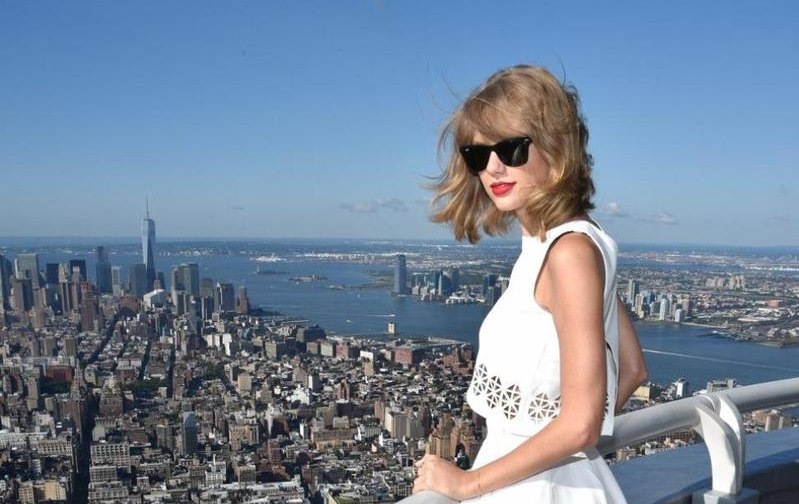
Taylor Swift is unquestionably one of the biggest artists in the world. Her most recent album, Midnights, sold over 1 million units in its first week and tickets to her Eras Tour are virtually impossible to get. One fact that even the most casual Swiftie knows, however, is Swift’s love for New York City, which she shows in her song “Welcome to New York.”
Transition to Pop
Swift cited her move to the city as the inspiration behind her 2014 album 1989. This is seen with the opening track. The upbeat song is the introduction to Swift’s first completely pop album. 1989 came after only experimenting with pop music in her previous country albums.
“With my last album Red, I kind of had one foot in pop and one foot in country, and that’s really no way to walk and get anywhere,” Swift said in a 2014 interview. “If you want to continue to evolve, I think eventually you have to pick a lane, and I just picked the one that felt more natural to me at this point in my life.”
“We Are Never Ever Getting Back Together,” the lead single for Red, lead to Swift’s first No. 1 on the Billboard Hot 100
While the pop singles from Red were a success, 1989 was Swift completely jumping into pop music, a big risk. At the time, very few artists successfully transitioned to a completely different genre. Thus, the opening track was incredibly important and needed to match the tone of the album. Swift explained that she chose “Welcome to New York” because the city is such an important part of her life.
“The inspiration that I found in that city is kind of hard to describe and hard to compare to any other force of inspiration I’ve ever experienced in my life,” Swift said about the song. “It’s like an electric city and I approached moving there with such wide-eyed optimism and sort of saw it as a place of endless potential and possibilities and you can kind of hear that reflected in this music and in this first song especially.”
“Welcome to New York” and Change
Although the song has been criticized for its relatively simple and repetitive lyrics, many listeners fail to realize the more metaphorical meaning behind the song. While it is literally about how great New York City is, Swift also uses the location to symbolize change.
In the first verse, Swift sings, “Everybody here wanted something more/Searching for a sound we hadn’t heard before.” Here, she observes how New York City is known for being where people move to follow their dreams. One of those people is Swift herself, who previously spoke about how she dreamed about living in the city.
The beginning of the chorus is the repetition of the line, “Welcome to New York, it’s been waitin’ for you.” This invokes the imagery of someone arriving and taking in the view of the city. Moving to New York to chase their dreams can also be seen as a turning point in a person’s life. This parallels Swift’s own turning point in her music career by transitioning from country to pop, something she previously only dreamed about which she also demonstrates in the chorus with the line, “It’s a new soundtrack, I could dance to this beat, beat forevermore.”
Swift additionally uses New York City to symbolize change in her life in the second verse. She sings, “When we first dropped our bags on apartment floors/Took our broken hearts, put them in a drawer.” In this line, she’s talking about how when she got to the city she left her past behind. In this context, the baggage she’s dropping off is her past country music about old heartbreaks. New York allows Swift to feel free from all of her previous issues.
Juxtaposition of the Bridge
This song is also an example of why Swift is known for her iconic bridges. While it doesn’t have the complicated lyrcism of the bridge of “cardigan,” Swift is able to embody the message of the entire song in four lines: “Like any great love, it keeps you guessing/Like any real love, it’s ever-changing/Like any true love, it drives you crazy/But you know you wouldn’t change anything, anything, anything.” This is the epitome of how Swift uses New York to represent change. However, it also spins the entire idea on its head at the same time.
New York is a great love of her life. Swift personifies the city by describing how, like a person, it can be unpredictable and is always changing. However, while it symbolizes change in the song, the city itself is also a constant because it can’t leave her like a person can. Therefore, Swift is able to write lyrics that show how the city can both symbolize change and be a comforting constant in someone’s life.
“Welcome to New York” Lyrics
Walkin’ through a crowd, the village is aglow
Kaleidoscope of loud heartbeats under coats
Everybody here wanted somethin’ more
Searchin’ for a sound we hadn’t heard before
And it said
Welcome to New York, it’s been waitin’ for you
Welcome to New York, welcome to New York
Welcome to New York, it’s been waitin’ for you
Welcome to New York, welcome to New York
It’s a new soundtrack, I could dance to this beat, beat forevermore
The lights are so bright, but they never blind me, me
Welcome to New York, it’s been waitin’ for you
Welcome to New York, welcome to New York
When we first dropped our bags on apartment floors
Took our broken hearts, put them in a drawer
Everybody here was someone else before
And you can want who you want
Boys and boys and girls and girls
Welcome to New York, it’s been waitin’ for you
Welcome to New York, welcome to New York
Welcome to New York, it’s been waitin’ for you
Welcome to New York, welcome to New York
It’s a new soundtrack, I could dance to this beat, beat forevermore
The lights are so bright, but they never blind me, me
Welcome to New York (New York), it’s been waitin’ for you
Welcome to New York, welcome to New York
Like any great love, it keeps you guessing
Like any real love, it’s ever-changing
Like any true love, it drives you crazy
But you know you wouldn’t change anything, anything, anything
Welcome to New York, it’s been waitin’ for you
Welcome to New York, welcome to New York
Welcome to New York, it’s been waitin’ for you
Welcome to New York, welcome to New York
It’s a new soundtrack, I could dance to this beat
The lights are so bright, but they never blind me
Welcome to New York (new soundtrack), it’s been waitin’ for you
Welcome to New York (the lights are so bright but they never blind me)
Welcome to New York (so bright, they never blind me)
Rising Boston, MA artist, OneShotAce, continues to strike while the iron is hot releasing his 2nd project of 2023. His latest effort, Big Threat, is a quick follow-up to 2022’s Big Pressure, which saw the Boston native collaborate with the likes of Benny the Butcher, Harry Fraud, Rowdy Rebel and Sheff G. The East-coast friendly project was received positively, with the records “Mr. Fire” and “Resonate” serving as standout tracks. After releasing the deluxe edition to Big Pressure at the tail-end of January, he returns with another 10-track LP, keeping his foot on the gas.
Moreover, OneShotAce has recruited platinum selling rapper MoneyBagg Yo, for the project’s single “Blocks,” while once again reuniting with Benny The Butcher on “Mixed Fumes.” Fittingly, OneShotAce’s featured artists mesh well with his own raw, money-driven street tales. With OneShotAce finding a nice middle-ground between aggressive drill-like approach to street music and the emotional, harrowing street tales.
“Working with Moneybagg Yo was major; that’s one of the biggest artists In the industry I’ve worked with to date” OneShotAce exclaimed. “We pulled up to his studio in the A, vibed out, and he jumped on the record and went crazy. I’m really excited for the world to hear it.”
Ace Frehley turns 72 on April 27th, proving you are never too old to keep rocking and rolling. While the famed guitarist is most known for his prominent role in the hard rock group KISS, he has also enjoyed a fruitful solo career.
Perhaps one of his biggest solo hits is “New York Groove” – an anthemic encapsulation of Frehley’s youthful spirit and the city that drove him to new heights. But it might surprise you to hear that he didn’t actually write the tune. And that it was popular in Europe long before it ever reached America.
Ace Frehley was born Paul Daniel Frehley in 1951. He grew up in the Bronx and first picked up a guitar at the age of 14. It was here in New York City that Frehley saw the Who and Cream perform live, further solidifying aspirations of rock stardom into his young, impressionable brain.
Frehley cut his teeth on the local NYC scene throughout the late 60s and early 70’s. It was during this time that he answered an ad calling for a guitarist in a hard rock group. It read, “Lead guitarist wanted with flash and ability.”
That fateful listing brought him into the fold of bassist/singer Gene Simmons, rhythm guitarist/singer Paul Stanley and drummer Peter Criss – KISS was officially born.
The band was signed to Casablanca Records in November 1973 and for most of the decade they toured around the world, skyrocketing to the top of their charts. Catchy choruses, searing guitar riffs and a flair for the theatrics helped the band stand out in more ways than one. A string of platinum albums and sold-out tours lasted throughout the late 70’s.
KISS 1983 – Paul Stanley/Getty images
Despite the hectic schedule, all four members of KISS recorded and released respective solo albums on the exact same day in 1978. Frehley’s project was self-titled and featured what would become one of his most popular solo tracks: “New York Groove.”
While the song feels representative of Frehley’s own experiences in New York, the track is actually a cover, originally written by Russ Ballard and recorded by a glam-inspired rock band called Hello. The original track achieved a fair amount of success in Europe, charting at #9 in the U.K. and #7 in Germany. It was reportedly recorded in less than 5 hours in a studio just north of London.
Ballard said in an interview that he had the idea for the song while on a plane ride to NYC.
I felt that’d be a good title for a song,” he said. “The whole idea was of someone going back to New York and singing about the experience.”
The song encapsulates the feeling of a nostalgic return to a place once called home. It starts with the lyrics:
Many years since I was here On the street I was passin’ my time away To the left and to the right Buildings towering to the sky, it’s outta sight
After years of relentless touring, one would think Frehley could relate to the feeling of coming home for the first time in a while. But apparently, Frehley was not enthusiastic about recording the song; he had never even heard the track before covering it. But alas, the label wanted a more commercial song on the album and so, Frehley went ahead with it.
In an interview with Louder Sound in 2016, Frehley put it like this:
“A lot of people think I wrote New York Groove. It’s not a myth that I’ve perpetuated, but that’s the way it is. I wish I would’ve wrote the song, though. I would’ve made a lot more cash out of it, ha-ha-hargh!”
While most of Frehley’s solo album was recorded in a studio in Connecticut, “New York Groove” was a late addition and was recorded in Plaza Sound Studios, right above Radio City Music Hall.
Ace Frehley’s hit single “New York Groove,” released September 18th, 1978
Frehley, Simmons, Stanley and Criss all released their solo albums on September, 18th 1978. But Frehley was the only one who managed a hit single, with none other than “New York Groove. “It stayed on the U.S. charts for 21 weeks, peaking at #13.
Frehley told Louder Sound in that same interview that there was no competition among bandmates to have the best record. But he also revealed that he hadn’t really listened to his fellow bandmates’ projects.
“I did put Gene’s on once,” he recalled in the interview. “When I heard his version of When You Wish Upon A Star I had to pull it off the turntable, ha-ha-hargh!”
Origins Vol. 2, released in 2020, featuring classic rock covers such as “Good Times Bad Times” and Jumpin’ Jack Flash
Frehley has continued to release solo projects in the past few decades. His most recent solo album, Origins Vol. 2, was released on September 18, 2020. It is a follow-up to Origins Vol. 1, released in 2016. Both consist of covers of some of Ace Frehley’s favorite songs. Still, “New York Groove” remains a signature song.
In an interview, Russ Ballard attributes the song’s success to its simplicity. “I guess it surprised me because it’s so incredibly simple. They say a good song will always sell, and there’s a lot of truth in that.”
“New York Groove” Lyrics
Many years since I was here On the street I was passin’ my time away To the left and to the right, buildings towering to the sky It’s outta sight in the dead of night
(Ooh) Here I am, again in this city (Ooh) With a fistful of dollars And baby, you’d better believe
I’m back, back in the New York Groove I’m back, back in the New York Groove I’m back, back in the New York Groove Back in the New York Groove, in the New York Groove In the back of my Cadillac Wicked lady, sittin’ by my side, sayin’ “Where are we?” Stopped at 3rd and 43, exit to the night It’s gonna be ecstasy, this place was meant for me
(Ooh) I feel so good tonight (Ooh) Who cares about tomorrow So baby, you’d better believe
I’m back, back in the New York Groove I’m back, back in the New York Groove I’m back, back in the New York Groove Back in the New York Groove, in the New York Groove
I’m back, back in the New York Groove I’m back, back in the New York Groove I’m back, back in the New York Groove I’m back, back in the New York Groove
I’m back, back in the New York Groove I’m back, back in the New York Groove I’m back, back in the New York Groove I’m back, back in the New York Groove
I’m back, back in the New York Groove I’m back, back in the New York Groove
Songs are often measured by their ability to stand the test of time. “John Brown’s Body” is one of those songs that has held up even into the present day. Although the tune has gone by many names and many iterations over the centuries, the hymn turned revolutionary anthem retains its status as one of the most memorable songs of the Civil War.
Gloria Jane 2004 Arrangement of John Brown’s Body. Vocals, Guitar, and added one chorus from another version of the song, changed the words “Shall all be free” to “Were all set free” to fit today.
The origins of “John Brown’s Body” trace back to Southern methodist camp meetings in the early 1800s. The song “Say, Brother Will You Meet Us,” provided the framework for what would become the famous abolitionist tune. Both feature the now famous chorus, “Glory, glory, hallelujah.”
“John Brown’s Body” as we know it was originally published in July of 1861. It was reportedly first sung at Fort Warren in Boston on May 12, 1861, and later on July 18 by the 12th Massachusetts Volunteer Infantry, according to American Music Preservation.
Despite what many believe however, the song was not originally about the famed abolitionist John Brown. In fact, it was about a Scotsman of the same name. This “other” Brown, who served as sergeant in Boston, was well aware of his counterpart, as were his fellow soldiers. They would gleefully tease him with lines like, “His soul’s marching on.”
John Brown ascending the gallows. LIBRARY OF CONGRESS
But as the song spread across infantries via word of mouth, the nuances of the original joke was lost. Everyone assumed the lyrics referred to the abolitionist who was captured and hung at Harpers Ferry a few years prior. New lyrics were added to the old ones resulting in verses like this:
Old John Brown’s body is a-mouldering in the dust, Old John Brown’s rifleís red with blood-spots turned to rust, Old John Brown’s pike has made its last, unflinching thrust, His soul is marching on!
So “John Brown’s body lies-a-mouldering in the ground” was not originally the revolutionary sentiment it now commonly appears as, it actually began more or less an inside joke.
Poet Julia Ward Howe would later write her own words to the tune after hearing it sung by troops on a trip she took to Washington. From this she penned “The Battle of the Hymn Republic.” Unfortunately, John Brown the Scottsman never heard this version, having somewhat ironically died early on in the war.
The United States Army Field Band performs the famous Civil War-era piece, “The Battle Hymn of the Republic” in 2016.
“John Brown’s Body” has been recorded numerous times in various ways. Pete Seeger covered it in 1960. Bob Dylan wrote his own song simply called “John Brown” back in 1962. In Ithaca, there is even a popular reggae band by the name of John Brown’s Body that has been together for over two decades.
The band, John Brown’s Body combines reggae and dub.
John Brown continues to remain relevant even today. He is honored at John Brown Farm, a state historic site located near Lake Placid, NY. It features the home and gravesite of the famed abolitionist.
In 2021, John Brown Lives!, a nonprofit organization focused on human rights and education created a proposal back in 2021 with plans to build a visitor center and conference center. Just last week, there were even two meetings held to receive public feedback on the ongoing plans.
Brown’s home at John Brown Farm in North Elba, NY, 3 miles southeast of Lake Placid. capecodphoto/Getty Images
Change however, might not be as fast as Brown probably would have liked. The state agencies expect, following drafts and additional public comment periods, a final plan to be adopted by early 2025 according to Times Union.
Still, John Brown continues to live a life of fame long after his death, his name memorialized in both song and minds. Even if the tune was never meant for him, his soul indeed goes “marching on “ long after death.
If you’re in New York and looking for traditional folk music, you might be surprised to find roots closer to home than you thought. While the genre is often associated with the South, in reality, Upstate New York – particularly the Adirondacks – is home to a vibrant past of traditional music composed of folklore, work songs and rich oral traditions.
Dave Ruch, a Buffalo-based musician, music educator and folk music archivist/historian has been delving deep into the history of traditional music of the Adirondacks for the past 30 years. As he explains, the Adirondacks, with its great wilderness and rural flair provided a perfect breeding ground for the diverse style of music that originated there.
Lumber workers gather, dancing and making music in the Adirondack camps for entertainment | Photo from woods.tauny.org
The Roots of Adirondack Music
Traditional music as it is commonly known is a genre of music specific to a certain region and local people or culture. It is typically anonymous music, passed down orally and serves as an expression of the life of people in that given community. Traditional Adirondack music in particular is further characterized by a few key elements as Ruch explains.
“So much of it goes back to work in the woods, lumbering being one of the main occupations there throughout the 19th century and into the 20th,” Ruch said. “That was a real fertile ground for this music to spread and be used. “
As he continued, very often logging operations would be deep in the woods and the lumber companies would have to build temporary housing units for workers to live in in the forest. By Ruch’s count, anywhere from 30-50 guys crammed into these small living spaces for an entire winter, working 6 days a week. Additionally no booze was usually allowed on the premises.
Workers in the Adirondack lumber camps pose for a picture | Photo from New York Heritage
“Singing and entertaining each other became really the primary form of entertainment for a lot of these guys,” Ruch said. “It was a living tradition as well, so they’d be making up new songs about somebody who died on the log drive or to complain about the boss.”
Adirondack music was also greatly influenced by the influx of Canadians and Irish immigrants who went to work in the iron mines and lumber camps. These influences found their way into the Adirondacks in a variety of unexpected ways.
“I was working on a project several years ago and I ended up finding at least one song that a man up in Wilmington, NY had been singing and he was the only person to ever be found in America that was reported to know and sing that song,” Ruch recalled. “It’s been recorded 20-30 different places in Atlantic Canada but it had only been found once in America and that was in that Northeastern corner of New York State. That song followed the people as they migrated.”
Through the Generations
While Adirondack music might seem like a thing of the past, its oral traditions trickle downward through the subsequent generations of music makers. Ruch said what makes this music special is that unlike other regions of New York, the Adirondacks seems to be the only place where you can still find people today who have a direct link to this old music.
Don Woodcock, pictured with his fiddle in hand | Courtesy of TAUNY Archives/Martha Cooper
Ruch has talked visited and befriended many of these multigenerational musicians who carry on family legacy and traditions. One such example he cited is Don Woodcock, a musician in St. Lawrence who holds the tile of “Grand Champion Fiddler of New York State.” Woodcock’s father played the fiddle for square dances and had learned such songs from older musicians. Decades later this combined knowledge was all passed down to Don. In some cases, Ruch said these songs don’t even have names, Woodcock simply knows them as “The song my dad always started the square dances off with.”
“He didn’t learn out of a book and he didn’t learn it because he wanted to learn about local music, he‘s what you’d call a tradition-bearer,” Ruch said. “He’s a living link to this old music that predates radio and T.V. and goes back to a time where people entertained themselves and their neighbors with this traditional music.”
Change and Loss Over Time
With each song passed down through the generations, the music of the Adirondacks changes as well.
Ruch cited another musician by the name of Ermina Pincombe who took her Grandma’s a cappella version of a song called The Lumberjack’s Alphabet – complete with a lumberjack term for every letter of the alphabet – and set guitar chords to the music, based on her own taste for the country and “hillbilly” music that came into the home via 1930’s radio.
Ermina Pincombe and Dave Ruch smile for the camera | Photo courtesy Dave Ruch
“A hallmark of all traditional music is that because there’s no known author and no one set way to do it, people feel pretty free to change a couple words or sing it to a different melody that’s okay, ” Ruch said. “An aspect of the tradition is that it can completely evolve and usually does over time.”
While Adirondack music continues on, there is an innate risk with the oral tradition. If not enough people carry on the songs, it can be lost forever. Ruch hopes to carry on the legacy of mountain music by sharing these types of songs and stories. As he explained, it’s not just a matter of educating people from across the country, it starts in his own backyard.
“The folk audiences will often say ‘we knew about music from Kentucky and the Ozark mountains but we had no idea there was this music from New York’ and I tell them, ‘well people in New York don’t realize there’s anything either.’”
A Night of Adirondack Music
For those interested in learning more about traditional Adirondack music, Ruch is hosting a show titled, “An Evening of Music and Stories from the Adirondacks and the Erie Canal” on January 18th at the Sportsmen’s Tavern in Buffalo, NY.
Dave Ruch pictured performing traditional Adirondack tunes on the banjo | Photo courtesy Dave Ruch
Ruch will be performing the traditional songs he has learned by talking with musicians in the region and sharing the stories behind the music and its creators. While Ruch’s talks are typically reserved for classrooms, historic societies or libraries, he said the cozy and casual environment of the bar will make for a nice change of pace.
“It’s always nice to bring it out where ordinary people are and you get to do it with a beer in hand,” Ruch said. “People really love the stories and love to learn the background of the music as much as they love the music itself.”
Ruch will be performing at the Sportsmen’s Tavern on 326 Amherst St in Buffalo, NY at 7 pm on Jan. 18.
You can buy tickets for the event here and learn more about the history of Adirondack music on Ruch’s website on traditional arts in Upstate New York (TAUNY) here.