Pete Mancini is a welcomed troubadour for our times, by building community though his music. His lyric are as comfortable as your favorite weather-worn blue jeans, and his style is reminiscent of Tom Petty and Hank Williams, with a hint of John Prine. Looking for some new music to add to your playlist? Check out Pete Mancini’s latest EP release, The Commonwealth Sessions Volume 1.
With Mancini’s signature blend of Americana and folk, this EP is sure to be a hit with music lovers of all kinds. Over the years, Mancini has opened for acts such as Jimmy Webb, Blues Traveler, Gin Blossoms, Southside Johnny & The Asbury Jukes, Pure Prairie League, Robbie Fulks, Amy Helm, Larry Campbell & Theresa Williams, Kevin Gordon, and Iain Matthews.
I was fortunate to stumble on Mancini over a year ago during the pioneering days of The Long Island Sound podcast. Pete was one of my early guests on the podast and I was fortunate enough to sit down with him and talk about his travels and ever growing catalog of songs on the most recent episode out today. Pete Mancini keeps popping up on my radar. In a soon-to-be episode of The Long Island Sound Podcast, I interviewed Bill Herman of Paradiddle Records only to find Pete singing on the opening track of the Hank Williams Uncovered album, “Lovesick Blues” to perfection. More to come on the Hank Williams’ project on May 12th. You can find a deeper conversation with Pete Mancini right here on The Long Island Sound.
Commonwealth Music Sessions
The feeling of loneliness, isolation and lack of companionship have been on the rise in the past few years. Covering the music scene in this little corner of New York State, I often search for connection and community, pleasantly surprised to pick up on a musican who lifts me up, and welcomes me into their world. I found artists who love their labor, while patching us up with their original music. Pete Mancini is a craftsman and consumate performer, a troubador who on track, in my opinion to be the next Gordon Lightfoot. The late Gordon Lightfoot (passed away on May 1st), was a favorite of both John Prine and Bob Dylan. I hear a thread of Gordon in Mancini’s music as he is admired as well among the community of musicians on Long Island.
New EP Release
Mancini, a prolific songwriter, had just buttoned up some thirty songs for his next album, yet to be released. There were five songs, which didn’t fit the theme of the pending album, so Pete decided to release an EP on May 5th called, The Commonwealth Music Sessions, Volume One, which can be found here at his Bandcamp site. Pete assembled a fine group of musicians who played on the EP, including Joe Leone, Delaney Hafener and Nick Balzano.
EP’s are often used to keep an artist’s audience engaged. Listenting to his latest EP, I found myself craving for more and maybe that’s the unintended consequence for a fan on releasing an EP with an album in the wings. Pete gave me an exclusive preview of the opening song, “Golden Hour” on our quickie podcast interview being released today. A great commentary on vanity, and the images we build up in seeking admoration and attention.
Lamenting Loss
The passing of good friend and collaborator, especially one so close becomes pain that dwells deep in one’s heart. On September 16, 2021, Travis McKeveny, a well-respected singer/songwriter from Long Island, passed away. Pete often mentions the impact Travis had on his craft, and how much he learned from him. Pete is also a member of The Famous Doctor Scanlon Band, playing the music of Travis McKeveny. There’s no better way to pay tribute to those who built us up, than by performing their music with friends.
He was my brother in arms, in music and in life. I miss him dearly.
Pete Mancini
Upcoming Shows
You can find Pete Mancini paying all around from New York City to various venues on Long Island. Friday, May 5th, Pete will be opening up for Rhett Miller at My Father’s Place in Glen Cove. On May 13th, in support of Labor and the Harry Chapin Food Bank, Pete joins a wonderful lineup of artists at the Bald Hill Ampitheater for the Mayday Music Festival, including Blues Traveler, The Wallflowers, Wheatus, John Hampson (Singer Nine Days/”Absolutely (Story of a Girl)”), and The Belle Curves (Delaney Haefner, a recent guest on the podcast)
Leave the Loneliness Behind
Old man gushing alert! I’ve interviewed many artists over the past year and a half. From time to time, I become enamored with the music and the musician. Pete Mancini is a rising star in my book, and a must-see performer who keenly observes the world around us, articulating needed insights, while entertaining in a folksy manner. We can listen to music on our favorite platforms, but there’s nothing that replaces the live performance! Pete Mancini was generous enough to join Mike Nugent and The Blue Moon Band for an experiment of sorts, called The Long Island Sound Showcase. We did a livesteam podcast, featuring Nugent as the main act and Mancini performing the second set.
During the show we all got to experience Mancini as he welcomed the audience into his world and entertained us though song and conversation. I’ll take pride in being a broken-record preacher of the benefits of live local performances! I emplore of all us to heal though the music, and confront the isolation and loneliness by getting out to hear the music. To hear the full interview with Pete Mancini, search for The Long Island Sound, wherever you listen to podcasts. As I say, “Be generous with your joy, keep your spirits high, and let the music take you on a journey.”
The aftermath of the quarantine has left many of us longing for experiences and community. The ability of an artist to constitute community is what I love about music, especially local original music. Nancy Atlas is a well-known entity on the East End of Long Island, especially in her hometown of Montauk, famously called “The drinking village with a fishing problem”. Nancy knows how to inspire a community and connects with her audience though passion and performance.
I had the double blessing of interviewing Nancy on The Long Island Sound podcast and seeing her live recently at Stephen Talkhouse, a venue which I call the CBGB’s of Amagansett. Nancy became my antidote for the longing that can never be quenched, as I continue to explore the wellspring of talent on Long Island.
If you can find something that you’re passionate about and you can make a living at it, then you’re a lucky person
Nancy Atlas
A Force of Nature
Before we dive into the rollercoaster ride of a show, it’s important to get an understanding how this female force of nature embraces her craft like the ocean envelops us as we venture into the deep.
Prior to her moniker as The Nancy Atlas project, this Commack, NY native went to college in London to study marketing. Upon graduation, she was hard-pressed to find a job in her chosen field. With the creative juices flowing, original songs in hand, Nancy went to an open mic hosted by Johnny Leitch aka Johnny Blood, a fantastic guitarist in his own right. The rest is history.
The most important thing is to surround yourself with people that are better than you
Nancy Atlas
There are a wide range of artist influences who shaped her sound, from Johnny Cash and Emmylou Harris to Lucinda Williams. Atlas also recounted how her experiences growing up on Long Island have influenced her music, particularly the ocean and the beach, which she described as her “sanctuary.”
Throughout the interview, Atlas discussed her creative process and how she approaches songwriting. She explained that she likes to write about real-life experiences and emotions, drawing inspiration from her own life and the world around her.
Atlas emphasized the importance of collaboration, both with her band members and other musicians in the industry. She described how working with others can bring new ideas and perspectives to the table, and ultimately lead to better music.
The more honest you are with your songwriting; the more people connect with it.
Nancy Atlas
We discussed the challenges of being a musician, particularly in today’s music industry.
Atlas acknowledged that the rise of streaming services has changed the landscape for musicians, making it more difficult to earn a living solely from music sales. However, she also noted that the internet has made it easier for independent artists to connect with their fans and reach new audiences. Atlas emphasized the importance of adapting to change and finding new ways to make a living as a musician.
I think the hardest thing about being an artist in this day and age is finding the balance between the art and the commerce.
Nancy Atlas
Performing at Stephen Talkhouse
During the interview, I told Nancy how I hoped to go to Stephen Talkhouse someday, and she quickly goateed me in to attending her April 22nd show. I was not disappointed. With the intent to open opportunities to others, Nancy had the PasserBy Band opened up for her, and the band was electric with youthful energy and talent. Nancy’s son Cash, a member of the band was joined by a cast of East Hampton Highschoolers who rounded out the group.
PasserBy covered Santana’s Oye Como Va, and Dexys Midnight Runners, Come on Eileen to the delight of a welcoming audience, as a proud mother stood in the wings with admiration and pride
The Nancy Atlas Project took the stage promptly at 8:15 pm, as a lighting bolt of energy pulsed with Nancy as she began to strum the intro, soon to be joined by her longtime guitarist, Johnny Blood. Her set was filled with original songs, that were familiar to adoring fans, as I watched and listened to a community of Eastender’s revel with enjoyment and celebration.
A key moment, came when Nancy recalled a famous ocean rescue in Montauk, as detailed in the New York Times best selling novel, A Speck in the Sea. Nancy’s song “The Tale of Johnny Load” recounts the key events in the “Montauk Miracle” and has become somewhat of an anthem to how the Montauk community came together to beging the search for Johnny. The song is about a voyage of the fishing boat , Anna Mary with only Johnny “Load” Aldridge and Anthony Sosinski aboard. Anthony Sosinski, one of the crewmembers was on hand, and took the stage to lead the crowd in a Happy Birthday song to both Nancy and her sidekick Johnny Blood.
You can see Nancy Atlas performing at Stephen Talkhouse on May 20th, it’s certianly a bucketlist item for any music lover.
Music and the Power to Heal
She talked about how music has the power to heal and bring people together, and how she hopes her music can have a positive impact on her listeners.
My interview with Nancy Atlas on the Long Island Sound podcast provided a fascinating look into the life and career of one of Long Island’s most talented musicians. From her early influences to her creative process and the challenges of the music industry, Atlas shared insights and stories that are sure to inspire aspiring musicians and fans alike. Her performance at Stephen Talkhouse was a powerful reminder of the healing power of music and the importance of spreading positivity in today’s world. If you’re a fan of Nancy Atlas or just love great music, be sure to check out her interview on The Long Island Sound podcast.
While she was pregnant with me, my mom saw Lou Reed perform his Edgar Allan Poe concept album, The Raven. After the show, she bought a little red baby tee, with an outline of Reed’s face, his name printed below it. She got the smallest one they had — despite the fact that she was the biggest she’d ever been — because she planned to give the shirt to her future daughter, when I wasold enough.
Lou Reed died nearly 10 years ago, in October 2013. I didn’t start listening to him until around two years later. My parents were the kind that didn’t let me watch the movie until I’d read the book, so before I could don my vintage tee I listened to a couple of records. I was instantly in love with the Velvet Underground and veritably obsessed with the casually confident Brooklyn drawl of their lead singer.
That voice was ringing in my head as I browsed Syracuse University’s study abroad program listings last year. I’d been studying French, so that was the obvious choice, but my eyes lingered over Berlin as I hummed Lou Reed’s “Lady Day.”
“I had never been to Berlin when I wrote Berlin. It was an imaginary journey,” said Reed, talking about the song, “The Kids.” “I couldn’t even go coach.”
So I made a decision worth thousands of dollars and five months of my life based on an album Lou Reed recorded without having been to the city for which it’s named. Germany was wunderbar!
Reed said he called the album Berlin because he liked the idea of a “divided city.” He said he could have called the album Brooklyn just as easily. But the music has the perverted cabaret, the purposefully out-of-tune instruments, the choppy underground scene that creeps up like a riptide in a capital city, a seat of government — much like my hometown of Washington, D.C. — after it’s been halved, quartered, chopped, and diced. So much drama and romance exists in that tension, the sneaking and smuggling, the people caught in the space between, the lovers trapped on either side.
Lou Reed lived in that in-between place. Born in Brooklyn, he moved to Long Island when he was nine. Reed was always separate from Manhattan, where the real action was, despite living only a subway ride away. In his numerous songs and albums that chronicle New York City, he sees the city from the inside and outside at once — terrible and glamorous and mysterious, his ultimate femme fatale.
His first shot at the city, in 1958 — a freshman year at New York University — flamed out. A mental breakdown sent him back home before his first year was over. His parents, unsure how to deal with their unresponsive 19 year old, turned to electroconvulsive therapy.
“I watched my brother as my parents assisted him coming back into our home afterwards, unable to walk, stupor-like. It damaged his short-term memory horribly and throughout his life he struggled with memory retention, probably directly as a result of those treatments,” his sister Merrill Reed Weiner wrote on Medium, in a self-published article detailing their childhood.
It wasn’t until 2021 that I discovered Lou Reed had also been a student at SU. I was working at The Daily Orange, the student newspaper,scrolling through its archives, when I came across the paper’s Reed obituary. That is when I first heard about The Lonely Woman Quarterly.
The Special Collections of SU’s Bird Library holds every copy of The Daily Orange, every student zine, thesis and dissertation. In this archive are two original issues of The Lonely Woman Quarterly.
The cover of The Lonely Woman Quarterly, illustrated by Karl Stoecker.
With contributions from “Luis” Reed — as he was then calling himself — “liberal arts student and sometime singer with a campus rock n’ roll band,” Joseph McDonald, James T. Tucker, Karl R. Stoeker and Lincoln Swados, The Lonely Woman Quarterly sold out in one day, according to a May 1962 Daily Orange article documenting the magazine’s premiere.
“The magazine doesn’t contain great literature, but it has material in it that couldn’t be printed elsewhere on campus,” Swados told The D.O.
In the 19-page first edition and 23-page second edition, the five sophomores offer poetry and egotism, bleed superiority with a sort of forced nonchalance.. Themes emerged that would later become commonplace in his work: the “Femme Fatale,” “the Beast,” “the Underground.” Paralleling “Luis” Reed’s lyricism in The Lonely Woman, is the music he made during his college years — heard in the resurfaced recordings released last year, Reed’s Gee Whiz, 1958-1964, and Words & Music, May 1965. Looking at The Lonely Woman, it’s easier to understand why this troubled college student, this bridge-and-tunnel-beatnik with a taste for drugs, chose to study “the liberal arts” at a fratty, private university in a small town, an awkward six hours away from home, where he would be reduced to a “sometimes singer” by the campus paper.
https://youtu.be/JJ_EOzHzLjU
Syracuse, the city, has its own draw. It’s here, in the pallid winter and gorgeous summer and frat houses and projects and farmland and undeveloped land. It’s a city built on industry: salt, concrete and ceramics; but the bottom fell out of it all. It’s a city with a highway running right down the middle. A divided city. Something about Syracuse makes you want to prove something to it. Makes you want to provoke. But it’s hard; Syracuse is used to being poked and prodded and it doesn’t scare easy.
The first story in The Lonely Woman Quarterly, written by Reed — of course — is horrifying: it details the abuse of a young boy by his mother. It’s three paragraphs with no title, just “Luis Reed” at the bottom. It starts with the image of a boy looking in the mirror:
“His reflection, ah yes, that was what it was, and he’d remove it to a more shadowy place, where his illumination gained a new fierceness, his countenance new intensity, teeth glistening, hair gleaming. He stared back with love.”
Eventually turning a corner:
“‘Oh no mommy no.’ he found his body undulating, ‘oh no mommy.’ She pulled him closer, her hands pressing him tighter. ‘That’s a good little man, that’s a good little man.’ She was breathing harder now. ‘That’s a good little man,’ she said. ‘That’s a good little man.’”
People still bought the magazine. It was still written about in the highly reputable, independent student paper. This story that shocked in Syracuse might have been overlooked in Manhattan, at NYU. Reed’s calculated tone delivers its sickening punch. Did the waves of electric shock therapy that Lou Reed endured before his arrival in Upstate New York — treatment enabled and encouraged by his mother — feel, to him, like abuse?
Poem credited to Lou “Luis” Reed in the first issue of The Lonely Woman Quarterly.
900 Ackerman
I live in Syracuse’s Eastside neighborhood. My living room window looks across the driveway into my neighbor’s kitchen, a kitchen that was once Lou Reed’s. He lived at 900 Ackerman, in the attic apartment. On the porch, hanging from the peeling wood, there’s a plaque. It reads “Here lived Legendary Musician, Lou Reed. Take a walk on the Wild Side.”
Now Linus and Thomas, two juniors who could also be referred to as sometime singers in campus bands, live in Reed’s house. I sit in their living room under a poster of Television’s Marquee Moon, with an espresso machine and amp sharing an outlet on the floor beside me. They relay Syracuse’s favorite Lou Reed urban legend; that he was in ROTC but got kicked out for pulling a gun on his commanding officer. Their attic apartment doesn’t look like it’s been updated much since Reed lived here. Thomas said he thought they were hearing Reed’s ghost at one point, but it was just squirrels that had burrowed through the walls.
“I really want us to feel his ghost,” Thomas says. “I feel like I was expecting it during the winter.”
I ask if they hear Syracuse in any Lou Reed songs like I do.
“There’s one song from the banana album,” Linus says, referring to the Velvet Underground’s 1967 debut, The Velvet Underground & Nico. “’The Black Angel’s Death Song.’ That’s very much a song about a cold Syracuse day, walking Upstate.”
The song’s psychedelic sound is augmented by John Cale on electric viola. The lyrics: “So you fly / To the cozy brown snow of the East / Gonna choose, choose again.” In the creaking strings of “Black Angel’s Death Song” lies a familiar Syracuse scene: the cold that blows in through the cracks in my apartment windows, the snow pushed up to the side of the street in a gray-brown mass; white snow meeting white sky at the horizon line looks like death, how some nights alone with my meager space heater feels like it.
Slouching Towards Syracuse
David Yaffe, music writer and English professor at SU since 2005, interviewed — or attempted to interview, as Reed had a stockpile of choice words he reserved for journalists — Reed for Rolling Stone in 2007. Yaffe had nominated Reed for an honorary doctorate. Instead, Reed was awarded SU’s most prestigious alumni recognition, the George Arentz Pioneer Medal. Yaffe was set to have a lunch interview with Reed in advance of the reception event in NYC, but the lunch was demoted to a phone call at the last minute.
“We must have talked for half an hour,” Yaffe said. “But it felt like a few months.”
It’s harder to connect in phone interviews; Yaffe said Reed was completely dissociated and closed off for much of the call, until Yaffe mentioned Delmore Schwartz.
In the 1960s, Schwartz was teaching English at SU. The once sharp poetic wit and acclaimed writer was somewhat washed up, paranoid, bipolar. When their paths crossed, Schwartz and Reed formed a deep bond. Schwartz becameReed’s mentor and confidante. In Lou’s words: “Delmore Schwartz is Everything.” Capital E. You can hear it in Lou’s trembling and taxed, yet firm voice when he reads aloud Schwartz’s chef d’œvre, “In Dreams Begin Responsibilities.”
When Yaffe asked about Reed’s Syracuse graduation: “I don’t know what you’re talking about.” But when Yaffe asked about Schwartz, Lou opened up, memory jogged, light streaming through, conversations recalled: “We talked about Yeats.” And you can tell, from the first page of The Lonely Woman Quarterly, Issue I. The letter from the editor reads just like the second coming; an Upstate New York version.
“As the sun sinks slowly in the west,” The Quarterly’s editors begin, “The air clears, the pungent odor of the Syracuse Arts Festival plops solemnly on its rump, and the militant, vociferous underground raises its shaggy head, gnashes its rabid molars in rhythm, and squats –– in one of its infrequent appearances –– in front of its collective mirror and bellows, a trifle off key perhaps as miller says, but raise its voice it does, cause boy its SPRING, and the world IS mudluscious, just as the various conglomerate herds echo in their certitude, the sundry members of Oz come forth bearing flutes and trumpets.”
The kids are pulling straight from their lit classes; “blood-dimmed tides,” “slow thighs,” and “rough beast.” Still, something about Syracuse weather provokes Yeats; it’s ominous, “mudlucious.” It’s in the spring that comes on so fast, while there’s still snow on the ground, so everything’s slippery and mud dries on the hems of your jeans. It’s a hesitant spring, the memory of freezing weather so fresh in your mind — a 19-degree day and white-gray sky hovering just over the horizon, threatening to fall over the sunny city at any moment. Spring in Syracuse is miraculous, ephemeral.
The letter continues, “The time has come the walrus said and assuming the price of paper doesn’t go up too strenuously, and the mad-man in the cellar can keep stamping out ink, this forlorn, dogearredperiodical will occasionally make its showing, nay take its place, out among the fields of its fellow man.”
But the mad-man in the cellar, according to The D.O., is really the Savoy Restaurant’s owner Gus Joseph, doing the kids a favor and lending his printer. It’s a familiar sarcastic grandeur, misplaced apostrophes and made-up words, not exactly self-deprecating or self-aggrandizing — it’s just fun, you see them imagining themselves as that looming lion, the Underground, threatening the world as we know it, as the Velvets soon would.
Letter from the editor in the first edition of The Lonely Woman Quarterly.
The Lonely Woman’s editors weren’t the only beasts on the horizon. It was the sixties. Joan Didion was reporting the essays that would become “Slouching Towards Bethlehem,” The sky was on fire with napalm in Vietnam. In Syracuse, a beast by the name of Urban Renewal was tearing down homes and businesses, to be replaced by a bunch of empty lots and Interstate 81. Reed captures this beast in his stories, in his songs. It’s in the Lonely Woman herself. In the magazine’s credits: “The Lonely Woman has a big nose and satin sheets.” She’s horrible and ugly, yet soft, shiny and disguised. Like a halloween ghost, a mysterious shape floating under the sheet, a vampire’s cape, holes for eyes. Reed’s stories are peppered with these duplicitous monsters. His second story, for example: it has no title, is three pages long, including a prologue and epilogue. It starts:
“Daylight and windy cities and Saturday morning is a beast of legendary tenure.” … “the sun came in through an unobserved crack and shone brightly on my angelic face as I twitched and scratched my early hunger, growling, rumbling down below (although actually not quite awake, just contemplating my inner-most thoughts that buss in a deep fog in waking hours). The beast moved beside me, rolled and signed and hissed through painted lips parted with a now decadent look of sensuousness, lips that had seen things, now parted and twitching, giving forth early morning breath. We had talked of the soul and its death, and my death, the last of my supplanting lives, spent and completely wasted, except for the constant hurt. And she asked me if I had captured my soul and I (having seen nothing but my visions, death I embrace you) had of course replied why no, it has escaped my every turn. “
This is also Yeats, and “Sunday Morning,” and much more. “Sunday morning, brings the dawning / It’s just a restless feeling by my side.” The beast is him, it’s the day, it’s the girl, it’s everywhere. But the beast that moves beside him, that girl he wakes up with, is half beast, half something else. A femme fatale — at once a beast, an angel, your deliverance, your salvation, your dire infatuation.
Femme Fatale
Candy, Lisa, Sally, Jane, Matilda, Caroline, Stephanie, Bonnie Brown, … who’d I miss? Lou Reed’s femme fatale is the beast in disguise, the dark horse, the temptress, the siren, the Lonely Woman.
Syracuse isn’t a natural home to a femme fatale. The town lacks the fantasy and mystery and sense of darkness. Her cave, her cavern, her isolated rock on the shore, her long dark hair she peeks out from under. New York City, though, is brimming with the creatures: the tragic aspiring star, the smoking provocateur in Washington Square Park, the unreachable party girl walking barefoot down the subway steps as the sun rises. In The Lonely Woman Quarterly, the boys are just figuring out how to wrestle these complicated beingsonto the page.
Letter from the editors and table of contents in the second issue of The Lonely Woman Quarterly.
A femme fatale finds her power in anonymity, something easier to attain in NYC than in a town like Syracuse, a college campus like SU. The boys of The Lonely Woman find that like a Rumplestiltskin, they can find power in the naming of their girls. Throughout The Lonely Woman are poems by the magazine’s other editors that emulate the “___ Says” styles of later Lou Reed — “Christina’s World,” and “When Karen Walks.” But Reed has a special sense for femme fatale, and he fleshes her out in the second issue of The Lonely Woman, in a story he titled “Mr. Lockwood’s Pool.”
The narrator, walking through a wood — a place that sounds somewhat like Syrcuse’s Thornden Park — happens upon a clearing and finds a gorgeous pool filled with swans and ducks. A woman suddenly appears, like a nymph, and dives into the water.
“I rubbed my eyes with astonishment. It was a girl, thoroughly nude, and in the form of a perfect C, her hands thrust rhythmically in and out of the water, cupped, her face receiving the splash ecstatically and her white teeth glistening… She had long blond hair that now lay in collective sections on her back, the strands coming to spontaneous points”
He becomes infatuated with her, she brings him into the water, she whispers secrets in his ear, says things he’d never heard before. She’s unreal, her beauty celestial, her words magic. Her hair, with its points and sections, alludes to Medusa, suggesting a danger in that beauty, the beast that is just below.
“As I watched it suddenly struck me that she had the long tail of a horse proceeding directly from the tip of her spine, arching and then the fine silky hairs losing themselves in the propitiously slight breeze which presented itself occasionally. She, herself seemed unaware of the appendage, and for all of that was an exquisite creature, with all the attributes that the male species dreamily bestows on members of the feminine gender.”
Now, she walks the line between beauty and beast, joining the leagues of femme fatales Reed created throughout his discography. She’s more than a girl, she’s New York City, she’s an ocean, she’s light, she’s heat, when she talks it sounds like Sister Ray, when she cries it sounds like Venus in Furs. “Strike, dear mistress, and cure his heart.”
At the end of “Mr. Lockwood’s Pool,” the girl with a horse tail tries to lead the narrator through vines and trees, into a clearing with a strange whirlpool black hole, in the sky and in the ground. He’s lost in it, he hears the girl’s voice, sees her face but can’t touch her. The femme fatale isn’t tangible. This girl isn’t within Reed’s reach while he’s in Syracuse, she’s not of this place, she’ll disappear any second, and she does, and the narrator is left alone, missing something he didn’t know he had.
“Yes lochy, that’s it, she yelled, clasped my forehead in her hands, kissed it, and just as quickly she’d appeared, disappeared into the clear, clear water.”
Like only a femme fatale can.
The Underground
SU during the early-60s was a place of conflicting morals and ideals, converse scenes pushing up against each other like tectonic plates. Martin Luther King spoke on campus and Ernie Davis won the Heisman all while Urban Renewal and I-81 destroyed Syracuse’s Black neighborhoods on the Southside. Contradiction was on all sides, but suffocation squeezed out great art.
Contradiction is reflected all over the work Lou Reed recorded while at SU. In 2022, Laurie Anderson released Gee Whiz, an EP containing six songs Lou performed from 1958 to 1964. This small, choice selection, contains “Michael, Row The Boat Ashore,” dated 1963-1964. Originally sung by formerly enslaved African Americans living on South Carolina’s Sea Islands, it was later indoctrinated into American folk tradition, it was re-released in 1961 by The Highwaymen, a band built of white Harvard and Yale business majors, and became a No. 1 hit. At the same time, it was being recited by those protesting in favor of greater civil rights.There’s a contradiction there, of appropriation; of affinity? Lou’s version is quiet, delicate. He was listening to what was popular, then transforming it into the very antithesis of whatever it once was. Know thy enemy. Here emerges the underground.
In Issue One of The Lonely Woman Quarterly, there’s another untitled story by Reed that seems to conflate New York City and Syracuse, like he spent the morning in the city then came home for supper. It opens: “Have you ever sat in the Square trying to look angry?”
The story chronicles a day in the life, like a diary, through Lou’s eyes, as our knowingly pretentious, rambling narrator. Lou ends up with a group of friends at an apartment, where the phone rings, voices half-heartedly debate Dostoevsky, incense burns and his head aches. Then a paragraph breaks free from all of these characters and dialogues and setting. Reed speaks for a second, just long enough to define the Underground of the Velvet Underground like it’s a dissertation:
“Things assumed their normal order, the syntax obscuring the atypical, the falsified dichotomy leaving no room for the incoherent melancholy which is present even in the Hebrais Vision where it was not covered up, parabolic myths in conjecture without relatedness to order. But we had order, and this was purposeful, functional, for what else do we crave if not rules and regulations. How can you deviate if there’s no norm and that’s half the fun so be victorian dear friend and attack the boxlike structure, metamorphisize in extenuating circumstances and feel the joy of guilt, which you actually feel anyway but not correctly, break with the tintinnabulary logic of your mind and enter the chaos, but be strong and truthful without pretensions, and THEN disbelieve, but not before, or alas, alack you are but one of us and worse yet, me, for I’m the worst of the worst, the phoniest of the phony, the weakest of the weak, the strongest of the strong, setting up new settings for the old, new mores for the sacrosanct, typification of any for non-existent disillusionment in endless streams of group discussion, exchangement of neurosis, boastful, dearheart, and a more stringent benefactor you’ve never seen.”
With the Velvet Underground, Lou Reed social climbs from behind the ladder, he’s real and fake, he’s playing truth and he’s a terrible liar. The game’s not to make sense, it’s to keep up. Manifesto-like, Reed defends his four-year sentence in Upstate New York: “to be strong and truthful without pretensions, and THEN disbelieve.” Underground, inside of contradiction, is where Lou felt most at home — a beatnik that joined ROTC, a rock star playing for the fraternities, a gay city kid at a preppy, private university. He wants to play football for the coach.
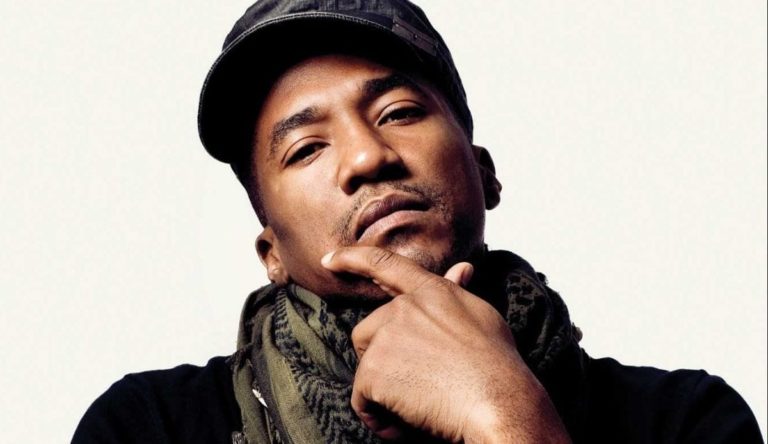
Rapper, singer, producer and DJ Q-Tip celebrates 53 years of life today, on that has blessed him with countless songs and immeasurable success in the music business.
Born Jonathan William Davis in Harlem, the artist is professionally known by his stage name but has also been given the nicknames, Qualiall, The Abstract Tip The Lone Ranger, and The Last Zulu. In addition to his success as a solo artist, Q-Tip has been a part of the music groups A Tribe Called Quest, Native Tounges, Soulquarians, and The Ummah.
One of the most prominent figures in the hip-hop music genre, Q-Tip has always been a team player, beginning his career as a member of and producer of the group A Tribe Called Quest throughout most of the 80s and 90s, creating its own music production team, The Ummah, active from 1996-2000. It inspired another music collective, the Native Tongues, which worked concurrently with A Tribe Called Quest from the late ’80s until the late ’90s.
The group released their debut studio album, People’s Instinctive Travels and the Paths of Rhythm, in 1990, peaking at number 23 on the Billboard Top R&B/Hip-Hop Albums chart. Its lead single, “I Left My Wallet in El Segundo,” peaked at number nine on the Billboard Hot Rap Songs chart. After initially breaking up in 1998, the hip-hop group would reunite intermittently from the late 2000s to 2010s, releasing their final studio album, We Got It from Here… Thank You 4 Your Service in 2016. The group would become members of the Native Tongues from 1988 until the late 90s, and Q-Tip would become a member of the Soulquarians from the late 90s to early 2000s, itself inspired by A Tribe Called Quest.
A Tribe Called Quest members: Q-Tip (top left, vocals,) Phife Dog (top right, vocals,) Ali Shaheed (bottom left, turntables, co-production,) and Jarobi (bottom right, vocals.)
The Ummah’s first project would be serving as a producer for A Tribe Called Quest’s fourth studio album, Beats, Rhymes and Life. The album was criticized for moving away from the group’s earlier, denser, and bottom-heavy sound to a more laid-back and polished tone. The group would continue this sound with their next album, The Love Movement, in 1998, which was released to a lukewarm reception. They would ultimately not release another album for more than 10 years, until their sixth and final studio album in 2016. The Ummah’s final production would be Q-Tip’s first solo release in 1999.
The Soulquarians collaborated with The Ummah on the production of Q-Tip’s debut solo studio album. Before that, the first record they produced was 1999’s Things Fall Apart, the fourth studio album by the hip-hop band The Roots. They would work with The Roots again on their next studio album, Phrenology in 2002. Significantly, they worked on the production of the debut studio by Brooklyn-born Talib Kweli, Quality, that same year. The last album the Soulquarians produced was Bilah’s leaked second album, Love for Sale, in 2006.
Cover of Q-Tip’s debut solo studio album, Amplified. Credit: Apple Music
Q-Tip’s solo career began with 1999’s Amplified, which peaked at the number four spot on the Billboard Top R&B/Hip-Hop Albums chart. Its lead single “Vivrant Thing,” became the fourth rap song to reach number one on the Billboard Hot R&B Airplay chart since its 1992 inception. Q-Tip has performed at the New York Town Hall, Brooklyn Bowl, Output, and Stage 48, just to name a few, and he is currently working on three more albums yet to be announced release dates: The Last Zulu, AlGoRhythms, and Riotdiaries.
Q-Tip’s third most recent solo studio album, Kamaal the Abstract, was released in 2009.
Q-Tip has also ventured into television, appearing as a guest on good friend Dave Chappelle’s sketch comedy series on Comedy Central, Chappelle’s Show, in 2004. In 2015, Chappelle, with fellow comedian and actor Chris Rock, appeared on Q-Tip’s Abstract Radio, his radio show on Apple Music 1. A Tribe Called Quest appeared as a musical guest with Chappelle on the Nov. 12, 2016, episode of Saturday Night Live, shortly after Donald Trump won the 2016 Presidential Election, where Chappelle gave a monologue that he ended with “I’m wishing Donald Trump luck, and I’m going to give him a chance, and we, the historically disenfranchised, demand that he give us one too.”
In celebration of Q-Tip’s life, check out his work anywhere music is sold, and join the New York State Music team in wishing him a happy birthday, here’s to 53 more years!
Singer-songwriter Sid Seth has a new single “Hopeless War,” out now, and announced that more new music is coming. The new single, released via Earmilk, was accompanied by a music video in support. If “Hopeless War,” is any indication, Seth will have a long and successful career ahead of him.
Singer-songwriter Sid Seth. Credit: Dara Ó Cairbre
Sid Seth is originally from India and moved to New York City to pursue a career in music in 2018, studying at the Manhattan School of Music. His music is a combination of soul and pop, drawing inspiration from The Beatles, Simon & Garfunkel, Boney M, and Abba, while his father introduced him to the rhythm and melodies of Bollywood, Hindustani Folk Music, and Indian Classical music. Seth’s enriching sound can be honorably compared to the likes of Michael Jackson, Stevie Wonder, and Ella Fitzgerald.
Since moving to New York City, Seth has performed at several music venues, including the Rockwood Music Hall, Parkside Lounge, the Bowery Electric, Breaking Sound, Feinstein’s 54 Below, and the Green Room, on top of multiple cities in India. Seth has received acclaim from the likes of Rolling Stone India, Earmilk, Celeb Mix, Variance, and Atwood Magazine, and, with thousands of streams across his repertoire, we are likely to see much more of him in the future.
The strength of “Hopeless War,” comes from its versatility. Almost everyone can relate to that feeling, whether it be in a romantic relationship, friendship, or even familial relationship, when something is just not working anymore, and you have to let each other go. Enough is enough. With Seth’s powerful lyrics, hopefully, anyone struggling with whatever situation they’re in can find the courage to do whatever they need to do. Because of this, it’s safe to assume future music by Seth, which has already been confirmed by the singer, will similarly resonate with audiences.
Of his newest track, Sid wrote: “‘Hopeless War’ comes from a classic situation: a battle of ‘you did this, I did that.’ Both parties go crazy, and after a certain point in the argument, it doesn’t even make sense anymore. Someone takes the lead and is like, ‘Okay, let’s just end this, it’s pointless.’ It’s that scene. And after all that, it leaves you with silence and the question lingering ‘where do we go now?’
The latest single by Sid Seth, “Hopeless War,” is now streaming. Stay tuned for more music coming soon.
When TMZ first reported on February 12 that De La Soul’s Dave “Trugoy the Dove” Jolicoeur had passed away, there was an outpouring of respect and support throughout social media. And for good reason, the 54-year-old Long Island native was not only one of hip hop’s most innovative rhymers, he had the catalogue and accolades to back it up. However, Plug 2’s value to the hip hop community isn’t based on his achievements on a commercial scale. For many, De La Soul represents the happiest times of their formative years, the boom era where hip hop wasn’t this high-functioning corporate machine, but when the art was still based around thoughts, feelings and the power to dare to be different, the organic way.
Hailing from the same Long Island outskirts that produced the likes of Chuck D, Rakim and Biz Markie, De La Soul’s contributions to hip hop and the black experience overall was one of normalcy. In an ever-changing rap landscape that had adopted an in-your-face brashness amid Public Enemy, NWA and Rakim’s rise, De La Soul served as the buoyant middle ground between the brazen and squeaky clean rappers of the day. While the group’s success is the product of four like minded creative vanguards (Posdnous, Trugoy, Maseo and Prince Paul) there’s no doubting that Trugoy embodied their very essence. Even as their music matured in between 3 Feet High and Rising and Stakes is High, Dave’s laidback effervescence remained a constant.
https://youtu.be/tD_crXNhzKs
Trugoy and De La Soul’s Impact
In an era where black extremism seemed to be the new norm in hip hop, De La Soul brought a fresh point-of-view to life as a black young adult. With their quirky melodies, lighthearted approach, and genre-bending use of samples and rapping styles, the Amityville Memorial High products helped bring the other black experience to prominence. The one where you had fun, nobody got hurt, police was not involved and everything was okay. As a result, their music offered an alternative to contemporaries as their experiences as suburban black youth afforded them a broadened, colorblind view to artistry.
Consequently, their idiosyncratic point of view saddled them with a “hippie” gimmick from their record label. After all, black plight had long been one of America’s main soundtracks. For their part, De La Soul refused to portray themselves as victims to anything but wacky outfits. With their D.A.I.S.Y. (Da Inner Sound Ya’ll) mantra, De La Soul epitomizes hip hop’s ethos of “keeping it real.” Along with other members of the Natives Tongues, De LA Soul brought about a musical and social balance to the hip hop landscape. However, they remained true to themselves, refusing to be boxed into the alternative hip hop mold that was building around them.
De La Soul is Dead was a backlash of feeling that way about the industry. About how our art was being compromised. I think people’s point of view of what we were trying to do — it seemed as if they were pointing their hands at us like, these guys are basically here to represent something that we believe that they are, and they’re going to act the way we think they’re supposed to. It was like, no, that’s not who we are. It’s not what we’re doing, and it’s not what we feel. You feel emotional when things happen inside, and we just gotta let it out through music.
At the heart of it all was Dave, whose creatively juxtaposing role as Trugoy resonated with many around the world, with De La Soul serving as an inspiration and pushing the budding careers of several acts, including Yasiin Bey and Common. With iconic group’s back catalogue set to hit streaming services on March 3, we can be assured that De La Soul will never be dead.
De La Soul is everything to me. They embraced me! They took me on tour with the@ and changed my life. They featured me on a song and changed my life again. I literally lived with them! We love you Dave. May God bless your soul! pic.twitter.com/y1UBYXYSLv
English musician Pete Beat is opening up to fans about his mental health struggles with his new single “Another Galaxy.” The single is in support of his upcoming fourth album, The Strange Museum, due for release this April. The Strange Museum explores his involuntary stay in a psychiatric hospital, during which he was diagnosed with schizophrenia.
Photo Credit: Victoria Wai
Pete Beat can be argued as the “lost member” of The Beatles, having been dismissed from the group before they achieved mainstream success. Since then, Pete has focused on his solo career. He has written and recorded 500 songs over the last 13 years, including “Another Galaxy.”
Pete’s newest single can be rather deceptive, as it starts with an upbeat tune. It’s not entirely clear to listeners that they are about to learn about some of the singer’s deepest struggles and emotions. For a debut track, it works perfectly. The Strange Museum details Pete’s journey with his mental health, so it’s natural that the opening track starts out calm and upbeat. Throughout the album, listeners will get a closer glimpse of the dark place Pete was once in, and how he came out of it.
“Another Galaxy” is more than just a matter of being a good or bad song. Whether Pete’s work is the type of music you’re into is subjective. No one can argue against how much courage it took for Pete to talk about his personal struggles so openly. Pete hopes his album will reduce the stigma surrounding schizophrenia, and show fans that the disease doesn’t have to talk over your life. In Pete’s case, he has been symptom-free since 2010, with the help of medication.
Of the stigma, Pete says “this adds more of a reason to do it, and the time seems right, and I feel happy and confident in my life, so I’m going to talk about it.”
“Another Galaxy” from Pete Beat is out now. available for purchase now. For more information on Pete Beat’s newest album, visit here.
“I feel your pain” was a catch-phrase made popular by former President Bill Clinton, in an attempt to convey empathy. Brothers Leigh and Eric Gibson have a new album, Darkest Hour , set for release on January 27th, might be the best example on how music can draw empathy out of us. This is especially true in the track, “I Feel The Same Way As You”.
The Gibson Brothers have had wonderful success in the world of bluegrass, and there’s no stopping them now. Superb songwriting on “Darkest Hour” they deliver 12 tracks produced by Jerry Douglas. The album holds dear to the standard bluegrass and a few of the tracks have lap steel, percussion, and electric guitar masterfully blended together by Jerry Douglas.
Connecting through Conversation
You know Gibson makes some really fine guitars. There’s nothing like the Gibson brothers! I had an extended converation on The Long Island Sound podcast, as we took a deep dive into their back story and the pending release of their new album, Darkest Hour.
I’m so interested in families, wives and husbands and brothers who play music together. The musical journey of the brothers on a dairy farm in northern New York, about two miles from the Canadian border. Their dad would alway keep instruments around the house, he’d order a banjo or pick up a fiddle at an auction or order a guitar, but nobody played. Little did their father know that his was laying the foundations for his son’s future musical career.
The Gibson Brothers Eric and Leigh
Instrumental Influences
Eric O’Hara, who still plays in the band these days, was instrumental (pun intended), in helping the brothers Gibson woodshed and hone their craft. They began getting serious about playing music when they were eleven and tweleve years old. The influence of Country and Bluegrass music stayed steady as they listened to Merle Haggard and Earl Scruggs. Living so close to the Canadian border, the fiddle played a big part in Canadian Country music.
Early in their career, the Gibson Brothers did not have the opportunity to travel South, so they looked North. The CBC (Canadian Broadcasting Company), was a was an influence. The Tommy Hunter show had country music every Friday night, and they’d have American country people come up, but also really good Canadian country, artists were on the show. they would see people like Gordon Lightfoot, on CBC, and so many great songwriters from Canada, like Stan Rogers.
And that song started coming and I came through the kitchen door and my wife started talking to me said I gotta go, I gotta go upstairs ,I gotta write I gotta get this down.
Eric Gibson
Success by a Thousand Trys
Wondering if they could recall their one big break into the music industry, Leigh Gibson said “it was such a slow climb, we were prepared for when things don’t always go your way in your career, which will happen. It’s Ups and Downs, you know, but sometimes we’re glad that we weren’t that act that just jumped on the scene.”
Things sometimes go by so fast that it is hard to appreciate what just happened. The boys recounted an experience meeting a future celebrity early in their career in Nashville.
Erik: “Well, I mean, it was early on, we’re playing, playing the station and stuff. And one of the guys is hanging around was the guy named Dirk Bentley just happened to be working on a deal, you know, and nice guy. Just don’t know who you’re gonna run into.”
In Nashville, the Gibsons were meeting and rubbing elbows with their heroes. They met Dave Ferguson, before he hit the big time, and recorded their first album. Ferguson is a ‘s a legend now, but when they met he was second engineer, now he’s one of the hottest producers in Nashville and, and eighteen years later, he remembered the Gibsons and wanted to do a record. And then when they did the record in 2018, it was supposed to be with Dave Ferguson, and then they get a call from their manager who said, Dan Arbok of the Black Keys wants to be involved. Circumstances came together and as they say, “The rest is history”.
I Go Driving
“I go driving”, the sixth track on Darkest Hour, is one of the only songs Eric had written at night. He was feeling stir crazy, wanting to get out of the house, he went for a ride and drove on Backroads of his hometown, listening to Old Country music and just trying to pretend that things were going to be good again. Eric: “And that song started coming and I came through the kitchen door and my wife started talking to me said I gotta go, I gotta go upstairs ,I gotta write I gotta get this down.”
Energy exudes itself in Bluegrass music and the Gibsons Brothers sure know how to deliver.
Tour Dates
Eric and Leigh have begun their tour to promote the album.
Catch The Gibson Brothers On Tour
Jan. 27 – Fairfield, CT – StageOne
Jan. 28 – Shirley, MA – Bull Run
Jan. 29 – Newburyport, MA – Firehouse Center
Feb. 2 – Glens Falls, NY – The Park Theater
Feb. 3 – Clinton, NY – Kirkland Art Center
Feb. 4 – Norwood, NY – Norwood Central School
Feb. 9 – Annapolis, MD – Rams Head
Feb. 10 – Richmond, VA – The Tin Pan
Feb. 11 – Rocky Mount, VA – Harvester Performance Center
Feb. 12 – Durham, NC – Motorco Music Hall
Feb. 16 – Newport, KY – The Southgate House Revival
Elliott Murphy is my latest surprise discovery and I am a wealthier man for meeting him and engaging in conversation. His vast career has taken him from Garden City, Long Island to Paris. A Rock-n-Roll, singer/songwriter, poet, performer, author and journalist for Rolling Stone and Spin Magazine, Elliott Murphy has a career worth investigating. I was most fortunate to have him on The Long Island Sound podcast.
Elliott Murphy
Looking at the experiences of this past year, I’m amazed at the various brushes with celebrity, while I lurked in the shadow of creative greatness. Unbeknownst to your humble correspondent, I stood briefly in the shadow of Elliott Murphy. Not shy to request interviews for NYS Music, I had yet to appreciate the unbelievable career of the man, who alongside Bruce Springsteen, was once touted as the next Bob Dylan.
After a brief “How do you like the Grand Opening?” back and forth, I propositioned Elliot for a full interview on The Long Island Sound podcast, which you can find right here.
Elliott Murphy was raised in Garden City and after a sojourn through Europe, returned to New York in 1973, and was promptly signed by Polydor Records and produced his acclaimed debut album, Aquashow. Paul Nelson from Rolling Stone acclaimed:
He’s the Best Dylan since1968
Paul Nelson (Rolling Stone)
Discovering Elliott Murphy
The road to discovery is littered with potholes, twists, turns, gumption and glory. Nevertheless the search for the next great artist or song which we long to cling to and make our own, may very well be around the corner. That’s why we search, because it can appear in the most unlikely places.
My recent job was to experience the Grand Opening of the Long Island Music and Entertainment Hall of Fame, as luck would have it among the many notable celebrities in the music industry, I came across a humble man, open to my small talk to pass the time with me as the circus of celebrity bandied about.
Paris My New Home
Traveling through Europe on a whim and a prayer seemed to be the right of passage for many twenty something’s over the decades. In 1977, Murphy took his guitar, harmonica and talent on a trip to Italy. Elliott put out a hat for tips and sang his heart out on various street corners throughout Europe, and brought home some new honed songs to New York.
Elliott Murphy performs at the Long Island Music and Entertainment Hall of Fame Grand Opening
Upon his return to America, he played around Manhattan and scored a record deal with Polydor Records. The birth of his acclaimed album “Aqua Show” took the critics by storm as he was touted as the next Bob Dylan alongside Bruce Springsteen, John Prine, and Louden Wainwright III, but maybe America was just not ready for this soon to be prolific Parisian ex-patriot. You’ll have to tune into The Long Island Sound podcast to get, as I say, “The rest of the story.”
Prolific Singer/Songwriter & Author
Elliott Murphy’s musical journey seems to have been born out of a dream. He must be a dreamer having authored several books, and produced over thirty-five albums. In fact if you follow Elliott Murphy on Facebook, you’ll experience his awesome ability to detail dreams from the evenings slumber with the Rock Dream posts.
My latest project is called Elliot Murphy’s rock dreams. And this is a very bizarre one. I have dreamt about rock stars ever since I can remember. But I never wrote it down. Okay.about a year or so I decided I would start writing down these dreams and putting them up on my Facebook page. And I’m up to number 86 shit.
Elliott Murphy
In October 2012, he was the recipient of the Medaille de Vermeil de la Ville De Paris. On November 4, 2015 he was decorated with the Chevalier Ordre des Ares et des Lettres (Order of Arts & Letters), and in 2018 he was inducted to the Long Island Music and Entertainment Hall of Fame by Billy Joel. He keeps going strong, touring throughout Europe, appearing at over one hundred events per year.
During our interview, I found Elliott to be open, honest and transparent about his career and journey.
It was my privilege to spend over an hour with him as we conducted a virtual interview between New York and Paris. There is much more to unpack about Murphy’s career, and I’m hopeful he will grant me additional interviews in the near future. (No pressure, Elliott, just say’n)
Sometimes we have to appreciate the past, and look at the historical journeys great artists have taken to appreciate their art and their careers.
The Joel/Springsteen Connection
Elliot Murphy counts Billy Joel and Bruce Springsteen not only as friends and peers, but as collaborators. Here’s an interesting trailer from the documentary “The Second Act of Elliott Murphy” featuring Billy Joel and Bruce Springsteen.
Billy Joel at MSG
In fact the list of collaborations is quite long, as he has worked with Mick Taylor, Phil Collins, Sonny Landreth, David Johansen, The Violent Femmes, Cindy Bullens and Shawn Colvin.* (Wikipedia reference) In 1995 his “Selling the Gold” a duet on the song “Everything I do- Leads Me Back to You” features Bruce Springsteen.
Bruce Springsteen
When talking about “The Boss” Elliott said this:
I’ve had so many marvelous moments with him (Bruce Springsteen) he invited my son and myself to sing Born to Run with him in a venue called the Stade de Frances. The French stadium, minutes. 80,000 people Oh my god. Wow. Imagine what a thrill that was.
Elliott Murphy
The Last of the Rock Stars
The connections, the collaborations and the journey of Elliott Murphy is quite fantastic. There’s a documentary from 2015 called “The Second Act of Elliott Murphy” which explores his storied career. When Elliott Murphy first went to Europe, so many Rock Stars were passing away, Jimmy Hendrix, Janis Joplin, and Brian Jones. This is what he had to say about his most requested song:
The last of the rock stars was written on my first trip to Europe. And it is probably the song that I played at literally every concert. I think I’ve done about 2600 concerts in my life and I think I’ve played it literally at every show
Sometimes one has to explore the road less traveled to discover new music as well as time-tested classics. I believe this new year, will be a year of hope which enriches us with great new music, as the discovery of the wellspring of talent continues. A chance brief encounter, led me to Elliott Murphy, and I am richer for it. I look forward to hearing and reading more from him, as his creative desire remains strong along with his connection to Long Island, NY. I leave you with his beautiful song, “Touch of Kindness“.
May this New Year help us build the necessary bridges through kindness and cooperation with the gift of music. Peace!