Like A Doll, Brooklyn’s music project from musician Emma Stacher, shared their brand new track, “Don’t Throw Your Words,” from their upcoming self-titled album. The record is set to release on November 10, with a release party that night at Alphaville in Bushwick.
“Don’t Throw Your Words” is a hypnotic, insistent track that truly evokes the band’s dollhouse aesthetics. The dreamy vocals and recurring guitar riff create a stirring aura, repeating the lyrics “Don’t throw your words out.”
This feels like an anthem to believe in yourself. It jolts you from slower to faster and swings to reflect the back and forth of birthing self-confidence. The lyric ‘Don’t throw your words out’ repeats in the chorus with the overall message emphasizing how important our thoughts and voices are.
Emma Stacher, vocalist, guitarist, and leader of Like A Doll
Like A Doll was created by Emma Stacher, who rallied a group of childhood friends to comprise the project’s live band: Isabella Dafonseca and Gabriel Paiano on drums, Daniel Barbrack on bass/synth, Adrian Dilulio on guitar, and Leah Beck on synth. The group grew up together in NYC’s East Village neighborhood, parting ways for many to study music at Berklee College, The New School, and Purchase College. Like A Doll marks a new beginning for the group, but is also a reunion of old friends.
Like A Doll’s debut self-titled album is set to release on November 10. The band will play a celebratory album release party at Bushwick’s Alphaville on November 10, alongside Noah Kesey and The Burning Sun.
As Artificial Intelligence (AI) tools expand across the internet and become more commonplace in industries like computer science, finance, and technology development, questions are raised in the world of art and music. AI has the power to generate an answer to almost any prompt you can think of – and it’s only getting smarter. In an industry based in creativity and humanity, what happens when it becomes computer generated?
Right now, the transparency of AI art is pretty rough. With a tool like These Lyrics Do Not Exist, a lyric generator made by programmer Peter Ranieri, users can quickly generate song lyrics for any number of genres, moods, and topics. But here’s the catch: they’re not great.
When asked for a happy rock song about love, here’s what it produced:
With grammar errors like, “I have seen love make men heart stop,” it becomes clear that this specific AI is, well, not human. Nevertheless, as tools like ChatGPT get more and more use, they become smarter, after having interacted with humans so much.
What does this mean for artists? As shown in discussions of the recent WGA and SAG-AFTRA strikes in the film and television industry, AI poses a threat to those who make a living off their artistry. AI has the ability to generate songs based on an artist’s likeness, replicating their voice, style, and sound. Once art can be generated by the click of a button, hiring and commissioning people to do the work instead becomes costly, and, to big studios, record companies, and corporations, potentially no longer necessary.
This isn’t to say that AI music doesn’t have its place. On platforms like Mubert, which boasts over 100 million AI-generated tracks, the focus is the artistry, rather than the function. Mubert is used by content creators who put the royalty-free music in the background of YouTube videos, online streaming platforms, interviews, and podcasts. With the ever-growing supply of online video content, the demand for music that creators can use without copyright strikes grows.
On Mubert, artists are commissioned for sample audio tracks to help teach the AI how to write music. The company maintains relationships with artists, and meets royalty and legal requirements for their compensation. Currently, Mubert owns a library of over 2.5 million samples that they use to train the AI.
But with platforms like Mubert, one question still stands: is this art? It is certainly music, given the sounds of many instruments, melodic tunes, and overall composition. However, since it’s completely detached from humanity, and, with just an algorithm generating the music, lacks any sense of creativity, making it hard to categorize it as artistry.
Steve Mink, known musically as SM Ink, suggested the idea of categorizing AI music separate from its human counterparts. Mink believes, “It could be great as a way to develop new ideas, or find new sounds.” This would allow the creation and spread of AI-generated music, creating space for the royalty-free platforms like Mubert.
Steve Mink, aka SM Ink
In conversation with Scott Hannay, a multi-instrumentalist, transcriber, and producer from Upstate NY, he expressed hesitation towards the use of AI in making art.
I think there are already plenty of tools out there already that could discourage musicians to develop their skills further, so I’m not too particularly worried about it [discouraging musicians from developing their skills further]. But I do absolutely think it could assist musicians in creating more complex compositions. And it could do the same for people who are otherwise non-musicians; which is both alluring for non-musicians or amateurs, and scary for people who have worked their whole lives trying to build their career in music.
Scott Hannay
Regarding ethical considerations of AI music generators, Hannay feels that concerns grow towards a need for less hiring of composers and musicians for background music in the film and television industry – commercials and radio, specifically.” So many radio commercial music beds are simple, but somebody still has to write it and record it. “Entire radio jingles can easily be shoehorned through AI and ChatGPT if they wanted, potentially removing jobs from the industry,” said Hannay.
Scott makes a key point in the use of AI in radio jingles and film/TV. Musicians make a living not just in traditional songwriting and performing, but also in advertising, film scores, video games, and freelance commission on sites like Fiverr and Upwork. As artificial intelligence tools become smarter, the threat to those musicians’ jobs grows.
Photo: MK Devo
Despite these issues, AI can be a useful tool for musicians in their writing and arranging processes. As Marc Brownstein (co-founder of HeadCount and bassist for Disco Biscuits) points out, AI can be used as a critical tool in developing and transcribing arrangements.
AI brings so many possibilities into the world of music. Thinking about it in terms of the possibility of computers replacing musicians is an extremely limited view.
We think of AI as a tool that can assist musicians in ways never even imagined. Here’s an example. We haven’t played “Papercut” in a few years because I lost the file that contains the sheet music for the fugue and it’s a little tricky to pull off without sheet music. This last week we ran a version of the song into an AI machine and the machine was able to extract all of the individual parts into multi tracks.
We were then able to use this AI-assisted set of tracks by inputting them into a DAW and converting the audio to MIDI, which can then be turned back into sheet music. This all leads me to believe that soon if it doesn’t already exist, there will be a I machines that can transcribe music directly into sheet music. This is an extremely useful tool for learning music.
Marc Brownstein
Marc Brownstein
Brownstein poses the contrasting idea of, instead of AI writing and producing the music, it can be a tool that musicians use in their creative processes. Just like any other field, tools like ChatGPT can be extremely helpful in making tedious tasks easier; transcribing sheet music is a perfect example.
Toshi Reagon, daughter of Bernice Johnson Reagon, a musician and civil rights activist, referenced her mother, who said, “That what she has discovered about technological advancement through time is that usually is that whoever is at the epicenter of this transformation commercially, is trying to find out what you need or what you have, take it from you, and sell it back to you, in a way that is exploited and usually creates a lot of wealth for a few people, and not ever distributed evenly across the creatives or the participants in it.”
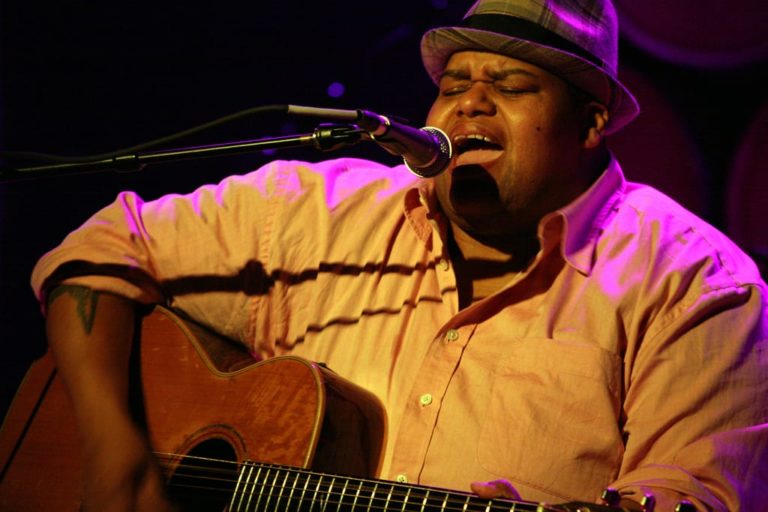
Toshi Reagon
This is the prime issue with AI advancement in the arts. Artists who have built a career and thrive off their creativity and originality are threatened by those “at the epicenter,” who can readily weaponize artificial intelligence to essentially plagiarize established artist likenesses. As we see AI expand and grow, with new skills and strengths, creatives begin to wonder when their jobs will become automated too.
Art is a unique form in that it almost always requires a physical body to create: a hand to move the paintbrush, a voice to sing from, or an arm to play an instrument. Now that technology can replicate that, a troubling dichotomy narrows between human and computer. Nevertheless, artificial intelligence can work alongside humans, as a vital tool and creator in its own right. While the capabilities of AI expand, musicians, creatives, and people in all industries are just beginning to see the possibilities of what it can accomplish.
The Orchestra of the Southern Finger Lakes (OSFL) has announced the first show of the 2023-24 Musicians’ Choice Chamber Music Series, titled “Music Meets Art” on November 10. The show features the Chrystallum Quartet, alongside visual artist Suyen Lau, performing live alongside each other onstage.
Members of the Chrystallum Quartet (left to right): Anita Pawlak (oboe), Nolan DeSanto (piano), Martha Weber (bassoon), and Angela McBrearty (flute/piccolo).
Suyen Lau, a fine arts and design student at SUNY Corning Community College and alum of the OSFL’s Youth Orchestra, will create a new charcoal artwork onstage during the performance. The Chrystallum Quartet will play alongside her, featuring pieces by Telemann, as well as composers Alyssa Morris, and Nicole Chamberlain.
Suyen Lau (visual artist).
The visual representation of the aural perception of music has always intrigued me. Some people are wired with strong associations between music and visual art. Suyen is gifted this way.
Karen Dusek, Managing Director of the Orchestra of the Southern Finger Lakes
The Chrystallum Quartet will play a selection of pieces inspired by the visual arts. “Brush Strokes” by Alyssa Morris is a musical representation of visual arts, with each movement representing artists such as Monet, Seurat, and Van Gogh. In addition, Nicole Chamberlain’s piece will be set to the silent film LeCharmeur.
As common practice in the Musicians’ Choice Chamber Music Series, oral program notes will be presented by the artists throughout the program, as part of a relaxed, intimate setting for the performance. In addition, Lau’s artwork will be featured on display for audience members to view before and after the show.
“Music Meets Art” will be presented on November 10 at 7:30PM at North Presbyterian Church at 921 College Avenue in Elmira, NY. Doors open at 6:45 for audiences to see Suyen Lau’s artwork on display.
Tickets are $40 for adults, $20 for students with ID, and free for veterans and children under 18. Seating is general admission. Purchase tickets in advance at OSFL.org, call 607-936-2873, or in person at the Orchestra of the Southern Finger Lakes office, 49 Bridge Street, Corning. Ticket sales at the door will be available until sold out.
Psymon Spine, a Brooklyn-based alt-pop group, recently embarked on their US tour, finishing with a hometown show at Alphaville on October 26. The group recently released their newest single, “Boys,” alongside an official music video on October 10.
Psymon Spine developed as members Noah Prebish and Peter Spears were in college, later adding Brother Michael to the group. Vocalist and former member Sabine Holler lends her voice to the new track, “Boys,” since her relocation to Berlin during the COVID-19 pandemic.
“Boys” is an upbeat alt-pop track, featuring a new-wave-inspired melodic riff. The track features Sabine Holler’s light yet hypnotizing vocals against a synth-heavy dance rhythm. The group cites influences such as Talking Heads, Os Mutantes, and the NYC dance music scene.
By nature every Psymon Spine song must be a little cheeky to bypass our own self-criticism, but in reality ‘Boys’ is just a very earnest song about friendship.
Psymon Spine
Photo Credit: Alyssa Gisselle
Psymon Spine will make their way home for a show at Brooklyn’s Alphaville on October 26, as well as a show in Troy on November 8. The group will play new tracks like “Boys,” as well as hits from their most recent album, 2021’s Charismatic Megafauna. Tickets are on-sale now.
Psymon Spine Tour
10/13 – Madison, WI @ UW Madison
10/14 – Northfield, MI @ Carleton College – The Cave (private event)
Dmitry Wild, a New York-based rock artist, released his newest track, “Rock N Roll Is My Business.” Following up to his 2022 album, Electric Souls, his newest track comes alongside a few recent singles.
Inspired by an experience at a business convention, Dmitry Wild penned “Rock N Roll Is My Business” in response to a question posed to the audience, “What is your business?”. Finding himself at odds with the businesspeople and conventiongoers, he was inspired by his own answer, “Rock N Roll Is My Business.”
Wild’s newest track exudes confidence, accompanied by ever-present horns and funky, layered vocals. He latches onto the classic rock-n-roll figurehead frame, and creates a Halloween-esque sound that solidifies his place in the rock-n-roll business.
“Rock N Roll Is My Business” released following Wild’s single, “Son of a Gun,” another funky rock track with a bright, eclectic music video alongside. In addition, he released “New York Stones” in July, a rock ballad dedicated to the city of New York. Wild sings, “No matter where we go, no matter what we do, New York is in our soul, the city that gave us rock and roll.”
Catch Dmitry Wild at his upcoming shows in New York. He will play Woodstock’s The Colony on October 28, as well as Freddy’s Bar in Brooklyn on November 5. Finally, he will make a stop at No Fun in Albany on December 21 to close out the year.
Singer-songwriter Cat Power has announced a special Carnegie Hall Valentine’s Day performance, recreating Bob Dylan’s iconic performance at the Royal Albert Hall.
The show will feature a 15-song recreation of Dylan’s set, and will be released as a companion to her album, Cat Power Sings Dylan: The 1966 Royal Albert Hall Concert to be released on November 10.
In addition to announcing her Dylan tribute set, Power released two singles from her upcoming album. “Mr Tambourine Man” and “Like A Rolling Stone,” both live Dylan covers, honor the legendary folk musician with Power’s distinct flair.
I had and still have such respect for the man who crafted so many songs that helped develop conscious thinking in millions of people, helped shape the way they see the world. So even though my hands were shaking so much I had to keep them in my pockets, I felt real dignity for myself. It felt like a real honor for me to stand there.
Chan Marshall (Cat Power)
Cat Power Sings Dylan: The 1966 Royal Albert Hall Concert is a recording of a live tribute show, based on Bob Dylan’s May 1966 show at Manchester Free Trade Hall. The show was put down in history as the Royal Albert Hall Concert due to a mislabeled bootleg. Dylan’s famous set featured a mid-show switch from acoustic to electric, which Power will duly recreate.
Cat Power, offstage known as Chan Marshall, will embark on a four-date tour honoring Bob Dylan and celebrating her new album. She will make two sold-out stops at West Hollywood’s The Troubadour, and one at Los Angeles’ Palace Theatre, following up with a Valentine’s Day performance at New York City’s Carnegie Hall.
New York City’s East River ferry route has introduced a new Back To The Future: The Musical themed ferry experience. Beginning on October 20, select NYC Ferry departures will give riders a taste of Broadway’s latest hit show, as well as surprises throughout the month.
The ferry rides will feature a ticket giveaway, trivia, and cast appearances. In addition, travelers will be able to board the special Back To The Future: The Musical vessel on other NYC ferry routes through November 17.
Back To The Future: The Musical is a multi-award-winning Broadway musical based on the classic 1985 film. The show won the Olivier Award for Best New Musical, as well as four WhatsOnStage Awards. It is officially open at New York City’s Winter Garden Theatre.
The NYC Ferry is a reliable, convenient public transit option for New Yorkers, offering service through all five boroughs. Tickets are $4.00 per one-way ticket, and are also available in discounted ticket packages. To plan your travel on the ferry, and view schedules and service alerts, visit ferry.nyc.
Back To The Future: The Musical is now showing at the Winter Garden Theatre. To purchase tickets, visit www.BackToTheFutureMusical.com, purchase via Telecharge at 212-239-6200 or Telecharge.com, or at the Winter Garden Theatre box office at 1634 Broadway.
Brazilian NYC-based band Shower Curtain dropped their first single in two years, titled “Edgar.” The group released an official music video shot in New York City, following lead vocalist Victoria Winter’s cat Edgar’s point of view.
The track approaches a heavy topic, as Edgar faces many medical issues. However, the music video seeks to create a lighter tone by playing with perspective: the video shifts from following the cat’s point of view at floor level to overhead shots of people searching for him.
“Edgar” is a dreamy, melancholic rock track that shows strong, deliberate use of intense guitar riffs, as well as moments where the song pulls back to showcase clear emotion.
Photo Credit: Juliette Boulay
Shower Curtain recently evolved from being Victoria Winter’s solo project to adding musicians Jill Olesen on bass, Ethan Williams on guitar, and Sean Terrell on drums.
It feels very liberating to share this song with the world. Not only is it marking a new phase for the project but I think an overall process of maturing as a creative, letting go of the old aesthetic and sound that defined Shower Curtain when I lived in Brazil. The new sound is of course a reflection of the project evolving from a solo project into a band, and the band’s contribution to this song is evident in the instrumentation.
Victoria Winter
Shower Curtain is currently focusing on their first album, set to release sometime in 2024. In addition, they will play a celebratory show at Brooklyn venue Trans Pecos on November 9 to mark their resurgence as a group. Shower Curtain is Victoria Winter (vocals), Jill Olesen (bass), Ethan Williams (guitar), and Sean Terrell (drums).
Global sensation Bad Bunny announced a 47-date North American tour slated for this spring, titled the Most Wanted Tour. Kicking off on February 21 in Salt Lake City, the tour will make stops in Los Angeles, Detroit, Boston, Washington, DC, Houston, and Dallas, as well as three back-to-back shows at Brooklyn’s Barclays Center on April 11, 12, and 13.
The Most Wanted Tour will be curated as an experience for day-one fans, featuring a rollercoaster of explicit lyrics paying homage to the Bad Bunny’s “trap” style roots. Parental discretion is advised.
Bad Bunny rose to global fame in recent years, and became the top touring artist in 2022. After winning 3 Grammy Awards, the rapper took a break from large-scale tours, and will make his comeback this spring on the Most Wanted Tour
Bad Bunny released his newest album, nadie sabe lo que va a a pasar mañana, to massive success, as it became the most-streamed album in a single day so far in 2023 on Spotify. The Spanish title translates to “nobody knows what will happen tomorrow.” The record’s lead track, “MONACO,” hit #1 in 16 countries on Spotify, making a mark with over 900 million streams so far.
Fans can register for the Most Wanted Tour resale here until October 22 at 11:59PM. Once registered, fans will be randomly selected to receive a code that grants them access to the on-sale on October 25.
In addition, the tour will offer a variety of VIP packages and experiences, including premium tickets, access to the pre-show VIP Lounge Experience, exclusive gift items, and more. Visit vipnation.com for more information.
NYC-based singer-songwriter Steve Conte released a new official music video for his latest single, “Girl With No Name.” The video was filmed on the streets of New York, and shows iconic locations such as Times Square and the famous Flatiron Building.
Conte wrote “Girl With No Name” based on ideas of missed opportunity and attraction. He began writing it in 1984 and finished the track for his upcoming album. He cited influences such as The Beatles, XTC, and Diana Ross and the Supremes.
This is a song of regret…about missed opportunity and lack of skills in meeting someone you’re attracted to. When putting my new album together, I was looking for songs that would fit nicely alongside the songs that Andy Partridge and I had written for it and I kept thinking of this one. I wrote it back in 1984 and never forgot it – which was a good sign.
Steve Conte
Photo Credit: Anja Van Ast, 2020
Steve Conte is known as a longtime member of the rock group New York Dolls, as well as working alongside Paul Simon, Billy Squier, and Peter Wolf. Conte expanded internationally in recent years, working alongside Japanese composer Yoko Kanno to write soundtracks for anime series’.