Bearsville Theater enlisted a new talent buyer after it’s recent renovations which will help make Bearsville a key hotspot for music in the Catskills and north of NYC.
Edward Maier has been appointed the new talent buyer for Bearsville Center including the historic Bearsville Theater and the Utopia Sound Studios by the owner of the Bearsville Center, Lizzie Vann. Maier is known for his work with ElmThree Productions. The hope is he will be able to bring his extensive contacts and experience to help create Bearsville Theater into the hotspot it can be.
Bearsville Theater and The Bearsville Center are located in Woodstock NY. The center was created during the musical revolution during the ‘60s. Albert Grossman who was the founder of the center and was known as one of the most important managers of artists at that time, envisioned a 15-acre complex to provide an imaginative rustic oasis, where artists could create, rehearse, perform, record and promote their music. He built housing, a recording and video studios, a formidable record label and 3 restaurants. His final project was the acoustically planned 8,000 sq. ft 400-seater Bearsville Theater. The Mission of Bearsville under the current ownership is to nurture and Inspire future generations. Today, the theater acts as a stimulus for creativity and enjoyment. The theater embarked on extensive renovation over the last two years and have finally come to the time where they can focus their energy on up-and-coming new bands.
Maier started his career in the music business back in the late ‘90’s with booking local acts in Burlington Vermont. Over the years he moved onto working for touring bands and site co-coordinating national tours with Jay- Z/Beyoncé and Eminem/Rihanna. In 2007 he moved into talent buying, and since then has purchased and produced over 1000 shows. Elm Three Productions is Talent Buyer for: Madison Marquette, Paramount Theatre, the Convention Hall, The Wonder Bar and Stone Pony along with the popular series – Jams On The Sand and AC Jams and the Daydream Farm Concert Series.
Between Maier’s years of experience and the legacy of Bearsville Theater and it’s new renovations it will definitely be a venue to keep an eye on.
Make no mistake. Don LaSala is not Conrad Hilton and he’s not in it for the money. Since 1998, LaSala and his wife Sue have been the owners and loving caretakers of one of the holy sites of rock history, the humble salmon-colored house in West Saugerties, N.Y. known as Big Pink. From early 1967 – 1968, Big Pink and its makeshift basement recording facility served as the woodshed where Bob Dylan and The Band created a cache of classic songs that would forever redirect the course of popular music.
photo by William A. Loeb
Since 2014, the LaSalas have been enabling fans to enjoy weekend and longer retreats at this fabled house and its many peaceful, woodsy acres. It’s one that remains virtually unchanged since the days when The Band lived and worked there. This includes the rosy sided exterior immortalized on the cover of The Band’s 1968 debut, Music from Big Pink, along with its Atomic-era kitchen and appliances, its living, dining, bedrooms and, of course, its famous subterranean music space. The LaSalas have added to the authentic retro vibe by curating many period artifacts throughout. These include a 1966 local phone book, a Bakelite rotary telephone in basic black and a vintage typewriter, just like the one Dylan used to fire off lyrics. The mood is also set with classic photos of Dylan and The Band taken here and around Woodstock by its most famous local lensman Elliot Landy.
The story of Big Pink commences in February 1967, when The Band’s bassist Rick Danko rented the house where he would cohabitate with bandmates Garth Hudson and Richard Manuel. Danko. The trio were working with their guitarist Robbie Robertson, who secured a home close by with his soon-to-be wife Dominique, on Dylan’s film of their 1966 tour together, “Eat The Document.” Dylan had been sidelined from touring by a July 1966 motorcycle accident leaving his manager Albert Goldman’s house in adjacent Bearsville. Now, he was playing the seemingly retired family man/country squire/filmmaker, while quietly forging ahead with what would be his most productive year ever as a songwriter.
According to a conversation LaSala had with Danko, Dylan would arrive at Big Pink around 9 am each morning, right after dropping his daughter Maria off at school. He would then make a pot of coffee, roll a joint, smoke a few cigarettes and write lyrics, on yellow legal pads and/or his trusty typewriter, all while sitting at the living room table gazing out a picture window at the mountains in the distance. When Danko, Hudson and Manuel arose at around 11 am, he would make another pot of coffee for the boys and the arriving Robertson. They would then head down to the basement and try out the new songs just written by Dylan or fool with covers of old traditional chestnuts like “Kickin’ My Dog Around.” Keyboardist Hudson engineered the recordings using two stereo mixers and a tape recorder borrowed from Dylan’s manager and microphones on loan from folk trio Peter, Paul and Mary. The magic was committed to reel upon reel of 1/4” Scotch or Shamrock tape.
In the late afternoon, the two coupled guys, Dylan and Robertson, would head home. The remaining trio would then either head into the town of Woodstock to party or bring the party home. The routine with Dylan reportedly went on from May – October 1967. Eventually drummer Levon Helm would return from the South and move in and the band would continue to work at Big Pink through January 1968, crafting and polishing the songs that would appear on the debut album named in honor of their home/studio.
Some of the 30 new Dylan originals recorded would first see light of day on a 14-song demo tape. It was circulated in October 1967 by his publishing company, Dwarf Music, to hopefully generate income from covers by other artists. They included some of the most celebrated songs of his career including “I Shall Be Released,” “This Wheel’s on Fire” co-written by Danko, “Quinn the Eskimo (The Mighty Quinn),” “Tears of Rage” co-written with Manuel and “You Ain’t Goin’ Nowhere.” Seven of these unreleased versions were included on the double-disc The Great White Wonder, the first rock bootleg album illegally issued in July 1969. Some of these would ultimately end up on the first official release, 1975’s oft maligned The Basement Tapes on Columbia Records. Note that the cramped basement in the album’s cover photo is not Big Pink at all; it’s from a YMCA in Los Angeles. And some of the tracks featured are not from Big Pink or are The Band recordings sans Dylan.
photo by William A. Loeb
The story of how the LaSalas came to own Big Pink is rather traditional, one reflected in the great migration to the Hudson Valley we see taking place today in Covid-19 times.
“After almost a decade working in the music business in San Francisco, we moved back East and rented a placed in Westchester to help with my family’s real estate management business,” says Don LaSala. “Suburbia was a real culture shock. My wife grew up in the Northern Adirondacks and I had been coming up here a lot in the 1980s, when I was working as a live production manager for NRBQ, most of whom lived right in Saugerties. We always loved their area and hoped to one day, maybe, get a place here, but that was still a distant dream.”
One day, a friend in Woodstock, Mike Densmore, called me up and said there’s a tiny ad in the local classifieds saying — ‘Famous Rock-n-Roll House for Sale by Owner’. We thought, ‘What the hell? Why don’t we just take a look at it to see what it’s like inside?’ We were just curious like fans are today. But we weren’t really looking at the time and, in our wildest fantasies, we didn’t think we’d ever come to own it.
Don LaSala
LaSala, who is also a guitarist/songwriter, hit it off with the bass playing owner, Mike Amitan, who urged him to consider buying it, even though he didn’t think he could muster the $149,000 asking price. Two weeks later, the New York Times ran a huge story saying that the house had been sold to a consortium of investors. But this deal and several others would fall through before LaSala raised the funds and closed on the house in April 1998.
photo by William A. Loeb
From 1998 – 2014, Big Pink was the LaSala’s primary residence thought they spent part of each week at their downstate rental working for the family business. Its fabled basement became the clubhouse where band Don plays in, The Hooligan Band, would write, rehearse and record, just like Dylan and The Band. Playing together since 1978, The Hooligan Band have released two albums recorded in the famous basement, including Basement Hooligan – Live Recordings ’08 & ’10 and Hooligan in the Pink. LaSala has also released a handful of solo offerings recorded at Big Pink including 2011’s Home Brew. It has also continued to be the site of Big Pink Socials, where LaSala and other local musicians like Robin the Hammer, Julia Nichols, Avalon Peacock, Justin Love, Denise Parent and The Hooligans would party, play and record.
“At the time we bought Big Pink, Dylan was pretty much out of the public eye,” continues LaSala. “He was coming off his religious period, Dylan and the Dead, his acoustic albums and he hadn’t quite hit his renaissance with Time Out of Mind.”
With the critical mass of Internet connectivity in the early 2000s, more and more people started finding their way up the ¼ mile dirt road from Stoll Road in West Saugerties to Big Pink. Fans themselves, the LaSalas were always gracious when encountering visitors, sharing trivia and letting them take a few exterior photos.
photo by William A. Loeb
But the real explosion of interest came with the 2014 release of The Bootleg Series Vol. 11: The Basement Tapes Complete, a lush box set containing 138 tracks, 117 previously unissued, from Dylan and The Band’s 1967 home recordings, the vast majority from Big Pink. This was followed by The New Basement Tapes, a British-American supergroup including My Morning Jacket’s Jim James, Elvis Costello, Marcus Mumford, Taylor Goldsmith of Dawes and Rhiannon Giddens put together by producer T Bone Burnett. Also in 2014, the group recorded Lost on the River: The New Basement Tapes, an album of tunes based on newly uncovered lyrics handwritten by Bob Dylan in 1967 during his period at Big Pink. The collaboration was chronicled in the documentary Lost Songs: The Basement Tapes Continued. This included reenactments with young actors of Dylan and The Band’s at work filmed right in Big Pink’s basement.
These events drew more fans and many reporters to the site. This included a Rolling Stone Magazine video crew who documented The Band’s keyboard wizard Garth Hudson’s emotional return to the house after 47 years.
This renewed spotlight coincided with the emergence of vacation rental sites like AirBnB and VRBO. By that time, the LaSala’s lived at another home in Woodstock, but Don continued to use Big Pink as his musical space and hang.
“Over the years, I learned I couldn’t stop the fans, so I decided I might as well just let them have it,” laughs LaSala. “Owning this place, I always wanted to do justice to the history – to the fans who love this place and have a deep emotional connection to the creativity that unfolded here.”
Practicality was also an issue. “It cost a good deal to maintain this old house,” continues LaSala. “Even though we endeavored to keep it unchanged, there were still many costs like putting in a new heating and cooling system, roof and, of course, yearly property taxes. But we wanted to stay true to the legacy and not do something tacky for the almighty dollar.”
The LaSalas started slowly opening up Big Pink to guests in 2015. “It’s sort of an unofficial artists’ residency in my mind,” adds LaSala. “People come here from all over the world. The majority seem to be creatives – musicians, painters, photographers and writers who want to have the kind of creative meditation, the productive retreat it provided for The Band and Dylan. Many are older folks who grew up on the music. But increasingly it’s drawing younger people, ones for whom the music created here is a requisite listening experience.”
“With three bedrooms and two baths, the place can comfortably accommodate 5 – 6 people,” observes LaSala. “So, groups are using it for reunions, to bring together friends, family and creative collaborators from faraway places. It’s not only about the house itself, but the nature surrounding it – the peace and creativity that springs forth from the solitude and raw natural beauty. Many come here to write, paint, and like Dylan and The Band, make music.”
photo by William A. Loeb
The LaSalas recommend a minimum three-night stay though some visitors stay longer. The wicked Woodstock winters mean that Big Pink is only available from mid-April to early November, on dates when LaSala and company are not making music. Full details, including videos and photos, can be found at their rental site on VRBO.
Visitors have free rein of Big Pink’s upper levels and outer patio but not, strictly speaking, the famous basement.
“It’s my private rehearsal space with own gear, so guests just can’t come and go as they please and everyone seems to understand this,” adds LaSala. “What I will do is schedule a time to give an informal tour, where I tell them the full story of Big Pink and all the creative magic that happened here. To keep people focused on the present, I discourage them taking too many photos. It’s something I even do with my friends at my Big Pink Socials. I want them to stay in the present moment, and to have this Big Pink experience live in their memories and imaginations.”
photo by William A. Loeb
The fans who have found their way to Big Pink have shared some amazing new info with LaSala; some verified, some not.
“It’s known that George Harrison visited here when he came to Woodstock and stayed with Dylan at his place in Byrdcliffe, Woodstock’s famous art colony,” recalls LaSala. “It’s also believed that he brought Eric Clapton here too. According to one British expert who visited, it’s believed George played The Band and Bob some songs he wanted to run by the Beatles like ‘While My Guitar Gently Weeps’ and ‘All Things Must Pass.’ And that, that another time, he and Eric rehearsed in the basement and played an early version of ‘Badge.’ In both cases, they were running them by Dylan and The Band to see if they were any good! Like Big Pink itself, these are misty legends that really spark your imagination.”
With the emergence of Covid-19 in March 2020, the LaSalas suspended their rentals until Spring 2021. Since then, they have taken all the necessary precautions, even installing a pricey air filtration system.
With winter coming in, Big Pink will just have to live in your imagination at least until next Spring, when the LaSalas plan on opening its doors once again to discerning and respectful visitors.
“Until that time,” concludes LaSala with a Dylanesque quip and smile, “I’ll be in the basement mixing up the medicine, medicine of the musical kind, of course!
“At The End Or The Beginning” was released by Marco Benevento October 27, 2021 just before playing a two night run at Levon Helm Studio in Woodstock. The track opens with a satisfying bass hook and at first listen felt anthemic, yet atmospheric; much like stepping into the sun after a week of rain.
Single cover for Marco Benevento’s “At The End Or The Beginning”
It was only natural to want to listen to the song again and again. Repeatability is where the magic happened somewhere between the end or the beginning. After a few listens, the depth of the song began to present itself. While it would have been easy to write about all of the pain and suffering human kind has endured together, Marco chose a path less travelled.
Link to In Depth Interview below
“At The End Or The Beginning” presented an optimistic mindset for how to approach the world we are in today without ever touching a level of toxicity. It could be asserted that listening to a song like this could have real benefits to the mindset for anyone struggling to see tomorrow. The catchy groove that does not bombard could easily be on for quite a few cycles without noticing.
Marco Benevento has continuously demonstrated what it means to be an artist, not just a musician. His music, though seemingly fun, and out there, has never consisted of one layer in meaning. Zen master? Could be…
Does a photograph mark the end or the begining?
For more on Marco Benevento’s creative process, studio tour and thoughts on the Hudson Valley, check out NYSMusic exclusive in-depth interview by clicking here!
Marco Benevento Upcoming Tour Dates
November 11 – Portsmouth, NH – The Press Room (Sold Out) November 12 – Portsmouth, NH – The Press Room (Sold Out) November 13 – Portsmouth, NH – The Press Room (Sold Out) November 27 – Brooklyn, NY – Brooklyn Bowl December 11 – Miami, FL – North Beach Music Festival February 25 – Ardmore, PA – Ardmore Music Hall February 26 – Washington, DC – Union Stage April 7 – Cambridge, MA – The Sinclair April 8 – Burlington, VT – Higher Ground April 9 – Fairfield, CT – Stage One
A New York Welcome at Citi Field – Review/Photos by Steve Malinski
It was otherwise just a typically warm summer NYC evening to usher in this past Friday night when Dead and Company took the stage at Citi Field. After some strange times in the two-year gap since their last stop in NYC (and some Covid-19 checks before entering), however, the music restored a sense of normalcy and familiarity with experiencing a large-scale concert.
Just as if Dead & Co. hadn’t skipped a beat since their 2019 tour, they took the stage without an ounce of rust from their pandemic downtime. As they shuffled into the first set with “Good Times,” John Mayer commanded the mic, signaling the core role he has developed in this iteration of the Grateful Dead family. Bob Weir stepped up to the plate sharing the lead with Mayer on vocals throughout the night, rallying the Queens crowd for the New York City line in “Ramble on Rose.” The youngest surviving member of the original Grateful Dead lineup, Weir was nimble on his feet as he enjoyed crafting the rhythms just as much as the crowd relished the sound.
Set two took a trip to the late 1970s-era Dead setlists, featuring the classic pairing of “China Cat Sunflower/I Know You Rider” and fluidity from the start to finish of the set. The night was capped off on a high note with an energetic “U.S. Blues” and an encore covering The Band’s “The Weight,” featuring a trade of choruses between Jeff Chimenti, Mayer, Weir, and Oteil Burbridge.
Dead and Company Citi Field – Flushing, NY 8/20/21
Set 1: Let the Good Times Roll, Bertha, Good Lovin’ -> Big Railroad Blues, Ramble On Rose, They Love Each Other, Cassidy -> Casey Jones
Set 2: Eyes of the World -> Uncle John’s Band -> China Doll -> China Cat Sunflower -> I Know You Rider -> Drums/Space -> Spanish Jam -> Althea, Stella Blue, U.S. Blues
Dead and Company Recreate 1969’s Woodstock Performance at Bethel Woods – Review by Matt Romano, Photos by Steve Malinski
It’s true, The music never stopped for the Grateful Dead. It’s newest reincarnation as Dead and Company continued its trip through the Empire State at Bethel Woods Performing Arts Center on Monday, August 23. The band played on a stage set among the rolling hills of the original 1969 Woodstock festival. A sense of delight was in the air for all those on the adjacent path of the site towards the stage for this year’s festivities.
They opened with “Hell in a Bucket,” this time enjoying the ride. Jeff Chimenti immediately stepped out as he would the whole night on the keyboards. The band really seems to play off Jeff and the musical ideas he passes onstage. John Mayer especially picks up on the mixolydian blues concept Pigpen started in the ‘60s by taking lead on “Easy Wind.” This track is ideal for Mayer’s blues background and the words, “Easy wind going ‘cross the Bayou today. There’s a whole lotta women. Out on the streets in a red today.”
Mayer also stepped out in front for “Brown Eyed Women,” singing as humbly as Jerry sang about Delilah Jones. The band then drifted off into the seas to end the first set. A “Row Jimmy” out in the mist led to a “Lost Sailor,” and they came back to shore with a “Saint Of Circumstance.”
Tigers in trance deserve a second chance. That’s what the band was able to get on the other side of the hill from their Woodstock ‘69 performance. The Grateful Dead may have been one of the more famous performers at Woodstock, but their set didn’t exactly knock it out of the park. They played from 10:30 pm to midnight on the second day, but their entire performance was filled with technical difficulties. The band was even subject to electric shock on stage although that truly could have been them representing their infamous logo.
But on this night on the other side of the hill, Bob Weir said at the start of the second set, “Now 50-some years ago right here, we tried this next little sequence and it didn’t go so well. It didn’t work so we’re gonna try it again.” With that, Dead and Company, in all their glory, recreated the five song setlist from the 1969 festival that includes covers by Merle Haggard and Bobby Blue Bland: “St Stephen,” “Mama Tried,” “Dark Star,” “High Time,” “Turn on your Lovelight.”
Weir, who was 22 during the original Woodstock, sang Merle’s “Mama Tried” with the same howl in 2021 that he had in 1969. “I turn 21 in prison doing life without parole. No one could steer me right but Mama tried.” Bobby Bland’s “Lovelight” percolated throughout the set with John Mayer, who is no gravity stranger, wanting to be where the light is. The old memory set faded into a “Drums/Space” jam that featured a new “bass” segment from Oteil Burbridge – who has joined the Rhythm Devils on Halloween at Madison Square Garden – took his own featured piece. He was left on stage solo with only pure bass notes to the crowd’s ears. The band joined Oteil on his sky journey for “Space” While up there, they decide to return to the Garcia classic “Standing on the Moon,” to remind of summer tours past. Bob Weir and John Mayer then brought out the acoustics to send everyone back on the tree lined paths with “Ripple.”
You certainly could feel Jerry’s spirit in the same rolling Catskill hills that his music happily haunts. His music helped Dead and Company continue to set the bar high for likely their only recreation of this old performance. “It’s not enough to be the best at what you do. You must be perceived as the ONLY one who does what you do”
Dead and Company hit Darien lake Wednesday night, then head to Saratoga Springs on Friday.
On your way to SPAC, don’t forget that Stewart’s Shops is your ice cream shop! With over 345 shops in 31 counties across New York and southern Vermont, the convenience store chain is known for their fresh & local dairy products. With dozens of choices at the cone counter, you’re bound to find something you love! Try a shake, sundae, or cone today, What’s Your Flavor?
Dead and Company Bethel Woods Performing Arts Center – Bethel, NY 8/23/21
Set 1: Hell in a Bucket, Easy Wind, Loser, Brown-Eyed Women, Throwing Stones, Row Jimmy, Lost Sailor -> Saint of Circumstance
Set 2: St. Stephen -> Mama Tried -> Dark Star -> High Time -> Turn On Your Love Light, Drums/Space/Oteil Bass Solo -> Deal -> Standing on the Moon -> Turn On Your Love Light
Twenty-seven years ago this weekend, Woodstock 94 took place on Winston Farm just north of Saugerties, New York. Woodstock 94, or “Woodstock II” was the next generation’s attempt to rekindle the same “Summer of Love” spirit their parent’s experienced at the original 1969 fest. This was the first shot at doing so, and many future attempts will completely flop, like Woodstock 50, or will end in fire-burning riots, like Woodstock 99. 1994’s rendition isn’t as shockingly awful, but some believe it’s still incomparable to ’69. This is Woodstock 94.
Woodstock ’94 poster, a playoff of the iconic Woodstock ’69 poster art.
Saugerties‘ Winston Farm is approximately 100 miles away from Bethel Woods and Yasgur’s Farm – the birthplace of “Woodstock.” But, Winston Farm was supposed to be the original location for the ’69 fest until the owners got cold feet. This change in location was a way of improving the flaws of the previous festival for the second time around, while still holding true to Woodstock roots.
The 1994 concert was scheduled for August 13–14, and Friday, August 12 was added after first-pool tickets sold out under 12 hours. Ticket prices hiked to $135, plus a three-day pass to the beer tent was $250 – a huge jump from 69’s $18 three-day pass. Tickets were only sold in sets of four, and one parking pass was provided per set.
A snippet of Billboard Magazine’s coverage
The star-studded lineup included ’69 alum mixed in with up-and-coming ’90s bands. Plus, the extra day allowed for many more artists to join the setlist.
Friday, August 12, 1994
Aphex Twin
Blues Traveler
Candlebox
Collective Soul
Deee‐Lite
Del Amitri
Jackyl
James
King’s X
Līve
Orbital
Orleans
Peace Bomb
Sheryl Crow
The Orb
Todd Rundgren
Violent Femmes
Huffamoose
Abba Rage
Lunchmeat
Saturday, August 13, 1994
Aerosmith
Blind Melon
Candlebox
Crosby, Stills & Nash
Cypress Hill
Fight
Hot Tuna
Joe Cocker
Melissa Etheridge
Metallica
Nine Inch Nails
Primus
Rollins Band
Salt‐n‐Pepa
Suicidal Tendencies
The Band
The Cranberries
Crosby, Stills & Nash
Youssou N’Dour
Zucchero
Sunday, August 14, 1994
Cypress Hill
Fight
Hot Tuna
Rollins Band
Salt‐n‐Pepa
Suicidal Tendencies
The Band
The Cranberries
The Roots
Weir & Wasserman
Green Day
Country Joe McDonald
Porno For Pyros
Sisters of Glory
Allman Brothers Band
Santana
Red Hot Chili Peppers
Spin Doctors
Traffic
Bob Dylan
There was no Youtube back then. If you wanted your band to get big, you had to hope it came on the radio. We hadn’t heard of bands like Blind Melon and Collective Soul yet, and a lot of these people (festival-goers) had never been to a concert before.
Dan Lane, Woodstock 94 attendee
The fest can be credited for the growth of many young millennial bands. Even Green Day was just finding their fame as their second album Dookie, released six months prior to Woodstock 94, would hit #4 on the charts only weeks after the festival weekend.
Snap of the Woodstock ’94 stage art
Promoters ensured the event would be secure with drug dogs, security brigade nicknamed the “peace patrol,” hundreds of port-o-johns, and chain-link fence. Re-entry was not allowed, but festival-goers smuggled food and drink over fences and through bushes. There were no reports of excessive force or need for riot control like there was in 1999.
From the looks of it we thought we were gonna get strip-searched at entry, (with the dogs and officers) but it was pretty mellow, actually. I think the light security is what they tried to fix in ’99 but that all went wrong.
Dan Lane
500,000 young-adults flocked from around the country in fear they were going to miss out on something great. Woodstock ’69 attendees even paid a visit to see how they compared. Festival-goers did seem to enjoy the excitement of making history and there was a notable peaceful vibe across the farm. People were just happy to be there and enjoying music.
People are understanding that Woodstock 94 is a seminal gathering and a once-in-a-generation opportunity.
Promoter John Scher for Billboard Magazine
This fest was rumored to be even bigger than 1969, with two stages and constant MTV coverage. Unlike the first festival, ’94 hosted two large stages with constant live music on each. There were a mix of bands playing each stage, for example, while Green Day was playing on the South Stage, Weir & Wasserman were on the North. This helped spread audiences evenly and highlighted the divide of subcultures. DJ rave sets continued the party late into the night.
Don’t worry: The two stages, facing opposite directions, are about a third of a mile apart, so there’ll be little chance the sound from one will interfere with the other.
A rainstorm passed over the festival grounds, on top of the cooling sprinklers, leading to the notorious moniker of “Mudstock.” Described by the New York Times as “a sea of mud and trash and amid evidence of anarchy,” festival-goers took this opportunity to roll around, dance, and sling the wet dirt onto the stage – it did not help that Primus had their song called “My Name is Mud” on the setlist.
Aug. 14, 1994 — A couple dances in the mud to Traffic in the North Stage area (Credit: Times Union Staff Photo by Steve Jacobs ATU112)
There were mile-long conga lines with half-naked people running around. You could feel them coming – they wouldn’t stop either. If you were in the way, you were getting trampled by a train of muddy kids chanting “Primus Sucks.”
Dan Lane
Credit: Michael Greenlar
Was the hype just too much? Anything with the “Woodstock” name attached is bound to have some high expectations. At the time, some attendees complained the event was too saturated in over-commercialized gimmicks. Looking back 27 years later, It is difficult to compare Woodstock 94 to the pedestal Woodstock ’69 is on. After all, even ’69 was a commercialized event too, inviting the biggest names of the time to help put a spotlight on the era’s changing times. Even Led Zeppelin historically turned down Woodstock ’69 to make more money playing in Asbury Park on the same weekend.
All expectations aside, Woodstock 94 was just as good as fests like Lollapalooza were at the time. It’s the music and the people that make it a memorable experience, not the gimmicks.
Dan Lane
The mid-90s were a very different time compared to the late 60s as well, not everyone was in the same ex-Vietnam hippie-free-spirit in the 90s. There were people holding on to that Summer of Love spirit, but others were clad in platform boots, grungy flannels and buzzcuts.
Subcultures were everywhere. You’d be walking around thinking “wow that guy has a lot of facial piercings” and the same guy will be looking at you like “wow that guy has way too much tie dye on.” Like, immediately after Joe Cocker’s set you had people barricading the stage for Blind Melon. It was wild.
Dan Lane
(Image credit: Getty Images/John Atashian)
A commemorative double live CD set was released on November 8, 1994, nearly three months after the festival weekend. Titled “Woodstock 94,” the two-disc set documents the best song of each of the 27 performing artists. Check out our Woodstock 94 Spotify playlist based on the album, as well as a playlist with some live footage on Youtube.
After 27 years, it seems 1994’s rendition of Woodstock was, generally, pretty nice. Positive memories, crazy rumors and great music came out of it. The fest served as a cohabitation of multiple generations of music, so maybe, more peace and love came out of it than expected. Plus, Woodstock’s reputation was about to get much worse in the years to come. Enjoy ’94 while it lasted!
Other notable moments:
* A “protest concert” was rumored to go on at Yasgur’s Farm frontlined by ’69 alum, though many of the claimed attendees were playing at Winston Farm the same weekend. It is unclear if this rumor is true due to lack of media coverage.
*RHCP wore their iconic light bulb costumes for the first half of their Day 3 set, then changed into Jimi Hendrix costumes to pay homage to Woodstock ’69.
* Green Day engaged in a mud slinging fight with the audience.
* Green Day bassist Mike Dirnt was accidentally punched in the face by a security guard, knocking out some of his teeth.
* Rumors circulated that The Rolling Stones were to make a surprise appearance because they were scheduled to play a concert in New York that weekend.
* Johnny Cash was invited to perform on the last day, but after learning that he would not be performing on the main stage, declined to appear.
* Most of the ’90s-era bands (and their instruments) were completely caked in mud by the end of their performances, audiences were more respectful towards ’60s-era musicians.
He went to Woodstock ’69… and he took the brown acid. Fifty years later, veteran music journo Mike Greenblatt decided to put it all down in a book, one of the most personal, soulful and informative chronicles of this once-in-a-lifetime smorgasbord of sound, spirit and myth.
Greenblatt’s Woodstock 50th Anniversary: Back to Yasgur’s Farm offers a front-row seat to what many believe was the most important live event in rock history (well, the Boomers at least). It forever changed the lives of the 500,000 who attended and the business of music.
Half of Greenblatt’s book is memoir. It’s a compendium of his own colorful recollections and those of many other young people who found their way to Max Yasgur’s dairy farm in remote Bethel, NY for three days of “nothing but fun and music.”
Greenblatt was a music- and pot-loving 18-year-old who made the trek from the Jersey suburbs with his straight-arrow best friend Neil. He survived losing all the food and supplies he carefully packed and made it through almost all of the three-plus days of sun, sounds, rain, mud, skinny dipping and, oh yes, a wooly trip courtesy of the legendary brown acid attendees were repeatedly warned not to consume by the concert’s stage announcers.
The book also provides an in-depth view of the making of the festival. This comes from the event organizers, the musicians who played as well as many of the good-hearted volunteers and locals who somehow surfed an unending chain of chaos to make it happen, all without a single reported incidence of violence.
Greenblatt has also sleuthed out many never-before-heard stories from backstage and put a good deal of the focus on some of the quiet giants of the festival, like sound guru Bill Hanley and festival booker/logistics man/stage announcer John Morris, whose contributions have tended to get short shrift in earlier telling of the Woodstock ’69 story. Did you realize that Woodstock creator Michael Lang wanted Gene Autry, the singing cowboy from 1930s movie Westerns, and not Jimi Hendrix, to close the festival? Or that Iron Butterfly were disinvited, at the last minute while at a NYC airport, for unreasonable demands? Fun trivia like this abounds in the book.
Music fans will drink up the blow-by-blow of the 32 performances, including the career-making ones of Santana, Melanie and Ten Years After and the derailing ones of Bert Sommer, Tim Hardin, Sweetwater and Quill. The 224-page book is lavishly illustrated with some of the best-known photos from the fest. It also covers the aftermath, from the legal battles over rights to the riches it would generate in films, recordings and off-shoot festivals to the museum and concert venue that now stand at the site.
As the 52nd anniversary of New York State’s most mythic musical event draws near, we could think of no better person to provide context.
Sal Cataldi: What inspired you to write this book, and why did you wait 50 years to do so?
Mike Greenblatt: I never intended to write a Woodstock book. I was working on my memoir of all my rock star interviews ironically entitled “Nobody You Know” (that’s me), but my good friend Pat Prince, editor of Goldmine magazine, always loved my Woodstock stories. The Goldmine owners had a book wing that had put out a 40th Anniversary book that sold well so when the 50th Anniversary came, Pat suggested me. They made me an offer and I stopped working on my memoir.
SC: Who were some of your favorite performers at the festival, the ones who really connected with the audience. And who disappointed you and the audience most?
MG: Best was Sly & The Family Stone, Mountain, Johnny Winter, The Band and Canned Heat. Worst was Grateful Dead, Incredible String Band and Tim Hardin.
SC: Why do you believe that Country Joe McDonald was the true soul of the festival?
MG: Because he performed solo on the spur of the moment and nobody was listening at first. Then he did the fuck cheer and had us shout out those letters over and over and he yelled “What’s that Spell? Five times. You don’t know how liberating, hilarious, revolutionary and communal yelling FUCK at the top of your lungs with hundreds of thousands of others can be! It represented pure unvarnished FREEDOM.
SC: Creedence is an interesting story. They were the first major artists to sign on to the bill yet weren’t represented in the album and movie. Why?
MG: Because John Fogerty refused. He thought they sounded bad. He was wrong.
SC: There were some other artists who did great sets like Johnny Winter who did also weren’t included in the film? What was the reason with these?
MG: Johnny Winter’s manager, Steve Paul, forbade it, for some reason. He was wrong.
SC: You have a special affection for the performance by Bert Sommer. What was his story and why didn’t Woodstock catapult him to fame? And what other performers suffered a similar fate, folks who didn’t get a big boost from playing the event.
MG: Bert should have been propelled to fame if only for his tear-jerking version of Paul Simon’s “America.” Woodstock was so quiet during his set. We were listening. He was transcendent. Not making the movie sent him into a downward spiral which he never recovered from. Sweetwater and Quill just weren’t good enough. Tim Hardin was so damn high on heroin, he was awful.
SC: Your book is interesting because it puts a good deal of the focus on Bill Hanley and John Morris? Why do you think they were the real unsung heroes of the festival, from the organizational side?
MG: Hanley isn’t known as “The Father of Festival Sound” for nothing. He had to make sure the people way up high on the hill could hear without blasting those of us in front and he did! John Morris persuaded Gov. Rockefeller not to send in the troops to disburse us after the stories of drugs and nudity reached his office Saturday morning. Morris persuaded diva Sly to get the hell onstage. Morris soothed our fragile eggshell minds during the storm Sunday with his avuncular stage presence. Morris put out so many fires during the course of those 5 days that he alone is the MVP.
SC: Your book spends of good deal of time talking about your own experiences at Woodstock and those of other attendees. What are some of the best stories, from the audience perspective, covered in your book?
MG: Well, taking the Brown Acid of course and falling in love, twice! Also, the realization that we were all in this together and we damn well better help each other and realizing that the whole world was watching. Also getting excited over the rampant rumor that Dylan would show up and finding people who were also anti-war, pro civil rights, pro women’s lib, anti-Reagan and anti-Nixon. Most importantly, the concept that as long as the music was playing, everything will be alright. That has stayed with me my whole life. The toughest part was when the music had to stop for four hours during the rainstorm and we were tired, wet, freezing, hungry, thirsty and had to go to the bathroom.
SC: Anyone who has listened to the album or watched the movie knows that there were lots of warnings not to take the brown acid. But you did! What was that like for you?
MG: I loved it. It made the Sunday monsoon exciting like a disaster movie. Had I not taken it, I would have been most likely bumming out as my friend left me alone for what amounted to hour after hour looking for a phone booth to call our moms and I started to panic. But tripping, I became “everyman” and talked a blue streak to my friendly neighbors. When the announcement came warning about the brown acid, I shouted, ‘OH NO, I JUST TOOK IT” And it never wore off. I did it at the start of Joe Cocker’s afternoon set and by the time we left at 2:00 a.m. the next morning, I was still tripping.
SC: I never heard the conspiracy theory that Woodstock was really just a way to gather all the hippies in one place for some kind of possible attack. What was the rationale and how widespread was this belief?
MG: It was a fringe conspiracy theory that had no merit. I don’t remember it being a real fear. I never even heard anyone speak of it there that weekend. More real was the fact that we knew when we got home, we could be sent against our will to fight in an immoral and illegal war halfway around the world in Southeast Asia. We were all living with that fear in the back of our minds. I was planning to go to Canada.
SC: The rainstorm at Woodstock was legendary. But you say there was some concerns that it might be the biggest mass electrocution in American history?
MG: Yeah, the topsoil frayed during the monsoon Sunday. That’s why the music stopped for so long. There were live wires underneath us. NYU Professor Chris Langhart, another behind-the-scenes hero, checked it out during those four silent hours and concluded that it wouldn’t have been fatal, but it would’ve been quite the shock! Power was reverted to another source and the music continued. But John Morris, at one point, did indeed think he might be responsible for the biggest mass electrocution in American history and even thought if it happened, he would have killed himself.
SC: Jimi Hendrix’s performance of “The Star-Spangled Banner” was an epic moment. But your book tells how his agreement to move to a Monday morning slot enabled four other acts to perform, acts who would’ve been told they couldn’t if he went on at midnight Sunday as planned?
MG: Yeah, Johnny Winter wound up with the prime-time Midnight slot. Had Jimi taken that offer, Blood Sweat & Tears, CSNY, Paul Butterfield and Sha Na Na would never have played. The concert would have ended with Jimi. That factor was a main part of Jimi’s decision to close no matter what time it was.
SC: You say Woodstock changed the music business forever and even made Bill Graham decide to close the Fillmores. How did it change the concert game?
MG: Bill Graham was sitting on the stage looking at the massive crowd. He instinctively knew right then and there that the years of small theaters like the Fillmore would give way to stadium shows and gargantuan tours. He was right. He closed Fillmore East within two years after that.
SC: The story of Max Yasgur, the man who lent his dairy farm as the site of the festival, is both celebratory and sad. How did he go to bat for the concert and how did he suffer as a result of it?
MG: The townspeople did not want us at all. We had already been kicked out of Wallkill just weeks prior. He stood his ground and told the town fathers at a big meeting that we had a right to put on our concert because of the freedoms Americans fought and died for were at stake. He was a lifelong conservative Republican but he knew in his heart to let us play on his property. The cops couldn’t believe how well-behaved we were. 500,000 stoned-out semi-naked hippies with not enough water, food or bathrooms? There was not one reported instance of violence. That’s improbable. Impossible even. But we proved our peace’n’love credentials. Afterwards, Yasgur was ostracized. No one would buy his milk. He had to move to Florida where he died from a heart attack at 53. He is the Patron Saint of Woodstock.
SC: What did you think of the other Woodstock Festivals and the efforts to do a 50th anniversary event, one that didn’t come to be?
MG: Attempts to emulate Woodstock in the ‘90s were miserable failures. Arson, rape, violence, all occurred. The 50th actually was held at the site of the original fest at the Museum and had some great acts on a much smaller scale.
SC: Will there ever be another event like Woodstock?
b: You cannot ever replicate Woodstock. It was a cosmic accident. Imagine getting that many people together nowadays? It’s a different world now. It will never happen again. It was a moment-in-time wherein all the elements conspired to make it a disaster, but we fed each other, kept each other high, warm and happy. Back then, the longhair sitting next to you was your brother. No longer. The girls bared their breasts and nobody got molested. Hard to believe. Guys I would be scared to meet on a dark street corner wound up building fires and feeding me. The sense of communalism that permeated the weekend is long gone.
Woodstock’s Tony and Pete Levin bring their Levin Brothers Vaccinating Rhythm tour to the Bearsville Theater on June 26, 2021, as part of a select tour of shows. The duo was founded by Pete and Tony Levin in 2013, after 5 decades of performing and recording with the titans of music in jazz, fusion, rock, pop, and world music.Now, they are set to tour New York alongside an outstanding supporting jazz lineup at the Bearsville Theater.
After guesting on each other’s projects, the Levin Brothers finally decided to create their own jazz band. To date, the Levin Brothers have released 2 albums – the self-titled first album in 2014, and the follow-up live album Special Delivery in 2017. The band has toured all over the USA, Mexico, El Salvador, Bolivia, Chile, Argentina, Uruguay, and Japan.
Since graduating from the Eastman School of Music, Tony Levin, one of the most recorded bassists in the history of music, has become bass and Chapman Stick voice for Peter Gabriel and King Crimson. He has played on notable recordings for icons John Lennon, Pink Floyd, Lou Reed, Alice Cooper, Carly Simon, Buddy Rich, Gary Burton, and Chuck Mangione. Currently, tours and records with Stick Men, Levin Brothers, King Crimson, and Peter Gabriel.
After graduating from the Julliard School, Pete Levin became a synthesizer specialist among New York City recording studio scene. Over the years, he has graced hundreds of jazz and pop recordings, performing with many artists including the following: Gil Evans, Jimmy Giuffre, David Sanborn, Annie Lennox, Charles Mingus, Jaco Pastorius, Lenny White, and Paul Simon.
A veteran of the New York Jazz scene, Jeff ‘Siege’ Siegel has become a who’s-who of jazz artists. A member of Sir Roland Hanna’s Trio from 1994 to 1999, he has performed and recorded with jazz legends including Ron Carter, Kenny Burrell, Lee Shaw, Jack DeJohnette, Benny Golson, Frank Foster, Helen Merrill, and Mose Allison.
Additionally, contemporary Jazz guitarist Jeff Ciampa has recorded and toured with some of the most well-known jazz, pop, and rock stars, including the following: Harry Belafonte, Jon Lucien, Dave Matthews, Mark Egan, Bill Evans, Al MacDowell, Ornette Coleman, Lew Soloff, and Lenny White.
All tickets are $50 General Admission in advance and $55.00 general admission at the door. Doors open at 6:30 PM ET and the show begins at 8:00 PM ET. For tickets, visit www.bearsvilletheater.com
Bearsville Theater’s Jazz Brunch lineup
For the finest jazz, food, and drink in the Catskills, experience the Bearsville Theater’s Jazz Brunch every Sunday through Labor Day with the following artists:
6/20 – Pete Levin 6/27 – Christine and Elliott Spero 7/04 – The Peter Einhorn Trio 7/11 – Elliott Spero 7/18 – Chris Milletari 7/25 – Ken McGloin and Jim Curtain 8/01 – The Peter Eiinhorn Trio 8/8 – Pete Levin 8/15 – Marrotta Trio 8/22 – Baron Raymonde and Bennett Hiscox 8/29 – Perry Beekman 9/05 – The Peter Einhorn Trio
Amy Helm will release her third album, What the Flood Leaves Behind, on June 18 through Renew Records/BMG. Helm, the daughter of The Band’s legendary vocalist and drummer Levon Helm and singer-songwriter Libby Titus, has successfully stepped out from behind of her parent’s considerable musical shadows and has successfully staked her own claim in the highly competitive music industry.
Helm’s success comes from honing her craft and paying her dues as a founding member of folk group Ollabelle and additionally as a longtime member of The Midnight Ramble Band. The culmination of Amy’s hard work and experience is apparent on this gem of a record which consists of ten tracks of new and reimagined material.
What the Flood Leaves Behind was recorded at the historic Levon Helm Studios located on Amy’s home turf of Woodstock, NY. She also enlisted a group of incredibly talented players to contribute to WTFLB including Kaufman and Phil Cook (keys, harmonica), Michael Libramento (bass, organ, percussion), Tony Mason (drums), Daniel Littleton (guitar), Stuart Bogie (saxophone), Jordan McLean (trumpet), and her son Lee Collins (congas). Helm describes the experience of creating the album at the studio that her father built as a cathartic homecoming.
Going back to the place where I learned so much about how to express music, how to hold myself in music, how to listen to music,” she begins, “it was humbling in a funny way. I could see clearly where I came from and where I am now in my life. I was singing from a different place now and for a different reason.
Amy Helm
Produced by Josh Kaufman, whose credits include working with an eclectic roster of musicians that includes Bobb Weir, Taylor Swift and the Hold Steady, WTFLB reflects a creative working partnership that fits like a glove between Helm and Kaufman. The evidence of this successful collaboration is apparent in adept and deft way that Kaufman focused on Helm’s vocal ability, showcasing it as a major focal point on the record, he explains.
I wanted her to feel like she had that freedom to be herself on the recordings and she just filled up the whole room. Her singing was coming from this deeply rooted place of family and music and wanting to convey a beauty.
Josh Kaufman, producer of What The Flood Leaves Behind
This philosophy is executed brilliantly on “Verse 23,” the first track on WTFLB, which is a soulful ballad from which the album derives its title. The lyrics of the song evoke a rich religious sentiment that when beautifully delivered by Helm’s ethereal voice. The results are sublimely divine.
WTFLB is steeped in fusion of traditional roots, gospel and contemporary music. This is probably most evident on the nineth track of the LP “Terminal B.” The tune starts with Amy playing mandolin, which sets the sonic stage for the piece, which then leads into an organ accompaniment provided expertly by Libramento. The marriage of these instruments transports the listener to a front pew at a rural church service in Anywhere, USA. Lyrically it describes a remembrance of a fleeting Californian love affair that, retrospectively, one could look back on fondly.
“Cotton and the Cane,” WTFLB‘s third number also has a southern sleepy gospel feel to it. Injected with a heavy dose of Hammond Organ, this updated version of a fan favorite is a departure from previous renditions and is a fitting tribute to Helm’s father Levon. It is a definite highlight of the record.
Amy Helm will be touring this summer in support of What the Flood Leaves Behind, kicking off with a pre-release live stream webcast scheduled for June 17. This will then be followed up by a sold out record release event at the Levon Helm Studios on June 19.
Key Tracks: Carry It Alone, Cotton And The Cane, Terminal B
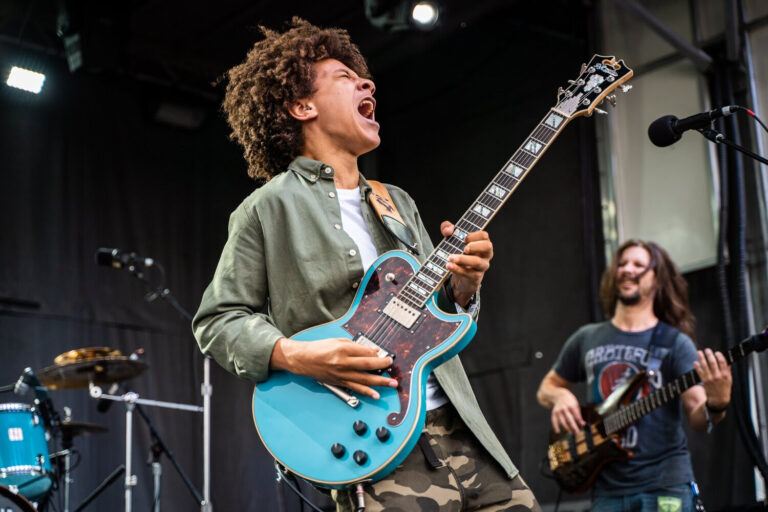
Long Island guitar prodigy Brandon “Taz” Niederaurer will perform live to a limited audience with a live webcast at Levon Helm Studios in Woodstock.
Almost at the age of 18, Taz has already come a long way in his career and musical journey. At eight years old he felt connected playing guitar after watching School of Rock and hearing his father’s music collection. At 10 years old he made his television debut and appeared on the Ellen Show. Fatefully in 2015, he played the role of Zack Mooneyham in Anthony Lloyd Webber’s Broadway Production of School of Rock.
Taz has shared the stage with many notorious artists such as Lady Gaga, Slash, some members of the Allman Brothers Band,The String Cheese Incident and many more. He performed in two more productions by Webber in 2018 and had a role on the Netflix series for Spike Lee’s She’s Gotta Have It. Recently he performed a guitar solo of the national anthem for the AFC title game this year.
Taz performing the National Anthem at the AFC Champion Title Game
Taz has performed on many stages already and now he is heading to the Levon Helm Studios, also known as The Barn. The Barn was the home and recording studio for famous drummer Levon Helm best known for his work in The Band and his other band Midnight Ramble. Even though he passed in 2012, the legacy of his studio is ongoing.
Tickets for Taz’s performance are sold in pairs and every pair will be socially distanced. The cost for reserved seating stands at $60, standing room is $40 and for the webcast tickets are $15 but for VIP it costs $40. Tickets for the webcast are already on sale and the tickets for the public are on sale on March 19. The show is on April 2 and begins at 8 p.m.