Tag: soul

  • New York Series: Stevie Wonder “Living for the City”

    At first listen, you might classify the forward-moving, walking-pace energy of “Living for the City” within the same hustle-and-bustle, working-man category occupied by “Takin’ Care of Business,” and songs of the like. But take a deeper dive and you’ll find that the content of Stevie Wonder’s 1973 single paints a far deeper portrait of life in New York City—one that is still intensely relevant in conversations today regarding race, income, and opportunity.

    Living for the City

    “Living for the City” came as a single from 1973’s Innervisions, an album that’s considered one of Wonder’s best displays of virtuosity—composing and playing every main instrument on a majority of the tracks. Innervisions followed 1972’s Talking Book (which included the likes of “Superstition”) and featured diverse styles and themes, along with classics like “Higher Ground.” Though perhaps none of the songs on Innervisions are as surgically insightful or keep a finger closer on the pulse of society than “Living for the City.”

    The song reflects “a snapshot of a certain part of the reality of life,” as Wonder explained to Barney Hoskyns in a 2005 interview for Uncut. Particularly—reality as a black American. The lyrics tell the story of siblings growing up in Mississippi with parents who supply plenty of affection, but can’t fully shield the children from the harsh realities of life. All the while, there’s a dream of an easier, more financially stable life in the big city.

    His father works some days for fourteen hours
    And you can bet, he barely makes a dollar
    His mother goes to scrub the floors for many
    And you’d best believe, she hardly gets a penny
    Living just enough, just enough for the city

    As a young child—a child of color in this case—one can only imagine the harrowing, and sobering, experience of watching your parents toil away day after day just to stay poor. Wonder paints this vignette detailing each sibling’s experience, from the girl having to walk far to school repeating the same outfit each day, and the boy growing up smart but with little prospects for a higher pay job, because “where he lives they don’t use colored people.”

    Enter “The City.” Living in the city is the answer. The Big Apple is a place where anyone can take a bite and enjoy the opportunity available—or so they thought. “Living in the City” is an ambitious song, and sets the tone for the entire album—mostly due to a spoken word portion in the full record version that shows us what happens when the boy decides to follow his dream to the big city.

    In this section, having just gotten to the city and being ready to put his smarts to good use, he’s preyed upon by a criminal who sets him up. He’s given 10 years in jail, with no sympathy from the justice system or the police. Re-reading the lyrics of this section is no easy task. It’s difficult to realize that, in many ways, we are having the same conversation as a society today as Wonder penned nearly 50 years ago. 

    Afterward, the once-hopeful country boy is seen as a product of the “big city” justice system, spending his days “walking the streets of New York City” and “almost dead from breathing in air pollution.” The question becomes: was he better off staying poor and not coming to the city at all? It’s not a question that’s answered in the content of the song, but it’s certainly one that is posed to the audience. Wonder makes an even bigger statement with the last verse:

    I hope you hear inside my voice of sorrow
    And that it motivates you to make a better tomorrow
    This place is cruel, nowhere could be much colder
    If we don’t change, the world will soon be over
    Living just enough, stop giving just enough for the city

    It’s a plea to change the circumstances that affected the characters of the song; the circumstances that make the song more fact than fiction. Here, Wonder addresses the systemic nature of discrimination as he addresses the world, not only the individuals. It’s a tale that’s, unfortunately, as old as time. But, if there’s any consolation, it’s that messages of motivation go further today and affect more people than they ever have. Perhaps, if revisited sometime in the near future, Stevie might be inspired to write a slightly different ending to the song.

    “Living for the City” Lyrics

    A boy is born in hard time Mississippi
    Surrounded by four walls that ain’t so pretty
    His parents give him love and affection
    To keep him strong moving in the right direction
    Living just enough, just enough for the city…ee ha!

    His father works some days for fourteen hours
    And you can bet he barely makes a dollar
    His mother goes to scrub the floor for many
    And you’d best believe she hardly gets a penny
    Living just enough, just enough for the city

    His sister’s black but she is sho ’nuff pretty
    Her skirt is short but Lord her legs are sturdy
    To walk to school she’s got to get up early
    Her clothes are old but never are they dirty
    Living just enough, just enough for the city

    Her brother’s smart he’s got more sense than many
    His patience’s long but soon he won’t have any
    To find a job is like a haystack needle
    Cause where he lives they don’t use colored people
    Living just enough, just enough for the city.
    Living just enough…
    For the city…ooh,ooh

    His hair is long, his feet are hard and gritty
    He spends his life walking the streets of New York City
    He’s almost dead from breathing in air pollution
    He tried to vote but to him there’s no solution
    Living just enough, just enough for the city…yeah, yeah, yeah!

    I hope you hear inside my voice of sorrow
    And that it motivates you to make a better tomorrow
    This place is cruel no where could be much colder
    If we don’t change the world will soon be over
    Living just enough, just enough for the city!

  • Soul wins Best Animated Film and Best Score at 2021 Oscars

    Pixar’s Soul won big at the 2021 Oscars, winning the awards for Best Animated Film and Best Original Score.

    soul disney film

    Written and directed by Docter, co-writer of Up, Inside Out and Monsters, Inc., Soul centers around Joe Gardner (voiced by Jamie Foxx), who gets a chance to perform at a famous jazz club, but instead falls into a sinkhole, where his soul leaves his body. He must then has to find his way back to his body, with the help of 22, a soul voiced by Tina Fey.

    In his acceptance speech, Docter thanked art and music teachers, and encouraged all to follow the example of jazz musicians, to take whatever we have, wherever we are, and turn it into something beautiful.

    Soul also took home the award for Best Original Score, garnering trophies for Trent Reznor and Atticus Ross (who won previously for The Social Network) and a first Oscar for Jon Batiste. Batiste spoke on behalf of the trio, thanking god and breaking down the root of music to its basics.

    What’s deep is that God gave us 12 notes. It’s the same 12 notes Duke Ellington had, Bach had, it’s the same 12 Nina Simone and all the nominees (had).

    Every gift is special. Every contribution of music that comes from the divine into the instruments, into the film, into the minds and hearts and souls of every person who hears it. The stories that happen when you listen to it and watch it and the stories you share, the moments you make, the memories you create. Man, it’s so incredibly special.

    Batiste’s thoughts on the music behind Soul mirror a film with a deep message and connection to jazz. “I’m just thankful to God for those 12 notes, that’s so dope,” later saying “This movie is a culmination of a series of miracles.” Watch the full acceptance speech below and Reznor’s and Ross’ remarks here.

    https://www.youtube.com/watch?v=ZODqBZke7UU

    Batiste also made history as the second black composer to win the award, following Herbie Hancock, who won an Oscar for the score to Round Midnight in 1987.

    The Soul soundtrack features 42 score and jazz tracks found in the film, along with songs “Rappin Ced” by Daveed Diggs, and “Parting Ways” by Cody ChesnuTT. Listen to the full soundtrack below or on Spotify.

    https://www.youtube.com/watch?v=2rYrANk7c6U

    Winning for Best Original Song was H.E.R.’s “Fight For You” from Judas and the Black Messiah.

    This year’s awards featured performances of the five nominated songs during the pre-show telecast, which found H.E.R. behind a drum kit before taking center stage. The performance was backed by a full band to bring about a full 60’s funk vibe, one that was peppered with quotes from Fred Hampton, Chicago Black Panther Party chairman.

    H.E.R. recently won big at the Grammys, garnering the award for Song of the Year “I Can’t Breathe,” and best R&B song “Better Than I Imagined.” Earlier in the night, Daniel Kaluuya won the Oscar for Best Supporting Actor for his portrayal of Hampton.

    All those days of Sly and the Family Stone and Marvin Gaye, thank you, Dad, it really paid off.

    Musicians and filmmakers, I believe we have the opportunity to tell the truth and write the history the way it was. Knowledge is power, music is power and as long as I’m standing, I’m going to fight for us.

    H.E.R. accepting the Oscar for Best Original Song
    https://www.youtube.com/watch?v=ONF2-5kxATI

    Two Distant Strangers took home the Oscar for best Short Film. Directed by Travon Free and Martin Desmond Roe, the film examines the deaths of Black Americans during encounters with police through the eyes of a character trapped in a time loop. Joey Bada$$, founder of hip-hop collective Pro Era, plays the main character, whose constant encounters with the police seem to lead to progress, only to end in his death.

    For a complete list of winners visit Oscars.com

  • NYC indie soul band Melt talk Debut EP ‘West Side Highway’

    It has been four years since the members of Melt came together as a band. Co-founders Veronica Stewart-Frommer (Vocals) and Eric Gabriel (Vocals, Keys) both NYC natives, started playing music together in High School. They and some of their friends entered a local battle of the bands competition and won. They took the prize money from that competition and used it to produce the band’s first song “Sour Candy” which was released as a single in 2017.

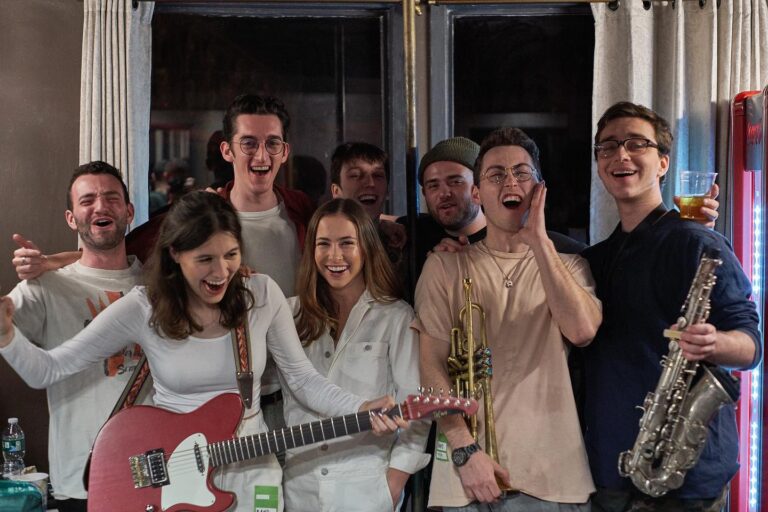
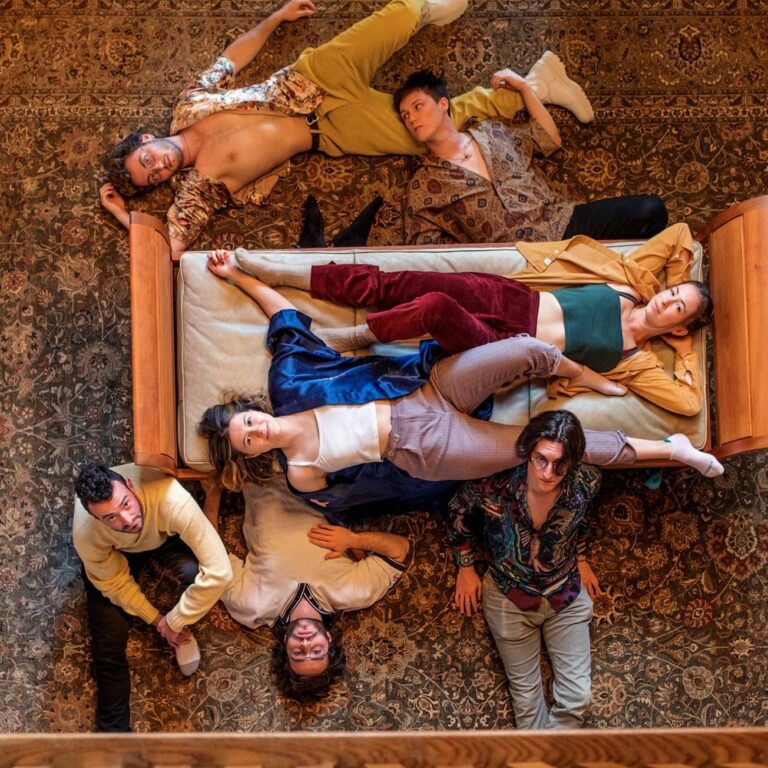
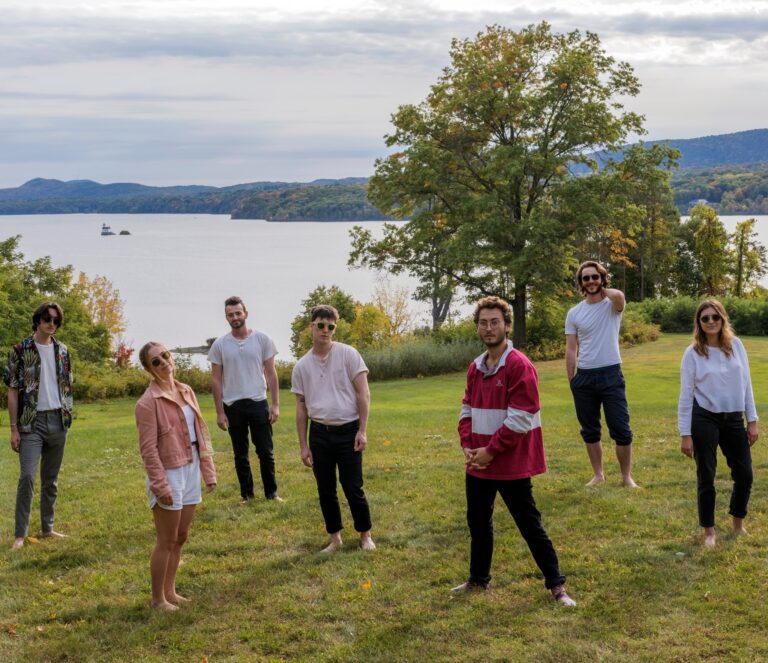
    Melt is a septet, which is comprised of an additional five members: Marlo Shankweiler (Guitar), Josh Greenzeig (Drums), Coulou (Trumpet), Lucas Saur (Bass), and Nick Sare (Saxophone). Melt’s successful debut single propelled the band into the limelight with the strategic utilization of social media and substantial exposure on various internet streaming services. “Sour Candy” holds the distinction of having over 5 million streams on Spotify since it’s initial release. Between this heavy exposure and the band’s high energy live performances, Melt has been successful in establishing themselves securely in the rough and tumble NYC music scene.

    melt band

    Melt has a reached another important milestone with the February release of their Debut EP West Side Highway, which includes six tracks of previously unreleased music. Recorded at the Bunker Studio in Brooklyn, West Side Highway reflects a new level of maturity that Melt has been successful in developing as a band. “Coming into the studio with the goal of creating a longer work, we thought more intently on how each track worked with one another and used the opportunity to weave together the wide set of influences helping to shape a seven-person band,” said Josh Greenzeig (Drums).

    “We used the EP format to create a snapshot of what that moment in time was for us, cementing elements of our sound that we love and finding new ones worth exploring.”

    melt band

    West Side Highway starts out with opening track “Don’t Want Me,” a moody number that details a love affair that has gone bad and is still painfully lingering in it’s final death throes. The masterful guitar instrumentation by Shankweiler and the melancholic vocal by Stewart-Frommer both work in concert to create a setting of sad desperation with a longing to be released. It was a great way to start the record and one that was interesting in it’s selection. It set the meditative tone of the EP which is soothing, comforting, and introspective in it’s entirety. This on going theme is again illustrated with third track, the EP’s title track, “West Side Highway,” which can be considered a love letter to pandemic ravaged NYC. This thought evoking number features a wonderfully muted trumpet solo by Coulou that is enhanced with Gabriel’s creative keyboard playing. his type of musical craftmanship results in another gem of a track on the record.

    We were able to get some time with Melt co-founders Veronica Stewart-Frommer (Vocals) and Eric Gabriel (Vocals, Keys) in order to discuss the band and it’s debute EP – West Side Highway.

    melt band

    Tim Bopp: How did the band Melt form and what were the circumstances that caused the genesis of the band.

    Eric Gabriel: Veronica and I went to High School together and towards the end of high school we had some more time to kind of start playing with people around the city and that was really the first iteration.   

    Veronica Stewart-Frommer: The first call we made was Marlo who is our guitar player.

    TB:  How did you come up with the band name Melt?

    VS-F:  The funny thing about that is that we actually had the song even before we had the name for the band. Suddenly we were sitting with this single and we were like, “Alright and we kind of want to put this out there but we don’t have a name.” So we went down this very long list of random names. The night before we were going to release “Sour Candy” we actually made a Facebook page called Big Deli Chain.  We were like, “That is it! That is the name! We are going to be Big Deli Chain (laughing).”  At some point between 2AM and 4AM that night I was just like this band can’t be named Big Deli Chain and we changed it to Melt.  It was so random.

    TB:  How has the Pandemic Affected the band and the new EP West Side Highway?  

    VS-F: The EP really is a product of the Pandemic.  In a lot of ways, it feels like an entirely new Melt.   This was such a unique time for us. Something that is interesting about us is that during the year we are all either doing our day jobs or even in school. A lot of us are still in college. So we do this kind of funky long distance band thing where we unite for these crazy weekend shows and then go our separate ways.  In a lot of ways due to the Pandemic, if we wanted to work, we had to live together for multiple weeks in order to justify moving anywhere. It was kind of the first time since four years ago when the band started that we were able to settle down and really be together for weeks on end and write and hang out. We are such a live band that our songs are usually tested over months and years at live shows and they are based on what the audience reacts to and how we are feeling at the show but there was none of that this time.

    EG:  We have mostly been thought of as a live band. On most of our singles we typically try to document that energy that we all love about playing together at a live show.  This EP we kind of wanted to go into a different direction.  I think it is much more chilled out and doesn’t really have as much of that live band sound. The individual tracks we kind of wanted to take a different approach in the crafting of the songs.

    TB:  What are some of your musical influences? 

    VS-F:  Part of what makes up the Melt sound is that we are seven people and some of us went to school for Jazz music and some of us studied political science and were raised on the Beatles and Bob Dylan.  A lot of us have been into the Jam scene.  That is actually how I met Marlo, through Phish and the Grateful Dead.  I think we are kind of all over the map on that.  Obviously as a singer I really adore a lot of artists like Aretha Franklin, Etta James, Otis Redding. That is where I fell in love with that genre and that type of singing. We are really all over the place.  Right now a lot of us are into Phoebe Bridgers and the more Indie scene. I think that comes through on this EP.

    EG:  I grew up with a ton of Bruce Springsteen. More recently I listen to more folk music like Adrianne Lenker and also bands like the National.  That kind of music.

    TB: So, are you two the predominant the songwriters for Melt?

    VS-F: Typically, that is how it has been. In the past, Eric and I usually write the lyrics to the songs that we sing, but we edit with each other and with other members of the band. Usually, it will either be one of the two of us will start a song and then bring it to the band. It evolves into a completely different direction from there. For this EP, since we were all together and couldn’t perform live, we wound up focusing a lot more on the production side of things as a band. Our bass player Lucas is really skilled at recording and in engineering production. He played a huge role in creating the foundation for the songs on the EP. We experimented a lot on this record this time around.

    EG: This time around we started with Josh the drummer literally laying down songs, sometime just on his own. Then we would add the bass track and then that leads us into the guitar and usually vocals at the end.  We really just build it up. 

    VS-F:  We don’t know which way we like better.  Maybe in the future we will go back in and play everything as if we are playing live. I think part of the beauty of Melt is that we are so young, so we don’t feel tied to any of our ways and we like to try out new things and see how it goes. 

    melt band

    TB:  How long did it take a band like Melt to complete the West Side Highway EP? 

    VS-F:  Start to finish it was like two months. We were really lucky to be able to record the EP at the Bunker Studios in Brooklyn.  We had a really wonderful producer and engineer named Aaron Nevezie who mixed some of the tracks as well.  

    EG:  Some songs were written earlier, like Hours I wrote about a year ago.

    TB:  What does the future have in store for Melt?       

    Eric:  We cannot wait to start playing shows again. We are really looking forward to playing out.  The last real show Melt played was at the Sinclair in Cambridge last February.  It felt like that at that show we all came together and we were fully on it.  Our trumpet player Aaron even stage dived at the end of the “Sour Candy” solo that night.

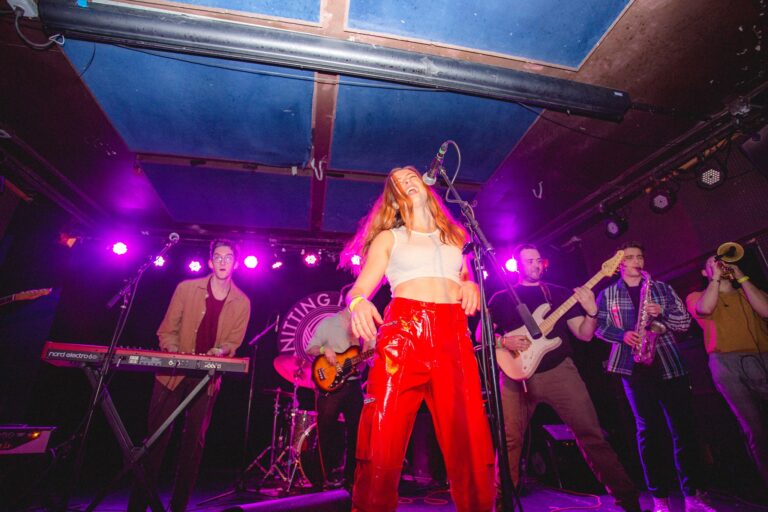
    VS-F:  That show was awesome.  It wasn’t the biggest room we have played, but just the layout of the place was great.  It went straight back so you could see everyone and there was great energy that night.  I also think the Knitting Factory show we played in Brooklyn.  That was the first time we played “Waves.” Before a show we are always saying to the band don’t go too fast let’s keep the energy contained. Once we get out there it is just like an explosion and we are always playing at 100%.  We don’t have many moments during a set where we just drop back and take a moment to breathe.  In the bridge in “Waves” there is a moment where everyone drops out and it is just me and Eric. That was really a special moment. I always think about that moment when I picture live music coming back. It was the first time that we had ever played the song and I think the audience was psyched to hear a new song and it was kind of a sentimental little moment. It was really cool.     

    Key Tracks: Don’t Want Me, West Side Highway, Waves