New York’s largest free outdoor performing arts festival is making a comeback to live performances after last year’s hiatus due to the pandemic. Since its inception 35 years ago, more than six million people from New York City and around the world have enjoyed SummerStage. In 2020, “Capital One City Parks Foundation SummerStage Anywhere” was launched in response to the global pandemic, presenting 80 free digital performances, spanning all genres, available to all around the world.
Now, back in full swing, Capital One City Parks Foundation Summerstage will be hosting the annual celebration for esteemed jazz saxophonist, Charlie Parker. Recognized as one of the vanguards of jazz music’s evolution into the modern era, Parker is acknowledged for his advancement of Bebop, a subsidiary of Jazz known for its fast tempos. A highly regarded soloist, the celebration of Parker’s life and accomplishments will be comprised of his contemporizes as well as young jazz musicians who continue to push the art form forward. This year’s festivals will be held from August 27-29 at Harlem’s historic Marcus Garvey Park in addition to other partnered jazz events around the city that will run from the August 23-27.
All free performances will be open to the public and will be first come, first served and in accordance with venue capacity limits. In response to the increasing spread of the COVID-19 Delta variant, all guests of the Charlie Parker Jazz Festival SummerStage events at Marcus Garvey Park will be required to show either proof of full COVID-19 vaccination or a negative PCR test within the last 72 hours in order to enter. Children under the age of 12 will be allowed to accompany their parent or guardian who provides proof of full vaccination or negative COVID test.
All information regarding vaccination/testing/mask guidelines as well as an itinerary of events for all Summerstage 2021 Season events can be found on the City Parks Foundation website.
In continuation of NYS Music’s series celebrating the Harlem Renaissance in its centennial years, it is important to highlight the Cotton Club which was instrumental in displaying Black talent.
Before it was the Cotton Club, the venue was owned by the first Black heavyweight boxing champion, Jack Johnson. It was called the Club Deluxe, a nightclub with 400 seats in 1920. It was located in the core part of Harlem, at 142nd Street and Lenox Avenue. About two years later in 1922, Owen “Owney” Madden, a leading figure of the underworld, purchased the venue while doing time in Sing Sing Prison. Under his leadership, the Cotton Club developed and expanded into a venue with 700 seats. The venue gained fame through radio broadcasts on a national level.
The Cotton Club was founded during the prohibition era, a time when selling alcohol was illegal. Madden used the club to sell his beer despite the restrictions. The club temporarily closed in 1925 due to the illegal sales but quickly reopened with no issues. After the reopening, a man named Herman Stark took over.
Black Performers for White Audience
In alignment with the time period, Cotton Club was a whites-only establishment, however, the performers and staff were Black. The Black staff members weren’t allowed to mingle with the all white-audience. The girls in the chorus were required to be tan or of a light complexion, tall, and under 21 years old and presented in scantily clad and revealing attire. The requirements for the male performers were less restricting and their skin tones were more diverse. After finishing the shows, the performers convened in the basement in the building next to the club.
Overall the Cotton Club reproduced stereotypical imagery of Black people which dehumanized them. Oftentimes the performers were portrayed as savages in the jungle or with themes of being on a plantation. While the conditions of their work was compromising and not ideal, the high profile clientele that they attracted resulted in high wages.
The venue’s theme of a white audience consuming Black talent, launched the careers of many legendary Black musicians. In 1927, famous jazz composer and bandleader, Duke Ellington, took the Cotton Club to another level. Ellington’s band became the house band, and they were expected to produce “jungle music”. His first revue was titled “Rhythmania” and featured jazz singer, Adelaide Hall, who also recorded several songs with Ellington during that time; including their hit “Creole Love Call”. During his time at the Cotton Club, he recorded over 100 compositions and experimented with creating arrangements. Just like radio broadcasts helped the venue gain attention, it did the same for Ellington and his work.
In 1931, jazz singer and bandleader Cab Calloway’s orchestra replaced Ellington’s as the house band. They began with their Brown Sugar revue and continued to make more contributions to the Cotton Club’s success. In 1933, Lena Horne began her professional career as a chorus girl and was a part of the Cotton Club Parade. Many other musicians have found success and have grown at the Cotton Club including Louis Armstrong, Dorothy Dandridge,Sammy Davis Jr., The Nicholas Brothers, Ethel Waters and more. Jimmie Lunceford’s band replaced Calloway’s in 1934, which was the same year of the highest grossing show at the Cotton Club, called “The Cotton Club Parade 1934.”
From Harlem to Broadway and Beyond
Due to race riots, the venue closed in 1936 and the location changed when it reopened. There were complaints and threats of boycotting because of the segregation that was upheld there. When the Cotton Club reopened, the newer site was in the Broadway Theatre District, specifically at Broadway and 48th St. In the same year, Calloway returned for the opening night and headed a roster of over 100 performers. Stark paid tap dancer Bill “Bojangles’ ‘ Robinson $3500 a week which was the highest amount that a Black performer was paid on Broadway and the highest any nightclub performer had been paid.
The Cotton Club closed indefinitely in 1940 from issues spanning from rises in rent and investigations looking into tax evasion from nightclub owners. Since its closing, variations of the site have opened around the country including Las Vegas, Chicago, California and more. According to Harlem World Magazine, in the late 1970s, a new Cotton Club opened in Harlem on 125th Street. The name is the same and it also revolved around jazz, however it was not made in affiliation with the original.
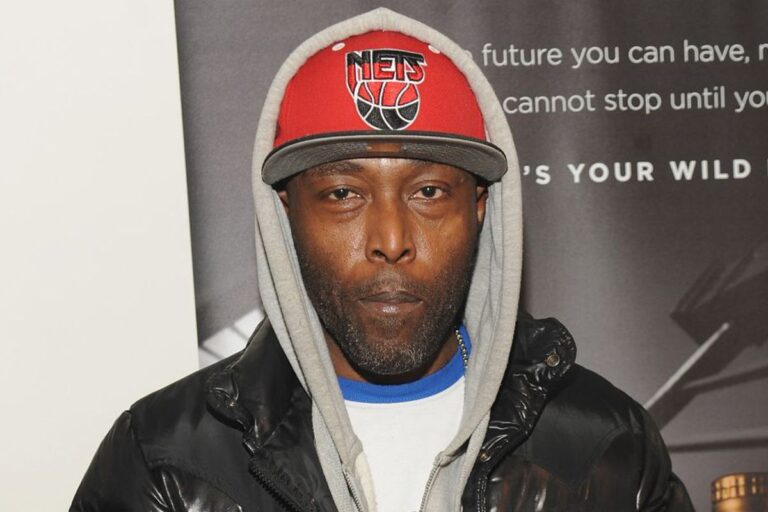
Less than one week after posting a concerning tribute video to DMX from a hospital bed of his own, rapper, Black Rob, has passed away, with speculation of the cause of death being kidney failure.
photo via Getty Images
Much like DMX’s passing, Black Rob’s death is another blow to hip hop, continuing a run of premature casualties of once famed rappers. It was only April 11 that a bed-stricken Rob looked worse for the wear in an Instagram video posted to his account, in which he paid his respects to DMX
“I don’t know, the pain is crazy, man. It’s helping me out though, it’s making me realize I got a lot to go,” he said. “I feel everything about X. X was positive. Love to X,” the former Bad Boy Records emcee shared as he struggled for words.
That video began speculation amongst fans about the state of the Harlem emcee’s health, with concerns being raised over his feeble appearance and his faint sounding voice. In another video posted to Instagram the “Whoa” rapper shared that he was out of the hospital and shed light on his recent health concerns,
“Oh man, I’ve been dealing with this for five years. Four strokes … I don’t know what to tell you man. Shit is crazy. The shit is hard,” he said. “I don’t got no house to live in — except maybe an apartment. Me and my man be trying to get together. I’m telling you man, this shit is strange. It’s hard, you know what I’m saying?”
He continued,
“I don’t know what the people want to do, what the people going to say. I need some rest, man. Really, man. I need some rest. My side is killing me.”
Amidst the rising interest in Black Rob’s condition, producer, Mike Zombie, set up a GoFundMe account with a goal of $50,000 to help Rob “find a home, pay for medical help & stability during these trying times.”
Sadly, it was all for naught, as Rob succumbed to his reported kidney issues on April 16, with the news of his passing being shared by friend and former Bad Boy Records label-mate, Mark Curry.
Curry announced Rob’s death in two videos posted to his Instagram account, and Variety later confirmed his passing through additional sources.
“I don’t know where to begin this,” “But I thank everybody for the donations. Rob passed away about an hour ago.”
In a second video, Curry revealed that he was with the rapper when he died.
“Rest in peace to my brother. I was there with him. I was there with him,” Curry said.
https://youtu.be/Xpn2rj2HZJY
There was an outpouring of love from fellow entertainers as well as rappers, as Rob’s brief but successful run as a successful mainstream artist left him revered and loved.
Black Rob had a clean heart in a dirty game. I’m hurting I wish I got to speak to him one last time at least. Don’t tell the world how much you care about a person tell the person how much you care about them while they are accepting what the world has to offer. 🤲🏾
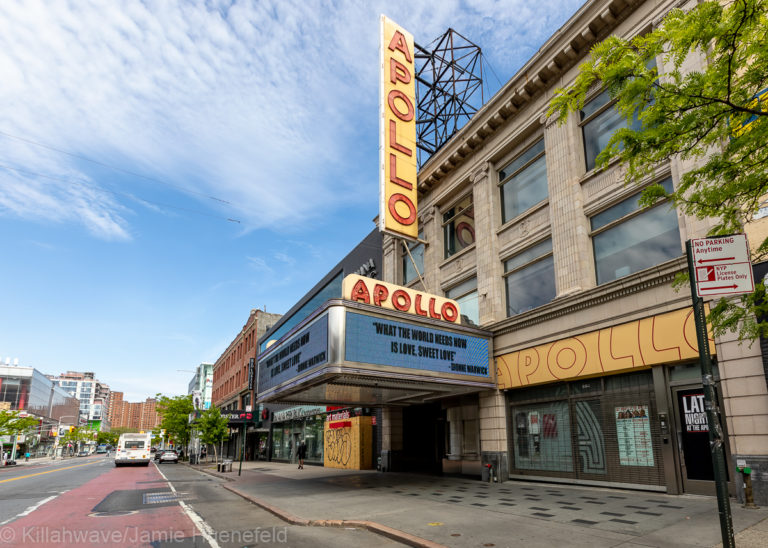
The legendary Apollo Theater revealed its Spring 2021 programming and virtual events which includes the return of their highly favored programs.
On Saturday March 20 and Sunday March 21 the Apollo Theater presents the fifth bi-annual WOW (Women Of the World) festival in collaboration with the WOW Foundation. The theme for this year’s festival is “Black Women Transcending” and will consist of panels, workshops, performances and speakers. Some of the famous participants are awarding-winning actress Aunjanue Ellis, writer and activistNikki Giovanni, co-host of The Talk and writer Elaine Welteroth and more. WOW: Teen Summit is also a part of the agenda focusing gender politics and its impacts on girls and women of color globally.
The Apollo Theater located in Harlem is a staple in Black entertainment and for the Black community. It was one of the first and few non segregated theaters that provided opportunities for Black performers in the 1930s. Their renowned contest Amateur Nightbegan in 1934 where many legends and notorious artists began and launched their careers.
Some of the legends who began or performed at The Apollo are Ella Fitzgerald,Billie Holiday, Stevie Wonder, Aretha Franklin,James Brown, Gladys Knight and more. The Apollo is built on the foundation of music including genres like jazz, gospel, hip-hop, R&B, soul and more. However, its programming extends to different art forms such as dance, theater, and spoken word.
The Apollo is a non-profit presenter of different art forms and commissioner as they produce festivals, musical and dance works through initiatives dedicated to projecting the African American narrative. In 2019 they announced their first Master Artist-in-Residence with Ta-Naheisi Coates with a theatrical adaptation of his novel Between the World and Me. They are involved in many multidisciplinary collaborations with various organizations, some of which are featured in their programming for this Spring.
More events are taking place for the spring programming. The Apollo Comedy Club: A Look Back on Laughter on April 2, celebrates the past comedic talents at the theater, features new upcoming comedians and is presented in partnership with Def Jam producer Bob Sumner. On April 3 Roc Nation’s sibling band Infinity Song performs for Apollo Music Cafe.The Apollo Education Career Panel called Cinematography – Shifting the Looking Glass takes place on April 20.
Another Apollo Education Career Panel, FootPrint- Design and Creativity in Sneaker Culture, happens on May 6. Finally, on May 20 Apollo Film Presents: ImageNation’s Cocktails & Sol Cinema is a collaboration with Harlem based company ImageNation, screening of Pan-African films with a reception consisting of a live performance or DJ and followed by a talkback.
Tickets and more information regarding these events are available on The Apollo Theater’swebsite.
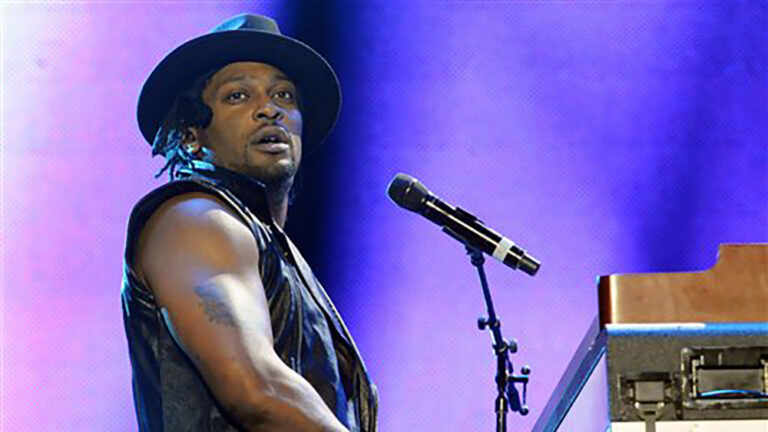
D’Angelo will hold a Verzuz DJ battle against unnamed “friends,” taking place on February 27 at 8 pm EST, at the historical Apollo Theater in Harlem.
(Photo by Cheryl Gerber/Invision/AP, File)
He announced another episode of Verzuz, an online DJ-battle series, in which artists face off their contemporaries. The competition is fun, friendly, and fans cheer on artists as they DJ hit songs against each other. Previous sets have included Alicia Keys vs. John Legend. Beginning during lockdown, Verzuz has become a staple respite for music fans everywhere. The notoriously reclusive artist, D’Angelo, who champions quality over quantity will take the stage at the Apollo Theater for the first time since 2014.
D’Angelo will be challenging several guests at his performance, which expands the online show to a larger spectacle. Due to his sparse public performances, rumors have arisen of new music, although the artist has released one album in 21 years.
In the early 1990s, D’Angelo exploded onto the “new retro soul” scene with artists such as Erykah Badu. His 2000 hit album, Voodoo, catapulted him into the spotlight, and he retracted, rarely playing shows. The next D’Angelo album did not come to fruition until 2014, and he vanished from the public eye quickly after a supporting tour. On that tour, it was the last time D’Angelo played the Apollo Theater. This return is long anticipated, and you can stream it on February 27 at 8pm EST through Verzuz.
Beginning on February 18, 2021, the National Jazz Museum in Harlem is available for anybody in the world to visit virtually on the Google Arts and Culture platform.
The National Jazz Museum in Harlem
The free, virtual tour allows viewers to experience videos and high-resolution pictures of jazz artifacts from the Museum’s collections as a part of the Google Arts & Culture Black History Month project.
“Jazz was born in New Orleans but spent a lot of time growing up in Harlem,” says award winning bandleader Christian McBride who, with award winning bandleader Jon Batiste, serves as National Jazz Museum in Harlem (NJMH) Artistic Director. The Black History and Culture project celebrates and recognizes Black creatives. NJMH joins over 80 partners on the platform with their own expertise and storytelling about Black history and jazz.
“Jazz music is a centerpiece of Black history, culture and art,” said Simon Delacroix, US Lead for Google Arts & Culture. “During Black History Month, we’re proud to welcome the National Jazz Museum in Harlem to the Google Arts and Culture platform. Now everyone can experience the magic of the genre and the artists who created it.”
The Museum wishes to reopen its doors to the public for the indelible, energetic performances and captivating history contained in its walls. Executive Director Tracey Hyter-Suffern says that “During the pandemic we have seen the effect on the jazz community and vital role this music and the arts, in general, play in anchoring us. We are a gathering space for jazz artists, educators, scholars and the community. Jazz engages us with each other. Jazz is history you can feel. It’s physical. The Museum is physical. It’s a place, in Harlem, where the community can connect, renew and celebrate.”
Outside the National Jazz Museum in Harlem
The pandemic has had a severe, disastrous impact on Black and other communities of color. Black, Latino, and senior jazz artists and performers are among the highest risk categories, and many have sadly passed away during this time. This makes it especially critical to share and celebrate the history and legacy of jazz, the uniquely American art form. The Museum serves as a force to keep jazz and its message alive and its artists working, never letting the passion and importance of it fade.
Inspired by news of the Museum’s partnership with Google Arts & Culture, the Ella Fitzgerald Charitable Foundation has offered to match every dollar contributed to the National Jazz Museum in Harlem during Black History Month up to $5,000. To contribute, visit .