Tag: Harlem Renaissance

  • Cotton Club: The Staple of Black Talent in The Harlem Renaissance

    In continuation of NYS Music’s series celebrating the Harlem Renaissance in its centennial years, it is important to highlight the Cotton Club which was instrumental in displaying Black talent.

    harlem reniassance cotton club

    Before it was the Cotton Club, the venue was owned by the first Black heavyweight boxing champion, Jack Johnson. It was called the Club Deluxe, a nightclub with 400 seats in 1920. It was located in the core part of Harlem, at 142nd Street and Lenox Avenue. About two years later in 1922, Owen “Owney” Madden, a leading figure of the underworld, purchased the venue while doing time in Sing Sing Prison. Under his leadership, the Cotton Club developed and expanded into a venue with 700 seats. The venue gained fame through radio broadcasts on a national level.

    The Cotton Club was founded during the prohibition era, a time when selling alcohol was illegal. Madden used the club to sell his beer despite the restrictions. The club temporarily closed in 1925 due to the illegal sales but quickly reopened with no issues. After the reopening, a man named Herman Stark took over. 

    Black Performers for White Audience

    In alignment with the time period, Cotton Club was a whites-only establishment, however, the performers and staff were Black. The Black staff members weren’t allowed to mingle with the all white-audience. The girls in the chorus were required to be tan or of a light complexion, tall, and under 21 years old and presented in scantily clad and revealing attire. The requirements for the male performers were less restricting and their skin tones were more diverse. After finishing the shows, the performers convened in the basement in the building next to the club. 

     Overall the Cotton Club reproduced stereotypical imagery of Black people which dehumanized them. Oftentimes the performers were portrayed as savages in the jungle or with themes of being on a plantation. While the conditions of their work was compromising and not ideal, the high profile clientele that they attracted resulted in high wages.

    The venue’s theme of a white audience consuming Black talent, launched the careers of many legendary Black musicians. In 1927, famous jazz composer and bandleader, Duke Ellington, took the Cotton Club to another level. Ellington’s band became the house band, and they were expected to produce “jungle music”. His first revue was titled “Rhythmania” and featured jazz singer, Adelaide Hall, who also recorded several songs with Ellington during that time; including their hit “Creole Love Call”. During his time at the Cotton Club, he recorded over 100 compositions and experimented with creating arrangements. Just like radio broadcasts helped the venue gain attention, it did the same for Ellington and his work.

    In 1931, jazz singer and bandleader Cab Calloway’s orchestra replaced Ellington’s as the house band. They began with their Brown Sugar revue and continued to make more contributions to the Cotton Club’s success. In 1933, Lena Horne began her professional career as a chorus girl and was a part of the Cotton Club Parade. Many other musicians have found success and have grown at the Cotton Club including Louis Armstrong, Dorothy Dandridge, Sammy Davis Jr., The Nicholas Brothers, Ethel Waters and more. Jimmie Lunceford’s band replaced Calloway’s in 1934, which was the same year of the highest grossing show at the Cotton Club, called “The Cotton Club Parade 1934.”

    From Harlem to Broadway and Beyond

    Due to race riots, the venue closed in 1936 and the location changed when it reopened. There were complaints and threats of boycotting because of the segregation that was upheld there. When the Cotton Club reopened, the newer site was in the Broadway Theatre District, specifically at Broadway and 48th St. In the same year, Calloway returned for the opening night and headed a roster of over 100 performers. Stark paid tap dancer Bill “Bojangles’ ‘ Robinson $3500 a week which was the highest amount that a Black performer was paid on Broadway and the highest any nightclub performer  had been paid. 

    The Cotton Club closed indefinitely in 1940 from issues spanning from rises in rent and investigations looking into tax evasion from nightclub owners. Since its closing, variations of the site have opened around the country including Las Vegas, Chicago, California and more. According to Harlem World Magazine, in the late 1970s, a new Cotton Club opened in Harlem on 125th Street. The name is the same and it also revolved around jazz, however it was not made in affiliation with the original.
  • Langston Hughes: Prolific Writer and a Leader of the Harlem Renaissance

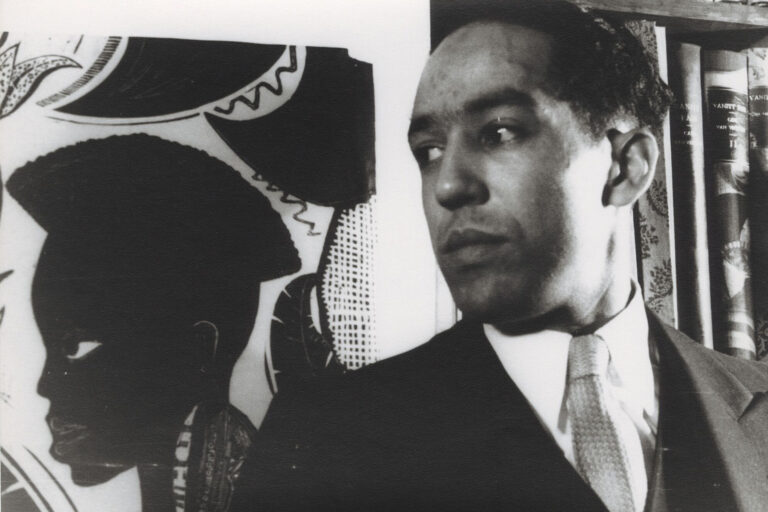
    Langston Hughes, full name James Mercer Langston Hughes, was born around February 1st, 1902 in Joplin, Missouri. He was raised by his mother and grandmother, and grew up in a series of towns across the United States midwest, showing a proficiency in writing from a young age.

    His tumultuous childhood may have given him the experiences that made him such a profound writer down the line. By the age of 12, Hughes had already lived in 6 different American cities.

    Furthermore, by the time he released his first book, Hughes had already been to Mexico, West Africa, the Azores, the Canary Islands, Holland, and worked as a doorman at a nightclub in Paris.

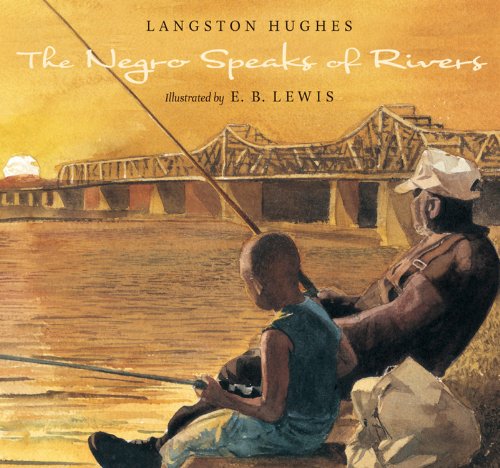
    By the time of his high school graduation, Hughes had already written his first acclaimed poem, “The Negro Speaks of Rivers.”

    The Negro Speaks of Rivers: Hughes, Langston, Lewis, E. B.: 9780786818679:  Amazon.com: Books

    This poem would be published in The Crisis, the official magazine of the NAACP and the world’s oldest black publication.

    After graduating, Hughes moved to New York City and attended Columbia University for one year before dropping out. During his time in the city, he explored Harlem and found the place where he’d establish his career.

    It would be in this neighborhood that Hughes would play a central role in one of the most important cultural events of the 20th century. This event, the Harlem Renaissance, would be the flowering of African-American culture in the United States.

    During this time, black artists, writers, and intellectuals would reconceptualize the African-American image separate from the stereotypes that they had been defined through by white society for centuries.

    A Voice for Black Artists

    In his writing, Hughes spoke about the black experience in America, but in new ways that many black intellectuals at the time disagreed with. Hughes aimed to “honestly portray the joys and hardships of working-class black lives, avoiding both sentimental idealization and negative stereotypes.”

    This concept was outlined in an essay, “The Negro Artist and the Racial Mountain,” where Hughes stated:

    We younger Negro artists who create now intend to express our individual dark-skinned selves without fear or shame. If white people are pleased we are glad. If they are not, it doesn’t matter. We know we are beautiful. And ugly too.

    Hughes writing, and many of his contemporaries writing, focused on the “low-life,” that is, the real lives of African-American’s who found themselves in the lower part of the social-economic system.

    He was the first African-American man to make a living off of his writing and giving public lectures, and by doing proved wrong many white Americans who disregarded blacks simply because of their race. For one of the first times, whites considered a black writer to be on par with white contemporaries.

    Hughes was also a pioneer of jazz-poetry, a form of literary art that is characterized by jazz-like rhythm and the feel of improvisation. The development and growth in popularity of jazz music was one of the ways the arts, specifically art created by African-American’s, flourished during the renaissance.

    One of Hughes acclaimed poetry books, The Weary Blues, is a prime example of his unique style of phrasing that is influenced by jazz music. Here is a short excerpt from the book that exemplifies this style of poetry:

    To the tune o’ those Weary Blues.
    With his ebony hands on each ivory key
    He made that poor piano moan with melody.
         O Blues!

    The Weary Blues, a poetry book released by Hughes in 1926.

    An Incredible Legacy

    Langston Hughes had an everlasting impact on writing, as well as future generations of African-American artists. His approach to the portrayal of African-American life in writing at the time was new to many, and proved to be revolutionary.

    His career was also unique and second to none. It took him all across the globe, and allowed him to develop into the visionary writer he came to be.

    Besides being regarded for his poetry, Hughes also wrote plays, essays, short stories, and novels. He would also frequently travel across the United States, and to the Soviet Union, Japan, and Haiti to give lectures. He even served as a war correspondent for American newspapers during the Spanish Civil War.

    As the years passed, new generations of African-American intellectuals and activists began to take issue with some of his viewpoints, perturbed by the fact that Hughes never really identified himself politically.

    Although his popularity wavered at points throughout the years for these reasons, especially in the exceedingly racially turbulent second half of the 20th century, Hughes reputation as a trailblazer for the freedom of African-American art and culture is everlasting.

    Langston Hughes died of complications of prostate cancer on May 22, 1967, but his legacy and profound impact on African-American culture and the world of literature lives on.

    His home in Harlem, on East 127th street, received landmark status in the city of New York and was added to the National Register of Places in 1982.

    A Collective of Writers Are Saving Harlem's Langston Hughes House From  Gentrification - Bloomberg
    Langston Hughes home in Harlem.

    In most of his work, Hughes continued to discuss important issues regarding African-American’s in American society, and their experience in the face of centuries of discrimination and prosecution.

    His work exemplified the attitude of the Harlem Renaissance, and he is remembered as a central figure of the era in which African-American culture blossomed and defied the prejudiced and discriminatory attitude that was cast upon it by American society.

  • Marcus Garvey: Controversial Revolutionary

    As part of NYS Music’s continuing series looking at the Centennial years of the Harlem Renaissance, we turn to activist Marcus Garvey, leader of the Pan-African movement, the first American Black nationalist movement.

    Marcus Moziah Garvey was born in St Ann’s Bay, Jamaica on August 17, 1887. His father, Marcus Garvey Senior, was a stonemason and his mother, Sarah Jane Richards was a household servant. Garvey had 11 siblings but was the only one to survive to adulthood. Attending a local church school until the age of 14, Garvey then moved to Kingston where he worked in a print shop as an apprentice. Garvey quickly rose through the ranks and became the first Afro-Jamaican foreman. Thus began Garvey’s fabled career in activism, becoming a trade unionist and partially leading the November 1908 print workers’ strike.

    After being fired from his print shop job, Garvey’s hatred for the societal structures creating inequality began to form. Garvey joined the National Club, one of Jamaica’s first nationalist organizations, publishing several pamphlets and magazines campaigning for the removal of the British Governor of Jamaica. Economic hardship took hold of Jamaica, leading to a mass exodus that included Garvey. After Garvey spent several years traveling, including living with family in Costa Rica and attending University of London’s Birkbeck College, Garvey returned to Jamaica.

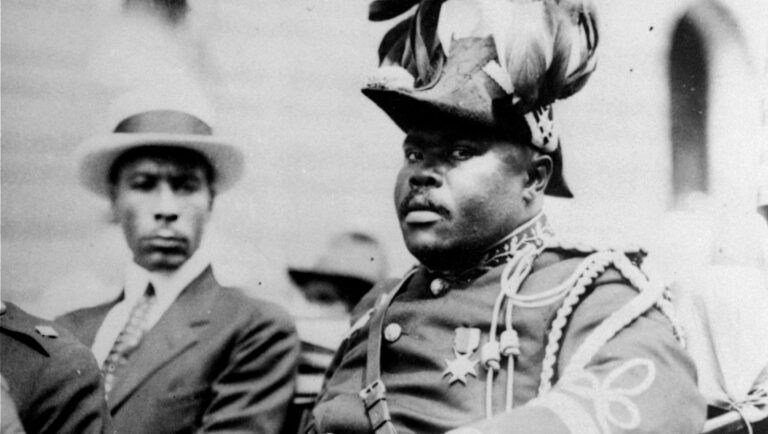
    Marcus Garvey
    Getty Images

    Birth of the UNIA

    Upon returning to Jamaica, Garvey formed the UNIA (Universal Negro Improvement Association). An organization whose goal was to “Establish a brotherhood among the black race, to promote a spirit of race pride, to reclaim the fallen and to assist in civilizing the backward tribes of Africa.”

    With this organization, Garvey wanted to establish a country that would unite black people all over the world. After coming on to contact with fellow famed civil rights activist Booker T. Washington, Garvey moved to Harlem to establish the UNIA in the United States.

    As the UNIA began to grow, Garvey launched his own weekly newspaper Negro Weekly. The newspaper reached worldwide audiences, nearing 10,000 copies circulated by the end of its first year. In 1919, Garvey launched his shipping company Black Star Line. The company’s goal was to establish trade and commerce between Africans all over the world. By this point, the UNIA had grown to over 4 Million members. The Black Star Line bought the S.S. Yarmouth, which they renamed it as the S.S. Frederick Douglass, in preparation for the group’s ambitious program which sought to establish a country for former slaves in Liberia.

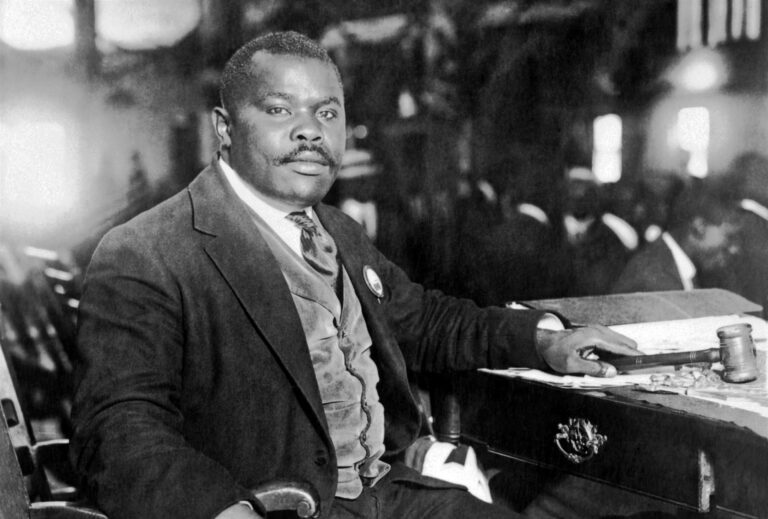
    Marcus Garvey
    Underwood Archives via Getty Images

    Enemies

    Garvey was infamous for his impassioned and controversial speeches which caused him many enemies from the likes of fellow activist, W.E.B. Du Bois, to FBI Director J. Edgar Hoover. Dubois was vehemently against Garvey’s separatist philopshy, going so far as to call him “The most dangerous enemy of the Negro race in America.”

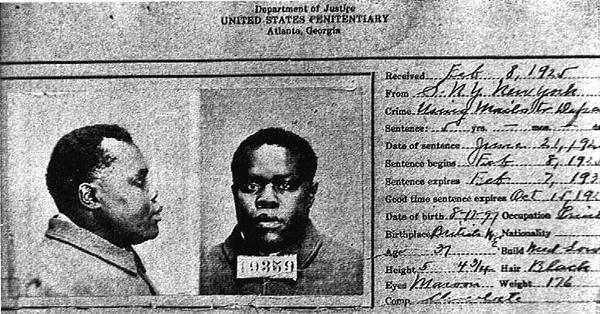
    Garvey was under surveillance from Hoover for several years. Hoover looked for any dirt he could dig up on Garvey, going so far as to hire the first black FBI agent to infiltrate the ranks. Hoover would use the same method against several civil rights leaders throughout the 20th century including Martin Luther King Jr. and Malcolm X. Eventually, Hoover was able to try Garvey and others within the Black Star Line with Mail Fraud. Garvey was found guilty and sentenced to five years in prison.

    Marcus Garvey

    Imprisonment and Deportation

    Before the trial, Garvey controversially had agreed to meet with the leader of the Ku Klux Klan, believing they had common ground when it came to Segregation. Garvey blamed the Jewish judges and jurors for his convention, claiming they held bias against him for agreeing to meet with the Ku Klux Klan leader. This began a trend of Garvey siding with segregationists. While in jail, Garvey wrote his famous letter “First Message to the Negroes of the World from Atlanta Prison.”

    Garvey was released in 1927 after serving just three years of his sentence after President Calvin Coolidge received a petition with 70,000 signature demanding for his release. Upon release, Garvey was immediately deported back to Jamaica. Continuing his political activism in his home country, Garvey created the country’s first political party, the People’s Political Party (PPP). The party ran on the platforms of establishing a minimum wage and the ability to impeach and imprison corrupt judges. The party quietly faded away after Garvey lost the election and was imprisoned again for seditious libel.

    Never forget that intelligence rules the world and ignorance carries the burden. Therefore, remove yourself as far as possible from ignorance and seek as far as possible to be intelligent.

    Marcus Garvey

    Later Life and Death

    Never again was Garvey able to convey the same amount of influence that he once did. Garvey continued his political activism in Jamaica until 1935 when he moved to London. Garvey would go on to back other segregationist legislation such as The Greater Liberia Act of 1939, championed by infamous white supremacist Mississippi Senator Theodore Bilbo; this act sought to deport 12 million African Americans to Liberia under the justification that it would reduce unemployment. The bill never passed.

    In January 1940, Garvey suffered a stroke that had left him paralyzed almost entirely. Word spread that Garvey had died, leading it to be reported in several papers. Garvey had a second stroke brought on from the reading of these headlines, leading to his actual death on June 10th, 1940 at the age of 52. Garvey was buried in London due to WWII travel restrictions but his remains were moved to Kingston, Jamaica in 1964.

    Legacy

    Marcus Garvey has a complicated legacy like no other civil rights figure. Garvey’s key message was one of African Pride, to love your self and heritage no matter what. Phrases coined by Garvey such as “Black is Beautiful” are still commonplace motivational statements today. On the other hand, Garvey was one of the most outspoken segregationists. Garvey sided with white supremacists on several occasions, even backing key legislature. While his aspirations of a unified African American nation might have been pure, the ways he went about achieving those goals were destructive. Marcus Garvey the man may be controversial, but his word would go on to influence generations of activists and spur change all over the globe.

Built in Breakdance