Tag: Fillmore East

  • Revisit Derek and the Dominos ‘Live at The Fillmore East’: October 23 & 24, 1970

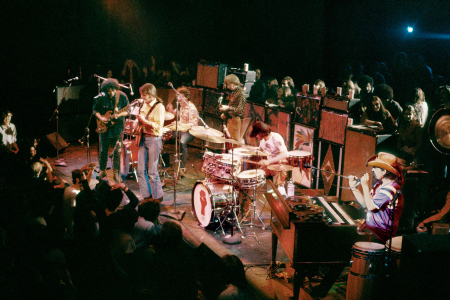
    This weekend marks the anniversary of some of the greatest music ever performed by Derek and the Dominos, which happened to take place at the iconic Fillmore East in New York City. Although the band does have one studio album to their credit, Live At The FIllmore East may be their crowning achievement in terms of audio recordings.

    This is an incredibly easy to listen to album, one that combines original Dominos songs and Eric Clapton tunes with a splash of cover songs mixed throughout. Derek and the Dominos was a band that, essentially, came together during the recording of George Harrison’s first solo album All Things Must Pass. And while their shelf life may have been short, thanks to this album their legacy will live on forever in a very positive way.

    Derek and the Dominos Fillmore

    The band wastes no time getting into an immediate early groove for the album-opening “Got To Get Better In A Little While.” A song that was planned for the band’s second studio album that never came to fruition, it features Clapton and Bobby Whitlock going riff for riff on guitar and piano, respectively, in a tasteful jam that stretches out to nearly 14 minutes in length. Whitlock adds some nice vocal harmonies as well as the chorus rounds back into place with the music picking up a collective head of steam.

    This first track was pulled from the opening night of music on October 23. Here’s a taste of the October 24 version that didn’t make the album cut.

    For the next number, this time drummer Jim Gordon and Whitlock kick things off on “Why Does Love Got To Be So Sad?” Eventually, Clapton gets his guitar’s wah pedal going in full force and a crisp little jam ensues before the first word is ever sung. This is the first of many songs pulled from the group’s epic Layla And Other Assorted Love Songs album that would be released just weeks later. Co-written by Clapton and Whitlock, who again adds some impeccable backup vocals, it’s another one of the longer tracks on the album thanks to a whirlwind jam that never lets off the gas pedal, ably fueled by Carl Radle on bass. After coming a to head, the band shifts the tone into a much quieter, bluesy one for several minutes before the chorus comes back around one last time. The Fillmore crowd demonstrably shows their appreciation to the Dominos after this one.

    This helps set the tone for “Key To The Highway,” a cover of an old blues standard that dates back to the 1940s. Clapton takes center stage and shows why he’s considered one of the great blues players of this generation, delivering one stinging guitar lick after another. Another Layla song, this one made it onto the album by pure happenstance. Allegedly Clapton and Duane Allman, who was prominently involved with the album’s studio recording – playing on 11 of the 14 tracks, heard the song being played in a neighboring studio and decided to play along to it. “Blues Power” slides in perfectly behind this, a song that appears on Clapton’s first solo album that Leon Russell helped write. These last two blues-heavy numbers are both taken from the October 24 recording.

    The first of this two-disc releases out first with “Have You Ever Loved A Woman,” another blues cover that found its way onto Layla. This one is even slower and “bluesier,” if that’s possible, with the tempo never going past a slow shuffle. Clapton lets both his vocals and guitar do all the singing on this one while Whitlock adds some delicate piano fills throughout. Then “Bottle Of Red Wine” wraps up the first part of the album, another rollicking, blues-infused song that Clapton navigates with ease, with Whitlock jumping on the organ for assistance now.

    Derek and the Dominos Fillmore

    The second half of this iconic albums begins with “Tell The Truth,” another Clapton-Whitlock collaboration pulled from Layla. The two essentially share lead vocals on this fun little number that ebbs and flows with emotion and soul. Once the vocals are out of the way, Clapton reverts back to rock legend mode and lays down a tremendous solo, spearheading one of the longer jams of the album. Up next is another sterling cover of a blues standard. This time it’s “Nobody Knows You When You’re Down And Out,” originally written by pianist Jimmie Cox in 1923. Clapton’s bluesy drawl is backed perfectly by Whitlock and Gordon on piano and drums, respectively.

    The Dominos then return to their own catalog with “Roll It Over.” While it wasn’t on the original Layla release, it did make its way on to the 40th Anniversary Deluxe reissue. It’s a classic rock number the sees Clapton explore a few different tones in his guitar play during a steadily progressive jam. The Fillmore crowd immediately recognizes the next song as “Presence Of The Lord,” made famous by one of Clapton’s former bands, Traffic. It’s the only Traffic tune on the album, but the Dominos do it justice as a mellow, laid back composed section gives way to a rapid, intense sequence of music before reverting back.

    The final three tracks of Derek and the Dominos: Live At The Fillmore may be one of the best three-song sequences of the album, and, naturally it contains a pair of incredible covers. The first of these is Jimi Hendrix’s “Little Wing.” Whitlock’s organ fills give this cover more than a soulful feel as both he and Clapton take care of the vocals with ease. Not one to be outdone, Clapton then delivers a few bars of a psychedelic guitar solo that serves a truly fitting homage to the great Hendrix who passed away barely a month before this performance in 1970.

    This jaw dropping cover is followed by what very well may be the best track on the album, a scintillating and exploratory “Let It Rain.” It’s the last of three singles from Clapton’s solo album and the Dominos stretch this one out and then some. Clapton and Whitlock go tit-for-tat with each screaming out, “Let It Rain” in succession towards the end of the composed section. Afterwards, all hell breaks lose starting with one more mesmerizing run by Clapton on the fretboard as the rhythm section just tries to keep up. Eventually, Clapton switches from wailing guitar mode to a heavy, funked out “wah” effect, taking the jam to another level. This eventually gives way to a Jim Gordon drum solo that goes on for well more than four minutes before the guitar finally reenters the mix. After a few more minutes of some fun Gordon and Clapton call and response interplay, the band explodes back in the chorus emphatically. It’s by far the longest track on the album, and arguably the most enjoyable as the “beautiful” Fillmore crowd (so labeled by Clapton at song’s end) would surely attest.

    The album then closes with the last cover song of the evening made famous by another one of Slowhand’s former bands. This time it’s the great Robert Johnson’s “Crossroads,” although, in fitting with the tone of the album, it’s a much slower and soulful take than the version Cream made famous. It allows for one last great Clapton guitar solo which ends the album in grand fashion and serves as the last reminder of one memorable two-night run by Derek and the Dominos at the Fillmore that took place, truly, at the height of their powers.

    This album is available to listen in its entirety on Youtube here. Also, be sure to check out the video below of all the great songs and outtakes that didn’t quite make the final cut.

    Derek and the Dominos Live at the Fillmore East – New York, NY October 23 & 24

    Disc 1

    1. Got To Get Better In A Little While
    2. Why Does Love Got To Be So Sad
    3. Key To The Highway
    4. Blues Power
    5. Have You Ever Loved A Woman
    6. Bottle Of Red Wine

    Disc 2

    1. Tell The Truth
    2. Nobody Knows You When You’re Down And Out
    3. Roll It Over
    4. Presence Of The Lord
    5. Little Wing
    6. Let It Rain
    7. Crossroads

  • Musicians and Crew Recall the Glorious 3-Year Run of The Fillmore East in New Oral History

    The Fillmore East was called “The Church of Rock and Roll” for good reason; between 1968 and 1971, promoter Bill Graham made music history as he brought the cream of rock royalty to New York audiences in astounding triple-artist bills with ticket prices ranging from $3.50 – $5.50.  Jimi Hendrix, Janis Joplin, The Who, Cream, Led Zeppelin, Jefferson Airplane, The Doors, Sly and the Family Stone, Santana and The Allman Brothers were just some of the stars that graced the stage, with several recording classic live albums at the Lower East Side venue.

    fillmore east history
    Fillmore East: Photo © Jeff Rothstein

    Interestingly, Graham also served as a catalyst for expanding the tastes of impressionable young music lovers in New York and abroad.  He accomplished this by using the popular rock headliners to introduce audiences to the more eclectic artists he loved and booked as show openers.  These were the cutting-edge names in jazz, soul, R&B and folk music, from Miles Davis, Buddy Rich and Mongo Santamaria to B.B. and Albert King and The Staple Singers.  It all ended when rock became a big business, when concerts and Graham himself moved onto larger stages.

    New light is now being cast on this institution’s brief run and lasting impact in an in-depth and soulful new book by veteran journalist Frank Mastropolo, Fillmore East: The Venue That Changed Rock History

    fillmore east history

    Like Legs McNeil’s punk history classic, Please Kill Me, Mastropolo’s new work is an oral history told by 90 of the musicians and crewmembers who lived through the fast times at this pioneering concert hall. Roger McGuinn, Jack Casady, Jorma Kaukonen, Robert Lamm, Dave Davies, John Lodge, Nils Lofgren, Dave Mason and Steve Miller are among the 19 Rock and Roll Hall of Fame inductees who contributed to the book, along with Fillmore crew like lightshow pioneer Joshua White and East Village scenesters like media prankster/artist Joey Skaggs. The book also boasts dozens of remarkable performance photos (many taken by the author himself), along with posters, letters, buttons, contracts and memorabilia, many never before published. 

    Mastropolo begins with backstory and history of the theater that would become The Fillmore East, The Commodore, and its place as a centerpiece of Yiddish Theater and vaudeville beginning in the 1920s. Rock enters the picture in 1967, when it becomes The Village Theater and hosts a handful of rock concerts by Cream, Procol Harum, The Yardbirds and The Grateful Dead.  With the success of his San Francisco-based Fillmore West, Graham decides to buy and re-open it as The Fillmore East. The debut show comes on March 8, 1968, with a triple-bill featuring Big Brother and the Holding Company with Janis Joplin, blues great Albert King and folk rocker Tim Buckley. 

    The heart of Mastropolo’s book are the remarkable first-person reminiscences of the artists who played there and their contrasting memories of the mercurial empresario who ran it. 

    fillmore east history
    Janis Joplin: Photo by Frank Mastropolo

    Creedence Clearwater Revival drummer Doug Clifford recalls a night where the audience demanded a remarkable 17 encores. It was an unprecedented occasion, one that Graham commemorated by gifting each member of the band an inscribed gold watch.  Sly and the Family Stone drummer Greg Errico recalls Graham’s initial reticence about booking his band, saying of the Fillmore audience: “My people don’t dance!” Then teenaged Television guitarist Richard Lloyd recalls how easy it was to get past the virtually non-existent security to visit Jimi Hendrix, in his dressing room. Chicago’s keyboardist Robert Lamm is one of many artists in the book who think the Fillmore East’s position as the first-choice venue of rockers was a product of its first-rate sound, lighting and staff. 

    Jorma Kaukonen credits the birth of his and bass player Jack Casady’s Jefferson Airplane offshoot, the acoustic Delta blues based Hot Tuna, to the Fillmore East. “I think the Hot Tuna as a band that the public saw was certainly born at the Fillmore East,” relates Kaukonen. “Jack and I had been messing around in hotels for years, with him playing his bass through a tiny amp and me playing acoustic guitar. My recollection about this is that Paul (Kanter) just out of the blue said – ‘Why don’t you guys go out and play an acoustic song?’  That’s how we were given the opportunity to play and display it in front of other people for the first time.”

    John Lennon and Yoko Ono with Frank Zappa and the Mothers: Photo by Dr. Arlene Q. Allen and Ben Haller

    Steve Miller recalls the tumult of one of his performances, when his band followed British novelty act Mungo Jerry of “In the Summertime” fame.  The fun-loving show openers made the not-so-wise decision of giving 500 kazoos to the boisterous NYC audience, who then jammed along uninvited during Miller’s set. Also recalled is the May 1969 concert where The Who performed their rock opera Tommy in its entirety.  The performance was briefly interrupted when a fire broke out at a neighboring supermarket and Pete Townsend attacked a police officer who was attempting to get on stage to command the audience to exit.

    fillmore east history
    Jimi Hendrix: Photo by Frank Mastropolo

    Many of the musicians featured remark on the epic lengths of the shows, ones that would often culminate in jams that would go on until 6 a.m. and beyond.  Also remembered were the post-show meals at Ratner’s, the adjacent 24-hour restaurant manned by surly waiters made even more so by the paltry tips given by Fillmore staff and its cash-strapped young audience.  Also are the first-person memories of the many live recordings made at the venue. This just begins with classic sets by The Allman Brothers, Jimi Hendrix and his Band of Gypsys, Johnny Winter, Taj Mahal, Jefferson Airplane, The Byrds and New York’s own mighty Mountain. 

    The backstage crew who cut their teeth at the Fillmore East, including managing directors John Morris and Kip Cohen and stage manager Chip Monck, would go on to play important roles at various record labels, radio stations and, especially, with other huge concert tours and festivals including Woodstock.  

    Graham and the above were at Woodstock.  There they witnessed how rock was turning into a very big business, where he couldn’t compete with a 2,700-seat theater. 

    Pete Townsend of The Who: Photo by Frank Mastropolo

    In the book, Mastropolo relates the math.  Where an artist could command $75,000 for a single show at Madison Square Garden, Graham could only provide $25,000, for four performances over two days.  According to the book, Graham also didn’t care for the new generation of bands like Kiss and Alice Cooper and their cocaine-fueled attitudes and demands and their “stockbroker” greed.  He and his staff were also tired of “cleaning up vomit,” something produced by the Fillmore audience’s switch from weed and psychedelics to red wine and downs.  There was also sadness that Graham could not replicate the 1968 opening lineup for the June 1971 closing weekend, as both Janis Joplin and Tim Buckley were both gone.

    fillmore east history
    Allman Brothers Band: Photo by Ben Haller

    The book concludes with a tour of the afterlife of the Fillmore East site.  This included a brief attempt to resurrect the name as NFE (The New Fillmore East) and The Village East. There was also its eight-year stint as the site of the gay disco, The Saint, followed by its life as an Emigrant Bank and, finally, the condo of today.

    fillmore east history
    Frank Mastropolo in Greenwich Village, 1968: Photo by Tony Gulisano

    Mastropolo’s book will provide a boatload of memories for those lucky enough to have been there and a motherload of info for those too young to enjoy rock’s most classic temple of sound.

  • Dead and Friends Dazzle at the Fillmore: September 20, 1970

    With four multi-night runs at the Fillmore East already in the books for 1970, the Grateful Dead returned to their New York City headquarters for a fifth one in September. And, once again, they would be joined by their friends in New Riders of the Purple Sage for the festivities. This would be their third run of the year here in this “Evening with the Grateful Dead” format that featured music from both bands, with the Dead playing one acoustic and one electric set of music. This show also marks the first time David Grisman played along side Jerry Garcia in a live setting for the first time. September 20 was the final night of this particular run and features, arguably, one of the better acoustic sets known to Deadheads.

    Dead Fillmore

    The opening set is accordingly introduced as “Acoustic Dead” and the band immediately launches into “Uncle John’s Band.” It’s a delightfully casual take on a Dead classic that’s harmonized nicely and sets the tone for the set. They even get some assistance from the Fillmore crowd which is gladly clapping along in time by song’s end. Jerry Garcia continues to man lead vocals on the “Deep Elem Blues” that follows, a song that would follow him around in live settings for the rest of his life. Grisman’s mandolin play blends in perfectly with the acoustic guitars, giving this one a unique feel. And with the added strings and acoustic influence provided by Grisman, a first set “Friend Of The Devil” sounds so crisp that one would think they were playing American Beauty over the PA.

    “Big Railroad Blues” features David Nelson on yet another mandolin in a fun, fast-paced version that’s like no other. It was only the third performance ever of a song the Dead would go on to play for the remainder of their playing career. This is backed up by a splendid “Dark Hollow” with Bob Weir jumping in on lead vocals. There is so much acoustic firepower on stage, Garcia actually jumps on the piano for “To Lay Me Down,” quite a rare occurrence.

    “Rosalie McFall” joins the fray afterwards, a Charlie Monroe cover and another acoustic song that would go on to be a mainstay for future Garcia acoustic performances. The remainder of the opening set has a decidedly classic Dead feel to it, beginning with “Cumberland Blues,” continuing with a riveting “New Speedway Boogie” that has a lovely little acoustic jam tied to it, and ending with the always emotional “Brokedown Palace.”

    The second set then brings along the electricity, both literally and figuratively. “Casey Jones” comes rolling down the tracks to open things before the iconic opening licks of “China Cat Sunflower” ring out loud and true. While not particularly stretched out or extended, a perfectly seamless transition into “I Know You Rider” follows, and with each verse the Grateful Dead delighting the Fillmore crowd even further. It’s cut off a bit on the recording below, but “Candyman” then cools things down a bit, courtesy of the delicate singing and customary harrowing guitar play from Garcia.

    Dead Fillmore

    This Fillmore show also features a few Dead rarities. “Big Boy Pete” is played for the only sixth time ever and the last one ever with Pigpen who finally gets some lead vocal action. It’s a quick. bluesy number that the band would dust off twice more in the future, with random unshelvings in 1978 and 1985. Perhaps inspired by the last number, or just turned up in the mix, Pigpen shines on the “Me And My Uncle” that comes next, supplying some inspired fills. Seizing the momentum, he then takes center stage and belts out one of his signature songs, “Easy Wind,” that also ably serves as one of the more extended jams of the evening.

    A still raw “Sugar Magnolia” follows, but has a fun little vocal breakdown and shows all the signs of being a Grateful Dead staple for years to come. After a quick run through of the Weir-led “Mama Tried,” the Dead go big for this particular Fillmore closing sequence, starting with a massive “Not Fade Away.” This may as well have been the “Drums” portion of the evening as drummers Bill Kreutzmann and Mickey Hart lead the charge on this one, trading percussive punches back and forth that fuel a mesmerizing sequence of improv.

    This sets the table for “Caution (Do Not Step On Tracks)” which, it could be argued, serves as the “Space” portion tonight. It’s the Dead at their finest: frenetic and psychedelic blues, powered by probing bass lines from Phil Lesh, and adorned with Pigpen riffing on vocals while feedback and other audio wizardry abound. The jam eventually devolves to only drums, bass and Pig on harmonica for a spell. Garcia then reemerges on lead guitar and the band begins to tie a bow on the second set the only way they know how – with a six-minute feedback jam. From this, the a capella “We Bid You Goodnight” emerges, serving as the de facto encore and officially closing out another memorable Grateful Dead run at the Fillmore East.

    View this show and more Grateful Dead shows from across the years in New York State with our interactive map below!

    Grateful Dead Fillmore East – New York City, NY 9/20/70

    Set 1: Uncle John’s Band, Deep Elem Blues, Friend Of The Devil, Big Railroad Blues, Dark Hallow, Ripple, To Lay Me Down, Truckin’, Rosalie McFall, Cumberland Blues, New Speedway Boogie, Brokedown Palace

    Set 2: Casey Jones, China Cat Sunflower -> I Know You Rider, Candyman, Sittin’ On Top Of The World, Big Boy Pete, Me And My Uncle, Easy Wind, Sugar Magnolia, Attics Of My Life, Mama Tried, Not Fade Away > Caution (Do Not Step On The Tracks) > Feedback Jam > And We Bid You Goodnight

  • The Dead Begin Their Final Fillmore East Run: April 25, 1971

    By 1971, The Grateful Dead had firmly established the Fillmore East as their New York City base of operations. But as the saying goes, all good things must come to an end. The Fillmore East would be shuttered by the end of the summer, but not before one last run of Dead shows, which began 50 years ago today. The five-night run would serve as the band’s last hurrah at Bill Graham’s legendary East Village venue. It’s also the source of material for one of their essential live albums, Ladies and Gentlemen….The Grateful Dead. Tonight’s show features some iconic Dead tunes that were still in the early roll out stages combined with some short-lived classics.

    The band wastes no time and dives right into a roaring “Truckin’” to open the show. It’s a crisp, early version of this Dead classic to-be that was barely a year old at the time. It would also serve as the opener for three other shows during this Fillmore run. After requesting some “cranking up” of the monitors, Jerry Garcia then leads the group through “Loser,” carrying over the alt-country psychedelic vibes established earlier by the New Riders. A short, but hauntingly beautiful guitar solo from Garcia highlights this one. The collective mood then gets lifted in a major way with “Hard To Handle.” The charismatic Pigpen, who has several shining moments this evening, takes the lead on vocals in his signature, blues-riddled style. Garcia and drummer Bill Kreutzmann seem to take turn raising the fervor and intensity which yields a hearty early jam.

    Dead Fillmore

    After a vintage extended tuning session, the show resumes with “Me And Bobby McGee,” this time with Bob Weir leading the way on vocals for a cover song. Afterwards, Weir shouts out some more friendly advice to the monitor guy before “Cold Rain And Snow” lifts off. Garcia’s aggressive guitar tone and thunderous bass notes from Phil Lesh give this always emotional number a little something extra tonight. This sets the stage for Pigpen to take charge once more, this time with harmonica in tow for “The Rub.” This Lightnin’ Hopkins cover, also known as “Ain’t It Crazy,” would only be played 13 times by the Dead, properly shelved for good after Pigpen’s passing.

    Weir then gets back on the mic for “Playin’ In The Band,” another soon-to-be Dead classic that was debuted only months earlier at the Capitol Theater in Port Chester, NY. It’s essentially just a run through of the composed portion, with no jam to speak of with the song still in its nascent stage. Garcia then notes that “we used to do this song acoustically” before an uptempo rendition of “Friend Of The Devil” takes place.

    The first set then wraps up with a few already established staples of the Grateful Dead’s live catalog. The instrumental segue between “China Cat Sunflower” and “I Know You Rider” is near-seamless, with Garcia delivering a flurry of emotional guitar fills on the latter. “Casey Jones” then drives the Fillmore crowd off to intermission, capping off a whirlwind first set. Garcia and Weir both take it upon themselves to advise everyone they’ll return shortly.

    Dead Fillmore

    The Dead kick off the second set at the Fillmore in grand fashion with a supercharged “Morning Dew.” Steadily progressive rhythms supplied by Lesh and Kreutzmann secure the framework for another Garcia guitar solo that drips with emotion, much to the crowd’s delight. After a quick run through “Beat It On Down The Line,” it’s Pigpen’s turn again as he and his harp rip through a cover of the bluesy “Next Time You See Me.”

    Pig then gets back behind the organ for “Bertha,” another fresh tune at the time, debuted only months ago. Afterwards Garcia seems to make note of Mickey Hart, who had recently begun his hiatus from the band, “not being with us tonight” but that his grandmother was in attendance. This clears the deck for “Sugar Magnolia.” Garcia has the wah effect on full blast for this one, almost overpowering everything else. After some more griping about the in-house monitors, the Dead’s cover of Smokey Robinson and The Miracles’ “Second That Emotion” smooths everything over. It would the fourth performance of this song that the band only ever played five times – all in April of 1971.

    But this would not be the cover selection that blows the doors off the second set. That honor belongs to the “Good Lovin’” that follows, sung in Pigpen’s signature style and immediately supplemented with a majestic drum solo from Kreutzmann. As the wave of “Drums” begins to recede, a loose form of “Good Lovin’” reemerges, spurred on by Pigpen and his improvisational crooning. With the rest of the band fully locked in behind him, this sequence sees the Dead at their full powers and steals the show.

    Things would slow down considerably after this, with “Sing Me Back Home,” another Dead tune with a short shelf life. Although it would be played the following two nights as well. One of the last inter-song tuning sessions is memorable as this one has a distinct “Spanish Jam” element to it. Finally, the opening shuffle beat of “Not Fade Away” takes shape, initiating the final sequence of the evening. In following tradition, another silky smooth transition follows into “Goin’ Down The Road Feeling Bad” before turning back into NFA. The Grateful Dead then treat the ravenous crowd to an “Uncle John’s Band” encore, wrapping up the first night of this last ever run at the Fillmore East.

    Grateful Dead – Fillmore East – New York, NY 4/25/71

    Set 1: Truckin’, Loser, Hard To Handle, Me And Bobby McGee, Cold Rain & Snow, The Rub, Playin’ In The Band, Friend Of The Devil, China Cat Sunflower-> I Know You Rider, Casey Jones

    Set 2: Morning Dew, Beat It On Down The Line, Next Time You See Me, Bertha, Sugar Magnolia, Second That Emotion, Good Lovin’-> Drums-> Good Lovin’, Sing Me Back Home, Not Fade Away-> Goin’ Down The Road Feelin’ Bad-> Not Fade Away

    E: Uncle John’s Band