Blog

  • “Heroes in Humanism” Dance Fundraiser at Robert Eckert Theater

    Purely Technique Dance will be having its 8th annual dance concert and fundraiser. The theme they have selected for this year, “Heroes in Humanism,” will explore all of the avenues related to ‘real-life heroes’ who dedicate their lives and time to the betterment of humankind.  The performance will take place on Thursday, June 24th at 7:00 pm at the Robert Eckert Theater at EPAC in Endicott, NY.

    The evening will be celebrating movement, human emotion, and healing. Purely Technique Dance OUR Company is under the artistic direction of Erin Saddlemire. Saddlemire utilizes the thoughts, feelings, and actions of her dancers through improvisational structures and storytelling. Their ideas are an integral part of OUR Company’s creative process. 

    The performances will showcase the art of dance in a theatrical venue. OUR Company will use dance to celebrate love and will explore concepts, ideas, and feelings that cause us to contemplate and perhaps evolve.

    “Heroes in Humanism” also features the hard work of Purely Technique dance classes and solo students who all have a tremendous passion for the art of dance. The show will also have guest performances by Dynamic Dance Movement. 

    For the past 8 years, it has been a tradition to hold the annual dance concert as a fundraiser. Each year an art club or organization within the Greater Binghamton community is chosen as a beneficiary group. This year Endicott Performing Arts Center was chosen as the recipient and as the host for this year’s performance.

    Reserved Seating Tickets are now on sale. Tickets will also be available at the door and are $15 for adults, $12 for seniors and students, and children 5 and under are admitted for free. For ticket purchase contact Erin Saddlemire at purelytechniquedance@gmail.com or call 607.245.6366. Erin Saddlemire can also be contacted through Purely Technique’s website at purelytechniquedance.org

  • Rodrigo y Gabriela Announce “By Request” US Tour

    Grammy-winning guitar duo Rodrigo y Gabriela are back on the road starting on September 1, their first US shows in over two years.

    Rodrigo y Gabriela

    Their plans to tour their 2019 studio album METTAVOLUTION were cut-short early by the pandemic. The “By Request Tour” will be a completely new and exciting experience for both fans and the band.

    To make this tour extra special, Rodrigo y Gabriela have elected to hand over setlist selection to their fans.

    On the Mettavolution tour in 2019, we played the whole of that album. Here we are, two years later, and we have decided to let the fans choose what songs they want to hear from us on the ‘By Request’ tour.

    Rodrigo Sánchez

    A long ballot of songs are now posted on rodgab.com and Rod y Gab’s social media platforms, covering their unique repertoire of over 20 years of fiery acoustic rock together. Fans are invited to select the songs they want to hear played live. 

    The “By Request” tour starts in Boulder, CO on September 1, runs through to October 16 in Minneapolis, MN and will make a stop in NYC at Pier 17 on October 10. More information and ticket links are available on their website.

    Check out the full tour schedule below:


    RODRIGO Y GABRIELA TOUR 2021
    SEPTEMBER

    1 – Boulder, CO – Chautauqua Auditorium *

    3 – Vail, CO – Gerald R. Ford Amphitheater *

    4 – Colorado Springs, CO – Pikes Peak Center *

    8 – Troutdale, OR – Edgefield *

    10 – Sacramento, CA – Crest Theater *

    11 – Napa, CA – Oxbow Riverstage Concert Series *

    12 – San Diego, CA – Humphrey’s Concerts By The Bay *

    14 – Santa Barbara, CA – Arlington Theater *

    15 – Anaheim, CA – House of Blues *

    26 – Austin, TX – ACL Live at Moody Theater

    28 – San Antonio, TX – Tobin Center for Performing Arts **


    OCTOBER

    1 – Atlanta, GA – Buckhead Theater

    2 – Charleston, SC – Charleston Music Hall **

    3 – Wilmington, NC – Greenfield Lake Amphitheatre **

    5 – Charlotte, NC – The Fillmore Charlotte **

    6 – Washington, DC – Anthem

    8 – Hershey, PA – Harrisburg University at Hershey Theatre **

    9 – Boston, MA – Orpheum Theatre **

    10 – New York, NY – Pier 17

    11 – Munhall, PA – Carnegie of Homestead Music Hall **

    14 – Chicago, IL – Chicago Theater

    16 – Minneapolis, MN – Fillmore


    * David Keenan support** Silvana Estrada support

  • Mike Greenblatt talks latest book, “Woodstock 50th Anniversary: Back to Yasgur’s Farm”

    He went to Woodstock ’69… and he took the brown acid.  Fifty years later, veteran music journo Mike Greenblatt decided to put it all down in a book, one of the most personal, soulful and informative chronicles of this once-in-a-lifetime smorgasbord of sound, spirit and myth.

    Greenblatt’s Woodstock 50th Anniversary: Back to Yasgur’s Farm offers a front-row seat to what many believe was the most important live event in rock history (well, the Boomers at least).  It forever changed the lives of the 500,000 who attended and the business of music. 

    Half of Greenblatt’s book is memoir. It’s a compendium of his own colorful recollections and those of many other young people who found their way to Max Yasgur’s dairy farm in remote Bethel, NY  for three days of “nothing but fun and music.”

    Mike Greenblatt

    Greenblatt was a music- and pot-loving 18-year-old who made the trek from the Jersey suburbs with his straight-arrow best friend Neil.  He survived losing all the food and supplies he carefully packed and made it through almost all of the three-plus days of sun, sounds, rain, mud, skinny dipping and, oh yes, a wooly trip courtesy of the legendary brown acid attendees were repeatedly warned not to consume by the concert’s stage announcers. 

    The book also provides an in-depth view of the making of the festival. This comes from the event organizers, the musicians who played as well as many of the good-hearted volunteers and locals who somehow surfed an unending chain of chaos to make it happen, all without a single reported incidence of violence. 

    Greenblatt has also sleuthed out many never-before-heard stories from backstage and put a good deal of the focus on some of the quiet giants of the festival, like sound guru Bill Hanley and festival booker/logistics man/stage announcer John Morris, whose contributions have tended to get short shrift in earlier telling of the Woodstock ’69 story.  Did you realize that Woodstock creator Michael Lang wanted Gene Autry, the singing cowboy from 1930s movie Westerns, and not Jimi Hendrix, to close the festival?  Or that Iron Butterfly were disinvited, at the last minute while at a NYC airport, for unreasonable demands?  Fun trivia like this abounds in the book.

    Music fans will drink up the blow-by-blow of the 32 performances, including the career-making ones of Santana, Melanie and Ten Years After and the derailing ones of Bert Sommer, Tim Hardin, Sweetwater and Quill.  The 224-page book is lavishly illustrated with some of the best-known photos from the fest.  It also covers the aftermath, from the legal battles over rights to the riches it would generate in films, recordings and off-shoot festivals to the museum and concert venue that now stand at the site.

    As the 52nd anniversary of New York State’s most mythic musical event draws near, we could think of no better person to provide context.

    Mike Greenblatt

    Sal Cataldi: What inspired you to write this book, and why did you wait 50 years to do so?

    Mike Greenblatt:  I never intended to write a Woodstock book. I was working on my memoir of all my rock star interviews ironically entitled “Nobody You Know” (that’s me), but my good friend Pat Prince, editor of Goldmine magazine, always loved my Woodstock stories. The Goldmine owners had a book wing that had put out a 40th Anniversary book that sold well so when the 50th Anniversary came, Pat suggested me. They made me an offer and I stopped working on my memoir.

    SC:  Who were some of your favorite performers at the festival, the ones who really connected with the audience.  And who disappointed you and the audience most?

    MG:  Best was Sly & The Family Stone, Mountain, Johnny Winter, The Band and Canned Heat. Worst was Grateful Dead, Incredible String Band and Tim Hardin.

    SC:  Why do you believe that Country Joe McDonald was the true soul of the festival?

    MG: Because he performed solo on the spur of the moment and nobody was listening at first. Then he did the fuck cheer and had us shout out those letters over and over and he yelled “What’s that Spell? Five times. You don’t know how liberating, hilarious, revolutionary and communal yelling FUCK at the top of your lungs with hundreds of thousands of others can be!  It represented pure unvarnished FREEDOM.

    SC:  Creedence is an interesting story. They were the first major artists to sign on to the bill yet weren’t represented in the album and movie. Why?

    MG: Because John Fogerty refused. He thought they sounded bad. He was wrong.  

    SC:  There were some other artists who did great sets like Johnny Winter who did also weren’t included in the film?  What was the reason with these?

    MG:  Johnny Winter’s manager, Steve Paul, forbade it, for some reason. He was wrong.

    SC:  You have a special affection for the performance by Bert Sommer.  What was his story and why didn’t Woodstock catapult him to fame?  And what other performers suffered a similar fate, folks who didn’t get a big boost from playing the event.

    MG:  Bert should have been propelled to fame if only for his tear-jerking version of Paul Simon’s “America.” Woodstock was so quiet during his set. We were listening. He was transcendent. Not making the movie sent him into a downward spiral which he never recovered from. Sweetwater and Quill just weren’t good enough. Tim Hardin was so damn high on heroin, he was awful.

    SC:  Your book is interesting because it puts a good deal of the focus on Bill Hanley and John Morris?  Why do you think they were the real unsung heroes of the festival, from the organizational side?

    MG:  Hanley isn’t known as “The Father of Festival Sound” for nothing. He had to make sure the people way up high on the hill could hear without blasting those of us in front and he did! John Morris persuaded Gov. Rockefeller not to send in the troops to disburse us after the stories of drugs and nudity reached his office Saturday morning.  Morris persuaded diva Sly to get the hell onstage. Morris soothed our fragile eggshell minds during the storm Sunday with his avuncular stage presence. Morris put out so many fires during the course of those 5 days that he alone is the MVP.

    SC:  Your book spends of good deal of time talking about your own experiences at Woodstock and those of other attendees.  What are some of the best stories, from the audience perspective, covered in your book?

    MG: Well, taking the Brown Acid of course and falling in love, twice!  Also, the realization that we were all in this together and we damn well better help each other and realizing that the whole world was watching.  Also getting excited over the rampant rumor that Dylan would show up and finding people who were also anti-war, pro civil rights, pro women’s lib, anti-Reagan and anti-Nixon. Most importantly, the concept that as long as the music was playing, everything will be alright. That has stayed with me my whole life. The toughest part was when the music had to stop for four hours during the rainstorm and we were tired, wet, freezing, hungry, thirsty and had to go to the bathroom.

    SC:  Anyone who has listened to the album or watched the movie knows that there were lots of warnings not to take the brown acid. But you did!  What was that like for you?

    MG: I loved it. It made the Sunday monsoon exciting like a disaster movie. Had I not taken it, I would have been most likely bumming out as my friend left me alone for what amounted to hour after hour looking for a phone booth to call our moms and I started to panic. But tripping, I became “everyman” and talked a blue streak to my friendly neighbors. When the announcement came warning about the brown acid, I shouted, ‘OH NO, I JUST TOOK IT” And it never wore off. I did it at the start of Joe Cocker’s afternoon set and by the time we left at 2:00 a.m. the next morning, I was still tripping.

    SC:  I never heard the conspiracy theory that Woodstock was really just a way to gather all the hippies in one place for some kind of possible attack.  What was the rationale and how widespread was this belief?

    MG:  It was a fringe conspiracy theory that had no merit. I don’t remember it being a real fear. I never even heard anyone speak of it there that weekend. More real was the fact that we knew when we got home, we could be sent against our will to fight in an immoral and illegal war halfway around the world in Southeast Asia. We were all living with that fear in the back of our minds. I was planning to go to Canada.

    SC:  The rainstorm at Woodstock was legendary.  But you say there was some concerns that it might be the biggest mass electrocution in American history? 

    MG:  Yeah, the topsoil frayed during the monsoon Sunday. That’s why the music stopped for so long. There were live wires underneath us. NYU Professor Chris Langhart, another behind-the-scenes hero, checked it out during those four silent hours and concluded that it wouldn’t have been fatal, but it would’ve been quite the shock! Power was reverted to another source and the music continued. But John Morris, at one point, did indeed think he might be responsible for the biggest mass electrocution in American history and even thought if it happened, he would have killed himself.

    SC:  Jimi Hendrix’s performance of “The Star-Spangled Banner” was an epic moment. But your book tells how his agreement to move to a Monday morning slot enabled four other acts to perform, acts who would’ve been told they couldn’t if he went on at midnight Sunday as planned?

    MG:  Yeah, Johnny Winter wound up with the prime-time Midnight slot. Had Jimi taken that offer, Blood Sweat & Tears, CSNY, Paul Butterfield and Sha Na Na would never have played. The concert would have ended with Jimi. That factor was a main part of Jimi’s decision to close no matter what time it was. 

    SC:  You say Woodstock changed the music business forever and even made Bill Graham decide to close the Fillmores. How did it change the concert game?

    MG:  Bill Graham was sitting on the stage looking at the massive crowd. He instinctively knew right then and there that the years of small theaters like the Fillmore would give way to stadium shows and gargantuan tours. He was right. He closed Fillmore East within two years after that.

    SC:  The story of Max Yasgur, the man who lent his dairy farm as the site of the festival, is both celebratory and sad.  How did he go to bat for the concert and how did he suffer as a result of it?

    MG:  The townspeople did not want us at all. We had already been kicked out of Wallkill just weeks prior. He stood his ground and told the town fathers at a big meeting that we had a right to put on our concert because of the freedoms Americans fought and died for were at stake. He was a lifelong conservative Republican but he knew in his heart to let us play on his property. The cops couldn’t believe how well-behaved we were. 500,000 stoned-out semi-naked hippies with not enough water, food or bathrooms? There was not one reported instance of violence. That’s improbable. Impossible even. But we proved our peace’n’love credentials. Afterwards, Yasgur was ostracized. No one would buy his milk. He had to move to Florida where he died from a heart attack at 53. He is the Patron Saint of Woodstock. 

    SC:  What did you think of the other Woodstock Festivals and the efforts to do a 50th anniversary event, one that didn’t come to be?

    MG: Attempts to emulate Woodstock in the ‘90s were miserable failures. Arson, rape, violence, all occurred. The 50th actually was held at the site of the original fest at the Museum and had some great acts on a much smaller scale. 

    SC: Will there ever be another event like Woodstock?

    b: You cannot ever replicate Woodstock. It was a cosmic accident. Imagine getting that many people together nowadays? It’s a different world now. It will never happen again. It was a moment-in-time wherein all the elements conspired to make it a disaster, but we fed each other, kept each other high, warm and happy. Back then, the longhair sitting next to you was your brother. No longer. The girls bared their breasts and nobody got molested. Hard to believe. Guys I would be scared to meet on a dark street corner wound up building fires and feeding me. The sense of communalism that permeated the weekend is long gone.

  • Happy Birthday, Lana Del Rey!

    Today, June 21, marks the 37th birthday of Grammy-nominated singer Lana Del Rey.

    While she may often sing about the beaches of California and of stories inspired by Old Hollywood, Del Rey has many connections to the Empire State.

    lana del rey birthday
    Photo by Rebecca Sapp/Getty Images

    Born Elizabeth Woolridge Grant in Manhattan in 1985, Del Rey moved to Lake Placid at an early age where she remained until high school. After her graduation from boarding school in Connecticut, a young Lizzy Grant lived on Long Island for a year where she waitressed and began writing music after her uncle taught her basic guitar chords.

    Before the official birth of Lana Del Rey, Grant enrolled at Fordham University in the Bronx, graduating in 2008. During her college years, Grant recorded several EPs under the various aliases of May Jailer, Sparkle Jump Rope Queen and Lizzy Grant and the Phenomena and played small club shows around Brooklyn.

    In advance of her first full album, Grant settled on the stage name of Lana Del Rey. “Lana” came from film starlet Lana Turner while “Del Rey” drew inspiration from a vintage Ford sedan and her general fondness of the Spanish language (translating to “of the king”).

    “Lana Del Rey reminded us of the glamour of the seaside. It sounded gorgeous coming off the tip of the tongue.”

    Lana Del Rey

    Born To Die was released in 2012 and shot Del Rey to national stardom. She subsequently released the Paradise EP which featured even more Americana-driven tracks and songwriting discussing glamour, drugs, life on the road, fame and relationships. Her voice can travel from breathy falsetto to deep and rich, all in one verse.

    Next came Ultraviolence (2014), a darker, edgier and more rock-driven featuring psychedelic flares and collaboration with Dan Auerbach of the Black Keys. Del Rey’s fourth studio album, Honeymoon (2015), reverted back to the orchestral, baroque pop sound of Born To Die and Paradise with a more polished finesse.

    Del Rey’s most recent projects, Lust For Life (2017), Norman Fucking Rockwell! (2019) and Chemtrails Over The Country Club (2021), cement her status as one of the strongest modern songwriters. Now a resident of California, the ’60s and ’70s Laurel Canyon folk-rock influences are obvious in Del Rey’s music, which often feels incredibly nostalgic.

    lana del rey birthday
    Lust For Life featured collaborations with The Weeknd (above), A$AP Rocky and more. Photo accessed from factmag.com

    Norman Fucking Rockwell! arguably stands out as Del Rey’s magnum opus. The album received multiple Grammy nominations, including one for Album of the Year, and featured her most seamless collaboration yet with acclaimed pop producer Jack Antonoff.

    Del Rey plans to release her newest album, Blue Banisters, on July 4. While she may now be on the “West Coast,” we will never forget her New York roots. Happy birthday, Lana Del Rey!

  • Chad Galactic Sparks Fundraising Efforts for Namgyal Monastery in Ithaca

    As his quarantine beard grew, his anxieties and frustrations with stagnation also grew and Chad Galactic racked his brain to come up with ideas to raise funds for out-of-work artists. Feeling inspired, he started by designing stickers with artist and friend “PickleKing,” which created a stream of income for those in need.

    Chad Galactic

    Galactic kept the ball rolling and was motivated to assemble an all-star band that recorded a cover of the song “Shake Your Rump” by the Beastie Boys. Joining him from The Mother Hips, guitarist Greg Loiacono and bassist Brian Rashap, Tea Leaf Green drummer Scotty Rager, and Jack Johnson/ALO keyboardist Zach Gill. Even Beastie Boys’ own DJ/Producer DJ Hurricane participated on the track. And in true Galactic style, Chad took on all three of the Boys’ vocal parts.

    To accompany the track, Galactic also created a YAUCH Love Merch Store where half of the proceeds are being donated to the Tibetan Monks that Adam “MCA” Yauch loved so dearly. Yauch’s life accomplishments have been so influential on Galactic that he felt very deeply to find a way to honor him.

    Namgyal Monastery in Ithaca was established in 1992 as the North American seat of His Holiness the 14th Dalai Lama’s monastery in Dharamsala, India. Between 1992 and 2014 the monastery was housed in an old Victorian era house in downtown Ithaca, NY and today has since moved to a larger complex on 28 acres of land, three miles south of Ithaca. The monastery offers retreated, weekend intensives on a variety of subjects in Tibetan Buddhism, as well as evening classes in the fall and spring.

    An upcoming live stream by The FoodRap Duo features Chad Galactic & Reed Mathis on Wednesday, June 23 at 6:23 PM PT on Facebook Live.

  • Bread, Ribs, Hundred Dollar Bills: Remembering Prodigy

    In an industry filled with chicanery, few have been as authentic as the late Prodigy. Born, Albert Johnson, the diminutive emcee experienced enough for several lifetimes, always staying true to himself, or in his own words, “keeping it thoro.”

    As a rapper, Prodigy was known for his opening bars that would set the tone. Encapsulating an entire record with his first couple of lines. In that sense, his upbringing served a similar purpose, setting the tone for what became an oft-dangerous career and an even more lawless life. 

    Hailing from Hempstead, New York in Long Island, Prodigy’s musical feel had been cultivated from an early age. His grandfather, Budd Johnson, was a saxophonist who worked extensively with the likes of; Dizzy Gillepsie, Quincy Jones and Duke Ellington. His grand-uncle, Keg Johnson, was a trombonist who played with Louis Armstrong and Cab Calloway.

    The musical lineage carried on with his parents as his mother, Frances Johnson, was an original member of pioneering 1960’s girl group, The Crystals. And his father, Budd Johnson Jr., was a member of a doo-wop music group called, The Chanters. 

    Additionally, Prodigy’s paternal grandmother, Bernice Johnson, operated a successful dance school in her Jamaica, Queens backyard, where he spent a bulk of his childhood. A young Prodigy was honed in musical arts at an early age and was hardened by a diagnosis of sickle cell anemia, a chronic blood disease found primarily in people of African descent, which often resulted in long hospital stints. 

    In a Vibe Magazine interview preceding the release of his solo debut, H.N.I.C., prodigy shared a glimpse of his battle with the fatal disease:

    The sickle-cell got me where doctors said I couldn’t play sports, I couldn’t overexert myself…I been going to the hospital since I was born, about 10 times a year, for about a week or two each time. I don’t know, man, some psychological sh*t goes down. I be all doped up for weeks. Morphine, Demerol—a whole bunch of drugs.

    Despite a cultured upbringing, Prodigy’s condition and his nuclear family’s real life struggles kept him conscious of the harsh realities of the outside world. 

    My pops did a lot of stupid sh*t, man,” Prodigy revealed. “One time the n***a took me to rob a jewelry store. I was like, 5. He didn’t give a f**k, though. He was like, ‘This is my son. He can see everything I do.’ I love him for that. Even though it might not be right, so what? That was my pops!

    Even though his roots were in Hempstead and Lefrak City, Queensbridge became part of Prodigy’s identity. That’s where most of his friends were from (including Havoc, the other half of Mobb Deep) and where he spent much of his time. 

    Prodigy (left) Havoc (right)

    As he became invested in the street life, the determination to make it as a rapper grew tenfold. A 16-year-old Prodigy tasted minor success with an uncredited guest-verse on the Hi-Five record “Too Young,” which was featured on the Boyz’ N The Hood soundtrack. 

    From there, the Mobb Deep story reads like a feature presentation. From waiting outside of the Def Jam records offices in hopes that someone would listen to their demo — where Havoc not only brought a gun but managed to shoot someone — to world tours, platinum selling albums (and flops), Prodigy remained “thoro” in every sense of the made-up word. 

    In many ways, his life in the streets shaped the way he acted, talked and what he rapped about. 

    Everybody sold drugs. It made me stop caring about school and start caring about how I looked. I started acting up even more after school to prove to my friends in the hood that I was still cool. I was a crazy little kid. I blame sickle- cell and my father.

    When he was embroiled in a rap beef with Jay – Z, he didn’t spend much-time trading diss records, instead he and his crew ran up on Jay – Z, according to his autobiography, My Infamous Life:

    I walked over to my people. ‘Where’s Jay-Z?’ I asked, surveying the shadows of Justin’s. ‘I don’t see him.’ So we lined the front door of Justin’s on both sides. We weren’t going to let Jay-Z leave without dealing with us first. ‘P, we’re gonna beat the lips off Jay’s face [as] soon as we see him,’ Godfather, Nitty, and Nitty’s cousin Kiko all assured me. Kiko had a gun and he wanted to shoot Jay.

    ‘No! It’s not that serious,’ I said. ‘We’re just gonna beat him up. Don’t pull that gun out.’ Through the crowd, I saw Jay and Jermaine walking with three bodyguards towards us. Jermaine Dupri was aware of my beef with him and was visibly shook, started speed walking with his bodyguard when he saw me. He quickly hightailed it out the door. Jay-Z spotted us lined up against the door waiting for him. Then from about two yards away, he extended his hand to shake mine.

    ‘It ain’t no beef,’ Jay said. ‘It’s just music, man. No drama.’

    Prodigy is cut from the cloth of “if you said it then you lived it.” That’s why he admittedly was not embarrassed when Jay put up a picture of a 12-year-old Prodigy dressed in a Michael Jackson getup on the titantron, during his Summer Jam set in 2001, in an attempt to humiliate him.

    In his mind, Michael Jackson was the biggest act in the world at the time and everyone was a fan of him, there was no shame in that (he also rumors that Ashanti, who was a student at his grandmother’s dance studio where the picture hung, is the one who delivered the image to his adversaries). In an ironic twist, Jay – Z was applauded for being able to get Michael Jackson to make an appearance at the very same edition SummerJam! Further proving Prodigy’s point, but the industry doesn’t view the world like he does. 

    The best way to summarize Prodigy’s makeup as a man, is to look at the reason behind his three-year prison sentence. After getting pulled over for an illegal U-turn, police searched his SUV, found a gun and took him in for investigation. Except, these cops didn’t care about the gun. They were the “hip hop police” and were more interested in his relationship with 50 Cent, to whom Prodigy and Havoc were signed to at the time. They tried making a deal with him that would keep him from serving any time, but Prodigy provided no information. They became desperate and one of the officers asked, “Between us, maybe you can drop a gun in a 50’s car and help us get him.” 

    In October, 2007, he was convicted for possession of an illegal firearm, halting his career and all business dealings he had in the works.

    Of course not all bad things are for naught. It was during this time that Prodigy penned his autobiography and gained considerable knowledge of self and began to transform himself into more of a spiritual being, believing in the presence of abstract entities. How else could he have made it this far? 

    The H.N.I.C. didn’t live much longer as he passed away on June, 20 2017, due to complications of his sickle cell anemia. Fans of his can find comfort in knowing that Prodigy was one of if not the realest rapper and that he wasn’t all industry like his more commercially successful counterparts.

    When hip hop went full glitz and glamour during the “shiny suit era,” of the late 1990’s and early 2000’s, Prodigy doubled down and recorded his solo debut. He put out even more gutter street music, filled with violence and more vivid tales of guns, drugs and murders, because that’s what was really happening. His appeal to a major-label subsequently plateaued and Prodigy spent much of his later years releasing music through independent labels. 

    Ultimately, he would be proud to know that his life was captured in the opening line from one of his most memorable records. Because he really did “break bread, ribs and hundred dollar bills.”

    Tupac, Ja Rule—a whole bunch of people talk about pain. “And Tupac, he even said some sh*t about my sickle-cell [on his song ‘Hit ‘Em Up’], so that inspired me to make a real song to show n***as what pain is.

  • New York Chinese Cultural Center to hold Performance at Bryant Park on June 25

    Bryant Park honors one facet of the rich cultural tapestry of NYC’s AAPI community with a program of traditional Chinese music, acrobatics, dance, and martial arts from New York Chinese Cultural Center (NYCCC). 

    Bryant Park Picnic Performances

    Bryant Park Picnic Performances’ season of free, live performances continues on Friday, June 25 with an evening of exciting multi-genre artistic programming courtesy of the NYCCC. Founded in 1974, NYCCC, a nonprofit cultural and educational institution, is dedicated to deepening the understanding and appreciation of Chinese culture through the arts in the global and local communities. Doors open at 5:30 pm and the show starts at 7 pm.

    Entry to this event is now open to the public on a first-come, first-serve basis for all audience members who present either digital or physical proof of full COVID-19 vaccination or an immediately recent negative COVID-19 test, along with government issued photo ID. 

    NYCCC’s Executive Director Ying Yen says, “New York Chinese Cultural Center is excited to be a part of the Bryant Park Picnic Performances along with other amazing performing groups. It’s wonderful to see New York City’s diverse arts community come together to share our love of the arts and bring moments of joy to the heart of Manhattan in Bryant Park.”

    Photo Credit NYCCC

    This program is designed to engage a wide range of audiences for a taste of authentic Chinese culture and art. Signature performances include Dance China NY, Chinese Yo-Yo from artist Graham Lo, Kung Fu master David Fung, a demonstration of an array of Chinese instruments including the Erhu, Guzheng, and Dizi, plus colorful costumed classical and folk dance from different regions in China.

    In line with city and state safety protocols, Bryant Park will host approximately 2,000 vaccinated or negative-tested audience members live at each of our performances. Requirements for all audience members include a government issued photo ID and on-site proof of full vaccination or a recent negative COVID-19 test. Food and beverage is available for purchase from vendors in the park before taking a seat on the lawn. All event attendees are invited to bring food and drink. There are two sections for seating: vaccinated and tested.

    Vaccinated audience members will be offered open seating on the world-famous Bryant Park Lawn with ample space to distance from others at their own discretion. It is highly encouraged attendees wear masks during the check-in process. Masks may be removed at their own discretion once within the fully vaccinated areas of the lawn. Attendees can bring a blanket or use a park chair; no outside chairs allowed. 

    For tested seating, attendees presenting a negative COVID-19 test will be seated in a separate, socially distanced section (six feet from other parties at all times) with masks required. No outside blankets or chairs allowed. 

    For the most current guidelines, program updates, additional venue details, safety requirements, information, and restrictions, visit bryantpark.org/picnics

    Photo Credit NYCCC

    Bryant Park Picnic Performances Schedule (All Shows Start at 7 pm)

    June 18: New York City Opera – Pride in the Park

    June 25: New York Chinese Cultural Center (NYCCC)

    June 26: Joe’s Pub – Mykal Kilgore

    July 2: New York City Opera – Carmen

    July 9: Carnegie Hall Citywide – Toshi Reagon and BIGLovely

    July 16: Carnegie Hall Citywide – Spanish Harlem Orchestra

    July 23: Carnegie Hall Citywide – The Knights

    July 30: Carnegie Hall Citywide – Adrienne Warren and Friends

    July 31: Greenwich House Music School – Riley Mulherkar and Ella Bric

    Aug 6: Carnegie Hall Citywide – Terence Blanchard & The E-Collective with the Turtle Island Quartet

    Aug 12: Harlem Stage – Craig Harris’s Nocturnal Nubian Ball…: A Tribute to Sun Ra

    Aug 13: Jazz at Lincoln Center – Dizzy’s Club: Young Stars of Jazz

    Aug 14: Jazz at Lincoln Center – Dizzy’s Club: Camille Thurman and the Darrell Green Quintet

    Aug 16: Limón Dance Company and Music from the Sole

    Aug 20: Paul Taylor Dance Company and Elisa Monte Dance

    Aug 21: New York City Opera – Now That’s What I Call Opera!

    Aug 27: Save the Date – Dance Performance TBA

    Sept 3: New York City Opera – Rigoletto

    Sept 10: Classical Theatre of Harlem

    Sept 17: National Sawdust – Allison Loggins-Hull premieres Diametrically Composed

    Sept 20: The Town Hall – Centennial Concert featuring Chris Thile and special guests

    A free livestream broadcast of the performance will be available nationwide via Bryant Park’s website and social media platforms, including Twitter, Instagram, Facebook, and YouTube.

  • Gene Simmons Schools Schalmont Music History Students

    The Schalmont School District recently shared on their Facebook page this week that legendary glam rocker Gene Simmons virtually met with high school students on June 16.

    gene simmons schalmont
    Simmons on the Zoom call with Schalmont Students

    Once a New York City teacher himself, Simmons agreed to spend 30 minutes with the Schalmont rock history students to answer some questions. He ended up speaking for over an hour giving advice, sharing stories and engaging in jovial conversation.

    The virtual meeting came together with the help of Schalmont High Senior Gabe Unser, who looked up the musician on his website.

    I found a media contact online and said ‘I don’t know if I can ask this but we have a History of Rock Music class and we were wondering if Gene would be able to talk to our class.’ She replied he’d be happy to.

    Gabe Unser

    According to Unser’s teacher, Robert Renzi, Simmons does not usually answer to inquiries but was moved by the message and decided to take the opportunity.

    Simmons recalled how committed he and the rest of KISS was to practicing endlessly in their small New York City apartment. He simultaneously worked various jobs during that time, including teaching 6th grade.

    Simmons 1960s teacher photo compared to his iconic rock persona. Credit: KISS Facebook Page

    Simmons’ key piece of advice was to ignore the naysayers and do what you love. But, he was quick to say to not quit your day job in the process. Simmons also noted he has never drank alcohol or used illegal drugs and encouraged students to do the same.

    The thing we did right is we did what we envisioned and put together a band we had never seen on stage before.

    Gene Simmons

    When a student asked if they could get autographs, or at least for their teacher as a retirement gift, Simmons agreed to send each person an autograph. He ended the meeting by telling students they could do anything if they put in the time and encouraged them not to be afraid of failure.

    Kiss in London – May 1976 Credit: Photo by Andre Csillag/REX/Shutterstock

    This is not the first time Simmons got in touch with his teacher side. While filming his reality show, Gene Simmons Family Jewels, he visited public school music charity organization, Little Kids Rock.

    Simmons ditched his celebrity status in the clip, interacting with the children one-on-one, sharing valuable advice similar to his meeting with the Schalmont students, and even playing bass along with them. Simmons teamed up with Fender to donate guitars and other musical supplies to the charity before he left.

    After multiple decades and a successful music career, it seems Simmons never really quit his teaching day job!

  • ‘Music To Your Ears’ virtual event to be held to benefit Rochester Hearing & Speech Center

    Dozens of musicians from Western New York are coming together on he evening of Thursday June 24 to support “Music To Your Ears,” a live online fundraising event for Rochester Hearing & Speech Center.

    For a minimum donation of $10, viewers can access an eclectic range of acts. Featured performances include sets from the Rochester Philharmonic Orchestra, a duo from The Honey Smuglers, Teagan Ward, Roses & Revolutions, and Periodic Table of Elephants. See the full lineup below.

    music to your ears

    Captioning is available on the day of the event. Donations can be made until 4:45 on June 24, with a start time of 7 pm. 100% of donations go to support Rochester Hearing & Speech Center’s not-for-profit mission of improving quality of life through education and clinical services.

    Rochester Hearing & Speech Center has been an institution in Rochester and the surrounding areas, providing services for almost a century. Our mission is to provide ‘communication for life’ across the lifespan.’ We look forward to another 100 years in the community and we could’t do it without the generous help of our donors and sponsors.’

    Greg Horton, Director of Audiology

    Lineup (in Alphabetical Order):

    • Alyssa Trahan
    • Amanda Ashley Trio
    • Bill Tiberio Band
    • Deborah Mangone
    • Evan Harrington
    • Honey Smugglers (Brian and Steve)
    • Kire Najdovski Band
    • North Star String Band
    • Periodic Table of Elephants
    • Rochester Philharmonic Orchestra
    • Roses & Revolutions
    • Teagan Ward
    • Up2Somethin’

    Find out more about each artist/band here.

    Rochester Hearing & Speech Center provides comprehensive audiology services, which include comprehensive and diagnostic hearing evaluations, hearing aid fittings, auditory processing disorder evaluations, and newborn hearing screenings.

    The clinic also offers early intervention and pre-school, as well as private therapy and tutoring. Offerings include speech therapy, physical therapy, occupational therapy and special education services. In addition to their expertise in working with children, their staff has experience working with specialized populations, such as individuals with developmental disabilities, veterans, and musicians. The hearing loss prevention program is an important aspect of their services.

    A major cause of hearing loss is exposure to noisy environments. A consultation can lead to recommendations and fittings for custom hearing protection including high-fidelity earplugs and in-ear monitors.

    For more about Rochester Hearing & Speech Center or the “Music To Your Ears” event on June 24, visit their website at RHSC.org.

  • Symphony Space Announces Milestone Events For 2021-22 Season

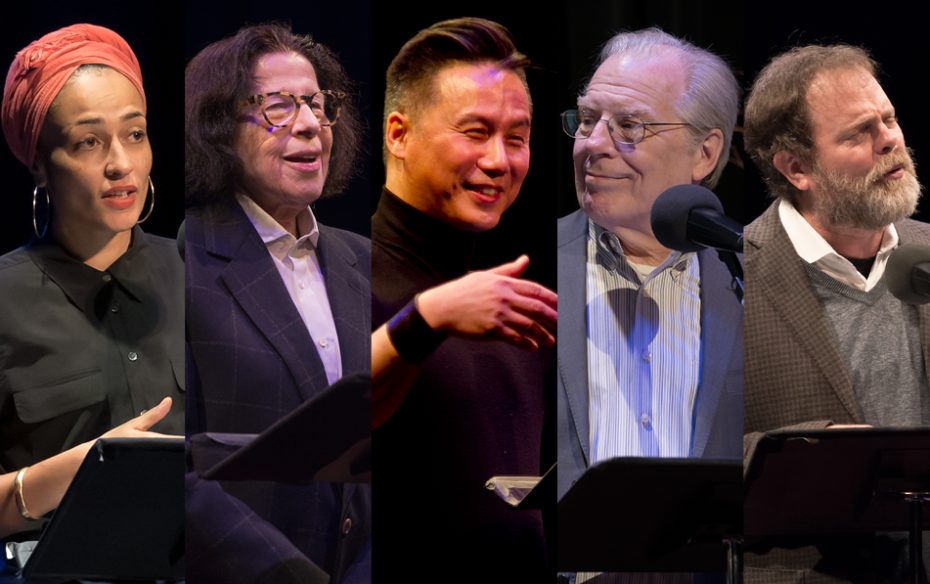
    Symphony Space makes a memorable return to its Upper West Side building for the 2021-2022 season that brings beloved cultural institution’s programs (Selected ShortsWall to Wall, and Bloomsday on Broadway) to new heights.

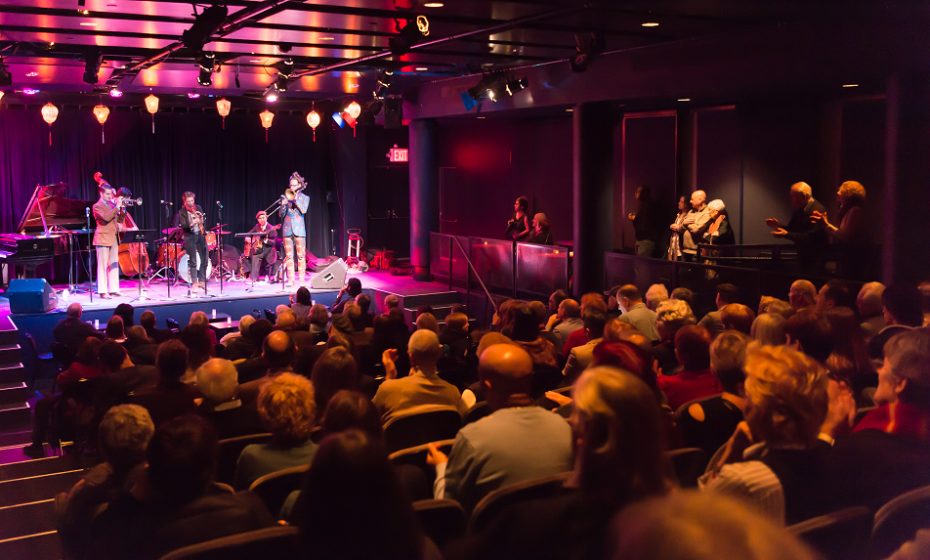
    The company has upgraded its Peter Jay Sharp Theatre and Leonard Nimoy Thalia Theatre with state-of-the-art equipment to both capture and stream performances along with presenting select future works from within the theatre for both in-person and virtually to viewers around the world.

    Symphony Space

    Programming will include three ‘Milestone Events’:

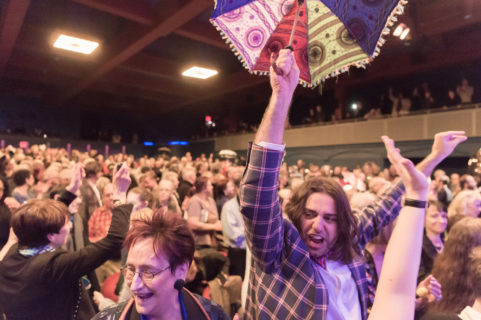
    Wall to Wall Selected Shorts, the “First-Ever Literature-Based Wall to Wall Event,” Allowing actors the capability to read, “Great,” fiction to a live audience combining two beloved signature Symphony Space programs (March 26, 2022)

    This monumental event celebrates—and expands upon—the literature-in-performance series in which well-known screen and stage actors read classic and new short fiction in front of a live audience.

    Symphony Space

    Symphony Space’s 50th Music Wall to Wall, a Marathon Tribute to Quincy Jones (May 14, 2022)

    Quincys discography makes him an ideal artist to honor at the 50th Wall to Wall. His global impact crosses from genres to generations, disciplines, and cultures.

    This tribute to Quincy will be a gathering of musicians, singers, dancers, actors, and more, along with a day-long, nonstop celebration. And, all of it will be free and open to the public, as every Wall to Wall has been since our founding.”

    Bloomsday on Broadway Celebration Featuring a New Production from Elevator Repair Service to Mark the Centenary of James Joyce’s Ulysses (June 16, 2022)

    Symphony Space

    Symphony Space’s annual Bloomsday on Broadway offers artists the chance to apply their own vision to the James Joyce masterpiece Ulysses, displaying across the decades the inspiration a brilliant work can have.

    The 2021-2022 Season will also include Residencies with Acclaimed Musicians Ravi Coltrane (February 3-5, 2022) and Meshell Ndegeocello (February 24-26, 2022)

    Ravi Coltrane is a Grammy nominated saxophonist, bandleader and composer while eleven-time Grammy nominee Meshell Ndegeocello is known for, “Merging soul, rock, and hip-hop to make a kind of R&B that is at once cerebral and interstellar” (Pitchfork).

    Symphony Space, A preforming Arts Center in the Upper West Side of Manhattan, Provides viewers with superb virtual performances, along with carrying potentials for accessibility into the future, through select programming presented in a Hybrid Format for Both In-Person and Remote Viewers.

    The Peter Jay Sharpe Theatre

    Symphony Space’s 2020-2021 virtual events engaged audiences in all 50 states, along with 56 countries.

    “What defines Symphony Space is our unique convening of artists and writers,’ Says executive director Kathy Landau. “This season is built around a magnificent array of artists and important milestone events, and we can imagine no better way to once again throw open our doors and welcome in audiences who found out about us during the last year.”

    Symphony Space traces its beginnings to Wall to Wall Bach, a 12-hour music festival conceived by playwright-director Isaiah Sheffer and conductor Allan Miller in 1978. With the success of the event, Sheffer and Miller decided to lease the building and turn it into a permanent cultural venue.

    Symphony Space
    The Leonard Nimoy Thalia Theatre

    Tickets go on sale in August, when additional season programming will be revealed.

    To Learn more about Symphony Space and their mission visit the webpage here