Vevo has revealed Brooklyn emcee Sheff G as the latest artist to get spotlighted in their Ctrl series, with performances of “Eeny Meany Miny Moe” and “Lights On” from his 2020 project, Proud Of Me Now.
Vevo’s Ctrl series highlights the work of hard-hitting, cutting-edge musicians making an impact in today’s music scene – both emerging and established. These artists demand attention, and Vevo’s Ctrl shines a deserving spotlight. Sheff G’s performance follows sessions from Rick Ross, Common, Rapsody, Fat Joe, Jeezy, Jadakiss, Fabolous, A$AP Ferg and more.
From the Flatbush section of Brooklyn, Sheff G — born, Michael Williams — gained recognition for his 2017 drill record “No Suburban.” The song’s popularity — along with a slew of other popular drill songs — helped usher in a new era of rappers from the borough and spotlighted the gang activity that often served as the pre-cursor to the music.
Following the success of “No Suburban,” Sheff G released his much-heralded debut mixtape, The Unluccy Luccy Kid. The project contained popular records like “We Getting Money,” “Flows” and “Designer,” with the latter two featuring friend and frequent collaborator, Sleepy Hallow.
Williams released his next project One and Only in May 2020, and Proud Of Me Now, which includes “Eeny Meany Miny Moe,” in December. He rounded out the year with singles “Light On” and “No Negotiations.” Donning a blue bandana themed shirt and pants, Sheff G’s live performances is a continuation of the rapper’s progression from homegrown talent to bonafide star. In usual Sheff G fashion, both records are thumping and assertive, displaying his fearlessness and bravado on the streets through his music.
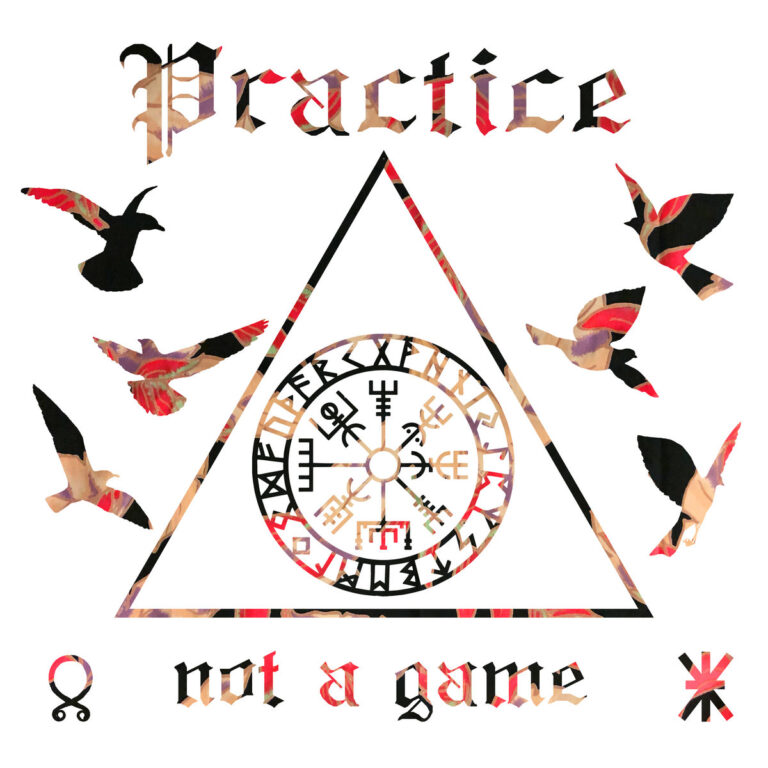
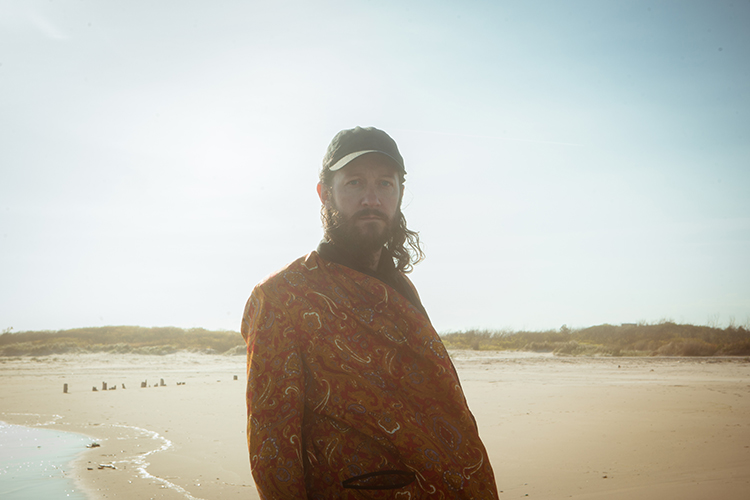
Indie electro artist Practice is set to release his debut solo album, Not A Game, on February 19. NYC-based artist Michael Tapper is developing his own sound under the moniker Practice. He combines synth usage with his deep vocals to illuminate the tone of his work.
Photo Credit: Guy Eppel
Not A Game is Michael Tapper’s first solo project. Prior to this, he was a drummer for We Are Scientists, Bishop Allen, Fool’s Gold, and Yellow Ostrich. Going from a collaborative environment to working alone prompts many challenges. Practice faced this exact difficulty and shares it with NYS Music:
Usually when working with someone else, we can find the areas and directions where we agree or feel like we can each contribute the most to create something we both will love, and that will determine what we try to make. My interests are very broad, so I had a hard time narrowing down the focus of what I wanted to do. Eventually I came upon the idea of forming a band out of analog synthesizers, which gave me some framework for structure. Within that, I could explore different types of songs that worked within those artificial constraints.
Michael Tapper
Having no collaborators to bounce ideas off was another obstacle Practice had to face, especially when working in unfamiliar capacities with many instruments. However, he found that his wife and friends were the solutions. The artist highlights, “I was surprised to learn that just listening to a song with someone else helped me to hear it differently than if it was just me listening to it in my studio. Somehow, you’re able to sort of hear it through someone else’s ears to some degree.”
The Power of the Synths
All the tracks in this album are unified by the instrumentation. The use of synthesizers is the main driving force behind Not A Game. The framework behind creating a solo project was to view it as a band, “with each band member being a specific synthesizer.” These “band members” consist of “a bass synth, a lead synth, a poly-synth that plays pads or rhythm parts, and a drum machine. Kind of like your typical rock band, but with synths.” In addition, Practice aimed to perform these songs live one day. So, he connected all the synths together to allow this.
The creative process behind utilizing these synths varied based on the arrangement. Creating new songs would sometimes start with a bass-line, a lead synth, a textural pad, or a drum machine beat. Practice utilized these “band members” as if it was an actual collaborative project with different sounds commencing each track’s development.
One result I liked about working with this framework was that in the end, the songs all shared a certain consistency in their sounds and textures because it was the same instruments on all the songs, even though the songs themselves might seem like they come from different worlds or genres.
Michael Tapper
Photo Credit: Guy Eppel
Finding Inspiration
A few songs on Not A Game are inspired by the 28-day sailing trip that Practice undertook from Mexico to Hawaii. The idea to make an EP stemmed from the thoughts and feelings experienced on this voyage. “They deal with feelings of loneliness, fear, and uncertainty – sort of these universal feelings that are relevant even when you aren’t out in the middle of the ocean.”
The album kicks off with the catchy single “After Life,” introducing feelings of being separated from the world. While the closer, “I’ve Had Enough,” is a more laid-back song. Practice shared, “I like to take the listener on a journey. I ultimately decided to start the album with ‘The Afterlife’ because I thought it introduced a lot of the elements of the record musically, but in hindsight, it really works lyrically as well. I liked that it started with just the richness of the synthesizers and then kicked into a groove that’s definitely danceable.”
Watch “The Afterlife” Music Video Here
Leaving an Impact
I hope people can relate to and connect with what I’m saying according to their own experience…But also, I hope people can just listen to the music and think it sounds good! I don’t really feel a need to be heard, like personally, and I’d be very happy if people wanted to put it on at a party and dance or put it on in the background as they work or work out or whatever. I hope that people can enjoy it in whatever way they can and need, like a musical multipurpose saline solution.
Michael Tapper
Keep an eye out for Not A Game, soon to be released on February 19. Get a sneak peek by checking out some released singles off of the album: “I Saw Love,” “Failure of Imagination,” and “I Don’t Need Love.”
In his debut novel Revolver, Evan Schwartz delves into a playground of fiction popular among music lovers, an alternative history of The Beatles and the late, great John Lennon.
From Bryce Zabel’s Once There Was A Way to Larry Kirwan’s Liverpool Fantasy to Danny Boyle’s recent film Yesterday, Lennon and his band have been catalyst for some interesting detours from reality. Schwartz’ Revolver is another – a quasi-mystical spin that rewrites the tragic history we all know too well.
Set in Long Island in the 1970s, Revolver is the story of two high schoolers, a boy and a girl who share a fierce, evolving love of rock ‘n’ roll and each other.
As the book opens, Charlie Mixner is pondering his requisite teen angst with insight provided by Lennon’s 1974 album, Wall and Bridges, and its signature tune, “#9 Dream.” At his school, Charlie is bullied for the scars he carries, purportedly from falling into a fire at this third birthday party. He’s a classic music nerd, one whose concerns over the bullying, his budding love and his parents’ failing marriage are salved by the endless stream of music he dissects like scripture. One such scripture is The Who’s second rock opera, Quadrophenia, which Charlie plays, or at first largely mimes, with a band he forms with a trio of largely instrumentally illiterate friends. He’s also a guy who spends weeks doing a March Madness-styled, round robin competition to determine his favorite all-time band.
Most importantly, Charlie is having persistent dark premonitions about Lennon. It sets him off on a mission to meet and warn the Beatle about an unknown danger he can sense but not quite put his finger on. The signals as to what may come are somehow communicated through sensations in his scars, another thing he can’t quite figure out.
His female counterpart Shayla is another teen afflicted with music mania. In an effort to both proselytize their shared tastes and establish the cred needed to meet Lennon via an interview, they both become writers for their high school paper. Charlie churns out impassioned album and concert reviews, with opinions not always shared or popular with his classmates. Shayla puts her teen angst on display via her poetry in every issue.
The book follows the pair through a couple of years and the many changes in musical styles and favored bands that came fast and furious in the 1970s. They go from The Beatles, Stones and The Who to Bowie’s glam, then Prog and Southern Rock, disco and, ultimately, New Wave and Punk. While Charlie cautiously goes with the changes, Shayla goes full bore as they happen – hanging in denims and halter top with the rowdy Skynyrd boys, then dancing mad to disco in a silky dress and, finally, a punk ethos and threads inspired by The Ramones and Chrissie Hynde.
The duo amiably stalk then ultimately come face-to-face with Lennon, a few times over the course of the book. This includes that critical night in December 1980, which serves as the novel’s climax. But what happens here shall be left to your own reading.
As a Queens, N.Y. native who came of age in 1970s, I can tell you that Schwartz’ take on Long Island and the times is spot-on.
There are tons of fun cameos by folks like The Stray Cats (Charlie’s classmates), Billy Joel, the various concert venues and WLIR-FM, the prime youth taste disseminator in L.I. during the era. And you have to love that the put-upon disco boy character is named Sergio Valente, after the jeans’ brand that was requisite dress for disco lads and lassies back in the day.
Revolver is coming-of-age story with a deep dive into the power of music, especially the role it plays in the emotional lives of young people. It is set in and gives a new appreciation to the 1970s, one of rock music’s most creative, change-filled and underrated decades. It’s a book that will have young and old alike heading to Spotify (or their dusty vinyl) to enjoy the many breakthrough albums that dress Schwartz’ imaginative and most enjoyable literary fantasy.
Madison Square Garden may be opening for live audiences sooner than one might think, according to President Andy Lustgarten. Their first in-person event will take place on February 23, 2021 for the Knicks game.
Governor Andrew Cuomo announced that arenas could open up to 10 percent capacity on February 10, 2021 using a testing- based program. People who provide a negative PCR test within 72 hours of the live event in question would be able to attend live entertainment like musical events according to the testing- based program.
At Madison Square Garden 10 percent capacity is about 2,000 people. Which means at the upcoming Knicks game against the Golden State Warriors 2,000 people can be cheering from the crowd. Although 2,000 isn’t that many, Madison Square Garden hopes that they “are on a path to continue to increase capacity,” according to Lustgarten. They hope that in time attendance will be able to increase beyond 10 percent before the basketball and hockey seasons end.
“This was earlier than we had expected,” Lustgarten told analysts on a Friday at the New York Post. And because of the fact reopening to live audiences was unexpected there are some things that are still up in the air. Like the fact there will be limited types of food for sale, but it’s unclear what types of food will be available in the upcoming events. Madison Square Garden says details will be coming soon on what options will be available.
This MSG reopening is coming just in the knick of time for the arena with its second fiscal quarter, ending in December of 2020, was down $23.1 million which is 94.1 percent from the previous year’s $394.1 million according to Billboard. The live entertainment industry has been harder than most industries by the COVID-19 pandemic. The fact that live shows are slowly but surely coming back is the light at the end of the tunnel the industry has been searching for.
For more information on Madison Square Garden visit their website.
Just as we were losing hope in live music and festivals, it looks like there is a light at the end of the tunnel. The Rochester International Jazz Festival is in the planning stages for their nineteenth edition which will be hosted on the Rochester Institute of Technology (RIT) campus.
Planning is a challenge when we don’t know what the future will bring. We do know that this year’s Festival cannot go on as usual. The way we work and how we live has changed. We are very encouraged that vaccines are becoming more available. And if public health guidelines allow us to proceed this summer, we must adapt to this new environment, which will require a more flexible and spacious festival footprint. The RIT campus meets that criteria.
Marc Iacona, Festival Producer and Executive Director
The original date for the festival was June 19, 2020. Unfortunately COVID-19 brought upon a nationwide shutdown of crowded concerts. Because of this, Iacona and his partner John Nugent had to postpone the festival a few times until their latest decision, July 30 through Aug. 7. Over 200,000 people attend the annual nine day festival, but this year Lacona and Nugent are orchestrating a safe way to go about the event.
Nat King Cole at 100 with Paul Mariano.
“With Covid-19 and health consequences squarely on the minds of all event-goers around the world, we again find ourselves at a crossroads,” said Iacona and Nugent. “We are deeply grateful to our loyal patrons and sponsors and for countless messages of support as uncertainty prevails. Early February now brings us to a critical junction as we explore how to potentially present a festival, secure programming, and put together the plethora of logistics.”
Throughout the course of the global pandemic, musicians have resorted to a different method of live performances. Live-streaming took to the internet in 2020 to provide a safe haven for those yearning to attend a live show. The Jazz Festival is the beginning to a new chapter for live music.
The CGI Rochester International Jazz Festival was founded in 2002, with performances by over 1500 artists from all over the world. Through the years, those artists have performed more than 350 shows at 20 venues. Lacona is a community and business leader, while Nugent is an experienced tenor sax player and the artistic brains of RIJF, but their goals for the festival are the same.
“The essence of our Festival has always been to bring our community together, drawn by the majesty of creative improvised music and celebrating as one entity,” said Nugent. “While this new location will be a change for us all, and the first time we are not downtown, we will still shine the musical spotlight on greater Rochester. We are committed to making every effort to include the City of Rochester and many of our downtown-based partners at this new location. We will create a festive atmosphere including a Jazz Street, assure the ability to walk between venues, and offer a shuttle service.”
Anyone can buy tickets from the RIJF website and club members can use their passes.
In episode 111, Ben of Rochester Groovecast shares nostalgic memories with Matt Green, Entertainment Director and Co-Owner of Flour City Station.
“Flour City Station is located at 170 East Avenue, in Rochester, NY. Rochester is steeped in music tradition; from the Eastman School of Music just down the street, to the longstanding music festivals such as the Jazz Festival, East End Fest, Fringe Fest and Party in the Park. Flour City Station (FCS) provides its customers with a unique and friendly environment for enjoying the best live music Rochester has to offer. We are set up to accommodate musicians with a state-of-the-art sound system. We cater to a wide base of genres of music featuring both local performers and nationally touring acts. With our friendly, accommodating staff, the Station offers an experience to patrons that is unrivaled by any other establishment in Rochester. We offer customers a safe, friendly social atmosphere where they can catch up with old friends, meet new ones, and enjoy premium live music. Simply put…we are all about the bands, the fans and the experience!”
Timestamp:
00:31: “Nasty Old Man” by The Honey Smugglers
04:27: Episode Introduction
05:30: Conversation with Ben and Matt
33:24: “September Doves” by Lost Dog Street Band, live at Flour City Station
At Rochester Groovecast, the mantra “We’re Fans First!” harnesses the belief that the best businesses are built by fans. The podcast is deeply dedicated to playing an active role in the culture of its local scene.
The brainchild of Rochester native, Ben Albert, was created in 2016 to serve as a portfolio of the city, and nowadays, the entire region.
The podcast believes in the artistic brilliance abundant in Rochester, NY, and the surrounding regions. Ben seeks to play a pivotal role in our community by helping give Rochester a well-earned voice. He has seen first hand the abundance of talent, character, creativity, innovation, and beauty the Flower City has continuously offered.
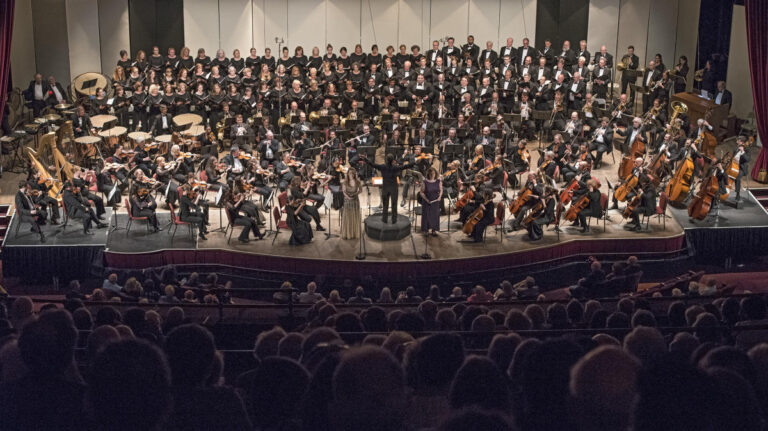
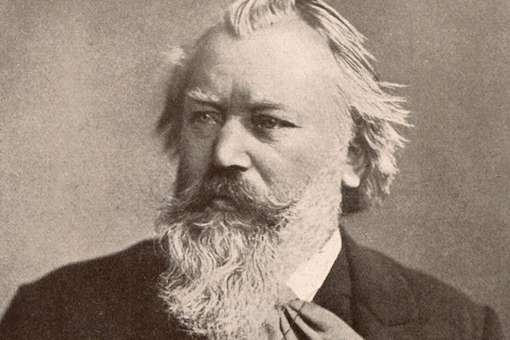
On February 13, the Albany Symphony Orchestra performed three works: Sir William Walton’s Facade: An Entertainment, Tyson Davis’s Distances, and Serenade in D, op. 11, by Johannes Brahms. The concert was streamed virtually from Universal Preservation Hall in Saratoga Springs.
William Walton was a British composer known for his instrumental writing, and was nominated for two Academy Awards in the 1940’s. He was inspired by a friend’s poem to write Facade. It started as a piece just for speaker and six instruments, but Walton later expanded it to an orchestra. The ASO did well on this piece. The speaker, Lucy Fitz Gibbon, navigated the tricky passages and was able to shine.
The next piece performed by Albany Symphony Orchestra was Distances. It was composed by Tyson Davis. Davis, 21, a young but talented composer. He entered the UNC School of the Arts, studying with Lawrence Dillon. Later, he wrote for Eighth Blackbird, the Attacca String Quartet, and UNCSA Symphony Orchestra. He worked with the National Youth Orchestra to premiere a work that was commissioned by the American Embassy in Berlin to commemorate the 30th anniversary of the fall of the Berlin Wall.
Written after the start of the COVID-19 pandemic, Davis wanted to explore themes of emotions and anxieties that the “New World Order” of a pandemic have caused. To do this, he left the piece with ambiguity and lingering passages.
Brahms was a dominant composer of the nineteenth century; he was not revolutionary in terms of structural change, but he wrote beautiful, sweeping melodies. The Serenade was his first work for a “larger” group (originally eight people). The piece usually contains six movements, but the ASO opted instead for a rarity. Instead of those six, the ASO played four. Symphonies are traditionally four movements, not six, so the ASO played movements 1, 3, 4, and 6. With these four, it encapsulates what a traditional symphony is: a faster first movement, a slow second, a minuet or scherzo third, and a fast finale.
Brahms originally cast the work in four movements. Like so many of Brahms’ early efforts, that original form suggests a young composer wrestling with specter of the greatest of all symphonists, Beethoven, and trying to create a first symphony. The other movements were added later to create the Serenade.
Overall, the Walton was phenomenal, especially with the addition of Gibbon. If I had to describe Davis’s piece in one word, it would be, emotional. The piece evokes emotions that everyone is feeling. The symphonic arrangement gave better understanding of an earlier Brahms symphony.
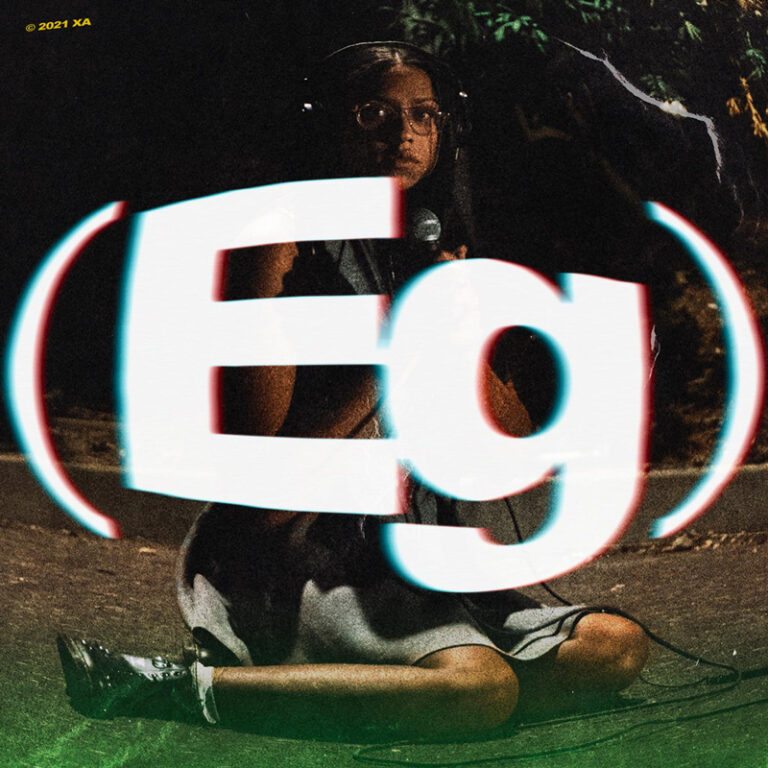
The moody and mesmerizing track is the latest release from X Ambassadors’ (Eg) — a recently launched multi-part project featuring collaborations with an eclectic mix of emerging artists.
A detailed meditation on longing and regret, “skip.that.party” spotlights the sensitive yet incisive songwriting that McRae’s previously shown on tracks like her unforgettable 2020 single “Wolves.”
As McRae and X Ambassadors lead singer, Sam Nelson Harris, trade off vocals, “skip.that.party” takes on an undeniable and immersive power, sharply contrasting its understated beauty.
As with all of the artists featured on (Eg), X Ambassadors approached McRae out of deep admiration for her one-of-a-kind artistry. “My wife showed me ‘Wolves,’ and I was immediately devastated by how good it was,” said Harris.
“I hit Jensen up on Instagram and asked if we could write together, and everything took off from there. It blows my mind that more people don’t know about her or any of the other artists on the project, and I’m so excited to share their music with our fans.”
“skip.that.party” arrives as the follow-up to “ultraviolet.tragedies” by X Ambassadors with Terrell Hines, the euphoric yet explosive lead single from (Eg).
Like “ultraviolet.tragedies,” “skip.that.party” is accompanied by a documentary-style visual that breaks convention by integrating elements of commentary and off-the-cuff conversation.
To that end, the “skip.that.party” video finds Harris and McRae remotely discussing such topics as poetic realism, the struggle for presence in chaotic times, and McRae’s experience growing up caught between the wild glamour of Los Angeles and the utter boredom of the suburbs.
(Eg) came to life as X Ambassadors completed their third full-length effort, due out later this year. According to Harris, the project has already had an indelible impact on their evolution as creators.
“All the artists we’ve worked with on (Eg) have reminded me how important it is to make what you love and not think twice about it,” said Harris. “When people hear the project, I hope they come away with that same sense of freedom, and also just feel the pure joy that comes from the art of collaboration.”
“skip.that.party” by X Ambassadors with Jensen McRae is available now at all digital outlets via KIDinaKORNER/Interscope Records.
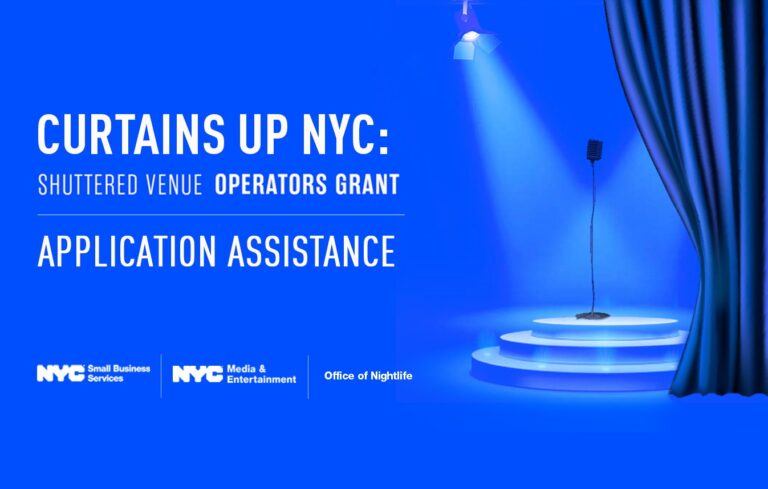
New York City announced it’s Curtains Up NYC government program which will work with the Federal Shuttered Venue Operators Grant process on February 8, 2021. This grant and program are available to help venues suffering from the COVID-19 pandemic with services provided by the city for free. The program will provide application assistance to live-performance venues, organizations and workers applying for federal relief.
The program and grant was announced by Mayor Bill de Blasio, NYC Mayor’s Office of Media and Entertainment (MOME), Commissioner Anne del Castillo, and NYC Department of Small Business Services (SBS) Commissioner Jonnel Doris. The Federal Shuttered Venue Operators Grant is made for businesses or nonprofits who are connected to live performances. These organizations could get a grant up to, or equal to, 45 percent of their 2019 gross earned revenue, capping out at $10 million. Shuttered Venue Operators Grant bloomed from the Save Our Stages initiative.
The Shuttered Venue Operators Grant is available to operators or promoters of live performance venues including, but not limited to: theater, music, arts organizations, movie theaters, talent representatives, museums, zoos and aquariums. In addition, they must meet certain guidelines including active operation as of February 29, 2020, and they must not have applied for a PPP loan on or after December 27, 2020.
The Shuttered Venue Operators Grant isn’t accepting applications yet, but people interested in applying are urged to start organizing their application. To prepare for the application process people should register for the federal System for Award Management (SAM), which will be a required part of the application. People need to know their D-U-N-S number to register in SAM. You can get a D-U-N-S number on the Dun & Bradstreet website. You should check the federal government’s website for the most recent updates on when and how to apply and for frequently asked questions. Watch the federal government’s webinar on YouTube and Register for email alerts from the federal government about the Shuttered Venue Operators Grant so you will be the first to know when applications open.
In the meantime, you should check out the Curtains Up NYC program. Curtains Up NYC provides free application assistance for the Shuttered Venue Operators Grant. Curtains Up NYC offers free webinars and one-on-one counseling for people interested in applying for the grant. The Services are free starting on February 10, 2021.
For more information on the Curtains Up NYC program and the Federal Shuttered Venue Operators Grant Process visit their website here.
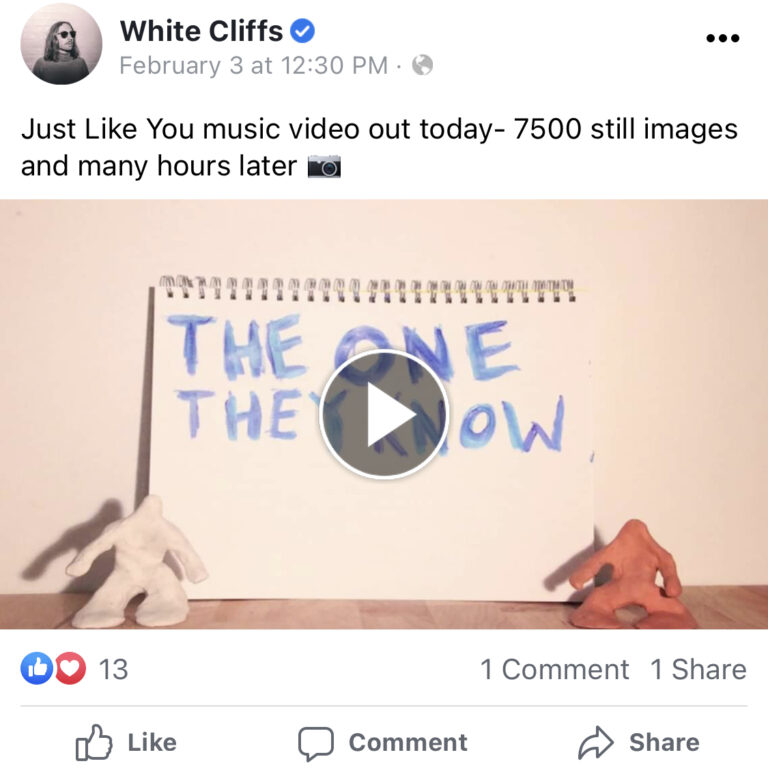
On February 3rd, Brooklyn-based electronic rock artist White Cliffs (Rafe Cohan) released an endearing claymation music video accompanying his newest single, “Just Like You.” Garnering a lot of attention from fans to art enjoyers alike, the video is impressively mesmerizing and perfectly captures the feeling of imposter syndrome. The single kicks off the beginning of his upcoming EP, Stockholm, to be released February 19th.
The music video is directed, produced and edited by Rafe Cohan himself and features two clay creatures, identical except for color, that are constantly molding themselves into vibrant animations and dancing around each other. Previously having expressed his struggle with accepting his true self, Cohan created a perfect visual aid to his music and the message he wants to send.
I wrote the song about our playful and hypocritical struggle with accepting our true selves. And that struggle is just a part of pursuing a career as a musician… You’re constantly drawing this attention to your project, and in the process, you end up learning quite a bit about yourself, both good and bad. Usually, you experience some denial or imposter syndrome, but after time passes, you are left with acceptance.
Rafe Cohen, on the meaning behind “Just Like You”
With this track, the artist set out to challenge conformity and use unconventional means, such as a Roland organ/strings synthesizer that allowed him to experiment at the base level, the underlying chords. This idea alongside an unorthodox topic and video meshes together beautifully to create a sense of ease and nostalgia.