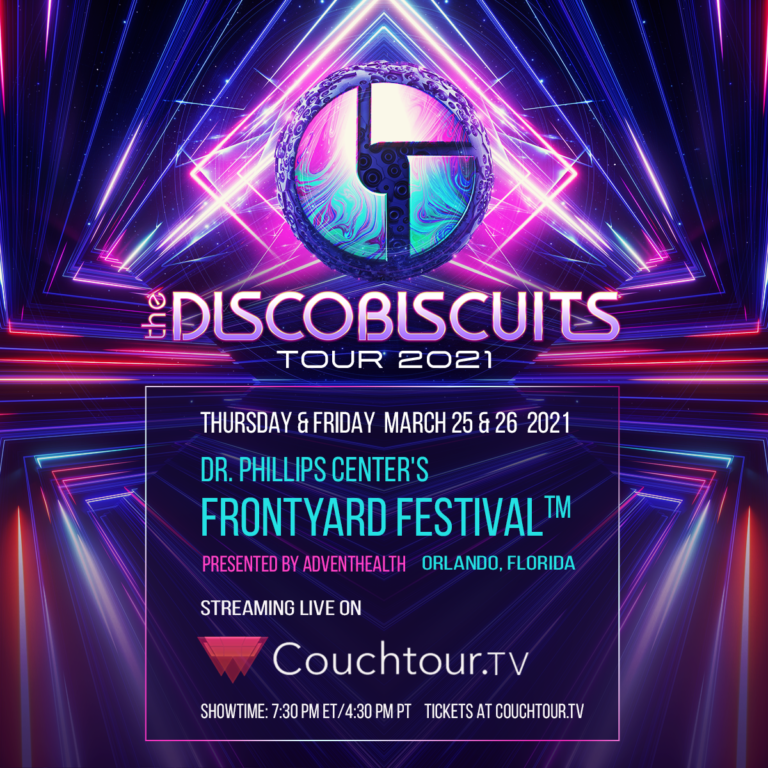
The Disco Biscuits’ upcoming Orlando performances from Dr. Phillips Center’s Frontyard Festival will be livestreamed on Couchtour.tv on Thursday, March 25 and Friday, March 26, starting at 7:30pm ET.
Couchtour.tv is a new concert streaming platform that gives artists the ability to create the highest quality concert livestreams available on the internet; filmed and delivered in 6k video and high def audio from anywhere on Earth – and all without the artist having to know a thing about livestreaming.
The Couchtour.tv team brings insight from many different facets of both the entertainment and tech industries. The senior team comes from leadership roles at companies The Disco Biscuits, JamBase, Splice, Gracenote, Full Circle Music Productions, Oracle and IBM. Still in it’s infant stages, fans and artists can expect to see advanced features and new artists, shows and festivals announced in the coming months.
Disco Biscuits founding member and lead guitarist, Jon Barber, is the founder of Couchtour.tv. Thus, it made perfect sense for his band to perform on the startup platform when it launched in October, 2020.
Couchtour.tv wasn’t a new idea, but time that would have otherwise been spent on the road opened up the space to finally bring Couchtour.tv to fruition. We’ve got a great team working on this, but it’s still gonna’ be a few months before we can roll this out in its complete form – bells, whistles and all – then it’ll be available wherever fans go to get their apps.
Jon Barber, Disco Biscuits guitarist and founder of CouchTour.Tv
Tickets for the Disco Biscuits Orlando streams are on sale now and available at Couchtour.tv.
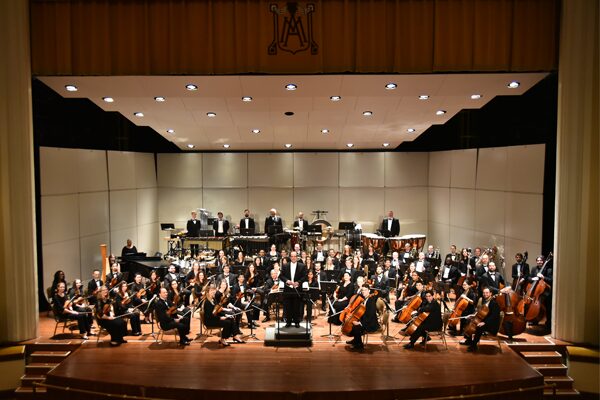
GRAMMY-winning Albany Symphony Orchestra music director David Allan Miller announces its 2021-2022 season, featuring Timeless Masterpieces from Beethoven to Tchaikovsky and several other exciting composers of current time.
The Albany Symphony
The season will honor Music Director David Alan Miller’s 30th anniversary, as well as virtuosic soloists: Richard O’Neill, Shai Wosner, Eric Berlin, Peter Kolkay, Maya Buchanan, Gloria Cheng and Timothy McAllister. Other composers include John Corigliano, Jessie Montgomery, Viet Cuong, John Williams, Tania León, and more.
“We are thrilled to be able to share some of the greatest works of all times with our subscribers and patrons, especially after an enormously challenging, difficult year,” said Albany Symphony Music Director David Alan Miller. “We will perform many of our very favorite classics, from Scheherazade to Mozart’s Jupiter and Tchaikovsky’s Pathétique Symphonies. And, we will also celebrate many of the most exciting composers of our time, including Jessie Montgomery, Viet Cuong, and my dear friend Tania León. I’m looking forward to several exciting commissions and world premieres and feel so fortunate to be joined in my anniversary season by so many creative artists and great performers who mean so much to me.”
The season opens in October 2021 with Beethoven’s Symphony No. 3 Eroica, one of the most transformational works in music history. The musical catalogue glides from classics to modern composers, showcasing many talents through a variety of musicians.
The 2021-2022 season runs from October through the American Music Festival in June. Subscriptions offer patrons the opportunity to purchase their favorite seat before tickets go on sale to the general public. The Compose Your Own season subscriptions offers flexibility and convenience. Through the Nielsen Associates’ Student Access Program, students can purchase discount subscriptions and enjoy the full benefits of being a subscriber for as little as $45. To purchase a subscription online, visit http://www.albanysymphony.com or call the Albany Symphony Box Office at 518-694-3300.
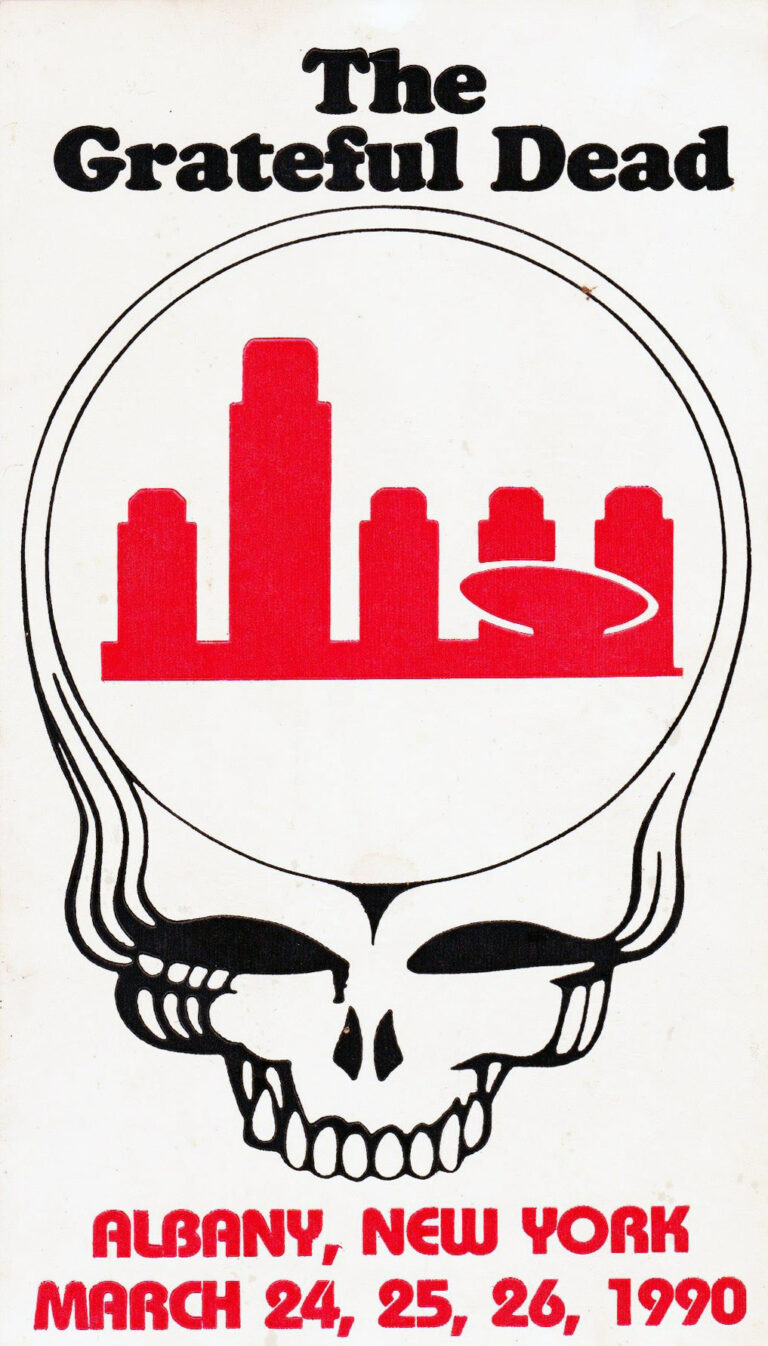
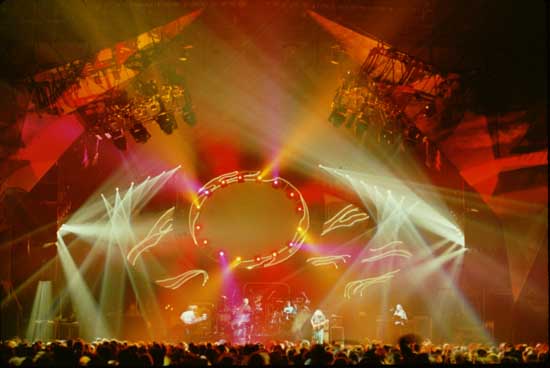
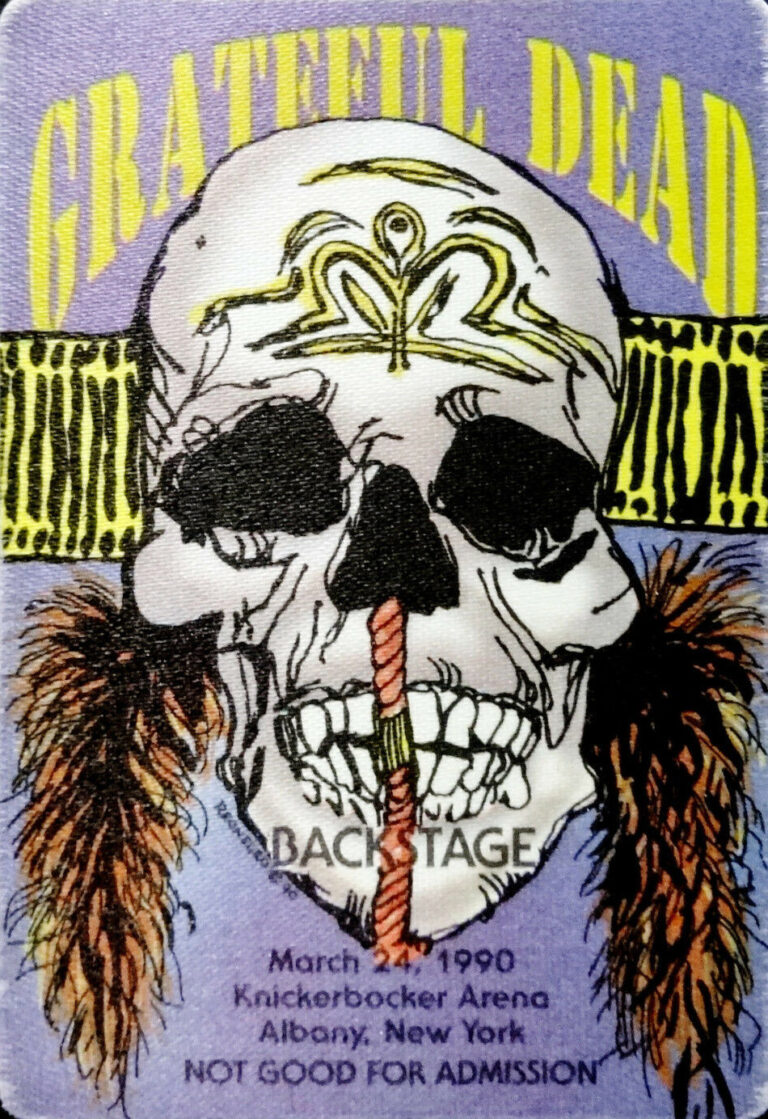
31 years ago today, the Grateful Dead were finally able to play a show in the city of Albany thanks to the brand new Knickerbocker Arena, aka The Knick. Somehow, they had gone all this time without ever paying a trip to New York’s capital. But now with a shiny new venue opened just months earlier that easily fits thousands, Albany became a logical destination for the Dead. This would mark the first of thirteen shows the band would play at this venue. But Spring of 1990 is a particularly special time of Dead, one of their most acclaimed and widely popular tours of all time. So it’s only fitting that these first Albany shows are captured in the band’s 1996 official live release Dozin’ At The Knick. Much of the album’s material is rightfully culled from this special, first ever Albany Dead show.
Local promoter Greg Bell of Guthrie/Bell Productions played a small but critical role in those March 1990 shows.
A friend of mine worked for Mayor Whalen and I was the only Deadhead she knew, so they asked me to come in snd speak to the Mayor’s people, the Police, Fire Department and several other various Albany officials.
I gave them advice on how to deal with the Deadheads. They listened to everything that I suggested and it was one of the most relaxed and cool scenes I had ever seen at an East Coast show.
This would be the first night of a three-night run in Albany and the Dead were quickly and comfortably settled in at the Knick. This sentiment comes across in the quasi-casual start to the “Let The Good Times Roll” that opens the show this evening. By the end though, the band is fully engaged, as is the rest of the building. Riding this early wave, the band then quickly jumps into the crowd favorite “Help On The Way.” Jerry Garcia digs into his guitar’s bag of tricks and comes up with some interesting effects on “Slipknot!” And despite some shaky early lyrics, there’s no issue with the dismount on “Franklin’s Tower” and the Knick crowd eagerly shows their love for this quintessential sequence of Grateful Dead.
Bob Weir then takes center stage and coolly leads the band through “Walkin’ Blues” which is featured on the album. But somehow, to the disbelief of Deadheads worldwide, the “Loser” that follows somehow did not make the final cut. A goosebump-inducing roar of approval from the Knick greets this one and the performance certainly lives up to it. Garcia’s singing is steady on this one and his poignant solos along with Brent Mydland’s blasting organ fills help fuel this instant classic.
The first set also features “Desolation Row,” one of the many Bob Dylan songs the band would cover and make their own. More delicate guitar licks from Garcia and intricate bass play from a “turned up” Phil Lesh dominate this one. The Dead’s first ever set at the Knick then closes up with a lively take on “Tennessee Jed,” with the crowd in full sing-along mode, and Bob Weir’s typically rowdy “One More Saturday Night.”
With their first set at the Knick now in the books, the Grateful Dead then proceed to rip through a second set that, justly, makes up a significant portion of the album. It fills up the entire second and some of the third of the three-disc release. “Playin’ In The Band” is the set opener choice and sets the tone nicely. Phil Lesh and his vibrant bass play continue to shine early on this one before the jam begins to stretch and digress. Mydland and his electric keys also add a spiritual element to this jam that gets heavy in a hurry. However, instead of truly going off the deep end, the jam calmly and steadily veers into the opening chords of “Uncle John’s Band.”
March 24, 1990 Knickerbocker Arena
This band rips through the composed section with ease, stretching it out nicely between verses with ease. This proficiency carries right over to another quick and rapid-fire type jam, one that seems to almost be a continuation of PITB. But instead of stretching it out again, Garcia quietly begins strumming the open to “Terrapin Station,” much to the crowd’s delight. This caps the set’s powerhouse opening trifecta of Dead classics.
The whole band is locked in on the song and it’s customary outro jam never gets stale on this one, with each member adding a little “spice” of their own to keep it interesting – Mydland especially. But as the jam loses its “Terrapin” structure, an old friend emerges. A slow-building familiar four chord jam begins to develop, none other than the “Mind Left Body Jam.” Dead scholars maintain this is the first one in more than five years, if not longer. It’s believed by some to be related to the Paul Kanter song “Your Mind Has Left Your Body” and also shares the same chord progression as “You’re All I Need To Get By,” among other songs. To the Knick’s delight, the Dead dust off this simple, pyschedelic instrumental that’s labeled on the album as “Mud Love Buddy Jam” in a nod to a former taper’s description of it.
After lengthy “Drums” and “Space” sequences led by drummers Bill Kreutzmann and Mickey Hart, “The Wheel” emerges in boisterous fashion. But this one is kept pretty short and simple. At its conclusion, another familiar Dylan cover immediately takes shape, this time it’s “All Along The Watchtower.” Garcia produces a bed of wailing guitar sounds that dominate this cover that’s been a part of the Dead’s live repertoire since 1987.
After the band is done toying around with the “Watchtower” jam, things slow down one last time for a typically poignant Garcia-sung “Stella Blue.” Brent Mydland leads the backup harmonizing vocals while Garcia delivers a pair of hauntingly beautiful guitar solos in a staggering, soulful juxtaposition to the raucous “Watchtower” from just minutes earlier.
The opening shuffle-beat of “Not Fade Away” then emerges, giving the Dead one last chance to jam. They rip through the Buddy Holly cover with no abandon, gladly declaring their love “will not fade away.” This then devolves into Weir singing by himself while the rest of the band phonetically sings the beat before it then turns into the full Knickerbocker Arena crown singing the chorus back to the band well after they’ve left the stage- a truly special Grateful Dead moment that Dozin’ captures beautifully.
Grateful Dead Knickerbocker Arena – Albany, NY 3/24/90
Set 1: Let The Good Times Roll, Help On The Way-> Slipknot!-> Franklin’s Tower, Walkin’ Blues, Loser, Desolation Row, Tennessee Jed, One More Saturday Night
Set 2: Playin’ In The Band-> Uncle John’s Band-> Terrapin Station-> Mind Left Body Jam-> Drums-> Space-> The Wheel-> All Along The Watchtower-> Stella Blue-> Not Fade Away
Fans of legendary hip hop duo, Black Star, received a major boost when Talib Kweli shared promising news regarding the duo’s long-awaited album. Announced in 2018 by Yasiin Bey during a Madlib DJ set, the much-anticipated project has gone from its infancy stages, to being recorded, mixed and possibly completed in the matter of a couple of years.
Yet, in that same time frame, Kweli — who holds more of a social media presence — has shared periodic updates on the album’s progress. In fact, just this past summer, Kweli announced that he had “washed his hands” of the whole thing, in social media posts in which he shared frustrations on the project’s delay.
Fortunes seem to have turned around as Kweli’s latest Instagram post suggests the duo are in the latter stages of the album’s completion and eventual release. In a picture with group-mate Yasiin Bey, the caption reads “#sampleclearance #blackstarforever.”
While fans have been made to wait, the album’s existence has been confirmed as comedian Dave Chapelle, a personal friend of the duo shared his thoughts on the project, claiming that “it’s fire.”
While Kweli and Bey have solidified themselves as legends in the hip hop realm and beyond, they have only released one album as a duo, 1998’s Most Def & Talib Kweli Are Black Star.” With the speculation of an impending release, fans of the duo are surely tantalized by the thought of a new Black Star project.
Goose has announced the release of their eagerly awaited new album, Shenanigans Nite Club, slated for a Friday, June 4 release. They’ll embark on a summer tour, of which the first dates are already sold out. Tickets go on sale Wednesday, March 24 at Noon via pre-sale, with code ‘SHENANIGANS,’ with general on-sale following on Friday, March 26 at 10AM local time.
The Norwalk, CT-based band’s second studio LP and first full-length collection in more than five years, Shenanigans Nite Club, which follows the recent release of their cover of Vampire Weekend’s “2021 (January 5th, to be exact).” The track was personally commissioned by Vampire Weekend’s Ezra Koenig – a longtime Goose fan – with the only directive to make it twenty minutes and twenty-one seconds long.
Shenanigans Nite Club is led by a the mesmerizing new single, “Spirit of the Dark Horse,” which is generally recognized as the first Goose song ever written. The boldly ambitious track – which originated after a “twelve-minute meditation” between co-founders Rick Mitarotonda (vocals, guitar) and Trevor Weekz (bass) – has long been a setlist rarity, featured in only a handful of live performances during the band’s early years.
The album serves as an ode to oft-forgotten vestiges of Goose’s musical journey, both personal and collective. Shenanigans Nite Club marks the apex of the rich history between friends of differing ages and experiences from the same small town in Connecticut, drawn together through a deep love of music and storytelling. Songs like the tectonic “Labyrinth” and the ruminative deep-dive, “SOS,” fluidly traverse genres with head-spinning hooks, technical fireworks, and the kind of rare chemistry only possible among truly close collaborators.
While we’ve been touring, the record has been happening in the background. It’s been quite the process. At times, it was difficult. The record is a companion to those growing pains.
Our dream is to inspire people to step off the beaten path. There are a lot of voices that tell you to play it safe. I think the coolest thing in the world is when someone breaks free and goes for whatever weird shit they dream of doing.
May 3-4 – Frederick, MD – Showtime At The Drive-In – SOLD OUT May 6 – North Charleston, SC – Riverfront Park – SOLD OUT May 8-9 – Pelham, TN – The Caverns Above Ground Amphitheater – SOLD OUT June 11 – Swanzey, NH – Northlands June 12-13 – New Haven, CT – Westville Music Bowl June 15-16 – Perry, NY – Silver Lake Drive In June 18-19 – Thornville, OH – Legend Valley July 2-3 – Eau Claire, WI – The Pines Music Park
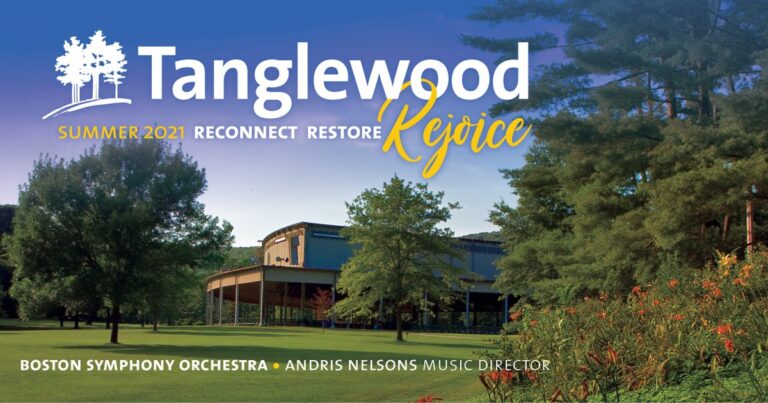
Tanglewood has announced the return of live music at its premises for Summer 2021. The famed Berkshires venue will host shows between July 9, 2021 through August 16, 2021 for six weeks of shows and entertainment.
Tanglewood is the summer home of the Boston Symphony Orchestra which owns and operates the venue. The venue is located in the Berkshires, more specifically, Lenox, Massachusetts. The Tanglewood Concert series started under a different name all the way back in 1934 and has since grown into the staple of the Berkshires it is today. The first show hosted by the Boston Symphony Orchestra was a three-concert series and was performed under a large tent for an audience of nearly 15,000, and now brings in an annual draw of over 350,000 visitors. According to its website, “Each season offers not only a vast quantity of music, but also a vast range of musical forms and styles, all of it presented with a regard for artistic excellence that makes the festival unique.”
Although there isn’t a lot of information released yet on the Tanglewood Summer 2021 Season return, it is known that the season will take place between July 9, 2021 and August 16, 2021.
Details about the 2021 Tanglewood season’s programming was announced on April 8, 2021. Tickets will go on sale to the public on May 17, 2021.
The 2021 season will feature conductors including Andris Nelsons, Thomas Adès, Keith Lockhart, John Williams, and Anna Rakitina, along with many special guest artists such as Emanuel Ax, Lisa Batiashvili, Herbert Blomstedt, Yefim Bronfman, Karina Canellakis, Alan Gilbert, Leonidas Kavakos, Yo-Yo Ma, Anthony Marwood, Wynton Marsalis, Baiba Skride, Byron Stripling, Jean-Yves Thibaudet, and Daniil Trifonov.
Performances will feature works by Beethoven, Brahms, Copland, Dvořák, Gershwin, Haydn, Mendelssohn, Prokofiev, Ravel, Schumann, Stravinsky, and Tchaikovsky, along with works by Thomas Adès, Iman Habibi, Vijay Iyer, Hannah Kendall, Elena Langer, Missy Mazzoli, Jessie Montgomery, Carlos Simon, and Mary Lou Williams.
‘Friends of Tanglewood’ will have access to advance ticketing before the public. To become a ‘Friends of Tanglewood’ all someone has to do is make a donation of $100 which can be done here.
The Boston Symphony Orchestra and Tanglewood will follow local and state guidelines to protect all participants as much as possible during the COVID-19 pandemic. For more information on the the Tanglewood Summer 2021 season visit their website.
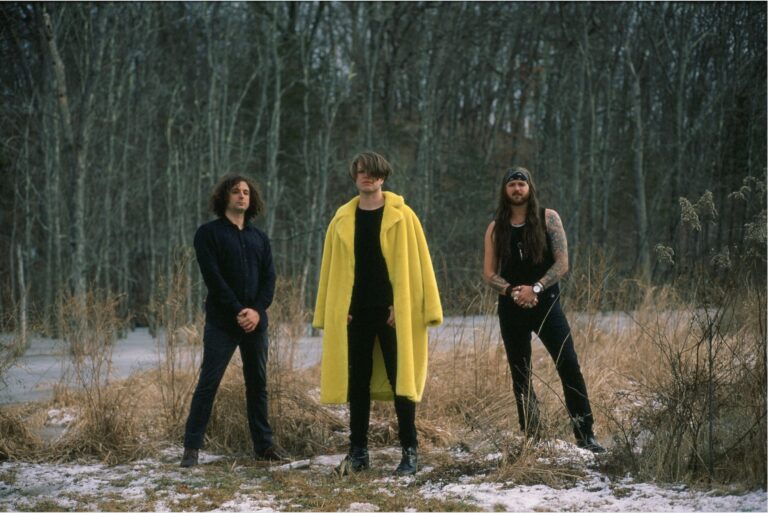
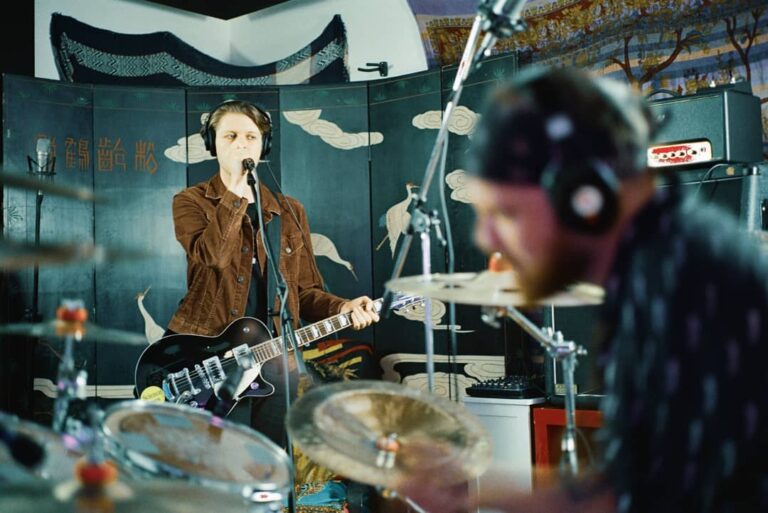
On Thursday, March 25, up and coming band Public Nature will perform a livestream event to support Arlene’s Grocery. Due to the unfortunate circumstances that COVID-19 has left indie music venues in, without the support of live music crowds, Arlene’s Grocery is in need of funds to remain open.
Arlene’s Grocery, located on the Lower East Side, has seen many young and well known acts get their start, including Arcade Fire, Lady Gaga, Lana Del Rey and Jim Carrey. You may also recognize Arlene’s Grocery from the #SaveOurStages movement, where now Senate Majority Leader, Senator Chuck Schumer, was seen on the street showing his support for the venue.
Tickets are just $10 with an option to donate to help save this historic venue. You can purchase tickets to the event here.
NYS Music’s Rob Tellerman recently spoke with the band’s frontman, Oscar Canas, and found out his roots growing up in Colombia and what got him interested in coming to America to pursue music. He was kind enough to perform some songs exclusively for NYS Music.
Rob Tellerman: Where did you grow up?
Oscar Canas: I grew up in Medellín, I’d say it’s Colombia’s prettiest city. It’s a very cosmopolitan place where “everything is happening”. It’s very similar to New York City in many ways, it’s 5 million people but feels very small, maybe it’s the layout. The weather is the best, it’s called the city of the eternal spring, 75° all year long. No humidity, just perfect. When it’s cold is 70°, when it’s hot is 85°. It was very violent when I was a kid, Pablo Escobar was gone and there was a war of power going on. Many kids were killing each other fighting for a corner. I saw dead bodies my whole childhood, many of them where my friend’s “big” brothers. The city is a valley so it’s surrounded by mountains that reflect the sound of thunders in a beautiful way, I miss that sound. A thunder reverberating across the city for several seconds and you know what neighborhoods is hitting and then it bounces again and you know it is south or west or is leaving the valley. And when it rains the clouds are purple, an apocalyptic beautiful purple color.
We have the second best train in the world and one of the two only profitable ones. It’s a highline, we don’t have a subway, the ride is clean, punctual and picturesque. Not that graffiti is bad, but there is not a single graffiti on it inside or out. Leaving the city through the mountains is best, there are cables spread out so you get these steep and very high advantage points that are super fun if you’re not afraid of heights. Quite an immense view. My childhood was half good and half bad. It was fun, I had a good education, tons of bicycle rides, friends, exposure to science, but it was violent inside and outside the house. My dad was a crazy dude. He’s cool now and mom and dad love eachother but it was bad back then. What saved me was the huge amount of love they gave me, as my grandparents and aunts and uncles did too. I was a very loved child that witnessed a lot of violence. Is that a good balance that can create and nourish an artistic drive. Maybe.
RT: What first got you interested in music?
OC: Now that I look back on it, my interest in music happened unconsciously first. My family used to gather all at somebody’s home for christmas and such and music was the centerpiece of the fun. By the end of the night after eating and dancing, everybody would sit and my dad and uncle would swap vinyls endlessly. My first memory of music is maybe at 3 years old. I remembered I liked the music and that I missed it, but I never elaborated on it until I was a teenager.
These vinyls were mostly 60, 70 and 80’s italian, french, spanish music. All in spanish. The artists would sing in spanish their originals. These songs were so melodic and catchy and epic. The singers voices were always unique and the quality of the recording inmence and I can say in many occasions better than those of my favorite big bands like Led Zeppelin, The Beatles and others like that. So, so, so catchy. They had the beatlesque simplicity of the verse-chorus-verse kind of music and the orquestras were always gigantic. These Italians, French and Spaniards were onto something. I wish I could show these songs to everybody but being in spanish people lose their interest from the get go. ha!. That built and hard-wired my interest in music I think, I was never conscious of music, until one night.
We had recently gotten MTv in our cable. MTv Latino which they produced out of Mexico. Great stuff. The VJ was Ruth Infarinato, I’ll never forget her pick hair. She was presenting top 20 translated songs, you know, with the dual subtitles, and I was flipping channels and not much interested because some songs I already knew and then the number 1! Smells Like Teen Spirit. I remember the converse shoe at the beginning of the video and the guitar and then it exploded and I was in awe. My brain struggled with such different sounds, it was confusing, I felt I didn’t know what those sounds were. And it’s odd because I’m 15 or 16 there and I’m supposed to have heard lots of different music, guitar music. Nirvana is not super alien, I guess it was the power that was confusing and he hadn’t even started to sing.
So I’m losing it during the first bars of the song and the foggy dark kind of scenes of the video were helping too. Then he sings and I jump out of the blankets, I’m sitting like when you are a kid and you hear your dad coming home late with a gift and you’re about to jump to hug him and get your present. Then the chorus explodes and I just lose it. I got dizzy and had that feeling in my stomach like when you hit a low pressure on an airplane. it was physical. Free fall feeling. It was very intense and that song is not my favorite Nirvanas’ song but it changed me right there. The beautiful soft and raspy voice and then the yelling. The sound is all entangled and distorted and is big and is new. I never had such a reaction to something new. I was obsessed. My mom is a Nirvana’s catalogue expert.
RT: How did you learn to write/sing/play?
OC: I learned to play the guitar to Nirvana’s MTV Unplugged in New York album. I played every song everyday for months and months. And I tried to sing but it was hideous. I’m not tone deaf but I cannot hear the notes I’m singing so I would think I’m singing pretty good and I was trying to sing Nirvana’s songs and that’s harsh on your vocals if you don’t know what you are doing. I was destroying my vocals. I feel sorry for my family and my neighbours. My mom used to say I sang like a choking cat, haha! They were very supportive. A few days later after knowing about Nirvana my dad bought me my first guitar. A cheapo nylon acoustic guitar that was hard on the fingers. And I didn’t want a teacher or many lessons. I liked science so all I wanted to know was the mechanics of the guitar and the physics of the waves and how notes and chords worked and stuff like that.Then, I figured out how the notes were distributed over the neck and how scales worked and chords and I was set – played like crap for 10 years. But it was good because I played like me. And even though I adored Nirvana, Muse, Radiohead, Placebo, and such I didn’t want to play like them. I always played like myself, crappy and all. Same with singing. I wasn’t trying to imitate. I did try to yell with a raspy voice like Kurt but that only gave sore throats. So I was singing and playing like crap for years without any technique and I was writing from the get go as well, but I didn’t know I was writing. I have a folder with the first guitar riffs but I never considered them as my riffs. It was odd. Only now I can say I am a songwriter but still feels weird. I wasn’t doing it to write songs but I was. I wouldn’t say I ever learned how to write or sing or play. A leat not jut yet.
RT: What was the first instrument you learned to play?
OC: The guitar, I started playing on a horrible cheap spanish guitar with nylon strings. But I loved it. She was named Orange, but it wasn’t orange. Guitars would tell me their names. She had a good burial. I smashed it to a set of concrete stairs next to my house like every guitar should die. It was broken all over, it was requesting a proper rock and roll goodbye. But I haven’t “learned” to play. I started playing very late in life at 16. And during the first two years I would play 4 to 10 hours a day almost everyday. But then I went to college and basically would forget the guitar two years at a time. When I started my first real band I barely was able to play my own guitar parts. I had to practice lots again and learned quickly but still it was rough. Lately I’m more precise and I feel in total control and can do what I exactly want but, I mean, for myself, my style, I am a world expert, but for the regular definition of what a guitar player is, I suck big time, but that’s ok.
RT: Is your family musical?
OC: All my family is very into listening to music. All of us, uncles, grandparents, brothers. Everybody would either gather to listen to music or have those moments alone in their bedrooms to listen to music. My dad collected vinyls, cassettes and cds. He introduced me to classical music and 60, 70, and 80’s italian, french and spanish pop when I was very little. And my mom is still crazy about her teenage years idols, I still love those songs and listen to them. But nobody played any instrument, it was all about listening to music. I mean, really listening. Music was rarely a backgroung thing. The adults would sit, play the records, and analyze the vocals and the instruments one by one and they would argue about quality, artistry, authenticity and whatnot. It was so fun for me as a kid to be there listening to the arguments. They were so passionate about it.
RT: When did you decide to come to America and pursue music?
OC: I had hundreds of riffs and a few melodies I accumulated over the years. One day I started to put them together as whole songs. I liked a few and I thought “I gotta go to New York”, that was 2014. 3 years later my girlfriend told me she needed to spend some time in the US and we decided to live here. It was easy to decide, the market is here. It’s not as easy as I gullibly thought it would be but definitely this is the place to be.
RT: Who are some of your influences?
OC: Nirvana, The Beatles, Muse, Radiohead, The White Stripes, The Hives, Interpol, Placebo, David Bowie, Led Zeppelin, The Black Keys, Rodriguez, Queen, ABBA, Coldplay (when they were good), Natalia Lafourcade, Zoe, Neil Young, Leonard Cohen, Gotye.
RT: What is the story behind your band name?
OC: There is no story, but I really like it and I’m proud of it. It’s just such a cool sounding couple of words, I just like the sound of it. I’m glad if people Google it and they find nature landscapes and such, but really is just the sound of the two words. Public Nature. I could say it means nature is for everybody and stuff like that, but nah, it’s just a band name. I looked for a name for years and that happened.
RT: How would you describe the music you create?
OC: I’d say it is raw, honest, melodic and effortless in that it is not trying to be anything, it just flows. The most important thing for me is that the music is sincere. Our music it’s not designed to sell but it’s designed to be as good as we can make it. It’s not trying to please a market but I think it is marketable. I’m lucky to like guitar, bass, drums, verse-chorus-verse rock music because that is easy to the ear and that is exactly what we’re doing.
RT: Are you signed to a label or totally independent?
OC: Last december we signed to a label in Amsterdam. To be honest I feel lonely, I mean business wise lonely, I could do with some help, I wish I had a record deal and somebody would do my advertising and such. I’m very bad at socializing. I only have a few real true friends so I can say I’m good at true friendships and fraternal relationships but I’m bad at business relationships. It’s all about who you know and more so in this business. I have to step up my game there. So in that way I’m very independent, big euphemism for being bad at public relations and not being able to reach people with our music.
RT: Who are/were the other members of your band? How did you meet them?
OC: Rex Fenton from Canada on drums and Curzio Aloisi on bass from Italy. We met thought the all mighty Craigslist
RT: Can you describe your creative process?
OC: 50% of the time if I want to write a song I’d be fiddling around with the guitar for hours to find a riff or part I like and then I’ll spend more hours trying to find a melody for it that I like. Then I’d accommodate the syllables into real words and that’d be it. A couple of days most of the time. The hard part is to find myself truly inspired because I always want to write songs, I write 2 or 3 songs everyday but they’re shit. The good ones happen once in a while. The other 50% is about being in the zone. I go deep in concentration and sometimes the first thing I play on the guitar with the first melody I babble becomes the song. With this method a song has come to be whole done in 3 minutes, then the lyrics take a bit more, anything in between 3 minutes to 6 months. I love writing songs, it is the process where I am 100% myself. It just flows, it’s very thought to be in that state, it requires a huge amount of peace and calmness and sincerity and no fear whatsoever. It’s awesome. I have to reach nirvana in order to write a song.
RT: What was your first single?
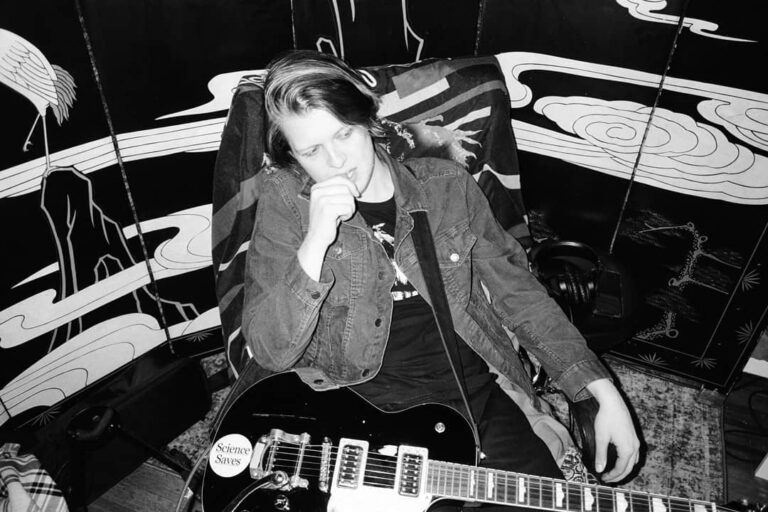
OC: A song called Nothing Special (The Science Song) it’s under our previous band name “Tender Beats”. I like the song, and we recorded it in one take live. Then I added the vocals. But it’s cool to have those one-takers. We recorded it at a friends cabin in the woods in Hudson. It was Rex’s first couple of months with us in early 2019. It’s about enjoying life and buried in every line there are the deepest science notions ever. Very nerdy if I explain it. Very.
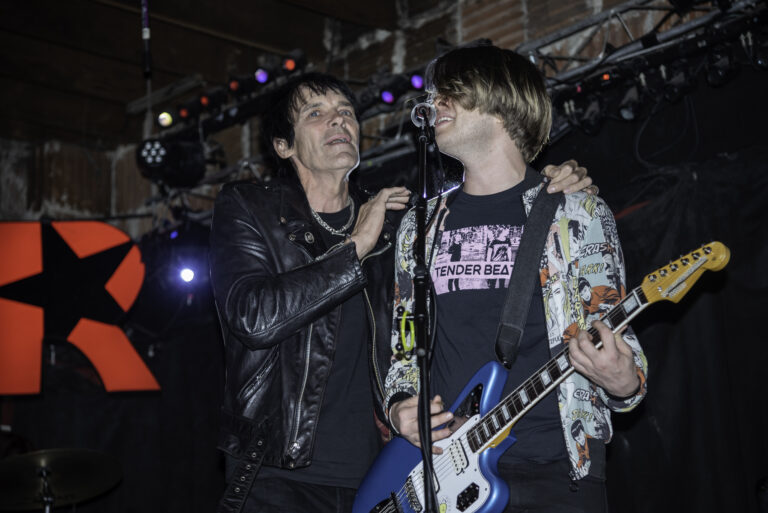
RT: How did you get hooked up with Richie Ramone?
OC: Vicky Hamilton was our manager for 3 years, I didn’t ask her how she and Richie knew each other but she heard Richie was looking for an opening act and Vicky called me asking if I’d like to do that and of course I said of course. She said he was very honest with his opinion of the music and that he would need to truly like the songs. She sent some demos we had and out of a pool of bands he picked us, he liked two of the songs he heard. He called me after Vicky gave me the good news and we talked about music a bit, it was awesome. The tour was the most beautiful musical experience I ever had. He is like a monc, like one that has lived milenia. Every sentence he spoke was a life lesson. A wise person and with a swag. So cool and witty, caring and strict in the best of ways.
The first night we played awesome and he came to us and said we were awesome and to keep it up and that I sang like an angel and asked me about a couple of the songs and admired them. He wrote several of the Ramones songs including “Somebody Put Something In My Drink” and recently a crazy couple invited my wife and I to their apartment and tried to roofie us and I told him that song was our theme song for those days. It was a good night. Then we suck for 4 night is a row and he wasn’t happy, he told me to stop whining about the sound and whatnot and to perform for the kids, that it was all about the kids, and that I had two jobs, to entertain those kids who paid a ticket and to warm up the place for him to follow. After that we did ok and we had a couple of great nights but I wish we’ve done better for him. We still talk and I send him songs looking for his approval. He always replies, great dude.
RT: Who would you most like to collaborate with?
OC: There are so many names. I think mostly with Krist Novoselic of Nirvana, he’s my favorite bass player. I love that gnarly heavy drunk sound of his and would love to see what lines he comes up with for one of our songs but he would need to write a killer line like those of Curzio’s, tough opponent. Or Tom Yorke, singer of Radiohead but what the hell am I going to do? He sings like life sounds like and his melodies are amongst the best ever written. I’d love to go into a guitar duel with Dan Auerbach of The Black Keys and write and sing a song with Brian Molko of Placebo or write a song for The Hives.
RT: What are your favorite venues?
OC: Buffalo’s Mohawk Place, Arlene’s Grocery in NYC, Slash Run in DC, Ralph’s Rock Diner in Worcester, Kung Fu Necktie in Philly, Sunnyvale in Brooklyn but is closed, Mercury Lounge, Pianos and Gold Sounds. Great venues them all, I’d play one each night if it was up to me.
RT: What is your favorite song to perform?
OC: “Find my Baby” I think. Is melodic and catchy and I think is the best lyrics I wrote so far. But it’s hard for me to sign. I’m out of tune most of the time, the verses are particularly hard but it’s so fun, it’s a fun song and even though it’s about love it has a deep meaning and it’s pure poetry those lyrics.
RT: What do you like most about being a musician?
OC: Everything. I love writing songs. I love loud guitars, loud bass, loud thundering drums. I love touring, I love the sound of the door of the touring van when it closes, I love loading into the venues, and taking apart the gear and loading out. I love driving at night looking for the hotels and talking to the guys about the gig we just played. I love the smell of beer, piss and cleaner of the venues. I love the crappy wawa food along the east coast. I love watching the pavement pass by through the window and the changes in temperature and cities and all.
I love the band mates. I love recording and placing mics. I love singing and I love my voice when I’m in tune. I love the tension amongst the band. I love the soundcheck, I love to gig. I love to write lyrics and come up with riffs. I love my bands and the passion they invested into their music. I love the people involved in music. I love being tight and rehearsing and I love yelling my lungs out. I love the amps and the effect pedals. I love well made guitars and specifically a brand but I won’t say because they’d have to pay me. I love the science of sound. I love CD’s and vinyls and cassettes and DAWs. I love how my wife supports me and my family too. What I like the most is gigging.
RT: Do you ever get performance anxiety?
OC: I saw a movie with Jude Law, Catherine Zeta-Jones, Channing Tatum and Rooney Mara called Side Effects and I learned about beta-blockers. Before my first gig in Medellín I was lucky I had a friend who was a doctor and I asked her for beta-blockers which would calm me because I knew I was going to be a nervous wreck. And I was. My first gig was horrible, I was so nervous I felt sick in my chest. The beta-blockers helped me to be just ok during the first gigs but they would make me feel trapped in cellophane or something, my girlfriend would tell me I was distant and weird and gone while under their effect, and I think the audience felt it too, I see the videos and it’s like a zombie is doing the concert. I went down on the dose and it was better but I was too nervous to have fun. When in the U.S. I didn’t have them so I had to suck it up.
My first gig was at the Mercury Lounge but it wasn’t that bad. During my first year I’d feel bad but not horrible. I still get anxious and need some time to get loose while performing but it’s way better. Before the pandemic we had a good rhythm going on, the more gigs I was playing one after the other the best I felt. I’ll get rid of that, it’s useless to feel anxious before a gig. I want to have fun with the band and the audience.
RT: Do you have any other upcoming projects you are working on?
OC: Only as Public Nature, yes. Many songs to come. I wrote around 30 new songs during the pandemic and am still writing more. 8 of them we got to record and the rest, because I’ll be without a band soon, I’ll have to either find bandmates or hire recording musicians to record them. Let’s see what happens first.
RT: What is one message you would like to give your fans?
OC: I’d like to tell them that we love you very much and please be patient for more music to come!
Socially distanced shows are returning to the Northeast, and Westville Music Bowl in New Haven, CT has a growing lineup well worth traveling for.
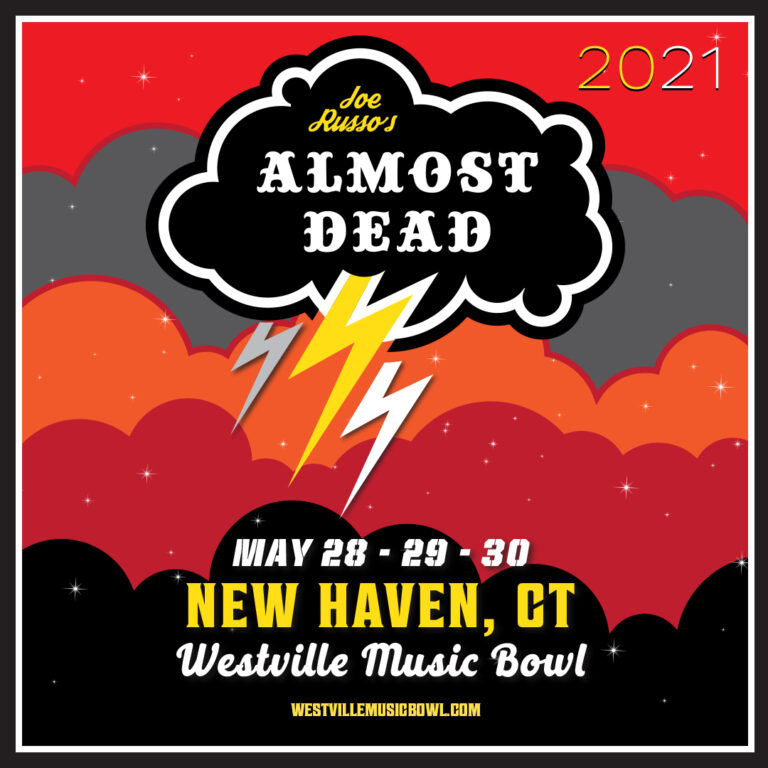
Joe Russo’s Almost Dead (JRAD) has become the latest group to announce shows at the venue. They’ll perform on May 28, 29 and 30 as part of the venue’s “Twilight Concerts Under The Stars” series. JRAD follows The Disco Biscuits, Tedeschi Trucks Band, Gov’t Mule and more who have announced shows at the venue, just a 1 hour drive from the NY border on I-95.
Additional artists slated for Westville Music Bowl include Gov’t Mule (April 30, May 1), Twiddle (May 15), The Disco Biscuits (June 4-5), Pigeons Playing Ping Pong (June 26) and Tedeschi Trucks Band (July 17). More concerts are expected to be announced.
Tickets to shows are sold in sets of 2 and 4, with a minimum of 6 feet social distance from other seats, and floor seats will be sold exclusively in sets of 4, according to the venue website.
Tickets to the JRAD New Haven shows go on sale Friday, March 26 at 12 p.m. ET. For all other tickets, as well as additional information including all health and safety protocols visit westvillemusicbowl.com.
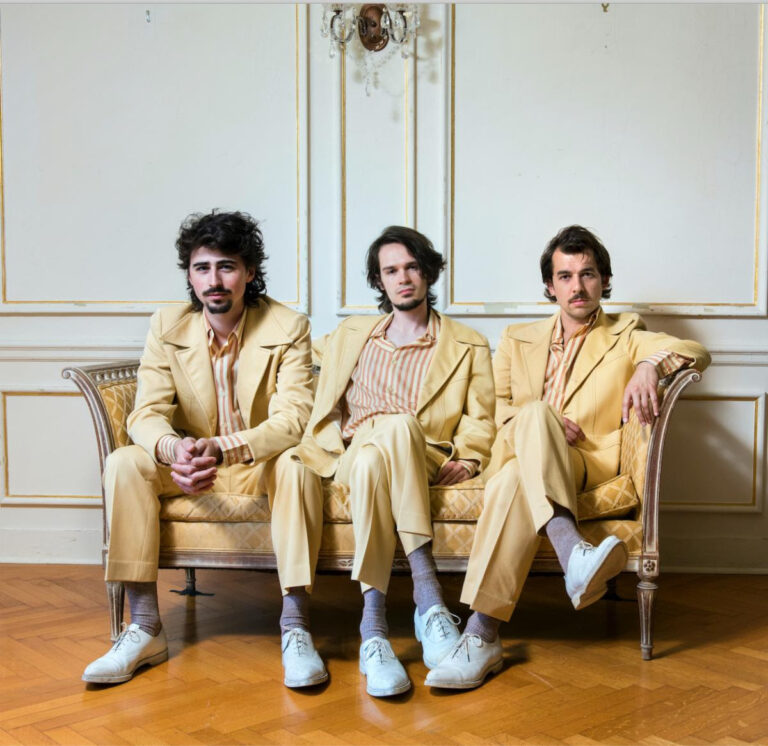
Power trio from the Hudson Valley, The Restless Age, has just released their inspiring song “Take It.” The band’s modern yet nostalgic feel pulls listeners in instantly, weaving between genres effortlessly while also mastering three-part harmony.
Composed of Will Bryant, Lee Falco, and Brandon Morrison, The Restless Age uses various instruments and have no limits on what they incorporate in their music. The constant change from developing an electric sound with keys to bass and drums to even three acoustic guitarists around one microphone. The Restless Age is always exploring new ways to tell stories and spread their enthusiastic spirits.
The “Take It” music video premiered on Saturday, March 20. The video gives tribute to camp and yacht rock. With Bryant on the keyboard, Falco on drums, and Morrison on bass, the musicians maintain a tight sound. The trios shared vocals also deliver a collective precision.
When it came to the songwriting, the performance and the retro wardrobe, we just didn’t hold back. We’ve never made a point of taking ourselves too seriously, and this video makes that abundantly clear.
Will Bryant
“Take It” is just the beginning of new releases of The Restless Age. The band has additional singles set to release in the coming weeks, as well as a new album. Until then, make sure to check out “Take It” available on major platforms.
Musical Dyslexia could help explain why some musicians prefer reading sheet music vs why others prefer learning new material by ear according to a Neuroscience article. The evidence pointing towards musical dyslexia could help identify why musicians prefer and excel in one learning style vs the other.
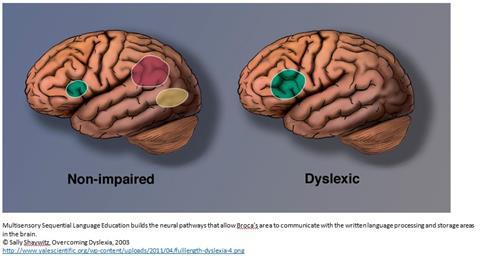
Dyslexia is a widely known learning disorder. Individuals afflicted with it have a difficulty reading due to problems identifying speech sounds and learning how they relate to letters and words also known as decoding. People with Dyslexia are able to read; they just have trouble identifying all the subtitles within the written word for no fault of their own. Researchers have debated the underlying causes and treatments for dyslexia but the predominant theory is that people with dyslexia have a problem with phonological processing which is the ability to see a symbol (a letter or a phoneme) and relate it to speech sounds. Unfochanitly dyslexia is difficult to diagnose because many people afflicted with it adapt to it well enough to blend into society but it is thought to occur in up to 10% of the population.
It’s been known that dyslexia could affect the reading of non-language symbols like dyscalculia is the difficulty reading and understanding mathematical symbols. Although recent research supports the fact dyslexia and dyscalculia as separate conditions with unique causes they definitely are similar conditions. If the brain can process words and mathematical symbols differently, then it leaves the question of why not musical symbols too?
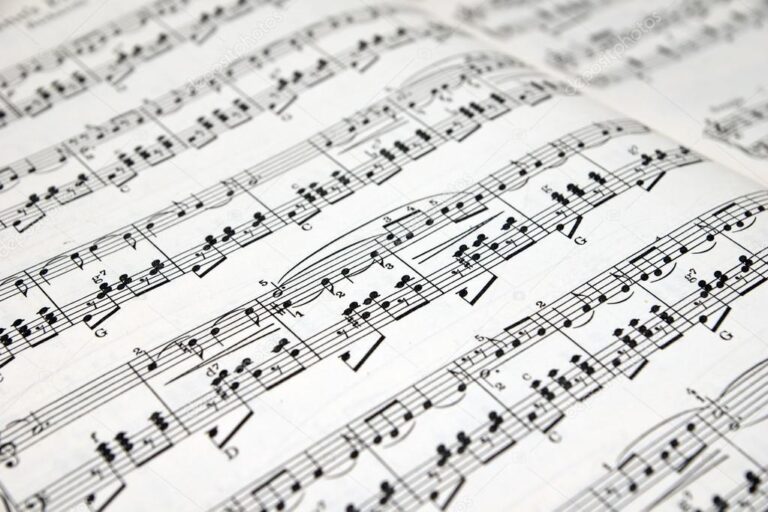
To understand how musical dyslexia could work one has to understand how reading music works. Western music uses a coding system which allows it to be written down and transmitted from composer to performer. The differences between reading music vs language is the uses of a spatial arrangement for pitch in music. The page is divided into staff of five lines each. Basically, the higher a symbol is placed on the staff, the higher the pitch. Unlike letters in text, pitches can be stacked, indicating simultaneous performance (chords). This is often shown using a system of symbols to indicate how pitches should be played which is another difference in music vs written language. Symbols can indicate duration (rhythm), volume (dynamics) and other performance cues. Music also utilizes written words to indicate both the expressive features of the music and the lyrics in vocal music. Lyrics may be in languages not spoken by the performer. Basically reading sheet music is like reading a language with extra layers added.
According to the article on Neurosciencenews.com research has started to imply how specifically musical dyslexia could occur to people. According to the article, “This deficit may be centered on pitch or musical symbols or both. No conclusive case of musical dyslexia has yet been reported (though have come close) and efforts to determine the effects of dyslexia on reading musical notation have been inconclusive.”
Children are taught how to read text at any early age in most western cultures but not always taught to read music. And those that are taught even at a young age aren’t always able to comprehend it and their inabilities to read music are not generally treated as a serious concern. Many gifted musicians are able to function at a professional level purely learning music by ear.
There is a wide range of music reading proficiencies among musicians with some having a very basic understanding to others being able to read music without even really having to think about it or try. This is especially apparent with sight reading (the first performance of a notated piece). Identifying musical dyslexia could help explain why some musicians read well and others don’t. For more information on musical dyslexia read the full article here. For more music science articles by NYS Music click here.