After being out-of-print and unavailable online for nearly three decades, the Mommyheads’ innovative and experimental 1992 sophomore release, Coming Into Beauty, has been remastered for physical and digital formats.
The remastered edition of Coming Into Beauty will be available digitally on February 12, 2021. On the album, the Mommyheads fused rich melodies with avant-garde techniques, making for a one-of-a-kind listening experience, covering uncharted indie pop territory.
The album defies cohesion and plays more like an early Frank Zappa record in its playful photo-book sprawl. Album opener “Wedding Day” melds breezy, gorgeous fingerpicking with harmonies both angular and angelic at once, all whilst Elk belts a surrealistic semi-story about the crushing weight of marriage and boyish passion. “I Started Breathing” is arguably the album’s focal point. The tune gently strides along the spare ukulele and rattling percussion, boasting chord changes that have more in common with Brazilian pop and bossanova records than anything indie.
Pairing the druggy, melancholy Brooklynite romance (“and your friends they went to see the Dead / and they left you at home to work instead”) with frayed Bouzouki-laden choruses, the song is an understated achievement of pop invention. It’s both authentically strange and heartbreakingly sweet; unsettling and lulling.
Coming Into Beauty remains the most potent document of the Mommyheads at their most unhinged and daring. Fans of both experimental records and melodically-rich pop alike will find the album’s enigmatic nature fascinating and infinitely rewarding.
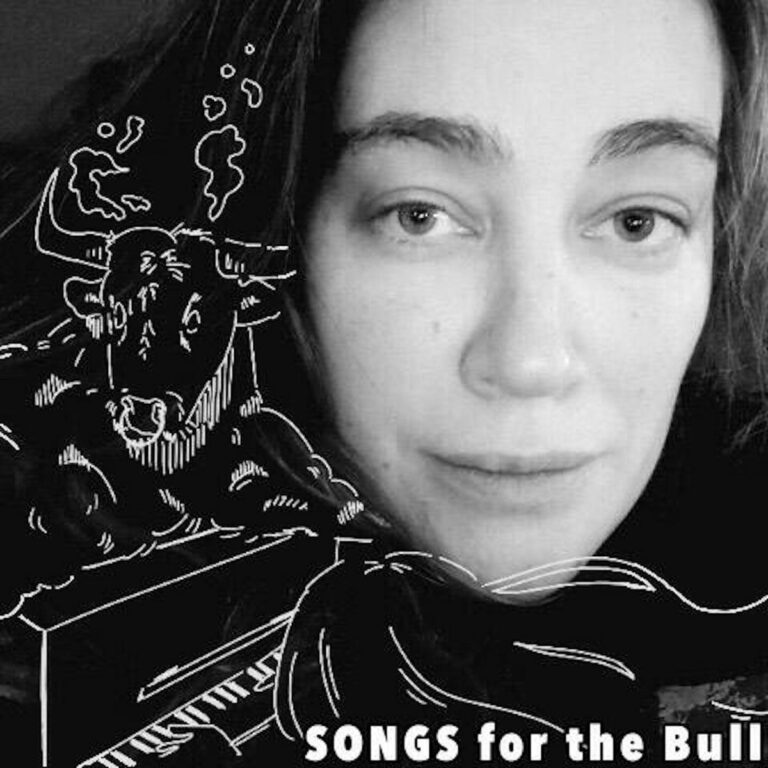
Julianne Mason is a Queens singer/songwriter on the brink of her forth album to be released Friday, January 15 on all streaming platforms. Songs for the Bull is and eight-track spearhead effort by Mason who acted as the albums sole writer, vocalist, and pianist, while also co-producing the release. The organic tenure of her keys passes you by like a spring breeze. It’s a heartfelt effort to harden.
Songs for the Bull album art by Zoe Wickham.
The pandemic only highlights a constant struggle for artist alike. Mason was nostalgic, with a mind full of a wanderlust that was not satisfied. As a result, Julianne found herself depressed, isolated and unemployed during quarantine. Musicians speak outwardly to avoid getting lost in these feelings. Simply put, she wrote songs to stay sane. Isn’t that what we all do. Firstly, Songs for the Bull acts as the antiseptic, washing our wounds.
Songs for the Bull is a collection of songs about the regret and loneliness that result from living a series of relationships in your mind instead of having the courage to experience intimacy in real life.
Julianne Mason took retreat in a safe haven to begin recording piano for this album, back home in Iowa. As things came together, she returned to NYC and over and intense couple of rehearsals and a ten hour recording session, Songs for the Bull bloomed. A throw back to 8-track exposes a warmth from the band, and home-like somber, recorded in her living room.
The title track “Paradise Weather” rises in like a winter sun. An underlying hum makes way for a swaying-triplet percussion as the 8-track reels. Julianne piano is soft and syncopated. Constant dissonance in her voice and piano pair with he song’s dis-harmonious lyrics: “So you take me forward, much to my displeasure. So you take me forward, to paradise weather.”
The album sways in its gloom and hopefulness. It is not a jaunting hunt for rebellion against sorrow, but rather a tip of your hat towards it. The album cast glimmer of light on a rather somber reality and forced isolation. With this intense recording session and 8-track ode, it will be even more wholesome to walk alongside this album from start to finish.
Followup track, “I Wait For You,” is a melodic tip-toe with the utmost sentiment. Drummer Shannon Minor take to the brushes, while Colin Leads delicately companies alongside each key stroke. Sutble creeks of Mason’s piano bench creep in. The sounds are intoxicating and contrast the once busy streets of the City.
Like a garden every time. This organism that invades my mind. Reminds my worry reminds my stubbornness. That the quiet night can caress.
Taxi, building, rain and breeze. City sidewalk, city symphony Ocean of people, waves of activity. Speak right now consciously And I’m lucky, lucky yet To hear these sounds of gentleness. Lucky that I still have this sensitivity Sensitivity to infinity.
The record was produced by Julianne Mason, Brendan Picone, and Daniel Crane. Songs for the Bull was mixed by Brendan Picone, mastered by Phil Petrie.
Yesterday Julianne Mason performed a live pre-release highlighting Songs for the Bull‘s debut.
Whether you know it or not, you’ve all heard the band Focus. You know that tune they spin on classic rock radio, in films, ads and during NBA and World Cup telecasts, the one with the demented yodeling and amphetamine shred guitar breaks, with the relentless riff that’s as memorable as “Sunshine of Your Love” and “Smoke on the Water?” That’s Focus playing one of the most unlikely Top 10 hits of the 1970s, “Hocus Pocus.” And if you think that playful racket of virtuosity is all there was to this band than you’ve missed out on one of the most distinctive and eclectic bodies of work produced during rock’s progressive era.
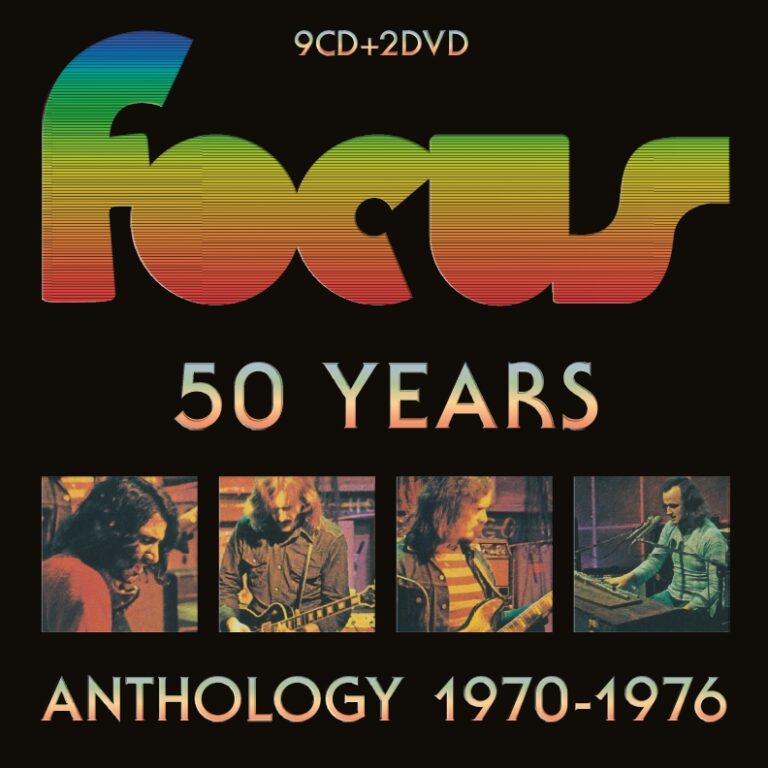
That’s something that Focus 50 Years (Anthology 1970 – 1976), the lovingly crafted, amazingly researched nine-CD, two-DVD set from Red Bullet Productions, aims to set straight. But first, a little backstory…
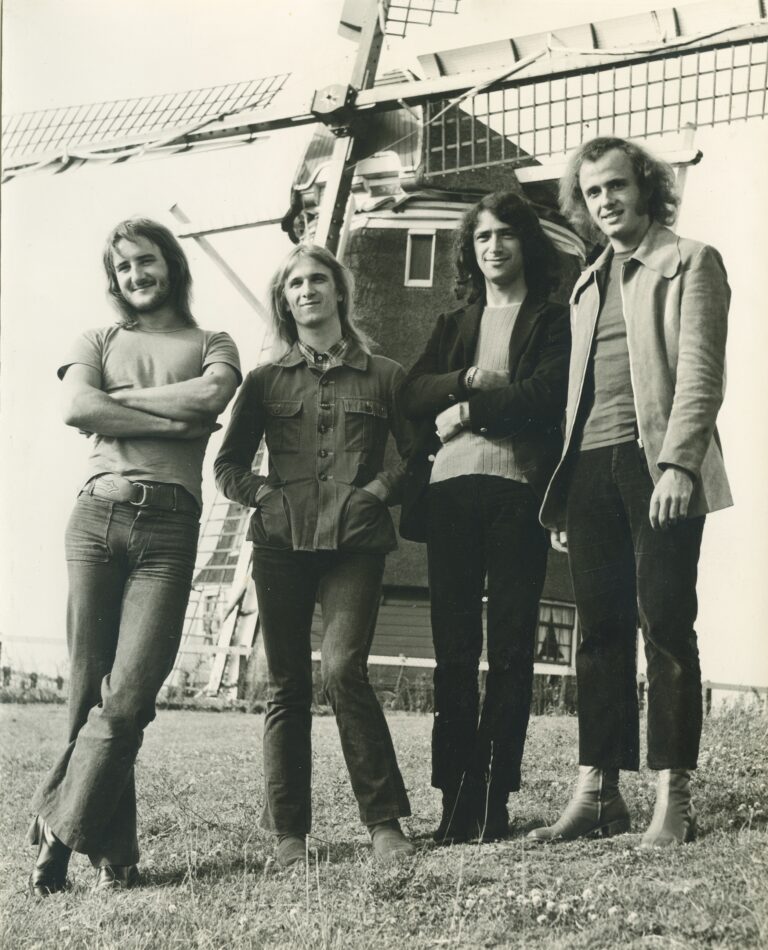
Focus commenced in Amsterdam in 1969. It was built around the massive talents of two main musicians, Thijs Van Leer and Jan Akkerman. Van Leer is a classically-trained flautist, keyboardist and occasional yodeler. He was also a talented composer who raided the classics, the works of Bach, Bartok, Haydn, Monteverdi and the like, to create a cannon of tunes, especially the numbered “Focus” titled instrumentals, that are among the most melodic of the prog era.
Van Leer’s foil in Focus was Jan Akkerman. Still going strong today at 74, Jan was one of the most fearsome and versatile virtuoso guitarists of the Guitar God heavy 1970s. This was a man with a jaw-dropping technical mastery of jazz, rock, blues and classical forms, a talent that powered some of the most emotional and exciting soloing and live improvisation ever committed to tape in the rock idiom.
Akkerman could spitfire fusion licks as swiftly as John McLaughlin or slow down to seductively squeeze every ounce of the melody out of a ballad, just like Santana. He could play psychedelic, blues-fired blasts that glowed as brightly as Hendrix and chromatic smears and screams like late ‘60s free jazz Coltrane. He, too, composed distinctive and maybe even more diverse originals than Thijs. Jan’s tunes reflected his own acumen with the classics, from his five years of study at the Amsterdam Lyceum, something evidenced by his lute playing on several Focus tracks. Then, there were those fueled by his love of balls-to-the-wall rock, like “Hocus Pocus,” and funk, like the latter day single, “Crackers.”
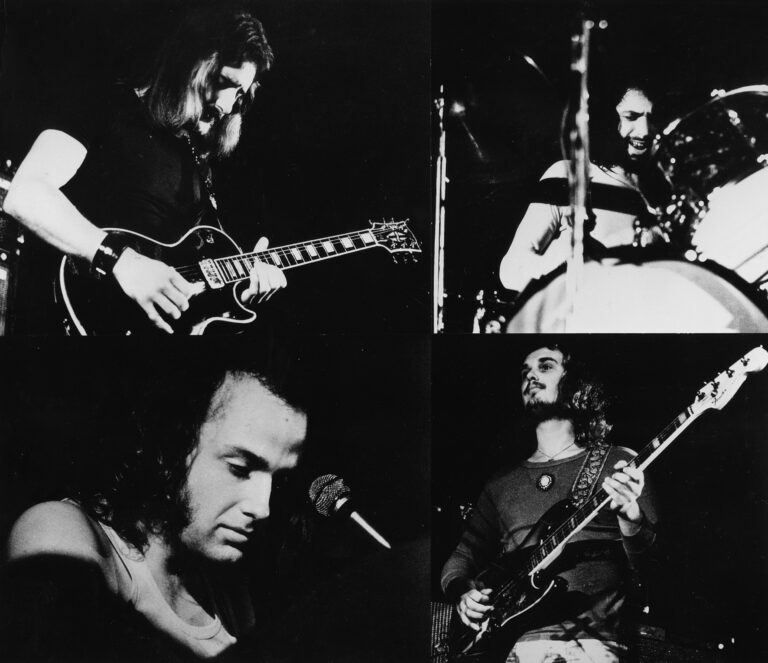
Between 1970 and 1976, the Van Leer/Akkerman Focus recorded seven albums and toured relentlessly in Europe, U.S. and Asia, averaging well over 200 shows each year. Led by Jan’s dazzling guitar work, the fiery drumming of the criminally-underrated Pierre van der Linden, Bert Ruiter’s rock-solid bass and Van Leer’s keys, flute and theatrical mugging, Focus pretty much blew everyone off the stage, wherever they ventured.
The proof was in the accolades. In 1973, Akkerman was named “Best Guitarist in the World” by the U.K.’s top music weekly, Melody Maker, over Clapton, Beck, Page, McLaughlin, etc. This was just a year after the same publication named the band its “Brightest New Hope.” Jan’s smiling mug also graced the cover of Guitar Player and, with his bandmates, Circus Magazine. Akkerman’s legion of fans would grow to include luminaries like Carlos Santana, Brian May, Joe Walsh, Chick Corea, Michael Jackson, the Beach Boys (he did unreleased sessions with them while they were recording in Holland), B.B. King and Frank Zappa to name but a few.
Although they seemed to bring out the best in each other, the Van Leer/Akkerman partnership grew stormy over time. It finally fractured when the road weary guitarist left (or was fired) on the eve of a U.K. tour in early 1976. Since then, Akkerman would go on to record two dozen, genre-leaping solo albums that are the height of the guitar art, all while choosing to remain happily out of the international limelight in Holland. Van Leer continues to revive Focus from time to time, with a rotating roster of guitarists who, while sometimes excellent, can never match Jan’s wholly unique musical aura and skill.
With the dawning of the web, a global cult of “Focus fanatics” coalesced, devotees who trade and post audio and video of live gigs and TV performances, rarely-seen concert posters and other ephemera. Unlike some stars, Jan, Thijs and their bandmates proved more than happy to engage with their fans via social media. For these folks, and anyone who loves great music of original intent, this brick of a boxed set will seem like Christmas morning.
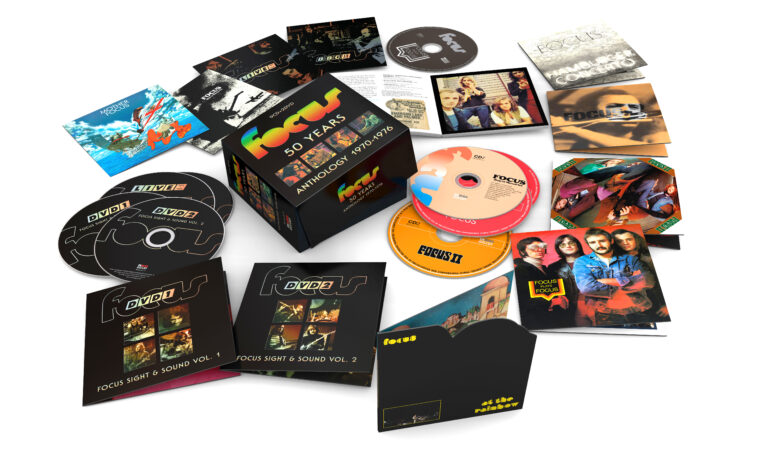
Curated by longtime Focus/Akkerman archivist Wouter Bessels, “Focus 50 Years” starts with 24-bit remasters from the original tapes of the first seven Focus albums, plus single, alternative and raw studio mixes, demos, unreleased live recordings and some real oddities, such as the quartet backing other artists in their early days. Add to this two additional CDs of more unreleased live performances from 1971 – 1975, including the first official release of their fantastic “BBC In Concert” performance from 1973.
The package also boasts two DVDs featuring the complete “Focus At the Rainbow” concert film from the live album of the same name, restored and remastered from the original 16 mm film, two BBC “Old Grey Whistle Test” broadcasts from 1972 and “BBC In Concert” from 1974. There’s also “Focus Live in Dublin” 1973, the “Goud van Oud” reunion from 1990 and the 1997 “Focus II Classic Albums” documentary. To guide you through the riches, Bessels has compiled an 80-page booklet with band history, liner notes, press clips and memorabilia.
The band’s debut album, “Focus Plays Focus,” finds the newly formed band still searching for an identity, with a few vocal tunes like the jazzy “Happy Nightmare (Mescaline)” in the mix. This was something that would be quickly abandoned in favor an all-instrumental approach, along with their original bassist and drummer, Martijn Dressden and Hans Cluever. This version of the album is notable for its opener, the stately instrumental “Focus I,” the first of this numbered series of classically informed instrumentals by Van Leer, and the two bonus tracks. The first, Akkerman’s flute-driven “House of the King,” became their first chart hit in Europe, one often mistaken for Jethro Tull. The other bonus is a sizzling 37 minute live performance from 1970, an in-development version of “Eruption,” the suite which would be the side-long centerpiece to their classic follow-up album, “Focus II/Moving Waves.” It includes some of Jan’s most fiery riffing, and in a spot where the band falls away for six minutes, he dazzles with slashing, quicksilver lines in exotic modes like the Hungarian minor and Indian scales.
The band’s sophomore effort commenced their prime era, with Akkerman’s former partner in the bluesy band Brainbox, the jazz-inspired Pierre van der Linden, now in the drum chair. The album kicks off with “Hocus Pocus,” an Akkerman/Van Leer composition born out of a jam session at the band’s rehearsal home in a Dutch castle. This unforgettable fusion of manic speed metal, yodeling and jazzy drum solos became a surprise hit. It was the first smash for Sire Records in the U.S., pushing global awareness of the band and inspiring legions of nibble guitarists to come like Yngwie Malmsteen and Eddie Van Halen. Akkerman’s “Le Clochard” is a melancholy solo piece spotlighting his Segovia-like technique, while his “Janis,” a gorgeous ballad dedicated to Janis Joplin, highlights Van Leer’s multi-tracked flutes.
The 23-minute, side-long “Eruption” is one of prog rock’s most acclaimed epics, perhaps the most original fusion of classical themes and rock vigor. It is a hard rock version of the myth of Orpheus and Euridice, an update of Jacopo Peri’s opera “Euridice.” An uncredited melody from Monteverdi’s “L’Orfeo” opens the suite, and a later segment includes the haunting ballad “Tommy,” named after its composer, Tom Barlage of the Dutch fusion band Solution. It’s a show stopping ballad that Akkerman continues to perform in concert to this today. The Zappa-inspired “The Bridge” is an all-out jam session, culminating in some blazing guitar soloing reminiscent of “Hocus Pocus” and Zappa’s “Willie the Pimp.” “Euridice,” penned by Eelko Nobel, is a classical lied which segues into the Gregorian chant of “Dayglow,” then van der Linden’s drum solo, “Endless Road.” The suite ends with a reprise of its opening themes, then concludes with van der Linden’s freeform percussion effectively evoking the sound of fireworks for the finale. In live performance, the band also included quotes from Bela Bartok’s “Concerto for Orchestra,” something they were denied use of during the recording by his family. Too bad…
The double-disc album “Focus III” followed. It featured more gorgeous melodies including Akkerman’s “Love Remembered” and Van Leer’s “Sylvia,” which spawned another surprise hit, a #4 in the U.K. charts. Van Leer’s “Carnival Fugue” continues the fusion, with a bit of Bach, some cool jazz and even calypso all in the mix. The keyboardist’s “Focus III” and “Answers? Questions! Questions? Answers!,” written by Akkerman and new bassist Bert Ruiter, are showcases for Jan’s way with stating a melody and the improvisational dexterity of the whole band. Like “Eruption,” they would become ever-evolving improvisation stoked workhorses of the band’s live sets including their fourth release, the live album “At the Rainbow.” Akkerman’s solo on this live disc’s version of “Answers?…” is one of his finest. It’s a study in melodic development and tension building that I have listened to hundreds of times over the years, one which you can view on the boxed set’s first DVD volume.
More blazing jamtastic is on display in the third album with Anonymous II. This is a re-recording of a track from their debut disc, which covered a side and a half of the vinyl of this release. The album closes with Akkerman’s first showcase on the medieval lute, “Elspeth of Nottingham.”
There’s a New York groove, or at least birthing, in the album that followed their live fourth disc, “Hamburger Concerto.” Akkerman’s rocking refrain in this side-long epic was written while watching cartoons and eating a hamburger and Junior’s Cheesecake at a NYC hotel. It’s a power chord stomp drenched in watery, swirling Leslie speakers inspired by their then touring partner, Joe Walsh. Together with Van Leer, he fashioned another powerful multipart suite, with quotes from Haydn, Brahms and Bach’s “St Matthew’s Passion” and plenty of room for burning flute, organ and guitar soloing. Another chart success, the disc featured a quasi-follow-up to “Hocus Pocus” called “Harem Scarem,” another dreamy Van Leer melody in “La Cathedrale de Strasbourg” and “Delitiae Musicae,” another lute outing by Jan adapted from a work by Dutch composer Joachim van den Hove. By this time, drummer van der Linden was gone, replaced by Brit Colin Allen of Stone the Crows fame, who keeps it all anchored with a firm, rock steady beat.
With the studio album “Mother Focus,” the band sort of heads off track, shedding some of its European classical spice for an almost soft jazz, easy listening vibe. All said, the album still has some standouts. Another New York connection comes with “My Sweetheart.” The upbeat Akkerman tune served as the theme song for commercials for popular NYC radio station WPLJ-FM for years. There’s also the Bert Ruiter penned “Hard Vanilla,” where Akkerman solos at length with a talk box, ending it all, and maybe his time with the band, with a laughing guitar.
The seventh album, Ship of Memories from 1976, is a collection of tracks done for an abandoned studio album around the time of “At the Rainbow,” along with some intriguing singles and leftovers. This album includes more beautiful melodies and spectacular guitar work, on the tunes like Van Leer’s “P’S March,” “Focus V” and the duo composition “Red Sky at Night,” with one of my favorite Akkerman solos on the outro.
The version of this album in the boxed set includes eleven intriguing bonus tracks. Featured are “The Shrine of God” and “Watch for the Ugly People,” where the band backs Van Leer’s onetime employer, Dutch cabaret artist Ramses Shaffy, along with rough mixes of “House of the King.” The former were recorded around the same time that the fledging group was serving as the pit band for the Dutch production of the musical, “Hair.”
Archivist/curator Bessels will spin the heads of the Focus know-it-alls with the two live discs in the package. He has unearthed a truckload of never-before-released radio and television performances and concert board tapes to present this improvisational monster jam band at the peak of its powers.
The version of “Eruption” from Rotterdam in 1971 features the classic Akkerman, Van Leer, van der Linden and Ruiter lineup and clocks in at nearly 47 minutes. Akkerman’s first solo on “The Bridge” is a little more jazzy than usual, pushed by Van Leer’s Hammond organ. But it’s his solo spot starting at 20 minutes in that goes from gentle classical to slashing noise rock to full whirling dervish Eastern exotica. Van Leer almost gets a solo spot that shows his mastery of the classical and jazz forms on his flute, while van der Linden’s drum solo swings as titanically and surehanded as any in the classic rock era. The live discs also present some interesting performances and jams that I didn’t know existed, from tours of Japan in 1974 and 1975. The 1973 recordings by BBC Radio are naturally of impeccable quality, but Bessels has also done a masterful job cleaning up many of the other live rarities here.
The two DVDs of television performances are another thing that sets this package apart. It’s a real thrill to see this unique band of improvisational madmen in full flight, in their BBC and Live at the Rainbow performances. The second DVD includes rarities like a 1970 spot of Dutch TV with the original quartet and an RTE TV performance from Dublin that hasn’t been seen since its initial broadcast in 1973. Also featured are television performances of “Hamburger Concerto” from Danish TV and the 50-minute “Classic Albums” special on “Focus II/Moving Waves.” Unfortunately, the latter is mostly Dutch, excepting the contributions from producer Mike Vernon.
After decades of being wrongly relegated to the backseat by rock’s critical tastemakers, progressive rock, like that plied by Focus, is gaining a much deserved second look. So the time seems right for this battleship of a collection from Holland’s Red Bullet Productions.
If you already love Focus, you can buy this, enjoy much more of the band you thought you knew everything about, and die a happy man (or woman). If you don’t, you should give this purchase some serious thought. You should also put aside some serious time to listen to, and enjoy live of your TV screen, one of the most underappreciated and uniquely talented bands of rock’s most boundary pushing era.
‘Live for Lon,’ a three-hour event celebrating the live of Jam scene figure Lon Conscious, will stream on Saturday, January 16, from 6:30-9:30PM. Since his sudden passing in November 2020, public figures in the community such as Trey Anastasio, The Capitol Theatre and Twiddle have given him public shoutouts.
Streaming from Long Island’s Baked Shrimp Facebook page, ‘Live for Lon’ will feature videos dedicated to Lon Conscious by artists such as Mihali, Brandon Taz Niederauer, Andy Frasco, KRIS, Grubby Bean, and more. Baked Shrimp will close out the stream with a real-time live performance. All donations will benefit the White Light Foundation.
Lon with Twiddle
Lon Conscious was a major supporter of the jamband scene, and massive figure in the Twiddle community, where he ran the group #twiddlenation with fellow fan Eddie Schectman. He traveled around the country for Twiddle. In addition he traveled and promoted for Baked Shrimp, and was uncle to their drummer, Jager. Conscious worked the merch booth at Madison Square Garden, one way so many people got to know him.
Lon with Brandon Taz Niederauer
‘Live for Lon’ will be a special night to remember. The occasion is designed for fans, friends family, who need a release of energy during these difficult times.
Lon with Dopapod’s Rob Compa
During one of the intermissions on Saturday, the stream will display a segment dedicated to pictures and videos fans have taken of Lon and/or with Lon. Fans are encouraged to submit content by emailing bakedshrimpmusic@gmail.com. Images can be sent via direct message to Baked Shrimp‘s Facebook page. These submissions may also appear in various parts of the stream. Please aim to submit content by end of the day Wednesday, January 13.
Howard Johnson, renowned tuba player, founder of the original Saturday Night Live Band and a musical mainstay of New York’s jazz community for more than half a century, has died at age 79. A muse to Charles Mingus, Gil Evans, and Carla Bley, Johnson was an inspiration to multiple generations of players.
photo by Nancy Olewine
Johnson died at home in New York on Monday, Jan. 11 following a long illness, according to his longtime partner, Nancy Olewine.
An accomplished player, composer, arranger and raconteur, Howard gigged on tuba, baritone saxophone, bass clarinet, flugelhorn, electric bass and pennywhistle. For more than 50 years he was an important fixture in multiple scenes, moving fluidly among genres. In addition to working with a litany of NEA jazz masters including Quincy Jones, Dizzy Gillespie, Gil Evans, Charlie Haden, Carla Bley, Jack DeJohnette, and Randy Weston, Johnson also played with pop and rock icons such as John Lennon, Paul Simon, James Taylor, Carly Simon, Taj Mahal, Levon Helm and scores of others.
Johnson played an important role in forming and shaping the sound of the Saturday Night Live band during the show’s first five years, 1975-1980. Donning an Egyptian headdress or nurses’ uniform in some of the most beloved early sketches featuring Steve Martin and Lily Tomlin, his weekly SNL appearances lent Howard visibility rare for a jazz musician or in-demand sideman.
He appeared in Martin Scorsese’s 1978 documentary The Last Waltz, was featured in a Miller Lite beer commercial in 1984, and made a Sesame Street appearance with James Taylor (in the decades since, it wasn’t uncommon for excited kids to point at Howard and shout “Jelly Man Kelly!”)
Howard would leave SNL, telling musical director Howard Shore that having a too-steady job leads to complacency, resulting in bad music. Musicians in that situation “start defending their turf, they start feeling like they have something to lose, and they keep narrowing and narrowing their perspective. I don’t want to get caught up in stuff like that.” In several interviews, Johnson recalled Shore’s reply: “Well, if you feel that way about it, then you’re the man for the job. Get me a bunch of other troublemakers like you and we’ll have a great band.”
Complacency was never a possibility for Johnson. In fact, from his earliest years in New York, the breadth of his capabilities led some critics and audiences to believe there must be more than one Howard Johnson: It was just too hard to imagine that in an often highly compartmentalized music scene that the same guy could be appearing with the avant-gardist Archie Shepp, hard-swinging drummer Buddy Rich, and sitting in with bluesman B.B. King.
In fact, Johnson crossed paths with legendary guitarist Jimi Hendrix at a B.B. King gig. He and fellow tubist Bob Stewart took their instruments up to Ungano’s [an Upper West Side club] to jam with B.B. King. Just the presence of that much low brass was enough to cause a stir, and right before they went on, Jimi Hendrix arrived with a group of women. The audience was distracted, buzzing and cracking jokes, not knowing what to expect from a couple of tuba players.
Howard and Bob took to the stage, one on either side of B.B., and showed everyone they know their way around the blues. Though there were no mics, they made themselves heard, with power to spare. Afterward, Jimi sought out Howard to congratulate him, saying, “You brothers just did the god-damnedest shit I ever heard! Ain’t nobody laughin’ now!”
Johnson appeared on hundreds of recordings spanning Gato Barbieri, McCoy Tyner, Muddy Waters, Roswell Rudd, Phoebe Snow, David Sanborn and Freddie Hubbard. He backed vocalists as diverse as Ray Charles, Marvin Gaye, Ella Fitzgerald, Yoko Ono and Albert King. Johnson can be heard on many movie soundtracks, especially those of Spike Lee; he spent several years with the NDR Big Band in Hamburg; and released four albums as a leader, including three with his multi-tuba brass choir Gravity.
While he played an arsenal of instruments, the tuba was his greatest love.
photo by Albie Mitchell
A tuba can be thunderous, it can be a rough-and-tumble instrument. People don’t think of it as anything delicate. I never thought there was anything the tuba couldn’t do, and I’ve been pretty satisfied with what I can do with a tuba.
By 2006, when New York Times critic Nate Chinen declared Howard Johnson “the figure most responsible for the tuba’s current status as a full-fledged jazz voice,” the life’s work of the multi- instrumentalist had been in progress for more than four decades. Johnson burned with the fire of bass-clef innovation since well before 1963, when he took an offhand remark from Eric Dolphy as a call to action to move to New York.
As a teen, Howard had discovered that he could push the tuba’s range to previously unheard heights—more than six octaves—surpassing the trombone on the high end and edging into trumpet territory. In a 2000 interview, Johnson noted that he was motivated to excel by a pecking order among high school band members, with those who took private lessons outranking those who learned at school, and the self-taught—like Howard—at the bottom.
When one of the private students asked him how high the tuba could go, “I was very embarrassed that I didn’t know,” he recalled. Thus, he began to experiment, noticing some of the highest notes were “very pretty; they sounded like they had kind of a French horn quality. So I added that new octave to my warm-ups.” He was surprised to discover that none of his bandmates could play anywhere near that high. “At that point, I’d probably been playing about six or eight weeks. I was highly motivated. I didn’t want to look like a fool,” Johnson said. “It was at that point that I decided not to let anybody tell me what the limitations were of the tuba or of the music.”
He was never a novelty act who would occasionally blast notes into the stratosphere to excite an audience. Rather, he played melody lines and solos fluidly and fluently, maintaining tonal integrity and feeling. Though there was no existing repertoire in the early 1960s for his then-groundbreaking low-brass range, once in the Big Apple Johnson caught the ear—and piqued the imagination—of Charles Mingus.
The iconic bassist/composer wrote adventurous parts for him in such a high register that “even trombonists wouldn’t welcome seeing those notes on the page,” Johnson recalled in 2017, for the liner notes of Testimony, his last release fronting his multi-tuba band Gravity.
Johnson became the muse of other composers, including Carla Bley and Gil Evans, establishing relationships lasting decades. Howard almost had a second encounter with Hendrix, in a project with the great Gil Evans, who had made plans to record with Hendrix and told Howard Johnson he wanted him in the studio, too. Unfortunately, Jimi didn’t live long enough to make the gig. But Howard eventually got to have his say on one of Jimi’s greatest tunes, “Voodoo Chile,” on Gil Evans’ recordings, and was also known to play a lovely, tender version of “Little Wing” on pennywhistle.
Tuba players are challenged by the standard Johnson set. He believed the tuba is capable of a virtually unlimited sonic and emotional range, based on a player’s abilities. By demonstrating his skills, Howard single-handedly moved the instrument out of its traditional place in the rhythm sections of large ensembles into featured roles in small bands. Recognizing his impact on the tuba’s changing role in music, in 2008 the instrument-maker Meinl Weston released the HoJo Gravity Series tuba, designed to the player’s specifications.
Johnson influenced musicians by expanding their ideas of the possibilities of the instrument, and demonstrated enormous generosity of spirit, mentoring tuba players, past, present and future. He influenced jazz (and pop) composers and arrangers by bringing a heretofore ignored instrument to the front line of soloists, and changed jazz overall by altering the direction of how jazz used the bass clef—no more oom-pah-pah, but pure linear bop, swing and rock phrasing that could stand on its own against any other “typical” jazz solo instrument.
At a time when jazz-rock fusion was gaining traction, Johnson opened up the music without diluting the tradition, performing with an unwavering jazz sensibility as a founding member of the Saturday Night Live band. His writing, arranging and playing captured the attention and imagination of such pop culture icons as John Lennon, Paul Simon, Levon Helm and Taj Mahal; Johnson never dumbed it down, never resorted to spoon-feeding anyone “Jazz 101” level music. He has always been “The Real Thing,” as Taj Mahal dubbed the 1971 CD that debuted Johnson’s innovative multi-tuba brass choir, Gravity.
Even as he approached his 75th birthday, Johnson declared that he still had the fire in his belly to solo, to increase awareness of the versatility of often-underutilized horns, and to continue to have his say on the definitive way to play them. After the music master no longer made a practice of hoisting the 20-plus pound instrument to his lips—his last gigs were in 2017—he continued to feel he had much to offer as a mentor and advisor.
There’s a wonderful accessibility to Howard Johnson’s artistry. Whether playing a standard from a Broadway show, taking the lead on Hendrix’s “Voodoo Chile” with the Gil Evans Orchestra, or evoking early R&B beats on Don Pullen’s “Big Alice” with Gravity, his music could get under your skin and quicken your steps for days to come.
Howard’s talent, determination, and no-limits viewpoint were irreplaceable ingredients in his recipe for artistic fulfillment and professional success, and his music will continue to inspire for years to come.
Howard Johnson is survived by his longtime life partner, Nancy Olewine; his daughter, musician Nedra Johnson; and two sisters, Teri Nichols and Connie Armstrong. He was predeceased by his son, David Johnson, a musician and artist, in 2011. A memorial service will be held in 2021.
In lieu of flowers or other tributes, it was Howard’s wish that to honor his memory and support his legacy as a master of the bass clef, memorial donations be made to benefit The Howard Johnson Tuba Jazz Program Fund at Penn State.
Due to the COVID-19 pandemic, Opera Saratoga announced that their OPERA-TO-GO tour will continue virtually. The company’s in-school program will continue to provide a unique arts education experience to the students of the Capital District. The new program will feature the world premiere of “The Selfish Giant,” a one-act opera based on Oscar Wilde’s short story, written by Brazilian-American composer Clarice Assad and librettist Lila Palmer. It was commissioned by the American Lyric Theater specifically for younger audiences.
Opera Saratoga has re-envisioned the OPERA-TO-GO program as a digital initiative over the past six months. It is available for free to educators for their students. The program will be ready for schools in late February, and is comprised of the following elements:
“For over 20 years, Opera Saratoga has offered its OPERA-TO-GO touring program to elementary schools in February and March each winter,” said Artistic and General Director Lawrence Edelson. “While we love visiting schools and introducing children to opera, proceeding with an in-person tour this winter and spring would not only be impractical, but also irresponsible. Safety must come first. However, we are still committed to providing access to the performing arts to students as well as robust arts education resources to educators – whether they are teaching virtually, in person, or in some combination of the two.”
Opera Saratoga is creating a series of short video lessons on opera, aligned to New York State Common Core Standards in Music, Theater, Visual Arts, and English/Literature at grade levels from K-5, as well as the National Social Emotional Learning Standards. For each grade level, there will be a series of six videos, each 10 to 15 minutes in length, available for use in class, or for at-home viewing. Each video is accompanied by a comprehensive teacher’s guide that includes details of the alignment to State standards, and grade appropriate follow-up activities for students.
Opera Saratoga is making a professional audio recording of the new opera “The Selfish Giant.” This recording will be fully integrated into the digital curriculum, providing opportunities to explore subjects including adaptation (how a short story becomes an opera), the role of the librettist, the role of the composer, collaboration, how words and music come together to create sung theater, the textual and musical “building blocks” of opera, and how opera is produced on stage.
Using the recording, students will have the opportunity to make their own film versions of “The Selfish Giant” by creating art that reflects the story and music. A scene-by-scene breakdown of the dramatic action of the opera will be provided to each class participating in the program, along with very clear, grade appropriate instructions. Students will be assigned specific moments of the opera to illustrate in a manner appropriate to their age/grade level, through drawing, painting, collage, or digital photography.
Opera Saratoga will then create films of “The Selfish Giant,” synching the recording of the opera to the art created by the students that bring each scene to life. Each school or class will have the opportunity to create their own versions of the film. In the spring, these videos will be completed and made available to share with family members as well as on each school’s website and social media channels. Opera Saratoga will create an online library of student-created films of the opera, which will be hosted on the company’s website.
Educators who are interested in offering this program to their students in Kindergarten through Grade 5 should register no later than January 22.
Opera Saratoga is able to provide free access to the entire video lesson series with educational support materials for all teachers and all schools. However, as the company does have limited capacity to create the opera-video projects, this portion of the program will be limited to schools in Saratoga, Warren, Washington, Essex, Albany, Rensselaer, and Schenectady counties, and will be limited to the first 50 schools or classes that register for the program.
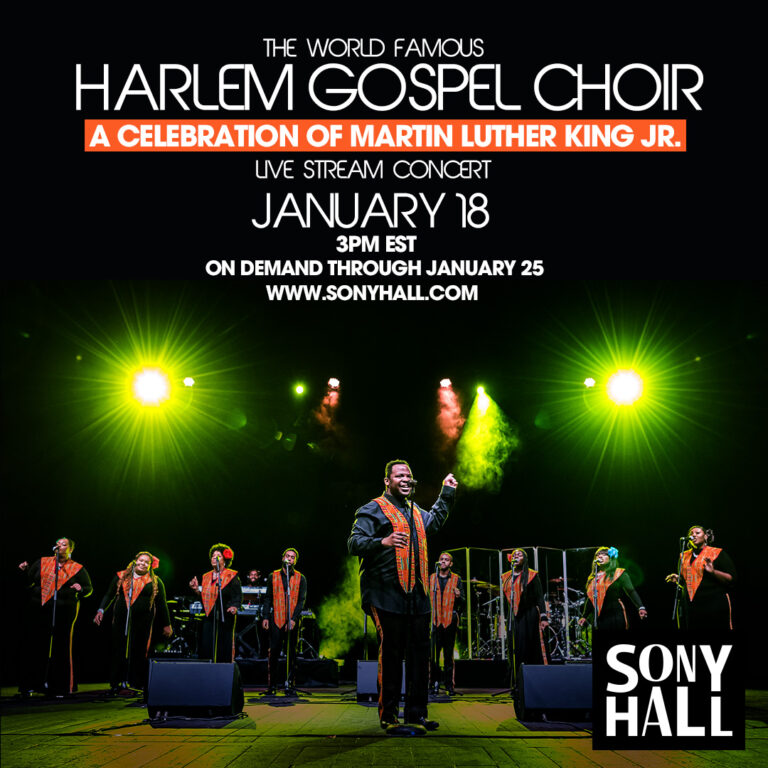
Harlem Gospel Choir is known for their contemporary gospel sound with a touch of jazz and blues They announced their upcoming performance at Sony Hall in New York City, right around the corner from Times Square. The show will broadcast via live-stream from Sony Hall on January 18, 2021 at 3PM.
The Harlem Gospel Choir has been performing for over two decades and are known for being one of America’s premier gospel choirs. They are deeply rooted in the history of the African-American slave trade. It’s widely known that black gospel music can be traced back to the 1700’s, when African slaves were brought to America against their will. Eventually their unique African musical heritage was combined with Christianity to create the gospel sound that is widely known today. The Harlem Gospel Choir presents the modern gospel classics as performed in the black churches of Harlem today.
Sony Hall is a multi-genre live venue located in the heart of New York City. It’s known as a one-of-a-kind concert hall which is enhanced by Sony technology to provide people with an one of a kind entertainment experience. The venue was established in 2018 and is owned and operated by Blue Note Entertainment Group. It has standing room for 1,000 people or seating capacity for 500 people and a full service restaurant and bar. Sony technology 360 Reality Audio, 4K Remote Cameras, and Headphones that support the 360 Reality Audio.
This special performance is being done in celebration of Martin Luther King Jr. and according to the Choir, “It will be a very special show with new material, and a few surprises.” The performance will take place live on January 18, 2021 at 3PM and will be available with the access code until January 25, 2021 at 11:59PM EST. Access to the virtual stream code is $25. People interested in purchasing a ticket can do so here.
For more information the Harlem Gospel Choir and their Sony Hall performance, visit their website.
It’s no surprise that the music industry has struggled to stay afloat since the start of the pandemic. Venues have shut down permanently and performers have resorted to online live streaming instead of in-person concerts. There is light at the end of the tunnel, though. The National Independent Venue Association (NIVA) is giving out its first set of grants to music venues around the country.
A concert attended by a huge audience before Covid.
Music fans, artists and corporations from all over donated to NIVA’s Emergency Relief Fund. This amounted to $3 million in short term relief for independent venues and promoters in need of economic help. The recently passed COVID-19 Relief Law includes provisions from the Save Our Stages Act, to give financial assistance to the music industry. Unfortunately, there’s still time before they see any of the funds coming through. These grants are put in place to help keep the venues doors from closing.
This aid would not have been possible without the help of everyone who has supported NIVA. Thank you especially to the NIVA Emergency Relief Fund Committee co-chairs, Lisa Gedgaudas, Chris Zacher, and Carl Swanson, who dedicated endless hours to making sure this program could assist as many venues and promoters as possible. We’re immensely grateful to them, but the NIVA Emergency Relief Fund is just a temporary life raft for these small businesses.
Rev. Moose – NIVA Executive Director
NIVA came to fruition when the pandemic forced large gatherings to come to an abrupt halt. Since then they have acquired 3,000 members in all 50 states. NIVA’s goal is to preserve the environment of live music and to focus on separate and supplemental initiatives, such as the Emergency Relief Fund.
The Giving Back Fund administered The Emergency Relief Fund through a panel of third party industry experts.
“It’s hard to imagine our futures without the lively spirit and culture of independent music venues,” said Marc Pollick, president of the Giving Back Fund.
The fund is tax-deductible so that individuals, companies and foundations can contribute. They are currently still taking donations with a goal of $11 million to provide essential business relief to everyone who has applied.
With a maximum grant amount of $25,000, this is only short-term help. And we are pained that we can’t provide grants to all who applied, because our industry’s need far exceeds the donations we’ve collected so far. We’re grateful that Congress passed the latest COVID Relief law, but it will likely take months before the grants are received. We’re trying to help those most at risk of going under while they wait.
Rev. Moose – NIVA Executive Director
For now, NIVA will use these critical grants to help hold suffering businesses over until the COVID-19 law provides more permanent economic stability. This allows them to maintain their current payments in hopes that the industry does not flatline and when everything goes back to normal they can prosper ahead of this economic disaster.
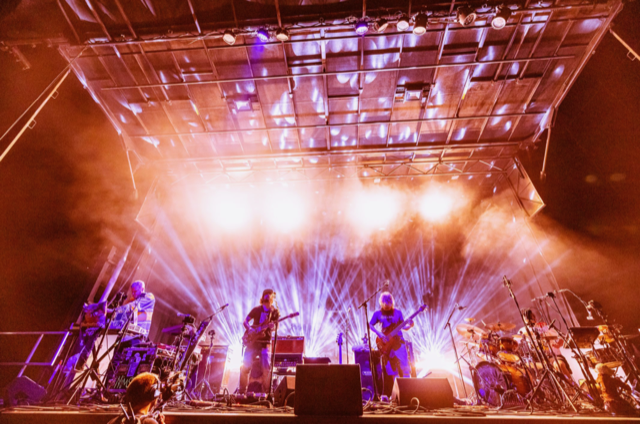
NYS Music’s Best of 2020 series concludes with a look at the best Tours and Drive-In shows of a year we’d all like to forget. When the music industry shut down in mid-March, it was sudden and continues to last into 2021. Few bands got to go on a ‘real’ tour, given there were roughly 11 weeks in which to tour, and the coldest months of the year, at that. Still, a few bands went out on a Winter 2020 tour, making stops in New York State and surrounding areas. Be sure to check out the best Streams, Covers and Jams.
photo by JD Cohen
Goose announced shows in Williamsburg for late January, 2020, and immediately added a second, and smaller third show, due to demand. Their shows at The Music Hall of Williamsburg were two of the best of their tour.
One band, Twiddle, celebrated their 15th year as a band with a Roots Tour of their own, streaming the multi-week event that looked at the venues they got their start in across Vermont, wonderfully recalled by Ryan Dempsey. In addition to these shows, Twiddle performed at multiple Drive-In shows across the Northeast, including New Jersey and Essex Junction, VT.
All that after a cross-country tour running from January through early March. The band had an impressive 2020, performing shows in Colorado to start 2020 with “Somewhere on the Mountain” in Frisco, CO and connecting with platform LiveXLive for their July Roots Tour.
photo by Dave Decrescente
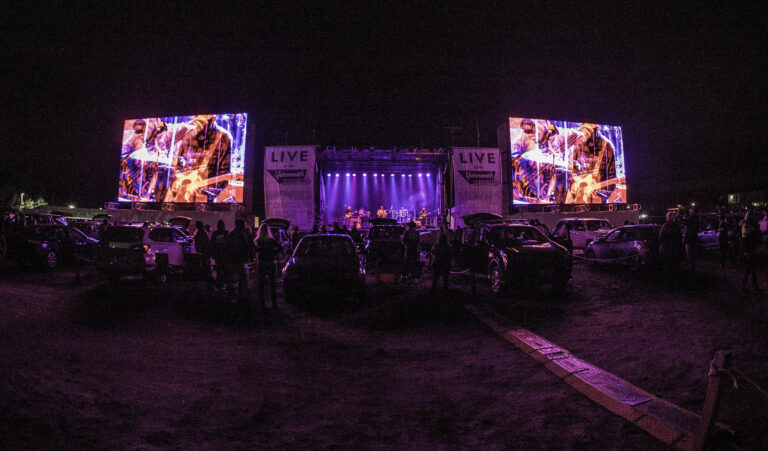
When it came to Drive-Ins, there were quite a few across the Northeast – Drive-in-Live in Swanzey, NH, Jericho Drive-In in Glenmont, NY, South Farms in Morris Farms, CT, Fingerlakes Drive-In in Auburn, NY, Silver Lake Drive-In in Perry, NY and Radial Park in Astoria, Queens.
Live at the Drive, featuring Buffalo’s Aqueous, was one of the first and the most successful series, with three weekends between Lockport’s Transit Drive-in and Perry Silver Lake Drive-In. Buffalo Iron Works produced the shows, with Josh Holtzman and Grace Vesneske’s new company Twenty6 Productions garnering credit for putting on shows that set a standard for socially distanced shows that were safe, well-run and comfortable for fans and staff alike.
photo by Paul Citone
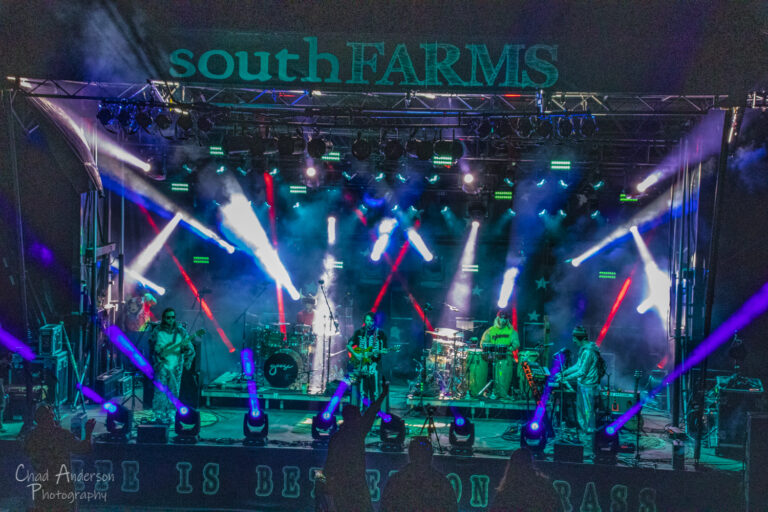
Goose also hosted numerous Drive-Ins across the Northeast and even ventured safely to Ohio, North Carolina and Maryland, as well as Swanzey and South Farms. Located in Morris, CT, South Farms was centrally located to the Hudson Valley from Albany to NYC, Western Massachusetts and Connecticut itself. As such, Goose, moe., Warren Haynes, Grace Potter, Allman Betts Band, Dark Star Orchestra, Citizen Cope and even comedian Bill Burr. Due to a recent Zoning Board ruling, South Farms won’t have live music for the time being, but they made some memorable moment in the time they were able to, in a key location in the Northeast.
photo by Chad Anderson
moe. and Disco Biscuits each hit the new Drive-In circuit, streaming online and giving fans thirsty for live music the remedy they sought. Shows in Yarmouth, MA became regular stops, with both bands heading to Cape Cod in October. Lafayette Apple Festival Grounds, just south of Syracuse, brought in Dirty Heads and Disco Biscuits, the latter of which performed three nights, culminating their Drive-In shows with a Halloween show and an audience well-prepared for the cold and mud but still got down to dance.
What will come in 2021? Drive-In concerts will surely be a regular feature starting in the Spring, until the pandemic is under control, the population is inoculated with the vaccine, and venues are able to manage crowds of slowly increasing size. Will Drive-In concerts be here to stay? The collective effort to stem the spread of COVID-19 this year and into 2022 will determine the speed at which we can return to having live music back to where it was in early March of 2020.
While a lineup of Dio, Megadeth and Savatage may sound like a great 80s metal triple-bill now, 33 years later, this show, in terms of ticket sales, was a flop.
The late, great Ronnie James Dio is rightfully heralded as a virtual deity these days, 12 years after his death. Rainbow, Black Sabbath, those first couple Dio albums, his late work with Heaven & Hell, that voice – the man was a giant in his field. All should hail him.
Forgotten these days is that, by the late 80s, the Dio star had faded more than a bit. By early 1988, when this show happened, the Dio solo band had gone from the upward trajectory of the killer Holy Diver and Last In Line records, which elevated Dio to huge, Madison Square Garden-headlining godhood, to a slow decline which had started with Sacred Heart, the departure of Vivian Campbell, and the treading-water, unremarkable Dream Evil record, which was current when this show happened.
Dio, the band, seemed to be heading into their Spinal Tap phase – in 1984 they’d packed this venue (and RPI Fieldhouse in Troy a year later), when this show happened, popularity had ebbed, the stage was moved up to the middle of the floor, and half of the arena was closed off – and even cut in half, the place still didn’t look very full.
Opening the show was Savatage, who were promoting their popular Hall of the Mountain King record. They played a short set to a small crowd, included early tracks like “The Dungeons are Calling” and “City Beneath the Surface,” but didn’t seem to make a huge impression, although their epic, 80’s power metal was a perfect match for Dio. Savatage never broke big, but various members of the Savatage team went on to monumental success with Trans-Siberian Orchestra, so they had the last laugh.
Megadeth was the band this writer was there to see in 1988 – their first two records were huge favorites of mine in the mid-80s, and they were about to release their third, So Far, So Good, So What. The band’s lineup had shifted: joining Dave Mustaine and David Ellefson were new guitarist Jeff Young and drummer Chuck Beehler, replacing the drug-addled Chris Poland and Gar Samuelson, who’d been in the band when they played an incredible gig at Colonie Coliseum just over 7 months earlier. They weren’t big enough yet to affect the morose ticket sales too much this night, but I remember a short, killer set, kicking off with “Wake Up Dead” and “The Conjuring,” with some as-yet unreleased new tracks (“Hook in Mouth,” “In My Darkest Hour”), and some Peace Sells-era heavies like “Devil’s Island” and “Peace Sells” itself. The set finished with some covers, Nancy Sinatra’s “These Boots” (the only track played from their Killing is my Business debut), and the Sex Pistols’ “Anarchy in the UK”. Megadeth would return soon after, playing the Palace Theatre in Albany in April 1988, and drawing as many or more people than had attended this Glens Falls gig with Dio.
Dio and his band – now featuring Craig Goldy on guitar instead of original Irish guitarist Viv Campbell – hit the stage with first-album classic “Stand Up & Shout,” and stuck to a mostly crowd-pleasing set, playing a lot of the first-and-second album classics, and four songs from then-new ‘Dream Evil’. But in 1988 things were changing, and the stage show with the costumes, mechanical spiders and endless solos – before a not-packed hall – gave it somewhat of the aforementioned Spinal Tap vibe. Dio in ’88 seemed like the past, and Megadeth seemed like the future. I’d worshipped him 5-6 years earlier, but by the time of this gig there was so much cool thrash metal and alt-rock that perhaps Dio just seemed anachronistic to me. In retrospect, he was not.
In ’88, things looked pretty over for Ronnie, which obviously wasn’t true at all. But (probably because of the dismal sales for this gig) I think this was the last time the DIO band played the Albany area – although he’d some back with Black Sabbath and Heaven & Hell in years to come, already by then a beloved veteran, and his legacy is solid. All hail Ronnie James Dio.
Savatage setlist: City Beneath the Surface, 24 Hrs. Ago, Beyond the Doors of the Dark, The Dungeons Are Calling, Hall of the Mountain King, Power of the Night
Megadeth setlist: Wake Up Dead, The Conjuring, Hook in Mouth, In My Darkest Hour, Devil’s Island, Peace Sells, These Boots Are Made for Walkin’, Anarchy in the U.K.
Dio setlist: Stand Up and Shout, Dream Evil, Night People, Naked in the Rain (incl. Guitar Solo), The Last in Line, Holy Diver, Drum Solo, Heaven and Hell, Man on the Silver Mountain, All the Fools Sailed Away, Keyboard Solo, Rock ‘n’ Roll Children, Long Live Rock ‘n’ Roll, Rainbow in the Dark, We Rock, Don’t Talk to Strangers