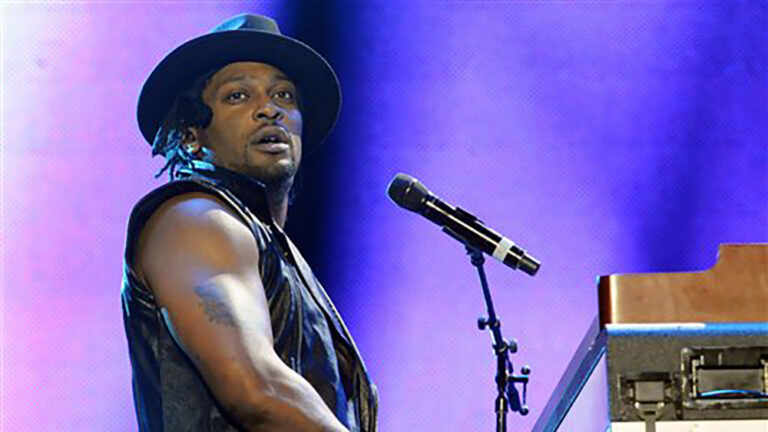
D’Angelo will hold a Verzuz DJ battle against unnamed “friends,” taking place on February 27 at 8 pm EST, at the historical Apollo Theater in Harlem.
(Photo by Cheryl Gerber/Invision/AP, File)
He announced another episode of Verzuz, an online DJ-battle series, in which artists face off their contemporaries. The competition is fun, friendly, and fans cheer on artists as they DJ hit songs against each other. Previous sets have included Alicia Keys vs. John Legend. Beginning during lockdown, Verzuz has become a staple respite for music fans everywhere. The notoriously reclusive artist, D’Angelo, who champions quality over quantity will take the stage at the Apollo Theater for the first time since 2014.
D’Angelo will be challenging several guests at his performance, which expands the online show to a larger spectacle. Due to his sparse public performances, rumors have arisen of new music, although the artist has released one album in 21 years.
In the early 1990s, D’Angelo exploded onto the “new retro soul” scene with artists such as Erykah Badu. His 2000 hit album, Voodoo, catapulted him into the spotlight, and he retracted, rarely playing shows. The next D’Angelo album did not come to fruition until 2014, and he vanished from the public eye quickly after a supporting tour. On that tour, it was the last time D’Angelo played the Apollo Theater. This return is long anticipated, and you can stream it on February 27 at 8pm EST through Verzuz.
In episode 112, the community answers a simple question: “Favorite Moments At Flour City Station andddd Go!” Ben Albert, Host of Rochester Groovecast, posed this question on Facebook, reached to many people, and brought together a large collection of Flour City Station memories. Ben shares some of his insights, shares recordings of guest-submitted memories, and reads off the rest of the amazing collection.
Flour City Station is located at 170 East Avenue in Rochester, a town steeped in music tradition, from the Eastman School of Music just down the street, to the longstanding music festivals such as the Jazz Festival, East End Fest, Fringe Fest and Party in the Park.
Aqueous, April 4, 2018 at FCS – photo by Jake Silco
Flour City Station (FCS) provides patrons with a unique and friendly environment for enjoying the best live music Rochester has to offer. With a state-of-the-art sound system, FCS caters to a wide base of genres of music featuring both local performers and nationally touring acts. The safe environment and friendly staff keep customers coming back for the friendly social atmosphere where they can catch up with old friends, meet new ones, and enjoy premium live music. At FCS, they’re simply all about the bands, the fans and the experience.
At Rochester Groovecast, the mantra “We’re Fans First!” harnesses the belief that the best businesses are built by fans. The podcast is deeply dedicated to playing an active role in the culture of its local scene.
The brainchild of Rochester native, Ben Albert, was created in 2016 to serve as a portfolio of the city, and nowadays, the entire region.
The podcast believes in the artistic brilliance abundant in Rochester, NY, and the surrounding regions. Ben seeks to play a pivotal role in our community by helping give Rochester a well-earned voice. He has seen first hand the abundance of talent, character, creativity, innovation, and beauty the Flour City has continuously offered.
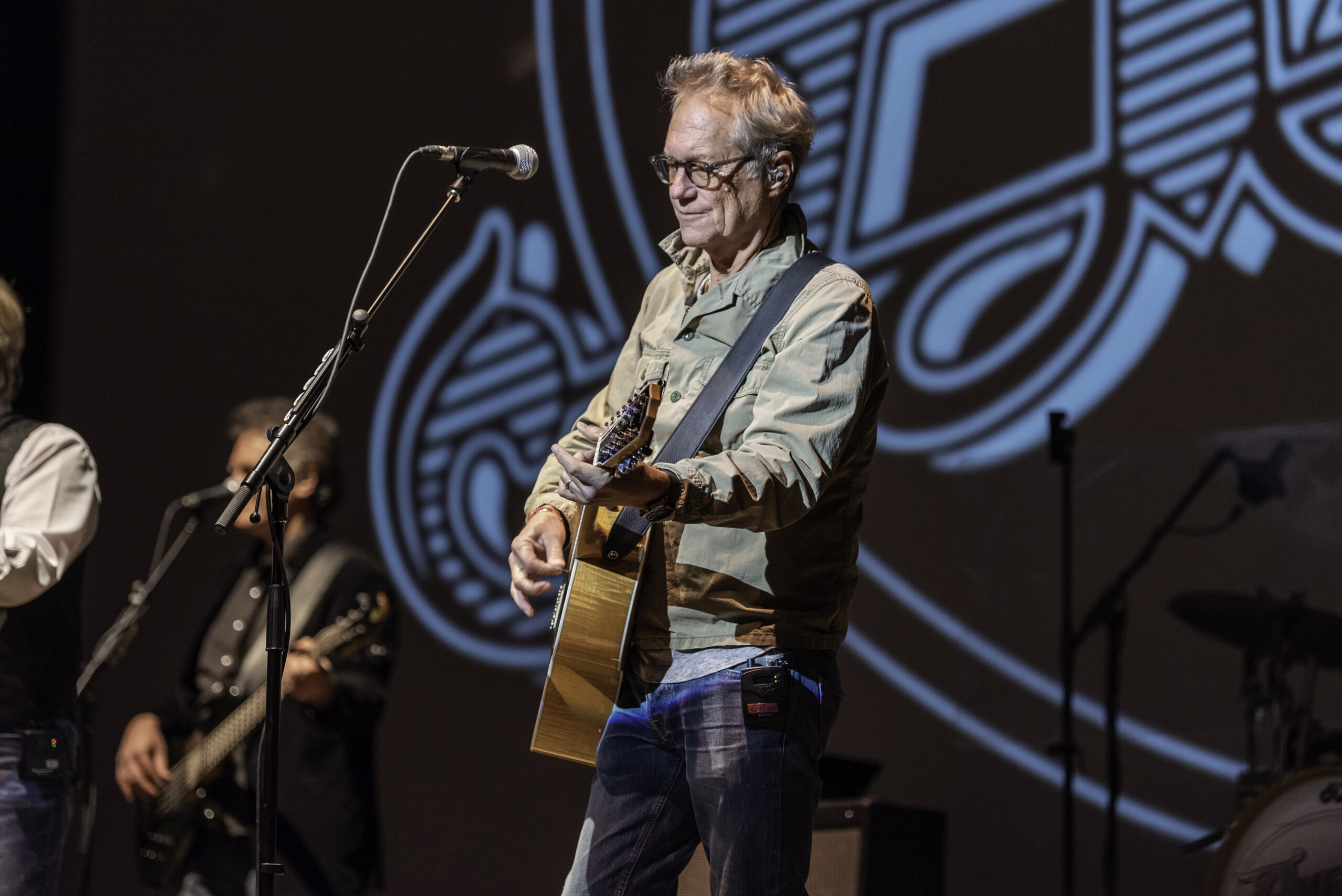
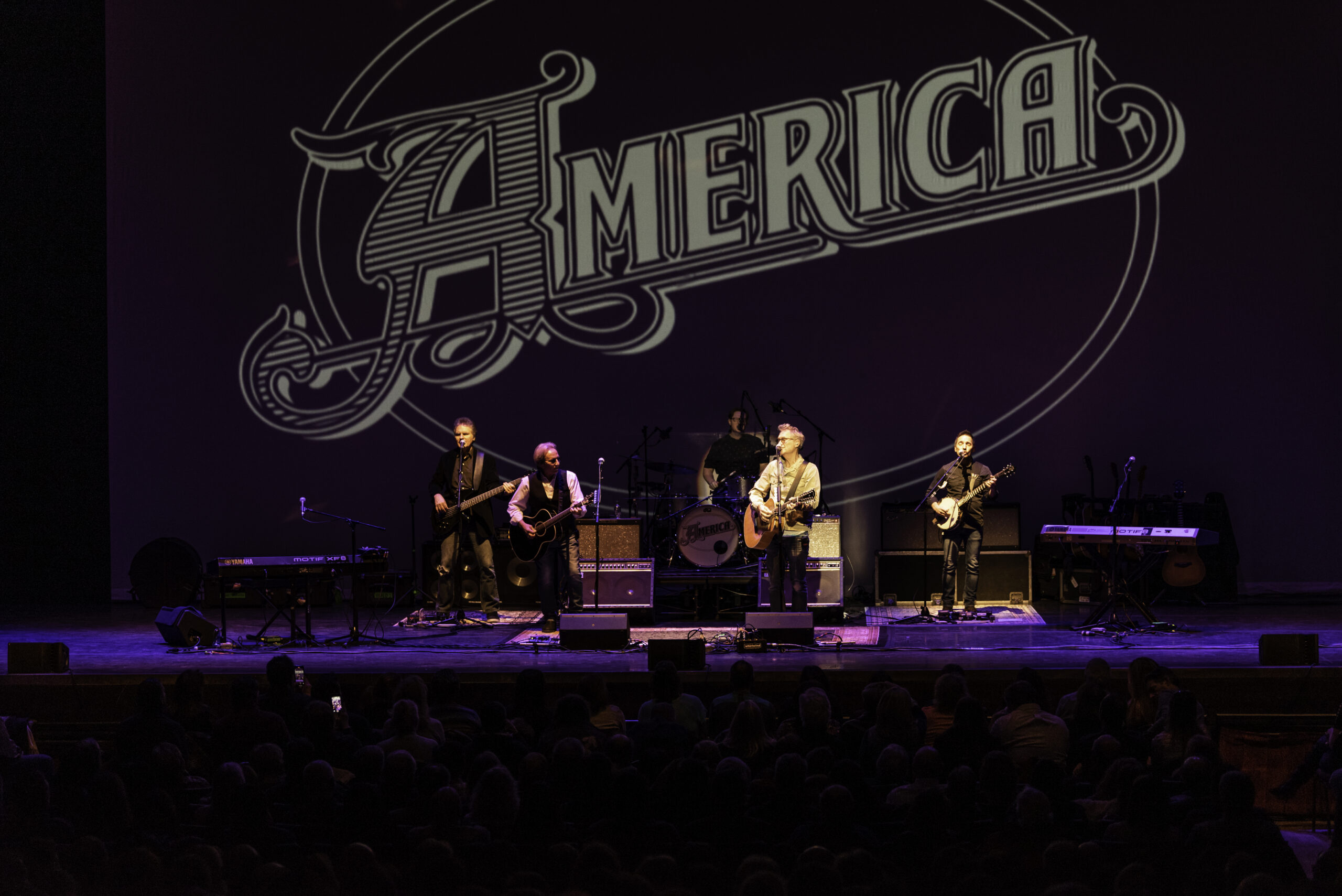
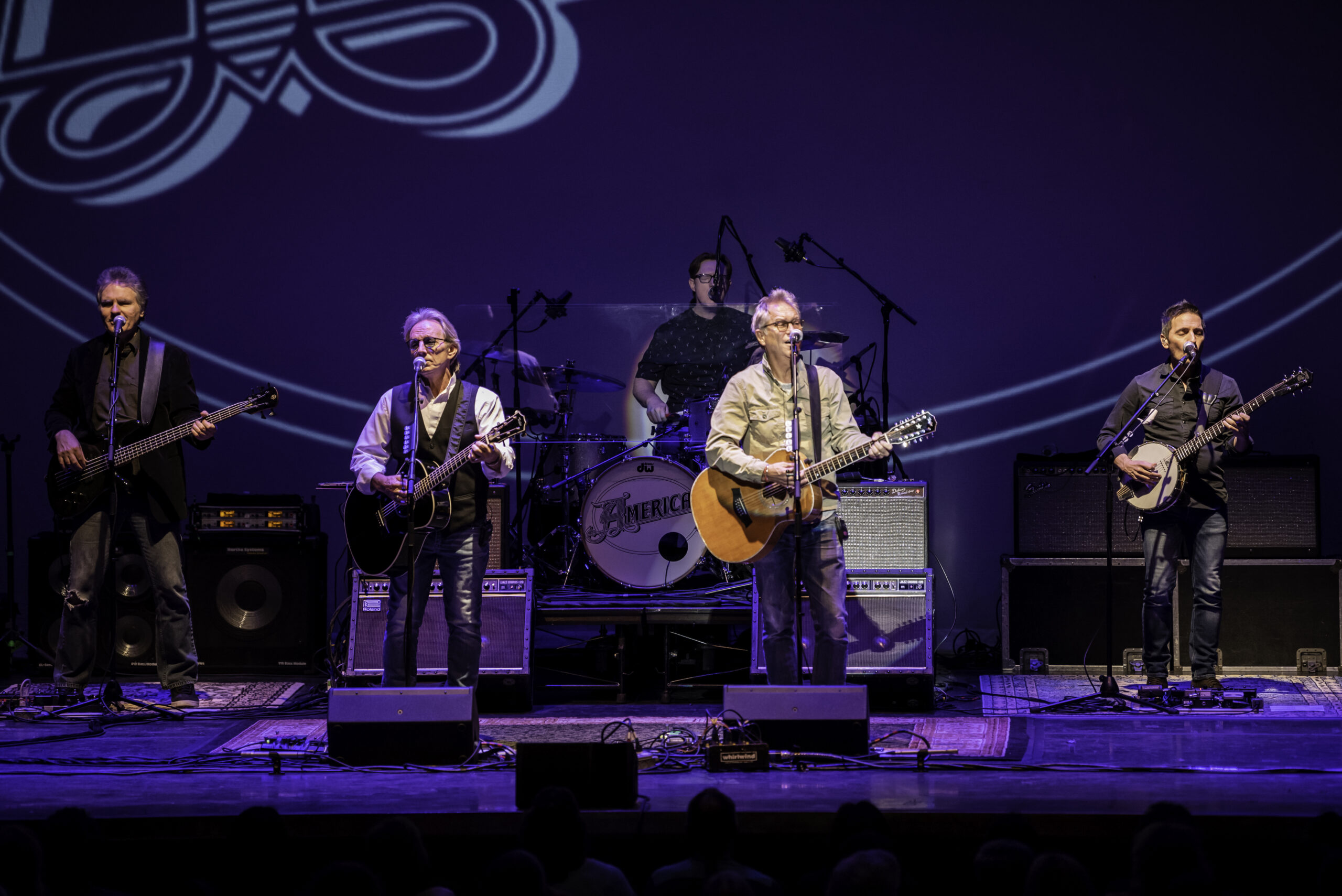
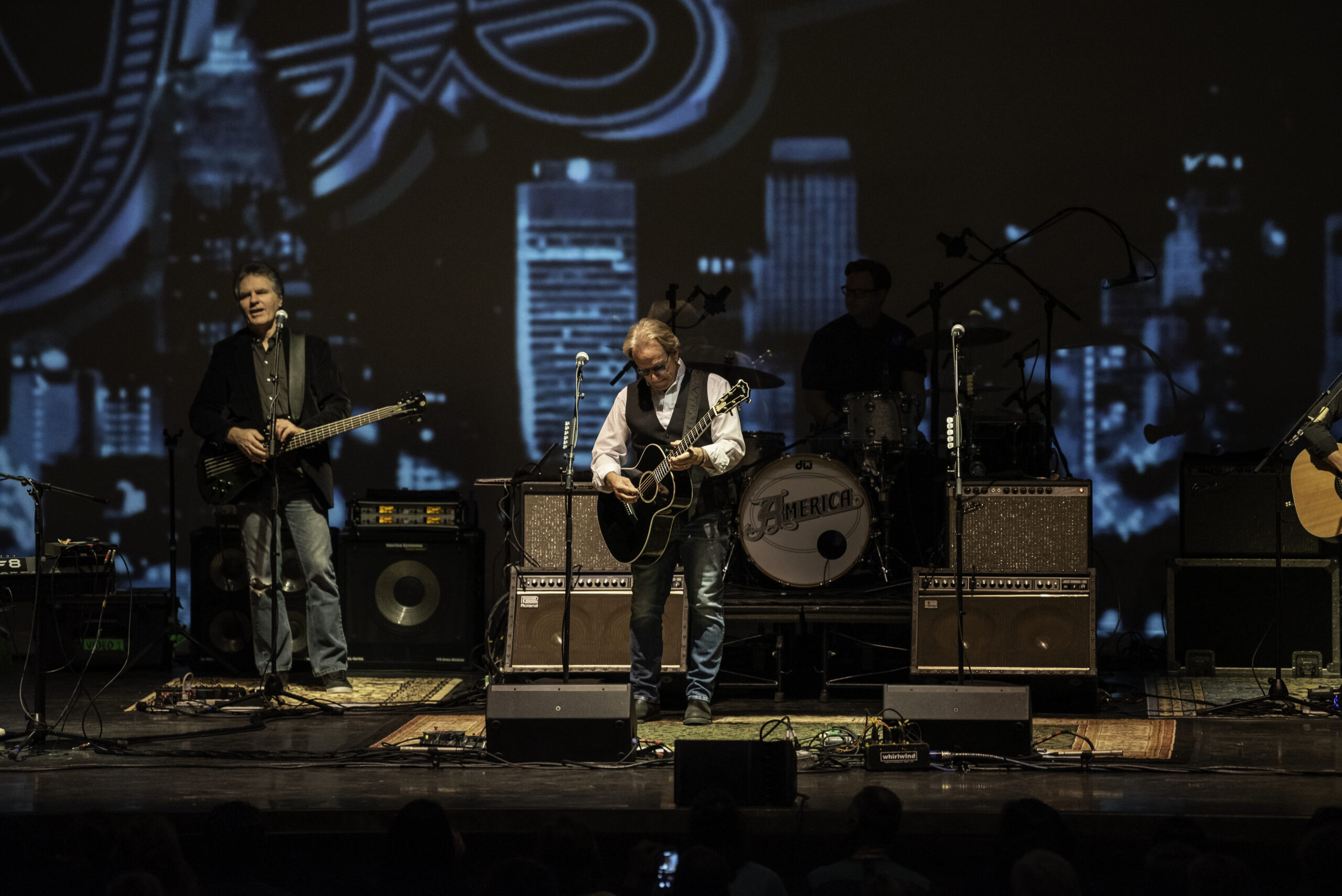
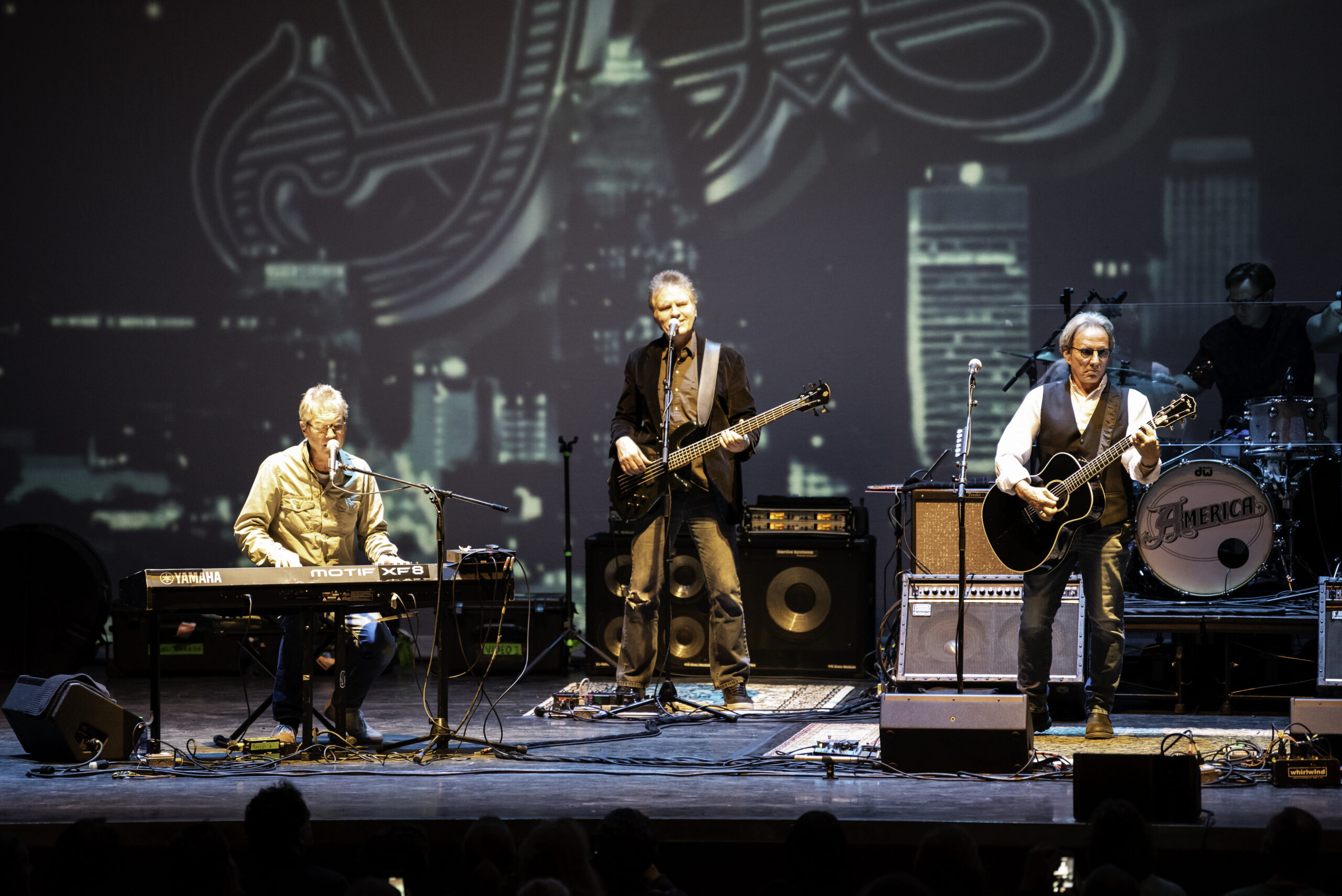
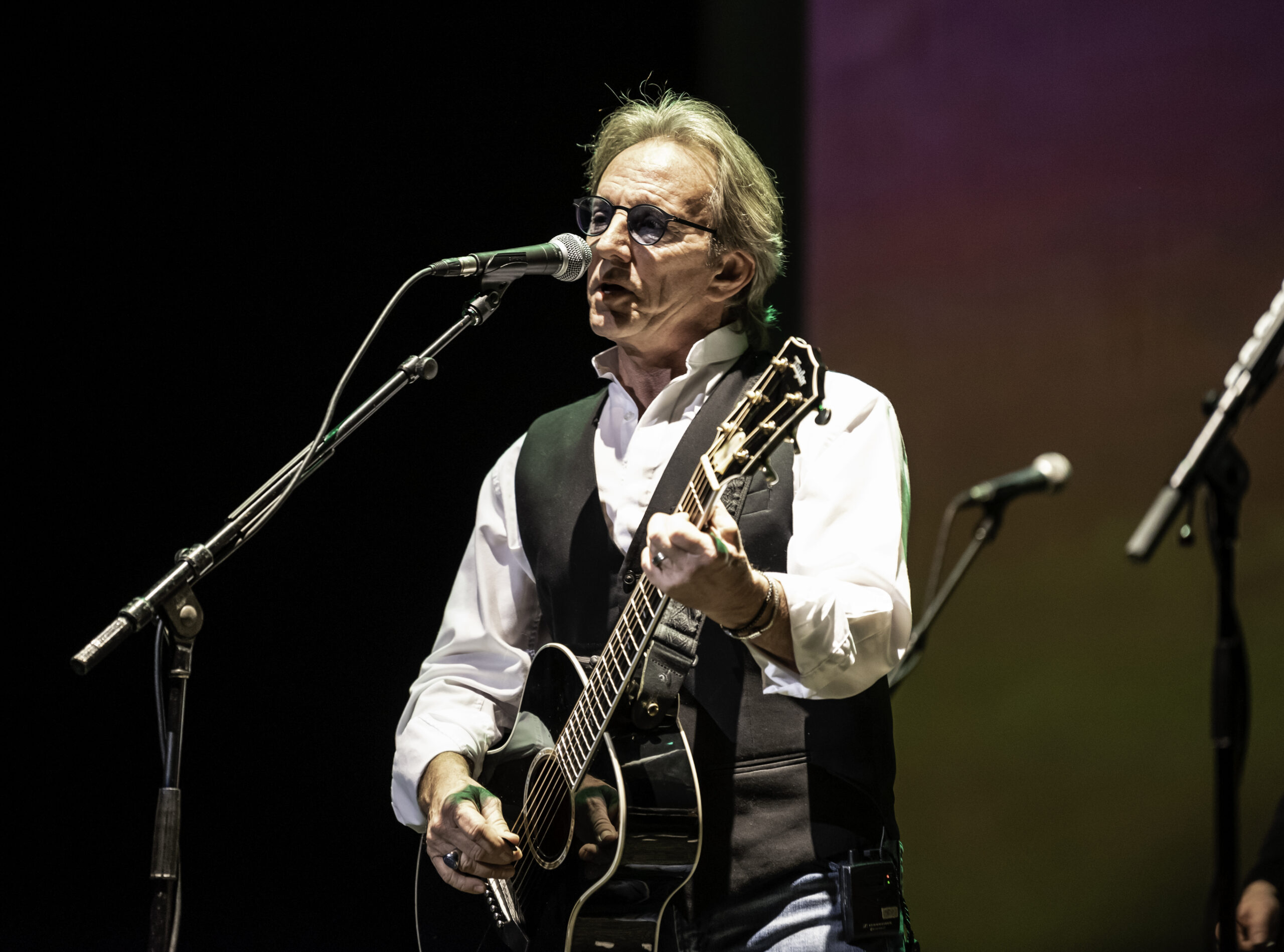
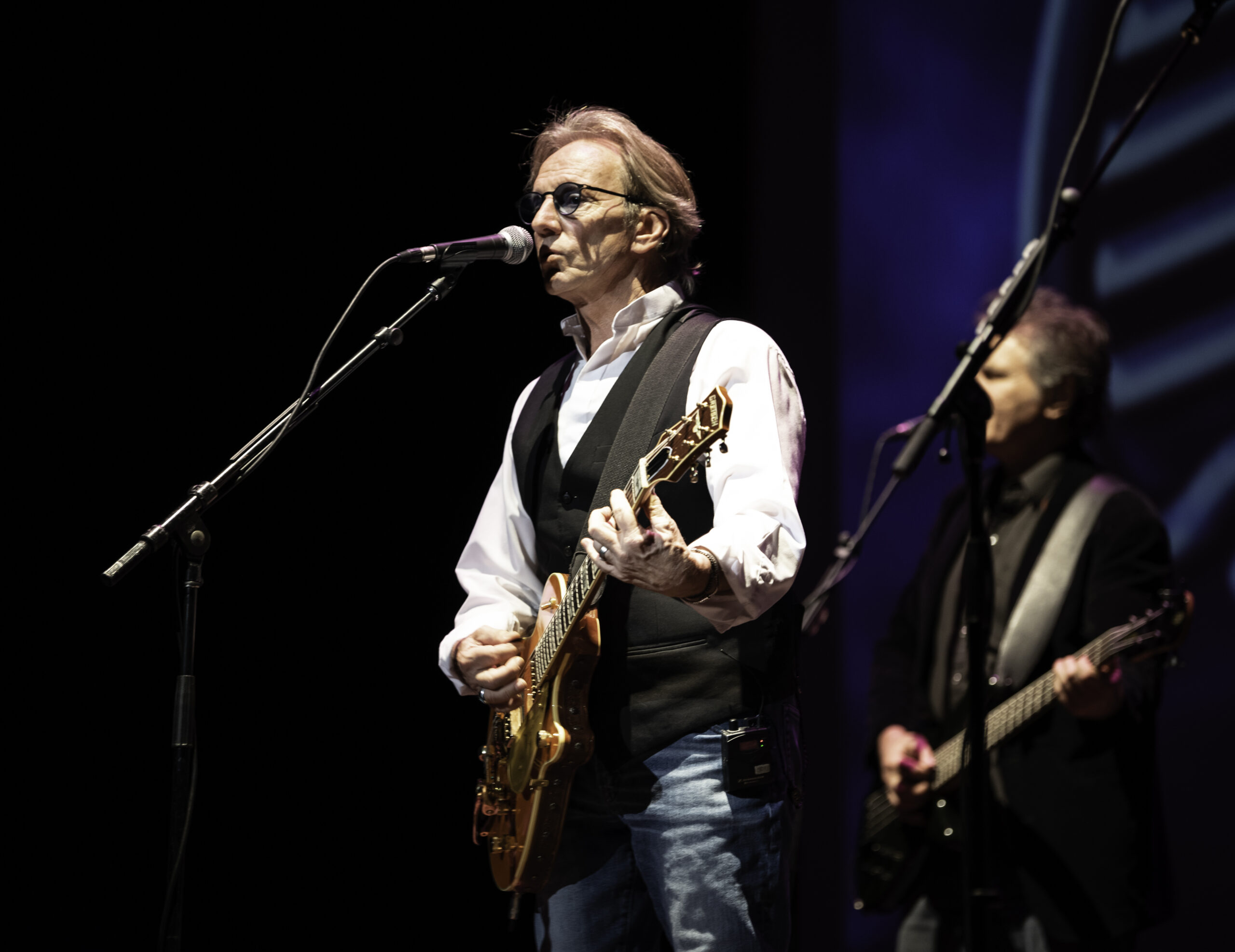
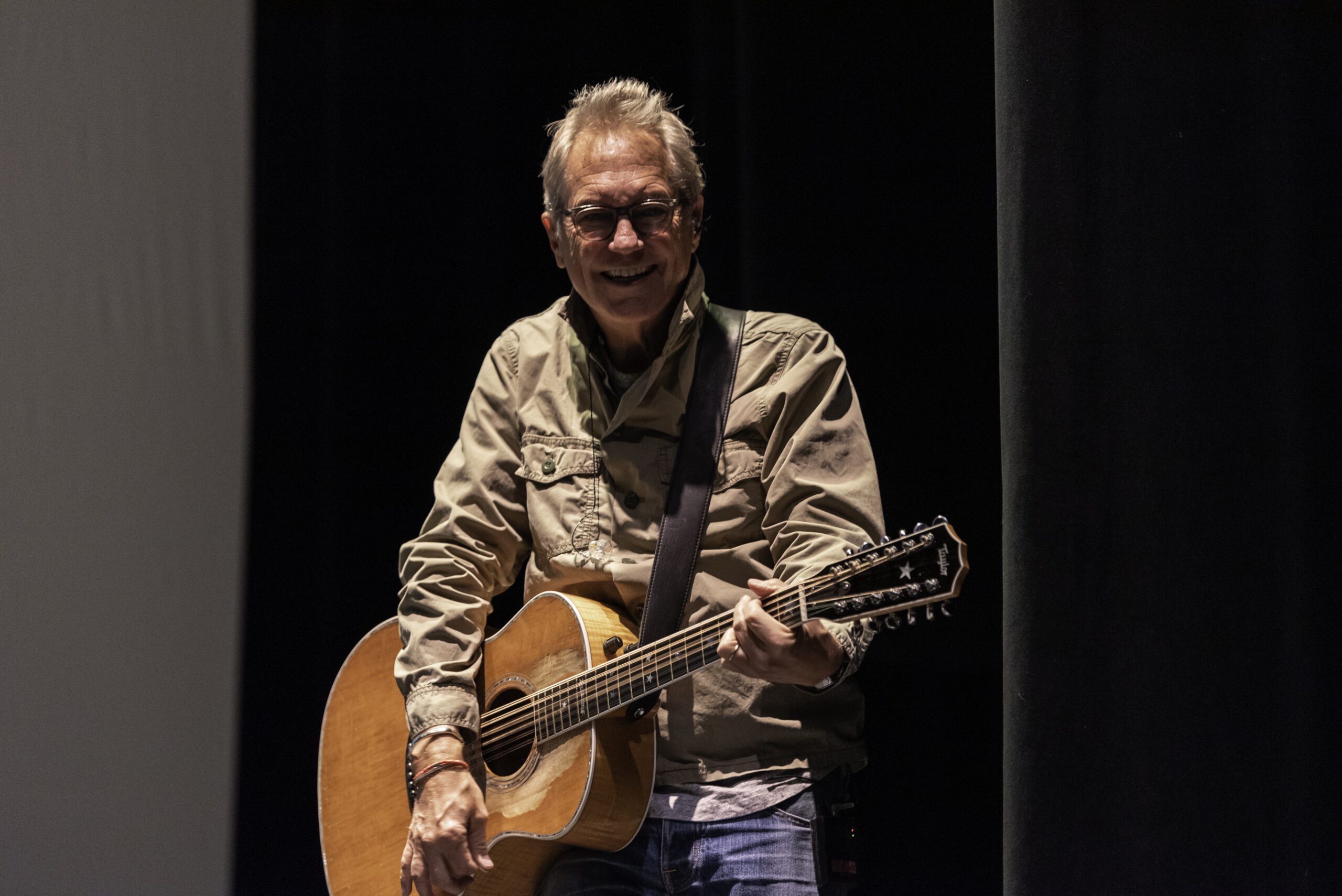
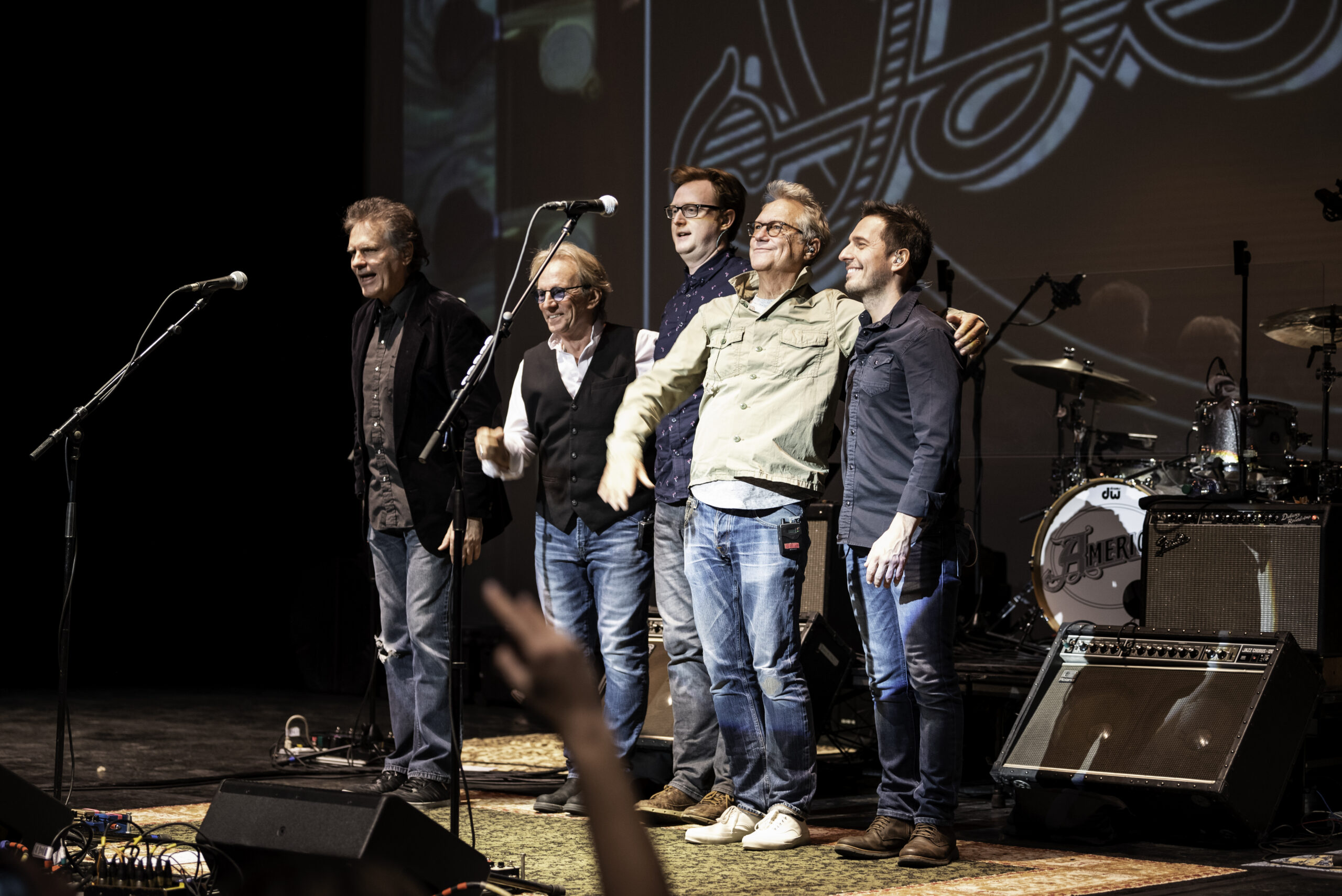
1 year ago today on February 21st 2020, America played a sold out show at The Tilles Center on the LIU Post campus in Brookville, Long Island. This was the first show of the bands 50th Anniversary tour celebrating the release of their 1971 self titled album.
“A Horse With No Name,” originally titled “Desert Song” was released in the US a few weeks before the album came out and sold over a million copies being awarded a gold disc by the RIAA. The album went platinum shortly after. The band was opening for acts like The Who, Elton John, Pink Floyd and worked with Beatles producer George Martin from 1974-1979.
The show was filled with hit after hit spanning through their 50 year and counting career. Gerry and Dewey sounded just as good today as they did when they started harmonizing 50 years ago. Songs from the setlist included “Tin Man,” “Ventura Highway,” “Sister Golden Hair” as well as a covers of The Beatles “Eleanor Rigby” and The Mamas & Papas “California Dreamin’.” The 18 song set concluded with “A Horse With No Name.”
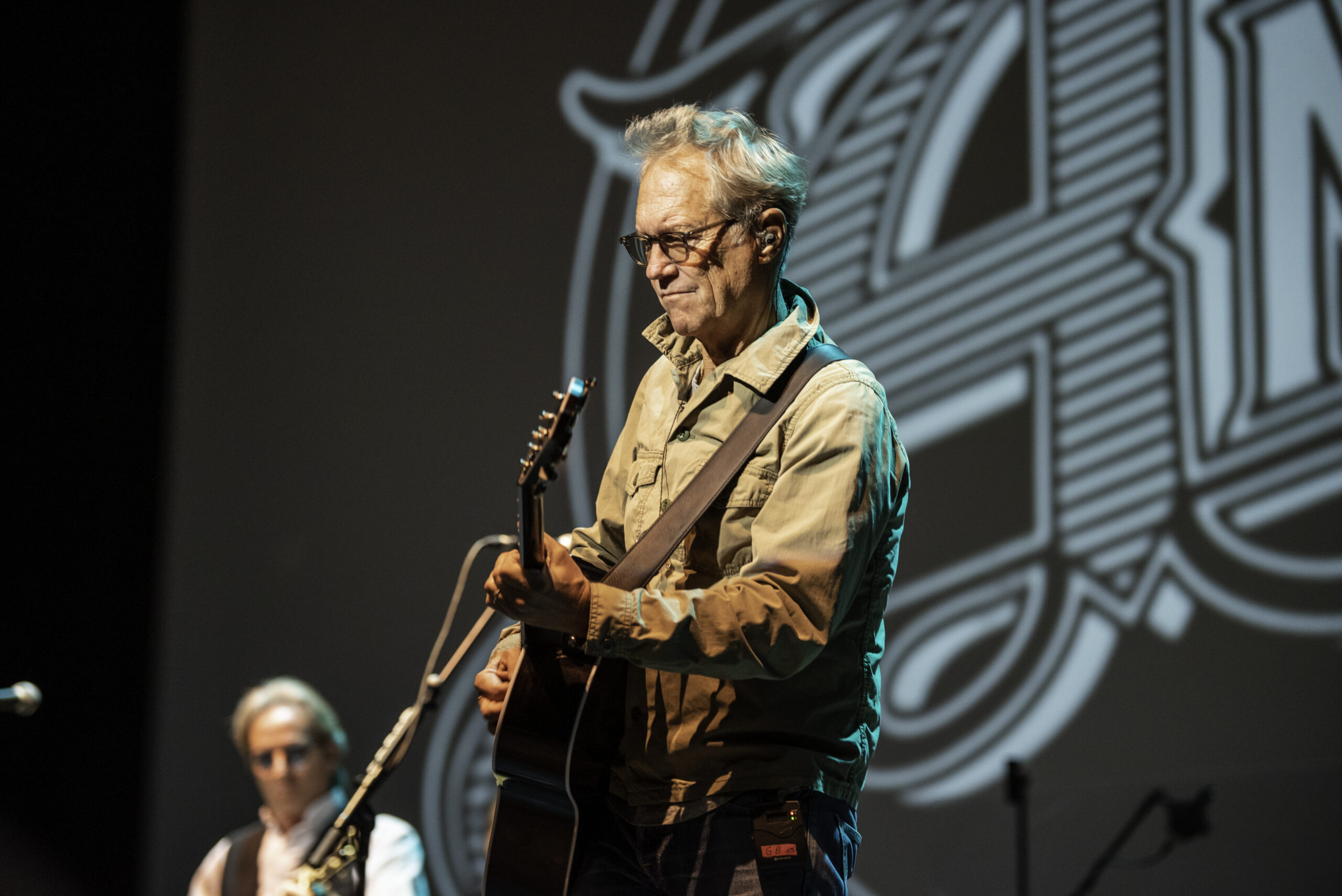
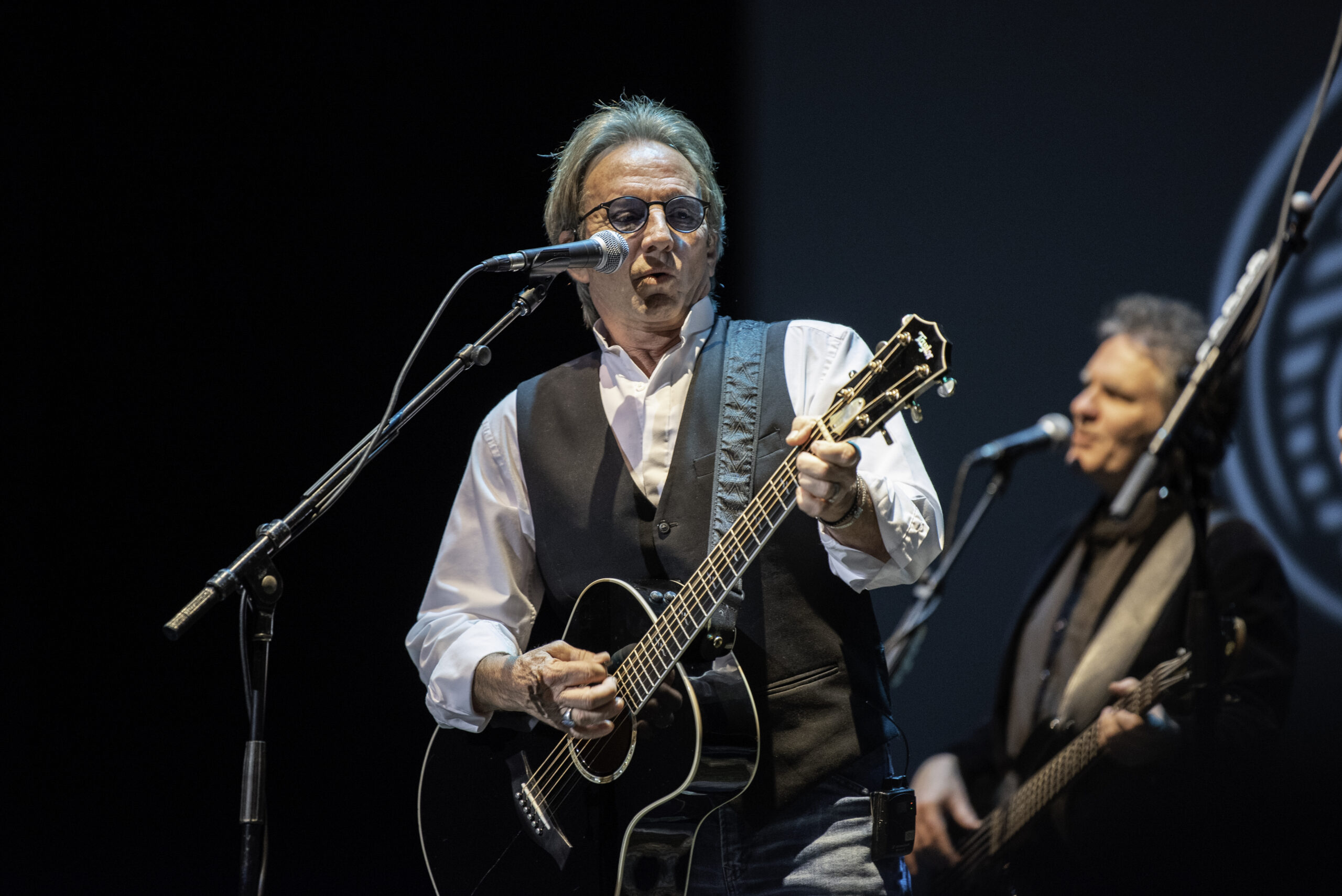
The band’s current lineup includes original founding members Gerry Beckley and Dewey Bunnell, as well as Ryland Steen on drums, Steve Fekete on guitar and Richard Campbell on bass. The tour continues across United States and Canada until July when they head to Europe for shows in France, the U.K. and Germany. You can see all the tour dates here.
There is also a biography about the band written by Jude Warne, titled America The Band: An Authorized Biography that is available now.
Setlist: Tin Man, You Can Do Magic, Don’t Cross The River, Daisy Jane, Riverside, I Need You, Here, Ventura Highway, Eleanor Rigby, Cornwall Blank, Hollywood, The Border, Woman Tonight, Only In Your Heart, California Dreamin, Lonely People, Sandman, Sister Golden Hair, A Horse With No Name
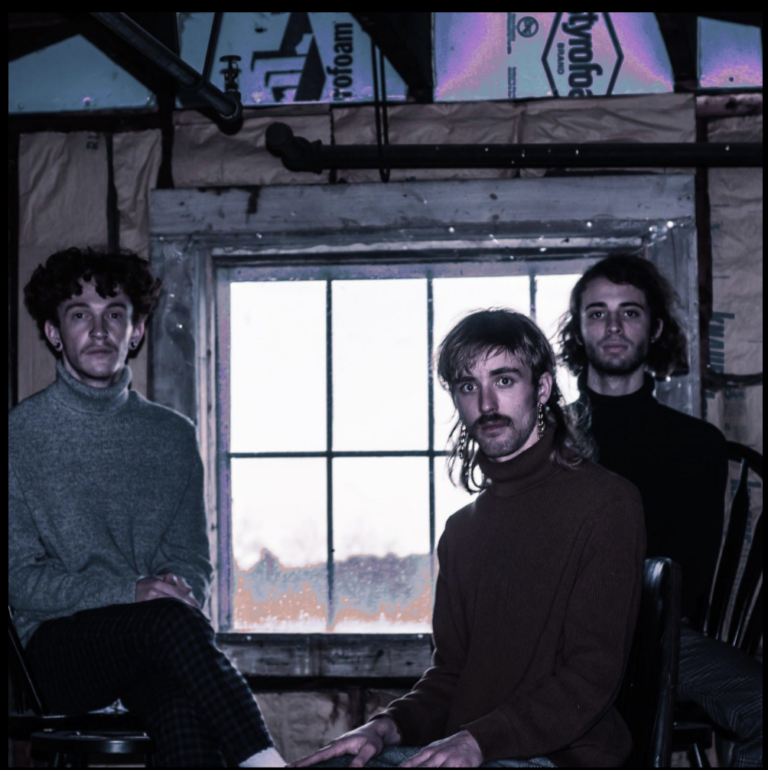
boys cruise has released “Room for Reason” as their first single off of their upcoming self-titled sophomore album.
Their new jangly, poppy, but also garage-rock song is the first taste of boys cruise’s music since their acclaimed 2019 debut record Jerry. Mastered by Felix Davis, who worked with artists such as Lana Del Rey, HMLTD, and Swim Deep, added extra flair to boys cruise’s unique, playful sound. Their musical style combines several genres, creating a colorful blend that could make anybody want to dance. Zach Bloomstein produced their upcoming album.
Drummer and bassist Jack Parker spoke about the newest single: “Johnny Clarke (lead vocals/guitar) and myself, Jack Parker (bass/drums), wrote the main ideas before linking up with Sammy Josh (guitar) to really flesh everything out. I wrote Room for Reason over the span of a few days this past summer when I fell terribly ill with 102 degree fever.”
He continues that “the song is about how I felt trapped in my mind palace and how I was longing for rest. This past summer was a generally manic and confusing time for all of us in boys cruise, and the lyrics are just sort of a reflection of that confusion and some of the weirdness that was simultaneously going on in my personal relationships.
Based in Burlington, VT, boys cruise had its genesis in 2018 in the Northeast DIY scene. Their wild stage presence and riveting shows made them a notorious and beloved name in the northeast underground circuit. From cutting the lead singer’s hair mid-set to boxing matches between members on stage, they began selling out Vermont venues.
Their sound has evolved on their upcoming record in a new artful and noisy direction, compared to the poppier 2019 LP Jerry. boys cruise is Johnny Clarke (lead vocals/guitar), Jack Parker (vocals/bass/drums), and Sammy Josh (vocals/guitar).
Thursday, February 22, 2001 was a frigid night in Syracuse, yet Armory Square was alive and well. With no Phish for the foreseeable future, and no New Year’s Eve performance that past December, the energy this evening was unmistakably palpable as Trey Anastasio Band made their debut performance at Syracuse’s Landmark Theatre.
Only their second show of 2001’s Winter Tour, Trey Anastasio Band (TAB) offered fans a glimpse of what was to come from this new yet familiar cast of supporting musicians joining Trey, and how the void left by Phish’s hiatus would be filled by the band leader.
Trey had originally played with drummer Russ Lawton and bassist Tony Markellis in 8 Foot Fluorescent Tubes in 1998, making the trio the core of a band that continues to perform today, even through the pandemic. Trey added in a three-piece horn section alongside Russ and Tony, bringing in Andy Moroz (trombone), Giant Country Horns member Dave “The Truth” Grippo (saxophone) and Jennifer Hartswick (trumpet/tuba). The sextet was an early version of the TAB lineup Trey has modified over the years, and did not yet include soon-to-join members Ray Paczkowski, Natalie Cressman and Cyro Baptista.
The night began with the Chuck Berry number “In the Wee Wee Hours,” a perfect way to start an evening where the setlist was anyone’s guess. The first original of the night, “Push On ‘Til the Day” would follow, and when the horns stepped out into the light, the crowd roared with approval. “Push On” segued neatly into “Tube Top Flop” (later Tube Top Wobble), and then the emotion-heavy “Sunday Morning” (later “Ether Sunday”).
“Mozambique” was raucous, a funky tune with a big band-meets-Salsa sound; the prize in the early versions of these new compositions was how they allowed for room to improvise both individually and collectively. Althought not played this night, “Last Tube” would serve the same purpose in 2001 for TAB’s cohesiveness.
The first Phish cover of the night, “Gotta Jibboo” included Trey’s signature ‘whale call‘ making an appearance early in the song and continuing on a loop as the band found a groove to tuck into for nearly 12 minutes. In the final two minutes of “Jibboo,” listen closely and you can hear the band hinting at the song to follow, “Burlap Sack and Pumps,” soon to be a funky fan favorite.
To close the set, Trey dispatched the band and brought out his acoustic guitar for “Guyute.” With the audience whistling along, the attention focused on the Bad Lieutenant sitting center stage.
After a 43-minute set break, Set 2 began with a snare beat that perked ears up, signaling the start of Bob Dylan’s “Rainy Day Woman #12 & #35,” which the audience ate up and sang along to. An 18-minute “Sand” followed, with horns chiming in and Trey on keys, both soon to be staples of TAB shows.
The Band’s “It Makes No Difference” felt especially touching, as did Bob Marley’s “Mellow Mood,” a cover debuted by Phish just a few months prior in Albany, and which Trey admitted the band had only practiced once prior to the show. Dedicated to sound engineer Paul Languedoc, “Happy Coffee Song,” off Trey’s initial solo album One Man’s Trash, stayed true to the original recording and worked nicely for the larger band format.
Listen below, and if “Nothing But an E Thing” sounds familiar, that’s because it eventually came to be known as “Pebbles and Marbles,” debuted here as a fully instrumental piece, with horns taking turns on what amounts to the current “Pebbles and Marbles” intro section.
Rounding out Set 2 was another One Man’s Trash track, “At the Gazebo,” later outfitted for performance with orchestras and string quartets, and “Drifting,” which included band intros, notably for Tony “the Meaning of Life” Markellis. An encore of Billy Preston’s “Will It Go Round in Circles” would close the night, one that saw the start of Trey’s next musical venture, one that continues to evolve and grow, 20 years later.
Trey Anastasio Band, Landmark Theatre, Syracuse, NY – February 22, 2001
Set 1: In the Wee Wee Hours [1], Push On ‘Til the Day > Tube Top Flop, Ether Sunday, Mozambique, Gotta Jibboo, Burlap Sack and Pumps, Guyute [2]
Set 2: Rainy Day Women #12 & 35[1], Sand, It Makes No Difference, Mellow Mood[1], Happy Coffee Song [3], Nothing But an ‘E’ Thing[3], At the Gazebo [4], Drifting
Encore: Will It Go Round in Circles
[1] TAB debut. [2] Trey solo acoustic. [3] Debut. [4] Trey acoustic. This show at the Landmark Theatre features the debuts of Happy Coffee Song and Nothing But an ‘E’ Thing, and the Trey Anastasio Band debuts of In the Wee Wee Hours, Rainy Day Women #12 and 35, and Mellow Mood. Gotta Jibboo contained Burlap Sack and Pumps teases. Trey performed Guyute solo acoustic. The Happy Coffee Song was dedicated to sound engineer Paul Languedoc. At the Gazebo also featured Trey acoustic.
After the show, fans headed out into the cold night around Downtown Syracuse, with plenty of bars and restaurants to choose from. Over at Armory High (also known as Styleen’s Rhythm Palace) Strangefolk was playing a post-show to a packed crowd. Trey stopped by around 12:15-12:30am, and joined the band for a jam in the song “Neighbor” before taking off. Give a listen hereand read below for Strangefolk guitarist Jon Trafton as he recalls the night.
That was such a fun night. The story behind Trey’s sit in is that a good friend of ours was Trey’s daughters’ nanny for several years around that time, and she put the bug in his ear leading up to that night. TAB was playing in Syracuse and the timing worked out perfectly because he was in a theater, so his show ended around 11 pm. We were in a bar with a 1 or 2 am curfew so it just lined up. We knew he might come by, but it was one of those things where we weren’t expecting it to happen. It was cool to look up mid-song and see him standing by the side door. I think we were already into our song “Neighbor,” which has a nice open jam section, so I waved him on. (Guitarist Luke) Patchen graciously switched to acoustic so Trey could play his Fender Strat, and off we went. My recall of it was that we stayed in kind of a mellow groove. I was sort of hoping we would launch into the stratosphere but we had a nice little floaty thing going for a little while. Then, just like he appeared, he was off again into the night.
Jon Trafton, Strangefolk
Strangefolk guitarist Luke Patchen Montgomery performing at Armory High, February 22, 2001. Photo/clipping via The Daily Orange
Although Trey was only on stage with Strangefolk for a few minutes, the memory and record of that night is one fans and band members alike have not forgotten. After the jam in “Neighbor,” Strangefolk worked into a “Norwegian Wood” jam, as Trafton puts it, “a way of saying, ‘Wow, that happened, and now he’s gone, this bird has flown.’” That tip of the hat from Strangefolk saw Trey take off into the night and head downstate for the next night’s show at Roseland Ballroom in New York City.
Beginning on February 18, 2021, the National Jazz Museum in Harlem is available for anybody in the world to visit virtually on the Google Arts and Culture platform.
The National Jazz Museum in Harlem
The free, virtual tour allows viewers to experience videos and high-resolution pictures of jazz artifacts from the Museum’s collections as a part of the Google Arts & Culture Black History Month project.
“Jazz was born in New Orleans but spent a lot of time growing up in Harlem,” says award winning bandleader Christian McBride who, with award winning bandleader Jon Batiste, serves as National Jazz Museum in Harlem (NJMH) Artistic Director. The Black History and Culture project celebrates and recognizes Black creatives. NJMH joins over 80 partners on the platform with their own expertise and storytelling about Black history and jazz.
“Jazz music is a centerpiece of Black history, culture and art,” said Simon Delacroix, US Lead for Google Arts & Culture. “During Black History Month, we’re proud to welcome the National Jazz Museum in Harlem to the Google Arts and Culture platform. Now everyone can experience the magic of the genre and the artists who created it.”
The Museum wishes to reopen its doors to the public for the indelible, energetic performances and captivating history contained in its walls. Executive Director Tracey Hyter-Suffern says that “During the pandemic we have seen the effect on the jazz community and vital role this music and the arts, in general, play in anchoring us. We are a gathering space for jazz artists, educators, scholars and the community. Jazz engages us with each other. Jazz is history you can feel. It’s physical. The Museum is physical. It’s a place, in Harlem, where the community can connect, renew and celebrate.”
Outside the National Jazz Museum in Harlem
The pandemic has had a severe, disastrous impact on Black and other communities of color. Black, Latino, and senior jazz artists and performers are among the highest risk categories, and many have sadly passed away during this time. This makes it especially critical to share and celebrate the history and legacy of jazz, the uniquely American art form. The Museum serves as a force to keep jazz and its message alive and its artists working, never letting the passion and importance of it fade.
Inspired by news of the Museum’s partnership with Google Arts & Culture, the Ella Fitzgerald Charitable Foundation has offered to match every dollar contributed to the National Jazz Museum in Harlem during Black History Month up to $5,000. To contribute, visit .
Where else can you get a steak and jazz performances all in one spot? Step back nearly 90 years and visit Hickory House.
A New York jazz club located on West 52nd Street, Hickory House was opened in 1933 by John Popkin and was a swinging venue and a great spot to grab cocktails and dinner before a show.
Located in a stretch of midtown that was crowded with jazz clubs in the 1940s and 1950s, Hickory House stood out because they also had a branch in Miami Beach, as seen on the menu cover.
With the 18th Amendment repealed in 1933, post-prohibition New York City hit the bars and drank without abandon, and the cheap prices for the time show it.
In 2014, NPR profiled Hickory House Trio, a 1950s group of Marian McPartland, Bill Crow and Joe Morello, the latter of whom was part of a reunion session in 1990. Morello fielded offers from both Benny Goodman and Tommy Dorsey, but ultimately went on to work with a small group taking a new direction in jazz led by Dave Brubeck, notably on his “Take Five.”
NPR notes that during the 1950s when McPartland and company were playing the Hickory House, jazz musicians including Duke Ellington, Billy Strayhorn, Oscar Pettiford and Thelonious Monk, would stop by the club for a meal and to watch the band. Some would even sit in with the trio, and after coaxing, Ellington might join them on the bandstand (it didn’t hurt that he shared a publicist with the club.)
Although all trace of Hickory House is gone, it continued to be in operation at least until 1964. See more images of the venue, and what 52nd Street looks like now, at JAZZ LIVES.
A similarly named venue, The Hickory Log, located on 47th St., and known simply as Lou Terrassi’s. also hosted jazz performances. While the two venues share a name, they do not seem to be related, and a connection between the two venues is unable to be discerned.
One recording from The Hickory Log, made available by JAZZ LIVES, provides a glance at a half-hour broadcast recorded at the lost venue. With host Aime Gauvin, a.k.a. “Dr. Jazz,” featuring musicians from the Jimmy McPartland Sextet: McPartland (cornet), Dicky Wells (trombone), Cecil Scott (clarinet), Joe Sullivan (piano), Walter Page (string bass), George Wettling (drums) and Marian McPartland (piano).
Hickory House, 1937
The band is introduced by Leonard Feather, who chats with both McPartlands, amid serene ambiance that is comparable to Central Plaza or Stuyvesant Casino at the time. Listen closely and you’ll hear the crash of dishes, as the stage and kitchen were located near each other.
Performances on Jazz Club U.S.A. from 1952 include “Love Is Just Around The Corner,” “Tin Roof Blues,” “Embraceable You,” “Baby Won’t You Please Come Home,” and “Sweet Georgia Brown.”
Puerto Rican artist Bad Bunny took to the stage at Studio 8H for this week’s episode of Saturday Night Live. This marked Bad Bunny’s first time as SNL’s musical guest, although he did appear in a sketch last season when the show was shooting remotely. Hosting this evening was Regé-Jean Page, from Netflix’s Bridgerton.
Bad Bunny is nominated for multiple Grammy Awards this year, including Best Latin Pop Album for YHLQMDLG, and Best Pop Duo/Group Performance for “Un Dia (One Day)” with J Balvin, Dua Lipa, and Tainy. At the 2020 Latin Grammy Awards, Bad Bunny took home the award for Best Reggaeton performance and in 2019 won for Best Urban Music Album.
For the first performance of the night, Bad Bunny sang “La Noche de Anoche,” joined by nuevo flamenco singer Rosalía. The music video for the song off 2020’s El Ultimo Tour Del Mundo dropped last week, an album which made history for Bad Bunny as the first all-Spanish-language album to hit #1 on Billboard’s Top 200.
https://www.youtube.com/watch?v=7yb4HX5gwqI
Bad Bunny also made an appearance in the musical sketch “Loco,” serving as a hallucination for stir crazy cast member Ego Nwodim as she revisits how the COVID-19 pandemic has affected her life.
Bad Bunny’s second song of the night was “Te Deseo lo Mejor,” also off 2020’s El Ultimo Tour Del Mundo. Translated as “I Wish You the Best,” Bad Bunny performed the track on The Late Show with James Cordon this past December.
https://www.youtube.com/watch?v=SPEwYnAQQOg
Saturday Night Live returns on February 27 with host and musical guest, Nick Jonas.
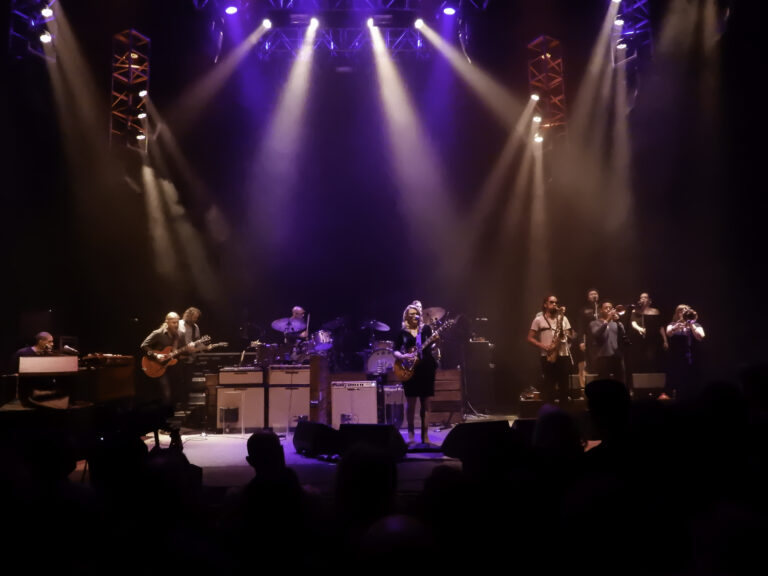
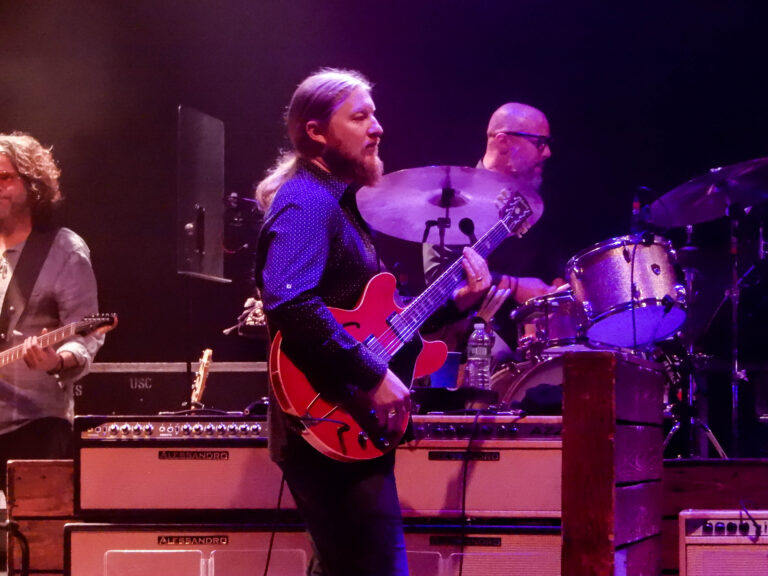
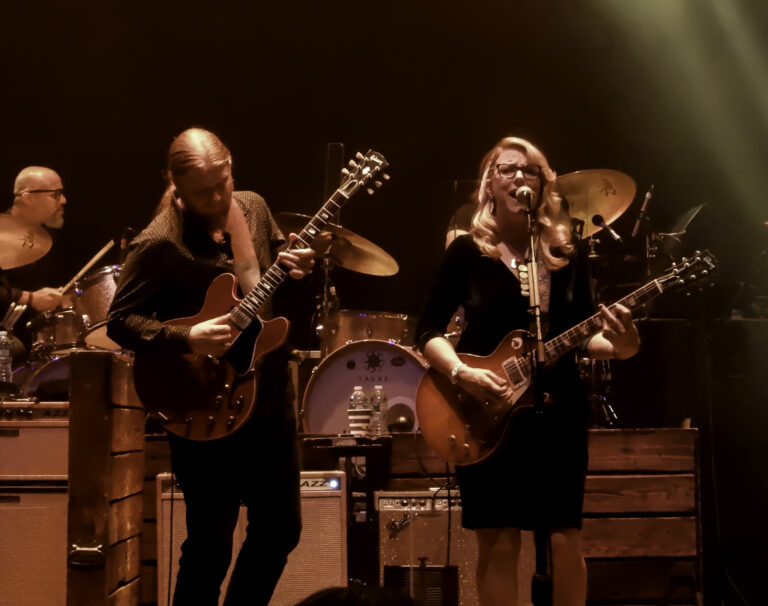
February of 2018 happened to be the warmest February on record in New York State, and part of the reason was probably due to the Tedeschi Trucks Band two sold out shows at The Capitol Theatre in Port Chester on the 20th and 21st. I was at the first show and, as usual, the band was on fire during their impressive set just shy of 20 songs, opening with a tight version of “Do I Look Worried” from the 2013 album Made Up Mind.
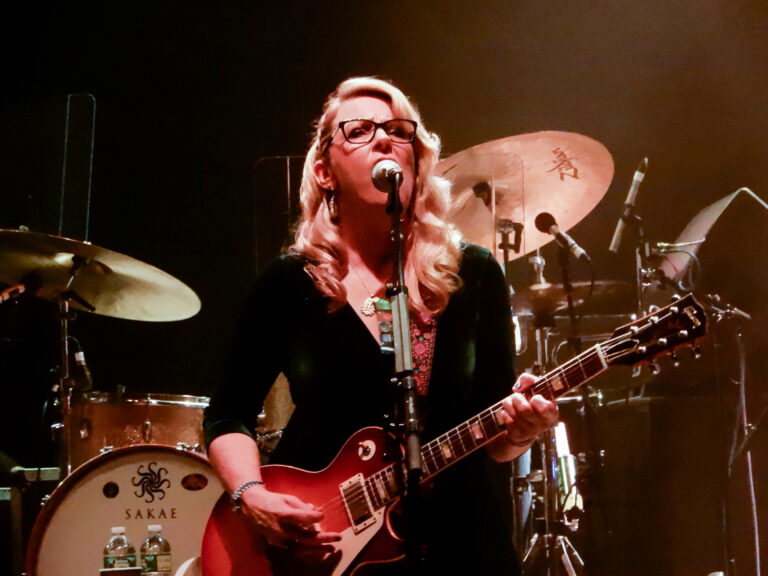
Much like Derek’s former band The Allman Brothers, TTB gets right down to business with very little talk directed to the audience, if any. Susan is an absolute powerhouse. She proved this once again during the epic “Until You Remember” from the 2011 album Revelator. The first set had a few covers such as Neil Young’s “Alabama” and Charles Segar’s “Key to the Highway.”
The set closed with an amazing “Idle Wind” jam from the group’s second album Made Up Mind. The second set started with “Statesboro Blues” which is actually a Blind Willie McTell song that was made famous by The Allman Brothers Band. The rest of the second set was very blues heavy and included some great covers like “Goin Down Slow” by St. Louis Jimmy Oden and “How Blue Can You Get” by Johnny Moore’s Three Blazers in which Susan played lead guitar and thanked their late friend B.B. King at the conclusion. The second set ended with a gospel song written by Bill Taylor called “I Wish I Knew How It Would Feel To Be Free.”
The encore started with a fantastic cover of “You Don’t Know How It Feels” by Tom Petty who had passed away suddenly just 3 months earlier. The show ended with a extraordinary version of “Laugh About It.” During the chorus, Susan said, “Put your hands up for those kids,” referring to the tragedy at Parkland High School in Florida.
TTB was scheduled to tour in 2020, but due to Covid19, The Wheels of Soul Tour has been rescheduled to start in the summer of 2021. Starting on February 18th, the band is presenting a six-episode series of home performances called Fireside Sessions available on nugs.net. For more info visit the band’s website.
Tedeschi Trucks Band, The Capitol Theatre, February 20, 2018
Set 1: Do I Look Worried, Just as Strange, Until You Remember, Key To The Highway (Charles Segar cover), Don’t Miss Me (The Derek Trucks Band cover), Alabama (Neil Young cover), Talking About, Idle Wind
Set 2: Statesboro Blues (Blind Willie McTell cover), Part of Me, It’s So Heavy, Let Me Get By, Right On Time, Goin Down Slow (St. Louis Jimmy Oden cover), Made Up Mind, How Blue Can You Get (Johnny Moore’s Three Blazers cover), I Wish I Knew How It Would Feel To Be Free (Bill Taylor cover)
Encore: You Don’t Know How It Feels (Tom Petty cover), Laugh About It
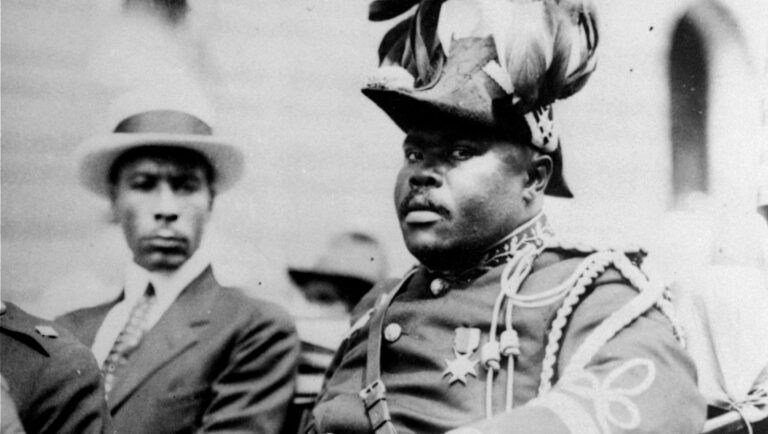
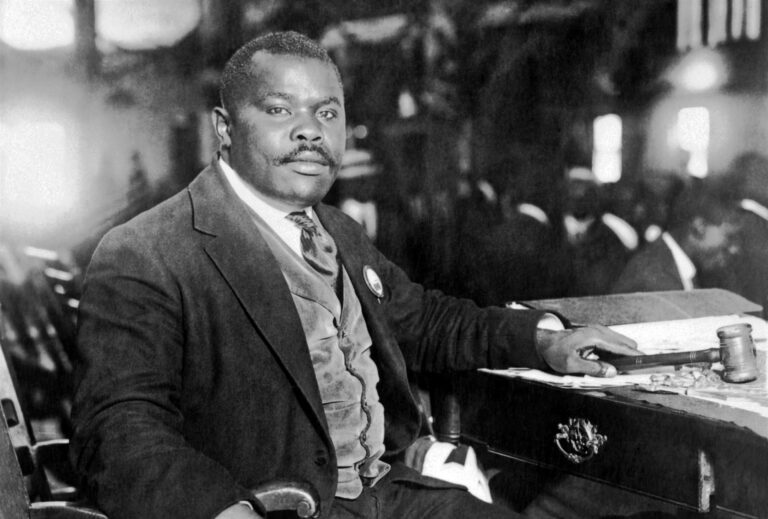
As part of NYS Music’s continuing series looking at the Centennial years of the Harlem Renaissance, we turn to activist Marcus Garvey, leader of the Pan-African movement, the first American Black nationalist movement.
Marcus Moziah Garvey was born in St Ann’s Bay, Jamaica on August 17, 1887. His father, Marcus Garvey Senior, was a stonemason and his mother, Sarah Jane Richards was a household servant. Garvey had 11 siblings but was the only one to survive to adulthood. Attending a local church school until the age of 14, Garvey then moved to Kingston where he worked in a print shop as an apprentice. Garvey quickly rose through the ranks and became the first Afro-Jamaican foreman. Thus began Garvey’s fabled career in activism, becoming a trade unionist and partially leading the November 1908 print workers’ strike.
After being fired from his print shop job, Garvey’s hatred for the societal structures creating inequality began to form. Garvey joined the National Club, one of Jamaica’s first nationalist organizations, publishing several pamphlets and magazines campaigning for the removal of the British Governor of Jamaica. Economic hardship took hold of Jamaica, leading to a mass exodus that included Garvey. After Garvey spent several years traveling, including living with family in Costa Rica and attending University of London’s Birkbeck College, Garvey returned to Jamaica.
Getty Images
Birth of the UNIA
Upon returning to Jamaica, Garvey formed the UNIA (Universal Negro Improvement Association). An organization whose goal was to “Establish a brotherhood among the black race, to promote a spirit of race pride, to reclaim the fallen and to assist in civilizing the backward tribes of Africa.”
With this organization, Garvey wanted to establish a country that would unite black people all over the world. After coming on to contact with fellow famed civil rights activist Booker T. Washington, Garvey moved to Harlem to establish the UNIA in the United States.
As the UNIA began to grow, Garvey launched his own weekly newspaper Negro Weekly. The newspaper reached worldwide audiences, nearing 10,000 copies circulated by the end of its first year. In 1919, Garvey launched his shipping company Black Star Line. The company’s goal was to establish trade and commerce between Africans all over the world. By this point, the UNIA had grown to over 4 Million members. The Black Star Line bought the S.S. Yarmouth, which they renamed it as the S.S. Frederick Douglass, in preparation for the group’s ambitious program which sought to establish a country for former slaves in Liberia.
Underwood Archives via Getty Images
Enemies
Garvey was infamous for his impassioned and controversial speeches which caused him many enemies from the likes of fellow activist, W.E.B. Du Bois, to FBI Director J. Edgar Hoover. Dubois was vehemently against Garvey’s separatist philopshy, going so far as to call him “The most dangerous enemy of the Negro race in America.”
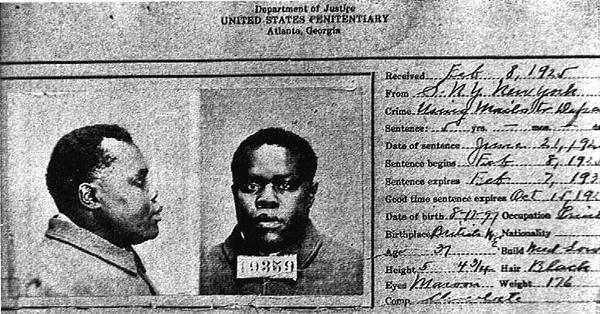
Garvey was under surveillance from Hoover for several years. Hoover looked for any dirt he could dig up on Garvey, going so far as to hire the first black FBI agent to infiltrate the ranks. Hoover would use the same method against several civil rights leaders throughout the 20th century including Martin Luther King Jr. and Malcolm X. Eventually, Hoover was able to try Garvey and others within the Black Star Line with Mail Fraud. Garvey was found guilty and sentenced to five years in prison.
Imprisonment and Deportation
Before the trial, Garvey controversially had agreed to meet with the leader of the Ku Klux Klan, believing they had common ground when it came to Segregation. Garvey blamed the Jewish judges and jurors for his convention, claiming they held bias against him for agreeing to meet with the Ku Klux Klan leader. This began a trend of Garvey siding with segregationists. While in jail, Garvey wrote his famous letter “First Message to the Negroes of the World from Atlanta Prison.”
Garvey was released in 1927 after serving just three years of his sentence after President Calvin Coolidge received a petition with 70,000 signature demanding for his release. Upon release, Garvey was immediately deported back to Jamaica. Continuing his political activism in his home country, Garvey created the country’s first political party, the People’s Political Party (PPP). The party ran on the platforms of establishing a minimum wage and the ability to impeach and imprison corrupt judges. The party quietly faded away after Garvey lost the election and was imprisoned again for seditious libel.
Never forget that intelligence rules the world and ignorance carries the burden. Therefore, remove yourself as far as possible from ignorance and seek as far as possible to be intelligent.
Marcus Garvey
Later Life and Death
Never again was Garvey able to convey the same amount of influence that he once did. Garvey continued his political activism in Jamaica until 1935 when he moved to London. Garvey would go on to back other segregationist legislation such as The Greater Liberia Act of 1939, championed by infamous white supremacist Mississippi Senator Theodore Bilbo; this act sought to deport 12 million African Americans to Liberia under the justification that it would reduce unemployment. The bill never passed.
In January 1940, Garvey suffered a stroke that had left him paralyzed almost entirely. Word spread that Garvey had died, leading it to be reported in several papers. Garvey had a second stroke brought on from the reading of these headlines, leading to his actual death on June 10th, 1940 at the age of 52. Garvey was buried in London due to WWII travel restrictions but his remains were moved to Kingston, Jamaica in 1964.
Legacy
Marcus Garvey has a complicated legacy like no other civil rights figure. Garvey’s key message was one of African Pride, to love your self and heritage no matter what. Phrases coined by Garvey such as “Black is Beautiful” are still commonplace motivational statements today. On the other hand, Garvey was one of the most outspoken segregationists. Garvey sided with white supremacists on several occasions, even backing key legislature. While his aspirations of a unified African American nation might have been pure, the ways he went about achieving those goals were destructive. Marcus Garvey the man may be controversial, but his word would go on to influence generations of activists and spur change all over the globe.